

The DOI matches its Crossref record; 28 of the 30 references it cites were found in a registry or an index.
Low cost DNA data storage using photolithographic synthesis and advanced information reconstruction and error correction
Open accessAbstract
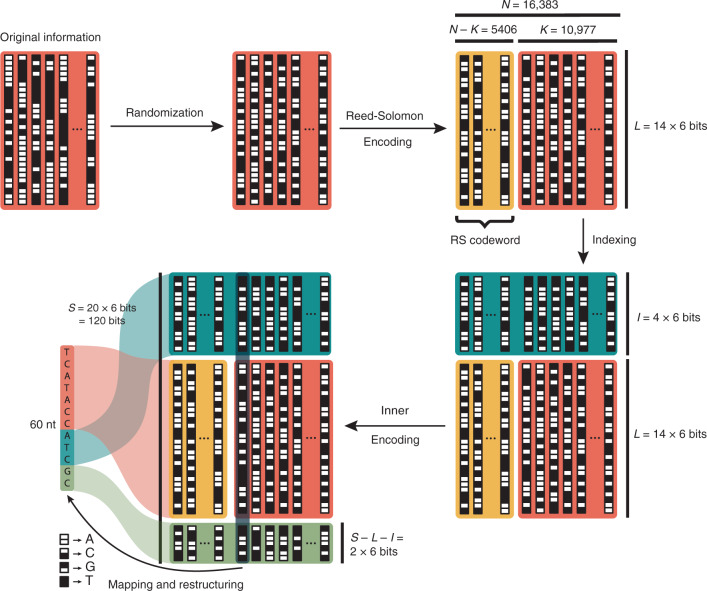
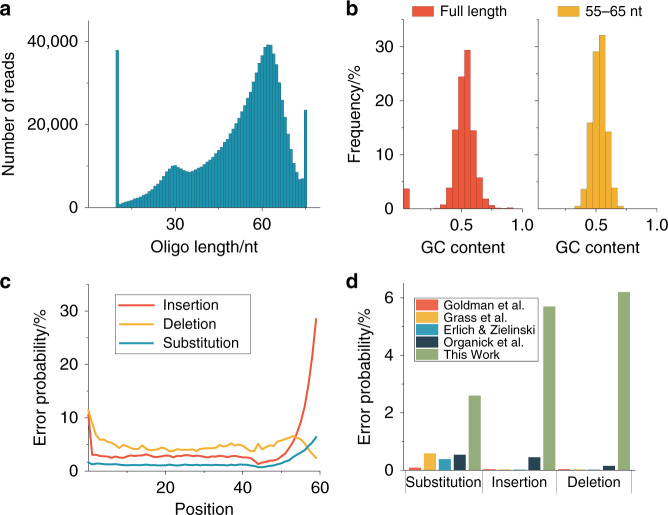
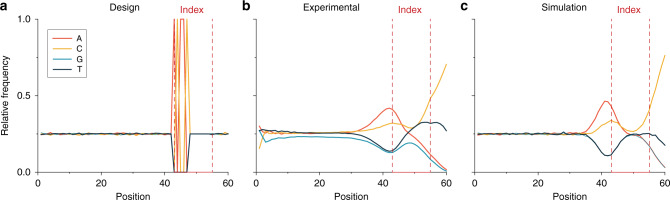
Due to its longevity and enormous information density, DNA is an attractive medium for archival storage. The current hamstring of DNA data storage systems—both in cost and speed—is synthesis. The key idea for breaking this bottleneck pursued in this work is to move beyond the low-error and expensive synthesis employed almost exclusively in today’s systems, towards cheaper, potentially faster, but high-error synthesis technologies. Here, we demonstrate a DNA storage system that relies on massively parallel light-directed synthesis, which is considerably cheaper than conventional solid-phase synthesis. However, this technology has a high sequence error rate when optimized for speed. We demonstrate that even in this high-error regime, reliable storage of information is possible, by developing a pipeline of algorithms for encoding and reconstruction of the information. In our experiments, we store a file containing sheet music of Mozart, and show perfect data recovery from low synthesis fidelity DNA.
Overview
The claims and statistics of this paper haven’t been checked yet.
Run the check — free, no account needed. It reads the open-access text and checks the sources it cites.
Integrity signals
Registry
Cites
Statistics
Figures
Verification
Claims the paper makes
The claims and statistics of this paper haven’t been checked yet.
Run the check — free, no account needed. It reads the open-access text and checks the sources it cites.
Claims other papers make about this one
Each is checked against this paper’s own text: does it say what the citing paper says it does?
The cited source doesn’t support the claim as written.
In the citing paper
“With the use of photolithography to synthesize 10 000 copies of each oligo, with a nucleotide reagent cost of 100 USD/g and a logical density equal to 1 bit/nucleotide, the cost of 1 TB of data stored in DNA would be ∼10–2 USD, with a chemical yield of 100%.”
From Emerging Approaches to DNA Data Storage: Challenges and Prospects (2022) · cites this paper as [42]
Checked by a reasoning model — may be wrong.
Experimental — accuracy not yet measuredThe source backs part of the claim, not all of it — or backs it for a different population, condition or comparison.
In the citing paper
“In 2020, Antkowiak et al. proposed that synthesis costs will drop to around 106 USD/TB (i.e., 2–3 orders of magnitude reduction) as a result of improved synthesis strategies, including large parallelization, optimization of reagents, and combination of nonvolatile DNA-based memories with logical operations”
From Emerging Approaches to DNA Data Storage: Challenges and Prospects (2022) · cites this paper as [42]
Experimental — accuracy not yet measuredIn the citing paper
“Moreover, its logical density (1.75 bits/nt) is double that of Antkowiak et al.’s method (0.8 bits/nt) [20] with only about 2.5% reduction in error correction capability.”
From Study of the error correction capability of multiple sequence alignment algorithm (MAFFT) in DNA storage (2023) · cites this paper as [20]
In the citing paper
“Moreover, its logical density (1.75 bits/nt) is double that of Antkowiak et al.’s method (0.8 bits/nt) [20] with only about 2.5% reduction in error correction capability.”
From Study of the error correction capability of multiple sequence alignment algorithm (MAFFT) in DNA storage (2023) · cites this paper as [20]
In the citing paper
“Moreover, its logical density (1.75 bits/nt) is double that of Antkowiak et al.’s method (0.8 bits/nt) [20] with only about 2.5% reduction in error correction capability.”
From Study of the error correction capability of multiple sequence alignment algorithm (MAFFT) in DNA storage (2023) · cites this paper as [20]
In the citing paper
“Following the original introduction of the inner-outer encoding scheme, the vast majority of subsequent works used such a scheme for DNA data storage.”
From Emerging Approaches to DNA Data Storage: Challenges and Prospects (2022) · cites this paper as [42]
In the citing paper
“However, both for low and large error rates, dominated by deletion errors, one also uses physical redundancy to recover the original information.”
From Emerging Approaches to DNA Data Storage: Challenges and Prospects (2022) · cites this paper as [42]
In the citing paper
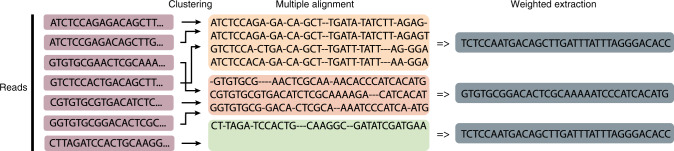
“For example, in Antkowiak et al.,42 the noisy sequences were first clustered by similarity, then the information on multiple erroneous copies was combined to construct a sequence with fewer errors. This was achieved by an alignment step within the clusters and subsequent majority voting.”
From Emerging Approaches to DNA Data Storage: Challenges and Prospects (2022) · cites this paper as [42]
In the citing paper
“Thus, Antkowiak et al. proved that the combination of synthesis processes that produce lower quality DNA oligos (i.e., photolithographic synthesis) and appropriate error-correction codes allows a major cost decrease in DNA data archives.”
From Emerging Approaches to DNA Data Storage: Challenges and Prospects (2022) · cites this paper as [42]
In the citing paper
“Even if this chemical yield is impossible to achieve in industrial conditions, DNA data storage will be competitive against tape storage (20 USD/TB cost) even at 0.1% chemical yield.”
From Emerging Approaches to DNA Data Storage: Challenges and Prospects (2022) · cites this paper as [42]
In the citing paper
“In the latter case, the cost of photolithographic DNA storage would be ∼10 USD/TB, and synthesis conditions would be similar to the one used in surface chemistry (1000× reagent excess), which demonstrates that an optimization of chemical DNA synthesis processes is compatible with DNA data storage applications.”
From Emerging Approaches to DNA Data Storage: Challenges and Prospects (2022) · cites this paper as [42]
Self-check
Percentages, sums and reported differences re-computed from the paper’s own numbers.
The self-check needs the paper’s full text.
Citations
Cites
MUSCLE: multiple sequence alignment with high accuracy and high throughput
Edgar, R. C. (2004) · Nucleic Acids Research · doi:10.1093/nar/gkh340 · Cited by 44,662
Next-Generation Digital Information Storage in DNA
Church, G. M., Gao, Y., & Kosuri, S. (2012) · Science · doi:10.1126/science.1226355 · Cited by 1,441
Towards Practical, High-Capacity, Low-Maintenance Information Storage in Synthesized DNA
Goldman, N., Bertone, P., Chen, S., Dessimoz, C., LeProust, E. M., Sipos, B., & Birney, E. (2013) · Nature · doi:10.1038/nature11875 · Cited by 1,220
DNA Fountain enables a robust and efficient storage architecture
Erlich, Y., & Zielinski, D. (2017) · Science · doi:10.1126/science.aaj2038 · Cited by 898
Synthesis of deoxyoligonucleotides on a polymer support
Matteucci, M. D., & CARUTHERS, M. H. (1981) · Journal of the American Chemical Society · doi:10.1021/ja00401a041 · Cited by 893
Random access in large-scale DNA data storage
Organick, L., Ang, S. D., Chen, Y.-J., Lopez, R., Yekhanin, S., Makarychev, K., Racz, M. Z., Kamath, G., Gopalan, P., Nguyen, B., et al. (2018) · Nature Biotechnology · doi:10.1038/nbt.4079 · Cited by 775
Robust Chemical Preservation of Digital Information on DNA in Silica with Error-Correcting Codes
Grass, R. N., Heckel, R., Puddu, M., Paunescu, D., & Stark, W. J. (2015) · Angewandte Chemie International Edition · doi:10.1002/anie.201411378 · Cited by 754
Self-citationMaskless fabrication of light-directed oligonucleotide microarrays using a digital micromirror array
Singh‐Gasson, S., Green, R. D., Yue, Y., Nelson, C. J., Blattner, F. R., Sussman, M. R., & Cerrina, F. (1999) · Nature Biotechnology · doi:10.1038/13664 · Cited by 733
Basic Concepts of Microarrays and Potential Applications in Clinical Microbiology
Miller, M. B., & Tang, Y. (2009) · Clinical Microbiology Reviews · doi:10.1128/cmr.00019-09 · Cited by 438
Gene Expression Analysis Using Oligonucleotide Arrays Produced by Maskless PhotolithographyPreprint
Nuwaysir, E. F., Huang, W., Albert, T. J., Singh, J., Nuwaysir, K., Pitas, A., Richmond, T., Gorski, T., Berg, J. P., Ballin, J. D., et al. (2002) · Genome Research · doi:10.1101/gr.362402 · Cited by 364
Cited by
Sorted by citations
Items 101–173 of 173
Multi-file dynamic compression method based on classification algorithm in DNA storage
Bi, K., Xu, Q., Lai, X., Zhao, X., & Lu, Z. (2024) · Medical & Biological Engineering & Computing · doi:10.1007/s11517-024-03156-2 · Cited by 3
A DNA Data Storage Method Using Spatial Encoding Based Lossless Compression
ŞATIR, E. (2024) · Entropy · doi:10.3390/e26121116 · Cited by 4
Michel, T., Behr, J., Sabzalipoor, H., Ibáñez-Redín, G., Lietard, J., Schletterer, T., Funck, M., & Somoza, M. M. (2025) · Optics Express · doi:10.1364/oe.557937 · Cited by 3
Self-citationKapustina, Ž., Jasponė, A., Dubovskaja, V., Mackevičius, G., & Lubys, A. (2021) · ACS Synthetic Biology · doi:10.1021/acssynbio.1c00112 · Cited by 3
The multiple fluorescent multi-bit DNA memory encoding system
Nergui, N., Kim, J., Lim, D., Lee, W. J., Kang, T., Kim, S., Shim, M. S., & Song, Y. (2024) · Nano Communication Networks · doi:10.1016/j.nancom.2024.100497 · Cited by 2
Optimization of Highly Robust DNA Storage Schemes Based on Specific Base Sequences
Zhang, X., Qi, B., & Niu, Y. (2025) · IEEE Transactions on Computational Biology and Bioinformatics · doi:10.1109/tcbbio.2025.3553616 · Cited by 2
DBSP: An End-to-End Pipeline for DNA Storage Data Reconstruction From DNA Sequencing
Cao, B., Zhao, Y., Xie, L., Shao, Q., Wang, K., Wang, B., Zhou, S., & Zheng, P. (2025) · IEEE Transactions on Molecular Biological and Multi-Scale Communications · doi:10.1109/tmbmc.2025.3613268 · Cited by 2
DVOUG enables robust DNA sequence assembly and reconstruction with a dynamic, variable-order graph
Liu, Z., Li, X., Xie, L., Wang, B., Zhou, S., Cao, B., Zheng, P., & Zhang, Q. (2025) · Cell Reports Methods · doi:10.1016/j.crmeth.2025.101243 · Cited by 2
Zhang, Y., Qin, R., Ge, Q., Guo, Q., & Chen, W. (2026) · Science Advances · doi:10.1126/sciadv.aec1469 · Cited by 2
Yang, S. Q., Wang, D., Zhao, Z., Wang, N., Yu, M. S., Zhang, K., Luo, Y., & Zhao, J. (2024) · Biosensors · doi:10.3390/bios14040177 · Cited by 2
Bounds on the Maximum Cardinality of Indel and Substitution Correcting Codes
Spee, W. J. P., & Weber, J. H. (2024) · IEEE Transactions on Molecular Biological and Multi-Scale Communications · doi:10.1109/tmbmc.2024.3388971 · Cited by 2
DNA Storage Promotes Long-Term Storage of Internet of Vehicles Data
Qu, G., Wu, H., & Li, R. (2024) · IEEE Network · doi:10.1109/mnet.2024.3481262 · Cited by 1
Advancements in DNA Tagging and Storage: Techniques, Applications, and Future Implications
Kuzdraliński, A., Miśkiewicz, M., Szczerba, H., Mazurczyk, W., Ociepa, T., Lechowski, M., & Ksi̜eżopolski, B. (2025) · Wiley Interdisciplinary Reviews Computational Molecular Science · doi:10.1002/wcms.70040 · Cited by 1
Simple Converse Bounds on the Deletion Channel Capacity with Finite Block Lengths
Morozov, R., & Duman, T. M. (2025) · IEEE International Symposium on Information Theory (ISIT) · doi:10.1109/isit63088.2025.11195267 · Cited by 1
Fabrication of microcolumn arrays for high-throughput oligonucleotide synthesis using 3D printing
Kim, H., Kim, J., & Bang, D. (2025) · Scientific Reports · doi:10.1038/s41598-025-29870-x · Cited by 1
Coding for Ordered Composite DNA Sequences
Dollma, B., Elishco, O., & Yaakobi, E. (2025) · IEEE International Symposium on Information Theory (ISIT) · doi:10.1109/isit63088.2025.11195553 · Cited by 1
Design and Analysis of Two-Layer Coding Scheme for DNA-Based Data Storage
Zhang, J., & Zhao, S. (2025) · IEEE Transactions on NanoBioscience · doi:10.1109/tnb.2025.3648790 · Cited by 1
Efficient Synthesis for Two-Dimensional Strand Arrays with Row Constraints
Moav, B., Yaakobi, E., & Gabrys, R. (2026) · IEEE International Symposium on Information Theory (ISIT) · doi:10.1109/isit62367.2026.11653854 · Cited by 1
Kang, T., Lim, D., Lee, W., Kim, J., Huang, X., Kim, J., & Song, Y. (2026) · ACS Nano · doi:10.1021/acsnano.5c13665 · Cited by 1
Öztürk, B., İgit, A., Arıcı, S., Kaya, A., Çamlıca, Z. T., & Şahin, M. F. (2026) · Archives of Computational Methods in Engineering · doi:10.1007/s11831-026-10651-2 · Cited by 2
Kovas, Y. V., & Selita, F. (2021) · Palgrave Macmillan UK eBooks · doi:10.1057/978-1-349-96048-4_5 · Cited by 1
The DNA Storage Channel: Capacity and Error Probability Bounds
Weinberger, N., & Merhav, N. (2022) · IEEE International Symposium on Information Theory (ISIT) · doi:10.1109/isit50566.2022.9834482 · Cited by 1
Capacity of the Shotgun Sequencing Channel
Ravi, A. N., Vahid, A., & Shomorony, I. (2022) · IEEE International Symposium on Information Theory (ISIT) · doi:10.1109/isit50566.2022.9834409 · Cited by 3
Wang, N., Yang, S., Wang, D., Cao, Z., Luo, Y., & Zhao, J. (2023) · IEEE International Conference on Micro Electro Mechanical Systems (MEMS) · doi:10.1109/mems49605.2023.10052171 · Cited by 1
Coûts écologiques de nos pratiques archivistiques
Nicolet, A., & Shabou, B. M. (2021) · Comma · doi:10.3828/coma.2021.35 · Cited by 2
Fast multiple sequence alignment via multi-armed bandits
Mazooji, K., & Shomorony, I. (2024) · Bioinformatics · doi:10.1093/bioinformatics/btae225 · Cited by 1
New Family of Linear 3-Erasure Correcting Block Codes with Possible Application in Storage Systems
Farkaš, P., Farkašová, K., Pavelka, F., & Rakús, M. (2025) · Computing and Informatics · doi:10.31577/cai_2025_2_429 · Cited by 1
Robust retrieval of data stored in DNA by de Bruijn graph-based de novo strand assemblyPreprint
Song, L., Geng, F., Gong, Z.-Y., Chen, X.-M., Tang, J., Gong, C., Zhou, L., Xia, R., Han, M., Xu, J., et al. (2020) · bioRxiv (Cold Spring Harbor Laboratory) · doi:10.1101/2020.12.20.423642 · Cited by 1
A super robust and efficient DNA storage architecture based on modulation encoding and decodingPreprint
Zan, X., Xie, R., Yao, X., Xu, P., & Liu, W. (2022) · Research Square · doi:10.21203/rs.3.rs-1691759/v1 · Cited by 1
Mao, C., Zheng, S., Huang, Z., Wang, D., Zhuang, Y., Zhang, J., Wang, R., & Jiang, X. (2025) · ACS Nano · doi:10.1021/acsnano.5c08183 · Cited by 1
Rebimbas, R., Glória, I., Chegão, J., Al-Rawi, M., Mousakhani Ganjeh, A., & Saraiva, J. A. (2026) · Journal of Biotechnology · doi:10.1016/j.jbiotec.2026.03.003
DNA als digitales Speichermedium
Heckel, R. (2021) · BIOspektrum · doi:10.1007/s12268-021-1533-5
Self-citationWang, Y. (2021) · DR-NTU (Nanyang Technological University) · doi:10.32657/10356/155241
An image cryptography method in highly error-prone DNA storage channelPreprint
Zan, X., Xie, R., Chu, L., Su, Y., Yao, X., Xu, P., & Liu, W. (2022) · bioRxiv (Cold Spring Harbor Laboratory) · doi:10.1101/2022.11.08.515529
A novel approach to encode melodies in DNA
Kiryanova, O. Y., Гарафутдинов, Р. Р., Gubaydullin, I. M., & Chemeris, A. V. (2024) · Biosystems · doi:10.1016/j.biosystems.2024.105136
Preserving History with Synthetic DNA: An Innovative Data Storage Solution
Ghosh, N., Reddy, N. A., Sasank, V., Suvarchala, K., & Patkar, S. (2024) · IEEE International Conference on Electronics, Computing and Communication Technologies (CONECCT) · doi:10.1109/conecct62155.2024.10677101
DNA framework array enables ultra-high throughput DNA synthesisPreprint
Li, C., Saimaiti, Y., Li, M., Wang, S., Yin, F., Fang, Z., Jia, S., Wang, F., Ye, D., Wang, L., et al. (2025) · bioRxiv (Cold Spring Harbor Laboratory) · doi:10.1101/2025.05.30.657018 · Cited by 1
Primer‐Disk‐Enabled DNA Data Storage System with Index and Record‐Many‐Read‐Many Features
Ma, J., Yu, Y., Pei, B., Mi, S., Xiong, Z., & Ouyang, L. (2025) · Advanced Science · doi:10.1002/advs.202502367
Shao, Q., Zheng, Y., Cao, B., Liu, Z., Wang, B., Zhou, S., & Zheng, P. (2025) · Lecture notes in computer science · doi:10.1007/978-981-96-8180-8_12
A virtual multi-level directory file addressing method (VMDFAM) for DNA storage
Zan, X., Yao, X., Chu, L., Xu, P., & Liu, W. (2025) · Future Generation Computer Systems · doi:10.1016/j.future.2025.108051
Research progress of the reliability of DNA data storage
XueQing, Y. U. E., ZHENG, Z., RuiYing, C. A. O., PengHua, Z. H. O. U., & Chen, X. (2025) · Scientia Sinica Vitae · doi:10.1360/ssv-2025-0200
Geno-Weaving: A Framework for Low-Complexity Capacity-Achieving DNA Data Storage
Wang, H.-P., & Guruswami, V. (2025) · IEEE Journal on Selected Areas in Information Theory · doi:10.1109/jsait.2025.3610643
DNA Data Storage Architecture via Ligation of Dynamic DNA BytesPreprint
Jia, L., Shi, Y., Yang, J., Li, S., Yang, W., Li, W., Zhang, M., Li, Q., Zhang, Y., Wang, X., et al. (2025) · bioRxiv (Cold Spring Harbor Laboratory) · doi:10.1101/2025.09.15.676197
Efficient trace reconstruction in DNA storage systems using bidirectional beam search
Gu, Z., Xin, H., Sharma, P., Goh, G. Y., Wong, L., & Nagarajan, N. (2025) · iScience · doi:10.1016/j.isci.2025.113791
Progressive decoding of DNA-stored JPEG data with on-the-fly error correctionPreprint
Nawaz, I., Agarwal, P., & Heinis, T. (2025) · bioRxiv (Cold Spring Harbor Laboratory) · doi:10.1101/2025.10.26.684640
Computer-assisted dissection of the DNA mismatch recognition mechanism of the MutS proteinPreprint
Jiang, W., Ding, Y., Li, Y., Sun, H., Liang, X. H., & Li, Q. (2025) · bioRxiv (Cold Spring Harbor Laboratory) · doi:10.64898/2025.12.16.694542
PERFECT PCR: Advancing DNA Data Storage to Near-Maximal DensityPreprint
Sabnis, R., Zhang, H., Li, B., Han, A., de Figueiredo, P., & Sun, Q. (2025) · bioRxiv (Cold Spring Harbor Laboratory) · doi:10.64898/2025.12.15.694532
Kim, J., Kim, H., & Bang, D. (2025) · PLoS ONE · doi:10.1371/journal.pone.0338478
A Hybridization-Based Novel DNA Storage Technology with Rapid Read PerformancePreprint
Zhang, Y., Jia, L., XiaoXia, W. A. N. G., Shi, Y., Wang, H., Zhang, D., Cheng, P., Zhao, Y., Xu, M., Zhang, X., et al. (2025) · bioRxiv (Cold Spring Harbor Laboratory) · doi:10.64898/2025.12.24.696143
Han, L., Qu, G., Yan, Z., & Wu, H. (2025) · IEEE International Conference on Parallel and Distributed Systems (ICPADS) · doi:10.1109/icpads67057.2025.11323030
xLSTM-Stega: A Novel Framework for Secure Information Hiding in DNA Storage Systems
Fan, W., Tu, Z., & Zhang, Y. (2025) · IEEE International Conference on Bioinformatics and Biomedicine (BIBM) · doi:10.1109/bibm66473.2025.11356262
Error characterization and error correction approaches in combinatorial DNA-based storage
Preuss, I., Sabary, O., Gabrys, R., Zohar Yakhini, B., Yaakobi, E., & Anavy, L. (2026) · Scientific Reports · doi:10.1038/s41598-026-38599-0
Advancements in DNA storage: innovations, challenges, and the road ahead
Shukla, S., Borah, N. K., Sinha, A., & Shukla, S. K. (2026) · Elsevier eBooks · doi:10.1016/b978-0-443-40316-3.00007-2
Majority‐Voting Overlapping Method for Error Correction in DNA Data Storage
Nguyen, T. B. N., Seo, S., Tandon, A., Uyen, N. K., Vu, T. H. N., & Park, S. H. (2026) · Advanced Intelligent Discovery · doi:10.1002/aidi.202500209
DNA-MGC+: A versatile codec for reliable and resource-efficient data storage on synthetic DNAPreprint
Khabbaz, R., Mateos, J., Antonini, M., & Hanna, S. K. (2026) · bioRxiv (Cold Spring Harbor Laboratory) · doi:10.64898/2026.03.11.711016 · Cited by 1
Scalable and accurate algorithms for computational genomics and dna-based digital storage
Yan, Y. (2023) · theses.fr (ABES) · doi:10.70675/2d1f5f53z65ebz4476z88acz990021e9e6d9
Simple Finite-Length Achievability and Converse Bounds for Deletion and Insertion Channels
Morozov, R., & Duman, T. M. (2026) · IEEE Transactions on Communications · doi:10.1109/tcomm.2026.3681706 · Cited by 1
Towards Migration-Free Data Preservation using Synthetic DNA
Marinelli, E. (2024) · theses.fr (ABES) · doi:10.70675/fdf5d1b7z9765z4811zaee7zde2f28f9ba0b
ZAT-DNA enables DNA data storage with molecular-layer non-replicability
Song, L., Wang, G., Wei, Y., Huang, Y., Zhang, Y., Liu, X., Yuchi, Z., Yuan, Y., Luo, Y., & Zhang, Y. (2026) · Nature Communications · doi:10.1038/s41467-026-72869-9 · Cited by 1
DNA Staples: An oligonucleotide library for data storage and computingPreprint
Wernhart, K. S., Orlando, M., Schroeder, F., & Barišić, I. (2026) · bioRxiv (Cold Spring Harbor Laboratory) · doi:10.64898/2026.05.11.724305
Propelling DNA-Based Archival Storage With an Algorithmic Mindset
Yang, Y., Wei, W., & Mou, M. (2026) · IEEE Transactions on Molecular Biological and Multi-Scale Communications · doi:10.1109/tmbmc.2026.3694522
RIDE: Random interleaving data encoding method for enhancing DNA storage efficiency
Bi, K., Ma, Z., Li, Z., Sun, Q., Lu, Z., & Zhao, X. (2026) · Results in Engineering · doi:10.1016/j.rineng.2026.111485
Programmable one-pot polymerase-mediated DNA synthesis via temperature control
Kim, J., Choi, J. H., Kim, W., Cho, N., Jung, Y., Park, S., Choi, E., Lee, C., Kim, Y., Ryu, T., et al. (2026) · Nature Communications · doi:10.1038/s41467-026-74890-4 · Cited by 1
Cost-Efficient Information Writing-in for DNA Data Storage
Xu, D., Ping, Z., & Shen, Y. (2026) · Springer eBooks · doi:10.1007/978-981-95-9450-4_2
Introduction to DNA Storage Technology
Gupta, M. K., Ping, Z., Rasool, A., Cao, B., & Burgi, P. (2026) · Springer eBooks · doi:10.1007/978-981-95-9450-4_1
Shield, Repair, Reconstruct: An Integrated Framework for Long-Term DNA Data Storage
Liu, L., Wu, J., Huang, Y., Wang, M., He, B., Song, L., & Sun, J. (2026) · Springer eBooks · doi:10.1007/978-981-95-9450-4_10
Optimization of Error Correction Schemes for DNA Synthesis and Sequencing
Wu, H., & Qu, G. (2026) · Springer eBooks · doi:10.1007/978-981-95-9450-4_7
A Vault for the Ages: Synthetic DNA Data Storage and the Library of Congress Use Case
Grohsgal, L. W., & Coltellino, V. (2026) · Springer eBooks · doi:10.1007/978-981-95-9450-4_11
Towards A System Model for DNA-based Storage
Schustermann, S., Kogan, L., Factor, M., Naor, D., & Yadgar, G. (2026) · ACM Workshop on Hot Topics in Storage and File Systems (HotStorage) · doi:10.1145/3837053.3837346
ProbeFS: Hierarchical DNA File Systems via Biochemical Content Addressability and Parallelism
Li, R., Zhang, Y., Dong, M., Hao, Y., Wang, F., Fan, C., & Chen, H. (2026) · ACM SIGOPS Symposium on Operating Systems Principles (SOSP) · doi:10.1145/3830418.3843890
Song, Y., Wang, Z., Wu, H., Zhao, X., Zhou, Y., Lu, Z., Tu, J., & Bi, K. (2026) · SSRN Electronic Journal · doi:10.2139/ssrn.7589372
Yang, S., Wang, D., Liu, Q., Lan, X., Zhao, Z., Wang, W., Xia, K., Gao, X., Luo, Y., & Zhao, J. (2026) · Microsystems & Nanoengineering · doi:10.1038/s41378-026-01456-1
Archival data storage using DNA proximity graphsPreprint
Perry, E., Tiepelt, J., & Jacobson, J. (2026) · bioRxiv (Cold Spring Harbor Laboratory) · doi:10.64898/2026.10.12.758707
Metadata
- Authors
- Antkowiak, P. L., Lietard, J., Darestani, M. Z., Somoza, M. M., Stark, W. J., Heckel, R., & Grass, R. N.
- Affiliations
- ETH Zurich (CH)
- University of Vienna (AT)
- Rice University (US)
- Technical University of Munich (DE)
- Corresponding author
- Heckel, Reinhard
- Grass, Robert N.
- ORCID
- Venue
- Nature Communications
- Published
- 2020-10-22
- Volume
- 11
- Issue
- 1
- Pages
- 5345-5345
- ISSN
- 2041-1723 (ISSN-L)
- PMC
- PMC7582880
- OpenAlex
- W3093968171
- Cited by
- 173
- References
- 30
- Citations by year
- 2026: 27 · 2025: 44 · 2024: 41 · 2023: 25 · 2022: 18 · 2021: 16 · 2020: 2
- FWCI
- 4.95
- Type
- journal article
- Language
- en
- Open access
- gold
- doi.org
- Locations
- Nature Communications (publishedVersion, cc-by)
- PubMed Central (publishedVersion, cc-by)
- PubMed (publishedVersion)
- RePEc: Research Papers in Economics (submittedVersion)
- DOAJ (DOAJ: Directory of Open Access Journals) (submittedVersion, cc-by-sa)
- mediaTUM (Technical University of Munich) (submittedVersion)
- mediaTUM – the media and publications repository of the Technical University Munich (Technical University Munich) (submittedVersion)
- Repository for Publications and Research Data (ETH Zurich) (submittedVersion, cc-by)
- ETH Zürich Research Collection (cc-by)
- Funders
- Rice University
- Austrian Science Fund (P27275, FWF P27275, P 30596, P27275 and P30596)
- Topics
- Physical Sciences › Mathematics › Theoretical Computer Science › DNA and Biological Computing
- Physical Sciences › Mathematics › Theoretical Computer Science › Algorithms and Data Compression
- Physical Sciences › Computer Science › Computer Networks and Communications › Advanced Data Storage Technologies
- Keywords
- DNA data storage, information reconstruction, error correction, encoding algorithms, archival storage, solid-phase synthesis
- MeSH terms
- Algorithms, Base Sequence, DNA, Light, Monte Carlo Method, Gene Library, Information Storage and Retrieval, Sequence Analysis, DNA, Oligonucleotide Array Sequence Analysis, Photochemical Processes, Chemistry Techniques, Synthetic
About these checks
Registry, retraction, Cites and statistics results are computed, not judged, with one exception: a printed reference that no index lists is read once by a model before it counts as a citation error. Claims are extracted by a model and kept only when their quote appears verbatim in the text; each cited source is then checked, with a model’s help, for whether it says what the claim relies on. Those verdicts can be wrong — read the claim’s quote and the cited source before relying on one.
Statistics and arithmetic are recomputed, not judged.
Confidence bands are shown only for fields calibrated on our annotated test set. None is calibrated yet, so no band is shown.
What counts as a claim ›How we measure confidence ›How we check this ›
Are you an author, or do you see a problem with this page? Request a review
