

Space station biomining experiment demonstrates rare earth element extraction in microgravity and Mars gravity
Open accessThe DOI matches its Crossref record; 71 of the 71 references it cites were found in a registry or an index.
Abstract
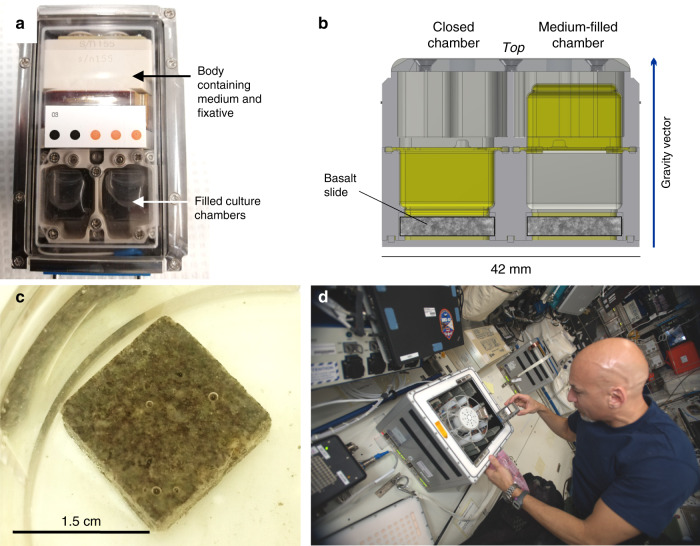
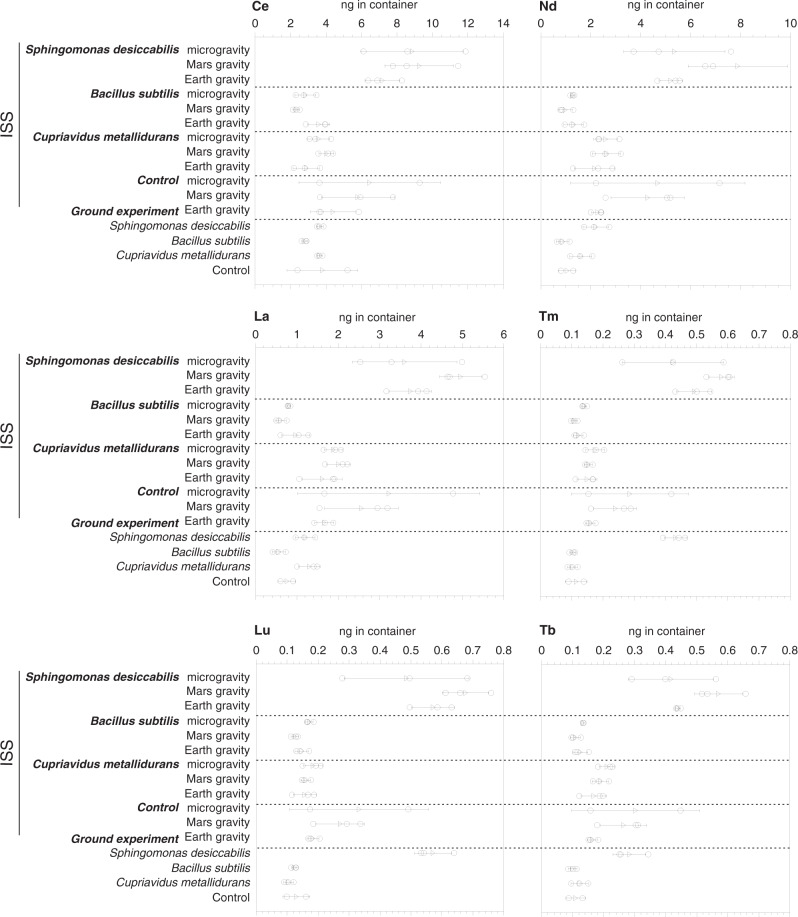
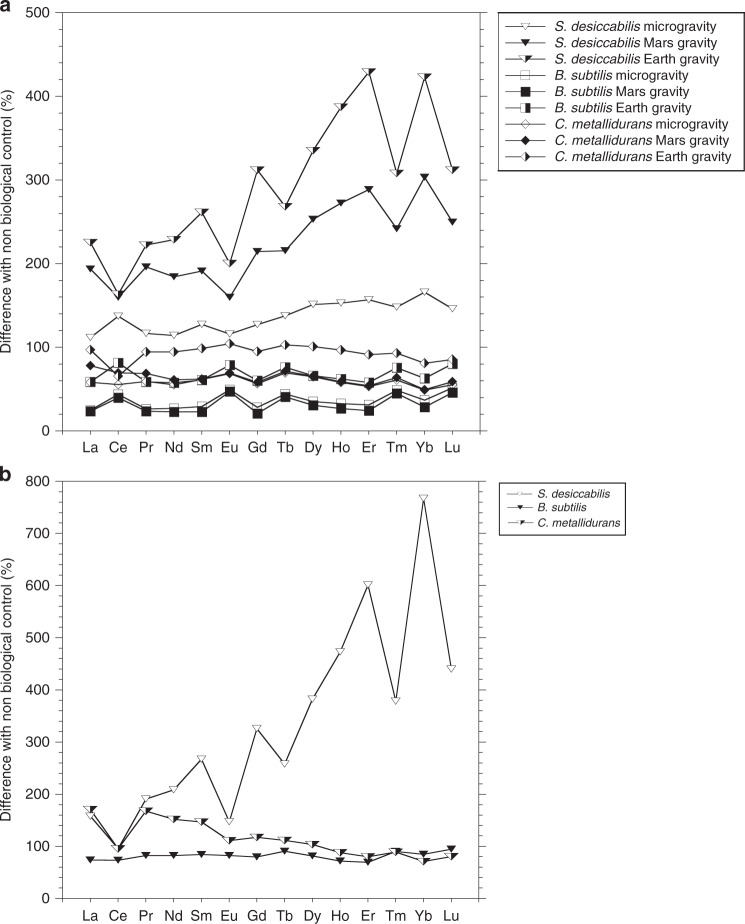
Microorganisms are employed to mine economically important elements from rocks, including the rare earth elements (REEs), used in electronic industries and alloy production. We carried out a mining experiment on the International Space Station to test hypotheses on the bioleaching of REEs from basaltic rock in microgravity and simulated Mars and Earth gravities using three microorganisms and a purposely designed biomining reactor. Sphingomonas desiccabilis enhanced mean leached concentrations of REEs compared to non-biological controls in all gravity conditions. No significant difference in final yields was observed between gravity conditions, showing the efficacy of the process under different gravity regimens. Bacillus subtilis exhibited a reduction in bioleaching efficacy and Cupriavidus metallidurans showed no difference compared to non-biological controls, showing the microbial specificity of the process, as on Earth. These data demonstrate the potential for space biomining and the principles of a reactor to advance human industry and mining beyond Earth.
Overview
The claims and statistics of this paper haven’t been checked yet.
Free: it reads the open-access text and checks the first 5 claims that cite a source we can check. Create a free account to check every claim.
Integrity signals
Registry
Cites
Statistics
Figures
Verification
Claims the paper makes
The claims and statistics of this paper haven’t been checked yet.
Free: it reads the open-access text and checks the first 5 claims that cite a source we can check. Create a free account to check every claim.
Claims other papers make about this one
Each is checked against this paper’s own text: does it say what the citing paper says it does?
The cited source doesn’t support the claim as written.
In the citing paper
“Microorganisms Sphingomonas desiccabilis, Bacillus subtilis and Cupriavidus metallidurans have also shown biomining abilities from basaltic rock in simulated Martian gravity and microgravity environments for rare element extraction (Cockell et al., 2020).”
From Cyanobacteria and microalgae in supporting human habitation on Mars (2022) · cites this paper as Cockell et al., 2020
Checked by a reasoning model — may be wrong.
Experimental — accuracy not yet measured
Self-check
Percentages, sums and reported differences re-computed from the paper’s own numbers.
The self-check needs the paper’s full text.
Citations
Cites
A new medium for the enumeration and subculture of bacteria from potable water
Reasoner, D. J., & Geldreich, E. E. (1985) · Applied and Environmental Microbiology · doi:10.1128/aem.49.1.1-7.1985 · Cited by 2,300
Bioleaching: Metal solubilization by microorganisms
Bosecker, K. (1997) · FEMS Microbiology Reviews · doi:10.1111/j.1574-6976.1997.tb00340.x · Cited by 962
Rare earth elements as critical raw materials: Focus on international markets and future strategies
Massari, S., & Ruberti, M. (2013) · Resources Policy · doi:10.1016/j.resourpol.2012.07.001 · Cited by 873
Horneck, G., Klaus, D. M., & Mancinelli, R. L. (2010) · Microbiology and Molecular Biology Reviews · doi:10.1128/mmbr.00016-09 · Cited by 619
Rare earth metals are essential for methanotrophic life in volcanic mudpots
Pol, A., Barends, T. R. M., Dietl, A., Khadem, A. F., Eygensteyn, J., Jetten, M. S. M., & Op den Camp, H. J. M. (2014) · Environmental Microbiology · doi:10.1111/1462-2920.12249 · Cited by 511
Elemental composition of the martian crust
McSween, H. Y., Taylor, G. J., & Wyatt, M. B. (2009) · Science · doi:10.1126/science.1165871 · Cited by 506
Biomining — biotechnologies for extracting and recovering metals from ores and waste materials
Johnson, D. B. (2014) · Current Opinion in Biotechnology · doi:10.1016/j.copbio.2014.04.008 · Cited by 487
Alternatives to cyanide in the gold mining industry: what prospects for the future?
Hilson, G., & Monhemius, A. J. (2006) · Journal of Cleaner Production · doi:10.1016/j.jclepro.2004.09.005 · Cited by 474
PQQ-dependent methanol dehydrogenases: rare-earth elements make a difference
Keltjens, J. T., Pol, A., Reimann, J., & Op den Camp, H. J. M. (2014) · Applied Microbiology and Biotechnology · doi:10.1007/s00253-014-5766-8 · Cited by 413
The “Procellarum KREEP Terrane”: Implications for mare volcanism and lunar evolution
Wieczorek, M. A., & Phillips, R. J. (2000) · Journal of Geophysical Research: Planets · doi:10.1029/1999je001092 · Cited by 367
Research works printed but not linked: 1
- Sklodowska, A. & Matlakowska, R. in Microbial Processing of Metal Sulfides (eds Donati, E. R. & Sand, W.) 121–129 (Springer, 2007).
Cited by
A green and efficient technology to recover rare earth elements from weathering crusts
Wang, G., Xu, J., Ran, L., Zhu, R., Ling, B., Liang, X., Kang, S., Wang, Y., Wei, J., Ma, L., et al. (2022) · Nature Sustainability · doi:10.1038/s41893-022-00989-3 · Cited by 173
“Since the EKM experiments were carried out at various scales, the extracted amounts of the REEs/ metallic impurities were normalized to soil weight with a unit of mg kg according to equation (1):”
BackgroundMethodToward sustainable space exploration: a roadmap for harnessing the power of microorganisms
Santomartino, R., Averesch, N. J. H., Bhuiyan, M., Cockell, C. S., Colangelo-Lillis, J. R., Gumulya, Y., Lehner, B., Lopez-Ayala, I., McMahon, S., Mohanty, A., et al. (2023) · Nature Communications · doi:10.1038/s41467-023-37070-2 · Cited by 178
Self-citationMishra, S., Ghosh, S., van Hullebusch, E. D., Singh, S., & Das, A. P. (2023) · Applied Biochemistry and Biotechnology · doi:10.1007/s12010-023-04440-x · Cited by 125
“Even though the primary target of electronic scrap bioleaching is the drawing out of precious and rare minerals, but this could be advantages in another ways [99].”
The contribution of living organisms to rock weathering in the critical zone
Wild, B., Gerrits, R., & Bonneville, S. (2022) · npj Materials Degradation · doi:10.1038/s41529-022-00312-7 · Cited by 137
Cyanobacteria and microalgae in supporting human habitation on Mars
Mapstone, L. J., Leite, M. N., Purton, S., Crawford, I. A., & Dartnell, L. (2022) · Biotechnology Advances · doi:10.1016/j.biotechadv.2022.107946 · Cited by 92
“The number of studies investigating microalgal growth and metabolic responses to fractional gravity have so far been limited (Santomartino et al., 2020).”
InfluentialMicrobial applications for sustainable space exploration beyond low Earth orbit
Koehle, A. P., Brumwell, S. L., Seto, E. P., Lynch, A. M., & Urbaniak, C. (2023) · npj Microgravity · doi:10.1038/s41526-023-00285-0 · Cited by 117
Synthetic microbiology in sustainability applications
Jones, E. M., Marken, J. P., & Silver, P. A. (2024) · Nature Reviews Microbiology · doi:10.1038/s41579-023-01007-9 · Cited by 114
“Although some studies have investigated rare earth-leaching bacteria, mainly using phosphate-based minerals, our understanding of the mechanisms by which bacteria consume phosphate and solubilize rare earth elements is still limited 61–66 .”
Schmitz, A. M., Pian, B., Medin, S. A., Reid, M. C., Wu, M., Gazel, E., & Barstow, B. (2021) · Nature Communications · doi:10.1038/s41467-021-27047-4 · Cited by 95
Advances in bioleaching of waste lithium batteries under metal ion stress
Zhang, X., Shi, H., Tan, N., Zhu, M., Tan, W., Daramola, D. A., & Gu, T. (2023) · Bioresources and Bioprocessing · doi:10.1186/s40643-023-00636-5 · Cited by 86
“It is interesting to note that space biomining is an exciting new development direction (Cockell et al. 2020).”
BackgroundLithium Battery‐Powered Extreme Environments Exploring: Principle, Progress, and Perspective
Ma, L., Li, N., Zhou, S., Zhang, X., & Xie, K. (2024) · Advanced Energy Materials · doi:10.1002/aenm.202401157 · Cited by 75
Unveiling the Bioleaching Versatility of Acidithiobacillus ferrooxidans
Tonietti, L., Esposito, M., Cascone, M., Barosa, B., Fiscale, S., Tomajoli, M. T. M., Sbaffi, T., Santomartino, R., Covone, G., Cordone, A., et al. (2024) · Microorganisms · doi:10.3390/microorganisms12122407 · Cited by 81
“Bioleaching is a promising approach for extracting metals from regolith with a two-fold advantage for the space missions: 1) minimizing their cost limiting the need of Earth-based resources; 2) mitigating their logistical complexities (Cockell et al., 2020; Santomartino et al., 2022).”
BackgroundSelf-citationBioleaching for the recovery of rare earth elements from industrial waste: A sustainable approach
Joshi, K., Magdouli, S., & Brar, S. K. (2025) · Resources Conservation and Recycling · doi:10.1016/j.resconrec.2025.108129 · Cited by 70
Microbial biomanufacturing for space-exploration—what to take and when to make
Averesch, N. J. H., Berliner, A. J., Nangle, S. N., Zezulka, S., Vengerova, G., Ho, D., Casale, C. A., Lehner, B., Snyder, J., Clark, K. B., et al. (2023) · Nature Communications · doi:10.1038/s41467-023-37910-1 · Cited by 75
Chen, J., Liu, Y., Diep, P., & Mahadevan, R. (2022) · Journal of Hazardous Materials · doi:10.1016/j.jhazmat.2022.129456 · Cited by 56
The Construction of a Microbial Synthesis System for Rare Earth Enrichment and Material Applications
Cui, H., Zhang, X., Chen, J., Qian, X., Zhong, Y., Ma, C., Zhang, H., & Liu, K. (2023) · Advanced Materials · doi:10.1002/adma.202303457 · Cited by 52
The smallest space miners: principles of space biomining
Santomartino, R., Zea, L., & Cockell, C. S. (2022) · Extremophiles · doi:10.1007/s00792-021-01253-w · Cited by 61
Self-citationIn situ resource utilisation: The potential for space biomining
Gumulya, Y., Zea, L., & Kaksonen, A. H. (2021) · Minerals Engineering · doi:10.1016/j.mineng.2021.107288 · Cited by 54
Observation of a promethium complex in solution
Driscoll, D. M., White, F. D., Pramanik, S., Einkauf, J. D., Ravel, B., Bykov, D., Roy, S., Mayes, R. T., Delmau, L. H., Cary, S. K., et al. (2024) · Nature · doi:10.1038/s41586-024-07267-6 · Cited by 48
Cockell, C. S., Santomartino, R., Finster, K. W., Waajen, A. C., Nicholson, N., Loudon, C.-M., Eades, L. J., Moeller, R., Rettberg, P., Fuchs, F. M., et al. (2021) · Frontiers in Microbiology · doi:10.3389/fmicb.2021.641387 · Cited by 44
“4% on the ground compared to non-biological controls (Cockell et al., 2020).”
BackgroundMethodResultSelf-citationSarabi, M. R., Yetisen, A. K., & Taşoğlu, S. (2023) · ACS Biomaterials Science & Engineering · doi:10.1021/acsbiomaterials.3c00195 · Cited by 47
Crawford, I., Anand, M., Barber, S. J., Cowley, A., Crites, S. T., Fa, W., Flahaut, J., Gaddis, L. R., Greenhagen, B. T., Haruyama, J., et al. (2023) · Reviews in Mineralogy and Geochemistry · doi:10.2138/rmg.2023.89.19 · Cited by 42
Scandium–microorganism interactions in new biotechnologies
Syrvatka, V. J., Rabets, A., Gromyko, O., Luzhetskyy, A. N., & Fedorenko, V. (2022) · Trends in biotechnology · doi:10.1016/j.tibtech.2022.02.006 · Cited by 35
Hallsworth, J. E., Mancinelli, R. L., Conley, C. A., Dallas, T. D., Rinaldi, T., Dávila, A. F., Benison, K. C., Rapoport, A. I., Cavalazzi, B., Selbmann, L., et al. (2021) · Environmental Microbiology · doi:10.1111/1462-2920.15499 · Cited by 35
“There is interest in biomining of rare earth elements beyond Earth (McLeod and Krekeler, 2017), and bacteria have been proposed previously for this purpose (Cockell et al., 2020).”
BackgroundKang, X., Csetenyi, L. J., & Gadd, G. M. (2021) · Environmental Microbiology · doi:10.1111/1462-2920.15402 · Cited by 34
Prescott, R. D., Zamkovaya, T., Donachie, S. P., Northup, D. E., Medley, J. J., Monsalve, N., Saw, J. H. W., Decho, A. W., Chain, P., & Boston, P. J. (2022) · Frontiers in Microbiology · doi:10.3389/fmicb.2022.934708 · Cited by 30
“This also applies to space exploration and the potential to mine other planetary bodies and nearby asteroids (Cockell et al., 2020).”
BackgroundChoice of Microbial System for In-Situ Resource Utilization on Mars
Averesch, N. J. H. (2021) · Frontiers in Astronomy and Space Sciences · doi:10.3389/fspas.2021.700370 · Cited by 33
“Several microorganisms have been utilized in proof-of-concept experiments for biomining on Earth, as well as the proving-ground of the International Space Station (Johnson, 2014; Schippers et al., 2014; Jerez, 2017; Loudon et al., 2018; Cockell et al., 2020; Volger et al., 2020; Cockell et al., 2021).”
MethodInfluentialVariation in Sphingomonas traits across habitats and phylogenetic clades
Sorouri, B., Rodriguez, C. I., Gaut, B. S., & Allison, S. (2023) · Frontiers in Microbiology · doi:10.3389/fmicb.2023.1146165 · Cited by 28
“Additionally, Sphingomonas species have also been used on the International Space Station to aid the extraction of rare earth elements (Cockell et al., 2020).”
MethodCockell, C. S. (2021) · Microbial Biotechnology · doi:10.1111/1751-7915.13927 · Cited by 27
“…microorganisms can be used to produce a wide range of high value products such as pharmaceuticals and plastics and they might even be used in construction (Montague et al., 2012; Berliner et al., 2021) or in biomining of economically useful elements (Cockell et al., 2020; Volger et al., 2020).”
BackgroundSelf-citationNapoli, A., Micheletti, D., Pindo, M., Larger, S., Cestaro, A., Vera, J.-P. P. D., & Billi, D. (2022) · Scientific Reports · doi:10.1038/s41598-022-12631-5 · Cited by 32
Biomining of metals: new challenges for the next 15 years
Martínez‐Bellange, P., von Bernath, D., Navarro, C. A., & Jerez, C. A. (2021) · Microbial Biotechnology · doi:10.1111/1751-7915.13985 · Cited by 27
“erate a totally sustainable microbial ‘planetary mining’ (Cockell et al., 2020).”
BackgroundTechnical progress in the utilization and exploitation of small celestial body resources
Zhang, W. Y., Cheng, Q., & Li, J. (2023) · Acta Astronautica · doi:10.1016/j.actaastro.2023.03.019 · Cited by 28
Rasoulnia, P., Barthen, R., Lakaniemi, A., Ali‐Löytty, H., & Puhakka, J. A. (2021) · Minerals Engineering · doi:10.1016/j.mineng.2021.107361 · Cited by 25
Synthetic biology for space exploration
Onofri, S., Moeller, R., Billi, D., Balsamo, M., Becker, A., Benvenuto, E., Cassaro, A., Catanzaro, I., Cockell, C. S., Desiderio, A., et al. (2025) · npj Microgravity · doi:10.1038/s41526-025-00488-7 · Cited by 29
Self-citationLi, Z., Gao, P., Zhao, X., & Dong, Z. (2024) · Chemical Engineering Journal · doi:10.1016/j.cej.2024.153492 · Cited by 23
Xu, Y., Wang, G., Xu, J., Kang, S., Zhu, J., Liang, X., Yang, Y., Wei, J., & He, H. (2024) · Chemical Engineering Journal · doi:10.1016/j.cej.2024.156094 · Cited by 23
Averesch, N. J. H., Shunk, G. K., & Kern, C. A. (2022) · Frontiers in Microbiology · doi:10.3389/fmicb.2022.877625 · Cited by 26
“While proven to help produce raw materials (Cockell et al., 2020; Santomartino et al., 2022) and feedstocks for consumables and durable goods (Averesch and Rothschild, 2019), biomanufacturing and bioprocess engineering for space applications are still in the early stages of development (Berliner et al.”
BackgroundFernandez, B. G., Rothschild, L. J., Fagliarone, C., Chiavarini, S., & Billi, D. (2023) · Algal Research · doi:10.1016/j.algal.2023.103044 · Cited by 23
Interactions of rare earth elements with living organisms and emerging biotechnical applications
McGaughey, S. A., Iqbal, S., Rosa, A. D., Caley, J. A., Kaksonen, A. H., Gómez, D. K. V., & Byrt, C. S. (2025) · Plants People Planet · doi:10.1002/ppp3.70010 · Cited by 23
“Considering the large numbers of uncharacterized microbes on Earth, it is possible that there could be additional biological functions and roles for REEs in these living cells that are yet to be uncovered (Rappaport & Oliverio, 2023) in addition to those already described in the literature (Table 2).”
InfluentialSiems, K., Müller, D. W., Maertens, L., Ahmed, A. S., Houdt, R. V., Mancinelli, R. L., Baur, S., Brix, K., Kautenburger, R., Caplin, N., et al. (2022) · Frontiers in Space Technologies · doi:10.3389/frspt.2021.773244 · Cited by 22
Self-citationShunk, G. K., Gómez, X., Kern, C. A., & Averesch, N. J. H. (2020) · bioRxiv (Cold Spring Harbor Laboratory) · doi:10.1101/2020.07.16.205534 · Cited by 31
Overbey, E. G., Das, S., Cope, H., Madrigal, P., Andrusivová, Ž., Frapard, S., Klotz, R., Bezdan, D., Gupta, A. E., Scott, R. T., et al. (2022) · Cell Reports Methods · doi:10.1016/j.crmeth.2022.100325 · Cited by 26
Bioleaching: from natural ores to urban mines for sustainability, circularity, and carbon neutrality
Kumar, A., Lima, A. T., Kirkelund, G. M., Jensen, P. E., Ottosen, L. M., Funari, V., Shemi, A., Ndlovu, S., & Gomes, H. I. (2025) · Resources Conservation and Recycling · doi:10.1016/j.resconrec.2025.108746 · Cited by 23
How environmental regulation affects China’s rare earth export?
Pan, A., Feng, S., Hu, X., & Li, Y. (2021) · PLoS ONE · doi:10.1371/journal.pone.0250407 · Cited by 21
“Rare earth (RE) is widely used in modern industry such as new energy, new materials, energy conservation, aeronautics and astronautics, and electronic information on account of its special physical properties [1].”
BackgroundKaksonen, A. H., Deng, X., Morris, C. J., Khaleque, H. N., Zea, L., & Gumulya, Y. (2021) · Microorganisms · doi:10.3390/microorganisms9122416 · Cited by 19
“The statistical difference between the biological and abiotic leaching processes of REEs was only observed in simulated Mars and Earth gravities, but not in microgravity [30].”
BackgroundTonietti, L., Barosa, B., Pioltelli, E., Giovannelli, D., Covone, G., Donato, P. D., Cordone, A., Inno, L., Magliano, C., Fiscale, S., et al. (2023) · Minerals · doi:10.3390/min13060797 · Cited by 17
Self-citationA novel protein for bioremediation of gadolinium waste
Lee, H. D., Grady, C. J., Krell, K., Strebeck, C., Al‐Hilfi, A., Ricker, B., Linn, M., Xin, N. Y., Good, N. M., Martinez-Gomez, N. C., et al. (2025) · Protein Science · doi:10.1002/pro.70101 · Cited by 18
“A recent study by Cockell et al. demonstrated extraterrestrial biomining of REEs where microorganisms were tested for their mining capabilities from basaltic rock in various micro-g environments on the international space station (Cockell et al., 2020).”
Rehman, H., Debik, E., Ulucan‐Altuntas, K., Demır, N. M., Canci, B., Iqbal, M., Barros, R., Rehman, W. U., Mohanty, S. K., & Khan, A. H. A. (2025) · Results in Engineering · doi:10.1016/j.rineng.2025.107720 · Cited by 17
Corbett, T. D. W., Westholm, M., Rosling, A., Calogiuri, T., Poetra, R. P., Niron, H., Hagens, M., Vidal, A., van Groenigen, J. W., Hartmann, J., et al. (2024) · npj Materials Degradation · doi:10.1038/s41529-024-00454-w · Cited by 23
“Cupriavidus metallidurans is a heavy metal-resistant bacterium, which has been widely investigated for its weathering potential of basalts 25,42,45 .”
BackgroundInfluentialGligor, D., Sánchez, P., Porter, J., & Tinao, I. (2022) · Physics of Fluids · doi:10.1063/5.0087975 · Cited by 17
Jing, X., Zhang, Y., Chang, H., Qiu, R., Yang, W., Xie, H., Wang, W., Zhang, M., Lyu, X., Lyu, X., et al. (2024) · Journal of environmental chemical engineering · doi:10.1016/j.jece.2024.113040 · Cited by 16
Balaram, V. (2024) · Elsevier eBooks · doi:10.1016/b978-0-323-99762-1.00041-3 · Cited by 25
Mitigation and use of biofilms in space for the benefit of human space exploration
Justiniano, Y.-A. V., Goeres, D. M., Sandvik, E. L., Kjellerup, B. V., Sysoeva, T. A., Harris, J. S., Warnat, S., McGlennen, M., Foreman, C. M., Yang, J., et al. (2023) · Biofilm · doi:10.1016/j.bioflm.2022.100102 · Cited by 21
“Furthermore, it is unknown which influence microgravity and partial gravity (present at the Moon or Mars) along with radiation beyond LEO will have on microbial growth [38,125,127 – 129]. b. Mars In-situ Resource Utilization (ISRU).”
BackgroundThe case for Mars terraforming research
DeBenedictis, E. A., Kite, E. S., Wordsworth, R., Lanza, N., Cockell, C. S., Silver, P. A., Ramirez, R. M., Cumbers, J. R., Mohseni, H., Mason, C. E., et al. (2025) · Nature Astronomy · doi:10.1038/s41550-025-02548-0 · Cited by 24
“Mars gravity has been shown to be consistent with microbial growth 56 .”
Self-citationTo Other Planets With Upgraded Millennial Kombucha in Rhythms of Sustainability and Health Support
Kozyrovska, N., Reva, O. N., Podolich, O. V., Kukharenko, O. E., Orlovska, I., Terzova, V., Zubova, G., Uetanabaro, A. P. T., Goés‐Neto, A., Azevedo, V., et al. (2021) · Frontiers in Astronomy and Space Sciences · doi:10.3389/fspas.2021.701158 · Cited by 19
Self-citationPrescott, R. D., Chan, Y. L., Tong, E. J., Bunn, F., Onouye, C. T., Handel, C. R., Lo, C., Davenport, K. W., Johnson, S. L., Flynn, M., et al. (2023) · Astrobiology · doi:10.1089/ast.2023.0072 · Cited by 14
“…demonstrated biological extraction of elements from volcanic rocks (basalt) and asteroidal material in microgravity conditions on board the ISS, and in simulated martian gravity conditions for the purposes of future human space settlement (Cockell et al., 2020, 2021; Santomartino et al., 2020).”
Self-citationBiomining of lunar regolith simulant EAC-1 A with the fungus Penicillium simplicissimum
Figueira, J., Koch, S., Müller, D. W., Slawik, S., Cowley, A., Moeller, R., & Cortesão, M. (2025) · Fungal Biology and Biotechnology · doi:10.1186/s40694-025-00201-z · Cited by 19
“Small-scale biomining has been recently demonstrated on board the ISS with bacteria extracting rare earth elements under different gravitational regimes, and from different regolith analogues 27,56 .”
Self-citationBioMoon: a concept for a mission to advance space life sciences and astrobiology on the Moon
Cockell, C. S., Green, D. A., Caplin, N., Grenouilleau, J., McDonald, F. E., Calvaruso, M., Billi, D., Cullen, D. C., Davey, M. P., Micco, V. D., et al. (2024) · Discover Space. · doi:10.1007/s11038-024-09558-4 · Cited by 15
“The species have yet to be determined but proposed model organisms include algae and heterotrophic bacteria such as Sphingomonas capable of biomining type activity [44].”
Self-citationMicroalgal bioengineering for futuristic applications in synthetic and space biology
Shelake, R. M., Khalid, M. A., & Kim, J. (2025) · Biotechnology Advances · doi:10.1016/j.biotechadv.2025.108665 · Cited by 14
He, N., Meng, X., Hu, L., Shen, L., & Zhao, H. (2025) · ACS Sustainable Chemistry & Engineering · doi:10.1021/acssuschemeng.4c08781 · Cited by 10
A membrane Sabatier system for water recovery and rocket propellant production
Ullah, I., Ren, J., Zeng, F., Lou, H., Abbasi, Z., Ahmed, S. M., Wu, W., & Wang, Z. (2025) · Nature Communications · doi:10.1038/s41467-025-63667-w · Cited by 12
Mining and Microbiology for the Solar System Silicate and Basalt Economy
Cockell, C. S., & Santomartino, R. (2022) · Wiley eBooks · doi:10.1002/9783527830909.ch8 · Cited by 9
Self-citationSupercharged fluorescent proteins detect lanthanides via direct antennae signaling
Huang, K. Y., Zambrano, L. L., Ellington, A. D., & Walker, D. J. F. (2024) · Nature Communications · doi:10.1038/s41467-024-53106-7 · Cited by 9
“…bolstering global lanthanide reserves via unconventional sources, though the absence of a system with appropriate dynamic range, especially in the environment, poses a signi fi cant barrier to practical biosensing and microbial engineering 10 – 13 .”
Zorpas, A. A., Inglezakis, V. J., Papamichael, I., Razis, P. A., Voukkali, I., Pérez-Gimeno, A., Naddeo, V., Rodríguez-Espinosa, T., Loizia, P., & Navarro-Pedreño, J. (2025) · The Science of The Total Environment · doi:10.1016/j.scitotenv.2025.179959 · Cited by 9
Zhang, L., Zhao, H., Hou, H., Zou, G., Gu, G., & Qiu, G. (2023) · ACS Sustainable Chemistry & Engineering · doi:10.1021/acssuschemeng.2c05784 · Cited by 8
Guo, K.-S., & Zhuang, Y.-F. (2024) · Colloids and Surfaces A Physicochemical and Engineering Aspects · doi:10.1016/j.colsurfa.2024.134598 · Cited by 8
A hundred spotlights on microbiology: how microorganisms shape our lives
Carmona‐Gutiérrez, D., Kainz, K., Zimmermann, A., Hofer, S. J., Bauer, M. A., Ruckenstuhl, C., Kroemer, G., & Madeo, F. (2022) · Microbial Cell · doi:10.15698/mic2022.04.773 · Cited by 13
“Other applications involve the treatment of oil spillage [32], radioactive contamination [33], electronic waste processing [34], bioleaching (the extraction of metals from their ores through the action of microorganisms) [35] or even space biomining [36].”
BackgroundBiomaterials for organically generated habitats beyond Earth
Wordsworth, R., Quayum, R., Kocharian, E., Pearson, A., Portillo, X., Yang, M., Cockell, C. S., Nangle, S. N., & Church, G. M. (2025) · Science Advances · doi:10.1126/sciadv.adp4985 · Cited by 9
Self-citationUnderlying advances in rare earth elements recovery from waste: A comprehensive review
Srivastava, A., Singh, A. K., & Meshram, A. (2025) · Journal of environmental chemical engineering · doi:10.1016/j.jece.2025.120957 · Cited by 9
Vezzola, M., Tosi, S., Doria, E., Bonazzi, M., Alvaro, M., & Sanfilippo, A. (2023) · Journal of Fungi · doi:10.3390/jof9100976 · Cited by 9
“We will show that the Martian soil, composed of oxide-rich rocks, could pair well with a fungal biomining process based on the findings on bacteria [32].”
BackgroundSpace bioprocess engineering as a potential catalyst for sustainability
Vengerova, G., Lipsky, I., Hutchinson, G. A., Averesch, N. J. H., & Berliner, A. J. (2024) · Nature Sustainability · doi:10.1038/s41893-024-01305-x · Cited by 7
“…in crop cultivation for improved yields to meet dietary needs 90,91 and the production of next-generation feedstocks for biorefining and biomanufacturing 34,92 , as well as biomining 36,93 —all of which have high potential to be more sustainable alternatives to existing terrestrial processes.”
InfluentialSilva, G. G., Vincenzi, R. A., de Araujo, G. G., Venceslau, S. J. S., & Rodrigues, F. (2024) · Scientific Reports · doi:10.1038/s41598-024-64246-7 · Cited by 8
“Studies have evaluated the microbe-mineral interactions between different organisms and rocks in the space environment, such as in the BioRock experiment at the International Space Station 15,16 .”
BackgroundThombre, R. S., Kaur, K., Jagtap, S. S., Dixit, J. P., & Vaishampayan, P. (2022) · Elsevier eBooks · doi:10.1016/b978-0-12-824162-2.00013-0 · Cited by 10
Cao, G., Concas, A., Orrù, R., Licheri, R., Sani, E., Dell’Oro, A., Fais, G., Manis, C., Manca, A., Uras, G., et al. (2023) · Frontiers in Space Technologies · doi:10.3389/frspt.2023.1146461 · Cited by 9
Dong, J., Chen, M., Li, L., Xing, P., Li, S., Zhang, Z., Zhang, J., Liu, J., Liu, X., Zhang, W., et al. (2023) · Journal of Analytical Atomic Spectrometry · doi:10.1039/d3ja00230f · Cited by 6
Cabestrero, Ó., Tebes-Cayo, C., Hinman, N. W., & Demergasso, C. S. (2022) · Minerals · doi:10.3390/min12050646 · Cited by 7
Yang, W., Song, Y., Ranjith, P. G., Chen, Z., Fang, H., Elsworth, D., Zhang, F., Feng, Y., & Song, X. (2025) · Acta Astronautica · doi:10.1016/j.actaastro.2025.09.051 · Cited by 6
Emerging Chemical and Biological Materials Technologies in the Extraplanetary Environment
Jiang, Q., Wang, B., Cheng, Y., Wang, Y., Zhao, H. F., & Lu, Y. (2026) · Nano-Micro Letters · doi:10.1007/s40820-025-01979-8 · Cited by 6
Cannon, K. M., & Mueller, R. P. (2023) · Springer eBooks · doi:10.1007/978-3-030-97913-3_11 · Cited by 10
A novel method for extracting metals from asteroids using non-aqueous deep eutectic solvents
Rivera, R. M., Bird, P., Jenkin, G. R. T., & Abbott, A. P. (2023) · Scientific Reports · doi:10.1038/s41598-023-44152-0 · Cited by 8
Applied Astrobiology: An Integrated Approach to the Future of Life in Space
Wordsworth, R., Cherubim, C., Nangle, S. N., Berliner, A. J., Dyson, E., Girguis, P. R., Grinspoon, D. H., Harris, R., Liu, K., Marblestone, A. H., et al. (2025) · Astrobiology · doi:10.1089/ast.2024.0156 · Cited by 5
“…spur new thinking on the capability of living organisms to create habit-able environments (Wordsworth and Cockell, 2024), as well as the potential for synthetic biology to achieve speci fi c objectives in space, including biomining (Cockell et al., 2020) and deep space exploration (Church, 2022).”
Cross-species comparison of ultramafic rock bio-accelerated weathering performance
Plante, L., Klug, J. D., Lee, J. J., Hornby, A., Adair, J. L., Marecos, S., Reid, M. C., Gazel, E., & Barstow, B. (2025) · Scientific Reports · doi:10.1038/s41598-025-14369-2 · Cited by 7
“Sphingomonas desiccabilis has been shown to successfully bioleach minerals including dissolving phosphates 52,53 and basaltic rocks 12,13 .”
Ng, S., Williamson, C., van Zee, M., Carlo, D. D., & Maria, S. R. S. (2022) · Life · doi:10.3390/life12081168 · Cited by 5
“for in situ resource utilization [3,4]; on the Moonshot Artemis-1 payload, Chlamydomonas reinhardtii algae will be grown during transit around the Moon and screened for high producers of lipids and hydrogen [5].”
BackgroundDevi, A. S., & Ganesh, S. (2023) · Environmental Quality Management · doi:10.1002/tqem.22085 · Cited by 5
The potential of Hungarian bauxite residue isolates for biotechnological applications
Feigl, V., Medgyes‐Horváth, A., Kari, A., Török, Á., Bombolya, N., Berkl, Z., Farkas, É., & Fekete‐Kertész, I. (2023) · Biotechnology Reports · doi:10.1016/j.btre.2023.e00825 · Cited by 5
“As indicated by recent research studies, in the foreseeable future, these extremophilic microorganisms could be utilised for biomining rare earth elements in space, specifically on celestial bodies such as Mars or asteroids [45 – 47].”
BackgroundGraphene Coating as an Effective Barrier to Prevent Bacteria-Mediated Dissolution of Gold
Parra, C., Aristizábal, J., Arce, B., Montero‐Silva, F., Lascano, S. K., Henríquez, R., Lazcano, P., Giraldo‐Gallo, P., Ramírez, C., da Cunha, T. H. R., et al. (2021) · Metals · doi:10.3390/met11010147 · Cited by 5
“Gold is not inert to the presence of key metallophilic bacteria that cause gold bioleaching, such as Chromobacterium violaceum [29], Cupriavidus metallidurans [30,31] and Pseudomonas fluorescens [32].”
BackgroundBiotechnology of Twenty-First Century
Ranjit, P., Varma, C. A. S. L., Maddela, N. R., & Reddy, K. V. (2021) · Springer eBooks · doi:10.1007/978-3-030-80108-3_2 · Cited by 10
Abdeljelil, N., Yahia, N. B. M., Landoulsi, A., Chatti, A., Wattiez, R., Houdt, R. V., & Gillan, D. C. (2022) · Biofouling · doi:10.1080/08927014.2022.2106858 · Cited by 5
“Furthermore, it is used to explore future spaceflight applications such as testing antimicrobial surfaces (Siems et al. 2022) as well as biomining and bioremediation (Byloos et al. 2017; Cockell et al. 2020; Santomartino et al. 2020).”
MethodFaradonbeh, R. S., Shah, M. I., Bahadori, M., & Jang, H. (2025) · Mining · doi:10.3390/mining5040066 · Cited by 4
“Micrograv-ity biomining experiments [102]”
Microbial biomining from asteroidal material onboard the international space station
Santomartino, R., Blanco, G. R., Gudgeon, A., Hafner, J. H., Stirpe, A., Waterfall, M., Cayzer, N. J., Pichevin, L., Calder, G., Birkenfeld, K. R., et al. (2026) · npj Microgravity · doi:10.1038/s41526-026-00567-3 · Cited by 12
Self-citationZhou, H., Yu, X., Shao, S., Chen, Z., Qiu, G., Zhao, H., & Shen, L. (2025) · Chemical Engineering Journal · doi:10.1016/j.cej.2025.168458 · Cited by 7
Effect of Microgravity on Rare Earth Elements Recovery by Burkholderia cepacia and Aspergillus niger
He, N., Zhang, Z., Meng, X., Davaasambuu, S., & Zhao, H. (2024) · Minerals · doi:10.3390/min14101055 · Cited by 4
Microbes in space: how bacteria could help sustain long-distance space travel
Dance, A. (2025) · Nature · doi:10.1038/d41586-025-00319-5 · Cited by 4
Towards Mining Rare Earth Elements on the Moon
Hedrick, G. (2023) · IEEE Aerospace Conference (AERO) · doi:10.1109/aero55745.2023.10116027 · Cited by 6
“The high demand on terrestrial REE supplies has led to interest in mining REEs on the moon [12].”
BackgroundVoyage dans l’espace du (M)Anthropocène blanc avec Elon Musk
Tola, M. (2021) · Nouvelles Questions Féministes · doi:10.3917/nqf.402.0068 · Cited by 5
Schiele, A., Timofeev, S. M., Mota, A., & Cortesão, M. (2025) · International Journal of Astrobiology · doi:10.1017/s147355042510013x · Cited by 3
“…to develop mechanisms for withstanding cosmic radiation, which could also be beneficial in space exploration, for example, in biomining minerals from regolith or as radiation shielding (Cockell et al ., 2020; Shah et al ., 2022; Figueira et al ., 2023; Koch et al ., 2023; Koehle et al ., 2023).”
Searching for extraterrestrial life advances terrestrial sustainability
Howells, A. E. G., Fontana, C. G., Elkassas, S. M., Caro, T. A., & Kashyap, S. (2025) · Nature Communications · doi:10.1038/s41467-025-67794-2 · Cited by 3
“C. metallidurans , a heavy metal-tolerant chemoautotroph and one of the organisms used to mine e-waste, has beenstudiedontheISSforbioleachingrareearthelementsfrombasalt under microgravity and simulated Mars and Earth conditions 60 .”
Li, S., Gan, Y., Zhou, C., Zhou, Y., & Ding, L. (2026) · The Innovation Life · doi:10.59717/j.xinn-life.2026.100193 · Cited by 4
Casula, M., Fais, G., Sidorowicz, A., Caboni, P., Cao, G., & Concas, A. (2024) · Biotechnology and Bioprocess Engineering · doi:10.1007/s12257-024-00019-3 · Cited by 3
“Nevertheless, it is important to highlight that the extreme conditions of Mars, i.e. very low temperatures and pressures, atmosphere composition and high ionizing radiations, may pose a significant hurdle to the growth of photosynthetic microorganisms in situ [8, 15–20].”
Mineral Processing in Bioreactors: Fundamentals and Design Aspects
Fernando, W. A. M., Silva, P. C. P. D., Guatame-García, A., Vriens, B., & Fernando, C. A. N. (2024) · Advances in Science, Technology & Innovation/Advances in science, technology & innovation · doi:10.1007/978-3-031-43625-3_12 · Cited by 5
Martín, J. S., Leone, G., Riveros-Jensen, K., Alam, M. A., Cabrera, R., Martín, D. S., Oses, R., Blamey, J. M., Demergasso, C. S., Abrevaya, X. C., et al. (2024) · Icarus · doi:10.1016/j.icarus.2024.116403 · Cited by 3
Metadata
- Authors
- Cockell, C. S., Santomartino, R., Finster, K., Waajen, A. C., Eades, L. J., Moeller, R., Rettberg, P., Fuchs, F. M., Van Houdt, R., Leys, N., Coninx, I., Hatton, J., Parmitano, L., Krause, J., Koehler, A., Caplin, N., Zuijderduijn, L., Mariani, A., Pellari, S. S., Carubia, F., Luciani, G., Balsamo, M., Zolesi, V., Nicholson, N., Loudon, C.-M., Doswald-Winkler, J., Herová, M., Rattenbacher, B., Wadsworth, J., Craig Everroad, R., & Demets, R.
- Affiliations
- University of Edinburgh (GB)
- Aarhus University (DK)
- Deutsches Zentrum für Luft- und Raumfahrt e. V. (DLR) (DE)
- Belgian Nuclear Research Centre (BE)
- European Space Research and Technology Centre (NL)
- Kayser (Italy) (IT)
- Lucerne University of Applied Sciences and Arts (CH)
- Ames Research Center (US)
- Corresponding author
- Cockell, Charles S.
- ORCID
- Venue
- Nature Communications
- Published
- 2020-11-10
- Volume
- 11
- Issue
- 1
- Pages
- 5523-5523
- ISSN
- 2041-1723 (ISSN-L)
- PMC
- PMC7656455
- OpenAlex
- W3104993528
- Semantic Scholar
- 65fe6f025b7b409f0207785315b2338c3390bdc0
- Cited by
- 154
- References
- 71
- Citations by year
- 2026: 23 · 2025: 38 · 2024: 24 · 2023: 29 · 2022: 21 · 2021: 18 · 2020: 1
- FWCI
- 5.42
- Type
- journal article
- Language
- en
- Open access
- gold
- doi.org
- Licence
- cc-by
- creativecommons.org/licenses/by/4.0 (tdm)
- creativecommons.org/licenses/by/4.0 (vor)
- Locations
- Nature Communications (publishedVersion, cc-by)
- PubMed Central (publishedVersion, cc-by)
- PubMed (publishedVersion)
- elib (German Aerospace Center) (acceptedVersion)
- RePEc: Research Papers in Economics (submittedVersion)
- DOAJ (DOAJ: Directory of Open Access Journals) (submittedVersion, cc-by-sa)
- Edinburgh Research Explorer (University of Edinburgh) (submittedVersion, cc-by)
- Funders
- RCUK | Science and Technology Facilities Council (ST/R000875/1)
- Topics
- Physical Sciences › Materials Science › Metals and Alloys › Metal Extraction and Bioleaching
- Physical Sciences › Earth and Planetary Sciences › Geochemistry and Petrology › Geochemistry and Elemental Analysis
- Physical Sciences › Earth and Planetary Sciences › Space and Planetary Science › Planetary Science and Exploration
- Keywords
- biomining, rare earth elements, bioleaching, microgravity, International Space Station, basalt, Bacillus subtilis, Cupriavidus metallidurans, space mining
- MeSH terms
- Bacillus subtilis, Bacteria, Gravitation, Industrial Microbiology, Metals, Rare Earth, Mining, Weightlessness, Moon, Silicates, Mars, Exobiology, Bioreactors, Sphingomonas, Cupriavidus
About these checks
Registry, retraction, Cites and statistics results are computed, not judged, with one exception: a printed reference that no index lists is read once by a model before it counts as a citation error. Claims are extracted by a model and kept only when their quote appears verbatim in the text; each cited source is then checked, with a model’s help, for whether it says what the claim relies on. Those verdicts can be wrong — read the claim’s quote and the cited source before relying on one.
Statistics and arithmetic are recomputed, not judged.
Confidence bands are shown only for fields calibrated on our annotated test set. None is calibrated yet, so no band is shown.
What counts as a claim ›How we measure confidence ›How we check this ›
Are you an author, or do you see a problem with this page? Request a review
Data sources
Bibliographic data: Semantic Scholar, OpenAlex, Crossref.
Contains information from the Semantic Scholar Academic Graph Datasets, made available under the ODC Attribution License (ODC-BY 1.0).
Semantic Scholar’s data is described in: Kinney, R., et al. (2023). The Semantic Scholar Open Data Platform. arXiv:2301.10140.
