

The DOI matches its Crossref record; 65 of the 65 references it cites were found in a registry or an index.
An HDAC6-dependent surveillance mechanism suppresses tau-mediated neurodegeneration and cognitive decline
Open accessAbstract
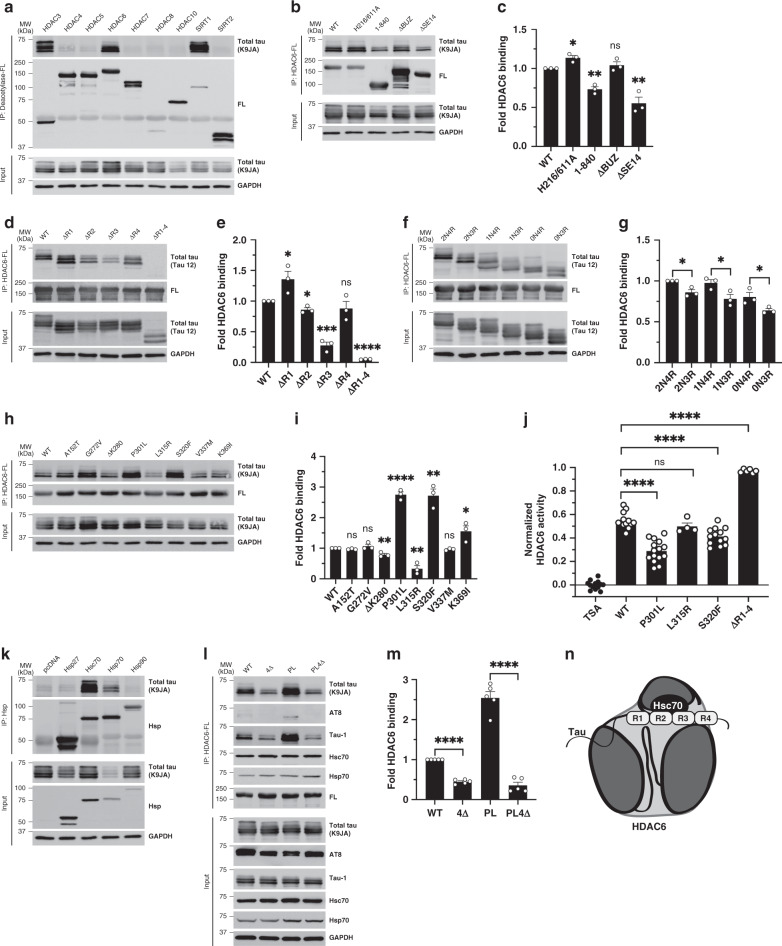
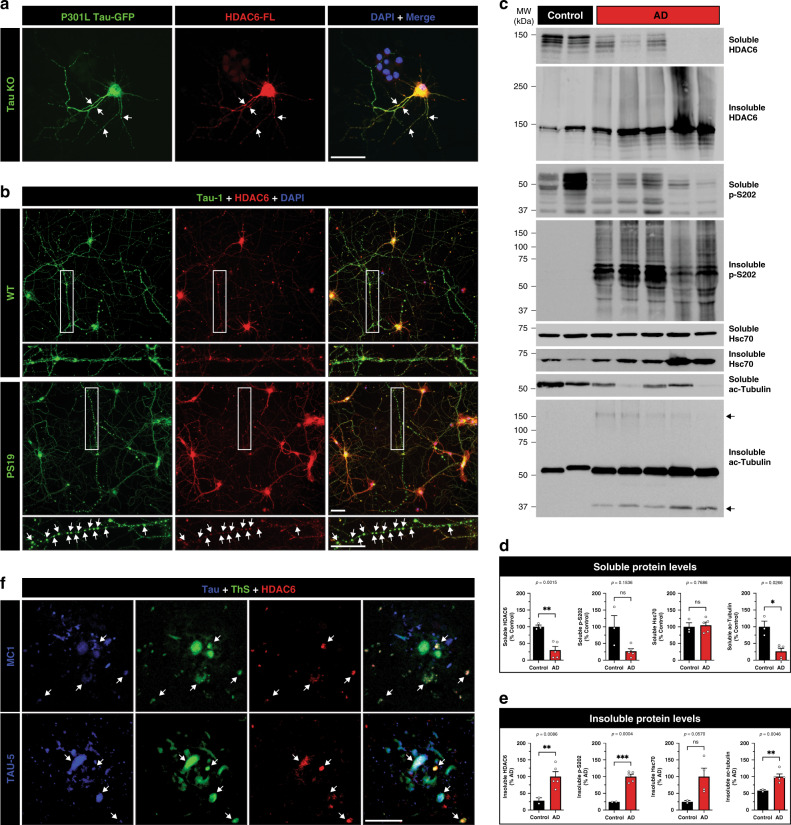
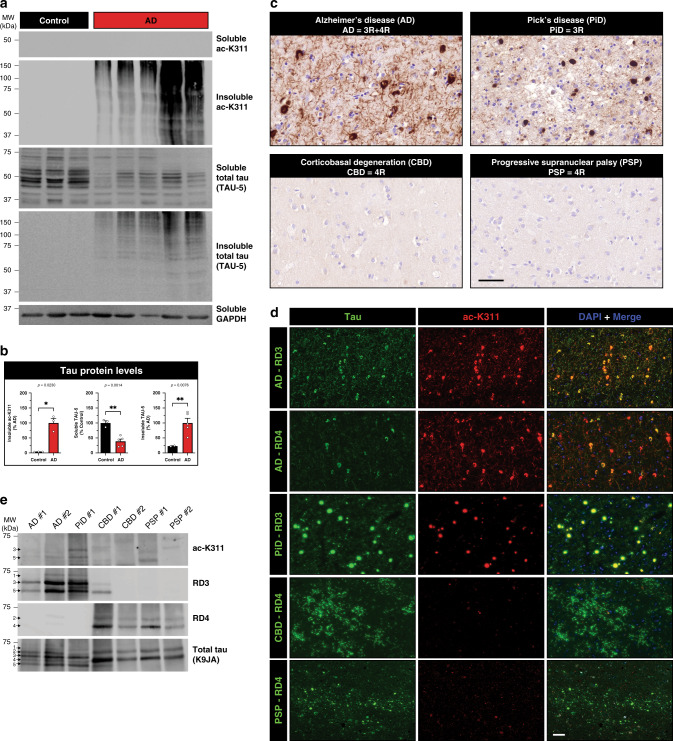
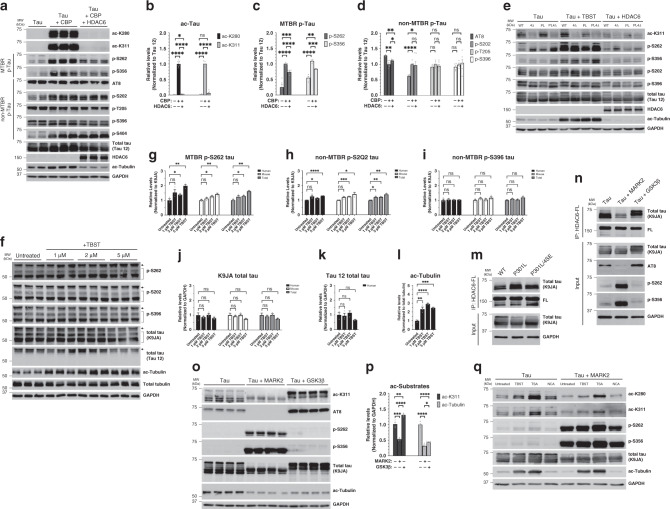
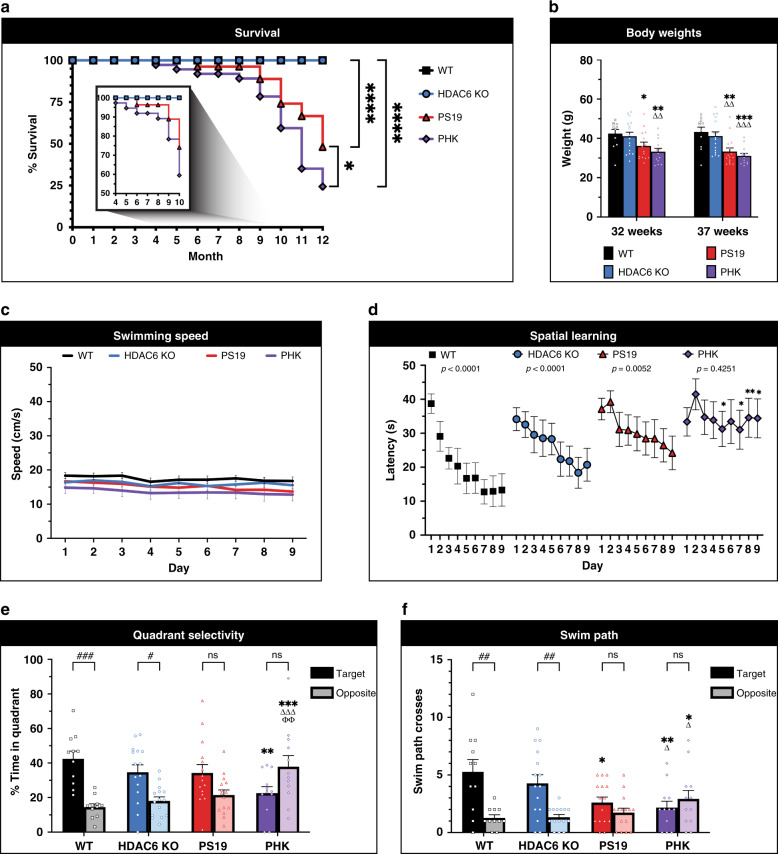
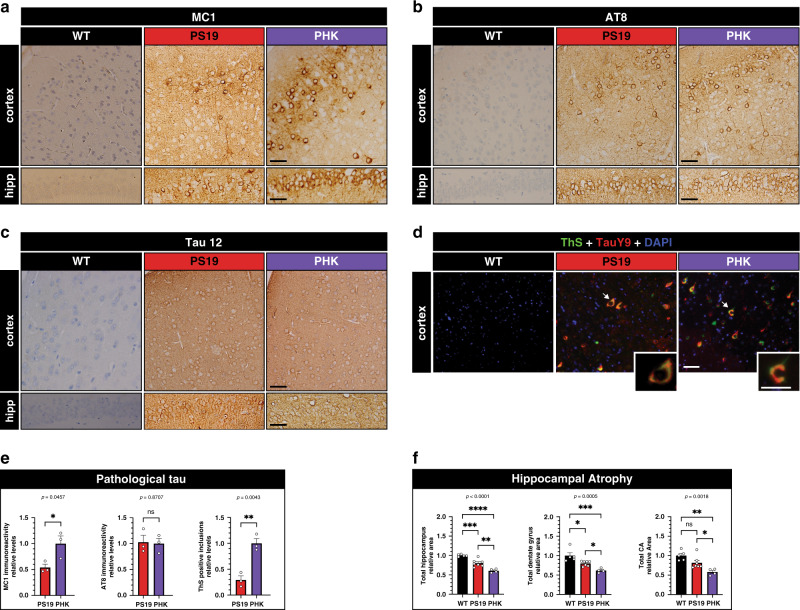
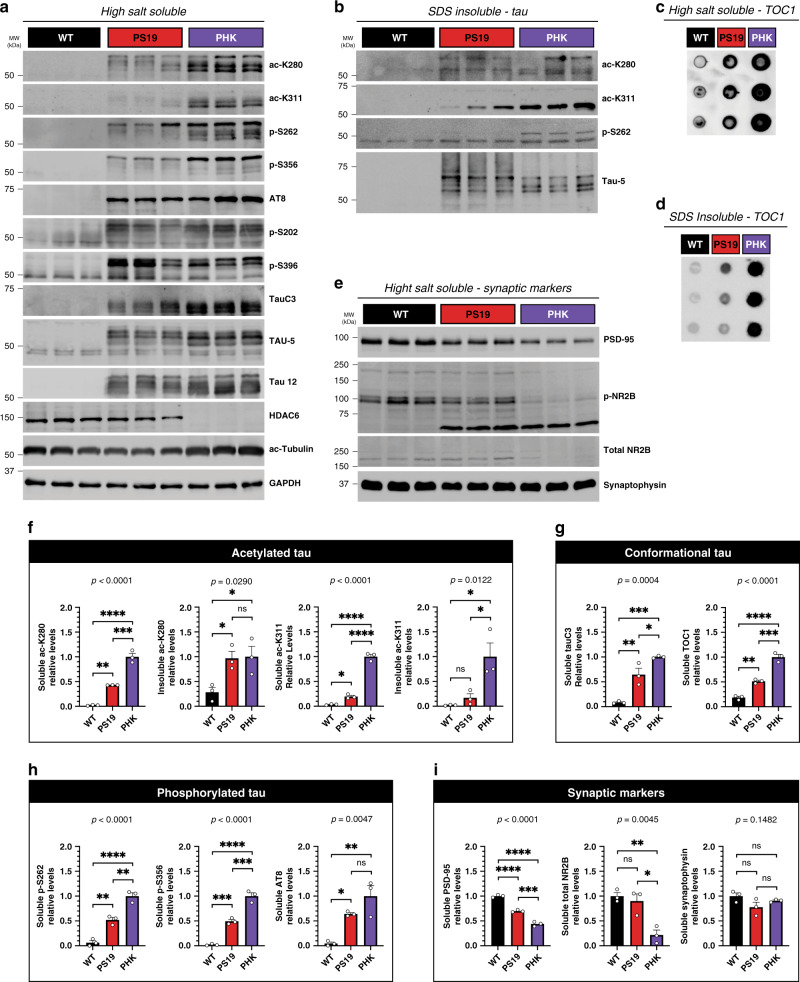
Tauopathies including Alzheimer’s disease (AD) are marked by the accumulation of aberrantly modified tau proteins. Acetylated tau, in particular, has recently been implicated in neurodegeneration and cognitive decline. HDAC6 reversibly regulates tau acetylation, but its role in tauopathy progression remains unclear. Here, we identified an HDAC6-chaperone complex that targets aberrantly modified tau. HDAC6 not only deacetylates tau but also suppresses tau hyperphosphorylation within the microtubule-binding region. In neurons and human AD brain, HDAC6 becomes co-aggregated within focal tau swellings and human AD neuritic plaques. Using mass spectrometry, we identify a novel HDAC6-regulated tau acetylation site as a disease specific marker for 3R/4R and 3R tauopathies, supporting uniquely modified tau species in different neurodegenerative disorders. Tau transgenic mice lacking HDAC6 show reduced survival characterized by accelerated tau pathology and cognitive decline. We propose that a HDAC6-dependent surveillance mechanism suppresses toxic tau accumulation, which may protect against the progression of AD and related tauopathies.
Overview
The claims and statistics of this paper haven’t been checked yet.
Run the check — free, no account needed. It reads the open-access text and checks the sources it cites.
Integrity signals
Registry
Cites
Statistics
Figures
Verification
Claims the paper makes
The claims and statistics of this paper haven’t been checked yet.
Run the check — free, no account needed. It reads the open-access text and checks the sources it cites.
Claims other papers make about this one
Each is checked against this paper’s own text: does it say what the citing paper says it does?
The cited source says what the claim attributes to it.
In the citing paper
“Increased expression of HDAC6 decreases Tau acetylation [40], which is a key factor contributing to the formation of Tau aggregates [39, 49].”
From Elevated SGK1 increases Tau phosphorylation and microtubule instability in Alzheimer’s patient-derived cortical neurons (2026) · cites this paper as [39]
In the citing paper
“HDAC6 also inhibits tau hyperphosphorylation within the MTBR [181].”
From Tau and neuroinflammation in Alzheimer’s disease: interplay mechanisms and clinical translation (2023) · cites this paper as [181]
Self-check
Percentages, sums and reported differences re-computed from the paper’s own numbers.
The self-check needs the paper’s full text.
Citations
Cites
1 retracted
Janczura, K. J., Volmar, C.-H., Sartor, G. C., Rao, S. J., Ricciardi, N. R., Lambert, G., Brothers, S. P., & Wahlestedt, C. (2018) · Proceedings of the National Academy of Sciences · doi:10.1073/pnas.1805436115 · Cited by 183
RetractedOakley, H., Cole, S. L., Logan, S., Maus, E., Shao, P., Craft, J., Guillozet-Bongaarts, A., Ohno, M., Disterhoft, J., Van Eldik, L., et al. (2006) · The Journal of Neuroscience · doi:10.1523/jneurosci.1202-06.2006 · Cited by 3,530
HDAC6 is a microtubule-associated deacetylase
Hubbert, C., Guardiola, A., Shao, R., Kawaguchi, Y., Ito, A., Nixon, A., Yoshida, M., Wang, X.-F., & Yao, T.-P. (2002) · Nature · doi:10.1038/417455a · Cited by 2,403
Synapse Loss and Microglial Activation Precede Tangles in a P301S Tauopathy Mouse Model
Yoshiyama, Y., Higuchi, M., Zhang, B., Huang, S.-M., Iwata, N., Saido, T. C., Maeda, J., Suhara, T., Trojanowski, J. Q., & Lee, V. M.-Y. (2007) · Neuron · doi:10.1016/j.neuron.2007.01.010 · Cited by 2,208
Self-citationKawaguchi, Y., Kovacs, J. J., McLaurin, A. C., Vance, J. M., Ito, A., & Yao, T. (2003) · Cell · doi:10.1016/s0092-8674(03)00939-5 · Cited by 1,529
HDAC6 rescues neurodegeneration and provides an essential link between autophagy and the UPS.
Pandey, U. B., Nie, Z., Batlevi, Y., McCray, B. A., Ritson, G. P., Nedelsky, N. B., Schwartz, S. L., DiProspero, N. A., Knight, M. A., Schuldiner, O., et al. (2007) · Nature · doi:10.1038/nature05853 · Cited by 1,234
HDAC6 Regulates Hsp90 Acetylation and Chaperone-Dependent Activation of Glucocorticoid Receptor
Kovacs, J. J., Murphy, P. J. M., Gaillard, S., Zhao, X., Wu, J.-T., Nicchitta, C. V., Yoshida, M., Toft, D. O., Pratt, W. B., & Yao, T.-P. (2005) · Molecular Cell · doi:10.1016/j.molcel.2005.04.021 · Cited by 1,153
von Bergen, M., Friedhoff, P., Biernat, J., Heberle, J., Mandelkow, E.-M., & Mandelkow, E. (2000) · Proceedings of the National Academy of Sciences · doi:10.1073/pnas.97.10.5129 · Cited by 1,021
Acetylation of Tau Inhibits Its Degradation and Contributes to Tauopathy
Min, S.-W., Cho, S.-H., Zhou, Y., Schroeder, S., Haroutunian, V., Seeley, W. W., Huang, E. J., Shen, Y., Masliah, E., Mukherjee, C., et al. (2010) · Neuron · doi:10.1016/j.neuron.2010.08.044 · Cited by 949
HDAC6 Modulates Cell Motility by Altering the Acetylation Level of Cortactin
Zhang, X. M., Yuan, Z., Zhang, Y., Yong, S., Salas-Burgos, A., Koomen, J. M., Olashaw, N., Parsons, J. T., Yang, X., Dent, S., et al. (2007) · Molecular Cell · doi:10.1016/j.molcel.2007.05.033 · Cited by 731
Cited by
Sorted by citations
Items 101–105 of 105
Imidazo[1,2-a]pyridine-based HDAC6 inhibitor a17 for the treatment of Alzheimer's disease
Han, Z., Liu, W., Fu, W., Wang, K., Tan, Z., Zhang, D., Yang, F., Dong, W., & Sang, Z. (2026) · European Journal of Pharmacology · doi:10.1016/j.ejphar.2026.179320
Protein damage and repair in aging: Mechanisms, homeostasis and disease
Lyakhovich, A., & Ferrucci, L. (2026) · Ageing Research Reviews · doi:10.1016/j.arr.2026.103400
Gupta, R. V., Kumar, R., Shreevatsa, B., Modi, D. K., Kumari, S., Kumar, N., Singh, P., Ravi, K., & Abomughaid, M. M. (2026) · Molecular Neurobiology · doi:10.1007/s12035-026-06265-1
BindingDB (2023) · UC San Diego · doi:10.7270/q25t3qmb
Metadata
- Authors
- Trzeciakiewicz, H., Ajit, D., Tseng, J.-H., Chen, Y., Ajit, A., Tabassum, Z., Lobrovich, R., Peterson, C., Riddick, N. V., Itano, M. S., Tripathy, A., Moy, S. S., Lee, V. M. Y., Trojanowski, J. Q., Irwin, D. J., & Cohen, T. J.
- Affiliations
- University of North Carolina at Chapel Hill (US)
- University of Pennsylvania (US)
- Corresponding author
- Cohen, Todd J.
- ORCID
- Venue
- Nature Communications
- Published
- 2020-11-02
- Volume
- 11
- Issue
- 1
- Pages
- 5522-5522
- ISSN
- 2041-1723 (ISSN-L)
- PMC
- PMC7606452
- OpenAlex
- W3096112623
- Cited by
- 102
- References
- 65
- Citations by year
- 2026: 11 · 2025: 21 · 2024: 21 · 2023: 18 · 2022: 22 · 2021: 9
- FWCI
- 7.67
- Type
- journal article
- Language
- en
- Open access
- gold
- doi.org
- Locations
- Nature Communications (publishedVersion, cc-by)
- PubMed Central (publishedVersion, cc-by)
- PubMed (publishedVersion)
- Carolina Digital Repository (University of North Carolina at Chapel Hill) (submittedVersion)
- RePEc: Research Papers in Economics (submittedVersion)
- DOAJ (DOAJ: Directory of Open Access Journals) (submittedVersion, cc-by-sa)
- UNC Libraries
- Funders
- U.S. Department of Health & Human Services | NIH | National Center for Advancing Translational Sciences (UL1TR001111)
- Alzheimer’s Association (NIRG-14-321219)
- Association for Frontotemporal Degeneration (-)
- U.S. Department of Health & Human Services | NIH | National Institute on Aging (R21AG058080)
- CurePSP (656-2018-06)
- American Federation for Aging Research (RAG15247)
- Topics
- Life Sciences › Neuroscience › Cellular and Molecular Neuroscience › Alzheimer's disease research and treatments
- Life Sciences › Biochemistry, Genetics and Molecular Biology › Molecular Biology › Histone Deacetylase Inhibitors Research
- Health Sciences › Medicine › Psychiatry and Mental health › Dementia and Cognitive Impairment Research
- Keywords
- HDAC6, tau acetylation, tauopathy, Alzheimer's disease, tau hyperphosphorylation, protein deacetylation, chaperone complex, tau aggregation, neuritic plaques, cognitive decline, tau transgenic mice, neurodegeneration
- MeSH terms
- Histone Deacetylase 6, Acetylation, Aged, Aged, 80 and over, Animals, Brain, Disease Models, Animal, Female, Humans, Male, Mice, Transgenic, Middle Aged, Phosphorylation, Protein Processing, Post-Translational, tau Proteins, Disease Progression, Tauopathies, Mice, Cognitive Dysfunction
About these checks
Registry, retraction, Cites and statistics results are computed, not judged, with one exception: a printed reference that no index lists is read once by a model before it counts as a citation error. Claims are extracted by a model and kept only when their quote appears verbatim in the text; each cited source is then checked, with a model’s help, for whether it says what the claim relies on. Those verdicts can be wrong — read the claim’s quote and the cited source before relying on one.
Statistics and arithmetic are recomputed, not judged.
Confidence bands are shown only for fields calibrated on our annotated test set. None is calibrated yet, so no band is shown.
What counts as a claim ›How we measure confidence ›How we check this ›
Are you an author, or do you see a problem with this page? Request a review
