

Individual differences among deep neural network models
Open accessPublished version of a preprint
The DOI matches its Crossref record; 38 of the 40 references it cites were found in a registry or an index.
Abstract
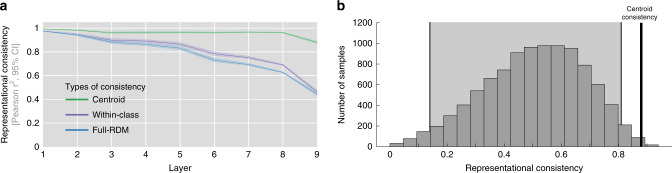
Deep neural networks (DNNs) excel at visual recognition tasks and are increasingly used as a modeling framework for neural computations in the primate brain. Just like individual brains, each DNN has a unique connectivity and representational profile. Here, we investigate individual differences among DNN instances that arise from varying only the random initialization of the network weights. Using tools typically employed in systems neuroscience, we show that this minimal change in initial conditions prior to training leads to substantial differences in intermediate and higher-level network representations despite similar network-level classification performance. We locate the origins of the effects in an under-constrained alignment of category exemplars, rather than misaligned category centroids. These results call into question the common practice of using single networks to derive insights into neural information processing and rather suggest that computational neuroscientists working with DNNs may need to base their inferences on groups of multiple network instances.
Overview
The claims and statistics of this paper haven’t been checked yet.
Free: it reads the open-access text and checks the first 5 claims that cite a source we can check. Create a free account to check every claim.
Integrity signals
Registry
Cites
Statistics
Figures
Verification
Claims the paper makes
The claims and statistics of this paper haven’t been checked yet.
Free: it reads the open-access text and checks the first 5 claims that cite a source we can check. Create a free account to check every claim.
Claims other papers make about this one
Each is checked against this paper’s own text: does it say what the citing paper says it does?
The source backs part of the claim, not all of it — or backs it for a different population, condition or comparison.
In the citing paper
“Moreover, systematic individual differences also arise across ANNs when varying network depth, dropout, and random initializations [73,79]”
From The Umwelt Representation Hypothesis: rethinking Universality (2026) · cites this paper as [79]
Experimental — accuracy not yet measured
Self-check
Percentages, sums and reported differences re-computed from the paper’s own numbers.
The self-check needs the paper’s full text.
Citations
Cites
ImageNet Large Scale Visual Recognition Challenge
Russakovsky, O., Deng, J., Su, H., Krause, J., Satheesh, S., Ma, S., Huang, Z., Karpathy, A., Khosla, A., Bernstein, M., et al. (2015) · International Journal of Computer Vision · doi:10.1007/s11263-015-0816-y · Cited by 39,380 · cited 2×
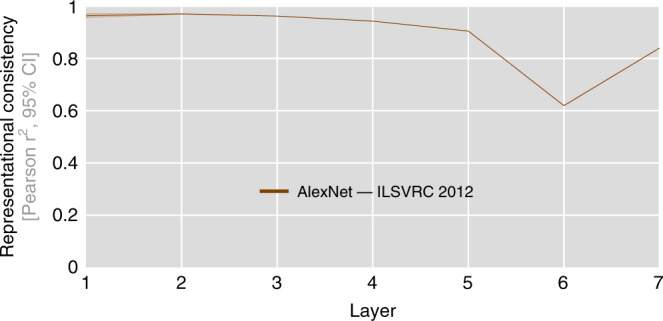
“To expand our experiments to network architectures commonly used to predict brain data 3,4,13 – 15 , we trained and tested 10 network instances of a recent version of AlexNet 16 on a large-scale object classi fi cation data set ILSVRC 2012 17 .”
Method(2014) · Cited by 33,419
Learning Multiple Layers of Features from Tiny Images
Krizhevsky, A. (2024) · doi:10.57702/zp44cu3g · Cited by 23,395
Advances in neural information processing systems 7
Cios, K., & Shields, M. (1997) · Neurocomputing · doi:10.1016/s0925-2312(97)90018-7 · Cited by 22,059
Delving Deep into Rectifiers: Surpassing Human-Level Performance on ImageNet Classification
He, K., Zhang, X., Ren, S., & Sun, J. (2015) · 2015 IEEE International Conference on Computer Vision (ICCV) · doi:10.1109/iccv.2015.123 · Cited by 19,741 · cited 1×
“As a result, the networks only differ in the initial random weights, which are, however, sampled from the same distribution (He et al., 2015).”
BackgroundStriving for Simplicity: The All Convolutional Net
Springenberg, J. T., Dosovitskiy, A., Brox, T., & Riedmiller, M. (2014) · arXiv · doi:10.48550/arxiv.1412.6806 · Cited by 3,447 · cited 1×
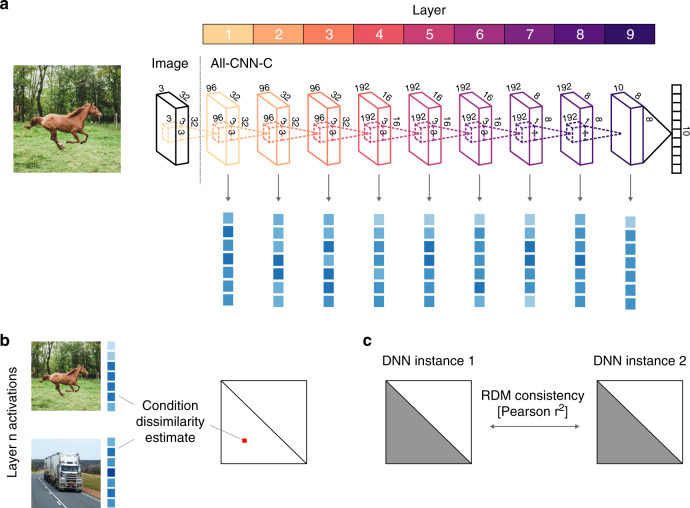
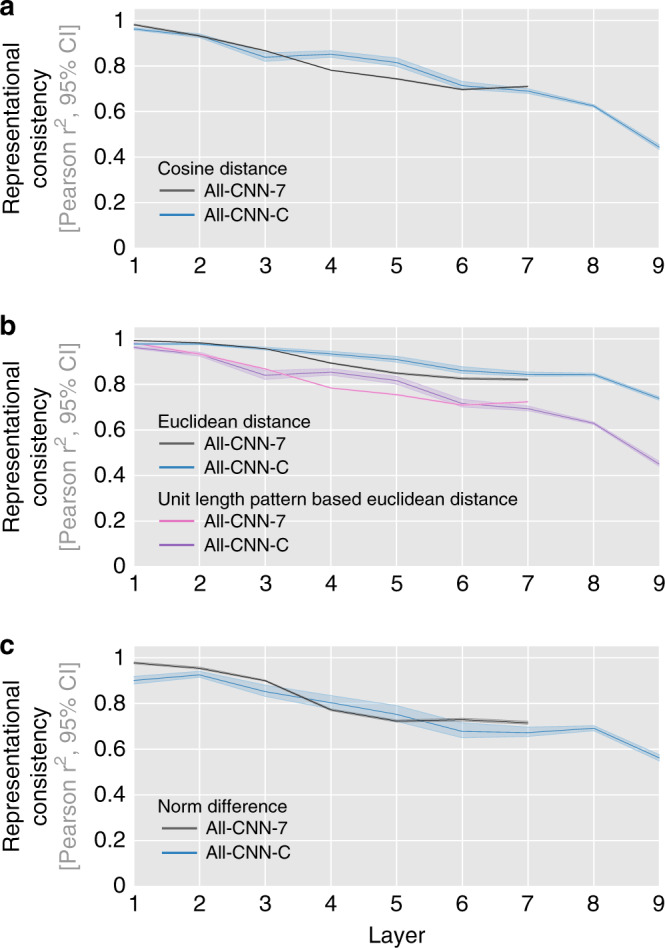
“We approach this question by training multiple instances of the All-CNN-C network architecture 11 and a custom architecture (All-CNN-7) on an object classi fi cation task (CIFAR-10 12 ), followed by an in-depth analysis of resulting network-internal representations.”
MethodRepresentational similarity analysis-connecting the branches of systems neuroscience
Kriegeskorte, N. (2008) · Frontiers in Systems Neuroscience · doi:10.3389/neuro.06.004.2008 · Cited by 3,355
Self-citationReturn of the Devil in the Details: Delving Deep into Convolutional Nets
Chatfield, K., Simonyan, K., Vedaldi, A., & Zisserman, A. (2014) · Proceedings of the British Machine Vision Conference 2014 · doi:10.5244/c.28.6 · Cited by 3,335
Performance-optimized hierarchical models predict neural responses in higher visual cortex
Yamins, D. L. K., Hong, H., Cadieu, C. F., Solomon, E. A., Seibert, D., & DiCarlo, J. J. (2014) · Proceedings of the National Academy of Sciences · doi:10.1073/pnas.1403112111 · Cited by 1,924
Deep supervised, but not unsupervised, models may explain IT cortical representation
Khaligh-Razavi, S.-M., & Kriegeskorte, N. (2014) · PLoS Computational Biology · doi:10.1371/journal.pcbi.1003915 · Cited by 1,204
Self-citation
Research works printed but not linked: 1
- 6. Raghu, M., Gilmer, J., Yosinski, J. & Sohl-Dickstein, J. SVCCA: singular vector canonical correlation analysis for deep learning dynamics and interpretability. In 31st Conference on Neural Information Processing Systems 10 (2017).
Cited by
Flesch, T., Juechems, K., Dumbalska, T., Saxe, A., & Summerfield, C. (2022) · Neuron · doi:10.1016/j.neuron.2022.01.005 · Cited by 249
“More generally, the diverse representational structure that can emerge in the rich and lazy regimes, and its variablemapping to the brain, may shed light on why emerging representation structure can be heterogenous in trained neural networks (Mehrer et al., 2020).”
The neuroconnectionist research programme
Doerig, A., Sommers, R. P., Seeliger, K., Richards, B., Ismael, J., Lindsay, G. W., Kording, K. P., Konkle, T., van Gerven, M. A. J., Kriegeskorte, N., et al. (2023) · Nature Reviews Neuroscience · doi:10.1038/s41583-023-00705-w · Cited by 233
Self-citationDeep problems with neural network models of human vision
Bowers, J. S., Malhotra, G., Dujmović, M., Llera Montero, M., Tsvetkov, C., Biscione, V., Puebla, G., Adolfi, F., Hummel, J. E., Heaton, R. F., et al. (2023) · Behavioral and Brain Sciences · doi:10.1017/s0140525x22002813 · Cited by 204
Using artificial neural networks to ask ‘why’ questions of minds and brains
Kanwisher, N., Khosla, M., & Dobs, K. (2023) · Trends in Neurosciences · doi:10.1016/j.tins.2022.12.008 · Cited by 182
“Better yet, researchers should kick the tires on network hyperparameters (e.g., using different random initializations [58]) to test the robustness of the emergence of the particular phenomenon in question.”
BackgroundAn ecologically motivated image dataset for deep learning yields better models of human vision
Mehrer, J., Spoerer, C. J., Jones, E. C., Kriegeskorte, N., & Kietzmann, T. C. (2021) · Proceedings of the National Academy of Sciences · doi:10.1073/pnas.2011417118 · Cited by 140
“To account for individual differences among DNNs (21), 10 network instances per architecture, each initialized with different random weights, were trained on each dataset (see Materials and Methods ).”
Self-citationToward Transparent AI: A Survey on Interpreting the Inner Structures of Deep Neural Networks
Räuker, T., Ho, A., Casper, S., & Hadfield-Menell, D. (2023) · 2023 IEEE Conference on Secure and Trustworthy Machine Learning (SaTML) · doi:10.1109/satml54575.2023.00039 · Cited by 122
“These include singleneuron alignment [113], [172], [173], [273], vector-space alignment [291], canonical correlation analysis [205], singular vector canonical correlation analysis [232], centered kernel alignment [154], [213], [233], [272], deconfounded representation similarity [66], layer reconstruction [176], model…”
MethodControversial stimuli: Pitting neural networks against each other as models of human cognition
Golan, T., Raju, P. C., & Kriegeskorte, N. (2020) · Proceedings of the National Academy of Sciences · doi:10.1073/pnas.1912334117 · Cited by 106
“An alternative approach to evaluating models would be to use multiple instances for each model (44), considering each DNN instance as an equivalent of an individual human brain.”
MethodSelf-citationUnsupervised learning predicts human perception and misperception of gloss
Storrs, K. R., Anderson, B. L., & Fleming, R. W. (2021) · Nature Human Behaviour · doi:10.1038/s41562-021-01097-6 · Cited by 92
“We then trained ten different instances of a PixelVAE 47,48 network with different initial random weights on this dataset to ensure that the results were robust to representational differences between training instances of the same architecture 70 .”
MethodFrancl, A., & McDermott, J. H. (2022) · Nature Human Behaviour · doi:10.1038/s41562-021-01244-z · Cited by 92
“Moreover, recent work suggests that internal representations across different networks trained on the same task can vary considerably 57 , so this approach aided in mitigating the individual idiosyncrasies of any given network.”
BackgroundMethod(2021) · doi:10.1162/jocn_a_01755 · Cited by 85
“This representational variance across networks is likely caused both by architectural differences and by “ individual differences ” among networks trained from different random initializations of the same architecture (Mehrer, Spoerer, Kriegeskorte, & Kietzmann, 2020).”
BackgroundSelf-citationModel Multiplicity: Opportunities, Concerns, and Solutions
Black, E., Raghavan, M., & Barocas, S. (2022) · 2022 ACM Conference on Fairness Accountability and Transparency · doi:10.1145/3531146.3533149 · Cited by 85
“And yet, empirical evidence seems to suggest the opposite: developing more accurate models can often lead tomore multiplicity (see Figure 1 for an example) [10, 41].”
BackgroundPredictive coding is a consequence of energy efficiency in recurrent neural networks
Ali, A. G., Ahmad, N., de Groot, E., van Gerven, M. A. J., & Kietzmann, T. C. (2022) · Patterns · doi:10.1016/j.patter.2022.100639 · Cited by 104
Self-citationBlauch, N. M., Behrmann, M., & Plaut, D. C. (2022) · Proceedings of the National Academy of Sciences · doi:10.1073/pnas.2112566119 · Cited by 74
“…that different initializations and architectural variants can yield interesting individual representational differences in deep-learning models (67), we expect that a systematic study of architectural variation in ITN models could lead to successful quantitative accounting of individual…”
Decoding semantic representations in mind and brain
Frisby, S. L., Halai, A. D., Cox, C. R., Ralph, M. A. L., & Rogers, T. T. (2023) · Trends in Cognitive Sciences · doi:10.1016/j.tics.2022.12.006 · Cited by 95
Saddler, M. R., Gonzalez, R., & McDermott, J. H. (2021) · Nature Communications · doi:10.1038/s41467-021-27366-6 · Cited by 66
“Given evidence for individual differences across different networks optimized for the same task (Mehrer et al., 2020), most figures feature results averaged across the 10 best networks identified in our architecture search (which we collectively refer to as 'the model').”
BackgroundHosseini, E. A., Schrimpf, M., Zhang, Y., Bowman, S., Zaslavsky, N., & Fedorenko, E. (2024) · Neurobiology of Language · doi:10.1162/nol_a_00137 · Cited by 63
“Another implication is that future attempts to align trained ANN models with human data should generalize their findings across different weight initializations (Mehrer et al., 2020).”
Background(2022) · doi:10.1101/2022.10.04.510681 · Cited by 62
Model metamers reveal divergent invariances between biological and artificial neural networks
Feather, J., Leclerc, G., Mądry, A., & McDermott, J. H. (2023) · Nature Neuroscience · doi:10.1038/s41593-023-01442-0 · Cited by 59
“This finding is loosely consistent with findings that the representational dissimilarity matrices for natural images can vary between individual neural network models 62 .”
ResultContribution of Pitch Measures over Time to Emotion Classification AccuracyPreprint
van Rijn, P., Poeppel, D., & Larrouy-Maestri, P. (2023) · PsyArXiv (OSF Preprints) · doi:10.31234/osf.io/pnysd · Cited by 62
Nguyen, T. G., Tran, N. A., Vu, P. L., Nguyen, Q., Nguyen, H. D., & Bui, Q. (2021) · Geoderma Regional · doi:10.1016/j.geodrs.2021.e00424 · Cited by 63
Picard, D. (2021) · arXiv (Cornell University) · doi:10.48550/arxiv.2109.08203 · Cited by 44
“It has been shown in Mehrer et al. (2020) that these affect the obtained networks in such a way that they differ measurably.”
High-level visual representations in the human brain are aligned with large language models
Doerig, A., Kietzmann, T. C., Allen, E., Wu, Y., Naselaris, T., Kay, K., & Charest, I. (2025) · Nature Machine Intelligence · doi:10.1038/s42256-025-01072-0 · Cited by 175
“We trained ten network instances with different random seeds to account for possible variation due to network initialization 68 .”
Self-citationModeling naturalistic face processing in humans with deep convolutional neural networks
Jiahui, G., Feilong, M., Castello, M. V. D. O., Nastase, S. A., Haxby, J. V., & Gobbini, M. I. (2023) · Proceedings of the National Academy of Sciences · doi:10.1073/pnas.2304085120 · Cited by 55
Detecting Abnormality of Battery Lifetime from First‐Cycle Data Using Few‐Shot Learning
Tang, X., Lai, X., Zou, C., Zhou, Y., Zhu, J., Zheng, Y., & Gao, F. (2023) · Advanced Science · doi:10.1002/advs.202305315 · Cited by 43
Similarity of Neural Network Models: A Survey of Functional and Representational Measures
Klabunde, M., Schumacher, T., Strohmaier, M., & Lemmerich, F. (2025) · ACM Computing Surveys · doi:10.1145/3728458 · Cited by 195
“Finally, studies on model universality have found that neural networks trained under different training setups are often at least partially similar in their representations [156, 97, 99, 137, 98], even if stemming from different modalities [92].”
High-level visual prediction errors in early visual cortex
Richter, D., Kietzmann, T. C., & de Lange, F. P. (2024) · PLoS Biology · doi:10.1371/journal.pbio.3002829 · Cited by 45
Self-citationShen, F., Li, Z., Xin, C., Guo, H., Peng, Y., & Li, K. (2022) · ACS Applied Materials & Interfaces · doi:10.1021/acsami.1c19718 · Cited by 29
Singer, J., Seeliger, K., Kietzmann, T. C., & Hebart, M. N. (2022) · Journal of Vision · doi:10.1167/jov.22.2.4 · Cited by 34
“The power of RSA lies in the fact that RDMs can be computed and subsequently compared across different systems (e.g. computational models and humans) but also across different conditions and processing stages in a neural network (Mehrer, Spoerer, Kriegeskorte, & Kietzmann, 2020).”
Self-citationCan deep convolutional neural networks support relational reasoning in the same-different task?
Puebla, G., & Bowers, J. S. (2022) · Journal of Vision · doi:10.1167/jov.22.10.11 · Cited by 36
“Following the recommendations of Mehrer et al. (2020), who argue that network behavior should be based on groups of network instances, we trained 10 instances of each model.”
MethodFed2A: Federated Learning Mechanism in Asynchronous and Adaptive Modes
Liu, S., Chen, Q., & You, L. (2022) · Electronics · doi:10.3390/electronics11091393 · Cited by 28
Why Do Better Loss Functions Lead to Less Transferable Features?
Kornblith, S., Chen, T., Lee, H., & Norouzi, M. (2021) · neural information processing systems · doi:10.48550/arxiv.2010.16402 · Cited by 125
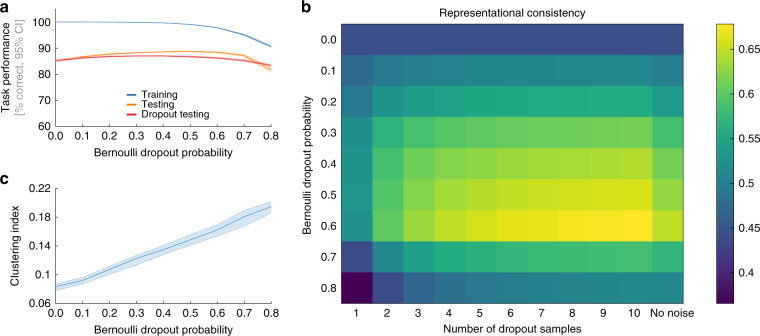
“[40] previously reported increased class separation in CIFAR-10 networks trained with dropout.”
BackgroundMaintenance and transformation of representational formats during working memory prioritization
Pacheco, D., Fellner, M.-C., Kunz, L., Zhang, H., Reinacher, P. C., Roy, C., Brandt, A., Schulze‐Bonhage, A., Yang, L., Wang, S., et al. (2024) · Nature Communications · doi:10.1038/s41467-024-52541-w · Cited by 32
“74).”
BackgroundMethodInfluentialEnd-to-end topographic networks as models of cortical map formation and human visual behaviour
Lu, Z., Doerig, A., Bosch, V. M., Krahmer, B., KAISER, D. H., Cichy, R. M., & Kietzmann, T. C. (2025) · Nature Human Behaviour · doi:10.1038/s41562-025-02220-7 · Cited by 41
“We trained five instances of each network type with different random initializations that we treat as experimental subjects 40 .”
Self-citationOptimizing System Reliability in Additive Manufacturing Using Physics-Informed Machine Learning
Wenzel, S., Slomski-Vetter, E., & Melz, T. (2022) · Machines · doi:10.3390/machines10070525 · Cited by 24
Good Seed Makes a Good Crop: Discovering Secret Seeds in Text-to-Image Diffusion Models
Xu, K. H., Zhang, L., & Shi, J. (2025) · IEEE Winter Conference on Applications of Computer Vision · doi:10.1109/wacv61041.2025.00299 · Cited by 73
“Prior works [4,18,30,33,40] have primarily examined the stochasticity in neural network training caused by randomly initialized weights, random data ordering, and stochastic optimization.”
Aellen, F. M., Göktepe-Kavis, P., Apostolopoulos, S., & Tzovara, A. (2021) · Journal of Neuroscience Methods · doi:10.1016/j.jneumeth.2021.109367 · Cited by 19
“Typically, multiple networks are trained per fold and their outputs are averaged to obtain stable features that are consistently identified by all networks ([9, 36]).”
BackgroundRecurrent connectivity supports higher-level visual and semantic object representations in the brain
von Seth, J., Nicholls, V. I., TYLER, L. K., & Clarke, A. (2023) · Communications Biology · doi:10.1038/s42003-023-05565-9 · Cited by 32
“Here we used a single pre-trained instance of CORnet-S, however, it has been suggested that nodal activations vary depending on the initial random seed of the network 100 .”
MethodPredictive coding is a consequence of energy efficiency in recurrent neural networksPreprint
Ali, A. G., Ahmad, N., de Groot, E., van Gerven, M. A. J., & Kietzmann, T. C. (2021) · bioRxiv (Cold Spring Harbor Laboratory) · doi:10.1101/2021.02.16.430904 · Cited by 18
Self-citationAiFed: An Adaptive and Integrated Mechanism for Asynchronous Federated Data Mining
You, L., Liu, S., Wang, T., Zuo, B.-R., Chang, Y., & Yuen, C. (2023) · IEEE Transactions on Knowledge and Data Engineering · doi:10.1109/tkde.2023.3332770 · Cited by 17
Diverse task-driven modeling of macaque V4 reveals functional specialization towards semantic tasks
Cadena, S. A., Willeke, K. F., Restivo, K., Denfield, G. H., Sinz, F. H., Bethge, M., Tolias, A. S., & Ecker, A. S. (2024) · PLoS Computational Biology · doi:10.1371/journal.pcbi.1012056 · Cited by 39
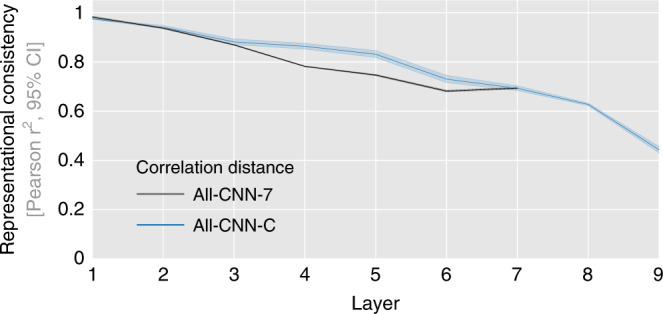
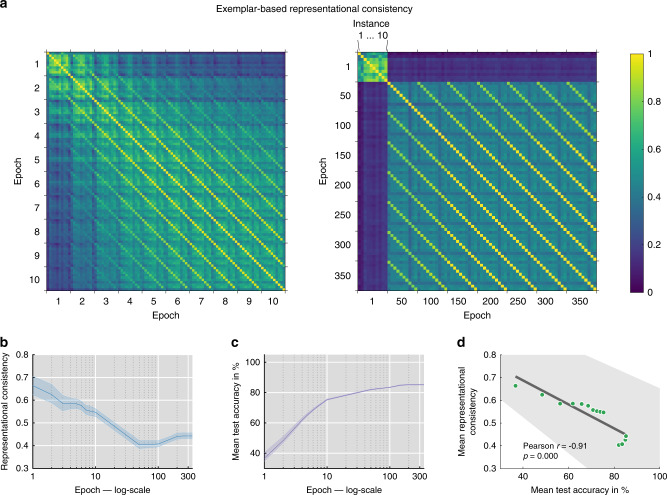
“That said, we remark that the representational consistency across instances is high for early to mid layers, decreasing with network depth [50].”
BackgroundMethodThe topology and geometry of neural representations
Lin, B., & Kriegeskorte, N. (2024) · Proceedings of the National Academy of Sciences · doi:10.1073/pnas.2317881121 · Cited by 42
“This argument suggests the hypothesis that variations among large distances are idiosyncratic to an individual brain or model instance [39].”
BackgroundMethodInfluentialSelf-citationNeuroTec Sitem-Insel Bern: Closing the Last Mile in Neurology
Schindler, K. A., Nef, T., Baud, M. O., Tzovara, A., Yılmaz, G., Tinkhauser, G., Gerber, S. M., Gnarra, O., Warncke, J. D., Schütz, N., et al. (2021) · Clinical and Translational Neuroscience · doi:10.3390/ctn5020013 · Cited by 15
“Understanding which features of a given data set contribute to the output of a neural network is crucial for introducing deep learning algorithms in basic and clinical research [38].”
BackgroundAbrupt and spontaneous strategy switches emerge in simple regularised neural networks
Löwe, A. T., Touzo, L., Muhle-Karbe, P. S., Saxe, A., Summerfield, C., & Schuck, N. W. (2024) · PLoS Computational Biology · doi:10.1371/journal.pcbi.1012505 · Cited by 16
“Notably, while different behavioural aspects of sudden and abrupt strategy switches have been shown, so far no study has made a detailed comparison to behaviour in humans and specifically asked whether delay, suddenness and selectivity can occur jointly in a single network model.”
Unsupervised learning predicts human perception and misperception of glossPreprint
Storrs, K. R., Anderson, B. L., & Fleming, R. W. (2020) · bioRxiv (Cold Spring Harbor Laboratory) · doi:10.1101/2020.04.07.026120 · Cited by 15
Enhancing Few-Shot CLIP With Semantic-Aware Fine-Tuning
Zhu, Y. T., Chen, Y., Mao, X., Yan, X. J., Wang, Y., Wang, L., Wang, J., & Ji, X. (2024) · IEEE Transactions on Neural Networks and Learning Systems · doi:10.1109/tnnls.2024.3443394 · Cited by 18
“Such findings are also consistent with the views of some existing research [52], [53], which indicates that the earlier layers of the model focus on general features like edges and corners rather than semantic features.”
Predicting Is Not Understanding: Recognizing and Addressing Underspecification in Machine Learning
Teney, D., Peyrard, M., & Abbasnejad, E. (2022) · Lecture notes in computer science · doi:10.1007/978-3-031-20050-2_27 · Cited by 48
Diverse task-driven modeling of macaque V4 reveals functional specialization towards semantic tasksPreprint
Cadena, S. A., Willeke, K. F., Restivo, K., Denfield, G. H., Sinz, F. H., Bethge, M., Tolias, A. S., & Ecker, A. S. (2022) · bioRxiv (Cold Spring Harbor Laboratory) · doi:10.1101/2022.05.18.492503 · Cited by 12
Malinowska, D., Milillo, P., Briggs, K., Reale, C., & Giardina, G. (2024) · IEEE Journal of Selected Topics in Applied Earth Observations and Remote Sensing · doi:10.1109/jstars.2024.3449688 · Cited by 16
“The NDVI can range from -1 to 1, where values close to 1 indicate dense vegetation, e.g., a rainforest, low values, usually around 0, indicate that there is no vegetation in a pixel, and negative values can be attributed to water.”
A Data Poisoning Resistible and Privacy Protection Federated-Learning Mechanism for Ubiquitous IoT
Chen, G., Li, X., You, L., Abdelmoniem, A. M., Zhang, Y., & Yuen, C. (2024) · IEEE Internet of Things Journal · doi:10.1109/jiot.2024.3514637 · Cited by 14
“To be specific, Mehrer et al. [29] defined RC to measure the similarity between DNNs.”
Categorical Perception: A Groundwork for Deep Learning
Bonnasse‐Gahot, L., & Nadal, J. (2021) · Neural Computation · doi:10.1162/neco_a_01454 · Cited by 18
“5: all layers present categorical effects, and, in line with recent findings (Alain and Bengio, 2016; Mehrer et al., 2020), categoricality increases with depth.”
BackgroundResultInfluentialUniversality of representation in biological and artificial neural networks
Hosseini, E., Casto, C., Zaslavsky, N., Conwell, C., Richardson, M., & Fedorenko, E. (2024) · doi:10.1101/2024.12.26.629294 · Cited by 10
Fridgeirsson, E. A., Bais, M. N., Eijsker, N., Thomas, R. M., Smit, D. J. A., Bergfeld, I. O., Schuurman, P. R., van den Munckhof, P., de Koning, P. P., Vulink, N. C. C., et al. (2023) · Journal of Neural Engineering · doi:10.1088/1741-2552/acbee1 · Cited by 14
“This is in line with Mehrer et al [31], who show that predictions aremore stablewhenusing ensembles of deep learningmodels.”
ResultMeding, K., Buschoff, L. M. S., Geirhos, R., & Wichmann, F. A. (2021) · arXiv (Cornell University) · doi:10.48550/arxiv.2110.05922 · Cited by 47
“Using representational similarity analysis (RSA) and most similar to our work, Mehrer et al. (2020) and Akbarinia and Gegenfurtner (2019) investigated whether different CNNs yield correlated representations and found that many neural networks show differences on a representational level.”
BackgroundThe Dataset Multiplicity Problem: How Unreliable Data Impacts Predictions
Meyer, A. P., Albarghouthi, A., & D’Antoni, L. (2023) · ACM Conference on Fairness, Accountability, and Transparency (FAccT) · doi:10.1145/3593013.3593988 · Cited by 34
“Multiplicity also arises when modifying training parameters like random seed, data ordering, and hyperparameters [8, 13, 34, 54, 56], but most of the works on this topic focus on either attack vulnerability or the reproducibility and generalizability of the training process.”
BackgroundExploring the categorical nature of colour perception: Insights from artificial networks
Akbarinia, A. (2024) · Neural Networks · doi:10.1016/j.neunet.2024.106758 · Cited by 16
Decoding the application of deep learning in neuroscience: a bibliometric analysis
Li, Y., & Zhong, Z. (2024) · Frontiers in Computational Neuroscience · doi:10.3389/fncom.2024.1402689 · Cited by 19
“Themes like “classification,” “framework,” “recognition,” “neuroscience,” “neural-networks,” and “network” occupy a quadrant indicative of fundamental but less developed areas, hinting at potential future research hotspots (Richards et al., 2019; Mehrer et al., 2020).”
Tsuda, B., Pate, S. C., Tye, K. M., Siegelmann, H. T., & B, T. J. S. A. (2021) · bioRxiv (Cold Spring Harbor Laboratory) · doi:10.1101/2021.05.31.446462 · Cited by 9
Neural processing of naturalistic audiovisual events in space and time
Hu, Y., & Mohsenzadeh, Y. (2025) · Communications Biology · doi:10.1038/s42003-024-07434-5 · Cited by 17
“Generally, the match between DNN models and the brain depends on multiple factors, such as the training dataset, the objective function, and the model architecture 144,146,147 .”
Granato, G., Cartoni, E., Rold, F. D., Mattera, A., & Baldassarre, G. (2022) · PLoS ONE · doi:10.1371/journal.pone.0267838 · Cited by 12
Human Visual Cortex and Deep Convolutional Neural Network Care Deeply about Object Background
Loke, J., Seijdel, N., Snoek, L., Sörensen, L. K. A., van de Klundert, R., van der Meer, M., Quispel, E., Cappaert, N. L. M., & Scholte, H. S. (2024) · Journal of Cognitive Neuroscience · doi:10.1162/jocn_a_02098 · Cited by 10
“We used different seeds to capture variance between different initializations and obtain reliable results (Mehrer, Spoerer, Kriegeskorte, & Kietzmann, 2020).”
MethodDecoding semantic representations in mind and brainPreprint
Frisby, S. L., Halai, A. D., Cox, C. R., Ralph, M. A. L., & Rogers, T. T. (2022) · doi:10.31234/osf.io/6kjtf · Cited by 7
A Python Toolbox for Representational Similarity AnalysisPreprint
van den Bosch, J. J. F., Golan, T., Peters, B., Taylor, J., Shahbazi, M., Lin, B., Charest, I., Diedrichsen, J., Kriegeskorte, N., Mur, M., et al. (2025) · eLife · doi:10.7554/elife.107828.1 · Cited by 9
Self-citationEngineering the Neural Automatic Passenger Counter
Jahn, N., & Siebert, M. (2022) · Engineering Applications of Artificial Intelligence · doi:10.1016/j.engappai.2022.105148 · Cited by 6
“It is known from other fields like operation research [13] and recent findings for neural networks [14] as well that such seemingly minor choices can have even more impact than algorithms or other design decisions.”
BackgroundInconsistent illusory motion in predictive coding deep neural networks
Kirubeswaran, O. R., & Storrs, K. R. (2023) · Vision Research · doi:10.1016/j.visres.2023.108195 · Cited by 10
“Retraining deep neural network architectures from different random initial states can lead to drastic differences in performance and internal representations learned by the network[33].”
BackgroundLee, J., Jung, M., Lustig, N., & Lee, J. (2023) · Human Brain Mapping · doi:10.1002/hbm.26189 · Cited by 5
“We could utilize an ecologically motivated image dataset (Mehrer et al., 2020) to better understand an image caption model in comparison with the human brain.”
MethodLoke, J., Seijdel, N., Snoek, L., van der Meer, M., van de Klundert, R., Quispel, E., Cappaert, N. L. M., & Scholte, H. S. (2022) · Journal of Cognitive Neuroscience · doi:10.1162/jocn_a_01914 · Cited by 9
“In favor of replicability of model performance and variance estimation in ResNets (Mehrer et al., 2020), we trained 10 different seeds of each ResNet model for fitting neural data.”
MethodSelective Ensembles for Consistent PredictionsPreprint
Black, E., Leino, K., & Fredrikson, M. (2021) · arXiv (Cornell University) · doi:10.48550/arxiv.2111.08230 · Cited by 18
“…both of these types of choices instantiate a broader class of choices that could be considered arbitrary, despite the fact that they may impact the predictions (Black and Fredrikson, 2021; Marx et al., 2019; Mehrer et al., 2020) (Section 5.1) and explanations (Section 5.2) of the resulting model.”
BackgroundInfluentialKaraminis, T. N., Hintz, F., & Scharenborg, O. (2022) · Cognitive Science · doi:10.1111/cogs.13110 · Cited by 6
Moore, J. A., Wilms, M., Gutierrez, A., Ismail, Z., Fakhar, K., Hadaeghi, F., Hilgetag, C. C., & Forkert, N. D. (2023) · Frontiers in Computational Neuroscience · doi:10.3389/fncom.2023.1274824 · Cited by 5
“RDMs are routinely used to quantitatively correlate brain-activity, behavioral measurement, and computational modeling (Kriegeskorte et al., 2008; Khaligh-Razavi and Kriegeskorte, 2014; Mehrer et al., 2020).”
MethodGraph-Based Similarity of Deep Neural Networks
Chen, Z., Lu, Y., Hu, J., Xuan, Q., Wang, Z., & Yang, X. (2024) · Neurocomputing · doi:10.1016/j.neucom.2024.128722 · Cited by 21
A feedforward mechanism for human-like contour integration
Doshi, F. R., Konkle, T., & Alvarez, G. A. (2025) · PLoS Computational Biology · doi:10.1371/journal.pcbi.1013391 · Cited by 5
“The existence of such variability across identical models trained on the same data serves as a valuable cautionary tale for drawing strong conclusions from single model instances [70].”
Deep Learning for Cancer Detection Based on Genomic and Imaging Data: A Comprehensive Review
Wang, X., & Su, C. (2025) · Cancer Management and Research · doi:10.2147/cmar.s533522 · Cited by 8
Mapping the learning curves of deep learning networks
Jiang, Y., & Dale, R. A. C. (2025) · PLoS Computational Biology · doi:10.1371/journal.pcbi.1012286 · Cited by 5
Task-relevant representational spaces in human memory traces
Heinen, R. M., Rau, E. M. B., Herweg, N. A., & Axmacher, N. (2025) · PLoS Computational Biology · doi:10.1371/journal.pcbi.1013476 · Cited by 6
“Future studies should also focus on testing additional DNNs and their relation to human similarity judgements since model architecture (such as recurrent connections between layers [12]), and even starting weights can influence DNN representations [119].”
Asymmetric Image Retrieval with Cross Model Compatible Ensembles
Shoshan, A., Linial, O., Bhonker, N., Hirsch, E., Zamir, L., Kviatkovsky, I., & Medioni, G. G. (2024) · IEEE Winter Conference on Applications of Computer Vision · doi:10.1109/wacv57701.2024.00008 · Cited by 7
“We provide the following hypotheses to explain this phenomenon: (1) each gallery model learns a different representation of the observed data [23, 30, 50] by focusing on slightly different features, (2) increased diversity in the gallery models results in more diverse representations, and (3)…”
BackgroundIn silico discovery of representational relationships across visual cortex
Gifford, A. T., Jastrzębowska, M. A., Singer, J., & Cichy, R. M. (2025) · Nature Human Behaviour · doi:10.1038/s41562-025-02252-z · Cited by 12
“To reduce spurious statistical dependencies between the in silico (that is, model-generated) fMRI responses from models of different participants and areas, each model was trained starting from a different random initialization 89 .”
Li, X., Tao, X., Chen, G., You, L., & Sun, Y. (2025) · IEEE Internet of Things Journal · doi:10.1109/jiot.2025.3573910 · Cited by 4
“To be specific, first, based on the responses of models toward same pairs of stimuli [34],[35],[36],[37],FedConcalculatesmodelconsistencyscore (MCS)andformsamodelvotingmatrix(MVM)thatstores theMCSvalueofeverymodelpair.”
Protecting Deep Learning Model Copyrights With Adversarial Example-Free Reuse Detection
Luan, X., Zhang, X., Wang, J., & Sun, M. (2025) · IEEE Transactions on Neural Networks and Learning Systems · doi:10.1109/tnnls.2025.3578664 · Cited by 5
“NF has been well practiced characterizing a DNN in neural network representation studies [26], [27].”
Medial temporal cortex supports object perception by integrating over visuospatial sequences
Bonnen, T., Wagner, A. D., & Yamins, D. L. K. (2025) · Cognition · doi:10.1016/j.cognition.2025.106135 · Cited by 9
Brain-like illusion produced by Skye’s Oblique Grating in deep neural networks
Zhang, H., Yoshida, S., & Li, Z. (2024) · PLoS ONE · doi:10.1371/journal.pone.0299083 · Cited by 4
Kumaratenna, K. P. S., & Cho, Y.-Y. (2024) · Horticultural Science and Technology · doi:10.7235/hort.20240059 · Cited by 3
A Model for Neural Network Modeling in Neuroscience
Storrs, K. R., & Maiello, G. (2020) · Journal of Neuroscience · doi:10.1523/jneurosci.1205-20.2020 · Cited by 4
“Ten instances of the network were trained on each training dataset — a safeguard against the potentially large differences between different randomly initialized instances (Mehrer et al., 2020).”
BackgroundThorat, S. (2021) · arXiv (Cornell University) · doi:10.17605/osf.io/pf4u5 · Cited by 3
Lu, M., Kim, C., Covert, I., White, N. J., & Lee, S. (2024) · medRxiv · doi:10.1101/2024.09.04.24312866 · Cited by 3
“Despite the progress in CATE models based on neural networks, their stability in real-world datasets remains an issue due to the inherent randomness encountered during model initialization and training [46].”
BackgroundA Python Toolbox for Representational Similarity AnalysisPreprint
van den Bosch, J. J. F., Golan, T., Peters, B., Taylor, J., Shahbazi, M., Lin, B., Charest, I., Diedrichsen, J., Kriegeskorte, N., Mur, M., et al. (2025) · eLife · doi:10.7554/elife.107828 · Cited by 5
Self-citationThe Umwelt Representation Hypothesis: rethinking Universality
Bosch, V., Sommers, R. P., Doerig, A., & Kietzmann, T. C. (2026) · Trends in Cognitive Sciences · doi:10.1016/j.tics.2026.07.004 · Cited by 2
Self-citationRuntime Backdoor Detection for Federated Learning via Representational Dissimilarity Analysis
Zhang, X., Xue, X., Du, X., Xie, X., Liu, Y., & Sun, M. (2025) · IEEE Transactions on Dependable and Secure Computing · doi:10.1109/tdsc.2025.3550330 · Cited by 10
“We also observe that benign models tend to form a dense neighborhood, while malicious models are more sparsely distributed with varying distances from the benign group.”
InfluentialAn, H., An, J. S., Li, M.-J., Kim, Y., & Kim, T. W. (2022) · Advanced Electronic Materials · doi:10.1002/aelm.202200876 · Cited by 2
Deep convolutional neural networks are not mechanistic explanations of object recognition
Grujičić, B. (2024) · Synthese · doi:10.1007/s11229-023-04461-3 · Cited by 3
“In contrast, correlation is not invariant to such rotations since they affect the angle between vectors and therefore their similarities (Mehrer et al., 2020).”
InfluentialManipulating and measuring variation in deep neural network (DNN) representations of objects
Chow, J. K., & Palmeri, T. J. (2024) · Cognition · doi:10.1016/j.cognition.2024.105920 · Cited by 3
“We generally replicated previous work (Mehrer et al., 2020) showing a monotonic decrease in representational similarity across layers by manipulating initial weights.”
BackgroundMethodResultInfluentialTask-dependent color representation in convolutional neural networks
Bosten, J. M., & Diyalagoda, S. A. (2025) · Journal of the Optical Society of America A · doi:10.1364/josaa.546067 · Cited by 3
Rapid computation of high-level visual surprise
Richter, D., Pena, P. L., & Ruz, M. (2025) · iScience · doi:10.1016/j.isci.2025.114121 · Cited by 5
Fridgeirsson, E. A., Bais, M. N., Eijsker, N., Thomas, R. M., Smit, D. J. A., Bergfeld, I. O., Schuurman, P. R., van den Munckhof, P., de Koning, P. P., Vulink, N. C. C., et al. (2021) · medRxiv · doi:10.1101/2021.04.04.21254830 · Cited by 2
Predictive Coding is a Consequence of Energy Efficiency in Recurrent Neural NetworksPreprint
Ali, A. G., Ahmad, N., de Groot, E., van Gerven, M. A. J., & Kietzmann, T. C. (2021) · SSRN Electronic Journal · doi:10.2139/ssrn.3976481 · Cited by 8
Self-citationPerirhinal cortex supports object perception by integrating over visuospatial sequencesPreprint
Bonnen, T., Wagner, A. D., & Yamins, D. L. K. (2023) · bioRxiv (Cold Spring Harbor Laboratory) · doi:10.1101/2023.09.07.556737 · Cited by 2
Ogg, M., & Kitchell, L. M. (2024) · bioRxiv (Cold Spring Harbor Laboratory) · doi:10.1101/2024.02.02.578642 · Cited by 2
“Representational similarity analysis can provide another view into the information encoded by a network embedding that is less biased by optimization goals and tuning parameters (Mehrer et al., 2020; Kriegeskorte & Kievit, 2013; Ogg & Skerrit-Davis, 2021; Ogg et al., 2024).”
Scene segmentation processes drive EEG-DCNN alignmentPreprint
Loke, J., Brands, A. M., Cappaert, N. L. M., & Scholte, H. S. (2025) · bioRxiv (Cold Spring Harbor Laboratory) · doi:10.1101/2025.03.11.642570 · Cited by 3
A Python Toolbox for Representational Similarity AnalysisPreprint
van den Bosch, J. J. F., Golan, T., Peters, B., Taylor, J., Shahbazi, M., Lin, B., Charest, I., Diedrichsen, J., Kriegeskorte, N., Mur, M., et al. (2025) · bioRxiv (Cold Spring Harbor Laboratory) · doi:10.1101/2025.05.22.655542 · Cited by 7
Self-citationHuman-like individual differences emerge from random weight initializations in neural networksPreprint
Fung, H., Murty, N. A. R., & Rahnev, D. (2025) · bioRxiv (Cold Spring Harbor Laboratory) · doi:10.1101/2025.10.25.684448 · Cited by 4
“Prior work has demonstrated that seemingly minor factors such as weight initialization [14] or the order of training images [15] can drive substantial variability in the features a model learns.”
Behavioral differences between humans and machines arise early in visual processing
Klein, T., Brendel, W., & Wichmann, F. A. (2026) · Journal of Vision · doi:10.1167/jov.26.2.9 · Cited by 1
“…behavioral differences (Neri, 2022), the representations learned by humans also seem to differ from those learned by DNNs (Muttenthaler, Dippel, Linhardt, Vandermeulen, & Kornblith, 2023), and DNN representations also differ among themselves (Mehrer, Spoerer, Kriegeskorte, & Kietzmann, 2020).”
Metadata
- Authors
- Mehrer, J., Spoerer, C. J., Kriegeskorte, N., & Kietzmann, T. C.
- Affiliations
- MRC Cognition and Brain Sciences Unit (GB)
- Mortimer B. Zuckerman Mind Brain Behavior Institute (US)
- Radboud University Nijmegen (NL)
- Corresponding author
- Mehrer, Johannes
- Kietzmann, Tim C.
- Venue
- Nature Communications
- Published
- 2020-11-12
- Volume
- 11
- Issue
- 1
- Pages
- 5725-5725
- ISSN
- 2041-1723 (ISSN-L)
- PMC
- PMC7665054
- OpenAlex
- W3100481436
- Cited by
- 133
- References
- 40
- Citations by year
- 2026: 20 · 2025: 25 · 2024: 25 · 2023: 19 · 2022: 21 · 2021: 18 · 2020: 5
- FWCI
- 6.19
- Type
- journal article
- Language
- en
- Open access
- gold
- doi.org
- Licence
- cc-by
- creativecommons.org/licenses/by/4.0 (tdm)
- creativecommons.org/licenses/by/4.0 (vor)
- Locations
- Nature Communications (publishedVersion, cc-by)
- PubMed Central (publishedVersion, cc-by)
- PubMed (publishedVersion)
- DOAJ (DOAJ: Directory of Open Access Journals) (submittedVersion, cc-by-sa)
- Radboud Repository (Radboud University) (submittedVersion)
- Radboud Repository (Radboud University) (submittedVersion, other-oa)
- Funders
- EC | Horizon 2020 Framework Programme (720270, 785907)
- Deutsche Forschungsgemeinschaft (DynaVision)
- Nvidia (GPU Program)
- Topics
- Physical Sciences › Computer Science › Artificial Intelligence › Neural Networks and Applications
- Physical Sciences › Computer Science › Computer Vision and Pattern Recognition › Advanced Neural Network Applications
- Physical Sciences › Computer Science › Artificial Intelligence › Domain Adaptation and Few-Shot Learning
- Keywords
- deep neural network, individual differences, weight initialization, visual recognition
- MeSH terms
- Cognitive Neuroscience, Animals, Brain, Individuality, Neural Networks, Computer
About these checks
Registry, retraction, Cites and statistics results are computed, not judged, with one exception: a printed reference that no index lists is read once by a model before it counts as a citation error. Claims are extracted by a model and kept only when their quote appears verbatim in the text; each cited source is then checked, with a model’s help, for whether it says what the claim relies on. Those verdicts can be wrong — read the claim’s quote and the cited source before relying on one.
Statistics and arithmetic are recomputed, not judged.
Confidence bands are shown only for fields calibrated on our annotated test set. None is calibrated yet, so no band is shown.
What counts as a claim ›How we measure confidence ›How we check this ›
Are you an author, or do you see a problem with this page? Request a review
Data sources
Bibliographic data: Semantic Scholar, OpenAlex, Crossref.
Contains information from the Semantic Scholar Academic Graph Datasets, made available under the ODC Attribution License (ODC-BY 1.0).
Semantic Scholar’s data is described in: Kinney, R., et al. (2023). The Semantic Scholar Open Data Platform. arXiv:2301.10140.
