

China’s plastic import ban increases prospects of environmental impact mitigation of plastic waste trade flow worldwide
Open accessThe DOI matches its Crossref record; 32 of the 32 references it cites were found in a registry or an index; 9 of the 29 sources its claims cite were checked for support.
Abstract
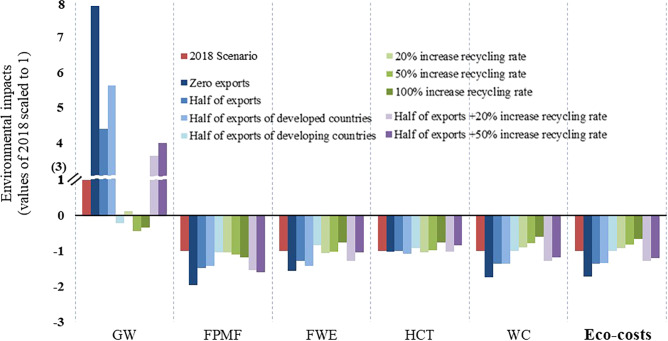
AbstractSince the late 1990s, the trend of plastic waste shipment from developed to developing countries has been increasing. In 2017, China announced an unprecedented ban on its import of most plastic waste, resulting in a sharp decline in global plastic waste trade flow and changes in the treatment structure of countries, whose impacts on global environmental sustainability are enormous but yet unexamined. Here, through the life cycle assessment (LCA) method, we quantified the environmental impacts of changes in the flow patterns and treatment methods of 6 types of plastic waste in 18 countries subsequent to the ban. In the short term, the ban significantly improved four midpoint indicators of environmental impact, albeit contributed to global warming. An annual saving of about 2.35 billion euros of eco-cost was realized, which is equivalent to 56% of plastic waste global trade value in 2017. To achieve global environmental sustainability in the long run, countries should gradually realize the transition from export to domestic management, and from landfill to recycling, which would realize eco-costs savings of about 1.54–3.20 billion euros.
Overview
CoChat Summary
TL;DR
Using life cycle assessment, the paper quantifies environmental impacts of global plastic waste trade changes after China’s 2017 plastic import ban across 6 plastic types and 18 countries. In the short term the ban saved about €2.35 billion in annual eco-cost and improved four midpoint indicators, while worsening global warming; long-term export-reduction and recycling scenarios could save €1.54–3.20 billion.
Key findings
- Global plastic waste trade flow fell 45.5% in 2018 versus baseline, and China’s imports plunged 95.4% to 4.6% of baseline; Southeast Asia 5 imports rose to 362% of baseline.
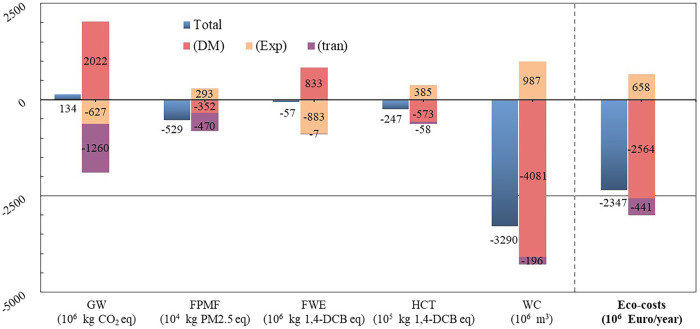
- The ban improved four midpoint indicators (FPMF, FWE, HCT, WC) but contributed to global warming; annual eco-cost savings were €2.35 billion (range €2.17–2.52 billion), equivalent to about 56% of the 2017 global plastic waste trade value of US$4.7 billion.
- China’s import-flow changes alone saved €2.51 billion in eco-cost, and the EIT for GW from China’s import changes was 8.3 times the total EIT.
- Long-term scenarios reducing exports and increasing recycling saved about €1.54–3.20 billion in eco-costs, with “Half of exports +20% increase recycling rate” recommended as the most practical and effective pathway.
Methods
- LCA and scenario analysis with 1 kg of plastic waste as the functional unit, covering six plastic types (PE, PS, PVC, PET, PP, and others) and 18 sample countries plus “other countries.”
- Trade data came mainly from UN Comtrade; baseline used 2008–2016 data (2017 excluded), 2018 Scenario used factual data, and prediction scenarios modeled export reductions and recycling-rate increases.
- Five ReCiPe midpoint indicators were assessed—global warming, fine particulate matter formation, freshwater ecotoxicity, human carcinogenic toxicity, and water consumption—then aggregated via eco-cost; treatment options included landfill/mismanagement, incineration, and recycling.
Limitations
- Paper-stated: unit eco-cost values vary and create uncertainty; missing 2018 data were estimated from monthly/mirror data; electricity consumption and avoided-product assumptions were set uniformly and may vary by type and country; mismanagement was approximated by sanitary landfill due to lack of precise environmental impact data; emerging treatment techniques were treated as negligible.
- Evident from the text: the analysis relies on country-level average treatment shares and uniform transport/electricity parameters, so it does not capture within-country heterogeneity in plastic waste treatment.
Model-written summary. Check it against the paper before relying on it.
Integrity signals
Registry
Cites
Statistics
Figures
Verification
Claims the paper makes
6 Valid · 6 Not valid · 9 Not checked · 87 Own results and interpretations
The cited sources support only part of this claim — read each source’s verdict below.
In the paper
“global plastic waste trade flows from high-income countries to low-income countries have become a routine since the late 1990s6,7.”
§ China’s plastic import ban increases prospects of environmental impact mitigation of plastic waste trade flow worldwide > Introduction
What the sources say
- Not checked — no full text of the sourcecites [6] Qu S Implications of China’s foreign waste ban on the global circular economy Resour. Conserv. Recycling 2019 144 252 255 10.1016/j.resconrec.2019.01.004 source
- Partly supportedcites [7] Gregson, N. & Crang, M. in Annual Review of Environment and Resources, Vol. 40 (eds A. Gadgil & T. P. Tomich) 151–176 (2015). sourceExperimental — accuracy not yet measured
Section 2.3.3 (p. 10) says waste flows from the Global North to the Global South expanded dramatically since the late 1990s. The Introduction (p. 2) includes plastic scrap in the growing trade and says high-income countries are major exporters while lower-income countries are major importers. It does not establish specifically that plastic-waste flows along that route became routine in the late 1990s. (LLM, conf=0.82)
plain- Asserted: passes — The authors put it forward as true.
- Checkable: passes — It can be checked against evidence.
- Load-bearing: unclear — It is unclear whether the paper’s conclusions depend on it.
- Based: passes — The paper gives a reason why it holds.
The cited sources support only part of this claim — read each source’s verdict below.
In the paper
“In the near future, large amounts of waste will be disbursed to other developing countries where there is still lack of policies to restrict imports6,8,14,16,20.”
§ China’s plastic import ban increases prospects of environmental impact mitigation of plastic waste trade flow worldwide > Results > Environmental impacts of changes in waste trade flows and treatment system structures
What the sources say
- Not checked — no full text of the sourcecites [6] Qu S Implications of China’s foreign waste ban on the global circular economy Resour. Conserv. Recycling 2019 144 252 255 10.1016/j.resconrec.2019.01.004 source
- Not checked — no full text of the sourcecites [8] Chen Y Life cycle assessment of end-of-life treatments of waste plastics in China Resour. Conserv. Recycling 2019 146 348 357 10.1016/j.resconrec.2019.03.011 source
- Partly supportedcites [14] Brooks, A. L., Wang, S. & Jambeck, J. R. The Chinese import ban and its impact on global plastic waste trade. Sci. Adv.4, 10.1126/sciadv.aat0131 (2018). PMC6010324 29938223 sourceExperimental — accuracy not yet measured
The Discussion (page unavailable) says that East Asia and Pacific countries surrounding China could receive displaced plastic waste. It presents this as a possibility, not a definite near-future outcome, and says many of those countries lack waste-management infrastructure—not policies restricting imports. (LLM, conf=0.86)
- Partly supportedcites [16] Wang C Zhao L MK Lim Chen W-Q Sutherland JW Structure of the global plastic waste trade network and the impact of China’s import Ban Resour. Conserv. Recycling 2020 153 104591 10.1016/j.resconrec.2019.104591 sourceExperimental — accuracy not yet measured
Section 4.4 (page unavailable) says developed countries have redirected plastic waste to Southeast Asia and expect to continue shifting it to poorer countries with laxer environmental laws. But it does not establish that the receiving countries lack import restrictions; Section 4.3 (page unavailable) describes restrictions already introduced by Thailand, Vietnam, and Malaysia. The near-future claim about large amounts going to countries without such policies therefore goes beyond the paper. (LLM, conf=0.84)
- Not matchedcites [20] Recycled plastics Branch of China National Resources Recycling Association. Development Report of China Plastics Recycling Industry (2018–2019). (2019).
Its entry has no title and year that we can search by.
plainstates a cause- Asserted: passes — The authors put it forward as true.
- Checkable: passes — It can be checked against evidence.
- Load-bearing: passes — The paper’s conclusions depend on it.
- Based: passes — The paper gives a reason why it holds.
The cited sources support only part of this claim — read each source’s verdict below.
In the paper
“It’s worth mentioning that, with the improvement of import policies of developing countries, the export flows and recycling rates of plastic waste will further change6,16,21.”
§ China’s plastic import ban increases prospects of environmental impact mitigation of plastic waste trade flow worldwide > Discussion
What the sources say
- Not checked — no full text of the sourcecites [6] Qu S Implications of China’s foreign waste ban on the global circular economy Resour. Conserv. Recycling 2019 144 252 255 10.1016/j.resconrec.2019.01.004 source
- Partly supportedcites [16] Wang C Zhao L MK Lim Chen W-Q Sutherland JW Structure of the global plastic waste trade network and the impact of China’s import Ban Resour. Conserv. Recycling 2020 153 104591 10.1016/j.resconrec.2019.104591 sourceExperimental — accuracy not yet measured
Section 4.4 (page unavailable) predicts that import bans in developing countries will close existing routes for plastic-waste exports, and reports that China’s ban redirected exports to Southeast Asia. The paper does not say that these policy changes will alter plastic-waste recycling rates. (LLM, conf=0.86)
- Partly supportedcites [21] Walker TR China’s ban could curb plastic waste Nature 2018 553 404 404 10.1038/d41586-018-00933-6 sourceExperimental — accuracy not yet measured
Our copy (correspondence item 'China's ban could curb plastic waste', p. 1) supports only the China-specific part of the attribution: China's ban on imports of recycled plastic from developed countries 'could be a game changer', leaving developed countries with 'extra unexpected plastic' that must be handled by new waste-management solutions rather than stockpiled — i.e. a shift in where plastic waste flows. It says nothing about recycling rates changing, and it does not make the forward-looking general claim that improving import policies across developing countries will cause export flows and recycling rates to 'further change'; the piece addresses one 2018 ban, not a trend in developing-country policy. Searched: 'recycling rates of plastic waste will change export flows developing countries import policy' and 'China ban imports recycled plastic waste exporters Malaysia Vietnam stockpile' — no passage mentions recycling rates or other developing countries' import policies. (LLM, conf=0.68)
hedgedstates a possible cause- Asserted: passes — The authors put it forward as true.
- Checkable: passes — It can be checked against evidence.
- Load-bearing: unclear — It is unclear whether the paper’s conclusions depend on it.
- Based: passes — The paper gives a reason why it holds.
A result the paper states — it cites no source for it, so there is none to check. The quote shows it is in the paper.
In the paper
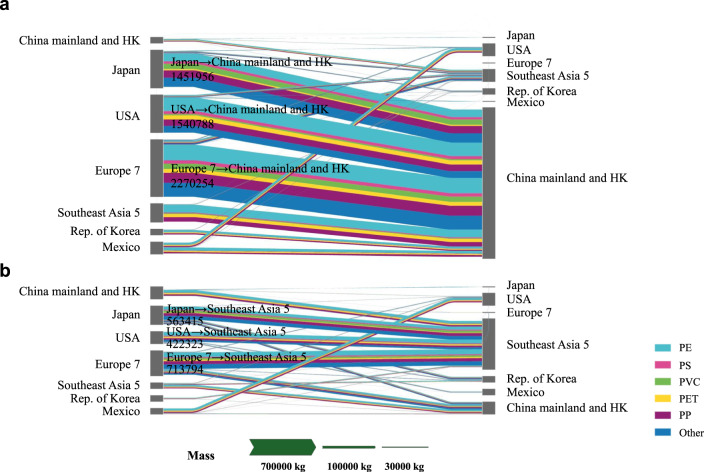
“Hong Kong, China, was one of the most prominent transshipment ports for plastic waste destined for mainland China, transferring about 3,184,176 tons of plastic waste per annuum (22% of world’s trades) to China.”
§ China’s plastic import ban increases prospects of environmental impact mitigation of plastic waste trade flow worldwide > Results > Changes in plastic waste trade flow pattern subsequent to the China ban
plain- Asserted: passes — The authors put it forward as true.
- Checkable: passes — It can be checked against evidence.
- Load-bearing: passes — The paper’s conclusions depend on it.
- Based: passes — The paper gives a reason why it holds.
A result the paper states — it cites no source for it, so there is none to check. The quote shows it is in the paper.
In the paper
“Before the ban, mainland China was undoubtfully the single largest importer of plastic waste, importing about 55.7% of world’s plastic waste (14,304,561 tons for the world).”
§ China’s plastic import ban increases prospects of environmental impact mitigation of plastic waste trade flow worldwide > Results > Changes in plastic waste trade flow pattern subsequent to the China ban
boosted- Asserted: passes — The authors put it forward as true.
- Checkable: passes — It can be checked against evidence.
- Load-bearing: passes — The paper’s conclusions depend on it.
- Based: passes — The paper gives a reason why it holds.
52 more claims
Create a free account to see all 108 claims and to verify the 1 reference still open.
- It may state two separate claims as one. 38
- Probably not a substantial claim. 17
Citations
Cites
Production, use, and fate of all plastics ever made
Geyer, R., Jambeck, J. R., & Law, K. L. (2017) · Science Advances · doi:10.1126/sciadv.1700782 · Cited by 18,606
Plastic waste inputs from land into the ocean
Jambeck, J. R., Geyer, R., Wilcox, C., Siegler, T. R., Perryman, M., Andrady, A., Narayan, R., & Law, K. L. (2015) · Science · doi:10.1126/science.1260352 · Cited by 13,163
Categorising tools for sustainability assessment
Ness, B., Urbel-Piirsalu, E., Anderberg, S., & Olsson, L. (2007) · Ecological Economics · doi:10.1016/j.ecolecon.2006.07.023 · Cited by 1,407
The Chinese import ban and its impact on global plastic waste trade
Brooks, A. L., Wang, S., & Jambeck, J. R. (2018) · Science Advances · doi:10.1126/sciadv.aat0131 · Cited by 955 · cited 1×
“This finding corresponds with Brooks et al. (2018)’s opinion that the dependence of a single importer is fragile14.”
Gu, F., Guo, J., Zhang, W., Summers, P. A., & Hall, P. (2017) · Science of The Total Environment · doi:10.1016/j.scitotenv.2017.05.278 · Cited by 423
Recycling potential of post-consumer plastic packaging waste in Finland
Dahlbo, H., Poliakova, V., Mylläri, V., Sahimaa, O., & Anderson, R. (2018) · Waste Management · doi:10.1016/j.wasman.2017.10.033 · Cited by 364
Challenges and emerging solutions to the land-based plastic waste issue in Africa
Jambeck, J., Hardesty, B. D., Brooks, A. L., Friend, T., Teleki, K., Fabres, J., Beaudoin, Y., Bamba, A., Francis, J., Ribbink, A. J., et al. (2018) · Marine Policy · doi:10.1016/j.marpol.2017.10.041 · Cited by 338
Plastic waste as a fuel - CO2-neutral or not?
Eriksson, O., & Finnveden, G. (2009) · Energy & Environmental Science · doi:10.1039/b908135f · Cited by 272
Structure of the global plastic waste trade network and the impact of China’s import Ban
Wang, C., Zhao, L., Lim, M. K., Chen, W.-Q., & Sutherland, J. W. (2020) · Resources, Conservation and Recycling · doi:10.1016/j.resconrec.2019.104591 · Cited by 259
Implications of China’s foreign waste ban on the global circular economy
Qu, S., Guo, Y., Ma, Z., Chen, W.-Q., Liu, J., Liu, G., Wang, Y., & Xu, M. (2019) · Resources, Conservation and Recycling · doi:10.1016/j.resconrec.2019.01.004 · Cited by 220
Cited by
Items 101–200 of 324
Santander, P., Sanchez, F. A. C., Boudaoud, H., & Camargo, M. (2022) · Cleaner Engineering and Technology · doi:10.1016/j.clet.2022.100397 · Cited by 40
Xie, X., Zhang, C., Dong, S., Zhang, Z., & Yang, Z. (2025) · Journal of Energy Chemistry · doi:10.1016/j.jechem.2025.06.061 · Cited by 26
Small circles: The role of physical distance in plastics recycling
Havas, V., Falk‐Andersson, J., & Deshpande, P. C. (2022) · The Science of The Total Environment · doi:10.1016/j.scitotenv.2022.154913 · Cited by 24
Towards Sustainable Color Cosmetics Packaging
Dube, M., & Dube, S. (2023) · Cosmetics · doi:10.3390/cosmetics10050139 · Cited by 65
Advancing UN Comtrade for Physical Trade Flow Analysis: Addressing the Issue of Outliers
Jiang, Z., Chen, C., Li, N., Wang, H., Wang, P., Zhang, C., Ma, F., Zhang, Z., Huang, Y., Qi, J., et al. (2022) · Resources Conservation and Recycling · doi:10.1016/j.resconrec.2022.106524 · Cited by 29
Li, D., Luo, C., Zhou, J. H., Dong, L., Chen, Y., Liu, G., & Qiao, S. (2023) · Polymers · doi:10.3390/polym15061579 · Cited by 25
Mass spectrometry-based techniques for determination of microplastics in terrestrial ecosystems
Huang, Q., Wu, X., Cao, G., Zhang, J., Wu, P., & Cai, Z. (2024) · TrAC Trends in Analytical Chemistry · doi:10.1016/j.trac.2024.117853 · Cited by 24
Angnunavuri, P. N., Attiogbe, F. K., & Mensah, B. (2022) · Environmental Pollution · doi:10.1016/j.envpol.2022.120714 · Cited by 26
Li, K., Ward, H., Lin, H. X., & Tukker, A. (2024) · Environmental Science & Technology · doi:10.1021/acs.est.4c02149 · Cited by 28
Viable Disposal of Post-Consumer Polymers in Mexico: A Review
Ángeles-Hurtado, L., Rodríguez‐Reséndiz, J., Salazar-Colores, S., Torres-Salinas, H., & Sevilla-Camacho, P. Y. (2021) · Frontiers in Environmental Science · doi:10.3389/fenvs.2021.749775 · Cited by 23
Zhao, X., & You, F. (2023) · Environmental Science & Technology · doi:10.1021/acs.est.2c08686 · Cited by 22
Importing air pollution? Evidence from China’s plastic waste imports
Unfried, K., & Wang, F. (2024) · Journal of Environmental Economics and Management · doi:10.1016/j.jeem.2024.102996 · Cited by 27
Goh, K. C., Kurniawan, T. A., Sarpin, N., Masrom, M. A. N., Othman, M. H. D., Anouzla, A., Aziz, F., Ali, I., Casila, J. C. C., Khan, M. I., et al. (2024) · Journal of Hazardous Materials Advances · doi:10.1016/j.hazadv.2024.100542 · Cited by 40
Guo, H., Sun, H., Fang, Y., Qin, H., Wang, X., Zhang, Y., Zhao, M., Wu, H., Zhou, X., & Liu, Y. (2024) · International Journal of Biological Macromolecules · doi:10.1016/j.ijbiomac.2024.135047 · Cited by 22
Challenges and Opportunities in China’s Journey in the Recycling of Plastic Wastes
Dong, L., Zhi, W., Gu, B., Li, J., Li, W., & Zhang, P. (2024) · ACS Sustainable Resource Management · doi:10.1021/acssusresmgt.4c00235 · Cited by 22
Tong, K., Li, L., Breivik, K., & Wania, F. (2022) · Environmental Research Letters · doi:10.1088/1748-9326/ac5f95 · Cited by 21
Zhou, X., Li, Z., Feng, X., Yan, H., Chen, D., & Yang, C. (2023) · AIChE Journal · doi:10.1002/aic.18083 · Cited by 25
Lin, L., Jia, X., Liu, Y., & Wang, C. (2023) · Journal of Cleaner Production · doi:10.1016/j.jclepro.2023.138096 · Cited by 22
Knowns and unknowns of plastic waste flows in the Netherlands
Lobelle, D., Shen, L., van Huet, B., van Emmerik, T. H. M., Kaandorp, M., Iattoni, G., Baldé, K., Law, K. L., & van Sebille, E. (2023) · Waste Management & Research The Journal for a Sustainable Circular Economy · doi:10.1177/0734242x231180863 · Cited by 26
Nciri, N., Kim, N., & Cho, N. (2021) · Polymers · doi:10.3390/polym13121963 · Cited by 20
Metwally, B. S., Zayed, A. M., Rashed, S. A., El-Sheikh, M. N., & Hamouda, A. S. (2023) · Advanced Materials Technologies · doi:10.1002/admt.202300509 · Cited by 21
A review evaluating the gaps in plastic impacts in life cycle assessment
Sabate, K., & Kendall, A. M. (2024) · Cleaner Environmental Systems · doi:10.1016/j.cesys.2024.100205 · Cited by 26
Upvaluing chlorinated plastic wastes
Zhang, S., Han, H., Cao, M., Xie, Y., & Chen, J. (2024) · Interdisciplinary materials · doi:10.1002/idm2.12211 · Cited by 23
Self-citationTrade drives leakage of life-cycle carbon dioxide emissions from plastics in China over 2010–2021
Ding, H., Liao, S., Tu, D., Hua, P., & Zhang, J. (2023) · Journal of Cleaner Production · doi:10.1016/j.jclepro.2023.137994 · Cited by 22
Waste flow of wet wipes and decision-making mechanism for consumers’ discarding behaviors
Zhang, Y., Wen, Z., Hu, Y., & Zhang, T. (2022) · Journal of Cleaner Production · doi:10.1016/j.jclepro.2022.132684 · Cited by 22
Self-citationPeng, Y., Wang, Y., Chen, H., Wang, L., Luo, B., Tong, H., Zou, Y., Lei, Z., & Chen, S. (2023) · Journal of Cleaner Production · doi:10.1016/j.jclepro.2023.139806 · Cited by 24
Research on the cooperative network game model of marine plastic waste management
Zhao, C., Hou, Y., Liu, M., Gong, Y., & Wang, J. (2023) · Marine Policy · doi:10.1016/j.marpol.2023.105504 · Cited by 22
Wang, Z.-B., Wang, M., Ding, Z., Zhang, X.-S., & Wang, B. (2024) · Polymer science & technology. · doi:10.1021/polymscitech.4c00020 · Cited by 20
Large Virtual Transboundary Hazardous Waste Flows: The Case of China
Li, R., Liu, M., Shan, Y., Shi, Y., Zheng, H., Zhang, W., Yang, J., Fang, W., Ma, Z., Jinnan, W., et al. (2023) · Environmental Science & Technology · doi:10.1021/acs.est.2c07962 · Cited by 17
Chen, H., Huang, S., Qiu, H., Xu, Y., Teegavarapu, R. S. V., Guo, Y., Nie, H., Xie, H., Xie, J., Shao, Y., et al. (2025) · Ecological Indicators · doi:10.1016/j.ecolind.2025.113868 · Cited by 17
Badejo, O., Hernández, B., Vlachos, D. G., & Ierapetritou, M. (2023) · Sustainable Production and Consumption · doi:10.1016/j.spc.2024.04.021 · Cited by 27
Nguyen, T., Nguyen, T. V., Zhou, L., Duong, Q. H., & Ieromonachou, P. (2025) · Annals of Operations Research · doi:10.1007/s10479-024-06438-y · Cited by 23
Plastic Waste Management in Indonesia: Current Legal Approaches and Future Perspectives
Maskun, M., Kamaruddin, H., Patittingi, F., Assidiq, H., Bachril, S. N., & Mukarramah, N. H. A. (2023) · Hasanuddin Law Review · doi:10.20956/halrev.v9i1.3683 · Cited by 21
Plastic Wastes Management and Disposal in Developing Countries: Challenges and Future Perspectives
Sadia, M., Mahmood, A., Ibrahim, M., Shahzad, T., Arshad, M. I., Sana, A., & Machado, S. (2024) · Wiley eBooks · doi:10.1002/9783527842209.ch6 · Cited by 18
Deng, H., Zhang, D., Yu, H., Man, Y., & Wang, Y. (2023) · The Science of The Total Environment · doi:10.1016/j.scitotenv.2023.164407 · Cited by 16
Waste Plastic in Asphalt Mixtures via the Dry Method: A Bibliometric Analysis
Bueno, I. M., & Teixeira, J. E. S. L. (2024) · Sustainability · doi:10.3390/su16114675 · Cited by 22
Steuer, B., & Chen, P. (2023) · Resources Conservation and Recycling · doi:10.1016/j.resconrec.2023.107270 · Cited by 18
Life cycle assessment of plastic waste management in Mozambique
dos Muchangos, L. S., Ito, L., & Tokai, A. (2024) · Journal of Material Cycles and Waste Management · doi:10.1007/s10163-024-02098-z · Cited by 19
A Review of Packaging Materials’ Consumption Regulation and Pollution Control
Wang, L., Elahi, E., Zhou, Y., Wang, L., & Zhang, S. (2022) · Sustainability · doi:10.3390/su142315866 · Cited by 19
Hydrotreatment over the Pt/Al2O3 Catalyst of Polyethylene-Derived Pyrolysis Oil and Wax
Hafeez, S., Haute, M. V., Manos, G., KARAM, H. J., Constantinou, A., & Al-Salem, S. M. (2023) · Energy & Fuels · doi:10.1021/acs.energyfuels.3c03152 · Cited by 14
Chen, S. (2022) · Polymer International · doi:10.1002/pi.6442 · Cited by 15
Wang, Y., Wei, W., Bi, Z., Cao, R., Li, J., Shu, D., & Lou, Z. (2021) · Journal of Environmental Management · doi:10.1016/j.jenvman.2021.113225 · Cited by 15
Xu, X., Yang, H., Cheng, Z., Zhang, H., Chu, Y., Wang, Z., & An, X. (2024) · Environment International · doi:10.1016/j.envint.2024.109130 · Cited by 15
An, Q., Zheng, N., Chen, C., Li, X., Ji, Y., Peng, L., Xiu, Z., & Lin, Q. (2025) · Journal of Hazardous Materials · doi:10.1016/j.jhazmat.2025.137505 · Cited by 17
Predicting Possible New Links to Future Global Plastic Waste Trade Networks
Zhao, C., Qi, X., Wang, J., Du, F., & Shi, X. (2022) · Sustainability · doi:10.3390/su14084692 · Cited by 20
Li, B., & Mu, Y. (2024) · Sustainability · doi:10.3390/su16020776 · Cited by 20
Yang, J., Long, R., Chen, H., & Yang, M. (2023) · Environmental Impact Assessment Review · doi:10.1016/j.eiar.2023.107361 · Cited by 21
Wu, Y., Yao, Y., Shen, Y., Bai, H., Zhang, L. M., & Zhang, C. (2025) · Small · doi:10.1002/smll.202412286 · Cited by 15
Towards more sustainable oceans: A review of the pressing challenges posed by marine plastic litter
Filho, W. L., Barbir, J., May, J., May, M., Swart, J., Yang, P. J., Dinis, M. A. P., Aina, Y. A., Bettencourt, S., Charvet, P., et al. (2025) · Waste Management & Research The Journal for a Sustainable Circular Economy · doi:10.1177/0734242x251313927 · Cited by 20
He, H., Cai, S., Chen, S., Li, Q., Wan, P., Ye, R., Zeng, X., Yao, B., Ji, Y., Cao, T., et al. (2024) · Water · doi:10.3390/w16091270 · Cited by 21
Xiao, G., Chen, F., Hou, J., Dong, Y., Wang, Y., & Li, J. (2024) · Journal of Cleaner Production · doi:10.1016/j.jclepro.2024.142873 · Cited by 15
Wang, R., Gong, Y., Wang, P., Zheng, A., Wang, Z., Sha, Y., Jiang, Q., Xin, M., Cao, D., Song, H., et al. (2023) · Additive manufacturing · doi:10.1016/j.addma.2023.103890 · Cited by 22
Phuang, Z. X., Mulya, K. S., Hoy, Z. X., & Woon, K. S. (2023) · Resources Conservation and Recycling · doi:10.1016/j.resconrec.2023.107187 · Cited by 14
Si, C., Fan, Y. V., Woon, K. S., Čuček, L., Dokl, M., & Varbanov, P. S. (2024) · Resources, Conservation and Recycling · doi:10.1016/j.resconrec.2024.107443 · Cited by 11
Saravanan, S., Akay, M., Chen, T., & Akay, M. (2024) · Health and Technology · doi:10.1007/s12553-024-00927-7 · Cited by 11
Towards Sustainable Cosmetics Packaging
(2023) · doi:10.20944/preprints202308.0120.v1 · Cited by 11
Um, N., Park, Y. S., & Jeon, T.-W. (2023) · Heliyon · doi:10.1016/j.heliyon.2023.e16496 · Cited by 11
Kavei, F. A., & Savoldi, L. (2021) · Sustainability · doi:10.3390/su131910846 · Cited by 14
Life cycle environmental impacts of consumer packaging products in Japan
Pragati, P., & Maeda, Y. (2022) · Risk Analysis · doi:10.1111/risa.14031 · Cited by 14
Bilek, M. A., Salem, H., Korehei, R., & Olson, J. A. (2021) · Waste Management · doi:10.1016/j.wasman.2021.10.008 · Cited by 15
de Mello, A. F. M., Machado, C. M. B., Neyra, L. C. R., Ocán-Torres, D. Y., Barros, R. N., Medeiros, M. C., Soccol, C. R., & Vandenberghe, L. P. D. S. (2025) · npj Materials Sustainability · doi:10.1038/s44296-025-00086-4 · Cited by 22
Evaluating textile waste management policies: Lifecycle gaps and opportunities for improvement
Manivannan, A. C., Bhatnagar, A., Niinimäki, K., Panneerselvan, L., & Palanisami, T. (2025) · Waste Management & Research The Journal for a Sustainable Circular Economy · doi:10.1177/0734242x251393613 · Cited by 20
Using Plastic Wastes to Exemplify Justice Dimensions of Extended Producer Responsibility
Steenmans, K., & Malcolm, R. (2023) · Advances in Environmental and Engineering Research · doi:10.21926/aeer.2301024 · Cited by 12
Zhao, X., & You, F. (2024) · Journal of Cleaner Production · doi:10.1016/j.jclepro.2024.142281 · Cited by 14
Gothár, E., & Schanz, H. (2022) · Sustainable Production and Consumption · doi:10.1016/j.spc.2022.03.019 · Cited by 9
Plastic Waste Colonialism: A Typology of Global Toxicity
Stoett, P. J. (2024) · Springer eBooks · doi:10.1007/978-3-031-51358-9_1 · Cited by 19
Moloi, M. S., Carratta, G., & Kühnel, D. (2026) · Environmental Sciences Europe · doi:10.1186/s12302-026-01336-5 · Cited by 13
Assessing plastics usage and its drivers from final demand perspectives: A case study from China
Tan, Y., Wang, Y., Hu, Y., Wen, Z., Kosajan, V., & Zheng, K. (2022) · Journal of Cleaner Production · doi:10.1016/j.jclepro.2022.134277 · Cited by 10
Self-citationLuo, A., Rodríguez, F., & Leipold, S. (2022) · AMBIO · doi:10.1007/s13280-022-01758-4 · Cited by 10
Zavos, S., & Pyyhtinen, O. (2024) · Cambridge Journal of Regions Economy and Society · doi:10.1093/cjres/rsae013 · Cited by 18
Occurrence of Microplastics in the Asian Freshwater Environments: A Review
Idrus, F. A., Fadhli, N. M., & Harith, M. N. (2022) · Applied Environmental Research · doi:10.35762/aer.2022.44.2.1 · Cited by 10
Effects of operating conditions on supercritical methanol liquefaction of polypropylene
Fu, B., Geng, L., Jia, G., Yuan, Z., Zhao, P., Zhao, R., Wang, C., & Li, J. (2023) · Journal of environmental chemical engineering · doi:10.1016/j.jece.2023.110008 · Cited by 9
Plastic Pollution in South and Southeast Asia: Challenges and Sustainable Solutions
Das, B., Veettil, B. K., Khan, F., & Puri, V. (2025) · Land Degradation and Development · doi:10.1002/ldr.70028 · Cited by 11
Microplastics in the sediments of the Tijuana River Basin, Mexico
Piñón-Colin, T. D. J., Wakida, F. T., Rogel-Hernández, E., Wakida-Kusunoki, A. T., García-Flores, E., & Magaña, H. (2024) · International Journal of Environmental Science and Technology · doi:10.1007/s13762-024-05609-5 · Cited by 11
Castellani, F., Vitali, M., Antonucci, A., Morrone, G. D., Cofone, L., D’Ancona, G., Pindinello, I., Andolfi, R., Mattiucci, S., & Protano, C. (2024) · Journal of Food Composition and Analysis · doi:10.1016/j.jfca.2024.107174 · Cited by 10
Li, K., Ward, H., Lin, H. X., & Tukker, A. (2025) · Resources Conservation and Recycling · doi:10.1016/j.resconrec.2025.108527 · Cited by 14
Ribeiro, V. V., Costa, L. L., Rangel, D. F., & Castro, Í. B. (2025) · Journal of Hazardous Materials · doi:10.1016/j.jhazmat.2025.140422 · Cited by 10
Tan, X., Zou, H., Wang, Z., Shui, J., Wang, Y., Chen, C.-E., Li, D., Xue, D., 胡萌, & Wang, Z. (2025) · Resources Environment and Sustainability · doi:10.1016/j.resenv.2025.100226 · Cited by 12
Switching to bio-based packaging for organic products: supply chain actors’ perspectives
Mandolesi, S., Kilic, B., Naspetti, S., & Zanoli, R. (2023) · Organic Agriculture · doi:10.1007/s13165-023-00451-4 · Cited by 12
Study on the Synthesis and Properties of Biodegradable Poly(butylene diglycolate) Polyester
Dong, Y., Yang, Y., Wang, J., Wang, Q., Zhang, X., Hu, H., & Zhu, J. (2024) · ACS Sustainable Chemistry & Engineering · doi:10.1021/acssuschemeng.3c07667 · Cited by 7
Rognerud, I., Steindal, E. H., Târţiu, V. E., & Kumar, N. (2022) · TemaNord · doi:10.6027/temanord2022-509 · Cited by 7
Dharavi in Beijing? A Hidden Geography of Waste and Migrant Exclusion
Chen, G., Feng, J., & Chen, L. (2022) · The Professional Geographer · doi:10.1080/00330124.2022.2112965 · Cited by 8
Debris Surveys in Three African Cities Demonstrate Influence of Local Clean-Up Efforts
Reid, T. A., Schuyler, Q. A., Wilcox, C., Mofokeng, R. P., & Hardesty, B. D. (2023) · Sustainability · doi:10.3390/su15097583 · Cited by 6
Жумадилова, А., Zhigitova, S., Turalina, M., & Kuralay, A. (2024) · Qubahan Academic Journal · doi:10.58429/qaj.v4n1a200 · Cited by 8
Malaysia’s Media Framing of Plastic Pollution: The Case of Imported Plastic Waste
Ong, S. W., & Diong, F. W. (2023) · Environmental Communication · doi:10.1080/17524032.2023.2244187 · Cited by 7
Li, D., Chen, Y., Sun, L., Zhou, J., Dong, L., & Ren, J. (2023) · Chemistry - An Asian Journal · doi:10.1002/asia.202300577 · Cited by 6
Han, J., Nain, P., Peterson, R.-J. L., Neppel, E. P., & Anctil, A. (2025) · ACS Sustainable Chemistry & Engineering · doi:10.1021/acssuschemeng.5c04073 · Cited by 9
Yeo, B. G., Mizukawa, K., & Takada, H. (2023) · Environmental Monitoring and Contaminants Research · doi:10.5985/emcr.20230005 · Cited by 11
Catalytic upcycling of waste polystyrene plastics into production of fuels and chemicals: A review
Pu, Y., Hu, X., & Du, H. (2026) · Waste Management · doi:10.1016/j.wasman.2026.115344 · Cited by 5
Xiong, W., Zhang, R., Tsang, C. H. M., Jiang, Y., Lu, X., Shao, Y., & Zhao, J. L. (2025) · Energy & Fuels · doi:10.1021/acs.energyfuels.5c02781 · Cited by 7
Andolfatto, L. (2022) · GeoHumanities · doi:10.1080/2373566x.2022.2141132 · Cited by 5
Lin, G., Fan, W., Li, J., Li, L., Ngo, H. T. T., Zhang, Z., & Tan, Q. (2025) · Environmental Impact Assessment Review · doi:10.1016/j.eiar.2025.108101 · Cited by 5
Metadata
- Authors
- Wen, Z., Xie, Y., Chen, M., & Dinga, C. D.
- Affiliations
- State Key Joint Laboratory of Environment Simulation and Pollution Control (CN)
- Corresponding author
- Wen, Zongguo
- Venue
- Nature Communications
- Published
- 2021-01-18
- Volume
- 12
- Issue
- 1
- Pages
- 425-425
- ISSN
- 2041-1723 (ISSN-L)
- PMC
- PMC7813828
- OpenAlex
- W3125862735
- Semantic Scholar
- e082f5bb59073acb3c59be5cd3ca96c43341f13b
- Cited by
- 328
- References
- 32
- Citations by year
- 2026: 36 · 2025: 53 · 2024: 70 · 2023: 72 · 2022: 65 · 2021: 31
- FWCI
- 14.75
- Type
- journal article
- Language
- en
- Open access
- gold
- doi.org
- Licence
- cc-by
- creativecommons.org/licenses/by/4.0 (tdm)
- creativecommons.org/licenses/by/4.0 (vor)
- Locations
- Nature Communications (publishedVersion, cc-by)
- PubMed Central (publishedVersion, cc-by)
- PubMed (publishedVersion)
- RePEc: Research Papers in Economics (submittedVersion)
- DOAJ (DOAJ: Directory of Open Access Journals) (submittedVersion, cc-by-sa)
- Funders
- National Natural Science Foundation of China (71825006)
- Ministry of Science and Technology of the People's Republic of China (2018YFC1903000)
- Topics
- Physical Sciences › Environmental Science › Pollution › Microplastics and Plastic Pollution
- Physical Sciences › Environmental Science › Environmental Engineering › Environmental Impact and Sustainability
- Physical Sciences › Environmental Science › Waste Management and Disposal › Recycling and Waste Management Techniques
- Keywords
- plastic waste trade, plastic waste exports, plastic waste treatment, recycling, landfill, eco-costs, environmental impact mitigation, global warming, life cycle assessment, developing countries
About these checks
Registry, retraction, Cites and statistics results are computed, not judged, with one exception: a printed reference that no index lists is read once by a model before it counts as a citation error. Claims are extracted by a model and kept only when their quote appears verbatim in the text; each cited source is then checked, with a model’s help, for whether it says what the claim relies on. Those verdicts can be wrong — read the claim’s quote and the cited source before relying on one.
The claim verdicts this report counts are experimental: their accuracy is not yet measured.
A language model drew the claims from the paper on 2026-10-10, under version 3 of the claim definition (model deepseek-v4.1-flash, prompt extract-v3).
A second model labelled each claim on 2026-10-10 (model jev-1.13-20260917, definition revision gold-guideline-v0.2).
Cited sources are checked with a language model’s help (gpt-6-sol and qwen3.8-omni-flash).
Statistics and arithmetic are recomputed, not judged.
Confidence bands are shown only for fields calibrated on our annotated test set. None is calibrated yet, so no band is shown.
What counts as a claim ›How we measure confidence ›How we check this ›
Are you an author, or do you see a problem with this page? Request a review
Data sources
Bibliographic data: Semantic Scholar, OpenAlex, Crossref.
Contains information from the Semantic Scholar Academic Graph Datasets, made available under the ODC Attribution License (ODC-BY 1.0).
Semantic Scholar’s data is described in: Kinney, R., et al. (2023). The Semantic Scholar Open Data Platform. arXiv:2301.10140.
