

China’s plastic import ban increases prospects of environmental impact mitigation of plastic waste trade flow worldwide
Open accessThe DOI matches its Crossref record; 32 of the 32 references it cites were found in a registry or an index; 9 of the 29 sources its claims cite were checked for support.
Abstract
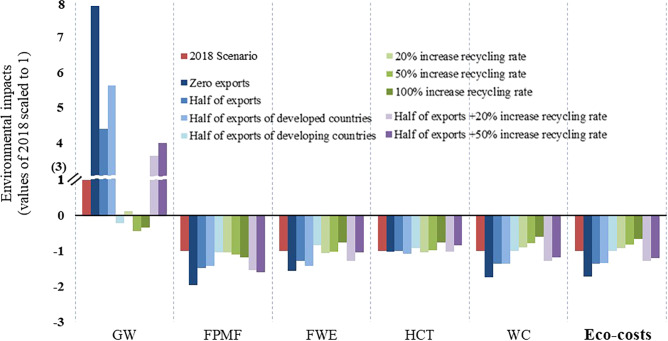
AbstractSince the late 1990s, the trend of plastic waste shipment from developed to developing countries has been increasing. In 2017, China announced an unprecedented ban on its import of most plastic waste, resulting in a sharp decline in global plastic waste trade flow and changes in the treatment structure of countries, whose impacts on global environmental sustainability are enormous but yet unexamined. Here, through the life cycle assessment (LCA) method, we quantified the environmental impacts of changes in the flow patterns and treatment methods of 6 types of plastic waste in 18 countries subsequent to the ban. In the short term, the ban significantly improved four midpoint indicators of environmental impact, albeit contributed to global warming. An annual saving of about 2.35 billion euros of eco-cost was realized, which is equivalent to 56% of plastic waste global trade value in 2017. To achieve global environmental sustainability in the long run, countries should gradually realize the transition from export to domestic management, and from landfill to recycling, which would realize eco-costs savings of about 1.54–3.20 billion euros.
Overview
CoChat Summary
TL;DR
Using life cycle assessment, the paper quantifies environmental impacts of global plastic waste trade changes after China’s 2017 plastic import ban across 6 plastic types and 18 countries. In the short term the ban saved about €2.35 billion in annual eco-cost and improved four midpoint indicators, while worsening global warming; long-term export-reduction and recycling scenarios could save €1.54–3.20 billion.
Key findings
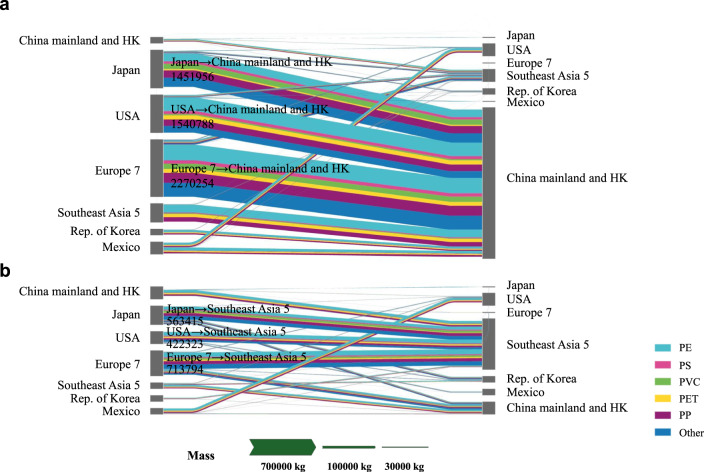
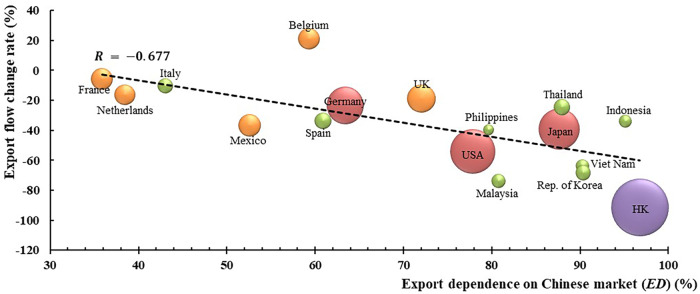
- Global plastic waste trade flow fell 45.5% in 2018 versus baseline, and China’s imports plunged 95.4% to 4.6% of baseline; Southeast Asia 5 imports rose to 362% of baseline.
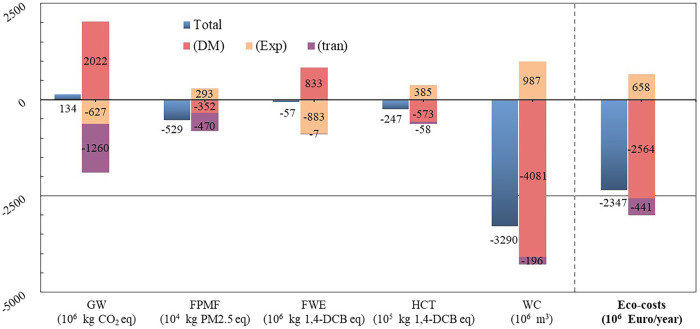
- The ban improved four midpoint indicators (FPMF, FWE, HCT, WC) but contributed to global warming; annual eco-cost savings were €2.35 billion (range €2.17–2.52 billion), equivalent to about 56% of the 2017 global plastic waste trade value of US$4.7 billion.
- China’s import-flow changes alone saved €2.51 billion in eco-cost, and the EIT for GW from China’s import changes was 8.3 times the total EIT.
- Long-term scenarios reducing exports and increasing recycling saved about €1.54–3.20 billion in eco-costs, with “Half of exports +20% increase recycling rate” recommended as the most practical and effective pathway.
Methods
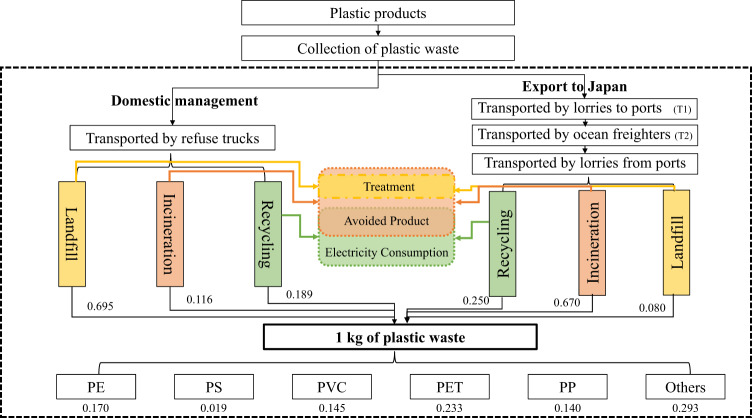
- LCA and scenario analysis with 1 kg of plastic waste as the functional unit, covering six plastic types (PE, PS, PVC, PET, PP, and others) and 18 sample countries plus “other countries.”
- Trade data came mainly from UN Comtrade; baseline used 2008–2016 data (2017 excluded), 2018 Scenario used factual data, and prediction scenarios modeled export reductions and recycling-rate increases.
- Five ReCiPe midpoint indicators were assessed—global warming, fine particulate matter formation, freshwater ecotoxicity, human carcinogenic toxicity, and water consumption—then aggregated via eco-cost; treatment options included landfill/mismanagement, incineration, and recycling.
Limitations
- Paper-stated: unit eco-cost values vary and create uncertainty; missing 2018 data were estimated from monthly/mirror data; electricity consumption and avoided-product assumptions were set uniformly and may vary by type and country; mismanagement was approximated by sanitary landfill due to lack of precise environmental impact data; emerging treatment techniques were treated as negligible.
- Evident from the text: the analysis relies on country-level average treatment shares and uniform transport/electricity parameters, so it does not capture within-country heterogeneity in plastic waste treatment.
Model-written summary. Check it against the paper before relying on it.
Integrity signals
Registry
Cites
Statistics
Figures
Verification
Claims the paper makes
6 Valid · 6 Not valid · 9 Not checked · 87 Own results and interpretations
The cited sources support only part of this claim — read each source’s verdict below.
In the paper
“global plastic waste trade flows from high-income countries to low-income countries have become a routine since the late 1990s6,7.”
§ China’s plastic import ban increases prospects of environmental impact mitigation of plastic waste trade flow worldwide > Introduction
What the sources say
- Not checked — no full text of the sourcecites [6] Qu S Implications of China’s foreign waste ban on the global circular economy Resour. Conserv. Recycling 2019 144 252 255 10.1016/j.resconrec.2019.01.004 source
- Partly supportedcites [7] Gregson, N. & Crang, M. in Annual Review of Environment and Resources, Vol. 40 (eds A. Gadgil & T. P. Tomich) 151–176 (2015). sourceExperimental — accuracy not yet measured
Section 2.3.3 (p. 10) says waste flows from the Global North to the Global South expanded dramatically since the late 1990s. The Introduction (p. 2) includes plastic scrap in the growing trade and says high-income countries are major exporters while lower-income countries are major importers. It does not establish specifically that plastic-waste flows along that route became routine in the late 1990s. (LLM, conf=0.82)
plain- Asserted: passes — The authors put it forward as true.
- Checkable: passes — It can be checked against evidence.
- Load-bearing: unclear — It is unclear whether the paper’s conclusions depend on it.
- Based: passes — The paper gives a reason why it holds.
The cited sources support only part of this claim — read each source’s verdict below.
In the paper
“In the near future, large amounts of waste will be disbursed to other developing countries where there is still lack of policies to restrict imports6,8,14,16,20.”
§ China’s plastic import ban increases prospects of environmental impact mitigation of plastic waste trade flow worldwide > Results > Environmental impacts of changes in waste trade flows and treatment system structures
What the sources say
- Not checked — no full text of the sourcecites [6] Qu S Implications of China’s foreign waste ban on the global circular economy Resour. Conserv. Recycling 2019 144 252 255 10.1016/j.resconrec.2019.01.004 source
- Not checked — no full text of the sourcecites [8] Chen Y Life cycle assessment of end-of-life treatments of waste plastics in China Resour. Conserv. Recycling 2019 146 348 357 10.1016/j.resconrec.2019.03.011 source
- Partly supportedcites [14] Brooks, A. L., Wang, S. & Jambeck, J. R. The Chinese import ban and its impact on global plastic waste trade. Sci. Adv.4, 10.1126/sciadv.aat0131 (2018). PMC6010324 29938223 sourceExperimental — accuracy not yet measured
The Discussion (page unavailable) says that East Asia and Pacific countries surrounding China could receive displaced plastic waste. It presents this as a possibility, not a definite near-future outcome, and says many of those countries lack waste-management infrastructure—not policies restricting imports. (LLM, conf=0.86)
- Partly supportedcites [16] Wang C Zhao L MK Lim Chen W-Q Sutherland JW Structure of the global plastic waste trade network and the impact of China’s import Ban Resour. Conserv. Recycling 2020 153 104591 10.1016/j.resconrec.2019.104591 sourceExperimental — accuracy not yet measured
Section 4.4 (page unavailable) says developed countries have redirected plastic waste to Southeast Asia and expect to continue shifting it to poorer countries with laxer environmental laws. But it does not establish that the receiving countries lack import restrictions; Section 4.3 (page unavailable) describes restrictions already introduced by Thailand, Vietnam, and Malaysia. The near-future claim about large amounts going to countries without such policies therefore goes beyond the paper. (LLM, conf=0.84)
- Not matchedcites [20] Recycled plastics Branch of China National Resources Recycling Association. Development Report of China Plastics Recycling Industry (2018–2019). (2019).
Its entry has no title and year that we can search by.
plainstates a cause- Asserted: passes — The authors put it forward as true.
- Checkable: passes — It can be checked against evidence.
- Load-bearing: passes — The paper’s conclusions depend on it.
- Based: passes — The paper gives a reason why it holds.
The cited sources support only part of this claim — read each source’s verdict below.
In the paper
“It’s worth mentioning that, with the improvement of import policies of developing countries, the export flows and recycling rates of plastic waste will further change6,16,21.”
§ China’s plastic import ban increases prospects of environmental impact mitigation of plastic waste trade flow worldwide > Discussion
What the sources say
- Not checked — no full text of the sourcecites [6] Qu S Implications of China’s foreign waste ban on the global circular economy Resour. Conserv. Recycling 2019 144 252 255 10.1016/j.resconrec.2019.01.004 source
- Partly supportedcites [16] Wang C Zhao L MK Lim Chen W-Q Sutherland JW Structure of the global plastic waste trade network and the impact of China’s import Ban Resour. Conserv. Recycling 2020 153 104591 10.1016/j.resconrec.2019.104591 sourceExperimental — accuracy not yet measured
Section 4.4 (page unavailable) predicts that import bans in developing countries will close existing routes for plastic-waste exports, and reports that China’s ban redirected exports to Southeast Asia. The paper does not say that these policy changes will alter plastic-waste recycling rates. (LLM, conf=0.86)
- Partly supportedcites [21] Walker TR China’s ban could curb plastic waste Nature 2018 553 404 404 10.1038/d41586-018-00933-6 sourceExperimental — accuracy not yet measured
Our copy (correspondence item 'China's ban could curb plastic waste', p. 1) supports only the China-specific part of the attribution: China's ban on imports of recycled plastic from developed countries 'could be a game changer', leaving developed countries with 'extra unexpected plastic' that must be handled by new waste-management solutions rather than stockpiled — i.e. a shift in where plastic waste flows. It says nothing about recycling rates changing, and it does not make the forward-looking general claim that improving import policies across developing countries will cause export flows and recycling rates to 'further change'; the piece addresses one 2018 ban, not a trend in developing-country policy. Searched: 'recycling rates of plastic waste will change export flows developing countries import policy' and 'China ban imports recycled plastic waste exporters Malaysia Vietnam stockpile' — no passage mentions recycling rates or other developing countries' import policies. (LLM, conf=0.68)
hedgedstates a possible cause- Asserted: passes — The authors put it forward as true.
- Checkable: passes — It can be checked against evidence.
- Load-bearing: unclear — It is unclear whether the paper’s conclusions depend on it.
- Based: passes — The paper gives a reason why it holds.
A result the paper states — it cites no source for it, so there is none to check. The quote shows it is in the paper.
In the paper
“Hong Kong, China, was one of the most prominent transshipment ports for plastic waste destined for mainland China, transferring about 3,184,176 tons of plastic waste per annuum (22% of world’s trades) to China.”
§ China’s plastic import ban increases prospects of environmental impact mitigation of plastic waste trade flow worldwide > Results > Changes in plastic waste trade flow pattern subsequent to the China ban
plain- Asserted: passes — The authors put it forward as true.
- Checkable: passes — It can be checked against evidence.
- Load-bearing: passes — The paper’s conclusions depend on it.
- Based: passes — The paper gives a reason why it holds.
A result the paper states — it cites no source for it, so there is none to check. The quote shows it is in the paper.
In the paper
“Before the ban, mainland China was undoubtfully the single largest importer of plastic waste, importing about 55.7% of world’s plastic waste (14,304,561 tons for the world).”
§ China’s plastic import ban increases prospects of environmental impact mitigation of plastic waste trade flow worldwide > Results > Changes in plastic waste trade flow pattern subsequent to the China ban
boosted- Asserted: passes — The authors put it forward as true.
- Checkable: passes — It can be checked against evidence.
- Load-bearing: passes — The paper’s conclusions depend on it.
- Based: passes — The paper gives a reason why it holds.
52 more claims
Create a free account to see all 108 claims and to verify the 1 reference still open.
- It may state two separate claims as one. 38
- Probably not a substantial claim. 17
Citations
Cites
Production, use, and fate of all plastics ever made
Geyer, R., Jambeck, J. R., & Law, K. L. (2017) · Science Advances · doi:10.1126/sciadv.1700782 · Cited by 18,606
Plastic waste inputs from land into the ocean
Jambeck, J. R., Geyer, R., Wilcox, C., Siegler, T. R., Perryman, M., Andrady, A., Narayan, R., & Law, K. L. (2015) · Science · doi:10.1126/science.1260352 · Cited by 13,163
Categorising tools for sustainability assessment
Ness, B., Urbel-Piirsalu, E., Anderberg, S., & Olsson, L. (2007) · Ecological Economics · doi:10.1016/j.ecolecon.2006.07.023 · Cited by 1,407
The Chinese import ban and its impact on global plastic waste trade
Brooks, A. L., Wang, S., & Jambeck, J. R. (2018) · Science Advances · doi:10.1126/sciadv.aat0131 · Cited by 955 · cited 1×
“This finding corresponds with Brooks et al. (2018)’s opinion that the dependence of a single importer is fragile14.”
Gu, F., Guo, J., Zhang, W., Summers, P. A., & Hall, P. (2017) · Science of The Total Environment · doi:10.1016/j.scitotenv.2017.05.278 · Cited by 423
Recycling potential of post-consumer plastic packaging waste in Finland
Dahlbo, H., Poliakova, V., Mylläri, V., Sahimaa, O., & Anderson, R. (2018) · Waste Management · doi:10.1016/j.wasman.2017.10.033 · Cited by 364
Challenges and emerging solutions to the land-based plastic waste issue in Africa
Jambeck, J., Hardesty, B. D., Brooks, A. L., Friend, T., Teleki, K., Fabres, J., Beaudoin, Y., Bamba, A., Francis, J., Ribbink, A. J., et al. (2018) · Marine Policy · doi:10.1016/j.marpol.2017.10.041 · Cited by 338
Plastic waste as a fuel - CO2-neutral or not?
Eriksson, O., & Finnveden, G. (2009) · Energy & Environmental Science · doi:10.1039/b908135f · Cited by 272
Structure of the global plastic waste trade network and the impact of China’s import Ban
Wang, C., Zhao, L., Lim, M. K., Chen, W.-Q., & Sutherland, J. W. (2020) · Resources, Conservation and Recycling · doi:10.1016/j.resconrec.2019.104591 · Cited by 259
Implications of China’s foreign waste ban on the global circular economy
Qu, S., Guo, Y., Ma, Z., Chen, W.-Q., Liu, J., Liu, G., Wang, Y., & Xu, M. (2019) · Resources, Conservation and Recycling · doi:10.1016/j.resconrec.2019.01.004 · Cited by 220
Cited by
Kumar, R., Verma, A., Shome, A., Sinha, R., Sinha, S., Jha, P. K., Kumar, R., Kumar, P., Shubham, Das, S., et al. (2021) · Sustainability · doi:10.3390/su13179963 · Cited by 1,111
Current trends of unsustainable plastic production and micro(nano)plastic pollution
Walker, T. R., & Fequet, L. (2023) · TrAC Trends in Analytical Chemistry · doi:10.1016/j.trac.2023.116984 · Cited by 557
Microplastics in environment: global concern, challenges, and controlling measures
Lamichhane, G., Acharya, A., Marahatha, R., Modi, B., Paudel, R., Adhikari, A., Raut, B. K., Aryal, S., & Parajuli, N. (2023) · International Journal of Environmental Science and Technology · doi:10.1007/s13762-022-04261-1 · Cited by 370
Complexities of the global plastics supply chain revealed in a trade-linked material flow analysis
Houssini, K., Li, J., & Tan, Q. (2025) · Communications Earth & Environment · doi:10.1038/s43247-025-02169-5 · Cited by 363
(Micro)plastics and the UN Sustainable Development Goals
Walker, T. R. (2021) · Current Opinion in Green and Sustainable Chemistry · doi:10.1016/j.cogsc.2021.100497 · Cited by 322
Plastic waste as pyrolysis feedstock for plastic oil production: A review
Chang, S. H. (2023) · Science of The Total Environment · doi:10.1016/j.scitotenv.2023.162719 · Cited by 302
Global Plastics Outlook: Policy Scenarios to 2060
OECD (2022) · OECD eBooks · doi:10.1787/aa1edf33-en · Cited by 293
Progress in the catalytic glycolysis of polyethylene terephthalate
Xin, J., Zhang, Q., Huang, J., Huang, R., Jaffery, Q. Z., Yan, D., Zhou, Q., Xu, J., & Lu, X. (2021) · Journal of Environmental Management · doi:10.1016/j.jenvman.2021.113267 · Cited by 238
The complex end-of-life of wind turbine blades: A review of the European context
Beauson, J., Laurent, A., Rudolph, D. P., & Pagh Jensen, J. (2022) · Renewable and Sustainable Energy Reviews · doi:10.1016/j.rser.2021.111847 · Cited by 220
Plastics and climate change—Breaking carbon lock-ins through three mitigation pathways
Bauer, F., Nielsen, T. D., Nilsson, L. J., Palm, E., Ericsson, K., Fråne, A., & Cullen, J. (2022) · One Earth · doi:10.1016/j.oneear.2022.03.007 · Cited by 190
Chemical recycling of plastic waste via thermocatalytic routes
Lee, J., Kwon, E. E., Lam, S. S., Chen, W.-H., Rinklebe, J., & Park, Y.-K. (2021) · Journal of Cleaner Production · doi:10.1016/j.jclepro.2021.128989 · Cited by 158
Plastic waste and microplastic issues in Southeast Asia
Ng, C. H., Mistoh, M. A., Teo, S. H., Galassi, A., Ibrahim, A., Sipaut, C. S., Foo, J., Seay, J. R., Taufiq‐Yap, Y. H., & Janaun, J. (2023) · Frontiers in Environmental Science · doi:10.3389/fenvs.2023.1142071 · Cited by 189
“According to the export data available in Comtrade June 2020, the total exports of plastic waste trade from all countries to Southeast Asia dropped by 32% in 2019, with a total plastic waste trade of 1,331,851 tons, as compared to 1,948,554 tons FIGURE 6 Changes in import and export flows after the ban (Wen et al., 20…”
BackgroundMethodInfluentialGlobal plastic pollution, sustainable development, and plastic justice
Stoett, P. J., Scrich, V. M., Elliff, C. I., de Andrade, M. M., Grilli, N. D. M., & Turra, A. (2024) · World Development · doi:10.1016/j.worlddev.2024.106756 · Cited by 191
Forecasting plastic waste generation and interventions for environmental hazard mitigation
Fan, Y. V., Jiang, P., Tan, R. R., Aviso, K. B., You, F., Zhao, X., Lee, C. T., & Klemeš, J. J. (2021) · Journal of Hazardous Materials · doi:10.1016/j.jhazmat.2021.127330 · Cited by 154
Characterization and regulation of microplastic pollution for protecting planetary and human health
Jung, Y. S., Sampath, V., Prunicki, M., Aguilera, J., Allen, H., LaBeaud, D., Veidis, E., Barry, M., Erny, B., Patel, L., et al. (2022) · Environmental Pollution · doi:10.1016/j.envpol.2022.120442 · Cited by 136
Environmental and Economic Impacts of Mismanaged Plastics and Measures for Mitigation
Diggle, A., & Walker, T. R. (2022) · Environments · doi:10.3390/environments9020015 · Cited by 170
“Waste recycling capacity is lacking in many importing countries, and landfill methods are the more common waste management approach in recycling markets located in Malaysia [33,34].”
BackgroundMorais, J., Corder, G. D., Golev, A., Lawson, L., & Ali, S. H. (2022) · Environmental Research Letters · doi:10.1088/1748-9326/ac6b49 · Cited by 182
“Plastic waste importation typically happens when developed nations cannot fully get rid of their plastic waste generated in a short time, and their domestic recyclingmarkets are not yet fully constructed and consequently they export to developing nations (Wen et al 2021).”
BackgroundProduction, Use, and Fate of Phthalic Acid Esters for Polyvinyl Chloride Products in China
Bi, M., Liu, W., Luan, X., Li, M., Liu, M., Liu, W., & Cui, Z. (2021) · Environmental Science & Technology · doi:10.1021/acs.est.1c02374 · Cited by 120
Kusenberg, M., Eschenbacher, A., Delva, L., Meester, S. D., Delikonstantis, E., Stefanidis, G. D., Ragaert, K., & Geem, K. M. V. (2022) · Fuel Processing Technology · doi:10.1016/j.fuproc.2022.107474 · Cited by 117
“Waste trade flows have since been largely re-directed to Southeast Asian countries [10,11].”
BackgroundMa, K., Zhe, T., Li, F., Zhang, Y., Yu, M., Li, R., & Wang, L. (2021) · Food Hydrocolloids · doi:10.1016/j.foodhyd.2021.107147 · Cited by 113
Blockchain‐based recycling and its impact on recycling performance: A network theory perspective
Gong, Y., Xie, S., Arunachalam, D., Duan, J., & Luo, J. (2022) · Business Strategy and the Environment · doi:10.1002/bse.3028 · Cited by 135
Conti, I., Simioni, C., Varano, G., Brenna, C., Costanzi, E., & Neri, L. M. (2021) · Environmental Pollution · doi:10.1016/j.envpol.2021.117708 · Cited by 123
Smart Waste Management and Classification Systems Using Cutting Edge Approach
Cheema, S. M., Hannan, A., & Pires, I. M. (2022) · Sustainability · doi:10.3390/su141610226 · Cited by 133
“According to [34–37], it has been proved that nearly 0.75% of solid domestic waste can be recycled.”
BackgroundInfluentialPavan, M., Reinmets, K., Garg, S., Mueller, A. P., Marcellin, E., Köpke, M., & Valgepea, K. (2022) · Metabolic Engineering · doi:10.1016/j.ymben.2022.01.015 · Cited by 95
China's roadmap to plastic waste management and associated economic costs
Sun, Y., Liu, S., Wang, P., Jian, X., Liao, X., & Chen, W. (2022) · Journal of Environmental Management · doi:10.1016/j.jenvman.2022.114686 · Cited by 106
Zhu, L., Xie, C., Chen, L., Dai, X., Zhou, Y., Pan, H., & Tian, K. (2023) · Ecotoxicology and Environmental Safety · doi:10.1016/j.ecoenv.2023.114818 · Cited by 109
Microplastics in Surface Waters and Sediments from Guangdong Coastal Areas, South China
Li, Y., Zhang, Y., Chen, G., Xu, K., Gong, H., Huang, K., Yan, M., & Wang, J. (2021) · Sustainability · doi:10.3390/su13052691 · Cited by 105
Li, X., Wang, J., Zhang, T., Wang, T., & Zhao, Y. (2022) · ACS Sustainable Chemistry & Engineering · doi:10.1021/acssuschemeng.2c02244 · Cited by 93
Paving roads with recycled plastics: Microplastic pollution or eco-friendly solution?
Enfrin, M., Myszka, R., & Giustozzi, F. (2022) · Journal of Hazardous Materials · doi:10.1016/j.jhazmat.2022.129334 · Cited by 87
Zhang, B., Zhang, H., Pan, Y., Shao, J., Wang, X., Jiang, Y., Xu, X., & Chu, S. (2023) · Chemical Engineering Journal · doi:10.1016/j.cej.2023.142247 · Cited by 92
A review on emergency disposal and management of medical waste during the COVID-19 pandemic in China
Zhao, H., Liu, H., Wei, G., Zhang, N., Qiao, H., Gong, Y., Yu, X., Zhou, J., & Wu, Y. (2021) · The Science of The Total Environment · doi:10.1016/j.scitotenv.2021.152302 · Cited by 89
“7 (Guo et al., 2021; Purnomo et al., 2021a, 2021b;Wen et al., 2021; Klemeš et al., 2020).”
Raman, R., Lathabai, H. H., & Nedungadi, P. (2024) · Discover Sustainability · doi:10.1007/s43621-024-00289-0 · Cited by 114
“In the context of China’s policy to ban plastic waste imports, the sixth study, [82], employed the life cycle assessment (LCA) methodology to quantify the environmental consequences of alterations in flow patterns and treatment approaches for six categories of plastic waste across 18 nations.”
Meta-analysis of impacts of microplastics on plant heavy metal(loid) accumulation
Chen, L., Chang, N., Qiu, T., Wang, N., Cui, Q., Zhao, S., Huang, F., Chen, H., Zeng, Y., Dong, F., et al. (2024) · Environmental Pollution · doi:10.1016/j.envpol.2024.123787 · Cited by 93
Waste plastic derived Co3Fe7/CoFe2O4@carbon magnetic nanostructures for efficient dye adsorption
Wei, S., & Kamali, A. R. (2021) · Journal of Alloys and Compounds · doi:10.1016/j.jallcom.2021.161201 · Cited by 81
Ferronato, N., Maalouf, A., Mertenat, A., Saini, A., Khanal, A., Copertaro, B., Yeo, D., Jalalipour, H., Veuthey, J. R., Ulloa-Murillo, L. M., et al. (2023) · Waste Management & Research The Journal for a Sustainable Circular Economy · doi:10.1177/0734242x231188664 · Cited by 104
“According to Lau et al. (2020), higher economic growth in developing countries will increase the production of plastics, resulting in 710 million Mt of plastic that will accumulate in the environment by 2040 (Wen et al., 2021).”
BackgroundThe Evolutionary Trend and Impact of Global Plastic Waste Trade Network
Zhao, C., Liu, M., Du, H., & Gong, Y. (2021) · Sustainability · doi:10.3390/su13073662 · Cited by 73
“Plastic waste flows from other countries to Hong Kong and then to mainland China, where Hong Kong is one of China’s most important transshipment ports for plastic waste, transferring 22% of world trade to China each year [28].”
BackgroundKurniawan, T. A., Haider, A., Mohyuddin, A., Fatima, R., Salman, M., Shaheen, A., Ahmad, H. M., Al-Hazmi, H. E., Othman, M. H. D., Aziz, F., et al. (2023) · Journal of Environmental Management · doi:10.1016/j.jenvman.2023.118971 · Cited by 79
Recent Advances in Development of Waste-Based Polymer Materials: A Review
Formela, K., Kurańska, M., & Barczewski, M. (2022) · Polymers · doi:10.3390/polym14051050 · Cited by 70
“As expected, this caused a sharp decline in global plastic waste trade flow [10] and forced European countries to research and develop new strategies regarding waste plastics and rubber utilization.”
BackgroundRecycling of Plastic Waste: A Systematic Review Using Bibliometric Analysis
Tsuchimoto, I., & Kajikawa, Y. (2022) · Sustainability · doi:10.3390/su142416340 · Cited by 96
Liu, X., Lei, T., Boré, A., Lou, Z., Abdouraman, B., & Ma, W. (2022) · Journal of Cleaner Production · doi:10.1016/j.jclepro.2022.134373 · Cited by 86
Unveiling the impacts of microplastics on cadmium transfer in the soil-plant-human system: A review
Huang, F., Chen, L., Yang, X. Y., Jeyakumar, P., Wang, Z., Sun, S., Qiu, T., Zeng, Y., Chen, J., Huang, M., et al. (2024) · Journal of Hazardous Materials · doi:10.1016/j.jhazmat.2024.135221 · Cited by 69
Recycling thermoset plastic waste for manufacturing green cement mortar
Chen, H., Qin, ., Chow, C. L., & Lau, D. (2022) · Cement and Concrete Composites · doi:10.1016/j.cemconcomp.2022.104922 · Cited by 73
Numerical Investigation on the Heat Transfer of Plastic Waste Pyrolysis in a Rotary Kiln
Zhang, M., Zhang, Y., Ma, D., Li, A., Fu, W., Ji, G., & Dong, J. (2021) · Chemical Engineering Journal · doi:10.1016/j.cej.2022.136686 · Cited by 68
Hosamo, H., Coelho, G. B. A., Buvik, E., Drissi, S., & Kraniotis, D. (2024) · Building and Environment · doi:10.1016/j.buildenv.2024.111922 · Cited by 78
Aizudin, M., Goei, R., Ong, A. J., Tan, Y. Z., Lua, S. K., Pottammel, R. P., Geng, H., Wu, X., Tok, A. I. Y., & Ang, E. H. (2022) · Journal of Materials Chemistry A · doi:10.1039/d2ta02092k · Cited by 65
Lin, M., Wu, Y., Qin, B., Cao, W., Liu, J., Xu, Z., & Ruan, J. (2022) · Environmental Science & Technology · doi:10.1021/acs.est.2c06956 · Cited by 64
Dai, Q., Huang, X., Jia, R., Fang, Y., & Qin, Z. (2022) · Journal of Food Engineering · doi:10.1016/j.jfoodeng.2022.111106 · Cited by 61
Circular transformation in plastic management lessens the carbon footprint of the plastic industry
Pathak, P., Sharma, S., & Ramakrishna, S. (2023) · Materials Today Sustainability · doi:10.1016/j.mtsust.2023.100365 · Cited by 78
Country-specific riverine contributions to marine plastic pollution
Mai, L., Sun, X., & Zeng, E. Y. (2023) · The Science of The Total Environment · doi:10.1016/j.scitotenv.2023.162552 · Cited by 66
Mapping the environmental impacts and policy effectiveness of takeaway food industry in China
Zhang, Y., & Wen, Z. (2021) · The Science of The Total Environment · doi:10.1016/j.scitotenv.2021.152023 · Cited by 63
Self-citationTransboundary movement of waste review: From binary towards a contextual framing
Thapa, K., Vermeulen, W. J. V., Deutz, P., & Olayide, O. E. (2022) · Waste Management & Research The Journal for a Sustainable Circular Economy · doi:10.1177/0734242x221105424 · Cited by 73
Xie, S., Gong, Y., Kunc, M. H., Wen, Z., & Brown, S. (2022) · International Journal of Production Research · doi:10.1080/00207543.2022.2152506 · Cited by 71
“However, China enacted the ban on importing waste in 2017 and, since then, the global waste trade CONTACT Yu Gong y.gong@soton.ac.uk has been significantly reshaped (Wen et al. 2021).”
BackgroundInfluentialSelf-citationMuhyuddin, M., Mustarelli, P., & Santoro, C. (2021) · ChemSusChem · doi:10.1002/cssc.202101252 · Cited by 58
The Value of China’s Legislation on Plastic Pollution Prevention in 2020
Liu, J., Yun-fei, Y., An, L., Liu, Q., & Ding, J. (2021) · Bulletin of Environmental Contamination and Toxicology · doi:10.1007/s00128-021-03366-6 · Cited by 55
Hale, R. C., King, A. E., Ramirez, J. M., Guardia, M. J. L., & Nidel, C. (2022) · Environmental Science & Technology Letters · doi:10.1021/acs.estlett.2c00417 · Cited by 61
China’s regulatory respond to plastic pollution: Trends and trajectories
Fürst, K., & Feng, Y. (2022) · Frontiers in Marine Science · doi:10.3389/fmars.2022.982546 · Cited by 64
“This is important as, at present, much of the discarded plastics in China, especially low-value packaging materials, are mixed with household waste and end up in either landfills or incinerators (Wen et al., 2021).”
BackgroundFully biomass-derived vitrimeric material with water-mediated recyclability and monomer recovery
Png, Z. M., Zheng, J., Kamarulzaman, S., Wang, S., Li, Z., & Goh, S. S. (2022) · Green Chemistry · doi:10.1039/d2gc01556k · Cited by 57
Recent advances in the construction of sustainable asphalt roads with recycled plastic
Enfrin, M., & Giustozzi, F. (2022) · Polymer International · doi:10.1002/pi.6405 · Cited by 59
Soni, V., Dinh, D. A., Poonia, K., Kumar, R., Singh, P., Ponnusamy, V. K., Selvasembian, R., Singh, A., Chaudhary, V., Thakur, S., et al. (2024) · European Polymer Journal · doi:10.1016/j.eurpolymj.2024.113249 · Cited by 58
Why is the generation of packaging waste from express deliveries a major problem?
Pinos, J., Hahladakis, J. Ν., & Chen, H. (2022) · The Science of The Total Environment · doi:10.1016/j.scitotenv.2022.154759 · Cited by 58
Unpacking the complexity of the UK plastic packaging value chain: A stakeholder perspective
Gerassimidou, S., Lovat, E., Ebner, N., You, W., Giakoumis, T., Martin, O., & Iacovidou, E. (2021) · Sustainable Production and Consumption · doi:10.1016/j.spc.2021.11.005 · Cited by 69
“By 2019, the plastic waste trade flows from the UK to China had dropped to 37% of the flows in 2018 (Wen et al., 2021), but other East Asian countries (e.”
How Should US Health Care Lead Global Change in Plastic Waste Disposal?
Jain, N., & LaBeaud, A. D. (2022) · The AMA Journal of Ethic · doi:10.1001/amajethics.2022.986 · Cited by 56
Plastics pollution as waste colonialism in Te Moananui
Fuller, S., Ngata, T., Borrelle, S. B., & Farrelly, T. A. (2022) · Journal of Political Ecology · doi:10.2458/jpe.2401 · Cited by 85
“China was responsible for handling 55.7% of the world's plastic waste (Wen et al., 2021), but banned the import of 24 categories of solid waste in 2018, including mixed plastics or single stream plastics with contamination levels higher than 0.05%.”
BackgroundInfluentialKurniawan, T. A., Mohyuddin, A., Othman, M. H. D., Goh, H. H., Zhang, D., Anouzla, A., Aziz, F., Casila, J. C. C., Ali, I., & Pasaribu, B. (2024) · Water Environment Research · doi:10.1002/wer.11070 · Cited by 58
“Indeed, research on this topic has experienced a significant surge, as evidenced by the publication of over 40 review articles specifically focusing on MPs in the environment in 2020 alone (Wen et al., 2021).”
Revitalizing plastic wastes employing bio-circular-green economy principles for carbon neutrality
Rani, A., Negi, S., Fan, C., Lam, S. S., Kim, H., & Pan, S.-Y. (2024) · Journal of Hazardous Materials · doi:10.1016/j.jhazmat.2024.134394 · Cited by 64
Barriers to compulsory waste sorting for a circular economy in China
Zhang, A., Xie, S., Gong, Y., Li, C., & Liu, Y. (2023) · Journal of Environmental Management · doi:10.1016/j.jenvman.2023.118180 · Cited by 63
“In developing countries, widespread informal recycling networks can create confusing market competition, especially when high-value recyclables are collected but not low-value recyclables such as kitchen waste (Wen et al., 2021).”
Cai, L., Wang, L., Zhao, J., Deng, L., Yu, S., Shi, Z., & Wang, Z. (2021) · Journal of Cleaner Production · doi:10.1016/j.jclepro.2021.127935 · Cited by 56
Verma, D., Okhawilai, M., Dalapati, G. K., Ramakrishna, S., Sharma, A., Sonar, P. M., Krishnamurthy, S., Biring, S., & Sharma, M. (2022) · Polymer Composites · doi:10.1002/pc.27054 · Cited by 53
Thapa, K., Vermeulen, W. J. V., Waal, M. M. D., Deutz, P., & Nguyễn, H. Q. (2024) · Circular Economy and Sustainability · doi:10.1007/s43615-023-00330-w · Cited by 60
“For example, how the Chinese waste ban policy had and is causing a series of positive and negative effects globally [101].”
From Waste to Worth: Upcycling Plastic into High-Value Carbon-Based Nanomaterials
Abdelfatah, A. M., Hosny, M., Elbay, A. S., El-Maghrabi, N., & Fawzy, M. (2024) · Polymers · doi:10.3390/polym17010063 · Cited by 57
“For example, environmental impacts were estimated using assumed recycling rates of 10–40% for Southeast Asia [9], while another study [8] used rates ranging from 8.7–50% for the USA.”
InfluentialEnvironmental and economic assessment of rural domestic waste gasification models in China
Liu, H., Liu, T., Wei, G., Zhao, H., Li, T., Weng, F., Guo, X. F., Wang, Y., & Lin, Y. (2022) · Waste Management · doi:10.1016/j.wasman.2022.10.001 · Cited by 43
Brooks, B., Rish, S. K., Lomas, H., Jayasekara, A. S., & Tahmasebi, A. (2023) · Journal of Analytical and Applied Pyrolysis · doi:10.1016/j.jaap.2023.106083 · Cited by 46
Audy, R., Enfrin, M., Boom, Y. J., & Giustozzi, F. (2022) · The Science of The Total Environment · doi:10.1016/j.scitotenv.2022.154604 · Cited by 45
Boccia, P., Mondellini, S., Mauro, S., Zanellato, M., Parolini, M., & Sturchio, E. (2024) · Toxics · doi:10.3390/toxics12050320 · Cited by 46
“On 27 July 2017, China issued a ban on importing 24 types of solid waste, including plastic waste [12,13].”
BackgroundCudjoe, D., Brahim, T., & Zhu, B. (2023) · Waste Management · doi:10.1016/j.wasman.2023.06.015 · Cited by 46
Kan, M., Wang, C., Zhu, B., Chen, W., Liu, Y., Ren, Y., & Xu, M. (2023) · Journal of Industrial Ecology · doi:10.1111/jiec.13427 · Cited by 38
Evolving patterns and drivers of waste plastic trade in key global economies
Xu, T., Lv, Q., Sheng, G., Zhang, Y., Liu, Y., & Shi, L. (2024) · Resources Conservation and Recycling · doi:10.1016/j.resconrec.2024.107606 · Cited by 44
Reimagining plastics waste as energy solutions: challenges and opportunities
Tan, A. F. J., Yu, S., Wang, C., Yeoh, G. H., Teoh, W. Y., & Yip, A. C. K. (2024) · npj Materials Sustainability · doi:10.1038/s44296-024-00007-x · Cited by 47
“4) 23,24 .”
Siddique, S., Roy, B. B., Zaman, S., Khan, A., Alam, M. A. A., Chowdhury, R. B., Biswas, K. F., Hossain, M. M., Murakami, S., & Sujauddin, M. (2022) · Sustainable Production and Consumption · doi:10.1016/j.spc.2022.08.001 · Cited by 40
Xia, L., Ke, Y., Wu, Z., Wang, J., Wang, R., Cai, Y., & Yang, Z. (2024) · Resources, Conservation and Recycling · doi:10.1016/j.resconrec.2024.107429 · Cited by 36
Bioprospecting of gut microflora for plastic biodegradation
Sini Francis, C. F., Rebello, S., Aneesh, E. M., Sindhu, R., Binod, P., Singh, S., & Pandey, A. (2021) · Bioengineered · doi:10.1080/21655979.2021.1902173 · Cited by 43
“The Chinese ban on imported plastic products has greatly influenced to reduce the Plastic involved International Trade and subsequent plastic pollution [31].”
BackgroundLee, T., Jung, S., Baek, K., Tsang, Y. F., Lin, K. A., Jeon, Y. J., & Kwon, E. E. (2021) · Journal of Hazardous Materials · doi:10.1016/j.jhazmat.2021.126992 · Cited by 37
Liang, H., Dong, H., Zhang, C., Geng, Y., Liu, X., Liu, G., & Chen, Z. (2023) · iScience · doi:10.1016/j.isci.2023.107701 · Cited by 43
Wang, Z., Wang, S., Li, H., Yang, L., Zhang, B., Zhang, H., & Zhang, S. (2023) · Resources Conservation and Recycling · doi:10.1016/j.resconrec.2023.107262 · Cited by 36
Parag, Y., Elimelech, E., & Opher, T. (2023) · Sustainability · doi:10.3390/su15129760 · Cited by 35
Evaluating the Global Plastic Waste Management System with Markov Chain Material Flow Analysis
Smith, E., Bilec, M. M., & Khanna, V. (2023) · ACS Sustainable Chemistry & Engineering · doi:10.1021/acssuschemeng.2c04270 · Cited by 39
Impact of China’s National Sword Policy on the U.S. Landfill and Plastics Recycling Industry
Vedantam, A., Suresh, N. C., Ajmal, K., & Shelly, M. A. (2022) · Sustainability · doi:10.3390/su14042456 · Cited by 41
“Therefore, a primary focus of interest in this study is to investigate the impact of China’s Sword policy on the amount of plastics landfilled in the U.S.”
BackgroundResultInfluentialWang, Z., Kang, S. B., Yang, E., & Won, S. W. (2022) · Journal of Environmental Management · doi:10.1016/j.jenvman.2022.115155 · Cited by 31
U.S. plastic waste exports: A state-by-state analysis pre- and post-China import ban
Bourtsalas, A. C., Yepes, I. M., & Tian, Y. (2023) · Journal of Environmental Management · doi:10.1016/j.jenvman.2023.118604 · Cited by 41
Shi, Y., Lin, Y. J., Wang, S., Wen, H., Lim, M. K., & Tseng, M. (2023) · Waste Management · doi:10.1016/j.wasman.2023.02.023 · Cited by 36
Economic viability requires higher recycling rates for imported plastic waste than expected
Li, K., Ward, H., Lin, H. X., & Tukker, A. (2024) · Nature Communications · doi:10.1038/s41467-024-51923-4 · Cited by 34
“In response to these concerns, China, a major importer of plastic waste, implemented a plastic import ban in 2018 8 .”
Ali, S. S., Al-Tohamy, R., Alsharbaty, M. H. M., Elsamahy, T., El-Sapagh, S., Lim, J. W., & Sun, J. (2024) · Journal of Cleaner Production · doi:10.1016/j.jclepro.2024.142153 · Cited by 33
An Overview of Pyrolysis as Waste Treatment to Produce Eco-Energy
Cuevas, A. B., Leiva-Candia, D. E., & Dorado, M. P. (2024) · Energies · doi:10.3390/en17122852 · Cited by 39
“However, in 2017 it announced a zero plastic waste import policy, significantly reducing the volume of the plastic trade, although the export volume has not changed [12].”
Assessment of Co-Gasification Methods for Hydrogen Production from Biomass and Plastic Wastes
Williams, J. M., & Bourtsalas, A. C. (2023) · Energies · doi:10.3390/en16227548 · Cited by 26
Tan, Y., Wen, Z., Hu, Y., Zeng, X., Kosajan, V., Yin, G., & Zhang, T. (2023) · Waste Management · doi:10.1016/j.wasman.2023.08.040 · Cited by 30
Self-citationUltrafast bulk degradation of polylactic acid by artificially cultured diatom frustules
Li, T., Sun, H., Han, H., Zhang, C., Li, B., Huang, J., & Sun, D. (2022) · Composites Science and Technology · doi:10.1016/j.compscitech.2022.109410 · Cited by 26
Development of Trade in Recyclable Raw Materials: Transition to a Circular Economy
Lingaitienė, O., & Burinskienė, A. (2024) · Economies · doi:10.3390/economies12020048 · Cited by 36
Zhang, H., Ma, S., Wang, G., Zhang, H., & Zhang, Y. (2026) · Journal of Energy Chemistry · doi:10.1016/j.jechem.2026.01.043 · Cited by 30
Unraveling the driving factors of the plastic waste trade network formation and dynamics
Liu, F., Fan, C., Li, J., & Tan, Q. (2023) · Journal of Environmental Management · doi:10.1016/j.jenvman.2023.119422 · Cited by 25
Metadata
- Authors
- Wen, Z., Xie, Y., Chen, M., & Dinga, C. D.
- Affiliations
- State Key Joint Laboratory of Environment Simulation and Pollution Control (CN)
- Corresponding author
- Wen, Zongguo
- Venue
- Nature Communications
- Published
- 2021-01-18
- Volume
- 12
- Issue
- 1
- Pages
- 425-425
- ISSN
- 2041-1723 (ISSN-L)
- PMC
- PMC7813828
- OpenAlex
- W3125862735
- Semantic Scholar
- e082f5bb59073acb3c59be5cd3ca96c43341f13b
- Cited by
- 328
- References
- 32
- Citations by year
- 2026: 36 · 2025: 53 · 2024: 70 · 2023: 72 · 2022: 65 · 2021: 31
- FWCI
- 14.75
- Type
- journal article
- Language
- en
- Open access
- gold
- doi.org
- Licence
- cc-by
- creativecommons.org/licenses/by/4.0 (tdm)
- creativecommons.org/licenses/by/4.0 (vor)
- Locations
- Nature Communications (publishedVersion, cc-by)
- PubMed Central (publishedVersion, cc-by)
- PubMed (publishedVersion)
- RePEc: Research Papers in Economics (submittedVersion)
- DOAJ (DOAJ: Directory of Open Access Journals) (submittedVersion, cc-by-sa)
- Funders
- National Natural Science Foundation of China (71825006)
- Ministry of Science and Technology of the People's Republic of China (2018YFC1903000)
- Topics
- Physical Sciences › Environmental Science › Pollution › Microplastics and Plastic Pollution
- Physical Sciences › Environmental Science › Environmental Engineering › Environmental Impact and Sustainability
- Physical Sciences › Environmental Science › Waste Management and Disposal › Recycling and Waste Management Techniques
- Keywords
- plastic waste trade, plastic waste exports, plastic waste treatment, recycling, landfill, eco-costs, environmental impact mitigation, global warming, life cycle assessment, developing countries
About these checks
Registry, retraction, Cites and statistics results are computed, not judged, with one exception: a printed reference that no index lists is read once by a model before it counts as a citation error. Claims are extracted by a model and kept only when their quote appears verbatim in the text; each cited source is then checked, with a model’s help, for whether it says what the claim relies on. Those verdicts can be wrong — read the claim’s quote and the cited source before relying on one.
The claim verdicts this report counts are experimental: their accuracy is not yet measured.
A language model drew the claims from the paper on 2026-10-10, under version 3 of the claim definition (model deepseek-v4.1-flash, prompt extract-v3).
A second model labelled each claim on 2026-10-10 (model jev-1.13-20260917, definition revision gold-guideline-v0.2).
Cited sources are checked with a language model’s help (gpt-6-sol and qwen3.8-omni-flash).
Statistics and arithmetic are recomputed, not judged.
Confidence bands are shown only for fields calibrated on our annotated test set. None is calibrated yet, so no band is shown.
What counts as a claim ›How we measure confidence ›How we check this ›
Are you an author, or do you see a problem with this page? Request a review
Data sources
Bibliographic data: Semantic Scholar, OpenAlex, Crossref.
Contains information from the Semantic Scholar Academic Graph Datasets, made available under the ODC Attribution License (ODC-BY 1.0).
Semantic Scholar’s data is described in: Kinney, R., et al. (2023). The Semantic Scholar Open Data Platform. arXiv:2301.10140.
