

The DOI matches its Crossref record; 40 of the 40 references it cites were found in a registry or an index.
Shadow enhanced self-charging power system for wave and solar energy harvesting from the ocean
Open accessAbstract
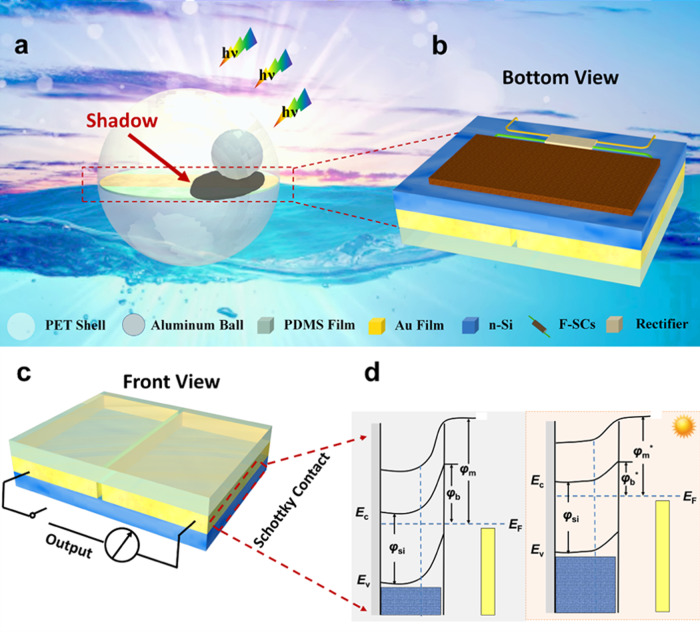
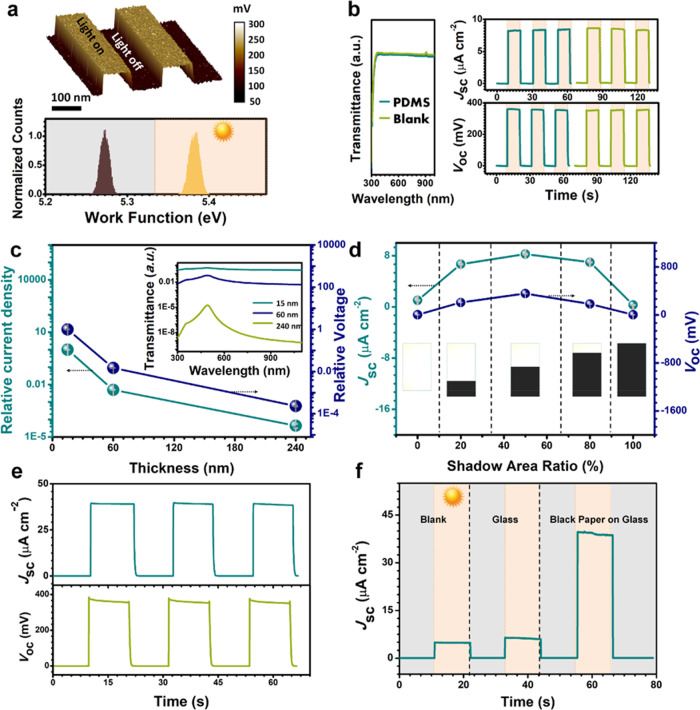
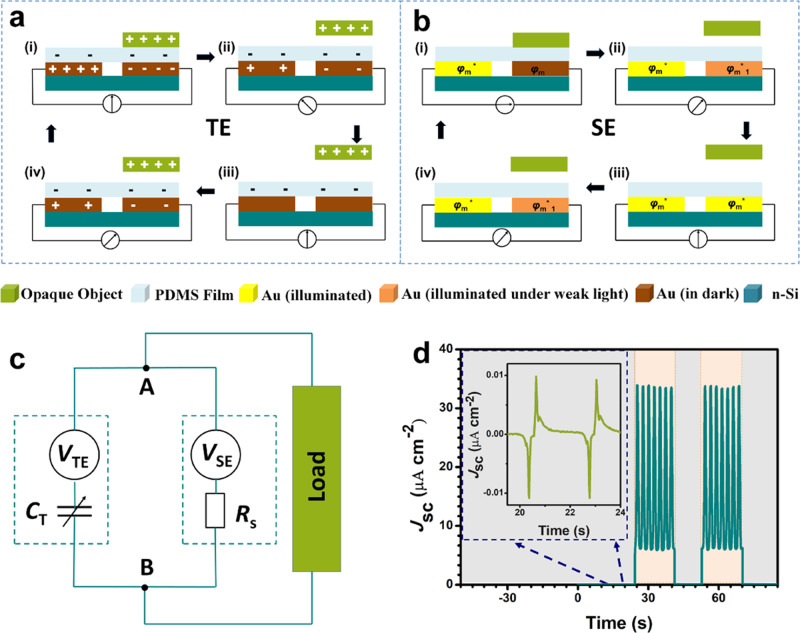
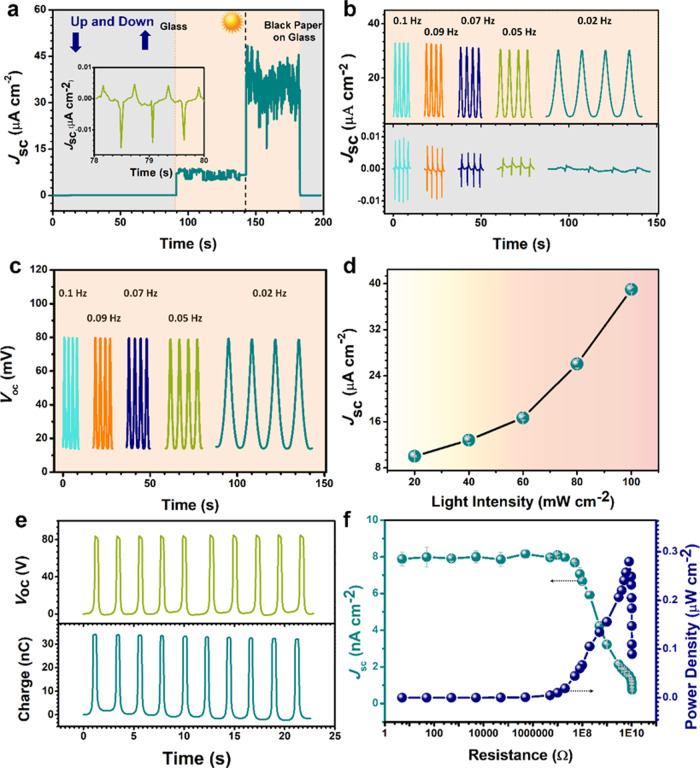
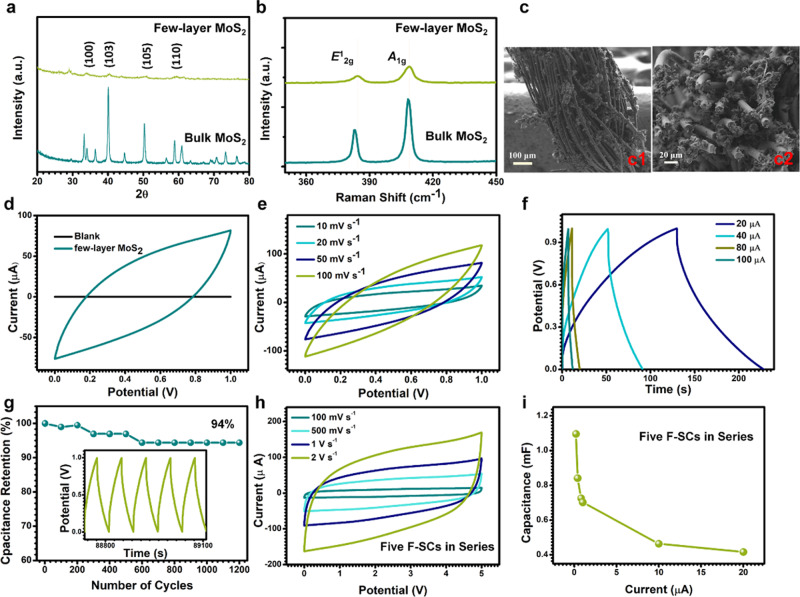
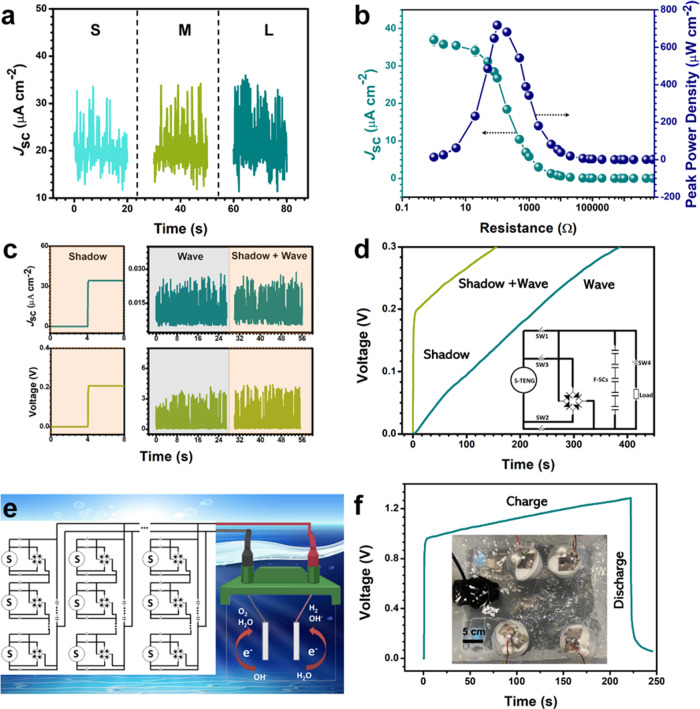
Hybrid energy-harvesting systems that capture both wave and solar energy from the oceans using triboelectric nanogenerators and photovoltaic cells are promising renewable energy solutions. However, ubiquitous shadows cast from moving objects in these systems are undesirable as they degrade the performance of the photovoltaic cells. Here we report a shadow-tribo-effect nanogenerator that hybrids tribo-effect and shadow-effect together to overcome this issue. Several fiber-supercapacitors are integrated with the shadow-tribo-effect nanogenerator to form a self-charging power system. To capture and store wave/solar energy from oceans, an energy ball based on the self-charging power system is demonstrated. By harnessing the shadow-effect, i.e. the shadow of the moving object in the energy ball, the charging time shortens to 253.3 s to charge the fiber-supercapacitors to the same voltage (0.3 V) as using pure tribo-effect. This cost-effective method to harvest and store the wave/solar energy from the oceans in this work is expected to inspire next-generation large-scale blue energy harvesting.
Overview
The claims and statistics of this paper haven’t been checked yet.
Run the check — free, no account needed. It reads the open-access text and checks the sources it cites.
Integrity signals
Registry
Cites
Statistics
Figures
Verification
Claims the paper makes
The claims and statistics of this paper haven’t been checked yet.
Run the check — free, no account needed. It reads the open-access text and checks the sources it cites.
Claims other papers make about this one
Each is checked against this paper’s own text: does it say what the citing paper says it does?
The source backs part of the claim, not all of it — or backs it for a different population, condition or comparison.
In the citing paper
“The S-TENG output performance varies with the shadow ratio caused by the Al ball, with optimal performance at a 50% half-shadow condition, providing the maximum surface area for electron generation and collection.”
From Advances in Blue Energy Fuels: Harvesting Energy from Ocean for Self‐Powered Electrolysis (2025) · cites this paper as [254]
Experimental — accuracy not yet measuredThe source backs part of the claim, not all of it — or backs it for a different population, condition or comparison.
In the citing paper
“Zhang et al. [254] introduced a hybrid energy harvesting system that captures wave and solar energy from the ocean using triboelectric nanogenerators and photovoltaic cells.”
From Advances in Blue Energy Fuels: Harvesting Energy from Ocean for Self‐Powered Electrolysis (2025) · cites this paper as [254]
Experimental — accuracy not yet measuredThe cited source says what the claim attributes to it.
In the citing paper
“After four energy balls in series charged the F-SCs to 1.3 V, they discharged the electrical energy to split seawater (Figure 10p).”
From Advances in Blue Energy Fuels: Harvesting Energy from Ocean for Self‐Powered Electrolysis (2025) · cites this paper as [254]
The cited source says what the claim attributes to it.
In the citing paper
“Under dark conditions, the S-TENG generates a typical tribo-induced AC signal of 0.01 μA cm -2 , while under an illumination intensity of 90 mW cm -2 , a significantly increased DC signal of 34 μA cm -2 is generated.”
From Advances in Blue Energy Fuels: Harvesting Energy from Ocean for Self‐Powered Electrolysis (2025) · cites this paper as [254]
Self-check
Percentages, sums and reported differences re-computed from the paper’s own numbers.
The self-check needs the paper’s full text.
Citations
Cites
Opportunities and challenges for a sustainable energy future
Chu, S., & Majumdar, A. (2012) · Nature · doi:10.1038/nature11475 · Cited by 12,550
Carbon-Based Supercapacitors Produced by Activation of Graphene
Zhu, Y., Murali, S., Stoller, M. D., Ganesh, K. J., Cai, W., Ferreira, P. J., Pirkle, A. R., Wallace, R. M., Cychosz, K. A., Thommes, M., et al. (2011) · Science · doi:10.1126/science.1200770 · Cited by 6,134
From Bulk to Monolayer MoS 2 : Evolution of Raman Scattering
Li, H., Zhang, Q., Yap, C. C., Tay, B. K., Teo, E. H. T., Olivier, A., & Baillargeat, D. (2012) · Advanced Functional Materials · doi:10.1002/adfm.201102111 · Cited by 4,262
Self-citationGraphene-Based Supercapacitor with an Ultrahigh Energy Density
Liu, C., Yu, Z., Neff, D., Zhamu, A., & Jang, B. Z. (2010) · Nano Letters · doi:10.1021/nl102661q · Cited by 3,232
Triboelectric Nanogenerator: A Foundation of the Energy for the New Era
Wu, C., Wang, A. C., Ding, W., Guo, H., & Wang, Z. L. (2018) · Advanced Energy Materials · doi:10.1002/aenm.201802906 · Cited by 2,034
Toward the blue energy dream by triboelectric nanogenerator networks
Wang, Z. L., Jiang, T., & Xu, L. (2017) · Nano Energy · doi:10.1016/j.nanoen.2017.06.035 · Cited by 1,249
Toward Large-Scale Energy Harvesting by a Nanoparticle-Enhanced Triboelectric Nanogenerator
Zhu, G., Lin, Z., Jing, Q., Bai, P., Pan, C., Yang, Y. F., Zhou, Y., & Wang, Z. L. (2013) · Nano Letters · doi:10.1021/nl4001053 · Cited by 1,129
Wen, Z., Yeh, M.-H., Guo, H., Wang, J., Zi, Y., Xu, W., Deng, J., Zhu, L., Wang, X., Hu, C., et al. (2016) · Science Advances · doi:10.1126/sciadv.1600097 · Cited by 854
Zhu, G., Su, Y., Bai, P., Chen, J., Jing, Q., Yang, W., & Wang, Z. L. (2014) · ACS Nano · doi:10.1021/nn5012732 · Cited by 565
Effective energy storage from a triboelectric nanogenerator
Zi, Y., Wang, J., Wang, S., Li, S., Wen, Z., Guo, H., & Wang, Z. L. (2016) · Nature Communications · doi:10.1038/ncomms10987 · Cited by 537
Cited by
Sorted by citations
Items 101–140 of 140
Liu, T., Liu, Y., Qian, J., Ren, J., Zhai, J., Zhou, D., Zhou, Y., Yan, G., Xu, D.-M., Liu, W., et al. (2025) · Journal of Materials Chemistry A · doi:10.1039/d5ta03960f · Cited by 7
Fang, Z., Liu, C., Kou, W., Li, X., Peng, L., Ding, W., Guo, X., & Hou, W. (2024) · Energy storage materials · doi:10.1016/j.ensm.2024.103365 · Cited by 7
Abid, Y., Shuja, A., Ali, M. U., & Murtaza, I. (2024) · Engineering Science and Technology an International Journal · doi:10.1016/j.jestch.2024.101749 · Cited by 7
Fang, Z., Kou, W., Sui, Y., Liu, C., Li, X., Peng, L., Ding, W., Guo, X., & Hou, W. (2025) · Journal of Energy Chemistry · doi:10.1016/j.jechem.2025.08.034 · Cited by 5
Self-powered cathodic protection of marine steel by piezoelectric nanogenerators
Hua, M., Zhu, Y., Yang, F., Chen, M., & Zhao, Y. (2025) · Corrosion Science · doi:10.1016/j.corsci.2025.113585 · Cited by 5
Flexible nanogenerator based on sponge-shaped piezoelectric composite
Yin, H., Zhang, X.-R., Fan, J., Tu, C., Tang, Z., & Zhang, X. (2021) · Journal of Physics D Applied Physics · doi:10.1088/1361-6463/ac16a8 · Cited by 5
Self-citationLin, C., Pei, Z., Lan, J., Huang, J., Liu, M., Cao, S., & Ma, X. (2025) · Chemical Engineering Journal · doi:10.1016/j.cej.2025.169950 · Cited by 4
Mao, Y., Lu, S., Liu, Q., Yin, A., Zhang, Y., Wang, K., Zhang, Y., Guo, R., & Bu, L. (2026) · Mechanical Systems and Signal Processing · doi:10.1016/j.ymssp.2026.113934 · Cited by 4
Ra, Y., Cho, S., Guo, X., Choi, D., & Lee, C. (2026) · Nano-Micro Letters · doi:10.1007/s40820-026-02263-z · Cited by 4
Self-citationAtomic Force Microscopy – A Powerful Tool for Studying Contact Electrification
Wang, N., & Zhao, X. (2022) · Advanced Materials Technologies · doi:10.1002/admt.202201408 · Cited by 5
Hybridized triboelectric nanogenerators for simultaneously scavenging droplet and wind energies
Hu, C., Bao, C., Liu, Y., Yan, Y., Bai, Y., & Xu, Q. (2025) · Frontiers in Chemistry · doi:10.3389/fchem.2024.1538660 · Cited by 3
Modeling and Efficiency Optimization Design of Underwater Capacitive Power Transfer System
Huang, Z., Lin, Y., & Jin, T. (2025) · International Journal of Circuit Theory and Applications · doi:10.1002/cta.4583 · Cited by 3
Chen, X., Sheng, S., Yang, S., Wang, W., Wang, K., Wang, Z., & Sun, P. (2025) · Energy · doi:10.1016/j.energy.2025.138549 · Cited by 3
Dejene, B. K., & Woldeab, M. E. (2026) · Energy Conversion and Management X · doi:10.1016/j.ecmx.2026.101589 · Cited by 3
Energy harvesting using ferroelectric/ferroelastic switching: the effect of pre-poling
Kang, W., Cain, C., Wang, F., & Huber, J. E. (2023) · Smart Materials and Structures · doi:10.1088/1361-665x/ace1b9 · Cited by 3
Chang, C., Chin, Y., & Huang, X. (2023) · Chemistry of Materials · doi:10.1021/acs.chemmater.3c00421 · Cited by 3
Arch Shaped Triboelectric Nanogenerator for Wave Energy Harvesting and Corrosion Protection
He, J., Wang, X., Wang, M., Zhou, H., Nan, Y., Cui, S., Zhang, T., & Yang, L. (2026) · Advanced Materials · doi:10.1002/adma.202523290 · Cited by 2
Self-citationMuthuraman, A., Pandiyan, A., Veeramuthu, L., Jawaharlal, H., Babu, S., Fan, C.-W., Chao, T.-H., Chiang, W., Zhou, Y., & Kuo, C. (2026) · Progress in Materials Science · doi:10.1016/j.pmatsci.2026.101751 · Cited by 3
Zhang, C., Wang, M., Li, W., Zhang, W., Chen, Z., Wu, D., Liu, S., Shuai, J., He, X., Zhang, Q., et al. (2025) · Advanced Functional Materials · doi:10.1002/adfm.202504693 · Cited by 2
Self-citationFang, S., Zhang, Z.-H., Guo, Y., Gao, Q., Lai, Z., & Bao, B. (2025) · Thin-Walled Structures · doi:10.1016/j.tws.2025.113342 · Cited by 2
Huang, M., Feng, X., Li, Z., & Liu, H. (2022) · International Conference on Electronics and Electrical Engineering Technology (EEET) · doi:10.1109/eeet58130.2022.00016 · Cited by 1
Hybridization of Triboelectric Nanogenerators with Solar Panel
Zheng, L., & Fang, L. (2023) · Springer eBooks · doi:10.1007/978-3-031-28111-2_36 · Cited by 1
Triboelectric Mat Multimodal System for Sleep Pose Estimation
Xu, J., Guo, X., & Lee, C. (2025) · IEEE International Conference on Micro Electro Mechanical Systems (MEMS) · doi:10.1109/mems61431.2025.10917976 · Cited by 1
Self-citationIsmail, A. S., Ye, Z., Alsheavi, A. N., Yalikun, Y., Yang, Y., & Shang, C. (2026) · Fundamental Research · doi:10.1016/j.fmre.2026.05.019 · Cited by 1
Hybridization of Triboelectric Nanogenerators with Solar Panel
Zheng, L., & Fang, L. (2023) · Springer eBooks · doi:10.1007/978-3-031-05722-9_36-1 · Cited by 1
Yin, X., Fu, H., Wu, D., Wang, H., Wei, P., & Zhang, S. (2024) · International Conference on High Performance Computing and Communication Engineering (HPCCE) · doi:10.1117/12.3026622 · Cited by 1
Guo, X., Wang, L., & Lee, C. (2025) · IEEE International Conference on Micro Electro Mechanical Systems (MEMS) · doi:10.1109/mems61431.2025.10917296 · Cited by 1
Self-citationTriboelectric Nanogenerator Using Solid–Solid Contact Electrification
Wang, Z. L. (2025) · Springer series in surface sciences · doi:10.1007/978-3-031-88504-4_9 · Cited by 1
Joo, S., Kim, J. H., Lee, C. E., Kang, J., Seo, S., Kim, J., & Song, Y. (2022) · SSRN Electronic Journal · doi:10.2139/ssrn.4124163 · Cited by 1
Self-citationNandakumar, D. K., Ravi, S. K., Suresh, L., & Tan, S. C. (2021) · Energy & Environmental Science · doi:10.1039/d1ee01100f
Self-citationForced‐Vibration Nonlinear Piezoelectric Energy Harvesters
Yang, B. T., Yi, Z., & Lee, C. (2022) · doi:10.1002/9783527833115.ch6
Self-citationA shadow enabled non-invasive probe for multi-feature intelligent liquid surveillance system
Lian, L., Zhang, Q., Li, W., Wang, B., & Liang, Q. (2023) · Nanoscale · doi:10.1039/d3nr04983c
Self-citationRa, Y., Kim, Y.-S., Lee, D., & Choi, D. (2024) · SSRN Electronic Journal · doi:10.2139/ssrn.4766243
Gao, W., Zhi, J., Cheng, L., Liu, D., & Qin, Y. (2025) · Nano Energy · doi:10.1016/j.nanoen.2025.111511
Solar-driven device resilience in extreme terrestrial environments
Ding, T., Liu, X., Yang, X., Xu, Y.-F., & Cao, X. E. (2026) · Cell Reports Physical Science · doi:10.1016/j.xcrp.2026.103325
Unlocking β-phase in electrospun PVDF: Nanofiller-induced phase engineering for TENGs
Niranjana, V. S., & Prabu, A. A. (2026) · Journal of Science Advanced Materials and Devices · doi:10.1016/j.jsamd.2026.101221
A Battery-Free Sensor Network Powered by Underwater Ultrasonic Energy Transfer
Li, C., Cheng, R., & Han, Y. (2026) · MTS/IEEE OCEANS Conference (OCEANS) · doi:10.1109/oceans66983.2026.11616916
Liu, H., Zhao, G., Li, M., Wang, Y., Liu, Q., Chen, N., Lin, Z., Peng, X., & Chen, T. (2026) · Chemical Engineering Journal · doi:10.1016/j.cej.2026.181164
Triboelectric nanogenerators for wave energy harvesting and self-powered marine applications
Li, C., Zhang, Y., Zhang, C., Sun, Q., & Han, X. (2026) · Renewable and Sustainable Energy Reviews · doi:10.1016/j.rser.2026.117564
Su, F., Lan, L., Sun, G., Yang, H., Dai, W., Wang, T., Yang, B., & Liu, Q. (2026) · Journal of Power Sources · doi:10.1016/j.jpowsour.2026.241631
Metadata
- Authors
- Zhang, Q., Liang, Q., Nandakumar, D. K., Qu, H., Shi, Q., Alzakia, F. I., Tay, D. J. J., Yang, L., Zhang, X., Suresh, L., Lee, C., Wee, A. T. S., & Tan, S. C.
- Affiliations
- National University of Singapore (SG)
- Corresponding author
- Tan, Swee Ching
- ORCID
- Venue
- Nature Communications
- Published
- 2021-01-27
- Volume
- 12
- Issue
- 1
- Pages
- 616-616
- ISSN
- 2041-1723 (ISSN-L)
- PMC
- PMC7841174
- OpenAlex
- W3122400851
- Cited by
- 140
- References
- 40
- Citations by year
- 2026: 14 · 2025: 25 · 2024: 28 · 2023: 31 · 2022: 31 · 2021: 11
- FWCI
- 7.67
- Type
- journal article
- Language
- en
- Open access
- gold
- doi.org
- Locations
- Nature Communications (publishedVersion, cc-by)
- Europe PMC (PubMed Central) (publishedVersion, other-oa)
- PubMed Central (publishedVersion, cc-by)
- PubMed (publishedVersion)
- National University of Singapore (submittedVersion)
- RePEc: Research Papers in Economics (submittedVersion)
- DOAJ (DOAJ: Directory of Open Access Journals) (submittedVersion, cc-by-sa)
- Funders
- Ministry of Education - Singapore (R-284-000-217-112)
- Topics
- Physical Sciences › Engineering › Biomedical Engineering › Advanced Sensor and Energy Harvesting Materials
- Physical Sciences › Engineering › Mechanical Engineering › Innovative Energy Harvesting Technologies
- Physical Sciences › Engineering › Ocean Engineering › Wave and Wind Energy Systems
- Keywords
- triboelectric nanogenerator, solar cells, shadowing, wave energy conversion, solar energy harvesting, fiber supercapacitors, hybrid energy harvesting, salinity gradient energy
About these checks
Registry, retraction, Cites and statistics results are computed, not judged, with one exception: a printed reference that no index lists is read once by a model before it counts as a citation error. Claims are extracted by a model and kept only when their quote appears verbatim in the text; each cited source is then checked, with a model’s help, for whether it says what the claim relies on. Those verdicts can be wrong — read the claim’s quote and the cited source before relying on one.
Statistics and arithmetic are recomputed, not judged.
Confidence bands are shown only for fields calibrated on our annotated test set. None is calibrated yet, so no band is shown.
What counts as a claim ›How we measure confidence ›How we check this ›
Are you an author, or do you see a problem with this page? Request a review
