

The DOI matches its Crossref record; 90 of the 90 references it cites were found in a registry or an index.
H3K27me3-rich genomic regions can function as silencers to repress gene expression via chromatin interactions
Open accessPublished version of a preprint
Abstract
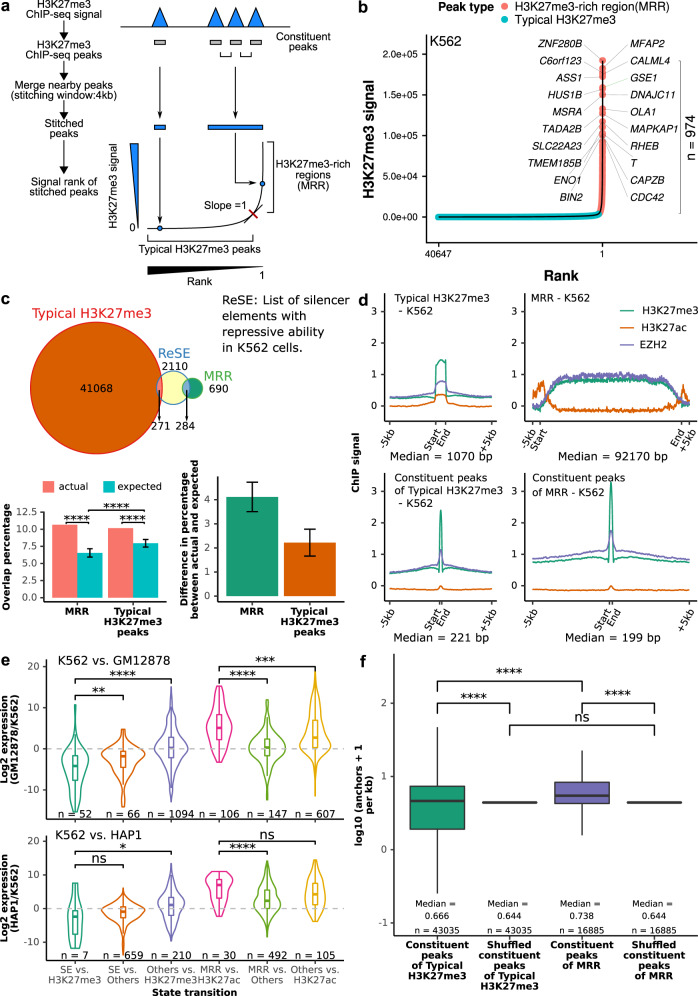
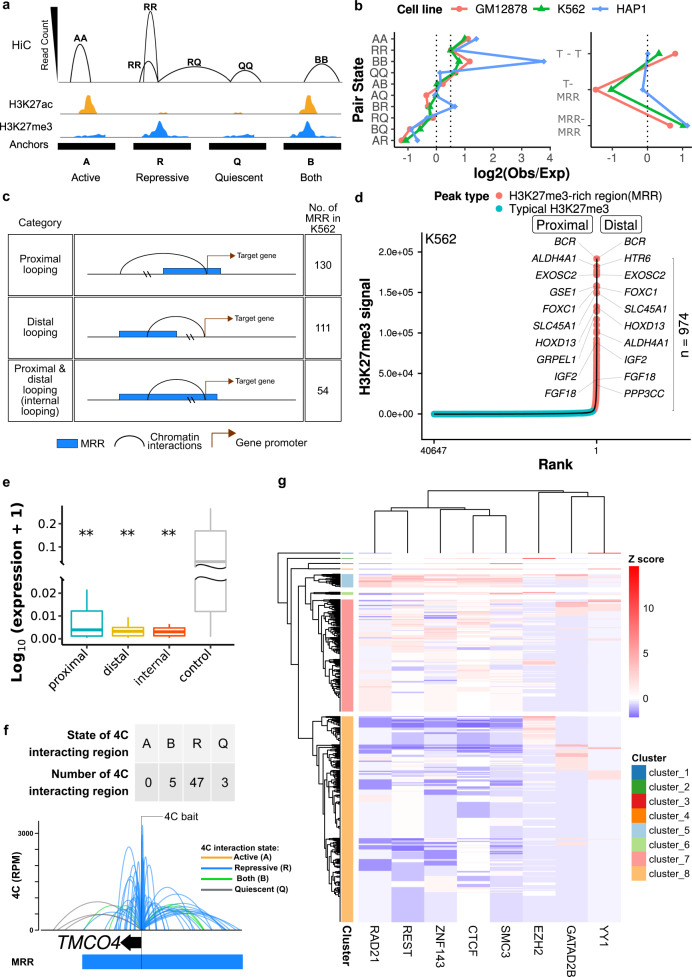
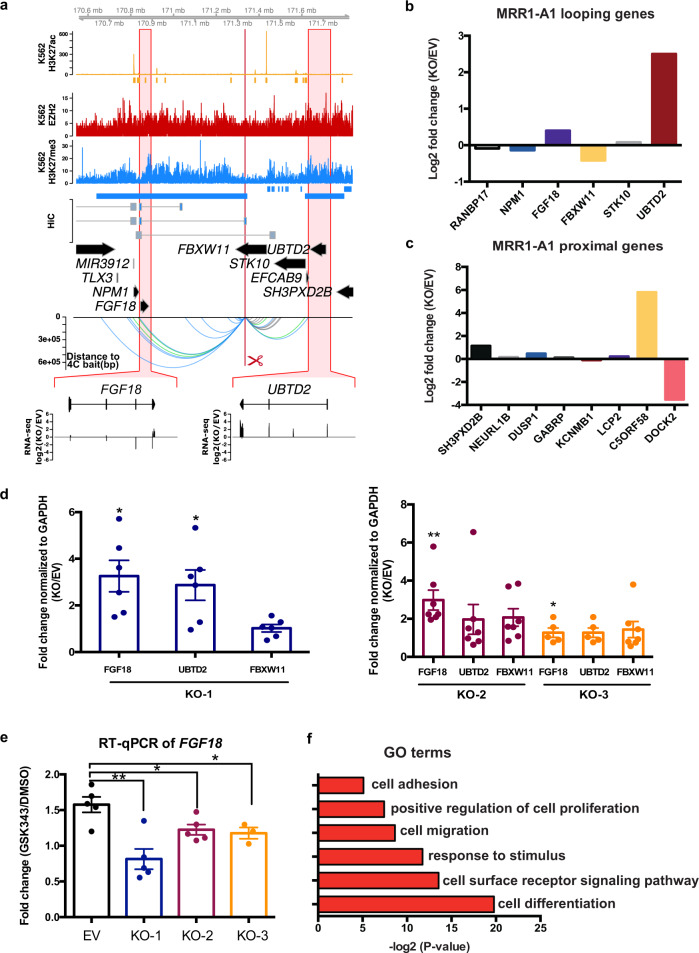
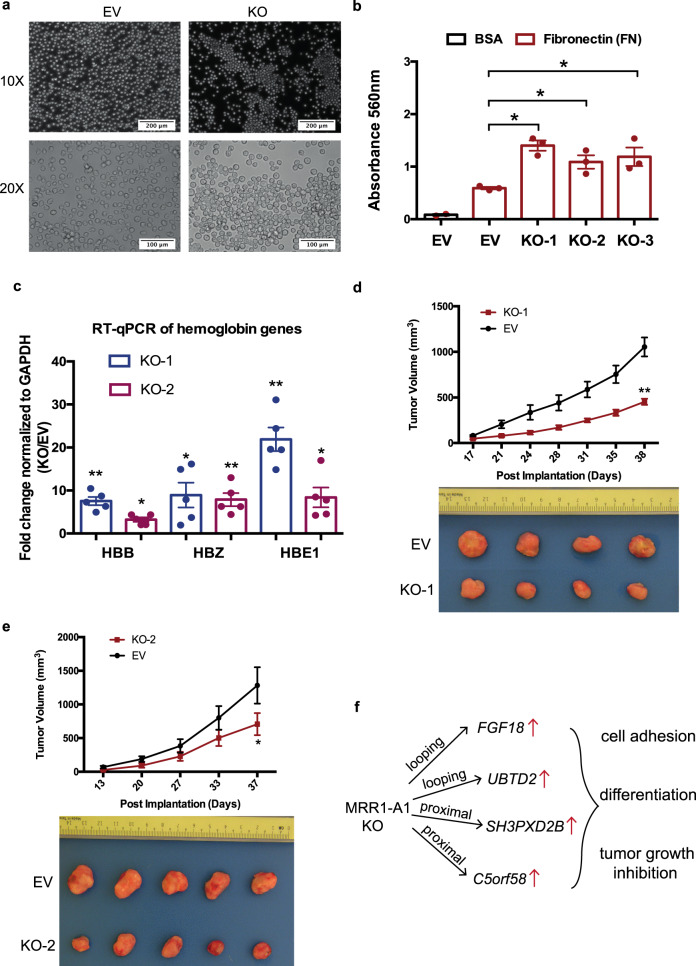
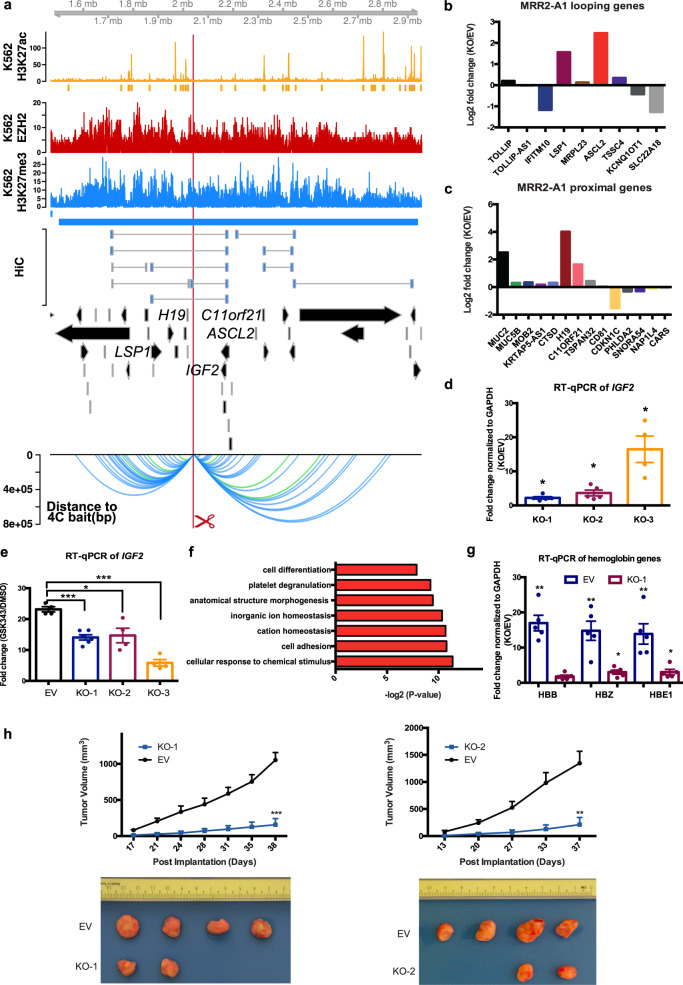
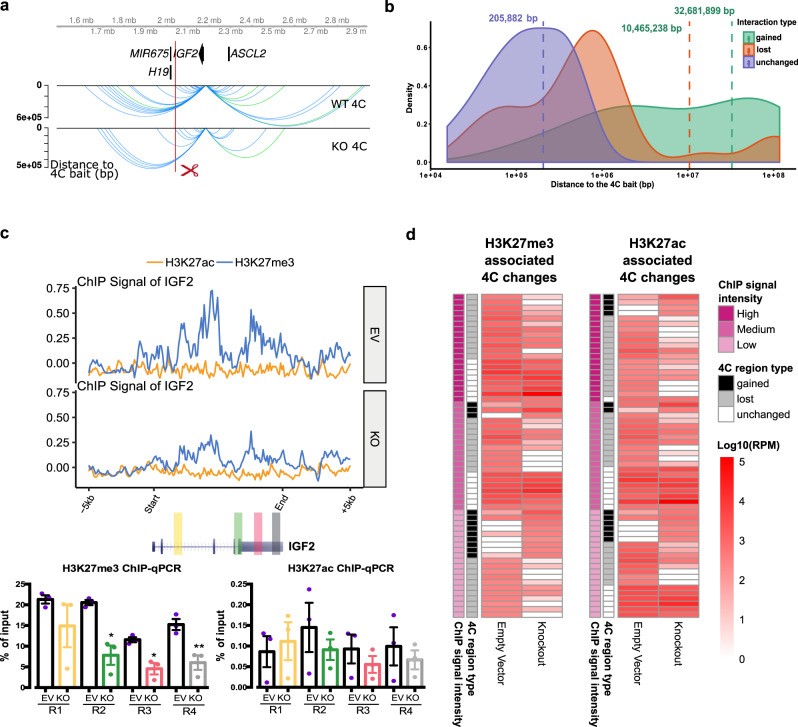
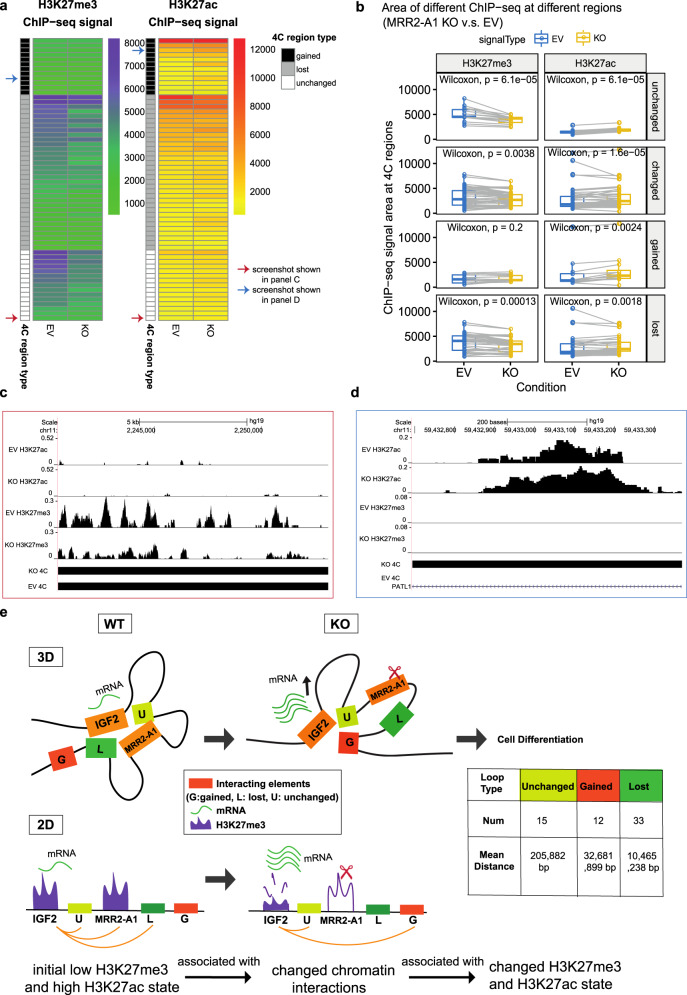
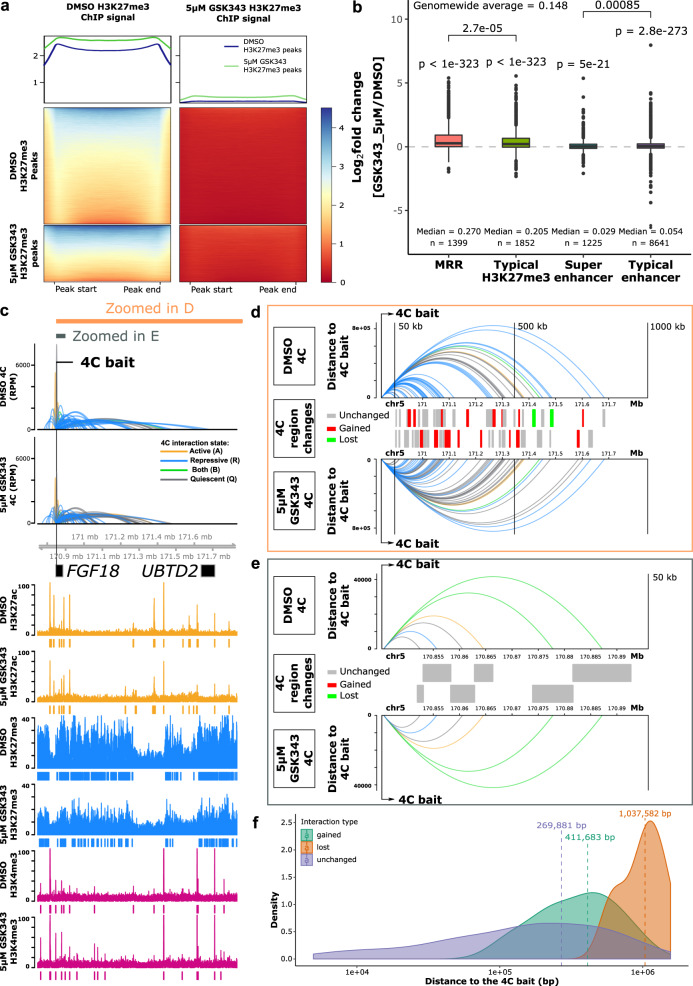
The mechanisms underlying gene repression and silencers are poorly understood. Here we investigate the hypothesis that H3K27me3-rich regions of the genome, defined from clusters of H3K27me3 peaks, may be used to identify silencers that can regulate gene expression via proximity or looping. We find that H3K27me3-rich regions are associated with chromatin interactions and interact preferentially with each other. H3K27me3-rich regions component removal at interaction anchors by CRISPR leads to upregulation of interacting target genes, altered H3K27me3 and H3K27ac levels at interacting regions, and altered chromatin interactions. Chromatin interactions did not change at regions with high H3K27me3, but regions with low H3K27me3 and high H3K27ac levels showed changes in chromatin interactions. Cells with H3K27me3-rich regions knockout also show changes in phenotype associated with cell identity, and altered xenograft tumor growth. Finally, we observe that H3K27me3-rich regions-associated genes and long-range chromatin interactions are susceptible to H3K27me3 depletion. Our results characterize H3K27me3-rich regions and their mechanisms of functioning via looping.
Overview
The claims and statistics of this paper haven’t been checked yet.
Run the check — free, no account needed. It reads the open-access text and checks the sources it cites.
Integrity signals
Registry
Cites
Statistics
Figures
Verification
Claims the paper makes
The claims and statistics of this paper haven’t been checked yet.
Run the check — free, no account needed. It reads the open-access text and checks the sources it cites.
Claims other papers make about this one
Each is checked against this paper’s own text: does it say what the citing paper says it does?
In the citing paper
“Next, we performed CUT&Tag for EZH2, a subunit of Polycomb repressive complex II, in THP-1 cells and observed that EZH2 binding sites mostly overlapped with H3K27me3 peaks in the P-S loop anchors (Extended Data Fig. 6d), consistent with the previously reported promoter-silencer loops30,31.”
From Subtype-specific 3D genome alteration in acute myeloid leukaemia (2022) · cites this paper as [31]
Self-check
Percentages, sums and reported differences re-computed from the paper’s own numbers.
The self-check needs the paper’s full text.
Citations
Cites
Analysis of Relative Gene Expression Data Using Real-Time Quantitative PCR and the 2−ΔΔCT Method
Livak, K. J., & Schmittgen, T. D. (2001) · Methods · doi:10.1006/meth.2001.1262 · Cited by 180,860
Trimmomatic: a flexible trimmer for Illumina sequence data
Bolger, A. M., Lohse, M., & Usadel, B. (2014) · Bioinformatics · doi:10.1093/bioinformatics/btu170 · Cited by 65,548
Fast gapped-read alignment with Bowtie 2
Langmead, B., & Salzberg, S. L. (2012) · Nature Methods · doi:10.1038/nmeth.1923 · Cited by 56,400
clusterProfiler: an R Package for Comparing Biological Themes Among Gene Clusters
Yu, G., Wang, L.-G., Han, Y., & He, Q.-Y. (2012) · OMICS: A Journal of Integrative Biology · doi:10.1089/omi.2011.0118 · Cited by 36,259
Model-based Analysis of ChIP-Seq (MACS)
Zhang, Y., Liu, T., Meyer, C. A., Eeckhoute, J., Johnson, D. S., Bernstein, B. E., Nusbaum, C., Myers, R. M., Brown, M., Li, W., et al. (2008) · Genome Biology · doi:10.1186/gb-2008-9-9-r137 · Cited by 18,386
Self-citationAn integrated encyclopedia of DNA elements in the human genome
The ENCODE Project Consortium (2012) · Nature · doi:10.1038/nature11247 · Cited by 18,072
Genome engineering using the CRISPR-Cas9 system
Ran, F. A., Hsu, P. D., Wright, J., Agarwala, V., Scott, D. A., & Zhang, F. (2013) · Nature Protocols · doi:10.1038/nprot.2013.143 · Cited by 11,133
Near-optimal probabilistic RNA-seq quantification
Bray, N. L., Pimentel, H., Melsted, P., & Pachter, L. (2016) · Nature Biotechnology · doi:10.1038/nbt.3519 · Cited by 9,723
A 3D Map of the Human Genome at Kilobase Resolution Reveals Principles of Chromatin Looping
Rao, S. S. P., Huntley, M. H., Durand, N. C., Stamenova, E. K., Bochkov, I. D., Robinson, J. T., Sanborn, A. L., Machol, I., Omer, A. D., Lander, E. S., et al. (2014) · Cell · doi:10.1016/j.cell.2014.11.021 · Cited by 9,212
Integrative analysis of 111 reference human epigenomes
Roadmap Epigenomics Consortium, Kundaje, A., Meuleman, W., Ernst, J., Bilenky, M., Yen, A., Heravi-Moussavi, A., Kheradpour, P., Zhang, Z., Wang, J., et al. (2015) · Nature · doi:10.1038/nature14248 · Cited by 6,368
Cited by
Sorted by citations
The molecular principles of gene regulation by Polycomb repressive complexes
Blackledge, N. P., & Klose, R. J. (2021) · Nature Reviews Molecular Cell Biology · doi:10.1038/s41580-021-00398-y · Cited by 500
A cis-regulatory atlas in maize at single-cell resolution
Marand, A. P., Chen, Z., Gallavotti, A., & Schmitz, R. J. (2021) · Cell · doi:10.1016/j.cell.2021.04.014 · Cited by 387
cis-Regulatory Elements in Plant Development, Adaptation, and Evolution
Marand, A. P., Eveland, A. L., Kaufmann, K., & Springer, N. M. (2023) · Annual Review of Plant Biology · doi:10.1146/annurev-arplant-070122-030236 · Cited by 346
Deciphering the multi-scale, quantitative cis-regulatory code
Kim, S., & Wysocka, J. (2023) · Molecular Cell · doi:10.1016/j.molcel.2022.12.032 · Cited by 302
Subtype-specific 3D genome alteration in acute myeloid leukaemia
Xu, J., Song, F., Lyu, H., Kobayashi, M., Zhang, B., Zhao, Z., Hou, Y., Wang, X., Luan, Y., Jia, B., et al. (2022) · Nature · doi:10.1038/s41586-022-05365-x · Cited by 208
Mechanisms of Polycomb group protein function in cancer
Parreno, V., Martinez, A., & Cavalli, G. (2022) · Cell Research · doi:10.1038/s41422-021-00606-6 · Cited by 158
“Interestingly, co-repression of several tumor suppressors was suggested to participate in tumor growth.(105,106) An established tumor state can also participate a posteriori in the redistribution of EZH2 on ectopic targets, triggering changes in cell identity due to misexpression of homeotic genes.”
BackgroundMechanisms of action and resistance in histone methylation-targeted therapy
Yamagishi, M., Kuze, Y., Kobayashi, S., Nakashima, M., Morishima, S., Kawamata, T., Makiyama, J., Suzuki, K., Seki, M., Abe, K., et al. (2024) · Nature · doi:10.1038/s41586-024-07103-x · Cited by 120
Identification of non-coding silencer elements and their regulation of gene expression
Pang, B., van Weerd, J. H., Hamoen, F. L., & Snyder, M. P. (2022) · Nature Reviews Molecular Cell Biology · doi:10.1038/s41580-022-00549-9 · Cited by 103
“Epigenomic and other characteristics As mentioned earlier, specific epigenetic modifications are associated with distinct NCREs, and some silencers are enriched in H3K27me3 (refs.(56,64,84,85)).”
BackgroundHiCAR is a robust and sensitive method to analyze open-chromatin-associated genome organization
Wei, X., Yu, X., Peters, D., Marius, C., Sun, T., Shan, R., Ou, J., Lin, X., Yue, F., Li, W., et al. (2022) · Molecular Cell · doi:10.1016/j.molcel.2022.01.023 · Cited by 84
Epigenetic regulation of B cells and its role in autoimmune pathogenesis
Xiao, F., Rui, K., Shi, X., Wu, H., Cai, X., Lui, K. O., Lu, Q., Ballestar, E., Tian, J., Zou, H., et al. (2022) · Cellular and Molecular Immunology · doi:10.1038/s41423-022-00933-7 · Cited by 86
“However, trimethylation at Lys9 and Lys27 of histone H3 (H3K9me3 and H3K27me3, respectively) can function as a silencer to repress gene expression by modifying chromatin architecture and interactions [20, 21].”
BackgroundEndogenous Retroviruses as Modulators of Innate Immunity
Russ, E. U., & Iordanskiy, S. (2023) · Pathogens · doi:10.3390/pathogens12020162 · Cited by 74
Chromatin Conformation in Development and Disease
Boltsis, I., Grosveld, F. G., Giraud, G., & Kolovos, P. (2021) · Frontiers in Cell and Developmental Biology · doi:10.3389/fcell.2021.723859 · Cited by 59
Enhancer–silencer transitions in the human genomePreprint
Huang, D., & Ovcharenko, I. (2022) · Genome Research · doi:10.1101/gr.275992.121 · Cited by 57
“H3K27me3 modification has been evidenced to take part in both repressive mechanisms (Ogiyama et al. 2018; Cai et al. 2021).”
BackgroundCell tumbling enhances stem cell differentiation in hydrogels via nuclear mechanotransduction
Ayushman, M., Mikos, G., Tong, X., Sinha, S., López-Fuentes, E., Jones, S., Cai, P. C., Lee, H. P., Morrison, A. J., Spakowitz, A. J., et al. (2024) · Nature Materials · doi:10.1038/s41563-024-02038-0 · Cited by 54
“Therefore, we also characterized H3K27me3, a histone modification associated with active transcription repression and heterochromatin linked to differentiation-specific genes 31,32 .”
Epiphany: predicting Hi-C contact maps from 1D epigenomic signals
Yang, R., Das, A., Gao, V. R., Karbalayghareh, A., Noble, W. S., Bilmes, J. A., & Leslie, C. S. (2023) · Genome biology · doi:10.1186/s13059-023-02934-9 · Cited by 54
“We next found another example of a cell-type-specific region around the gene CPED1 [24], and we tested whether Epiphany could predict the difference.”
BackgroundSuper-Enhancers, Phase-Separated Condensates, and 3D Genome Organization in Cancer
Tang, S. C., Vijayakumar, U., Zhang, Y., & Fullwood, M. J. (2022) · Cancers · doi:10.3390/cancers14122866 · Cited by 56
Self-citationRole of primary aging hallmarks in Alzheimer´s disease
Zhao, J., & Huai, J. (2022) · Theranostics · doi:10.7150/thno.79535 · Cited by 55
“Of note, H3K9ac has been shown to co-localize with H3K14ac on the previously described poised promoters harbouring H3K4me3 and H3K27me3 [209, 251, 252].”
BackgroundInfluentialTopography of mutational signatures in human cancer
Otlu, B., Díaz‐Gay, M., Vermes, I., Bergstrom, E. N., Zhivagui, M., Barnes, M. D., & Alexandrov, L. B. (2023) · Cell Reports · doi:10.1016/j.celrep.2023.112930 · Cited by 48
An expanded registry of candidate cis-regulatory elements
Moore, J. E., Pratt, H., Fan, K., Phalke, N. N., Fisher, J., Elhajjajy, S. I., Andrews, G., Gao, M., Shedd, N., Fu, Y., et al. (2026) · Nature · doi:10.1038/s41586-025-09909-9 · Cited by 119
Epigenetic reprogramming during the maternal‐to‐zygotic transition
Chen, Y., Wang, L., Guo, F., Dai, X., & Zhang, X. (2023) · MedComm · doi:10.1002/mco2.331 · Cited by 51
Low RNA stability signifies increased post-transcriptional regulation of cell identity genes
Li, Y., Yang, Y., Lv, J., Gao, X., Yu, Y., Babu, S. S., Bruno, I., Zhao, D., Xia, B., Peng, W., et al. (2023) · Nucleic Acids Research · doi:10.1093/nar/gkad300 · Cited by 43
PRC2, Chromatin Regulation, and Human Disease: Insights From Molecular Structure and Function
Liu, X., & Liu, X. (2022) · Frontiers in Oncology · doi:10.3389/fonc.2022.894585 · Cited by 48
“dependent long-range chromatin interactions (124, 125).”
Wnuk, A., Przepiórska, K., Pietrzak, B. A., & Kajta, M. (2023) · International Journal of Molecular Sciences · doi:10.3390/ijms24044043 · Cited by 43
“The role of PRC2 in silencing gene expression consists of adding methyl groups at Lys27 of histone H3 to form H3K27me3, a commonly known marker of gene repression [46,47].”
BackgroundGlucose Deprivation Promotes Pseudohypoxia and Dedifferentiation in Lung Adenocarcinoma
Saggese, P., Pandey, A., Alcaraz, M., Fung, E., Hall, A., Yanagawa, J., Rodriguez, E. F., Grogan, T., Giurato, G., Nassa, G., et al. (2023) · Cancer Research · doi:10.1158/0008-5472.can-23-1148 · Cited by 44
Thrombocytopenia Independently Leads to Changes in Monocyte Immune Function
Li, C., Ture, S. K., Nieves-López, B., Blick-Nitko, S. K., Maurya, P., Livada, A. C., Stahl, T. J., Kim, M., Pietropaoli, A. P., & Morrell, C. N. (2024) · Circulation Research · doi:10.1161/circresaha.123.323662 · Cited by 47
“43,44 Circulating monocytes isolated from thrombocytopenic and CD47 −/− mice had less H3K9me3 and H3K27me3 compared with WT mouse monocytes (Figure 6B), and monocytes H3K9me3 and H3K27me3 were increased more by WT platelets than CD47 −/− platelets coculture in vitro (Figure 6C).”
Epigenetic Connection of the Calcitonin Gene-Related Peptide and Its Potential in Migraine
Fila, M., Sobczuk, A., Pawłowska, E., & Błasiak, J. (2022) · International Journal of Molecular Sciences · doi:10.3390/ijms23116151 · Cited by 45
Sánchez-Ceinos, J., Hussain, S., Khan, A. W., Zhang, L., Almahmeed, W. A., Pernow, J., & Cosentino, F. (2024) · Cardiovascular Diabetology · doi:10.1186/s12933-024-02196-0 · Cited by 44
“In particular, trimethylation of lysine 27 on histone 3 (H3K27me3) favours the shift towards heterochromatin, characterized by condensed and silent genomic regions [9].”
BackgroundPolycomb-lamina antagonism partitions heterochromatin at the nuclear periphery
Siegenfeld, A. P., Roseman, S. A., Roh, H., Lue, N. Z., Wagen, C., Zhou, E., Johnstone, S. E., Aryee, M. J., & Liau, B. B. (2022) · Nature Communications · doi:10.1038/s41467-022-31857-5 · Cited by 40
Reduced methylation correlates with diabetic nephropathy risk in type 1 diabetes
Khurana, I., Kaipananickal, H., Maxwell, S., Birkelund, S., Syreeni, A., Forsblom, C. M., Okabe, J., Ziemann, M., Kaspi, A., Rafehi, H., et al. (2023) · Journal of Clinical Investigation · doi:10.1172/jci160959 · Cited by 38
“Indeed, the inability to reactivate FGF18 suggests hyperglycemia may not effectively influence transcription because of differential epigenetic modification of H3K27me3 by EZH2 (72).”
Scaffold, mechanics and functions of nuclear lamins
Buxboim, A., Kronenberg‐Tenga, R., Salajkova, S. A., Avidan, N., Shahak, H., Thurston, A., & Medalia, O. (2023) · FEBS Letters · doi:10.1002/1873-3468.14750 · Cited by 44
“The cell nucleus features a superposition of structural elements spanning a range of dimensional length scales that mechanically translate to a complex viscoelastic load-deformation relationship [85,100,124].”
BackgroundLee, D., Yang, J., & Kim, S. (2022) · Nature Communications · doi:10.1038/s41467-022-34152-5 · Cited by 40
“We conjectured that those pCREs represent transcriptional silencers, since previous studies have shown the potential functionality of distal H3K27me3-rich regions in transcriptional repression 29 .”
BackgroundEpigenetic resetting in the human germ line entails histone modification remodeling
Gruhn, W. H., Tang, W. W. C., Dietmann, S., Alves-Lopes, J. P., Penfold, C. A., Wong, F. C. K., Ramakrishna, N. B., & Surani, M. A. (2023) · Science Advances · doi:10.1126/sciadv.ade1257 · Cited by 40
“Notably, H3K27me3-rich regions in the human genome have recently been shown to loop to proximal or distal promoters mediating gene repression (54).”
BackgroundThe Dynamics of Histone Modifications during Mammalian Zygotic Genome Activation
Lugo, F. S., Barrameda, N. I., Castillo‐Aleman, Y. M., Hernández, I. C., Valverde, C. A. V., Bencomo‐Hernandez, A. A., Ventura‐Carmenate, Y., & Jimenez, R. A. R. (2024) · International Journal of Molecular Sciences · doi:10.3390/ijms25031459 · Cited by 36
“Furthermore, the divergence continues as H3K27me3-mediated imprinted genes are identified in early mouse embryos, and human orthologs seem to undergo de novo deposition of H3K27me3 in humans [98,111].”
BackgroundAkanbi, C. A., Rotimi, D. E., Ojo, A. B., & Ojo, O. A. (2024) · Toxicology Reports · doi:10.1016/j.toxrep.2024.101885 · Cited by 35
“[34] Repressive marks such as H3K27me3 control gene expression by squelching genes and repetitive DNA segments that may interfere with development [35].”
Rahman, S., Dong, P., Apontes, P., Fernando, M. B., Kosoy, R., Townsley, K. G., Girdhar, K., Bendl, J. M., Shao, Z., Misir, R., et al. (2023) · Nucleic Acids Research · doi:10.1093/nar/gkad798 · Cited by 32
Field, N. R., Dickson, K.-A., Nassif, N. T., & Marsh, D. J. (2024) · Cancer Letters · doi:10.1016/j.canlet.2024.217282 · Cited by 33
Top2a promotes the development of social behavior via PRC2 and H3K27me3
Geng, Y., Zhang, T., Alonzo, I. G., Godar, S. C., Yates, C., Pluimer, B. R., Harrison, D. L., Nath, A. K., Yeh, J.-R. J., Drummond, I. A. S., et al. (2022) · Science Advances · doi:10.1126/sciadv.abm7069 · Cited by 31
Comprehensive 3D epigenomic maps define limbal stem/progenitor cell function and identity
Li, M., Huang, H., Wang, B., Jiang, S., Guo, H., Zhu, L., Wu, S., Liu, J., Wang, L., Lan, X., et al. (2022) · Nature Communications · doi:10.1038/s41467-022-28966-6 · Cited by 29
Hijacked enhancer–promoter and silencer–promoter loops in cancer
Wang, X., & Yue, F. (2024) · Current Opinion in Genetics & Development · doi:10.1016/j.gde.2024.102199 · Cited by 32
Xie, J., Wu, S., Szadowski, H., Min, S., Yang, Y., Bowman, A. B., Rochet, J., Freeman, J. L., & Yuan, C. (2023) · Journal of Biological Chemistry · doi:10.1016/j.jbc.2023.105023 · Cited by 27
Hybridization and gene expression: Beyond differentially expressed genes
Runemark, A., Moore, E. C., & Larson, E. L. (2024) · Molecular Ecology · doi:10.1111/mec.17303 · Cited by 32
Non-Coding Variants in Cancer: Mechanistic Insights and Clinical Potential for Personalized Medicine
Lange, M., Begolli, R., & Giakountis, A. (2021) · Non-Coding RNA · doi:10.3390/ncrna7030047 · Cited by 26
Predicting 3D chromatin interactions from DNA sequence using Deep Learning
Piecyk, R. S., Schlegel, L., & Johannes, F. M. (2022) · Computational and Structural Biotechnology Journal · doi:10.1016/j.csbj.2022.06.047 · Cited by 27
“In the latter case, enhancer elements could be erroneously brought in physical contacts with proto-oncogenes and thus promote cancer progression [70,71].”
BackgroundXing, C., Zhang, Y., Hu, W., & Zhao, L. (2022) · Cellular and Molecular Life Sciences · doi:10.1007/s00018-022-04376-1 · Cited by 26
Self-citationEpigenetic regulation of IPF fibroblast phenotype by glutaminolysis
Xiang, Z., Bai, L., Zhou, J. Q., Cevallos, R. R., Sanders, J. R., Liu, G., Bernard, K. F., & Sanders, Y. Y. (2022) · Molecular Metabolism · doi:10.1016/j.molmet.2022.101655 · Cited by 25
“For specific genes, the increased association of the repressive mark H3K27me3 with gene promoter region represses gene expression [56].”
BackgroundShe, G., Hai, X.-X., Jia, L.-Y., Zhang, Y., Ren, Y., Pang, Z., Wu, L., Han, M.-Z., Zhang, Y., Li, J., et al. (2025) · Redox Biology · doi:10.1016/j.redox.2025.103597 · Cited by 25
“H3K27me3-rich genomic regions often represent transcriptional repression [51], and this was confirmed by our luciferase reporter assay or Western blotting showing transcriptional suppression of Nfs1 .”
Self-citationDeciphering Plant Chromatin Regulation via CRISPR/dCas9-Based Epigenome Engineering
Dubois, A., & Roudier, F. (2021) · Epigenomes · doi:10.3390/epigenomes5030017 · Cited by 23
“These targeted approaches aimed at locally modulating H3K27 methylation could also be useful to assess whether the impact of H3K27-methylated regions can act from a distance, forming loops with transcriptional repression activity [67].”
BackgroundA General Method to Edit Histone H3 Modifications on Chromatin Via Sortase‐Mediated Metathesis
Yang, Q., Gao, Y., Liu, X., Xiao, Y., & Wu, M. (2022) · Angewandte Chemie International Edition · doi:10.1002/anie.202209945 · Cited by 24
Ouyang, W., Zhang, X., Guo, M., Wang, J., Wang, X., Gao, R., Ma, M., Xu, X., Luan, S., Xing, F., et al. (2023) · Cell Reports · doi:10.1016/j.celrep.2023.112350 · Cited by 23
Self-citationSon, K. H., Aldonza, M. B. D., Nam, A.-R., Lee, K.-H., Lee, J.-W., Shin, K.-J., Kang, K., & Cho, J. (2023) · Science Advances · doi:10.1126/sciadv.ade3399 · Cited by 28
Epigenetic Effects of Resveratrol on Oncogenic Signaling in Breast Cancer
Kurzava, L., Ma, Y., Yang, T., Lubecka, K., & Stefañska, B. (2024) · Nutrients · doi:10.3390/nu16050699 · Cited by 26
“On the one hand, trimethylation of histone H3 at lysine 27 (H3K27me3) is generally associated with the formation of inaccessible/closed chromatin (heterochromatin) and ultimately gene repression [49].”
BackgroundMun, D., Bhat, F. A., Joshi, N. S., Sandoval, L., Ding, H., Jain, A., Peterson, J. A., Kang, T., Pujari, G. P., Tomlinson, J. L., et al. (2024) · Communications Biology · doi:10.1038/s42003-024-06579-7 · Cited by 23
“…methylation is associated with transcribed regions of active genes 42,43 ; whereas H3K27 methylation is associated silencing gene expression via proximity or looping 44 and H3K79 formylation has been proposed to potentially silence gene expression since it interferes with H3K79 methylation 45 .”
Xue, Y., Liu, L., Zhang, Y., He, Y., Wang, J., Ma, Z.-C., Li, T.-J., Zhang, J.-Y., Huang, Y.-Y., & Gao, Y.-Q. (2024) · Molecular Cancer · doi:10.1186/s12943-024-02100-0 · Cited by 23
“Considering that Polycomb complex could function as silencers via chromatin interactions [40, 41], and that they are associated with DNA methylation alterations in carcinogenesis, we next try to delineate the relationship between H3K27me3 signal, methylation changes, and chromatin structures.”
BackgroundResultSelf-citationExpansion microscopy allows high resolution single cell analysis of epigenetic readers
Acke, A., Belle, S. V., Louis, B., Vitale, R., Rocha, S., Voet, T., Debyser, Z., & Hofkens, J. (2022) · Nucleic Acids Research · doi:10.1093/nar/gkac521 · Cited by 24
“For example, trimethylation of the 27th lysine residue in histone 3 or in short H3K27 can lead to transcriptional suppression (7), whereas H3K36 methylation stimulates gene expression and plays a role in DNA repair and mRNA splicing (8).”
Backgrounddel Blanco, B., Niñerola, S., Martín-González, A. M., Paraíso-Luna, J., Kim, M., Muñoz-Viana, R., Racovac, C., Sanchez-Mut, J., Ruan, Y.-J., & Barco, Á. (2024) · Nature Communications · doi:10.1038/s41467-024-45773-3 · Cited by 17
“The trimethylation of H3K27 is catalyzed by the PRC2 and numerous publications demonstrate that H3K27me3-rich genomic regions function as silencers to repress gene expression via chromatin interactions 30 – 32 .”
Somatic mosaicism in schizophrenia brains reveals prenatal mutational processes
Maury, E. A., Jones, A., Seplyarskiy, V., Nguyen, T. T. L., Rosenbluh, C., Bae, T., Wang, Y., Abyzov, A. S., Khoshkhoo, S., Chahine, Y., et al. (2024) · Science · doi:10.1126/science.adq1456 · Cited by 21
“Conversely, we found lower sSNV rate in SCZ at H3K27me3 regions, associated with downregulation of genes and closed chromatin (19) (binomial regression, p = 0.0004, Fig.”
InfluentialInhibition of pancreatic EZH2 restores progenitor insulin in T1D donor
Al‐Hasani, K., Khurana, I., Mariana, L., Loudovaris, T., Maxwell, S., Kaipananickal, H., Okabe, J., Cooper, M. E., & El‐Osta, A. (2022) · Signal Transduction and Targeted Therapy · doi:10.1038/s41392-022-01034-7 · Cited by 21
“Indeed, H3K27me3 content was shown to influence chromatin domain structures involving looping conformation to regulate Igf2 gene expression.(22) Although other factors involved in regulating insulin expression in T1D pancreata will need to be considered, including incomplete processing of proinsulin,(23) our data emph…”
Balamurli, G., Liew, A. Q. X., Tee, W., & Pervaiz, S. (2024) · Redox Biology · doi:10.1016/j.redox.2024.103441 · Cited by 23
Cornejo‐Páramo, P., Roper, K. E., Degnan, B. M., Degnan, B. M., & Wong, E. S. W. (2022) · Genome Research · doi:10.1101/gr.275864.121 · Cited by 22
Phase Separation: Direct and Indirect Driving Force for High-Order Chromatin Organization
Li, X., An, Z., Zhang, W., & Li, F. (2023) · Genes · doi:10.3390/genes14020499 · Cited by 21
Sun, L., Cao, Y., Li, Z., Liu, Y., Yin, X., Deng, X. W., He, H., & Qian, W. (2023) · Journal of Integrative Plant Biology · doi:10.1111/jipb.13502 · Cited by 20
Targeting KDM2A Enhances T-cell Infiltration in NSD1-Deficient Head and Neck Squamous Cell Carcinoma
Chen, C., Shin, J. H., Fang, Z., Brennan, K., Horowitz, N. B., Pfaff, K. L., Welsh, E. L., Rodig, S. J., Gevaert, O., Gozani, O., et al. (2023) · Cancer Research · doi:10.1158/0008-5472.can-22-3114 · Cited by 20
Epigenetic control of pancreatic cancer metastasis
Krauß, L., Schneider, C., Heßmann, E., Saur, D., & Schneider, G. (2023) · Cancer and Metastasis Reviews · doi:10.1007/s10555-023-10132-z · Cited by 20
“2a) [51].”
Ageing-Related Changes to H3K4me3, H3K27ac, and H3K27me3 in Purified Mouse Neurons
Signal, B., Phipps, A. J., Giles, K. A., Huskins, S. N., Mercer, T. R., Robinson, M. D., Woodhouse, A., & Taberlay, P. C. (2024) · Cells · doi:10.3390/cells13161393 · Cited by 23
Zhu, M., Lu, X., Wang, D., Ma, J., Wang, Y., Wang, R., Wang, H., Cheng, W., & Zhu, Y. (2025) · Epigenomics · doi:10.1080/17501911.2025.2460900 · Cited by 18
Manning, G., Li, A., Eskndir, N., Currey, M. L., & Stephens, A. D. (2025) · Nucleus · doi:10.1080/19491034.2025.2486816 · Cited by 20
“Facultative heterochromatin H3K27me3 has been shown to be important for super silencers driven by chromatin–chromatin looping interactions [75].”
Yuan, J., Jiang, Q., Gong, T., Fan, D., Zhang, J., Chen, F., Zhu, X., Wang, X., Qiao, Y., Chen, H., et al. (2021) · npj Genomic Medicine · doi:10.1038/s41525-021-00232-6 · Cited by 18
Modulation of the high-order chromatin structure by Polycomb complexes
Guo, Y., & Wang, G. G. (2022) · Frontiers in Cell and Developmental Biology · doi:10.3389/fcell.2022.1021658 · Cited by 19
“These findings are in agreement with what was reported in a separate study showing that, in hematological cancer cell lines, the H3K27me3-rich genomic regions interact preferentially with each other, some of which serve as “silencers” for regulating gene expression via chromatin looping (Cai et al., 2021).”
ResultZhu, D., Li, Z., Feng, H., Zheng, J., Xiao, X., Huang, Z., Zheng, L., Guo, J., Ling, F., Li, Y., et al. (2025) · Journal for ImmunoTherapy of Cancer · doi:10.1136/jitc-2025-011650 · Cited by 19
Harati, J., Liu, K., Shahsavarani, H., Du, P., Galluzzi, M., Deng, K., Mei, J., Chen, H., Bonakdar, S., Aflatoonian, B., et al. (2022) · ACS Nano · doi:10.1021/acsnano.2c07473 · Cited by 17
Ismail, W. M., Mazzone, A., Ghiraldini, F. G., Kaur, J., Bains, M., Munankarmy, A., Bagwell, M. S., Safgren, S. L., Moore-Weiss, J., Buciuc, M., et al. (2023) · Communications Biology · doi:10.1038/s42003-023-04571-1 · Cited by 17
Toward a comprehensive catalog of regulatory elements
Fan, K., Pfister, E. L., & Weng, Z. (2023) · Human Genetics · doi:10.1007/s00439-023-02519-3 · Cited by 19
“H3K27me3-rich regions can function as silencers (Cai et al. 2021), whereas high levels of H3K9me3 indicate heterochromatin (Becker et al. 2016, 2017; Nicetto and Zaret 2019).”
BackgroundProximity-dependent recruitment of Polycomb repressive complexes by the lncRNA Airn
Braceros, A. K., Schertzer, M. D., Omer, A. D., Trotman, J. B., Davis, E. S., Dowen, J. M., Phanstiel, D. H., Aiden, E. L., & Calabrese, J. M. (2023) · Cell Reports · doi:10.1016/j.celrep.2023.112803 · Cited by 19
Attraction and disruption: how loop extrusion and compartmentalisation shape the nuclear genome
Magnitov, M. D., & de Wit, E. (2024) · Current Opinion in Genetics & Development · doi:10.1016/j.gde.2024.102194 · Cited by 16
Cis-regulatory elements: systematic identification and horticultural applications
Li, T., Zeng, W., Zhu, F., & Lü, P. (2025) · aBIOTECH · doi:10.1007/s42994-025-00237-0 · Cited by 17
“For example, in animals, active promoters are marked by H3K4me3 and enhancers by H3K9ac and H3K27ac (Heintzman et al. 2007; Shlyueva et al. 2014), while H3K27me3-rich genomic regions can function as silencers (Cai et al. 2021).”
Zhang, Y., See, Y. X., Tergaonkar, V., & Fullwood, M. J. (2022) · Cells · doi:10.3390/cells11091560 · Cited by 17
“[32] were compared to ReSE silencer elements from Pang and Snyder [34] in the K562 cell line; only 10.”
BackgroundMethodInfluentialSelf-citationMouri, K., Dewey, H. B., Castro, R., Berenzy, D., Kales, S., & Tewhey, R. (2022) · Cell Genomics · doi:10.1016/j.xgen.2022.100234 · Cited by 18
“, silencers) and, as a result, a more limited understanding of the scale at which repressor elements function across the genome.(6,7) Thus, an increased focus of repressive elements is critical for understanding the full gene regulatory landscape.”
BackgroundShort tandem repeats are important contributors to silencer elements in T cells
Hussain, S., Sadouni, N., van Essen, D., Dao, L. T. M., Ferré, Q., Charbonnier, G., Torres, M., Gallardo, F., Lecellier, C., Sexton, T., et al. (2023) · Nucleic Acids Research · doi:10.1093/nar/gkad187 · Cited by 14
“Similar approaches identified PRC2-bound silencers playing an important role in mouse development (24) or tumor growth (93).”
BackgroundBisht, S., Mao, Y., & Easwaran, H. (2024) · Current Opinion in Oncology · doi:10.1097/cco.0000000000001020 · Cited by 18
“Changes to heterochromatin during aging and tumorigenesis are associated with large scale three-dimensional genome reorganization and and in cancers [48–53] (Fig.”
BackgroundDisordered regions tune order in chromatin organization and function
Shukla, S., Agarwal, P., & Kumar, A. (2021) · Biophysical Chemistry · doi:10.1016/j.bpc.2021.106716 · Cited by 16
A review of the potential adverse health impacts of atrazine in humans
Arabi, S., Heidari‐Beni, M., Poursafa, P., Roshanaei, M., & Kelishadi, R. (2024) · Reviews on Environmental Health · doi:10.1515/reveh-2024-0094 · Cited by 18
He, Q., Shi, J., Liu, W., Zhao, W. H., Wang, Z., Liu, K., Zhao, D., Wang, S., Guo, Y., Cheng, L., et al. (2022) · Cell Death Discovery · doi:10.1038/s41420-022-01132-z · Cited by 15
“Some previous studies have reported that trimethylation of lysine residue 27 on histone 3 (H3k27me3) inhibits the gene expression whereas removing this methylation mark to promote gene expression via chromatin interactions [19, 20].”
BackgroundZhang, M.-H., Yuan, Y., Liu, L., Wei, Y., Yin, W.-Y., Zheng, L.-Z.-Y., Tang, Y., Lv, Z., & Zhu, F. (2023) · World Journal of Gastroenterology · doi:10.3748/wjg.v29.i31.4706 · Cited by 17
From metabolism to malignancy: the multifaceted role of PGC1α in cancer
Wang, Y., Peng, J., Yang, D., Xing, Z., Jiang, B., Xu, D., Jiang, C., Ouyang, B., & Su, L. (2024) · Frontiers in Oncology · doi:10.3389/fonc.2024.1383809 · Cited by 19
Comorbidity of Novel CRHR2 Gene Variants in Type 2 Diabetes and Depression
Amin, M., Ott, J., Gordon, D., Wu, R., Postolache, T. T., Vergare, M. J., & Gragnoli, C. (2022) · International Journal of Molecular Sciences · doi:10.3390/ijms23179819 · Cited by 17
“histone modifi tion (H3K27m 3) in neural tissue, causing an epigenet c modification of histone H3 associated with gene down-regulation [35] (Figure 5).”
BackgroundGarofalo, M., Pandini, C., Bordoni, M., Jacchetti, E., Diamanti, L., Carelli, S., Raimondi, M. T., Sproviero, D., Crippa, V., Carra, S., et al. (2022) · Cells · doi:10.3390/cells11020293 · Cited by 14
“Thus, we also evaluated the amount of H3K27me3, an important marker of gene expression repression [25].”
BackgroundMultiomics characteristics and immunotherapeutic potential of EZH2 in pan-cancer
Luo, L., Wang, Z., Hu, T., Feng, Z., Zeng, Q., Shu, X., Wu, A., Huang, P., Cao, Y., Tu, Y., et al. (2022) · Bioscience Reports · doi:10.1042/bsr20222230 · Cited by 14
The Role of NLRP3 Inflammasomes in Trained Immunity
Lee, G., Ahn, H., Lee, G., & Lee, G. (2023) · Frontiers in Bioscience-Landmark · doi:10.31083/j.fbl2809210 · Cited by 14
“H3K9me3 and H3K27me3 were found in the promoter of glucose-6-phosphate dehydrogenase ( G6PD ), a pentose phosphate pathway-related gene that suppresses ROS generation [65,66].”
BackgroundLiu, H., Zhao, H., Zhang, Y., Li, X., Zuo, Y., Wu, Z., Jin, K., Xian, W., Wang, W., Ning, W., et al. (2024) · Journal of Integrative Plant Biology · doi:10.1111/jipb.13765 · Cited by 14
“…recognized role of DNA methylation and H3K27me3 as signi fi cant epigenetic mechanisms in fl uencing gene activity (Wang et al., 2009; Moore et al., 2013; Cai et al., 2021; Mattei et al., 2022), it is inferred that these unique gene families may be instrumental in modulating gene expression to…”
Self-citationTang, Y., Chen, F., Fang, G., Zhang, H., Zhang, Y., Zhu, H., Zhang, X., Han, Y., Cao, Z., Guo, F., et al. (2024) · The EMBO Journal · doi:10.1038/s44318-024-00257-4 · Cited by 14
“Next, a Venn plot analysis we made to specify the peaks shared by both TEAD4 and H3K27me3 identi fi ed 761 and 235 co-existing peaks in control and GLUP groups, respectively (Fig.”
InfluentialSelf-citationHofbauer, L., Pleyer, L., Reiter, F., Schleiffer, A., Vlasova, A. V., Serebreni, L., Huang, A., & Stark, A. (2024) · Molecular Cell · doi:10.1016/j.molcel.2024.10.041 · Cited by 14
Molecular and epigenetic basis of heat stress responses and acclimatization in plants
Tiwari, A., Rai, S. P., Rai, K. K., Tiwari, A. A., & Pandey, N. (2022) · The Nucleus · doi:10.1007/s13237-022-00400-8 · Cited by 14
“, trimethylation of histone H3 lysine) is an important histone mark of repression of gene expression [9].”
BackgroundUncovering the whole genome silencers of human cells via Ss-STARR-seq
Zhu, X., Huang, L., Wang, C., Li, G., Deng, B., Kong, D., Wang, X., Chang, R., Gu, Y., Wen, Q., et al. (2025) · Nature Communications · doi:10.1038/s41467-025-55852-8 · Cited by 12
“To explore whether silencers undergo speci fi c chromatin modi fi cations, we initially validated the reported histone modi fi cation H3K27me3 13,39 , which serves as a predictor for silencers, along with the enrichment of the typical active histone modi fi cation H3K27ac in silencers, enhancers, and…”
InfluentialSelf-citationNucleoli in epithelial cell collectives respond to tumorigenic, spatial, and mechanical cues
Jaecker, F. F., de Almeida, J. A. A., Krull, C. M., & Pathak, A. (2022) · Molecular Biology of the Cell · doi:10.1091/mbc.e22-02-0070 · Cited by 14
“To understand whether chromatin compaction responds to mechanical cues, we stained and imaged for the histone H3K27me3, an indicator of compacted chromatin (Cai et al. , 2021).”
DNA methylation insulates genic regions from CTCF loops near nuclear specklesPreprint
Roseman, S. A., Siegenfeld, A. P., Lee, C., Lue, N. Z., Waterbury, A. L., & Liau, B. B. (2024) · eLife · doi:10.7554/elife.102930 · Cited by 15
“…CTCF peaks by the number of different partners they interact with and called those with the most partners ‘highly looping’, analogously to how superenhancers or supersilencers were previously characterized ( Figure 2B and C , Figure 2—figure supplement 1B ; Cai et al., 2021 ; Hnisz et al., 2013 ).”
An Expanded Registry of Candidate cis-Regulatory Elements for Studying Transcriptional RegulationPreprint
Moore, J. E., Pratt, H., Fan, K., Phalke, N. N., Fisher, J., Elhajjajy, S. I., Andrews, G., Gao, M., Shedd, N., Fu, Y., et al. (2024) · bioRxiv (Cold Spring Harbor Laboratory) · doi:10.1101/2024.12.26.629296 · Cited by 13
Gene regulatory landscape dissected by single-cell four-omics sequencing
Chen, Y., Liu, Z., Xu, H., Liu, J., Wang, M., Chi, Y., LIANG, B., Liu, M., Peng, Y., Ge, H., et al. (2026) · Nature · doi:10.1038/s41586-026-10322-z · Cited by 21
“To identify 2D clusters along the linear genome, we adapted a method originally developed to define H3K27me3-rich regions 94 .”
Edrei, Y., Levy, R., Kaye, D., Marom, A., Radlwimmer, B., & Hellman, A. (2023) · Genome biology · doi:10.1186/s13059-023-03094-6 · Cited by 12
O‐GlcNAc regulates anti‐fibrotic genes in lung fibroblasts through EZH2
Wu, Q. P., Vang, S., Zhou, J. Q., Krick, S., Barnes, J. W., & Sanders, Y. Y. (2024) · Journal of Cellular and Molecular Medicine · doi:10.1111/jcmm.18191 · Cited by 11
“30 EZH2 is the catalytic subunit of polycomb-repressive complex 2 (PRC2) that represses transcription.”
BackgroundZhang, Y., Chen, K., Tang, S. C., Cai, Y., Niibori-Nambu, A., See, Y. X., Fu, C., Raju, A., Lebeau, B., Ling, Z., et al. (2024) · Nature Structural & Molecular Biology · doi:10.1038/s41594-024-01391-7 · Cited by 16
Self-citation
Metadata
- Authors
- Cai, Y., Zhang, Y., Loh, Y. P., Tng, J. Q., Lim, M. C., Cao, Z., Raju, A., Lieberman Aiden, E., Li, S., Manikandan, L., Tergaonkar, V., Tucker-Kellogg, G., & Fullwood, M. J.
- Affiliations
- National University of Singapore (SG)
- Agency for Science, Technology and Research (SG)
- Corresponding author
- Fullwood, Melissa Jane
- ORCID
- Venue
- Nature Communications
- Published
- 2021-01-29
- Volume
- 12
- Issue
- 1
- Pages
- 719-719
- ISSN
- 2041-1723 (ISSN-L)
- PMC
- PMC7846766
- OpenAlex
- W3124680305
- Cited by
- 321
- References
- 90
- Citations by year
- 2026: 49 · 2025: 65 · 2024: 79 · 2023: 58 · 2022: 52 · 2021: 17
- FWCI
- 16.56
- Type
- journal article
- Language
- en
- Open access
- gold
- doi.org
- Locations
- Nature Communications (publishedVersion, cc-by)
- Europe PMC (PubMed Central) (publishedVersion, other-oa)
- PubMed Central (publishedVersion, cc-by)
- PubMed (publishedVersion)
- National University of Singapore (submittedVersion, cc-by)
- DOAJ (DOAJ: Directory of Open Access Journals) (submittedVersion, cc-by-sa)
- Funders
- National Research Foundation Singapore (NRF-CRP17-2017-02)
- Topics
- Life Sciences › Biochemistry, Genetics and Molecular Biology › Molecular Biology › Genomics and Chromatin Dynamics
- Life Sciences › Biochemistry, Genetics and Molecular Biology › Molecular Biology › Epigenetics and DNA Methylation
- Life Sciences › Biochemistry, Genetics and Molecular Biology › Molecular Biology › Chromatin Remodeling and Cancer
- Keywords
- H3K27me3, gene silencing, chromatin interactions, gene expression inhibition, H3K27ac, cell identity, xenograft tumor growth, polycomb repressive complex 2
- MeSH terms
- Chromatin Immunoprecipitation Sequencing, RNA-Seq, Animals, Chromatin, Female, Fibroblast Growth Factors, Histones, Humans, Insulin-Like Growth Factor II, Neoplasms, Gene Expression Regulation, Neoplastic, Xenograft Model Antitumor Assays, Silencer Elements, Transcriptional, Cell Line, Tumor, Mice, Gene Knockdown Techniques, Gene Knockout Techniques, Epigenetic Repression
About these checks
Registry, retraction, Cites and statistics results are computed, not judged, with one exception: a printed reference that no index lists is read once by a model before it counts as a citation error. Claims are extracted by a model and kept only when their quote appears verbatim in the text; each cited source is then checked, with a model’s help, for whether it says what the claim relies on. Those verdicts can be wrong — read the claim’s quote and the cited source before relying on one.
Statistics and arithmetic are recomputed, not judged.
Confidence bands are shown only for fields calibrated on our annotated test set. None is calibrated yet, so no band is shown.
What counts as a claim ›How we measure confidence ›How we check this ›
Are you an author, or do you see a problem with this page? Request a review
