

Structural elements in the flexible tail of the co-chaperone p23 coordinate client binding and progression of the Hsp90 chaperone cycle
Open accessThe DOI matches its Crossref record; 90 of the 91 references it cites were found in a registry or an index.
Abstract
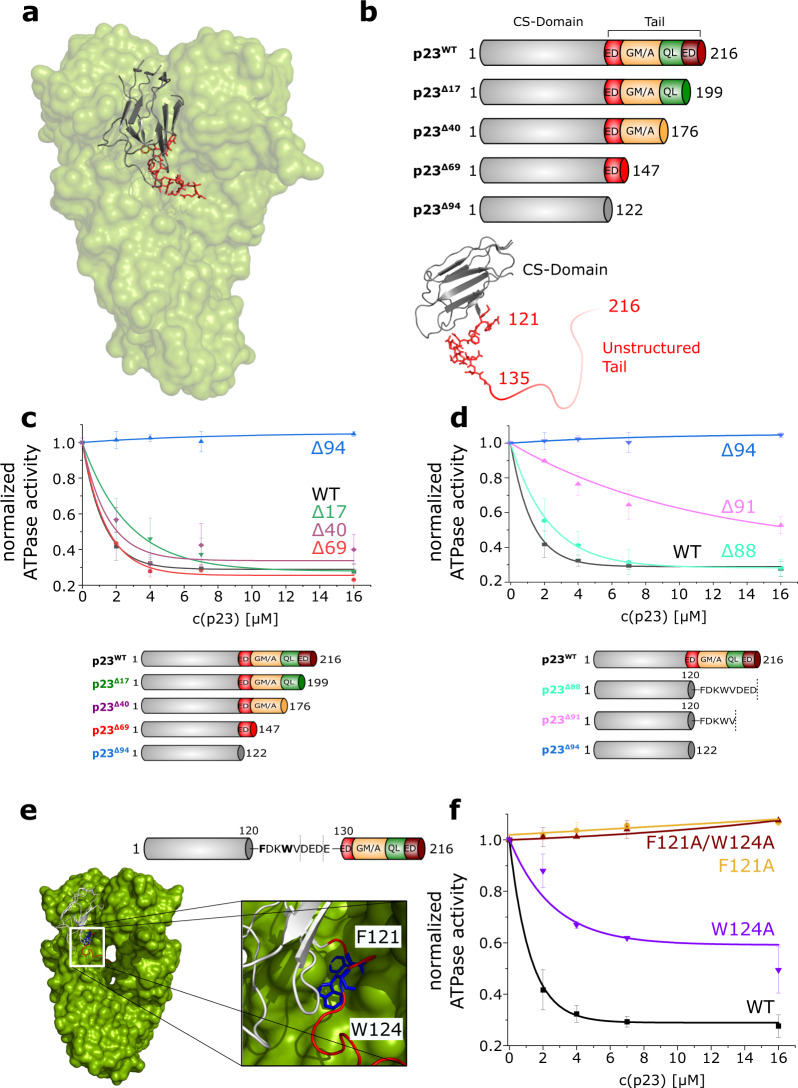
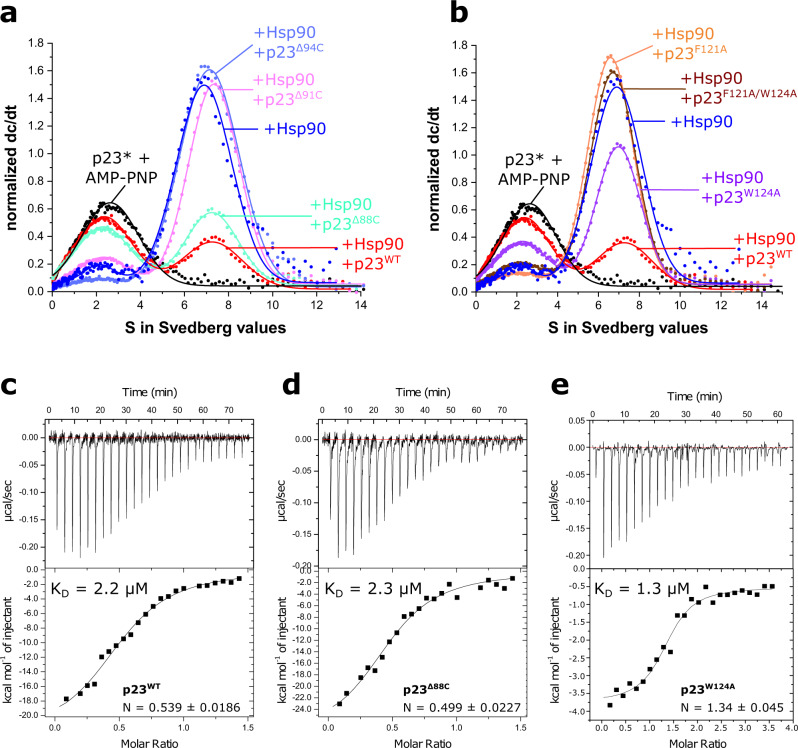
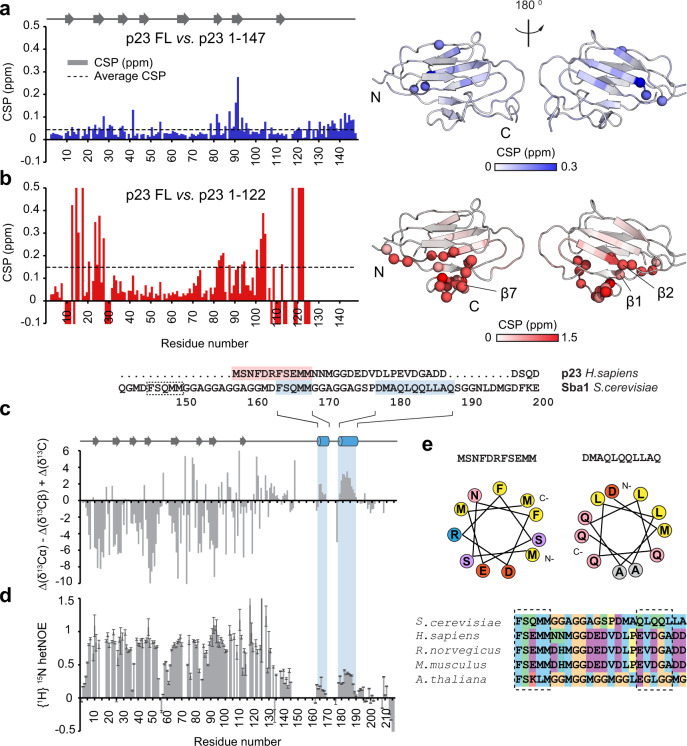
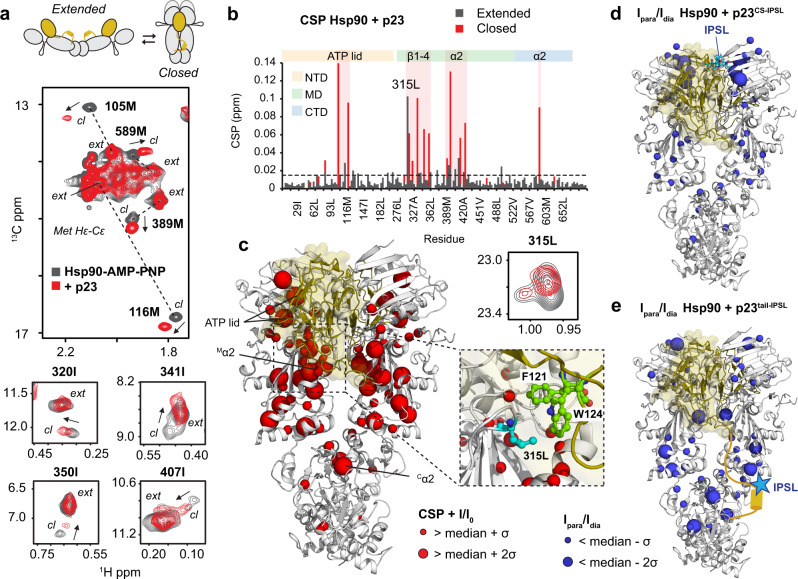
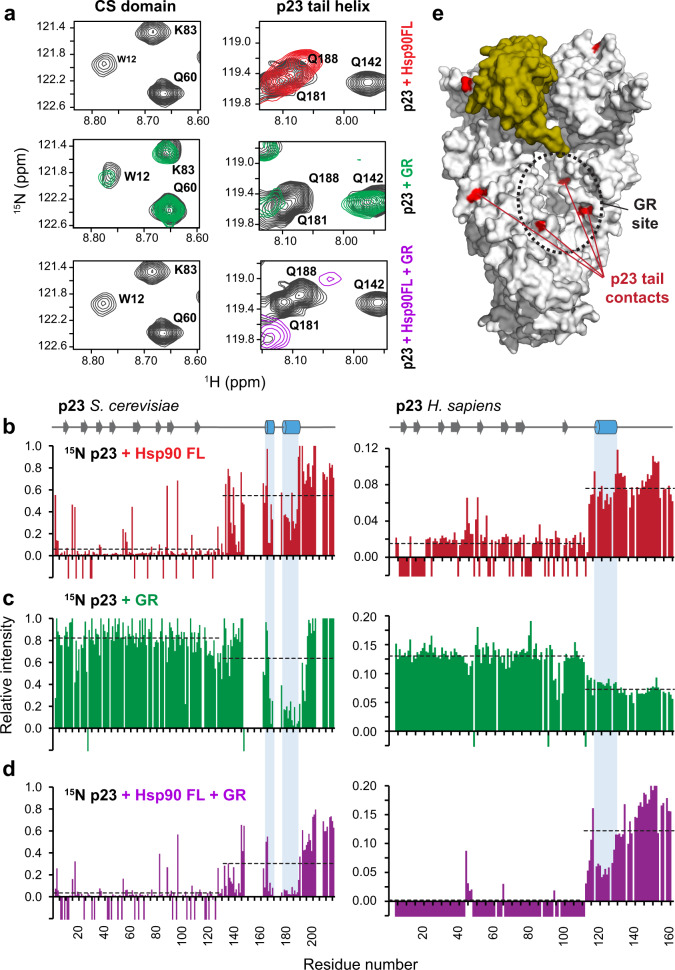
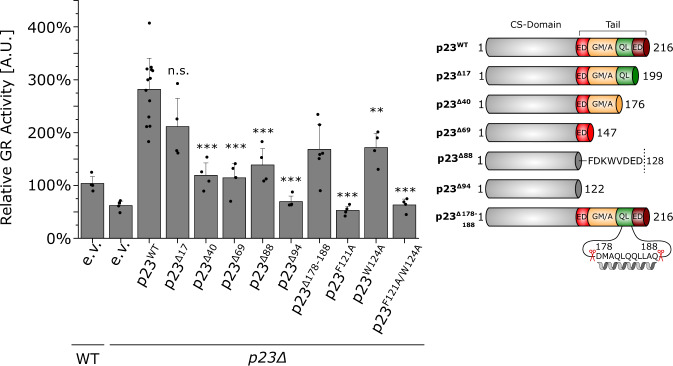
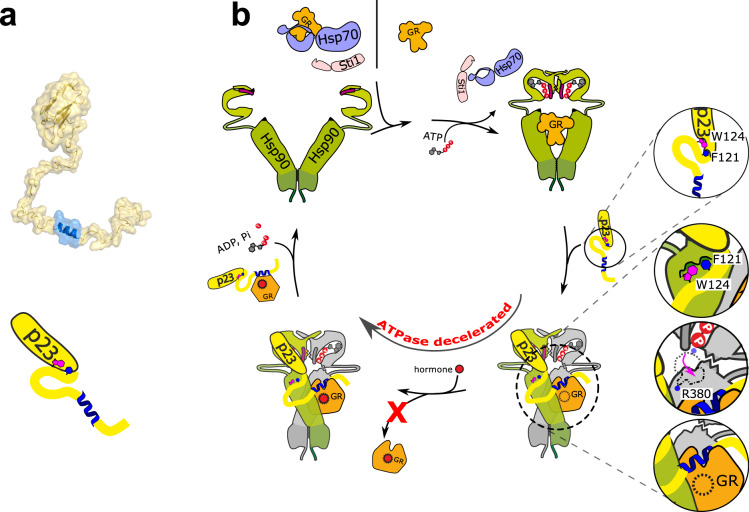
The co-chaperone p23 is a central part of the Hsp90 machinery. It stabilizes the closed conformation of Hsp90, inhibits its ATPase and is important for client maturation. Yet, how this is achieved has remained enigmatic. Here, we show that a tryptophan residue in the proximal region of the tail decelerates the ATPase by allosterically switching the conformation of the catalytic loop in Hsp90. We further show by NMR spectroscopy that the tail interacts with the Hsp90 client binding site via a conserved helix. This helical motif in the p23 tail also binds to the client protein glucocorticoid receptor (GR) in the free and Hsp90-bound form. In vivo experiments confirm the physiological importance of ATPase modulation and the role of the evolutionary conserved helical motif for GR activation in the cellular context.
Overview
The claims and statistics of this paper haven’t been checked yet.
Free: it reads the open-access text and checks the first 5 claims that cite a source we can check. Create a free account to check every claim.
Integrity signals
Registry
Cites
Statistics
Figures
Verification
Claims the paper makes
The claims and statistics of this paper haven’t been checked yet.
Free: it reads the open-access text and checks the first 5 claims that cite a source we can check. Create a free account to check every claim.
Claims other papers make about this one
Each is checked against this paper’s own text: does it say what the citing paper says it does?
The source backs part of the claim, not all of it — or backs it for a different population, condition or comparison.
In the citing paper
“In support of this essential p23:GR interaction, the p23tail-helix and GR hydrophobic groove are well conserved, and a helix in the yeast p23 tail supports GR transactivation in vivo27.”
From Structure of Hsp90–p23–GR reveals the Hsp90 client-remodelling mechanism (2022) · cites this paper as [27]
Experimental — accuracy not yet measuredThe source backs part of the claim, not all of it — or backs it for a different population, condition or comparison.
In the citing paper
“The subsequent binding of the C-terminal tail of p23 to the bound client (57) results in a stabilization of the ternary complex.”
From Client binding shifts the populations of dynamic Hsp90 conformations through an allosteric network (2021) · cites this paper as [57]
Experimental — accuracy not yet measuredThe source backs part of the claim, not all of it — or backs it for a different population, condition or comparison.
In the citing paper
“The interactions of the C-terminal tail of p23 with the client sites at the MD-CTD interface are transient and nonspecific, covering a broad region in the main client sites (57).”
From Client binding shifts the populations of dynamic Hsp90 conformations through an allosteric network (2021) · cites this paper as [57]
Experimental — accuracy not yet measuredThe cited source says what the claim attributes to it.
In the citing paper
“Furthermore, a peptide corresponding to this region (p23118-131) was previously found to have helical propensity26 and an interaction between p23117-127 and GR has been suggested27.”
From Structure of Hsp90–p23–GR reveals the Hsp90 client-remodelling mechanism (2022) · cites this paper as [27]
In the citing paper
“We have recently demonstrated that the p23 tail contains a helical segment that weakly interacts with the MD-CTD interface of Hsp90 and with GR, free or in complex with Hsp90 (57).”
From Client binding shifts the populations of dynamic Hsp90 conformations through an allosteric network (2021) · cites this paper as [57]
Self-check
Percentages, sums and reported differences re-computed from the paper’s own numbers.
The self-check needs the paper’s full text.
Citations
Cites
Global analysis of protein expression in yeast
Ghaemmaghami, S., Huh, W.-K., Bower, K., Howson, R. W., Belle, A., Dephoure, N., O'Shea, E. K., & Weissman, J. S. (2003) · Nature · doi:10.1038/nature02046 · Cited by 3,750
Farrow, N. A., Muhandiram, R., Singer, A. U., Pascal, S. M., Kay, C. M., Gish, G., Shoelson, S. E., Pawson, T., Forman-Kay, J. D., & Kay, L. E. (1994) · Biochemistry · doi:10.1021/bi00185a040 · Cited by 2,091
Schopf, F. H., Biebl, M. M., & Buchner, J. (2017) · Nature Reviews Molecular Cell Biology · doi:10.1038/nrm.2017.20 · Cited by 1,540
Self-citationPratt, W. B., & Toft, D. O. (2003) · Experimental Biology and Medicine · doi:10.1177/153537020322800201 · Cited by 1,483
Prodromou, C., Roe, S. M., O'Brien, R., Ladbury, J. E., Piper, P. W., & Pearl, L. H. (1997) · Cell · doi:10.1016/s0092-8674(00)80314-1 · Cited by 1,265
Crystal structure of an Hsp90–nucleotide–p23/Sba1 closed chaperone complex
Ali, M. M. U., Roe, S. M., Vaughan, C. K., Meyer, P., Panaretou, B., Piper, P. W., Prodromou, C., & Pearl, L. H. (2006) · Nature · doi:10.1038/nature04716 · Cited by 962
Crystal structure of a small heat-shock protein
Kim, K. K., Kim, R., & Kim, S.-H. (1998) · Nature · doi:10.1038/29106 · Cited by 888
Quantitative Analysis of Hsp90-Client Interactions Reveals Principles of Substrate Recognition
Taipale, M., Krykbaeva, I., Koeva, M., Kayatekin, C., Westover, K. D., Karras, G. I., & Lindquist, S. (2012) · Cell · doi:10.1016/j.cell.2012.06.047 · Cited by 879
Reduced levels of hsp90 compromise steroid receptor action in vivo
Picard, D., Khursheed, B., Garabedian, M. J., Fortin, M. G., Lindquist, S., & Yamamoto, K. R. (1990) · Nature · doi:10.1038/348166a0 · Cited by 787
Battiste, J. L., & Wagner, G. (2000) · Biochemistry · doi:10.1021/bi000060h · Cited by 625
Cited by
Heat shock proteins: Biological functions, pathological roles, and therapeutic opportunities
Hu, C., Yang, J., Qi, Z., Wu, H., Wang, B., Zou, F., Mei, H., Liu, J., Wang, W., & Liu, Q. (2022) · MedComm · doi:10.1002/mco2.161 · Cited by 779
Noddings, C. M., Wang, R. Y.-R., & Agard, D. A. (2020) · doi:10.1101/2020.09.12.294975 · Cited by 166
Structure of Hsp90–p23–GR reveals the Hsp90 client-remodelling mechanism
Noddings, C. M., Wang, R. Y.-R., Johnson, J. L., & Agard, D. A. (2022) · Nature · doi:10.1038/s41586-021-04236-1 · Cited by 164
Advances in the structures, mechanisms and targeting of molecular chaperones
Gu, J., He, Y., He, C., Zhang, Q., Huang, Q., Bai, S., Wang, R., You, Q., & Wang, L. (2025) · Signal Transduction and Targeted Therapy · doi:10.1038/s41392-025-02166-2 · Cited by 86
Client binding shifts the populations of dynamic Hsp90 conformations through an allosteric network
Lopez, A., Dahiya, V., Delhommel, F., Freiburger, L., Stehle, R., Asami, S., Rutz, D., Blair, L., Buchner, J., & Sattler, M. (2021) · Science Advances · doi:10.1126/sciadv.abl7295 · Cited by 59
Self-citationHsp90: From Cellular to Organismal Proteostasis
Somogyvári, M., Khatatneh, S., & Sőti, C. (2022) · Cells · doi:10.3390/cells11162479 · Cited by 58
NudC guides client transfer between the Hsp40/70 and Hsp90 chaperone systems
Biebl, M. M., Delhommel, F., Faust, O., Zak, K. M., Agam, G., Guo, X., Mühlhofer, M., Dahiya, V., Hillebrand, D., Popowicz, G. M., et al. (2022) · Molecular Cell · doi:10.1016/j.molcel.2021.12.031 · Cited by 48
Self-citationDahiya, V., Rutz, D. A., Moessmer, P., Mühlhofer, M., Lawatscheck, J., Rief, M., & Büchner, J. (2022) · Molecular Cell · doi:10.1016/j.molcel.2022.01.016 · Cited by 40
Self-citationHeat Shock Proteins in Benign Prostatic Hyperplasia and Prostate Cancer
Ratajczak, W., Lubkowski, M., & Lubkowska, A. (2022) · International Journal of Molecular Sciences · doi:10.3390/ijms23020897 · Cited by 33
Hsp70 and Hsp90 post-translational modifications and translating the chaperone code
Backe, S. J., Heritz, J. A., & Mollapour, M. (2025) · Cell Stress and Chaperones · doi:10.1016/j.cstres.2025.100118 · Cited by 33
“84,89 Furthermore, hetero-co-chaperone complexes provide an additional layer of strict regulation to favor activation of certain client proteins.”
Visualizing the transiently populated closed-state of human HSP90 ATP binding domain
Henot, F., Rioual, E., Favier, A., Macek, P., Crublet, E., Josso, P., Brutscher, B., Frech, M., Gans, P., Loison, C., et al. (2022) · Nature Communications · doi:10.1038/s41467-022-35399-8 · Cited by 31
Molecular mechanisms of chaperone‐directed protein folding: Insights from atomistic simulations
Castelli, M., Magni, A., Bonollo, G., Pavoni, S., Frigerio, F., Oliveira, A. S. F., Cinquini, F., Serapian, S. A., & Colombo, G. (2024) · Protein Science · doi:10.1002/pro.4880 · Cited by 31
“From a biological perspective, this evidence supports its role in pre-organizing and scaffolding the client (Biebl et al., 2021).”
BackgroundResultThe Potential of Hsp90 in Targeting Pathological Pathways in Cardiac Diseases
Roberts, R. J., Hallee, L., & Lam, C. K. (2021) · Journal of Personalized Medicine · doi:10.3390/jpm11121373 · Cited by 32
“protein maturation due to its increased client affinity [30,31].”
BackgroundGao, P., Zou, K., Li, X., Zhou, H., Xu, X., Zeng, Z., & Zhang, W. (2022) · International Immunopharmacology · doi:10.1016/j.intimp.2022.108954 · Cited by 27
Baischew, A., Engel, S., Taubert, M. C., Geiger, T. M., & Hausch, F. (2023) · Nature Structural & Molecular Biology · doi:10.1038/s41594-023-01098-1 · Cited by 22
Chen, S., Wu, Y., Gao, Y., Wu, C., Wang, Y., Hou, C., Ren, M., Zhang, S., Zhu, Q., Zhang, J., et al. (2023) · Cell Reports · doi:10.1016/j.celrep.2023.113246 · Cited by 21
HSP70-HSP90 Chaperone Networking in Protein-Misfolding Disease
Prodromou, C., Aran-Guiu, X., Oberoi, J., Perna, L., Chapple, J. P., & van der Spuy, J. (2022) · Sub-cellular biochemistry/Subcellular biochemistry · doi:10.1007/978-3-031-14740-1_13 · Cited by 22
“…tail is responsible for inhibiting or down regulating the HSP90 ATP hydrolysis by most likely inducing structural changes in the catalytic loop at the NTD-MD interface of the closed dimer, and consequently stabilizing the interaction with the client (Ali et al., 2006; Biebl et al., 2021).”
Singh, M. K., Ranbhise, J. S., Fu, M., Ju, S., Han, S., Yun, H. R., Choe, W., Kim, S. S., & Kang, I. (2025) · International Journal of Molecular Sciences · doi:10.3390/ijms262110279 · Cited by 16
Giannoulis, A., Feintuch, A., Unger, T., Amir, S., & Goldfarb, D. (2021) · The Journal of Physical Chemistry Letters · doi:10.1021/acs.jpclett.1c03641 · Cited by 14
Ball, B., Sukumaran, A., Pladwig, S., Kazi, S., Chan, N., Honeywell, E., Modrakova, M., & Geddes‐McAlister, J. (2024) · Microbiology Spectrum · doi:10.1128/spectrum.00152-24 · Cited by 15
“Specifically, the unstructured tail of p23 is pivotal for coordinating client binding and progression of the Hsp90 chaperone cycle by guiding the client to Hsp90 and stabilizing the Hsp90–client complex (17, 73, 74).”
BackgroundThe evolution and diversification of the Hsp90 co-chaperone system
Engler, S., & Büchner, J. (2025) · Biological Chemistry · doi:10.1515/hsz-2025-0112 · Cited by 15
HSP90 and Aha1 modulate microRNA maturation through promoting the folding of Dicer1
Liu, X., Yang, Y., & Wang, Y. (2022) · Nucleic Acids Research · doi:10.1093/nar/gkac528 · Cited by 10
“Co-chaperones are important regulators of HSP90, where they modulate the HSP90 chaperone cycle or act as adaptor proteins to promote client engagement (6,7).”
BackgroundVerkhivker, G. M. (2022) · The Journal of Physical Chemistry B · doi:10.1021/acs.jpcb.2c03464 · Cited by 13
Interplay of p23 with FKBP51 and their chaperone complex in regulating tau aggregation
Chakraborty, P., & Zweckstetter, M. (2025) · Nature Communications · doi:10.1038/s41467-025-56028-0 · Cited by 12
p23 and Aha1: Distinct Functions Promote Client Maturation
Biebl, M. M., & Büchner, J. (2022) · Sub-cellular biochemistry/Subcellular biochemistry · doi:10.1007/978-3-031-14740-1_6 · Cited by 10
Self-citationAha1 Is an Autonomous Chaperone for SULT1A1
Liu, X., & Wang, Y. (2022) · Chemical Research in Toxicology · doi:10.1021/acs.chemrestox.2c00167 · Cited by 8
Xu, H., & Blagg, B. S. J. (2025) · European Journal of Medicinal Chemistry · doi:10.1016/j.ejmech.2025.117713 · Cited by 10
Timothy, F. M., & Zininga, T. (2023) · Frontiers in Cell Death · doi:10.3389/fceld.2023.1322780 · Cited by 10
Impact of Co-chaperones and Posttranslational Modifications Toward Hsp90 Drug Sensitivity
Backe, S. J., Woodford, M. R., Ahanin, E. F., Sager, R., Bourboulia, D., & Mollapour, M. (2022) · Sub-cellular biochemistry/Subcellular biochemistry · doi:10.1007/978-3-031-14740-1_11 · Cited by 11
Effect of PTGES3 on the Prognosis and Immune Regulation in Lung Adenocarcinoma
Jiang, W., Wei, Q., Xie, H., Wu, D., He, H., & Lv, X. (2023) · Analytical Cellular Pathology · doi:10.1155/2023/4522045 · Cited by 7
“A study reported an interaction between CACYBP/SIP and Hsp90, suggesting that CACYBP/SIP participated in the regulation of Hsp90 chaperone activity, in which PTGES3 is a critical candidate [27, 28].”
Extended conformational states dominate the Hsp90 chaperone dynamics
Jussupow, A., López, A., Baumgart, M., Mader, S. L., Sattler, M., & Kaila, V. R. I. (2022) · Journal of Biological Chemistry · doi:10.1016/j.jbc.2022.102101 · Cited by 8
“Chemical shift assignments were obtained from previous work (45).”
MethodSelf-citationNew Insights into Hsp90 Structural Plasticity Revealed by cryoEM
Minari, K., Serrão, V. H. B., & Borges, J. C. (2024) · BioChem · doi:10.3390/biochem4020004 · Cited by 7
“This p23tail helix, crucial for enhanced GR ligand-binding activity in vitro, positions p23 not only as a cochaperone facilitating Hsp90 closure but also as a direct contributor to client maturation [83].”
BackgroundDruggable targets for Parkinson’s disease: transcriptomics based Mendelian randomization study
Lyu, Q., Chen, R., Qiu, Z., Wang, C., & Liu, R. (2024) · Scientific Reports · doi:10.1038/s41598-024-77401-x · Cited by 9
Murphy, R. D., Machado, T. O., Gonzato, C., Vidal, F., Leiza, A., varela, O., Sardón, H., Soppera, O., & Heise, A. (2026) · Polymer Chemistry · doi:10.1039/d6py00091f · Cited by 5
Ko, Y., Chun, J., Yang, H., & Kim, D. (2023) · Molecular Plant Pathology · doi:10.1111/mpp.13308 · Cited by 5
“Co- chaperone p23, a central component of the Hsp90 complex that stabilizes the conformation of Hsp90, inhibits the ATPase activity and contributes to client maturation (Biebl et al., 2021).”
BackgroundMohammed, S., Russo, I., & Ramazzina, I. (2023) · International Journal of Molecular Sciences · doi:10.3390/ijms241713370 · Cited by 6
Hijacking client instability to selectively disrupt HSP90-driven glucocorticoid receptor activation
Longhi, E., Magni, A., Torielli, L., Lodigiani, G., Carlessi, E., Borsotti, P., Doria, F., Pirota, V., Serapian, S. A., Arrigoni, C., et al. (2026) · Pharmacological Research · doi:10.1016/j.phrs.2026.108205 · Cited by 4
Fan, S., Xu, Y., Bai, M., Luo, F., Yu, J., & Yang, G. (2023) · International Journal of Molecular Sciences · doi:10.3390/ijms241210410 · Cited by 4
Protein Dynamics at the Heart of Chaperone Function: Insights from Solution NMR
Ge, P., Dai, L., Kalodimos, C. G., & Huang, C. (2025) · Journal of Molecular Biology · doi:10.1016/j.jmb.2025.169377 · Cited by 4
McQuown, A. J., Nelliat, A. R., Reif, D., Sabbarini, I. M., Membreno, B. S., Wu, C. C., & Denic, V. (2023) · Molecular Cell · doi:10.1016/j.molcel.2023.07.028 · Cited by 6
“First, it senses a specific ATP-bound Hsp90 state and causes a conformational change in the ATPase active site of the middle domain to inhibit hydrolysis.(48) Second, it directly interacts with amodel client protein, the glucocorticoid receptor (GR), to enhance its ligandbinding activity and enable its dissociation in…”
BackgroundAizpurua, G., Mesa, P., Ovejero, L. D. L. P., Ciges-Tomas, J. R., Lomba-Riego, L., Lechuga, C. G., Zarzuela, E., Isasa, M., van der Hoeven, L., Olsen, J. V., et al. (2026) · bioRxiv (Cold Spring Harbor Laboratory) · doi:10.64898/2026.03.25.713956 · Cited by 3
The essential co-chaperone Sgt1 regulates client dwell time in the Hsp90 chaperone cycle
Engler, S., Delhommel, F., Dodt, C., López, A., Faust, O., Elimelech, A. R., Napolitano, V., Popowicz, G. M., Rosenzweig, R., Sattler, M., et al. (2025) · Molecular Cell · doi:10.1016/j.molcel.2025.12.002 · Cited by 6
Self-citationSmall Sized Yet Powerful: Nuclear Distribution C Proteins in Plants
Vassileva, V., Georgieva, M. S., Todorov, D., & Mishev, K. (2023) · Plants · doi:10.3390/plants13010119 · Cited by 1
p23-FKBP51 chaperone complex regulates tau aggregationPreprint
Chakraborty, P., & Zweckstetter, M. (2023) · bioRxiv (Cold Spring Harbor Laboratory) · doi:10.1101/2023.12.27.573415 · Cited by 2
“The residues present at the beginning of the C-terminal tail of p23 form a conserved helix that interacts with the client binding site of Hsp90 19 .”
BackgroundSingh, S., Saini, V., Shevtsov, M., & Jha, H. C. (2025) · Advances in protein chemistry and structural biology · doi:10.1016/bs.apcsb.2025.11.005 · Cited by 1
Beyond a Passive Tether: Structural Insights into the Disordered Tail of Hsp90
Edinach, E. V., Giannouli, A., Dalaloyan, A., Oranges, M., Banik, D., Yardeni, E. H., Elimelech, A. R., Sattler, M., Ntermanakis, E., Su, X., et al. (2026) · Journal of the American Chemical Society · doi:10.1021/jacs.6c04189 · Cited by 1
Self-citationAn isotype-specific phosphorylation of Hsp90 rewires co-chaperone regulations
Banerjee, T., Moroni, E., Riedl, M., Colombo, G., & Büchner, J. (2026) · Journal of Biological Chemistry · doi:10.1016/j.jbc.2026.113292 · Cited by 1
“In contrast, Aha1 accelerates the progression of the Hsp90 cycle and, in consequence, stimulates ATP hydrolysis (22, 31, 37, 38). p23 is a co-chaperone that binds to Hsp90 in the closed state and inhibits ATP hydrolysis (12, 22, 39, 40).”
Tenth International Symposium on the Hsp90 chaperone machine
Edkins, A. L., Zweckstetter, M., & Sawarkar, R. (2023) · Cell Stress and Chaperones · doi:10.1007/s12192-023-01342-z · Cited by 1
FRET Assays for the Identification of C. albicans HSP90-Sba1 and Human HSP90α-p23 Binding Inhibitors
Kohlmann, P., Krylov, S. N., Marchand, P., & Jose, J. (2024) · Pharmaceuticals · doi:10.3390/ph17040516 · Cited by 1
“The mutation of the conserved amino acids F121A and W124A in yeast Sba1 (corresponding to F120 and W123 in C. albicans ) was shown to result in a distinct reduction in binding to HSP90 [55].”
BackgroundExploring the human Hsp70-Hop-Hsp90 system for Tau recognition
Moll, A. (2022) · eDiss (Georg-August-Universität Göttingen) · doi:10.53846/goediss-9131
Changes in the Number of p23-Positive Fibroblasts in Human Dermis with Aging
Gunin, A. G., & Golubtzova, N. N. (2022) · Advances in Gerontology · doi:10.1134/s2079057022020084
Ball, B., Sukumaran, A., Pladwig, S., Kazi, S., Chan, N., Modrakova, M., & Geddes‐McAlister, J. (2023) · bioRxiv (Cold Spring Harbor Laboratory) · doi:10.1101/2023.04.03.535320
Single Molecule Fluorescence Methods for Molecular Chaperones and Their Client Interactions
Mondol, T., Sohmen, B., & Hugel, T. (2023) · Royal Society of Chemistry eBooks · doi:10.1039/bk9781839165986-00181
Taubert, M. C., Kühn, A., Baischew, A., Käseberg, Y., Betschinske, J., & Hausch, F. (2025) · bioRxiv (Cold Spring Harbor Laboratory) · doi:10.1101/2025.06.09.658717
“…the heat shock protein 90 (Hsp90) machinery and is aided in its final steps by co-chaperones such as FK506 binding proteins 51 and 52 (FKBP51 and FKBP52, respectively) and p23 [1], [2]. p23 was found to bind to the Hsp90 dimer during client maturation [3] and is essential for GR activity [4], [5].”
Therapeutic targets in diabetic peripheral neuropathy: heat shock proteins
Yin, C., Lv, J., Huang, S., Lang, C., Zhao, Y., Wang, G., Kan, J.-M., & Wang, X. (2025) · Frontiers in Endocrinology · doi:10.3389/fendo.2025.1729488 · Cited by 1
Wang, N., Chen, W., Shen, S., Qi, J., Wang, S., Wang, R., Li, M., Chen, Z., Chen, J., Hong, B., et al. (2026) · Molecular Biomedicine · doi:10.1186/s43556-026-00431-6 · Cited by 1
“Traditionally, PTGES3 is characterized as a cytoplasmic co-chaperone of the Heat Shock Protein 90 (HSP90) machinery, facilitating the folding and activation of client proteins [12, 13].”
Henot, F. (2022) · theses.fr (ABES) · doi:10.70675/dcb06c1dz5e32z4f84zb791z3f4f67b79e05 · Cited by 1
Zhang, Q., Zhang, Y., Wang, C., Zhou, L., Yang, T., Zhu, Q., Chu, Z., Zhang, J., Jiang, M., Wang, J., et al. (2026) · Journal of Advanced Research · doi:10.1016/j.jare.2026.05.038 · Cited by 1
Fiotaki, C., Goldfarb, D., & Giannoulis, A. (2026) · The Journal of Physical Chemistry B · doi:10.1021/acs.jpcb.6c03220
Metadata
- Authors
- Biebl, M. M., Lopez, A., Rehn, A., Freiburger, L., Lawatscheck, J., Blank, B., Sattler, M., & Buchner, J.
- Affiliations
- Technical University of Munich (DE)
- Institut für Mikrobiologie der Bundeswehr (DE)
- Zymeworks (Canada) (CA)
- Helmholtz Munich (DE)
- Corresponding author
- Sattler, Michael
- Venue
- Nature Communications
- Published
- 2021-02-05
- Volume
- 12
- Issue
- 1
- Pages
- 828-828
- ISSN
- 2041-1723 (ISSN-L)
- PMC
- PMC7864943
- OpenAlex
- W3128627027
- Cited by
- 58
- References
- 91
- Citations by year
- 2026: 8 · 2025: 11 · 2024: 4 · 2023: 14 · 2022: 17 · 2021: 4
- FWCI
- 3.06
- Type
- journal article
- Language
- en
- Open access
- gold
- doi.org
- Licence
- cc-by
- creativecommons.org/licenses/by/4.0 (tdm)
- creativecommons.org/licenses/by/4.0 (vor)
- Locations
- Nature Communications (publishedVersion, cc-by)
- PubMed Central (publishedVersion, cc-by)
- PubMed (publishedVersion)
- RePEc: Research Papers in Economics (submittedVersion)
- DOAJ (DOAJ: Directory of Open Access Journals) (submittedVersion, cc-by-sa)
- mediaTUM – the media and publications repository of the Technical University Munich (Technical University Munich) (submittedVersion, other-oa)
- Site cant be reached (submittedVersion, cc-by)
- PuSH - Publication Server of Helmholtz Zentrum München (submittedVersion, cc-by)
- Funders
- Deutsche Forschungsgemeinschaft (201302640)
- Topics
- Life Sciences › Biochemistry, Genetics and Molecular Biology › Molecular Biology › Heat shock proteins research
- Life Sciences › Biochemistry, Genetics and Molecular Biology › Molecular Biology › Protein Structure and Dynamics
- Life Sciences › Biochemistry, Genetics and Molecular Biology › Molecular Biology › Genomics and Chromatin Dynamics
- Keywords
- allosteric regulation, tryptophan residues, glucocorticoid receptor, receptor activation
- MeSH terms
- Prostaglandin-E Synthases, Protein Conformation, alpha-Helical, Protein Conformation, beta-Strand, Adenylyl Imidodiphosphate, Amino Acid Sequence, Binding Sites, Cloning, Molecular, Escherichia coli, Genetic Vectors, Humans, Mutation, Protein Binding, Receptors, Glucocorticoid, Recombinant Proteins, Saccharomyces cerevisiae, Gene Expression, Sequence Alignment, Sequence Homology, Amino Acid, Molecular Chaperones, HSP90 Heat-Shock Proteins, Nuclear Magnetic Resonance, Biomolecular, Saccharomyces cerevisiae Proteins, Protein Interaction Domains and Motifs, Molecular Dynamics Simulation
About these checks
Registry, retraction, Cites and statistics results are computed, not judged, with one exception: a printed reference that no index lists is read once by a model before it counts as a citation error. Claims are extracted by a model and kept only when their quote appears verbatim in the text; each cited source is then checked, with a model’s help, for whether it says what the claim relies on. Those verdicts can be wrong — read the claim’s quote and the cited source before relying on one.
Statistics and arithmetic are recomputed, not judged.
Confidence bands are shown only for fields calibrated on our annotated test set. None is calibrated yet, so no band is shown.
What counts as a claim ›How we measure confidence ›How we check this ›
Are you an author, or do you see a problem with this page? Request a review
Data sources
Bibliographic data: Semantic Scholar, OpenAlex, Crossref.
Contains information from the Semantic Scholar Academic Graph Datasets, made available under the ODC Attribution License (ODC-BY 1.0).
Semantic Scholar’s data is described in: Kinney, R., et al. (2023). The Semantic Scholar Open Data Platform. arXiv:2301.10140.
