

Methodological quality of COVID-19 clinical research
Open accessPublished version of a preprint
The DOI matches its Crossref record; 55 of the 55 references it cites were found in a registry or an index.
Abstract
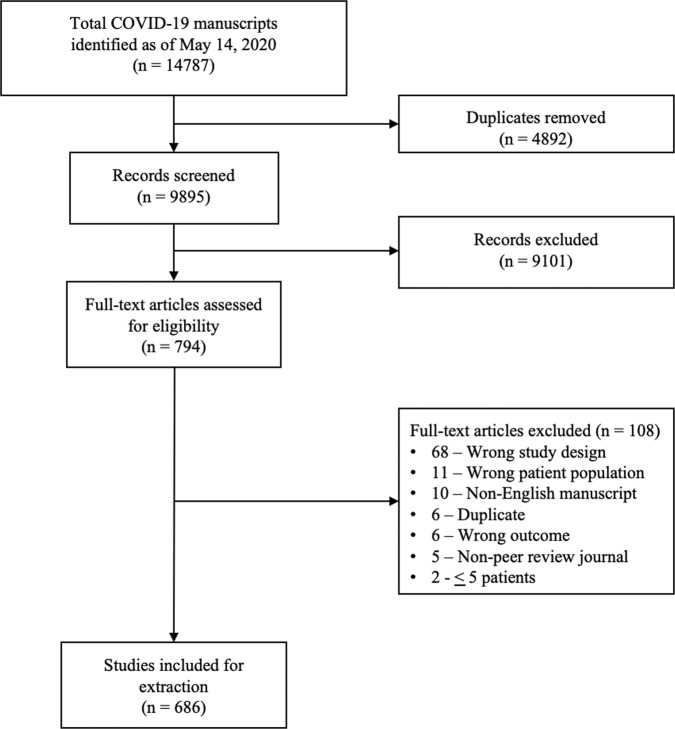
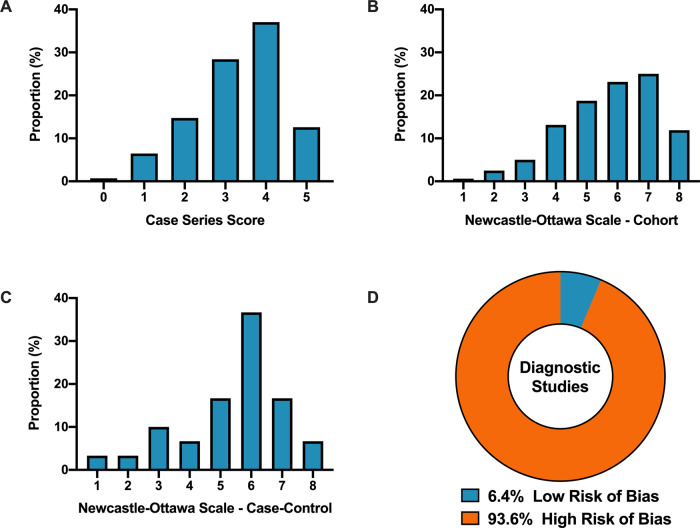
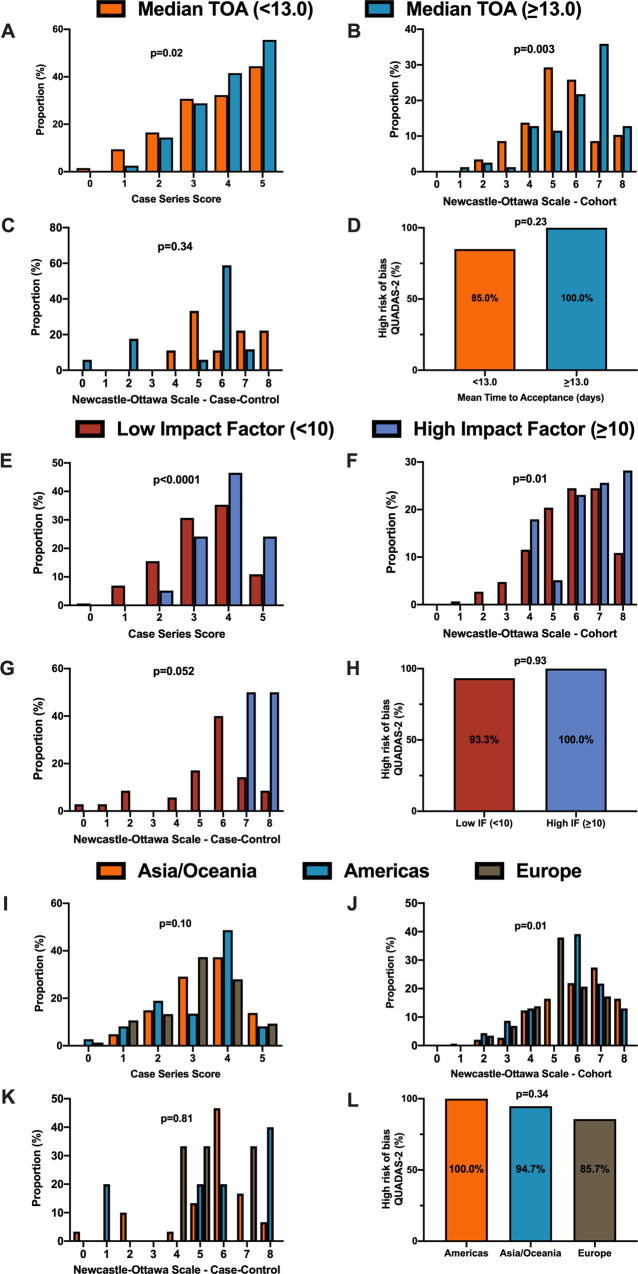
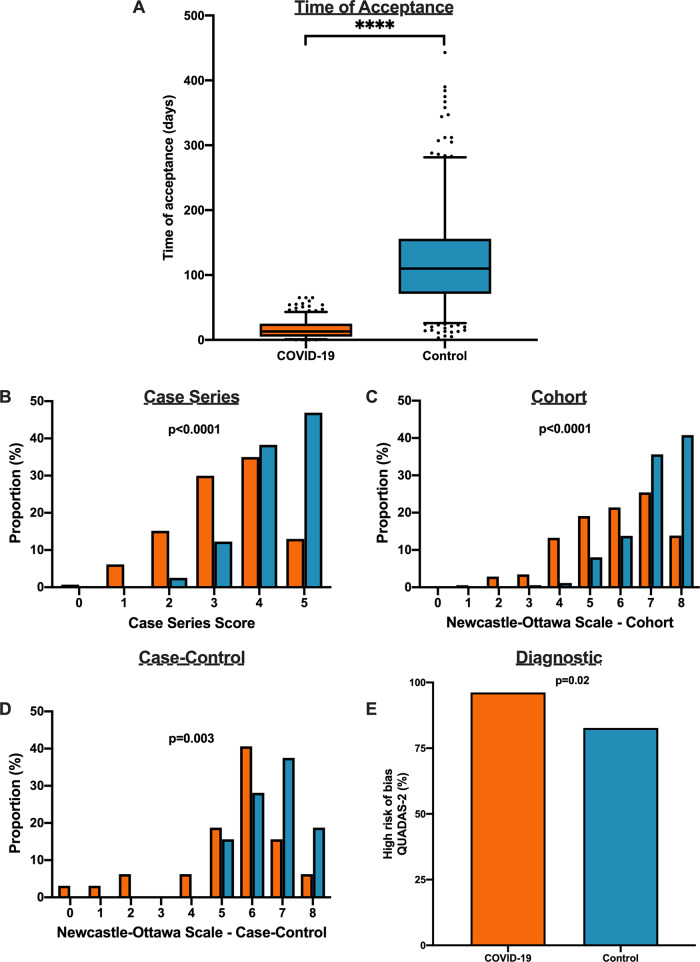
The COVID-19 pandemic began in early 2020 with major health consequences. While a need to disseminate information to the medical community and general public was paramount, concerns have been raised regarding the scientific rigor in published reports. We performed a systematic review to evaluate the methodological quality of currently available COVID-19 studies compared to historical controls. A total of 9895 titles and abstracts were screened and 686 COVID-19 articles were included in the final analysis. Comparative analysis of COVID-19 to historical articles reveals a shorter time to acceptance (13.0[IQR, 5.0–25.0] days vs. 110.0[IQR, 71.0–156.0] days in COVID-19 and control articles, respectively; p < 0.0001). Furthermore, methodological quality scores are lower in COVID-19 articles across all study designs. COVID-19 clinical studies have a shorter time to publication and have lower methodological quality scores than control studies in the same journal. These studies should be revisited with the emergence of stronger evidence.
Overview
The claims and statistics of this paper haven’t been checked yet.
Free: it reads the open-access text and checks the first 5 claims that cite a source we can check. Create a free account to check every claim.
Integrity signals
Registry
Cites
Statistics
Figures
Verification
Claims the paper makes
The claims and statistics of this paper haven’t been checked yet.
Free: it reads the open-access text and checks the first 5 claims that cite a source we can check. Create a free account to check every claim.
Claims other papers make about this one
Each is checked against this paper’s own text: does it say what the citing paper says it does?
The source backs part of the claim, not all of it — or backs it for a different population, condition or comparison.
In the citing paper
“Jung et al.6 measured the adherence to methodological tools using the Cochrane risk bias tool. They detected a 32% decline in the adherence rate to a high methodological quality.”
From Artificial Intelligence in Detecting Statistical Errors: Implications for Authors, Reviewers, and Editors (2025) · cites this paper as [6]
Experimental — accuracy not yet measuredThe source backs part of the claim, not all of it — or backs it for a different population, condition or comparison.
In the citing paper
“At the same time, incomplete reporting or non-adherence to guidelines for RCTs [69] was common, most likely attributable to circumstances related to the pandemic itself, such as short time frames for study planning and conceptualization, difficulties in recruitment and implementation due to contact restrictions or accelerated peer-review of scientific journals [70].”
From Interventions to build resilience and to ameliorate negative psychosocial effects of the COVID-19 pandemic on children and adolescents: a systematic review and meta-analysis (2024) · cites this paper as [70]
Experimental — accuracy not yet measuredThe cited source says what the claim attributes to it.
In the citing paper
“Finally, poor reporting has been commonly investigated in literature 37 38 ; owing to the limited information of the data extraction process reported by review authors, we could not fully investigate the association between good practice recommendations and the likelihood of data extraction.”
From Validity of data extraction in evidence synthesis practice of adverse events: reproducibility study (2022) · cites this paper as [37]
Self-check
Percentages, sums and reported differences re-computed from the paper’s own numbers.
The self-check needs the paper’s full text.
Citations
Cites
3 retracted
Cardiovascular Disease, Drug Therapy, and Mortality in Covid-19
Mehra, M. R., Desai, S. S., Kuy, S., Henry, T. D., & Patel, A. N. (2020) · New England Journal of Medicine · doi:10.1056/nejmoa2007621 · Cited by 1,428
RetractedMehra, M. R., Desai, S. S., Ruschitzka, F., & Patel, A. N. (2020) · The Lancet · doi:10.1016/s0140-6736(20)31180-6 · Cited by 1,200
RetractedMehra, M. R., Desai, S. S., Kuy, S., Henry, T. D., & Patel, A. N. (2020) · New England Journal of Medicine · doi:10.1056/nejmc2021225 · Cited by 463
RetractedThe Cochrane Collaboration's tool for assessing risk of bias in randomised trials
Higgins, J. P. T., Altman, D. G., Gotzsche, P. C., Juni, P., Moher, D., Oxman, A. D., Savovic, J., Schulz, K. F., Weeks, L., Sterne, J. A. C., et al. (2011) · BMJ · doi:10.1136/bmj.d5928 · Cited by 33,817
Dermyshi, E., Wang, Y., Yan, C., Hong, W., Qiu, G., Gong, X., & Zhang, T. (2017) · Neonatology · doi:10.1159/000454668 · Cited by 24,451
ROBINS-I: a tool for assessing risk of bias in non-randomised studies of interventions
Sterne, J. A., Hernán, M. A., Reeves, B. C., Savović, J., Berkman, N. D., Viswanathan, M., Henry, D., Altman, D. G., Ansari, M. T., Boutron, I., et al. (2016) · BMJ · doi:10.1136/bmj.i4919 · Cited by 20,329
(2014) · Medical Entomology and Zoology · Cited by 17,633
Stang, A. (2010) · European Journal of Epidemiology · doi:10.1007/s10654-010-9491-z · Cited by 17,396
QUADAS-2: a revised tool for the quality assessment of diagnostic accuracy studies
Whiting, P. F., Rutjes, A. W. S., Westwood, M. E., Mallett, S., Deeks, J. J., Reitsma, J. B., Leeflang, M. M. G., Sterne, J. A. C., Bossuyt, P. M. M., & the QUADAS-2 Group* (2011) · Annals of Internal Medicine · doi:10.7326/0003-4819-155-8-201110180-00009 · Cited by 14,199
Dexamethasone in Hospitalized Patients with Covid-19
The RECOVERY Collaborative Group (2021) · New England Journal of Medicine · doi:10.1056/nejmoa2021436 · Cited by 11,477
Cited by
Items 101–194 of 194
The New Modern Medicine: Disease, Evidence, and Epidemiological Medicine
Fuller, J. (2025) · doi:10.1093/9780190066178.001.0001 · Cited by 7
Ideological neglect of unwarranted trust in science
Lukić, P., & Žeželj, I. L. (2026) · Theory and Society · doi:10.1007/s11186-025-09681-9 · Cited by 3
“However, potential shortcomings of COVID-19 science, such as a lack of evidence for certain policies or reliance on low-quality studies (Jung et al., 2021; Khatter et al., 2021; Zdravkovic et al., 2020), were rarely addressed in the official discourse and left for alternative media to speculate…”
Katoh, M., & Katoh, M. (2021) · Frontiers in Molecular Medicine · doi:10.3389/fmmed.2021.720577 · Cited by 3
Estimating the effect of COVID-19 on trial design characteristics: a registered report
Smith, J. A., DeVito, N., Lee, H., Tiplady, C., Abhari, R. E., & Kartsonaki, C. (2023) · Royal Society Open Science · doi:10.1098/rsos.201543 · Cited by 3
“[16,58] investigated methodological quality of COVID-19 clinical research in research articles published in journals in comparison to articles from before the pandemic, finding that methodological scores were lower in COVID-19 across all study designs.”
BackgroundRevisão integrativa sobre complicações neurológicas pós-infecção por COVID-19 em adultos
Rabelo, L. M., Siqueira, A. K. A., & Muniz, M. V. (2023) · Enfermagem Brasil · doi:10.33233/eb.v22i4.5442 · Cited by 3
Shang, W., Wei, L. S., Liu, Y., Pu, H., Li, X., Niu, J., Ge, L., Lu, C., & Yang, K. (2023) · BMJ Open · doi:10.1136/bmjopen-2023-074128 · Cited by 3
Altmetrics can capture research evidence: an analysis across types of studies in COVID-19 literature
Valderrama, P., Arroyo‐Machado, W., & Torres‐Salinas, D. (2023) · El Profesional de la Informacion · doi:10.3145/epi.2023.mar.13 · Cited by 3
“This concern eventually became a reality; it was found that the quality and evidence of the study types of many papers was below the usual standards (Jung et al., 2021).”
BackgroundGrieser, C. (2025) · Minerva · doi:10.1007/s11024-024-09560-0 · Cited by 2
Yamada, Y. (2021) · The Japanese journal of psychology · doi:10.4992/jjpsy.92sp.editorial · Cited by 2
Risk of bias in epidemiological studies regarding nutrition interventions for COVID‐19
He, T., Liu, X., Lv, R., & Cheng, G. (2023) · Journal of Evidence-Based Medicine · doi:10.1111/jebm.12541 · Cited by 2
Rodríguez-Prada, C., Burgaleta, M., Fernández, L. M., Vadillo, M. A., & Soto‐Faraco, S. (2023) · Collabra Psychology · doi:10.1525/collabra.90197 · Cited by 3
How the pandemic affected psychological research
Gollwitzer, M., Nuding, S., Schramm, L. F. F., Glöckner, A., Gruber, R., Hajek, K. V., Häusser, J. A., Imhoff, R., & Rudert, S. C. (2024) · Royal Society Open Science · doi:10.1098/rsos.241311 · Cited by 2
“…COVID-related and non-COVID articles in biomedical journals confirm this notion (i.e. COVID-related articles were more likely to suffer from selection biases in randomized control trials, lack of representativeness in cohort studies, comparability issues in case-control studies, etc. [11,12]).”
Turner, S. (2024) · Research Evaluation · doi:10.1093/reseval/rvae061 · Cited by 3
Gummer, T., von Glasenapp, K., Skora, T., Bartholomäus, S., & Naumann, E. (2025) · International Journal of Public Opinion Research · doi:10.1093/ijpor/edaf062 · Cited by 2
Mass publication during the COVID-19 pandemic: too much of a good thing?
Anderson, C., Peterson, C., & Dennis, J. A. (2022) · The Southwest Respiratory and Critical Care Chronicles · doi:10.12746/swrccc.v10i42.959 · Cited by 4
Corral-Gudino, L. (2022) · International Journal of Health Policy and Management · doi:10.34172/ijhpm.2022.6887 · Cited by 2
Cenci, J., Correa, M. O. O., Júnior, F. A. V., Cenci, M. S., & Montagner, A. F. (2022) · Revista da Faculdade de Odontologia de Porto Alegre · doi:10.22456/2177-0018.118837 · Cited by 2
Interventions reducing mortality in COVID-19 patients: a systematic review of randomized evidence
Maimeri, N., Marmiere, M., Losiggio, R., Nardelli, P., Redaelli, M. B., Fresilli, S., D’Amico, F., Zangrillo, A., Hajjar, L. A., & Landoni, G. (2023) · Minerva Medica · doi:10.23736/s0026-4806.23.08590-7 · Cited by 2
Grisi, G. D. A., Segundo, J. D. D. B., Freire, C. V. S., Matias, D. S., Cruz, M. C. M., Laporte, L. R., Medina, D., Taniguchi, T. M., Requião, L. E., Goes, B. T., et al. (2022) · medRxiv · doi:10.1101/2022.01.23.22269716 · Cited by 2
Show me the study! Science by press release is not sciencePreprint
Alves, C. P. D. L., Segundo, J. D. D. B., da Costa, G. G., Pereira‐Cenci, T., de Lima, K. C., Demarco, F. F., & Crochemore‐Silva, I. (2021) · MetArXiv (OSF Preprints) · doi:10.31222/osf.io/tk8w9 · Cited by 2
When I use a word . . . . Too much healthcare—observational studies
Aronson, J. K. (2022) · BMJ · doi:10.1136/bmj.o2734 · Cited by 2
D’Agostino, A., Gritti, E. S., & Gagliardi, C. (2022) · Frontiers in Public Health · doi:10.3389/fpubh.2022.976584 · Cited by 1
“This issue brings out another closely related one: significant methodological limits in the clinical studies published during the COVID19 pandemic years call for caution in interpreting findings (6, 41, 42).”
BackgroundChen, M., Qian, S.-Y., Yang, J.-L., Zheng, J.-Y., Wang, L., Wu, J.-Y., Ye, H.-Q., Wang, Y., & Zheng, G. (2025) · Frontiers in Pharmacology · doi:10.3389/fphar.2025.1532290 · Cited by 1
“The difference between RCTs recruited subjects during and after the fi rst wave of the pandemic Researchers found (Jung et al., 2021) that COVID-19 clinical studies have a shorter time to publication and have lower methodological reporting quality scores than control studies in the same journal.”
Liu, X., Li, W., Zhang, Q., Lei, J., Han, X., Wang, Y., Shen, C., Yu, Z., Li, Y., Shi, L., et al. (2025) · PNAS Nexus · doi:10.1093/pnasnexus/pgaf238 · Cited by 1
“Even in the later stages of the pandemic, more than half of newly published COVID-19-related meta-analyses continued to be judged as methodologically weak compared with their non-COVID-19 meta-analyses (13, 67, 68).”
The pursuitworthiness of experiments in neurolinguistics
Dolcini, N., Jap, B. A. J., Kun, C. W., & Politzer‐Ahles, S. (2025) · European Journal for Philosophy of Science · doi:10.1007/s13194-025-00691-z · Cited by 1
“…rapid answers (Amoretti & Lalumera, 2023; Dolcini & Valle, 2024), thereby contributing to a de facto relaxation of methodological safeguards (Jung et al., 2021). suggest that pragmatic criteria must be expanded beyond immediate societal needs to encompass temporal and normative urgencies,…”
Bokern, M., Rentsch, C. T., Quint, J. K., Schultze, A., & Douglas, I. (2026) · BMC Medical Research Methodology · doi:10.1186/s12874-025-02732-w · Cited by 1
“The COVID-19 pandemic led to an unprecedented surge in non-interventional studies [1].”
A rapid response to the COVID-19 outbreak
Keenan, C., Noone, C., McConnell, K., & Cheng, S. H. (2021) · Journal of EAHIL · doi:10.32384/jeahil17464 · Cited by 1
A practical approach to SARS-CoV-2 testing in a pre and post-vaccination era
Taylor, S. C. (2021) · Journal of Clinical Virology Plus · doi:10.1016/j.jcvp.2021.100044 · Cited by 1
Collins, C., Petek, D., Díaz, E., & Muñoz, M. Á. (2022) · Eurasian Journal of Family Medicine · doi:10.33880/ejfm.2022110101 · Cited by 1
Gajbhiye, S. V., Chindhalore, C. A., Gupta, A. K., & Dakhale, G. N. (2023) · Indian Journal of Medical Ethics · doi:10.20529/ijme.2023.022 · Cited by 1
“Available evidence suggests that the methodological quality of studies on Covid-19 is poor [8].”
BackgroundThe Rush to Publish Research on the Pandemic
Burns, R. B. (2023) · Springer eBooks · doi:10.1007/978-981-99-1710-5_11 · Cited by 1
Agarwal, A., & Guyatt, G. (2024) · BMJ Evidence-Based Medicine · doi:10.1136/bmjebm-2023-112815 · Cited by 2
“13 The conduct of such trials represented a failure of coordination of a larger research agenda.”
Characterising COVID-19 as a Viral Clotting Fever: A Mixed Methods Scoping ReviewPreprint
Marley, J., & Marley, N. (2020) · medRxiv · doi:10.1101/2020.11.10.20228809 · Cited by 1
Childbirth during the COVID-19 pandemic
Minooee, S., & Cummins, A. M. (2022) · JBI Evidence Synthesis · doi:10.11124/jbies-22-00054 · Cited by 2
Joshy, A. S., Thomas, C., Surendran, S., & Undela, K. (2022) · medRxiv · doi:10.1101/2022.04.15.22273881 · Cited by 1
“Our findings backed with the findings of a review of methodological quality of COVID-19 research articles published in February 2021 by Jung et al, concluded that the initial corpus of peerreviewed COVID-19 research literature was mostly composed of observational studies that were submitted to a faster peer-review pro…”
ResultThe reporting of study limitations and hedging in articles with and without causal diagramsPreprint
Cortes, T. R., da Silveira, I. H., Schlüssel, M. M., Werneck, G. L., & Struchiner, C. J. (2023) · Research Square · doi:10.21203/rs.3.rs-2557666/v1 · Cited by 1
Gupta, A., & Saha, L. (2021) · medRxiv · doi:10.1101/2021.06.28.21259631
Does Environment has any role in recovery from COVID-19 pandemic? A case study from India.Preprint
Gupta, A., & Saha, L. (2021) · Research Square · doi:10.21203/rs.3.rs-665840/v1
Gupta, A. (2021) · Research Square · doi:10.21203/rs.3.rs-711922/v1
“…clinical inspections of COVID-19 have diagnosed respiratory droplets and fomites from contaminated persons as the spawn agent of this lethal disease (Alag, 2020; Ge et al., 2013; Huang et al., 2020a; Jana et al., 2020; Jung et al., 2021; Kunz et al., 2020; Sathian et al., 2020; Tuttle, 2020).”
BackgroundYongsi, H. B. N. (2021) · World Journal of Biology Pharmacy and Health Sciences · doi:10.30574/wjbphs.2021.7.1.0075
“While some studies investigated biological and clinical aspects of the disease, [4,5], others explored its risks factors and the role of ‘’space’’ such as cities in the spread of the pandemics.”
BackgroundStrengths and Weaknesses of the Research Enterprise During the Pandemic
Lewis, A. (2021) · Journal of Neuro-Ophthalmology · doi:10.1097/wno.0000000000001466
“In a larger comparison study of 539 articles on COVID-19 with historical controls, Jung et al (30) similarly found the COVID-19 case series, case– control studies, cohort studies, and diagnostic studies all had significantly lower methodological quality scores.”
ResultDescôteaux, R., & Folch, N. (2022) · Science of Nursing and Health Practices · doi:10.7202/1086398ar
“Notons que, pendant cette période, jusqu’en juillet 2020, les études produites, toutes disciplines confondues, étaient nombreuses, la qualité des recherches était moindre et leur publication était plus rapide (Jung et al., 2021).”
BackgroundBhatt, A. (2022) · Perspectives in Clinical Research · doi:10.4103/picr.picr_259_21
“The urgency of planning and the speed of publication have raised major concerns regarding the scientific rigor and quality of clinical research in COVID-19.[1,2] Jung et al.”
BackgroundInfluentialAn Overview of Quality of Research in COVID19
Mallick, U. (2022) · Springer eBooks · doi:10.1007/978-3-030-90065-6_20
巻頭言:新型コロナウイルス感染症と心理学Preprint
Yamada, Y. (2021) · PsyArXiv (OSF Preprints) · doi:10.31234/osf.io/5qn8u
Updates in Management of SARS-CoV-2 Infection
Flisiak, R. (2022) · MDPI eBooks · doi:10.3390/books978-3-0365-5390-0
Wozniak, J. A. (2022) · Journal of Interpersonal Relations Intergroup Relations and Identity · doi:10.33921/ahet8742
Vavougios, G. D., Zarogiannis, S. G., & Gourgoulianis, K. I. (2023) · Elsevier eBooks · doi:10.1016/b978-0-323-91794-0.00022-6
Overview and Trends on Sleep and COVID-19 Publication Output
Pires, G. N., & Tufik, S. (2023) · Progress in Sleep Research · doi:10.1007/978-981-99-0240-8_25
Planning for the next pandemic: what The BMJ’ s research team learnt from covid-19
Loder, E., & Clark, J. (2023) · BMJ · doi:10.1136/bmj.p1137
Martins, A., Peduti, G. P., Silva, I. D. S., & Diniz, M. C. (2023) · Saúde e Desenvolvimento Humano · doi:10.18316/sdh.v11i2.9853
Exploration of Ethical Considerations and Governance Mechanisms in Clinical Trials base on COVID-19
He, L., & Jiang, H. (2023) · JOURNAL OF ENGINEERING STUDIES · doi:10.3724/j.issn.1674-4969.23010411
Coronavirus Disease 2019 Pandemic and Infodemic: Separating the Signal From the Noise
Wan, K. H.-N., Radke, N. V., Wong, R. L. M., & Jonas, J. B. (2023) · Asia-Pacific Journal of Ophthalmology · doi:10.1097/apo.0000000000000649
Sellers, A. R., Fierstein, J. L., Gray, G. M., Miller, A. M., Caberto, A. J., Ahumada, L. M., Jallo, G. I., Ford, D. E., & Goldenberg, N. A. (2023) · International Journal of Academic Medicine · doi:10.4103/ijam.ijam_29_23
Pearce‐Smith, N., Farrow, E., Robinson, J., Mahon, B., Mcgillycuddy, C., & Savage, K. (2024) · Health Information & Libraries Journal · doi:10.1111/hir.12523
Challenges of consolidating evidence collected during a pandemic and lessons for the future
Abògúnr̀in, Ṣ., Adelakun, A., Akinola, T., Bashir, U., Fagbohungbe, B. F., Mueller, E., Neeser, K., Ogunnubi, O. P., & Parekh, K. (2024) · Current Medical Research and Opinion · doi:10.1080/03007995.2024.2377676
“Recent reviews of registered COVID-19 studies have also shown that many studies are of poor quality and at risk of bias 73–78 .”
Pantano, D., Davis, R. J., Vitali, S., Carrara, E., Górska, A., Carra, L., Niesters, H. G. M., Agodi, A., Kochs, E. F., Niedźwiedzka‐Rystwej, P., et al. (2025) · Research Square · doi:10.21203/rs.3.rs-5615137/v1
Questionnaire survey of junior and mid-career otolaryngologists' attitudes towards clinical research
Uraguchi, K., Yorifuji, T., Takao, S., Sugaya, A., & Ando, M. (2025) · Okayama Igakkai Zasshi (Journal of Okayama Medical Association) · doi:10.4044/joma.137.20
Young, A., Oldham, E. P., Hittner, M., Beerman, S., Chancellor, M., Smith, C., Nees, D., Hughes, G. K., & Vassar, M. B. (2025) · Tropical Medicine & International Health · doi:10.1111/tmi.14127
“For example, analyses of COVID-19 trials have revealed inconsistent registration, lack of outcome prespecification and deviations from protocols that were not disclosed in publications [5, 6].”
Gorman, D. M. (2024) · The Conversation · doi:10.64628/aai.hgywvmamf · Cited by 1
Elsayed, B. M. S., Altarawneh, L. N., Farooqui, H. H., Khan, M. N., Babu, G. R., Doi, S. A. R., & Chivese, T. (2025) · Pathogens · doi:10.3390/pathogens14090917
“Further, the quality of evidence from meta-analyses depends largely on the quality of included primary studies [36], and if those primary studies are of poor quality, as was largely true during the early stages of the COVID-19 pandemic [37,38], then the meta-analysis could be misleading.”
The Dark Sides of Modern Science: Publishing and Dissemination (Part II)Preprint
Sochi, T. (2025) · SSRN Electronic Journal · doi:10.2139/ssrn.5507278
Fuller, J. (2025) · Oxford University Press eBooks · doi:10.1093/9780190066178.002.0004
Fuller, J. (2025) · Oxford University Press eBooks · doi:10.1093/9780190066178.003.0002
Medical Interventions and Risk
Fuller, J. (2025) · Oxford University Press eBooks · doi:10.1093/9780190066178.003.0009
Medical Evidence and Prediction
Fuller, J. (2025) · Oxford University Press eBooks · doi:10.1093/9780190066178.003.0008
The Nature of Chronic Diseases and Mental Disorders
Fuller, J. (2025) · Oxford University Press eBooks · doi:10.1093/9780190066178.003.0006
Fuller, J. (2025) · Oxford University Press eBooks · doi:10.1093/9780190066178.003.0011
Fuller, J. (2025) · Oxford University Press eBooks · doi:10.1093/9780190066178.003.0014
Causation and Classification of Disease
Fuller, J. (2025) · Oxford University Press eBooks · doi:10.1093/9780190066178.003.0005
Twenty-First-Century Medicine: Epidemiological, Personalized, or Postmodern?
Fuller, J. (2025) · Oxford University Press eBooks · doi:10.1093/9780190066178.003.0013
Theories of Contagion and Cancer
Fuller, J. (2025) · Oxford University Press eBooks · doi:10.1093/9780190066178.003.0003
Effect Measures and the Sufficient-Component Cause Model
Fuller, J. (2025) · Oxford University Press eBooks · doi:10.1093/9780190066178.005.0001
Fuller, J. (2025) · Oxford University Press eBooks · doi:10.1093/9780190066178.003.0010
Tejada, E. T., González-Pérez, C., Goñi, M. D. P. G., Suñé-Martín, M. P., Serrano-Alonso, M., & Hoyo, R. S.-D. (2025) · Farmacia Hospitalaria · doi:10.1016/j.farma.2025.10.017
Fleuren, L. M., Dam, T. A., Tonutti, M., de Bruin, D. P., Lalisang, R. C. A., Gommers, D., Cremer, O. L., Bosman, R. J., Rigter, S., Wils, E.-J., et al. (2021) · Figshare · doi:10.6084/m9.figshare.16417297
The Impact of the COVID-19 Pandemic on Young Adult Mental Health
Wiedemann, A. (2024) · Apollo (University of Cambridge) · doi:10.17863/cam.114123
O’Sullivan, L., Killeen, R. P., Doran, P., & Crowley, R. K. (2021) · Figshare · doi:10.6084/m9.figshare.14870641
O’Sullivan, L., Killeen, R. P., Doran, P., & Crowley, R. K. (2021) · Figshare · doi:10.6084/m9.figshare.14870653
O’Sullivan, L., Killeen, R. P., Doran, P., & Crowley, R. K. (2021) · Figshare · doi:10.6084/m9.figshare.14870638
Fleuren, L. M., Dam, T. A., Tonutti, M., de Bruin, D. P., Lalisang, R. C. A., Gommers, D., Cremer, O. L., Bosman, R. J., Rigter, S., Wils, E.-J., et al. (2021) · Figshare · doi:10.6084/m9.figshare.16417300
Fleuren, L. M., Dam, T. A., Tonutti, M., de Bruin, D. P., Lalisang, R. C. A., Gommers, D., Cremer, O. L., Bosman, R. J., Rigter, S., Wils, E.-J., et al. (2021) · Figshare · doi:10.6084/m9.figshare.16417303
Guo, B., Zhao, C., He, M. Z., Senter, C. C., Zhou, Z., Peng, J., Li, S., Fitzpatrick, A. L., Lindström, S., Stebbins, R. C., et al. (2024) · Figshare · doi:10.6084/m9.figshare.26646460
Guo, B., Zhao, C., He, M. Z., Senter, C. C., Zhou, Z., Peng, J., Li, S., Fitzpatrick, A. L., Lindström, S., Stebbins, R. C., et al. (2024) · Figshare · doi:10.6084/m9.figshare.26646463
Wongmahesak, K., Ghosh, U. K., & Wekke, I. S. (2025) · RMUTT GLOBAL BUSINESS ACCOUNTING AND FINANCE REVIEW · doi:10.60101/gbafr.2025.278002
Tejada, E. T., González-Pérez, C., Goyache-Goñi, M. P., Suñé-Martín, M. P., Serrano-Alonso, M., & Hoyo, R. S.-D. (2026) · Farmacia Hospitalaria · doi:10.1016/j.farma.2026.01.003
Plonka, A. (2023) · theses.fr (ABES) · doi:10.70675/a310143fz0785z4344zb8dfz0eee3172cacc · Cited by 1
Multivariate extensions for mortality modelling
Burg, A. (2025) · theses.fr (ABES) · doi:10.70675/7533defaz93dcz4857za874z5917bdc44103
Exploring COVID-19 Research Credibility Among Spanish Scientists.Preprint
Angulo-Brunet, A., Corradi, G., García‐Garzón, E., Barrada, J. R., & Lecuona, O. Z. (2022) · OSF Preprints (OSF Preprints)
Redundancy in Evidence Synthesis: Overlap, Waste, and Distortion in the Secondary Evidence Ecosystem
Chengxun, C., Yao, J., & Yi, Z. H. O. U. (2026) · JMIR Metascience and Research Integrity · doi:10.2196/preprints.104150
Assessing the FAIRness of survey data collected during the COVID-19 pandemic in Germany
Gummer, T., Lu, 陳. K.-H., & von Glasenapp, K. (2026) · PLoS ONE · doi:10.1371/journal.pone.0358755
“Due to the high demand for rapid data collection at the onset of the pandemic, survey researchers in the social sciences were forced to make compromises in a trade-off between high-quality survey design and quick collection of data [1,4–6].”
Metadata
- Authors
- Jung, R. G., Di Santo, P., Clifford, C., Prosperi-Porta, G., Skanes, S., Hung, A., Parlow, S., Visintini, S., Ramirez, F. D., Simard, T., & Hibbert, B.
- Affiliations
- University of Ottawa (CA)
- Ottawa Hospital (CA)
- Ottawa Heart Institute (CA)
- Université de Bordeaux (FR)
- Mayo Clinic (US)
- Corresponding author
- Hibbert, Benjamin
- Venue
- Nature Communications
- Published
- 2021-02-11
- Volume
- 12
- Issue
- 1
- Pages
- 943-943
- ISSN
- 2041-1723 (ISSN-L)
- PMC
- PMC7878793
- OpenAlex
- W3128106047
- Semantic Scholar
- 53d4f9574b410447658cd097033e560aaba38e8b
- Cited by
- 189
- References
- 54
- Citations by year
- 2026: 4 · 2025: 35 · 2024: 20 · 2023: 41 · 2022: 50 · 2021: 37
- FWCI
- 7.21
- Type
- journal article
- Language
- en
- Open access
- gold
- doi.org
- Licence
- cc-by
- creativecommons.org/licenses/by/4.0 (tdm)
- creativecommons.org/licenses/by/4.0 (vor)
- Locations
- Nature Communications (publishedVersion, cc-by)
- medRxiv (acceptedVersion)
- PubMed Central (publishedVersion, cc-by)
- PubMed (publishedVersion)
- RePEc: Research Papers in Economics (submittedVersion)
- DOAJ (DOAJ: Directory of Open Access Journals) (submittedVersion, cc-by-sa)
- Funders
- Royal College of Physicians and Surgeons of Canada
- Canadian Institutes of Health Research
- Topics
- Social Sciences › Library and Information Sciences › Academic Publishing and Open Access
- Social Sciences › Decision Sciences › Statistics, Probability and Uncertainty › Meta-analysis and systematic reviews
- Health Sciences › Medicine › Infectious Diseases › COVID-19 Clinical Research Studies
- Keywords
- COVID-19 pandemic, methodological quality, clinical research, scientific rigor, time to publication, peer review, historical controls
- MeSH terms
- Clinical Studies as Topic, Data Accuracy, COVID-19, Animals, Humans, Periodicals as Topic, Research Design, Time Factors, Peer Review, Research, Pandemics
About these checks
Registry, retraction, Cites and statistics results are computed, not judged, with one exception: a printed reference that no index lists is read once by a model before it counts as a citation error. Claims are extracted by a model and kept only when their quote appears verbatim in the text; each cited source is then checked, with a model’s help, for whether it says what the claim relies on. Those verdicts can be wrong — read the claim’s quote and the cited source before relying on one.
Statistics and arithmetic are recomputed, not judged.
Confidence bands are shown only for fields calibrated on our annotated test set. None is calibrated yet, so no band is shown.
What counts as a claim ›How we measure confidence ›How we check this ›
Are you an author, or do you see a problem with this page? Request a review
Data sources
Bibliographic data: Semantic Scholar, OpenAlex, Crossref.
Contains information from the Semantic Scholar Academic Graph Datasets, made available under the ODC Attribution License (ODC-BY 1.0).
Semantic Scholar’s data is described in: Kinney, R., et al. (2023). The Semantic Scholar Open Data Platform. arXiv:2301.10140.
