

Coagulase-negative staphylococci release a purine analog that inhibits Staphylococcus aureus virulence
Open accessThe DOI matches its Crossref record; 55 of the 55 references it cites were found in a registry or an index.
Abstract
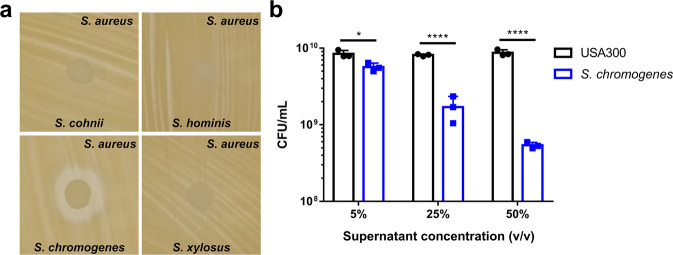
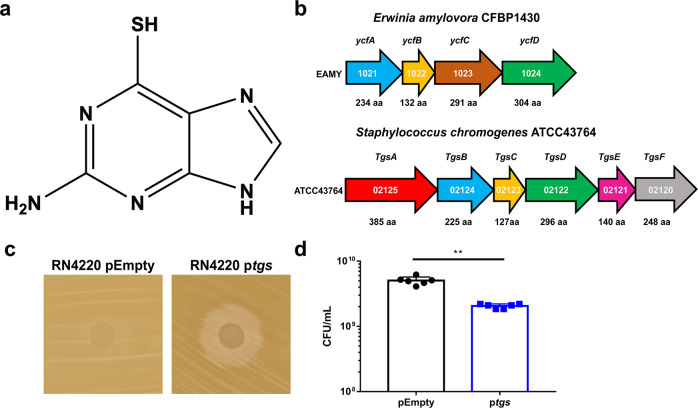
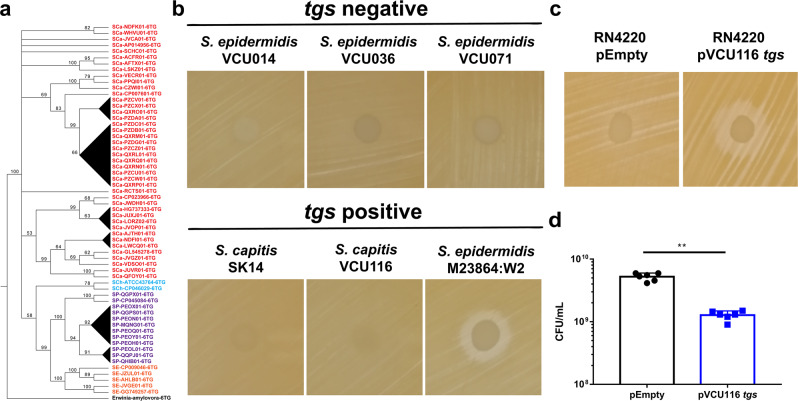
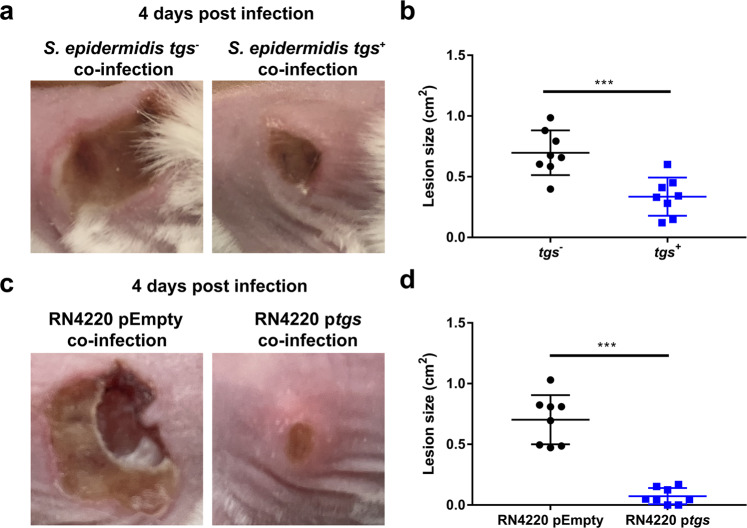
Coagulase-negative staphylococci and Staphylococcus aureus colonize similar niches in mammals and conceivably compete for space and nutrients. Here, we report that a coagulase-negative staphylococcus, Staphylococcus chromogenes ATCC43764, synthesizes and secretes 6-thioguanine (6-TG), a purine analog that suppresses S. aureus growth by inhibiting de novo purine biosynthesis. We identify a 6-TG biosynthetic gene cluster in S. chromogenes and other coagulase-negative staphylococci including S. epidermidis, S. pseudintermedius and S. capitis. Recombinant S. aureus strains harbouring this operon produce 6-TG and, when used in subcutaneous co-infections in mice with virulent S. aureus USA300, protect the host from necrotic lesion formation. Used prophylactically, 6-TG reduces necrotic skin lesions in mice infected with USA300, and this effect is mediated by abrogation of toxin production. RNAseq analyses reveal that 6-TG downregulates expression of genes coding for purine biosynthesis, the accessory gene regulator (agr) and ribosomal proteins in S. aureus, providing an explanation for its effect on toxin production.
Overview
The claims and statistics of this paper haven’t been checked yet.
Free: it reads the open-access text and checks the first 5 claims that cite a source we can check. Create a free account to check every claim.
Integrity signals
Registry
Cites
Statistics
Figures
Verification
Claims the paper makes
The claims and statistics of this paper haven’t been checked yet.
Free: it reads the open-access text and checks the first 5 claims that cite a source we can check. Create a free account to check every claim.
Claims other papers make about this one
Each is checked against this paper’s own text: does it say what the citing paper says it does?
The check wasn’t confident either way, so it gives no verdict — never disputed.
In the citing paper
“The decreased bacterial burden for the perR::Tn strain in the skin, however, is ostensibly due to the pleiotropic effects of perR inactivation on Fe acquisition and virulence factor expression and not due to decreased Hla alone (45).”
From The oxidative stress regulator, PerR, is required for staphyloferrin B-mediated iron acquisition in Staphylococcus aureus (2026) · cites this paper as [45]
Experimental — accuracy not yet measured
Self-check
Percentages, sums and reported differences re-computed from the paper’s own numbers.
The self-check needs the paper’s full text.
Citations
Cites
Moderated estimation of fold change and dispersion for RNA-seq data with DESeq2
Love, M. I., Huber, W., & Anders, S. (2014) · Genome Biology · doi:10.1186/s13059-014-0550-8 · Cited by 95,106
Trimmomatic: a flexible trimmer for Illumina sequence data
Bolger, A. M., Lohse, M., & Usadel, B. (2014) · Bioinformatics · doi:10.1093/bioinformatics/btu170 · Cited by 65,548
MEGA7: Molecular Evolutionary Genetics Analysis Version 7.0 for Bigger Datasets
Kumar, S., Stecher, G., & Tamura, K. (2016) · Molecular Biology and Evolution · doi:10.1093/molbev/msw054 · Cited by 44,059
RAxML version 8: a tool for phylogenetic analysis and post-analysis of large phylogenies
Stamatakis, A. (2014) · Bioinformatics · doi:10.1093/bioinformatics/btu033 · Cited by 32,291
SPAdes: A New Genome Assembly Algorithm and Its Applications to Single-Cell Sequencing
Bankevich, A., Nurk, S., Antipov, D., Gurevich, A. A., Dvorkin, M., Kulikov, A. S., Lesin, V. M., Nikolenko, S. I., Pham, S., Prjibelski, A. D., et al. (2012) · Journal of Computational Biology · doi:10.1089/cmb.2012.0021 · Cited by 25,987
BLAST+: architecture and applications
Camacho, C., Coulouris, G., Avagyan, V., Ma, N., Papadopoulos, J., Bealer, K., & Madden, T. L. (2009) · BMC Bioinformatics · doi:10.1186/1471-2105-10-421 · Cited by 22,074
Prokka: rapid prokaryotic genome annotation
Seemann, T. (2014) · Bioinformatics · doi:10.1093/bioinformatics/btu153 · Cited by 18,818
Staphylococcus aureus Infections
Lowy, F. D. (1998) · New England Journal of Medicine · doi:10.1056/nejm199808203390806 · Cited by 6,005
Bad Bugs, No Drugs: No ESKAPE! An Update from the Infectious Diseases Society of America
Boucher, H. W., Talbot, G. H., Bradley, J. S., Edwards, J. E., Gilbert, D., Rice, L. B., Scheld, M., Spellberg, B., & Bartlett, J. (2009) · Clinical Infectious Diseases · doi:10.1086/595011 · Cited by 4,958
Methicillin-Resistant S. aureus Infections among Patients in the Emergency Department
Moran, G. J., Krishnadasan, A., Gorwitz, R. J., Fosheim, G. E., McDougal, L. K., Carey, R. B., & Talan, D. A. (2006) · New England Journal of Medicine · doi:10.1056/nejmoa055356 · Cited by 2,285
Cited by
Staphylococcus epidermidis and its dual lifestyle in skin health and infection
Severn, M. M., & Horswill, A. R. (2023) · Nature Reviews Microbiology · doi:10.1038/s41579-022-00780-3 · Cited by 355
Review of major meat-borne zoonotic bacterial pathogens
Ali, S., & Alsayeqh, A. F. (2022) · Frontiers in Public Health · doi:10.3389/fpubh.2022.1045599 · Cited by 181
“The coagulase enzyme acts as a virulence factor by converting prothrombin into staphylothrombin and plasma fibrinogen into fibrin, helping bacteria evade the immune response (89).”
BackgroundNucleotide biosynthesis: the base of bacterial pathogenesis
Goncheva, M. I., Chin, D., & Heinrichs, D. E. (2022) · Trends in Microbiology · doi:10.1016/j.tim.2021.12.007 · Cited by 153
Self-citationYazıcı, D., Öğülür, İ., Pat, Y., Babayev, H., Barletta, E., Ardıçlı, S., Imam, M. B., Huang, M., Koch, J., Li, M., et al. (2023) · Seminars in Immunology · doi:10.1016/j.smim.2023.101846 · Cited by 82
The dynamic balance of the skin microbiome across the lifespan
Townsend, E. C., & Kalan, L. (2023) · Biochemical Society Transactions · doi:10.1042/bst20220216 · Cited by 81
Nolan, A. C., Zeden, M. S., Campbell, C., Kviatkovski, I., Urwin, L., Corrigan, R. M., Gründling, A., & O’Gara, J. P. (2022) · mBio · doi:10.1128/mbio.02478-22 · Cited by 62
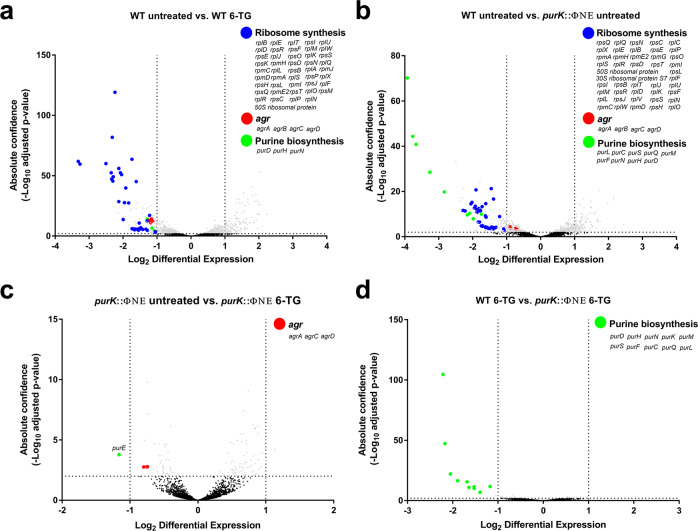
“aureus by interfering with ribosome biogenesis and 476 downregulate agr-controlled virulence under purine limited growth conditions (67).”
BackgroundAnti-infective therapy using species-specific activators of Staphylococcus aureus ClpP
Wei, B., Zhang, T., Wang, P., Pan, Y., Li, J., Chen, W., Zhang, M., Ji, Q., Wu, W., Lan, L., et al. (2022) · Nature Communications · doi:10.1038/s41467-022-34753-0 · Cited by 55
The emerging potential ofmicrobiome transplantation on human health interventions
Junca, H., Pieper, D. H., & Medina, E. (2022) · Computational and Structural Biotechnology Journal · doi:10.1016/j.csbj.2022.01.009 · Cited by 50
SILVA, V. Y. N. E. D., Pereira, J. E., Maltez, L., Poeta, P. A. C. Q. D., & Igrejas, G. (2022) · Pathogens · doi:10.3390/pathogens11101069 · Cited by 49
Burke, T. L., Rupp, M. E., & Fey, P. D. (2023) · Trends in Microbiology · doi:10.1016/j.tim.2023.01.001 · Cited by 41
SILVA, V. Y. N. E. D., Lopes, A. F., Soeiro, V., Caniça, M., Manageiro, V., Pereira, J. E., Maltez, L., Capelo, J. L., Igrejas, G., & Poeta, P. A. C. Q. D. (2022) · Antibiotics · doi:10.3390/antibiotics11020240 · Cited by 37
“Despite living in commensalism with the host, staphylococci, in particular, Staphylococcus aureus, can cause a wide spectrum of infections [2].”
BackgroundLuqman, A., & Götz, F. (2021) · International Journal of Molecular Sciences · doi:10.3390/ijms22094996 · Cited by 33
“aureus growth by inhibiting de novo purine biosynthesis and is also effective in wound healing [33].”
BackgroundCrepin, D. M., Chavignon, M., Verhoeven, P. O., Laurent, F. J., Josse, J., & Butin, M. (2024) · Clinical Microbiology Reviews · doi:10.1128/cmr.00118-23 · Cited by 29
“Bioinformatic analysis of 84 S . capitis genomes highlighted the presence of the tgs operon in 96.5% (81/84) genomes (46).”
BackgroundInfluentialCui, Y., Wang, X., Wu, H., Zhang, X., Xu, Y., Yu, G., Liu, X., Yao, Q., Wang, J., & Ji, Y. (2024) · Food Control · doi:10.1016/j.foodcont.2024.110313 · Cited by 25
Osada, M., Aung, M. S., Urushibara, N., Kawaguchiya, M., Ohashi, N., Hirose, M., & Kobayashi, N. (2022) · Pathogens · doi:10.3390/pathogens11040469 · Cited by 24
Chin, D., Flannagan, R. S., Tuffs, S. W., Chan, J. K., McCormick, J. K., & Heinrichs, D. E. (2022) · Infection and Immunity · doi:10.1128/iai.00099-22 · Cited by 17
“Proteins grown in the supernatant were harvested through trichloroacetic acid (TCA) precipitation as previously described (68).”
MethodSelf-citationCholesteatoma has an altered microbiota with a higher abundance of Staphylococcus species
Fujikawa, T., Tanimoto, K., Kawashima, Y., Ito, T., Honda, K., Takeda, T., Sonobe, A., Aoki, N., Bai, J., & Tsutsumi, T. (2022) · Laryngoscope Investigative Otolaryngology · doi:10.1002/lio2.934 · Cited by 17
“aureus colonization and reduce its virulence.(48,49) The distinct CoNS colonization in cholesteatoma may reflect the presence of S.”
BackgroundAdaptation to skin mycobiota promotes antibiotic tolerance in Staphylococcus aureus
Kowalski, C. H., Nguyen, U. T., Lawhorn, S., Smith, T. J., Corrigan, R. M., Suh, W. S., Kalan, L., & Barber, M. F. (2024) · Current Biology · doi:10.1016/j.cub.2025.03.055 · Cited by 16
Huynh, F. D., Damiani, G. B., & Bunick, C. G. (2024) · Antibiotics · doi:10.3390/antibiotics13030268 · Cited by 15
“An IL-17 inhibitor may assist in resolving this microbial dysbiosis [36].”
BackgroundHirose, M., Aung, M. S., Fujita, Y., Kato, T., Hirose, Y., Yahata, S., Fukuda, A., Saitoh, M., Urushibara, N., & Kobayashi, N. (2022) · Pathogens · doi:10.3390/pathogens11080849 · Cited by 14
“Furthermore, the production of bacteriocins and 6-TG [33,51] may have also contributed to the spread of S.”
BackgroundSrithanasuwan, A., Intanon, M., Chaisri, W., & Suriyasathaporn, W. (2023) · Antibiotics · doi:10.3390/antibiotics12030600 · Cited by 13
Qi, P., Gong, F., Leng, M., & Wei, Z. (2025) · Frontiers in Immunology · doi:10.3389/fimmu.2025.1674392 · Cited by 12
Jung, D., Park, S., Kurban, D., Dufour, S., & Ronholm, J. (2024) · mSystems · doi:10.1128/msystems.00362-24 · Cited by 13
“The protective effects of NAS likely occur due to the ability to produce bacteriocins (49, 50), purine analogs (51), or biofilm-disrupting signals (52).”
Townsend, E. C., Xu, K., Cruz, K. D. L., Huang, L., Sandstrom, S., Arend, D., Gromek, O., Scarborough, J., Huttenlocher, A., Gibson, A. L. F., et al. (2025) · Microbiology Spectrum · doi:10.1128/spectrum.02873-24 · Cited by 11
Wang, X., Wang, Y., Feng, M., Li, J., Liu, Z., Fu, L., Zhang, N., Zhang, H., & Qin, J. (2025) · Frontiers in Veterinary Science · doi:10.3389/fvets.2025.1558856 · Cited by 10
The Central Role of Gut Microbes in Host Purine Homeostasis
Emery, H. L., Kerby, R. L., & Rey, F. E. (2025) · Annual Review of Microbiology · doi:10.1146/annurev-micro-041522-100126 · Cited by 10
Genome-wide analysis of fitness determinants of Staphylococcus aureus during growth in milk
Mårli, M. T., Nordraak, A. O. O., de Bakker, V., Winther, A. R., Liu, X., Veening, J., Porcellato, D., & Kjos, M. (2025) · PLoS Pathogens · doi:10.1371/journal.ppat.1013080 · Cited by 9
“The importance of purine biosynthesis for S. aureus virulence is well established, and de novo purine biosynthesis has been shown to be required for the pathogenesis and virulence of S. aureus [35–39].”
Daher, R., Pouget, C., Lavigne, J., François, P., & Dunyach‐Remy, C. (2025) · Critical Reviews in Microbiology · doi:10.1080/1040841x.2025.2572800 · Cited by 8
“S. chromogenes also displays antimicrobial activity against S. aureus . chin et al. reported that S. chromo-genes secretes 6-thioguanine (6-tG), a purine analog that inhibits both S. aureus growth and virulence (chin et al. 2021).”
Gaudreau, A., Watson, D. W., Flannagan, R. S., Roy, P., Shen, C., Abdelmoneim, A., Beavers, W. N., Gillies, E. R., El-Halfawy, O. M., & Heinrichs, D. E. (2024) · Journal of Biological Chemistry · doi:10.1016/j.jbc.2024.107689 · Cited by 7
Self-citationBurford-Gorst, C. M., & Kidd, S. P. (2024) · Antibiotics · doi:10.3390/antibiotics13090845 · Cited by 7
“…S. aureus , such as S. capitis , S. chromogenes , S. pseudintermedius , and S. epidermidis , which have all been found to synthesise the purine analog 6-thioguanine (6-TG), a molecule found to inhibit agr quorum sensing, resulting in a reduction in the virulence and growth of S. aureus [47].”
BackgroundEnhancing Human Superorganism Ecosystem Resilience by Holistically ‘Managing Our Microbes’
Coleman, M. E., Dietert, R. R., North, D., & Stephenson, M. M. (2021) · Applied Microbiology · doi:10.3390/applmicrobiol1030031 · Cited by 7
“Because the coagulase-negative species share a similar niche to the potentially pathogenic Staphylococcus aureus (Staph A), the species offer a colonization resistance opportunity to use friendly commensal Staphylococcus against Staph A [89].”
BackgroundJung, S.-Y., Kim, K. H., Kim, J. S., Hwang, B.-H., & Lee, C. (2025) · Korean Journal of Chemical Engineering · doi:10.1007/s11814-025-00476-3 · Cited by 6
Lei, L., Guichuan, S., Guo, Y., Zhang, J., Yuli, Q., Huiping, W., Flores, M., Belloch, C., Yingli, L., Jing, W., et al. (2026) · International Journal of Food Microbiology · doi:10.1016/j.ijfoodmicro.2025.111618 · Cited by 7
Suriyasathaporn, W., Kongkaew, A., Intanon, M., Srithanasuwan, A., Saipinta, D., Pangprasit, N., Thongtharb, A., Chuasakhonwilai, A., & Chaisri, W. (2024) · Animals · doi:10.3390/ani14233526 · Cited by 6
The inhibitory effect of extracellular vesicles derived from S. epidermidis on MRSA biofilms
Xian, C., Chen, J., Xiang, L., Wang, R., Chen, Y., Yanwu, L., He, X., Jingjing, Z., Wang, T., Jiakai, G., et al. (2025) · International Journal of Pharmaceutics · doi:10.1016/j.ijpharm.2025.126067 · Cited by 5
Townsend, E. C., Xu, K., Cruz, K. D. L., Huang, L., Sandstrom, S., Meudt, J. J., Shanmuganayagam, D., Huttenlocher, A., Gibson, A. L. F., & Kalan, L. (2025) · mSphere · doi:10.1128/msphere.00441-25 · Cited by 5
Dynamic remodeling of skin microbiota during healthy homeostatic and wound repair conditions
Ye, H., Wong, A., Chen, X., Sun, W., He, H., Li, X., & Wu, J. (2026) · Frontiers in Microbiology · doi:10.3389/fmicb.2026.1781606 · Cited by 5
“For instance, Staphylococcus lugdunensis produces (Bitschar et al., 2019; Nakatsuji et al., 2017; Chin et al., 2021; Nguyen et al., 2025; O’Sullivan et al., 2020).”
Mutations in a Membrane Permease or hpt Lead to 6-Thioguanine Resistance in Staphylococcus aureus
Chin, D., Goncheva, M. I., Flannagan, R. S., & Heinrichs, D. E. (2021) · Antimicrobial Agents and Chemotherapy · doi:10.1128/aac.00760-21 · Cited by 5
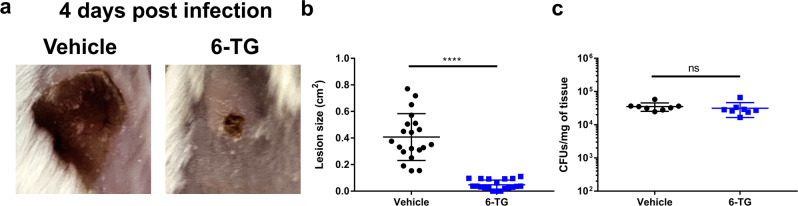
“We previously demonstrated that prophylactic subcutaneous treatment of mice with 6-TG protects against the necrotic lesion-forming ability of USA300 LAC, presumably via downregulation toxins in vivo (24).”
BackgroundSelf-citationMillette, G., Lacasse, E., Binette, R., Belley, V., Chaumont, L.-P., Ster, C., Beaudry, F., Boyapelly, K., Boudreault, P., & Malouin, F. (2023) · Antibiotics · doi:10.3390/antibiotics12081344 · Cited by 5
“aureus in a mouse co-infection model [28].”
Santos, E. M. S., de Souza, C. N., Santos, H. O., Silva, L. M. V., Souza, G. Á. A. D., Oliveira, L. F., Magalhães, M. J. R., dos Santos, W. S., Tavares, Á. M. D. F., Ferreira, R. G. C., et al. (2025) · Veterinary World · doi:10.14202/vetworld.2025.4196-4211 · Cited by 4
“Some non-aureus Staphylococcus species ( S. chromogenes, S. epidermidis, S. saprophyticus, S. sciuri, S. simulans, S. warneri , and S. xylosus ) are relevant because they can produce bacteriocins and inhibit S. aureus growth [55, 56].”
Latif, T., Ali, S. M., Javid, A., & Sheikh, A. A. (2024) · PubMed Central · doi:10.30466/vrf.2024.2009978.3990 · Cited by 4
Chuasakhonwilai, A., Keeklangdon, P., Chaisri, W., Saipinta, D., Photiboon, K., Kaewmuangma, D., Anuphom, W., Intanon, M., & Suriyasathaporn, W. (2025) · Frontiers in Microbiology · doi:10.3389/fmicb.2025.1707938 · Cited by 4
“Additionally, several mechanisms of S. chromogenes inhibit the growth of major pathogens (Chin et al., 2021; Carson et al., 2017; Rahmdel et al., 2019).”
Федорченко, В. І., Лобань, Г. А., Hancho, O. V., Chapala, A. M., & Syvovol, V. M. (2024) · Актуальні проблеми сучасної медицини Вісник Української медичної стоматологічної академії · doi:10.31718/2077-1096.24.1.150 · Cited by 4
Molecular dissection of the first Staphylococcus cohnii temperate phage IME1354_01
Tian, F., Li, J., Li, L., Li, F., & Tong, Y. (2022) · Virus Research · doi:10.1016/j.virusres.2022.198812 · Cited by 4
Inhibition of Clinical MRSA Isolates by Coagulase Negative Staphylococci of Human Origin
Twomey, E., O’Connor, P. M., Coffey, A., Kiste, M., Guinane, C. M., Hill, C., Field, D., & Begley, M. (2024) · Antibiotics · doi:10.3390/antibiotics13040338 · Cited by 3
“Using a method akin to that of the present study, Chin et al. demonstrated that when incubated with S. aureus , the CFS of a CoNS isolate ( Staphylococcus chromogenes ATCC43764) could significantly reduce the absorbance obtained at T24 [41].”
MethodZhang, Y., Luo, J., Du, L., Gao, B., Zhao, L., & Xie, J. (2025) · Food Bioscience · doi:10.1016/j.fbio.2025.106899 · Cited by 3
Hidrosollo, J. H., Liao, H., Yap, C. H., James, J. J., Lu, J., Tai, Y.-H., Wei, C., Thuy, T. T. D., Chin, S. P., Tay, S. T., et al. (2025) · Antimicrobial Agents and Chemotherapy · doi:10.1128/aac.00199-25 · Cited by 3
“For translational context, a recent work demonstrated that 6-thioguanine (6-TG), a purine analog secreted by Staphylococcus chromogens ATCC 43764, suppresses S. aureus growth by inhibiting de novo purine biosynthesis (38).”
The mechanism of thioamide formation by the YcfA-YcfC system in 6-thioguanine biosynthesis
Zhang, L., Dou, C. R., Yan, W., Chen, P., Jia, X., Zhang, N., Zhou, D., Long, Z., Zhang, L., Zhu, X., et al. (2025) · Nature Communications · doi:10.1038/s41467-025-63937-7 · Cited by 4
“Buildingontheantibacterialeffectagainst S.aureus of6-thioguanine 10 , we investigated the antimicrobial potential of enzymatically synthesized 6-thio-GTP and 6-seleno-GTP against ESKAPE pathogens 32 .”
Liu, J., Fujiyoshi, S., Maruyama, F., Tohsato, Y., Koyama, S., Rodó, X., Shimada, T., Seki, M., Sakatoku, A., Nakamura, S., et al. (2025) · Journal of Hazardous Materials · doi:10.1016/j.jhazmat.2025.140678 · Cited by 3
Sittek, L.-M., Hunold, J., Runkel, F., & Schlupp, P. (2024) · The Microbe · doi:10.1016/j.microb.2024.100161 · Cited by 3
Substrate identification of putative NCS1 and NCS2 nucleobase transporters in Pseudomonas aeruginosa
Kennelly, C., & Prindle, A. B. (2024) · mBio · doi:10.1128/mbio.02434-24 · Cited by 3
Ćorović, M., Ivanković, A. P., Milivojević, A., Pfeffer, K., Homey, B., Jansen, P. A. M., Zeeuwen, P. L. J. M., van den Bogaard, E. H. J., & Bezbradica, D. I. (2025) · Pharmaceutics · doi:10.3390/pharmaceutics17040487 · Cited by 3
“A number of comprehensive studies proved that increased CoNS abundance correlates with decreased proliferation of skin pathogens such as S. aureus , highlighting their importance for the treatment of AD [10–13].”
Shams, S. S., Shahi, M., & Azarakhshi, F. (2025) · Results in Chemistry · doi:10.1016/j.rechem.2025.102159 · Cited by 3
Chin, D., Deecker, S. R., Ensminger, A. W., & Heinrichs, D. E. (2021) · Microbiology Resource Announcements · doi:10.1128/mra.00492-21 · Cited by 3
Self-citationBeyond commensalism: genomic insights into micrococcin P1-producing Staphylococcus chromogenes
Rahmdel, S., Türkoglu, T., Nikjoo, N., Babaali, E., Mirhesari, D. M., Nega, M., Brüggemann, H., Huang, L., Paz, M. W., Nieselt, K., et al. (2025) · mSphere · doi:10.1128/msphere.00733-25 · Cited by 2
“More recently, the type strain ATCC43764 was shown to produce 6-thioguanine, a purine analog that impairs S. aureus virulence through inhibition of quorum sensing and purine biosynthesis (12).”
Inhibitors of nutrient pathways: nature's overlooked antibiotic arsenal
Gordzevich, R., Jin, K.-Y., Ashe, J. M., & Brown, E. D. (2026) · Natural Product Reports · doi:10.1039/d6np00036c · Cited by 2
Ruas, Y. F., Heinemann, M. B., & Souza, F. N. (2026) · Current Opinion in Food Science · doi:10.1016/j.cofs.2026.101447 · Cited by 2
Genome Mining Reveals a Sactipeptide Biosynthetic Cluster in Staphylococcus pseudintermedius
Elsakhawy, O. K., & Abouelkhair, M. A. (2025) · Veterinary Sciences · doi:10.3390/vetsci12070635 · Cited by 2
Salah-Eldein, A. M., Elnoubi, M. A., Medani, G., Eidaroos, N. H., Elassy, N., & Saad, E. (2025) · Egyptian Academic Journal of Biological Sciences. B, Zoology · doi:10.21608/eajbsz.2025.421618 · Cited by 1
Hirose, M., Aung, M. S., Hirose, Y., Nakanishi, Y., Kato, T., Ichimura, A., Kurashige, Y., Sakakibara, S., Minowa-Suzuki, E., Saitoh, M., et al. (2025) · Journal of Infection and Public Health · doi:10.1016/j.jiph.2025.103071 · Cited by 1
Sheikh, A. A., Flannagan, R. S., Nicholson, N. J., Jarycki, N., Fabelurin, R. O., Lewis, I. A., & Heinrichs, D. E. (2026) · Journal of Bacteriology · doi:10.1128/jb.00149-26
“The decreased bacterial burden for the perR ::Tn strain in the skin, however, is ostensibly due to the pleiotropic effects of perR inactivation on Fe acquisition and virulence factor expression and not due to decreased Hla alone (45).”
Self-citationThe One Health Approach in the Context of Public Health
Ali, S. M., Figueroa, D. P., Saxena, D. B., Yasobant, S., & Khan, M. M. T. (2024) · Frontiers research topics · doi:10.3389/978-2-8325-4717-5
Singh, H., Gibb, B., & Abdi, R. (2024) · International Journal of Molecular Epidemiology and Genetics · doi:10.62347/ejqk3362
Winged odyssey: Profiling bacterial vistas in migratory avifauna via 16S rRNA sequencing
Gul, N., Qasim, M., Khan, S. N., Rehman, K. U., Alissa, M., Abusalim, G. S., Alghamdi, S. A., Alamoudi, A. J., Kelabi, E., & Albaqami, F. M. K. (2024) · Microbial Pathogenesis · doi:10.1016/j.micpath.2024.106980
The Dual Role of Staphylococcus epidermidis in Atopic Dermatitis: Pathobiont and Protector
Khosrojerdi, M., Hashemi, S. A., Haghbin, A., Besharati, R., & Azimian, A. (2025) · Dermatitis · doi:10.1177/17103568251404946
Estimation of Antiproliferative Activity of Modified Thio-Nucleosides on MCF-7 Cells Line
Albasri, S., Sysa, A. G., Kvasyuk, E. I., & Gritskevich, E. R. (2024) · Digital Repository of Polessky State University (Polessky State University)
Jung, D. (2025) · eScholarship@McGill (McGill) · doi:10.82308/22972
Bateman, A., Most, K., & Stavrinides, J. (2026) · Molecular Genetics and Genomics · doi:10.1007/s00438-026-02356-9
“Recently, another six-gene operon identified in select coagulase-negative species of Staphylococcus was also shown to produce 6-thioguanine (Chin et al. 2021 ).”
Nolan, A. C., Byrne, S., Zeden, M. S., & O’Gara, J. P. (2026) · mBio · doi:10.1128/mbio.01274-26
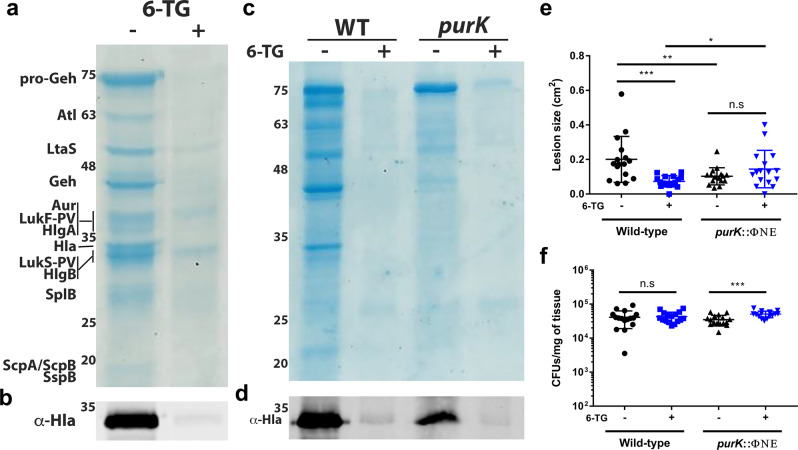
“Consistent with previous reports showing that 6-TG reduces Hla expression (30) and improves necrotic lesion healing in murine models (42), we also observed that 6-TG repressed hemolytic activity in MRSA culture supernatants.”
InfluentialOsada, M., Aung, M. S., Nishida, M., Kawamura, K., Ito, M., Urushibara, N., Kawaguchiya, M., Ohashi, N., Suzuki, S., Higuchi, T., et al. (2026) · Journal of Infection and Public Health · doi:10.1016/j.jiph.2026.103365
Awere‐Duodu, A., Kungu, F., Atiase, Y., & Donkor, E. S. (2026) · Therapeutic Advances in Infectious Disease · doi:10.1177/20499361261452940
“26,70 The availability of antibiotics in LMICs due to poor control policies enables the abuse of antibiotics in patients with DFUs, as they tend to abuse antibiotics through self-medication, with the hope of their foot ulcers healing.”
Metadata
- Authors
- Chin, D., Goncheva, M. I., Flannagan, R. S., Deecker, S. R., Guariglia-Oropeza, V., Ensminger, A. W., & Heinrichs, D. E.
- Affiliations
- Western University (CA)
- MaRS (CA)
- Corresponding author
- Heinrichs, David E.
- ORCID
- Venue
- Nature Communications
- Published
- 2021-03-25
- Volume
- 12
- Issue
- 1
- Pages
- 1887-1887
- ISSN
- 2041-1723 (ISSN-L)
- PMC
- PMC7994395
- OpenAlex
- W3138233583
- Cited by
- 72
- References
- 55
- Citations by year
- 2026: 8 · 2025: 23 · 2024: 17 · 2023: 6 · 2022: 14 · 2021: 4
- FWCI
- 3.24
- Type
- journal article
- Language
- en
- Open access
- gold
- doi.org
- Licence
- cc-by
- creativecommons.org/licenses/by/4.0 (tdm)
- creativecommons.org/licenses/by/4.0 (vor)
- Locations
- Nature Communications (publishedVersion, cc-by)
- PubMed Central (publishedVersion, cc-by)
- PubMed (publishedVersion)
- RePEc: Research Papers in Economics (submittedVersion)
- DOAJ (DOAJ: Directory of Open Access Journals) (submittedVersion, cc-by-sa)
- Funders
- Gouvernement du Canada | Canadian Institutes of Health Research (PJT-153308)
- Topics
- Health Sciences › Medicine › Infectious Diseases › Antimicrobial Resistance in Staphylococcus
- Life Sciences › Biochemistry, Genetics and Molecular Biology › Molecular Biology › Bacterial biofilms and quorum sensing
- Life Sciences › Immunology and Microbiology › Applied Microbiology and Biotechnology › Microbial Natural Products and Biosynthesis
- Keywords
- coagulase-negative staphylococci, Staphylococcus aureus, 6-thioguanine, purine analogues, purine biosynthesis inhibition, bacterial competition, Staphylococcus chromogenes, Staphylococcus epidermidis, Staphylococcus pseudintermedius, Staphylococcus capitis, USA300, necrotic skin lesions, toxin production, accessory gene regulator, bacterial co-infection, prophylaxis
- MeSH terms
- Staphylococcus capitis, Animals, Bacterial Proteins, Coagulase, Female, Mice, Inbred BALB C, Purines, Ribosomal Proteins, Staphylococcal Skin Infections, Staphylococcus, Staphylococcus aureus, Staphylococcus epidermidis, Thioguanine, Trans-Activators, Mice
About these checks
Registry, retraction, Cites and statistics results are computed, not judged, with one exception: a printed reference that no index lists is read once by a model before it counts as a citation error. Claims are extracted by a model and kept only when their quote appears verbatim in the text; each cited source is then checked, with a model’s help, for whether it says what the claim relies on. Those verdicts can be wrong — read the claim’s quote and the cited source before relying on one.
Statistics and arithmetic are recomputed, not judged.
Confidence bands are shown only for fields calibrated on our annotated test set. None is calibrated yet, so no band is shown.
What counts as a claim ›How we measure confidence ›How we check this ›
Are you an author, or do you see a problem with this page? Request a review
Data sources
Bibliographic data: Semantic Scholar, OpenAlex, Crossref.
Contains information from the Semantic Scholar Academic Graph Datasets, made available under the ODC Attribution License (ODC-BY 1.0).
Semantic Scholar’s data is described in: Kinney, R., et al. (2023). The Semantic Scholar Open Data Platform. arXiv:2301.10140.
