

Fibroblast activation protein activated antifibrotic peptide delivery attenuates fibrosis in mouse models of liver fibrosis
Open accessThe DOI matches its Crossref record; 42 of the 42 references it cites were found in a registry or an index.
Abstract
In liver fibrosis, activated hepatic stellate cells are known to overexpress fibroblast activation protein. Here we report a targeted antifibrotic peptide-delivery system in which fibroblast activation protein, which is overexpressed in fibrotic regions of the liver, liberates the antifibrotic peptide melittin by cleaving a fibroblast activation protein-specific site in the peptide. The promelittin peptide is linked to pegylated and maleimide-functionalized liposomes, resulting in promelittin-modified liposomes. The promelittin-modified liposomes were effective in reducing the viability of activated hepatic stellate cells but not that of control cells. In three types of liver fibrosis mouse models, intravenously administered promelittin-modified liposomes significantly reduces fibrotic regions. In addition, in the bile duct ligation mouse model promelittin-modified liposome-treatment increases overall survival. Although this peptide-delivery concept was tested for liver fibrosis, it can potentially be adapted to other fibrotic diseases.
Overview
The claims and statistics of this paper haven’t been checked yet.
Free: it reads the open-access text and checks the first 5 claims that cite a source we can check. Create a free account to check every claim.
Integrity signals
Registry
Cites
Statistics
Figures
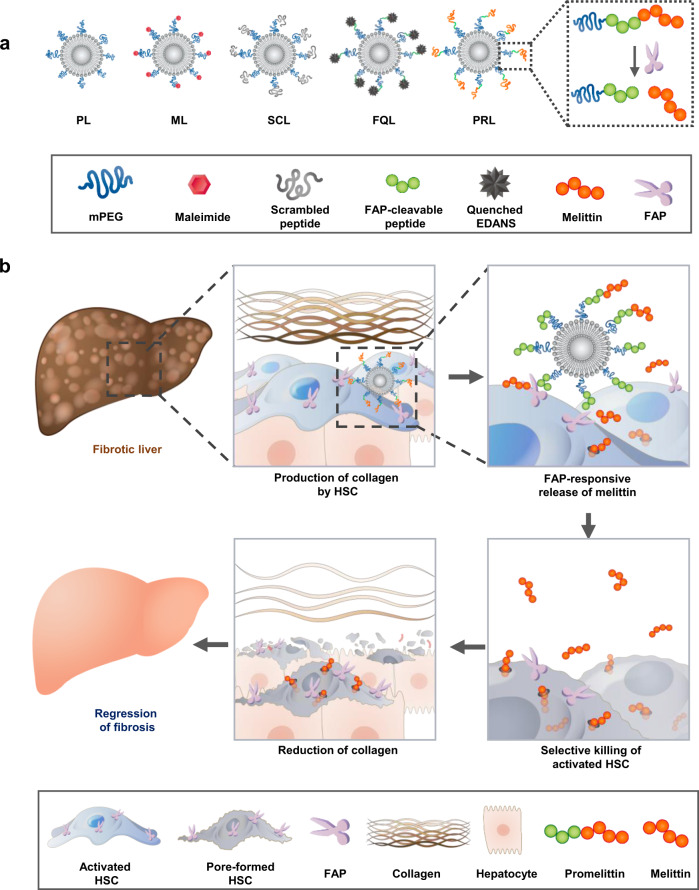
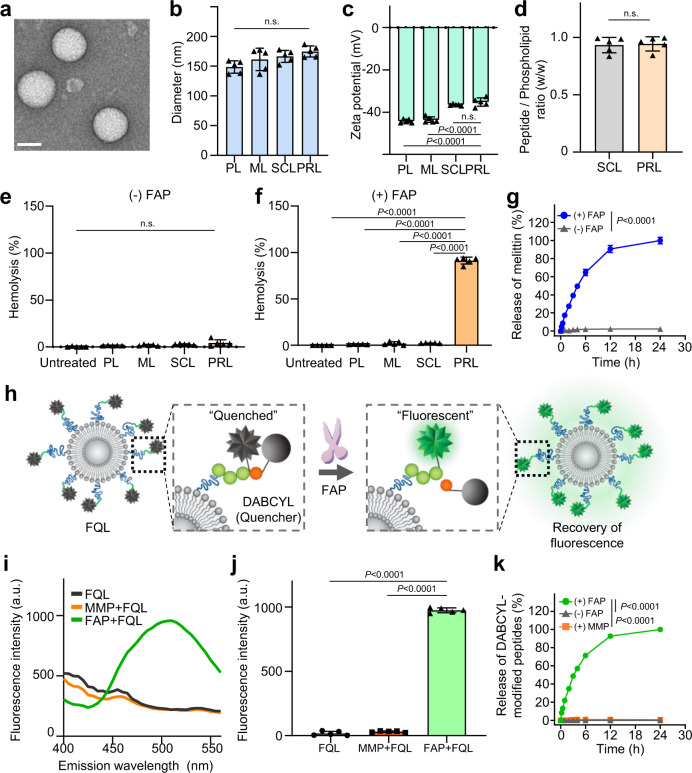
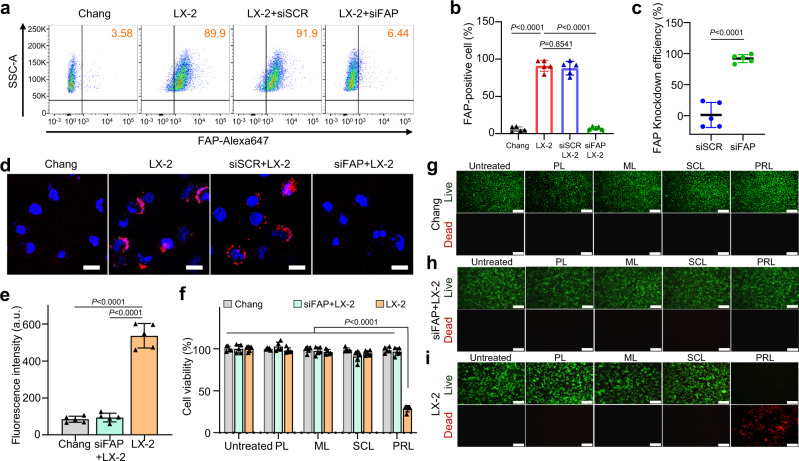
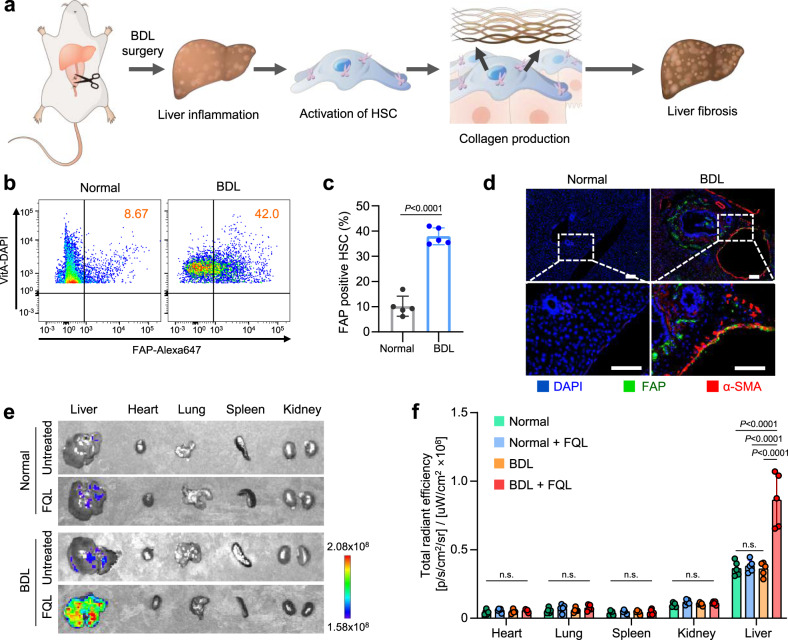
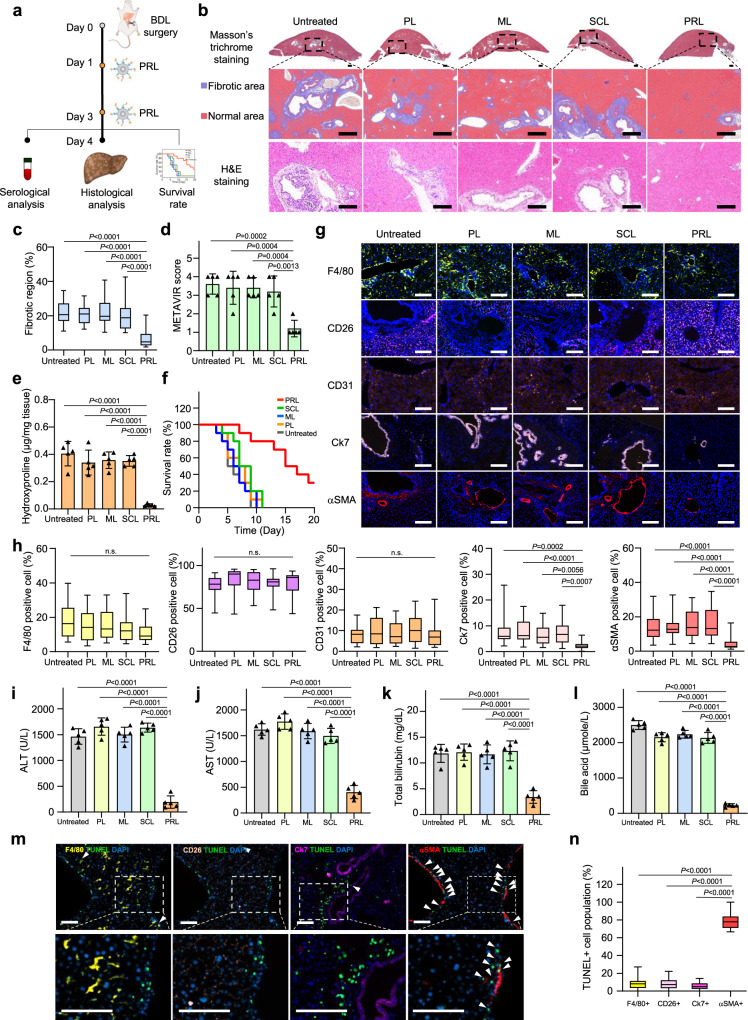
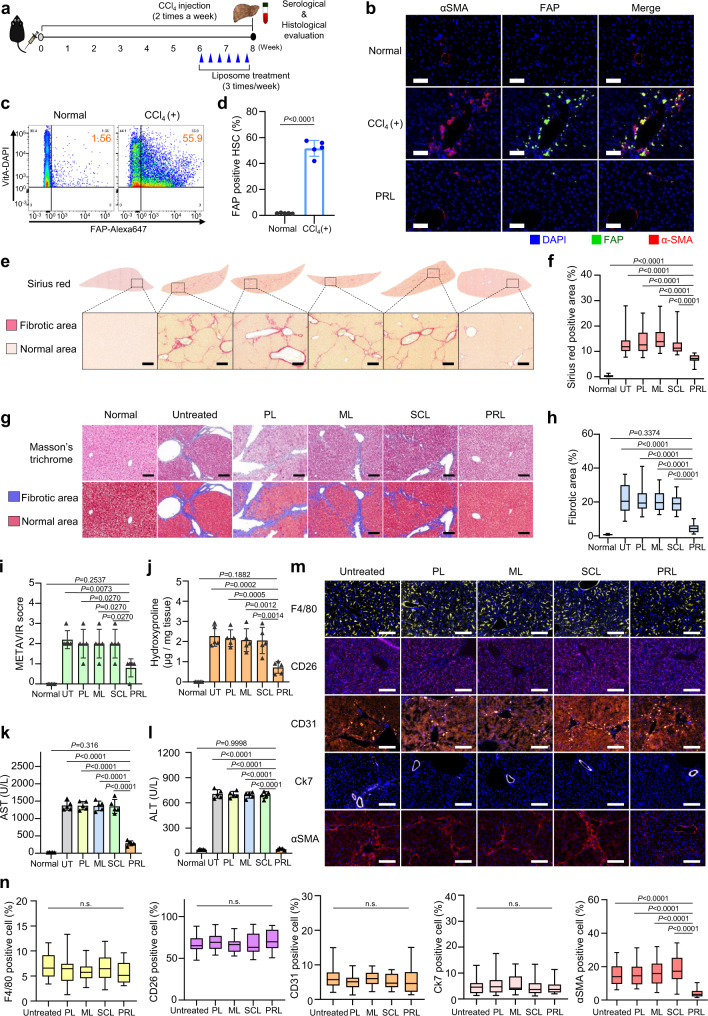
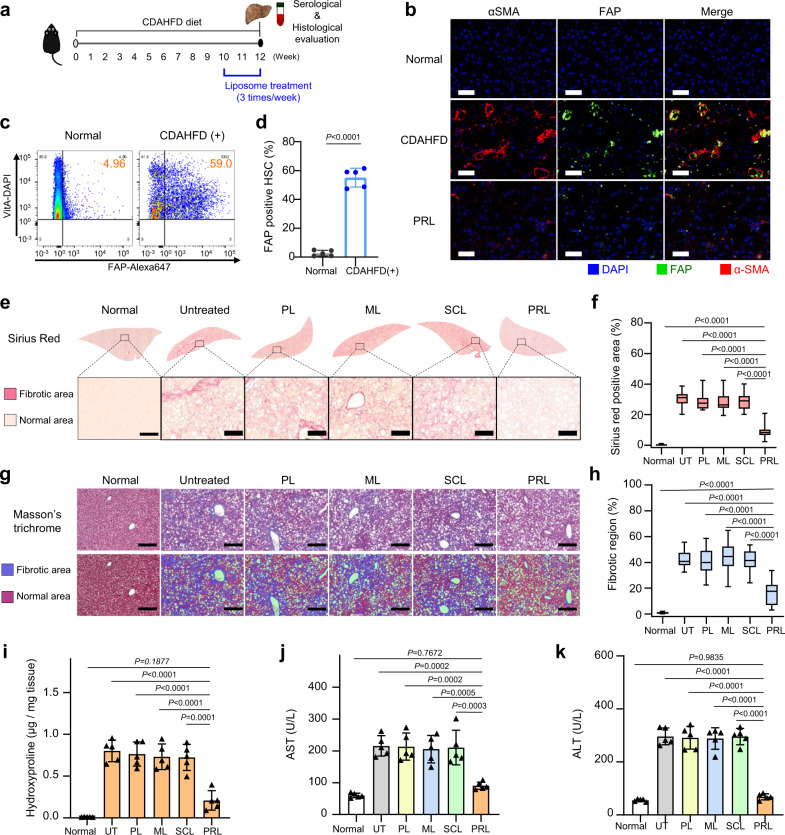
Verification
Claims the paper makes
The claims and statistics of this paper haven’t been checked yet.
Free: it reads the open-access text and checks the first 5 claims that cite a source we can check. Create a free account to check every claim.
Claims other papers make about this one
Each is checked against this paper’s own text: does it say what the citing paper says it does?
In the citing paper
“Because FAP is also implicated in hepatic fibrosis (313, 314), this approach merits further evaluation in MASH.”
From Found in translation—Fibrosis in metabolic dysfunction–associated steatohepatitis (MASH) (2023) · cites this paper as [313]
Self-check
Percentages, sums and reported differences re-computed from the paper’s own numbers.
The self-check needs the paper’s full text.
Citations
Cites
PEGylation as a strategy for improving nanoparticle-based drug and gene delivery
Suk, J. S., Xu, Q., Kim, N., Hanes, J., & Ensign, L. M. (2016) · Advanced Drug Delivery Reviews · doi:10.1016/j.addr.2015.09.012 · Cited by 4,523
Turning foes to friends: targeting cancer-associated fibroblasts
Chen, X., & Song, E. (2019) · Nature Reviews Drug Discovery · doi:10.1038/s41573-018-0004-1 · Cited by 1,879
Hepatic stellate cells as key target in liver fibrosis
Higashi, T., Friedman, S. L., & Hoshida, Y. (2017) · Advanced Drug Delivery Reviews · doi:10.1016/j.addr.2017.05.007 · Cited by 1,485
Liver fibrosis and hepatic stellate cells: Etiology, pathological hallmarks and therapeutic targets
Zhang, C.-Y., Yuan, W.-G., He, P., Lei, J.-H., & Wang, C.-X. (2016) · World Journal of Gastroenterology · doi:10.3748/wjg.v22.i48.10512 · Cited by 594
Elimination Pathways of Nanoparticles
Poon, W., Zhang, Y.-N., Ouyang, B., Kingston, B. R., Wu, J. L. Y., Wilhelm, S., & Chan, W. C. W. (2019) · ACS Nano · doi:10.1021/acsnano.9b01383 · Cited by 575
Roles of dietary glycine, proline, and hydroxyproline in collagen synthesis and animal growth
Li, P., & Wu, G. (2018) · Amino Acids · doi:10.1007/s00726-017-2490-6 · Cited by 550
High-yield and high-purity isolation of hepatic stellate cells from normal and fibrotic mouse livers
Mederacke, I., Dapito, D. H., Affò, S., Uchinami, H., & Schwabe, R. F. (2015) · Nature Protocols · doi:10.1038/nprot.2015.017 · Cited by 549
An improved mouse model that rapidly develops fibrosis in non‐alcoholic steatohepatitis
Matsumoto, M., Hada, N., Sakamaki, Y., Uno, A., Shiga, T., Tanaka, C., Ito, T., Katsume, A., & Sudoh, M. (2013) · International Journal of Experimental Pathology · doi:10.1111/iep.12008 · Cited by 523
Hamson, E. J., Keane, F. M., Tholen, S., Schilling, O., & Gorrell, M. D. (2014) · PROTEOMICS – Clinical Applications · doi:10.1002/prca.201300095 · Cited by 496
Liver fibrosis: Direct antifibrotic agents and targeted therapies
Schuppan, D., Ashfaq-Khan, M., Yang, A. T., & Kim, Y. O. (2018) · Matrix Biology · doi:10.1016/j.matbio.2018.04.006 · Cited by 435
Cited by
Found in translation—Fibrosis in metabolic dysfunction–associated steatohepatitis (MASH)
Wang, S., & Friedman, S. L. (2023) · Science Translational Medicine · doi:10.1126/scitranslmed.adi0759 · Cited by 158
“Because FAP is also implicated in hepatic fibrosis ( 304 , 305 ), this approach merits further evaluation in MASH.”
ResultFriend or foe? The elusive role of hepatic stellate cells in liver cancer
Cogliati, B., Yashaswini, C. N., Wang, S., Sia, D., & Friedman, S. L. (2023) · Nature Reviews Gastroenterology & Hepatology · doi:10.1038/s41575-023-00821-z · Cited by 148
Fabrication of active targeting lipid nanoparticles: Challenges and perspectives
Menon, I., Zaroudi, M., Zhang, Y., Aisenbrey, E. A., & Hui, L. (2022) · Materials Today Advances · doi:10.1016/j.mtadv.2022.100299 · Cited by 144
Liver fibrosis resolution: from molecular mechanisms to therapeutic opportunities
Pei, Q., Yi, Q., & Tang, L. (2023) · International Journal of Molecular Sciences · doi:10.3390/ijms24119671 · Cited by 121
Liu, J., Liu, J., Mu, W., Ma, Q., Zhai, X., Jin, B., Liu, Y., & Zhang, N. (2024) · ACS Nano · doi:10.1021/acsnano.4c02380 · Cited by 74
Arctic Fox Influence on a Seabird Community in Labrador: A Natural Experiment
Birkhead, T. R., & Nettleship, D. N. (1995) · The Wilson Journal of Ornithology · doi:10.5281/zenodo.16493673 · Cited by 76
Basalova, N. A., Alexandrushkina, N. A., Grigorieva, O., Kulebyakina, M., & Efimenko, A. Y. (2023) · Biomolecules · doi:10.3390/biom13121718 · Cited by 59
“Indeed, today, a number of approaches have already been proposed in both fibrosis and theranostics based on the use of CAR-T [99,142], liposomes [143], or FAP inhibitors, including labeled ones for tracking the progression of treatment [144–146].”
BackgroundHuang, M., Zheng, M., Song, Q., Ma, X., Zhang, Q., Chen, H., Jiang, G., Zhou, S., Chen, H., Wang, G., et al. (2023) · Advanced Materials · doi:10.1002/adma.202311420 · Cited by 58
Zhang, L., Deng, W., Huang, Q., Zhang, J., Wang, Y., Zhou, T., Xing, L., & Jiang, H. (2024) · Advanced Materials · doi:10.1002/adma.202311474 · Cited by 59
Antifibrotic therapies for metabolic dysfunction-associated steatotic liver disease
Schwabe, R. F., Tacke, F., Sugimoto, A., & Friedman, S. L. (2025) · JHEP Reports · doi:10.1016/j.jhepr.2025.101421 · Cited by 70
RNA nanotherapeutics with fibrosis overexpression and retention for MASH treatment
Shan, X., Zhao, Z., Lai, P., Liu, Y., Li, B., Ke, Y., Jiang, H., Zhou, Y., Li, W., Wang, Q., et al. (2024) · Nature Communications · doi:10.1038/s41467-024-51571-8 · Cited by 52
An activatable near-infrared molecular reporter for fluoro-photoacoustic imaging of liver fibrosis
Miao, M., Miao, J., Zhang, Y., Zhang, J., She, M., Zhao, M., Miao, Q., Li, Y., Zhou, K., & Li, Q. (2023) · Biosensors and Bioelectronics · doi:10.1016/j.bios.2023.115399 · Cited by 35
Li, X., Wang, X., Jiao, Q., Shao, Y., Luo, R., Zhang, J., Zheng, X., Zhou, S., & Chen, Y. (2023) · Acta Biomaterialia · doi:10.1016/j.actbio.2023.07.035 · Cited by 36
Song, Y., Qin, C., Chen, Y., Ruan, W., Gai, Y., Song, W., Gao, Y., Hu, W., Qiao, P., Song, X., et al. (2024) · European Journal of Nuclear Medicine and Molecular Imaging · doi:10.1007/s00259-024-06773-z · Cited by 33
“This shift leads to upregulation of FAP expression within the extracellular microenvironment of the fibrotic liver, enhancing extracellular matrix cell adhesion, migration, and proliferation [20].”
Nanomaterials for Targeting Liver Disease: Research Progress and Future Perspectives
Wu, Y., Zhang, J. J., He, W., Li, C., & Wang, Y. (2023) · Nano Biomedicine and Engineering · doi:10.26599/nbe.2023.9290024 · Cited by 35
Legumain In Situ Engineering Promotes Efferocytosis of CAR Macrophage to Treat Cardiac Fibrosis
Liu, Z., Chen, C., Zhang, Y., Ji, F., Liu, H., Du, H., Guo, Y., Dong, X., Yang, Z., Han, M., et al. (2025) · Advanced Materials · doi:10.1002/adma.202417831 · Cited by 44
Engineered exosomes for targeted microRNA delivery to reverse liver fibrosis
Zhang, H., Xing, J., Sun, M., Cui, Y., Li, Y., Hu, S., Wang, X., Jiang, H., Zhang, Y., Jiang, X., et al. (2025) · Biomaterials · doi:10.1016/j.biomaterials.2025.123510 · Cited by 38
Yoshida, S., Hayashi, H., Kawahara, T., Katsuki, S., Kimura, M., Hino, R., Sun, J., Nakamaru, R., Tenma, A., Toyoura, M., et al. (2024) · Circulation Research · doi:10.1161/circresaha.124.325017 · Cited by 32
Yuan, Y., Li, J., Chen, M., Zhao, Y., Zhang, B., Chen, X., Zhao, J., Liang, H., & Chen, Q. (2024) · Journal of Controlled Release · doi:10.1016/j.jconrel.2024.10.012 · Cited by 35
Peptide mediated therapy in fibrosis: Mechanisms, advances and prospects
Ye, X., Li, J., Liu, Z., Sun, X., Wei, D., Song, L., & Wu, C. (2022) · Biomedicine & Pharmacotherapy · doi:10.1016/j.biopha.2022.113978 · Cited by 24
Targeting fibroblast activation protein with chimeric antigen receptor macrophages
Mao, Y., Chen, Y. M., Zhang, S., Zeng, Q., Wang, J., Sheng, C., & Chen, S. (2024) · Biochemical Pharmacology · doi:10.1016/j.bcp.2024.116604 · Cited by 24
Peptide‐Based Nanoarchitectonics for the Treatment of Liver Fibrosis
Li, B., Huang, Y., & Zou, Q. (2023) · ChemBioChem · doi:10.1002/cbic.202300002 · Cited by 24
Xiong, H., & Guo, J. (2025) · Pharmaceuticals · doi:10.3390/ph18040507 · Cited by 24
Li, Q., Byun, J., Choi, J., Park, J.-W., Lee, J., & Oh, Y. (2024) · ACS Nano · doi:10.1021/acsnano.3c06001 · Cited by 19
Self-citationShen, W., Li, Y., Yang, Z., Li, W., Cao, Y., Liu, Y., Wang, Z., Pei, R., & Xing, C. (2024) · Journal of Nanobiotechnology · doi:10.1186/s12951-024-02401-y · Cited by 18
“Melittin was reported to reduce the fibrotic properties in both liver and renal via inhibiting TGF-β-induced pro-fibrotic gene expression, which may give interpretation to the reprogramming function of melittin in CAFs cells [19, 30].”
BackgroundLi, Y., Hamad, M. A., & Elkord, E. (2025) · Hepatology International · doi:10.1007/s12072-025-10788-5 · Cited by 20
“…previous studies have suggested that the decrease of FAP-expressing activated HSC could exert antifibrotic effects in liver fibrosis mouse models [32] and FAP overexpression in CAFs could promote HCC progression by accelerating the proliferation and metastasis of tumor cells and modulating the…”
Biomimetic nanoparticles for targeted therapy of liver disease
Vijayan, V., Unagolla, J. M., Panchal, D., Okoh, J. E., Menon, S. S., & Menon, J. U. (2025) · RSC Pharmaceutics · doi:10.1039/d5pm00044k · Cited by 24
Nanomedicines in the Treatment of Liver Fibrosis: A Review
Du, X., Niu, R., Liu, X., Wu, F., Yang, X., Ma, X., Zhang, J., Zhou, H.-H., Shao, L., & Wang, S. (2025) · International Journal of Nanomedicine · doi:10.2147/ijn.s524078 · Cited by 23
Zhang, L., Deng, W., Wang, X., Huang, Q., Liang, S., Ding, Z., Qi, L., Wang, Y., Zhou, T., Xing, L., et al. (2024) · Advanced Science · doi:10.1002/advs.202408898 · Cited by 21
Self-citationFunctionalised Ligand-Based Nanomaterial Drug Targeting Approaches for Colorectal Cancer Therapy
Dixit, A. A., Mandlik, D. S., & Mandlik, S. K. (2024) · Recent Advances in Drug Delivery and Formulation · doi:10.2174/0126673878301004240703073107 · Cited by 14
CAR‐T cell therapeutic avenue for fighting cardiac fibrosis: Roadblocks and perspectives
Abdalla, A. M. E., Yu, M., Ahmed, A. I. M., Meng, N., & Ouyang, C. (2024) · Cell Biochemistry and Function · doi:10.1002/cbf.3955 · Cited by 16
“83 Elevated levels of FAP expression significantly promotes the activity of macrophage and fibrogenic events in cancer 82 and other pathological fibrosis, 84 including liver and cardiac fibrosis.”
BackgroundHuang, S., Hua, Z., Wang, K., Ma, Y., Cheng, S., & Tan, M. (2025) · Food Research International · doi:10.1016/j.foodres.2025.115821 · Cited by 13
Jia, S., Chen, Y., Zhuo, C., Hu, M., Zhang, C., Cai, H., Li, X., Chen, H., & Yu, X. M. (2025) · Colloids and Surfaces B Biointerfaces · doi:10.1016/j.colsurfb.2025.114512 · Cited by 13
Hong, J., & Kim, Y. (2025) · Journal of Controlled Release · doi:10.1016/j.jconrel.2025.02.008 · Cited by 14
Li, R., Tai, Y., Zhang, X., Liu, Z., Si, H., Kong, D., Zhao, L., Li, J., & Midgley, A. C. (2025) · Advanced Healthcare Materials · doi:10.1002/adhm.202500101 · Cited by 15
Enzyme‐responsive macrocyclic metal complexes for biomedical imaging
Le, Q., Lee, J., Ko, S., Kim, H., Vu, T. Y., Choe, Y. S., Oh, Y., & Shim, G. (2022) · Bioengineering & Translational Medicine · doi:10.1002/btm2.10478 · Cited by 12
“The incorporation of enzyme-cleavable peptides into nanoparticles can provide a method of specifically triggering drug release in the TME.(10,11) Modifications of contrast agents that enhance their TMEhoming features can therefore enhance their tumor specificity.”
MethodSelf-citationShu, Y., Wen, G., Liang, A., & Jiang, Z. (2023) · Microchemical Journal · doi:10.1016/j.microc.2023.109067 · Cited by 10
Chen, Y., Du, J., Meng, X., Wu, L., Zhang, Q., Han, X., Zhang, L., Wang, Q., & Hu, H. (2024) · Talanta · doi:10.1016/j.talanta.2024.126475 · Cited by 10
Hepatic Stellate Cell Targeting Using Peptide-Modified Biologicals
Bansal, R., & Poelstra, K. (2023) · Methods in molecular biology · doi:10.1007/978-1-0716-3207-9_17 · Cited by 12
Emergent Peptides of the Antifibrotic Arsenal: Taking Aim at Myofibroblast Promoting Pathways
Liu, Z., Zhang, X., Wang, Y., Tai, Y., Yao, X., & Midgley, A. C. (2023) · Biomolecules · doi:10.3390/biom13081179 · Cited by 9
“[51], wherein the DPEA sequence of promelittin was substituted for the fibroblast activation protein (FAP)-sensitive GPA motif.”
Boiling histotripsy exhibits anti-fibrotic effects in animal models of liver fibrosis
Joung, C., Heo, J., Pahk, K. J., & Pahk, K. (2024) · Scientific Reports · doi:10.1038/s41598-024-66078-x · Cited by 11
“Next, we assessed the expression of CD26, which is also well-known as a hepatocyte marker 20,21 .”
BackgroundMethodInterdisciplinary advances reshape the delivery tools for effective NASH treatment
Chen, L., & Wang, Y. (2023) · Molecular Metabolism · doi:10.1016/j.molmet.2023.101730 · Cited by 10
“A novel delivery system leverages the proteolytic activity of fibroblast activation protein, which is a type II transmembrane glycoprotein and abundantly expressed in the fibrotic regions in liver, exclusively in activated HSC [78].”
BackgroundZheng, W., Guan, F., Xu, G., Yu, Y., Xiao, J., & Huang, X. (2023) · International Journal of Medical Sciences · doi:10.7150/ijms.77367 · Cited by 13
“HSCs were activated by various pathogenic factors of liver injury, then transformed to myofibroblast-like cells [4, 13, 14].”
BackgroundBreaking the niche: multidimensional nanotherapeutics for tumor microenvironment modulation
Swetha, K. L., Maravajjala, K. S., Li, S., Singh, M. S., & Roy, A. (2022) · Drug Delivery and Translational Research · doi:10.1007/s13346-022-01194-7 · Cited by 9
Zhi, S., Liang, A., & Jiang, Z. (2023) · Journal of environmental chemical engineering · doi:10.1016/j.jece.2023.111276 · Cited by 9
Yang, X., Ji, W., Zhou, Z., Wang, J., Cui, Z., Pan, X., Hu, H., He, Z., Wu, Z., Zhang, Y., et al. (2023) · Journal of Functional Foods · doi:10.1016/j.jff.2023.105960 · Cited by 9
Liu, W., Zou, H., Wei, J., Dong, L., & Hou, W. (2025) · Molecular and Cellular Biochemistry · doi:10.1007/s11010-025-05327-7 · Cited by 9
Dong, A., Wei, G., Liang, Z., Di, Y., Tang, Y., Ling, Y., Li, S., Chen, Y., Zhou, Y., Wang, X., et al. (2025) · Nature Communications · doi:10.1038/s41467-025-61397-7 · Cited by 12
Sun, Q., Yang, W., Song, Z., Lu, H., Shang, W., Li, H., Yang, Z., Gao, W., Li, Y., Xu, Y., et al. (2024) · Journal of the American Chemical Society · doi:10.1021/jacs.4c11988 · Cited by 6
TWISTed fibroblasts: New drivers of intestinal fibrosis in Crohn's disease
Lovisa, S., & Vetrano, S. (2024) · Heliyon · doi:10.1016/j.heliyon.2024.e40604 · Cited by 7
“In the context of liver fibrosis, the protease activity of FAP has been exploited to liberate a liposome-conjugated peptide displaying local anti-fibrotic activity [49].”
TRIM13 in situ engineering boosts anti-inflammatory capacity of CAR-Ms for liver fibrosis therapy
Gao, J., Yang, Z., Song, Y., Shao, L., Dong, X., Li, Y., Bo, L., Zhao, X., Han, M., Tang, C., et al. (2026) · Nature Communications · doi:10.1038/s41467-026-69858-3 · Cited by 11
F AP deficiency enhances thermogenesis and attenuates metabolic inflammation in diet‐induced obesity
Wu, Y., Li, Y., Sun, M., Yu, F., Liu, H., Xu, J., & Tang, X. (2023) · Obesity · doi:10.1002/oby.23955 · Cited by 5
Yang, P., Liu, W., Chen, Z., Duan, D., Xu, J., An, X., Xie, A., Rao, Z., Xia, Y., Zhang, R., et al. (2025) · Nano Today · doi:10.1016/j.nantod.2025.102641 · Cited by 6
Choi, J., Byun, J., Kim, D., Li, Q., Jin, D., Choi, Y., Jung, H. S., Lee, J., & Oh, Y. (2025) · Advanced Materials · doi:10.1002/adma.202418445 · Cited by 4
Self-citationYang, N., Yan, Y., Li, Z., Lu, A., Li, L., Zhu, Y., Shi, Y., Liu, X.-Y., & Wang, J. (2025) · Journal of Controlled Release · doi:10.1016/j.jconrel.2025.114378 · Cited by 7
Zhao, X., Guo, K., Xu, X., Yip, L. X., Liu, A., Wang, G., Cui, J., Gong, Y., Zhu, Q., Leong, D. T., et al. (2026) · ACS Nano · doi:10.1021/acsnano.5c17091 · Cited by 4
Xu, Y., Li, P., Sun, S., Chen, Y., Feng, L., Jiang, D., Wan, C., Li, J., & Cai, X. (2025) · Pharmaceutics · doi:10.3390/pharmaceutics17010090 · Cited by 3
“Pharmaceutics 2025 , 17 , 90 10 of Pharmaceutics 2025 , 17 , x FOR PEER REVIEW 10 of 15”
Lipid‐Based Nanoplatforms in Hepatology: From Rational Design to Clinical Translation Challenges
Wang, J., Zhang, Q., Yang, L., Cheng, Z., Wang, C., Song, R., Dai, H., & Zhang, X. (2025) · MedComm – Biomaterials and Applications · doi:10.1002/mba2.70025 · Cited by 6
Recent updates on engineered nanomedicines for treatment of fibrosis
Ziada, A. R., Xin, C., & Elzoghby, A. O. (2026) · Nanomedicine · doi:10.1080/17435889.2026.2628236 · Cited by 2
Li, F., Zhao, Y., & Nie, G. (2023) · Nano Research · doi:10.1007/s12274-023-5809-5 · Cited by 3
Polypeptide@AuNC probe catalytic amplification-tetramode molecular spectral biosensor for trace Al3+
Shu, Y., Bai, H., Li, C., Wen, G., Liang, A., & Jiang, Z. (2023) · Applied Surface Science · doi:10.1016/j.apsusc.2023.157797 · Cited by 2
Engineering nanoparticles that target fibroblast activation protein in cardiac fibrosisPreprint
Maduka, C. V., Rodriguez‐Rivera, G. J., Garay‐Sarmiento, M., Perry, A. R., Boyd, S., Worthington, K., Obenreder, M. C., Rydahl-Kim, S., Spinale, F. G., & Burdick, J. A. (2025) · bioRxiv (Cold Spring Harbor Laboratory) · doi:10.1101/2025.04.23.650330 · Cited by 3
“6), whose natural clearance of NPs has been exploited to treat fibrosis in these organs 37-39 .”
Ortega-Erazo, J. P., Pino, L. F., Sauza, F., Acosta, N., & Triana, L. E. (2025) · Revista Colombiana de Cirugía · doi:10.30944/20117582.2666 · Cited by 3
Targeting Tumor Dormancy and Recurrence: Molecular Mechanisms and Peptide Therapeutic Delivery
Aleem, A. R., Ali, A., Ali, W., Cheng, Y., Yan, Z., Xia, C., Liu, C., Fu, C., Hu, Y., & Wang, X. (2026) · MedComm – Oncology · doi:10.1002/mog2.70050 · Cited by 2
Wei, G., Zhang, Z., Wang, B., Jin, Q., Li, X., Jin, Z., Liu, Y., Zou, L., & Ge, G. (2026) · Sensors and Actuators B Chemical · doi:10.1016/j.snb.2026.139851 · Cited by 2
FAP‐Activatable Theranostic Agent Inhibiting VEGF Expression for Liver Fibrosis Therapy
Zeng, N., Liu, X., Peng, J., Zhao, L., Zhou, T., Li, N., & Zhou, Y. (2026) · Advanced Healthcare Materials · doi:10.1002/adhm.202505863 · Cited by 2
“Based on this, liver-targeted drug delivery system triggered by FAP was developed for LF therapy [12, 13].”
Yu, L., Zhang, L., Gao, L., Huang, S., Qin, X., Wang, Z., Li, S., Mei, C., Zhang, M., Zhang, Y., et al. (2026) · Journal of Controlled Release · doi:10.1016/j.jconrel.2026.115100 · Cited by 1
Li, X., Xu, J., Lin, Y., Xiang, X., Jiao, Q., Zhu, S., Zhang, W., Qin, Y., & Chen, Y. (2026) · ACS Applied Materials & Interfaces · doi:10.1021/acsami.6c05969 · Cited by 2
Yan, Z., Zhao, G., Lin, Q., Zhuang, G., Zhu, J., & Jin, J. F. (2023) · Peptide Science · doi:10.1002/pep2.24335 · Cited by 2
Targeting Cardiac Fibrosis With a Vaccine Against Fibroblast Activation Protein
Oldham, W. M. (2025) · Circulation Research · doi:10.1161/circresaha.124.325804 · Cited by 1
Boarding the rice bran bandwagon - Part 2
Hoogenkamp, H. (2010) · Fleischwirtschaft international
An inherent T cell-activating mRNA delivery platform for in vivo CAR T generationPreprint
Cao, Q., Yao, Y., Zheng, W., Liu, H., Jiang, M., Xie, D., Zhang, S., Su, P., Yuan, H., Chen, X. S., et al. (2025) · bioRxiv (Cold Spring Harbor Laboratory) · doi:10.1101/2025.11.19.688592
Shen, W., Li, Y., Yang, Z., Li, W., Cao, Y., Liu, Y., Wang, Z., Pei, R., & Xing, C. (2024) · Figshare · doi:10.6084/m9.figshare.25556579
Metabolism-modulating nanoparticles for remodeling adipose-liver crosstalk to reverse liver fibrosis
Zhang, L.-F., Liang, S.-Q., Huang, Q., Ru, J.-W., Ding, Z.-Q., Zhang, C.-Y., Wang, Y., Zhou, T., Xing, L., Cheng, X. W., et al. (2026) · Journal of Controlled Release · doi:10.1016/j.jconrel.2026.115026
Self-citationLiver fibrosis: Pathogenesis and innovative nanoparticle-based therapeutic strategies
Cai, Y., Li, J., Chen, S., Zhang, H., Tan, J., Li, H., Zhang, S., Li, B., Wei, Q., Lin, C., et al. (2026) · International Journal of Pharmaceutics X · doi:10.1016/j.ijpx.2026.100596
“The released melittin specifically disrupts the cell membrane of aHSCs, depleting their population and thereby suppressing collagen fiber overproduction (Lee et al., 2022).”
Han, X., Lu, R., Zhang, Y., Bushra, A., & Irudayaraj, J. (2026) · Journal of Pharmaceutical Sciences · doi:10.1016/j.xphs.2026.104484
An, P., Wu, L., & Wang, R. (2026) · Biomedicine & Pharmacotherapy · doi:10.1016/j.biopha.2026.119883
Fibrosis: Bridging fundamental mechanisms to precision medicine via advanced therapeutics
An, L., Lin, P., Chen, K., Chen, Y., Feng, Y., Liu, Z., & Wang, C. (2026) · Advanced Drug Delivery Reviews · doi:10.1016/j.addr.2026.115973 · Cited by 1
Xu, W., Chen, L., Wu, Y., Chen, X., Yuan, M., Zheng, G., & Qiu, Z. (2026) · The EPMA Journal · doi:10.1007/s13167-026-00471-6
Metadata
- Authors
- Lee, J., Byun, J., Shim, G., & Oh, Y.-K.
- Affiliations
- Seoul National University (KR)
- Soongsil University (KR)
- Corresponding author
- Oh, Yu-Kyoung
- Venue
- Nature Communications
- Published
- 2022-03-21
- Volume
- 13
- Issue
- 1
- Pages
- 1516-1516
- ISSN
- 2041-1723 (ISSN-L)
- PMC
- PMC8938482
- OpenAlex
- W4220755333
- Semantic Scholar
- 8793de601535ef3d570cba1865230ea2927faedd
- Cited by
- 79
- References
- 42
- Citations by year
- 2026: 14 · 2025: 21 · 2024: 18 · 2023: 20 · 2022: 4
- FWCI
- 9.36
- Type
- journal article
- Language
- en
- Open access
- gold
- doi.org
- Licence
- cc-by
- creativecommons.org/licenses/by/4.0 (tdm)
- creativecommons.org/licenses/by/4.0 (vor)
- Locations
- Nature Communications (publishedVersion, cc-by)
- PubMed Central (publishedVersion, cc-by)
- PubMed (publishedVersion)
- RePEc: Research Papers in Economics (submittedVersion)
- DOAJ (DOAJ: Directory of Open Access Journals) (submittedVersion, cc-by-sa)
- Topics
- Health Sciences › Medicine › Hepatology › Liver physiology and pathology
- Physical Sciences › Materials Science › Biomaterials › Nanoparticle-Based Drug Delivery
- Life Sciences › Biochemistry, Genetics and Molecular Biology › Molecular Biology › RNA Interference and Gene Delivery
- Keywords
- liver fibrosis, fibroblast activation protein, melittin, hepatic stellate cells, PEGylated liposomes, bile duct ligation, targeted drug delivery, fibrotic diseases
- MeSH terms
- Animals, Disease Models, Animal, Fibroblasts, Liposomes, Liver, Liver Cirrhosis, Peptides, Mice, Hepatic Stellate Cells
About these checks
Registry, retraction, Cites and statistics results are computed, not judged, with one exception: a printed reference that no index lists is read once by a model before it counts as a citation error. Claims are extracted by a model and kept only when their quote appears verbatim in the text; each cited source is then checked, with a model’s help, for whether it says what the claim relies on. Those verdicts can be wrong — read the claim’s quote and the cited source before relying on one.
Statistics and arithmetic are recomputed, not judged.
Confidence bands are shown only for fields calibrated on our annotated test set. None is calibrated yet, so no band is shown.
What counts as a claim ›How we measure confidence ›How we check this ›
Are you an author, or do you see a problem with this page? Request a review
Data sources
Bibliographic data: Semantic Scholar, OpenAlex, Crossref.
Contains information from the Semantic Scholar Academic Graph Datasets, made available under the ODC Attribution License (ODC-BY 1.0).
Semantic Scholar’s data is described in: Kinney, R., et al. (2023). The Semantic Scholar Open Data Platform. arXiv:2301.10140.
