

Fibroblast activation protein activated antifibrotic peptide delivery attenuates fibrosis in mouse models of liver fibrosis
Open accessThe DOI matches its Crossref record; 42 of the 42 references it cites were found in a registry or an index.
Abstract
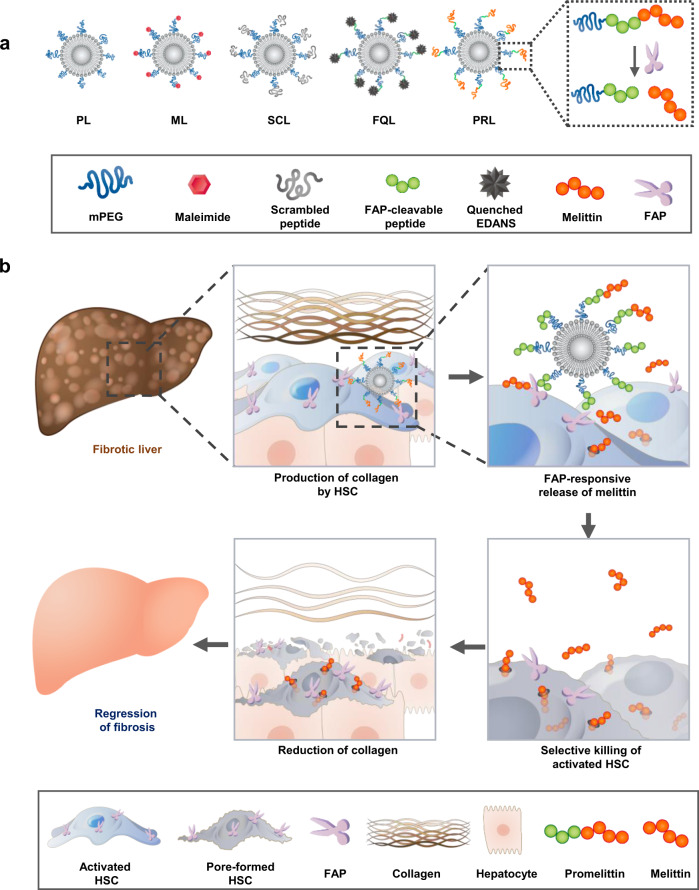
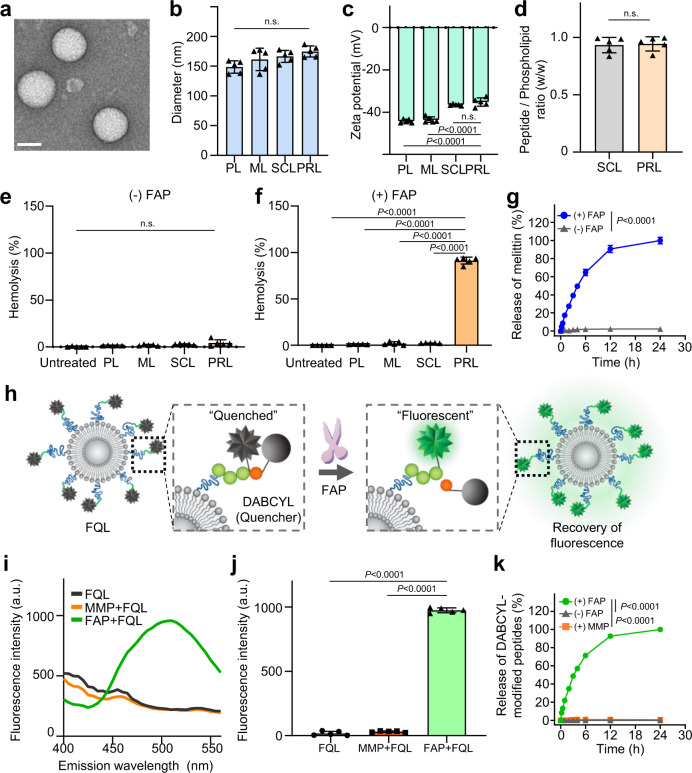
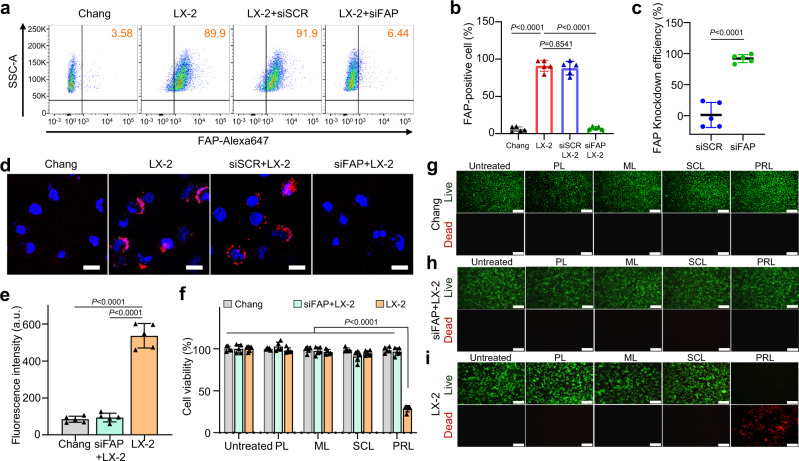
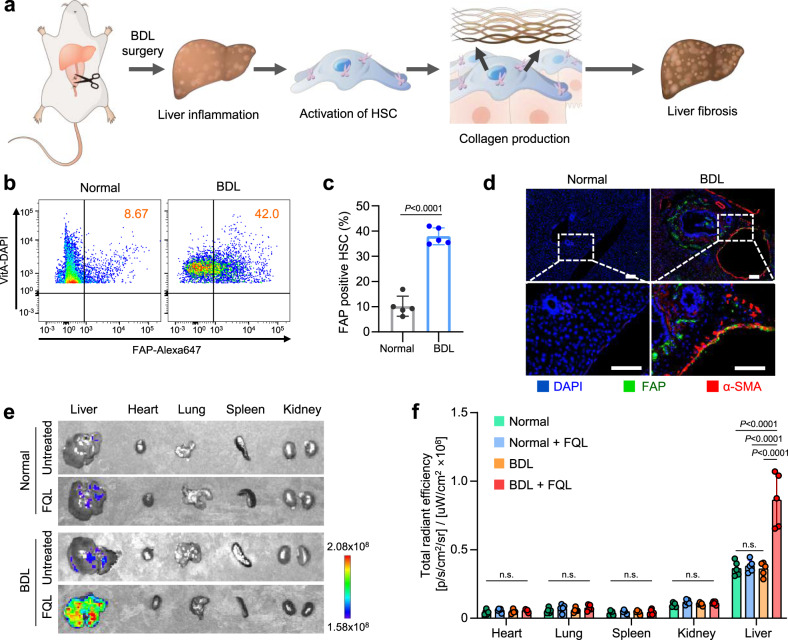
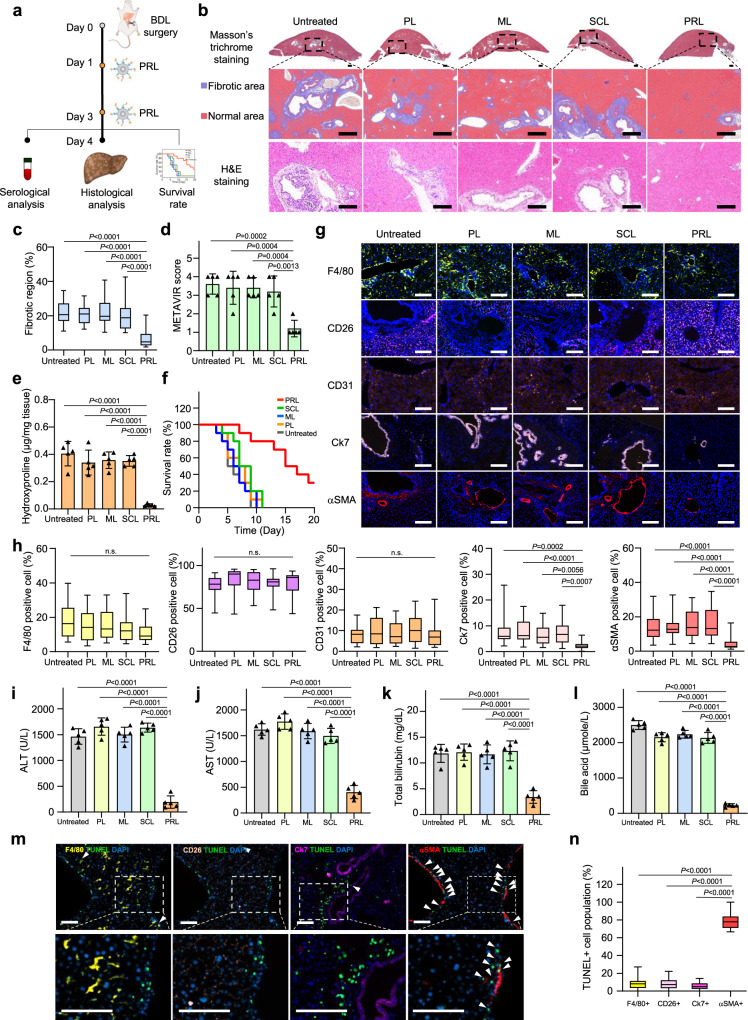
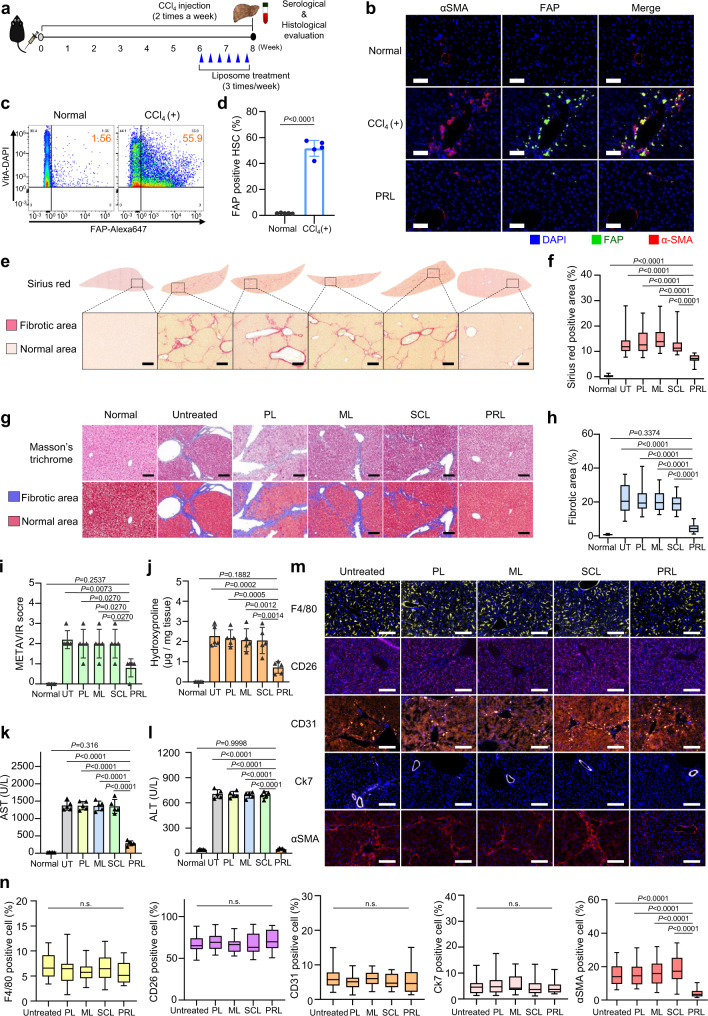
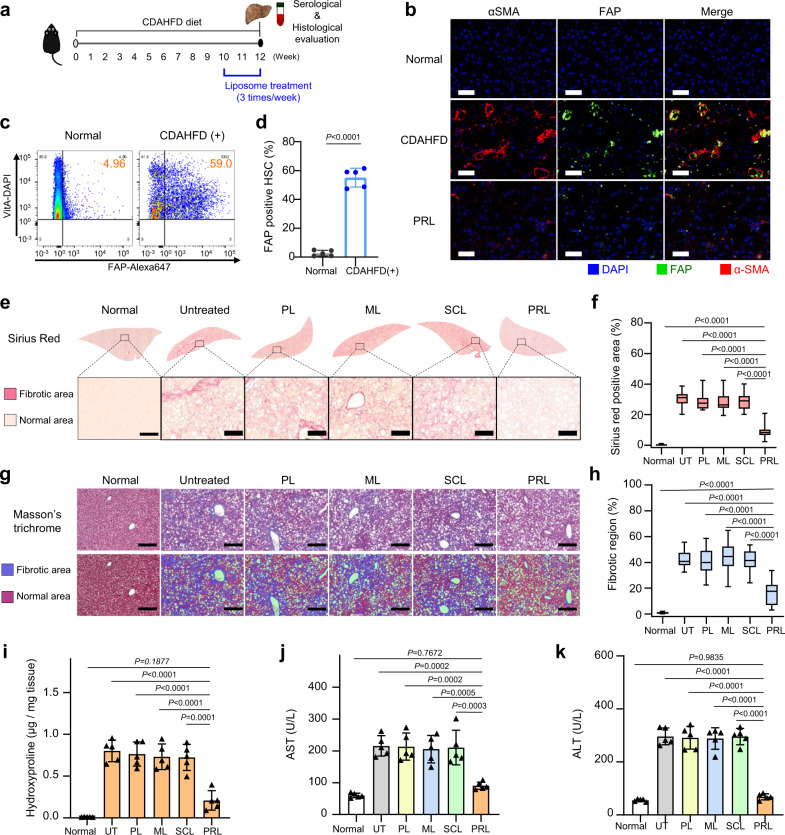
In liver fibrosis, activated hepatic stellate cells are known to overexpress fibroblast activation protein. Here we report a targeted antifibrotic peptide-delivery system in which fibroblast activation protein, which is overexpressed in fibrotic regions of the liver, liberates the antifibrotic peptide melittin by cleaving a fibroblast activation protein-specific site in the peptide. The promelittin peptide is linked to pegylated and maleimide-functionalized liposomes, resulting in promelittin-modified liposomes. The promelittin-modified liposomes were effective in reducing the viability of activated hepatic stellate cells but not that of control cells. In three types of liver fibrosis mouse models, intravenously administered promelittin-modified liposomes significantly reduces fibrotic regions. In addition, in the bile duct ligation mouse model promelittin-modified liposome-treatment increases overall survival. Although this peptide-delivery concept was tested for liver fibrosis, it can potentially be adapted to other fibrotic diseases.
Overview
The claims and statistics of this paper haven’t been checked yet.
Free: it reads the open-access text and checks the first 5 claims that cite a source we can check. Create a free account to check every claim.
Integrity signals
Registry
Cites
Statistics
Figures
Verification
Claims the paper makes
The claims and statistics of this paper haven’t been checked yet.
Free: it reads the open-access text and checks the first 5 claims that cite a source we can check. Create a free account to check every claim.
Claims other papers make about this one
Each is checked against this paper’s own text: does it say what the citing paper says it does?
In the citing paper
“Because FAP is also implicated in hepatic fibrosis (313, 314), this approach merits further evaluation in MASH.”
From Found in translation—Fibrosis in metabolic dysfunction–associated steatohepatitis (MASH) (2023) · cites this paper as [313]
Self-check
Percentages, sums and reported differences re-computed from the paper’s own numbers.
The self-check needs the paper’s full text.
Citations
Cites
PEGylation as a strategy for improving nanoparticle-based drug and gene delivery
Suk, J. S., Xu, Q., Kim, N., Hanes, J., & Ensign, L. M. (2016) · Advanced Drug Delivery Reviews · doi:10.1016/j.addr.2015.09.012 · Cited by 4,523
Turning foes to friends: targeting cancer-associated fibroblasts
Chen, X., & Song, E. (2019) · Nature Reviews Drug Discovery · doi:10.1038/s41573-018-0004-1 · Cited by 1,879
Hepatic stellate cells as key target in liver fibrosis
Higashi, T., Friedman, S. L., & Hoshida, Y. (2017) · Advanced Drug Delivery Reviews · doi:10.1016/j.addr.2017.05.007 · Cited by 1,485
Liver fibrosis and hepatic stellate cells: Etiology, pathological hallmarks and therapeutic targets
Zhang, C.-Y., Yuan, W.-G., He, P., Lei, J.-H., & Wang, C.-X. (2016) · World Journal of Gastroenterology · doi:10.3748/wjg.v22.i48.10512 · Cited by 594
Elimination Pathways of Nanoparticles
Poon, W., Zhang, Y.-N., Ouyang, B., Kingston, B. R., Wu, J. L. Y., Wilhelm, S., & Chan, W. C. W. (2019) · ACS Nano · doi:10.1021/acsnano.9b01383 · Cited by 575
Roles of dietary glycine, proline, and hydroxyproline in collagen synthesis and animal growth
Li, P., & Wu, G. (2018) · Amino Acids · doi:10.1007/s00726-017-2490-6 · Cited by 550
High-yield and high-purity isolation of hepatic stellate cells from normal and fibrotic mouse livers
Mederacke, I., Dapito, D. H., Affò, S., Uchinami, H., & Schwabe, R. F. (2015) · Nature Protocols · doi:10.1038/nprot.2015.017 · Cited by 549
An improved mouse model that rapidly develops fibrosis in non‐alcoholic steatohepatitis
Matsumoto, M., Hada, N., Sakamaki, Y., Uno, A., Shiga, T., Tanaka, C., Ito, T., Katsume, A., & Sudoh, M. (2013) · International Journal of Experimental Pathology · doi:10.1111/iep.12008 · Cited by 523
Hamson, E. J., Keane, F. M., Tholen, S., Schilling, O., & Gorrell, M. D. (2014) · PROTEOMICS – Clinical Applications · doi:10.1002/prca.201300095 · Cited by 496
Liver fibrosis: Direct antifibrotic agents and targeted therapies
Schuppan, D., Ashfaq-Khan, M., Yang, A. T., & Kim, Y. O. (2018) · Matrix Biology · doi:10.1016/j.matbio.2018.04.006 · Cited by 435
Treatment of Patients with Cirrhosis
Ge, P. S., & Runyon, B. A. (2016) · New England Journal of Medicine · doi:10.1056/nejmra1504367 · Cited by 348
Tag, C. G., Sauer-Lehnen, S., Weiskirchen, S., Borkham-Kamphorst, E., Tolba, R. H., Tacke, F., & Weiskirchen, R. (2015) · Journal of Visualized Experiments · doi:10.3791/52438 · Cited by 306
Lee, G., & Bae, H. (2016) · Molecules · doi:10.3390/molecules21050616 · Cited by 275
Wu, L., Zhang, Q., Mo, W., Feng, J., Li, S., Li, J., Liu, T., Xu, S., Wang, W., Lu, X., et al. (2017) · Scientific Reports · doi:10.1038/s41598-017-09673-5 · Cited by 271
Boland, M. L., Laker, R. C., Mather, K., Nawrocki, A., Oldham, S., Boland, B. B., Lewis, H., Conway, J., Naylor, J., Guionaud, S., et al. (2020) · Nature Metabolism · doi:10.1038/s42255-020-0209-6 · Cited by 270
Modeling Liver Fibrosis in Rodents
Constandinou, C., Henderson, N., & Iredale, J. P. (2005) · Fibrosis Research · doi:10.1385/1-59259-940-0:237 · Cited by 247
Wang, Y., Jiang, K., Zhu, J., Zhang, L., & Lin, H. (2015) · Chemical Communications · doi:10.1039/c5cc04905a · Cited by 235
Targeting of activated fibroblasts for imaging and therapy
Lindner, T., Loktev, A., Giesel, F., Kratochwil, C., Altmann, A., & Haberkorn, U. (2019) · EJNMMI Radiopharmacy and Chemistry · doi:10.1186/s41181-019-0069-0 · Cited by 205
Cholangiocyte proliferation and liver fibrosis
Glaser, S. S., Gaudio, E., Miller, T., Alvaro, D., & Alpini, G. (2009) · Expert Reviews in Molecular Medicine · doi:10.1017/s1462399409000994 · Cited by 204
Wang, X. M., Yu, D. M. T., McCaughan, G. W., & Gorrell, M. D. (2005) · Hepatology · doi:10.1002/hep.20853 · Cited by 193
Levy, M., McCaughan, G., Marinos, G., & Gorrell, M. (2002) · Liver · doi:10.1034/j.1600-0676.2002.01503.x · Cited by 151
Xu, H., Zhao, Q., Song, N., Yan, Z., Lin, R., Wu, S., Jiang, L., Hong, S., Xie, J., Zhou, H., et al. (2020) · Nature Communications · doi:10.1038/s41467-020-19668-y · Cited by 148
Hepatic macrophages act as a central hub for relaxin-mediated alleviation of liver fibrosis
Hu, M., Wang, Y., Liu, Z., Yu, Z., Guan, K., Liu, M., Wang, M., Tan, J., & Huang, L. (2021) · Nature Nanotechnology · doi:10.1038/s41565-020-00836-6 · Cited by 136
Liu, Z., Li, Y., Li, W., Chen, X., Liu, D., Dong, C., Zhang, M., Mäkilä, E. M., Kemell, M., Salonen, J., et al. (2017) · Advanced Materials · doi:10.1002/adma.201703393 · Cited by 123
Extracellular matrix-penetrating nanodrill micelles for liver fibrosis therapy
Fan, Q.-Q., Zhang, C.-L., Qiao, J.-B., Cui, P.-F., Xing, L., Oh, Y.-K., & Jiang, H.-L. (2020) · Biomaterials · doi:10.1016/j.biomaterials.2019.119616 · Cited by 111
Self-citationLi, Y., Pu, S., Liu, Q., Li, R., Zhang, J., Wu, T., Chen, L., Li, H., Yang, X., Zou, M., et al. (2019) · Journal of Controlled Release · doi:10.1016/j.jconrel.2019.04.022 · Cited by 104
Vitamin A-decorated biocompatible micelles for chemogene therapy of liver fibrosis
Qiao, J.-B., Fan, Q.-Q., Xing, L., Cui, P.-F., He, Y.-J., Zhu, J.-C., Wang, L., Pang, T., Oh, Y.-K., Zhang, C., et al. (2018) · Journal of Controlled Release · doi:10.1016/j.jconrel.2018.05.032 · Cited by 102
Self-citationPesnot, T., Gershater, M. C., Ward, J. M., & Hailes, H. C. (2012) · Advanced Synthesis & Catalysis · doi:10.1002/adsc.201200641 · Cited by 83
Fibroblast activation protein in liver fibrosis
Gorrell, M. D. (2019) · Frontiers in Bioscience · doi:10.2741/4706 · Cited by 76
Qiao, J.-B., Fan, Q.-Q., Zhang, C.-L., Lee, J., Byun, J., Xing, L., Gao, X.-D., Oh, Y.-K., & Jiang, H.-L. (2020) · Journal of Controlled Release · doi:10.1016/j.jconrel.2020.02.049 · Cited by 70
Self-citationLemoinne, S., & Friedman, S. L. (2019) · Current Opinion in Pharmacology · doi:10.1016/j.coph.2019.09.006 · Cited by 60
Shaker, M. E., Ghani, A., Shiha, G. E., Ibrahim, T. M., & Mehal, W. Z. (2013) · Biochimica et Biophysica Acta (BBA) - Molecular Cell Research · doi:10.1016/j.bbamcr.2013.02.033 · Cited by 55
Saha, A., Acharya, B. N., Priya, R., Tripathi, N. K., Shrivastava, A., Rao, M. K., Kesari, P., Narwal, M., Tomar, S., Bhagyawant, S. S., et al. (2018) · Scientific Reports · doi:10.1038/s41598-018-29024-2 · Cited by 45
Wang, X. M., Holz, L. E., Chowdhury, S., Cordoba, S. P., Evans, K., Gall, M. G., de Ribeiro, A. J. V., Zheng, Y. Z., Levy, M. T., Yu, D. M. T., et al. (2016) · Immunology and Cell Biology · doi:10.1038/icb.2016.116 · Cited by 43
Ulmasov, B., Noritake, H., Carmichael, P., Oshima, K., Griggs, D. W., & Neuschwander‐Tetri, B. A. (2019) · Hepatology Communications · doi:10.1002/hep4.1298 · Cited by 37
Furuhashi, H., Tomita, K., Teratani, T., Shimizu, M., Nishikawa, M., Higashiyama, M., Takajo, T., Shirakabe, K., Maruta, K., Okada, Y., et al. (2017) · Hepatology Research · doi:10.1111/hepr.13040 · Cited by 36
Park, S.-H., Cho, H.-J., Jeong, Y., Shin, J.-M., Kang, J. H., Park, K., Choe, J., Park, Y.-Y., Bae, Y., Han, S., et al. (2014) · The American Journal of Chinese Medicine · doi:10.1142/s0192415x14500712 · Cited by 30
Sequential activation of anticancer therapy triggered by tumor microenvironment-selective imaging
Shim, G., Le, Q., Suh, J., Choi, S., Kim, G., Choi, H., Kim, Y. B., Macgregor, R. B., & Oh, Y. (2019) · Journal of Controlled Release · doi:10.1016/j.jconrel.2019.02.012 · Cited by 24
Self-citationRecent advances in understanding the molecular mechanisms of cholestatic pruritus: A review
Sanjel, B., & Shim, W. (2020) · Biochimica et Biophysica Acta (BBA) - Molecular Basis of Disease · doi:10.1016/j.bbadis.2020.165958 · Cited by 24
ZHANG, J., WANG, M., ZHANG, Z., LUO, Z., LIU, F., & LIU, J. (2015) · Molecular Medicine Reports · doi:10.3892/mmr.2014.3048 · Cited by 21
Hayashi, K., Maruhashi, T., Sakamoto, W., & Yogo, T. (2018) · Advanced Functional Materials · doi:10.1002/adfm.201706332 · Cited by 12
Do, H. Q., Le, T. V., Dang, T. M., Pham-Le, T.-T., Tran, L., Huynh, K., Holterman, A. L., & Truong, N. H. (2019) · Biomedical Research and Therapy · doi:10.15419/bmrat.v6i6.549 · Cited by 6
Cited by
Found in translation—Fibrosis in metabolic dysfunction–associated steatohepatitis (MASH)
Wang, S., & Friedman, S. L. (2023) · Science Translational Medicine · doi:10.1126/scitranslmed.adi0759 · Cited by 158
“Because FAP is also implicated in hepatic fibrosis ( 304 , 305 ), this approach merits further evaluation in MASH.”
ResultFriend or foe? The elusive role of hepatic stellate cells in liver cancer
Cogliati, B., Yashaswini, C. N., Wang, S., Sia, D., & Friedman, S. L. (2023) · Nature Reviews Gastroenterology & Hepatology · doi:10.1038/s41575-023-00821-z · Cited by 148
Fabrication of active targeting lipid nanoparticles: Challenges and perspectives
Menon, I., Zaroudi, M., Zhang, Y., Aisenbrey, E. A., & Hui, L. (2022) · Materials Today Advances · doi:10.1016/j.mtadv.2022.100299 · Cited by 144
Liver fibrosis resolution: from molecular mechanisms to therapeutic opportunities
Pei, Q., Yi, Q., & Tang, L. (2023) · International Journal of Molecular Sciences · doi:10.3390/ijms24119671 · Cited by 121
Liu, J., Liu, J., Mu, W., Ma, Q., Zhai, X., Jin, B., Liu, Y., & Zhang, N. (2024) · ACS Nano · doi:10.1021/acsnano.4c02380 · Cited by 74
Metadata
- Authors
- Lee, J., Byun, J., Shim, G., & Oh, Y.-K.
- Affiliations
- Seoul National University (KR)
- Soongsil University (KR)
- Corresponding author
- Oh, Yu-Kyoung
- Venue
- Nature Communications
- Published
- 2022-03-21
- Volume
- 13
- Issue
- 1
- Pages
- 1516-1516
- ISSN
- 2041-1723 (ISSN-L)
- PMC
- PMC8938482
- OpenAlex
- W4220755333
- Cited by
- 79
- References
- 42
- Citations by year
- 2026: 14 · 2025: 21 · 2024: 18 · 2023: 20 · 2022: 4
- FWCI
- 9.36
- Type
- journal article
- Language
- en
- Open access
- gold
- doi.org
- Licence
- cc-by
- creativecommons.org/licenses/by/4.0 (tdm)
- creativecommons.org/licenses/by/4.0 (vor)
- Locations
- Nature Communications (publishedVersion, cc-by)
- PubMed Central (publishedVersion, cc-by)
- PubMed (publishedVersion)
- RePEc: Research Papers in Economics (submittedVersion)
- DOAJ (DOAJ: Directory of Open Access Journals) (submittedVersion, cc-by-sa)
- Topics
- Health Sciences › Medicine › Hepatology › Liver physiology and pathology
- Physical Sciences › Materials Science › Biomaterials › Nanoparticle-Based Drug Delivery
- Life Sciences › Biochemistry, Genetics and Molecular Biology › Molecular Biology › RNA Interference and Gene Delivery
- Keywords
- liver fibrosis, fibroblast activation protein, melittin, hepatic stellate cells, PEGylated liposomes, bile duct ligation, targeted drug delivery, fibrotic diseases
- MeSH terms
- Animals, Disease Models, Animal, Fibroblasts, Liposomes, Liver, Liver Cirrhosis, Peptides, Mice, Hepatic Stellate Cells
About these checks
Registry, retraction, Cites and statistics results are computed, not judged, with one exception: a printed reference that no index lists is read once by a model before it counts as a citation error. Claims are extracted by a model and kept only when their quote appears verbatim in the text; each cited source is then checked, with a model’s help, for whether it says what the claim relies on. Those verdicts can be wrong — read the claim’s quote and the cited source before relying on one.
Statistics and arithmetic are recomputed, not judged.
Confidence bands are shown only for fields calibrated on our annotated test set. None is calibrated yet, so no band is shown.
What counts as a claim ›How we measure confidence ›How we check this ›
Are you an author, or do you see a problem with this page? Request a review
Data sources
Bibliographic data: Semantic Scholar, OpenAlex, Crossref.
Contains information from the Semantic Scholar Academic Graph Datasets, made available under the ODC Attribution License (ODC-BY 1.0).
Semantic Scholar’s data is described in: Kinney, R., et al. (2023). The Semantic Scholar Open Data Platform. arXiv:2301.10140.
