

Comprehensive characterization of PTEN mutational profile in a series of 34,129 colorectal cancers
Open accessThe DOI matches its Crossref record; 97 of the 98 references it cites were found in a registry or an index.
Abstract
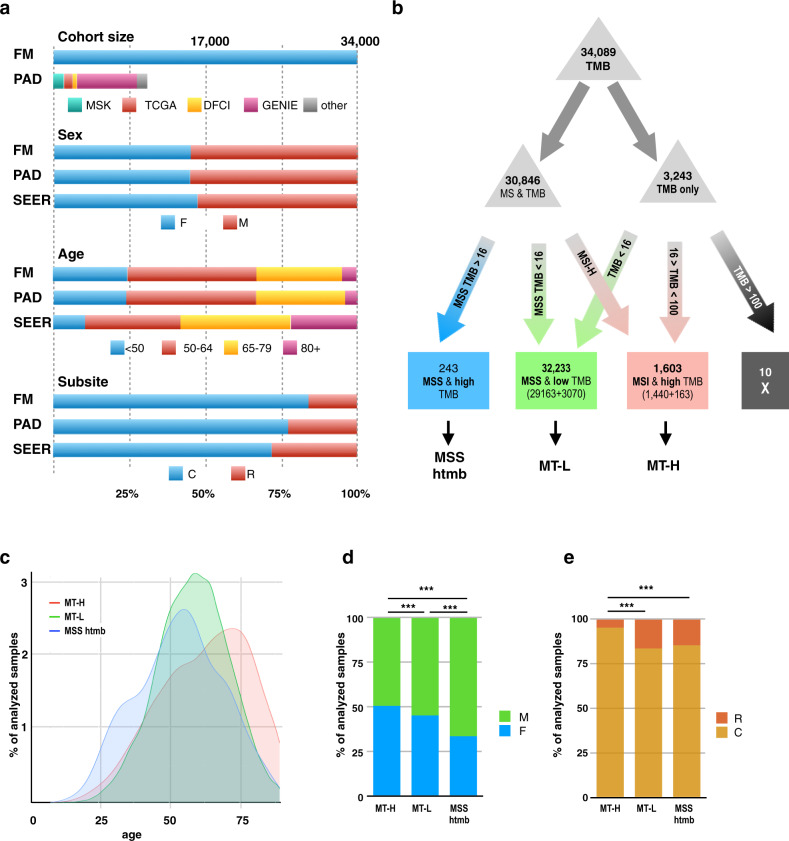
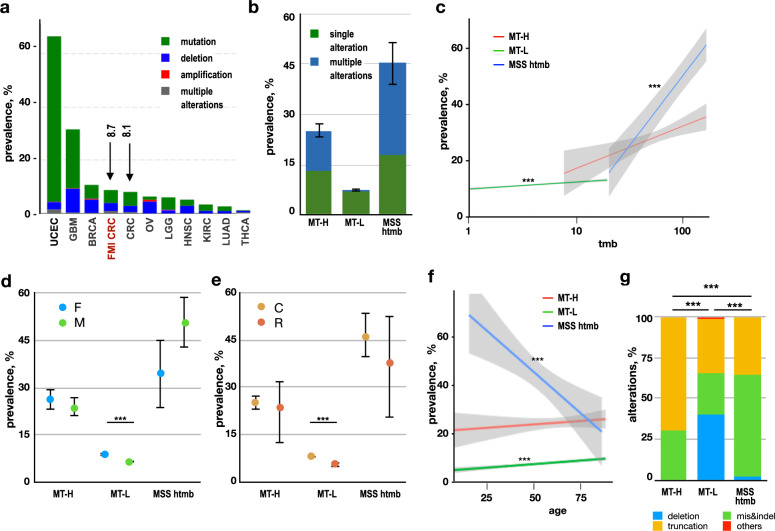
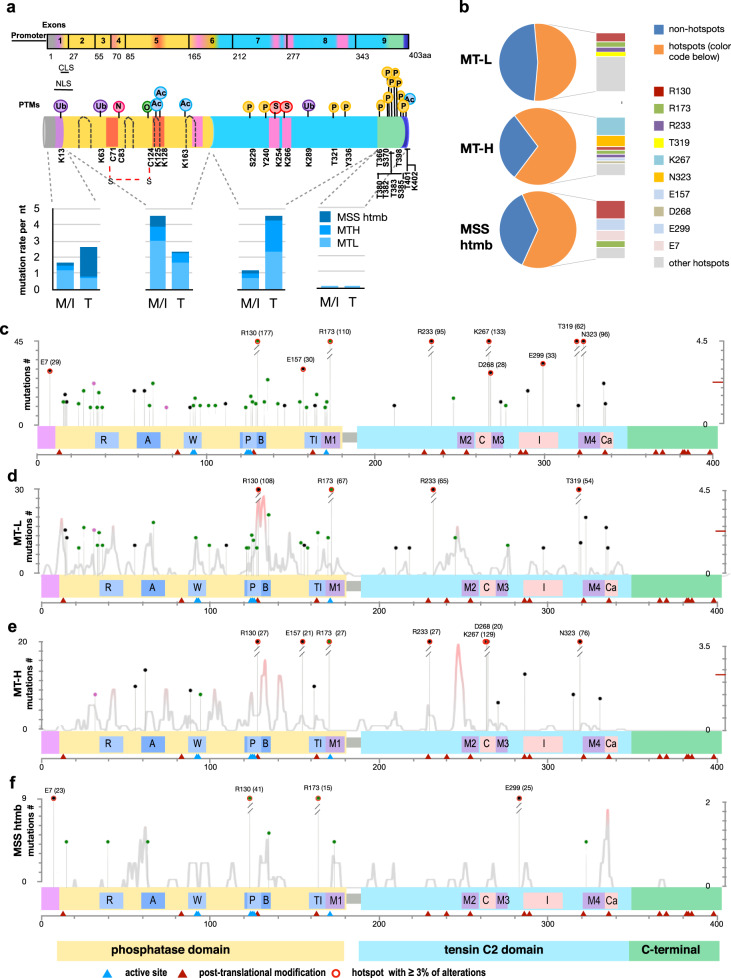
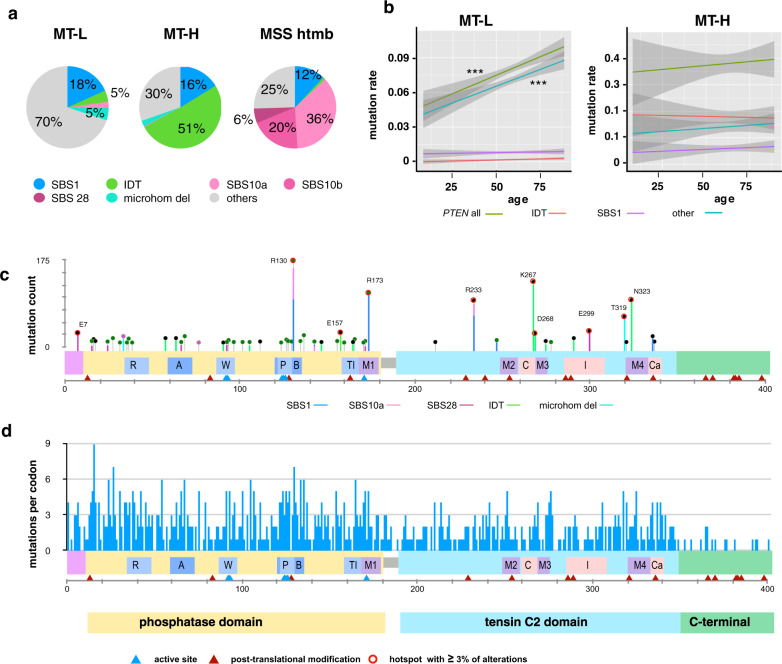
Loss of expression or activity of the tumor suppressor PTEN acts similarly to an activating mutation in the oncogene PIK3CA in elevating intracellular levels of phosphatidylinositol (3,4,5)-trisphosphate (PIP3), inducing signaling by AKT and other pro-tumorigenic signaling proteins. Here, we analyze sequence data for 34,129 colorectal cancer (CRC) patients, capturing 3,434 PTEN mutations. We identify specific patterns of PTEN mutation associated with microsatellite stability/instability (MSS/MSI), tumor mutational burden (TMB), patient age, and tumor location. Within groups separated by MSS/MSI status, this identifies distinct profiles of nucleotide hotspots, and suggests differing profiles of protein-damaging effects of mutations. Moreover, discrete categories of PTEN mutations display non-identical patterns of co-occurrence with mutations in other genes important in CRC pathogenesis, including KRAS, APC, TP53, and PIK3CA. These data provide context for clinical targeting of proteins upstream and downstream of PTEN in distinct CRC cohorts.
Overview
The claims and statistics of this paper haven’t been checked yet.
Free: it reads the open-access text and checks the first 5 claims that cite a source we can check. Create a free account to check every claim.
Integrity signals
Registry
Cites
Statistics
Figures
Verification
Claims the paper makes
The claims and statistics of this paper haven’t been checked yet.
Free: it reads the open-access text and checks the first 5 claims that cite a source we can check. Create a free account to check every claim.
Claims other papers make about this one
Each is checked against this paper’s own text: does it say what the citing paper says it does?
The source backs part of the claim, not all of it — or backs it for a different population, condition or comparison.
In the citing paper
“Unlike NSCLC, genetic alterations in the PI3K/AKT pathway, especially mutation of PIK3CA and PTEN, are prevalent in CRC and frequently co-occur with KRAS mutations [10, 112].”
From Differential Response and Resistance to KRAS-Targeted Therapy (2025) · cites this paper as [112]
Experimental — accuracy not yet measured
Self-check
Percentages, sums and reported differences re-computed from the paper’s own numbers.
The self-check needs the paper’s full text.
Citations
Cites
Cerami, E., Gao, J., Dogrusoz, U., Gross, B. E., Sumer, S. O., Aksoy, B. A., Jacobsen, A., Byrne, C. J., Heuer, M. L., Larsson, E., et al. (2012) · Cancer Discovery · doi:10.1158/2159-8290.cd-12-0095 · Cited by 17,455
Siegel, R. L., Miller, K. D., Fuchs, H. E., & Jemal, A. (2021) · CA: A Cancer Journal for Clinicians · doi:10.3322/caac.21654 · Cited by 16,522
Integrative Analysis of Complex Cancer Genomics and Clinical Profiles Using the cBioPortal
Gao, J., Aksoy, B. A., Dogrusoz, U., Dresdner, G., Gross, B., Sumer, S. O., Sun, Y., Jacobsen, A., Sinha, R., Larsson, E., et al. (2013) · Science Signaling · doi:10.1126/scisignal.2004088 · Cited by 15,160
The mutational constraint spectrum quantified from variation in 141,456 humans
Karczewski, K. J., Francioli, L. C., Tiao, G., Cummings, B. B., Alföldi, J., Wang, Q., Collins, R. L., Laricchia, K. M., Ganna, A., Birnbaum, D. P., et al. (2020) · Nature · doi:10.1038/s41586-020-2308-7 · Cited by 9,434
Comprehensive molecular characterization of human colon and rectal cancer
The Cancer Genome Atlas Network (2012) · Nature · doi:10.1038/nature11252 · Cited by 8,499
COSMIC: the Catalogue Of Somatic Mutations In Cancer
Tate, J. G., Bamford, S., Jubb, H. C., Sondka, Z., Beare, D. M., Bindal, N., Boutselakis, H., Cole, C. G., Creatore, C., Dawson, E., et al. (2019) · Nucleic Acids Research · doi:10.1093/nar/gky1015 · Cited by 4,867
ClinVar: improving access to variant interpretations and supporting evidence
Landrum, M. J., Lee, J. M., Benson, M., Brown, G. R., Chao, C., Chitipiralla, S., Gu, B., Hart, J., Hoffman, D., Jang, W., et al. (2018) · Nucleic Acids Research · doi:10.1093/nar/gkx1153 · Cited by 4,196
The repertoire of mutational signatures in human cancer
Alexandrov, L. B., Kim, J., Haradhvala, N. J., Huang, M. N., Tian Ng, A. W., Wu, Y., Boot, A., Covington, K. R., Gordenin, D. A., Bergstrom, E. N., et al. (2020) · Nature · doi:10.1038/s41586-020-1943-3 · Cited by 3,496
OncoKB: A Precision Oncology Knowledge Base
Chakravarty, D., Gao, J., Phillips, S., Kundra, R., Zhang, H., Wang, J., Rudolph, J. E., Yaeger, R., Soumerai, T., Nissan, M. H., et al. (2017) · JCO Precision Oncology · doi:10.1200/po.17.00011 · Cited by 2,589
Negative regulation of PKB/Akt-dependent cell survival by the tumor suppressor PTEN
Stambolic, V., Suzuki, A., de la Pompa, J. L., Brothers, G. M., Mirtsos, C., Sasaki, T., Ruland, J., Penninger, J. M., Siderovski, D. P., & Mak, T. W. (1998) · Cell · doi:10.1016/s0092-8674(00)81780-8 · Cited by 2,551
Research works printed but not linked: 1
- Serebriiskii, I. G., Pavlov, V. & Andrianov, G. Comprehensive characterization of PTEN mutational profile in a series of 34,129 colorectal cancers. Github Repository10.5281/zenodo.6149413) (2022). PMC8956741 35338148 · doi:10.5281/zenodo.6149413
Cited by
Weigelt, B., Marra, A., Selenica, P., Rios‐Doria, E., Boroujeni, A. M., Berger, M. F., Arora, K. S., Nemirovsky, D., Iasonos, A. E., Chakravarty, D., et al. (2023) · Cancer Discovery · doi:10.1158/2159-8290.cd-23-0546 · Cited by 59
Vidotto, T., Melo, C. M., Lautert-Dutra, W., Chaves, L. P., dos Reis, R. B., & Squire, J. A. (2023) · Scientific Reports · doi:10.1038/s41598-023-31759-6 · Cited by 50
Mechanisms of Prostate Cancer Cells Survival and Their Therapeutic Targeting
Pejcic, T. P., Todorović, Z., Đurašević, S., & POPOVIC, L. S. (2023) · International Journal of Molecular Sciences · doi:10.3390/ijms24032939 · Cited by 43
PTEN-mediated resistance in cancer: From foundation to future therapies
Tufail, M. (2025) · Toxicology Reports · doi:10.1016/j.toxrep.2025.101987 · Cited by 40
PTEN, PTENP1, microRNAs, and ceRNA Networks: Precision Targeting in Cancer Therapeutics
Travis, G., McGowan, E. M., Simpson, A. M., Marsh, D. J., & Nassif, N. T. (2023) · Cancers · doi:10.3390/cancers15204954 · Cited by 36
Tardito, S., Matis, S., Zocchi, M. R., Benelli, R., & Poggi, A. D. (2024) · International Journal of Molecular Sciences · doi:10.3390/ijms25137131 · Cited by 34
“The biallelic inactivation of PTEN by silencing or depleting mutations causes an uncontrolled upregulation of Akt signaling, inducing tumor cell proliferation and survival [85,86].”
BackgroundCell-type specific defects in PTEN -mutant cortical organoids converge on abnormal circuit activity
Pigoni, M., Uzquiano, A., Paulsen, B. D. S., Kedaigle, A. J., Yang, S. M., Symvoulidis, P., Adiconis, X., Velasco, S., Sartore, R., Kim, K., et al. (2023) · Human Molecular Genetics · doi:10.1093/hmg/ddad107 · Cited by 32
“In humans, different types of mutations and dosages of PTEN result in different diseases: heterozygous loss-of-function of PTEN has been associated with ASD (25–27), while both heterozygous and homozygous PTEN loss-of-function has been associated with tumor syndromes (28–30).”
BackgroundLiu, Y., Chen, H., Bao, H., Zhang, J., Wu, R., & Zhu, L. (2023) · Frontiers in Oncology · doi:10.3389/fonc.2023.1154432 · Cited by 27
“The clinical features of this cohort were comparable to previous CRC studies, such as 60% were male patients, a representative age distribution with a median of 59 (26) (Table S1).”
ResultTargeting PI3K in cancer treatment: A comprehensive review with insights from clinical outcomes
Hossain, M. T., & Hossain, M. A. (2025) · European Journal of Pharmacology · doi:10.1016/j.ejphar.2025.177432 · Cited by 23
Jang, H., Chen, J., Iakoucheva, L. M., & Nussinov, R. (2023) · Journal of Molecular Biology · doi:10.1016/j.jmb.2023.168354 · Cited by 22
Wang, C., Lin, J., Deng, J., Li, X., Zhai, J., Yang, Y., & Luan, T. (2025) · Journal of Hazardous Materials · doi:10.1016/j.jhazmat.2025.139088 · Cited by 21
Linear ubiquitination of PTEN impairs its function to promote prostate cancer progression
Guo, Y., He, J., Zhang, H., Chen, R., Li, L., Liu, X., Huang, C., Qiang, Z., Zhou, Z., Wang, Y., et al. (2022) · Oncogene · doi:10.1038/s41388-022-02485-6 · Cited by 21
“As the mutational hotspot residue in PTEN, R173 is located at the junction between phosphatase domain (1–187 aa) and C2 domain (188–350 aa) [62].”
BackgroundStarting points for the development of new targeted therapies for glioblastoma multiforme
Rusak, A., Wiatrak, B., Krawczyńska, K., Górnicki, T., Zagórski, K., Zadka, Ł., & Fortuna, W. (2024) · Translational Oncology · doi:10.1016/j.tranon.2024.102187 · Cited by 19
Chronic In Vivo CRISPR-Cas Genome Editing: Challenges, Long-Term Safety, and Outlook
Bao, C., Channell, C. I., Tseng, Y.-H., Bailey, J., Sbaiti, N., Demirkol, A., & Tsang, S. H. (2026) · Cells · doi:10.3390/cells15020156 · Cited by 18
“Cas12f is also noted for its high specificity and a reduced propensity for chromosomal translocations or large deletions [35].”
Shah, S. M., Demidova, E. V., Ringenbach, S., Faezov, B., Andrake, M., Gandhi, A., Mur, P., Viana-Errasti, J., Xiu, J., Swensen, J., et al. (2024) · Cancer Research Communications · doi:10.1158/2767-9764.crc-23-0312 · Cited by 16
Allostery is a widespread cause of loss-of-function variant pathogenicity
Liao, X., & Lehner, B. (2026) · Nature Communications · doi:10.1038/s41467-026-74517-8 · Cited by 17
“To date, comprehensive experimental allosteric maps have only been generated for a handful of proteins 35 – 39 , and a limitation of our study is the extrapolation of conclusions from these proteins to the whole proteome.”
Ren, G., Yang, E. J., Tao, S., Mou, P. K., Pu, Y., Chen, L., & Shim, J. S. (2023) · International Journal of Biological Sciences · doi:10.7150/ijbs.82566 · Cited by 14
“The canonical function of PTEN is to dephosphorylate phosphatidylinositol (3,4,5)-triphosphate (PIP3) to generate PIP2 and inhibit PI3K/AKT pathway, a major pro-survival and growth pathway in cancer cells [9].”
Czegle, I., Huang, C., Soria, P., Purkiss, D., Shields, A., & Wappler-Guzzetta, E. A. (2023) · Life · doi:10.3390/life13040996 · Cited by 13
Source, co-occurrence, and prognostic value of PTEN mutations or loss in colorectal cancer
Serebriiskii, I. G., Pavlov, V. A., Andrianov, G. V., Litwin, S., Basickes, S., Newberg, J. Y., Frampton, G. M., Meyer, J. E., & Golemis, E. A. (2023) · npj Genomic Medicine · doi:10.1038/s41525-023-00384-7 · Cited by 13
“Intriguingly, the presence of PTEN alterations was prognostic, but in a nuanced manner, with PTEN deletions suggesting negative prognosis in MSS tumors, but PTEN mutations indicating positive prognosis in MSI tumors.”
InfluentialSelf-citationNavigating therapeutic prospects by modulating autophagy in colorectal cancer
Rajendran, D., & Oon, C. E. (2024) · Life Sciences · doi:10.1016/j.lfs.2024.123121 · Cited by 11
Mariella, E., Grasso, G., Miotto, M., Buzo, K., Reilly, N. M., Andrei, P., Vitiello, P. P., Crisafulli, G., Arena, S., Rospo, G., et al. (2024) · Molecular Oncology · doi:10.1002/1878-0261.13622 · Cited by 11
Moreno, R. Y., Panina, S., & Zhang, Y. (2025) · RSC Chemical Biology · doi:10.1039/d4cb00212a · Cited by 9
Differential Response and Resistance to KRAS-Targeted Therapy
Liu, Z., Lenz, H., Yu, J., & Zhang, L. (2025) · Molecular Carcinogenesis · doi:10.1002/mc.23908 · Cited by 7
“…the PI3K/AKT pathway may explain why CRC is intrinsically less sensitive to KRAS ‐ targeted therapy compared to NSCLC. Unlike NSCLC, genetic alterations in the PI3K/AKT pathway, especially mutations of PIK3CA and PTEN , are prevalent in CRC and frequently co ‐ occur with KRAS mutations [10, 115].”
Demidova, E. V., Serebriiskii, I. G., Vlasenkova, R., Kelow, S. P., Andrake, M., Hartman, T. R., Kent, T., Virtucio, J., ROSEN, G. L., Pomerantz, R. T., et al. (2023) · BMC Genomics · doi:10.1186/s12864-023-09310-8 · Cited by 7
Self-citationYang, H., Zheng, T., Ku, C., Ngai, C. K., Yue, G. G., Lee, H. K., & Lau, C. B. (2023) · Frontiers in Chemistry · doi:10.3389/fchem.2023.1195883 · Cited by 5
“In other words, the loss of p53 or PTEN contributes to aggressive tumor growth and migration (Liebl and Hofmann, 2021; Serebriiskii et al., 2022).”
BackgroundJian-dong, H., Yu, J., Han, C., Yang, W., Zhang, C., Hao, W., & Duan, Y. (2023) · Toxicology in Vitro · doi:10.1016/j.tiv.2023.105724 · Cited by 5
Menges, C. W., Hassan, D., Cheung, M., Bellacosa, A., & Testa, J. R. (2024) · Current topics in microbiology and immunology · doi:10.1007/82_2024_278 · Cited by 5
PTEN status, tumor immune microenvironment, and survival in colorectal cancer
Karjalainen, J., Sirkiä, O., Sirniö, P., Elomaa, H., Karjalainen, H., Äijälä, V. K., Kastinen, M., Tapiainen, V. V., Pohjanen, V., Ahtiainen, M., et al. (2025) · Archiv für Pathologische Anatomie und Physiologie und für Klinische Medicin · doi:10.1007/s00428-025-04327-8 · Cited by 4
Jing, P., Luo, Y., Wang, L., Tan, J., Chen, Y., Chen, Y., & Zhang, S. (2022) · Biomaterials Advances · doi:10.1016/j.bioadv.2022.213217 · Cited by 4
Targeting DNMT1 restores PTEN expression in colorectal cancer cells
Nobey, M. A. E., Omar, A. M. S., Zari, A., Alharthi, A., Alghamdi, M. A., Althubaiti, E. H., Al-Shaeri, M. A., Bakhsh, T., El-Hamidy, S. M., Batawi, A. H., et al. (2026) · Molecular and Cellular Probes · doi:10.1016/j.mcp.2026.102074 · Cited by 3
Hon, K. W., Abidin, S. A. Z., Abas, F., Othman, I., & Naidu, R. (2024) · International Journal of Molecular Sciences · doi:10.3390/ijms25063503 · Cited by 3
“PTEN is frequently inactivated in cancers, but it has been reported with mutations in about 8 to 10% of CRC cases, which are highly associated with cancer metastasis, advanced tumor staging and poor prognosis [133].”
BackgroundLynch Syndrome-associated Genomic Variants
Boţea, R., Piron-Dumitrascu, M., Georgescu, T. A., Bohîlțea, L. C., Voinea, S. C., Varlas, V. N., Iacoban, S. R., & Suciu, N. (2024) · Journal of Gastrointestinal and Liver Diseases · doi:10.15403/jgld-5856 · Cited by 3
[Intrauterine invagination in a newborn infant].
Zijlmans, W. C. W. R., & Nabben, F. A. (1993) · PubMed · Cited by 3
Bird, J. (2026) · arXiv (Cornell University) · doi:10.48550/arxiv.2607.14097 · Cited by 3
miR-424(322)~503 impairs colon cancer progression driven by PTEN deficiency
Vidal‐Sabanés, M., Bonifaci, N., Navaridas, R., Egea, J., Encinas, M., Barrueco, R. R., Silva, J. M., Matías‐Guiu, X., Tarragona, J., Llobet‐Navàs, D., et al. (2026) · Cell Death and Disease · doi:10.1038/s41419-026-08504-8 · Cited by 2
“The inactivating mutations of PTEN , which are found in 10% of CRCs, also induce constitutive activation of AKT [11].”
Cai, R., Zhan, W., Lyu, X., Yang, X., Wu, Z. Z., Cheng, Y., Guo, C., Feng, J., Fu, Y., Xie, Y., et al. (2026) · Gut · doi:10.1136/gutjnl-2026-338195 · Cited by 2
Sivaraj, V., Sekar, D., Ansar, Z. A., Karunakaran, K., & Muniyan, R. (2024) · Indian Journal of Biochemistry and Biophysics · doi:10.56042/ijbb.v61i5.6227 · Cited by 2
Wnt Signaling in the Gastrointestinal Tract in Health and Disease
Taheri, N., Choi, E. L., Nguyen, V. T. T., Chandra, A., & Hayashi, Y. (2023) · Physiologia · doi:10.3390/physiologia3010007 · Cited by 2
Rodon, J. A., Arkenau, H., Funchain, P., Hervieu, A., Anthony, K., Chawla, S. P., Laetsch, T. W., Murciano‐Goroff, Y. R., Singer, C. F., He, Y., et al. (2025) · ESMO Open · doi:10.1016/j.esmoop.2025.105932 · Cited by 1
Doermann, A. S., Caspi, A., Evans, A. E., Feci, A., Entezari, A. A., Snook, A. E., & Waldman, S. A. (2026) · Cancer Biology & Therapy · doi:10.1080/15384047.2026.2683096 · Cited by 1
“…and central role in tumor progression, the PI3K/AKT signaling cascade represents a promising avenue for targeted therapies in CRC. 17,118,120,121,123 Therapeutic interventions designed to inhibit PI3K/AKT signaling aim to suppress aberrant survival and proliferation signals, and a variety of…”
Osman, H. A., Hassan, M. H., Toema, A. M., Abdelnaby, A. A., Abozeid, M. A., Mohamed, M. A., Hashim, A. A., Husein, A., Ahmed, A. E., Elsayed, S. S., et al. (2024) · Journal of Cancer · doi:10.7150/jca.97553 · Cited by 1
“Also, Yazdani et al. and Serebriiskii et al. found a highly statistically significant difference in immunohistochemical PTEN expression between cancerous and non-cancerous colorectal tissues [18-19].”
BackgroundSansom, O. J., Zeiger, L. B., Ford, C. A., Millett, L. M., Méniel, V. S., Najumudeen, A. K., Pennel, K. A. F., Fisher, N. C., Gilroy, K. L., Sphyris, N., et al. (2024) · Research Square · doi:10.21203/rs.3.rs-5002395/v1
Kahraman, S., ÇELEBİ, S. N. Ö., Kuratmer, A. D., Karahan, İ., Dede, D. S., ŞENDUR, M. A. N., Akıncı, M. B., Erol, C., Hızal, M., Bilgin, B., et al. (2025) · Journal of Oncological Sciences · doi:10.37047/jos.galenos.2025.2024.103340
Is PTEN rs397510595 an Unexpected Guardian in Canine Mammary Neoplasia?
Canadas‐Sousa, A., Santos, M., & Dias‐Pereira, P. (2025) · International Journal of Molecular Sciences · doi:10.3390/ijms262110654
López, K., Cázares, A. S. L., Martínez-Camberos, A., Bergez‐Hernández, F., Flores-Méndez, L. C., & Arredondo, M. I. (2025) · Research Square · doi:10.21203/rs.3.rs-8090201/v1
Demidova, E. V., Serebriiskii, I. G., Vlasenkova, R., Kelow, S. P., Andrake, M. D., Hartman, T. R., Kent, T., Virtucio, J., Rosen, G. L., Pomerantz, R. T., et al. (2024) · Figshare · doi:10.6084/m9.figshare.26584506
Self-citationThreadgill, D. W., Carter, K., McGill, M. P., Leach, W., Porter, W., Si, M., & Thomas, M. (2026) · Research Square · doi:10.21203/rs.3.rs-8802187/v1
Gupta, P., Balton, E. V., Tejura, M., Kumar, R. D., Snyder, M. W., Stone, J., Villani, R. M., Byers, P. H., Sirisak, C., Glass, I. A., et al. (2026) · medRxiv · doi:10.64898/2026.05.15.26352805
“The same concern applies to PTEN (HGNC:9588), where neurodevelopmental and autism-associated (OMIM: 605309) variants may act through mechanisms distinct from those seen in individuals with PTEN hamartoma-tumor syndrome (OMIM:158350) 44,45,46,47,48 .”
Bichalski, B., Bichalska-Lach, M., Nycz, M., Kryj, M., Śnietura, M., & Waniczek, D. (2026) · Biomedicines · doi:10.3390/biomedicines14071453
“Importantly, large-scale genomic studies suggest that the prognostic implications of PTEN alterations depend on molecular context, including microsatellite status and co-occurring alterations involving TP53 [33].”
PTEN Loss in Triple‐Negative Breast Cancer: Integrative Molecular and Clinicopathological Insights
Kumar, S., Thakur, T., Chadda, A., Irrinki, S., Khare, S., & Bal, A. (2026) · International Journal of Breast Cancer · doi:10.1155/ijbc/7879645
Kerrin, L. A., Haddad, O. A., Reid, E., O’Neill, J.-J., McConnell, L., Abladey, A., Kelly, P. J., James, J. A., Davidson, C. J., Lee, J., et al. (2026) · Frontiers in Oncology · doi:10.3389/fonc.2026.1888745
Bi, S., Wang, M., Guan, Q., Wang, Y., Liu, R., Zhang, J., Li, M., Liu, Q., Wang, P., Zhang, Y., et al. (2026) · Nature Communications · doi:10.1038/s41467-026-76647-5
“…PTEN functions asboth a lipid and protein phosphatase, converting phosphatidylinositol (3,4,5)-trispho- sphate (PIP3) to phosphatidylinositol (4,5)-bisphosphate (PIP2) and thereby suppressing oncogenic signaling pathways, most notably the PI3K/AKTaxis,toinhibittumorcellgrowthandproliferation 7,8 .”
Bora, N., Badonyi, M., Pathak, A. K., Manisekaran, R. G., Marsh, J. A., & Ngeow, J. Y. Y. (2026) · Genome Medicine · doi:10.1186/s13073-026-01799-4
Functional role of the second messengers PtdIns(3,4,5)P 3 and PtdIns(3,4)P 2 in carcinogenesis
Nelson, N., & Jücker, M. (2026) · Biological Chemistry · doi:10.1515/hsz-2026-0181
“Mutations are prevalent with over 60 % mutation frequency in Uterine Corpus Endometrial Carcinoma, 30 % mutation frequency in Glioblastoma and 8 % mutation frequency in Colorectal Carcinoma (Serebriiskii et al. 2022).”
The genomic and epigenomic evolution of colorectal cancer
Sng, C. C. T., Starling, N., Graham, T. A., & Sottoriva, A. (2026) · Nature Reviews Gastroenterology & Hepatology · doi:10.1038/s41575-026-01265-x
Yang, H., Zheng, T., Ku, C.-F., Ngai, C. K., Yue, G. G.-L., Lee, H. K., & Lau, C. B.-S. (2023) · doi:10.3389/fchem.2023.1195883.s001
Metadata
- Authors
- Serebriiskii, I. G., Pavlov, V., Tricarico, R., Andrianov, G., Nicolas, E., Parker, M. I., Newberg, J., Frampton, G., Meyer, J. E., & Golemis, E. A.
- Affiliations
- Fox Chase Cancer Center (US)
- Foundation Medicine (United States) (US)
- Corresponding author
- Serebriiskii, Ilya G.
- Golemis, Erica A.
- ORCID
- Venue
- Nature Communications
- Published
- 2022-03-25
- Volume
- 13
- Issue
- 1
- Pages
- 1618-1618
- ISSN
- 2041-1723 (ISSN-L)
- PMC
- PMC8956741
- OpenAlex
- W4220795405
- Cited by
- 55
- References
- 98
- Citations by year
- 2026: 12 · 2025: 11 · 2024: 10 · 2023: 15 · 2022: 6
- FWCI
- 7.12
- Type
- journal article
- Language
- en
- Open access
- gold
- doi.org
- Licence
- cc-by
- creativecommons.org/licenses/by/4.0 (tdm)
- creativecommons.org/licenses/by/4.0 (vor)
- Locations
- Nature Communications (publishedVersion, cc-by)
- PubMed Central (publishedVersion, cc-by)
- PubMed (publishedVersion)
- RePEc: Research Papers in Economics (submittedVersion)
- DOAJ (DOAJ: Directory of Open Access Journals) (submittedVersion)
- TUScholarShare (Temple University) (submittedVersion, cc-by)
- Funders
- U.S. Department of Health & Human Services | NIH | National Cancer Institute (CA256234, CA006927)
- Colon Cancer Alliance to JM
- Topics
- Health Sciences › Medicine › Pathology and Forensic Medicine › Genetic factors in colorectal cancer
- Life Sciences › Biochemistry, Genetics and Molecular Biology › Cancer Research › Cancer Genomics and Diagnostics
- Life Sciences › Biochemistry, Genetics and Molecular Biology › Molecular Biology › PI3K/AKT/mTOR signaling in cancer
- Keywords
- PTEN mutation, colorectal cancer, tumor suppressor, microsatellite instability, tumor mutational burden, co-occurring mutations, KRAS, APC, TP53, PIK3CA, Akt signaling, phosphatidylinositol 3,4,5-trisphosphate, tumor location, patient age
- MeSH terms
- DNA Mutational Analysis, Humans, Mutation, Colorectal Neoplasms, Phosphatidylinositol 3-Kinases, PTEN Phosphohydrolase, Microsatellite Instability, Class I Phosphatidylinositol 3-Kinases
About these checks
Registry, retraction, Cites and statistics results are computed, not judged, with one exception: a printed reference that no index lists is read once by a model before it counts as a citation error. Claims are extracted by a model and kept only when their quote appears verbatim in the text; each cited source is then checked, with a model’s help, for whether it says what the claim relies on. Those verdicts can be wrong — read the claim’s quote and the cited source before relying on one.
Statistics and arithmetic are recomputed, not judged.
Confidence bands are shown only for fields calibrated on our annotated test set. None is calibrated yet, so no band is shown.
What counts as a claim ›How we measure confidence ›How we check this ›
Are you an author, or do you see a problem with this page? Request a review
Data sources
Bibliographic data: Semantic Scholar, OpenAlex, Crossref.
Contains information from the Semantic Scholar Academic Graph Datasets, made available under the ODC Attribution License (ODC-BY 1.0).
Semantic Scholar’s data is described in: Kinney, R., et al. (2023). The Semantic Scholar Open Data Platform. arXiv:2301.10140.
