

The DOI matches its Crossref record; 83 of the 83 references it cites were found in a registry or an index.
EZH2-H3K27me3 mediated KRT14 upregulation promotes TNBC peritoneal metastasis
Open accessPublished version of a preprint
Abstract
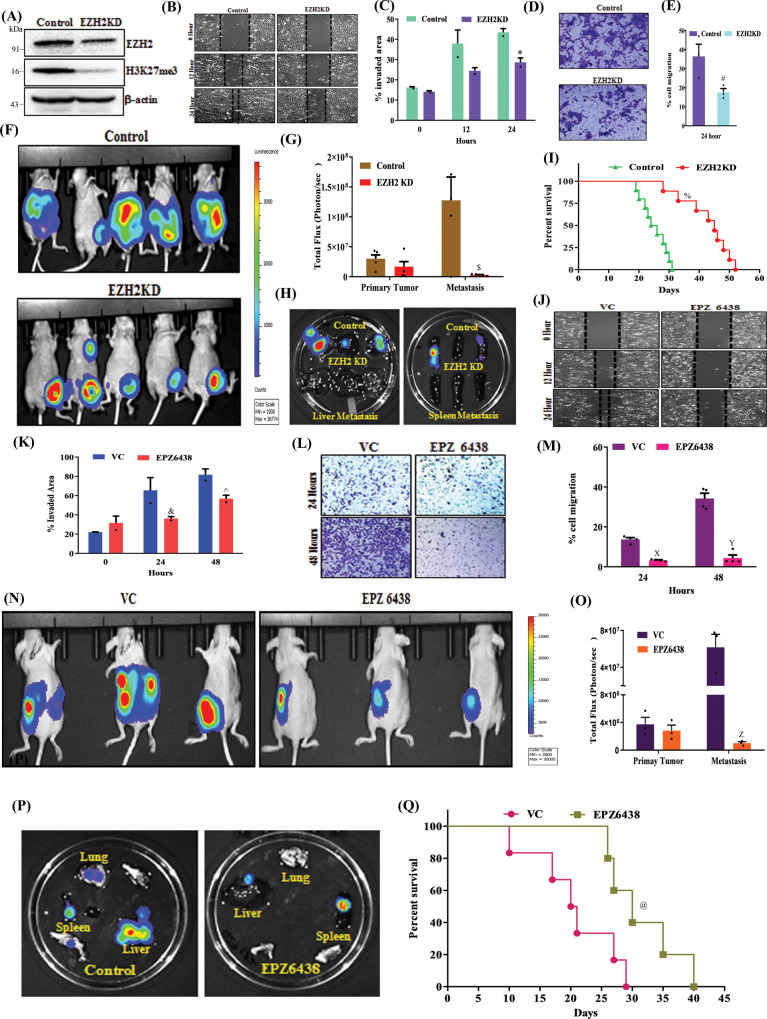
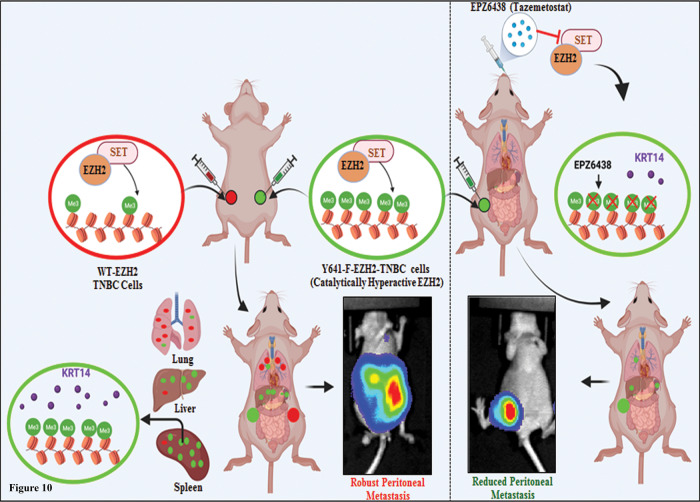
Triple-Negative Breast Cancer (TNBC) has a poor prognosis and adverse clinical outcomes among all breast cancer subtypes as there is no available targeted therapy. Overexpression of Enhancer of zeste homolog 2 (EZH2) has been shown to correlate with TNBC's poor prognosis, but the contribution of EZH2 catalytic (H3K27me3) versus non-catalytic EZH2 (NC-EZH2) function in TNBC progression remains elusive. We reveal that selective hyper-activation of functional EZH2 (H3K27me3) over NC-EZH2 alters TNBC metastatic landscape and fosters its peritoneal metastasis, particularly splenic. Instead of H3K27me3-mediated repression of gene expression; here, it promotes KRT14 transcription by attenuating binding of repressor SP1 to its promoter. Further, KRT14 loss significantly reduces TNBC migration, invasion, and peritoneal metastasis. Consistently, human TNBC metastasis displays positive correlation between H3K27me3 and KRT14 levels. Finally, EZH2 knockdown or H3K27me3 inhibition by EPZ6438 reduces TNBC peritoneal metastasis. Altogether, our preclinical findings suggest a rationale for targeting TNBC with EZH2 inhibitors.
Overview
The claims and statistics of this paper haven’t been checked yet.
Run the check — free, no account needed. It reads the open-access text and checks the sources it cites.
Integrity signals
Registry
Cites
Statistics
Figures
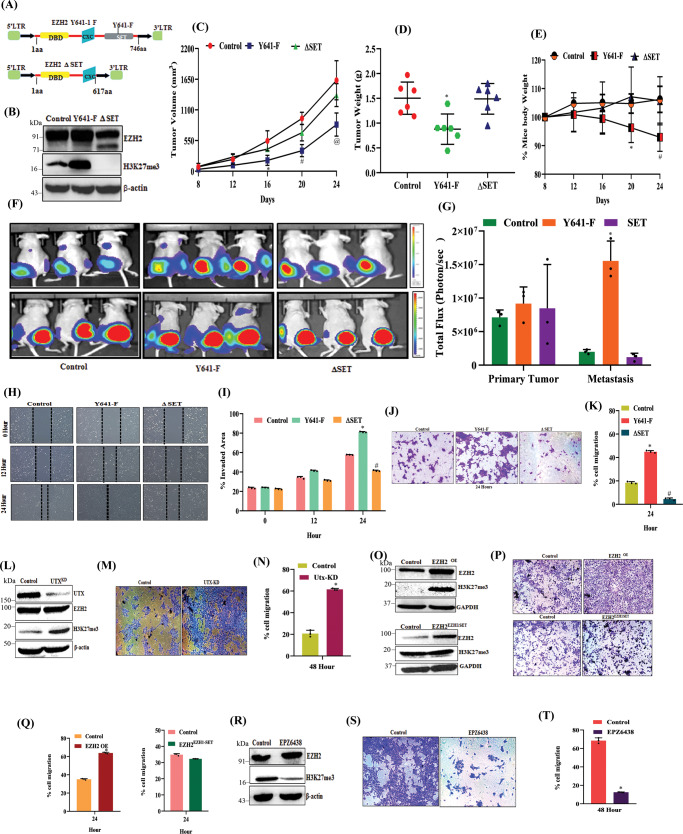
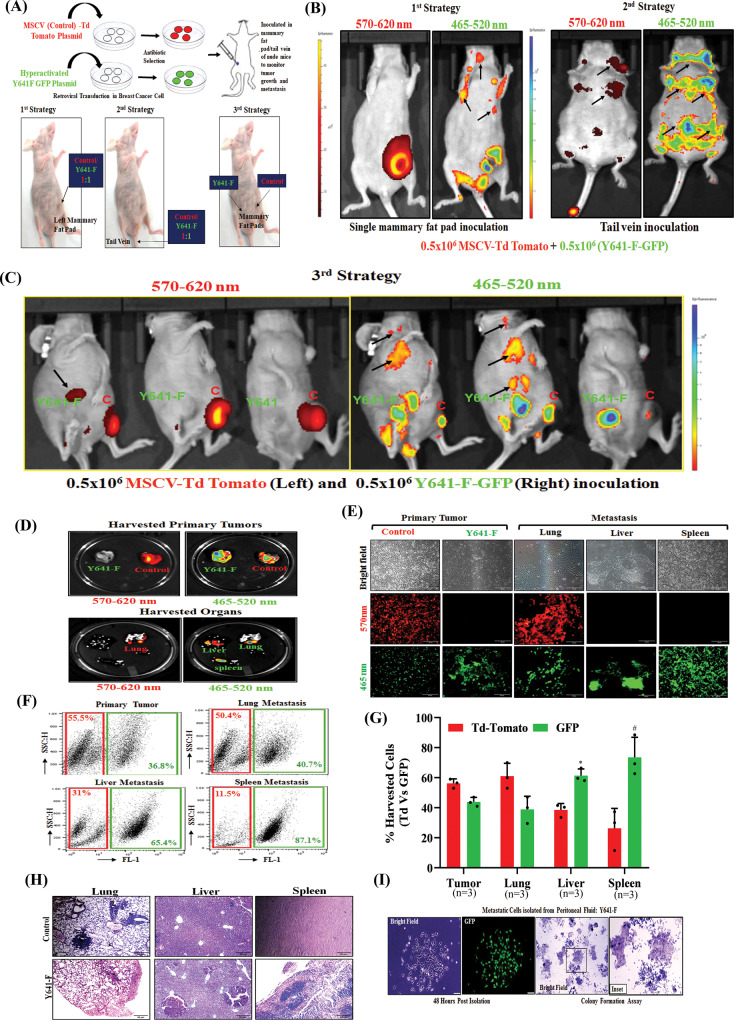
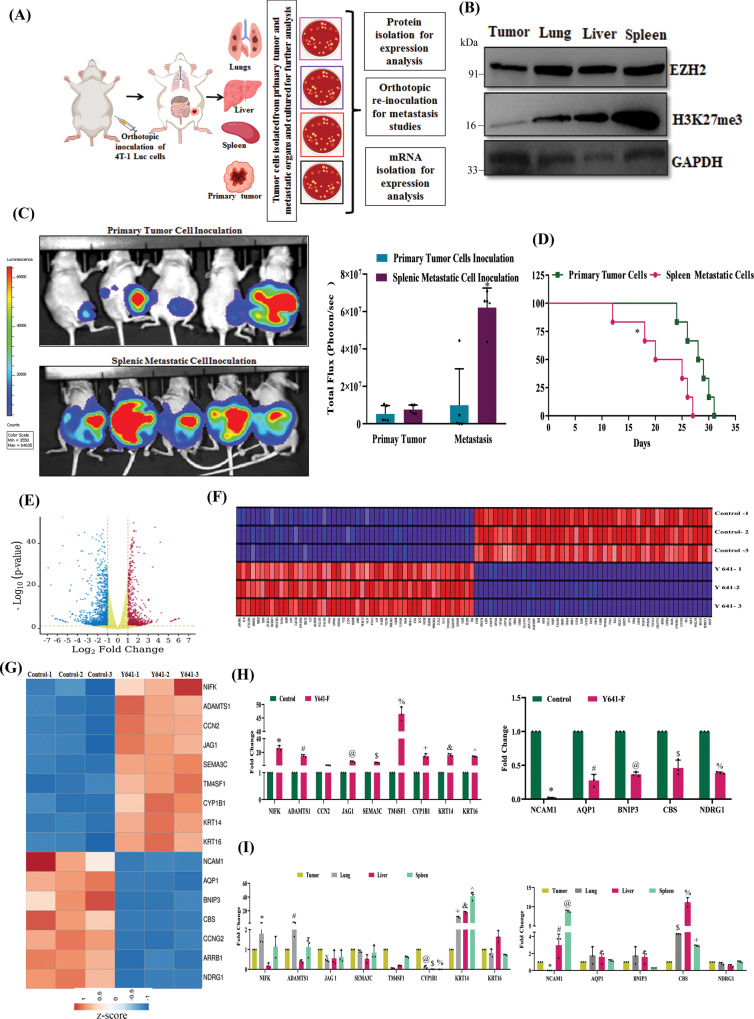
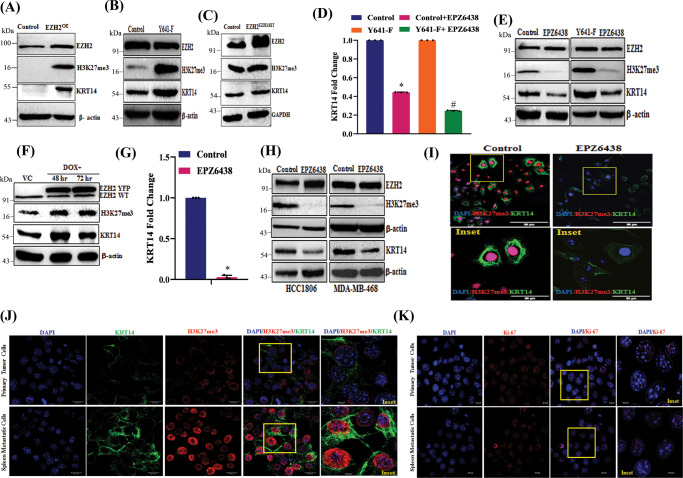
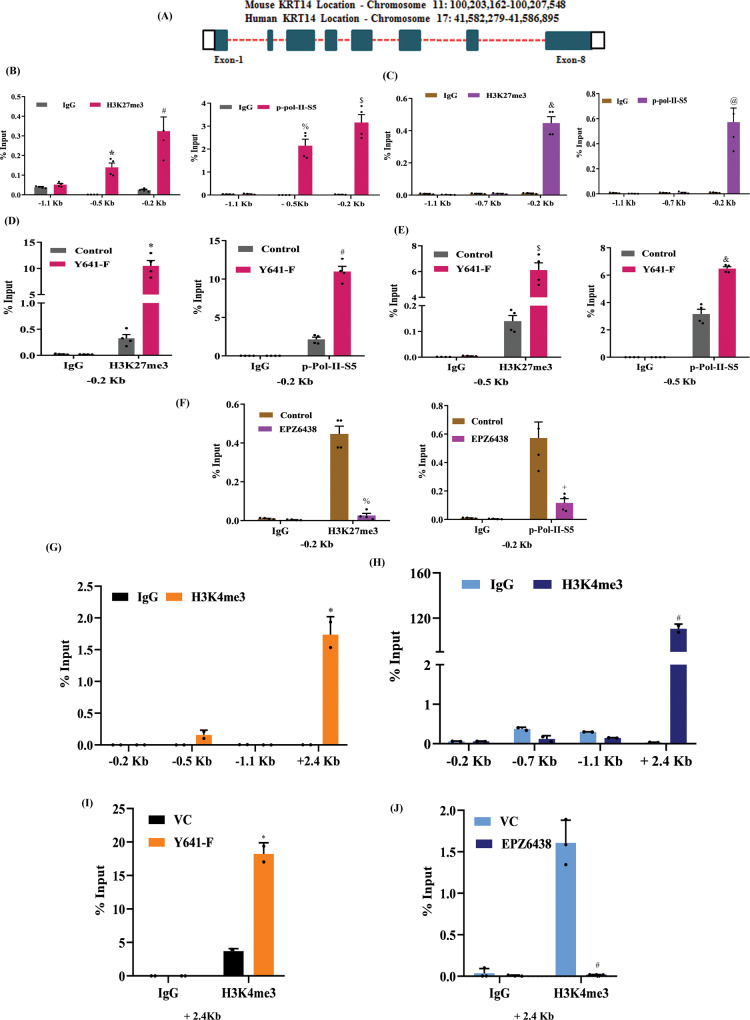
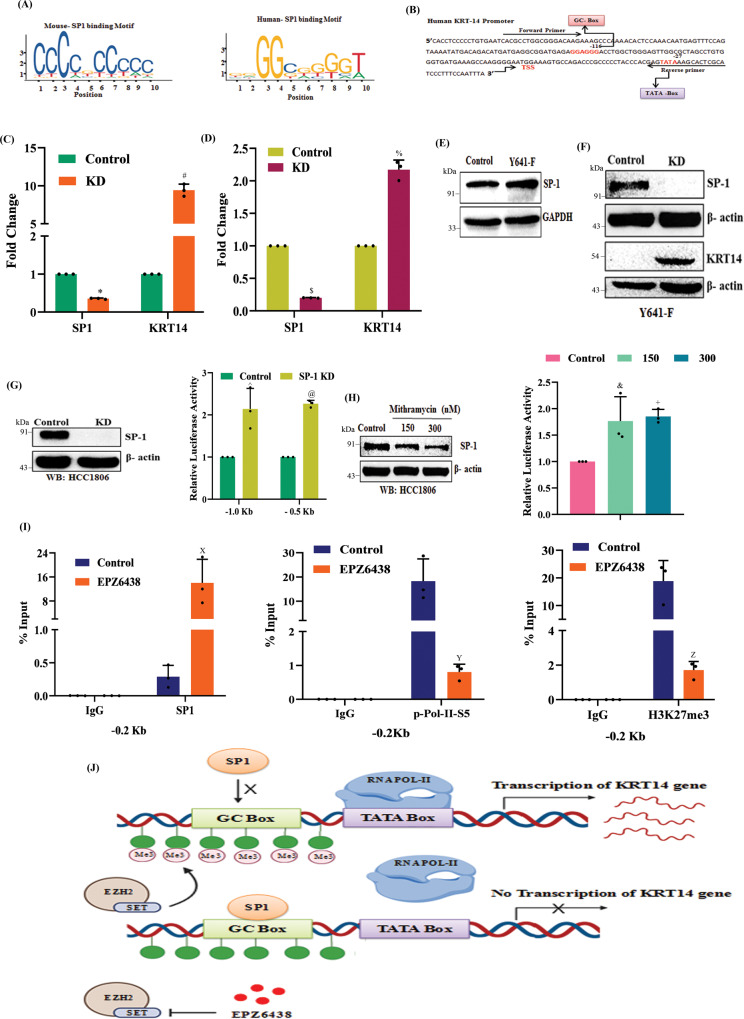
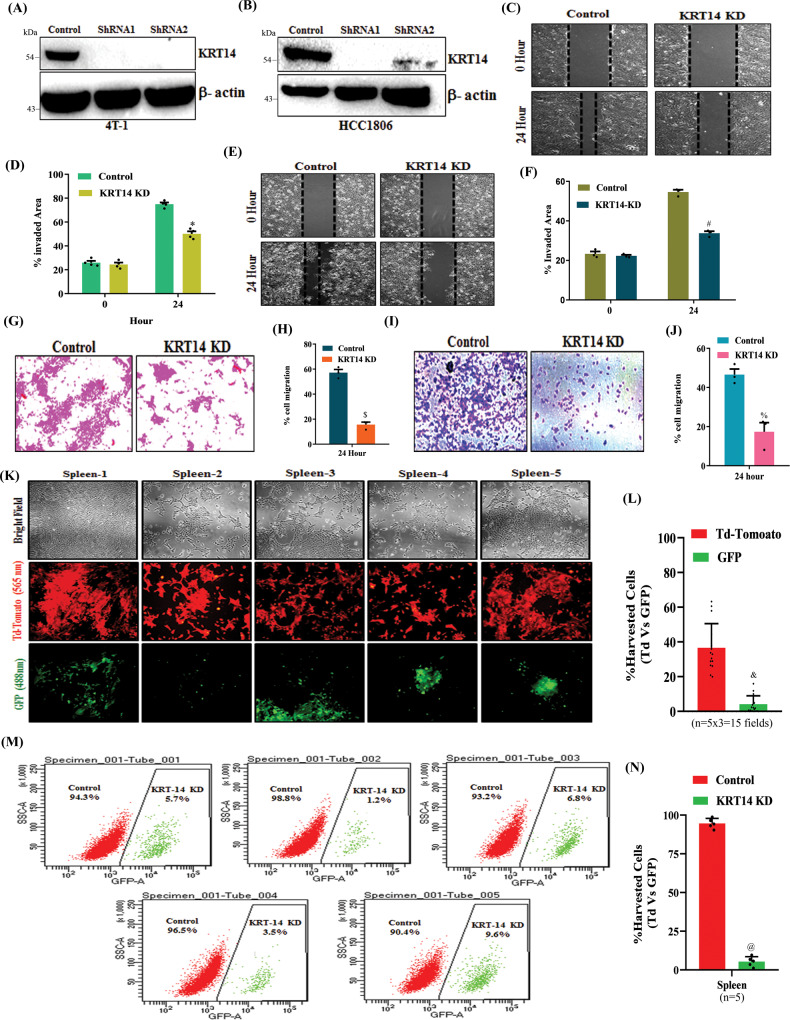
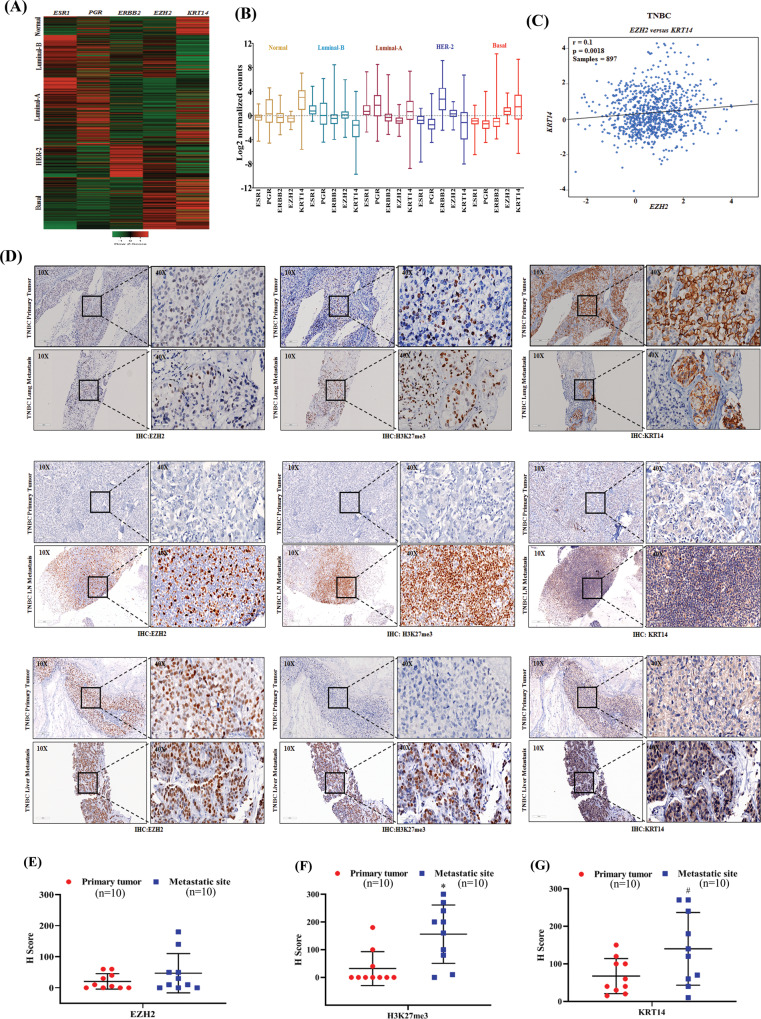
Verification
Claims the paper makes
The claims and statistics of this paper haven’t been checked yet.
Run the check — free, no account needed. It reads the open-access text and checks the sources it cites.
Claims other papers make about this one
Each is checked against this paper’s own text: does it say what the citing paper says it does?
The source backs part of the claim, not all of it — or backs it for a different population, condition or comparison.
In the citing paper
“Dysregulation of this enzymatic balance can therefore result in persistent epigenetic alterations, providing a mechanistic foundation for maladaptive transcriptional programs associated with stress-related psychiatric disorders, including depression (Verma et al., 2022).”
From Histone modifications and depression: epigenetic mechanisms, therapeutic targets, and translational outlook (2026) · cites this paper as Verma et al., 2022
Experimental — accuracy not yet measuredThe source backs part of the claim, not all of it — or backs it for a different population, condition or comparison.
In the citing paper
“Repressive marks such as H3K9me3 and H3K27me3 are particularly relevant, as they are strongly associated with transcriptional silencing and have been implicated in stress-induced depressive phenotypes (Verma et al., 2022).”
From Histone modifications and depression: epigenetic mechanisms, therapeutic targets, and translational outlook (2026) · cites this paper as Verma et al., 2022
Experimental — accuracy not yet measuredThe cited source says what the claim attributes to it.
In the citing paper
“Although methylation also contributes to transcriptional regulation (e.g., H3K4me3 as an activating mark and H3K27me3 as a repressive mark) (Verma et al., 2022), acetylation provides a rapid and reversible mechanism particularly relevant for neural activity and stress-related gene expression.”
From Histone modifications and depression: epigenetic mechanisms, therapeutic targets, and translational outlook (2026) · cites this paper as Verma et al., 2022
Self-check
Percentages, sums and reported differences re-computed from the paper’s own numbers.
The self-check needs the paper’s full text.
Citations
Cites
Bray, F., Ferlay, J., Soerjomataram, I., Siegel, R. L., Torre, L. A., & Jemal, A. (2018) · CA: A Cancer Journal for Clinicians · doi:10.3322/caac.21492 · Cited by 84,109
Subramanian, A., Tamayo, P., Mootha, V. K., Mukherjee, S., Ebert, B. L., Gillette, M. A., Paulovich, A., Pomeroy, S. L., Golub, T. R., Lander, E. S., et al. (2005) · Proceedings of the National Academy of Sciences · doi:10.1073/pnas.0506580102 · Cited by 53,625
STAR: ultrafast universal RNA-seq aligner
Dobin, A., Davis, C. A., Schlesinger, F., Drenkow, J., Zaleski, C., Jha, S., Batut, P., Chaisson, M., & Gingeras, T. R. (2013) · Bioinformatics · doi:10.1093/bioinformatics/bts635 · Cited by 51,709
Robinson, M. D., McCarthy, D. J., & Smyth, G. K. (2010) · Bioinformatics · doi:10.1093/bioinformatics/btp616 · Cited by 41,364
Nishimura, R., Osako, T., Nishiyama, Y., Tashima, R., Nakano, M., Fujisue, M., Toyozumi, Y., & Arima, N. (2013) · Oncology · doi:10.1159/000353099 · Cited by 13,239
Shrestha, S., & Offer, S. M. (2016) · Medical Epigenetics · doi:10.1159/000444713 · Cited by 8,951
Lehmann, B. D., Bauer, J. A., Chen, X., Sanders, M. E., Chakravarthy, A. B., Shyr, Y., & Pietenpol, J. A. (2011) · Journal of Clinical Investigation · doi:10.1172/jci45014 · Cited by 5,592
Triple-negative breast cancer: clinical features and patterns of recurrence
Dent, R., Trudeau, M., Pritchard, K. I., Hanna, W. M., Kahn, H. K., Sawka, C. A., Lickley, L. A., Rawlinson, E., Sun, P., & Narod, S. A. (2007) · Clinical Cancer Research · doi:10.1158/1078-0432.ccr-06-3045 · Cited by 5,091
A Perspective on Cancer Cell Metastasis
Chaffer, C. L., & Weinberg, R. A. (2011) · Science · doi:10.1126/science.1203543 · Cited by 4,905
Visualizing and interpreting cancer genomics data via the Xena platform
Goldman, M. J., Craft, B., Hastie, M., Repečka, K., McDade, F., Kamath, A., Banerjee, A., Luo, Y., Rogers, D., Brooks, A. N., et al. (2020) · Nature Biotechnology · doi:10.1038/s41587-020-0546-8 · Cited by 4,481
Cancer Metastasis: Building a Framework
Gupta, G. P., & Massagué, J. (2006) · Cell · doi:10.1016/j.cell.2006.11.001 · Cited by 4,333
The polycomb group protein EZH2 is involved in progression of prostate cancer
Varambally, S., Dhanasekaran, S. M., Zhou, M., Barrette, T. R., Kumar-Sinha, C., Sanda, M. G., Ghosh, D., Pienta, K. J., Sewalt, R. G. A. B., Otte, A. P., et al. (2002) · Nature · doi:10.1038/nature01075 · Cited by 2,717
Metastatic Behavior of Breast Cancer Subtypes
Kennecke, H., Yerushalmi, R., Woods, R., Cheang, M. C. U., Voduc, D., Speers, C. H., Nielsen, T. O., & Gelmon, K. (2010) · Journal of Clinical Oncology · doi:10.1200/jco.2009.25.9820 · Cited by 2,262
EZH2 inhibition as a therapeutic strategy for lymphoma with EZH2-activating mutations
McCabe, M. T., Ott, H. M., Ganji, G., Korenchuk, S., Thompson, C., Van Aller, G. S., Liu, Y., Graves, A. P., III, A. D. P., Diaz, E., et al. (2012) · Nature · doi:10.1038/nature11606 · Cited by 1,786
Wolff, A. C., Hammond, M. E. H., Hicks, D. G., Dowsett, M., McShane, L. M., Allison, K. H., Allred, D. C., Bartlett, J. M. S., Bilous, M., Fitzgibbons, P. L., et al. (2013) · Archives of Pathology & Laboratory Medicine · doi:10.5858/arpa.2013-0953-sa · Cited by 1,782
Kleer, C. G., Cao, Q., Varambally, S., Shen, R., Ota, I., Tomlins, S. A., Ghosh, D., Sewalt, R. G. A. B., Otte, A. P., Hayes, D. F., et al. (2003) · Proceedings of the National Academy of Sciences · doi:10.1073/pnas.1933744100 · Cited by 1,649
Kim, K. H., & Roberts, C. W. M. (2016) · Nature Medicine · doi:10.1038/nm.4036 · Cited by 1,471
Burstein, M. D., Tsimelzon, A. I., Poage, G. M., Covington, K. R., Contreras, A., Fuqua, S. A. W., Savage, M. I., Osborne, C. K., Hilsenbeck, S. G., Chang, J. C., et al. (2014) · Clinical Cancer Research · doi:10.1158/1078-0432.ccr-14-0432 · Cited by 1,442
Cheang, M. C. U., Voduc, D. K., Bajdik, C. D., Leung, S. C. Y., McKinney, S. E., Chia, S., Perou, C. M., & Nielsen, T. O. (2008) · Clinical Cancer Research · doi:10.1158/1078-0432.ccr-07-1658 · Cited by 1,224
Partitioning and Plasticity of Repressive Histone Methylation States in Mammalian Chromatin
Peters, A. H. F. M., Kubicek, S., Mechtler, K., O’Sullivan, R. J., Derijck, A. A. H. A., Perez-Burgos, L., Kohlmaier, A., Opravil, S., Tachibana, M., Shinkai, Y., et al. (2003) · Molecular Cell · doi:10.1016/s1097-2765(03)00477-5 · Cited by 1,208
Genomewide Analysis of PRC1 and PRC2 Occupancy Identifies Two Classes of Bivalent Domains
Ku, M., Koche, R. P., Rheinbay, E., Mendenhall, E. M., Endoh, M., Mikkelsen, T. S., Aiden, A. P., Nusbaum, C., Xie, X. S., Chi, A. S., et al. (2008) · PLoS Genetics · doi:10.1371/journal.pgen.1000242 · Cited by 1,053
Ezh1 and Ezh2 Maintain Repressive Chromatin through Different Mechanisms
Margueron, R., Li, G., Sarma, K., Blais, A., Zavadil, J., Woodcock, C. L. F., Dynlacht, B. D., & Reinberg, D. (2008) · Molecular Cell · doi:10.1016/j.molcel.2008.11.004 · Cited by 930
Breast cancer cells produce tenascin C as a metastatic niche component to colonize the lungs
Oskarsson, T., Acharyya, S., Zhang, X. H.-F., Vanharanta, S., Tavazoie, S. F., Morris, P. G., Downey, R. J., Manova-Todorova, K., Brogi, E., & Massagué, J. (2011) · Nature Medicine · doi:10.1038/nm.2379 · Cited by 869
Polycomb silencing mechanisms and the management of genomic programmes
Schwartz, Y. B., & Pirrotta, V. (2007) · Nature Reviews Genetics · doi:10.1038/nrg1981 · Cited by 868
Somatic mutations of the histone H3K27 demethylase gene UTX in human cancer
van Haaften, G., Dalgliesh, G. L., Davies, H., Chen, L., Bignell, G., Greenman, C., Edkins, S., Hardy, C., O'Meara, S., Teague, J., et al. (2009) · Nature Genetics · doi:10.1038/ng.349 · Cited by 784
Cheung, K. J., Padmanaban, V., Silvestri, V. L., Schipper, K., Cohen, J. D., Fairchild, A. N., Gorin, M. A., Verdone, J. E., Pienta, K. J., Bader, J. S., et al. (2016) · Proceedings of the National Academy of Sciences · doi:10.1073/pnas.1508541113 · Cited by 757
Differential chromatin marking of introns and expressed exons by H3K36me3
Kolasinska-Zwierz, P., Down, T. A., Latorre, I. J., Liu, T., Liu, X. S., & Ahringer, J. (2009) · Nature Genetics · doi:10.1038/ng.322 · Cited by 699
Sp1‐mediated transcriptional activation is repressed by Sp3.
Hagen, G., Müller, S., Beato, M., & Suske, G. (1994) · The EMBO Journal · doi:10.1002/j.1460-2075.1994.tb06695.x · Cited by 685
Gurney, A., Axelrod, F., Bond, C. J., Cain, J., Chartier, C., Donigan, L., Fischer, M., Chaudhari, A., Ji, M., Kapoun, A. M., et al. (2012) · Proceedings of the National Academy of Sciences · doi:10.1073/pnas.1120068109 · Cited by 614
Hon, G. C., Hawkins, R. D., Caballero, O. L., Lo, C., Lister, R., Pelizzola, M., Valsesia, A., Ye, Z., Kuan, S., Edsall, L. E., et al. (2012) · Genome Research · doi:10.1101/gr.125872.111 · Cited by 583
Keratins in health and cancer: more than mere epithelial cell markers
Karantza, V. (2010) · Oncogene · doi:10.1038/onc.2010.456 · Cited by 560
H3K4me3 breadth is linked to cell identity and transcriptional consistency
Benayoun, B. A., Pollina, E. A., Ucar, D., Mahmoudi, S., Karra, K., Wong, E. D., Devarajan, K., Daugherty, A. C., Kundaje, A. B., Mancini, E., et al. (2014) · Cell · doi:10.1016/j.cell.2014.06.027 · Cited by 536
McDonald, O. G., Li, X., Saunders, T., Tryggvadottir, R., Mentch, S. J., Warmoes, M. O., Word, A. E., Carrer, A., Salz, T. H., Natsume, S., et al. (2017) · Nature Genetics · doi:10.1038/ng.3753 · Cited by 494
Hoy, S. M. (2020) · Drugs · doi:10.1007/s40265-020-01288-x · Cited by 340
Preclinical mouse solid tumour models: status quo, challenges and perspectives
Gengenbacher, N., Singhal, M., & Augustin, H. G. (2017) · Nature Reviews Cancer · doi:10.1038/nrc.2017.92 · Cited by 332
Polycomb- and Methylation-Independent Roles of EZH2 as a Transcription Activator
Kim, J., Lee, Y., Lü, X., Song, B., Fong, K.-W., Cao, Q., Licht, J. D., Zhao, J. C., & Yu, J. (2018) · Cell Reports · doi:10.1016/j.celrep.2018.11.035 · Cited by 318
ChIP-seq analysis reveals distinct H3K27me3 profiles that correlate with transcriptional activity
Young, M. D., Willson, T. A., Wakefield, M. J., Trounson, E., Hilton, D. J., Blewitt, M. E., Oshlack, A., & Majewski, I. J. (2011) · Nucleic Acids Research · doi:10.1093/nar/gkr416 · Cited by 312
Discovery of a first-in-class EZH2 selective degrader
Ma, A., Στρατικόπουλος, Η., Park, K., Wei, J., Martin, T. C., Yang, X., Schwarz, M. C., Leshchenko, V. V., Rialdi, A., Dale, B., et al. (2019) · Nature Chemical Biology · doi:10.1038/s41589-019-0421-4 · Cited by 245
ID genes mediate tumor reinitiation during breast cancer lung metastasis
Gupta, G. P., Perk, J., Acharyya, S., de Candia, P., Mittal, V., Manova-Todorova, K., Gerald, W. L., Brogi, E., Benezra, R., & Massagué, J. (2007) · Proceedings of the National Academy of Sciences · doi:10.1073/pnas.0709185104 · Cited by 245
Hoy, S. M. (2020) · Drugs · doi:10.1007/s40265-020-01330-y · Cited by 242
Splenic Metastases: Clinicopathologic Presentation, Differential Diagnosis, and Pathogenesis
Compérat, É., Bardier–Dupas, A., Camparo, P., Capron, F., & Charlotte, F. (2007) · Archives of Pathology & Laboratory Medicine · doi:10.5858/2007-131-965-smcpdd · Cited by 231
Sonic Hedgehog Signaling in Organogenesis, Tumors, and Tumor Microenvironments
Jeng, K., Chang, C., & Lin, S. (2020) · International Journal of Molecular Sciences · doi:10.3390/ijms21030758 · Cited by 210
Enhancer of zeste homolog 2 (EZH2) inhibitors
Gulati, N., Béguelin, W., & Giulino-Roth, L. G. (2018) · Leukemia & lymphoma/Leukemia and lymphoma · doi:10.1080/10428194.2018.1430795 · Cited by 205
EZH2 expands breast stem cells through activation of NOTCH1 signaling
Gonzalez, M. E., Moore, H. M., Li, X., Toy, K. A., Huang, W., Sabel, M. S., Kidwell, K., & Kleer, C. G. (2014) · Proceedings of the National Academy of Sciences · doi:10.1073/pnas.1308953111 · Cited by 198
Wang, J., Yu, X., Gong, W., Liu, X., Park, K., Ma, A., Tsai, Y., Shen, Y., Onikubo, T., Pi, W., et al. (2022) · Nature Cell Biology · doi:10.1038/s41556-022-00850-x · Cited by 191
Sensitivity and engineered resistance of myeloid leukemia cells to BRD9 inhibition
Hohmann, A. F., Martin, L. J., Minder, J. L., Roe, J., Shi, J., Steurer, S., Bader, G., McConnell, D. B., Pearson, M. A., Gerstberger, T., et al. (2016) · Nature Chemical Biology · doi:10.1038/nchembio.2115 · Cited by 190
Hyperconserved CpG domains underlie Polycomb-binding sites
Tanay, A., O’Donnell‐Luria, A., Damelin, M. I., & Bestor, T. H. (2007) · Proceedings of the National Academy of Sciences · doi:10.1073/pnas.0609746104 · Cited by 187
EZH2 engages TGFβ signaling to promote breast cancer bone metastasis via integrin β1-FAK activation
Zhang, L., Qu, J., Qi, Y., Duan, Y., Huang, Y.-W., Zhou, Z., Li, P., Yao, J., Huang, B., Zhang, S., et al. (2022) · Nature Communications · doi:10.1038/s41467-022-30105-0 · Cited by 182
Papafotiou, G., Paraskevopoulou, V., Vasilaki, E., Kanaki, Z., Paschalidis, N., & Klinakis, A. (2016) · Nature Communications · doi:10.1038/ncomms11914 · Cited by 173
Global H3K27 trimethylation and EZH2 abundance in breast tumor subtypes
Holm, K., Grabau, D. A., Lövgren, K., Aradottir, S., Gruvberger-Saal, S. K., Howlin, J., Saal, L. H., Ethier, S. P., Bendahl, P., Stål, O., et al. (2012) · Molecular Oncology · doi:10.1016/j.molonc.2012.06.002 · Cited by 170
Yin, X. H., Wolford, C. C., Chang, Y.-S., McConoughey, S. J., Ramsey, S. A., Aderem, A. A., & Hai, T. (2010) · Journal of Cell Science · doi:10.1242/jcs.064915 · Cited by 163
A unique H3K4me2 profile marks tissue-specific gene regulationPreprint
Pękowska, A., Benoukraf, T., Ferrier, P., & Spicuglia, S. (2010) · Genome Research · doi:10.1101/gr.109389.110 · Cited by 157
Joosse, S. A., Hannemann, J., Spötter, J., Bauche, A., Andreas, A., Müller, V., & Pantel, K. (2012) · Clinical Cancer Research · doi:10.1158/1078-0432.ccr-11-2100 · Cited by 155
Jung, H. R., Pasini, D., Helin, K., & Jensen, O. N. (2010) · Molecular & Cellular Proteomics · doi:10.1074/mcp.m900489-mcp200 · Cited by 136
Anwar, T., Arellano-Garcia, C., Ropa, J. P., Chen, Y., Kim, H. S., Yoon, E., Grigsby, S. M., Basrur, V., Nesvizhskii, A. I., Muntean, A. G., et al. (2018) · Nature Communications · doi:10.1038/s41467-018-05078-8 · Cited by 119
Yomtoubian, S., Lee, S. B., Verma, A., Izzo, F., Markowitz, G. J., Choi, H., Cerchietti, L. C. A., Vahdat, L. T., Brown, K. A., Andreopoulou, E., et al. (2020) · Cell Reports · doi:10.1016/j.celrep.2019.12.056 · Cited by 116
Self-citationBlocking immunosuppressive neutrophils deters pY696-EZH2–driven brain metastases
Zhang, L., Yao, J., Wei, Y., Zhou, Z., Li, P., Qu, J., Badu-Nkansah, A., Yuan, X., Huang, Y.-W., Fukumura, K., et al. (2020) · Science Translational Medicine · doi:10.1126/scitranslmed.aaz5387 · Cited by 113
IRF9 and unphosphorylated STAT2 cooperate with NF-κB to drive IL6 expression
Jing, N., Wang, Y., Yang, J. B., & Stark, G. R. (2018) · Proceedings of the National Academy of Sciences · doi:10.1073/pnas.1714102115 · Cited by 113
Lui, V. W. Y., Peyser, N. D., Ng, P. K., Hritz, J., Zeng, Y., Lu, Y., Li, H., Wang, L., Gilbert, B. R., General, I. J., et al. (2014) · Proceedings of the National Academy of Sciences · doi:10.1073/pnas.1319551111 · Cited by 104
Id2 Promotes Tumor Cell Migration and Invasion through Transcriptional Repression of Semaphorin 3F
Coma, S., Amin, D. N., Shimizu, A., Lasorella, A., Iavarone, A., & Klagsbrun, M. (2010) · Cancer Research · doi:10.1158/0008-5472.can-09-3048 · Cited by 91
Peritoneal metastases from extra-abdominal cancer – A population-based study
Flanagan, M. P., Solon, J. G., Chang, K. H., Deady, S., Moran, B., Cahill, R. A., Shields, C. J., & Mulsow, J. (2018) · European Journal of Surgical Oncology · doi:10.1016/j.ejso.2018.07.049 · Cited by 88
p53 is a NF‐Y‐ and p21‐independent, Sp1‐dependent repressor of cyclin B1 transcription
Innocente, S. A., & Lee, J. M. (2005) · FEBS Letters · doi:10.1016/j.febslet.2004.12.073 · Cited by 86
Targeting EZH2 reactivates a breast cancer subtype-specific anti-metastatic transcriptional program
Hirukawa, A., Smith, H. W., Zuo, D., Dufour, C. R., Savage, P., Bertos, N., Johnson, R. M., Bui, T., Bourque, G., Basik, M., et al. (2018) · Nature Communications · doi:10.1038/s41467-018-04864-8 · Cited by 85
Epigenetic Therapy for Epithelioid Sarcoma
Rothbart, S. B., & Baylin, S. B. (2020) · Cell · doi:10.1016/j.cell.2020.03.042 · Cited by 76
A partially disordered region connects gene repression and activation functions of EZH2
Jiao, L., Shubbar, M., Yang, X., Zhang, Q., Chen, S., Wu, Q., Chen, Z., Rizo, J., & Liu, X. (2020) · Proceedings of the National Academy of Sciences · doi:10.1073/pnas.1914866117 · Cited by 63
Clinical and biological relevance of enhancer of zeste homolog 2 in triple-negative breast cancer
Hussein, Y. R., Sood, A. K., Bandyopadhyay, S., Albashiti, B., Semaan, A. Y., Nahleh, Z. A., Roh, J., Han, H. D., Lopez‐Berestein, G., & Ali‐Fehmi, R. (2012) · Human Pathology · doi:10.1016/j.humpath.2011.12.004 · Cited by 60
Prevalence, risk factors, and prognosis of peritoneal metastasis from breast cancer
Bertozzi, S., Londero, A. P., Cedolini, C., Uzzau, A., Seriau, L., Bernardi, S., Bacchetti, S., Pasqual, E. M., & Risaliti, A. (2015) · SpringerPlus · doi:10.1186/s40064-015-1449-x · Cited by 56
EZH2 inhibition decreases p38 signaling and suppresses breast cancer motility and metastasis
Moore, H. M., Gonzalez, M. E., Toy, K. A., Cimino‐Mathews, A., Argani, P., & Kleer, C. G. (2013) · Breast Cancer Research and Treatment · doi:10.1007/s10549-013-2498-x · Cited by 55
Nengroo, M. A., Maheshwari, S., Singh, A., Verma, A., Arya, R. K., Chaturvedi, P., Saini, K. K., Singh, A. K., Sinha, A., Meena, S., et al. (2021) · Cell Death and Disease · doi:10.1038/s41419-021-03730-8 · Cited by 49
Self-citationGuo, S., Li, X., Rohr, J. M., Wang, Y., Ma, S., Chen, P., & Wang, Z. (2016) · Diagnostic Pathology · doi:10.1186/s13000-016-0491-5 · Cited by 48
Novel Model for Basaloid Triple-negative Breast Cancer: Behavior In Vivo and Response to Therapy
Volk-Draper, L. D., Rajput, S., Hall, K. L., Wilber, A. C., & Rana, S. (2012) · Neoplasia · doi:10.1593/neo.12956 · Cited by 44
Granit, R. Z., Masury, H., Condiotti, R., Fixler, Y., Gabai, Y., Glikman, T., Dalin, S., Winter, E. E., Nevo, Y., Carmon, E., et al. (2018) · Cell Reports · doi:10.1016/j.celrep.2018.08.053 · Cited by 44
Follistatin is a metastasis suppressor in a mouse model of HER2-positive breast cancer
Seachrist, D. D., Sizemore, S. T., Johnson, E., Abdul‐Karim, F. W., Weber-Bonk, K. L., & Keri, R. A. (2017) · Breast Cancer Research · doi:10.1186/s13058-017-0857-y · Cited by 41
EZH2 promotes a bi-lineage identity in basal-like breast cancer cells
Granit, R. Z., Gabai, Y., Hadar, T., Karamansha, Y., Liberman, L., Waldhorn, I., Gat‐Viks, I., Regev, A., Maly, B., Darash‐Yahana, M., et al. (2012) · Oncogene · doi:10.1038/onc.2012.390 · Cited by 38
The Epigenetic Landscape of Promoter Genome-wide Analysis in Breast Cancer
Karslı-Çeppioğlu, S., Dagdemir, A., Judes, G., Lebert, A., Penault-Llorca, F. M., Bignon, Y., & Bernard-Gallon, D. J. (2017) · Scientific Reports · doi:10.1038/s41598-017-06790-z · Cited by 36
Peritoneal Metastases from Breast Cancer: A Scoping Review
Beniey, M. (2019) · Cureus · doi:10.7759/cureus.5367 · Cited by 35
Treating lymphoma is now a bit EZ-er
Morin, R. D., Arthur, S. E., & Assouline, S. E. (2021) · Blood Advances · doi:10.1182/bloodadvances.2020002773 · Cited by 34
p53 Acts as a Co-Repressor to Regulate Keratin 14 Expression during Epidermal Cell Differentiation
Cai, B., Hsu, P.-C., Hsin, I., Chao, C., Lu, M., Lin, H.-C., Chiou, S., Tao, P., & Chen, J.-Y. (2012) · PLoS ONE · doi:10.1371/journal.pone.0041742 · Cited by 31
Salinomycin inhibits epigenetic modulator EZH2 to enhance death receptors in colon cancer stem cells
Singh, A. K., Verma, A., Singh, A., Arya, R. K., Maheshwari, S., Chaturvedi, P., Nengroo, M. A., Saini, K. K., Vishwakarma, A. L., Singh, K., et al. (2020) · Epigenetics · doi:10.1080/15592294.2020.1789270 · Cited by 29
Self-citationHeterogeneity at the invasion front of triple negative breast cancer cells
Yong, K. M. A., Ulintz, P., Cáceres, S., Cheng, X., Bao, L., Wu, Z., Jiagge, E. M., & Merajver, S. D. (2020) · Scientific Reports · doi:10.1038/s41598-020-62516-8 · Cited by 28
Maheshwari, S., Avula, S. R., Singh, A., Singh, L., Palnati, G. R., Arya, R. K., Cheruvu, H. S., Shahi, S., Sharma, T., Meena, S., et al. (2017) · Molecular Cancer Therapeutics · doi:10.1158/1535-7163.mct-16-0584 · Cited by 22
Self-citationSalinomycin inhibits epigenetic modulator EZH2 to enhance Death Receptors in Colon Cancer Stem CellsPreprint
Singh, A. K., Verma, A., Singh, A., et al. (2020) · bioRxiv (Cold Spring Harbor Laboratory) · doi:10.1101/2020.02.03.932269 · Cited by 11
Self-citationVerma, A., Singh, A., Singh, A. K., Chaturvedi, P., Nengroo, M. A., Saini, K. K., Sinha, A., & Datta, D. B. (2020) · Cancer Research · doi:10.1158/1538-7445.am2020-3837 · Cited by 1
Self-citation
Research works printed but not linked: 1
- Verma A, et al Epigenetic modulator EZH2 governs CSC properties and alters metastatic cascade. in Cancer Medicine. (Wiley 111 River St, Hoboken, NJ USA) 07030–5774 (2018).
Cited by
Sorted by citations
Circulating tumor cells: from new biological insights to clinical practice
Gu, X., Wei, S., & Lv, X. (2024) · Signal Transduction and Targeted Therapy · doi:10.1038/s41392-024-01938-6 · Cited by 204
Epigenetic regulation in cancer
Gu, M., Ren, B., Fang, Y., Ren, J., Liu, X., Wang, X., Zhou, F., Xiao, R., Luo, X., You, L., et al. (2024) · MedComm · doi:10.1002/mco2.495 · Cited by 126
Aspects of the Epigenetic Regulation of EMT Related to Cancer Metastasis
Nowak, E., & Bednarek, I. A. (2021) · Cells · doi:10.3390/cells10123435 · Cited by 110
Epigenetic regulators in cancer therapy and progression
Marei, H. E. S. (2025) · npj Precision Oncology · doi:10.1038/s41698-025-01003-7 · Cited by 116
Epigenetic regulation in cancer therapy: From mechanisms to clinical advances
Tao, L., Zhou, Y., Luo, Y., Qiu, J., Xiao, Y., Zou, J., Zhang, Y., Liu, X., Yang, X., Gou, K., et al. (2024) · MedComm – Oncology · doi:10.1002/mog2.59 · Cited by 95
Metadata
- Authors
- Verma, A., Singh, A., Singh, M. P., Nengroo, M. A., Saini, K. K., Satrusal, S. R., Khan, M. A., Chaturvedi, P., Sinha, A., Meena, S., Singh, A. K., & Datta, D.
- Affiliations
- Central Drug Research Institute (IN)
- Corresponding author
- Datta, Dipak
- ORCID
- Venue
- Nature Communications
- Published
- 2022-11-29
- Volume
- 13
- Issue
- 1
- Pages
- 7344-7344
- ISSN
- 2041-1723 (ISSN-L)
- PMC
- PMC9708848
- OpenAlex
- W4310639035
- Cited by
- 148
- References
- 83
- Citations by year
- 2026: 36 · 2025: 46 · 2024: 44 · 2023: 21
- FWCI
- 9.14
- Type
- journal article
- Language
- en
- Open access
- gold
- doi.org
- Locations
- Nature Communications (publishedVersion, cc-by)
- bioRxiv (Cold Spring Harbor Laboratory) (acceptedVersion, cc-by-nc-nd)
- PubMed Central (publishedVersion, cc-by)
- PubMed (publishedVersion)
- RePEc: Research Papers in Economics (submittedVersion)
- DOAJ (DOAJ: Directory of Open Access Journals) (submittedVersion, cc-by-sa)
- Funders
- Council of Scientific and Industrial Research (HCP40)
- Topics
- Life Sciences › Biochemistry, Genetics and Molecular Biology › Molecular Biology › Epigenetics and DNA Methylation
- Health Sciences › Medicine › Oncology › Cancer Cells and Metastasis
- Life Sciences › Biochemistry, Genetics and Molecular Biology › Molecular Biology › Mechanisms of cancer metastasis
- Keywords
- triple-negative breast cancer, EZH2, H3K27me3, keratin 14, peritoneal carcinomatosis, splenic metastasis, Sp1, transcriptional activation, tumor cell migration and invasion, EZH2 inhibitors
- MeSH terms
- Enhancer of Zeste Homolog 2 Protein, Histones, Humans, Peritoneal Neoplasms, Up-Regulation, Keratin-14, Triple Negative Breast Neoplasms
About these checks
Registry, retraction, Cites and statistics results are computed, not judged, with one exception: a printed reference that no index lists is read once by a model before it counts as a citation error. Claims are extracted by a model and kept only when their quote appears verbatim in the text; each cited source is then checked, with a model’s help, for whether it says what the claim relies on. Those verdicts can be wrong — read the claim’s quote and the cited source before relying on one.
Statistics and arithmetic are recomputed, not judged.
Confidence bands are shown only for fields calibrated on our annotated test set. None is calibrated yet, so no band is shown.
What counts as a claim ›How we measure confidence ›How we check this ›
Are you an author, or do you see a problem with this page? Request a review
