

Deacetylation induced nuclear condensation of HP1γ promotes multiple myeloma drug resistance
Open accessThe DOI matches its Crossref record; 42 of the 43 references it cites were found in a registry or an index.
Abstract
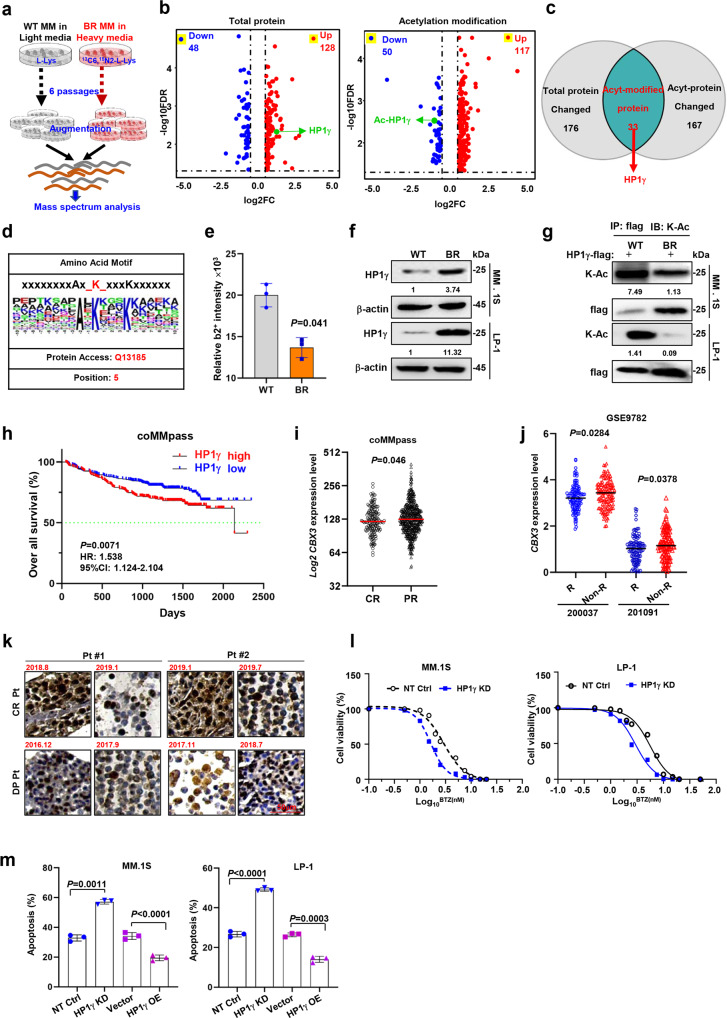
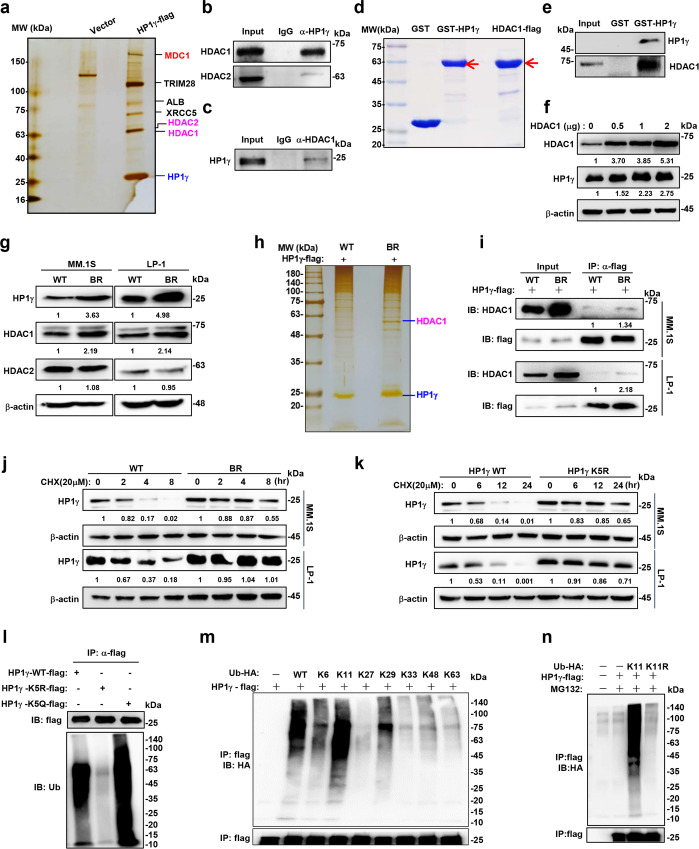
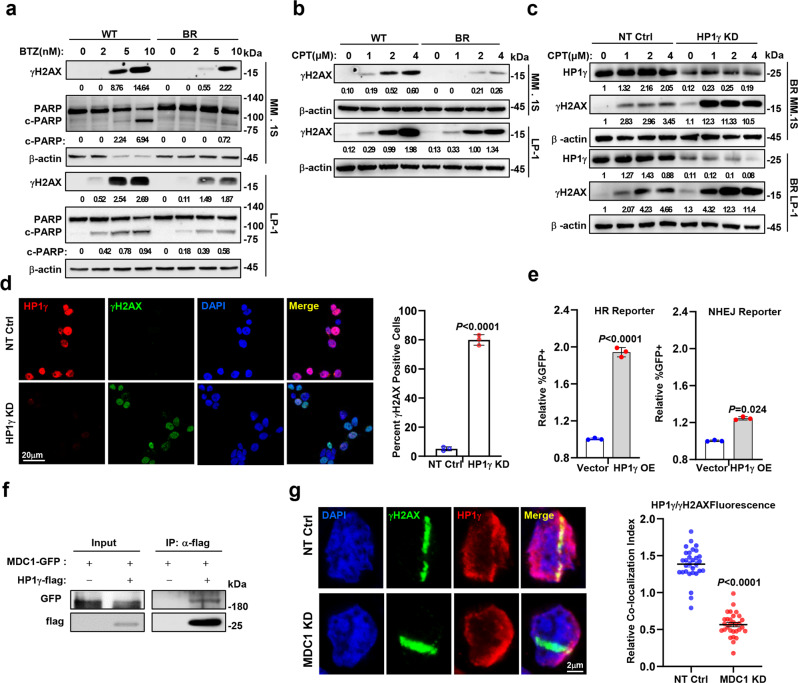
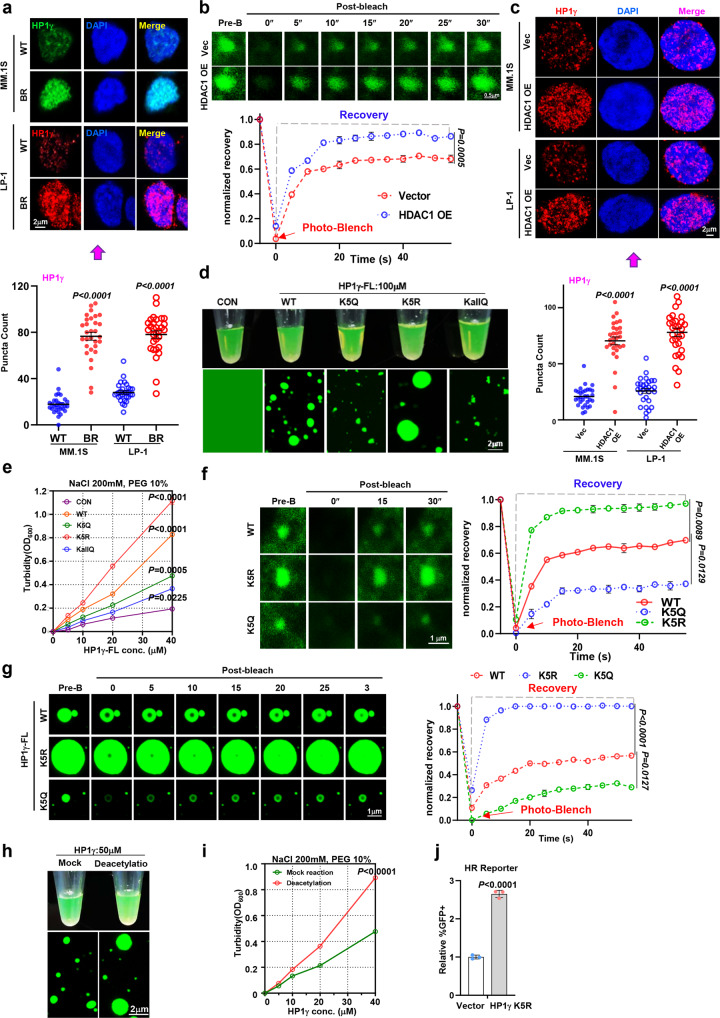
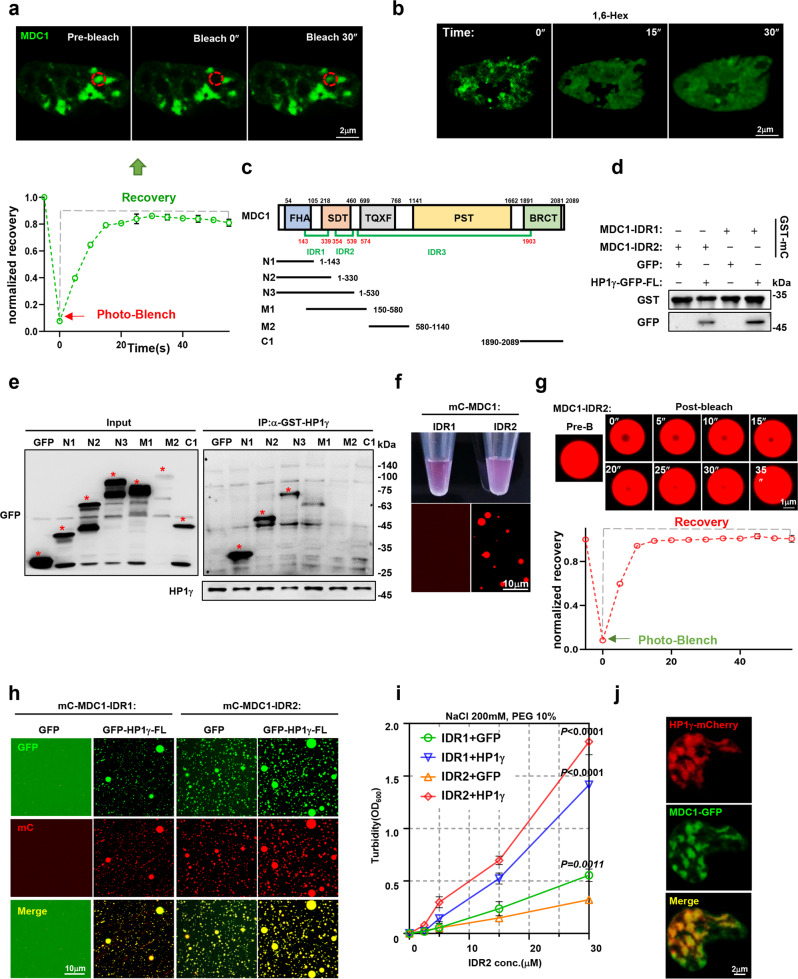
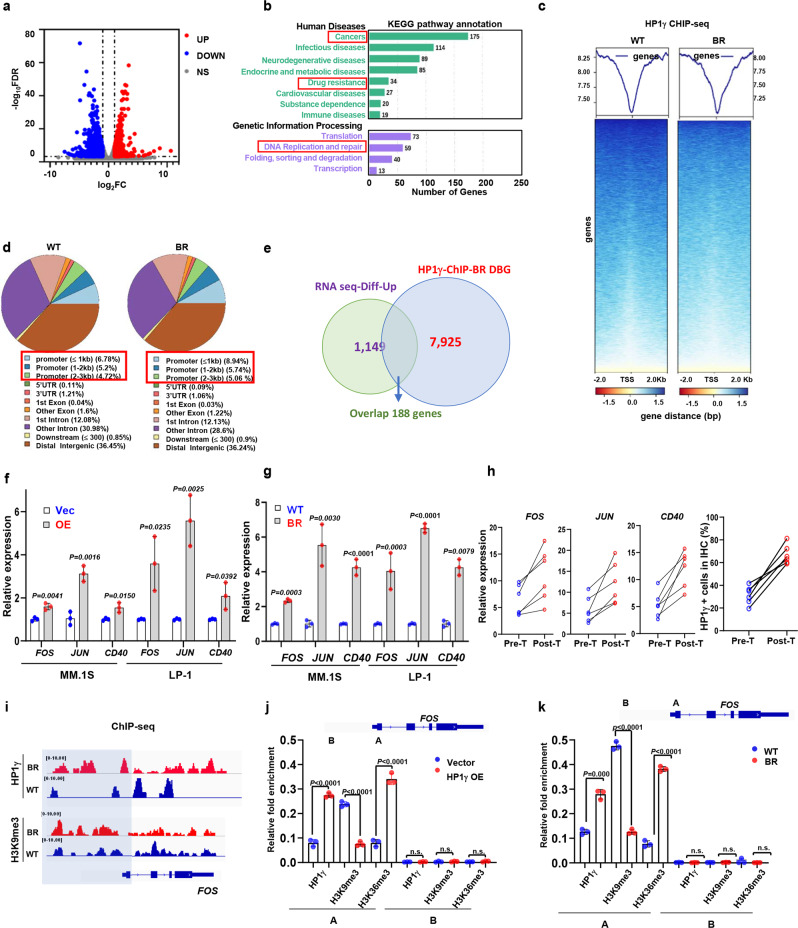
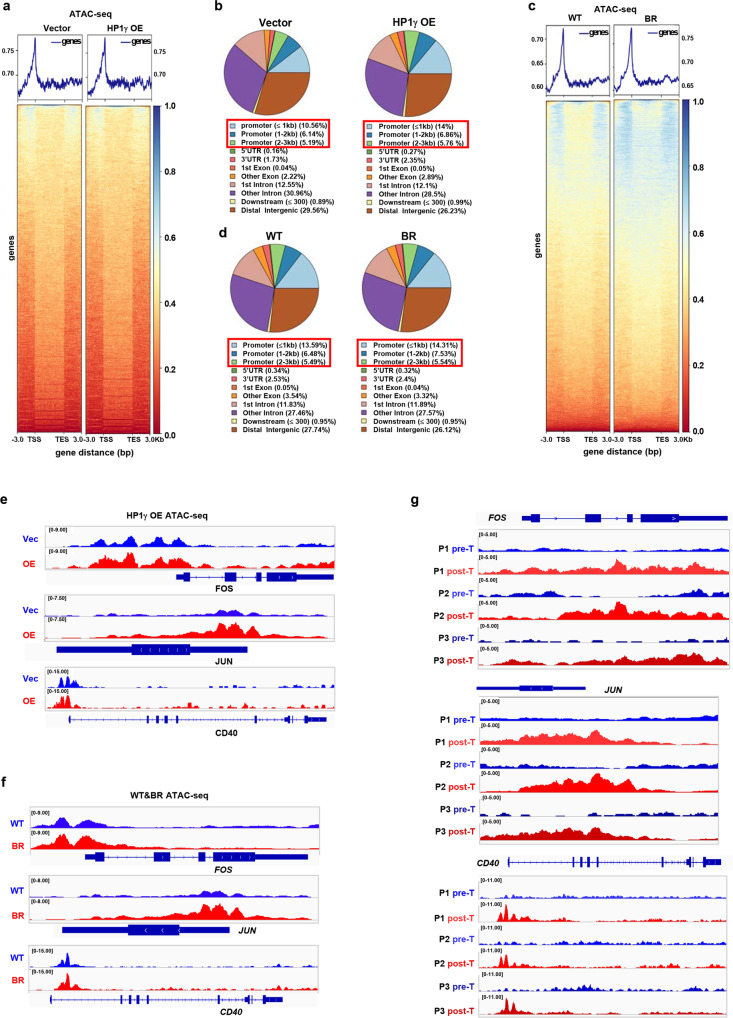
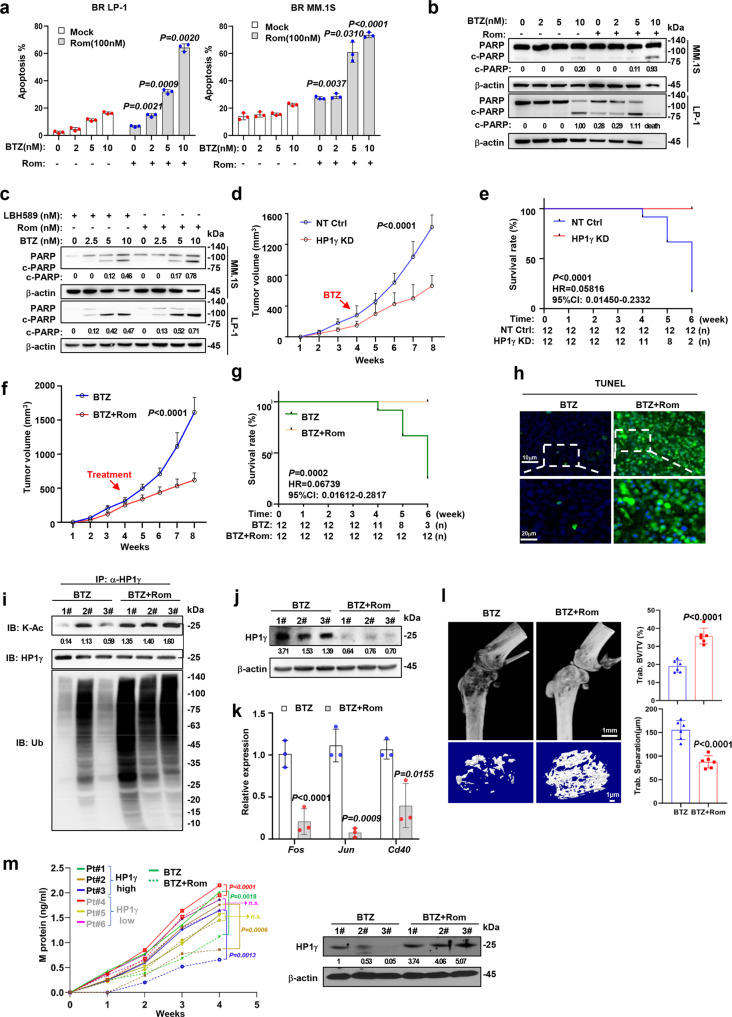
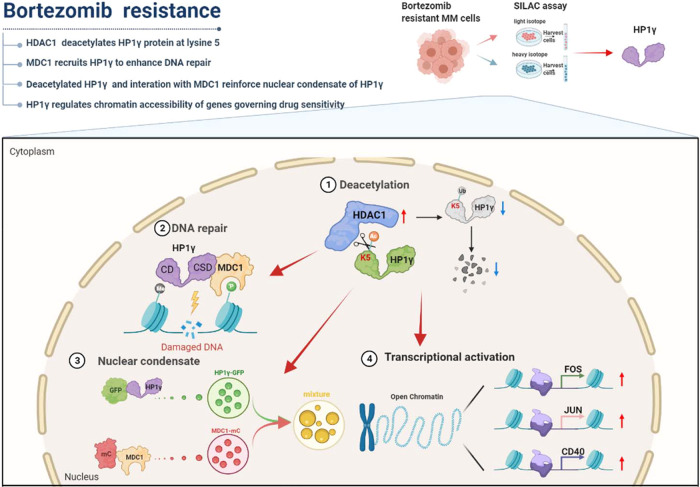
Acquired chemoresistance to proteasome inhibitors is a major obstacle in managing multiple myeloma but key regulators and underlying mechanisms still remain to be explored. We find that high level of HP1γ is associated with low acetylation modification in the bortezomib-resistant myeloma cells using SILAC-based acetyl-proteomics assay, and higher HP1γ level is positively correlated with poorer outcomes in the clinic. Mechanistically, elevated HDAC1 in the bortezomib-resistant myeloma cells deacetylates HP1γ at lysine 5 and consequently alleviates the ubiquitin-mediated protein degradation, as well as the aberrant DNA repair capacity. HP1γ interacts with the MDC1 to induce DNA repair, and simultaneously the deacetylation modification and the interaction with MDC1 enhance the nuclear condensation of HP1γ protein and the chromatin accessibility of its target genes governing sensitivity to proteasome inhibitors, such as CD40, FOS and JUN. Thus, targeting HP1γ stability by using HDAC1 inhibitor re-sensitizes bortezomib-resistant myeloma cells to proteasome inhibitors treatment in vitro and in vivo. Our findings elucidate a previously unrecognized role of HP1γ in inducing drug resistance to proteasome inhibitors of myeloma cells and suggest that targeting HP1γ may be efficacious for overcoming drug resistance in refractory or relapsed multiple myeloma patients.
Overview
The claims and statistics of this paper haven’t been checked yet.
Free: it reads the open-access text and checks the first 5 claims that cite a source we can check. Create a free account to check every claim.
Integrity signals
Registry
Cites
Statistics
Figures
Verification
Claims the paper makes
The claims and statistics of this paper haven’t been checked yet.
Free: it reads the open-access text and checks the first 5 claims that cite a source we can check. Create a free account to check every claim.
Claims other papers make about this one
Each is checked against this paper’s own text: does it say what the citing paper says it does?
The cited source says what the claim attributes to it.
In the citing paper
“A combined proteomics and acetylomics screen identified acetylation of K5 on heterochromatin protein 1 gamma (HP1γ) as one of the most significantly changed acetylation sites in BTZ-resistant MM cells, leading to the hypothesis that this site may confer BTZ resistance [116].”
From Acetylation: a new target for protein degradation in cancer (2025) · cites this paper as [116]
The cited source says what the claim attributes to it.
In the citing paper
“HDAC1/2 inhibitor, romidepsin, re-sensitized MM cells in tissue and mouse models to BTZ and when jointly administered with BTZ, significantly reduced tumor growth and increased apoptosis compared to BTZ treatment alone [116].”
From Acetylation: a new target for protein degradation in cancer (2025) · cites this paper as [116]
The cited source says what the claim attributes to it.
In the citing paper
“As such, BTZ-resistant cells use HDAC1-mediated stabilization of HP1γ to increase DNA repair, HP1γ’s ability to form nuclear condensates, and chromatin accessibility of genes implicated in DNA repair to confer drug resistance [116].”
From Acetylation: a new target for protein degradation in cancer (2025) · cites this paper as [116]
The cited source says what the claim attributes to it.
In the citing paper
“HP1γK5Ac destabilized the protein through an increase in ubiquitination (Figure 6C).”
From Acetylation: a new target for protein degradation in cancer (2025) · cites this paper as [116]
Self-check
Percentages, sums and reported differences re-computed from the paper’s own numbers.
The self-check needs the paper’s full text.
Citations
Cites
Protein Phase Separation: A New Phase in Cell Biology
Boeynaems, S., Alberti, S., Fawzi, N. L., Mittag, T., Polymenidou, M., Rousseau, F., Schymkowitz, J., Shorter, J., Wolozin, B., Van Den Bosch, L., et al. (2018) · Trends in Cell Biology · doi:10.1016/j.tcb.2018.02.004 · Cited by 1,997
Liquid droplet formation by HP1α suggests a role for phase separation in heterochromatin
Larson, A. G., Elnatan, D., Keenen, M. M., Trnka, M. J., Johnston, J. B., Burlingame, A. L., Agard, D. A., Redding, S., & Narlikar, G. J. (2017) · Nature · doi:10.1038/nature22822 · Cited by 1,694
DNA double-strand break repair-pathway choice in somatic mammalian cells
Scully, R., Panday, A., Elango, R., & Willis, N. A. (2019) · Nature Reviews Molecular Cell Biology · doi:10.1038/s41580-019-0152-0 · Cited by 1,457
Ten principles of heterochromatin formation and function
Allshire, R. C., & Madhani, H. D. (2018) · Nature Reviews Molecular Cell Biology · doi:10.1038/nrm.2017.119 · Cited by 792
Phase separation of 53 BP 1 determines liquid‐like behavior of DNA repair compartments
Kilic, S., Lezaja, A., Gatti, M., Bianco, E., Michelena, J., Imhof, R., & Altmeyer, M. (2019) · The EMBO Journal · doi:10.15252/embj.2018101379 · Cited by 444
Ayrapetov, M. K., Gursoy-Yuzugullu, O., Xu, C., Xu, Y., & Price, B. D. (2014) · Proceedings of the National Academy of Sciences · doi:10.1073/pnas.1403565111 · Cited by 391
Liquid-liquid phase separation in biology: mechanisms, physiological functions and human diseases
Zhang, H., Ji, X., Li, P., Liu, C., Lou, J., Wang, Z., Wen, W., Xiao, Y., Zhang, M., & Zhu, X. (2020) · Science China Life Sciences · doi:10.1007/s11427-020-1702-x · Cited by 351
The Heterochromatin Protein 1 family.
Lomberk, G. A., Wallrath, L. L., & Urrutia, R. A. (2006) · Genome biology · doi:10.1186/gb-2006-7-7-228 · Cited by 334
Acetylation of intrinsically disordered regions regulates phase separation
Saito, M., Hess, D., Eglinger, J., Fritsch, A. W., Kreysing, M., Weinert, B. T., Choudhary, C., & Matthias, P. (2019) · Nature Chemical Biology · doi:10.1038/s41589-018-0180-7 · Cited by 300
Histone deacetylase inhibitor (HDACI) mechanisms of action: Emerging insights
Bose, P., Dai, Y., & Grant, S. (2014) · Pharmacology & Therapeutics · doi:10.1016/j.pharmthera.2014.04.004 · Cited by 280
Heterochromatin protein 1 is recruited to various types of DNA damage
Luijsterburg, M. S., Dinant, C., Lans, H., Stap, J., Wiernasz, E., Lagerwerf, S., Warmerdam, D. O., Lindh, M., Brink, M. C., Dobrucki, J. W., et al. (2009) · Journal of Cell Biology · doi:10.1083/jcb.200810035 · Cited by 264
Biological phase separation: cell biology meets biophysics
Yoshizawa, T., Nozawa, R.-S., Jia, T. Z., Saio, T., & Mori, E. (2020) · Biophysical Reviews · doi:10.1007/s12551-020-00680-x · Cited by 188
Targeting the MALAT1/PARP1/LIG3 complex induces DNA damage and apoptosis in multiple myeloma
Hu, Y., Lin, J., Hua, F., Fang, J., Li, C., Chen, W., Liu, S., Ondrejka, S. L., Gong, Z., Reu, F. J., et al. (2018) · Leukemia · doi:10.1038/s41375-018-0104-2 · Cited by 170
HP1: Heterochromatin binding proteins working the genome
Zeng, W., Ball Jr, A. R., & Yokomori, K. (2010) · Epigenetics · doi:10.4161/epi.5.4.11683 · Cited by 162
ILF2 Is a Regulator of RNA Splicing and DNA Damage Response in 1q21-Amplified Multiple Myeloma
Marchesini, M., Ogoti, Y., Fiorini, E., Aktas Samur, A., Nezi, L., D'Anca, M., Storti, P., Samur, M. K., Ganan-Gomez, I., Fulciniti, M. T., et al. (2017) · Cancer Cell · doi:10.1016/j.ccell.2017.05.011 · Cited by 160
Bortezomib-induced “BRCAness” sensitizes multiple myeloma cells to PARP inhibitors
Neri, P., Ren, L., Gratton, K., Stebner, E., Johnson, J., Klimowicz, A., Duggan, P., Tassone, P., Mansoor, A., Stewart, D. A., et al. (2011) · Blood · doi:10.1182/blood-2011-06-363911 · Cited by 157
Niesvizky, R., Ely, S., Mark, T., Aggarwal, S., Gabrilove, J. L., Wright, J. J., Chen‐Kiang, S., & Sparano, J. A. (2011) · Cancer · doi:10.1002/cncr.25584 · Cited by 133
Watanabe, K., Morishita, K., Zhou, X., Shiizaki, S., Uchiyama, Y., Koike, M., Naguro, I., & Ichijo, H. (2021) · Nature Communications · doi:10.1038/s41467-021-21614-5 · Cited by 118
Analysis of DNA Double-strand Break (DSB) Repair in Mammalian Cells
Seluanov, A., Mao, Z., & Gorbunova, V. (2010) · Journal of Visualized Experiments · doi:10.3791/2002 · Cited by 114
53BP1 regulates heterochromatin through liquid phase separation
Zhang, L., Geng, X., Wang, F., Tang, J., Ichida, Y., Sharma, A., Jin, S., Chen, M., Tang, M., Pozo, F. M., et al. (2022) · Nature Communications · doi:10.1038/s41467-022-28019-y · Cited by 103
Self-citationTIF1 Proteins in Genome Stability and Cancer
McAvera, R. M., & Crawford, L. (2020) · Cancers · doi:10.3390/cancers12082094 · Cited by 100
Heterochromatin protein 1 (HP1): interactions with itself and chromatin components
Kumar, A., & Kono, H. (2020) · Biophysical Reviews · doi:10.1007/s12551-020-00663-y · Cited by 95
Regulation of Bcl-XL by non-canonical NF-κB in the context of CD40-induced drug resistance in CLL
Haselager, M., Thijssen, R., West, C., Young, L., Van Kampen, R., Willmore, E., Mackay, S., Kater, A., & Eldering, E. (2021) · Cell Death & Differentiation · doi:10.1038/s41418-020-00692-w · Cited by 93
Liu, J., Xie, Y., Guo, J. R., Li, X., Wang, J., Jiang, H., Peng, Z., Wang, J., Wang, S., Li, Q., et al. (2021) · Nature Communications · doi:10.1038/s41467-021-21386-y · Cited by 78
Self-citationLi, B., Fu, J., Chen, P., Ge, X., Li, Y., Kuiatse, I., Wang, H., Wang, H., Zhang, X., & Orlowski, R. Z. (2015) · Journal of Biological Chemistry · doi:10.1074/jbc.m115.664953 · Cited by 77
Tamoxifen Resistance and Epigenetic Modifications in Breast Cancer Cell Lines
Badia, É., Oliva, J., Balaguer, P., & Cavaillès, V. (2007) · Current Medicinal Chemistry · doi:10.2174/092986707782794023 · Cited by 70
Guidelines for DNA recombination and repair studies: Cellular assays of DNA repair pathways
Klein, H. L., Bačinskaja, G., Che, J., Cheblal, A., Elango, R., Epshtein, A., Fitzgerald, D. M., Gómez‐González, B., Khan, S. R., Kumar, S., et al. (2019) · Microbial Cell · doi:10.15698/mic2019.01.664 · Cited by 67
Gourzones-Dmitriev, C., Kassambara, A., Sahota, S., Rème, T., Moreaux, J., Bourquard, P., Hose, D., Pasero, P., Constantinou, A., & Klein, B. (2013) · Cell Cycle · doi:10.4161/cc.25951 · Cited by 61
Panobinostat for the treatment of multiple myeloma: the evidence to date
Sharma, S., Bailey, H., & Stenehjem, D. D. (2015) · Journal of Blood Medicine · doi:10.2147/jbm.s69140 · Cited by 57
Xie, Y., Liu, J., Jiang, H., Wang, J., Li, X., Wang, J., Zhu, S., Guo, J. R., Li, T., Zhong, Y., et al. (2019) · Oncogene · doi:10.1038/s41388-019-1037-6 · Cited by 52
Self-citationRoles for MDC1 in cancer development and treatment
Ruff, S., Logan, S. K., Garabedian, M. J., & Huang, T. T. (2020) · DNA repair · doi:10.1016/j.dnarep.2020.102948 · Cited by 47
Functions of TopBP1 in preserving genome integrity during mitosis
Bagge, J., Oestergaard, V. H., & Lisby, M. (2020) · Seminars in Cell and Developmental Biology · doi:10.1016/j.semcdb.2020.08.009 · Cited by 40
Acetylation and Deacetylation of DNA Repair Proteins in Cancers
Li, S., Shi, B., Liu, X., & An, H.-X. (2020) · Frontiers in Oncology · doi:10.3389/fonc.2020.573502 · Cited by 38
Leopold, K., Stirpe, A., & Schalch, T. (2019) · Genes & Development · doi:10.1101/gad.320440.118 · Cited by 36
Ge, M., Qiao, Z., Kong, Y., Liang, H., Sun, Y., Lu, H. J., Xu, Z., & Liu, H. (2020) · British Journal of Cancer · doi:10.1038/s41416-020-01191-y · Cited by 31
Citrullination of HP1γ chromodomain affects association with chromatin
Wiese, M., Bannister, A. J., Basu, S., Boucher, W., Wohlfahrt, K., Christophorou, M. A., Nielsen, M. L., Klenerman, D., Laue, E. D., & Kouzarides, T. (2019) · Epigenetics & Chromatin · doi:10.1186/s13072-019-0265-x · Cited by 24
Wang, J., Zhu, X., Dang, L., Jiang, H., Xie, Y., Li, X., Guo, J. R., Wang, Y., Peng, Z., Wang, M., et al. (2022) · Journal of Clinical Investigation · doi:10.1172/jci149526 · Cited by 24
Self-citationLee, S.-W., Cho, H.-Y., Na, G., Yoo, M. R., Seo, S., Hur, D. Y., Han, J., Lee, C. K., & Choi, I. (2012) · Immunology Letters · doi:10.1016/j.imlet.2012.03.005 · Cited by 16
DNA Damage Response-Independent Role for MDC1 in Maintaining Genomic Stability
Li, Z., Shao, C., Kong, Y., Carlock, C., Ahmad, N., & Liu, X. (2017) · Molecular and Cellular Biology · doi:10.1128/mcb.00595-16 · Cited by 16
c-Fos-dependent miR-22 targets MDC1 and regulates DNA repair in terminally differentiated cells
Lee, J.-H., Park, S.-J., Kim, S. W., Hariharasudhan, G., Jung, S.-M., Jun, S., Yong, J., & You, H. J. (2017) · Oncotarget · doi:10.18632/oncotarget.18389 · Cited by 16
JNK and Jag1/Notch2 co-regulate CXCL16 to facilitate cypermethrin-induced kidney damage
Chang-jiang, L., Wu, M., Qu, J., Huang, X., Zeng, Q., & Ha, M. (2022) · Ecotoxicology and Environmental Safety · doi:10.1016/j.ecoenv.2022.113582 · Cited by 14
Unravelling HP1 functions: post-transcriptional regulation of stem cell fate
Casale, A. M., Cappucci, U., & Piacentini, L. (2021) · Chromosoma · doi:10.1007/s00412-021-00760-1 · Cited by 10
Cited by
AI-powered therapeutic target discovery
Pun, F. W., Ozerov, I. V., & Zhavoronkov, A. (2023) · Trends in Pharmacological Sciences · doi:10.1016/j.tips.2023.06.010 · Cited by 341
Li, Y., Liu, Y., Yu, X., Xu, Y., Pan, X., Sun, Y. E., Wang, Y., Song, Y.-H., & Shen, Z. (2024) · Signal Transduction and Targeted Therapy · doi:10.1038/s41392-024-02013-w · Cited by 97
Self-citationPost-translational modifications in drug resistance
Miao, C., Huang, Y., Zhang, C., Wang, X., Wang, B., Zhou, X., Song, Y., Wu, P., Chen, Z., & Feng, Y. (2024) · Drug Resistance Updates · doi:10.1016/j.drup.2024.101173 · Cited by 82
Acetylation in pathogenesis: Revealing emerging mechanisms and therapeutic prospects
Jiang, N., Li, W., Jiang, S., Xie, M., & Liu, R. (2023) · Biomedicine & Pharmacotherapy · doi:10.1016/j.biopha.2023.115519 · Cited by 47
Subcellular localization as a driver of protein function
Sigaeva, A., Hutchings, C., Cesnik, A. J., Lilley, K. S., & Lundberg, E. K. (2026) · Nature Reviews Molecular Cell Biology · doi:10.1038/s41580-026-00947-3 · Cited by 50
“By contrast, deacetylation of HP1γ promotes nuclear condensation, which results in drug resistance in myeloma 184 .”
Metadata
- Authors
- Li, X., Wang, S., Xie, Y., Jiang, H., Guo, J., Wang, Y., Peng, Z., Hu, M., Wang, M., Wang, J., Li, Q., Wang, Y., & Liu, Z.
- Affiliations
- Tianjin Medical University (CN)
- Tianjin Medical University Cancer Institute and Hospital (CN)
- Corresponding author
- Liu, Zhiqiang
- ORCID
- Venue
- Nature Communications
- Published
- 2023-03-09
- Volume
- 14
- Issue
- 1
- Pages
- 1290-1290
- ISSN
- 2041-1723 (ISSN-L)
- PMC
- PMC9998874
- OpenAlex
- W4323809200
- Cited by
- 27
- References
- 43
- Citations by year
- 2026: 8 · 2025: 11 · 2024: 5 · 2023: 3
- FWCI
- 5.56
- Type
- journal article
- Language
- en
- Open access
- gold
- doi.org
- Licence
- cc-by
- creativecommons.org/licenses/by/4.0 (tdm)
- creativecommons.org/licenses/by/4.0 (vor)
- Locations
- Nature Communications (publishedVersion, cc-by)
- PubMed Central (publishedVersion, cc-by)
- PubMed (publishedVersion)
- RePEc: Research Papers in Economics (submittedVersion)
- DOAJ (DOAJ: Directory of Open Access Journals) (submittedVersion, cc-by-sa)
- Funders
- National Natural Science Foundation of China (82070221, 81870161, 81900215, 82270208)
- Topics
- Health Sciences › Medicine › Hematology › Multiple Myeloma Research and Treatments
- Life Sciences › Biochemistry, Genetics and Molecular Biology › Molecular Biology › Ubiquitin and proteasome pathways
- Life Sciences › Biochemistry, Genetics and Molecular Biology › Molecular Biology › Protein Degradation and Inhibitors
- Keywords
- HP1γ, multiple myeloma, proteasome inhibitor resistance, bortezomib resistance, HDAC1, protein deacetylation, nuclear condensation, MDC1, DNA repair, chromatin accessibility, lysine acetylation, CD40, FOS, c-Jun
- MeSH terms
- Bortezomib, Antineoplastic Agents, Humans, Multiple Myeloma, Transcription Factors, Drug Resistance, Neoplasm, Cell Line, Tumor, Proteasome Endopeptidase Complex, Proteasome Inhibitors
About these checks
Registry, retraction, Cites and statistics results are computed, not judged, with one exception: a printed reference that no index lists is read once by a model before it counts as a citation error. Claims are extracted by a model and kept only when their quote appears verbatim in the text; each cited source is then checked, with a model’s help, for whether it says what the claim relies on. Those verdicts can be wrong — read the claim’s quote and the cited source before relying on one.
Statistics and arithmetic are recomputed, not judged.
Confidence bands are shown only for fields calibrated on our annotated test set. None is calibrated yet, so no band is shown.
What counts as a claim ›How we measure confidence ›How we check this ›
Are you an author, or do you see a problem with this page? Request a review
Data sources
Bibliographic data: Semantic Scholar, OpenAlex, Crossref.
Contains information from the Semantic Scholar Academic Graph Datasets, made available under the ODC Attribution License (ODC-BY 1.0).
Semantic Scholar’s data is described in: Kinney, R., et al. (2023). The Semantic Scholar Open Data Platform. arXiv:2301.10140.
