

Circulating tumor DNA reveals mechanisms of lorlatinib resistance in patients with relapsed/refractory ALK-driven neuroblastoma
Open accessThe DOI matches its Crossref record; 71 of the 71 references it cites were found in a registry or an index.
Abstract
Activating point mutations in Anaplastic Lymphoma Kinase (ALK) have positioned ALK as the only mutated oncogene tractable for targeted therapy in neuroblastoma. Cells with these mutations respond to lorlatinib in pre-clinical studies, providing the rationale for a first-in-child Phase 1 trial (NCT03107988) in patients with ALK-driven neuroblastoma. To track evolutionary dynamics and heterogeneity of tumors, and to detect early emergence of lorlatinib resistance, we collected serial circulating tumor DNA samples from patients enrolled on this trial. Here we report the discovery of off-target resistance mutations in 11 patients (27%), predominantly in the RAS-MAPK pathway. We also identify newly acquired secondary compound ALK mutations in 6 (15%) patients, all acquired at disease progression. Functional cellular and biochemical assays and computational studies elucidate lorlatinib resistance mechanisms. Our results establish the clinical utility of serial circulating tumor DNA sampling to track response and progression and to discover acquired resistance mechanisms that can be leveraged to develop therapeutic strategies to overcome lorlatinib resistance.
Overview
The claims and statistics of this paper haven’t been checked yet.
Free: it reads the open-access text and checks the first 5 claims that cite a source we can check. Create a free account to check every claim.
Integrity signals
Registry
Cites
Statistics
Figures
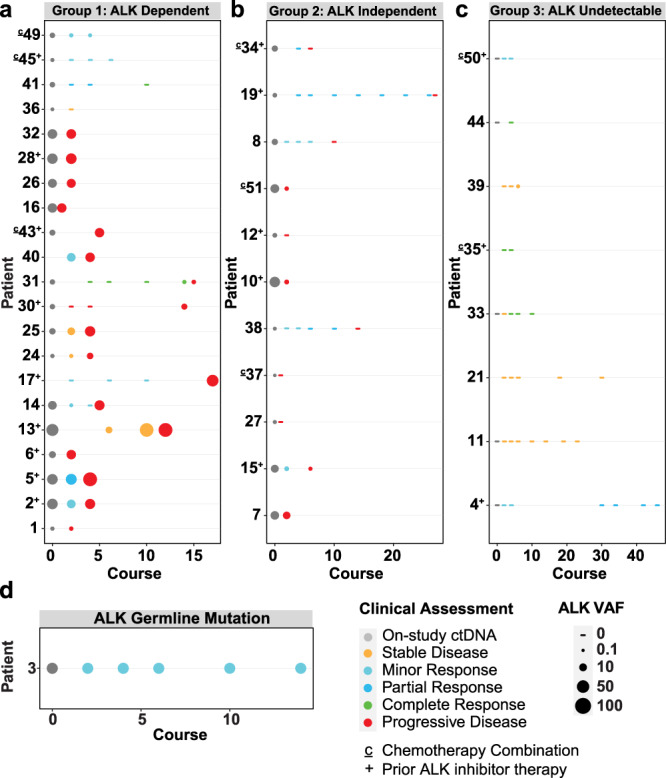
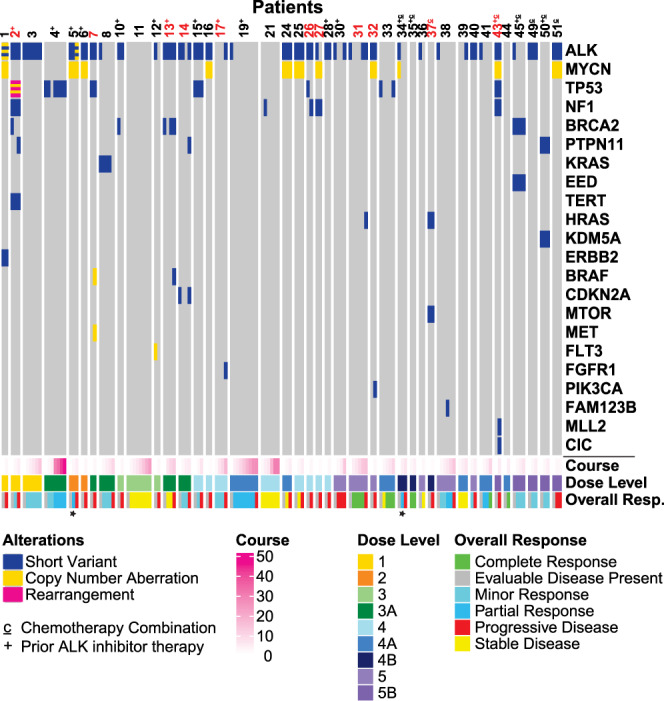
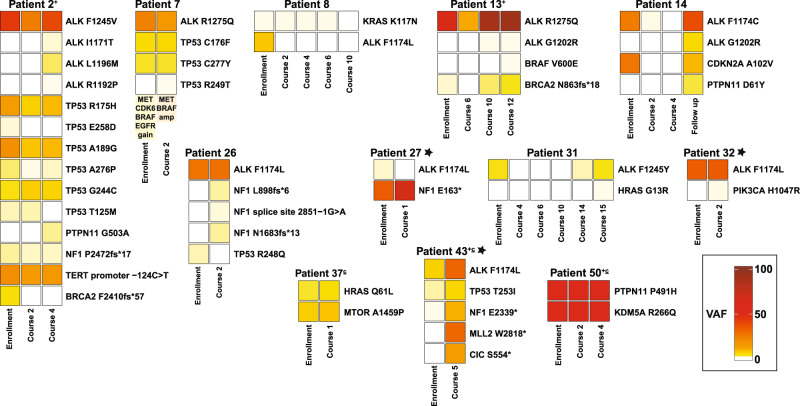
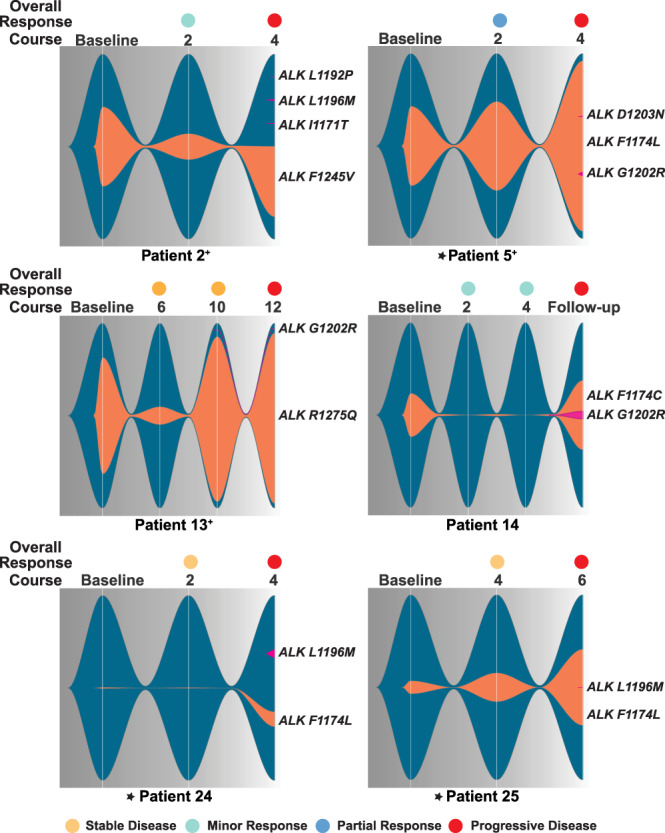
Verification
Claims the paper makes
The claims and statistics of this paper haven’t been checked yet.
Free: it reads the open-access text and checks the first 5 claims that cite a source we can check. Create a free account to check every claim.
Claims other papers make about this one
Each is checked against this paper’s own text: does it say what the citing paper says it does?
The cited source says what the claim attributes to it.
In the citing paper
“Prior work has demonstrated the utility of liquid biopsies for detection of ALK mutations in patients with NBL to inform targeted therapies.19,26”
From Clinical Liquid Biopsy Testing for Detection of Actionable Genomic Alterations in Children and Young Adults With Advanced Solid Tumors on the GAIN Study (2026) · cites this paper as [26]
Self-check
Percentages, sums and reported differences re-computed from the paper’s own numbers.
The self-check needs the paper’s full text.
Citations
Cites
Comparison of simple potential functions for simulating liquid water
Jorgensen, W. L., Chandrasekhar, J., Madura, J. D., Impey, R. W., & Klein, M. L. (1983) · The Journal of Chemical Physics · doi:10.1063/1.445869 · Cited by 41,298
Molecular dynamics with coupling to an external bath
Berendsen, H. J. C., Postma, J. P. M., van Gunsteren, W. F., DiNola, A., & Haak, J. R. (1984) · The Journal of Chemical Physics · doi:10.1063/1.448118 · Cited by 30,700
Polymorphic transitions in single crystals: A new molecular dynamics method
Parrinello, M., & Rahman, A. (1981) · Journal of Applied Physics · doi:10.1063/1.328693 · Cited by 19,790
All-Atom Empirical Potential for Molecular Modeling and Dynamics Studies of Proteins
MacKerell, A. D., Bashford, D., Bellott, M., Dunbrack, R. L., Evanseck, J. D., Field, M. J., Fischer, S., Gao, J., Guo, H., Ha, S., et al. (1998) · The Journal of Physical Chemistry B · doi:10.1021/jp973084f · Cited by 14,311
Comparative Protein Modelling by Satisfaction of Spatial Restraints
Šali, A., & Blundell, T. L. (1993) · Journal of Molecular Biology · doi:10.1006/jmbi.1993.1626 · Cited by 12,977
Friesner, R. A., Banks, J. L., Murphy, R. B., Halgren, T. A., Klicic, J. J., Mainz, D. T., Repasky, M. P., Knoll, E. H., Shelley, M., Perry, J. K., et al. (2004) · Journal of Medicinal Chemistry · doi:10.1021/jm0306430 · Cited by 10,057
GROMACS 4.5: a high-throughput and highly parallel open source molecular simulation toolkit
Pronk, S., Páll, S., Schulz, R., Larsson, P., Bjelkmar, P., Apostolov, R., Shirts, M. R., Smith, J. C., Kasson, P. M., van der Spoel, D., et al. (2013) · Bioinformatics · doi:10.1093/bioinformatics/btt055 · Cited by 7,473
Friesner, R. A., Murphy, R. B., Repasky, M. P., Frye, L. L., Greenwood, J. R., Halgren, T. A., Sanschagrin, P. C., & Mainz, D. T. (2006) · Journal of Medicinal Chemistry · doi:10.1021/jm051256o · Cited by 6,851
Halgren, T. A., Murphy, R. B., Friesner, R. A., Beard, H. S., Frye, L. L., Pollard, W. T., & Banks, J. L. (2004) · Journal of Medicinal Chemistry · doi:10.1021/jm030644s · Cited by 5,177
First-Line Crizotinib versus Chemotherapy in ALK -Positive Lung Cancer
Solomon, B. J., Mok, T., Kim, D.-W., Wu, Y.-L., Nakagawa, K., Mekhail, T., Felip, E., Cappuzzo, F., Paolini, J., Usari, T., et al. (2014) · New England Journal of Medicine · doi:10.1056/nejmoa1408440 · Cited by 3,190 · cited 1×
“Six patients (2, 13, 14, 26, 31, 32) acquired new RAS-MAPK/PI3K pathway alterations during treatment, nearly always preceding clinical/radiographic diseaseprogression.”
Background
Cited by
ALK inhibitors increase ALK expression and sensitize neuroblastoma cells to ALK.CAR-T cells
Bergaggio, E., Tai, W., Aroldi, A., Mecca, C., Landoni, E., Nüesch, M., Mota, I. A., Metović, J., Molinaro, L., Ma, L., et al. (2023) · Cancer Cell · doi:10.1016/j.ccell.2023.11.004 · Cited by 67
ALK in cancer: from function to therapeutic targeting
Voena, C., Ambrogio, C., Iannelli, F., & Chiarle, R. (2025) · Nature reviews. Cancer · doi:10.1038/s41568-025-00797-9 · Cited by 56
“However, neuroblastoma that developed resistance to lorlatinib shows enrichment of mutations in the MAPK and PI3K pathways, including oncogenic alterations of MET, BRAF, EGFR, FGFR1, PTPN11, PIK3CA and RAS GTPases 185,205 .”
Grossmann, L. D., Chen, C.-H., Uzun, Y., Thadi, A., Wolpaw, A. J., Louault, K., Goldstein, Y., Surrey, L. F., Martínez, D., Calafatti, M., et al. (2024) · Cancer Discovery · doi:10.1158/2159-8290.cd-24-0046 · Cited by 45
“39–41 As our data do not support the acquisition of new genetic aberrations during induction therapy as a major driver of cellular persistence, we sought to determine the association between persister subtypes and genetic events present at diagnosis.”
Self-citationKiełbowski, K., Żychowska, J., & Becht, R. (2023) · Frontiers in Pharmacology · doi:10.3389/fphar.2023.1285374 · Cited by 31
Berko, E. R., Naranjo, A. H., Daniels, A. A., McNulty, S. N., Krytska, K., Druley, T. E., Zelley, K., Koneru, B., Chen, L., Polkosnik, G., et al. (2025) · Journal of Clinical Oncology · doi:10.1200/jco-24-02407 · Cited by 22
Self-citationPucci, P., Lee, L. C., Han, M., Matthews, J. D., Jahangiri, L., Schlederer, M., Manners, E., Sorby-Adams, A. J., Kaggie, J. D., Trigg, R. M., et al. (2024) · Nature Communications · doi:10.1038/s41467-024-47771-x · Cited by 18
Current Knowledge and Perspectives of Immunotherapies for Neuroblastoma
Mao, C., Poimenidou, M., & Craig, B. T. (2024) · Cancers · doi:10.3390/cancers16162865 · Cited by 22
“It can be utilized independently or alongside chemotherapy to address ALK-driven refractory or recurrent high-risk NBL safely and effectively [157–159].”
BackgroundBobin, C., Iddir, Y., Butterworth, C., Masliah‐Planchon, J., Saint‐Charles, A., Bellini, A., Bhalshankar, J. D., Pierron, G., Combaret, V., Attignon, V., et al. (2024) · Clinical Cancer Research · doi:10.1158/1078-0432.ccr-24-0753 · Cited by 22
“Previous studies have shown high overall cfDNA concentrations, and high ctDNA fractions in high-risk patients with neuroblastoma (18, 25, 28, 29). cfDNA might be used as a marker of treatment response based on the ALK VAF and also for wider analyses to elucidate genetic alterations upon resistance.”
BackgroundInfluentialEk, T., Ibrahim, R. R., Vogt, H., Georgantzi, K., Träger, C., Gaarder, J., Djos, A., Rahmqvist, I., Mellström, E., Pujol-Calderón, F., et al. (2024) · Cancer Research Communications · doi:10.1158/2767-9764.crc-24-0338 · Cited by 15
“Previous studies have utilized whole-exome sequencing or broad NGS panels for ctDNA analysis in patients with neuroblastoma, which was focused on determining disease mechanisms rather than monitoring tumor burden (25, 29, 30).”
BackgroundInfluentialDuBois, S. G., Moreno, L., Anderson, J., Asgharzadeh, S., Bagatell, R., Popovic, M. B., Belle, J., Berlanga, P., Bird, N., Chesler, L., et al. (2025) · Pediatric Blood & Cancer · doi:10.1002/pbc.31831 · Cited by 15
Self-citationChennakesavalu, M., Moore, K., Chaves, G. S., Veeravalli, S., TerHaar, R., Wu, T., Lyu, R., Chlenski, A., He, C., Piunti, A., et al. (2024) · JCO Precision Oncology · doi:10.1200/po.23.00297 · Cited by 17
George, S. L., Lynn, C., Stankunaite, R., Hughes, D., Sauer, C. M., Chalker, J., Ahmed, S. W., Oostveen, M., Proszek, P., Yuan, L., et al. (2024) · Cancer Discovery · doi:10.1158/2159-8290.cd-24-0916 · Cited by 19
“For patients with ALK -mutant neuroblastoma who receive ALK inhibitors, our limited data on serial monitoring add to the increasing body of evidence to support prospective evaluation of cfDNA sequencing as a biomarker of therapy response (44–46).”
The Role of ctDNA in the Management of Non-Small-Cell Lung Cancer in the AI and NGS Era
Costa, J., Membrino, A., Zanchetta, C., Rizzato, S., Cortiula, F., Rossetto, C., Pelizzari, G., Aprile, G., & Macerelli, M. (2024) · International Journal of Molecular Sciences · doi:10.3390/ijms252413669 · Cited by 17
Valencia-Sama, I., Kee, L., Christopher, G., Ohh, M., Layeghifard, M., Shlien, A., Hayes, M. N., & Irwin, M. S. (2023) · Cancer Research Communications · doi:10.1158/2767-9764.crc-23-0234 · Cited by 10
Balasundaram, A., & Doss, C. G. P. (2024) · Frontiers in Molecular Biosciences · doi:10.3389/fmolb.2023.1306046 · Cited by 10
Kendsersky, N. M., Odrobina, M., Mabe, N. W., Farrel, A., Grossmann, L. D., Tsang, M., Groff, D., Wolpaw, A. J., Narch, A., Zammarchi, F., et al. (2025) · Neuro-Oncology · doi:10.1093/neuonc/noaf012 · Cited by 12
Self-citationZhang, W., Tian, Z., Zhang, P., Li, L., Yu, Z., Sun, M., Liu, K., Hou, L., Zhang, J., Zhang, M., et al. (2025) · Chemical Engineering Journal · doi:10.1016/j.cej.2025.164581 · Cited by 8
Zhou, J., Du, H., & Cai, W. (2024) · Translational Pediatrics · doi:10.21037/tp-23-557 · Cited by 14
“…solid central nervous system tumors without great treatment options (NCT02650401) is also ongoing another inhibitor, lorlatinib, has been extensively studied to demonstrate its use as an alternative to crizotinib in newly diagnosed high-risk NB patients with ALK genetic alterations (48,49).”
Treis, D., Lundberg, K. I., Bell, N., Polychronopoulos, P. A., Tümmler, C., Åkerlund, E., Aliverti, S., Lilienthal, I., Pepich, A., Seashore-Ludlow, B. A., et al. (2025) · Cell Death and Disease · doi:10.1038/s41419-025-07658-1 · Cited by 9
Chang, L., Li, H., Wu, W., Liu, X., Yan, J., Chen, Z., Wu, H., & Song, S. (2025) · Journal of Translational Medicine · doi:10.1186/s12967-025-07591-z · Cited by 10
“Similarly, in ALK positive NSCLC, where multiple ALK inhibitors are available, AI models are being explored to predict which specific inhibitor a tumor is most likely to respond to based on biological differences derived from omics data [144, 145].”
Aktaş, T. Ç., Kızmazoglu, D., Aktaş, S., Erol, A., Serinan, E. O., Gökbayrak, Ö. E., Ozdemir, S. M., Altun, Z., Özer, E., Çeçen, E., et al. (2023) · Frontiers in Bioscience-Landmark · doi:10.31083/j.fbl2808171 · Cited by 7
Rahmqvist, I., Engström, E., Mellström, E., Ibrahim, R. R., Pujol-Calderón, F., Rudin, A. D., Redfors, A. O., Rostamzadeh, N., Rienzo, R. D., Franssila, W., et al. (2024) · Biomarker Research · doi:10.1186/s40364-024-00688-5 · Cited by 6
Karlsson, J., Briggs, M., Vedi, A., & Gisselsson, D. (2025) · Seminars in Cancer Biology · doi:10.1016/j.semcancer.2025.10.001 · Cited by 8
Xu, H., Cao, N., Dai, W., Sima, C., Yi, M., Chen, S., Chen, X., Liu, C., Yu, U., Lang, H., et al. (2025) · BMC Cancer · doi:10.1186/s12885-025-14448-7 · Cited by 7
Hollander, J. F., Szymansky, A., Wünschel, J., Astrahantseff, K., Rosswog, C., Thorwarth, A., Thole-Kliesch, T. M., González, R. C., Hundsdörfer, P., Hauptmann, K., et al. (2025) · Cancer Research Communications · doi:10.1158/2767-9764.crc-24-0569 · Cited by 7
“Recently, two studies demonstrated that ctDNA sequencing can detect genomic evolution in neuroblastomas under first, second, or third-generation ALK inhibitor therapy (7, 8).”
Chen, S., He, X., Ye, Y., Zhu, S., Tian, Z., Yang, M., PANG, S., Li, M., Guo, R., & He, Q. (2026) · International Journal of Pharmaceutics · doi:10.1016/j.ijpharm.2026.126566 · Cited by 6
Mechanisms and molecular characterization of relapsed/refractory neuroblastomas
Chen, C., & Wei, Z. (2025) · Frontiers in Oncology · doi:10.3389/fonc.2025.1555419 · Cited by 7
Bheemavarapu, B., Khalil, M., Rehman, A., Javid, S., Cyrus, F., Qayyum, S. N., Gohil, A. V., Muneer, S. U., & Noori, S. (2025) · Annals of Medicine and Surgery · doi:10.1097/ms9.0000000000003697 · Cited by 5
“This heterogeneity can contribute to resistance by allowing the survival and growth of subpopulations of cancer cells that are not dependent on ALK signaling [ 30 ] .”
Acquired resistance of cancer therapies: Mechanisms and perspectives
Wang, M., Zhai, X., Li, J., Chen, J., Gai, X., Liu, X., Liu, Y., Zhou, Q., & Chen, C. (2026) · Chinese Medical Journal · doi:10.1097/cm9.0000000000004048 · Cited by 8
“[183] ALK gene amplification increases protein expression by elevating copy number to counteract TKI inhibition.”
Detection of Targetable Genetic Abnormalities in Neuroblastoma Circulating Tumour DNA
Danilenko, M., Nath, S., Baines, J. P., Gordon, F., Merugu, S., Allinson, L. M., Potts, A., Collins, B., Goodman, A., Kidman, S. E., et al. (2025) · International Journal of Molecular Sciences · doi:10.3390/ijms26199466 · Cited by 3
“In ctD4 two ALK mutations were identified in diagnostic ctDNA (R1275Q and F1174L), in line with other ctDNA studies reporting several ALK mutations in a single ctDNA sample [15,26–29].”
InfluentialGatz, S. A., Bender, J. G., Pearson, A. D. J., Ortiz, M. V., Bernardi, R. J., Chesler, L., Clifford, S. C., Cohen‐Gogo, S., Cuesta, E. A. D. L., de Rojas, T., et al. (2026) · JCO Precision Oncology · doi:10.1200/po-25-00642 · Cited by 2
Pädiatrische Onkologie: Fortschritte in Diagnostik und Therapie
Deubzer, H. E., Thorwarth, A., Castelli, S., Thole-Kliesch, T. M., Schulze, F., Künkele, A., von Stackelberg, A., & Eggert, A. (2025) · Die Onkologie · doi:10.1007/s00761-024-01669-x · Cited by 1
Roberts, H. J., Comeau, H., Klega, K., DuBois, S. G., Lazo de la Vega, L., Ceca, E., Mullen, E. A., Smith, G. A., Tukachinsky, H., Huang, R. S. P., et al. (2026) · JCO Precision Oncology · doi:10.1200/po-25-01125
Somatic Genomic Alterations in Neuroblastoma
Depuydt, P., Schleiermacher, G., & Preter, K. D. (2024) · Pediatric oncology · doi:10.1007/978-3-031-51292-6_4
Navid, F., & Biegel, J. A. (2024) · Translational Pediatrics · doi:10.21037/tp-24-7 · Cited by 1
“…risk-stratification but also in monitoring the kinetics of the ctDNA during therapy, both to assess efficacy, detect early relapse and resistance, and inform duration of therapy as has been shown in adult cancers (13-15) and being explored in other pediatric tumors, including sarcomas (16-20).”
15 Years Old ALK Gene from Birth to Adolescence; Where to in NBL
Elmenawi, S., & Fawzy, M. (2025) · Current Oncology Reports · doi:10.1007/s11912-025-01650-w · Cited by 1
“…information on genomic changes and identify the early development of treatment resistance in NBL; combining longitudinal ctDNA biopsies with radiographic evaluation of treatment response offers valuable and distinct insights into the dynamic changes that occur within tumors over time [71–73].”
Anaplastic Lymphoma Kinase Inhibition Therapy for Hereditary Neuroblastoma
Mossé, Y. P., Polkosnik, G., Pogoriler, J. E., Mattei, P., States, L. J., & Maris, J. M. (2025) · JCO Precision Oncology · doi:10.1200/po-24-00886
Self-citationIntegrative machine learning predicts activating kinase mutations for precision oncologyPreprint
Wang, Y., Wan, F., Chen, Z., Nukpezah, J., Pan, T., Stebe, K. J., de la Fuente‐Núñez, C., & Radhakrishnan, R. (2025) · bioRxiv (Cold Spring Harbor Laboratory) · doi:10.1101/2025.10.14.682355
“However, the efficacy of these therapies often diminishes due to the vast combinatorial diversity and continual evolution of kinase mutations in tumors [9, 10].”
Self-citationHarmonization of Reporting of ALK Genetic Alterations in Neuroblastoma
Saint‐Charles, A., Masliah‐Planchon, J., Saberi-Ansari, E., Bellini, A., Bernkopf, M., de Mora, J. F., Noguera, R., Roy, N. V., Goodman, A., Vícha, A., et al. (2025) · Journal of Molecular Diagnostics · doi:10.1016/j.jmoldx.2025.09.007
The Clinical Utility of Cell-Free DNA in Brain Tumor Management: A Comprehensive Review
Abuhassan, Q., Ahmed, H. H., Kareem, R. A., Menon, S. V., Nayak, P. P., Janney, J. B., Arora, V., Sinha, A., Jaber, S. A., Sameer, H. N., et al. (2025) · Journal of Molecular Neuroscience · doi:10.1007/s12031-025-02461-1 · Cited by 1
“For example, cfDNA can detect EGFR T790M mutations in non-small cell lung cancer or secondary ALK mutations in neuroblastoma, guiding a timely switch to a next-generation inhibitor (Berko et al. 2023; Bobin et al. 2024; Helman et al. 2018).”
Established and Emerging Therapies for High-Risk Neuroblastoma
Xu, S., Foster, J. H., & Wahba, A. (2026) · Pediatric Drugs · doi:10.1007/s40272-025-00731-4 · Cited by 1
Huang, J., Chen, G., Wang, Z., Jin, W., Zhao, Y., Zhang, Y., Zhuang, W., Xin, Y., Yan, W., Zhou, J., et al. (2026) · Journal of Thoracic Oncology · doi:10.1016/j.jtho.2026.103737
Vieco-Martí, I., Granados-Aparici, S., López-Carrasco, A., Segura, M. F., Salmerón‐Sánchez, M., Noguera, I., Navarro, S., & Noguera, R. (2026) · Materials Today Bio · doi:10.1016/j.mtbio.2026.103164 · Cited by 1
Murphy, A. J., & Davidoff, A. M. (2026) · Elsevier eBooks · doi:10.1016/b978-0-443-12431-0.00063-2
Valencia-Sama, I., Kee, L., Weiss, A., Hayes, M. N., Ohh, M., & Irwin, M. S. (2026) · bioRxiv (Cold Spring Harbor Laboratory) · doi:10.64898/2026.06.24.734371
Visible-Light-Induced Radical C–N Coupling for Access to Hydrazine Derivatives
Han, X., Xu, H., Wang, Z., Zhou, R., & Zhu, J. S. (2026) · Organic Letters · doi:10.1021/acs.orglett.6c02248
Gal-Mark, N., Feinberg‐Gorenshtein, G., Gahramanov, V., Hameiri-Grossman, M., Shinderman-Maman, E., Gaas, D., Shichrur, K., Mordoukh, J., Oniashvili, N., Barzakh, E. C., et al. (2026) · Clinical Cancer Research · doi:10.1158/1078-0432.ccr-26-0457
“Although ultradeep targeted sequencing panels and mutation-specific PCR assays have demonstrated clinical utility (6–8), their application is limited to approximately 50% of patients whose tumors harbor trackable driver oncogenic alterations.”
Self-citationImazu, T., Kubota, H., Saida, S., Nishio, S., Tojo, R., Uchihara, Y., Akazawa, R., Kouzuki, K., Imanaka, Y., Sakaguchi, K., et al. (2026) · Pediatric Blood & Cancer · doi:10.1002/1545-5017.70511
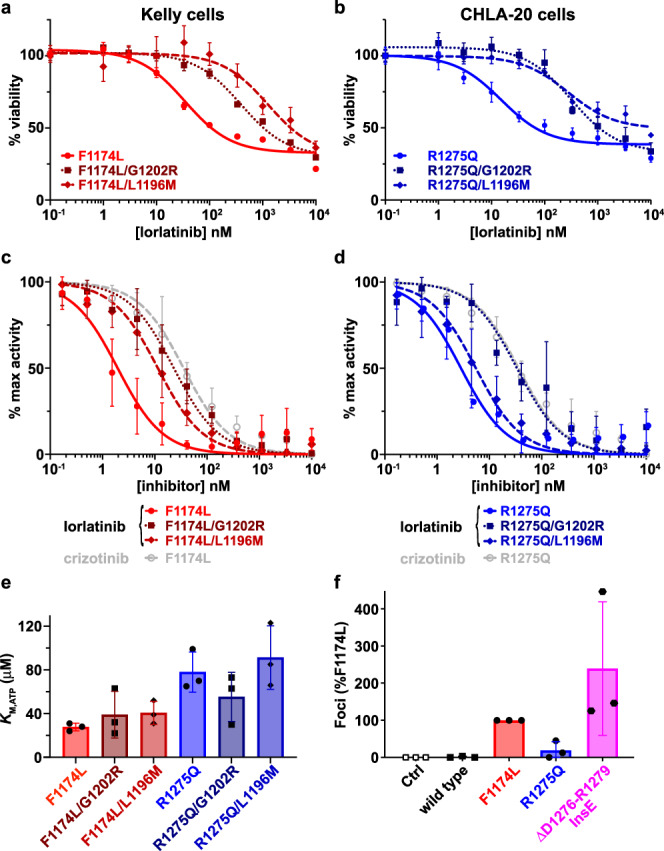
“A large-scale companion study of patients with neuroblastoma, utilizing serial circulating tumor DNA (ctDNA) sampling, has reported that lorlatinib resistance involves secondary ALK mutations in 15% of cases and RAS-MAPK pathway mutations in 27% [ 12 ].”
Bhattacharya, U. (2026) · The Nucleus · doi:10.1007/s13237-026-00703-0
Allosteric Inhibition of TrkB Activation as Related to Neuroblastoma by Triazole Bridged Compounds
Rasmussen, S. V., Chauhan, S., Lashyro, E., Lian, X., Maris, J. M., Farrel, A., Doebele, R. C., Hoshino, T., & Keller, C. (2026) · ACS Chemical Biology · doi:10.1021/acschembio.6c00423
Self-citationLiu, T., Hu, X., Yan, W., Yin, H., & Li, Z. (2026) · Frontiers in Chemistry · doi:10.3389/fchem.2026.1870293
Tucker, E. R., Lampis, A., Househam, J., Roberts, D., Barker, K. T., Costa, B. M. D., Greenslade, K., Mayfield, S., Lorenzi, F., Thorley, E., et al. (2026) · bioRxiv (Cold Spring Harbor Laboratory) · doi:10.64898/2026.09.01.743331
Österlund, T., Andersson, D., Ibrahim, R. R., Mellström, E., Lundmark, J., Junrui, L., Filges, S., Micallef, P., Santamaría, M. L., Escobar, M., et al. (2026) · Journal of Molecular Diagnostics · doi:10.1016/j.jmoldx.2026.08.002
Metadata
- Authors
- Berko, E. R., Witek, G. M., Matkar, S., Petrova, Z. O., Wu, M. A., Smith, C. M., Daniels, A., Kalna, J., Kennedy, A., Gostuski, I., Casey, C., Krytska, K., Gerelus, M., Pavlick, D., Ghazarian, S., Park, J. R., Marachelian, A., Maris, J. M., Goldsmith, K. C., Radhakrishnan, R., Lemmon, M. A., & Mossé, Y. P.
- Affiliations
- Children's Hospital of Philadelphia (US)
- Yale University (US)
- University of Pennsylvania (US)
- Foundation Medicine (United States) (US)
- University of Southern California (US)
- St. Jude Children's Research Hospital (US)
- Seattle Children's Hospital (US)
- Corresponding author
- Lemmon, Mark A.
- Mossé, Yaël P.
- ORCID
- Venue
- Nature Communications
- Published
- 2023-05-05
- Volume
- 14
- Issue
- 1
- Pages
- 2601-2601
- ISSN
- 2041-1723 (ISSN-L)
- PMC
- PMC10163008
- OpenAlex
- W4372294503
- Semantic Scholar
- 4d04ced68a60bf4db459f0dd71ea155474db9e6a
- Cited by
- 53
- References
- 71
- Citations by year
- 2026: 17 · 2025: 19 · 2024: 13 · 2023: 4
- FWCI
- 8.97
- Type
- journal article
- Language
- en
- Open access
- gold
- doi.org
- Licence
- cc-by
- creativecommons.org/licenses/by/4.0 (tdm)
- creativecommons.org/licenses/by/4.0 (vor)
- Locations
- Nature Communications (publishedVersion, cc-by)
- PubMed Central (publishedVersion, cc-by)
- PubMed (publishedVersion)
- DOAJ (DOAJ: Directory of Open Access Journals) (submittedVersion, cc-by-sa)
- Funders
- U.S. Department of Health & Human Services | NIH | National Cancer Institute (CA217959, CA140198)
- Solving Kids' Cancer
- Cookies for Kids Cancer The EVAN Foundation
- U.S. Department of Health & Human Services | NIH | National Institute of General Medical Sciences (GM122485)
- Topics
- Health Sciences › Medicine › Oncology › Neuroblastoma Research and Treatments
- Life Sciences › Biochemistry, Genetics and Molecular Biology › Cancer Research › Cancer Genomics and Diagnostics
- Health Sciences › Medicine › Pulmonary and Respiratory Medicine › Lung Cancer Treatments and Mutations
- Keywords
- lorlatinib resistance, circulating tumor DNA, anaplastic lymphoma kinase, acquired resistance, relapsed/refractory neuroblastoma, targeted therapy, tumor heterogeneity
- MeSH terms
- Circulating Tumor DNA, Anaplastic Lymphoma Kinase, Aminopyridines, Carcinoma, Non-Small-Cell Lung, Humans, Lactams, Lung Neoplasms, Mutation, Neuroblastoma, Pyrazoles, Drug Resistance, Neoplasm, Lactams, Macrocyclic, Protein Kinase Inhibitors
About these checks
Registry, retraction, Cites and statistics results are computed, not judged, with one exception: a printed reference that no index lists is read once by a model before it counts as a citation error. Claims are extracted by a model and kept only when their quote appears verbatim in the text; each cited source is then checked, with a model’s help, for whether it says what the claim relies on. Those verdicts can be wrong — read the claim’s quote and the cited source before relying on one.
Statistics and arithmetic are recomputed, not judged.
Confidence bands are shown only for fields calibrated on our annotated test set. None is calibrated yet, so no band is shown.
What counts as a claim ›How we measure confidence ›How we check this ›
Are you an author, or do you see a problem with this page? Request a review
Data sources
Bibliographic data: Semantic Scholar, OpenAlex, Crossref.
Contains information from the Semantic Scholar Academic Graph Datasets, made available under the ODC Attribution License (ODC-BY 1.0).
Semantic Scholar’s data is described in: Kinney, R., et al. (2023). The Semantic Scholar Open Data Platform. arXiv:2301.10140.
