

Circulating tumor DNA reveals mechanisms of lorlatinib resistance in patients with relapsed/refractory ALK-driven neuroblastoma
Open accessThe DOI matches its Crossref record; 71 of the 71 references it cites were found in a registry or an index.
Abstract
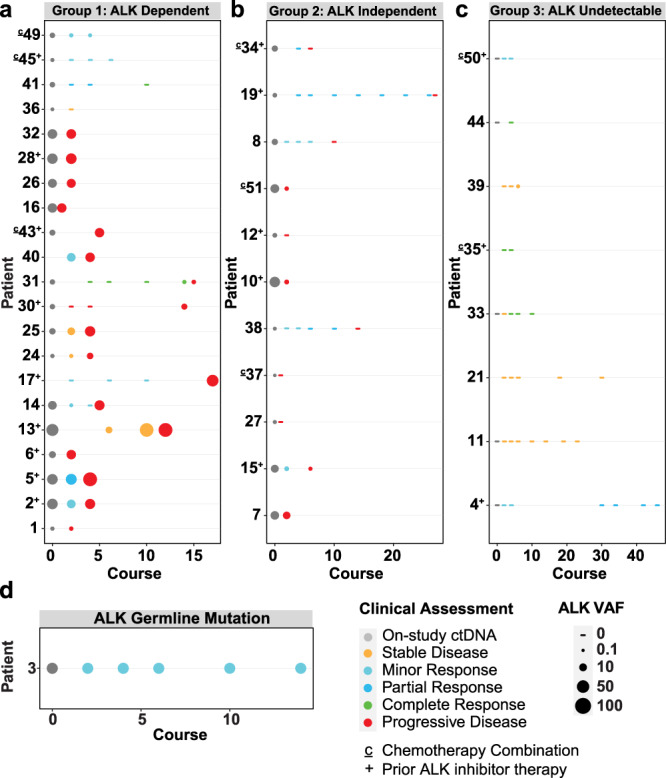
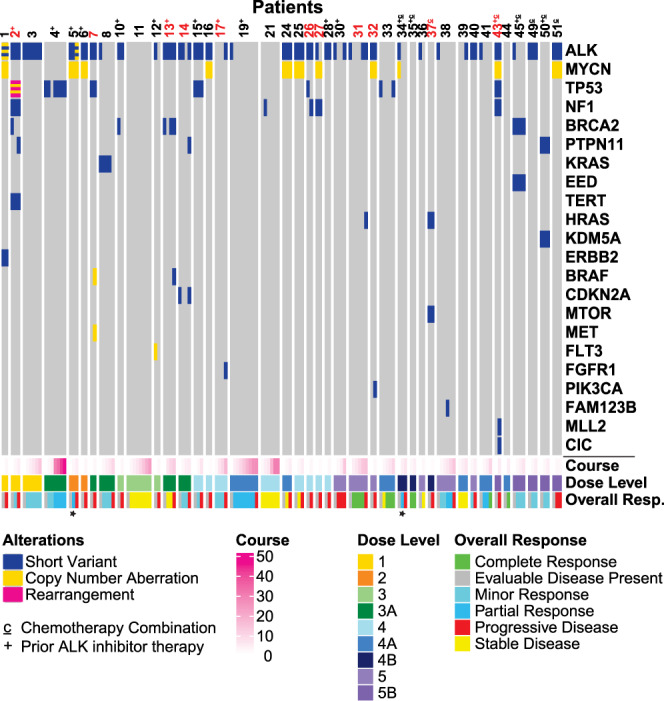
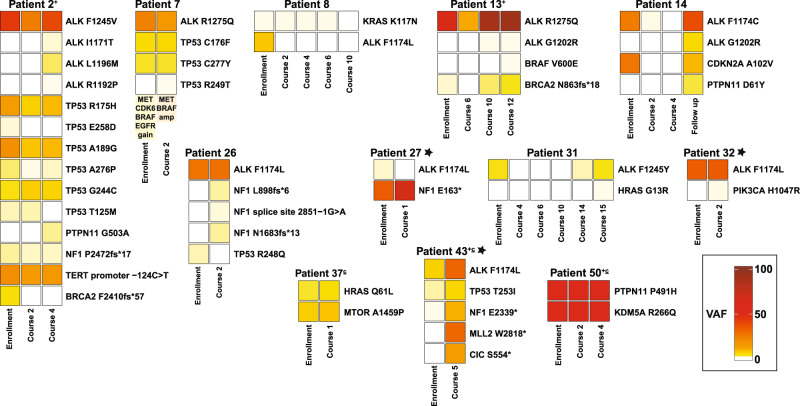
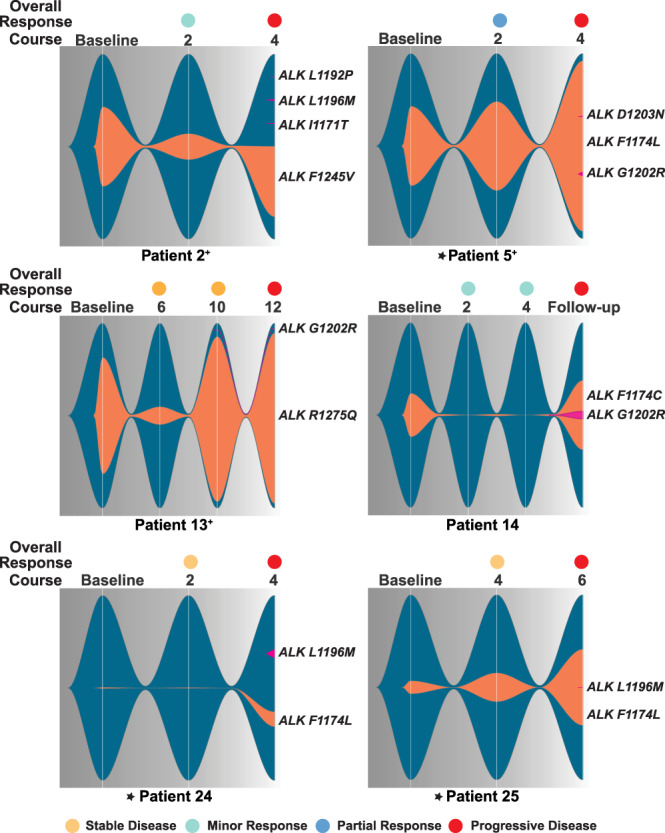
Activating point mutations in Anaplastic Lymphoma Kinase (ALK) have positioned ALK as the only mutated oncogene tractable for targeted therapy in neuroblastoma. Cells with these mutations respond to lorlatinib in pre-clinical studies, providing the rationale for a first-in-child Phase 1 trial (NCT03107988) in patients with ALK-driven neuroblastoma. To track evolutionary dynamics and heterogeneity of tumors, and to detect early emergence of lorlatinib resistance, we collected serial circulating tumor DNA samples from patients enrolled on this trial. Here we report the discovery of off-target resistance mutations in 11 patients (27%), predominantly in the RAS-MAPK pathway. We also identify newly acquired secondary compound ALK mutations in 6 (15%) patients, all acquired at disease progression. Functional cellular and biochemical assays and computational studies elucidate lorlatinib resistance mechanisms. Our results establish the clinical utility of serial circulating tumor DNA sampling to track response and progression and to discover acquired resistance mechanisms that can be leveraged to develop therapeutic strategies to overcome lorlatinib resistance.
Overview
The claims and statistics of this paper haven’t been checked yet.
Free: it reads the open-access text and checks the first 5 claims that cite a source we can check. Create a free account to check every claim.
Integrity signals
Registry
Cites
Statistics
Figures
Verification
Claims the paper makes
The claims and statistics of this paper haven’t been checked yet.
Free: it reads the open-access text and checks the first 5 claims that cite a source we can check. Create a free account to check every claim.
Claims other papers make about this one
Each is checked against this paper’s own text: does it say what the citing paper says it does?
The cited source says what the claim attributes to it.
In the citing paper
“Prior work has demonstrated the utility of liquid biopsies for detection of ALK mutations in patients with NBL to inform targeted therapies.19,26”
From Clinical Liquid Biopsy Testing for Detection of Actionable Genomic Alterations in Children and Young Adults With Advanced Solid Tumors on the GAIN Study (2026) · cites this paper as [26]
Self-check
Percentages, sums and reported differences re-computed from the paper’s own numbers.
The self-check needs the paper’s full text.
Citations
Cites
Comparison of simple potential functions for simulating liquid water
Jorgensen, W. L., Chandrasekhar, J., Madura, J. D., Impey, R. W., & Klein, M. L. (1983) · The Journal of Chemical Physics · doi:10.1063/1.445869 · Cited by 41,298
Molecular dynamics with coupling to an external bath
Berendsen, H. J. C., Postma, J. P. M., van Gunsteren, W. F., DiNola, A., & Haak, J. R. (1984) · The Journal of Chemical Physics · doi:10.1063/1.448118 · Cited by 30,700
Polymorphic transitions in single crystals: A new molecular dynamics method
Parrinello, M., & Rahman, A. (1981) · Journal of Applied Physics · doi:10.1063/1.328693 · Cited by 19,790
All-Atom Empirical Potential for Molecular Modeling and Dynamics Studies of Proteins
MacKerell, A. D., Bashford, D., Bellott, M., Dunbrack, R. L., Evanseck, J. D., Field, M. J., Fischer, S., Gao, J., Guo, H., Ha, S., et al. (1998) · The Journal of Physical Chemistry B · doi:10.1021/jp973084f · Cited by 14,311
Comparative Protein Modelling by Satisfaction of Spatial Restraints
Šali, A., & Blundell, T. L. (1993) · Journal of Molecular Biology · doi:10.1006/jmbi.1993.1626 · Cited by 12,977
Friesner, R. A., Banks, J. L., Murphy, R. B., Halgren, T. A., Klicic, J. J., Mainz, D. T., Repasky, M. P., Knoll, E. H., Shelley, M., Perry, J. K., et al. (2004) · Journal of Medicinal Chemistry · doi:10.1021/jm0306430 · Cited by 10,057
GROMACS 4.5: a high-throughput and highly parallel open source molecular simulation toolkit
Pronk, S., Páll, S., Schulz, R., Larsson, P., Bjelkmar, P., Apostolov, R., Shirts, M. R., Smith, J. C., Kasson, P. M., van der Spoel, D., et al. (2013) · Bioinformatics · doi:10.1093/bioinformatics/btt055 · Cited by 7,473
Friesner, R. A., Murphy, R. B., Repasky, M. P., Frye, L. L., Greenwood, J. R., Halgren, T. A., Sanschagrin, P. C., & Mainz, D. T. (2006) · Journal of Medicinal Chemistry · doi:10.1021/jm051256o · Cited by 6,851
Halgren, T. A., Murphy, R. B., Friesner, R. A., Beard, H. S., Frye, L. L., Pollard, W. T., & Banks, J. L. (2004) · Journal of Medicinal Chemistry · doi:10.1021/jm030644s · Cited by 5,177
First-Line Crizotinib versus Chemotherapy in ALK -Positive Lung Cancer
Solomon, B. J., Mok, T., Kim, D.-W., Wu, Y.-L., Nakagawa, K., Mekhail, T., Felip, E., Cappuzzo, F., Paolini, J., Usari, T., et al. (2014) · New England Journal of Medicine · doi:10.1056/nejmoa1408440 · Cited by 3,190 · cited 1×
“Six patients (2, 13, 14, 26, 31, 32) acquired new RAS-MAPK/PI3K pathway alterations during treatment, nearly always preceding clinical/radiographic diseaseprogression.”
BackgroundXSEDE: Accelerating Scientific Discovery
Towns, J., Cockerill, T., Dahan, M., Foster, I., Gaither, K., Grimshaw, A., Hazlewood, V., Lathrop, S., Lifka, D., Peterson, G. D., et al. (2014) · Computing in Science & Engineering · doi:10.1109/mcse.2014.80 · Cited by 3,109
COPASI—a COmplex PAthway SImulator
Hoops, S., Sahle, S., Gauges, R., Lee, C., Pahle, J., Simus, N., Singhal, M., Xu, L., Mendes, P., & Kummer, U. (2006) · Bioinformatics · doi:10.1093/bioinformatics/btl485 · Cited by 2,618
A hierarchical approach to all‐atom protein loop prediction
Jacobson, M. P., Pincus, D. L., Rapp, C. S., Day, T. J. F., Honig, B., Shaw, D. E., & Friesner, R. A. (2004) · Proteins: Structure, Function, and Bioinformatics · doi:10.1002/prot.10613 · Cited by 2,504
Novel Procedure for Modeling Ligand/Receptor Induced Fit Effects
Sherman, W., Day, T., Jacobson, M. P., Friesner, R. A., & Farid, R. (2006) · Journal of Medicinal Chemistry · doi:10.1021/jm050540c · Cited by 2,031
Phylogenetic ctDNA analysis depicts early-stage lung cancer evolution
The TRACERx consortium, Abbosh, C., The PEACE consortium, Birkbak, N. J., Wilson, G. A., Jamal-Hanjani, M., Constantin, T., Salari, R., Le Quesne, J., Moore, D. A., et al. (2017) · Nature · doi:10.1038/nature22364 · Cited by 1,874
Identification of ALK as a major familial neuroblastoma predisposition gene
Mossé, Y. P., Laudenslager, M., Longo, L., Cole, K. A., Wood, A., Attiyeh, E. F., Laquaglia, M. J., Sennett, R., Lynch, J. E., Perri, P., et al. (2008) · Nature · doi:10.1038/nature07261 · Cited by 1,407 · cited 1×
“Six patients (2, 13, 14, 26, 31, 32) acquired new RAS-MAPK/PI3K pathway alterations during treatment, nearly always preceding clinical/radiographic diseaseprogression.”
BackgroundSelf-citationOn the Role of the Crystal Environment in Determining Protein Side-chain Conformations
Jacobson, M. P., Friesner, R. A., Xiang, Z., & Honig, B. (2002) · Journal of Molecular Biology · doi:10.1016/s0022-2836(02)00470-9 · Cited by 1,267
OPLS3e: Extending Force Field Coverage for Drug-Like Small Molecules
Roos, K., Wu, C., Damm, W., Reboul, M., Stevenson, J. M., Lu, C., Dahlgren, M. K., Mondal, S., Chen, W., Wang, L., et al. (2019) · Journal of Chemical Theory and Computation · doi:10.1021/acs.jctc.8b01026 · Cited by 1,220
Gainor, J. F., Dardaei, L., Yoda, S., Friboulet, L., Leshchiner, I., Katayama, R., Dagogo-Jack, I., Gadgeel, S., Schultz, K., Singh, M., et al. (2016) · Cancer Discovery · doi:10.1158/2159-8290.cd-16-0596 · Cited by 1,148
Outcomes for children and adolescents with cancer: challenges for the twenty-first century
Smith, M. A., Seibel, N. L., Altekruse, S. F., Ries, L. A. G., Melbert, D. L., O'Leary, M., Smith, F. O., & Reaman, G. H. (2010) · Journal of Clinical Oncology · doi:10.1200/jco.2009.27.0421 · Cited by 1,026
Oncogenic mutations of ALK kinase in neuroblastoma
Chen, Y., Takita, J., Choi, Y. L., Kato, M., Ohira, M., Sanada, M., Wang, L., Soda, M., Kikuchi, A., Igarashi, T., et al. (2008) · Nature · doi:10.1038/nature07399 · Cited by 916
Somatic and germline activating mutations of the ALK kinase receptor in neuroblastoma
Janoueix-Lerosey, I., Lequin, D., Brugières, L., Ribeiro, A., de Pontual, L., Combaret, V., Raynal, V., Puisieux, A., Schleiermacher, G., Pierron, G., et al. (2008) · Nature · doi:10.1038/nature07398 · Cited by 894
Activating mutations in ALK provide a therapeutic target in neuroblastoma
George, R. E., Sanda, T., Hanna, M., Fröhling, S., II, W. L., Zhang, J., Ahn, Y., Zhou, W., London, W. B., McGrady, P., et al. (2008) · Nature · doi:10.1038/nature07397 · Cited by 893
Pear, W. S., Miller, J. P., Xu, L., Pui, J. C., Soffer, B., Quackenbush, R. C., Pendergast, A. M., Bronson, R., Aster, J. C., Scott, M. L., et al. (1998) · Blood · doi:10.1182/blood.v92.10.3780 · Cited by 755
Mossé, Y. P., Lim, M. S., Voss, S. D., Wilner, K., Ruffner, K., Laliberte, J., Rolland, D., Balis, F. M., Maris, J. M., Weigel, B. J., et al. (2013) · The Lancet Oncology · doi:10.1016/s1470-2045(13)70095-0 · Cited by 712
Self-citationUse of an Induced Fit Receptor Structure in Virtual Screening
Sherman, W., Beard, H. S., & Farid, R. (2006) · Chemical Biology & Drug Design · doi:10.1111/j.1747-0285.2005.00327.x · Cited by 697
Johnson, T. W., Richardson, P. F., Bailey, S., Brooun, A., Burke, B. J., Collins, M. R., Cui, J. J., Deal, J. G., Deng, Y.-L., Dinh, D., et al. (2014) · Journal of Medicinal Chemistry · doi:10.1021/jm500261q · Cited by 594
Relapsed neuroblastomas show frequent RAS-MAPK pathway mutations
Eleveld, T. F., Oldridge, D. A., Bernard, V., Koster, J., Daage, L. C., Diskin, S. J., Schild, L., Bentahar, N. B., Bellini, A., Chicard, M., et al. (2015) · Nature Genetics · doi:10.1038/ng.3333 · Cited by 540
Self-citationTargeting ALK: Precision Medicine Takes on Drug Resistance
Lin, J. J., Riely, G. J., & Shaw, A. T. (2017) · Cancer Discovery · doi:10.1158/2159-8290.cd-16-1123 · Cited by 522
Woodhouse, R., Li, M., Hughes, J., Delfosse, D., Skoletsky, J., Ma, P., Meng, W., Dewal, N., Milbury, C., Clark, T., et al. (2020) · PLOS ONE · doi:10.1371/journal.pone.0237802 · Cited by 516
Third-generation EGFR and ALK inhibitors: mechanisms of resistance and management
Cooper, A. J., Sequist, L. V., & Lin, J. J. (2022) · Nature Reviews Clinical Oncology · doi:10.1038/s41571-022-00639-9 · Cited by 508
Farid, R., Day, T., Friesner, R. A., & Pearlstein, R. A. (2006) · Bioorganic & Medicinal Chemistry · doi:10.1016/j.bmc.2005.12.032 · Cited by 502
Cha, S. (1975) · Biochemical Pharmacology · doi:10.1016/0006-2952(75)90050-7 · Cited by 502
Mossé, Y. P., Voss, S. D., Lim, M. S., Rolland, D., Minard, C. G., Fox, E., Adamson, P., Wilner, K., Blaney, S. M., & Weigel, B. J. (2017) · Journal of Clinical Oncology · doi:10.1200/jco.2017.73.4830 · Cited by 413
Self-citationBresler, S. C., Weiser, D. A., Huwe, P. J., Park, J. H., Krytska, K., Ryles, H., Laudenslager, M., Rappaport, E. F., Wood, A. C., McGrady, P. W., et al. (2014) · Cancer Cell · doi:10.1016/j.ccell.2014.09.019 · Cited by 388
Self-citationSasaki, T., Okuda, K., Zheng, W., Butrynski, J., Capelletti, M., Wang, L., Gray, N. S., Wilner, K., Christensen, J. G., Demetri, G., et al. (2010) · Cancer Research · doi:10.1158/0008-5472.can-10-2956 · Cited by 335
Yoda, S., Lin, J. J., Lawrence, M. S., Burke, B. J., Friboulet, L., Langenbucher, A., Dardaei, L., Prutisto-Chang, K., Dagogo-Jack, I., Timofeevski, S., et al. (2018) · Cancer Discovery · doi:10.1158/2159-8290.cd-17-1256 · Cited by 322 · cited 1×
“Six patients (2, 13, 14, 26, 31, 32) acquired new RAS-MAPK/PI3K pathway alterations during treatment, nearly always preceding clinical/radiographic diseaseprogression.”
BackgroundMutational dynamics between primary and relapse neuroblastomas
Schramm, A., Köster, J., Assenov, Y., Althoff, K., Peifer, M., Mahlow, E., Odersky, A., Beisser, D., Ernst, C., Henssen, A. G., et al. (2015) · Nature Genetics · doi:10.1038/ng.3349 · Cited by 304
Differential Inhibitor Sensitivity of Anaplastic Lymphoma Kinase Variants Found in Neuroblastoma
Bresler, S. C., Wood, A. C., Haglund, E. A., Courtright, J., Belcastro, L. T., Plegaria, J. S., Cole, K., Toporovskaya, Y., Zhao, H., Carpenter, E. L., et al. (2011) · Science Translational Medicine · doi:10.1126/scitranslmed.3002950 · Cited by 237
Self-citationEmergence of New ALK Mutations at Relapse of Neuroblastoma
Schleiermacher, G., Javanmardi, N., Bernard, V., Leroy, Q., Cappo, J., Rio Frio, T., Pierron, G., Lapouble, E., Combaret, V., Speleman, F., et al. (2014) · Journal of Clinical Oncology · doi:10.1200/jco.2013.54.0674 · Cited by 215
Tukachinsky, H., Madison, R. W., Chung, J. H., Gjoerup, O. V., Severson, E. A., Dennis, L., Fendler, B. J., Morley, S., Zhong, L., Graf, R. P., et al. (2021) · Clinical Cancer Research · doi:10.1158/1078-0432.ccr-20-4805 · Cited by 202
Clark, T. A., Chung, J. H., Kennedy, M., Hughes, J. D., Chennagiri, N., Lieber, D. S., Fendler, B., Young, L., Zhao, M., Coyne, M., et al. (2018) · The Journal of Molecular Diagnostics · doi:10.1016/j.jmoldx.2018.05.004 · Cited by 200
Self-citationInfarinato, N. R., Park, J. H., Krytska, K., Ryles, H. T., Sano, R., Szigety, K. M., Li, Y., Zou, H. Y., Lee, N. V., Smeal, T., et al. (2016) · Cancer Discovery · doi:10.1158/2159-8290.cd-15-1056 · Cited by 183
Self-citationMarker-free coselection for CRISPR-driven genome editing in human cells
Agudelo, D., Duringer, A., Bozoyan, L., Huard, C. C., Carter, S., Loehr, J., Synodinou, D., Drouin, M., Salsman, J., Dellaire, G., et al. (2017) · Nature Methods · doi:10.1038/nmeth.4265 · Cited by 183
Crystal structure of the ALK (anaplastic lymphoma kinase) catalytic domain
Lee, C. C., Jia, Y., Li, N., Sun, X., Ng, K., Ambing, E., Gao, M.-Y., Hua, S., Chen, C., Kim, S., et al. (2010) · Biochemical Journal · doi:10.1042/bj20100609 · Cited by 182
Recondo, G., Mezquita, L., Facchinetti, F., Planchard, D., Gazzah, A., Bigot, L., Rizvi, A. Z., Frias, R. L., Thiery, J. P., Scoazec, J.-Y., et al. (2020) · Clinical Cancer Research · doi:10.1158/1078-0432.ccr-19-1104 · Cited by 167
Goldsmith, K. C., Park, J. R., Kayser, K., Malvar, J., Chi, Y., Groshen, S. G., Villablanca, J. G., Krytska, K., Lai, L. M., Acharya, P. T., et al. (2023) · Nature Medicine · doi:10.1038/s41591-023-02297-5 · Cited by 163
Self-citationTreatment with Next-Generation ALK Inhibitors Fuels Plasma ALK Mutation Diversity
Dagogo-Jack, I., Rooney, M., Lin, J. J., Nagy, R. J., Yeap, B. Y., Hubbeling, H., Chin, E., Ackil, J., Farago, A. F., Hata, A. N., et al. (2019) · Clinical Cancer Research · doi:10.1158/1078-0432.ccr-19-1436 · Cited by 149
Enrichment of Targetable Mutations in the Relapsed Neuroblastoma Genome
Padovan-Merhar, O. M., Raman, P., Ostrovnaya, I., Kalletla, K., Rubnitz, K. R., Sanford, E. M., Ali, S. M., Miller, V. A., Mossé, Y. P., Granger, M. P., et al. (2016) · PLOS Genetics · doi:10.1371/journal.pgen.1006501 · Cited by 135
Self-citationPailler, E., Faugeroux, V., Oulhen, M., Mezquita, L., Laporte, M., Honoré, A., Lécluse, Y., Queffelec, P., Ngo‐Camus, M., Nicotra, C., et al. (2019) · Clinical Cancer Research · doi:10.1158/1078-0432.ccr-19-1176 · Cited by 134
Foster, J. H., Voss, S. D., Hall, D. C., Minard, C. G., Balis, F. M., Wilner, K. D., Berg, S. L., Fox, E., Adamson, P. C., Blaney, S. M., et al. (2021) · Clinical Cancer Research · doi:10.1158/1078-0432.ccr-20-4224 · Cited by 132
Self-citationLuković, E., Gonzalez‐Vera, J. A., & Imperiali, B. (2008) · Journal of the American Chemical Society · doi:10.1021/ja8046188 · Cited by 129
Huang, Q., Johnson, T. W., Bailey, S., Brooun, A., Bunker, K. D., Burke, B. J., Collins, M. R., Cook, A. S., Cui, J. J., Dack, K. N., et al. (2014) · Journal of Medicinal Chemistry · doi:10.1021/jm401805h · Cited by 129
Chicard, M., Boyault, S., Colmet Daage, L., Richer, W., Gentien, D., Pierron, G., Lapouble, E., Bellini, A., Clement, N., Iacono, I., et al. (2016) · Clinical Cancer Research · doi:10.1158/1078-0432.ccr-16-0500 · Cited by 113
Structural and biochemical characterization of the KRLB region in insulin receptor substrate-2
Wu, J., Tseng, Y. D., Xu, C., Neubert, T. A., White, M. F., & Hubbard, S. R. (2008) · Nature Structural & Molecular Biology · doi:10.1038/nsmb.1388 · Cited by 111
Optimal Sox-based fluorescent chemosensor design for serine/threonine protein kinases
Shults, M. D., Carrico-Moniz, D., & Imperiali, B. (2006) · Analytical Biochemistry · doi:10.1016/j.ab.2006.03.003 · Cited by 110
Fischer, M., Moreno, L., Ziegler, D. S., Marshall, L. V., Zwaan, C. M., Irwin, M. S., Casanova, M., Sábado, C., Wulff, B., Stegert, M., et al. (2021) · The Lancet Oncology · doi:10.1016/s1470-2045(21)00536-2 · Cited by 106
Crizotinib Synergizes with Chemotherapy in Preclinical Models of Neuroblastoma
Krytska, K., Ryles, H. T., Sano, R., Raman, P., Infarinato, N. R., Hansel, T. D., Makena, M. R., Song, M. M., Reynolds, C. P., & Mossé, Y. P. (2016) · Clinical Cancer Research · doi:10.1158/1078-0432.ccr-15-0379 · Cited by 105
Self-citationDual ALK and CDK4/6 Inhibition Demonstrates Synergy against Neuroblastoma
Wood, A. C., Krytska, K., Ryles, H. T., Infarinato, N. R., Sano, R., Hansel, T. D., Hart, L. S., King, F. J., Smith, T. R., Ainscow, E., et al. (2017) · Clinical Cancer Research · doi:10.1158/1078-0432.ccr-16-1114 · Cited by 97 · cited 1×
“Six patients (2, 13, 14, 26, 31, 32) acquired new RAS-MAPK/PI3K pathway alterations during treatment, nearly always preceding clinical/radiographic diseaseprogression.”
BackgroundSelf-citationGuan, J., Tucker, E. R., Wan, H., Chand, D., Danielson, L. S., Ruuth, K., Wakil, A. E., Witek, B., Jamin, Y., Umapathy, G., et al. (2016) · Disease Models & Mechanisms · doi:10.1242/dmm.024448 · Cited by 94
Shiba‐Ishii, A., Johnson, T. W., Dagogo‐Jack, I., Mino-Kenudson, M. A., Johnson, T. R., Wei, P. Y., Weinrich, S. L., McTigue, M. A., Walcott, M., Nguyen-Phuong, L., et al. (2022) · Nature Cancer · doi:10.1038/s43018-022-00399-6 · Cited by 86
Berlak, M., Tucker, E., Dorel, M., Winkler, A., McGearey, A., Rodriguez-Fos, E., da Costa, B. M., Barker, K., Fyle, E., Calton, E., et al. (2022) · Molecular Cancer · doi:10.1186/s12943-022-01583-z · Cited by 62
Epstein, L. F., Chen, H., Emkey, R., & Whittington, D. A. (2012) · Journal of Biological Chemistry · doi:10.1074/jbc.m112.391425 · Cited by 53
Lodrini, M., Graef, J., Thole-Kliesch, T. M., Astrahantseff, K., Sprüssel, A., Grimaldi, M., Peitz, C., Linke, R. B., Hollander, J. F., Lankes, E., et al. (2022) · Clinical Cancer Research · doi:10.1158/1078-0432.ccr-21-3716 · Cited by 51
Bosse, K. R., Giudice, A. M., Lane, M. V., McIntyre, B., Schürch, P. M., Pascual-Pasto, G., Buongervino, S. N., Suresh, S., Fitzsimmons, A., Hyman, A., et al. (2022) · Cancer Discovery · doi:10.1158/2159-8290.cd-22-0287 · Cited by 51
Self-citationLin, Y., Chiang, C., Hung, J., Lee, M., Su, W., Wu, S., Wei, Y., Lee, K.-Y., Tseng, Y.-H., Su, J., et al. (2021) · European Journal of Cancer · doi:10.1016/j.ejca.2021.06.043 · Cited by 42
Li, G., Pavlick, D. C., Chung, J., Bauer, T. M., Tan, B. A., Peguero, J., Ward, P. J., Kallab, A. M., Bufill, J. A., Hoffman, A. D., et al. (2019) · Journal of Gastrointestinal Oncology · doi:10.21037/jgo.2019.05.05 · Cited by 39
Self-citationHua, G., Zhang, X., Zhang, M., Wang, Q., Chen, X., Yu, R., Bao, H., Liu, J., Wu, X., Shao, Y., et al. (2022) · ESMO Open · doi:10.1016/j.esmoop.2021.100337 · Cited by 36
Zhou, C., Yuan, Z., Ma, W., Qi, L., Mahavongtrakul, A., Li, Y., Li, H., Gong, J., Fan, R. R., Li, J., et al. (2018) · Journal of Hematology & Oncology · doi:10.1186/s13045-018-0671-8 · Cited by 33
Self-citationSharma, G. G., Cortinovis, D. L., Agustoni, F., Arosio, G., Villa, M., Cordani, N., Bidoli, P., Bisson, W. H., Pagni, F., Piazza, R., et al. (2019) · Journal of Thoracic Oncology · doi:10.1016/j.jtho.2019.06.028 · Cited by 30
Amin, A. D., Li, L., Rajan, S. S., Gokhale, V. M., Groysman, M. J., Pongtornpipat, P., Tapia, E. O., Wang, M., & Schatz, J. H. (2016) · Oncotarget · doi:10.18632/oncotarget.8173 · Cited by 26
Cited by
ALK inhibitors increase ALK expression and sensitize neuroblastoma cells to ALK.CAR-T cells
Bergaggio, E., Tai, W., Aroldi, A., Mecca, C., Landoni, E., Nüesch, M., Mota, I. A., Metović, J., Molinaro, L., Ma, L., et al. (2023) · Cancer Cell · doi:10.1016/j.ccell.2023.11.004 · Cited by 67
ALK in cancer: from function to therapeutic targeting
Voena, C., Ambrogio, C., Iannelli, F., & Chiarle, R. (2025) · Nature reviews. Cancer · doi:10.1038/s41568-025-00797-9 · Cited by 56
“However, neuroblastoma that developed resistance to lorlatinib shows enrichment of mutations in the MAPK and PI3K pathways, including oncogenic alterations of MET, BRAF, EGFR, FGFR1, PTPN11, PIK3CA and RAS GTPases 185,205 .”
Grossmann, L. D., Chen, C.-H., Uzun, Y., Thadi, A., Wolpaw, A. J., Louault, K., Goldstein, Y., Surrey, L. F., Martínez, D., Calafatti, M., et al. (2024) · Cancer Discovery · doi:10.1158/2159-8290.cd-24-0046 · Cited by 45
“39–41 As our data do not support the acquisition of new genetic aberrations during induction therapy as a major driver of cellular persistence, we sought to determine the association between persister subtypes and genetic events present at diagnosis.”
Self-citationKiełbowski, K., Żychowska, J., & Becht, R. (2023) · Frontiers in Pharmacology · doi:10.3389/fphar.2023.1285374 · Cited by 31
Berko, E. R., Naranjo, A. H., Daniels, A. A., McNulty, S. N., Krytska, K., Druley, T. E., Zelley, K., Koneru, B., Chen, L., Polkosnik, G., et al. (2025) · Journal of Clinical Oncology · doi:10.1200/jco-24-02407 · Cited by 22
Self-citation
Metadata
- Authors
- Berko, E. R., Witek, G. M., Matkar, S., Petrova, Z. O., Wu, M. A., Smith, C. M., Daniels, A., Kalna, J., Kennedy, A., Gostuski, I., Casey, C., Krytska, K., Gerelus, M., Pavlick, D., Ghazarian, S., Park, J. R., Marachelian, A., Maris, J. M., Goldsmith, K. C., Radhakrishnan, R., Lemmon, M. A., & Mossé, Y. P.
- Affiliations
- Children's Hospital of Philadelphia (US)
- Yale University (US)
- University of Pennsylvania (US)
- Foundation Medicine (United States) (US)
- University of Southern California (US)
- St. Jude Children's Research Hospital (US)
- Seattle Children's Hospital (US)
- Corresponding author
- Lemmon, Mark A.
- Mossé, Yaël P.
- ORCID
- Venue
- Nature Communications
- Published
- 2023-05-05
- Volume
- 14
- Issue
- 1
- Pages
- 2601-2601
- ISSN
- 2041-1723 (ISSN-L)
- PMC
- PMC10163008
- OpenAlex
- W4372294503
- Semantic Scholar
- 4d04ced68a60bf4db459f0dd71ea155474db9e6a
- Cited by
- 53
- References
- 71
- Citations by year
- 2026: 17 · 2025: 19 · 2024: 13 · 2023: 4
- FWCI
- 8.97
- Type
- journal article
- Language
- en
- Open access
- gold
- doi.org
- Licence
- cc-by
- creativecommons.org/licenses/by/4.0 (tdm)
- creativecommons.org/licenses/by/4.0 (vor)
- Locations
- Nature Communications (publishedVersion, cc-by)
- PubMed Central (publishedVersion, cc-by)
- PubMed (publishedVersion)
- DOAJ (DOAJ: Directory of Open Access Journals) (submittedVersion, cc-by-sa)
- Funders
- U.S. Department of Health & Human Services | NIH | National Cancer Institute (CA217959, CA140198)
- Solving Kids' Cancer
- Cookies for Kids Cancer The EVAN Foundation
- U.S. Department of Health & Human Services | NIH | National Institute of General Medical Sciences (GM122485)
- Topics
- Health Sciences › Medicine › Oncology › Neuroblastoma Research and Treatments
- Life Sciences › Biochemistry, Genetics and Molecular Biology › Cancer Research › Cancer Genomics and Diagnostics
- Health Sciences › Medicine › Pulmonary and Respiratory Medicine › Lung Cancer Treatments and Mutations
- Keywords
- lorlatinib resistance, circulating tumor DNA, anaplastic lymphoma kinase, acquired resistance, relapsed/refractory neuroblastoma, targeted therapy, tumor heterogeneity
- MeSH terms
- Circulating Tumor DNA, Anaplastic Lymphoma Kinase, Aminopyridines, Carcinoma, Non-Small-Cell Lung, Humans, Lactams, Lung Neoplasms, Mutation, Neuroblastoma, Pyrazoles, Drug Resistance, Neoplasm, Lactams, Macrocyclic, Protein Kinase Inhibitors
About these checks
Registry, retraction, Cites and statistics results are computed, not judged, with one exception: a printed reference that no index lists is read once by a model before it counts as a citation error. Claims are extracted by a model and kept only when their quote appears verbatim in the text; each cited source is then checked, with a model’s help, for whether it says what the claim relies on. Those verdicts can be wrong — read the claim’s quote and the cited source before relying on one.
Statistics and arithmetic are recomputed, not judged.
Confidence bands are shown only for fields calibrated on our annotated test set. None is calibrated yet, so no band is shown.
What counts as a claim ›How we measure confidence ›How we check this ›
Are you an author, or do you see a problem with this page? Request a review
Data sources
Bibliographic data: Semantic Scholar, OpenAlex, Crossref.
Contains information from the Semantic Scholar Academic Graph Datasets, made available under the ODC Attribution License (ODC-BY 1.0).
Semantic Scholar’s data is described in: Kinney, R., et al. (2023). The Semantic Scholar Open Data Platform. arXiv:2301.10140.
