

Photo-produced aromatic compounds stimulate microbial degradation of dissolved organic carbon in thermokarst lakes
Open accessThe DOI matches its Crossref record; 70 of the 71 references it cites were found in a registry or an index.
Abstract
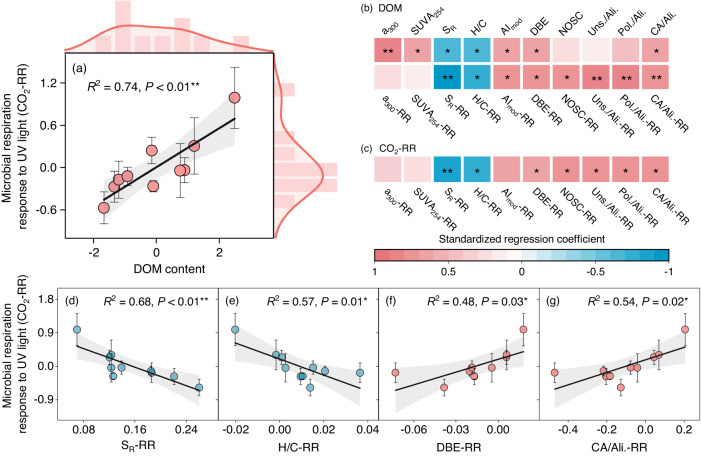
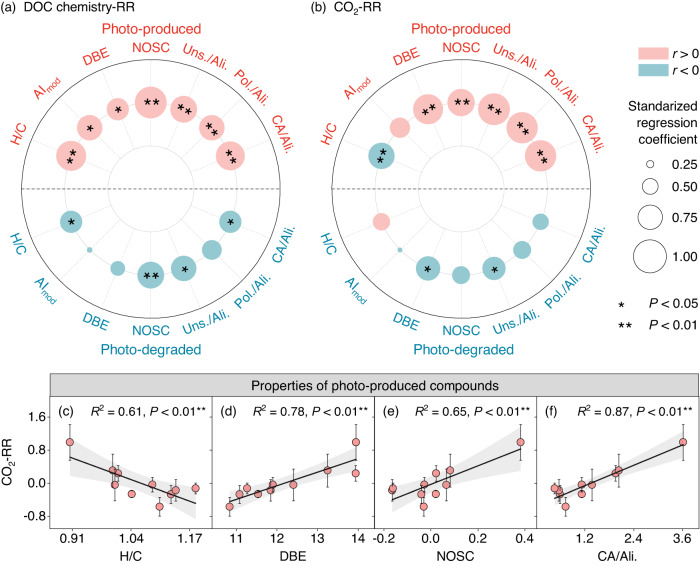
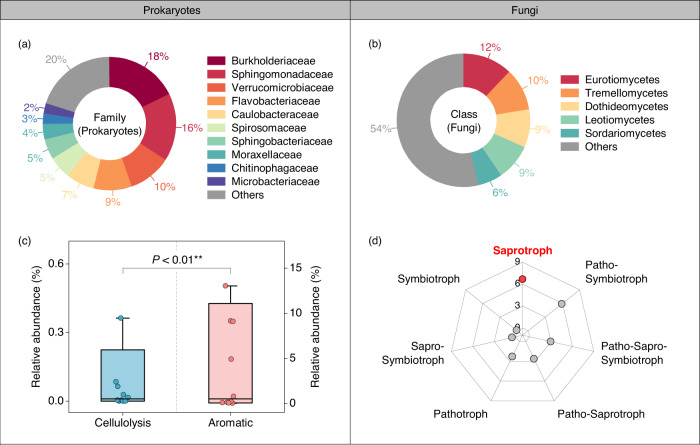
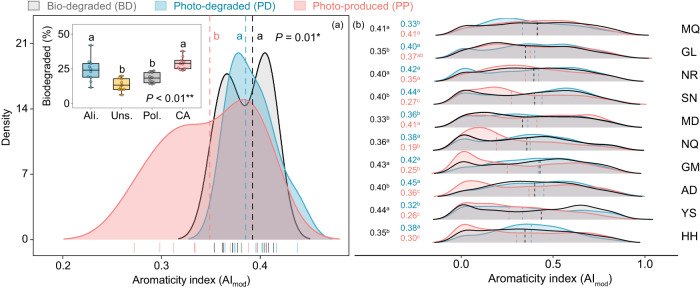
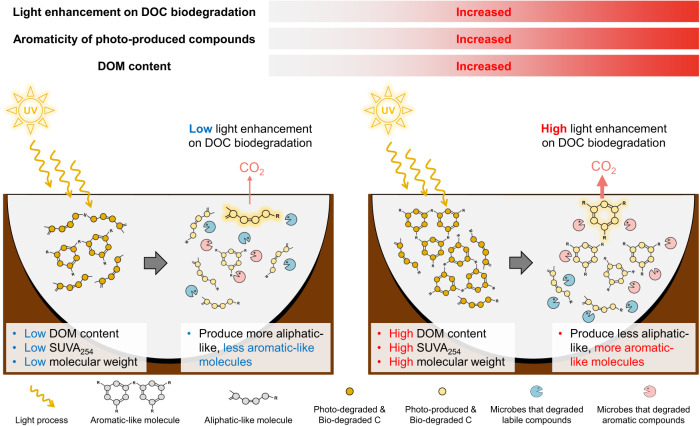
Photochemical and biological degradation of dissolved organic carbon (DOC) and their interactions jointly contribute to the carbon dioxide released from surface waters in permafrost regions. However, the mechanisms that govern the coupled photochemical and biological degradation of DOC are still poorly understood in thermokarst lakes. Here, by combining Fourier transform ion cyclotron resonance mass spectrometry and microbial high-throughput sequencing, we conducted a sunlight and microbial degradation experiment using water samples collected from 10 thermokarst lakes along a 1100-km permafrost transect. We demonstrate that the enhancement of sunlight on DOC biodegradation is not associated with the low molecular weight aliphatics produced by sunlight, but driven by the photo-produced aromatics. This aromatic compound-driven acceleration of biodegradation may be attributed to the potential high abilities of the microbes to decompose complex compounds in thermokarst lakes. These findings highlight the importance of aromatics in regulating the sunlight effects on DOC biodegradation in permafrost-affected lakes.
Overview
The claims and statistics of this paper haven’t been checked yet.
Free: it reads the open-access text and checks the first 5 claims that cite a source we can check. Create a free account to check every claim.
Integrity signals
Registry
Cites
Statistics
Figures
Verification
Claims the paper makes
The claims and statistics of this paper haven’t been checked yet.
Free: it reads the open-access text and checks the first 5 claims that cite a source we can check. Create a free account to check every claim.
Claims other papers make about this one
Each is checked against this paper’s own text: does it say what the citing paper says it does?
The source backs part of the claim, not all of it — or backs it for a different population, condition or comparison.
In the citing paper
“This occurs through direct breakdown of the lignin component of plant litter (photomineralisation) by the radiation [201, 202] and indirectly by facilitating subsequent microbial degradation (photofacilitation) [203–205].”
From Environmental consequences of interacting effects of changes in stratospheric ozone, ultraviolet radiation, and climate: UNEP Environmental Effects Assessment Panel, Update 2024 (2025) · cites this paper as [202]
Experimental — accuracy not yet measured
Self-check
Percentages, sums and reported differences re-computed from the paper’s own numbers.
The self-check needs the paper’s full text.
Citations
Cites
The SILVA ribosomal RNA gene database project: improved data processing and web-based tools
Quast, C., Pruesse, E., Yilmaz, P., Gerken, J., Schweer, T., Yarza, P., Peplies, J., & Glöckner, F. O. (2012) · Nucleic Acids Research · doi:10.1093/nar/gks1219 · Cited by 33,055 · cited 1×
“0 (ITS rRNA, http://unite.ut.ee) database at a con fi dence cutoff of 80% 68,69 .”
fastp: an ultra-fast all-in-one FASTQ preprocessor
Chen, S., Zhou, Y., Chen, Y., & Gu, J. (2018) · Bioinformatics · doi:10.1093/bioinformatics/bty560 · Cited by 29,721 · cited 1×
“Sliding window (window size = 4, quality = 20) in the fastp software (version 0.14.1, https://github.com/OpenGene/ fastp) was used to check the quality of the acquired raw data 66 .”
InfluentialUPARSE: highly accurate OTU sequences from microbial amplicon reads
Edgar, R. C. (2013) · Nature Methods · doi:10.1038/nmeth.2604 · Cited by 16,707
Global patterns of 16S rRNA diversity at a depth of millions of sequences per sample
Caporaso, J. G., Lauber, C. L., Walters, W. A., Berg-Lyons, D., Lozupone, C. A., Turnbaugh, P. J., Fierer, N., & Knight, R. (2011) · Proceedings of the National Academy of Sciences · doi:10.1073/pnas.1000080107 · Cited by 9,711
Weishaar, J. L., Aiken, G. R., Bergamaschi, B. A., Fram, M. S., Fujii, R., & Mopper, K. (2003) · Environmental Science & Technology · doi:10.1021/es030360x · Cited by 4,580
FUNGuild: An open annotation tool for parsing fungal community datasets by ecological guild
Nguyen, N. H., Song, Z., Bates, S. T., Branco, S., Tedersoo, L., Menke, J., Schilling, J. S., & Kennedy, P. G. (2016) · Fungal Ecology · doi:10.1016/j.funeco.2015.06.006 · Cited by 4,530 · cited 2×
“To further reveal the potential functions of the microbial community in the thermokarst lakes, FAPROTAX 35 and FUNGuild 36 were usedtopredictprokaryoticand fungal functionsbased onOperational Taxonomic Unit (OTU) taxonomic information, respectively.”
Climate change and the permafrost carbon feedback
Schuur, E. A. G., McGuire, A. D., Schädel, C., Grosse, G., Harden, J. W., Hayes, D. J., Hugelius, G., Koven, C. D., Kuhry, P., Lawrence, D. M., et al. (2015) · Nature · doi:10.1038/nature14338 · Cited by 3,746 · cited 1×
“Rapid climate warming has led to a widespread permafrost thaw and swift conversion of permafrost-stored C into atmosphere C dioxide (CO 2 ) 4,5 , which may signi fi cantly amplify climate change.”
Towards a unified paradigm for sequence‐based identification of fungi
Kõljalg, U., Nilsson, R. H., Abarenkov, K., Tedersoo, L., Taylor, A. F. S., Bahram, M., Bates, S. T., Bruns, T. D., Bengtsson‐Palme, J., Callaghan, T. M., et al. (2013) · Molecular Ecology · doi:10.1111/mec.12481 · Cited by 3,586
Decoupling function and taxonomy in the global ocean microbiome
Louca, S., Parfrey, L. W., & Doebeli, M. (2016) · Science · doi:10.1126/science.aaf4507 · Cited by 3,510 · cited 2×
“To further reveal the potential functions of the microbial community in the thermokarst lakes, FAPROTAX 35 and FUNGuild 36 were usedtopredictprokaryoticand fungal functionsbased onOperational Taxonomic Unit (OTU) taxonomic information, respectively.”
Helms, J. R., Stubbins, A., Ritchie, J. D., Minor, E. C., Kieber, D. J., & Mopper, K. (2008) · Limnology and Oceanography · doi:10.4319/lo.2008.53.3.0955 · Cited by 2,958 · cited 1×
“Spectral slope ratio (S R ), the ratio of the spectral slope S 275-295 to S 350-400 , was calculated by linear regression from the logarithm of absorbance between 275 – 295nm and 350 – 400 nm, which was negatively correlated to DOC molecular weight 55 .”
Cited by
Niu, Y., Li, Y., Lou, M., Cheng, Z., Ma, R., Guo, H., Zhou, J., Jia, H., Fan, L., & Wang, T. (2024) · Soil Biology and Biochemistry · doi:10.1016/j.soilbio.2024.109454 · Cited by 107
An, S., Du, Y., Huang, X., Lu, Y., Mao, Z., Shi, L., Cotner, J. B., Xing, P., & Zhang, Y. (2024) · Environmental Science & Technology · doi:10.1021/acs.est.4c07307 · Cited by 68
Cui, Y., Wen, S., Stegen, J., Hu, A., & Wang, J. (2023) · Water Research · doi:10.1016/j.watres.2023.121054 · Cited by 56
Short-term warming supports mineral-associated carbon accrual in abandoned croplands
Zhang, Z., Gao, H., Gao, X., Huang, S., Niu, S., Lugato, E., & Xia, X. (2025) · Nature Communications · doi:10.1038/s41467-024-55765-y · Cited by 70
Liu, D., Nie, L., Xi, B., Gao, H., Yang, F., & Yu, H. (2024) · npj Clean Water · doi:10.1038/s41545-024-00370-1 · Cited by 48
“To address this issue, numerous methods, such as conventional spec-troscopies, mass spectrometry, and isotope characteristics, have been employed to elucidate chemical composition and trace sources of DOM in aquatic environment 16,17 .”
Xie, X., Yan, L., Sun, S., Pi, K., Shi, J., & Wang, Y. (2024) · Water Research · doi:10.1016/j.watres.2024.121117 · Cited by 44
Regulatory path for soil microbial communities depends on the type and dose of microplastics
Qi, R., Jones, D. L., Tang, Y., Gao, F., Li, J., Chi, Y., & Yan, C. (2024) · Journal of Hazardous Materials · doi:10.1016/j.jhazmat.2024.134702 · Cited by 43
Liu, L., Hu, L., Kuzyakov, Y. V., Rillig, M. C., Duan, G., Wei, G., & Chen, C. (2025) · Environmental Science & Technology · doi:10.1021/acs.est.5c09633 · Cited by 49
Permafrost carbon cycle and its dynamics on the Tibetan Plateau
Chen, L., Yang, G., Bai, Y., Chang, J., Qin, S., Liu, F., He, M., Song, Y., Zhang, F., Peñuelas, J., et al. (2024) · Science China Life Sciences · doi:10.1007/s11427-023-2601-1 · Cited by 53
“Meanwhile, the degradation of this permafrost-affected DOC is also highly sensitive to sunlight due to the exposure to intense ultraviolet radiation in the region (Hu et al., 2023; Liu et al., 2018b).”
Self-citationChen, L., Li, F., Yang, F., Chen, B., Du, H., Wang, L., & Xu, Y. (2024) · Food Bioscience · doi:10.1016/j.fbio.2024.104363 · Cited by 39
Self-citationGad, M., Khomami, N. T. S., Krieg, R., Schor, J., Philippe, A., & Lechtenfeld, O. J. (2024) · Water Research · doi:10.1016/j.watres.2024.123018 · Cited by 43
Bercovici, S. K., Wiemers, M., Dittmar, T., & Niggemann, J. (2023) · Environmental Science & Technology · doi:10.1021/acs.est.3c05929 · Cited by 37
Li, S.-A., Wang, Q., Ma, H., Cao, X., Song, Y., Cui, F., & Tanentzap, A. J. (2024) · The Science of The Total Environment · doi:10.1016/j.scitotenv.2024.171465 · Cited by 37
Microplastics Generate Less Mineral Protection of Soil Carbon and More CO 2 Emissions
Shi, J. L., Tanentzap, A. J., Sun, Y., Wang, J., Xing, B., Rillig, M. C., Li, C., Jin, L. N., Wang, F., Adyel, T. M., et al. (2024) · Advanced Science · doi:10.1002/advs.202409585 · Cited by 52
Ni, M., Liu, R., Luo, W., Pu, J., Zhang, J., & Wang, X. (2023) · Water Research · doi:10.1016/j.watres.2023.120744 · Cited by 33
He, H., Sun, N., Li, L., Zhou, H., Hu, A., Yang, X., Ai, J., Jiao, R., Yang, X., Wang, D., et al. (2024) · Environmental Science & Technology · doi:10.1021/acs.est.3c08155 · Cited by 57
Song, Y., Cao, X., Li, S.-A., Li, Z., Grossart, H., & Ma, H. (2024) · Journal of Environmental Management · doi:10.1016/j.jenvman.2024.122011 · Cited by 33
Self-citationWang, D., Mai, L., Yu, Z. W., Wang, K.-H., Meng, Z., Wang, X., Li, Q., Lin, J., & Wu, D. (2023) · Bioresource Technology · doi:10.1016/j.biortech.2023.129947 · Cited by 29
Neale, P. J., Hylander, S., Banaszak, A. T., Häder, D.-P., Rose, K. C., Vione, D., Wängberg, S.-Å., Jansen, M. A. K., Busquets, R., Andersen, M. P. S., et al. (2025) · Photochemical & Photobiological Sciences · doi:10.1007/s43630-025-00687-x · Cited by 32
“This occurs through direct breakdown of the lignin component of plant litter (photomineralisation) by the radiation [201, 202] and indirectly by facilitating subsequent microbial degradation (photofacilitation) [203–205].”
Ren, D., Yang, B., Wang, Y., & Wang, J. (2024) · Water Research · doi:10.1016/j.watres.2024.122765 · Cited by 28
Zhao, H., Zhang, Z., Nair, S., Li, H., He, C., Shi, Q., Zheng, Q., Cai, R., Luo, G., Xie, S., et al. (2024) · Global Change Biology · doi:10.1111/gcb.17570 · Cited by 27
“Concurrently, the wa values of the hydrogen- to-carbon ratio (H/C), which typically is lower for RDOC (Hu et al. 2023), decreased below a value of 1.4.”
InfluentialGuo, M., Yu, M., Wang, X., Xiao, N., Huguet, A., Zhang, Y., & Liu, G. (2024) · Water Research · doi:10.1016/j.watres.2024.122936 · Cited by 24
Unravelling molecular fractionation of dissolved organic matter on ferrihydrite-phosphate complexes
Ou, Y., Chi, J., Li, F., Chen, Q., & Fang, L. (2023) · Chemical Geology · doi:10.1016/j.chemgeo.2023.121887 · Cited by 24
Guo, S., Liu, L., Wang, L., & Tang, J. (2024) · Journal of Hazardous Materials · doi:10.1016/j.jhazmat.2024.136331 · Cited by 23
Sunlight-Driven Production of Hydroxyl Radical from Manganese Minerals
Qin, D., Zhang, C., Qin, F., Weng, H., Luo, H., Huang, C., Wu, B., & Chu, C. (2026) · Environmental Science & Technology · doi:10.1021/acs.est.5c11352 · Cited by 22
Accelerated organic matter decomposition in thermokarst lakes upon carbon and phosphorus inputs
Li, Z., Xu, W., Kang, L., Kuzyakov, Y. V., Chen, L., He, M., Liu, F., Zhang, D., Zhou, W. Q., Liu, X., et al. (2023) · Global Change Biology · doi:10.1111/gcb.16938 · Cited by 20
“…quantity of terrestrial carbon (C) from eroding soils and thawing C stocks, and are hotspots of dissolved organic matter (DOM) mineralization (Hu et al., 2023 ; Serikova et al., 2018 ) and greenhouse gas emissions within the permafrost landscape (Canadell et al., 2021 ; Karlsson et al., 2021…”
BackgroundSelf-citationZhu, S., Yang, P., Tian, P., Zhang, S., Tian, S., Yin, Y., Lv, J., Yang, C., Zhou, Z., Tang, Z., et al. (2025) · Water Research · doi:10.1016/j.watres.2025.124316 · Cited by 21
A comprehensive conceptual framework for signaling in-lake CO2 through dissolved organic matter
Ni, M., Liu, R., Luo, W., Pu, J., Wu, S., Wang, Z., Zhang, J., Wang, X., & Ma, Y. (2024) · Water Research · doi:10.1016/j.watres.2024.122228 · Cited by 18
Wen, S., Hu, A., Dini‐Andreote, F., Han, L., Jiang, S., Jang, K., & Wang, J. (2025) · Limnology and Oceanography · doi:10.1002/lno.70015 · Cited by 17
“Instead, the degrade, into small aromatic molecules that are easily utilized (Hu et al. 2023).”
Microbial processes dominate DOM degradation in alpine karst lakes over photochemical effects
You, Q., Zeng, H., Ibrar, M., Zhu, D., Zhao, D., Cao, Y., Zhang, Y., Lei, Y., & Sun, G. (2025) · Environmental Research · doi:10.1016/j.envres.2025.121812 · Cited by 15
He, L., Zhuang, W.-E., Hur, J., & Yang, L. (2025) · Environmental Research · doi:10.1016/j.envres.2025.123418 · Cited by 20
Meng, Y., Feng, L., Du, L., Wang, H., Zhao, X., Wang, T., Sun, W., & Ni, J. (2026) · Environmental Science & Technology · doi:10.1021/acs.est.5c09550 · Cited by 14
Photochemical Transformation of Monochloramine Induced by Triplet State Dissolved Organic Matter
Kong, Q., Yao, L., Ye, L., Pan, Y., Deng, Y., Tan, Z., Zhou, Y., Shi, G., & Yang, X. (2024) · Journal of Hazardous Materials · doi:10.1016/j.jhazmat.2024.134366 · Cited by 14
Enhanced Role of Streamflow Processes in the Evolutionary Trends of Dissolved Organic Carbon
Wu, J., & Yao, H. (2024) · Environmental Science & Technology · doi:10.1021/acs.est.3c09508 · Cited by 15
Zhang, W., Ma, T., Lu, J., Zhu, J., Ren, T., Cong, R., Lu, Z., Zhang, Y., & Li, X. (2024) · Journal of Environmental Management · doi:10.1016/j.jenvman.2024.122777 · Cited by 13
Sang, D., Zhang, C., Yao, X., Lü, W., Sun, Z., Wang, S., Zhang, J., Sun, X., & Liu, J. (2025) · Journal of Hydrology · doi:10.1016/j.jhydrol.2025.134067 · Cited by 11
Zhang, D., Luo, J., Li, X., Wu, D., Xie, Y., Zeng, H., Deng, H., Chen, Q., Ge, C., & Zhang, Y. (2025) · Water Research · doi:10.1016/j.watres.2025.125139 · Cited by 10
The Emergence and Promise of Functional Chemogeography of Organic Matter
Hu, A., Stegen, J., Tanentzap, A. J., & Wang, J. (2025) · Global Change Biology · doi:10.1111/gcb.70435 · Cited by 13
Drozdova, O. Y., Алешина, А. Р., Lapitskiy, S. A., & Сергеевич, П. О. (2025) · Water Research · doi:10.1016/j.watres.2025.123756 · Cited by 12
Seasonal and diurnal changes of pCO2 in the lower Brahmaputra River, Bangladesh
Hassan, M. A., Shammi, M., & Tareq, S. M. (2024) · Scientific Reports · doi:10.1038/s41598-024-71872-8 · Cited by 10
Liu, J., Wu, H., Xu, X., Wang, B., Wu, Y., & Gu, J. (2025) · SPE Journal · doi:10.2118/224429-pa · Cited by 9
Hu, S., Zhao, D., He, R., Sun, X., & Zeng, J. (2025) · Journal of Cleaner Production · doi:10.1016/j.jclepro.2025.145295 · Cited by 10
Li, Q., Liu, R., Jing, Z., Wei, Y., Tu, S., Yu, H., Gao, H., & Yuan, P. (2024) · Journal of Environmental Sciences · doi:10.1016/j.jes.2024.04.007 · Cited by 11
Yang, W., Cheng, Y., Wu, X., Zhou, J., & Liu, X. (2024) · Microorganisms · doi:10.3390/microorganisms13010002 · Cited by 10
“…can decompose organic matter, accelerate the carbon cycle, promote the formation of soil aggregates, and secrete plant growth hormones [38]; Proteobacteria contains nitrogen-fixing bacteria and photosynthetic bacteria related to plant growth and soil fertility, which can promote…”
Self-citationLi, Y., Wang, G., Wang, W., Sun, X., Li, Y., Xiao, J., Xie, W., Ding, J., & Song, C. (2025) · Journal of Hydrology · doi:10.1016/j.jhydrol.2025.132751 · Cited by 8
Chen, Q., Lønborg, C., Chen, J., Giovannoni, S. J., He, C., Gao, K., Shi, Q., Jiao, N., & Zheng, Q. (2025) · Environmental Research · doi:10.1016/j.envres.2025.121159 · Cited by 8
Liu, F., Kang, L., Lin, L., & Yu, S. (2025) · Ecology and Evolution · doi:10.1002/ece3.71290 · Cited by 8
“Both the dissolved organic carbon (DOC) and total dissolved nitrogen (TDN) were determined using a multi- NC-3100 analyzer (Analytik Jena Ltd., Jena, Germany) after establishing a standard curve with DOC and TDN mother liquor (Hu et al. 2023).”
Self-citationFan, L., Han, T., Huang, X., Zhang, Y., Zhai, W., Zhang, D., & Pan, X. (2025) · Environmental Pollution · doi:10.1016/j.envpol.2025.126276 · Cited by 9
The double-edged environmental effect of dissolved organic matter in global climate change
Zhao, J., Yuan, Q., Lei, X., Lieke, T., Liu, Y., Steinberg, C. E. W., Pan, B., & Xing, B. (2025) · Environmental and Biogeochemical Processes · doi:10.48130/ebp-0025-0009 · Cited by 10
Fan, M., Xu, Q., Wang, X., Fang, Z., van Loosdrecht, M. C. M., Pabst, M., Tao, Y., Rose, J. B., van der Meer, W., & Liu, G. (2026) · Nature Water · doi:10.1038/s44221-025-00542-4 · Cited by 8
“Previous studies have demonstrated that combining these two advanced approaches enables a deeper understanding of the microecological interactions between microorganisms and DOM in aquatic environments 29–31 .”
Wang, Y., Wang, M., Jiang, Y., Song, C., Zhang, Y., & Liu, G. (2025) · Journal of Hazardous Materials · doi:10.1016/j.jhazmat.2025.137812 · Cited by 8
Cui, Y., Wen, S., Stegen, J., Hu, A., & Wang, J. (2025) · Water Research · doi:10.1016/j.watres.2025.124870 · Cited by 9
Liu, S., Yao, L., Chen, R., Xing, H., Pang, J., Zhang, L., Wu, Z., & Zhou, Q. (2025) · Bioresource Technology · doi:10.1016/j.biortech.2025.132925 · Cited by 7
Self-citationHe, D., Wang, W., Maurischat, P., Yi, Y., Qi, Y., Hu, X., Tu, S., Yu, S., Zeng, J., Wu, Q., et al. (2026) · Water Research · doi:10.1016/j.watres.2026.125765 · Cited by 6
Shi, Z., Du, Y., Liu, H., & Xie, X. (2024) · The Science of The Total Environment · doi:10.1016/j.scitotenv.2024.175647 · Cited by 6
Photoinduced Evolutions of Permafrost-Derived Carbon in Subarctic Thermokarst Pond Surface Waters
Wang, T., Kalalian, C., Wang, X., Li, D., Perrier, S., Chen, J., Dominé, F., Zhang, L., & George, C. (2024) · Environmental Science & Technology · doi:10.1021/acs.est.4c05320 · Cited by 6
Xie, D., Wu, F., Liao, W., Zhou, Q., Gao, J., Zhu, S., Xu, X., Zhou, Y., & Ma, J. (2025) · Water Research · doi:10.1016/j.watres.2025.124980 · Cited by 4
Ni, M., Luo, W., Pu, J., Zeng, G., Long, J., Chen, J., Zhang, J., Wang, X., & Wang, Z. (2026) · Hydrology and earth system sciences · doi:10.5194/hess-30-1381-2026 · Cited by 5
Zhang, Y., Liu, X., Chen, H., Li, Q., Feng, H., Wang, H., Chen, J., Li, W., & Yang, K. (2026) · Journal of Hydrology · doi:10.1016/j.jhydrol.2026.135800 · Cited by 4
Self-citationWang, J., Tian, Y., Li, Y., Wang, Y., Li, Z., Chen, L., & Zheng, M. (2025) · Journal of Cleaner Production · doi:10.1016/j.jclepro.2025.145245 · Cited by 5
Self-citationChang, L., Deng, J., Zhang, J., Fu, Q., Wang, T., Osono, T., Peng, H., Robson, T. M., Kurokawa, H., & Wang, Q. (2025) · Journal of Forestry Research · doi:10.1007/s11676-024-01811-w · Cited by 6
“The dynamics of litter chemical composition at the molecular level provides a comprehensive approach to analyze plant-derived C loss (Lammers et al. 2009; Hu et al. 2023).”
Liu, W., Zhu, X., Lv, X., Yang, W., Wang, M., Ye, Z., Liu, D., & Ma, J. (2025) · Industrial Crops and Products · doi:10.1016/j.indcrop.2025.122297 · Cited by 4
Wang, M., Wang, Y. N., Zhang, L., Xiong, L., Hua, Y., Guo, M., & Liu, G. (2026) · Ecological Indicators · doi:10.1016/j.ecolind.2026.114615 · Cited by 3
Clusters of composition: Elemental content of aquatic organic matter in UK and Faroe peatlands
Moody, C. (2024) · Water Research · doi:10.1016/j.watres.2024.121935 · Cited by 4
Li, H., Zhou, Z., Xiang, T., Zeng, L., Chen, F., Yuan, X., Yang, J. W., & Zhang, J. (2025) · ACS ES&T Water · doi:10.1021/acsestwater.4c00968 · Cited by 4
Unlocking the past: Release of hazardous contaminants into water from thawing permafrost
Gulfam-E-Jannat, S., Bitar, L. E., Baghirzade, B. S., Arora, U., Sinha, N., Dev, S., Kanevskiy, M., Aggarwal, S., Kirisits, M. J., & Saleh, N. B. (2025) · Journal of Hazardous Materials · doi:10.1016/j.jhazmat.2025.139068 · Cited by 4
Gao, Z., Niu, F., Luo, D., Wang, Y., Luo, J., Yin, G., & Shang, Y. (2024) · Journal of Earth Science · doi:10.1007/s12583-024-2017-5 · Cited by 4
“Suprapermafrost groundwater can transport large quanti‐ ties of carbon species, including DOC, dissolved inorganic car‐ bon (DIC), and particulate organic carbon (POC) (Hu Y L et al., 2023).”
Wang, H., Song, S., Xu, W. M., & Yue, F. (2025) · Water · doi:10.3390/w17182681 · Cited by 3
An, S., Álvarez–Salgado, X. A., Wu, F., Zhang, S., He, D., Chen, H., Lu, Y., Du, Y., & Zhang, Y. (2025) · Water Research · doi:10.1016/j.watres.2025.125239 · Cited by 3
Zhang, L., Chen, X., Liang, A., Huang, D., Huang, W., Liu, Y., Jiao, S., Ye, W., Wang, Y., & Wei, B. (2026) · Agriculture Ecosystems & Environment · doi:10.1016/j.agee.2026.110478 · Cited by 3
Patterns and drivers of prokaryotic communities in thermokarst lake water across Northern Hemisphere
Kang, L., Chen, L., Li, Z., Wang, J., Xue, K., Deng, Y., Delgado‐Baquerizo, M., Song, Y., Zhang, D., Yang, G., et al. (2023) · Global Ecology and Biogeography · doi:10.1111/geb.13764 · Cited by 3
Self-citationMasigol, H., Retter, A., Pourmoghaddam, M. J., Amini, H., Taheri, S. R., Mostowfizadeh‐Ghalamfarsa, R., Kimiaei, M., & Grossart, H. (2023) · Journal of Fungi · doi:10.3390/jof10010020 · Cited by 3
“Most recently, Hu et al. [22] studied 196 thermokarst lakes at 48 sites along a 1100-km permafrost transect across the Tibetan Plateau to understand the effect of sunlight on microbial degradation of DOM.”
BackgroundLiu, Y., Wang, X., Liu, X., Nan, F., Wang, J., Liu, Q., Lv, J., Feng, J., & Xie, S. (2024) · Harmful Algae · doi:10.1016/j.hal.2024.102740 · Cited by 3
Self-citationYan, Z., Pi, M., You, T., Wang, L., Wang, S., & Zeng, X. (2025) · Water Research X · doi:10.1016/j.wroa.2025.100364 · Cited by 4
Liu, J., Yuan, M., Chen, X., Lv, Y., Tu, Z., Fang, X., Ren, F., Kuang, J., & Shi, Z. (2025) · Journal of Environmental Management · doi:10.1016/j.jenvman.2025.127983 · Cited by 4
Hu, A., Huang, Y., He, H., Zheng, Y., Xiao, Y., Wang, D., & Zhang, W. (2024) · Separation and Purification Technology · doi:10.1016/j.seppur.2024.128536 · Cited by 3
Spatial and Temporal Variations in Aquatic Organic Matter Composition in UK Surface Waters
Moody, C., Bell, N. G. A., Mackay, C. L., & Kitson, E. (2025) · ACS ES&T Water · doi:10.1021/acsestwater.4c01113 · Cited by 3
Wang, H., Lao, X., Mostofa, K. M. G., Li, S., Liu, C., Yuan, J., Zhang, J., & Yue, F. (2025) · Environmental Research · doi:10.1016/j.envres.2025.123458 · Cited by 2
Jin, T., Wang, J., Huang, S., Zhou, X., Li, Y., & Wang, L. (2026) · Journal of Hazardous Materials · doi:10.1016/j.jhazmat.2026.141372 · Cited by 4
Zhao, A., You, J., Liao, K., Ren, H., & Hu, H. (2026) · Environmental Science & Technology · doi:10.1021/acs.est.5c14685 · Cited by 2
Aridity Modulates Warming Impacts on Microbial Carbon Use Efficiency
Zhang, Z., 高晓霞, Gao, H., Lugato, E., Gao, Q., Zhang, Q., Zhou, J. Z., & Xinhui, X. I. A. (2026) · Environmental Science & Technology · doi:10.1021/acs.est.6c01242 · Cited by 2
Bian, H., Zhang, W., Sun, X., Zhang, D., Chen, X., & Shan, B. (2026) · Chemical Engineering Journal · doi:10.1016/j.cej.2026.175015 · Cited by 2
Folhas, D., Freitas, P., Laberge-Carignan, A., Isabelle Laurion, E., Vincent, W. F., Couture, R., & Canário, J. (2026) · Organic Geochemistry · doi:10.1016/j.orggeochem.2026.105186 · Cited by 2
Tao, Y., Wang, Q., Bao, M., Tian, Y., & Lu, L. (2026) · Frontiers in Microbiology · doi:10.3389/fmicb.2026.1876937 · Cited by 3
“A canonical paradigm suggests that photodegradation typically facilitates subsequent microbial degradation by breaking down complex molecules into more bioavailable substrates (Ward et al., 2017; Hu et al., 2023).”
InfluentialLiu, Z., Chen, M., Liu, H., Wang, H., Ning, Z., Zhang, W., Liu, Y., & Tang, M. (2025) · Water · doi:10.3390/w17020203 · Cited by 1
Zhang, X., Zhu, S., Lan, X., Tian, S., Lu, J. N., Tang, J., Chen, X., Li, G., Lv, J., Yin, Y., et al. (2025) · Hydrobiologia · doi:10.1007/s10750-025-06007-9 · Cited by 2
“This is because photodegradation leads to the production of more labile and accessible OM for further microbial degradation (Cory et al., 2013; Hu et al., 2023).”
Yu, L.-L., Wang, Q., Yin, H., & Mao, R. (2025) · European Journal of Forest Research · doi:10.1007/s10342-025-01832-y · Cited by 1
Deng, K., He, Q., Yang, R., Fang, F., Huo, Y., Chen, B., Yang, H., Lin, G., Yan, P., Chen, Y., et al. (2026) · Environmental Pollution · doi:10.1016/j.envpol.2026.127850 · Cited by 1
Wang, R., Luo, Y., Chen, F., Hao, Z., Ren, D., & Wang, J. (2026) · Water Research · doi:10.1016/j.watres.2026.126635 · Cited by 1
Lu, W. (2024) · Science and Technology of Engineering Chemistry and Environmental Protection · doi:10.61173/91707m71
Chen, Y., Qingfeng, Z., Zhang, C., Li, X., & Yuxin, H. (2025) · Journal of Lake Sciences · doi:10.18307/2025.0223
Qiu, J., Zhou, Y., Feng, C., Chen, G., & Yang, X. (2025) · Environmental Science & Technology · doi:10.1021/acs.est.4c11047
Zhang, Z., Tian, L., Wang, J., Zheng, H., Liu, M., & Niu, S. (2026) · Geoderma · doi:10.1016/j.geoderma.2026.117782
Liu, Z., Wang, W., Liu, D., He, H., Wang, E., Wan, H., & Liu, X. (2026) · Journal of Hazardous Materials · doi:10.1016/j.jhazmat.2026.141845 · Cited by 1
Self-citationSong, G., Fuxin, N., Gong, Y., Massicotte, P., Zuo, H., Li, M., & Xie, H. (2026) · Environmental Science Processes & Impacts · doi:10.1039/d5em01004g
Zhou, C., Fan, Y., 王淑真, Zhang, Y., Qiu, W., Yu, Y., & Chen, L. (2026) · Plant and Soil · doi:10.1007/s11104-026-08598-1 · Cited by 1
“DOM compounds were classified into six classes based on H/C and O/C ratios (Yuan et al. 2017), and into four classes based on H/C ratio and AI mod (Hu et al. 2023a).”
Self-citationChen, G.-L., Du, M., Qian, C., & Yu, H. (2026) · Environmental Science & Technology · doi:10.1021/acs.est.6c01478
Zheng, W., Chen, Y., Lv, J., Yang, W., He, Y., Yuan, M., Wang, T., Xu, Z., & Jin, W. (2026) · Journal of Cleaner Production · doi:10.1016/j.jclepro.2026.148847 · Cited by 1
Panhota, R. S., da Cunha‐Santino, M. B., Vieira, A. A. H., & Bianchini, I. (2026) · Aquatic Sciences · doi:10.1007/s00027-026-01339-7
“The decomposition of dissolved organic carbon (DOC) occurs via photo-oxidation and microbial catabolism (Hu et al. 2023).”
Dohle, S. A., Diéguez, M. D. C., & Garcia, P. E. (2026) · Journal of Environmental Sciences · doi:10.1016/j.jes.2026.105615
Metadata
- Authors
- Hu, J., Kang, L., Li, Z., Feng, X., Liang, C., Wu, Z., Zhou, W., Liu, X., Yang, Y., & Chen, L.
- Affiliations
- Chinese Academy of Sciences (CN)
- Corresponding author
- Chen, Leiyi
- Venue
- Nature Communications
- Published
- 2023-06-21
- Volume
- 14
- Issue
- 1
- Pages
- 3681-3681
- ISSN
- 2041-1723 (ISSN-L)
- PMC
- PMC10284890
- OpenAlex
- W4381599070
- Semantic Scholar
- 2fa6dc6fb16df05b961541cf99b40896f4233a9a
- Cited by
- 114
- References
- 71
- Citations by year
- 2026: 37 · 2025: 38 · 2024: 30 · 2023: 9
- FWCI
- 12.59
- Type
- journal article
- Language
- en
- Open access
- gold
- doi.org
- Licence
- cc-by
- creativecommons.org/licenses/by/4.0 (tdm)
- creativecommons.org/licenses/by/4.0 (vor)
- Locations
- Nature Communications (publishedVersion, cc-by)
- PubMed Central (publishedVersion, cc-by)
- PubMed (publishedVersion)
- RePEc: Research Papers in Economics (submittedVersion)
- DOAJ (DOAJ: Directory of Open Access Journals) (submittedVersion, cc-by-sa)
- Funders
- National Natural Science Foundation of China (32241034, 42141006)
- Youth Innovation Promotion Association of the Chinese Academy of Sciences (Y2021031)
- Topics
- Physical Sciences › Earth and Planetary Sciences › Atmospheric Science › Climate change and permafrost
- Physical Sciences › Earth and Planetary Sciences › Oceanography › Marine Plankton and Biogeochemistry
- Life Sciences › Agricultural and Biological Sciences › Soil Science › Soil Carbon and Nitrogen Dynamics
- Keywords
- dissolved organic carbon, photodegradation, microbial degradation, aromatic compounds, thermokarst lakes, permafrost, sunlight effects, CO2 emissions, aliphatic compounds, permafrost carbon cycle, microbial communities
- MeSH terms
- Dissolved Organic Matter, Organic Chemicals, Sunlight, Photochemical Processes, Lakes, Permafrost
About these checks
Registry, retraction, Cites and statistics results are computed, not judged, with one exception: a printed reference that no index lists is read once by a model before it counts as a citation error. Claims are extracted by a model and kept only when their quote appears verbatim in the text; each cited source is then checked, with a model’s help, for whether it says what the claim relies on. Those verdicts can be wrong — read the claim’s quote and the cited source before relying on one.
Statistics and arithmetic are recomputed, not judged.
Confidence bands are shown only for fields calibrated on our annotated test set. None is calibrated yet, so no band is shown.
What counts as a claim ›How we measure confidence ›How we check this ›
Are you an author, or do you see a problem with this page? Request a review
Data sources
Bibliographic data: Semantic Scholar, OpenAlex, Crossref.
Contains information from the Semantic Scholar Academic Graph Datasets, made available under the ODC Attribution License (ODC-BY 1.0).
Semantic Scholar’s data is described in: Kinney, R., et al. (2023). The Semantic Scholar Open Data Platform. arXiv:2301.10140.
