

Photo-produced aromatic compounds stimulate microbial degradation of dissolved organic carbon in thermokarst lakes
Open accessThe DOI matches its Crossref record; 70 of the 71 references it cites were found in a registry or an index.
Abstract
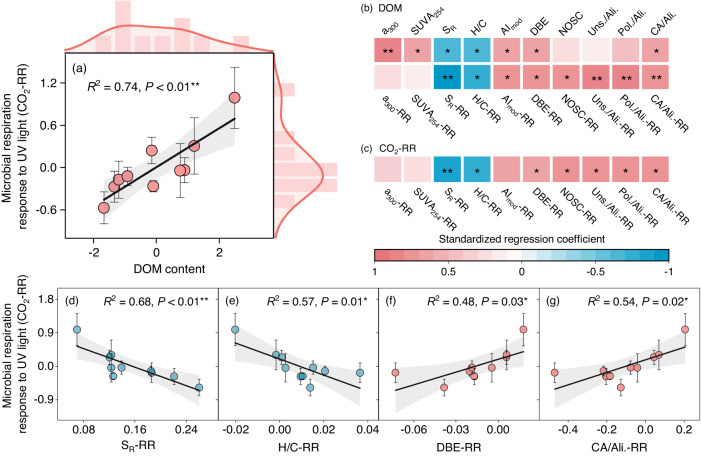
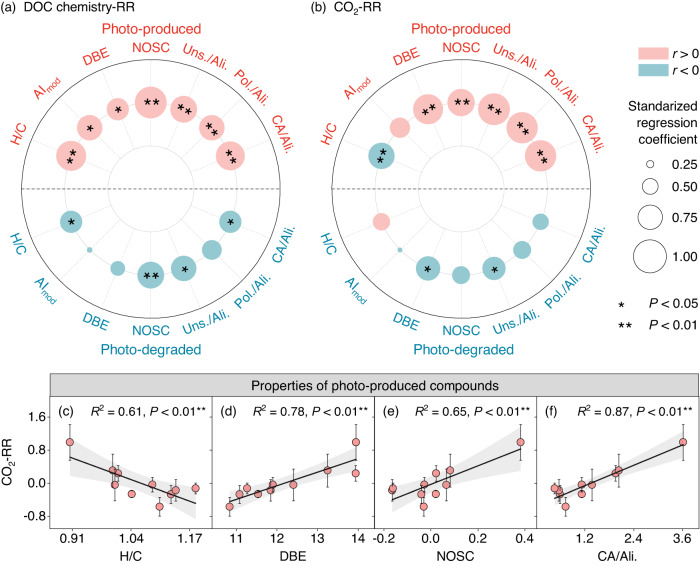
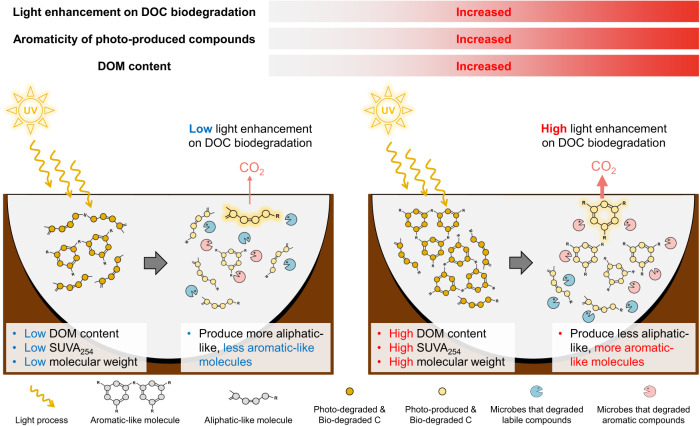
Photochemical and biological degradation of dissolved organic carbon (DOC) and their interactions jointly contribute to the carbon dioxide released from surface waters in permafrost regions. However, the mechanisms that govern the coupled photochemical and biological degradation of DOC are still poorly understood in thermokarst lakes. Here, by combining Fourier transform ion cyclotron resonance mass spectrometry and microbial high-throughput sequencing, we conducted a sunlight and microbial degradation experiment using water samples collected from 10 thermokarst lakes along a 1100-km permafrost transect. We demonstrate that the enhancement of sunlight on DOC biodegradation is not associated with the low molecular weight aliphatics produced by sunlight, but driven by the photo-produced aromatics. This aromatic compound-driven acceleration of biodegradation may be attributed to the potential high abilities of the microbes to decompose complex compounds in thermokarst lakes. These findings highlight the importance of aromatics in regulating the sunlight effects on DOC biodegradation in permafrost-affected lakes.
Overview
The claims and statistics of this paper haven’t been checked yet.
Free: it reads the open-access text and checks the first 5 claims that cite a source we can check. Create a free account to check every claim.
Integrity signals
Registry
Cites
Statistics
Figures
Verification
Claims the paper makes
The claims and statistics of this paper haven’t been checked yet.
Free: it reads the open-access text and checks the first 5 claims that cite a source we can check. Create a free account to check every claim.
Claims other papers make about this one
Each is checked against this paper’s own text: does it say what the citing paper says it does?
The source backs part of the claim, not all of it — or backs it for a different population, condition or comparison.
In the citing paper
“This occurs through direct breakdown of the lignin component of plant litter (photomineralisation) by the radiation [201, 202] and indirectly by facilitating subsequent microbial degradation (photofacilitation) [203–205].”
From Environmental consequences of interacting effects of changes in stratospheric ozone, ultraviolet radiation, and climate: UNEP Environmental Effects Assessment Panel, Update 2024 (2025) · cites this paper as [202]
Experimental — accuracy not yet measured
Self-check
Percentages, sums and reported differences re-computed from the paper’s own numbers.
The self-check needs the paper’s full text.
Citations
Cites
The SILVA ribosomal RNA gene database project: improved data processing and web-based tools
Quast, C., Pruesse, E., Yilmaz, P., Gerken, J., Schweer, T., Yarza, P., Peplies, J., & Glöckner, F. O. (2012) · Nucleic Acids Research · doi:10.1093/nar/gks1219 · Cited by 33,055 · cited 1×
“0 (ITS rRNA, http://unite.ut.ee) database at a con fi dence cutoff of 80% 68,69 .”
fastp: an ultra-fast all-in-one FASTQ preprocessor
Chen, S., Zhou, Y., Chen, Y., & Gu, J. (2018) · Bioinformatics · doi:10.1093/bioinformatics/bty560 · Cited by 29,721 · cited 1×
“Sliding window (window size = 4, quality = 20) in the fastp software (version 0.14.1, https://github.com/OpenGene/ fastp) was used to check the quality of the acquired raw data 66 .”
InfluentialUPARSE: highly accurate OTU sequences from microbial amplicon reads
Edgar, R. C. (2013) · Nature Methods · doi:10.1038/nmeth.2604 · Cited by 16,707
Global patterns of 16S rRNA diversity at a depth of millions of sequences per sample
Caporaso, J. G., Lauber, C. L., Walters, W. A., Berg-Lyons, D., Lozupone, C. A., Turnbaugh, P. J., Fierer, N., & Knight, R. (2011) · Proceedings of the National Academy of Sciences · doi:10.1073/pnas.1000080107 · Cited by 9,711
Weishaar, J. L., Aiken, G. R., Bergamaschi, B. A., Fram, M. S., Fujii, R., & Mopper, K. (2003) · Environmental Science & Technology · doi:10.1021/es030360x · Cited by 4,580
FUNGuild: An open annotation tool for parsing fungal community datasets by ecological guild
Nguyen, N. H., Song, Z., Bates, S. T., Branco, S., Tedersoo, L., Menke, J., Schilling, J. S., & Kennedy, P. G. (2016) · Fungal Ecology · doi:10.1016/j.funeco.2015.06.006 · Cited by 4,530 · cited 2×
“To further reveal the potential functions of the microbial community in the thermokarst lakes, FAPROTAX 35 and FUNGuild 36 were usedtopredictprokaryoticand fungal functionsbased onOperational Taxonomic Unit (OTU) taxonomic information, respectively.”
Climate change and the permafrost carbon feedback
Schuur, E. A. G., McGuire, A. D., Schädel, C., Grosse, G., Harden, J. W., Hayes, D. J., Hugelius, G., Koven, C. D., Kuhry, P., Lawrence, D. M., et al. (2015) · Nature · doi:10.1038/nature14338 · Cited by 3,746 · cited 1×
“Rapid climate warming has led to a widespread permafrost thaw and swift conversion of permafrost-stored C into atmosphere C dioxide (CO 2 ) 4,5 , which may signi fi cantly amplify climate change.”
Towards a unified paradigm for sequence‐based identification of fungi
Kõljalg, U., Nilsson, R. H., Abarenkov, K., Tedersoo, L., Taylor, A. F. S., Bahram, M., Bates, S. T., Bruns, T. D., Bengtsson‐Palme, J., Callaghan, T. M., et al. (2013) · Molecular Ecology · doi:10.1111/mec.12481 · Cited by 3,586
Decoupling function and taxonomy in the global ocean microbiome
Louca, S., Parfrey, L. W., & Doebeli, M. (2016) · Science · doi:10.1126/science.aaf4507 · Cited by 3,510 · cited 2×
“To further reveal the potential functions of the microbial community in the thermokarst lakes, FAPROTAX 35 and FUNGuild 36 were usedtopredictprokaryoticand fungal functionsbased onOperational Taxonomic Unit (OTU) taxonomic information, respectively.”
Helms, J. R., Stubbins, A., Ritchie, J. D., Minor, E. C., Kieber, D. J., & Mopper, K. (2008) · Limnology and Oceanography · doi:10.4319/lo.2008.53.3.0955 · Cited by 2,958 · cited 1×
“Spectral slope ratio (S R ), the ratio of the spectral slope S 275-295 to S 350-400 , was calculated by linear regression from the logarithm of absorbance between 275 – 295nm and 350 – 400 nm, which was negatively correlated to DOC molecular weight 55 .”
Properties of fluorescent dissolved organic matter in the Gironde Estuary
Huguet, A., Vacher, L., Relexans, S., Saubusse, S., Froidefond, J. M., & Parlanti, E. (2009) · Organic Geochemistry · doi:10.1016/j.orggeochem.2009.03.002 · Cited by 2,032
Dittmar, T., Koch, B., Hertkorn, N., & Kattner, G. (2008) · Limnology and Oceanography: Methods · doi:10.4319/lom.2008.6.230 · Cited by 1,943
From mass to structure: an aromaticity index for high‐resolution mass data of natural organic matter
Koch, B. P., & Dittmar, T. (2006) · Rapid Communications in Mass Spectrometry · doi:10.1002/rcm.2386 · Cited by 1,661
Ohno, T. (2002) · Environmental Science & Technology · doi:10.1021/es0155276 · Cited by 1,619
Microbial degradation of aromatic compounds — from one strategy to four
Fuchs, G., Boll, M., & Heider, J. (2011) · Nature Reviews Microbiology · doi:10.1038/nrmicro2652 · Cited by 1,227 · cited 1×
“This could be ascribed to the similar function of sunlight to extracellular enzymes in degrading high molecular weight DOC 28 , which can reduce the energy required to break chemical bonds and thus promote the decomposition of the complex compounds 33 .”
Permafrost and the global carbon budget
Zimov, S. A., Schuur, E. A. G., & Chapin, F. S. (2006) · Science · doi:10.1126/science.1128908 · Cited by 1,034 · cited 1×
“Permafrost soils store considerable quantities of organic carbon (C) 1 , almost twice the amount of C already present in the atmosphere 2,3 .”
Hansen, A. M., Kraus, T. E. C., Pellerin, B. A., Fleck, J. A., Downing, B. D., & Bergamaschi, B. A. (2016) · Limnology and Oceanography · doi:10.1002/lno.10270 · Cited by 996 · cited 1×
“Of them, UV absorbances at 200 – 600nm were measured by UV-visible (UV-Vis) spectrophotometer (Lambda35, Perkin Elmer Inc., Waltham, USA) 53 .”
Carbon release through abrupt permafrost thaw
Turetsky, M. R., Abbott, B. W., Jones, M. C., Anthony, K. W., Olefeldt, D., Schuur, E. A. G., Grosse, G., Kuhry, P., Hugelius, G., Koven, C., et al. (2020) · Nature Geoscience · doi:10.1038/s41561-019-0526-0 · Cited by 980 · cited 1×
“It has been estimated that the C release from thermokarst lakes will far outweigh that from gradual permafrost thaw in terms of active layer deepening by 2300 8,9 .”
Chemodiversity of dissolved organic matter in lakes driven by climate and hydrology
Kellerman, A. M., Dittmar, T., Kothawala, D. N., & Tranvik, L. J. (2014) · Nature Communications · doi:10.1038/ncomms4804 · Cited by 842
Degradation of natural organic matter: A thermodynamic analysis
LaRowe, D. E., & Van Cappellen, P. (2011) · Geochimica et Cosmochimica Acta · doi:10.1016/j.gca.2011.01.020 · Cited by 796 · cited 6×
“Thetwo-sidedstatistical tests indicate signi fi cant effects by * P <0.05, ** P <0.01. a 300 , the Naperian absorption coef fi cient at 300nm; SUVA 254 , the absorbance at 254nm divided by DOC concentration;S R ,slopecoef fi cientratiocorrelatedtoDOCmolecularweight;H/C, the ratioofthe number of hydrogen atoms to the numb…”
InfluentialStubbins, A., Spencer, R. G. M., Chen, H., Hatcher, P. G., Mopper, K., Hernes, P. J., Mwamba, V. L., Mangangu, A. M., Wabakanghanzi, J. N., & Six, J. (2010) · Limnology and Oceanography · doi:10.4319/lo.2010.55.4.1467 · Cited by 706 · cited 10×
“Thetwo-sidedstatistical tests indicate signi fi cant effects by * P <0.05, ** P <0.01. a 300 , the Naperian absorption coef fi cient at 300nm; SUVA 254 , the absorbance at 254nm divided by DOC concentration;S R ,slopecoef fi cientratiocorrelatedtoDOCmolecularweight;H/C, the ratioofthe number of hydrogen atoms to the numb…”
InfluentialReviews and syntheses: Effects of permafrost thaw on Arctic aquatic ecosystems
Vonk, J. E., Tank, S. E., Bowden, W. B., Laurion, I., Vincent, W. F., Alekseychik, P., Amyot, M., Billet, M. F., Canário, J., Cory, R. M., et al. (2015) · Biogeosciences · doi:10.5194/bg-12-7129-2015 · Cited by 610 · cited 1×
“Dissolved organic C (DOC) is an important source of this C release, and its decomposition was jointly controlled by sunlight and microbial processing 10,11 .”
Circumpolar distribution and carbon storage of thermokarst landscapes
Olefeldt, D., Goswami, S., Grosse, G., Hayes, D., Hugelius, G., Kuhry, P., McGuire, A. D., Romanovsky, V. E., Sannel, A. B. K., Schuur, E. A. G., et al. (2016) · Nature Communications · doi:10.1038/ncomms13043 · Cited by 590 · cited 1×
“Thermokarst lake, one typical thermokarst landform covering a certain area of the thermokarst area 6 , is a hotspot of C emission in permafrost region 7 .”
Sunlight controls water column processing of carbon in arctic fresh waters
Cory, R. M., Ward, C. P., Crump, B. C., & Kling, G. W. (2014) · Science · doi:10.1126/science.1253119 · Cited by 585
Wetzel, R. G., Hatcher, P. G., & Bianchi, T. S. (1995) · Limnology and Oceanography · doi:10.4319/lo.1995.40.8.1369 · Cited by 582
Grossart, H.-P., Van den Wyngaert, S., Kagami, M., Wurzbacher, C., Cunliffe, M., & Rojas-Jimenez, K. (2019) · Nature Reviews Microbiology · doi:10.1038/s41579-019-0175-8 · Cited by 519 · cited 1×
“This fungal group has been reported to be strongly associated with aromatic compound degradation 37 .”
Universal molecular structures in natural dissolved organic matter
Zark, M., & Dittmar, T. (2018) · Nature Communications · doi:10.1038/s41467-018-05665-9 · Cited by 428 · cited 1×
“Particularly, FT-ICR MS is an ultrahigh-resolution analytical technique that can provide unparalleled insight into the molecular composition of dissolved organic matter (DOM) 31,32 .”
Potential carbon emissions dominated by carbon dioxide from thawed permafrost soils
Schädel, C., Bader, M. K.-F., Schuur, E. A. G., Biasi, C., Bracho, R., Čapek, P., De Baets, S., Diáková, K., Ernakovich, J., Estop-Aragones, C., et al. (2016) · Nature Climate Change · doi:10.1038/nclimate3054 · Cited by 408 · cited 1×
“Rapid climate warming has led to a widespread permafrost thaw and swift conversion of permafrost-stored C into atmosphere C dioxide (CO 2 ) 4,5 , which may signi fi cantly amplify climate change.”
Degradation of terrestrially derived macromolecules in the Amazon River
Ward, N. D., Keil, R. G., Medeiros, P. M., Brito, D. C., Cunha, A. C., Dittmar, T., Yager, P. L., Krusche, A. V., & Richey, J. E. (2013) · Nature Geoscience · doi:10.1038/ngeo1817 · Cited by 405
ITS 1 versus ITS 2 as DNA metabarcodes for fungi
Blaalid, R., Kumar, S., Nilsson, R. H., Abarenkov, K., Kirk, P. M., & Kauserud, H. (2013) · Molecular Ecology Resources · doi:10.1111/1755-0998.12065 · Cited by 387
Spatial heterogeneity and environmental predictors of permafrost region soil organic carbon stocks
Mishra, U., Hugelius, G., Shelef, E., Yang, Y., Strauss, J., Lupachev, A., Harden, J. W., Jastrow, J. D., Ping, C.-L., Riley, W. J., et al. (2021) · Science Advances · doi:10.1126/sciadv.aaz5236 · Cited by 387
Self-citationChanges in peat chemistry associated with permafrost thaw increase greenhouse gas production
Hodgkins, S. B., Tfaily, M. M., McCalley, C. K., Logan, T. A., Crill, P. M., Saleska, S. R., Rich, V. I., & Chanton, J. P. (2014) · Proceedings of the National Academy of Sciences · doi:10.1073/pnas.1314641111 · Cited by 379 · cited 1×
“%) to convert dissolved inorganic carbon (DIC) in water to headspace CO 2 52 .”
Obernosterer, I., & Benner, R. (2004) · Limnology and Oceanography · doi:10.4319/lo.2004.49.1.0117 · Cited by 346
Photo‐oxidative production of dissolved inorganic carbon in lakes of different humic content
Granéli, W., Lindell, M., & Tranvik, L. (1996) · Limnology and Oceanography · doi:10.4319/lo.1996.41.4.0698 · Cited by 341 · cited 1×
“Particularly, sunlight may act as an ampli fi er during DOC degradation 12 , since it could not only directly convert DOC to CO 2 via photo-mineralization 13,14 , but also affect microbial decomposition by modifying the chemical composition of DOC 15,16 .”
Lapierre, J.-F., Guillemette, F., Berggren, M., & del Giorgio, P. A. (2013) · Nature Communications · doi:10.1038/ncomms3972 · Cited by 334
High stocks of soil organic carbon in the North American Arctic region
Ping, C.-L., Michaelson, G. J., Jorgenson, M. T., Kimble, J. M., Epstein, H., Romanovsky, V. E., & Walker, D. A. (2008) · Nature Geoscience · doi:10.1038/ngeo284 · Cited by 332 · cited 1×
“Permafrost soils store considerable quantities of organic carbon (C) 1 , almost twice the amount of C already present in the atmosphere 2,3 .”
21st-century modeled permafrost carbon emissions accelerated by abrupt thaw beneath lakes
Walter Anthony, K., Schneider von Deimling, T., Nitze, I., Frolking, S., Emond, A., Daanen, R., Anthony, P., Lindgren, P., Jones, B., & Grosse, G. (2018) · Nature Communications · doi:10.1038/s41467-018-05738-9 · Cited by 327
Global ecological predictors of the soil priming effect
Bastida, F., García, C., Fierer, N., Eldridge, D. J., Bowker, M. A., Abades, S., Alfaro, F. D., Asefaw Berhe, A., Cutler, N. A., Gallardo, A., et al. (2019) · Nature Communications · doi:10.1038/s41467-019-11472-7 · Cited by 309 · cited 3×
“Therefore, to minimize this potentialeffect, pre-incubation at 20 °C was conducted for the inocula toactivatethemicrobeandavoidpulsesinmicrobialactivitiesinduced by changing temperature before the microbial degradation experiment 41 – 43 .”
Contrasting effects of solar UV radiation on dissolved organic sources for bacterial growth
Tranvik, L. J., & Bertilsson, S. (2001) · Ecology Letters · doi:10.1046/j.1461-0248.2001.00245.x · Cited by 304
The permafrost carbon inventory on the Tibetan Plateau: a new evaluation using deep sediment cores
Ding, J., Li, F., Yang, G., Chen, L., Zhang, B., Liu, L., Fang, K., Qin, S., Chen, Y., Peng, Y., et al. (2016) · Global Change Biology · doi:10.1111/gcb.13257 · Cited by 275 · cited 1×
“12) 48,49 .”
Self-citationCory, R. M., & Kling, G. W. (2018) · Limnology and Oceanography Letters · doi:10.1002/lol2.10060 · Cited by 264
Vonk, J. E., Tank, S. E., Mann, P. J., Spencer, R. G. M., Treat, C. C., Striegl, R. G., Abbott, B. W., & Wickland, K. P. (2015) · Biogeosciences · doi:10.5194/bg-12-6915-2015 · Cited by 259
Elevated dissolved organic carbon biodegradability from thawing and collapsing permafrost
Abbott, B. W., Larouche, J. R., Jones, J. B., Bowden, W. B., & Balser, A. W. (2014) · Journal of Geophysical Research: Biogeosciences · doi:10.1002/2014jg002678 · Cited by 251 · cited 1×
“This pore size of the fi lters was widely used in previous studies 19,44 since it can eliminate most of the microbial populations (e.g., prokaryotes and fungi) in the water (Supplementary Table 2).”
Kujawinski, E. B., Longnecker, K., Blough, N. V., Vecchio, R. D., Finlay, L., Kitner, J. B., & Giovannoni, S. J. (2009) · Geochimica et Cosmochimica Acta · doi:10.1016/j.gca.2009.04.033 · Cited by 242
Biological lability of streamwater fluorescent dissolved organic matter
Cory, R. M., & Kaplan, L. A. (2012) · Limnology and Oceanography · doi:10.4319/lo.2012.57.5.1347 · Cited by 224
Surface exposure to sunlight stimulates CO2release from permafrost soil carbon in the Arctic
Cory, R. M., Crump, B. C., Dobkowski, J. A., & Kling, G. W. (2013) · Proceedings of the National Academy of Sciences · doi:10.1073/pnas.1214104110 · Cited by 222
Ward, C. P., Nalven, S. G., Crump, B. C., Kling, G. W., & Cory, R. M. (2017) · Nature Communications · doi:10.1038/s41467-017-00759-2 · Cited by 216 · cited 10×
“This fi nding was consistent with the emerging view derived from site-level soil DOC incubations 25 , which jointly demonstrated the overlap between light-altering and microbial degraded compounds determines the sunlight effect on microbial degradation.”
InfluentialComplete and Partial Photo-oxidation of Dissolved Organic Matter Draining Permafrost Soils
Ward, C. P., & Cory, R. M. (2016) · Environmental Science & Technology · doi:10.1021/acs.est.5b05354 · Cited by 210 · cited 1×
“Particularly, sunlight may act as an ampli fi er during DOC degradation 12 , since it could not only directly convert DOC to CO 2 via photo-mineralization 13,14 , but also affect microbial decomposition by modifying the chemical composition of DOC 15,16 .”
Increasing dominance of terrigenous organic matter in circumpolar freshwaters due to permafrost thaw
Wauthy, M., Rautio, M., Christoffersen, K. S., Forsström, L., Laurion, I., Mariash, H. L., Peura, S., & Vincent, W. F. (2018) · Limnology and Oceanography Letters · doi:10.1002/lol2.10063 · Cited by 209 · cited 1×
“Meanwhile, the dominance of terrestrial-derived aromatic compounds in thermokarst lakes would increase with permafrost thawing 19,27 .”
High carbon emissions from thermokarst lakes of Western Siberia
Serikova, S., Pokrovsky, O. S., Laudon, H., Krickov, I. V., Lim, A. G., Manasypov, R. M., & Karlsson, J. (2019) · Nature Communications · doi:10.1038/s41467-019-09592-1 · Cited by 195 · cited 1×
“Thermokarst lake, one typical thermokarst landform covering a certain area of the thermokarst area 6 , is a hotspot of C emission in permafrost region 7 .”
Luo, J., Niu, F., Lin, Z., Liu, M., & Yin, G. (2015) · Science Bulletin · doi:10.1007/s11434-015-0730-2 · Cited by 167 · cited 2×
“TheTibetan Plateau is the largest alpinepermafrostregion in the world and contains approximately 161,300 thermokarst lakes 29,30 .”
Yang, J., Jiang, H., Liu, W., Huang, L., Huang, J., Wang, B., Dong, H., Chu, R., & Tolić, N. (2020) · The ISME Journal · doi:10.1038/s41396-020-0689-0 · Cited by 147 · cited 1×
“All of these fi ndings were in accord with a recent study indicating that the taxa and copiotrophs in Tibetan lakes were actively involved in the degradation of terrestrially-derived DOC 38 .”
Bai, Y., Ma, L., Degen, A. A., Rafiq, M. K., Kuzyakov, Y. V., Zhao, J., Zhang, R., Zhang, T., Wang, W., Li, X. G., et al. (2020) · Global Change Biology · doi:10.1111/gcb.15361 · Cited by 112
Wan, W., Li, H., Xie, H., Hong, Y. E., Long, D., Zhao, L., Han, Z., Cui, Y., Liu, B., Wang, C., et al. (2017) · Scientific Data · doi:10.1038/sdata.2017.95 · Cited by 102 · cited 6×
“Furthermore, compared to the shallow arctic lakes 12 , the photon fl ux in the thermokarst lakes on the Tibetan Plateau is generally higher (Supplementary Fig.”
InfluentialWei, Z., Du, Z., Wang, L., Lin, J., Feng, Y., Xu, Q., & Xiao, C. (2021) · Earth and Space Science · doi:10.1029/2021ea001950 · Cited by 102 · cited 1×
“TheTibetan Plateau is the largest alpinepermafrostregion in the world and contains approximately 161,300 thermokarst lakes 29,30 .”
Cao, D., Huang, H., Hu, M., Cui, L., Geng, F., Rao, Z., Niu, H., Cai, Y., & Kang, Y. (2015) · Analytica Chimica Acta · doi:10.1016/j.aca.2015.01.051 · Cited by 101 · cited 1×
“Then, the sample was continuously injected via a syringe pump at a fl ow rate of 120 μ L/h into a 15.0 Tesla Bruker Solarix FT-ICRMSsystemequippedwithnegativeelectrosprayionization(ESI) ion source 58 .”
InfluentialPhotodegradation disproportionately impacts biodegradation of semi‐labile DOM in streams
Bowen, J. C., Kaplan, L. A., & Cory, R. M. (2020) · Limnology and Oceanography · doi:10.1002/lno.11244 · Cited by 98
Critical Evaluation of the Volumetric “Bottle Effect” on Microbial Batch Growth
Hammes, F., Vital, M., & Egli, T. (2010) · Applied and Environmental Microbiology · doi:10.1128/aem.01914-09 · Cited by 94 · cited 1×
“It should be noted that despite this pre-incubation may cause potential “ bottle effects ” on microbial community composition 45 – 47 , it would not in fl uence the treatment comparisons because the water samples in the light-exposed treatment and dark control received the same inoculum from the…”
Bowen, J. C., Ward, C. P., Kling, G. W., & Cory, R. M. (2020) · Geophysical Research Letters · doi:10.1029/2020gl087085 · Cited by 75
Ohno, T., & Ohno, P. E. (2013) · Analytical and Bioanalytical Chemistry · doi:10.1007/s00216-013-6734-3 · Cited by 72
Zhou, L., Zhou, Y., Yao, X., Cai, J. R., Liu, X., Tang, X., Zhang, Y., Jang, K., & Jeppesen, E. (2019) · Environment International · doi:10.1016/j.envint.2019.105330 · Cited by 70
Self-citationAmado, A. M., Cotner, J. B., Cory, R. M., Edhlund, B. L., & McNeill, K. (2014) · Microbial Ecology · doi:10.1007/s00248-014-0512-4 · Cited by 60 · cited 1×
“Since sunlight is deemed to convert the larger (high molecular weight) and more aromatic-like compounds to smaller compounds 20,21 , sunlight exposure would thus enhance DOC biodegradation 17,18 .”
Amado, A. M., Cotner, J. B., Suhett, A. L., Esteves, F. A., Bozelli, R. L., & Farjalla, V. F. (2007) · Aquatic Microbial Ecology · doi:10.3354/ame01131 · Cited by 56
The Potential Hidden Age of Dissolved Organic Carbon Exported by Peatland Streams
Dean, J. F., Garnett, M. H., Spyrakos, E., & Billett, M. F. (2019) · Journal of Geophysical Research Biogeosciences · doi:10.1029/2018jg004650 · Cited by 53 · cited 1×
“12) 48,49 .”
Nalven, S. G., Ward, C. P., Payet, J. P., Cory, R. M., Kling, G. W., Sharpton, T. J., Sullivan, C. M., & Crump, B. C. (2020) · Environmental Microbiology · doi:10.1111/1462-2920.15121 · Cited by 42
Optimal growth temperature of Arctic soil bacterial communities increases under experimental warming
Rijkers, R., Rousk, J., Aerts, R., Sigurdsson, B. D., & Weedon, J. T. (2022) · Global Change Biology · doi:10.1111/gcb.16342 · Cited by 40 · cited 3×
“Therefore, to minimize this potentialeffect, pre-incubation at 20 °C was conducted for the inocula toactivatethemicrobeandavoidpulsesinmicrobialactivitiesinduced by changing temperature before the microbial degradation experiment 41 – 43 .”
Brandt, F. B., Breidenbach, B., Brenzinger, K., & Conrad, R. (2014) · Systematic and Applied Microbiology · doi:10.1016/j.syapm.2014.10.007 · Cited by 21 · cited 1×
“Although this freezing temperature was generally considered adequate to store samples for microbial analysis 40 , this storage would inevitably reduce microbial activities.”
Hartzog, P. E., Sladek, M., Kelly, J. J., & Larkin, D. J. (2017) · Soil Biology and Biochemistry · doi:10.1016/j.soilbio.2017.03.006 · Cited by 13
Pound, H. L., Martin, R. M., Zepernick, B. N., Christopher, C. J., Howard, S. M., Castro, H. F., Campagna, S. R., Boyer, G. L., Bullerjahn, G. S., Chaffin, J. D., et al. (2022) · Frontiers in Microbiology · doi:10.3389/fmicb.2022.809989 · Cited by 12
Hu, J., Kang, L., Li, Z., Feng, X., Liang, C., Wu, Z. M., Zhou, W. Q., Liu, X., Yang, Y., & Chen, L. (2023) · Figshare · doi:10.6084/m9.figshare.23225414 · Cited by 1
Self-citation
Cited by
Niu, Y., Li, Y., Lou, M., Cheng, Z., Ma, R., Guo, H., Zhou, J., Jia, H., Fan, L., & Wang, T. (2024) · Soil Biology and Biochemistry · doi:10.1016/j.soilbio.2024.109454 · Cited by 107
An, S., Du, Y., Huang, X., Lu, Y., Mao, Z., Shi, L., Cotner, J. B., Xing, P., & Zhang, Y. (2024) · Environmental Science & Technology · doi:10.1021/acs.est.4c07307 · Cited by 68
Cui, Y., Wen, S., Stegen, J., Hu, A., & Wang, J. (2023) · Water Research · doi:10.1016/j.watres.2023.121054 · Cited by 56
Short-term warming supports mineral-associated carbon accrual in abandoned croplands
Zhang, Z., Gao, H., Gao, X., Huang, S., Niu, S., Lugato, E., & Xia, X. (2025) · Nature Communications · doi:10.1038/s41467-024-55765-y · Cited by 70
Liu, D., Nie, L., Xi, B., Gao, H., Yang, F., & Yu, H. (2024) · npj Clean Water · doi:10.1038/s41545-024-00370-1 · Cited by 48
“To address this issue, numerous methods, such as conventional spec-troscopies, mass spectrometry, and isotope characteristics, have been employed to elucidate chemical composition and trace sources of DOM in aquatic environment 16,17 .”
Metadata
- Authors
- Hu, J., Kang, L., Li, Z., Feng, X., Liang, C., Wu, Z., Zhou, W., Liu, X., Yang, Y., & Chen, L.
- Affiliations
- Chinese Academy of Sciences (CN)
- Corresponding author
- Chen, Leiyi
- Venue
- Nature Communications
- Published
- 2023-06-21
- Volume
- 14
- Issue
- 1
- Pages
- 3681-3681
- ISSN
- 2041-1723 (ISSN-L)
- PMC
- PMC10284890
- OpenAlex
- W4381599070
- Cited by
- 114
- References
- 71
- Citations by year
- 2026: 37 · 2025: 38 · 2024: 30 · 2023: 9
- FWCI
- 12.59
- Type
- journal article
- Language
- en
- Open access
- gold
- doi.org
- Licence
- cc-by
- creativecommons.org/licenses/by/4.0 (tdm)
- creativecommons.org/licenses/by/4.0 (vor)
- Locations
- Nature Communications (publishedVersion, cc-by)
- PubMed Central (publishedVersion, cc-by)
- PubMed (publishedVersion)
- RePEc: Research Papers in Economics (submittedVersion)
- DOAJ (DOAJ: Directory of Open Access Journals) (submittedVersion, cc-by-sa)
- Funders
- National Natural Science Foundation of China (32241034, 42141006)
- Youth Innovation Promotion Association of the Chinese Academy of Sciences (Y2021031)
- Topics
- Physical Sciences › Earth and Planetary Sciences › Atmospheric Science › Climate change and permafrost
- Physical Sciences › Earth and Planetary Sciences › Oceanography › Marine Plankton and Biogeochemistry
- Life Sciences › Agricultural and Biological Sciences › Soil Science › Soil Carbon and Nitrogen Dynamics
- Keywords
- dissolved organic carbon, photodegradation, microbial degradation, aromatic compounds, thermokarst lakes, permafrost, sunlight effects, CO2 emissions, aliphatic compounds, permafrost carbon cycle, microbial communities
- MeSH terms
- Dissolved Organic Matter, Organic Chemicals, Sunlight, Photochemical Processes, Lakes, Permafrost
About these checks
Registry, retraction, Cites and statistics results are computed, not judged, with one exception: a printed reference that no index lists is read once by a model before it counts as a citation error. Claims are extracted by a model and kept only when their quote appears verbatim in the text; each cited source is then checked, with a model’s help, for whether it says what the claim relies on. Those verdicts can be wrong — read the claim’s quote and the cited source before relying on one.
Statistics and arithmetic are recomputed, not judged.
Confidence bands are shown only for fields calibrated on our annotated test set. None is calibrated yet, so no band is shown.
What counts as a claim ›How we measure confidence ›How we check this ›
Are you an author, or do you see a problem with this page? Request a review
Data sources
Bibliographic data: Semantic Scholar, OpenAlex, Crossref.
Contains information from the Semantic Scholar Academic Graph Datasets, made available under the ODC Attribution License (ODC-BY 1.0).
Semantic Scholar’s data is described in: Kinney, R., et al. (2023). The Semantic Scholar Open Data Platform. arXiv:2301.10140.
