

The DOI matches its Crossref record; 71 of the 71 references it cites were found in a registry or an index; 2 of the 78 sources its claims cite were checked for support.
Clonal hematopoiesis related TET2 loss-of-function impedes IL1β-mediated epigenetic reprogramming in hematopoietic stem and progenitor cells
Open accessAbstract
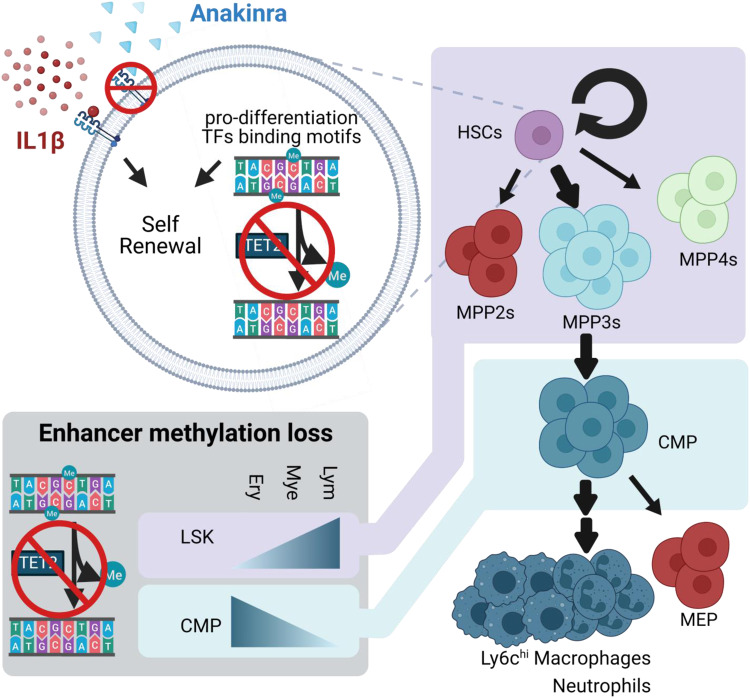
Clonal hematopoiesis (CH) is defined as a single hematopoietic stem/progenitor cell (HSPC) gaining selective advantage over a broader range of HSPCs. When linked to somatic mutations in myeloid malignancy-associated genes, such as TET2-mediated clonal hematopoiesis of indeterminate potential or CHIP, it represents increased risk for hematological malignancies and cardiovascular disease. IL1β is elevated in patients with CHIP, however, its effect is not well understood. Here we show that IL1β promotes expansion of pro-inflammatory monocytes/macrophages, coinciding with a failure in the demethylation of lymphoid and erythroid lineage associated enhancers and transcription factor binding sites, in a mouse model of CHIP with hematopoietic-cell-specific deletion of Tet2. DNA-methylation is significantly lost in wild type HSPCs upon IL1β administration, which is resisted by Tet2-deficient HSPCs, and thus IL1β enhances the self-renewing ability of Tet2-deficient HSPCs by upregulating genes associated with self-renewal and by resisting demethylation of transcription factor binding sites related to terminal differentiation. Using aged mouse models and human progenitors, we demonstrate that targeting IL1 signaling could represent an early intervention strategy in preleukemic disorders. In summary, our results show that Tet2 is an important mediator of an IL1β-promoted epigenetic program to maintain the fine balance between self-renewal and lineage differentiation during hematopoiesis.
Overview
CoChat Summary
Written by AI from the paper’s full text.
TL;DR
In a mouse model of TET2-mediated clonal hematopoiesis, chronic IL1β expands Tet2-deficient HSPCs and pro-inflammatory monocytes/macrophages while Tet2-deficient HSPCs resist IL1β-driven DNA demethylation at lineage-associated enhancers and transcription factor binding sites. Genetic or pharmacological IL1R1 blockade reduces aberrant myeloid expansion and delays premalignant disease, supporting early IL1 signaling intervention in CHIP.
Key findings
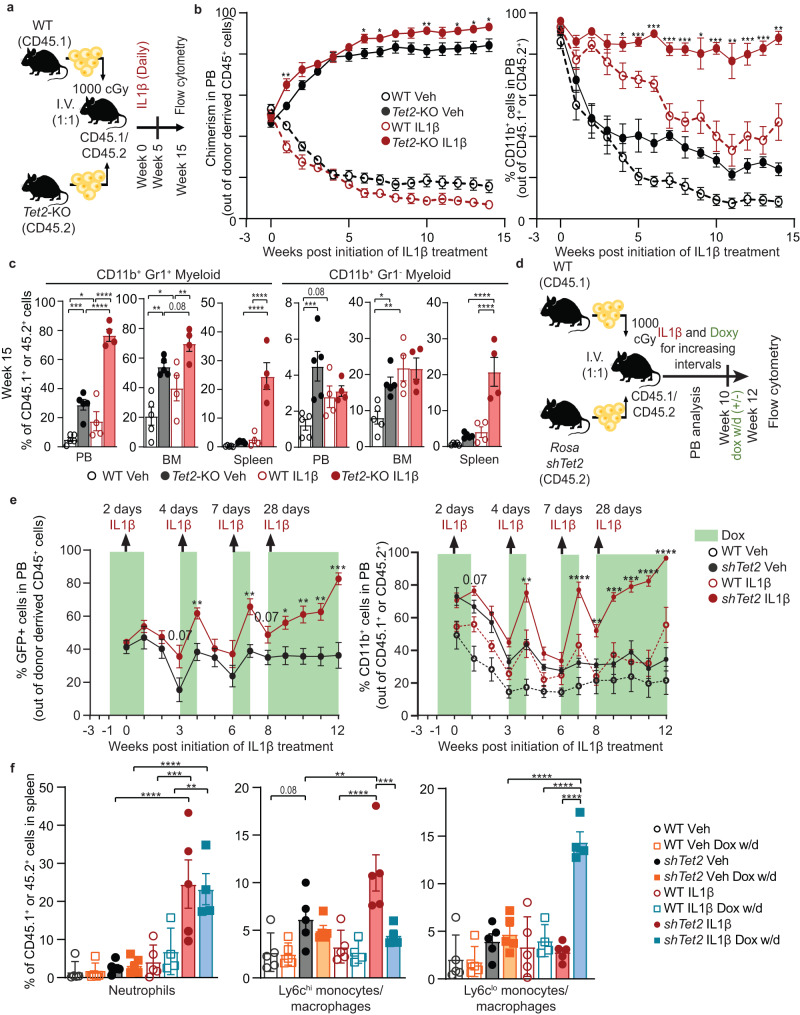
- IL1β promoted myeloid bias and expansion of Tet2-KO cells, including elevated CD11b+Gr1hi (Ly6chi) monocytes/macrophages and neutrophils, with an additive effect of TET2 loss and IL1β; in the shTet2 model, IL1β increased GFP+ shTet2 cells in PB and myeloid cells reached over 98% of PB after 4 weeks of daily stimulation.
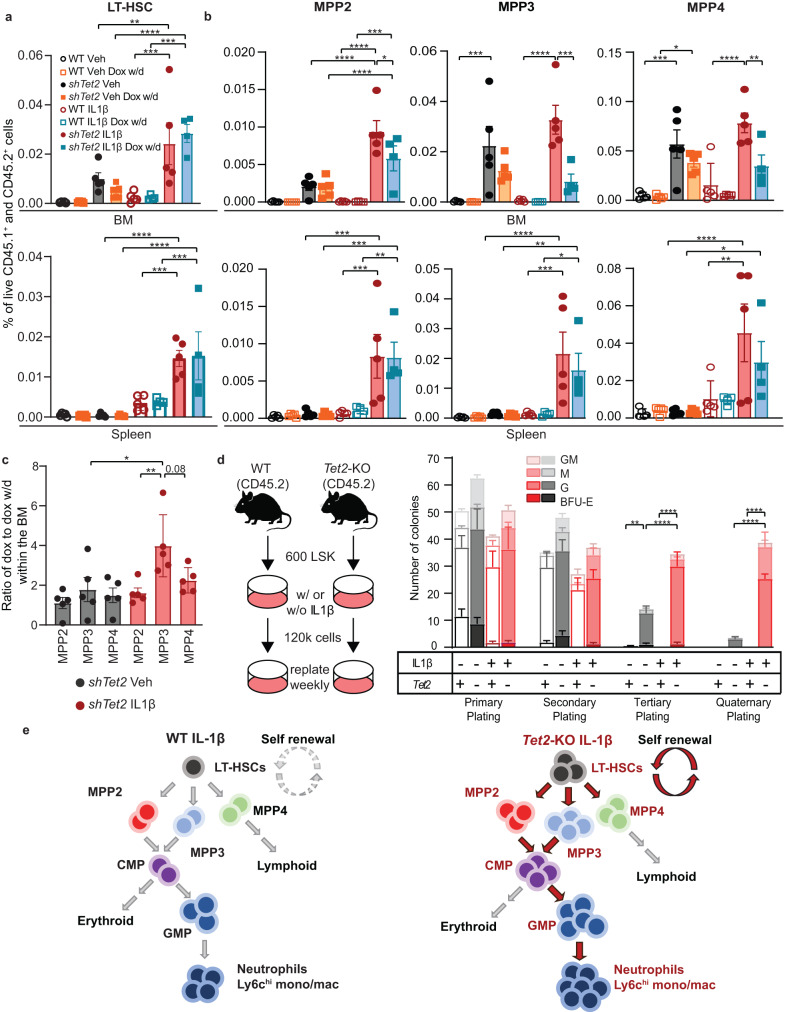
- IL1β enhanced self-renewal of Tet2-KO LSKs in serial re-plating, with increased CFU-GMs or CFU-Ms up to quaternary plating, whereas WT LSKs were exhausted by tertiary plating.
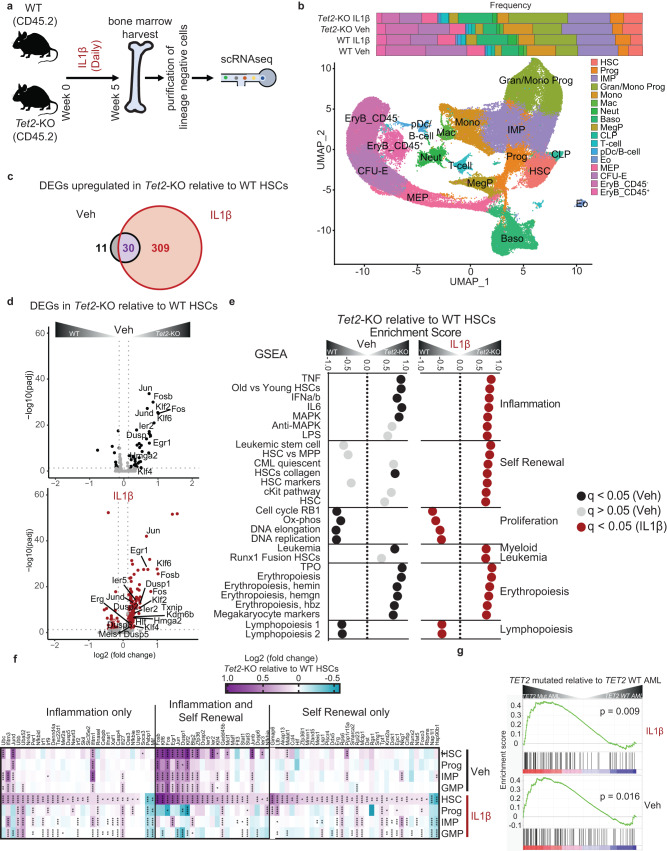
- Single-cell RNA-seq of 54,984 cells showed more upregulated DEGs in Tet2-KO vs WT HSCs under IL1β (339 versus 41), with enrichment of inflammatory, self-renewal, myeloid leukemia, and old-HSC signatures; Erg, Meis1, and Egr1 were upregulated.
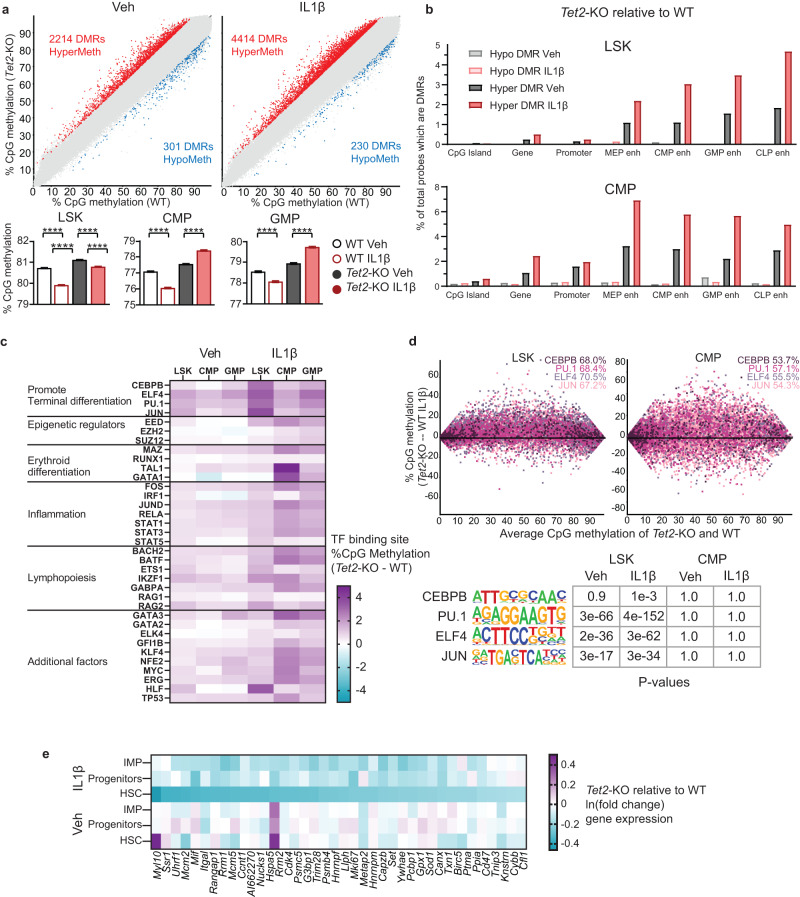
- WGBS showed Tet2-KO LSKs, CMPs, and GMPs resisted IL1β-driven global methylation loss seen in WT; hypermethylated regions were enriched at lymphoid enhancers in LSKs and erythroid enhancers in CMPs, and at terminal differentiation TF binding sites (e.g., ELF4, PU.1, CEBPB, JUN).
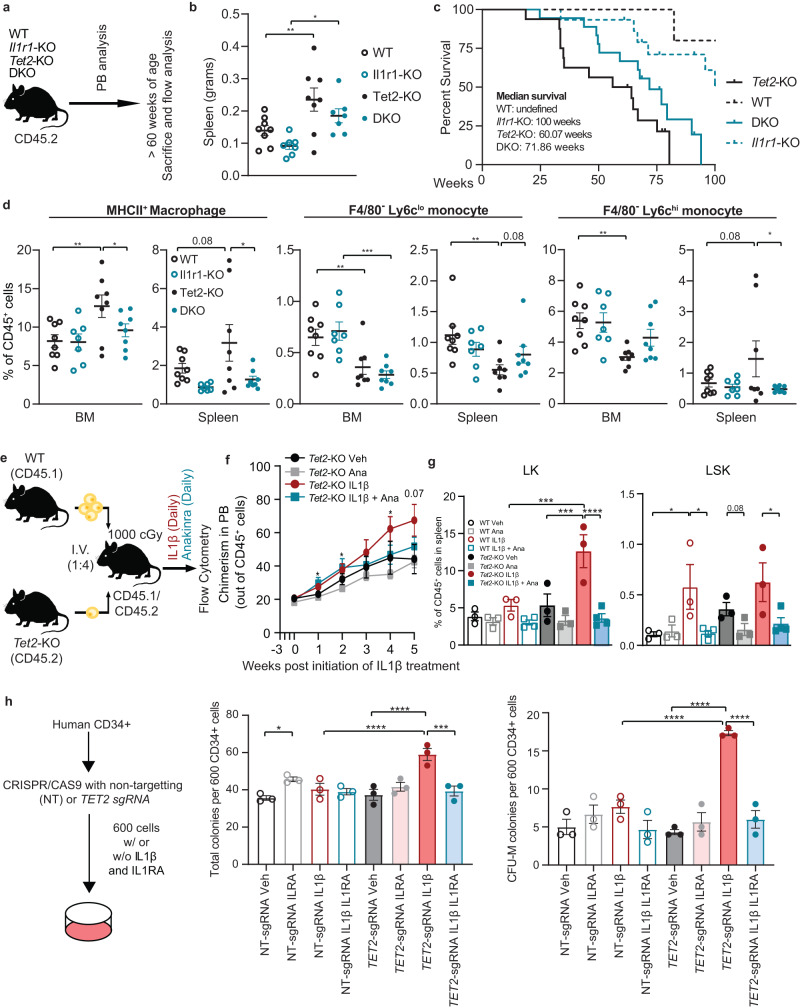
- Genetic Il1r1 deletion prolonged median survival of Tet2-KO mice (71.86 versus 60.07 weeks, p = 0.07), and anakinra suppressed IL1β-mediated Tet2-KO expansion; human TET2-edited CD34+ progenitors showed increased CFU-M upon IL1β, reversed by IL1RA.
Methods
- Murine models included Vav-Cre Tet2fl/fl, Rosa-rtTA-inducible shTet2, LysM-Cre Tet2fl/fl, Il1r1-KO, and DKO mice; competitive BM transplants used CD45.1/CD45.2 donors and recipients, with IL1β at 500 ng/mouse/day and anakinra at 100 mg/kg.
- HSPC and mature populations were analyzed by flow cytometry; self-renewal by serial CFU assays; single-cell transcriptomics by 10x scRNA-seq with Seurat, DESeq2, GSEA, Enrichr, STRING, and Monocle3; DNA methylation by WGBS of FACS-purified LSK, CMP, and GMP cells with SeqMonk and HOMER.
- Human BM CD34+ progenitors were CRISPR-Cas9 edited for TET2 or non-targeting control, plated at 600 cells/well with or without IL1β and/or IL1RA, and colonies counted after 2 weeks with Sanger sequencing for indels.
Limitations
- Stated: LSKs are heterogeneous, and elevated MPP3s and GMPs in Tet2-KO mice may affect the prevalence of methylation in lineage-specific enhancers and transcription factors; future studies may delineate methylation-specific effects within LSK.
- Stated: investigators were not blinded to allocation during experiments and outcome assessment.
- Evident: human validation is limited to in vitro CRISPR-edited CD34+ progenitor colony assays rather than primary human CHIP patient samples; the paper notes its findings may apply to more complex multifactorial CHIP-associated premalignant myeloid expansion observed in patients.
Model-written summary. Check it against the paper before relying on it.
Integrity signals
Registry
Cites
Statistics
Figures
Verification
Claims the paper makes
103 Own result · 38 Own interpretation · 21 Not checked yet · 17 Check pending · 6 Own method · 1 Supported
Every source the paper cites for this claim was checked and supports it.
In the paper
“Further, both at steady state and upon IL1β-mediated stress, several genes known to maintain HSC frequency under stress such as Txnip and Kdm6b were upregulated in Tet2-KO HSCs relative to WT23,24 (Supplementary Data 3).”
§ Clonal hematopoiesis related TET2 loss-of-function impedes IL1β-mediated epigenetic reprogramming in hematopoietic stem and progenitor cells > Results > Single cell gene expression analysis reveals that Tet2-KO HSCs exhibit enrichment of transcriptional signatures associated with chronic stress, self-renewal capacity, and myeloid priming
What the sources say
- Supportedcites [23] Jung, H. et al. TXNIP maintains the hematopoietic cell pool by switching the function of p53 under oxidative stress. Cell Metab. 18, 75–85 (2013). source
The Results (‘TXNIP Regulates Hematopoietic Cell Maintenance under Oxidative Stress’) report that TXNIP maintains the hematopoietic cell pool following oxidative stress; the Results also report reduced HSC frequencies in Txnip-knockout mice. This supports citing the paper for TXNIP’s role in maintaining HSCs under stress. The Tet2-KO expression finding is presented as the citing authors’ own result, not as a finding attributed to this source. (LLM, conf=0.90)
- Supportedcites [24] Mallaney, C. et al. Kdm6b regulates context-dependent hematopoietic stem cell self-renewal and leukemogenesis. Leukemia 33, 2506–2521 (2019). source
The citation supports the characterization of Kdm6b, rather than the citing authors’ Tet2-KO expression result. In Results, under “Kdm6b-deficient HSCs are primed for differentiation” (page unavailable), the paper concludes that Kdm6b limits HSC differentiation after inflammatory stress to preserve the HSC pool. (LLM, conf=0.90)
plainstates an association- Asserted: passes — The authors put it forward as true.
- Checkable: passes — It can be checked against evidence.
- Load-bearing: passes — The paper’s conclusions depend on it.
- Based: passes — The paper gives a reason why it holds.
- Supported
A result the paper reports from its own data — it cites no other source for it, so there is none to check. The quote shows it is in the paper.
In the paper
“Our murine HSCs-derived gene set was enriched in TET2-mutant AML relative to TET2-WT AML (Fig. 3g).”
§ Clonal hematopoiesis related TET2 loss-of-function impedes IL1β-mediated epigenetic reprogramming in hematopoietic stem and progenitor cells > Results > Single cell gene expression analysis reveals that Tet2-KO HSCs exhibit enrichment of transcriptional signatures associated with chronic stress, self-renewal capacity, and myeloid priming
plainstates an association- Asserted: passes — The authors put it forward as true.
- Checkable: passes — It can be checked against evidence.
- Load-bearing: passes — The paper’s conclusions depend on it.
- Based: passes — The paper gives a reason why it holds.
A result the paper reports from its own data — it cites no other source for it, so there is none to check. The quote shows it is in the paper.
In the paper
“Tet2-KO HSCs relative to WT HSCs upon IL1β stimulation showed enrichment of HSC and leukemic stem cell signatures versus that of multipotent progenitor signatures.”
§ Clonal hematopoiesis related TET2 loss-of-function impedes IL1β-mediated epigenetic reprogramming in hematopoietic stem and progenitor cells > Results > Single cell gene expression analysis reveals that Tet2-KO HSCs exhibit enrichment of transcriptional signatures associated with chronic stress, self-renewal capacity, and myeloid priming
plainstates an association- Asserted: passes — The authors put it forward as true.
- Checkable: passes — It can be checked against evidence.
- Load-bearing: passes — The paper’s conclusions depend on it.
- Based: passes — The paper gives a reason why it holds.
A result the paper reports from its own data — it cites no other source for it, so there is none to check. The quote shows it is in the paper.
In the paper
“Notably, Tet2-KO LSKs relative to WT upon IL1β stimulation had the highest percentage of their probes hypermethylated for lymphoid enhancers, followed by myeloid, and erythroid enhancers.”
§ Clonal hematopoiesis related TET2 loss-of-function impedes IL1β-mediated epigenetic reprogramming in hematopoietic stem and progenitor cells > Results > Tet2-KO HSPCs resist IL1β-driven methylation reduction of lineage-specific enhancer regions and terminal differentiation promoting transcription factor binding sites in a manner coinciding with cell fate
plainstates an association- Asserted: passes — The authors put it forward as true.
- Checkable: passes — It can be checked against evidence.
- Load-bearing: passes — The paper’s conclusions depend on it.
- Based: passes — The paper gives a reason why it holds.
A result the paper reports from its own data — it cites no other source for it, so there is none to check. The quote shows it is in the paper.
In the paper
“DNA-methylation is significantly lost in wild type HSPCs upon IL1β administration, which is resisted by Tet2-deficient HSPCs, and thus IL1β enhances the self-renewing ability of Tet2-deficient HSPCs by upregulating genes associated with self-renewal and by resisting demethylation of transcription factor binding sites related to terminal differentiation.”
§ Clonal hematopoiesis related TET2 loss-of-function impedes IL1β-mediated epigenetic reprogramming in hematopoietic stem and progenitor cells > Abstract
plainstates a cause- Asserted: passes — The authors put it forward as true.
- Checkable: passes — It can be checked against evidence.
- Load-bearing: passes — The paper’s conclusions depend on it.
- Based: passes — The paper gives a reason why it holds.
- It may state two separate claims as one. 31
- Probably not a substantial claim. 27
- The quote only partly states this claim. 1
Create a free account to see these claims.
Create a free account to see these assumptions.
129 more claims
Create a free account to see all 186 claims and to verify the 63 references still open.
Self-check
Percentages, sums and reported differences re-computed from the paper’s own numbers.
Each contradiction between two passages listed here was confirmed by an independent check.
Rated minor: it would not touch a result — a value no result rests on, a p-value that stays on the same side of the significance level, or a conflict that is clerical, resolved elsewhere in the paper, or outside its own findings.
In the paper
§ Clonal hematopoiesis related TET2 loss-of-function impedes IL1β-mediated epigenetic reprogramming in hematopoietic stem and progenitor cells > Results > Genetic and pharmacological inhibition of Il1r1 delays disease progression of Tet2-KO mice
“For panels a, d, g, f, and h two-factor ANOVA was used to determine the FWER-adjusted p values.”
§ Clonal hematopoiesis related TET2 loss-of-function impedes IL1β-mediated epigenetic reprogramming in hematopoietic stem and progenitor cells > Results > Genetic and pharmacological inhibition of Il1r1 delays disease progression of Tet2-KO mice
“For panel f, a student’s two-tailed t-Test was used to determine significance.”
Rated minor: it would not touch a result — a value no result rests on, a p-value that stays on the same side of the significance level, or a conflict that is clerical, resolved elsewhere in the paper, or outside its own findings.
In the paper
§ Clonal hematopoiesis related TET2 loss-of-function impedes IL1β-mediated epigenetic reprogramming in hematopoietic stem and progenitor cells > Results > Tet2-KO HSPCs resist IL1β-driven methylation reduction of lineage-specific enhancer regions and terminal differentiation promoting transcription factor binding sites in a manner coinciding with cell fate
“we used published ChIP-seq data for 35 proteins including transcription factors (TF) and epigenetic modifiers with roles in the maintenance of HSC function, differentiation, or inflammation (Supplementary Data 6).”
§ Clonal hematopoiesis related TET2 loss-of-function impedes IL1β-mediated epigenetic reprogramming in hematopoietic stem and progenitor cells > Methods > DNA methylation analysis
“Of the 44 proteins chosen for ChIP-seq, 8 were excluded because they lacked sufficient probes with coverage ( > 100 probes) for at least one of the 48 samples, leaving 36 remaining factors (Supplementary Data 6).”
Rated minor: it would not touch a result — a value no result rests on, a p-value that stays on the same side of the significance level, or a conflict that is clerical, resolved elsewhere in the paper, or outside its own findings.
In the paper
§ Clonal hematopoiesis related TET2 loss-of-function impedes IL1β-mediated epigenetic reprogramming in hematopoietic stem and progenitor cells > Results > Tet2-KO HSPCs resist IL1β-driven methylation reduction of lineage-specific enhancer regions and terminal differentiation promoting transcription factor binding sites in a manner coinciding with cell fate
“We examined the top 150 downregulated genes from Tet2-KO HSCs relative to WT HSCs that are stimulated with IL1β which were identified using single cell RNAseq analysis (Fig. 3). We found 38 genes proximal to hypermethylated binding sites of TFs (Fig. 4e).”
§ Clonal hematopoiesis related TET2 loss-of-function impedes IL1β-mediated epigenetic reprogramming in hematopoietic stem and progenitor cells > Methods > DNA methylation analysis
“These genes were compared with the top 100 most significantly downregulated genes in Tet2-KO relative to WT.”
Citations
Cites
limma powers differential expression analyses for RNA-sequencing and microarray studies
Ritchie, M. E., Phipson, B., Wu, D., Hu, Y., Law, C. W., Shi, W., & Smyth, G. K. (2015) · Nucleic Acids Research · doi:10.1093/nar/gkv007 · Cited by 40,458
Comprehensive Integration of Single-Cell Data
Stuart, T., Butler, A., Hoffman, P., Hafemeister, C., Papalexi, E., Mauck, W. M., Hao, Y., Stoeckius, M., Smibert, P., & Satija, R. (2019) · Cell · doi:10.1016/j.cell.2019.05.031 · Cited by 15,453
Smyth, G. K. (2004) · Statistical Applications in Genetics and Molecular Biology · doi:10.2202/1544-6115.1027 · Cited by 11,829
Bismark: a flexible aligner and methylation caller for Bisulfite-Seq applications
Krueger, F., & Andrews, S. (2011) · Bioinformatics · doi:10.1093/bioinformatics/btr167 · Cited by 5,351
Age-related clonal hematopoiesis associated with adverse outcomes
Jaiswal, S., Fontanillas, P., Flannick, J., Manning, A., Grauman, P. V., Mar, B. G., Lindsley, R. C., Mermel, C. H., Burtt, N., Chavez, A., et al. (2014) · New England Journal of Medicine · doi:10.1056/nejmoa1408617 · Cited by 4,841
Shared Principles in NF-κB Signaling
Hayden, M. S., & Ghosh, S. (2008) · Cell · doi:10.1016/j.cell.2008.01.020 · Cited by 4,494
The single-cell transcriptional landscape of mammalian organogenesis
Cao, J., Spielmann, M., Qiu, X., Huang, X., Ibrahim, D. M., Hill, A. J., Zhang, F., Mundlos, S., Christiansen, L., Steemers, F. J., et al. (2019) · Nature · doi:10.1038/s41586-019-0969-x · Cited by 4,490
Clonal hematopoiesis and blood-cancer risk inferred from blood DNA sequence
Genovese, G., Kähler, A. K., Handsaker, R. E., Lindberg, J., Rose, S. A., Bakhoum, S. F., Chambert, K., Mick, E., Neale, B. M., Fromer, M., et al. (2014) · New England Journal of Medicine · doi:10.1056/nejmoa1409405 · Cited by 3,531
Clonal hematopoiesis and risk of atherosclerotic cardiovascular disease
Jaiswal, S., Natarajan, P., Silver, A. J., Gibson, C. J., Bick, A. G., Shvartz, E., McConkey, M., Gupta, N., Gabriel, S., Ardissino, D., et al. (2017) · New England Journal of Medicine · doi:10.1056/nejmoa1701719 · Cited by 2,683
Smart-seq2 for sensitive full-length transcriptome profiling in single cells
Picelli, S., Björklund, Å. K., Faridani, O. R., Sagasser, S., Winberg, G., & Sandberg, R. (2013) · Nature Methods · doi:10.1038/nmeth.2639 · Cited by 2,358 · cited 1×
“Polyadenylated RNA was captured with oligo-dT conjugated beads and processed using Smart-seq2 protocol 68 .”
Research works printed but not linked: 1
- Jaiswal, S. Clonal hematopoiesis and risk of atherosclerotic cardiovascular disease. N. Engl. J. Med. 377, 111–121 (2017). · DOI · Paper page
Cited by
Adult skull bone marrow is an expanding and resilient haematopoietic reservoir
Koh, B. I., Mohanakrishnan, V., Jeong, H., Park, H., Kruse, K., Choi, Y. J., Nieminen-Kelhä, M., Kumar, R., Pereira, R. S., Adams, S., et al. (2024) · Nature · doi:10.1038/s41586-024-08163-9 · Cited by 93
Clonal hematopoiesis and atherosclerosis
Oren, O., Small, A. M., & Libby, P. (2024) · Journal of Clinical Investigation · doi:10.1172/jci180066 · Cited by 78
IL-1 in aging and pathologies of hematopoietic stem cells
Caiado, F., & Manz, M. G. (2024) · Blood · doi:10.1182/blood.2023023105 · Cited by 41
Inflammageing and clonal haematopoiesis interplay and their impact on human disease
Hajishengallis, G., & Chavakis, T. (2026) · Nature Reviews Molecular Cell Biology · doi:10.1038/s41580-025-00936-y · Cited by 38
Periodontal Medicine Rewired: Mechanisms Linking Periodontitis to Systemic Diseases
Romandini, M., Hajishengallis, G., Curtis, M. A., & Baima, G. (2026) · Journal of Periodontal Research · doi:10.1111/jre.70099 · Cited by 38
Metadata
- Authors
- McClatchy, J., Strogantsev, R., Wolfe, E., Lin, H. Y., Mohammadhosseini, M., Davis, B. A., Eden, C., Goldman, D., Fleming, W. H., Conley, P., Wu, G., Cimmino, L., Mohammed, H., & Agarwal, A.
- Affiliations
- Oregon Health & Science University (US)
- University of Miami (US)
- Corresponding author
- Agarwal, A.
- Venue
- Nature Communications
- Published
- 2023-12-07
- Volume
- 14
- Issue
- 1
- Pages
- 8102-8102
- ISSN
- 2041-1723 (ISSN-L)
- PMC
- PMC10703894
- OpenAlex
- W4389454314
- Semantic Scholar
- 91a9daa66b4c4eb8643d7e983c8e535ced925dda
- Cited by
- 95
- References
- 71
- Citations by year
- 2026: 48 · 2025: 30 · 2024: 16 · 2023: 1
- FWCI
- 17.81
- Type
- journal article
- Language
- en
- Open access
- gold
- doi.org
- Locations
- Nature Communications (publishedVersion, cc-by)
- bioRxiv (Cold Spring Harbor Laboratory) (submittedVersion)
- PubMed Central (publishedVersion, cc-by)
- PubMed (publishedVersion)
- RePEc: Research Papers in Economics (submittedVersion)
- DOAJ (DOAJ: Directory of Open Access Journals) (submittedVersion, cc-by-sa)
- Funders
- American Cancer Society, Knight Pilot project
- Topics
- Health Sciences › Medicine › Hematology › Acute Myeloid Leukemia Research
- Life Sciences › Biochemistry, Genetics and Molecular Biology › Molecular Biology › Epigenetics and DNA Methylation
- Health Sciences › Medicine › Hematology › Hematopoietic Stem Cell Transplantation
- Keywords
- clonal hematopoiesis, clonal hematopoiesis of indeterminate potential, TET2, IL-1β, hematopoietic stem and progenitor cells, DNA methylation, epigenetic reprogramming, enhancer demethylation, self-renewal, lineage differentiation, aging
- MeSH terms
- Clonal Hematopoiesis, Animals, DNA-Binding Proteins, Hematopoiesis, Hematopoietic Stem Cells, Humans, Transcription Factors, Epigenesis, Genetic, Dioxygenases, Mice
About these checks
Registry, retraction, Cites and statistics results are computed, not judged, with one exception: a printed reference that no index lists is read once by a model before it counts as a citation error. Claims are extracted by a model and kept only when their quote appears verbatim in the text; each cited source is then checked, with a model’s help, for whether it says what the claim relies on. Those verdicts can be wrong — read the claim’s quote and the cited source before relying on one.
A language model drew the claims from the paper on 2026-11-12, under version 3 of the claim definition (model deepseek-v4.1-flash, prompt extract-v3).
A second model labelled each claim on 2026-11-12 (model jev-1.13-20260917, definition revision gold-guideline-v0.2).
Cited sources are checked with a language model’s help (gpt-6-sol).
Statistics and arithmetic are recomputed, not judged.
Confidence bands are shown only for fields calibrated on our annotated test set. None is calibrated yet, so no band is shown.
What counts as a claim ›How we measure confidence ›How we check this ›
Are you an author, or do you see a problem with this page? Request a review
How to cite
Cite CoChat for the checks on this page, and the paper for its own findings.
- This page
- CoChat. (2026). Citation check: Clonal hematopoiesis related TET2 loss-of-function impedes IL1β-mediated epigenetic reprogramming in hematopoietic stem and progenitor cells. https://app.cochat.ai/papers/10.1038/s41467-023-43697-y
- The paper
- McClatchy, J., Strogantsev, R., Wolfe, E., Lin, H. Y., Mohammadhosseini, M., Davis, B. A., Eden, C., Goldman, D., Fleming, W. H., Conley, P., Wu, G., Cimmino, L., Mohammed, H., & Agarwal, A. (2023). Clonal hematopoiesis related TET2 loss-of-function impedes IL1β-mediated epigenetic reprogramming in hematopoietic stem and progenitor cells. Nature Communications. https://doi.org/10.1038/s41467-023-43697-y
