

High-throughput target trial emulation for Alzheimer’s disease drug repurposing with real-world data
Open accessThe DOI matches its Crossref record; 71 of the 71 references it cites were found in a registry or an index.
Abstract
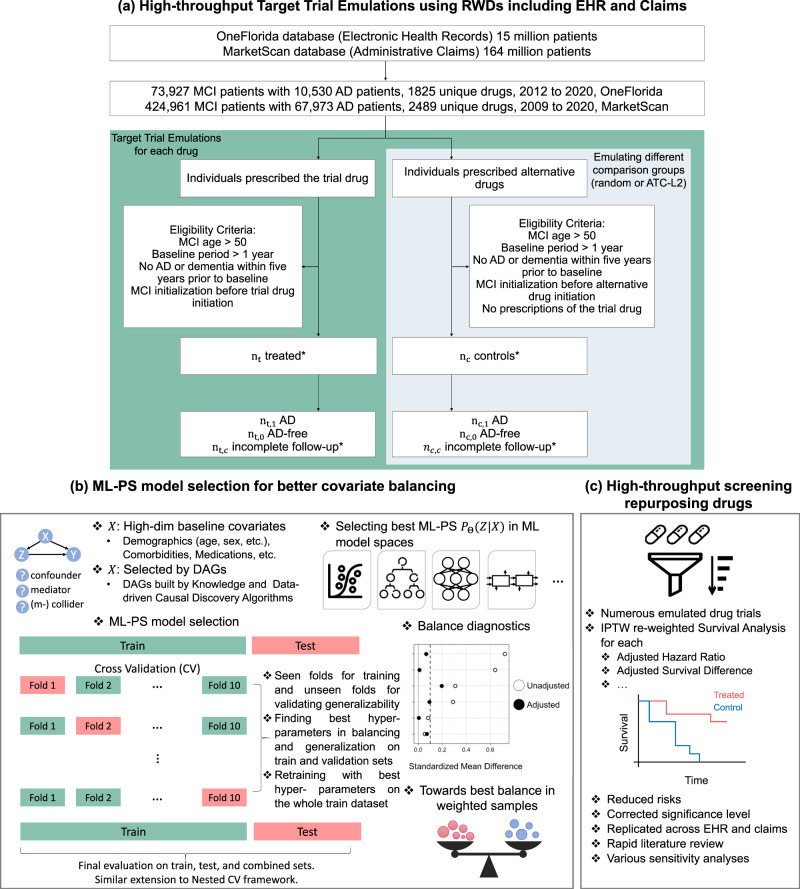
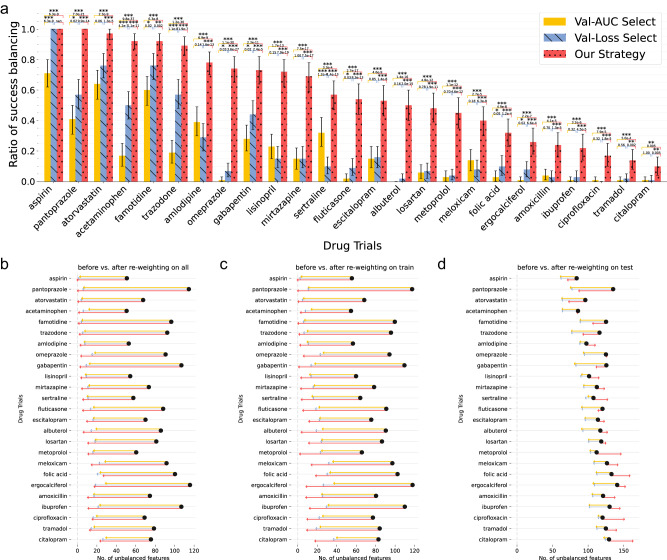
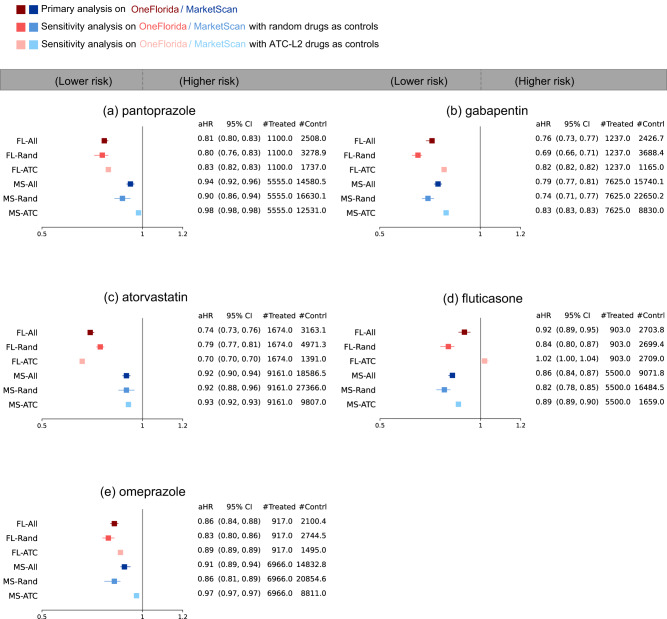
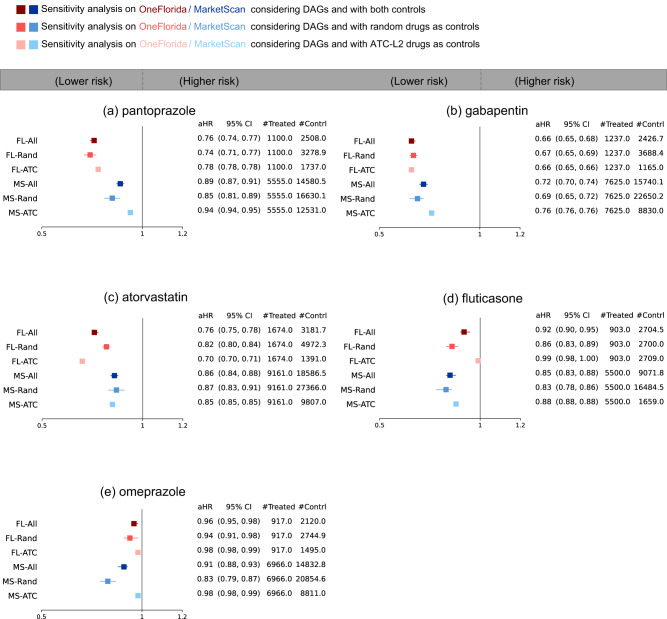
Target trial emulation is the process of mimicking target randomized trials using real-world data, where effective confounding control for unbiased treatment effect estimation remains a main challenge. Although various approaches have been proposed for this challenge, a systematic evaluation is still lacking. Here we emulated trials for thousands of medications from two large-scale real-world data warehouses, covering over 10 years of clinical records for over 170 million patients, aiming to identify new indications of approved drugs for Alzheimer’s disease. We assessed different propensity score models under the inverse probability of treatment weighting framework and suggested a model selection strategy for improved baseline covariate balancing. We also found that the deep learning-based propensity score model did not necessarily outperform logistic regression-based methods in covariate balancing. Finally, we highlighted five top-ranked drugs (pantoprazole, gabapentin, atorvastatin, fluticasone, and omeprazole) originally intended for other indications with potential benefits for Alzheimer’s patients.
Overview
The claims and statistics of this paper haven’t been checked yet.
Free: it reads the open-access text and checks the first 5 claims that cite a source we can check. Create a free account to check every claim.
Integrity signals
Registry
Cites
Statistics
Figures
Verification
Claims the paper makes
The claims and statistics of this paper haven’t been checked yet.
Free: it reads the open-access text and checks the first 5 claims that cite a source we can check. Create a free account to check every claim.
Claims other papers make about this one
Each is checked against this paper’s own text: does it say what the citing paper says it does?
The cited source says what the claim attributes to it.
In the citing paper
“Additionally, the advancement of artificial intelligence (AI)-based computational tools is facilitating drug repurposing, presenting a promising strategy AD drug development.431–433”
From Recent advances in Alzheimer's disease: Mechanisms, clinical trials and new drug development strategies. (2024) · cites this paper as [431]
Self-check
Percentages, sums and reported differences re-computed from the paper’s own numbers.
The self-check needs the paper’s full text.
Citations
Cites
The central role of the propensity score in observational studies for causal effects
ROSENBAUM, P. R., & RUBIN, D. B. (1983) · Biometrika · doi:10.1093/biomet/70.1.41 · Cited by 31,241
Scikit-learn: Machine Learning in Python
(2011) · Journal of Machine Learning Research · doi:10.5555/1953048.2078195 · Cited by 8,539
Austin, P. C. (2009) · Statistics in Medicine · doi:10.1002/sim.3697 · Cited by 6,758 · cited 3×
“We quanti fi ed the balance performance by the standardized mean difference (SMD) 15,16 and the generalization performance by the area under the receiver operating characteristic (AUC).”
Austin, P. C., & Stuart, E. A. (2015) · Statistics in Medicine · doi:10.1002/sim.6607 · Cited by 4,495 · cited 17×
“The goodness-of-balance is measured by the standardized mean difference (SMD) of the covariates ’ prevalence 15,16 , de fi ned as: where x treat , x control 2 R D represent the vector representations of D covariates of the treated group and control group respectively, μ treat , μ control 2 R D are…”
InfluentialThe unified medical language system (UMLS): integrating biomedical terminology
Bodenreider, O. (2004) · Nucleic Acids Research · doi:10.1093/nar/gkh061 · Cited by 4,356
A survey of cross-validation procedures for model selection
Arlot, S., & Célisse, A. (2010) · LillOA (Université de Lille (University Of Lille)) · Cited by 3,663
A survey of cross-validation procedures for model selection
Arlot, S., & Celisse, A. (2010) · Statistics Surveys · doi:10.1214/09-ss054 · Cited by 3,522 · cited 1×
“…which splits the data into mutually exclusive training and testing sets and picks the hyper-parameters based on cross-validation on the training set (say, accordingtotheareaunderthereceiveroperatingcharacteristiccurve on predicting treatment assignment) 21,22 , may lead to inferior performance.”
Using Big Data to Emulate a Target Trial When a Randomized Trial Is Not Available: Table 1.
Hernán, M. A., & Robins, J. M. (2016) · American Journal of Epidemiology · doi:10.1093/aje/kwv254 · Cited by 3,115
When to use the Bonferroni correction
Armstrong, R. A. (2014) · Ophthalmic and Physiological Optics · doi:10.1111/opo.12131 · Cited by 3,031 · cited 1×
“…(aHR 1) of developing AD among MCI patients than comparison groups,(ii)itsdecreasedriskwasreplicatedinbothtwodatasets(EHRs and administrative claims), and (iii) to control for potential false fi ndings, we used the corrected signi fi cance level of 1 : 6×10 (cid:2) 4 by the Bonferroni method 26 .”
Constructing Inverse Probability Weights for Marginal Structural Models
Cole, S. R., & Hernan, M. A. (2008) · American Journal of Epidemiology · doi:10.1093/aje/kwn164 · Cited by 2,796
Research works printed but not linked: 2
- Ke, G. et al. LightGBM: A Highly Efficient Gradient Boosting Decision Tree. in Advances in Neural Information Processing Systems 30 (Curran Associates, Inc., 2017).
- Kingma, D. P. & Ba, J. Adam: A Method for Stochastic Optimization. in 3rd International Conference on Learning Representations, ICLR 2015, San Diego, CA, USA, May 7-9, 2015, Conference Track Proceedings (2015).
Cited by
Zhang, J., Zhang, Y., Wang, J., Xia, Y., Zhang, J., & Chen, L. (2024) · Signal Transduction and Targeted Therapy · doi:10.1038/s41392-024-01911-3 · Cited by 1,138
Data-driven identification of post-acute SARS-CoV-2 infection subphenotypes
Zhang, H., Zang, C., Xu, Z., Zhang, Y., Xu, J., Bian, J., Morozyuk, D., Khullar, D., Zhang, Y., Nordvig, A. S., et al. (2023) · Nature Medicine · doi:10.1038/s41591-022-02116-3 · Cited by 184
Self-citationAlgorithmic fairness in computational medicine
Xu, J., Xiao, Y., Wang, W. H., Ning, Y., Shenkman, E. A., Bian, J., & Wang, F. (2022) · eBioMedicine · doi:10.1016/j.ebiom.2022.104250 · Cited by 170
Self-citationApplications of Artificial Intelligence in Drug Repurposing
Wan, Z., Sun, X., Li, Y., Chu, T., Hao, X., Cao, Y., & Zhang, P. (2025) · Advanced Science · doi:10.1002/advs.202411325 · Cited by 127
Toumaj, S., Heidari, A., Shahhosseini, R., & Navimipour, N. J. (2024) · Artificial Intelligence Review · doi:10.1007/s10462-024-11041-5 · Cited by 89
Drug repurposing for Alzheimer’s disease and other neurodegenerative disorders
Cummings, J. L., Zhou, Y., Stone, A. V., Cammann, D., Tonegawa‐Kuji, R., Cacho, J. R. F., & Cheng, F. (2025) · Nature Communications · doi:10.1038/s41467-025-56690-4 · Cited by 88
“Zang et al. conducted a trial emulation with PS adjustment to identify potentially repurposable drug candidates for AD and validated the strategy on a subset of OneFlorida+ and the MarketScan national claims database 38 .”
Self-citationArtificial intelligence revolution in drug discovery: A paradigm shift in pharmaceutical innovation
Jarallah, S. J., Almughem, F. A., Alhumaid, N. K., Fayez, N. A., Alradwan, I. A., Alsulami, K. A., Tawfik, E. A., & Alshehri, A. A. (2025) · International Journal of Pharmaceutics · doi:10.1016/j.ijpharm.2025.125789 · Cited by 93
Zang, C., Zhang, Y., Xu, J., Bian, J., Morozyuk, D., Schenck, E. J., Khullar, D., Nordvig, A. S., Shenkman, E. A., Rothman, R. L., et al. (2023) · Nature Communications · doi:10.1038/s41467-023-37653-z · Cited by 62
Self-citationSu, C., Hou, Y., Xu, J., Xu, Z., Zhou, M., Ke, A., Li, H., Xu, J., Brendel, M., Maasch, J. R. M. A., et al. (2024) · npj Digital Medicine · doi:10.1038/s41746-024-01175-9 · Cited by 65
“Toevaluate treatment effects of the tested drugs, we conducted trial emulation based on our computational trial emulation framework 53 (see “ Methods ” andSupplementaryFig.”
Self-citationUtilization of precision medicine digital twins for drug discovery in Alzheimer's disease
Ren, Y., Pieper, A. A., & Cheng, F. (2025) · Neurotherapeutics · doi:10.1016/j.neurot.2025.e00553 · Cited by 62
“These candidates can then be validated using real-world data (RWD) from extensive clinical databases like OneFlorida and MarketScan, which collectively encompass over a decade of clinical records for more than 170 million patients [69 – 72].”
Self-citationRajendran, S., Pan, W., Sabuncu, M. R., Chen, Y., Zhou, J., & Wang, F. (2024) · Patterns · doi:10.1016/j.patter.2023.100913 · Cited by 47
Self-citationBiomedical discovery through the integrative biomedical knowledge hub (iBKH)
Su, C., Hou, Y., Zhou, M., Rajendran, S., Maasch, J. R. M. A., Abedi, Z., Zhang, H., Bai, Z., Cuturrufo, A., Guo, W. L., et al. (2023) · iScience · doi:10.1016/j.isci.2023.106460 · Cited by 51
Self-citationZhang, B., Wu, Q., Jhaveri, R. R., Zhou, T., Becich, M. J., Bisyuk, Y., Blanceró, F., Chrischilles, E. A., Chuang, C. H., Cowell, L. G., et al. (2025) · The Lancet Infectious Diseases · doi:10.1016/s1473-3099(25)00476-1 · Cited by 43
Self-citationXiao, L., Wang, D., Zhong, H., Wang, Q., Li, R., Jia, R., & Wan, B. (2024) · Information Processing & Management · doi:10.1016/j.ipm.2024.103805 · Cited by 39
Wilczok, D. (2025) · Aging · doi:10.18632/aging.206190 · Cited by 39
Zang, C., Hou, Y., Lyu, D., Jin, J., Sacco, S. J., Chen, K., Aseltine, R. H., & Wang, F. (2024) · Translational Psychiatry · doi:10.1038/s41398-024-03034-3 · Cited by 30
“The third was the Long short-term memory (LSTM) neural network with temporal attention mechanisms [29 – 32].”
BackgroundSelf-citationDou, L., Xu, Z., Xu, J., Zang, C., Su, C., Pieper, A. A., Leverenz, J. B., Wang, F., Zhu, X., Cummings, J. L., et al. (2025) · npj Parkinson's Disease · doi:10.1038/s41531-025-00870-y · Cited by 26
“We collected three types of covariates at the baseline period for each patient: 1) We included 64 comorbidities including comorbidities from Chronic Conditions Data Warehouse and other risk factors that were selected by experts 98 .”
Self-citationAlzheimer Combination Therapies: Overview and Scenarios
Cummings, J. L., Burstein, A. H., & Fillit, H. M. (2025) · The Journal of Prevention of Alzheimer s Disease · doi:10.1016/j.tjpad.2025.100328 · Cited by 22
“These strategies have been used to predict the likely efficacy and risk of side effects of combination therapies for AD[87,88].”
Ma, M., Wang, J., Guo, K., Zhong, W., Cheng, Y., Lin, L., & Zhao, Y. (2024) · Angewandte Chemie International Edition · doi:10.1002/anie.202420547 · Cited by 24
Underwood, B. R., Lourida, I., Gong, J., Tamburin, S., Tang, E. Y. H., Sidhom, E., Tai, X. Y., Betts, M. J., Ranson, J. M., Zachariou, M., et al. (2025) · Alzheimer s & Dementia Translational Research & Clinical Interventions · doi:10.1002/trc2.70037 · Cited by 28
“Several included studies used approaches to reduce the impact of confounding variables including adjustments for age, gender, smoking status, 24 comorbidities, 27,31 using a self-controlled study design 15 or propensity matching 30,34 for analyses.”
InfluentialLi, H., Zang, C., Xu, Z., Pan, W., Rajendran, S., Chen, Y., & Wang, F. (2025) · npj Digital Medicine · doi:10.1038/s41746-025-01803-y · Cited by 23
“FL-TTE also achieved higher success balancing ratios in adjusting for con-foundersonINSIGHTandeICU-MIMICdatasetsthanboththelocalanalysis (seeFigs.7and8)andmeta-analysismethods(seeFigs.9and10).”
Self-citationXu, J., Song, W., Xu, Z., Danziger, M. M., Karavani, E., Zang, C., Chen, X., Li, Y., Paz, I. R., Gohel, D., et al. (2024) · Alzheimer s & Dementia · doi:10.1002/alz.14373 · Cited by 20
“46 Based on all balanced emulated trials of one drug, we computed HR modeled by the Cox proportional hazard model 51 for each balanced emulated trial and reported median HR with 95% CI obtained by bootstrapping.”
Self-citationArtificial Intelligence to Guide Repurposing of Drugs
Fu, Z., Yang, Y., Chung, M. K., & Cheng, F. (2026) · Annual Review of Medicine · doi:10.1146/annurev-med-050224-122802 · Cited by 19
Self-citationPredicting drug responses of unseen cell types through transfer learning with foundation models
Wang, Y., Liu, X., Fan, Y., Xie, B., Cheng, J. S.-C., Wong, K. C., Cheung, P. P., King, I., & Li, Y. (2025) · Nature Computational Science · doi:10.1038/s43588-025-00887-6 · Cited by 20
Empowering clinical trial design with agentic intelligence and real-world data
Li, H., Pan, W., Rajendran, S., Zang, C., & Wang, F. (2026) · Nature Communications · doi:10.1038/s41467-026-74501-2 · Cited by 20
“Usually, these elements are described as natural language in the trial protocol, but the EHR data include a large portion of standardized structured information (e.g., encoded with the Observational Medical Outcomes Partnership (OMOP 1,6,7,11 )).”
Self-citationWang, H., Li, J., Tu, W., Wang, Z., Zhang, Y., Chang, L., Wu, Y., & Zhang, X. (2024) · Journal of Alzheimer s Disease · doi:10.3233/jad-240301 · Cited by 15
“38 Oliveros et al. 39 repurposed ibudilast as a potential drug in AD.”
Wang, F., Li, H., Khullar, D., Zhang, Y., Strobel, S., Chen, Y., Sala, M. A., Patel, P. B., Comellas, A. P., Wylam, A., et al. (2026) · PLOS Global Public Health · doi:10.1371/journal.pgph.0005771 · Cited by 13
“The propensity scores for different exposures were calculated with the regularized logistic regression with L2 norm, with exposure to Paxlovid or not as the dependent variable, and with all the baseline covariates as independent variables [7,15].”
Self-citationLong COVID after SARS-CoV-2 during pregnancy in the United States
Zang, C., Guth, D. J., Bruno, A. M., Xu, Z., Li, H., Ammar, N., Chew, R., Güthe, N., Hadley, E., Kaushal, R., et al. (2025) · Nature Communications · doi:10.1038/s41467-025-57849-9 · Cited by 12
Self-citationYang, Y., Diao, Y., Jiang, L., Li, F., Chen, L., Ni, M., Wang, Z., & Fang, H. (2025) · Acta Pharmaceutica Sinica B · doi:10.1016/j.apsb.2025.07.018 · Cited by 11
“Repurposing existing drugs to modulate AD-related pathways or symptoms holds potential to accelerate therapeutic discovery 6,7 .”
Ziaastani, Z., Kalantari-Khandani, B., Niazi, M.-J., & Kazemipour, A. (2024) · Computers in Biology and Medicine · doi:10.1016/j.compbiomed.2024.108912 · Cited by 9
Zong, N., Chowdhury, S., Zhou, S., Rajaganapathy, S., Yu, Y., Wang, L., Dai, Q., Li, P., Liu, X., Bielinski, S. J., et al. (2025) · npj Digital Medicine · doi:10.1038/s41746-025-01705-z · Cited by 9
“Ourresearchaddressesthe previouslyunexploredaccuracyofusingEHRsfordrugdiscoveryinthe adaptationofETs 26,27 with regard to the estimation of the direction of treatment effect.”
InfluentialSelf-citationLee, S., Liu, R., Cheng, F., & Zhang, P. (2025) · ACM SIGKDD Conference on Knowledge Discovery and Data Mining (KDD) · doi:10.1145/3690624.3709418 · Cited by 8
Self-citationMedical risk factors, ApoE haplotype, and Alzheimer’s disease: a large-scale analysis
Elias, U., Gazit, L., Zucker, R., Stern, A., Linial, M., Allali, G., Ben‐Hur, T., Marshall, G. A., & Arzy, S. (2025) · The Journal of Prevention of Alzheimer s Disease · doi:10.1016/j.tjpad.2025.100301 · Cited by 8
“Additionally, a large-scale analysis of 10 years of clinical records (170 million patients) identified several existing drugs with potential benefits for AD[20], suggesting links between AD and conditions like gastritis [21], epilepsy or pain [22,23], as well as hypercho-lesterolemia[24], and inflammation [25].”
InfluentialThe role for artificial intelligence in identifying combination therapies for Alzheimer’s disease
Cheng, F., Sha, Z., Zhou, Y., Hou, Y., Zhang, P., Pieper, A. A., & Cummings, J. L. (2025) · The Journal of Prevention of Alzheimer s Disease · doi:10.1016/j.tjpad.2025.100366 · Cited by 6
Self-citationRevisiting real-world data studies: Progress, value, and challenges
Yang, Z., Zhao, H.-Y., Zhang, M., Xiang, H., Tu, H., & Sun, F. (2025) · The Innovation Medicine · doi:10.59717/j.xinn-med.2025.100143 · Cited by 6
Siciliano, B., Henkel, N., Ryan, W. G., Imami, A. S., Vergis, J. M., Xu, C., Arvay, T. O., Sahay, S., Pulvender, P., Hamoud, A.-R. A., et al. (2025) · Brain Behavior & Immunity - Health · doi:10.1016/j.bbih.2025.101044 · Cited by 6
Review of tools to support Target Trial Emulation
van Hal, C. A., Bernstam, E. V., & Johnson, T. R. (2025) · Journal of Biomedical Informatics · doi:10.1016/j.jbi.2025.104897 · Cited by 5
Bracher‐Smith, M., & Escott‐Price, V. (2025) · Molecular Psychiatry · doi:10.1038/s41380-025-03330-4 · Cited by 7
“In neurodegenerative diseases, causal ML approaches have already been applied to EHRs to identify drugs for repurposing in dementia, where a long short-term memory (LSTM) model [107] was used to estimate the longitudinal effects of covariates and mitigate indication bias [108].”
Li, Q., Song, Q., Chen, Z., Choi, J.-Y., Moreno, V. R., Ping, J., Wen, W., Li, C., Shu, X., Yan, J., et al. (2025) · The American Journal of Human Genetics · doi:10.1016/j.ajhg.2025.11.008 · Cited by 5
Hu, Y. J., Said, J. M., & Cheong, J. L. Y. (2025) · Journal of Clinical Epidemiology · doi:10.1016/j.jclinepi.2025.111747 · Cited by 4
Ma, M., Wang, J., Guo, K., Zhong, W., Cheng, Y., Lin, L., & Zhao, Y. (2024) · Angewandte Chemie · doi:10.1002/ange.202420547 · Cited by 4
Mining Electronic Health Records for Real-World Evidence
Zang, C., Pan, W., & Wang, F. (2023) · ACM SIGKDD Conference on Knowledge Discovery and Data Mining (KDD) · doi:10.1145/3580305.3599566 · Cited by 3
Self-citationNoori, A., Fishman, N., Fang, A., Fesser, L., & Žitnik, M. (2026) · Cell · doi:10.1016/j.cell.2026.08.032 · Cited by 6
Structural Relationships to Efficacy for Prazole‐Derived Antivirals
Nyenhuis, D. A., Watanabe, S. M., Bernstein, R., Swenson, R. E., Raju, N., Sabbasani, V. R., Mushti, C., Lee, D., Carter, C., & Tjandra, N. (2024) · Advanced Science · doi:10.1002/advs.202308312 · Cited by 3
Proxy endpoints — bridging clinical trials and real world data
Kryukov, M., Moriarty, K. P., Villamea, M., O'Dwyer, I., Chow, O., Dormont, F., Hernandez, R., Bar‐Joseph, Z., & Rufino, B. (2024) · Journal of Biomedical Informatics · doi:10.1016/j.jbi.2024.104723 · Cited by 3
Renin-angiotensin system inhibition and risk of dementia in hypertensive patients. An old dilemma
Ungar, A., Latini, E., Rivasi, G., & Mossello, E. (2025) · Age and Ageing · doi:10.1093/ageing/afaf140 · Cited by 3
Talukdar, N., Zhang, X., Paithankar, S., Wang, H., & Chen, B. (2025) · Drug Discovery Today · doi:10.1016/j.drudis.2025.104552 · Cited by 5
Weckstein, A. R., Wang, S. V., Wyss, R., & Schneeweiß, S. (2025) · Journal of the American Medical Informatics Association · doi:10.1093/jamia/ocaf204 · Cited by 2
Drug repurposing in Alzheimer's disease: Emerging therapeutic strategies and promising candidates
More, P. S., Rangari, S. W., Lade, S. N., Unidrwade, D. S., Burle, S. S., Umekar, M. J., Lohiya, R. T., & Zanwar, A. S. (2026) · Ageing Research Reviews · doi:10.1016/j.arr.2026.103113 · Cited by 3
Cao, L., Xu, Y., Chen, Y., Huang, H., Xu, W., & Pu, J. (2026) · View · doi:10.1002/viw.20250223 · Cited by 5
Self-citationTonegawa‐Kuji, R., Karavani, E., Danziger, M., Zhang, P., Hou, Y., Zhou, Y., Bykova, M., Pieper, A. A., Rosen‐Zvi, M., Cummings, J., et al. (2026) · Alzheimer's & Dementia: Translational Research & Clinical Interventions · doi:10.1002/trc2.70193 · Cited by 1
Self-citationPini, L., Pigato, P., Menegaz, G., & Galazzo, I. B. (2025) · Neural Regeneration Research · doi:10.4103/nrr.nrr-d-25-00317 · Cited by 1
MOSIC: Model-Agnostic Optimal Subgroup Identification with Multi-Constraint for Improved Reliability
Chen, W., Pan, W., Gan, K., & Wang, F. (2026) · ACM SIGKDD Conference on Knowledge Discovery and Data Mining (KDD) · doi:10.1145/3770855.3818926 · Cited by 1
Self-citationLi, X., Rajaganapathy, S., Hu, X., Lee, M. E., Feng, J., Li, J., Yu, Y., Fiero, P., Boroumand, S., Larsen, R., et al. (2026) · npj Health Systems · doi:10.1038/s44401-026-00082-3 · Cited by 1
Self-citationLi, H., Abhulimen, P. O., Yu, Q., Cheng, W., & Njunge, L. W. (2026) · Ageing Research Reviews · doi:10.1016/j.arr.2026.103205 · Cited by 2
Tian, X., Su, Y., Zhang, S., Chen, C., Ma, Y., Sun, H., Chen, C., Zhou, W. M., Gao, Y., Zhou, L., et al. (2025) · medRxiv · doi:10.1101/2025.01.02.25319880 · Cited by 2
Bhak, Y., Park, J. H., & Han, H. W. (2024) · bioRxiv (Cold Spring Harbor Laboratory) · doi:10.1101/2024.06.15.599138
CauReL: Dynamic Counterfactual Learning for Precision Drug Repurposing in Alzheimer's DiseasePreprint
Wang, Y., Zhou, M., Tang, Z., Xiong, C., Asken, B. M., Yang, B., Su, J., Zhou, X., & Song, Q. (2025) · Research Square · doi:10.21203/rs.3.rs-8206648/v1
“For instance, one high-throughput target trial emulation leveraged IPTW to explore potential drug candidates for AD 19 .”
Velasco-Regulez, B., Gil-González, S., & Cerquides, J. (2025) · Journal of Experimental Orthopaedics · doi:10.1002/jeo2.70574
Machine Learning in Computational Drug Repurposing
Gnanasekar, P., Singh, B., Singh, S., & Bhardwaj, A. (2025) · Springer handbooks · doi:10.1007/978-3-031-81728-1_33
Transnasal drug delivery to the brain: circumventing barriers for brain tumor patients
Wong, E. T., & Lok, E. (2025) · American Journal of Translational Research · doi:10.62347/beru9082
Reimer, R. J., Soper, B., Wilson, J. L., Gonçalves, A. R., Pico, J. E. C., Suarez, P., Gryshuk, A. L., Osborne, T. F., Grimes, K., & Ray, P. (2026) · The Lancet Digital Health · doi:10.1016/j.landig.2025.100963
Moride, Y., Hamon, Y., Bénichou, J., Buchard, A., Grimaldi‐Bensouda, L., & Abenhaim, L. (2026) · Research Square · doi:10.21203/rs.3.rs-8790368/v1
molIEreVIS: exploring and interpreting the evidence behind drug repurposing predictions
Alnouri, A., Hinterreiter, A., Steinparz, C., Bajraktari, L., Burgstaller-Muehlbacher, S., Bauer, M. J., Alanis‐Lobato, G., & Streit, M. (2026) · Frontiers in Bioinformatics · doi:10.3389/fbinf.2026.1756459
A Latent Variable Approach for Causal Effect Estimation Under Misclassified Treatment Assignment
Shang, Y., Chiu, Y., & Kong, L. (2026) · Statistics in Medicine · doi:10.1002/sim.70528
The Role of Artificial Intelligence for Drug Repurposing in Alzheimer’s Disease
Guntupalli, S., Bykova, M., Martin, W., & Cheng, F. (2026) · Topics in medicinal chemistry · doi:10.1007/7355_2026_191
Self-citationSchneider, M., Griffin, A. C., Follis, S., Tamang, S. R., Hernandez‐Boussard, T., & Hong, J. (2026) · BMJ Digital Health & AI · doi:10.1136/bmjdh-2026-000070
Chen, F., Wang, L., Liu, H., Khan, Q., Tang, B., & Bao, N. (2026) · Journal of Nanobiotechnology · doi:10.1186/s12951-026-04551-7
“Using real-world data and machine learning, Zang et al. [299] implemented a high-throughput clinical trial emulation framework to identify and validate drugs for AD at a population scale.”
Kiryowa, I., Александрович, Х. Р., Draguns, V., & Boulkrane, M. S. (2026) · Real-World Data & Evidence · doi:10.37489/2782-3784-myrwd-101
Kiryowa, I., Александрович, Х. Р., Draguns, V., & Саид, Б. М. (n.d.) · CyberLeninK (CyberLeninka)
Ju, C., Xiong, X., Schrag, A. E., Carroll, C., Carpenter, J. R., Foltynie, T., & Wei, L. (2026) · Neurology Open Access · doi:10.1212/wn9.0000000000000112 · Cited by 1
Smeriglio, E., Imbesi, M., Xiao, J., Smeriglio, A., & Trombetta, D. (2026) · Frontiers in Aging Neuroscience · doi:10.3389/fnagi.2026.1924338
“…preservation of gut-barrier integrity, regulation of neuroinflammation, and effects on mitochondrial and amyloid-related processes (Liu et al., 2021; Zhang et al., 2023; Duan et al., 2023; Lamichhane et al., 2024; Sun et al., 2024; Xu et al., 2024; Altendorfer et al., 2025; Wang et al., 2026).”
Costa, R., Watson, E., Benziane, K., & Silva, A. (2025) · Pharmacophore · doi:10.51847/49pn9gi36y
AI-driven drug design: a comprehensive review
Dong, Z., Shou, B., Chen, J., Fang, H., Wu, S., Zhang, Y., Wang, C., Sun, G., & Wan, Y. (2026) · Journal of Computer-Aided Molecular Design · doi:10.1007/s10822-026-00923-1
Self-citationWu, Q., Li, L., Lei, Y., Zhou, T., Tang, H., Zhang, B., Lu, Y., Salvatore, M., Zhang, D., Tong, J., et al. (2026) · EBioMedicine · doi:10.1016/j.ebiom.2026.106466
“…screening 66 medications across two large real-world databases, and identified five drug candidates, i.e., pantoprazole, gabapentin, atorvastatin, fluticasone, and omeprazole, associated with reduced AD risk among MCI patients, 81 with gabapentin being independently identified in our study.”
Self-citationWang, J., Li, Z., Wang, T., Jiang, L., Sharif, A., Takechi, R., Li, T., Chong, L. H., Fang, F., Pang, Z., et al. (2026) · Acta Pharmaceutica Sinica B · doi:10.1016/j.apsb.2026.09.013
Imbimbo, B. P., Pomara, N., Pini, L., & Frederiksen, K. S. (2026) · Biomedicine & Pharmacotherapy · doi:10.1016/j.biopha.2026.119943
Grabowska, M. E., Chen, R., Zhou, Y., Vaidya, A. U., Zhong, X., Guardo, C., Dickson, A. L., Babanejad, M., Yan, C., Xin, Y., et al. (2026) · Alzheimer s Research & Therapy · doi:10.1186/s13195-026-02215-0
Poonam, Rana, R., Thakur, M., Sharma, A., Pannu, S., Sharma, S., Naman, S., Rani, S., Devi, D., Kumar, V., et al. (2026) · Frontiers in Oncology · doi:10.3389/fonc.2026.1908830
“Additionally, the growing number of computational tools powered by AI is improving the impacts of drug repurposing, providing a viable path for AD drug discovery (166, 167).”
Haodan Liu1, C. W. (2026) · International Journal of Frontiers in Medicine · doi:10.25236/ijfm.2026.080215
Metadata
- Authors
- Zang, C., Zhang, H., Xu, J., Zhang, H., Fouladvand, S., Havaldar, S., Cheng, F., Chen, K., Chen, Y., Glicksberg, B. S., Chen, J., Bian, J., & Wang, F.
- Affiliations
- Weill Cornell Medicine (US)
- University of Florida Health (US)
- University of Kentucky (US)
- Icahn School of Medicine at Mount Sinai (US)
- Cleveland Clinic (US)
- University of Connecticut (US)
- University of Pennsylvania (US)
- Corresponding author
- Wang, Fei
- ORCID
- Venue
- Nature Communications
- Published
- 2023-12-11
- Volume
- 14
- Issue
- 1
- Pages
- 8180-8180
- ISSN
- 2041-1723 (ISSN-L)
- PMC
- PMC10713627
- OpenAlex
- W4389549989
- Cited by
- 69
- References
- 63
- Citations by year
- 2026: 22 · 2025: 33 · 2024: 13
- FWCI
- 13.82
- Type
- journal article
- Language
- en
- Open access
- gold
- doi.org
- Licence
- cc-by
- creativecommons.org/licenses/by/4.0 (tdm)
- creativecommons.org/licenses/by/4.0 (vor)
- Locations
- Nature Communications (publishedVersion, cc-by)
- PubMed Central (publishedVersion, cc-by)
- PubMed (publishedVersion)
- RePEc: Research Papers in Economics (submittedVersion)
- DOAJ (DOAJ: Directory of Open Access Journals) (submittedVersion, cc-by-sa)
- Funders
- National Science Foundation (1750326)
- International Business Machines Corporation
- National Institutes of Health (1rf1ag084178-01, RF1G077820, 1rf1ag077820-01a1)
- National Institute on Aging (R56AG074001, R56AG069880, R01AG066707, R56AG074604, RF1AG082211, RF1 AG084178, RF1AG072449, RF1AG059319, R21AG083003, RF1AG077820, R21AG068717, K08AG065463, R01AG083039, R01AG084236, R01AG084250, R01AG080991, R01AG080624, R01AG082118, R01AG073435, P30AG072946, R01AG076448, R01AG076234, U01AG073323)
- National Institute of Mental Health (R01MH124740)
- National Institute on Drug Abuse (UM1DA049406)
- National Cancer Institute (R01CA246418, R21CA245858)
- National Institute of General Medical Sciences (P20GM109025)
- National Institute of Allergy and Infectious Diseases (R01AI172875)
- National Institute of Neurological Disorders and Stroke (RF1NS133812)
- U.S. National Library of Medicine (R01LM013519, R01LM014344)
- Topics
- Physical Sciences › Mathematics › Statistics and Probability › Advanced Causal Inference Techniques
- Life Sciences › Neuroscience › Cellular and Molecular Neuroscience › Alzheimer's disease research and treatments
- Physical Sciences › Computer Science › Artificial Intelligence › Machine Learning in Healthcare
- Keywords
- target trial emulation, Alzheimer's disease, drug repurposing, real-world data, propensity score matching, inverse probability of treatment weighting, confounding adjustment, covariate balancing, model selection, pantoprazole, gabapentin, atorvastatin, fluticasone, omeprazole
- MeSH terms
- Atorvastatin, Alzheimer Disease, Humans, Propensity Score, Drug Repositioning
About these checks
Registry, retraction, Cites and statistics results are computed, not judged, with one exception: a printed reference that no index lists is read once by a model before it counts as a citation error. Claims are extracted by a model and kept only when their quote appears verbatim in the text; each cited source is then checked, with a model’s help, for whether it says what the claim relies on. Those verdicts can be wrong — read the claim’s quote and the cited source before relying on one.
Statistics and arithmetic are recomputed, not judged.
Confidence bands are shown only for fields calibrated on our annotated test set. None is calibrated yet, so no band is shown.
What counts as a claim ›How we measure confidence ›How we check this ›
Are you an author, or do you see a problem with this page? Request a review
Data sources
Bibliographic data: Semantic Scholar, OpenAlex, Crossref.
Contains information from the Semantic Scholar Academic Graph Datasets, made available under the ODC Attribution License (ODC-BY 1.0).
Semantic Scholar’s data is described in: Kinney, R., et al. (2023). The Semantic Scholar Open Data Platform. arXiv:2301.10140.
