

High-throughput target trial emulation for Alzheimer’s disease drug repurposing with real-world data
Open accessThe DOI matches its Crossref record; 71 of the 71 references it cites were found in a registry or an index.
Abstract
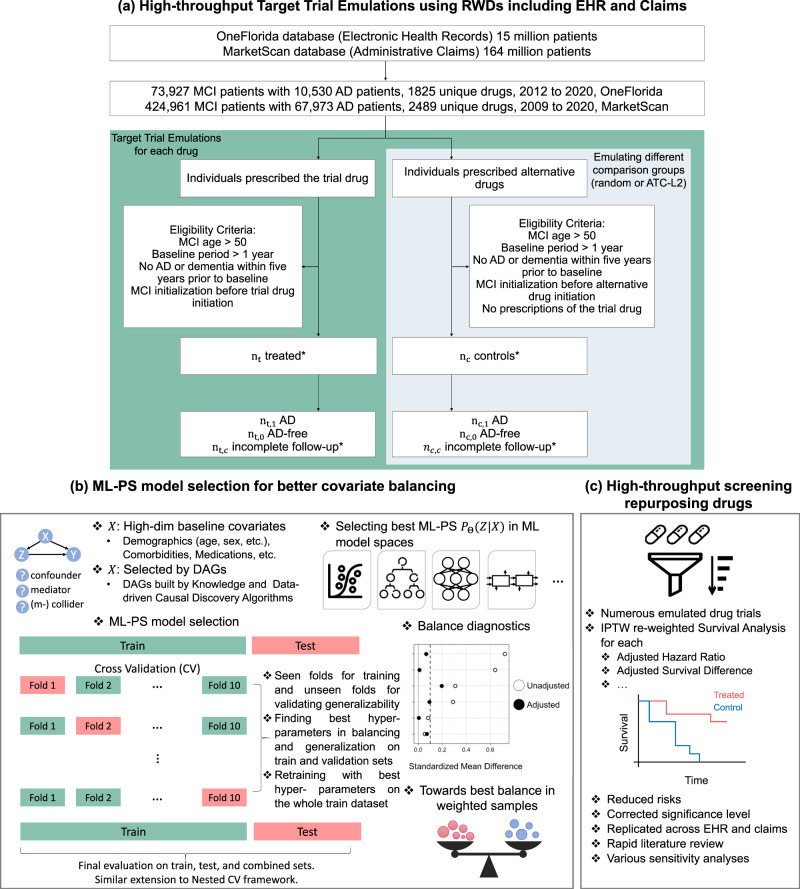
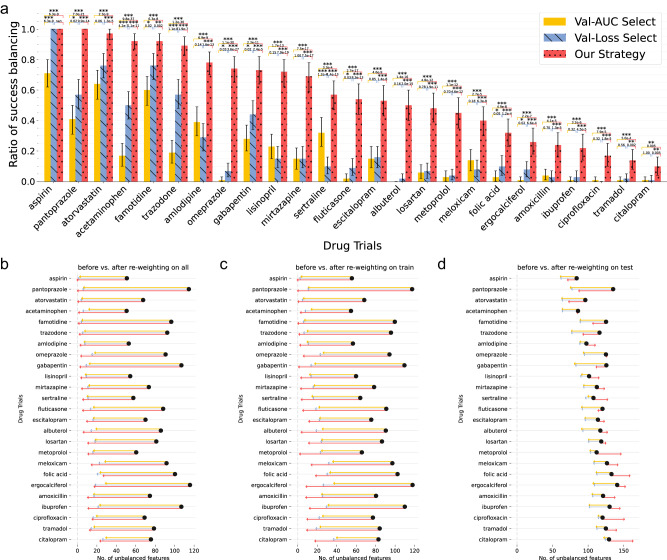
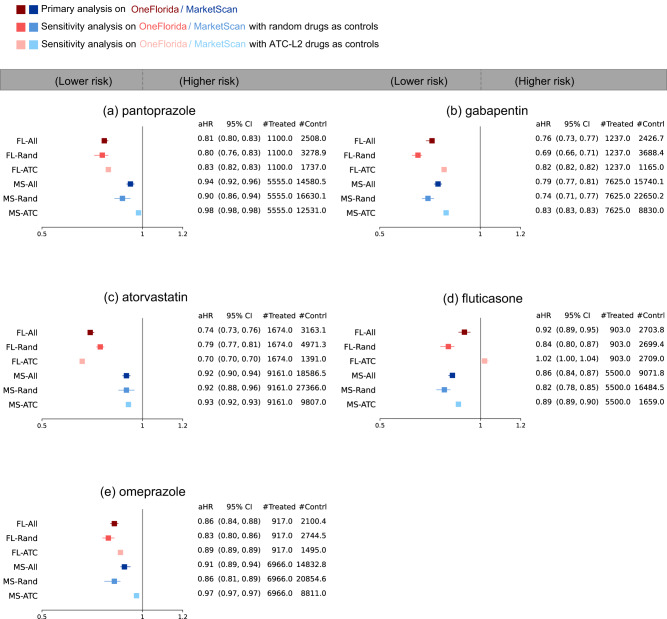
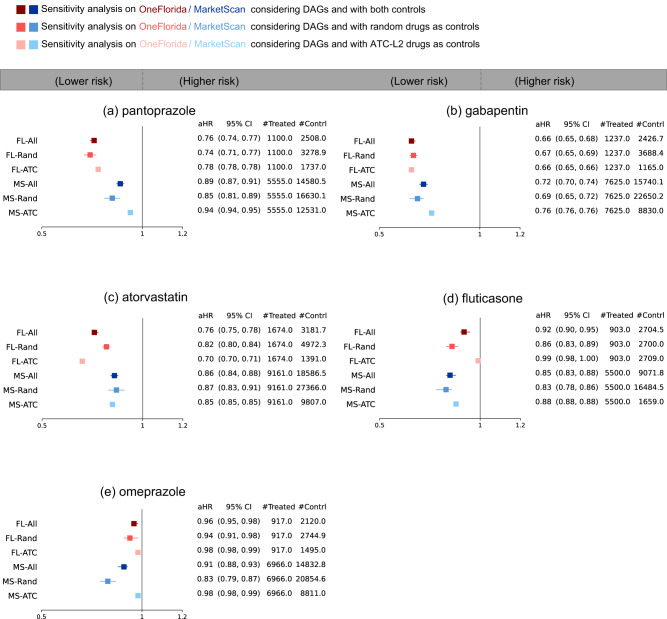
Target trial emulation is the process of mimicking target randomized trials using real-world data, where effective confounding control for unbiased treatment effect estimation remains a main challenge. Although various approaches have been proposed for this challenge, a systematic evaluation is still lacking. Here we emulated trials for thousands of medications from two large-scale real-world data warehouses, covering over 10 years of clinical records for over 170 million patients, aiming to identify new indications of approved drugs for Alzheimer’s disease. We assessed different propensity score models under the inverse probability of treatment weighting framework and suggested a model selection strategy for improved baseline covariate balancing. We also found that the deep learning-based propensity score model did not necessarily outperform logistic regression-based methods in covariate balancing. Finally, we highlighted five top-ranked drugs (pantoprazole, gabapentin, atorvastatin, fluticasone, and omeprazole) originally intended for other indications with potential benefits for Alzheimer’s patients.
Overview
The claims and statistics of this paper haven’t been checked yet.
Free: it reads the open-access text and checks the first 5 claims that cite a source we can check. Create a free account to check every claim.
Integrity signals
Registry
Cites
Statistics
Figures
Verification
Claims the paper makes
The claims and statistics of this paper haven’t been checked yet.
Free: it reads the open-access text and checks the first 5 claims that cite a source we can check. Create a free account to check every claim.
Claims other papers make about this one
Each is checked against this paper’s own text: does it say what the citing paper says it does?
The cited source says what the claim attributes to it.
In the citing paper
“Additionally, the advancement of artificial intelligence (AI)-based computational tools is facilitating drug repurposing, presenting a promising strategy AD drug development.431–433”
From Recent advances in Alzheimer's disease: Mechanisms, clinical trials and new drug development strategies. (2024) · cites this paper as [431]
Self-check
Percentages, sums and reported differences re-computed from the paper’s own numbers.
The self-check needs the paper’s full text.
Citations
Cites
The central role of the propensity score in observational studies for causal effects
ROSENBAUM, P. R., & RUBIN, D. B. (1983) · Biometrika · doi:10.1093/biomet/70.1.41 · Cited by 31,241
Scikit-learn: Machine Learning in Python
(2011) · Journal of Machine Learning Research · doi:10.5555/1953048.2078195 · Cited by 8,539
Austin, P. C. (2009) · Statistics in Medicine · doi:10.1002/sim.3697 · Cited by 6,758 · cited 3×
“We quanti fi ed the balance performance by the standardized mean difference (SMD) 15,16 and the generalization performance by the area under the receiver operating characteristic (AUC).”
Austin, P. C., & Stuart, E. A. (2015) · Statistics in Medicine · doi:10.1002/sim.6607 · Cited by 4,495 · cited 17×
“The goodness-of-balance is measured by the standardized mean difference (SMD) of the covariates ’ prevalence 15,16 , de fi ned as: where x treat , x control 2 R D represent the vector representations of D covariates of the treated group and control group respectively, μ treat , μ control 2 R D are…”
InfluentialThe unified medical language system (UMLS): integrating biomedical terminology
Bodenreider, O. (2004) · Nucleic Acids Research · doi:10.1093/nar/gkh061 · Cited by 4,356
A survey of cross-validation procedures for model selection
Arlot, S., & Célisse, A. (2010) · LillOA (Université de Lille (University Of Lille)) · Cited by 3,663
A survey of cross-validation procedures for model selection
Arlot, S., & Celisse, A. (2010) · Statistics Surveys · doi:10.1214/09-ss054 · Cited by 3,522 · cited 1×
“…which splits the data into mutually exclusive training and testing sets and picks the hyper-parameters based on cross-validation on the training set (say, accordingtotheareaunderthereceiveroperatingcharacteristiccurve on predicting treatment assignment) 21,22 , may lead to inferior performance.”
Using Big Data to Emulate a Target Trial When a Randomized Trial Is Not Available: Table 1.
Hernán, M. A., & Robins, J. M. (2016) · American Journal of Epidemiology · doi:10.1093/aje/kwv254 · Cited by 3,115
When to use the Bonferroni correction
Armstrong, R. A. (2014) · Ophthalmic and Physiological Optics · doi:10.1111/opo.12131 · Cited by 3,031 · cited 1×
“…(aHR 1) of developing AD among MCI patients than comparison groups,(ii)itsdecreasedriskwasreplicatedinbothtwodatasets(EHRs and administrative claims), and (iii) to control for potential false fi ndings, we used the corrected signi fi cance level of 1 : 6×10 (cid:2) 4 by the Bonferroni method 26 .”
Constructing Inverse Probability Weights for Marginal Structural Models
Cole, S. R., & Hernan, M. A. (2008) · American Journal of Epidemiology · doi:10.1093/aje/kwn164 · Cited by 2,796
The Robust Inference for the Cox Proportional Hazards Model
Lin, D. Y., & Wei, L. J. (1989) · Journal of the American Statistical Association · doi:10.1080/01621459.1989.10478874 · Cited by 2,695 · cited 1×
“The adjusted hazard ratio (aHR) and its P value were modeled by the Cox proportional hazard model 58 and the Wald Chi-Square test.”
Bias in error estimation when using cross-validation for model selection
Varma, S., & Simon, R. (2006) · BMC Bioinformatics · doi:10.1186/1471-2105-7-91 · Cited by 2,485 · cited 1×
“We further extended our model selection strategy to the nested cross-validation procedure (with 10-fold outer cross-validation and 5-fold inner cross-validation) 36 .”
Austin, P. C. (2009) · Communications in Statistics - Simulation and Computation · doi:10.1080/03610910902859574 · Cited by 2,445
The prevention and treatment of missing data in clinical trials
Little, R. J., D'Agostino, R., Cohen, M. L., Dickersin, K., Emerson, S. S., Farrar, J. T., Frangakis, C., Hogan, J. W., Molenberghs, G., Murphy, S. A., et al. (2012) · New England Journal of Medicine · doi:10.1056/nejmsr1203730 · Cited by 1,884 · cited 1×
“( Y 1 and Y 0 are the potential outcomes for each patient under the treatment or the control respectively), which can introduce selection bias due to loss to follow-up (censoring) 61 .”
van der Laan, M. J., Polley, E. C., & Hubbard, A. E. (2007) · Statistical Applications in Genetics and Molecular Biology · doi:10.2202/1544-6115.1309 · Cited by 1,719
Lunceford, J. K., & Davidian, M. (2004) · Statistics in Medicine · doi:10.1002/sim.1903 · Cited by 1,674
Federated Learning for Healthcare Informatics
Xu, J., Glicksberg, B. S., Su, C., Walker, P., Bian, J., & Wang, F. (2021) · Journal of Healthcare Informatics Research · doi:10.1007/s41666-020-00082-4 · Cited by 1,542
Self-citationFederated Learning for Healthcare Informatics
Xu, J., Glicksberg, B. S., Su, C., Walker, P., Bian, J., & Wang, F. (2019) · arXiv · doi:10.48550/arxiv.1911.06270 · Cited by 1,538
Self-citationThe performance of different propensity score methods for estimating marginal hazard ratios
Austin, P. C. (2013) · Statistics in Medicine · doi:10.1002/sim.5705 · Cited by 1,006
Improving propensity score weighting using machine learning
Lee, B. K., Lessler, J., & Stuart, E. A. (2010) · Statistics in Medicine · doi:10.1002/sim.3782 · Cited by 896 · cited 9×
“We alsoadded results from GBM-PS as a comparison.”
InfluentialGenerating survival times to simulate Cox proportional hazards models
Bender, R., Augustin, T., & Blettner, M. (2005) · Statistics in Medicine · doi:10.1002/sim.2059 · Cited by 889
Collider bias undermines our understanding of COVID-19 disease risk and severity
Griffith, G. J., Morris, T. T., Tudball, M. J., Herbert, A., Mancano, G., Pike, L., Sharp, G. C., Sterne, J., Palmer, T. M., Davey Smith, G., et al. (2020) · Nature Communications · doi:10.1038/s41467-020-19478-2 · Cited by 826
Mehta, D., Jackson, R., Paul, G., Shi, J., & Sabbagh, M. (2017) · Expert Opinion on Investigational Drugs · doi:10.1080/13543784.2017.1323868 · Cited by 607 · cited 1×
“Pharmaceutical development of novel therapeutics for Alzheimer ’ s disease (AD) has consumed a large amount of resources over the past decades but the majority of AD clinical trials have failed to produce positive results 1 .”
Risk factors for Alzheimer’s disease
A. Armstrong, R. (2019) · Folia Neuropathologica · doi:10.5114/fn.2019.85929 · Cited by 606
Network-based approach to prediction and population-based validation of in silico drug repurposing
Cheng, F., Desai, R. J., Handy, D. E., Wang, R., Schneeweiss, S., Barabási, A.-L., & Loscalzo, J. (2018) · Nature Communications · doi:10.1038/s41467-018-05116-5 · Cited by 552 · cited 1×
“These variabilities can become big challenges for existing observational studies that use a single controlgroup 41 orasinglewayofbuildingmultiplecontrolgroups(e.g. only random control groups) 7 .”
Self-citationXie, J., & Liu, C. (2005) · Statistics in Medicine · doi:10.1002/sim.2174 · Cited by 510
Westreich, D., Lessler, J., & Funk, M. J. (2010) · Journal of Clinical Epidemiology · doi:10.1016/j.jclinepi.2009.11.020 · Cited by 502
A crash course in good and bad controls
Cinelli, C., Forney, A., & Pearl, J. (2024) · Sociological Methods & Research · doi:10.1177/00491241221099552 · Cited by 490 · cited 4×
“Third, adjusting for high-dimensional baseline covariates might introduce additional bias by conditioning on “ bad controls ” (e.g., mediator, or collider covariates) 37,38 .”
InfluentialCross-Validation: What Does It Estimate and How Well Does It Do It?
Bates, S., Hastie, T., & Tibshirani, R. (2024) · Journal of the American Statistical Association · doi:10.1080/01621459.2023.2197686 · Cited by 442 · cited 1×
“…which splits the data into mutually exclusive training and testing sets and picks the hyper-parameters based on cross-validation on the training set (say, accordingtotheareaunderthereceiveroperatingcharacteristiccurve on predicting treatment assignment) 21,22 , may lead to inferior performance.”
Active-comparator design and new-user design in observational studies
Yoshida, K., Solomon, D. H., & Kim, S. C. (2015) · Nature Reviews Rheumatology · doi:10.1038/nrrheum.2015.30 · Cited by 406 · cited 2×
“For each drug ingredient in the databases, we emulated 100 trials with varying comparison groups: (a) 50 groups with subjects being exposed to random drugs, and (b) 50 groups with subjects being exposed to similar drugs under the same ATC-L2 category (mimicking active-comparator design 25 ).”
Evaluating eligibility criteria of oncology trials using real-world data and AI
Liu, R., Rizzo, S., Whipple, S., Pal, N., Pineda, A. L., Lu, M., Arnieri, B., Lu, Y., Capra, W., Copping, R., et al. (2021) · Nature · doi:10.1038/s41586-021-03430-5 · Cited by 322 · cited 1×
“Further directions include considering the real-world safety pro fi les 46 as another outcome or automatically designing eligibility criteria 52 tailored for each emulated trial under our high-throughput setting.”
Avoidable flaws in observational analyses: an application to statins and cancer
Dickerman, B. A., García-Albéniz, X., Logan, R. W., Denaxas, S., & Hernán, M. A. (2019) · Nature Medicine · doi:10.1038/s41591-019-0597-x · Cited by 308
Links between perceptrons, MLPs and SVMs
Collobert, R., & Bengio, S. (2004) · Twenty-first international conference on Machine learning - ICML '04 · doi:10.1145/1015330.1015415 · Cited by 302
Machine learning identifies candidates for drug repurposing in Alzheimer’s disease
Rodriguez, S., Hug, C., Todorov, P., Moret, N., Boswell, S. A., Evans, K., Zhou, G., Johnson, N. T., Hyman, B. T., Sorger, P. K., et al. (2021) · Nature Communications · doi:10.1038/s41467-021-21330-0 · Cited by 299
Austin, P. C. (2008) · Pharmacoepidemiology and Drug Safety · doi:10.1002/pds.1673 · Cited by 238
Statins for the treatment of dementia
McGuinness, B., Craig, D., Bullock, R., Malouf, R., & Passmore, P. (2014) · Cochrane Database of Systematic Reviews · doi:10.1002/14651858.cd007514.pub3 · Cited by 216
Fang, J., Zhang, P., Zhou, Y., Chiang, C.-W., Tan, J., Hou, Y., Stauffer, S., Li, L., Pieper, A. A., Cummings, J., et al. (2021) · Nature Aging · doi:10.1038/s43587-021-00138-z · Cited by 206
Self-citationOlmastroni, E., Molari, G., De Beni, N., Colpani, O., Galimberti, F., Gazzotti, M., Zambon, A., Catapano, A. L., & Casula, M. (2022) · European Journal of Preventive Cardiology · doi:10.1093/eurjpc/zwab208 · Cited by 197 · cited 1×
“Atorvastatin is used to treat high cholesterol and triglyceride levels and shows potentially bene fi cial but not signi fi cant effects on AD 32,33 .”
A Selective Review of Negative Control Methods in Epidemiology
Shi, X., Miao, W., & Tchetgen, E. T. (2020) · Current Epidemiology Reports · doi:10.1007/s40471-020-00243-4 · Cited by 188 · cited 1×
“Therefore, developing negative control tools 49 , consider the per-protocol association analysis under the time-varying exposures, or incorporating more ML-PS model classes by an ensemble framework 50 under our high-throughput trial emulation settings would be other promising directions.”
Improving propensity score estimators’ robustness to model misspecification using super learner.
Pirracchio, R., Petersen, M. L., & van der Laan, M. (2015) · American Journal of Epidemiology · doi:10.1093/aje/kwu253 · Cited by 186
A comparison of different methods to adjust survival curves for confounders
Denz, R., Klaaßen‐Mielke, R., & Timmesfeld, N. (2023) · Statistics in Medicine · doi:10.1002/sim.9681 · Cited by 181
CamDavidsonPilon/lifelines: 0.15.3
Davidson-Pilon, C., Kalderstam, J., Kuhn, B., Zivich, P., Fiore-Gartland, A., Moneda, L., Parij, A., Stark, K., Anton, S., Besson, L., et al. (2018) · Zenodo (CERN European Organization for Nuclear Research) · doi:10.5281/zenodo.805993 · Cited by 167
CSF1R antagonism limits local restimulation of antiviral CD8+ T cells during viral encephalitis
Funk, K. E., & Klein, R. S. (2019) · Journal of Neuroinflammation · doi:10.1186/s12974-019-1397-4 · Cited by 156
Girman, C. J., Ritchey, M. E., & Lo Re, V. (2022) · Pharmacoepidemiology and Drug Safety · doi:10.1002/pds.5444 · Cited by 152 · cited 1×
“Such inconsistency highlights the necessity of leveraging different RWD data sets to derive robust and consistent evidence 42,43 .”
Featherstone, R. M., Dryden, D. M., Foisy, M., Guise, J.-M., Mitchell, M. D., Paynter, R. A., Robinson, K. A., Umscheid, C. A., & Hartling, L. (2015) · Systematic Reviews · doi:10.1186/s13643-015-0040-4 · Cited by 140
Anti-inflammatories in Alzheimer’s disease—potential therapy or spurious correlate?
Rivers-Auty, J., Mather, A. E., Peters, R., Lawrence, C. B., & Brough, D. (2020) · Brain Communications · doi:10.1093/braincomms/fcaa109 · Cited by 130
Levy, J., Álvarez, D., Rosenberg, A. A., Alexandrovich, A., del Campo, F., & Behar, J. A. (2021) · npj Digital Medicine · doi:10.1038/s41746-020-00373-5 · Cited by 125
Taubes, A., Nova, P., Zalocusky, K. A., Kosti, I., Bicak, M., Zilberter, M. Y., Hao, Y., Yoon, S. Y., Oskotsky, T., Pineda, S., et al. (2021) · Nature Aging · doi:10.1038/s43587-021-00122-7 · Cited by 118
Self-citationLiu, R., Wei, L., & Zhang, P. (2021) · Nature Machine Intelligence · doi:10.1038/s42256-020-00276-w · Cited by 117 · cited 10×
“We compared the analytic approach by Liu et al. 7 and we found that their methods led to biased SMD estimation and worse balance performance as shown in Supplementary Table S2 due to their deep LSTM-PS methods.”
InfluentialProton Pump Inhibitors and Dementia: Physiopathological Mechanisms and Clinical Consequences
Ortiz-Guerrero, G., Amador-Muñoz, D., Calderón-Ospina, C. A., López-Fuentes, D., & Nava Mesa, M. O. (2018) · Neural Plasticity · doi:10.1155/2018/5257285 · Cited by 115 · cited 2×
“There is still no consensus on the role of PPIsand AD 28,29,35 .”
A Crash Course in Good and Bad ControlsPreprint
Cinelli, C., Forney, A., & Pearl, J. (2020) · SSRN Electronic Journal · doi:10.2139/ssrn.3689437 · Cited by 109
Shenkman, E., Hurt, M., Hogan, W., Carrasquillo, O., Smith, S., Brickman, A., & Nelson, D. (2018) · Academic Medicine · doi:10.1097/acm.0000000000002029 · Cited by 97 · cited 1×
“One is OneFlorida 9 , which is a large-scale electronic health record dataset.”
Supasitthumrong, T., Bolea-Alamanac, B. M., Asmer, S., Woo, V. L., Abdool, P. S., & Davies, S. (2019) · British Journal of Clinical Pharmacology · doi:10.1111/bcp.13844 · Cited by 95 · cited 1×
“Previous research suggested the possible bene fi t of gabapentin for behavioral and psychological symptoms of dementia in AD patients based on summarizing case reviews 30 and revealed a crucial role of gabapentin in the Amyloid Beta toxicity cascade 31 .”
Xu, J., Zhang, P., Huang, Y., Zhou, Y., Hou, Y., Bekris, L. M., Lathia, J., Chiang, C.-W., Li, L., Pieper, A. A., et al. (2021) · Genome Research · doi:10.1101/gr.272484.120 · Cited by 84 · cited 3×
“Rather than focusing on generating one AD drug repurposing hypothesis at a time as did in the existing literature 3,11 – 13 , we emulated trials for thousands of drugs recorded in the RWD databases, trying to estimate their adjusted associations with incident AD diagnoses among mild cognitive…”
InfluentialSelf-citationRepurposed agents in the Alzheimer’s disease drug development pipeline
Bauzon, J., Lee, G., & Cummings, J. (2020) · Alzheimer's Research & Therapy · doi:10.1186/s13195-020-00662-x · Cited by 77
Desai, R. J., Matheny, M. E., Johnson, K. B., Marsolo, K. A., Curtis, L. H., Nelson, J. C., Heagerty, P. J., Maro, J. C., Brown, J. S., Toh, S., et al. (2021) · npj Digital Medicine · doi:10.1038/s41746-021-00542-0 · Cited by 66
Charpignon, M., Vakulenko‐Lagun, B., Zheng, B., Magdamo, C., Su, B., Evans, K. E., Rodriguez, S., Sokolov, A., Boswell, S. A., Sheu, Y.-H., et al. (2022) · Nature Communications · doi:10.1038/s41467-022-35157-w · Cited by 62
No association between proton pump inhibitor use and risk of dementia: Evidence from a meta‐analysis
Hussain, S., Singh, A., Zameer, S., Jamali, M. C., Baxi, H., Rahman, S. O., Alam, M. M., Altamish, M., Singh, A. K., Anil, D., et al. (2019) · Journal of Gastroenterology and Hepatology · doi:10.1111/jgh.14789 · Cited by 47
Proton pump inhibitors and the risk of Alzheimer’s disease and non-Alzheimer’s dementias
Torres-Bondia, F. I., Dakterzada, F., Galván, L., Butí, M., Besanson, G., Gill, E., Buil, R., de Batlle, J., & Piñol‐Ripoll, G. (2020) · Scientific Reports · doi:10.1038/s41598-020-78199-0 · Cited by 44
Wu, Y., Warner, J. L., Wang, L., Jiang, M., Xu, J., Chen, Q., Nian, H., Dai, Q., Du, X., Yang, P., et al. (2019) · JCO Clinical Cancer Informatics · doi:10.1200/cci.19.00001 · Cited by 42 · cited 1×
“Generating drug repurposing hypotheses from RWD through emulating randomized clinical trials (RCTs) has demonstrated great potential in accelerating drug development and discovery innovations 5 – 8 .”
Self-citationChen, Z., Zhang, H., Guo, Y., George, T. J., Prosperi, M., Hogan, W. R., He, Z., Shenkman, E. A., Wang, F., & Bian, J. (2021) · npj Digital Medicine · doi:10.1038/s41746-021-00452-1 · Cited by 40 · cited 2×
“Further directions include considering the real-world safety pro fi les 46 as another outcome or automatically designing eligibility criteria 52 tailored for each emulated trial under our high-throughput setting.”
Self-citationAustin, P. C., Thomas, N., & Rubin, D. B. (2018) · Statistical Methods in Medical Research · doi:10.1177/0962280218817926 · Cited by 39
Weberpals, J. G., Becker, T., Davies, J., Schmich, F., Rüttinger, D., Theis, F. J., & Bauer‐Mehren, A. (2021) · Epidemiology · doi:10.1097/ede.0000000000001338 · Cited by 34
Using classification tree analysis to generate propensity score weights
Linden, A., & Yarnold, P. R. (2017) · Journal of Evaluation in Clinical Practice · doi:10.1111/jep.12744 · Cited by 32
Framework for identifying drug repurposing candidates from observational healthcare data
Ozery-Flato, M., Goldschmidt, Y., Shaham, O., Ravid, S., & Yanover, C. (2020) · JAMIA Open · doi:10.1093/jamiaopen/ooaa048 · Cited by 32
Electronic Medical Record–Based Case Phenotyping for the Charlson Conditions: Scoping Review
Lee, S. “., Doktorchik, C. T. A., Martin, E. A., D’Souza, A. G., Eastwood, C. A., Shaheen, A. A., Naugler, C. T., Lee, J., & Quan, H. (2021) · JMIR Medical Informatics · doi:10.2196/23934 · Cited by 26
Li, Q., Guo, Y. M., He, Z., Zhang, H., George, T. J., & Bian, J. (2020) · medRxiv · doi:10.1101/2020.08.02.20166629 · Cited by 19 · cited 1×
“First, we identi fi ed MCI patients and AD onsets using ICD codes (Supplementary Table S3) which were provided by physicians and validated 46,47 yet there might be a certain level of inaccuracy due to mis-and under-diagnosis or the lack of clinical details in EHRs or claims 48 .”
Self-citationGabapentin Inhibits Multiple Steps in the Amyloid Beta Toxicity Cascade
González-Sanmiguel, J., Burgos, C. F., Bascuñán, D., Fernández-Pérez, E. J., Riffo-Lepe, N., Boopathi, S., Fernández-Pérez, A., Bobadilla, C., González, W., Figueroa, M., et al. (2020) · ACS Chemical Neuroscience · doi:10.1021/acschemneuro.0c00414 · Cited by 14 · cited 1×
“Previous research suggested the possible bene fi t of gabapentin for behavioral and psychological symptoms of dementia in AD patients based on summarizing case reviews 30 and revealed a crucial role of gabapentin in the Amyloid Beta toxicity cascade 31 .”
Lehrer, S. P., & Rheinstein, P. H. (2018) · Journal of Alzheimer s Disease Reports · doi:10.3233/adr-170033 · Cited by 11
Dynamical Origins of Distribution Functions
Zang, C., Cui, P., Zhu, W., & Wang, F. (2019) · ACM SIGKDD Conference on Knowledge Discovery and Data Mining (KDD) · doi:10.1145/3292500.3330842 · Cited by 10
Self-citationDeep propensity network using a sparse autoencoder for estimation of treatment effects
Ghosh, S., Bian, J., Guo, Y. M., & Prosperi, M. (2020) · Journal of the American Medical Informatics Association · doi:10.1093/jamia/ocaa346 · Cited by 10
Self-citation
Research works printed but not linked: 2
- Ke, G. et al. LightGBM: A Highly Efficient Gradient Boosting Decision Tree. in Advances in Neural Information Processing Systems 30 (Curran Associates, Inc., 2017).
- Kingma, D. P. & Ba, J. Adam: A Method for Stochastic Optimization. in 3rd International Conference on Learning Representations, ICLR 2015, San Diego, CA, USA, May 7-9, 2015, Conference Track Proceedings (2015).
Cited by
Zhang, J., Zhang, Y., Wang, J., Xia, Y., Zhang, J., & Chen, L. (2024) · Signal Transduction and Targeted Therapy · doi:10.1038/s41392-024-01911-3 · Cited by 1,138
Data-driven identification of post-acute SARS-CoV-2 infection subphenotypes
Zhang, H., Zang, C., Xu, Z., Zhang, Y., Xu, J., Bian, J., Morozyuk, D., Khullar, D., Zhang, Y., Nordvig, A. S., et al. (2023) · Nature Medicine · doi:10.1038/s41591-022-02116-3 · Cited by 184
Self-citationAlgorithmic fairness in computational medicine
Xu, J., Xiao, Y., Wang, W. H., Ning, Y., Shenkman, E. A., Bian, J., & Wang, F. (2022) · eBioMedicine · doi:10.1016/j.ebiom.2022.104250 · Cited by 170
Self-citationApplications of Artificial Intelligence in Drug Repurposing
Wan, Z., Sun, X., Li, Y., Chu, T., Hao, X., Cao, Y., & Zhang, P. (2025) · Advanced Science · doi:10.1002/advs.202411325 · Cited by 127
Toumaj, S., Heidari, A., Shahhosseini, R., & Navimipour, N. J. (2024) · Artificial Intelligence Review · doi:10.1007/s10462-024-11041-5 · Cited by 89
Metadata
- Authors
- Zang, C., Zhang, H., Xu, J., Zhang, H., Fouladvand, S., Havaldar, S., Cheng, F., Chen, K., Chen, Y., Glicksberg, B. S., Chen, J., Bian, J., & Wang, F.
- Affiliations
- Weill Cornell Medicine (US)
- University of Florida Health (US)
- University of Kentucky (US)
- Icahn School of Medicine at Mount Sinai (US)
- Cleveland Clinic (US)
- University of Connecticut (US)
- University of Pennsylvania (US)
- Corresponding author
- Wang, Fei
- ORCID
- Venue
- Nature Communications
- Published
- 2023-12-11
- Volume
- 14
- Issue
- 1
- Pages
- 8180-8180
- ISSN
- 2041-1723 (ISSN-L)
- PMC
- PMC10713627
- OpenAlex
- W4389549989
- Cited by
- 69
- References
- 63
- Citations by year
- 2026: 22 · 2025: 33 · 2024: 13
- FWCI
- 13.82
- Type
- journal article
- Language
- en
- Open access
- gold
- doi.org
- Licence
- cc-by
- creativecommons.org/licenses/by/4.0 (tdm)
- creativecommons.org/licenses/by/4.0 (vor)
- Locations
- Nature Communications (publishedVersion, cc-by)
- PubMed Central (publishedVersion, cc-by)
- PubMed (publishedVersion)
- RePEc: Research Papers in Economics (submittedVersion)
- DOAJ (DOAJ: Directory of Open Access Journals) (submittedVersion, cc-by-sa)
- Funders
- National Science Foundation (1750326)
- International Business Machines Corporation
- National Institutes of Health (1rf1ag084178-01, RF1G077820, 1rf1ag077820-01a1)
- National Institute on Aging (R56AG074001, R56AG069880, R01AG066707, R56AG074604, RF1AG082211, RF1 AG084178, RF1AG072449, RF1AG059319, R21AG083003, RF1AG077820, R21AG068717, K08AG065463, R01AG083039, R01AG084236, R01AG084250, R01AG080991, R01AG080624, R01AG082118, R01AG073435, P30AG072946, R01AG076448, R01AG076234, U01AG073323)
- National Institute of Mental Health (R01MH124740)
- National Institute on Drug Abuse (UM1DA049406)
- National Cancer Institute (R01CA246418, R21CA245858)
- National Institute of General Medical Sciences (P20GM109025)
- National Institute of Allergy and Infectious Diseases (R01AI172875)
- National Institute of Neurological Disorders and Stroke (RF1NS133812)
- U.S. National Library of Medicine (R01LM013519, R01LM014344)
- Topics
- Physical Sciences › Mathematics › Statistics and Probability › Advanced Causal Inference Techniques
- Life Sciences › Neuroscience › Cellular and Molecular Neuroscience › Alzheimer's disease research and treatments
- Physical Sciences › Computer Science › Artificial Intelligence › Machine Learning in Healthcare
- Keywords
- target trial emulation, Alzheimer's disease, drug repurposing, real-world data, propensity score matching, inverse probability of treatment weighting, confounding adjustment, covariate balancing, model selection, pantoprazole, gabapentin, atorvastatin, fluticasone, omeprazole
- MeSH terms
- Atorvastatin, Alzheimer Disease, Humans, Propensity Score, Drug Repositioning
About these checks
Registry, retraction, Cites and statistics results are computed, not judged, with one exception: a printed reference that no index lists is read once by a model before it counts as a citation error. Claims are extracted by a model and kept only when their quote appears verbatim in the text; each cited source is then checked, with a model’s help, for whether it says what the claim relies on. Those verdicts can be wrong — read the claim’s quote and the cited source before relying on one.
Statistics and arithmetic are recomputed, not judged.
Confidence bands are shown only for fields calibrated on our annotated test set. None is calibrated yet, so no band is shown.
What counts as a claim ›How we measure confidence ›How we check this ›
Are you an author, or do you see a problem with this page? Request a review
Data sources
Bibliographic data: Semantic Scholar, OpenAlex, Crossref.
Contains information from the Semantic Scholar Academic Graph Datasets, made available under the ODC Attribution License (ODC-BY 1.0).
Semantic Scholar’s data is described in: Kinney, R., et al. (2023). The Semantic Scholar Open Data Platform. arXiv:2301.10140.
