

Direct translation of incoming retroviral genomes
Open accessPublished version of a preprint
The DOI matches its Crossref record; 51 of the 51 references it cites were found in a registry or an index.
Abstract
Viruses that carry a positive-sense, single-stranded (+ssRNA) RNA translate their genomes soon after entering the host cell to produce viral proteins, with the exception of retroviruses. A distinguishing feature of retroviruses is reverse transcription, where the +ssRNA genome serves as a template to synthesize a double-stranded DNA copy that subsequently integrates into the host genome. As retroviral RNAs are produced by the host cell transcriptional machinery and are largely indistinguishable from cellular mRNAs, we investigated the potential of incoming retroviral genomes to directly express proteins. Here we show through multiple, complementary methods that retroviral genomes are translated after entry. Our findings challenge the notion that retroviruses require reverse transcription to produce viral proteins. Synthesis of retroviral proteins in the absence of productive infection has significant implications for basic retrovirology, immune responses and gene therapy applications.
Overview
The claims and statistics of this paper haven’t been checked yet.
Free: it reads the open-access text and checks the first 5 claims that cite a source we can check. Create a free account to check every claim.
Integrity signals
Registry
Cites
Statistics
Figures
Verification
Claims the paper makes
The claims and statistics of this paper haven’t been checked yet.
Free: it reads the open-access text and checks the first 5 claims that cite a source we can check. Create a free account to check every claim.
Self-check
Percentages, sums and reported differences re-computed from the paper’s own numbers.
The self-check needs the paper’s full text.
Citations
Cites
Meier, F., Brunner, A.-D., Koch, S., Koch, H., Lubeck, M., Krause, M., Goedecke, N., Decker, J., Kosinski, T., Park, M. A., et al. (2018) · Molecular & Cellular Proteomics · doi:10.1074/mcp.tir118.000900 · Cited by 965
Banaszynski, L. A., Chen, L.-C., Maynard-Smith, L. A., Ooi, A. G. L., & Wandless, T. J. (2006) · Cell · doi:10.1016/j.cell.2006.07.025 · Cited by 902 · cited 1×
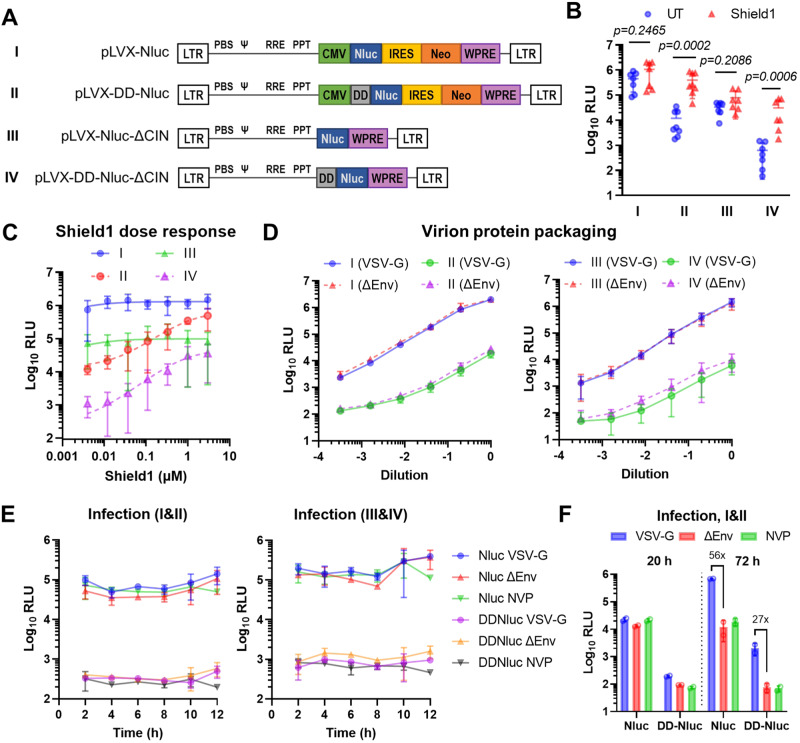
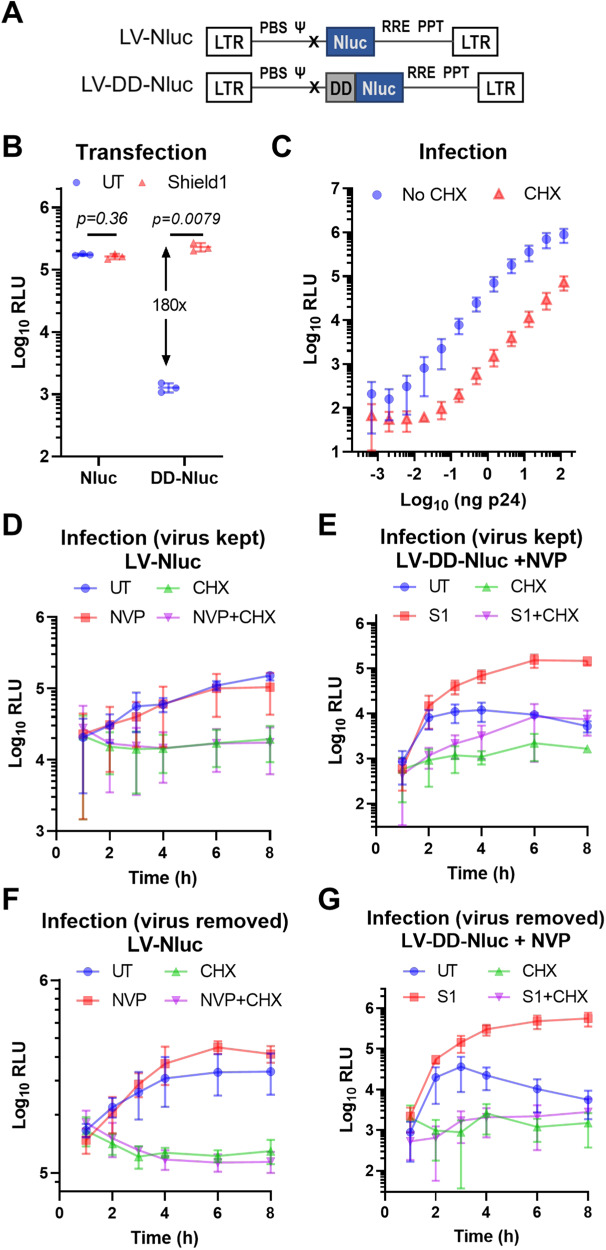
“…novo translated incoming retroviral RNAs, we employed a post-translational protein control system (ProteoTuner), where a destabilizing domain (DD) derived from a cellular gene with a very short half-life (FKBP12) is fused to the gene of interest, targeting it for rapid proteasomal degradation 14 .”
Architecture and secondary structure of an entire HIV-1 RNA genome
Watts, J. M., Dang, K. K., Gorelick, R. J., Leonard, C. W., Bess Jr, J. W., Swanstrom, R., Burch, C. L., & Weeks, K. M. (2009) · Nature · doi:10.1038/nature08237 · Cited by 837 · cited 1×
“The RNA genome of HIV-1 has an intricate secondary structure and several cis -acting RNA elements with diverse functions in the replication cycle, which are not all present in the context of a minimal vector 18 .”
NanoLuc: A Small Luciferase Is Brightening Up the Field of Bioluminescence
England, C. G., Ehlerding, E. B., & Cai, W. (2016) · Bioconjugate Chemistry · doi:10.1021/acs.bioconjchem.6b00112 · Cited by 591
Fast Quantitative Analysis of timsTOF PASEF Data with MSFragger and IonQuant
Yu, F., Haynes, S. E., Teo, G. C., Avtonomov, D. M., Polasky, D. A., & Nesvizhskii, A. I. (2020) · Molecular & Cellular Proteomics · doi:10.1074/mcp.tir120.002048 · Cited by 374
Cone-shaped HIV-1 capsids are transported through intact nuclear pores
Zila, V., Margiotta, E., Turoňová, B., Müller, T. G., Zimmerli, C. E., Mattei, S., Allegretti, M., Börner, K., Rada, J., Müller, B., et al. (2021) · Cell · doi:10.1016/j.cell.2021.01.025 · Cited by 339
HIV-1 uncoats in the nucleus near sites of integration
Burdick, R. C., Li, C., Munshi, M., Rawson, J. M. O., Nagashima, K., Hu, W.-S., & Pathak, V. K. (2020) · Proceedings of the National Academy of Sciences · doi:10.1073/pnas.1920631117 · Cited by 313 · cited 4×
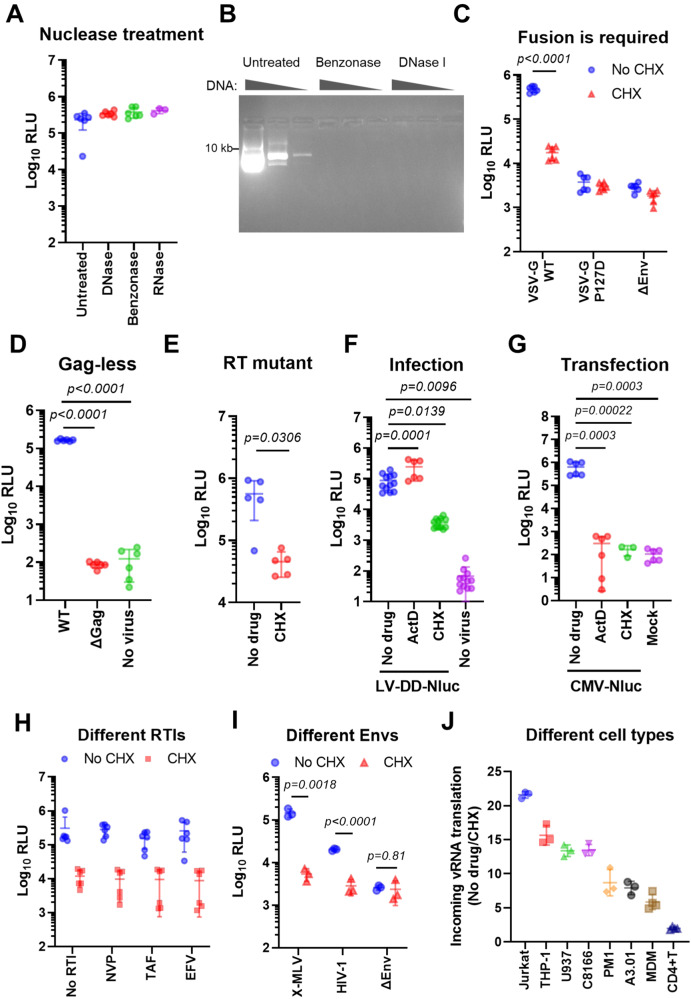
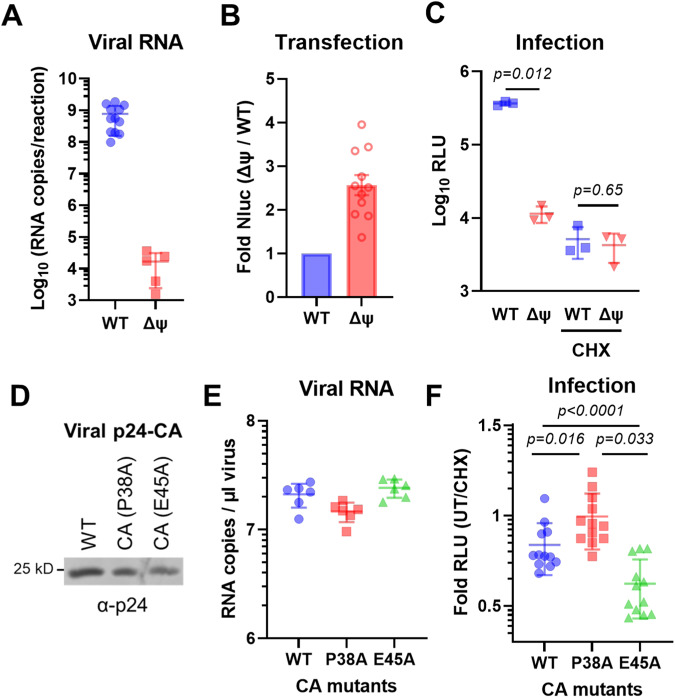
“F Transduction in the presence of S1 and NVP, with or without ActD or CHX.”
InfluentialSacha, J. B., Chung, C., Rakasz, E. G., Spencer, S. P., Jonas, A. K., Bean, A. T., Lee, W., Burwitz, B. J., Stephany, J. J., Loffredo, J. T., et al. (2007) · The Journal of Immunology · doi:10.4049/jimmunol.178.5.2746 · Cited by 267 · cited 2×
“All suspension cell lines including THP-1, U937, C8166, Jurkat, PM1 and A3.”
Philipson, L., Andersson, P., Olshevsky, U., Weinberg, R., Baltimore, D., & Gesteland, R. (1978) · Cell · doi:10.1016/0092-8674(78)90149-6 · Cited by 228 · cited 1×
“As genomic RNA isolated from virions can be translated in in vitro systems to produce retroviral proteins 5 – 7 , the virion-packaged genomic RNA does not appear to be inherently untranslatable, even if it differs from the newlyproduced, full-length RNA that is translated to produce viral…”
Gallardo, H. F., Tan, C., Ory, D., & Sadelain, M. (1997) · Blood · doi:10.1182/blood.v90.3.952 · Cited by 170
A universal real-time PCR assay for the quantification of group-M HIV-1 proviral load
Malnati, M. S., Scarlatti, G., Gatto, F., Salvatori, F., Cassina, G., Rutigliano, T., Volpi, R., & Lusso, P. (2008) · Nature Protocols · doi:10.1038/nprot.2008.108 · Cited by 167
Comparison of lentiviral vector titration methods
Geraerts, M., Willems, S., Baekelandt, V., Debyser, Z., & Gijsbers, R. (2006) · BMC Biotechnology · doi:10.1186/1472-6750-6-34 · Cited by 167 · cited 1×
“It was previously described that different titration methods show considerable variation in predicting the transducing units of lentiviruses 20 .”
HIV-1 cores retain their integrity until minutes before uncoating in the nucleus
Li, C., Burdick, R. C., Nagashima, K., Hu, W.-S., & Pathak, V. K. (2021) · Proceedings of the National Academy of Sciences · doi:10.1073/pnas.2019467118 · Cited by 160 · cited 1×
“A paradigm shift in retrovirology occurred with the fi nding that intact or near-intact HIV-1 capsids can be transported into the nucleus, where reverse transcription and uncoating is completed 30 – 33 .”
Haas, D. L., Case, S. S., Crooks, G. M., & Kohn, D. B. (2000) · Molecular Therapy · doi:10.1006/mthe.2000.0094 · Cited by 153 · cited 1×
“Pre-treatment of our virus stocks with nucleases thatdegradeeitherDNA,RNAorbothdidnotalterreporterexpression from the incoming viral genome after transduction, despite the enzymes being functional, indicating that the observed signal is not due to nonspeci fi c uptake of ambient DNA or RNA (Fig.”
Sunseri, N., O'Brien, M., Bhardwaj, N., & Landau, N. R. (2011) · Journal of Virology · doi:10.1128/jvi.00346-11 · Cited by 123
Transcriptional start site heterogeneity modulates the structure and function of the HIV-1 genome
Kharytonchyk, S., Monti, S., Smaldino, P. J., Van, V., Bolden, N. C., Brown, J. D., Russo, E., Swanson, C., Shuey, A., Telesnitsky, A., et al. (2016) · Proceedings of the National Academy of Sciences · doi:10.1073/pnas.1616627113 · Cited by 123 · cited 1×
“While 1G transcripts are primarily dimerized and selectively packaged into virions, 2G and 3G transcripts exist mainly as monomersand are enriched in polysomes 1,2 .”
NP220 mediates silencing of unintegrated retroviral DNA
Zhu, Y., Wang, G. Z., Cingöz, O., & Goff, S. P. (2018) · Nature · doi:10.1038/s41586-018-0750-6 · Cited by 123 · cited 1×
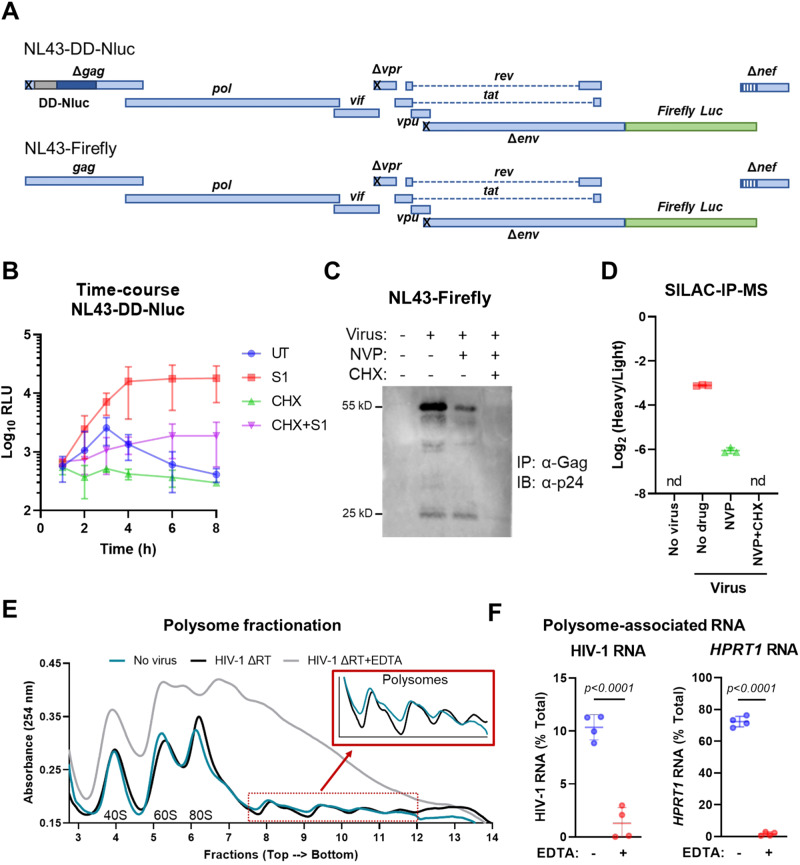
“Immunoprecipitations were performed as described with slight modi fi cations 41 .”
Self-citationMüller, T. G., Zila, V., Peters, K., Schifferdecker, S., Stanic, M., Lucic, B., Laketa, V., Lusic, M., Müller, B., & Kräusslich, H.-G. (2021) · eLife · doi:10.7554/elife.64776 · Cited by 123 · cited 1×
“30, 31, 32, 33 How to reconcile the direct translation of incoming retroviral genomes surrounded by capsid and inaccessible to the translational machinery with the detection of intact core structures in the nucleus?”
BackgroundLiu, M. L., Winther, B. L., & Kay, M. A. (1996) · Journal of Virology · doi:10.1128/jvi.70.4.2497-2502.1996 · Cited by 122 · cited 1×
“Pre-treatment of our virus stocks with nucleases thatdegradeeitherDNA,RNAorbothdidnotalterreporterexpression from the incoming viral genome after transduction, despite the enzymes being functional, indicating that the observed signal is not due to nonspeci fi c uptake of ambient DNA or RNA (Fig.”
Structural basis for transcriptional start site control of HIV-1 RNA fate
Brown, J. D., Kharytonchyk, S., Chaudry, I., Iyer, A. S., Carter, H., Becker, G., Desai, Y., Glang, L., Choi, S. H., Singh, K., et al. (2020) · Science · doi:10.1126/science.aaz7959 · Cited by 118
Retrovirus Vectors: Toward the Plentivirus?
Baum, C., Schambach, A., Bohne, J., & Galla, M. (2006) · Molecular Therapy · doi:10.1016/j.ymthe.2006.03.007 · Cited by 104 · cited 2×
“3-Fire fl y reporter virus carrying 10 amino acids from the p6 region of SIVmac (pNL-luc3-SIVp6[17 – 26]) 44 .”
Rein, A. (2019) · Trends in Microbiology · doi:10.1016/j.tim.2019.04.003 · Cited by 96
Molecular Determinants of the Ratio of Inert to Infectious Virus Particles
Klasse, P. J. (2014) · Progress in molecular biology and translational science · doi:10.1016/bs.pmbts.2014.10.012 · Cited by 95 · cited 1×
“In fact, for animal viruses the particle-to-PFU (or particle to infectious unit; P/IU) ratio can vary greatly; from 1-2 for Semliki Forest Virus to as high as 10 7 for HIV-1, according to some estimates (reviewed in 34 ).”
BackgroundMurray, J. M., Kelleher, A. D., & Cooper, D. A. (2011) · Journal of Virology · doi:10.1128/jvi.05095-11 · Cited by 93 · cited 2×
“16, 17 As the constructs in Fig.”
MethodReal-Time PCR Analysis of HIV-1 Replication Post-entry Events
Mbisa, J. L., Delviks-Frankenberry, K. A., Thomas, J. A., Gorelick, R. J., & Pathak, V. K. (2009) · Methods in Molecular Biology · doi:10.1007/978-1-59745-170-3_5 · Cited by 81
Retroviral Pseudotransduction for Targeted Cell Manipulation
Galla, M., Will, E., Kraunus, J., Chen, L., & Baum, C. (2004) · Molecular Cell · doi:10.1016/j.molcel.2004.09.023 · Cited by 77 · cited 2×
“Reporter viruses were produced by transfecting viral plasmids together with a plasmid encoding VSV-G env (pCMV-VSV-G-myc,or the fusion-defective mutant P127D, kindly provided by Wes Sundquist; Addgene #80054 and #80055), and in case of the minimal lentiviral Fig.3|DirectexpressionfromincominglentiviralRNAgenomesistrul…”
Hong, S., Klein, E. A., Gupta, J. D., Hanke, K., Weight, C., Nguyen, C. T., Gaughan, C., Kim, K.-A., Bannert, N., Kirchhoff, F., et al. (2009) · Journal of Virology · doi:10.1128/jvi.00268-09 · Cited by 76
Self-citationNovel lentiviral vectors with mutated reverse transcriptase for mRNA delivery of TALE nucleases
Mock, U., Riecken, K., Berdien, B., Qasim, W., Chan, E., Cathomen, T., & Fehse, B. (2014) · Scientific Reports · doi:10.1038/srep06409 · Cited by 69 · cited 1×
“In other studies, modi fi ed lentiviral vectors containing 5 ’ IRES or 3 ’ WPRE insertions or major structural rearrangements of the genome (e.g., moving the U5-R regions further downstream towards the 3 ’ end) were employed in order to enable direct translation from the packaged RNA 28,29 .”
Sacha, J. B., Chung, C. J., Reed, J. S., Jonas, A. K., Bean, A. T., Spencer, S. P., Lee, W., Vojnov, L., Rudersdorf, R. A., Friedrich, T. C., et al. (2007) · Journal of Virology · doi:10.1128/jvi.00926-07 · Cited by 69
Cyclin-dependent kinase activity is required for type I interferon production
Cingöz, O., & Goff, S. P. (2018) · Proceedings of the National Academy of Sciences · doi:10.1073/pnas.1720431115 · Cited by 68
Self-citationTranslation of bovine leukemia virus virion RNAs in heterologous protein-synthesizing systems
Ghysdael, J., Kettmann, R., & Burny, A. (1979) · Journal of Virology · doi:10.1128/jvi.29.3.1087-1098.1979 · Cited by 62 · cited 1×
“4 As genomic RNA isolated from virions can be translated in in vitro systems to produce retroviral proteins, 5, 6, 7 the virion-packaged genomic RNA does not appear to be inherently untranslatable, even if it differs from the newly-produced full-length RNA that is translated to produce viral…”
Stage-Dependent Inhibition of HIV-1 Replication by Antiretroviral Drugs in Cell Culture
Donahue, D. A., Sloan, R. D., Kuhl, B. D., Bar-Magen, T., Schader, S. M., & Wainberg, M. A. (2009) · Antimicrobial Agents and Chemotherapy · doi:10.1128/aac.01537-09 · Cited by 47 · cited 1×
“16, 17 As the constructs in Fig.”
HIV-1 Vpr Induces Widespread Transcriptomic Changes in CD4 + T Cells Early Postinfection
Bauby, H., Ward, C. C., Hugh-White, R., Swanson, C. M., Schulz, R., Goujon, C., & Malim, M. H. (2021) · mBio · doi:10.1128/mbio.01369-21 · Cited by 39
HIV-1 hypermethylated guanosine cap licenses specialized translation unaffected by mTOR
Singh, G., Seufzer, B., Song, Z., Zucko, D., Heng, X., & Boris-Lawrie, K. (2022) · Proceedings of the National Academy of Sciences · doi:10.1073/pnas.2105153118 · Cited by 39 · cited 1×
“Inaddition, incompletely-spliced retroviral transcripts carry hypermethylated caps bound by NCBP3 instead of eIF4E, and translated in an mTOR-independent manner, although such hypermethylated caps were not detected in virion-packaged RNA 4 .”
Santos, C. D. S., Tartour, K., & Cimarelli, A. (2016) · PLoS Pathogens · doi:10.1371/journal.ppat.1005897 · Cited by 34 · cited 1×
“35 As direct translation of the genome is likely a dead-end for viral replication, it is reasonable to assume that virions that end up producing infectious progeny are the few ones that successfully make it to the nucleus or the nuclear pore intact, not those that are translated.”
BackgroundGreen fluorescent protein: green cells do not always indicate gene expression
Nash, K. L., & Lever, A. M. L. (2004) · Gene Therapy · doi:10.1038/sj.gt.3302246 · Cited by 30 · cited 1×
“Pre-treatment of our virus stocks with nucleases thatdegradeeitherDNA,RNAorbothdidnotalterreporterexpression from the incoming viral genome after transduction, despite the enzymes being functional, indicating that the observed signal is not due to nonspeci fi c uptake of ambient DNA or RNA (Fig.”
Vyver, A. J. V. D., Weinzierl, T., Eigenmann, M. J., Frances, N., Herter, S., Buser, R. B., Somandin, J., Diggelmann, S., Limani, F., Lehr, T., et al. (2020) · Molecular Cancer Therapeutics · doi:10.1158/1535-7163.mct-20-0269 · Cited by 27
Gallis, B. M., Eisenman, R. N., & Diggelmann, H. (1976) · Virology · doi:10.1016/0042-6822(76)90337-8 · Cited by 26 · cited 1×
“As a basis for minimal lentiviral vectors the pLVX-IRES-Neo vector (Clontech) was used, which contains identical, full-length LTRs. DD-Nluc was synthesized as a gBlock (IDT) and cloned between XhoI and NotI sites of pLVX-IRES-Neo, either with or without the destabilizing domain to create…”
Kobayashi, N., Yamamoto, N., Koyanagi, Y., Schneider, J., Hunsmann, G., & Hatanaka, M. (1984) · The EMBO Journal · doi:10.1002/j.1460-2075.1984.tb01804.x · Cited by 26 · cited 1×
“As retroviral genomes are produced by the host cell machinery, with a 5 ’ cap and a 3 ’ poly-A tail, we asked: Are incoming retroviral genomic RNAs also directly translated?”
Rawson, J. M. O., Nikolaitchik, O. A., Shakya, S., Keele, B. F., Pathak, V. K., & Hu, W.-S. (2022) · Microbiology Spectrum · doi:10.1128/spectrum.01053-22 · Cited by 23
Kim, J. T., Liu, Y., Kulkarni, R. P., Lee, K. K., Dai, B., Lovely, G. A., Ouyang, Y., Wang, P., Yang, L., & Baltimore, D. (2017) · Science Immunology · doi:10.1126/sciimmunol.aal1329 · Cited by 19 · cited 1×
“Pre-treatment of our virus stocks with nucleases thatdegradeeitherDNA,RNAorbothdidnotalterreporterexpression from the incoming viral genome after transduction, despite the enzymes being functional, indicating that the observed signal is not due to nonspeci fi c uptake of ambient DNA or RNA (Fig.”
The translational landscape of HIV-1 infected cells reveals key gene regulatory principles
Kibe, A., Buck, S., Gribling-Burrer, A.-S., Gilmer, O., Bohn, P., Koch, T., Mireisz, C. N.-M., Schlosser, A., Erhard, F., Smyth, R. P., et al. (2025) · Nature Structural & Molecular Biology · doi:10.1038/s41594-024-01468-3 · Cited by 19 · cited 1×
“24 In support of our findings, a ribosome profiling study of HIV-1 infected cells detected ribosome-244 protected RNA fragments indicative of active translation in the gag coding region already within one hour of infection.”
ResultSanders-Beer, B. E., Eschricht, M., Seifried, J., Hirsch, V. M., Allan, J. S., & Norley, S. (2011) · Virology · doi:10.1016/j.virol.2011.11.003 · Cited by 17
Labaronne, E., Décimo, D., Bertrand, L., Guiguettaz, L., Sohier, T. J. M., Cluet, D., Vivet‐Boudou, V., Valadão, A. L. C., Dahoui, C., François, P., et al. (2025) · Nature Communications · doi:10.1038/s41467-025-56772-3 · Cited by 16
Vpx enhances innate immune responses independently of SAMHD1 during HIV-1 infection
Cingöz, O., Arnow, N. D., Puig-Torrents, M., & Bannert, N. (2021) · Retrovirology · doi:10.1186/s12977-021-00548-2 · Cited by 15
Self-citationViral genome RNA serves as messenger early in the infectious cycle of murine leukemia virus
Shurtz, R., Dolev, S., Aboud, M., & Salzberg, S. (1979) · Journal of Virology · doi:10.1128/jvi.31.3.668-676.1979 · Cited by 12 · cited 1×
“As a basis for minimal lentiviral vectors the pLVX-IRES-Neo vector (Clontech) was used, which contains identical, full-length LTRs. DD-Nluc was synthesized as a gBlock (IDT) and cloned between XhoI and NotI sites of pLVX-IRES-Neo, either with or without the destabilizing domain to create…”
Geering, B., Schmidt‐Mende, J., Federzoni, E. A., Stoeckle, C., & Simon, H. (2011) · Journal of Immunological Methods · doi:10.1016/j.jim.2011.08.024 · Cited by 12 · cited 1×
“Pre-treatment of our virus stocks with nucleases thatdegradeeitherDNA,RNAorbothdidnotalterreporterexpression from the incoming viral genome after transduction, despite the enzymes being functional, indicating that the observed signal is not due to nonspeci fi c uptake of ambient DNA or RNA (Fig.”
Labaronne, E., Décimo, D., Bertrand, L., et al. (2022) · bioRxiv (Cold Spring Harbor Laboratory) · doi:10.1101/2022.04.29.489990 · Cited by 8 · cited 1×
“25 Based on the current knowledge regarding infection kinetics, as one hour is too short of a time period to complete reverse transcription and integration, the implication is that such expression is enabled by the direct translation of the RNA genome.”
BackgroundRe-structuring lentiviral vectors to express genomic RNA via cap-dependent translation
Counsell, J. R., Brabandere, G. D., Karda, R., Moore, M., Greco, A., Bray, A., Diaz, J. F. A., Perocheau, D. P. B., Mock, U., & Waddington, S. N. (2020) · Molecular Therapy — Methods & Clinical Development · doi:10.1016/j.omtm.2020.12.005 · Cited by 5 · cited 1×
“28, 29 In all of these studies, however, protein or DNA transfer cannot be ruled out.”
BackgroundThe translational landscape of HIV-1 infected cells reveals novel gene regulatory principlesPreprint
Caliskan, N., Kibe, A., Buck, S., et al. (2023) · Research Square · doi:10.21203/rs.3.rs-3352709/v1 · Cited by 2
Murine retrovirus genome directs the synthesis of gag protein precursor early after infection
Tobaly-Tapiero, J., d’Auriol, L., Yang, W., Peries, J., & Emanoil‐Ravier, R. (1982) · Biochimie · doi:10.1016/s0300-9084(82)80361-1 · Cited by 1 · cited 1×
“21, 22, 23 A recent study also detected full-length HIV-1 transcripts associated with polysomes at 8 hpi; although it is unclear whether the expression at this time point is mediated by reverse-transcribed and integrated viral DNA that is then newly-242 transcribed, or from the incoming RNA genome…”
Background
Cited by
Labaronne, E., Décimo, D., Bertrand, L., Guiguettaz, L., Sohier, T. J. M., Cluet, D., Vivet‐Boudou, V., Valadão, A. L. C., Dahoui, C., François, P., et al. (2025) · Nature Communications · doi:10.1038/s41467-025-56772-3 · Cited by 16
“Similar results have recently been described by an independent group 92 and could represent an important source of viral epitopes presented by infected cells during the early steps of infection as further discussed below.”
Geedkar, D., Kumar, A., & Sharma, P. (2024) · Scientific Reports · doi:10.1038/s41598-024-57795-4 · Cited by 11
Keshav, G. C., Lesko, S., Emery, A., Burnett, C., Gopal, K., Clark, S. G., Swanstrom, R. I., Sherer, N. M., Telesnitsky, A., & Kharytonchyk, S. (2025) · Journal of Virology · doi:10.1128/jvi.02139-24 · Cited by 5
Beyond reverse transcription: molecular mechanisms and emerging paradigms in retroviral replication
Jehad, M. A., Ali, L. M., Pillai, V. N., Prabhu, S. G., Mustafa, F., & Rizvi, T. A. (2026) · FEMS Microbiology Reviews · doi:10.1093/femsre/fuaf066 · Cited by 5
“Although a singular recent report suggests the possibility of direct translation of the retroviral genome (Köppke et al. 2024 ), the prevailing consensus remains that reverse transcription, and genomic integration must occur and translation happens only from transcripts generated following proviral…”
RNA ‐centric world of retroviruses: unravelling the molecular strategies of genomic RNA packaging
Jehad, M. A., Prabhu, S., Ali, L. M., Pillai, V. N., Mustafa, F., & Rizvi, T. A. (2026) · Biological reviews/Biological reviews of the Cambridge Philosophical Society · doi:10.1002/brv.70188 · Cited by 3
Metadata
- Authors
- Köppke, J., Keller, L.-E., Stuck, M., Arnow, N. D., Bannert, N., Doellinger, J., & Cingöz, O.
- Affiliations
- Robert Koch Institute (DE)
- Goethe University Frankfurt (DE)
- Heidelberg University (DE)
- Corresponding author
- Cingöz, Oya
- Venue
- Nature Communications
- Published
- 2024-01-05
- Volume
- 15
- Issue
- 1
- Pages
- 299-299
- ISSN
- 2041-1723 (ISSN-L)
- PMC
- PMC10770327
- OpenAlex
- W4390612692
- Cited by
- 10
- References
- 49
- Citations by year
- 2026: 3 · 2025: 4 · 2024: 3
- FWCI
- 1.36
- Type
- journal article
- Language
- en
- Open access
- gold
- doi.org
- Licence
- cc-by
- creativecommons.org/licenses/by/4.0 (tdm)
- creativecommons.org/licenses/by/4.0 (vor)
- Locations
- Nature Communications (publishedVersion, cc-by)
- bioRxiv (Cold Spring Harbor Laboratory) (acceptedVersion, cc-by-nd)
- PubMed Central (publishedVersion, cc-by)
- PubMed (publishedVersion)
- Publication server of the Robert Koch Institute (Robert Kock Institute) (submittedVersion, cc-by)
- RePEc: Research Papers in Economics (submittedVersion)
- DOAJ (DOAJ: Directory of Open Access Journals) (submittedVersion, cc-by-sa)
- Publication Server of Goethe University Frankfurt am Main (Goethe University Frankfurt) (submittedVersion, cc-by-nd)
- Publication Server of Goethe University Frankfurt am Main (Goethe University Frankfurt) (submittedVersion, cc-by)
- Funders
- Deutsche Forschungsgemeinschaft
- Klaus Tschira Stiftung
- German Scholars Organization
- Topics
- Life Sciences › Biochemistry, Genetics and Molecular Biology › Molecular Biology › RNA and protein synthesis mechanisms
- Life Sciences › Immunology and Microbiology › Immunology › T-cell and Retrovirus Studies
- Life Sciences › Immunology and Microbiology › Virology › HIV Research and Treatment
- Keywords
- retroviruses, reverse transcription, viral protein expression, positive-strand RNA viruses, retroviral infection, immune response, gene therapy
- MeSH terms
- Retroviridae, RNA, RNA, Messenger, Viral Proteins, Genetic Therapy
About these checks
Registry, retraction, Cites and statistics results are computed, not judged, with one exception: a printed reference that no index lists is read once by a model before it counts as a citation error. Claims are extracted by a model and kept only when their quote appears verbatim in the text; each cited source is then checked, with a model’s help, for whether it says what the claim relies on. Those verdicts can be wrong — read the claim’s quote and the cited source before relying on one.
Statistics and arithmetic are recomputed, not judged.
Confidence bands are shown only for fields calibrated on our annotated test set. None is calibrated yet, so no band is shown.
What counts as a claim ›How we measure confidence ›How we check this ›
Are you an author, or do you see a problem with this page? Request a review
Data sources
Bibliographic data: Semantic Scholar, OpenAlex, Crossref.
Contains information from the Semantic Scholar Academic Graph Datasets, made available under the ODC Attribution License (ODC-BY 1.0).
Semantic Scholar’s data is described in: Kinney, R., et al. (2023). The Semantic Scholar Open Data Platform. arXiv:2301.10140.
