

The vacuolar fusion regulated by HOPS complex promotes hyphal initiation and penetration in Candida albicans
Open accessThe DOI matches its Crossref record; 73 of the 74 references it cites were found in a registry or an index.
Abstract
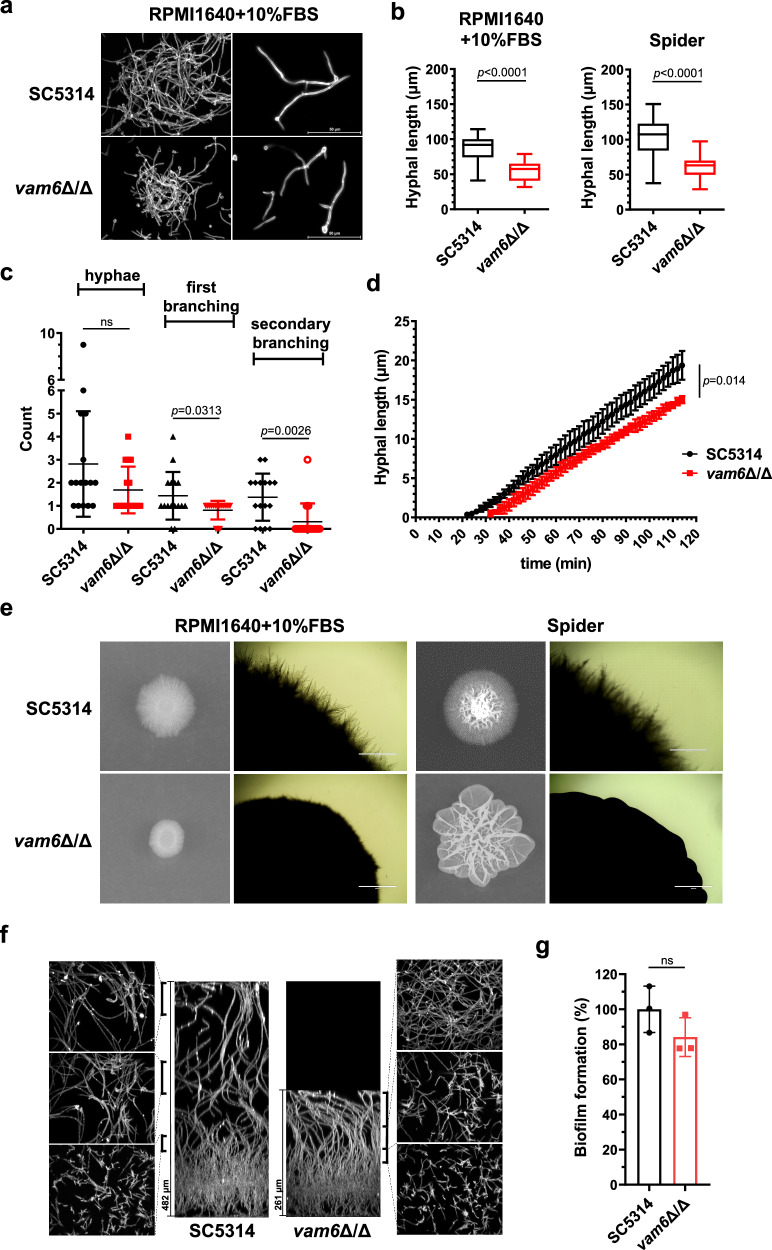
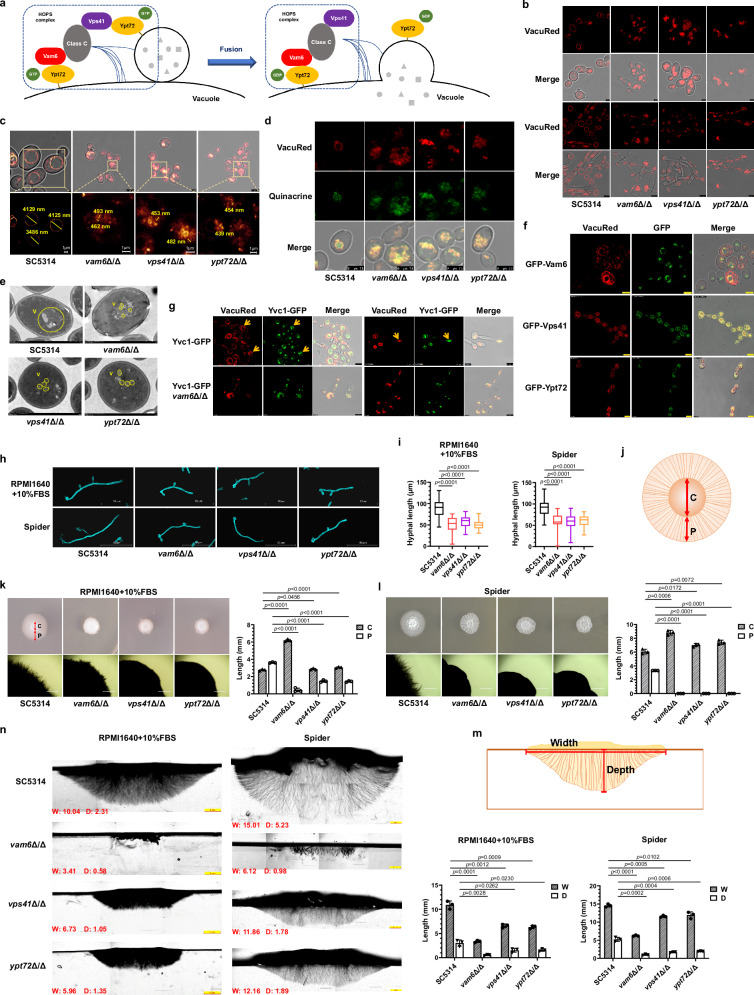
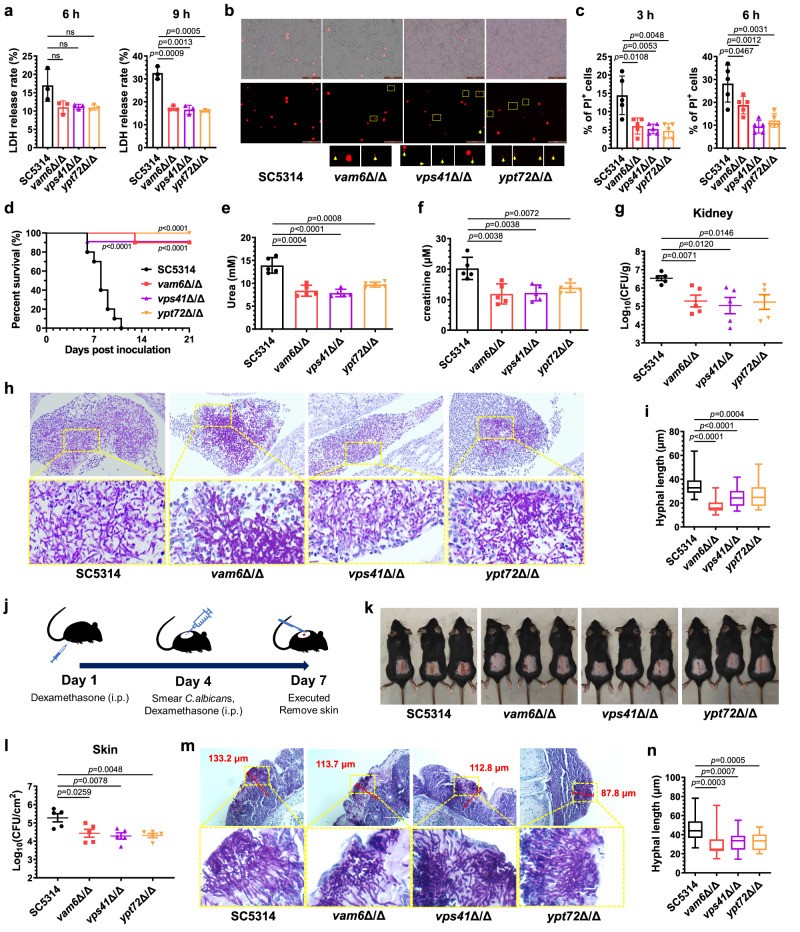
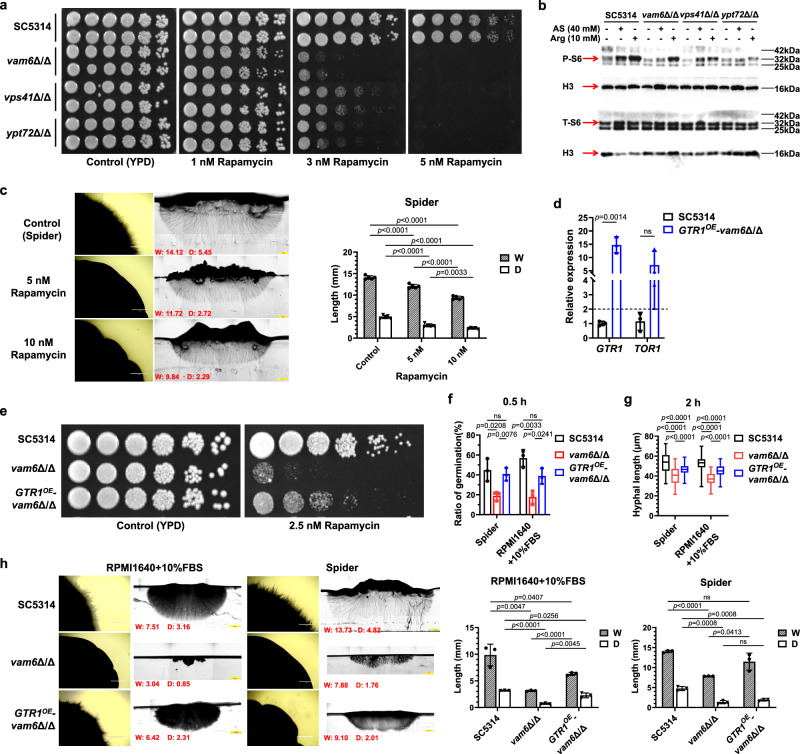
The transition between yeast and hyphae is crucial for regulating the commensalism and pathogenicity in Candida albicans . The mechanisms that affect the invasion of hyphae in solid media, whose deficiency is more related to the pathogenicity of C. albicans , have not been elucidated. Here, we found that the disruption of VAM6 or VPS41 which are components of the homotypic vacuolar fusion and protein sorting (HOPS) complex, or the Rab GTPase YPT72 , all responsible for vacuole fusion, led to defects in hyphal growth in both liquid and solid media, but more pronounced on solid agar. The phenotypes of vac8 Δ/Δ and GTR1 OE - vam6 Δ/Δ mutants indicated that these deficiencies are mainly caused by the reduced mechanical forces that drive agar and organs penetration, and confirmed that large vacuoles are required for hyphal mechanical penetration. In summary, our study revealed that large vacuoles generated by vacuolar fusion support hyphal penetration and provided a perspective to refocus attention on the role of solid agar in evaluating C. albicans invasion.
Overview
The claims and statistics of this paper haven’t been checked yet.
Free: it reads the open-access text and checks the first 5 claims that cite a source we can check. Create a free account to check every claim.
Integrity signals
Registry
Cites
Statistics
Figures
Verification
Claims the paper makes
The claims and statistics of this paper haven’t been checked yet.
Free: it reads the open-access text and checks the first 5 claims that cite a source we can check. Create a free account to check every claim.
Self-check
Percentages, sums and reported differences re-computed from the paper’s own numbers.
The self-check needs the paper’s full text.
Citations
Cites
Rawson, T. M., Moore, L. S. P., Zhu, N., Ranganathan, N., Skolimowska, K., Gilchrist, M., Satta, G., Cooke, G., & Holmes, A. (2020) · Clinical Infectious Diseases · doi:10.1093/cid/ciaa530 · Cited by 1,662 · cited 1×
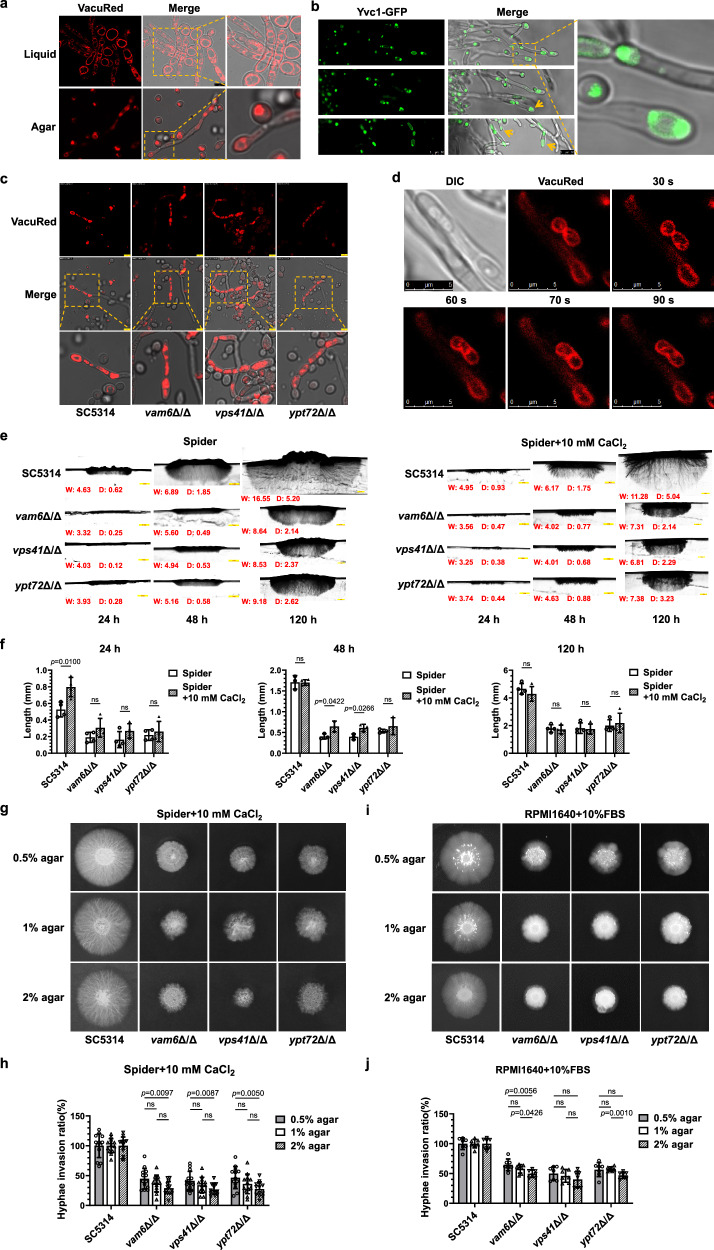
“5d), and fusing vacuoles were also observed in the hyphal tips in the Yvc1-GFP strains (Supplementary Video 1 and 2).”
BackgroundPappas, P. G., Lionakis, M. S., Arendrup, M. C., Ostrosky-Zeichner, L., & Kullberg, B. J. (2018) · Nature Reviews Disease Primers · doi:10.1038/nrdp.2018.26 · Cited by 1,636 · cited 4×
“2g, Supplementary Video 3 and 4).”
BackgroundInfluentialGrowth of Candida albicans hyphae
Sudbery, P. E. (2011) · Nature Reviews Microbiology · doi:10.1038/nrmicro2636 · Cited by 1,110 · cited 1×
“Moreover, Tup1, Nrg1 and Rfg1 are repressors of fi lamentous growth 8 – 10 .”
BackgroundCandidalysin is a fungal peptide toxin critical for mucosal infection
Moyes, D. L., Wilson, D., Richardson, J. P., Mogavero, S., Tang, S. X., Wernecke, J., Höfs, S., Gratacap, R. L., Robbins, J., Runglall, M., et al. (2016) · Nature · doi:10.1038/nature17625 · Cited by 942 · cited 1×
“The invasive ece1 Δ / Δ hyphae do not damage epithelia because the lack of candi-dalysin causes an inability to destroy cellular membranes 13,14 .”
BackgroundCandida albicans morphogenesis and host defence: discriminating invasion from colonization
Gow, N. A. R., van de Veerdonk, F. L., Brown, A. J. P., & Netea, M. G. (2012) · Nature Reviews Microbiology · doi:10.1038/nrmicro2711 · Cited by 888 · cited 1×
“Penetration of host organs or tissues is critical for C. albicans pathogenicity and requires adhesion factors and the generation of suf fi cient force 20 .”
BackgroundA Recently Evolved Transcriptional Network Controls Biofilm Development in Candida albicans
Nobile, C. J., Fox, E. P., Nett, J. E., Sorrells, T. R., Mitrovich, Q. M., Hernday, A. D., Tuch, B. B., Andes, D. R., & Johnson, A. D. (2012) · Cell · doi:10.1016/j.cell.2011.10.048 · Cited by 711 · cited 1×
“Furthermore, novel bioinformatics strategies have also been constructed to elucidate the hyphae forming transcriptional and protein networks 9,47 .”
MethodNoble, S. M., French, S., Kohn, L. A., Chen, V., & Johnson, A. D. (2010) · Nature Genetics · doi:10.1038/ng.605 · Cited by 678 · cited 1×
“Among which, 53 mutants showed defects in morphogenesis, 18 mutants had slow proliferation, and 46 mutants exhibited de fi ciency in infectivity without defects in morphogenesis or proliferation, indicating that virulence and morphogenesis are related in a complex, non-linear process 11 .”
BackgroundAnalysis of Cell Viability by the Lactate Dehydrogenase Assay
Kumar, P., Nagarajan, A., & Uchil, P. D. (2018) · Cold Spring Harbor Protocols · doi:10.1101/pdb.prot095497 · Cited by 666
Glycerol generates turgor in rice blast
de Jong, J. C., McCormack, B. J., Smirnoff, N., & Talbot, N. J. (1997) · Nature · doi:10.1038/38418 · Cited by 560 · cited 1×
“The turgor pressure was derived from the accumulation of glycerol in large vacuoles 61 .”
BackgroundCandida albicans cell-type switching and functional plasticity in the mammalian host
Noble, S. M., Gianetti, B. A., & Witchley, J. N. (2017) · Nature Reviews Microbiology · doi:10.1038/nrmicro.2016.157 · Cited by 521
The Vam6 GEF Controls TORC1 by Activating the EGO Complex
Binda, M., Péli-Gulli, M.-P., Bonfils, G., Panchaud, N., Urban, J., Sturgill, T. W., Loewith, R., & De Virgilio, C. (2009) · Molecular Cell · doi:10.1016/j.molcel.2009.06.033 · Cited by 437
Leucyl-tRNA Synthetase Controls TORC1 via the EGO Complex
Bonfils, G., Jaquenoud, M., Bontron, S., Ostrowicz, C., Ungermann, C., & De Virgilio, C. (2012) · Molecular Cell · doi:10.1016/j.molcel.2012.02.009 · Cited by 340 · cited 1×
“…limited to the functional Vam6 but may also be regulated by other guanosine tri-phosphates or proteins, especially in the hyphae-inducing conditions, as there have been reported that leucyl-tRNA synthetase (LeuRS) Cdc60 could interact with Gtr1 to regulate the leucine-dependent TOR activation 58 .”
BackgroundCharacterizing the elastic properties of tissues
Akhtar, R., Sherratt, M. J., Cruickshank, J. K., & Derby, B. (2011) · Materials Today · doi:10.1016/s1369-7021(11)70059-1 · Cited by 333 · cited 1×
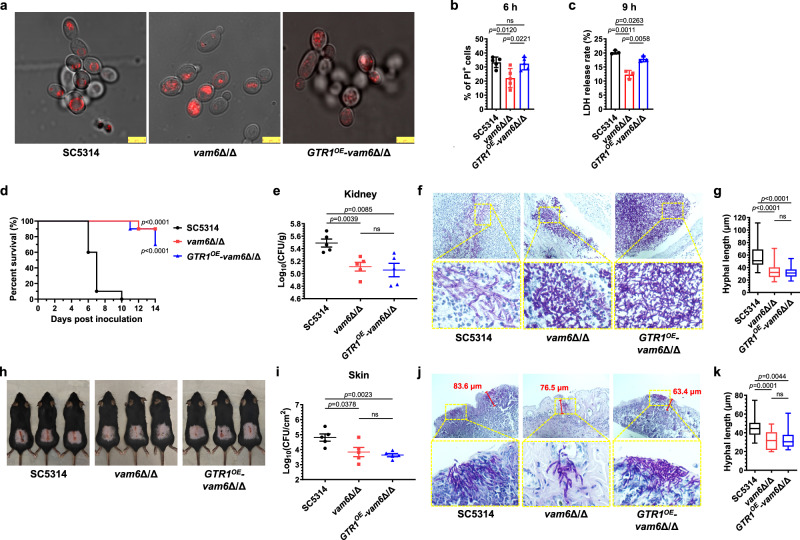
“Overcoming the mechanical force of the host cell membrane is critical for C. albicans penetration of the host cell and immune escape.”
BackgroundThe regulation of hyphae growth in Candida albicans
Chen, H., Zhou, X., Ren, B., & Cheng, L. (2020) · Virulence · doi:10.1080/21505594.2020.1748930 · Cited by 277 · cited 2×
“However, the changes in organelles, including the vesicle transports in maintaining hyphal initiation and extension, have been poorly studied 18,48 .”
BackgroundWächtler, B., Citiulo, F., Jablonowski, N., Förster, S., Dalle, F., Schaller, M., Wilson, D., & Hube, B. (2012) · PLoS ONE · doi:10.1371/journal.pone.0036952 · Cited by 250 · cited 1×
“Forinvadingtheepithelialcells, the endocytosis of host cells and the active penetration initiated by C. albicans are equally important 22,23 .”
BackgroundCandida albicans Gene Deletion with a Transient CRISPR-Cas9 System
Min, K., Ichikawa, Y., Woolford, C. A., & Mitchell, A. P. (2016) · mSphere · doi:10.1128/msphere.00130-16 · Cited by 247
Witchley, J. N., Penumetcha, P., Abon, N. V., Woolford, C. A., Mitchell, A. P., & Noble, S. M. (2019) · Cell Host & Microbe · doi:10.1016/j.chom.2019.02.008 · Cited by 240
Interactions of Candida albicans with epithelial cells
Zhu, W., & Filler, S. G. (2010) · Cellular Microbiology · doi:10.1111/j.1462-5822.2009.01412.x · Cited by 223
Carlisle, P. L., Banerjee, M., Lazzell, A., Monteagudo, C., López-Ribot, J. L., & Kadosh, D. (2009) · Proceedings of the National Academy of Sciences · doi:10.1073/pnas.0804061106 · Cited by 215 · cited 1×
“In addition, many virulence factors associated with hyphal morphogenesis have been identi fi ed, such as GPI-anchored proteins, degradative enzymes, and cell surface adhesins, among which the identi fi cation of candidalysin (Ece1) was in fl uential 12 .”
BackgroundCandida albicans-Induced Epithelial Damage Mediates Translocation through Intestinal Barriers
Allert, S., Förster, T. M., Svensson, C.-M., Richardson, J. P., Pawlik, T., Hebecker, B., Rudolphi, S., Juraschitz, M., Schaller, M., Blagojevic, M., et al. (2018) · mBio · doi:10.1128/mbio.00915-18 · Cited by 208 · cited 1×
“Overcoming the mechanical force of the host cell membrane is critical for C. albicans penetration of the host cell and immune escape.”
BackgroundBockmühl, D. P., Krishnamurthy, S., Gerads, M., Sonneborn, A., & Ernst, J. F. (2001) · Molecular Microbiology · doi:10.1046/j.1365-2958.2001.02688.x · Cited by 193
The Protein Kinase Tor1 Regulates Adhesin Gene Expression in Candida albicans
Bastidas, R. J., Heitman, J., & Cardenas, M. E. (2009) · PLoS Pathogens · doi:10.1371/journal.ppat.1000294 · Cited by 154 · cited 3×
“In addition to SAPs secretion, the activity of TOR pathway is also a centralregulatorof fi lamentationin C. albicans , whichisdependent on a functional HOPS complex in S. cerevisiae 39,40 .”
BackgroundRegulated degradation of a class V myosin receptor directs movement of the yeast vacuole
Tang, F., Kauffman, E. J., Novak, J. L., Nau, J. J., Catlett, N. L., & Weisman, L. S. (2003) · Nature · doi:10.1038/nature01453 · Cited by 152 · cited 1×
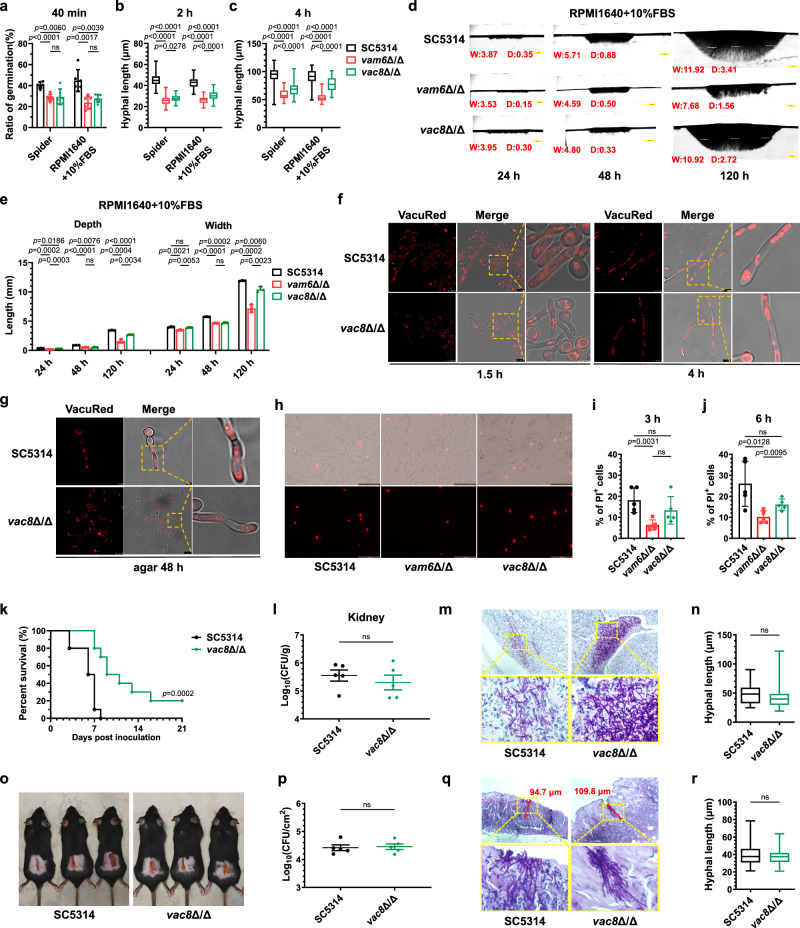
“It is reported that the vac8 null mutants have de fi ciencies in the movement of vacuoles from mother cells to daughter cells 44 .”
BackgroundOstrowicz, C. W., Bröcker, C., Ahnert, F., Nordmann, M., Lachmann, J., Peplowska, K., Perz, A., Auffarth, K., Engelbrecht-Vandré, S., & Ungermann, C. (2010) · Traffic · doi:10.1111/j.1600-0854.2010.01097.x · Cited by 146 · cited 1×
“2a) 27 .”
Candida albicans Hyphae: From Growth Initiation to Invasion
Desai, J. (2018) · Journal of Fungi · doi:10.3390/jof4010010 · Cited by 117 · cited 2×
“Subsequent studies showed that morphogenesis on solid surfacesdependsonseveralproteins,suchasCwt1,Tpk1,D fi 1,Cek1,and Dck1/Rac1 16 – 19 .”
BackgroundThe Missing Link between Candida albicans Hyphal Morphogenesis and Host Cell Damage
Wilson, D., Naglik, J. R., & Hube, B. (2016) · PLOS Pathogens · doi:10.1371/journal.ppat.1005867 · Cited by 116 · cited 1×
“In contrast, there was no fusion of the fragmented vacuoles in the vam6 Δ / Δ , vps41 Δ / Δ and ypt72 Δ / Δ mutants (Supplementary Video 5, 6, and 7).”
BackgroundOropharyngeal Candidiasis: Fungal Invasion and Epithelial Cell Responses
Swidergall, M., & Filler, S. G. (2017) · PLOS Pathogens · doi:10.1371/journal.ppat.1006056 · Cited by 112 · cited 2×
“Impaired agar invasion may be associated with reduced virulence in C. albicans , as the active penetration is a mechanism of C. albicans invasion of epithelial cells 33 .”
BackgroundMethodPlant PIEZO homologs modulate vacuole morphology during tip growth
Radin, I., Richardson, R. A., Coomey, J. H., Weiner, E., Bascom, C., Li, T., Bezanilla, M., & Haswell, E. S. (2021) · Science · doi:10.1126/science.abe6310 · Cited by 111 · cited 1×
“In addition, plant vacuolar protein PIEZO could sense mechanical forces and modulate vacuole morphology 62 .”
BackgroundRegulation of Candida albicans Hyphal Morphogenesis by Endogenous Signals
Kornitzer, D. (2019) · Journal of Fungi · doi:10.3390/jof5010021 · Cited by 106 · cited 1×
“However, the changes in organelles, including the vesicle transports in maintaining hyphal initiation and extension, have been poorly studied 18,48 .”
BackgroundCircuit diversification in a biofilm regulatory network
Huang, M. Y., Woolford, C. A., May, G., McManus, C. J., & Mitchell, A. P. (2019) · PLOS Pathogens · doi:10.1371/journal.ppat.1007787 · Cited by 104
Activation and Alliance of Regulatory Pathways in C. albicans during Mammalian Infection
Xu, W., Solis, N. V., Ehrlich, R. L., Woolford, C. A., Filler, S. G., & Mitchell, A. P. (2015) · PLOS Biology · doi:10.1371/journal.pbio.1002076 · Cited by 103 · cited 1×
“As kidneys are the primary target organs in systemic candidiasis, decreased kidney function can also re fl ect the severity of C. albicans infections 37 .”
BackgroundCharacterization of yeast V-ATPase mutants lacking Vph1p or Stv1p and the effect on endocytosis
Perzov, N., Padler-Karavani, V., Nelson, H., & Nelson, N. (2002) · Journal of Experimental Biology · doi:10.1242/jeb.205.9.1209 · Cited by 96
Candida albicans Septin Mutants Are Defective for Invasive Growth and Virulence
Warenda, A. J., Kauffman, S., Sherrill, T. P., Becker, J. M., & Konopka, J. B. (2003) · Infection and Immunity · doi:10.1128/iai.71.7.4045-4051.2003 · Cited by 95 · cited 1×
“…verify the defect in HOPS-complex-de fi cient mutants on solid medium resulting from the insuf fi cient mechanical force of hyphae, we investigated the in fl uence of different concentrations of agar on the invasive zones, as the invasion zone was decreased with the increase of agar concentration 43 .”
BackgroundHyphal growth in Candida albicans requires the phosphorylation of Sec2 by the Cdc28‐Ccn1/Hgc1 kinase
Bishop, A., Lane, R., Beniston, R., Chapa‐y‐Lazo, B., Smythe, C., & Sudbery, P. E. (2010) · The EMBO Journal · doi:10.1038/emboj.2010.158 · Cited by 90 · cited 1×
“Moreover, Tup1, Nrg1 and Rfg1 are repressors of fi lamentous growth 8 – 10 .”
BackgroundOlivier, F. A. B., Hilsenstein, V., Weerasinghe, H., Weir, A., Hughes, S., Crawford, S., Vince, J. E., Hickey, M. J., & Traven, A. (2022) · Cell Reports · doi:10.1016/j.celrep.2022.111374 · Cited by 76 · cited 1×
“In addition to invading epithelial cells, cell membrane penetration by hyphae is important to escape the killing of innate immune cells 36 .”
BackgroundZhang, T., Wang, R., Wang, Z., Wang, X., Wang, F., & Ding, J. (2017) · Nature Communications · doi:10.1038/s41467-017-01567-4 · Cited by 72 · cited 1×
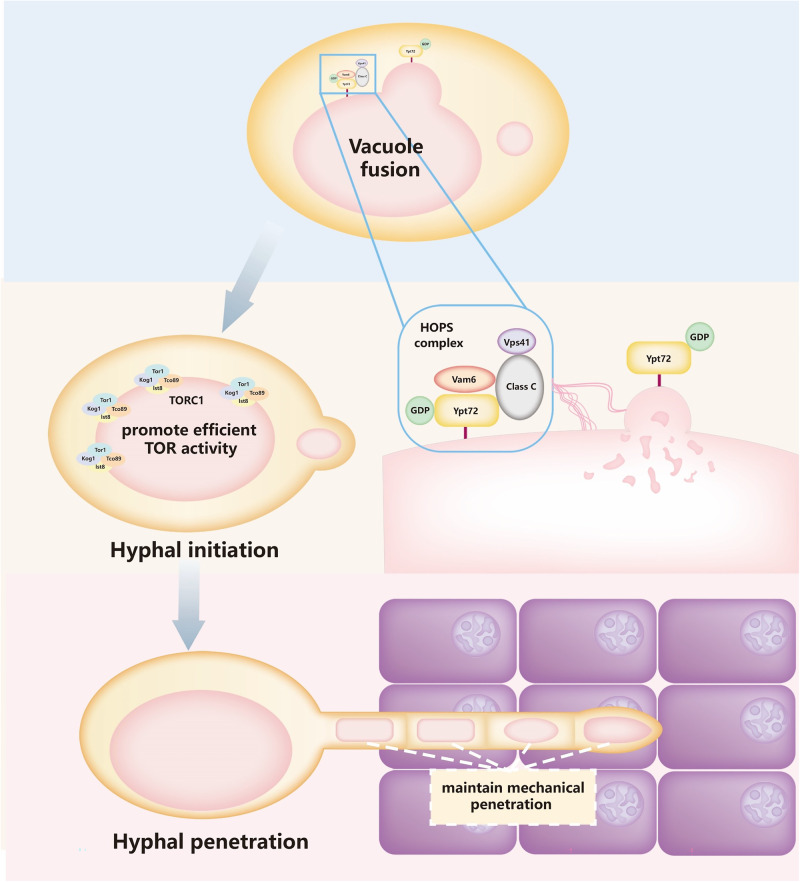
“The effect of fragmented vacuoles on the TOR pathways activation may be due to the distribution of TORC1 complex onthesurfaceofvacuolesmembrane,asthekinaseactivityofTORC1is activated by the small GTPase at the lysosome (vacuole) 54,55 .”
BackgroundSelf-citationYu, Q., Wang, F., Zhao, Q., Chen, J., Zhang, B., Ding, X., Wang, H., Yang, B., Lu, G., Zhang, B., et al. (2013) · International Journal of Medical Microbiology · doi:10.1016/j.ijmm.2013.11.022 · Cited by 71 · cited 1×
“To better observe the vacuolar fusion process, the Yvc1-GFP strain(NKF105)from Yu group,whichisahighlyabundantCa 2+ channel protein located on the vacuolar membrane, was used 32 .”
MethodAzadmanesh, J., Gowen, A. M., Creger, P. E., Schafer, N. D., & Blankenship, J. R. (2017) · G3 Genes|Genomes|Genetics · doi:10.1534/g3.117.300224 · Cited by 70
Kim, A., & Cunningham, K. W. (2015) · Molecular Biology of the Cell · doi:10.1091/mbc.e15-08-0581 · Cited by 67 · cited 1×
“Previous studies have shown that the TOR pathway senses multiple nutritional signals, whose activation reliesoncomplex regulatory networks,suchastheEGOcomplex, PIB2, and phosphatidylinositol 3-phosphate (PI(3)P) pathways 41,52,53 .”
BackgroundRichards, A., Veses, V., & Gow, N. A. R. (2010) · Fungal Biology Reviews · doi:10.1016/j.fbr.2010.04.002 · Cited by 66 · cited 1×
“In Basidiobolus ranarum , the driving forces pro-ducedbyenlargingvacuolepushescytoplasmintodevelopingconidia, which eventually break through the spore walls and disperse into the air 60 .”
BackgroundDunker, C., Polke, M., Schulze-Richter, B., Schubert, K., Rudolphi, S., Gressler, A. E., Pawlik, T., Prada Salcedo, J. P., Niemiec, M. J., Slesiona-Künzel, S., et al. (2021) · Nature Communications · doi:10.1038/s41467-021-24095-8 · Cited by 66 · cited 1×
“In contrast, there was no fusion of the fragmented vacuoles in the vam6 Δ / Δ , vps41 Δ / Δ and ypt72 Δ / Δ mutants (Supplementary Video 5, 6, and 7).”
BackgroundStructural insight into the Ragulator complex which anchors mTORC1 to the lysosomal membrane
Mu, Z., Wang, L., Deng, W., Wang, J., & Wu, G. (2017) · Cell Discovery · doi:10.1038/celldisc.2017.49 · Cited by 65 · cited 1×
“The effect of fragmented vacuoles on the TOR pathways activation may be due to the distribution of TORC1 complex onthesurfaceofvacuolesmembrane,asthekinaseactivityofTORC1is activated by the small GTPase at the lysosome (vacuole) 54,55 .”
BackgroundLiu, N.-N., Flanagan, P. R., Zeng, J., Jani, N. M., Cardenas, M. E., Moran, G. P., & Köhler, J. R. (2017) · Proceedings of the National Academy of Sciences · doi:10.1073/pnas.1617799114 · Cited by 64 · cited 1×
“Overexpression of the small GTPase Gtr1, a subunit of the TORC1-activating EGO complex, has been shown to restore TOR activity in C. albicans 41,42 .”
BackgroundSelf-citationThe Candida albicans Vacuole Is Required for Differentiation and Efficient Macrophage Killing
Palmer, G. E., Kelly, M. N., & Sturtevant, J. E. (2005) · Eukaryotic Cell · doi:10.1128/ec.4.10.1677-1686.2005 · Cited by 63 · cited 1×
“Frag-mented vacuoles mayin fl uencethe protein secretion, such assecreted aspartylproteases(SAPs),whichsecretessimultaneouslywithyeast-to-hyphae transition and contributes to C. albicans virulence 38 .”
BackgroundImmune cells fold and damage fungal hyphae
Bain, J. M., Alonso, M. F., Childers, D. S., Walls, C. A., Mackenzie, K. S., Pradhan, A., Lewis, L. E., Louw, J., Avelar, G. M., Larcombe, D. E., et al. (2021) · Proceedings of the National Academy of Sciences · doi:10.1073/pnas.2020484118 · Cited by 61
Liu, N.-N., Uppuluri, P., Broggi, A., Besold, A., Ryman, K., Kambara, H., Solis, N., Lorenz, V., Qi, W., Acosta-Zaldívar, M., et al. (2018) · PLOS Pathogens · doi:10.1371/journal.ppat.1007076 · Cited by 56 · cited 1×
“Previous studies have shown that the TOR pathway senses multiple nutritional signals, whose activation reliesoncomplex regulatory networks,suchastheEGOcomplex, PIB2, and phosphatidylinositol 3-phosphate (PI(3)P) pathways 41,52,53 .”
BackgroundSelf-citationRyder, L. S., López, S. G., Michels, L., Eseola, A. B., Sprakel, J. H. B., Ma, W., & Talbot, N. J. (2023) · Nature Microbiology · doi:10.1038/s41564-023-01430-x · Cited by 52 · cited 1×
“The wide synthesis and application ofsuchprobes will provide more convenient tools to detect the penetration forces 63 .”
MethodVacuole inheritance regulates cell size and branching frequency of Candida albicans hyphae
Veses, V., Richards, A., & Gow, N. A. R. (2009) · Molecular Microbiology · doi:10.1111/j.1365-2958.2008.06545.x · Cited by 49
Morphogenic plasticity: the pathogenic attribute of Candida albicans
Prasad, P., & Tippana, M. (2023) · Current Genetics · doi:10.1007/s00294-023-01263-5 · Cited by 41 · cited 1×
“C. albicans can transform into different morphologies during commensalism and infection, such as yeast, hyphal, pseudohyphal, white, opaque, and gray cells 46 .”
BackgroundFlanagan, P. R., Liu, N.-N., Fitzpatrick, D. J., Hokamp, K., Köhler, J. R., & Moran, G. P. (2017) · mSphere · doi:10.1128/msphere.00477-17 · Cited by 37 · cited 2×
“Overexpression of the small GTPase Gtr1, a subunit of the TORC1-activating EGO complex, has been shown to restore TOR activity in C. albicans 41,42 .”
BackgroundSelf-citationCandida albicans VAC8 Is Required for Vacuolar Inheritance and Normal Hyphal Branching
Barelle, C. J., Richard, M. L., Gaillardin, C., Gow, N. A. R., & Brown, A. J. P. (2006) · Eukaryotic Cell · doi:10.1128/ec.5.2.359-367.2006 · Cited by 36 · cited 1×
“Many studies have found that fragmented vacuoles lead to changes in hyphal morphology, such as the hyphal branching phenotypes of VAC1 , VAM2 , VAM3 , and VAC8 null mutants 45,51 .”
BackgroundMechanical force-induced morphology changes in a human fungal pathogen
Puerner, C., Kukhaleishvili, N., Thomson, D., Schaub, S., Noblin, X., Seminara, A., Bassilana, M., & Arkowitz, R. A. (2020) · BMC Biology · doi:10.1186/s12915-020-00833-0 · Cited by 35 · cited 2×
“To accurately investigate the forces exerted by hyphae, micro-fabrication approaches employ the elastomer poly-dimethylsiloxane (PDMS) as single-cell force sensors for fungal cells 25 .”
Russell, C. M., Rybak, J. A., Miao, J., Peters, B. M., & Barrera, F. N. (2022) · Journal of Biological Chemistry · doi:10.1016/j.jbc.2022.102829 · Cited by 30 · cited 1×
“The invasive ece1 Δ / Δ hyphae do not damage epithelia because the lack of candi-dalysin causes an inability to destroy cellular membranes 13,14 .”
BackgroundVacuolar dynamics during the morphogenetic transition in Candida albicans
Veses, V., & Gow, N. A. R. (2008) · FEMS Yeast Research · doi:10.1111/j.1567-1364.2008.00447.x · Cited by 25 · cited 1×
“Gow et al. have observed the vacuolar movements and segregation during the morphogenetic transition in C. albicans by FM4-64 staining, while the biological signi fi cance of vacuolar dynamics and the mechanism of action has not been studied in depth 49 .”
BackgroundDomingos, E. L., Vilhena, R. D. O., dos Santos, J. M. M. F., Fachi, M. M., Böger, B., Adam, L. M., Tonin, F. S., & Pontarolo, R. (2022) · International Journal of Antimicrobial Agents · doi:10.1016/j.ijantimicag.2022.106614 · Cited by 23
Attenuation of Candida albicans virulence with focus on disruption of its vacuole functions
Olsen, I. (2014) · Journal of Oral Microbiology · doi:10.3402/jom.v6.23898 · Cited by 22 · cited 1×
“Fungal vacuole is critical for maintaining osmotic pressure, degrading macromolecules, storing nutrients, and resisting stresses 50 .”
BackgroundChang, P., Wang, W., Igarashi, Y., Luo, F., & Chen, J. (2018) · Journal of Microbiological Methods · doi:10.1016/j.mimet.2018.04.016 · Cited by 22
Structural insights into the EGO-TC–mediated membrane tethering of the TORC1-regulatory Rag GTPases
Zhang, T., Péli-Gulli, M.-P., Zhang, Z., Tang, X., Ye, J., De Virgilio, C., & Ding, J. (2019) · Science Advances · doi:10.1126/sciadv.aax8164 · Cited by 22
Lv, Q., Li, D., Han, H., Yang, Y., Duan, J., Ma, H., Yu, Y., Chen, J., Jiang, Y., & Jia, X. (2020) · Cellular and Molecular Immunology · doi:10.1038/s41423-020-00576-6 · Cited by 21 · cited 1×
“However, C57/BL6 mice infected with 5 ×10 5 CFU of efg1 Δ / Δ cph1 Δ / Δ mutant did not show any abnormal locomotion and death during systemic infection 67 .”
BackgroundSelf-citationLi, C., Wang, T., Li, N., Li, M., Li, Y., Sun, Y., Tian, Y., Zhu, J., Wu, Y., Zhang, D., et al. (2019) · Chemical Communications · doi:10.1039/c9cc05895h · Cited by 20 · cited 1×
“To further image the structure of the fragmented vacuoles, the probe VacuRed, a silicon-substituted coumarin-based fl uorophore developed by our group 29,30 , targeting fungal vacuoles was designed and synthesized, which improved the imaging quality of small vesicles.”
MethodSelf-citationStress- and metabolic responses of Candida albicans require Tor1 kinase N-terminal HEAT repeats
Qi, W., Acosta‐Zaldívar, M., Flanagan, P. R., Liu, N.-N., Jani, N. M., Fierro, J. F., Andrés, M. T. A., Moran, G. P., & Köhler, J. R. (2022) · PLoS Pathogens · doi:10.1371/journal.ppat.1010089 · Cited by 20
Self-citationPalI domain proteins of Saccharomyces cerevisiae and Candida albicans
Yan, L., Côte, P., Li, X., Jiang, Y., & Whiteway, M. S. (2012) · Microbiological Research · doi:10.1016/j.micres.2011.12.005 · Cited by 19
Self-citationMao, X., Li, Y., Liu, Y., Ma, C., Ma, T., Yu, Q., & Li, M. (2021) · Antioxidants · doi:10.3390/antiox10010136 · Cited by 19 · cited 1×
“Li et al. also identi fi ed the role of VAM6 in the maintenance of mitochondria function under oxidative stress resistance 65,66 .”
BackgroundSelf-citationDas, S., Bhuyan, R., Bagchi, A., & Saha, T. (2019) · Heliyon · doi:10.1016/j.heliyon.2019.e01916 · Cited by 18 · cited 1×
“Furthermore, novel bioinformatics strategies have also been constructed to elucidate the hyphae forming transcriptional and protein networks 9,47 .”
MethodLv, Q., Lan, Y., & Jiang, Y. (2021) · Frontiers in Microbiology · doi:10.3389/fmicb.2021.779176 · Cited by 18 · cited 2×
“Based on the hyphal phenotypes of mutants with fragmented vacuoles 28 , we speculated that the lost function of HOPS complex caused by the disruptionof VAM6 maybe themainreason for the hyphal penetration defects on solid media.”
BackgroundResultSelf-citationMoreno, I., Martinez‐Esparza, M., Laforet, L., Sentandreu, R., Ernst, J. F., & Valentín, E. (2009) · Yeast · doi:10.1002/yea.1733 · Cited by 16 · cited 1×
“Subsequent studies showed that morphogenesis on solid surfacesdependsonseveralproteins,suchasCwt1,Tpk1,D fi 1,Cek1,and Dck1/Rac1 16 – 19 .”
BackgroundThe HOPS tethering complex is required to maintain signaling endosome identity and TORC1 activity
Gao, J., Nicastro, R., Gulli, M., Grziwa, S., Chen, Z., Kurre, R., Piehler, J., VIRGILIO, C. D., Fröhlich, F., & Ungermann, C. (2022) · The Journal of Cell Biology · doi:10.1083/jcb.202109084 · Cited by 16 · cited 1×
“In addition to SAPs secretion, the activity of TOR pathway is also a centralregulatorof fi lamentationin C. albicans , whichisdependent on a functional HOPS complex in S. cerevisiae 39,40 .”
BackgroundAutophagy in the Invading Pathogen
Palmer, G. E. (2007) · Autophagy · doi:10.4161/auto.3820 · Cited by 13
Li, C., Wang, T., Fan, M., Wang, N., Lin, X., Sun, Y., & Cui, X. (2022) · Nano Letters · doi:10.1021/acs.nanolett.1c04551 · Cited by 13 · cited 1×
“To further image the structure of the fragmented vacuoles, the probe VacuRed, a silicon-substituted coumarin-based fl uorophore developed by our group 29,30 , targeting fungal vacuoles was designed and synthesized, which improved the imaging quality of small vesicles.”
MethodSelf-citationMao, X., Li, Y., Yu, D., Ma, T., Ma, C., Wang, J., Yu, Q., & Li, M. (2021) · Mycopathologia · doi:10.1007/s11046-021-00565-x · Cited by 10 · cited 2×
“Li et al. reported that deletion of VAM6 caused the defect of autophagy 26 .”
BackgroundThe intrinsic GTPase activity of the Gtr1 protein from Saccharomyces cerevisiae
Sengottaiyan, P., Spetea, C., Lagerstedt, J. O., Samyn, D. R., Andersson, M., Ruiz‐Pavón, L., & Persson, B. L. (2012) · BMC Biochemistry · doi:10.1186/1471-2091-13-11 · Cited by 8 · cited 1×
“Ontheotherhand,overexpressionof GTR1 mayelevateits low intrinsic GTPase activity and prompt the activation of TOR signaling 59 .”
BackgroundClarifying and Imaging Candida albicans Biofilms
Lanni, F., Lagree, K., Huang, M. Y., Yan, L., Woolford, C. A., & Mitchell, A. P. (2020) · Journal of Visualized Experiments · doi:10.3791/60718 · Cited by 7
Self-citationMao, X., Peng, L., Li, Y., Zhu, M., Du, J., Ma, C., Yu, Q., & Li, M. (2022) · Biochemical and Biophysical Research Communications · doi:10.1016/j.bbrc.2021.12.116 · Cited by 7 · cited 1×
“Li et al. also identi fi ed the role of VAM6 in the maintenance of mitochondria function under oxidative stress resistance 65,66 .”
Background
Cited by
Liu, K., Wang, Y., Xia, F., Feng, S., Yu, X., & Wu, M. (2025) · Smart Molecules · doi:10.1002/smo.20240060 · Cited by 21
Fang, T., Xiong, J., Huang, X., Fang, X., Shen, X., Jiang, Y., & Lu, H. (2024) · Microbiological Research · doi:10.1016/j.micres.2024.127964 · Cited by 17
Self-citationFatima, I., Wakade, G., & Daniell, H. (2025) · Plant Biotechnology Journal · doi:10.1111/pbi.70046 · Cited by 9
Physical forces supporting hyphal growth
Money, N. P. (2025) · Fungal Genetics and Biology · doi:10.1016/j.fgb.2025.103961 · Cited by 9
Sánchez‐León, E., Bhalla, K., Hu, G., Lee, C. W. J., Lagace, M. A., Jung, W. H., & Kronstad, J. W. (2025) · mBio · doi:10.1128/mbio.00328-25 · Cited by 5
Metadata
- Authors
- Liu, Y., Wang, R., Liu, J., Fan, M., Ye, Z., Hao, Y., Xie, F., Wang, T., Jiang, Y., Liu, N., Cui, X., Lv, Q., & Yan, L.
- Affiliations
- Second Military Medical University (CN)
- East China Normal University (CN)
- Tongji University (CN)
- Corresponding author
- Yan, Lan
- ORCID
- Venue
- Nature Communications
- Published
- 2024-05-16
- Volume
- 15
- Issue
- 1
- Pages
- 4131-4131
- ISSN
- 2041-1723 (ISSN-L)
- PMC
- PMC11099166
- OpenAlex
- W4396975744
- Cited by
- 16
- References
- 74
- Citations by year
- 2026: 7 · 2025: 8 · 2024: 1
- FWCI
- 2.17
- Type
- journal article
- Language
- en
- Update notices
- Open access
- gold
- doi.org
- Licence
- cc-by
- creativecommons.org/licenses/by/4.0 (tdm)
- creativecommons.org/licenses/by/4.0 (vor)
- Locations
- Nature Communications (publishedVersion, cc-by)
- PubMed Central (publishedVersion, cc-by)
- PubMed (publishedVersion)
- RePEc: Research Papers in Economics (submittedVersion)
- DOAJ (DOAJ: Directory of Open Access Journals) (submittedVersion, cc-by-sa)
- Funders
- National Natural Science Foundation of China (82173867)
- Shanghai International Science and Technology (21430713000)
- Shanghai Pujiang Program
- Topics
- Life Sciences › Biochemistry, Genetics and Molecular Biology › Molecular Biology › Fungal and yeast genetics research
- Health Sciences › Medicine › Infectious Diseases › Antifungal resistance and susceptibility
- Life Sciences › Biochemistry, Genetics and Molecular Biology › Cell Biology › Cellular transport and secretion
- Keywords
- Candida albicans, HOPS complex, hyphal penetration, VPS41, Rab GTPases, mechanical forces, yeast-to-hypha transition, fungal pathogenicity
- MeSH terms
- Animals, Candida albicans, Candidiasis, Fungal Proteins, Membrane Fusion, Vacuoles, rab GTP-Binding Proteins, Hyphae, Vesicular Transport Proteins, Mice
About these checks
Registry, retraction, Cites and statistics results are computed, not judged, with one exception: a printed reference that no index lists is read once by a model before it counts as a citation error. Claims are extracted by a model and kept only when their quote appears verbatim in the text; each cited source is then checked, with a model’s help, for whether it says what the claim relies on. Those verdicts can be wrong — read the claim’s quote and the cited source before relying on one.
Statistics and arithmetic are recomputed, not judged.
Confidence bands are shown only for fields calibrated on our annotated test set. None is calibrated yet, so no band is shown.
What counts as a claim ›How we measure confidence ›How we check this ›
Are you an author, or do you see a problem with this page? Request a review
Data sources
Bibliographic data: Semantic Scholar, OpenAlex, Crossref.
Contains information from the Semantic Scholar Academic Graph Datasets, made available under the ODC Attribution License (ODC-BY 1.0).
Semantic Scholar’s data is described in: Kinney, R., et al. (2023). The Semantic Scholar Open Data Platform. arXiv:2301.10140.
