

The DOI matches its Crossref record; 54 of the 54 references it cites were found in a registry or an index.
Assessing and harnessing updated polyketide synthase modules through combinatorial engineering
Open accessPublished version of a preprint
Abstract
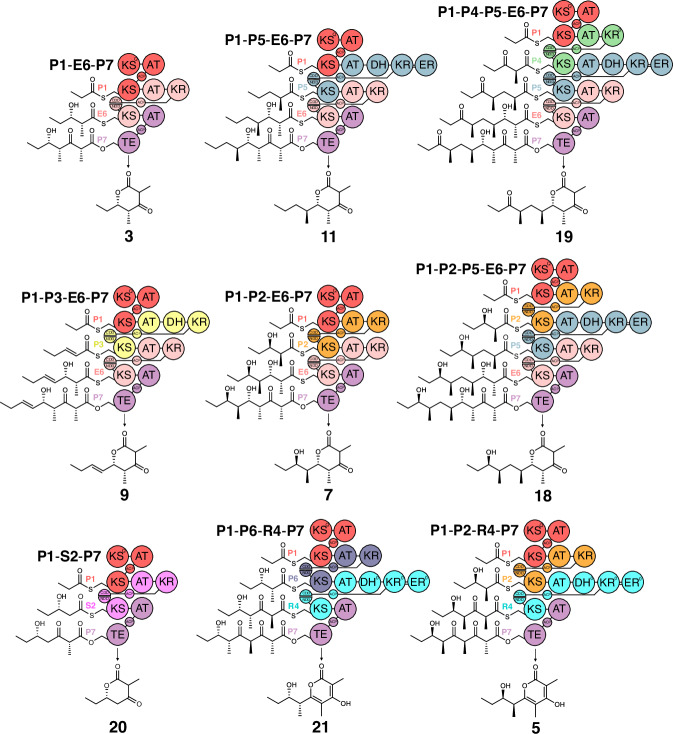
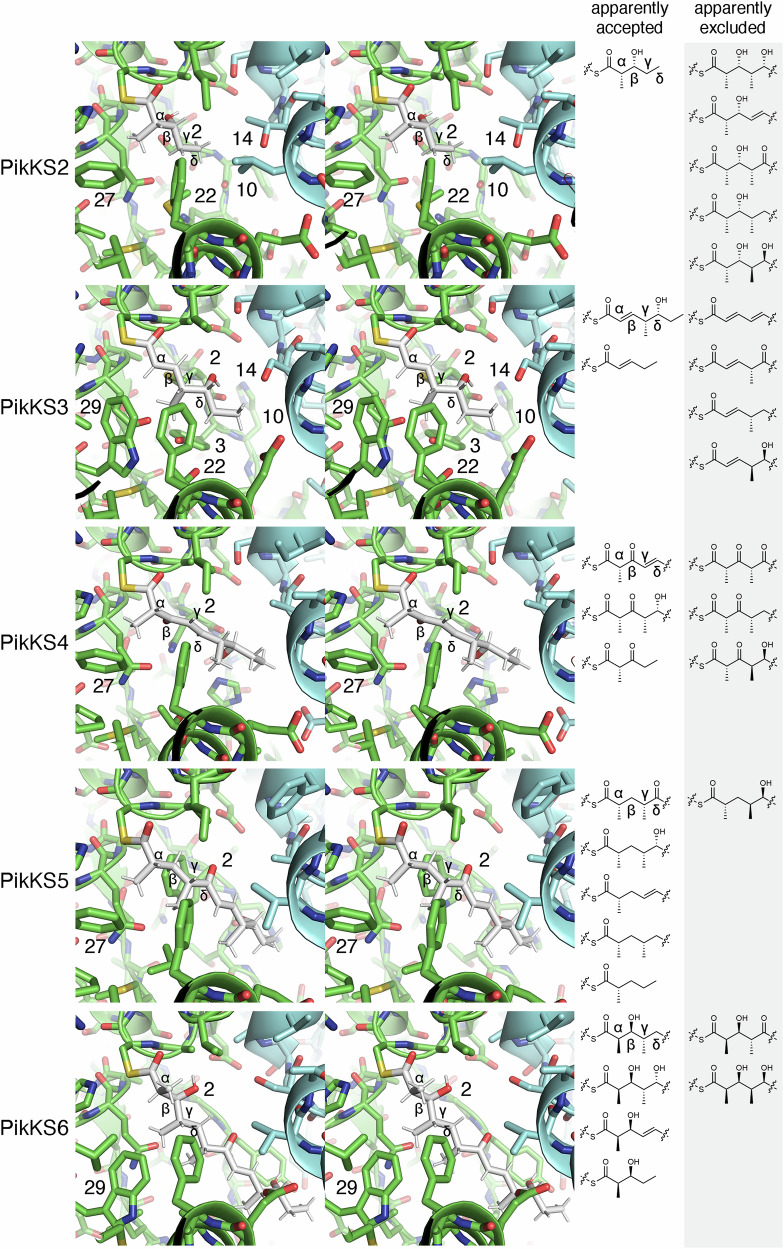
The modular nature of polyketide assembly lines and the significance of their products make them prime targets for combinatorial engineering. While short synthases constructed using the recently updated module boundary have been shown to outperform those using the traditional boundary, larger synthases constructed using the updated boundary have not been investigated. Here we describe our design and implementation of a BioBricks-like platform to rapidly construct 5 triketide, 25 tetraketide, and 125 pentaketide synthases from the updated modules of the Pikromycin synthase. Every combinatorial possibility of modules 2-6 inserted between the first and last modules of the native synthase was constructed and assayed. Anticipated products were observed from 60% of the triketide synthases, 32% of the tetraketide synthases, and 6.4% of the pentaketide synthases. Ketosynthase gatekeeping and module-skipping were determined to be the principal impediments to obtaining functional synthases. The platform was also used to create functional hybrid synthases through the incorporation of modules from the Erythromycin, Spinosyn, and Rapamycin assembly lines. The relaxed gatekeeping observed from a ketosynthase in the Rapamycin synthase is especially encouraging in the quest to produce designer polyketides.
Overview
The claims and statistics of this paper haven’t been checked yet.
Run the check — free, no account needed. It reads the open-access text and checks the sources it cites.
Integrity signals
Registry
Cites
Statistics
Figures
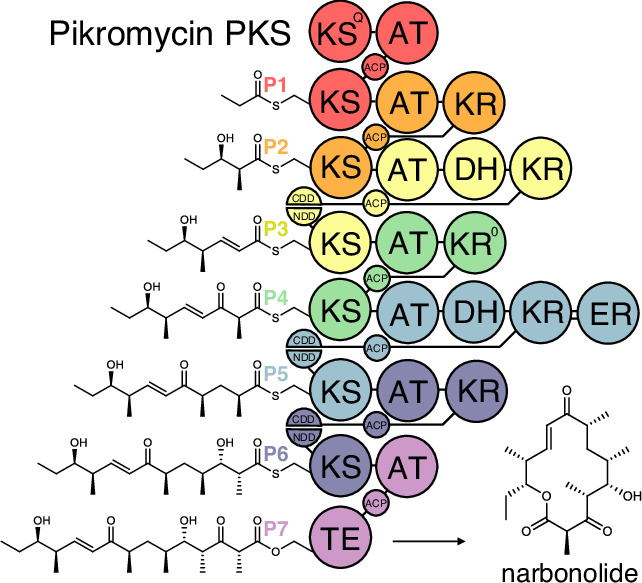
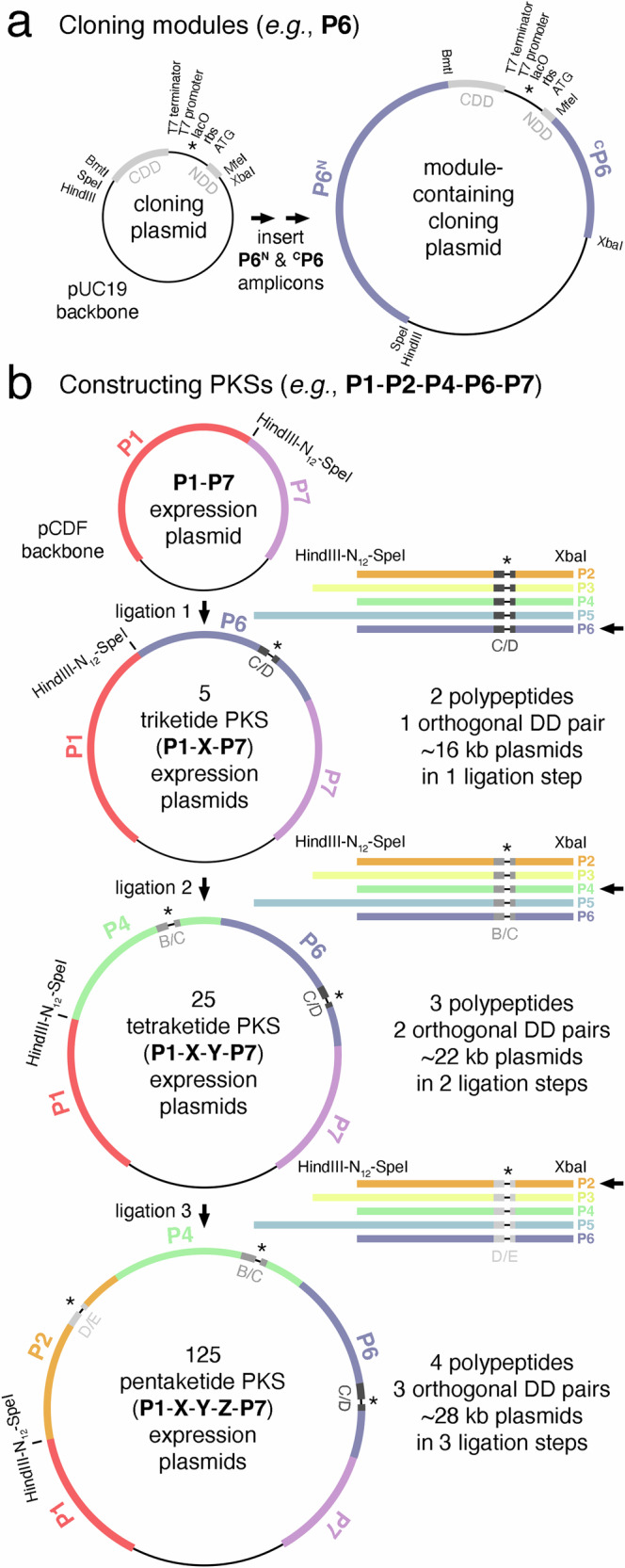
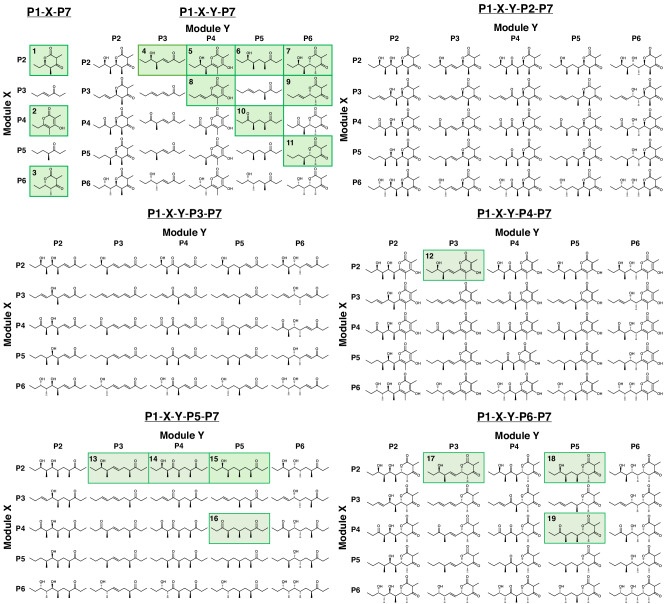
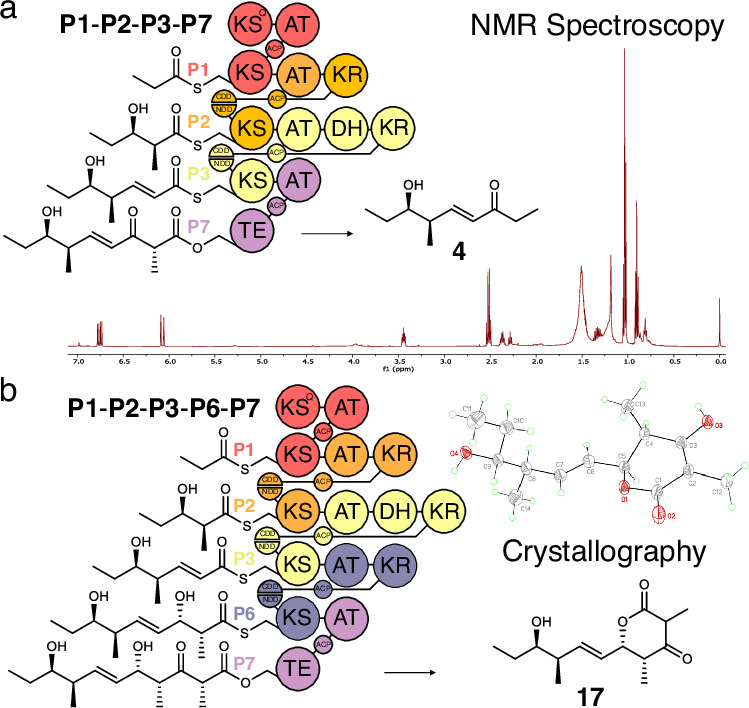
Verification
Claims the paper makes
The claims and statistics of this paper haven’t been checked yet.
Run the check — free, no account needed. It reads the open-access text and checks the sources it cites.
Self-check
Percentages, sums and reported differences re-computed from the paper’s own numbers.
The self-check needs the paper’s full text.
Citations
Cites
Highly accurate protein structure prediction with AlphaFold
Jumper, J., Evans, R., Pritzel, A., Green, T., Figurnov, M., Ronneberger, O., Tunyasuvunakool, K., Bates, R., Žídek, A., Potapenko, A., et al. (2021) · Nature · doi:10.1038/s41586-021-03819-2 · Cited by 43,764
Features and development of Coot
Emsley, P., Lohkamp, B., Scott, W. G., & Cowtan, K. (2010) · Acta Crystallographica Section D Biological Crystallography · doi:10.1107/s0907444910007493 · Cited by 29,915
Overview of the CCP 4 suite and current developments
Winn, M. D., Ballard, C. C., Cowtan, K. D., Dodson, E. J., Emsley, P., Evans, P. R., Keegan, R. M., Krissinel, E. B., Leslie, A. G. W., McCoy, A., et al. (2011) · Acta Crystallographica Section D Biological Crystallography · doi:10.1107/s0907444910045749 · Cited by 12,353
Platensimycin is a selective FabF inhibitor with potent antibiotic properties
Wang, J., Soisson, S. M., Young, K., Shoop, W., Kodali, S., Galgoci, A., Painter, R., Parthasarathy, G., Tang, Y. S., Cummings, R., et al. (2006) · Nature · doi:10.1038/nature04784 · Cited by 812
Engineering BioBrick vectors from BioBrick parts
Shetty, R. P., Endy, D., & Knight, T. F. (2008) · Journal of Biological Engineering · doi:10.1186/1754-1611-2-5 · Cited by 760
Xue, Y., Zhao, L., Liu, H., & Sherman, D. H. (1998) · Proceedings of the National Academy of Sciences · doi:10.1073/pnas.95.21.12111 · Cited by 357
A Tylosin Ketoreductase Reveals How Chirality Is Determined in Polyketides
Keatinge-Clay, A. T. (2007) · Chemistry & Biology · doi:10.1016/j.chembiol.2007.07.009 · Cited by 349
Self-citationThe structures of type I polyketide synthases
Keatinge-Clay, A. T. (2012) · Natural Product Reports · doi:10.1039/c2np20019h · Cited by 344
Self-citationEvolution and Diversity of Assembly-Line Polyketide Synthases: Focus Review
Nivina, A., Yuet, K. P., Hsu, J., & Khosla, C. (2019) · Chemical Reviews · doi:10.1021/acs.chemrev.9b00525 · Cited by 329
Dissecting and Exploiting Intermodular Communication in Polyketide Synthases
Gokhale, R. S., Tsuji, S. Y., Cane, D. E., & Khosla, C. (1999) · Science · doi:10.1126/science.284.5413.482 · Cited by 326
Metadata
- Authors
- Ray, K. A., Lutgens, J. D., Bista, R., Zhang, J., Desai, R. R., Hirsch, M., Miyazawa, T., Cordova, A., & Keatinge-Clay, A. T.
- Affiliations
- The University of Texas at Austin (US)
- ORCID
- Venue
- Nature Communications
- Published
- 2024-08-01
- Volume
- 15
- Issue
- 1
- Pages
- 6485-6485
- ISSN
- 2041-1723 (ISSN-L)
- PMC
- PMC11294587
- OpenAlex
- W4401220553
- Cited by
- 28
- References
- 54
- Citations by year
- 2026: 14 · 2025: 13 · 2024: 1
- FWCI
- 7.95
- Type
- journal article
- Language
- en
- Open access
- gold
- doi.org
- Licence
- cc-by-nc-nd
- creativecommons.org/licenses/by-nc-nd/4.0 (tdm)
- creativecommons.org/licenses/by-nc-nd/4.0 (vor)
- Locations
- Nature Communications (publishedVersion, cc-by-nc-nd)
- Research Square (acceptedVersion, cc-by)
- PubMed Central (publishedVersion, cc-by-nc-nd)
- PubMed (publishedVersion)
- PubMed Central (submittedVersion, cc-by)
- RePEc: Research Papers in Economics (submittedVersion)
- DOAJ (DOAJ: Directory of Open Access Journals) (submittedVersion, cc-by-sa)
- Funders
- U.S. Department of Health & Human Services | NIH | National Institute of General Medical Sciences (GM145992)
- Welch Foundation (F-1712)
- National Science Foundation (MRSEC Cooperative Agreement No. DMR-1720595)
- Topics
- Life Sciences › Immunology and Microbiology › Applied Microbiology and Biotechnology › Microbial Natural Products and Biosynthesis
- Life Sciences › Biochemistry, Genetics and Molecular Biology › Molecular Biology › Microbial Metabolic Engineering and Bioproduction
- Physical Sciences › Materials Science › Biomaterials › biodegradable polymer synthesis and properties
- Keywords
- polyketide synthase, combinatorial engineering, module boundaries, erythromycin, spinosyns
About these checks
Registry, retraction, Cites and statistics results are computed, not judged, with one exception: a printed reference that no index lists is read once by a model before it counts as a citation error. Claims are extracted by a model and kept only when their quote appears verbatim in the text; each cited source is then checked, with a model’s help, for whether it says what the claim relies on. Those verdicts can be wrong — read the claim’s quote and the cited source before relying on one.
Statistics and arithmetic are recomputed, not judged.
Confidence bands are shown only for fields calibrated on our annotated test set. None is calibrated yet, so no band is shown.
What counts as a claim ›How we measure confidence ›How we check this ›
Are you an author, or do you see a problem with this page? Request a review
How to cite
Cite CoChat for the checks on this page, and the paper for its own findings.
- This page
- CoChat. (2026). Citation check: Assessing and harnessing updated polyketide synthase modules through combinatorial engineering. https://app.cochat.ai/papers/10.1038/s41467-024-50844-6
- The paper
- Ray, K. A., Lutgens, J. D., Bista, R., Zhang, J., Desai, R. R., Hirsch, M., Miyazawa, T., Cordova, A., & Keatinge-Clay, A. T. (2024). Assessing and harnessing updated polyketide synthase modules through combinatorial engineering. Nature Communications. https://doi.org/10.1038/s41467-024-50844-6
Data sources
Bibliographic data: Semantic Scholar, OpenAlex, Crossref.
Contains information from the Semantic Scholar Academic Graph Datasets, made available under the ODC Attribution License (ODC-BY 1.0).
Semantic Scholar’s data is described in: Kinney, R., et al. (2023). The Semantic Scholar Open Data Platform. arXiv:2301.10140.
