

The DAV132 colon-targeted adsorbent does not interfere with plasma concentrations of antibiotics but prevents antibiotic-related dysbiosis: a randomized phase I trial in healthy volunteers
Open accessThe DOI matches its Crossref record; 49 of the 49 references it cites were found in a registry or an index.
Abstract
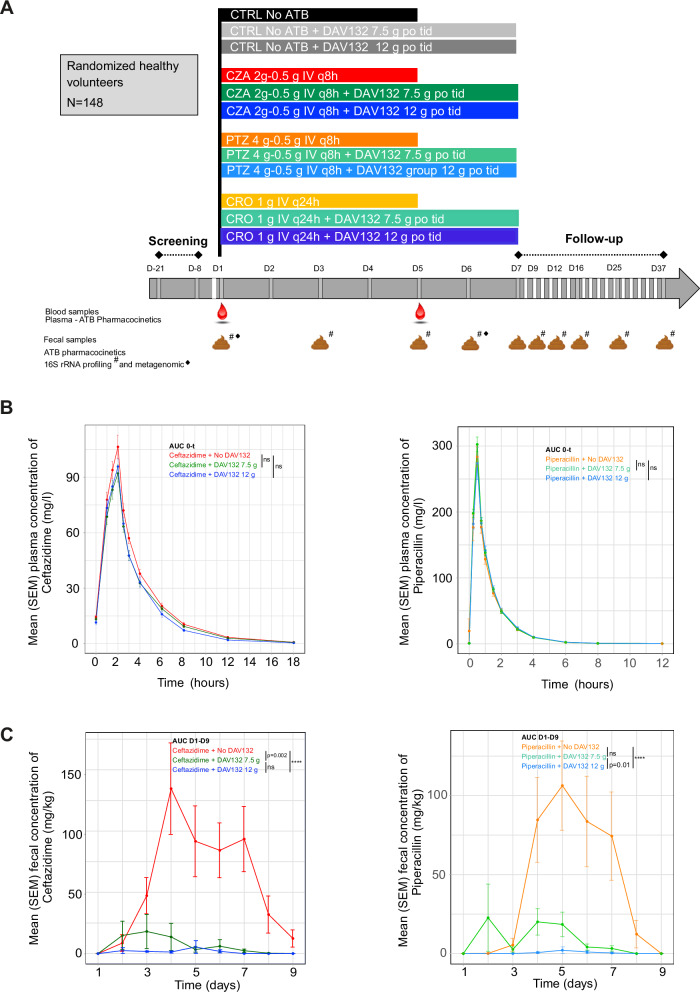
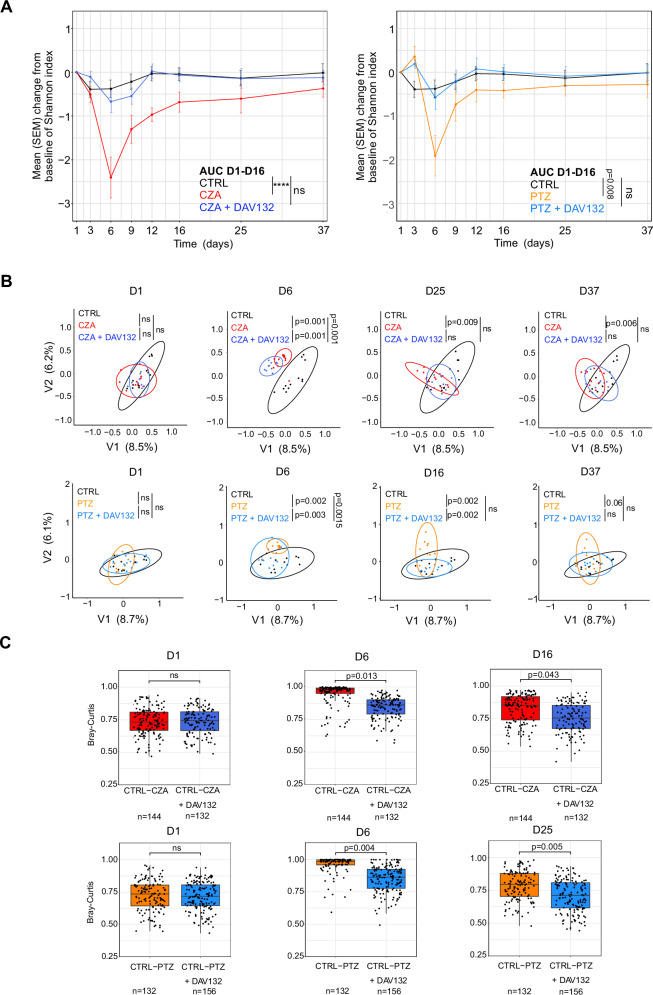
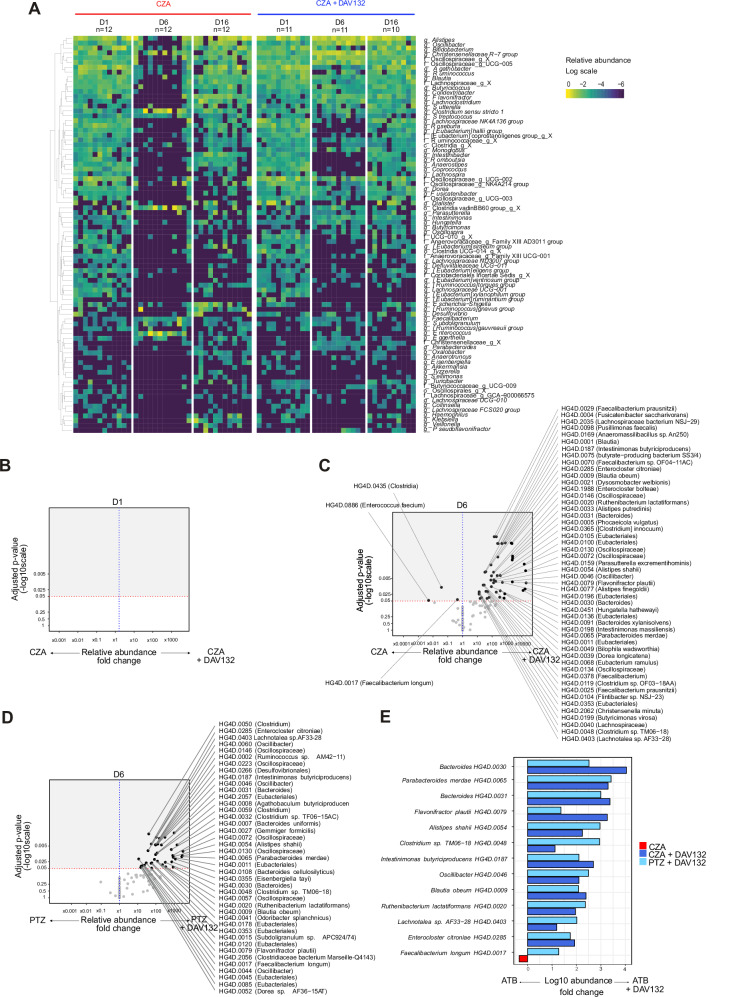
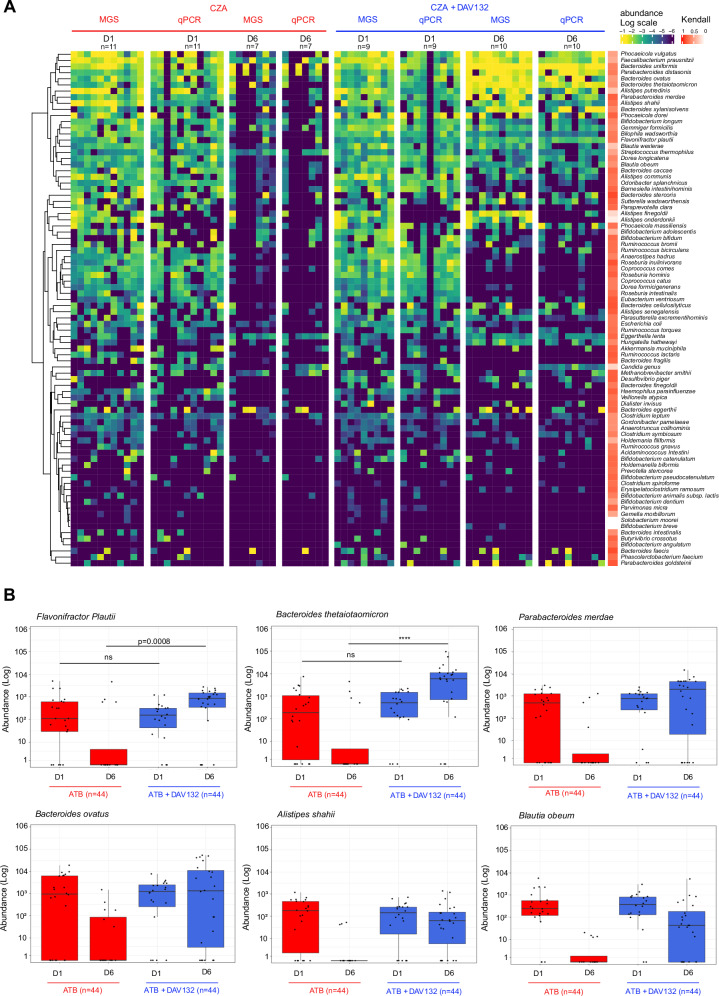
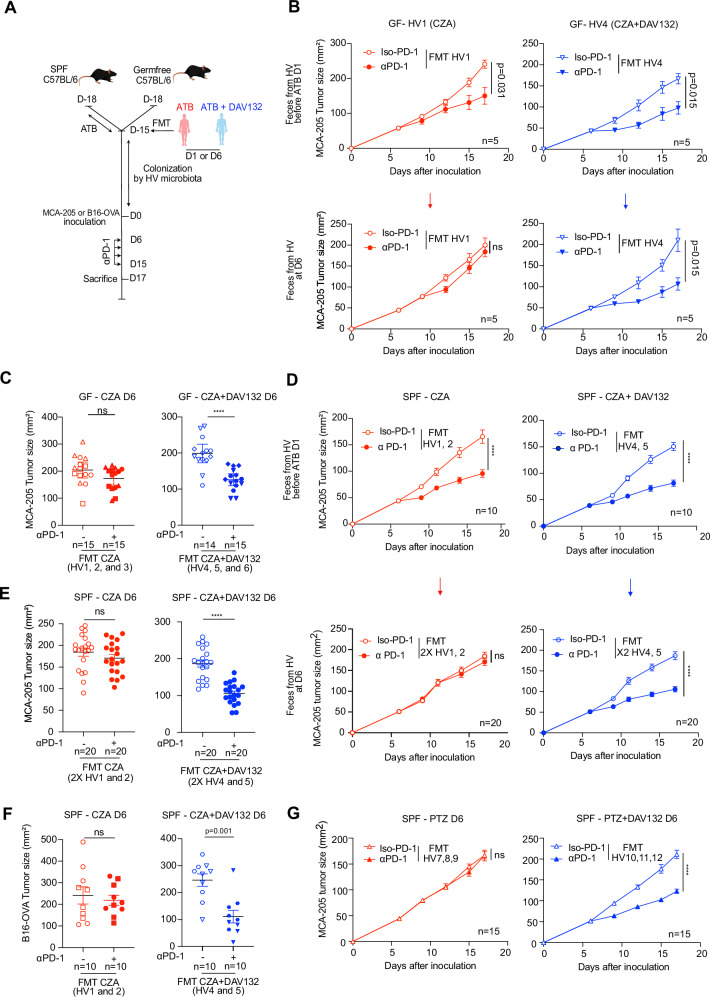
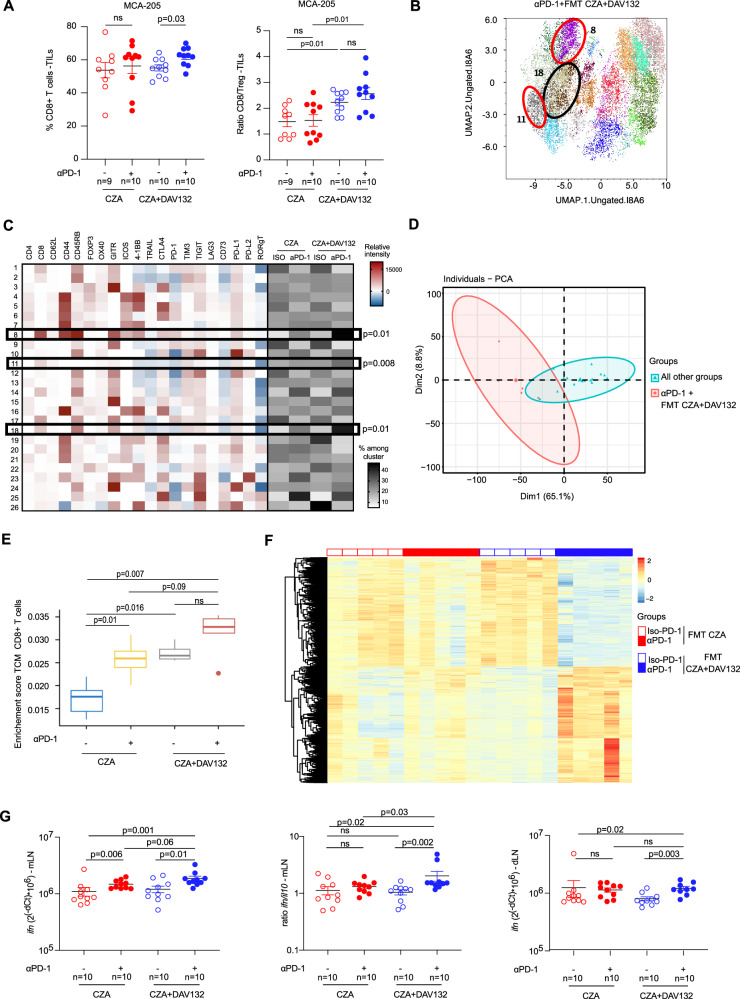
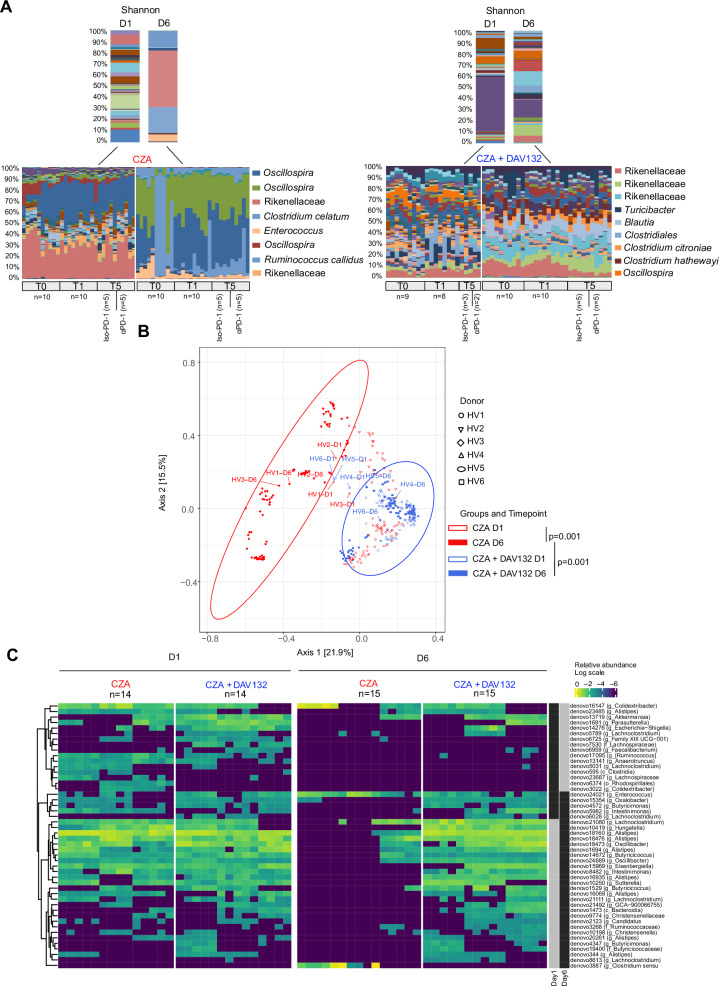
The deleterious impact of antibiotics (ATB) on the microbiome negatively influences immune checkpoint inhibitors (ICI) response in patients with cancer. We conducted a randomized phase I study (EudraCT:2019-A00240-57) with 148 healthy volunteers (HV) to test two doses of DAV132, a colon-targeted adsorbent, alongside intravenous ceftazidime-avibactam (CZA), piperacillin-tazobactam (PTZ) or ceftriaxone (CRO) and a group without ATB. The primary objective of the study was to assess the effect of DAV132 on ATB plasma concentrations and both doses of DAV132 did not alter ATB levels. Secondary objectives included safety, darkening of the feces, and fecal ATB concentrations. DAV132 was well tolerated, with no severe toxicity and similar darkening at both DAV132 doses. DAV132 led to significant decrease in CZA or PTZ feces concentration. When co-administered with CZA or PTZ, DAV132 preserved microbiome diversity, accelerated recovery to baseline composition and protected key commensals. Fecal microbiota transplantation (FMT) in preclinical cancer models in female mice from HV treated with CZA or PTZ alone inhibited anti–PD-1 response, while transplanted samples from HV treated with ATB + DAV132 circumvented resistance to anti–PD-1. This effect was linked to activated CD8+ T cell populations in the tumor microenvironment. DAV132 represents a promising strategy for overcoming ATB-related dysbiosis and further studies are warranted to evaluate its efficacy in cancer patients. The oral antibiotic adsorbent DAV132 can reduce fecal concentrations of antibiotics while preserving their pharmacokinetic properties. Here, in a randomized trial in healthy volunteers treated with antibiotics, the authors show that DAV132 does not affect plasma concentrations of the antibiotics but preserves microbiome diversity and composition, with implications for cancer immunotherapy.
Overview
The claims and statistics of this paper haven’t been checked yet.
Free: it reads the open-access text and checks the first 5 claims that cite a source we can check. Create a free account to check every claim.
Integrity signals
Registry
Cites
Statistics
Figures
Verification
Claims the paper makes
The claims and statistics of this paper haven’t been checked yet.
Free: it reads the open-access text and checks the first 5 claims that cite a source we can check. Create a free account to check every claim.
Claims other papers make about this one
Each is checked against this paper’s own text: does it say what the citing paper says it does?
The source backs part of the claim, not all of it — or backs it for a different population, condition or comparison.
In the citing paper
“Intestinal dysbiosis, broadly defined as an imbalance in the composition or function of the gut microbiota, is a significant contributor to resistance against immune checkpoint inhibitor (ICI) therapies.1–16,”
From Gut dysbiosis in oncology: a risk factor for immunoresistance (2026) · doi:10.1038/s41422-025-01212-6 · cites this paper as [8]
Experimental — accuracy not yet measuredIn the citing paper
“When antibiotic use is unavoidable, supplementing with pro- or prebiotics—or employing strategies like the oral adsorbent DAV132 (Messaoudene et al., 2024)—can help preserve gut ecology.”
From Microbiota-centered interventions to boost immune checkpoint blockade therapies (2025) · cites this paper as Messaoudene et al., 2024
Self-check
Percentages, sums and reported differences re-computed from the paper’s own numbers.
The self-check needs the paper’s full text.
Citations
Cites
Moderated estimation of fold change and dispersion for RNA-seq data with DESeq2
Love, M. I., Huber, W., & Anders, S. (2014) · Genome Biology · doi:10.1186/s13059-014-0550-8 · Cited by 95,106
Fast gapped-read alignment with Bowtie 2
Langmead, B., & Salzberg, S. L. (2012) · Nature Methods · doi:10.1038/nmeth.1923 · Cited by 56,400
Fast and accurate long-read alignment with Burrows-Wheeler transform.
Li, H., & Durbin, R. (2010) · Bioinformatics · doi:10.1093/bioinformatics/btp698 · Cited by 12,063 · cited 1×
“Dual indices and adapter sequences were added to each sample during library construction and the fi nal fragment distribution was evaluated using the HT DNA NGS On average, 85.4% of the High-Quality microbiome reads were then mapped to the gene catalog Hg04 using BWA mem (v. 0.7.17) 45 .”
InfluentialFactoMineR : An R Package for Multivariate Analysis
Lê, S., Josse, J., & Husson, F. (2008) · Journal of Statistical Software · doi:10.18637/jss.v025.i01 · Cited by 11,603
Hallmarks of Cancer: New Dimensions
Hanahan, D. (2022) · Cancer Discovery · doi:10.1158/2159-8290.cd-21-1059 · Cited by 9,887
Gut microbiome influences efficacy of PD-1-based immunotherapy against epithelial tumors
Routy, B., Le Chatelier, E., Derosa, L., Duong, C. P. M., Alou, M. T., Daillère, R., Fluckiger, A., Messaoudene, M., Rauber, C., Roberti, M. P., et al. (2018) · Science · doi:10.1126/science.aan3706 · Cited by 5,671 · cited 22×
“Overthe past decade, studies unravelling the cancer-immunity dialogue in the setting ofICI have determined thatresistanceisprofoundlyin fl uenced bygutmicrobiota 3 – 8 .”
InfluentialSelf-citationElements of cancer immunity and the cancer–immune set point
Chen, D. S., & Mellman, I. (2017) · Nature · doi:10.1038/nature21349 · Cited by 5,352
Gut microbiome modulates response to anti-PD-1 immunotherapy in melanoma patients
Gopalakrishnan, V., Spencer, C. N., Nezi, L., Reuben, A., Andrews, M. C., Karpinets, T. V., Prieto, P. A., Vicente, D., Hoffman, K., Wei, S. C., et al. (2018) · Science · doi:10.1126/science.aan4236 · Cited by 4,812 · cited 1×
“Moreover, transplantation of patients ’ feces to germ-free mice recapitulated patient outcomes, providing further evidence of the relationship between microbiota composition and response to ICI 9,13,14 .”
Anticancer immunotherapy by CTLA-4 blockade relies on the gut microbiota
Vétizou, M., Pitt, J. M., Daillère, R., Lepage, P., Waldschmitt, N., Flament, C., Rusakiewicz, S., Routy, B., Roberti, M. P., Duong, C. P. M., et al. (2015) · Science · doi:10.1126/science.aad1329 · Cited by 3,488 · cited 1×
“…the key role of the microbiota in ICI wasgathered from antibiotic (ATB)-treated mice, where altering the microbiota by ATB inhibited responses to programmed cell death protein 1 (PD-1) blockers used alone or in combination with a cytotoxic T-lymphocyte associated protein 4 (CTLA-4) inhibitor 9,19 .”
Self-citationNeoadjuvant Nivolumab plus Chemotherapy in Resectable Lung Cancer
Forde, P. M., Spicer, J., Lu, S., Provencio, M., Mitsudomi, T., Awad, M. M., Felip, E., Broderick, S. R., Brahmer, J. R., Swanson, S. J., et al. (2022) · New England Journal of Medicine · doi:10.1056/nejmoa2202170 · Cited by 2,825
AdapterRemoval v2: rapid adapter trimming, identification, and read merging
Schubert, M., Lindgreen, S., & Orlando, L. (2016) · BMC Research Notes · doi:10.1186/s13104-016-1900-2 · Cited by 2,151
Fecal microbiota transplant overcomes resistance to anti–PD-1 therapy in melanoma patients
Davar, D., Dzutsev, A. K., McCulloch, J. A., Rodrigues, R. R., Chauvin, J.-M., Morrison, R. M., Deblasio, R. N., Menna, C., Ding, Q., Pagliano, O., et al. (2021) · Science · doi:10.1126/science.abf3363 · Cited by 1,781
Fecal microbiota transplant promotes response in immunotherapy-refractory melanoma patients
Baruch, E. N., Youngster, I., Ben-Betzalel, G., Ortenberg, R., Lahat, A., Katz, L., Adler, K., Dick-Necula, D., Raskin, S., Bloch, N., et al. (2021) · Science · doi:10.1126/science.abb5920 · Cited by 1,757
Haslam, A., & Prasad, V. (2019) · JAMA Network Open · doi:10.1001/jamanetworkopen.2019.2535 · Cited by 1,413 · cited 1×
“Despite the approval of immune checkpoint inhibitors (ICI) in various cancers and recently in the neoadjuvant settings, strategies to decreaseresistancetoICIrepresentanunmetmedicalneed 1,2 .”
The microbiome and human cancer
Sepich-Poore, G. D., Zitvogel, L., Straussman, R., Hasty, J., Wargo, J. A., & Knight, R. (2021) · Science · doi:10.1126/science.abc4552 · Cited by 1,332
Suez, J., Zmora, N., Zilberman-Schapira, G., Mor, U., Dori-Bachash, M., Bashiardes, S., Zur, M., Regev-Lehavi, D., Ben-Zeev Brik, R., Federici, S., et al. (2018) · Cell · doi:10.1016/j.cell.2018.08.047 · Cited by 1,184 · cited 2×
“Suez et al. reported in HV receiving oral cipro fl oxacin and metronidazole that daily oral supplementation with an 11-strain probiotic induced a markedly delayed and persistently incomplete microbiota restoration compared to HV who were allowed to spontaneously recover their microbiota 25 .”
MetaHIT Consortium, Nielsen, H. B., Almeida, M., Juncker, A. S., Rasmussen, S., Li, J., Sunagawa, S., Plichta, D. R., Gautier, L., Pedersen, A. G., et al. (2014) · Nature Biotechnology · doi:10.1038/nbt.2939 · Cited by 1,184 · cited 1×
“Metagenomic species (MGS) were then identi fi ed based on the co-abundance of genes across the samples, following the method de fi ned of Nielsen and colleagues 46 .”
CONSORT 2010 statement: updated guidelines for reporting parallel group randomised trials.
Schulz, K. F., Altman, D. G., & Moher, D. (2010) · Journal of Clinical Epidemiology · doi:10.1016/j.jclinepi.2010.02.005 · Cited by 1,022
Dietary fiber and probiotics influence the gut microbiome and melanoma immunotherapy response
Spencer, C. N., McQuade, J. L., Gopalakrishnan, V., McCulloch, J. A., Vetizou, M., Cogdill, A. P., Khan, M. A. W., Zhang, X., White, M. G., Peterson, C. B., et al. (2021) · Science · doi:10.1126/science.aaz7015 · Cited by 966 · cited 2×
“In the same vein, Spencer et al. revealed that advanced melanoma patients amenable to ICI who used over-the-counter probiotics had a shorter progression-free survival 11 .”
Management of febrile neutropaenia: ESMO Clinical Practice Guidelines
Klastersky, J., de Naurois, J., Rolston, K., Rapoport, B., Maschmeyer, G., Aapro, M., & Herrstedt, J. (2016) · Annals of Oncology · doi:10.1093/annonc/mdw325 · Cited by 767 · cited 1×
“We reported the fi rst-in-human study of concomitant use of the colon-targeted adsorbent, DAV132, with two distinct broad-spectrum ATB with β -lactamase inhibitor combinations frequently used in the treatment of sepsis in oncology patients 31,35 .”
Derosa, L., Routy, B., Thomas, A. M., Iebba, V., Zalcman, G., Friard, S., Mazieres, J., Audigier-Valette, C., Moro-Sibilot, D., Goldwasser, F., et al. (2022) · Nature Medicine · doi:10.1038/s41591-021-01655-5 · Cited by 685 · cited 1×
“At baseline, patients on ATB had lower microbiota diversity and an over-representation of Hungatella hathewayi and Akkermansia muciniphila beyond the bene fi cial threshold (77th percentile) 10,13 .”
Self-citationPinato, D. J., Howlett, S., Ottaviani, D., Urus, H., Patel, A., Mineo, T., Brock, C., Power, D., Hatcher, O., Falconer, A., et al. (2019) · JAMA Oncology · doi:10.1001/jamaoncol.2019.2785 · Cited by 626 · cited 1×
“These observations led to retrospective and prospective studies in several cohorts of cancer patients amenable to ICI, con fi rming that ATB blunted the ef fi cacy of ICI 20 – 22 .”
Fecal microbiota transplantation plus anti-PD-1 immunotherapy in advanced melanoma: a phase I trial
Routy, B., Lenehan, J. G., Miller, W. H., Jamal, R., Messaoudene, M., Daisley, B. A., Hes, C., Al, K. F., Martinez-Gili, L., Punčochář, M., et al. (2023) · Nature Medicine · doi:10.1038/s41591-023-02453-x · Cited by 526 · cited 1×
“Several strategies to modify the microbiota composition including encouraging results from fecal microbiota transplantation (FMT) trials are currently being explored as novel therapeutic interventions to improve ICI response 15 – 18 .”
Self-citationLee, K. A., Thomas, A. M., Bolte, L. A., Björk, J. R., de Ruijter, L. K., Armanini, F., Asnicar, F., Blanco-Miguez, A., Board, R., Calbet-Llopart, N., et al. (2022) · Nature Medicine · doi:10.1038/s41591-022-01695-5 · Cited by 464 · cited 1×
“…cell carcinoma (RCC) revealed compelling evidence that speci fi c bacteria such as Akkermansia muciniphila, Ruminococcus, and Eubacter-ium were associated with recruitment of intratumor CD8 + T cells, interferon gamma (INF γ ) signalling pathway, and correlated with bene fi cialICI response 9 – 12 .”
Derosa, L., Routy, B., Fidelle, M., Iebba, V., Alla, L., Pasolli, E., Segata, N., Desnoyer, A., Pietrantonio, F., Ferrere, G., et al. (2020) · European Urology · doi:10.1016/j.eururo.2020.04.044 · Cited by 398 · cited 2×
“At baseline, patients on ATB had lower microbiota diversity and an over-representation of Hungatella hathewayi and Akkermansia muciniphila beyond the bene fi cial threshold (77th percentile) 10,13 .”
Self-citationCeftazidime-Avibactam: A Review in the Treatment of Serious Gram-Negative Bacterial Infections
Shirley, M. (2018) · Drugs · doi:10.1007/s40265-018-0902-x · Cited by 371 · cited 2×
“We reported the fi rst-in-human study of concomitant use of the colon-targeted adsorbent, DAV132, with two distinct broad-spectrum ATB with β -lactamase inhibitor combinations frequently used in the treatment of sepsis in oncology patients 31,35 .”
Hakozaki, T., Richard, C., Elkrief, A., Hosomi, Y., Benlaïfaoui, M., Mimpen, I., Terrisse, S., Derosa, L., Zitvogel, L., Routy, B., et al. (2020) · Cancer Immunology Research · doi:10.1158/2326-6066.cir-20-0196 · Cited by 316 · cited 1×
“Conversely, ATB-naïve patients had an enrichment of Ruminococcus and Agathobacter 23,24 .”
Self-citationMessaoudene, M., Pidgeon, R., Richard, C., Ponce, M., Diop, K., Benlaifaoui, M., Nolin-Lapalme, A., Cauchois, F., Malo, J., Belkaid, W., et al. (2022) · Cancer Discovery · doi:10.1158/2159-8290.cd-21-0808 · Cited by 250 · cited 3×
“5A) 9,15 .”
Self-citationElkrief, A., Derosa, L., Kroemer, G., Zitvogel, L., & Routy, B. (2019) · Annals of Oncology · doi:10.1093/annonc/mdz206 · Cited by 246 · cited 1×
“These results characterized the deviated repertoire of the intestinalecosystem post-ATB, referred to as ATB - related dysbiosis, and its impact on ICI outcomes, leading to judicious prescription of ATB in general oncology practice 21 .”
Self-citationA microbiota-modulated checkpoint directs immunosuppressive intestinal T cells into cancers
Fidelle, M., Rauber, C., Alves Costa Silva, C., Tian, A.-L., Lahmar, I., de La Varende, A.-L. M., Zhao, L., Thelemaque, C., Lebhar, I., Messaoudene, M., et al. (2023) · Science · doi:10.1126/science.abo2296 · Cited by 243 · cited 19×
“Overthe past decade, studies unravelling the cancer-immunity dialogue in the setting ofICI have determined thatresistanceisprofoundlyin fl uenced bygutmicrobiota 3 – 8 .”
InfluentialSelf-citationElkrief, A., El Raichani, L., Richard, C., Messaoudene, M., Belkaid, W., Malo, J., Belanger, K., Miller, W., Jamal, R., Letarte, N., et al. (2019) · OncoImmunology · doi:10.1080/2162402x.2019.1568812 · Cited by 208 · cited 19×
“Overthe past decade, studies unravelling the cancer-immunity dialogue in the setting ofICI have determined thatresistanceisprofoundlyin fl uenced bygutmicrobiota 3 – 8 .”
InfluentialSelf-citationPiperacillin/Tazobactam: An Updated Review of its Use in the Treatment of Bacterial Infections
Perry, C. M., & Markham, A. (1999) · Drugs · doi:10.2165/00003495-199957050-00017 · Cited by 193
Microbiota-Centered Interventions: The Next Breakthrough in Immuno-Oncology?
Derosa, L., Routy, B., Desilets, A., Daillère, R., Terrisse, S., Kroemer, G., & Zitvogel, L. (2021) · Cancer Discovery · doi:10.1158/2159-8290.cd-21-0236 · Cited by 170 · cited 2×
“Overthe past decade, studies unravelling the cancer-immunity dialogue in the setting ofICI have determined thatresistanceisprofoundlyin fl uenced bygutmicrobiota 3 – 8 .”
Self-citationMiao, Y.-R., Xia, M., Luo, M., Luo, T., Yang, M., & Guo, A.-Y. (2022) · Bioinformatics · doi:10.1093/bioinformatics/btab711 · Cited by 168
Protection of the Human Gut Microbiome From Antibiotics
de Gunzburg, J., Ghozlane, A., Ducher, A., Le Chatelier, E., Duval, X., Ruppé, E., Armand-Lefevre, L., Sablier-Gallis, F., Burdet, C., Alavoine, L., et al. (2018) · The Journal of Infectious Diseases · doi:10.1093/infdis/jix604 · Cited by 166
Self-citationGut OncoMicrobiome Signatures (GOMS) as next-generation biomarkers for cancer immunotherapy
Thomas, A. M., Fidelle, M., Routy, B., Kroemer, G., Wargo, J. A., Segata, N., & Zitvogel, L. (2023) · Nature Reviews Clinical Oncology · doi:10.1038/s41571-023-00785-8 · Cited by 141 · cited 2×
“Source data are provided as a Source Data fi le. partially protected microbiome diversity and composition, and maintained several bacterial taxa associated with ICI response 24 .”
Self-citationYonekura, S., Terrisse, S., Alves Costa Silva, C., Lafarge, A., Iebba, V., Ferrere, G., Goubet, A.-G., Fahrner, J.-E., Lahmar, I., Ueda, K., et al. (2022) · Cancer Discovery · doi:10.1158/2159-8290.cd-21-0999 · Cited by 112 · cited 1×
“Firstly, we assessed the role of DAV132 in HV, while recent studies suggest that the development of cancer is associated with a deviated microbiota repertoire, also referred as cancer-dysbiosis, that correlates with an ileopathy 39 .”
Self-citationCostello, S. P., Tucker, E. C., La Brooy, J., Schoeman, M. N., & Andrews, J. M. (2016) · Clinical Infectious Diseases · doi:10.1093/cid/civ994 · Cited by 105
Melanoma and microbiota: Current understanding and future directions
Routy, B., Jackson, T., Mählmann, L., Baumgartner, C. K., Blaser, M., Byrd, A., Corvaia, N., Couts, K., Davar, D., Derosa, L., et al. (2024) · Cancer Cell · doi:10.1016/j.ccell.2023.12.003 · Cited by 89 · cited 2×
“Use of ATB represents a negative prognostic factor for patients amenabletoICIbuttherearecurrentlynoevidence-basedstrategiesto overcome ATB-related dysbiosis 7 .”
Self-citationKaleko, M., Bristol, J. A., Hubert, S., Parsley, T. B., Widmer, G., Tzipori, S. R., Subramanian, P., Hasan, N. A., Koski, P., Kokai‐Kun, J. F., et al. (2016) · Anaerobe · doi:10.1016/j.anaerobe.2016.05.015 · Cited by 75 · cited 1×
“Therefore, host β -lactamase represents one way to overcome ATB-related dysbiosis for HV with CRO 34 and in this context, we subsequently excluded these HV from the analysis.”
de Gunzburg, J., Ducher, A., Modess, C., Wegner, D., Oswald, S., Dressman, J., Augustin, V., Feger, C., Andremont, A., Weitschies, W., et al. (2015) · The Journal of Clinical Pharmacology · doi:10.1002/jcph.359 · Cited by 72
Self-citationElkrief, A., Méndez-Salazar, E. O., Maillou, J., Vanderbilt, C. M., Gogia, P., Desilets, A., Messaoudene, M., Kelly, D., Ladanyi, M., Hellmann, M. D., et al. (2024) · npj Precision Oncology · doi:10.1038/s41698-024-00630-w · Cited by 68 · cited 3×
“Thisobservation wasvalidated in a meta-analysis of 105studies across 46,000 patients with cancer amenable to immunotherapy, demonstrating that ATB use six weeks before ICI initiation was associated with a shorter overall survival 8 .”
Self-citationVehreschild, M. J. G. T., Ducher, A., Louie, T., Cornely, O. A., Feger, C., Dane, A., Varastet, M., Vitry, F., de Gunzburg, J., Andremont, A., et al. (2022) · Journal of Antimicrobial Chemotherapy · doi:10.1093/jac/dkab474 · Cited by 49
Self-citationBurdet, C., Sayah‐Jeanne, S., Nguyen, T. T., Hugon, P., Sablier-Gallis, F., Saint-Lu, N., Corbel, T., Ferreira, S., Pulse, M., Weiss, W., et al. (2018) · Antimicrobial Agents and Chemotherapy · doi:10.1128/aac.00925-18 · Cited by 28
Self-citationBurdet, C., Sayah-Jeanne, S., Nguyen, T. T., Miossec, C., Saint-Lu, N., Pulse, M., Weiss, W., Andremont, A., Mentré, F., & de Gunzburg, J. (2017) · Antimicrobial Agents and Chemotherapy · doi:10.1128/aac.00543-17 · Cited by 21 · cited 2×
“Beyond its potential in ICI, studies using a hamster model of lethal C. dif fi cile - induced colitis 37 have shown that DAV132 preserves the intestinal microbiota and dose-dependently protects from death 28 – 30 .”
Self-citationWendt, S., Ranft, D., Rodloff, A. C., Lippmann, N., & Lübbert, C. (2020) · Open Forum Infectious Diseases · doi:10.1093/ofid/ofaa312 · Cited by 17 · cited 1×
“Importantly, ATB-related dysbiosis is also known to lead to C. dif fi cile and one of the objec-tivesofthetrialwastotestDAV132inHVtreatedwithCRObecauseitis known to increase the change of developing C. dif fi cile 36 .”
DAV131A Protects Hamsters from Lethal Clostridioides difficile Infection Induced by Fluoroquinolones
Saint-Lu, N., Burdet, C., Sablier-Gallis, F., Corbel, T., Nevière, A., Sayah‐Jeanne, S., Pulse, M., Weiss, W., Ferreira, S., Andremont, A., et al. (2019) · Antimicrobial Agents and Chemotherapy · doi:10.1128/aac.01196-19 · Cited by 8 · cited 2×
“Beyond its potential in ICI, studies using a hamster model of lethal C. dif fi cile - induced colitis 37 have shown that DAV132 preserves the intestinal microbiota and dose-dependently protects from death 28 – 30 .”
Self-citationHarris, H. C., Best, E. L., Normington, C., Saint-Lu, N., Sablier-Gallis, F., de Gunzburg, J., Andremont, A., Wilcox, M. H., & Chilton, C. H. (2020) · Antimicrobial Agents and Chemotherapy · doi:10.1128/aac.01401-20 · Cited by 7 · cited 1×
“Furthermore, we showed using an ex vivo validated assay 38 that, whereas the feces of healthy subjects cannot be colonized by C. dif fi cile , fl uor-oquinolone ATB treatments enable such colonization, and resistance to colonization is preserved in the feces of HV and those who receive DAV132…”
Self-citationVehreschild, M. J. G. T., Biehl, L. M., Dane, A. L., de Kraker, M. E. A., Timbermont, L., & van Werkhoven, C. H. (2023) · Journal of Antimicrobial Chemotherapy · doi:10.1093/jac/dkad123 · Cited by 6 · cited 1×
“The interruption in operationsatDavolterrawasduetosuboptimalclinicaltrialdesigninthe Clostridium dif fi cile space outlined in Vehreschild et al. 41 .”
Cited by
Duttagupta, S., Messaoudene, M., Hunter, S., Desîlets, A., Jamal, R., Mihalcioiu, C. L. D., Belkaïd, W., Marcoux, N., Fidelle, M., Suissa, D., et al. (2026) · Nature Medicine · doi:10.1038/s41591-025-04186-5 · Cited by 126
“We employed a validated qPCR-based assay of 108 selected species 30,38 and confirmed that qPCR relative abundances significantly correlated with shotgun metagenomic data (Extended Data Fig.”
Self-citationElkrief, A., Routy, B., Derosa, L., Bolte, L. A., Wargo, J. A., McQuade, J. L., & Zitvogel, L. (2025) · American Society of Clinical Oncology Educational Book · doi:10.1200/edbk-25-472902 · Cited by 43
Self-citationPharmacomicrobiomics: The Role of the Gut Microbiome in Immunomodulation and Cancer Therapy
Bolte, L. A., Björk, J. R., Gaćeša, R., & Weersma, R. K. (2025) · Gastroenterology · doi:10.1053/j.gastro.2025.04.025 · Cited by 43
Gut dysbiosis in oncology: a risk factor for immunoresistance
(2026) · doi:10.1038/s41422-025-01212-6 · Cited by 24
Microbiota-centered interventions to boost immune checkpoint blockade therapies
Almonte, A. A., Thomas, S., & Zitvogel, L. (2025) · Journal of Experimental Medicine · doi:10.1084/jem.20250378 · Cited by 19
Metadata
- Authors
- Messaoudene, M., Ferreira, S., Saint-Lu, N., Ponce, M., Truntzer, C., Boidot, R., Le Bescop, C., Loppinet, T., Corbel, T., Féger, C., Bertrand, K., Elkrief, A., Isaksen, M., Vitry, F., Sablier-Gallis, F., Andremont, A., Bod, L., Ghiringhelli, F., de Gunzburg, J., & Routy, B.
- Affiliations
- Centre Hospitalier de l’Université de Montréal (CA)
- Da Volterra (France) (FR)
- Inserm (FR)
- Centre Georges François Leclerc (FR)
- Harvard University (US)
- Corresponding author
- Routy, Bertrand
- ORCID
- Venue
- Nature Communications
- Published
- 2024-09-15
- Volume
- 15
- Issue
- 1
- Pages
- 8083-8083
- ISSN
- 2041-1723 (ISSN-L)
- PMC
- PMC11402973
- OpenAlex
- W4402552347
- Cited by
- 24
- References
- 49
- Citations by year
- 2026: 11 · 2025: 11 · 2024: 2
- FWCI
- 3.27
- Type
- journal article
- Language
- en
- Open access
- gold
- doi.org
- Licence
- cc-by-nc-nd
- creativecommons.org/licenses/by-nc-nd/4.0 (tdm)
- creativecommons.org/licenses/by-nc-nd/4.0 (vor)
- Locations
- Nature Communications (publishedVersion, cc-by-nc-nd)
- PubMed Central (publishedVersion, cc-by-nc-nd)
- PubMed (publishedVersion)
- RePEc: Research Papers in Economics (submittedVersion)
- DOAJ (DOAJ: Directory of Open Access Journals) (submittedVersion)
- Funders
- Reasearch funding from Da Volterra
- Topics
- Life Sciences › Biochemistry, Genetics and Molecular Biology › Molecular Biology › Gut microbiota and health
- Health Sciences › Medicine › Oncology › Cancer Immunotherapy and Biomarkers
- Health Sciences › Medicine › Infectious Diseases › Antibiotic Use and Resistance
- Keywords
- gut microbiota, ceftazidime-avibactam, piperacillin-tazobactam, ceftriaxone, microbiome diversity, fecal microbiota transplantation, anti-PD-1 response, cancer immunotherapy, immune checkpoint inhibitors, CD8+ T cells, tumor microenvironment, healthy volunteers
- MeSH terms
- Gastrointestinal Microbiome, Fecal Microbiota Transplantation, Immune Checkpoint Inhibitors, Adult, Animals, Anti-Bacterial Agents, Colon, Feces, Female, Humans, Male, Middle Aged, Mice, Young Adult, Healthy Volunteers, Dysbiosis
About these checks
Registry, retraction, Cites and statistics results are computed, not judged, with one exception: a printed reference that no index lists is read once by a model before it counts as a citation error. Claims are extracted by a model and kept only when their quote appears verbatim in the text; each cited source is then checked, with a model’s help, for whether it says what the claim relies on. Those verdicts can be wrong — read the claim’s quote and the cited source before relying on one.
Statistics and arithmetic are recomputed, not judged.
Confidence bands are shown only for fields calibrated on our annotated test set. None is calibrated yet, so no band is shown.
What counts as a claim ›How we measure confidence ›How we check this ›
Are you an author, or do you see a problem with this page? Request a review
Data sources
Bibliographic data: Semantic Scholar, OpenAlex, Crossref.
Contains information from the Semantic Scholar Academic Graph Datasets, made available under the ODC Attribution License (ODC-BY 1.0).
Semantic Scholar’s data is described in: Kinney, R., et al. (2023). The Semantic Scholar Open Data Platform. arXiv:2301.10140.
