

The DOI matches its Crossref record; 93 of the 103 references it cites were found in a registry or an index.
Benchmarking large language models for biomedical natural language processing applications and recommendations
Open accessAbstract
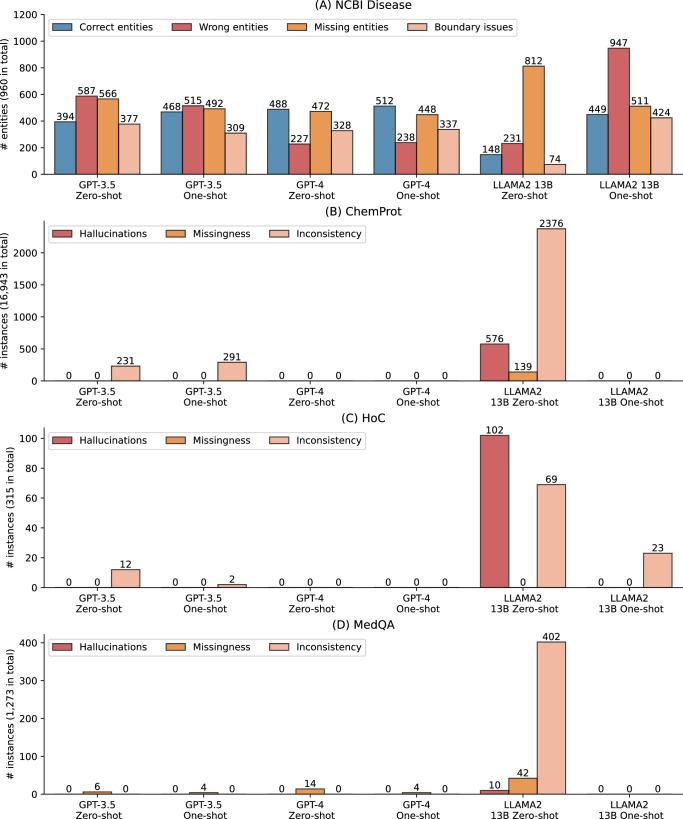
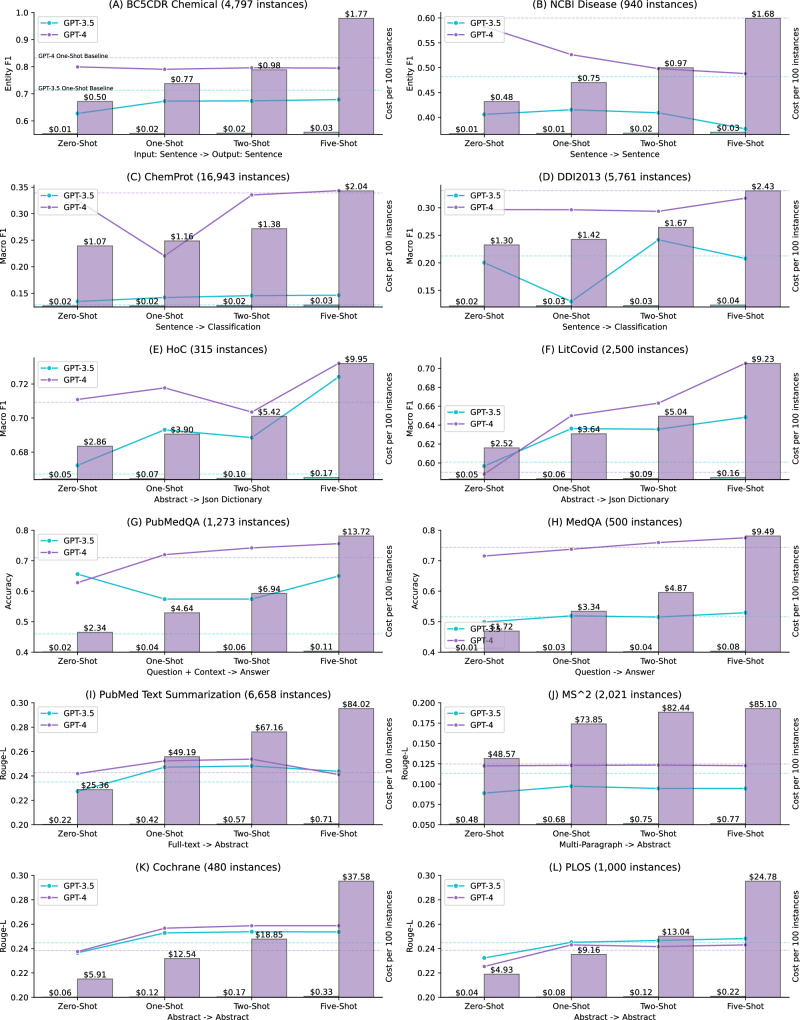
The rapid growth of biomedical literature poses challenges for manual knowledge curation and synthesis. Biomedical Natural Language Processing (BioNLP) automates the process. While Large Language Models (LLMs) have shown promise in general domains, their effectiveness in BioNLP tasks remains unclear due to limited benchmarks and practical guidelines. We perform a systematic evaluation of four LLMs—GPT and LLaMA representatives—on 12 BioNLP benchmarks across six applications. We compare their zero-shot, few-shot, and fine-tuning performance with the traditional fine-tuning of BERT or BART models. We examine inconsistencies, missing information, hallucinations, and perform cost analysis. Here, we show that traditional fine-tuning outperforms zero- or few-shot LLMs in most tasks. However, closed-source LLMs like GPT-4 excel in reasoning-related tasks such as medical question answering. Open-source LLMs still require fine-tuning to close performance gaps. We find issues like missing information and hallucinations in LLM outputs. These results offer practical insights for applying LLMs in BioNLP.
Overview
The claims and statistics of this paper haven’t been checked yet.
Run the check — free, no account needed. It reads the open-access text and checks the sources it cites.
Integrity signals
Registry
Cites
Statistics
Figures
Verification
Claims the paper makes
The claims and statistics of this paper haven’t been checked yet.
Run the check — free, no account needed. It reads the open-access text and checks the sources it cites.
Claims other papers make about this one
Each is checked against this paper’s own text: does it say what the citing paper says it does?
The cited source says what the claim attributes to it.
In the citing paper
“Our extensive prior work comparing zero/few-shot and fine-tuned LLaMA models have demonstrated the superior performance of fine-tuned models51–54.”
From Social determinants of health extraction from clinical notes across institutions using large language models (2025) · cites this paper as [54]
Self-check
Percentages, sums and reported differences re-computed from the paper’s own numbers.
The self-check needs the paper’s full text.
Citations
Cites
SciPy 1.0: fundamental algorithms for scientific computing in Python
Virtanen, P., Gommers, R., Oliphant, T. E., Haberland, M., Reddy, T., Cournapeau, D., Burovski, E., Peterson, P., Weckesser, W., Bright, J., et al. (2020) · Nature Methods · doi:10.1038/s41592-019-0686-2 · Cited by 38,430
LoRA: Low-Rank Adaptation of Large Language Models
Hu, E. J., Shen, Y., Wallis, P., Allen-Zhu, Z., Li, Y., Wang, S., Wang, L., & Chen, W. (2021) · arXiv · doi:10.48550/arxiv.2106.09685 · Cited by 13,453 · cited 1×
“Further information on research design is available in the Nature Portfolio Reporting Summary linked to this article.”
Lewis, M., Liu, Y., Goyal, N., Ghazvininejad, M., Mohamed, A., Levy, O., Stoyanov, V., & Zettlemoyer, L. (2020) · Proceedings of the 58th Annual Meeting of the Association for Computational Linguistics · doi:10.18653/v1/2020.acl-main.703 · Cited by 8,821
Lewis, M., Liu, Y., Goyal, N., Ghazvininejad, M., Mohamed, A., Levy, O., Stoyanov, V., & Zettlemoyer, L. (2019) · arXiv · doi:10.48550/arxiv.1910.13461 · Cited by 8,816 · cited 1×
“For the tasks where the gold standard is fi xed, e.g., a classi fi cation type or multiple-choice option, we conducted qualitative evaluations on collectively hundreds of thousands of raw outputs of the LLMs (the raw outputs from three LLMs under zero-and one-shot conditions acrossthree benchmarks)…”
BioBERT: a pre-trained biomedical language representation model for biomedical text mining
Lee, J., Yoon, W., Kim, S., Kim, D., Kim, S., So, C. H., & Kang, J. (2020) · Bioinformatics · doi:10.1093/bioinformatics/btz682 · Cited by 7,218 · cited 4×
“Since the inception of transformers, biomedical language models have adopted their architecture, and can be categorized into (1) encoder-based, masked language models using the encoder from the transformer architecture such as the biomedical bidirectional encoder representations from transformers (BERT) family includi…”
InfluentialLiu, P., Yuan, W., Fu, J., Jiang, Z., Hayashi, H., & Neubig, G. (2023) · ACM Computing Surveys · doi:10.1145/3560815 · Cited by 4,361 · cited 1×
“Further information on research design is available in the Nature Portfolio Reporting Summary linked to this article.”
Liu, P., Yuan, W., Fu, J., Jiang, Z., Hayashi, H., & Neubig, G. (2021) · arXiv · doi:10.48550/arxiv.2107.13586 · Cited by 4,352 · cited 1×
“Further information on research design is available in the Nature Portfolio Reporting Summary linked to this article.”
A Survey on Evaluation of Large Language Models
Chang, Y., Wang, X., Wang, J., Wu, Y., Yang, L., Zhu, K., Chen, H., Yi, X., Wang, C., Wang, Y., et al. (2024) · ACM Transactions on Intelligent Systems and Technology · doi:10.1145/3641289 · Cited by 4,254 · cited 1×
“…instances withless than 50words forthe trainingandvalidationsets andkeptthetesting setuntouched. b The gold standardofthetesting setofMS^2 isnot publicly available;weused thevalidation setinstead. by the fi ne-tuning approaches to quantify the bene fi ts and challenges of LLMs in BioNLP applications.”
Training language models to follow instructions with human feedback
Ouyang, L., Wu, J., Jiang, X., Almeida, D., Wainwright, C. L., Mishkin, P., Zhang, C., Agarwal, S., Slama, K., Ray, A., et al. (2022) · arXiv · doi:10.48550/arxiv.2203.02155 · Cited by 4,208 · cited 1×
“For instance, Bubeck et al. studied the ability of GPT-4 in a wide spectrum, such as coding, mathematics, and interactions with humans.”
Large language models encode clinical knowledge
Singhal, K., Azizi, S., Tu, T., Mahdavi, S. S., Wei, J., Chung, H. W., Scales, N., Tanwani, A., Cole-Lewis, H., Pfohl, S., et al. (2023) · Nature · doi:10.1038/s41586-023-06291-2 · Cited by 4,083 · cited 1×
“This is also supported by the existing studies on medical question answering 38,46 .”
Research works printed but not linked: 7
- Jiang, A. Q. et al. Mixtral of experts arXiv preprint arXiv:2401.04088, 2024. · arXiv
- Lee, P, Goldberg, C. & Kohane, I. The AI revolution in medicine: GPT-4 and beyond (Pearson, 2023).
- Omiye, J. A., Gui, H., Rezaei, S. J., Zou, J. & Daneshjou, R. Large language models in medicine: the potentials and pitfalls: a narrative review. Ann. Intern. Med. 177, 210–220 (2024). · DOI
- Krallinger, M. et al. Overview of the BioCreative VI chemical-protein interaction Track. In Proc. of the sixth BioCreative challenge evaluation workshop Vol. 1, 141–146 (2017).
- Segura-Bedmar, I., Martínez, P. & Herrero-Zazo, M. Semeval-2013 task 9: extraction of drug-drug interactions from biomedical texts (ddiextraction 2013). In Second Joint Conference on Lexical and Computational Semantics (* SEM), Volume 2: Proc. Seventh International Workshop on Semantic Evaluation (SemEval 2013) 341–350 (Association for Computational Linguistics, 2013).
- Mingliang, D., Jijun, T. & Fei, G. Document-level DDI relation extraction with document-entity embedding. pp. 392–397. · DOI
- Wang, L. L, DeYoung, J. & Wallace, B. Overview of MSLR2022: A shared task on multidocument summarization for literature reviews. In Proc. Third Workshop on Scholarly Document Processing 175–180 (Association for Computational Linguistics, 2022).
Cited by
Sorted by citations
Items 201–281 of 281
Kann, M., O'Connor, K., Tembei, P., Rosner, S., & Gonzalez-Hernandez, G. (2026) · Bioinformatics Advances · doi:10.1093/bioadv/vbag225
“These limitations reinforce the need for curated annotated resources that support supervised training and domain-specific evaluation rather than relying on generic genAI prompting alone (Chen et al. 2025, Miao et al. 2025).”
Searching the druggable genome using large language models
Schimmelpfennig, L., Cannon, M., Cody, Q., McMichael, J. F., Coffman, A. C., Kiwala, S., Krysiak, K., Wagner, A. H., Griffith, M., & Griffith, O. (2026) · Bioinformatics · doi:10.1093/bioinformatics/btag632
“…of biomedical applications, including literature summarization and clinical decision support, due to their ability to synthesize complex information and respond flexibly to natural-language questions (Hager et al. 2024, Li et al. 2024, Williams et al. 2024, Chen et al. 2025, Wang et al. 2025).”
Madeddu, P., Cattaneo, M., & Puca, A. (2026) · International Journal on Biological Sciences · doi:10.7150/ijbs.133754
“Recent comparative studies indicate that such adaptation does not consistently outperform general-purpose language models on previously unseen biomedical reasoning tasks [23,24].”
HealMed: Multilingual Evaluation of Large Language Models in MedicinePreprint
Chen, Y., Gao, F., Tong, S. T., Zhang, H., Feng, A., Jin, K. W., Wu, X., Lu, J., Samad, A., Faruqi, A., et al. (2026) · arXiv (Cornell University) · doi:10.48550/arxiv.2608.19981
“Performance on English benchmarks does not establish whether a model can interpret medical concepts or communicate them reliably in other languages, especially those underrepresented in training data and existing evaluations (Chen et al., 2025b; Singhal et al., 2025).”
Self-citationYin, D.-Q., Leung, M., Pun, D. W. H., Chen, F. H., Kwon, J., Lin, X.-Y., & Ho, J. W. K. (2026) · Quant. Biol. · doi:10.1002/qub2.70050
Automated generation of a gene perturbation transcriptomic atlas using large language modelsPreprint
Soul, J., & Young, D. A. (2026) · bioRxiv (Cold Spring Harbor Laboratory) · doi:10.64898/2026.08.08.743502
“Finetuning produced the largest improvements for smaller models, suggesting that task-specific training is particularly beneficial when base model performance is limited (Chen et al. 2025).”
Yan, F., Zheng, D., Yu, F., & Kang, J. (2026) · Applied Sciences · doi:10.3390/app16167956
Huang, Y.-H., Han, Z., Chang, K., Jiao, T., & Liu, J. (2026) · Knowledge Discovery and Data Mining · doi:10.1145/3770855.3817461
Schema-Guided Hierarchical Information Extraction and Semantic Evaluation Using Generative AI
Mitra, M., Versteeg, J.-W., Schermer, M., Najafabadi, S., Bruin, M. D. D., & Bloem, L. (2026) · arXiv.org · doi:10.48550/arxiv.2608.06167
“To improve performance for certain tasks in specialised fields, fine-tuning BERT [10] or BART [11] models and, more recently, open-weights generative AI models, with domain-specific data has become popular practice [12].”
Pavlidis, P., Mancarci, B. O., Mãximo, A., Yan, C., & Schwartz, R. A. (2026) · bioRxiv · doi:10.64898/2026.07.30.741874
“Other previous work with LLMs showed promising results for a range of data annotation and information extraction tasks (Gue et al. 2024; Mahmoudi et al. 2024; Chen et al. 2025; Jensen et al. 2025; Kainer 2025; Poretsky et al. 2025; Riquelme-García et al. 2025; Turner et al. 2025).”
Revealing Social Users’ Values in Reactions: Modeling User Values in Social Networks
Wang, J., Zhao, L., Ji, X., Zhang, Y., Yang, Y., Wang, X.-K., & Ma, L. (2026) · IEEE Transactions on Computational Social Systems · doi:10.1109/tcss.2026.3702829
“This result further suggests that zero-shot reasoning alone may be insufficient to fully capture the value-related structure underlying users’ attitude responses, while LLMs that are further adapted to the task may provide more competitive performance under a more comparable setting [34].”
Yan, L., Zhou, T., & Gao, R. (2026) · Journal of Supercomputing · doi:10.1007/s11227-026-08765-2
Muneeb, M., & Ascher, D. B. (2026) · Artificial Intelligence in the Life Sciences · doi:10.1016/j.ailsci.2026.100179
Zhong, Y., Feng, M., Tawfeeq, R. D., & Cheng, J. (2026) · Photodiagnosis and Photodynamic Therapy · doi:10.1016/j.pdpdt.2026.105628
Jiao, K., & Li, X. (2026) · Frontiers in Cell and Developmental Biology · doi:10.3389/fcell.2026.1924805
Multimodal natural language processing in ophthalmology: bridging clinical text and medical imaging
Qin, S., Zhao, N., Shen, L., Zhang, Y., & Ge, S. (2026) · Frontiers in Medicine · doi:10.3389/fmed.2026.1762586
“BERT and its biomedical variants including BioBERT and ClinicalBERT, excel in understanding ophthalmic narratives (30–32).”
Sagor, S. I., Haghighi, T., Rahatuzzaman, M., Khecho, A., Alam, M. N., Zorn, J., & Joyee, E. B. (2026) · Frontiers in Manufacturing Technology · doi:10.3389/fmtec.2026.1875357 · Cited by 1
Cagan, C., Fard, P., Tian, J.-Z., Cheng, J.-Y., Murphy, S., & Estiri, H. (2026) · arXiv.org · doi:10.48550/arxiv.2607.12886
“The present evaluation used one institution’s notes, which limits external validity but also avoids the test-set contamination that affects public corpora likely present in model pretraining [13, 19].”
InfluentialEvoMod: Evolutionary Optimization of Modular Prompts for Biomedical Relation Extraction
Yang, L., Zhan, J. Z., & Chen, J. (2026) · ACM International Conference on Bioinformatics, Computational Biology, and Health Informatics (ACM-BCB) · doi:10.1145/3807503.3819434
Mraz, J., Curk, T., & Zupan, B. (2026) · Lecture notes in computer science · doi:10.1007/978-3-032-41086-3_14
“The combination of learned knowledge and prompt-conditioned generation enables LLMs to perform a wide range of tasks without task-specific training [3].”
Ive, J., Jozsa, F., Georgaki, E., Sheikh, N., Cattell, E., Jackson, N., Bondaronek, P., Hill, C., & Dobson, R. (2026) · arXiv.org · doi:10.48550/arxiv.2606.12897
Zhao, Y., Cai, Q., Chen, D., & Chen, J. (2026) · bioRxiv (Cold Spring Harbor Laboratory) · doi:10.64898/2026.06.06.730646 · Cited by 1
From lecturer to content creator: refocusing the lecture for impactful learning in medical education
Garwood, S. (2026) · Frontiers in Education · doi:10.3389/feduc.2026.1869021 · Cited by 1
You, X., Yu, Z.-H., Wu, D., Shi, L., Wang, G., Cao, Z., Jiang, Q.-C., Yan, X.-F., Zhong, W.-M., & Huang, B. (2026) · Digital Chemical Engineering · doi:10.1016/j.dche.2026.100318
Maraschin, F. P., Spalding, L. E. S., & Rebonatto, M. T. (2026) · Anais do XXVI Simpósio Brasileiro de Computação Aplicada à Saúde (SBCAS 2026) · doi:10.5753/sbcas.2026.21647
Expansão Adaptativa de Vocabulário Clínico com LLMs Biomédicos em Registros Eletrônicos de Saúde
Anderle, N., & Griebler, D. (2026) · Anais do XXVI Simpósio Brasileiro de Computação Aplicada à Saúde (SBCAS 2026) · doi:10.5753/sbcas.2026.21596
SynBioGPT2: A dynamic reasoning framework enables high-fidelity design of microbial cell factories
Mao, Z., Du, J., Guan, J., Wang, W., Wang, R., Li, H., Shi, Z., Yuan, Q., Liao, X., & Ma, H. (2026) · BioDesign Research · doi:10.1016/j.bidere.2026.100093
Self-citationPandi, V., B., S., Awwad, H., Krishna Bhargavi, Y., Kansal, L., & Shobana, D. (2026) · 2026 International Conference on Data Science for Cyber-Physical Systems Resilience using Advanced Applications (ICDCA) · doi:10.1109/icdca69396.2026.11620375
“We require computational frameworks that are both safe and domain-adapted [8,9].”
Fine-Tuning Large Language Model for Gene Prioritization in m9.2 Erythroid Module
Regulwar, G. B., Yashwanth, B., Reddy, K. S., Chamundi, G. P., Saketh, N., & Regulwar, G. G. (2026) · 2026 5th OPJU International Technology Conference (OTCON) on Smart Computing for Innovation and Advancement in Industry 5.0 · doi:10.1109/otcon69332.2026.11629812
“Recent benchmarking studies reveal that traditional fine-tuning approaches generally outperform zero-shot or few-shot LLM applications for most biomedical NLP tasks, though closed-source models like GPT-4 excel in reasoning-related tasks such as medical question answering [11].”
Complementary Evidence Pathways for LLM-Based Gene-Disease Plausibility Assessment
Yu, E., Gu, G., Rasmy, L., Xie, Z.-Q., & Zhi, D. (2026) · IEEE International Conference on Healthcare Informatics · doi:10.1109/ichi69079.2026.00026
“LLMs have emerged as powerful tools for biomedical natural language processing, supporting tasks such as text summarization, question answering, and relation extraction [19], [20], [21].”
Ali, D., Li, X., Iqbal, S., & Zaidi, F. (2026) · arXiv.org · doi:10.48550/arxiv.2605.31512
CellExLink: End-to-end cell-type recognition and normalization in biomedical text
Nabijiang, A., & Shahriyari, L. (2026) · bioRxiv · doi:10.1371/journal.pcbi.1014556
“However, recent studies suggest that generative LLMs do not consistently outperform strong fine-tuned encoder-based biomedical models on information-extraction tasks, although they can be competitive on reasoning-oriented tasks such as question answering [22,38,39].”
Zhang, M., Kang, J., Han, B., & Wu, Q. (2026) · Entropy · doi:10.3390/e28060613
“As a core direction in the field of artificial intelligence, Natural Language Processing (NLP) [1–6] aims to enable computers to understand and generate human language.”
PubMedCausal: A Span-Level Annotated Corpus for Causal Relation Extraction in Biomedical Text
Kunle-John, I., Paul, J., Agbaakin, O., Aina, P. O., Odezuligbo, I., & Anuyah, S. (2026) · arXiv.org · doi:10.48550/arxiv.2605.28363
“As these linguistic mechanisms recur across domains, they may support a more transferable basis for modeling causality than approaches tied primarily to domain-specific ontologies or knowledge bases (Feder et al., 2022; Singhal et al., 2023; Chen et al., 2025; Lai et al., 2023).”
Nugraha, F. S., Sudirman, B., & Aqham, A. A. (2026) · Jurnal Indonesia Sosial Sains · doi:10.59141/jiss.v7i5.2357
“Internet penetration in Indonesia reached 79.5% in 2024 with 221 million users, and is predicted to increase to 80.66% or 229.4 million by 2026, indicating that the majority of the population relies more on digital platforms to seek information than conventional methods (Chen et al., 2025).”
InfluentialEpiGraph: Building Generalists for Evidence-Intensive Epilepsy Reasoning in the Wild
Dai, Y.-Y., Chen, Z., Pradeepkumar, J., Matsubara, Y., Sun, J.-M., Sakurai, Y., & Dong, Y.-S. (2026) · arXiv.org · doi:10.48550/arxiv.2605.09505
“1-mini scores generated outputs on a 1–5 Likert scale across three dimensions: factual correctness, clinical relevance, and reasoning quality [63].”
Gao, X., Zhang, R., Du, M., Qin, P., & Xie, P. (2026) · Proceedings of the conference - Association for Computational Linguistics. Meeting · doi:10.18653/v1/2026.acl-long.2138
“However, their ca-* pabilities in biomedical domains remain limited, which hinders their deployment in high-stakes, real-world biomedical applications (Chen et al., 2025; Li et al., 2025a).”
Self-citationLee, J. K., Choi, S., Park, S., Choi, Q., Hwang, S., & Cho, D. (2026) · Vox Sanguinis · doi:10.1111/vox.70280
“This finding aligns with previous reports that RAG frameworks maintain stable performance across model scales while markedly improving computational efficiency [9, 25].”
Tong, Q., Zhou, L., Liu, X., Liu, X.-Q., Wu, N.-F., Wang, Y., Luo, H.-Y., Yao, B., Tian, J., Han, D.-F., et al. (2026) · aBIOTECH · doi:10.1016/j.abiote.2026.100059
Baumgärtel, F., Bono, E., Fillinger, L., Galou, L., Kęska-Izworska, K., Walter, S. M., Andorfer, P., Kratochwill, K., Perco, P., & Ley, M. (2026) · bioRxiv · doi:10.64898/2026.01.09.697335
Islam, H., Jayaraman, P., Reid, N., Guckhool, P., Lalich, M. B., Shams, P., Xu, Z., & Cimino, J. J. (2026) · Methods of Information in Medicine · doi:10.1055/a-2937-0980
Beyond disclosure: setting standards for AI use in publishing in the journal Pediatric Research.
Coppes, M., Juneja, S., Molloy, E., & Bearer, C. (2026) · Pediatric Research · doi:10.1038/s41390-026-04974-w
ArcMAP – ML assisted medical concept mapping to accelerate NHS data standardization
Cronin, J. D., Wiper, O., Poncet, A., Tait, K., Cooke, B., Fry, A., Baxter, J., & Durichen, R. (2026) · Frontiers in Digital Health · doi:10.3389/fdgth.2026.1770903
Automating AI Discovery for Biomedicine Through Knowledge Graphs and Large Language Models Agents
Aamer, N., Asim, M. N., Munir, S., & Dengel, A. R. (2026) · Advanced Intelligent Discovery · doi:10.1002/aidi.202500186 · Cited by 2
Sagor, S. I., Haghighi, T., Alam, M., & Joyee, E. B. (2026) · arXiv.org · doi:10.48550/arxiv.2605.12516
“In biomedical NLP, Chen et al. [9] showed that zero-shot GPT and LLaMA models consistently underperformed compared to domain-trained models like BioBERT across most benchmarks, particularly in information extraction.”
Dennstädt, F., Bobnar, T., Handra, A., Putora, P. M., Filchenko, I., Brüningk, S. C., Aebersold, D. M., Čihorić, N., & Shelan, M. (2026) · JCO Clinical Cancer Informatics · doi:10.1200/cci-25-00386
Lee, W.-Y., Kim, J.-H., Leem, J., Lee, B.-W., Lee, S., & Kim, Y. W. (2026) · Applied Sciences · doi:10.3390/app16073377
Commentary: GETgene-AI: a framework for prioritizing actionable cancer drug targets
Yin, L. (2026) · Frontiers in Systems Biology · doi:10.3389/fsysb.2026.1793501
“Critically, these evaluations have identified persistent challenges including information inconsistencies, missing content, and hallucinations in LLM outputs, underscoring the necessity of careful validation even when these models are used for literature screening (Chen et al., 2025).”
InfluentialVILLA: V ersatile I nformation Retrieval from Scientific L iterature Using Large La nguage Models
Antony, B., Dutta, A., Aggarwal, S., Gatne, V., Gökdemir, O., Grimes, S. L., Lauring, A. S., Wasik, B. R., Karpatne, A., & Murali, T. M. (2026) · ACM SIGKDD Conference on Knowledge Discovery and Data Mining (KDD) · doi:10.1145/3770855.3819035
LLM-Augmented Computational Phenotyping of Long Covid
Wang, J., Shen, J., Sra, A., Xie, Q., & Weiss, J. C. (2026) · arXiv.org · doi:10.48550/arxiv.2603.18115
“Phenotype research can be classified as the following categories based on applications scenarios, such as public health phenotyping and personalized health phenotyping Zhang et al. (2025) (2024, 2026); Chen et al. (2025).”
Self-citationTang, M., Yu, Y., Ding, A., Pouyan, M. B., Belkhouja, T., & Bao, Y. (2026) · arXiv.org · doi:10.48550/arxiv.2602.19385
“However, such finetuning approaches typically require substantial computational resources for deploying and training, making them costly and even infeasible when handling some closed-source models whose parameters are not accessible [14, 24, 37, 65].”
Murphy, R. M., Mishra, N., de Keizer, N. D., Dongelmans, D., Jager, K., Abu-Hanna, A., Klopotowska, J., & Calixto, I. (2026) · Drug Safety · doi:10.1007/s40264-026-01655-9
“Moreover, investigating ADE detection from clinical free-text documents in non-English settings is crucial, given the significant bias toward English-language data [10].”
Hou, Y., Zhan, Z.-F., Zeng, M., Wu, Y.-F., Zhou, S., Chen, X.-Y., Zhou, H.-X., Song, M.-J., & Zhang, R. (2026) · Research Square · doi:10.21203/rs.3.rs-8605899/v1
“For instance, Chen et al. demonstrated that while GPT-4 approaches state-of-the-art performance in question answering, it significantly lags behind task-specific fine-tuned models in precision-demanding tasks such as information extraction 16 .”
InfluentialSelf-citationArslan, Ş. N., Görmez, Y., & Arslan, H. (2026) · Bilgisayar bilimleri ve mühendisliği dergisi. · doi:10.54525/bbmd.1838196
Černý, M., Májovský, M., Lama, S., Guo, E., Hallak, H., Singh, R., Riva-Cambrin, H. A., Šustek, P., Široká, L., Tullett, I., et al. (2026) · JMIR Formative Research · doi:10.2196/92871
Kolla, M., & Goud, K. S. (2026) · IEEE International Conference on Emerging Computing and Intelligent Technologies (ICoECIT) · doi:10.1109/icoecit68303.2026.11497007
“As per the (RAG) framework, the system can have the access to real time accessibility which is trusted, on accessing the outside of the medical related documents [11][12].”
Syahputri, I. W., Budiardjo, E. K., Putra, P. H. H., Azhar, S., & Imandeka, E. (2026) · International Conferences on Software Engineering and Information Management · doi:10.1145/3796315.3796329
Park, J.-S., Ha, S., Lee, Y., & Kang, Y. J. (2026) · Database · doi:10.1093/database/baag062
“Recent evaluations have benchmarked LLMs including GPT-4 and domain-specific models on biomedical tasks such as named entity recognition and relation extraction [ 7 , 8 ].”
Dehdab, R., & Radmard, A. R. (2026) · Academic Radiology · doi:10.1016/j.acra.2025.12.055
Muneeb, M., & Ascher, D. B. (2025) · bioRxiv (Cold Spring Harbor Laboratory) · doi:10.64898/2025.12.29.696871
“As bioinformatics workflows grow more complex, domain-trained large language models will become essential tools for accelerating discovery while maintaining scientific rigor [25].”
InfluentialWang, W. (2025) · Informatica · doi:10.31449/inf.v49i36.9765
“This score is the combined result of the model by fusing multiple sources of information (BERTScore and the Comparative Learning Module) [24-25].”
Alnajjar, M., Hamzeh, R., Ghaith, L., Baker, M., Azzeh, M., & Qawasmeh, O. (2025) · Network Modeling Analysis in Health Informatics and Bioinformatics · doi:10.1007/s13721-025-00677-0
“Natural Language Processing emerges as an utmost crucial part with each software program, particularly biomedical researches in the present era (Chen et al. 2025 ; El-Hassan how crucial it is to have tools that are designed to scale, developed specifically for a specialized domain, as seen with…”
Large Language Models for Bioinformatics: Applications and Challenges
Zhu, W., Gan, W., Qi, Z., & Yu, P. S. (2025) · IEEE International Conference on Big Data (BigData) · doi:10.1109/bigdata66926.2025.11402046
“High demands for fine-tuning, the enormous computational cost of training specialized models, and significant resource constraints have collectively limited the development of LLMs in bioinformatics [82].”
Multimodal class-aware molecule language model for drug response prediction
Xia, Y.-F., Yu, H., Zhou, X., Gu, L., & Wang, Q.-Y. (2025) · Chemometrics and Intelligent Laboratory Systems · doi:10.1016/j.chemolab.2025.105604
Mitigating Hallucinations in Zero-Shot Scientific Summarisation: A Pilot StudyPreprint
Jaaouine, I., & King, R. D. (2025) · arXiv (Cornell University) · doi:10.48550/arxiv.2512.00931
“This was due to the input context exceeding the allowed input tokens for the model, which was 4096 tokens [7].”
Yoshihara, H., Maeda, H., Hagiwara, Y., Sato, D., Kitajima, K., Iwata, A., de Velde, N. V., Nakamura, Y., Yamagishi, Y., & Igarashi, A. (2025) · JMIR Formative Research · doi:10.2196/84974
“…reach human-level extraction performance from few examples [28] and that local open-source deployment mitigates the privacy risks of sending notes to external services [29], while benchmark studies find that fine-tuning still tends to outperform zero or few-shot prompting for extraction tasks [30].”
Can large language models reliably extract human disease genes from full-text scientific literature?Preprint
Yin, D.-Q., Leung, M., Pun, D. W. H., Chen, F. H., Kwon, J., Lin, X.-Y., & Ho, J. W. K. (2025) · bioRxiv · doi:10.1101/2025.07.27.667022
“While previous study (Chen et al., 2025) does not directly investigate the use of LLM in extracting gene-disease-phenotype relationship, it applies relation extraction on datasets e.g. ChemProt and DDI2013, which involves identifying relationships between protein-protein and drug-drug interactions…”
Response to: Perspectives on the Development of a Plastic Surgery–Specific Large Language Model
Ozmen, B. B., Berber, I., & Schwarz, G. S. (2025) · Aesthetic surgery journal · doi:10.1093/asj/sjaf081
Eir: Thai Medical Large Language ModelsPreprint
Thiprak, Y., Ngodngamthaweesuk, R., & Ngodngamtaweesuk, S. (2024) · arXiv (Cornell University) · doi:10.48550/arxiv.2409.08523 · Cited by 2
“In the realm of science and biomedical research, recent studies such as DARE[29], PubMedBERT[32], SciBERT[14], BioNLP[3], BioBERT[22], ScholarBERT[12], and BioGPT[26] have demonstrated the efficacy of using well-curated scientific and biomedical datasets for language modeling, both for classification and generation ta…”
MethodAcosta, D. D. J. M., & Posada, J. (2023) · IEEE Colombian Caribbean Conference (C3) · doi:10.1109/c358072.2023.10436295
“Some studies in this field employ pre-trained models to recognize specific information within texts, achieving accuracies ranging from 68% to 95% [3], [4], [5], [6].”
BackgroundA Survey of Spanish Clinical Language Models
Subies, G. G., Jiménez, Á., & Fernández, P. (2023) · arXiv.org · doi:10.48550/arxiv.2308.02199
Gabryszak, A., Truong, P. T., Binder, A., Milosevic, N., Keese, F.-S., Rheinländer, A., & Thomas, P. (2026) · International Conference on Language Resources and Evaluation · doi:10.63317/5prxfaguzng8
“Biomedical LLMs improve medical question answering but show mixed gains on information extraction tasks compared to general-domain counterparts (Chen et al., 2025; Garcia-Gasulla et al., 2025).”
InfluentialOnan, A., Nasution, A., & Çelikten, T. (2026) · IEEE Access · doi:10.1109/access.2026.3693566
“Furthermore, recent benchmarking studies have evaluated the performance of LLMs across a wide range of biomedical NLP tasks, demonstrating their effectiveness in tasks such as biomedical question answering, document classification, and clinical summarization [3], [32], [33].”
Biomedical knowledge graphs driving new target identification and novel drug discovery
Dou, P., Yang, X., Jiang, Y., Xie, X., Geng, X., Huang, H., Li, H., & Li, S. (2026) · Targetome · doi:10.48130/targetome-0026-0025
MeSHClass-ES and AnatEM-ES: Open Resources for Spanish Biomedical NLP
Novoa, S. M., Mesa, L. G., Prieto, J. C., & Manrique, R. (2026) · BioNLP@ACL · doi:10.18653/v1/2026.bionlp-1.49
“In English, comprehensive benchmarks such as BLURB (Gu et al., 2021) and recent LLM evaluations (Chen et al., 2025) have established baselines for NER, relation extraction, classification, and answer questions.”
Aftiss, A., Lamsiyah, S., Schommer, C., & Alaoui, S. O. E. (2026) · IEEE Access · doi:10.1109/access.2026.3729844
“More recently, Chen et al. [65] compared GPT-3.”
Kim, J.-W., Yoon, H., Jung, D., Oh, W., Choi, D., Yoon, S.-H., Kim, D.-J., Lee, S.-Y., Kim, B.-N., & Yang, C.-M. (2026) · IEEE Access · doi:10.1109/access.2026.3727881
“Consequently, lightweight adaptation strategies , such as parameter-efficient fine-tuning (e.g., LoRA) , and the use of smaller language models (sLMs) have gains prominence as practical alternatives [46], [49], [71], [72].”
Shimizu, S., Nishiyama, T., Shohei, H., Yamato, H., Wakamiya, S., Yanagisawa, Y., Tsuchiya, M., Hori, S., & Aramaki, E. (2026) · International Conference on Language Resources and Evaluation · doi:10.63317/2uwf25atuoom
“In contrast, tasks requiring complex reasoning, such as CCA, MR, and NER remain challenging for all models, consistent with findings from prior work (Chen et al., 2025; Liu et al., 2024; Boyle et al., 2023).”
Ultrafast all-optical biomimetic encoder for spiking neural networks
Bian, Q., Hu, F., Jia, J., Sun, A., Xing, S., Dong, B., Yan, A., Li, Z., Shi, J., Chi, N., et al. (2026) · Opto-Electronic Science · doi:10.29026/oes.2026.260051
RehabKD With LLM-KG-LDACX: Orchestrating AI Models for Rehabilitation Knowledge Discovery
Zhang, W., Xing, Z., & Chen, S. (2025) · IEEE Access · doi:10.1109/access.2025.3645851
“Chen et al. [5] compared the natural language processing capabilities of large language models (LLMs) in biomedicine, but did not involve knowledge graph construction in rehabilitation science.”
He, X., Li, S., & Qu, Y. (2026) · Information Processing & Management · doi:10.1016/j.ipm.2026.105082
Metadata
- Authors
- Chen, Q., Hu, Y., Peng, X., Xie, Q., Jin, Q., Gilson, A., Singer, M. B., Ai, X., Lai, P.-T., Wang, Z., Keloth, V. K., Raja, K., Huang, J., He, H., Lin, F., Du, J., Zhang, R., Zheng, W. J., Adelman, R. A., Lu, Z., & Xu, H.
- Affiliations
- National Institutes of Health (US)
- The University of Texas Health Science Center at Houston (US)
- Yale University (US)
- University of Minnesota (US)
- Corresponding author
- Lu, Zhiyong
- Xu, Hua
- ORCID
- Venue
- Nature Communications
- Published
- 2025-04-06
- Volume
- 16
- Issue
- 1
- Pages
- 3280-3280
- ISSN
- 2041-1723 (ISSN-L)
- PMC
- PMC11972378
- OpenAlex
- W4409190866
- Cited by
- 219
- References
- 103
- Citations by year
- 2026: 116 · 2025: 76
- FWCI
- 57.72
- Type
- journal article
- Language
- en
- Open access
- gold
- doi.org
- Locations
- Nature Communications (publishedVersion, cc-by)
- Europe PMC (PubMed Central) (publishedVersion, cc-by)
- PubMed Central (publishedVersion, cc-by)
- PubMed (publishedVersion)
- arXiv (Cornell University) (submittedVersion, cc-by)
- Europe PMC (PubMed Central) (submittedVersion, cc-by)
- Digital Commons-TMC (Texas Medical Center) (submittedVersion)
- RePEc: Research Papers in Economics (submittedVersion)
- DOAJ (DOAJ: Directory of Open Access Journals) (submittedVersion, cc-by-sa)
- arXiv (Cornell University) (cc-by)
- Funders
- U.S. Department of Health & Human Services | NIH | U.S. National Library of Medicine (1K99LM01402)
- Topics
- Health Sciences › Medicine › Health Informatics › Biomedical Text Mining and Ontologies
- Physical Sciences › Computer Science › Artificial Intelligence › Topic Modeling
- Physical Sciences › Computer Science › Artificial Intelligence › Machine Learning in Healthcare
- Keywords
- large language models, biomedical natural language processing, benchmarking, GPT-4, llamas, fine-tuning, zero-shot learning, few-shot learning, hallucinations, medical question answering, BERT, BART, cost analysis
- MeSH terms
- Large Language Models, Humans, Natural Language Processing, Benchmarking
About these checks
Registry, retraction, Cites and statistics results are computed, not judged, with one exception: a printed reference that no index lists is read once by a model before it counts as a citation error. Claims are extracted by a model and kept only when their quote appears verbatim in the text; each cited source is then checked, with a model’s help, for whether it says what the claim relies on. Those verdicts can be wrong — read the claim’s quote and the cited source before relying on one.
Statistics and arithmetic are recomputed, not judged.
Confidence bands are shown only for fields calibrated on our annotated test set. None is calibrated yet, so no band is shown.
What counts as a claim ›How we measure confidence ›How we check this ›
Are you an author, or do you see a problem with this page? Request a review
