

Patterns of cell cycle checkpoint deregulation associated with intrinsic molecular subtypes of human breast cancer cells
Open accessThe DOI matches its Crossref record; 64 of the 64 references it cites were found in a registry or an index.
Abstract
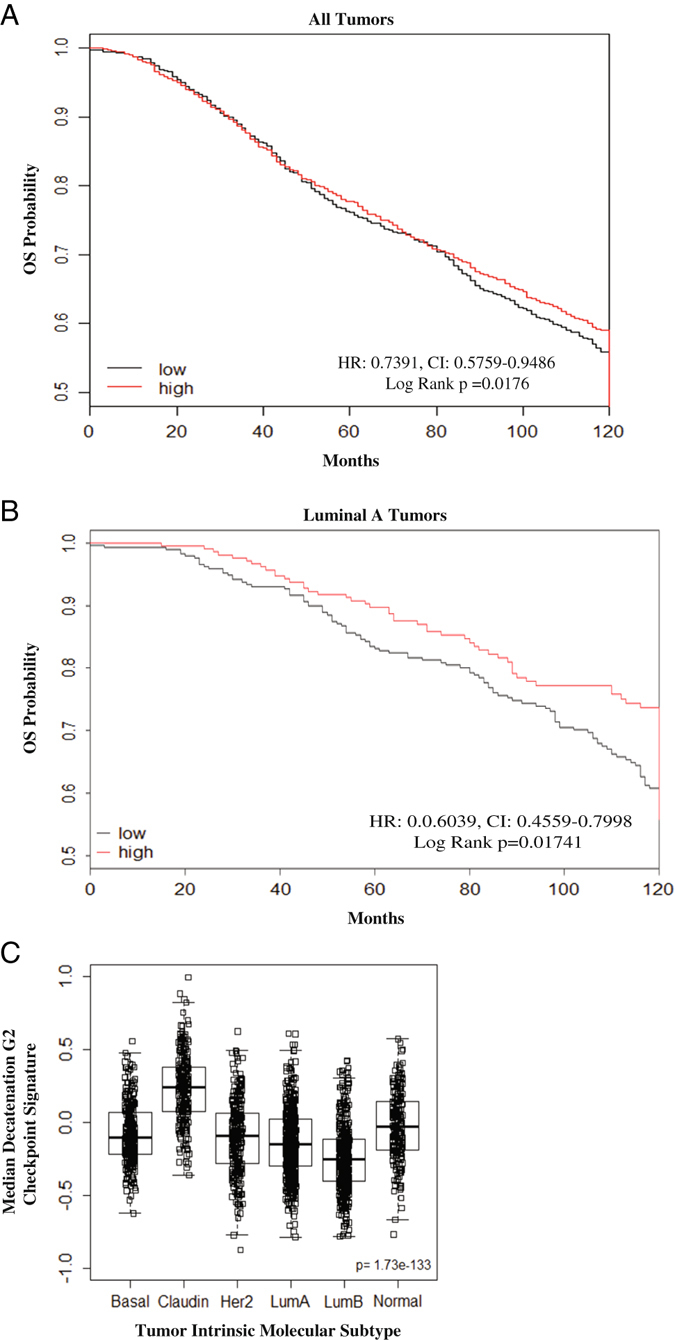
Genomic instability is a hallmark of breast cancer, contributes to tumor heterogeneity, and influences chemotherapy resistance. Although Gap 2 and mitotic checkpoints are thought to prevent genomic instability, the role of these checkpoints in breast cancer is poorly understood. Here, we assess the Gap 2 and mitotic checkpoint functions of 24 breast cancer and immortalized mammary epithelial cell lines representing four of the six intrinsic molecular subtypes of breast cancer. We found that patterns of cell cycle checkpoint deregulation were associated with the intrinsic molecular subtype of breast cancer cell lines. Specifically, the luminal B and basal-like cell lines harbored two molecularly distinct Gap 2/mitosis checkpoint defects (impairment of the decatenation Gap 2 checkpoint and the spindle assembly checkpoint, respectively). All subtypes of breast cancer cell lines examined displayed aberrant DNA synthesis/Gap 2/mitosis progression and the basal-like and claudin-low cell lines exhibited increased percentages of chromatid cohesion defects. Furthermore, a decatenation Gap 2 checkpoint gene expression signature identified in the cell line panel correlated with clinical outcomes in breast cancer patients, suggesting that breast tumors may also harbor defects in decatenation Gap 2 checkpoint function. Taken together, these data imply that pharmacological targeting of signaling pathways driving these phenotypes may lead to the development of novel personalized treatment strategies for the latter two subtypes which currently lack targeted therapeutic options because of their triple negative breast cancer status.
Overview
The claims and statistics of this paper haven’t been checked yet.
Free: it reads the open-access text and checks the first 5 claims that cite a source we can check. Create a free account to check every claim.
Integrity signals
Registry
Cites
Statistics
Figures
Verification
Claims the paper makes
The claims and statistics of this paper haven’t been checked yet.
Free: it reads the open-access text and checks the first 5 claims that cite a source we can check. Create a free account to check every claim.
Claims other papers make about this one
Each is checked against this paper’s own text: does it say what the citing paper says it does?
In the citing paper
“For example, fostamatinib inhibits Cyclin D1 (CCND1) to produce G1 arrest in the p53 signaling pathway, while colchicine inhibits Cyclin-dependent kinase 1 (CDK1) to produce G2 arrest in the p53 signaling pathway and cell cycle pathway38 (Supplementary Fig. 4D).”
From ASGARD is a single-cell guided pipeline to aid repurposing of drugs (2023) · cites this paper as [38]
Self-check
Percentages, sums and reported differences re-computed from the paper’s own numbers.
The self-check needs the paper’s full text.
Citations
Cites
R: A Language and Environment for Statistical Computing
R Core Team (2025) · doi:10.32614/r.manuals · Cited by 352,181
PD-1 and PD-L1 Immune Checkpoint Blockade to Treat Breast Cancer
Hartkopf, A. D., Taran, F.-A., Wallwiener, M., Walter, C. B., Krämer, B., Grischke, E.-M., & Brucker, S. Y. (2016) · Breast Care · doi:10.1159/000453569 · Cited by 30,845
Molecular portraits of human breast tumours
Perou, C. M., Sørlie, T., Eisen, M. B., van de Rijn, M., Jeffrey, S. S., Rees, C. A., Pollack, J. R., Ross, D. T., Johnsen, H., Akslen, L. A., et al. (2000) · Nature · doi:10.1038/35021093 · Cited by 16,261
Self-citationNishimura, R., Osako, T., Nishiyama, Y., Tashima, R., Nakano, M., Fujisue, M., Toyozumi, Y., & Arima, N. (2013) · Oncology · doi:10.1159/000353099 · Cited by 13,166
Comprehensive molecular portraits of human breast tumours
The Cancer Genome Atlas Network (2012) · Nature · doi:10.1038/nature11412 · Cited by 12,129
Sørlie, T., Perou, C. M., Tibshirani, R., Aas, T., Geisler, S., Johnsen, H., Hastie, T., Eisen, M. B., van de Rijn, M., Jeffrey, S. S., et al. (2001) · Proceedings of the National Academy of Sciences · doi:10.1073/pnas.191367098 · Cited by 10,938
Self-citationIn silico prediction of protein-protein interactions in human macrophages
Souiai, O., Guerfali, F., Ben Miled, S., Brun, C., & Benkahla, A. (2014) · BMC Research Notes · doi:10.1186/1756-0500-7-157 · Cited by 10,803 · cited 1×
“1).(59) These gene lists were subsequently applied to an independent set of publically available clinical data containing overall survival data, clinical annotations, PAM50 subtyping assignments, and gene expression data for approximately 2000 breast cancer patients.”
MethodSignificance analysis of microarrays applied to the ionizing radiation response
Tusher, V. G., Tibshirani, R., & Chu, G. (2001) · Proceedings of the National Academy of Sciences · doi:10.1073/pnas.091062498 · Cited by 10,568
The Cancer Cell Line Encyclopedia enables predictive modelling of anticancer drug sensitivity
Barretina, J., Caponigro, G., Stransky, N., Venkatesan, K., Margolin, A. A., Kim, S., Wilson, C. J., Lehár, J., Kryukov, G. V., Sonkin, D., et al. (2012) · Nature · doi:10.1038/nature11003 · Cited by 7,950 · cited 1×
“At least two of these cell lines (HCC1428 and MDA-MB-453) appeared to express low or undetectable levels of p53 despite harboring wildtype TP53 genes.(38) Only the MDA-MB-415 cell line exhibited a mutant form (Y236C) and high basal levels of p53, suggesting that p53 activation was attenuated by a mechanism other than…”
BackgroundThe genomic and transcriptomic architecture of 2,000 breast tumours reveals novel subgroups
METABRIC Group, Curtis, C., Shah, S. P., Chin, S.-F., Turashvili, G., Rueda, O. M., Dunning, M. J., Speed, D., Lynch, A. G., Samarajiwa, S., et al. (2012) · Nature · doi:10.1038/nature10983 · Cited by 6,097 · cited 2×
“These gene lists were subsequently applied to an independent set of publically available clinical data containing overall survival data, clinical annotations, PAM50 subtyping assignments, and gene expression data for approximately 2000 breast cancer patients.(45) Clinical outcome association analyses were performed us…”
Method
Cited by
Carbonic Anhydrases: Role in pH Control and Cancer
Mboge, M., Mahon, B., McKenna, R., & Frost, S. (2018) · Metabolites · doi:10.3390/metabo8010019 · Cited by 281
“2 favors a suppression of apoptotic pathways [100,102].”
BackgroundCSC Radioresistance: A Therapeutic Challenge to Improve Radiotherapy Effectiveness in Cancer
Olivares-Urbano, M. A., Griñán-Lisón, C., Marchal, J. A., & Núñez, M. I. (2020) · Cells · doi:10.3390/cells9071651 · Cited by 246
“Thus, radiation exposure induces a redistribution of the cell in the cycle resulting in an accumulation of cells in the S phase [76,77].”
BackgroundAzwar, S., Seow, H. F., Abdullah, M., Faisal Jabar, M., & Mohtarrudin, N. (2021) · Biology · doi:10.3390/biology10090854 · Cited by 173
“In eukaryotic cells, cellular proliferation and division can be divided into five wellcharacterized phases; G0 (cellular quiescence), G1 (physical and organelles developments), S (DNA synthesis), G2 (protein expression production), and M (mitotic division) [63].”
BackgroundCurcumin: Modulator of Key Molecular Signaling Pathways in Hormone-Independent Breast Cancer
Farghadani, R., & Naidu, R. (2021) · Cancers · doi:10.3390/cancers13143427 · Cited by 148
Presti, D., & Quaquarini, E. (2019) · Cancers · doi:10.3390/cancers11091242 · Cited by 129
“In HR+/HER2− BC, genetic loss of RB is rare (<3%), whereas cyclin D1 is overexpressed or amplified in a significant proportion of cases [59].”
BackgroundInteractions of multidomain pro-apoptotic and anti-apoptotic proteins in cancer cell death
Chota, A., George, B. P. A., & Abrahamse, H. (2021) · Oncotarget · doi:10.18632/oncotarget.28031 · Cited by 115
Polyphenols as Promising Drugs against Main Breast Cancer Signatures
Losada-Echeberría, M., Herranz‐López, M., Micol, V., & Barrajón‐Catalán, E. (2017) · Antioxidants · doi:10.3390/antiox6040088 · Cited by 103
“This uncontrolled cell division is caused by a malfunction of these checkpoints in the cell cycle [111,112].”
BackgroundAnuraga, G., Wang, W., Phan, N. N., Ton, N. T. A., Ta, H. D. K., Prayugo, F. B., Xuan, D. T. M., Ku, S., Wu, Y.-F., Andriani, V., et al. (2021) · Journal of Personalized Medicine · doi:10.3390/jpm11111089 · Cited by 99
Cell cycle dysregulation in cancer
Glaviano, A., Singh, S. K., Lee, E. H. C., Okina, E., Lam, H. Y., Carbone, D., Reddy, E. P., O’Connor, M. J., Koff, A., Singh, G., et al. (2024) · Pharmacological Reviews · doi:10.1016/j.pharmr.2024.100030 · Cited by 110
Alanazi, M. M., Elkady, H., Alsaif, N. A., Obaidullah, A. J., Alkahtani, H. M., Alanazi, M. M., Alharbi, M. A., Eissa, I. H., & Dahab, M. A. (2021) · RSC Advances · doi:10.1039/d1ra05925d · Cited by 73
Ultrasound-assisted multicomponent synthesis of 4H-pyrans in water and DNA binding studies
Auria‐Luna, F., Fernández‐Moreira, V., Marqués‐López, E., Gimeno, M. C., & Herrera, R. P. (2020) · Scientific Reports · doi:10.1038/s41598-020-68076-1 · Cited by 68
RNA-seq from archival FFPE breast cancer samples: molecular pathway fidelity and novel discovery
Pennock, N. D., Jindal, S., Horton, W. R., Sun, D., Narasimhan, J., Carbone, L., Fei, S. S., Searles, R. P., Harrington, C. A., Burchard, J., et al. (2019) · BMC Medical Genomics · doi:10.1186/s12920-019-0643-z · Cited by 65
“Consistent with published literature [4, 38], we observed higher proliferation scores in ERthan ER+ samples within both FFPE and fresh tissue Fig.”
ResultASGARD is a single-cell guided pipeline to aid repurposing of drugs
He, B., Xiao, Y., Liang, H., Huang, Q., Du, Y., Li, Y., Garmire, D., Sun, D., & Garmire, L. X. (2023) · Nature Communications · doi:10.1038/s41467-023-36637-3 · Cited by 57
Teng, Y., Zhu, K., Xiong, C., & Huang, J. (2018) · Analytical Chemistry · doi:10.1021/acs.analchem.8b00584 · Cited by 41
Strengths and Weaknesses of Cell Synchronization Protocols Based on Inhibition of DNA Synthesis
Ligasová, A., & Koberna, K. (2021) · International Journal of Molecular Sciences · doi:10.3390/ijms221910759 · Cited by 45
Cell cycle responses to Topoisomerase II inhibition: Molecular mechanisms and clinical implications
Soliman, T. N., Keifenheim, D., Parker, P. J., & Clarke, D. J. (2023) · The Journal of Cell Biology · doi:10.1083/jcb.202209125 · Cited by 38
Breast cancer subtype specific biochemical responses to radiation
Meksiarun, P., Aoki, P. H. B., Nest, S. J. V., Sobral-Filho, R. G., Lum, J. J., Brolo, A. G., & Jirasek, A. I. (2018) · The Analyst · doi:10.1039/c8an00345a · Cited by 32
Pandey, P., Khan, F., & Maurya, P. (2021) · Journal of Food Biochemistry · doi:10.1111/jfbc.13800 · Cited by 32
The antioxidant and anticancer potential of Ricinus communis L. essential oil nanoemulsions
Javanshir, A., Karimi, E., Maragheh, A. D., & Tabrizi, M. H. (2020) · Journal of Food Measurement & Characterization · doi:10.1007/s11694-020-00385-5 · Cited by 30
Sawant, M., Wilson, A., Sridaran, D., Mahajan, K. N., O’Conor, C. J., Hagemann, I. S., Luo, J. R., Weimholt, C., Li, T., Roa, J. C., et al. (2023) · Oncogene · doi:10.1038/s41388-023-02747-x · Cited by 31
“Multiple mechanisms have been shown to be responsible for resistance including, deregulated expression of ER and its co-activators/repressors [3], aberrant receptor/nonreceptor tyrosine kinase activity, high mutation rate and epigenetic alterations of ESR1 gene that encodes for ER [4–6] and expression of truncation va…”
BackgroundCancer and Covid-19: Collectively catastrophic
du Plessis, M., Fourie, C., Riedemann, J., de Villiers, W. J. S., & Engelbrecht, A. (2021) · Cytokine & Growth Factor Reviews · doi:10.1016/j.cytogfr.2021.10.005 · Cited by 32
Ma, Y., Huang, X., Wang, Y., Lei, Y., Yu, J., Yu, S., Gao, Y., Yang, J. J., Zhao, F., Yu, H., et al. (2023) · Advanced Science · doi:10.1002/advs.202305907 · Cited by 34
Khatamian, N., Soltani, M., Shadan, B., Neamati, A., Tabrizi, M. H., & Hormozi, B. (2021) · Inorganic and Nano-Metal Chemistry · doi:10.1080/24701556.2021.1892760 · Cited by 25
Identification of transcription factor-miRNA-lncRNA feed-forward loops in breast cancer subtypes
Jiang, L., Yu, X., Ma, X., Liu, H., Zhou, S., Zhou, X., Meng, Q., Wang, L., & Jiang, W. (2018) · Computational Biology and Chemistry · doi:10.1016/j.compbiolchem.2018.11.008 · Cited by 26
βcaryophyllene oxide induces apoptosis and inhibits proliferation of A549 lung cancer cells
Shabana, S. M., Gad, N. S., Othman, A. I., Mohamed, A. F., & El-Missiry, M. A. (2023) · Medical Oncology · doi:10.1007/s12032-023-02022-9 · Cited by 38
“This suggested that CPO triggers defective cell cycles probably through stimulation of a checkpoint to arrest or eradicate such defective cells or it results in significant DNA injury that induces cell cycle arrest [26].”
BackgroundSalinas, Y., Chauhan, S. C., & Bandyopadhyay, D. (2025) · International Journal of Molecular Sciences · doi:10.3390/ijms26073279 · Cited by 30
Zolotovskaia, M., Modestov, A., Suntsova, M., Rachkova, A. A., Koroleva, E. V., Poddubskaya, E. V., Sekacheva, M. I., Tkachev, V. S., Garazha, A., Glusker, A., et al. (2023) · DNA repair · doi:10.1016/j.dnarep.2023.103448 · Cited by 25
Jiménez-Salazar, J. E., Damián-Ferrara, R., Arteaga, M., Batina, N., & Damián‐Matsumura, P. (2021) · Frontiers in Oncology · doi:10.3389/fonc.2021.631007 · Cited by 26
“org 5 G2/mitosis phase are more sensitive to radiation and those that are in late S-phase are more radiologically resilient (59).”
BackgroundMaan, M., Jaiswal, N., Padmanabhan, J., Colin, C., Rivera-Rivera, Y., Saavedra, H. I., & Chellappan, S. (2020) · Biochimica et Biophysica Acta (BBA) - Molecular Cell Research · doi:10.1016/j.bbamcr.2020.118929 · Cited by 19
Golestaneh, M., Firoozrai, M., Javid, H., & Hashemy, S. I. (2022) · Molecular Biology Reports · doi:10.1007/s11033-022-07348-7 · Cited by 21
“Brazilian oral research 23(3):255–262 27.”
Network modeling of patients' biomolecular profiles for clinical phenotype/outcome prediction
Gliozzo, J., Perlasca, P., Mesiti, M., Casiraghi, E., Vallacchi, V., Vergani, E., Frasca, M., Grossi, G., Petrini, A., Ré, M., et al. (2020) · Scientific Reports · doi:10.1038/s41598-020-60235-8 · Cited by 19
“Defects in the cell cycle checkpoints are associated with breast cancer molecular subtypes 55 while apoptosis escape is one of the hallmarks of cancer 56 . p53 is a tumor suppressor able to avoid cancer development through block of the cell cycle, programmed cell death, repair of damaged DNA and…”
BackgroundMGSEA – a multivariate Gene set enrichment analysis
Tiong, K.-L., & Yeang, C. (2019) · BMC Bioinformatics · doi:10.1186/s12859-019-2716-6 · Cited by 14
“Furthermore, the consensus functional categories of the mRNA expression dominant combinatorial patterns between TCGA and external datasets reflect the underlying biological processes differentiating cancer subtypes, such as cell cycle/ proliferation activities [26] and sex hormone activities [27] in breast cancer, and…”
Single‐cell transcriptomics dissects premalignant progression in proliferative verrucous leukoplakia
Zhong, L., Wang, F., Liu, D., Kuang, W., Ji, N., Li, J., Zeng, X. Y., Li, T., Dan, H., & Chen, Q. (2022) · Oral Diseases · doi:10.1111/odi.14347 · Cited by 13
Vetrichelvan, O., Gorjala, P., Goodman, O. B., & Mitra, R. (2021) · PLoS ONE · doi:10.1371/journal.pone.0257984 · Cited by 10
“Accumulation of G0/G1 cells can occur at the restriction point or at the G1/S check 04 point (35).”
BackgroundYang, C.-L., Chao, Y., Wang, H., Hou, Y., Chen, C. G., Chang, C., & Shan, Y. (2021) · Nanomedicine Nanotechnology Biology and Medicine · doi:10.1016/j.nano.2021.102450 · Cited by 12
The use of SP/Neurokinin-1 as a Therapeutic Target in Colon and Rectal Cancer
Martín‐García, D., Téllez, T., Redondo, M., & García‐Aranda, M. (2023) · Current Medicinal Chemistry · doi:10.2174/0109298673261625230924114406 · Cited by 9
Zahid, K. R., Su, M., Khan, A. R. R., Han, S., Gou, D., & Raza, U. (2019) · Cancer Cell International · doi:10.1186/s12935-019-0804-3 · Cited by 8
Deciphering the Role of 3D Genome Organization in Breast Cancer Susceptibility
Baur, B. A., Lee, D.-I., Haag, J. D., Chasman, D. A., Gould, M. N., & Roy, S. (2022) · Frontiers in Genetics · doi:10.3389/fgene.2021.788318 · Cited by 7
“The cell cycle has been implicated in breast cancer susceptibility (Deng, 2006) and is often deregulated in breast cancer (Bower et al., 2017).”
BackgroundDesign and synthesis of thiadiazoles as anticancer, apoptotic, and VEGFR-2 inhibitors
Elgammal, W. E., Elkady, H., Dahab, M. A., Mahdy, H. A., Hagras, M., Nofal, A., Alsfouk, B. A. A., Elkaeed, E. B., Eissa, I. H., & Metwaly, A. M. (2025) · Future Medicinal Chemistry · doi:10.1080/17568919.2025.2485863 · Cited by 10
Khamaneh, A. M., Jafari-Gharabaghlou, D., Ansarin, K., Pazooki, P., Akbarpour, Z., Naghili, B., & Zarghami, N. (2025) · Oncology Reviews · doi:10.3389/or.2025.1516409 · Cited by 7
“The prevalence of stable aneuploidy and intact SAC machinery guides the therapeutic ef fi cacy of paclitaxel and anthracyclines, a group of chemotherapeutic agents (110).”
InfluentialEtiology of polyploid giant cancer cells: a new frontier in cancer biology
Manickasamy, M. K., Aswani, B. S., Banerjee, R., Abbas, M. A. E., Alqahtani, M. S., Sethi, G., Liu, L., & Kunnumakkara, A. B. (2026) · Cancer Cell International · doi:10.1186/s12935-025-04079-0 · Cited by 7
“Disruption of G1/S, G2/M, or SAC checkpoints leads to aberrant division, DNA damage accumulation, and genomic instability, a key cancer hallmark [91–93].”
Bi, S.-Z., Ni, X.-L., Sun, W.-D., Zhang, C., Liu, A., Lai, S.-Y., & Li, J.-H. (2026) · Biochemical Pharmacology · doi:10.1016/j.bcp.2026.117765 · Cited by 5
Mitotic entry upon Topo II catalytic inhibition is controlled by Chk1 and Plk1
Arroyo, M., Cañuelo, A., Calahorra, J., Hastert, F. D., Sánchez, A., Clarke, D. J., & Marchal, J. A. (2020) · FEBS Journal · doi:10.1111/febs.15280 · Cited by 4
Dhruba, S. R., Sahni, S., Wang, B., Wu, D., Rajagopal, P. S., Gurevich, Y., Shulman, E. D., Sinha, S., Sammut, S., Caldas, C., et al. (2025) · Cancer Letters · doi:10.1016/j.canlet.2025.218101 · Cited by 5
Surrogate molecular classification of breast carcinoma: A classification in need or a dilemma indeed
Mandal, A., & Dewan, K. (2020) · Oncology Journal of India · doi:10.4103/oji.oji_46_19 · Cited by 3
Wu, J., Wang, W., Shao, X., Lin, G., & Wang, X. (2022) · Medicine · doi:10.1097/md.0000000000032238 · Cited by 2
“[26] In a clinical study, targeted sequencing was performed on 348 tumor samples obtained before patients were treated with CDK4/6i, and the results showed that loss of functional mutations in the FAT1 tumor suppressor gene leads to resistance to CDK4/6i, and FAT1 upregulates CDK6 expression through the HIPPO pathway.…”
Deep learning inference of cell type-specific gene expression from breast tumor histopathology
Wang, A. T., Dhruba, S. R., Campagnolo, E. M., Yao, K., Jiang, P., Wang, K., Hoang, D.-T., Ruppin, E., & Shulman, E. D. (2026) · npj Precision Oncology · doi:10.1038/s41698-026-01419-9 · Cited by 3
Cell Cycle, DNA Replication, Centrosomes, Centrioles and Cell Division
Mierke, C. T. (2020) · Biological and medical physics, biomedical engineering · doi:10.1007/978-3-030-58532-7_15 · Cited by 4
Bioinformatics-Driven Investigations of Signature Biomarkers for Triple-Negative Breast Cancer
Handa, S., Puri, S., Chatterjee, M., & Puri, V. (2025) · Bioinformatics and Biology Insights · doi:10.1177/11779322241271565 · Cited by 3
“32,33 A bio-informatics analysis reported by Wu et al shows that PR-mediated oocyte maturation and oocyte meiosis are associated with the pathogenesis of breast cancer.”
A pan-cancer analysis of progression mechanisms and drug sensitivity in cancer cell lines
Fleck, J. L., Pavel, A. B., & Cassandras, C. G. (2019) · Molecular Omics · doi:10.1039/c9mo00119k · Cited by 2
Waszczykowska, K., Prazanowska, K. H., Kałuzińska‐Kołat, Ż., Kołat, D., & Płuciennik, E. (2022) · Molecular Genetics and Genomics · doi:10.1007/s00438-022-01900-7 · Cited by 2
“Finding potential differences between particular tumor subtypes is of great importance, as it can contribute to further selective biomarkers discovery, along with more precisely targeted therapies (Bower et al. 2017).”
BackgroundASGARD: A Single-cell Guided pipeline to Aid Repurposing of DrugsPreprint
He, B., Xiao, Y., Liang, H., Huang, Q., Du, Y., Li, Y., Garmire, D., Sun, D., & Garmire, L. X. (2021) · PubMed · doi:10.48550/arxiv.2109.06377 · Cited by 2
G2/M Checkpoint Modulation: Insights from miRNA Profiles in FAM and Breast Cancer
Haryana, S. M., Ardiansyah, S. A., Noficandra, H., Wardana, T., Sesotyosari, S., Arfira, F. R., Satriyo, P. B., Setiasari, D. W., & Heriyanto, D. S. (2024) · Asian Pacific Journal of Cancer Prevention · doi:10.31557/apjcp.2024.25.8.2661 · Cited by 1
“In the cell cycle genome instability is examined at G2 checkpoint and mitosis [3].”
BackgroundRole of Cyclin-Dependent Kinase Inhibitors (CKIs) as a Prognostic Biomarker for Cancer
Hossain, M. G., & Kabir, Y. (2022) · Springer eBooks · doi:10.1007/978-3-030-80962-1_142-1 · Cited by 1
Mohanlall, V. (2020) · international journal of green and herbal chemistry · doi:10.24214/ijghc/hc/9/3/29209
Surviving Stress with the Tumour Microenvironment: Understanding Complex Cell - Cell Interactions
Dawson, R. (2021) · Open Access Victoria University of Wellington | Te Herenga Waka (Figshare) · doi:10.26686/wgtn.15102033 · Cited by 2
Surviving Stress with the Tumour Microenvironment: Understanding Complex Cell - Cell Interactions
Dawson, R. (2021) · doi:10.26686/wgtn.15102033.v1 · Cited by 1
STAT3 protects HSCs from intrinsic interferon signaling and loss of long-term blood-forming activityPreprint
Patel, B., Zhou, Y., Babcock, R. L., Ma, F., Zal, M. A., Kumar, D., Medik, Y. B., Kahn, L. M., Pineda, J. E., Park, E. M., et al. (2023) · bioRxiv (Cold Spring Harbor Laboratory) · doi:10.1101/2023.02.10.528069 · Cited by 1
Ruppin, E., Dhruba, S. R., Sahni, S., Wang, B., Wu, D., Rajagopal, P. S., Gurevich, Y., Shulman, E. D., Sinha, S., Sammut, S., et al. (2024) · Research Square · doi:10.21203/rs.3.rs-4583538/v1 · Cited by 1
The role of PAF15 in the cell cycle of prostate cancer
Rodwell, H. (2017)
Computational approaches for predicting drug targets
Adeyelu, T. T. (2020) · UCL Discovery (University College London)
Kim, C., & Ceresa, B. P. (2021) · Applied In Vitro Toxicology · doi:10.1089/aivt.2020.0026
“199,200 Furthermore, arsenic-exposed skin and lung cells have altered miRNA expression, mostly from acute and subacute/subchronic exposure.”
Assessing the role of chronic arsenite exposure in disrupting the EGFR signaling axis.
Kim, C. G. (2021) · ThinkIR: The University of Louisville's Institutional Repository (University of Louisville) · doi:10.18297/etd/3581
Functional association of Micrornas with molecular subtypes of breast cancer
Arif, K. T. (2021) · Queensland University of Technology · doi:10.5204/thesis.eprints.213110
Dietary Polyphenols and its Molecular Mechanism in the Management of Breast Cancer
Rai, G., & Shekhar, S. K. (2022) · BENTHAM SCIENCE PUBLISHERS eBooks · doi:10.2174/9781681089522112010012
Seo, Y., Chae, J., & Nam, J. (2023) · Applied Biological Chemistry · doi:10.1186/s13765-023-00818-x
“The cell cycle, consisting of G0/G1/S/ G2/M phase, is regulated through checkpoints occurring between the G1 and S phases and between the G2 and M phases [30].”
BackgroundGonçalves, B. Ô. P., & Silva, L. M. (2024) · Brazilian Archives of Biology and Technology · doi:10.1590/1678-4324-2024231139
“Each cell cycle phase is distinguished by the formation of specific complexes of cyclin/cdk heterodimers [1].”
Hadisurya, M., Aguilar, H. A., Chen, I.-H., Xu, M., Paez, S. J., Bisht, R., Singh, J., Lee, Z.-C., Mashaollahi, A., Iliuk, A. B., et al. (2026) · Genome biology · doi:10.1186/s13059-026-04212-w
“Meanwhile, luminal B exhibits higher dysregulation of the G2/M phase, contributing to its more aggressive nature and higher proliferation rates [36].”
Cortes-Rios, J. A., Rodriguez-Fernández, M., Sorger, P. K., & Fröhlich, F. (2025) · PLoS Computational Biology · doi:10.1371/journal.pcbi.1012890
“Subsequently, cell cycle time inference suggested that cells spend approximately two thirds of the cell cycle time in G1 + S phases, and one third in G2 + M phases, which is consistent with prior reports with for MCF-10A cells [47,48].”
Role of Cyclin-Dependent Kinase Inhibitors (CKIs) as a Prognostic Biomarker for Cancer
Hossain, M. G., & Kabir, Y. (2025) · Springer eBooks · doi:10.1007/978-3-032-00763-6_142 · Cited by 1
Mishra, A. P., Xia, W., & George, C. P. (2026) · BMC Bioinformatics · doi:10.1186/s12859-026-06397-0
“Specifically, wsBNN-selected genes were involved in ERBB2 (HER2)-mediated and PI3K/AKT signaling [48], protein autophosphorylation, cell cycle regulation, and immune response [53], all of which are central to breast cancer progression and therapeutic response.”
Ben, T. G.-D. (2019) · theses.fr (ABES) · doi:10.70675/db5e0e1dzb66cz4cb5z8d56z197c83bb903a
In Silico Discovery of Novel CDK1 Inhibitors from Linum Species for Targeted Cancer Therapy
Mouna, R., & Ahmed, A. (2026) · EABR. Experimental and Applied Biomedical Research · doi:10.2478/eabr-2026-0009
“It is finely regulated by a series of molecular events that ensure orderly cell division (2),(3) .”
Feng, J., Zeng, K., Wang, A., Sun, H., Jin, Z., Jin, Z., Feng, S., Sun, X., Bai, Y., He, M., et al. (2026) · bioRxiv (Cold Spring Harbor Laboratory) · doi:10.64898/2026.06.12.731842
Zhao, Y., Liu, X., Bai, X., & Tang, J. (2026) · Frontiers in Immunology · doi:10.3389/fimmu.2026.1786163
“The cell-cycle dynamics described above — particularly S-phase enrichment and G2/M checkpoint dependency — are derived primarily from preclinical radiation fractionation studies (36 – 38).”
Synthetic lethality in cancer: mechanisms, therapeutic exploitation and clinical translation
Camps-Fajol, C., Minguillón, J., & Surrallés, J. (2026) · Signal Transduction and Targeted Therapy · doi:10.1038/s41392-026-02954-4 · Cited by 3
“261 Many cancer cells suffer dysregulation of G 1 checkpoints, 262,263 thereby creating a dependency on the S and G 2 /M checkpoints and increased replication stress when entering S-phase.”
Metadata
- Authors
- Bower, J. J., Vance, L. D., Psioda, M., Smith-Roe, S. L., Simpson, D. A., Ibrahim, J. G., Hoadley, K. A., Perou, C. M., & Kaufmann, W. K.
- Affiliations
- University of North Carolina at Chapel Hill (US)
- Corresponding author
- Bower, Jacquelyn J.
- ORCID
- Venue
- npj Breast Cancer
- Published
- 2017-03-31
- Volume
- 3
- Issue
- 1
- Pages
- 9-9
- ISSN
- 2374-4677 (ISSN-L)
- PMC
- PMC5445620
- OpenAlex
- W2603388361
- Cited by
- 76
- References
- 64
- Citations by year
- 2026: 9 · 2025: 7 · 2024: 4 · 2023: 9 · 2022: 7 · 2021: 18 · 2020: 10 · 2019: 6 · 2018: 4 · 2017: 2
- FWCI
- 3.21
- Type
- journal article
- Language
- en
- Open access
- gold
- doi.org
- Licence
- cc-by
- creativecommons.org/licenses/by/4.0 (tdm)
- creativecommons.org/licenses/by/4.0 (vor)
- Locations
- npj Breast Cancer (publishedVersion, cc-by)
- Europe PMC (PubMed Central) (publishedVersion, cc-by)
- PubMed Central (publishedVersion, cc-by)
- PubMed (publishedVersion)
- Carolina Digital Repository (University of North Carolina at Chapel Hill) (submittedVersion, cc-by)
- DOAJ (DOAJ: Directory of Open Access Journals) (submittedVersion, cc-by-sa)
- UNC Libraries
- Funders
- Breast Cancer Research Foundation
- National Institutes of Health (1f32ca134155-01, ES10126, CA58223, P50-CA58223-09A1)
- National Cancer Institute (P50‐CA58223‐09A1, CA58223-09A1, P30-ES10126, CA-58223, F32 CA134155, CA 81343, P50 CA 58223, R01CA081343, T32CA106209, P50CA058223, P30CA016086)
- National Institute of General Medical Sciences (R01GM070335)
- National Institute of Environmental Health Sciences (P30ES010126)
- Lineberger Comprehensive Cancer Center, University of North Carolina at Chapel Hill (P30-CA016086)
- Topics
- Life Sciences › Biochemistry, Genetics and Molecular Biology › Cell Biology › Microtubule and mitosis dynamics
- Life Sciences › Biochemistry, Genetics and Molecular Biology › Cancer Research › Breast Cancer Treatment Studies
- Health Sciences › Medicine › Oncology › Cancer-related Molecular Pathways
- Keywords
- breast cancer, cell cycle checkpoints, genomic instability, PAM50 molecular subtypes, spindle assembly checkpoint, luminal B, basal-like breast cancer, claudin-low breast cancer, triple-negative breast cancer, gene expression signatures, chemoresistance, tumor heterogeneity
About these checks
Registry, retraction, Cites and statistics results are computed, not judged, with one exception: a printed reference that no index lists is read once by a model before it counts as a citation error. Claims are extracted by a model and kept only when their quote appears verbatim in the text; each cited source is then checked, with a model’s help, for whether it says what the claim relies on. Those verdicts can be wrong — read the claim’s quote and the cited source before relying on one.
Statistics and arithmetic are recomputed, not judged.
Confidence bands are shown only for fields calibrated on our annotated test set. None is calibrated yet, so no band is shown.
What counts as a claim ›How we measure confidence ›How we check this ›
Are you an author, or do you see a problem with this page? Request a review
Data sources
Bibliographic data: Semantic Scholar, OpenAlex, Crossref.
Contains information from the Semantic Scholar Academic Graph Datasets, made available under the ODC Attribution License (ODC-BY 1.0).
Semantic Scholar’s data is described in: Kinney, R., et al. (2023). The Semantic Scholar Open Data Platform. arXiv:2301.10140.
