

MONARCH 3 final PFS: a randomized study of abemaciclib as initial therapy for advanced breast cancer
Open accessThe DOI matches its Crossref record; 30 of the 30 references it cites were found in a registry or an index.
Abstract
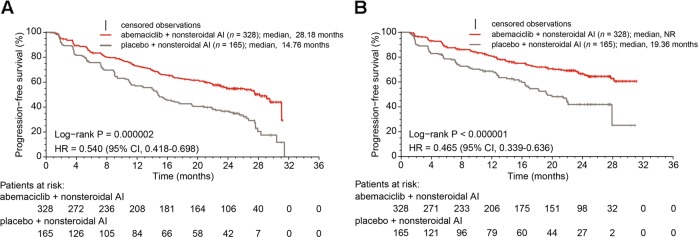
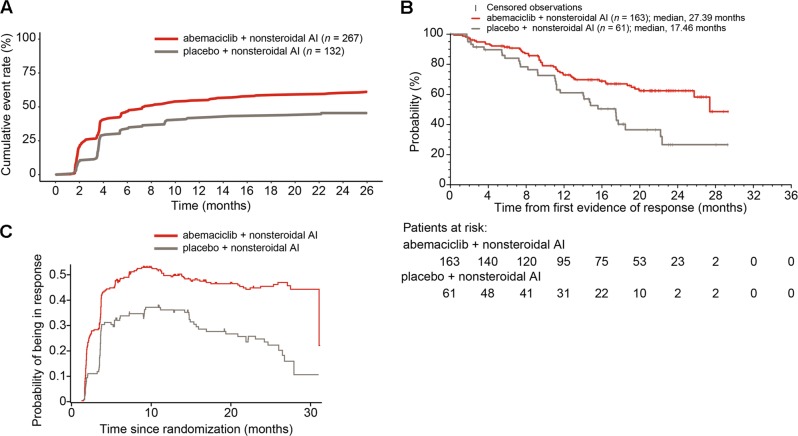
At the MONARCH 3 interim analysis, abemaciclib plus a nonsteroidal aromatase inhibitor (AI) significantly improved progression-free survival (PFS) and objective response rate (ORR) with a tolerable safety profile as initial treatment for hormone receptor-positive (HR+), human epidermal growth factor receptor 2-negative (HER2−) advanced breast cancer (ABC). MONARCH 3 is a randomized, phase III, double-blind study of abemaciclib/placebo (150 mg twice daily, continuous) plus nonsteroidal AI (1 mg anastrozole or 2.5 mg letrozole, daily). A total of 493 postmenopausal women with HR+, HER2− ABC with no prior systemic therapy in this setting were enrolled. The primary endpoint was investigator-assessed PFS (final analysis after 240 events); other endpoints included response and safety evaluations. Here we analyze the final PFS data and update secondary endpoints. The abemaciclib arm had a significantly longer median PFS than the placebo arm (28.18 versus 14.76 months; hazard ratio [95% confidence interval], 0.540 [0.418–0.698]; p = .000002). The ORR was 61.0% in the abemaciclib arm versus 45.5% in the placebo arm (measurable disease, p = .003). The median duration of response was longer in the abemaciclib arm (27.39 months) compared to the placebo arm (17.46 months). The safety profile was consistent with previous reports. The most frequent grade ≥ 3 adverse events in the abemaciclib versus placebo arms were neutropenia (23.9% versus 1.2%), diarrhea (9.5% versus 1.2%), and leukopenia (8.6% versus 0.6%). Abemaciclib plus a nonsteroidal AI was an effective initial treatment with an acceptable safety profile for HR+, HER2− ABC.
Overview
The claims and statistics of this paper haven’t been checked yet.
Free: it reads the open-access text and checks the first 5 claims that cite a source we can check. Create a free account to check every claim.
Integrity signals
Registry
Cites
Statistics
Figures
Verification
Claims the paper makes
The claims and statistics of this paper haven’t been checked yet.
Free: it reads the open-access text and checks the first 5 claims that cite a source we can check. Create a free account to check every claim.
Claims other papers make about this one
Each is checked against this paper’s own text: does it say what the citing paper says it does?
The cited source doesn’t support the claim as written.
In the citing paper
“This trial has a long follow-up (median, 80 months). 19-23”
From Overall Survival with Ribociclib plus Letrozole in Advanced Breast Cancer. (2022) · cites this paper as [19]
Checked by a reasoning model — may be wrong.
Experimental — accuracy not yet measuredThe cited source says what the claim attributes to it.
In the citing paper
“In MONARCH 3, the addition of abemaciclib to a nonsteroidal aromatase inhibitor (NSAI) as initial therapy for HRþ, HER2À ABC significantly improved PFS.”
Self-check
Percentages, sums and reported differences re-computed from the paper’s own numbers.
The self-check needs the paper’s full text.
Citations
Cites
3rd ESO–ESMO International Consensus Guidelines for Advanced Breast Cancer (ABC 3)
Cardoso, F., Costa, A., Senkus, E., Aapro, M., André, F., Barrios, C. H., Bergh, J., Bhattacharyya, G., Biganzoli, L., Cardoso, M. J., et al. (2017) · Annals of Oncology · doi:10.1093/annonc/mdw544 · Cited by 2,033 · cited 2×
“Sequential endocrine therapy regimens comprise the standard of care for hormone receptor-positive (HR+) advanced breast cancer.(1,2) However, endocrine therapy resistance remains a major clinical challenge, as patients ultimately succumb to progressive disease.”
BackgroundResultCristofanilli, M., Turner, N. C., Bondarenko, I., Ro, J., Im, S.-A., Masuda, N., Colleoni, M., DeMichele, A., Loi, S., Verma, S., et al. (2016) · The Lancet Oncology · doi:10.1016/s1470-2045(15)00613-0 · Cited by 1,827
Self-citationMONARCH 3: Abemaciclib As Initial Therapy for Advanced Breast Cancer
Goetz, M. P., Toi, M., Campone, M., Sohn, J., Paluch-Shimon, S., Huober, J., Park, I. H., Trédan, O., Chen, S.-C., Manso, L., et al. (2017) · Journal of Clinical Oncology · doi:10.1200/jco.2017.75.6155 · Cited by 1,744
Self-citationSledge, G. W., Toi, M., Neven, P., Sohn, J., Inoue, K., Pivot, X., Burdaeva, O., Okera, M., Masuda, N., Kaufman, P. A., et al. (2017) · Journal of Clinical Oncology · doi:10.1200/jco.2017.73.7585 · Cited by 1,680
Self-citationCDK4/6 inhibition triggers anti-tumour immunity
Goel, S., DeCristo, M. J., Watt, A. C., BrinJones, H., Sceneay, J., Li, B. B., Khan, N., Ubellacker, J. M., Xie, S., Metzger-Filho, O., et al. (2017) · Nature · doi:10.1038/nature23465 · Cited by 1,513
Finn, R. S., Dering, J., Conklin, D., Kalous, O., Cohen, D. J., Desai, A. J., Ginther, C., Atefi, M., Chen, I., Fowst, C., et al. (2009) · Breast Cancer Research · doi:10.1186/bcr2419 · Cited by 1,398
Cyclin D–CDK4 kinase destabilizes PD-L1 via cullin 3–SPOP to control cancer immune surveillance
Zhang, J., Bu, X., Wang, H., Zhu, Y., Geng, Y., Nihira, N. T., Tan, Y., Ci, Y., Wu, F., Dai, X., et al. (2018) · Nature · doi:10.1038/nature25015 · Cited by 1,013
Dickler, M. N., Tolaney, S. M., Rugo, H. S., Cortés, J., Diéras, V., Patt, D., Wildiers, H., Hudis, C. A., O'Shaughnessy, J., Zamora, E., et al. (2017) · Clinical Cancer Research · doi:10.1158/1078-0432.ccr-17-0754 · Cited by 676 · cited 3×
“The safety profile observed at the final PFS cutoff was largely consistent with the interim analysis and with other abemaciclib studies.(9,20,21) Although discontinuations due to adverse events were higher in the abemaciclib arm compared to the placebo arm, there was not any single adverse event or group of adverse ev…”
BackgroundResultSelf-citationGelbert, L. M., Cai, S., Lin, X., Sanchez-Martinez, C., del Prado, M., Lallena, M. J., Torres, R., Ajamie, R. T., Wishart, G. N., Flack, R. S., et al. (2014) · Investigational New Drugs · doi:10.1007/s10637-014-0120-7 · Cited by 577
Schaer, D. A., Beckmann, R. P., Dempsey, J. A., Huber, L., Forest, A., Amaladas, N., Li, Y., Wang, Y. C., Rasmussen, E. R., Chin, D., et al. (2018) · Cell Reports · doi:10.1016/j.celrep.2018.02.053 · Cited by 469
Cited by
Items 401–500 of 685
İlhan, N., Baş, S., Alkan, O., Doğan, A., Majidova, N., Tunç, M. A., Erdemoğlu, E., Öztosun, B., Ökten, I. N., & Gümüş, M. (2025) · Journal of Cancer Research and Clinical Oncology · doi:10.1007/s00432-025-06336-1 · Cited by 5
“In clinical trials, grade 3 ALT elevations occurred in 5–9.4% of ribociclib-treated patients (vs. 0.4–1.2% in controls) and 4.1–6.4% of abemaciclib-treated patients (vs. 1.8–1.9% in controls) (Johnston et al. 2019; Hortobagyi et al. 2018; Rugo et al. 2021; Martin et al. 2021).”
InfluentialEngebrethsen, C., Yndestad, S., Rasmussen, M. E., Janssen, E. A. M., Gilje, B., Blix, E. S., Espelid, H., Lundgren, S., Geisler, J., Minsaas, L., et al. (2025) · The Breast · doi:10.1016/j.breast.2025.104672 · Cited by 3
Nicolini, A., Rossi, G., & Ferrari, P. (2024) · Frontiers in Immunology · doi:10.3389/fimmu.2023.1225175 · Cited by 6
Current approaches to the pharmacological management of metastatic breast cancer in older women
Carmona-Gonzalez, C. A., Kumar, S., & Menjak, I. B. (2024) · Expert Opinion on Pharmacotherapy · doi:10.1080/14656566.2024.2402022 · Cited by 3
“Since the approval of Palbociclib in 2015, the cyclin D kinase 4/6 inhibitors (CDK4/ 6i) have been the mainstay of treatment in the HR+, HER2-MBC subset, as the combination of CDK4/6i plus endocrine treatment (ET) provide large gains in survival outcomes over ET alone [36–38].”
Chen, L., Feng, S., Chen, X., & Du, C. (2024) · Medicine · doi:10.1097/md.0000000000040345 · Cited by 3
Fang, Q., Huang, F., Zhao, H., Liang, J., Chen, Y., Wu, X., Zhang, M., & Luo, W. (2025) · Expert Opinion on Drug Safety · doi:10.1080/14740338.2025.2464113 · Cited by 3
Menz, B. D., Modi, N. D., Abuhelwa, A. Y., Kuderer, N. M., Lyman, G. H., Swain, S. M., Kichenadasse, G., Shahnam, A., Haseloff, M., Vitry, A. I., et al. (2025) · International Journal of Cancer · doi:10.1002/ijc.70020 · Cited by 3
Vidal, G. A., Carter, G. C., Gilligan, A. M., Saverno, K. R., Zhu, Y. E., Price, G. L., DeLuca, A., Smyth, E. N., Rybowski, S., Huang, Y., et al. (2021) · Clinical Breast Cancer · doi:10.1016/j.clbc.2020.12.012 · Cited by 3
Артамонова, Е. В., Kovalenko, E. I., Болотина, Л. В., Stenina, M. B., Орлова, Р. В., & Mukhina, M. A. (2020) · Tumors of female reproductive system · doi:10.17650/1994-4098-2020-16-3-37-45 · Cited by 6
Kolyadina, I. V. (2021) · Tumors of female reproductive system · doi:10.17650/1994-4098-2021-17-2-58-67 · Cited by 3
“Все представители класса CDK4/6i (палбоциклиб, рибоциклиб, абемациклиб) в качестве 1-й линии лечения демонстрируют весьма схожее преимущество, заключающееся в снижении риска рецидива (на 44–46 %) и пролонгации ВБП до 25– 28 мес (∆9–13 мес), по сравнению с монотерапией ингибиторами ароматазы у больных в менопаузе [29,…”
Li, J., Zhang, X., Yang, C., Lv, Y., Yang, H., Kong, X., Han, M., Wang, Z., Ma, J., Han, J., et al. (2021) · Medicine · doi:10.1097/md.0000000000027710 · Cited by 5
Sammons, S. L., Moore, H., Cushman, J., & Hamilton, E. P. (2022) · Expert Review of Anticancer Therapy · doi:10.1080/14737140.2022.2093719 · Cited by 3
Ishikura, N., Sugimoto, M., Yorozu, K., Kurasawa, M., Wakita, D., & Kondoh, O. (2022) · Cancer Diagnosis & Prognosis · doi:10.21873/cdp.10138 · Cited by 3
Laurentiis, M. D., Caputo, R., Mazza, M., Mansutti, M., Masetti, R., Ballatore, Z., Torrisi, R., Michelotti, A., Zambelli, A., Ferro, A., et al. (2022) · Targeted Oncology · doi:10.1007/s11523-022-00913-x · Cited by 7
“CompLEEment-1 is a Phase 3b trial aimed at evaluating safety, tolerability, and clinical efficacy of ribociclib combined with letrozole in an expanded and more diverse patient population with HR+, HER2− ABC, including both men and women of any menopausal status, having ≤ 1 line of prior CT and no prior ET.”
BackgroundInfluentialTargato, G., Bortot, L., Dri, A., Bonotto, M., Minisini, A. M., Fasola, G., & Mansutti, M. (2022) · Current Oncology · doi:10.3390/curroncol29120756 · Cited by 3
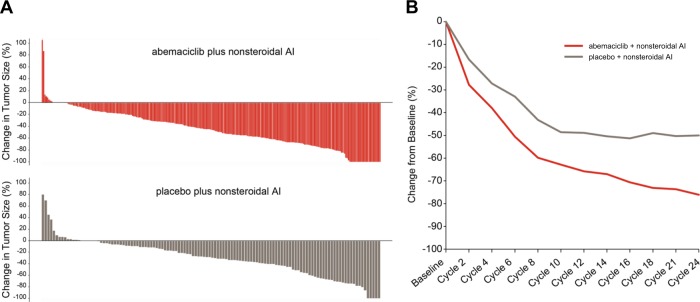
“7% tumor size reduction after only two cycles of Abemaciclib and tumor shrinkage continued for at least 24 cycles, suggesting deeper and durable disease responses [8].”
BackgroundTornyi, I., Árkosy, P., Horváth, I., & Furka, A. (2023) · Pathology & Oncology Research · doi:10.3389/pore.2023.1611369 · Cited by 3
Abemaciclib for the Treatment of HR+HER2− Metastatic Breast Cancer: An Institutional Experience
Matos, E., Cankar, K., Režun, N., Dejanović, K., & Ovčariček, T. (2024) · Cancers · doi:10.3390/cancers16101828 · Cited by 5
Hester, A., Henze, F., Debes, A. M., Schubert, C. L., Koenig, A., Harbeck, N., & Wuerstlein, R. (2024) · Frontiers in Oncology · doi:10.3389/fonc.2024.1388087 · Cited by 4
Local Control of Advanced Breast Cancer—Debate in Multidisciplinary Tumor Board
Pantelimon, I., Stancu, A. M., Coniac, S., Ionescu, A.-I., Atasiei, D.-I., Georgescu, D. E., & Gales, L. N. (2025) · Journal of Clinical Medicine · doi:10.3390/jcm14020510 · Cited by 8
“The efficacy of cyclin-dependent kinase (CDK) 4/6 inhibitors in combination with endocrine therapy (ET) for advanced or metastatic hormone receptor (HR)-positive, human epidermal growth factor receptor 2 (HER2)-negative breast cancer has sparked intense debate as an upfront local treatment [8–11].”
InfluentialPalbociclib exposure in relation to efficacy and toxicity in patients with advanced breast cancer
Buijs, S. M., Ali, M. I. M., Hoop, E. O., Braal, C. L., Wortelboer, N., van Ommen‐Nijhof, A., Sonke, G. S., Konings, I. R. H. M., Jager, A., Steeghs, N., et al. (2025) · ESMO Open · doi:10.1016/j.esmoop.2025.104290 · Cited by 4
Sun, L., Veenstra, D. L., Brufsky, A., Pluard, T., Sandin, R., Stergiopoulos, S., Liu, X., Williams, T., & Sullivan, S. D. (2025) · Journal of Managed Care & Specialty Pharmacy · doi:10.18553/jmcp.2025.25063 · Cited by 4
West, M. T., Kartika, T., Paquin, A. R., Liederbauer, E., Zheng, T. J., Lane, L., Thein, K. Z., & Shatzel, J. J. (2022) · Current Problems in Cancer · doi:10.1016/j.currproblcancer.2021.100832 · Cited by 4
Ribociclib for the treatment of hormone-positive HER2-negative breast cancer
Петровна, Г. И., Filonenko, D., Гордеева, О. О., Владимировна, Л. Е., Kolyadina, I. V., & Mescheryakov, A. A. (2019) · Meditsinskiy sovet = Medical Council · doi:10.21518/2079-701x-2019-10-72-80 · Cited by 4
Hartkopf, A. D., Emons, J., Lux, M. P., Taran, F., Overkamp, F., Tesch, H., Titzmann, A., Pöschke, P., Lüftner, D., Wallwiener, M., et al. (2020) · Der Onkologe · doi:10.1007/s00761-020-00766-x · Cited by 3
“CDK4/6 Verlängerung des endokrinen Behandlungsintervalls Paloma-2 [14] Monarch 3 [21] MONALEESA-3 [42] Identifikation der antihormonellen Kombinationspartner in Hinblick auf Folgetherapien wie Alpelisib und Fulvestrant.”
BackgroundEstrogen receptor positive breast cancer patient–derived xenograft models in translational research
Chia, K., Freelander, A., Kumar, S. S., Parker, A., Segara, D., Portman, N., & Lim, E. (2020) · Current Opinion in Endocrine and Metabolic Research · doi:10.1016/j.coemr.2020.10.004 · Cited by 3
Goetz, M. P., André, V., & Johnston, S. R. D. (2024) · Annals of Oncology · doi:10.1016/j.annonc.2024.08.2350 · Cited by 3
Self-citationManova, M. M., Arabadjiev, J. I., Mangaldzhiev, R., Dudov, A., Penchev, D., Hemetsberger, M., Sharkov, A., Zidarova, B., Apostolova, D., Vasileva, M., et al. (2023) · Biotechnology & Biotechnological Equipment · doi:10.1080/13102818.2023.2268753 · Cited by 2
“Randomized, controlled trials (RCTs), such as PALOMA [13,14], MONALEESA [15–22] and MONARCH [23,24], have shown significant PFS and OS benefits in metastatic breast cancer.”
BackgroundJung, H.-I., Kwon, S., Nam, J. H., Cho, J.-Y., & Lee, E. (2024) · Current Medical Research and Opinion · doi:10.1080/03007995.2024.2349741 · Cited by 2
Kaburaki, S., Tanaka, T., Murata, A., Kamio, K., Tanaka, Y., Terasaki, Y., Kasahara, K., & Seike, M. (2024) · Breast Cancer Basic and Clinical Research · doi:10.1177/11782234241301314 · Cited by 2
Martos, T., Saint-Gerons, M., Masfarre, L., Castro-Henriques, M., Martinez‐García, M., Servitja, S., & Albanell, J. (2024) · Frontiers in Oncology · doi:10.3389/fonc.2024.1430341 · Cited by 2
Damian, F., de Melo, A. C., Molin, G. Z. D., Nogueira‐Rodrigues, A., Calabrich, A., Werutsky, G., Filho, E. A., Rebelatto, T. F., de Jesus, R. G., & Jiménez, M. F. (2025) · Gynecologic Oncology · doi:10.1016/j.ygyno.2025.05.022 · Cited by 2
Fountzilas, E., Aravantinou-Fatorou, E., Dadouli, K., Economopoulou, P., Tryfonopoulos, D. J., Vernadou, A., Vorrias, E., Vagionas, A., Nikolaidi, A., Karageorgopoulou, S., et al. (2025) · Cancers · doi:10.3390/cancers17152543 · Cited by 3
Chen, B.-F., Lai, J., Tsai, Y., Lien, P., Lin, Y., Feng, C.-J., Chen, Y.-J., Cheng, H.-F., Chao, T., Liu, C., et al. (2025) · The Oncologist · doi:10.1093/oncolo/oyaf268 · Cited by 2
Wang, J., Sun, T., Tong, Z., Hu, X., Li, W., Yan, M., Liu, Y., Ouyang, Q., Liu, X., Fang, J., et al. (2025) · BMC Medicine · doi:10.1186/s12916-025-04364-9 · Cited by 2
“The most common grade 3 or 4 TEAEs in the bireociclib plus NSAI or FULV groups were also diarrhea, similar to the safety profile of abemaciclib [34–36], possibly due to the structural similarity between bireoci-clib and abemaciclib, which may have a certain inhibitory effect on CDK9 (IC 50 , 53 nM).”
Markowitz, M. E., Merose, R., Didkovski, E., Doron, A., Iton-Schwartz, A., Shitrit, S. B., Barzilai, A., Gal‐Yam, E. N., Kidron, D., Sonnenblick, A., et al. (2025) · Clinical and Experimental Dermatology · doi:10.1093/ced/llaf482 · Cited by 4
Wortelboer, N., Kent, S., Blommestein, H. M., van Ommen‐Nijhof, A., van der Noort, V., van den Pol, E., Páez, C. G., Beeker, A., Beelen, K. J., Hamming, L. C., et al. (2025) · JNCI Journal of the National Cancer Institute · doi:10.1093/jnci/djaf334 · Cited by 2
Kiener, T., Li, K. H., Chiang, E., & Le, Q. A. (2025) · Journal of Managed Care & Specialty Pharmacy · doi:10.18553/jmcp.2025.31.12.1285 · Cited by 5
Mazzoli, G., Provenzano, L., Dieci, M. V., Curigliano, G., Giuliano, M., Botticelli, A., Lambertini, M., Rizzo, G., Pedersini, R., Sirico, M., et al. (2025) · The Breast · doi:10.1016/j.breast.2026.104692 · Cited by 4
Pedersini, R., Moretti, L., Laganà, M., Schivardi, G., Baluta, V., Zamparini, M., Conforti, E., Ravanelli, M., Brentegani, C., Amoroso, V., et al. (2026) · Breast Cancer Research and Treatment · doi:10.1007/s10549-025-07887-0 · Cited by 2
Zhao, F., Liu, Y., Jiang, H., Yang, L., Zhu, Q., Ma, X., Li, H., & Zhan, Q. (2026) · Advances in Therapy · doi:10.1007/s12325-026-03538-y · Cited by 4
Hörner, M., Tretschock, L. M., John, N., Ziegler, P., Häberle, L., Uhrig, S., Goossens, C., Amann, N., Cieslik, J., Dannehl, D., et al. (2026) · Breast Cancer Research and Treatment · doi:10.1007/s10549-026-07939-z · Cited by 2
Cebeci, S., Birsin, Z., Jeral, S., Abbasov, H., Aliyev, V., Çerme, E., Çiçek, E., Atak, S., Günaltılı, M., Guliyev, M., et al. (2026) · Journal of Clinical Medicine · doi:10.3390/jcm15103736 · Cited by 3
“Previous randomized trials, including Paloma, Monaleesa, and Monarch have identified endocrine sensitivity, metastatic burden, and visceral disease, particularly liver metastases, as key prognostic factors for PFS [22,23,25].”
Pontolillo, L., Munzone, E., Vigneri, P. G., Pistelli, M., Palazzo, A., Verde, N. M. L., Mazzotta, M., Paris, I., Alesini, D., Santini, D., et al. (2026) · The Breast · doi:10.1016/j.breast.2026.104817 · Cited by 3
Park, S., Park, J., Yang, S., Shin, J., & Koh, H. (2020) · Current Medical Research and Opinion · doi:10.1080/03007995.2020.1826917 · Cited by 2
Chen, S., Ren, Y., Dai, H., Li, Y., Lan, B., & Ma, F. (2021) · Expert Review of Anticancer Therapy · doi:10.1080/14737140.2021.1996229 · Cited by 2
Brett, J. O., Herman, P. E., Mayer, E. L., Bardia, A., & Wander, S. A. (2022) · Current Breast Cancer Reports · doi:10.1007/s12609-022-00461-3 · Cited by 2
Kovalenko, E. I., & Artamonova, Е. V. (2021) · Meditsinskiy sovet = Medical Council · doi:10.21518/2079-701x-2021-4s-103-107 · Cited by 4
Cazzaniga, M. E., Pronzato, P., AMOROSO, D., Bernardo, A., Biganzoli, L., Bisagni, G., Blasi, L., Bria, E., Cognetti, F., Crinò, L., et al. (2023) · Cancers · doi:10.3390/cancers16010117 · Cited by 2
Hong, J., Chen, T., Ouyang, L., Du, N., Li, A., Zhongqi, Z., Zhang, H., Xia, Z., & Meng, J. (2024) · Expert Review of Pharmacoeconomics & Outcomes Research · doi:10.1080/14737167.2024.2330542 · Cited by 2
“For adverse event management costs, only grade ≥ 3 events in the MONARCH 3 and DAWNA-2 trials were included [14,17].”
BackgroundGo, M., Kimura, M., Yamada, S., Usami, E., Noguchi, Y., & Yoshimura, T. (2024) · Journal of Pharmacy Practice · doi:10.1177/08971900241247653 · Cited by 2
Association between oral targeted cancer drug net health benefit, uptake, and spending
Lau‐Min, K. S., Wu, Y., Rochester, S. E., Bekelman, J. E., Kanter, G. P., & Getz, K. (2024) · JNCI Journal of the National Cancer Institute · doi:10.1093/jnci/djae110 · Cited by 2
Avxentyev, N. А., Andreyashkina, I. I., Артамонова, Е. В., Болотина, Л. В., Kovalenko, E. I., & Sisigina, N. (2024) · Tumors of female reproductive system · doi:10.17650/1994-4098-2024-20-1-64-81 · Cited by 2
Pujari, L., Suresh, A., Chowdhury, Z., Pradhan, S., Tripathi, M., Gupta, A., Singh, P., Giridhar, P., Kapoor, A., Shinghal, A., et al. (2024) · American Journal of Clinical Oncology · doi:10.1097/coc.0000000000001129 · Cited by 2
Cardiac safety of ribociclib evaluated with 24-hour rhythm Holter electrocardiogram
Yasin, A. İ., Uluganyan, M., İşleyen, Z. S., Topçu, A., Shbair, A. T., Şimşek, M., Beşiroğlu, M., Ersoy, Y. E., Türk, H. M., & Şeker, M. (2024) · Supportive Care in Cancer · doi:10.1007/s00520-024-08702-0 · Cited by 5
Yıldırım, H. Ç., Büyükkör, M., Kavgacı, G., Çelik, B. Ş., Yucel, K. B., Dursun, B., Chalabiyev, E., Yılmaz, F., Yildirim, S. S., Kuş, F., et al. (2024) · Medicine · doi:10.1097/md.0000000000038828 · Cited by 2
Qureshi, Z. A., Jamil, A. R., Fatima, E., Altaf, F., & Siddique, R. (2024) · American Journal of Clinical Oncology · doi:10.1097/coc.0000000000001143 · Cited by 2
Kubeczko, M., Gabryś, D., Rembak-Szynkiewicz, J., Gräupner, D., Polakiewicz-Gilowska, A., & Jarząb, M. (2024) · Radiotherapy and Oncology · doi:10.1016/j.radonc.2024.110639 · Cited by 3
Harmer, V., Ammendolea, C., Ryan, M., Boyle, F. M., Werutsky, G., Mouzain, D. E., Marshall, D. A., Thomas, C., Heidenreich, S., Lü, H., et al. (2025) · Breast Care · doi:10.1159/000543320 · Cited by 2
Treatments of Interest in Male Breast Cancer: An Umbrella Review
Spinaci, S., Arecco, L., Anedda, A., Martino, L., Firpo, E., Ghilli, M., Lambertini, M., & Ferrarazzo, G. (2025) · Journal of Personalized Medicine · doi:10.3390/jpm15020066 · Cited by 2
Harbeck, N., Dieras, V. C., Gelmon, K. A., Finn, R. S., Martín, M., Neven, P., Kim, S., Ma, J., Gauthier, E. R., Broughton, E., et al. (2025) · ESMO Open · doi:10.1016/j.esmoop.2025.104497 · Cited by 3
Moreno, F., Iranzo, V., Álvarez, I., Antón, A., Chacón, J. I., Gavilá, J., Martin, M. S., Sánchez‐Rovira, P., Gratal, P., González, M. J. F., et al. (2025) · Clinical & Translational Oncology · doi:10.1007/s12094-025-03896-z · Cited by 2
“The pivotal CDK4/6i trials and most real-world studies showed that dose reductions had no detrimental effect on efficacy [33–38], although one study recently linked them to a worse prognosis [39].”
Self-citationLiu, J., Wang, H., Aggarwal, A., Ortiz-Ruiz, M. J., Zapatero‐Solana, E., Lallena, M. J., Peregrina, S., del Hoyo, G. M., Velasco, S., Ebert, P. J., et al. (2025) · Frontiers in Oncology · doi:10.3389/fonc.2025.1461530 · Cited by 2
Yang, B., Sun, Z., Ouyang, Q., Tong, Z., Wang, S., Li, H., Niu, Z., Chen, Y., Ma, L., Wang, H., et al. (2025) · BMC Cancer · doi:10.1186/s12885-025-14223-8 · Cited by 3
“Based on evidence from multiple pivotal clinical trials [13, 14], the combination of CDK4/6i with endocrine therapy has become the standard of care for first-line treatment for patients afflicted with HR+/ HER2-advanced breast cancer [6, 7, 11].”
Oikonomidou, O., Beresford, M. J., Galve-Calvo, E., Woeckel, A., Parikh, R. C., Hitchens, A., Chen, C., Doan, J. F., Li, B. C., Ansquer, V. D., et al. (2025) · Breast Cancer Research and Treatment · doi:10.1007/s10549-025-07707-5 · Cited by 2
“Progression-free survival improvement upon addition of palbociclib—as well as ribociclib and abemaciclib—to ET is supported by evidence from the respective RCTs assessing each CDK4/6i (PALOMA1 and 2 [8–10], MONALEESA-2 [23], and MONARCH-2 and −3 [24, 25]).”
Lyu, Z., Fei, J., Zhang, L., & Liu, Y. (2025) · Frontiers in Oncology · doi:10.3389/fonc.2025.1576874 · Cited by 2
Opportunities for Antigen Discovery in Metastatic Breast Cancer
Sood, A. K., Nemeth, M. J., Wang, J., Wu, Y., & Gandhi, S. (2020) · Frontiers in Immunology · doi:10.3389/fimmu.2020.570049 · Cited by 2
Johnston, S. R. D. (2023) · Annals of Palliative Medicine · doi:10.21037/apm-22-981 · Cited by 2
Self-citationBeddok, A., Porte, B., Cottu, P. H., Fourquet, A., & Kirova, Y. (2023) · Cancer/Radiothérapie · doi:10.1016/j.canrad.2022.11.003 · Cited by 2
Bhatia, K. P., & Batra, A. (2025) · Springer eBooks · doi:10.1007/978-981-97-9847-6_15 · Cited by 2
Sanctis, R. D., Bruzzi, P., & Zambelli, A. (2024) · Annals of Oncology · doi:10.1016/j.annonc.2024.08.2345 · Cited by 2
The SONIA trial shows the power and challenges of academic research
Paluch–Shimon, S., & Cardoso, F. (2025) · Nature Reviews Clinical Oncology · doi:10.1038/s41571-025-01004-2 · Cited by 3
Advances in Clinical Research on the CDK4/6 Inhibitors for HR+/HER2? Advanced Breast Cancer
李, 周. (2024) · Advances in Clinical Medicine · doi:10.12677/acm.2024.143724 · Cited by 1
Kubeczko, M., Gabryś, D., Polakiewicz-Gilowska, A., Bobek‐Billewicz, B., & Jarząb, M. (2024) · Pharmaceuticals · doi:10.3390/ph17070927 · Cited by 1
“The addition of CDK4/6i to endocrine treatment resulted in a median PFS in PALOMA-2 of 24.8 months [17], whereas in the MONARCH-3 study, the median PFS was 28.2 months [18].”
MethodInfluentialRemilah, A. A., Krayim, B., Amir, E., Tibau, A., Robson, M. E., Abuhadra, N. K., Chen, Y., Shepshelovich, D., & Goldvaser, H. (2024) · Critical Reviews in Oncology/Hematology · doi:10.1016/j.critrevonc.2024.104455 · Cited by 1
Schlam, I. M., Smith, D. M., Peer, C., Sissung, T. M., Schmidt, K. T., Tan, M. T., Chitalia, A., Bishopric, N. H., Steinberg, S. M., Choo‐Wosoba, H., et al. (2024) · npj Breast Cancer · doi:10.1038/s41523-024-00692-w · Cited by 2
Humphry, N. (2024) · EMJ Oncology · doi:10.33590/emjoncol/yfwe5597 · Cited by 1
Berdunov, V., Carter, G. C., Gil-Rojas, Y., Russell, C. A., Campbell, S., Racz, J. M., & Abdou, Y. G. (2024) · Oncology and Therapy · doi:10.1007/s40487-024-00312-4 · Cited by 1
Öner, İ., Türkel, A., Anık, H., Arslan, Ü. Y., & Karaçin, C. (2024) · Future Oncology · doi:10.1080/14796694.2024.2432850 · Cited by 2
Personalization of Endocrine Therapy in Hormone Receptor-Positive Breast Cancer
Fernandes, S., Batra, A., & Pushpam, D. (2024) · Springer eBooks · doi:10.1007/978-981-97-7755-6_24 · Cited by 1
Battelli, N., Mocerino, C., Montedoro, M., Pistelli, M., Portarena, I., Rosanova, M., Sidoni, T., & Vici, P. (2025) · Current Oncology · doi:10.3390/curroncol32040192 · Cited by 1
Hepatotoxicity across CDK 4/6 inhibitors: a Narrative Review
Wong, W., Vasiliu, S., & McFarlane, T. (2025) · Supportive Care in Cancer · doi:10.1007/s00520-025-09625-0 · Cited by 4
Nouri, A. A., Al‐Terkait, F., Saghir, M. Z., Ghanem, H., Kattan, J. G., Bishouti, C., Dreyer, J., Rai, S., & Rosca, A. (2025) · Frontiers in Oncology · doi:10.3389/fonc.2025.1437380 · Cited by 2
Danbala, I. A., Wang, X., Su, Y., Tang, H., Sheng, W., Shaibu, Z., Isah, I., & Yuan, X. (2025) · European journal of medical research · doi:10.1186/s40001-025-02806-x · Cited by 1
Chen, S., Zhou, X., Yang, L., Xu, G., Xu, G., Chen, S., & Wang, J. (2025) · Scientific Reports · doi:10.1038/s41598-025-03592-6 · Cited by 2
“Notably, the combination of CDK46 inhibitors and aromatase inhibitors has replaced chemotherapy as the first-line treatment for advanced breast cancer in HR+HER2-patients 26,27 .”
Factors Affecting the Survival of Metastatic Breast Cancer Patients Treated with CDK 4/6 Inhibitors
İşleyen, Z. S., Muğlu, H., Topcu³, Z. A., Beşiroğlu, M., Yasin, A. İ., Topçu, A., Şimşek, M., Şeker, M., & Türk, H. M. (2025) · Medicina · doi:10.3390/medicina61071279 · Cited by 3
King, J. P., Fakhouri, W., Jarvis, R., Badreldin, W., Harper, G., Palmieri, C., & Nathan, M. (2025) · BMC Cancer · doi:10.1186/s12885-025-14526-w · Cited by 1
“While similarities exist between this study population characteristics and those seen in clinical trials, there may also be some differences, given the methodology [10, 13].”
InfluentialSaleem, W., Zaidi, S. U. S., Rizwan, S., Naviwala, M. S. S., Ahmed, F., Zehra, N., Zaki, A., & Rashid, Y. A. (2025) · Indus journal of bioscience research. · doi:10.70749/ijbr.v3i7.1877 · Cited by 1
Michel, L. L., Ziegler, P., Kreis, P., Hartkopf, A. D., Wallwiener, M., Häberle, L., John, N., Kolberg, H., Hadji, P., Tesch, H., et al. (2025) · European Journal of Cancer · doi:10.1016/j.ejca.2025.115689 · Cited by 1
Klocker, E. V., Dobrić, N., Graf, R., Beichler, C., Hlauschek, D., Suppan, C., Pancheri, L., Egle, D., Albertini, C., Bartsch, R., et al. (2025) · npj Breast Cancer · doi:10.1038/s41523-025-00805-z · Cited by 2
Huang, X. Y., Harada, S., Wei, S., Siegal, G. P., Anderson, S. A., Şahin, A. A., Khoury, K. E., & Yalnız, C. (2025) · Human Pathology · doi:10.1016/j.humpath.2025.105905 · Cited by 1
Chávez‐MacGregor, M., Gligorov, J., Mouta, J., Meerveld, M. V., Wolkensdorfer, Z., Attfield, G., Lewis, A., & Cardoso, F. (2025) · The Breast · doi:10.1016/j.breast.2025.104607 · Cited by 1
Umehara, K., Saito, Y., Takada, S., YAMAMOTO, M., Tomioka, N., Watanabe, K., & Kawaguchi, H. (2025) · Oncology · doi:10.1159/000548669 · Cited by 1
Modi, N. D., Abuhelwa, A. Y., Kuderer, N. M., Li, L. X., Lyman, G. H., Koczwara, B., Kichenadasse, G., Selth, L. A., Rickard, C., Haseloff, M., et al. (2025) · Cancer Medicine · doi:10.1002/cam4.71320 · Cited by 1
Sadia, K., Talia, T., Hussain, I., Chaudhry, M., Shahid, N., Javaid, M. K., Kamil, M. F., Chaudry, H. Z., Azhar, L., Khan, H. A., et al. (2025) · Breast Cancer Research and Treatment · doi:10.1007/s10549-025-07836-x · Cited by 1
Pogoda, K., Pawlik, H., Balata, A., Czopowicz, M., Bak, A., Twardowska, I., Meluch, M., Wojda, M., Mlodzinska, A., Szombara, E., et al. (2025) · Breast Cancer Targets and Therapy · doi:10.2147/bctt.s567687 · Cited by 5
Welslau, M., Fasching, P. A., Semmler-Lins, N., Mueller, L., Belleville, E., Rieger, L., Uhrig, S., Zahn, M., Lex, B., Uleer, C., et al. (2025) · The Breast · doi:10.1016/j.breast.2025.104684 · Cited by 1
“Palboci-clib, ribociclib, and abemaciclib were approved between 2015 and 2017 for use in combination with endocrine therapy [7 – 9].”
Graziosi, A., Pane, R., Tinazzo, E., Basso, M., Avantaggiato, M., Schianchi, A., Canella, M., Melis, M., Nani, A., Re, M. D., et al. (2025) · Systematic Reviews · doi:10.1186/s13643-025-03046-0 · Cited by 1
Ye, L., Cao, L., Du, Q., Xu, R., Han, Y., & Liu, J. (2026) · BMC Gastroenterology · doi:10.1186/s12876-025-04582-8 · Cited by 1
“…strategies to characterize the dynamic interplay among gut microbiota composition, metabolic profiles, and host transcriptional responses; and [4] Quantifying inflammatory cytokine levels (e.g., IL-6, TNF-α, IL-1β) in rat serum and intestinal tissues via ELISA, combined with…”
Ouyang, Q., Yuan, P., Liu, J., Teng, Y., Li, Z., Ji, X., Liu, L., Wang, M., Zou, L., Xu, L., et al. (2026) · The Oncologist · doi:10.1093/oncolo/oyag013 · Cited by 1
S, S. K., Appachu, S., Diwaker, R. B., Vivek, S., & Simha, V. (2025) · Indian Journal of Cancer · doi:10.4103/ijc.ijc_643_23 · Cited by 1
Metadata
- Authors
- Johnston, S., Martin, M., Di Leo, A., Im, S.-A., Awada, A., Forrester, T., Frenzel, M., Hardebeck, M. C., Cox, J., Barriga, S., Toi, M., Iwata, H., & Goetz, M. P.
- Affiliations
- Royal Marsden NHS Foundation Trust (GB)
- Seoul National University (KR)
- Université Libre de Bruxelles (BE)
- Eli Lilly (United States) (US)
- Eli Lilly (United Kingdom) (GB)
- Eli Lilly (Spain) (ES)
- Kyoto University (JP)
- Aichi Cancer Center (JP)
- Mayo Clinic (US)
- Corresponding author
- Johnston, Stephen
- ORCID
- Venue
- npj Breast Cancer
- Published
- 2019-01-17
- Volume
- 5
- Issue
- 1
- Pages
- 5-5
- ISSN
- 2374-4677 (ISSN-L)
- PMC
- PMC6336880
- OpenAlex
- W2910972034
- Semantic Scholar
- c159668b9470c9a75ba2c701ff4a3403f305b644
- Cited by
- 685
- References
- 30
- Citations by year
- 2026: 58 · 2025: 127 · 2024: 121 · 2023: 111 · 2022: 78 · 2021: 88 · 2020: 72 · 2019: 25
- FWCI
- 48.35
- Type
- journal article
- Language
- en
- Open access
- gold
- doi.org
- Licence
- cc-by
- creativecommons.org/licenses/by/4.0 (tdm)
- creativecommons.org/licenses/by/4.0 (vor)
- Locations
- npj Breast Cancer (publishedVersion, cc-by)
- Europe PMC (PubMed Central) (publishedVersion, other-oa)
- PubMed Central (publishedVersion, cc-by)
- PubMed (publishedVersion)
- Dépôt institutionnel de l'Université libre de Bruxelles (Université Libre de Bruxelles) (submittedVersion, other-oa)
- DOAJ (DOAJ: Directory of Open Access Journals) (submittedVersion)
- Seoul National University Open Repository (Seoul National University) (submittedVersion)
- Funders
- Eli Lilly and Company
- Topics
- Health Sciences › Medicine › Oncology › Advanced Breast Cancer Therapies
- Life Sciences › Biochemistry, Genetics and Molecular Biology › Cancer Research › Breast Cancer Treatment Studies
- Health Sciences › Medicine › Oncology › PARP inhibition in cancer therapy
- Keywords
- abemaciclib, advanced breast cancer, hormone receptor-positive breast cancer, HER2-negative breast cancer, nonsteroidal aromatase inhibitors, anastrozole, letrozole, progression-free survival, objective response rate, duration of response, CDK4/6 inhibitors, initial treatment, neutropenia, drug safety
About these checks
Registry, retraction, Cites and statistics results are computed, not judged, with one exception: a printed reference that no index lists is read once by a model before it counts as a citation error. Claims are extracted by a model and kept only when their quote appears verbatim in the text; each cited source is then checked, with a model’s help, for whether it says what the claim relies on. Those verdicts can be wrong — read the claim’s quote and the cited source before relying on one.
Statistics and arithmetic are recomputed, not judged.
Confidence bands are shown only for fields calibrated on our annotated test set. None is calibrated yet, so no band is shown.
What counts as a claim ›How we measure confidence ›How we check this ›
Are you an author, or do you see a problem with this page? Request a review
Data sources
Bibliographic data: Semantic Scholar, OpenAlex, Crossref.
Contains information from the Semantic Scholar Academic Graph Datasets, made available under the ODC Attribution License (ODC-BY 1.0).
Semantic Scholar’s data is described in: Kinney, R., et al. (2023). The Semantic Scholar Open Data Platform. arXiv:2301.10140.
