

Genomic and immune heterogeneity are associated with differential responses to therapy in melanoma
Open accessThe DOI matches its Crossref record; 48 of the 48 references it cites were found in a registry or an index.
Abstract
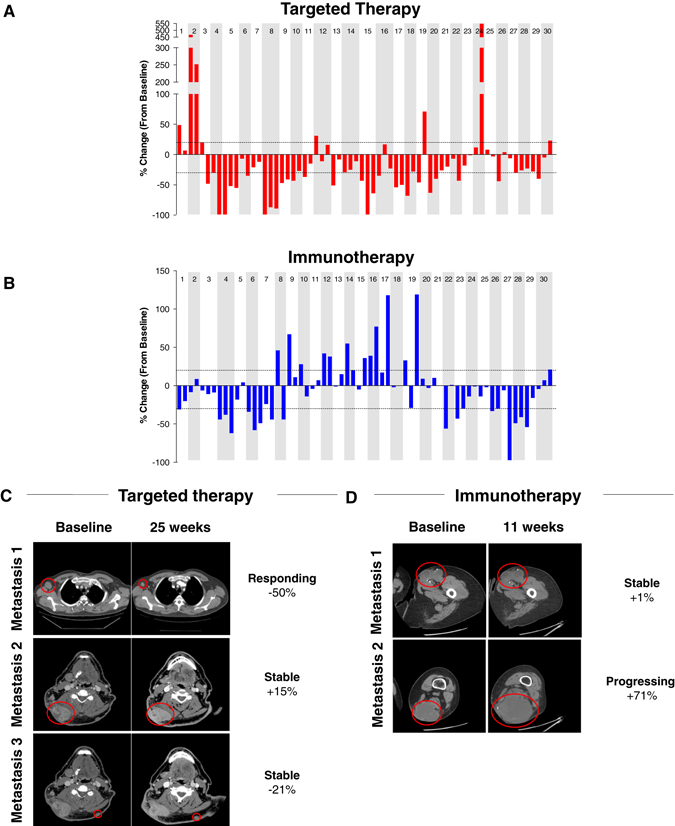
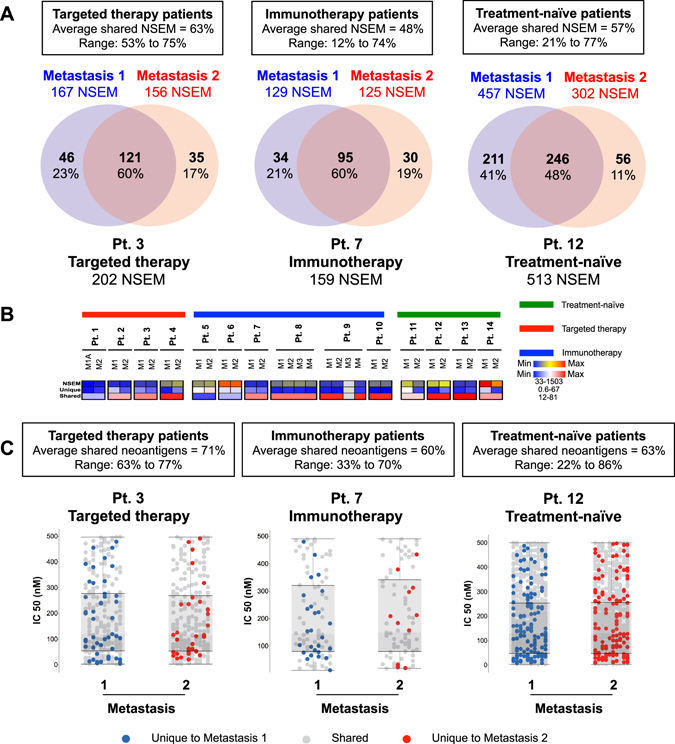
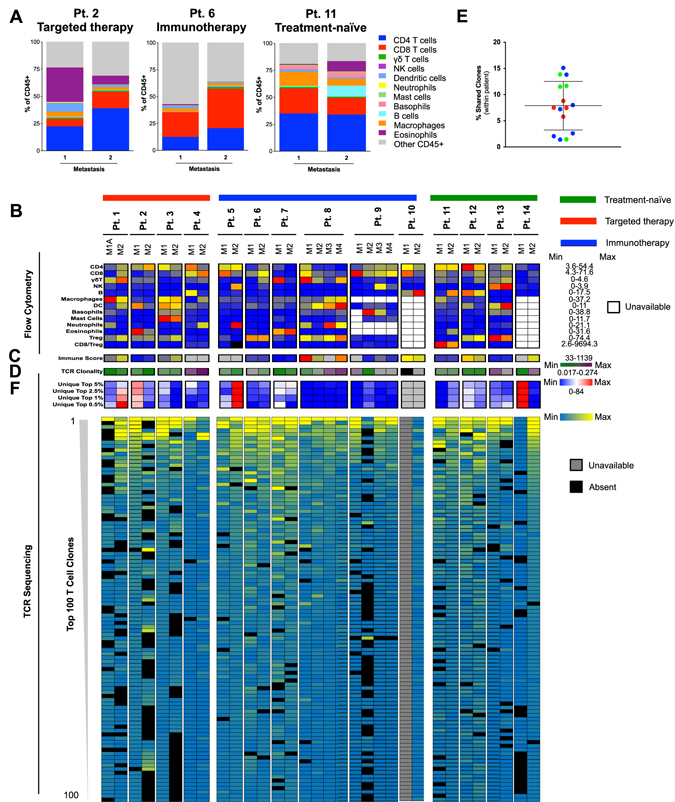
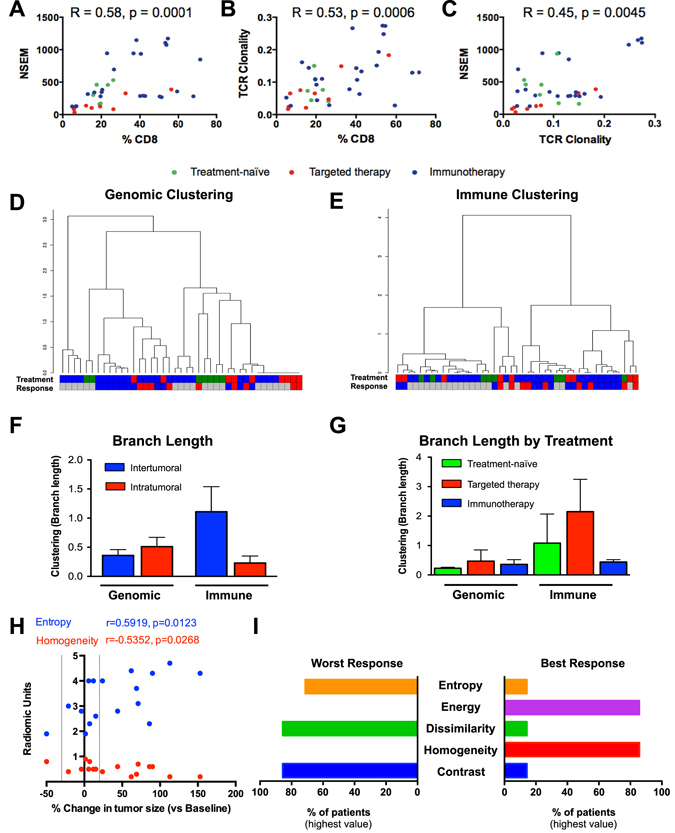
Abstract Appreciation for genomic and immune heterogeneity in cancer has grown though the relationship of these factors to treatment response has not been thoroughly elucidated. To better understand this, we studied a large cohort of melanoma patients treated with targeted therapy or immune checkpoint blockade (n = 60). Heterogeneity in therapeutic responses via radiologic assessment was observed in the majority of patients. Synchronous melanoma metastases were analyzed via deep genomic and immune profiling, and revealed substantial genomic and immune heterogeneity in all patients studied, with considerable diversity in T cell frequency, and few shared T cell clones (<8% on average) across the cohort. Variables related to treatment response were identified via these approaches and through novel radiomic assessment. These data yield insight into differential therapeutic responses to targeted therapy and immune checkpoint blockade in melanoma, and have key translational implications in the age of precision medicine.
Overview
The claims and statistics of this paper haven’t been checked yet.
Free: it reads the open-access text and checks the first 5 claims that cite a source we can check. Create a free account to check every claim.
Integrity signals
Registry
Cites
Statistics
Figures
Verification
Claims the paper makes
The claims and statistics of this paper haven’t been checked yet.
Free: it reads the open-access text and checks the first 5 claims that cite a source we can check. Create a free account to check every claim.
Claims other papers make about this one
Each is checked against this paper’s own text: does it say what the citing paper says it does?
The source backs part of the claim, not all of it — or backs it for a different population, condition or comparison.
In the citing paper
“This has also been observed in other cancer types such as melanoma”
From Hallmarks of response, resistance, and toxicity to immune checkpoint blockade (2021) · cites this paper as Reuben et al., 2017
Experimental — accuracy not yet measured
Self-check
Percentages, sums and reported differences re-computed from the paper’s own numbers.
The self-check needs the paper’s full text.
Citations
Cites
PD-1 and PD-L1 Immune Checkpoint Blockade to Treat Breast Cancer
Hartkopf, A. D., Taran, F.-A., Wallwiener, M., Walter, C. B., Krämer, B., Grischke, E.-M., & Brucker, S. Y. (2016) · Breast Care · doi:10.1159/000453569 · Cited by 30,845
New response evaluation criteria in solid tumours: revised RECIST guideline (version 1.1)
Eisenhauer, E. A., Therasse, P., Bogaerts, J., Schwartz, L. H., Sargent, D., Ford, R., Dancey, J., Arbuck, S., Gwyther, S., Mooney, M., et al. (2009) · European Journal of Cancer · doi:10.1016/j.ejca.2008.10.026 · Cited by 29,534 · cited 1×
“20 This protocol was approved by the Institutional Review Board.”
Textural Features for Image Classification
Haralick, R. M., Shanmugam, K., & Dinstein, I. (1973) · IEEE Transactions on Systems, Man, and Cybernetics · doi:10.1109/tsmc.1973.4309314 · Cited by 22,886
Improved Survival with Ipilimumab in Patients with Metastatic Melanoma
Hodi, F. S., O'Day, S. J., McDermott, D. F., Weber, R. W., Sosman, J. A., Haanen, J. B., Gonzalez, R., Robert, C., Schadendorf, D., Hassel, J. C., et al. (2010) · New England Journal of Medicine · doi:10.1056/nejmoa1003466 · Cited by 15,155
Safety, activity, and immune correlates of anti–PD-1 antibody in cancer
Topalian, S. L., Hodi, F. S., Brahmer, J. R., Gettinger, S. N., Smith, D. C., McDermott, D. F., Powderly, J. D., Carvajal, R. D., Sosman, J. A., Atkins, M. B., et al. (2012) · New England Journal of Medicine · doi:10.1056/nejmoa1200690 · Cited by 12,628 · cited 1×
“2, 3 However, responses are heterogeneous and are not always durable.”
Signatures of mutational processes in human cancer
Initiative, A. P. C. G., Alexandrov, L. B., ICGC Breast Cancer Consortium, ICGC MMML-Seq Consortium, PedBrain, I., Nik-Zainal, S., Wedge, D. C., Aparicio, S. A. J. R., Behjati, S., Biankin, A. V., et al. (2013) · Nature · doi:10.1038/nature12477 · Cited by 9,660 · cited 2×
“21, 22 Mutations in driver genes such as BRAF were also detected in 5/14 of patients (36%), as expected, and conserved across synchronous metastases, in-line with previous reports (Supplementary Fig.”
Radiomics: Images Are More than Pictures, They Are Data
Gillies, R. J., Kinahan, P. E., & Hricak, H. (2016) · Radiology · doi:10.1148/radiol.2015151169 · Cited by 8,421
Intratumor Heterogeneity and Branched Evolution Revealed by Multiregion Sequencing
Gerlinger, M., Rowan, A. J., Horswell, S., Larkin, J., Endesfelder, D., Gronroos, E., Martinez, P., Matthews, N., Stewart, A., Tarpey, P., et al. (2012) · New England Journal of Medicine · doi:10.1056/nejmoa1113205 · Cited by 7,774 · cited 5×
“5, 6, 8, 9 However, the relationship between genomic and immune heterogeneity and link to tumor growth and response to therapy has not been extensively studied.”
InfluentialImproved survival with vemurafenib in melanoma with BRAF V600E mutation
Chapman, P. B., Hauschild, A., Robert, C., Haanen, J. B., Ascierto, P., Larkin, J., Dummer, R., Garbe, C., Testori, A., Maio, M., et al. (2011) · New England Journal of Medicine · doi:10.1056/nejmoa1103782 · Cited by 7,720
PD-1 blockade induces responses by inhibiting adaptive immune resistance
Tumeh, P. C., Harview, C. L., Yearley, J. H., Shintaku, I. P., Taylor, E. J. M., Robert, L., Chmielowski, B., Spasic, M., Henry, G., Ciobanu, V., et al. (2014) · Nature · doi:10.1038/nature13954 · Cited by 6,609 · cited 1×
“35, 40 To better understand the relationship of the observed heterogeneous clinical responses with molecular and immune features within synchronous meta-static tumors, we performed an integrated analysis of genomic and immune features studied in our cohort as they relate to therapeutic response.”
Cited by
Items 101–167 of 167
Incorporating lesion-to-lesion heterogeneity into early oncology decision making
Kumar, R., Qi, T., Cao, Y., & Topp, B. G. (2023) · Frontiers in Immunology · doi:10.3389/fimmu.2023.1173546 · Cited by 8
Foster, C. C., Pitroda, S. P., & Weichselbaum, R. R. (2019) · Journal of Thoracic Oncology · doi:10.1016/j.jtho.2019.05.025 · Cited by 7
Genomics-based immuno-oncology: bridging the gap between immunology and tumor biology
DiNatale, R. G., Hakimi, A. A., & Chan, T. A.-T. (2020) · Human Molecular Genetics · doi:10.1093/hmg/ddaa203 · Cited by 7
Ni, R., Bozhenko, K. V., Игоревна, Б. И., Бадрузамановна, З. С., Александровна, К. Е., Гаджимурадовна, Л. П., Mazo, M. L., Mikushin, S. Y., Павлович, П. С., & Yakobs, O. E. (2020) · Medical alphabet · doi:10.33667/2078-5631-2020-20-21-29 · Cited by 8
Systematic identification of lincRNA-derived immunogenic peptides in melanoma
Dupré, E., Guiho, A., Beauvais, T., Labous, L., Cardon, T., Bertolotto, C., Khammari, A., Quereux, G., Salzet, M., Labarrière, N., et al. (2025) · OncoImmunology · doi:10.1080/2162402x.2025.2538684 · Cited by 6
Adenosine receptors on the immuno-oncology expressway: TIME, perspectives, and translation
Majumder, B., & Datta, S. (2026) · Frontiers in Immunology · doi:10.3389/fimmu.2025.1676702 · Cited by 9
Decoding Immune Heterogeneity of Melanoma and identifying immune-prognostic hub genes
Zhang, Y., Hao, S., Gao, Y., Sun, W., & Li, Y. (2020) · Journal of Cancer · doi:10.7150/jca.50277 · Cited by 5
“Significant heterogeneity of targeted therapy as well as genomic and immune heterogeneity of patients was observed [12].”
BackgroundGrissi, C., Porro, M. T., Perona, M., Atia, M. N., Negrin, L., Moreno, M. S., Sacanell, J., Olivera, M. S., del Grosso, M. F., Durán, H., et al. (2023) · Radiation and Environmental Biophysics · doi:10.1007/s00411-023-01037-0 · Cited by 5
Cylindromatosis Is Required for Survival of a Subset of Melanoma Cells
La, T., Jin, L., Liu, X., Song, Z., Farrelly, M. L., Feng, Y., Yan, X. G., Zhang, Y. Y., Thorne, R. F., Zhang, X. D., et al. (2020) · Oncology Research Featuring Preclinical and Clinical Cancer Therapeutics · doi:10.3727/096504020x15861709922491 · Cited by 8
Reis, M. B. E., Maximo, A. I., Magno, J. M., Bellan, D. D. L., Buzzo, J. L. A., Simas, F. F., Rocha, H. A. O., Trindade, E. D. S., & de Oliveira, C. C. (2024) · Marine Biotechnology · doi:10.1007/s10126-024-10287-y · Cited by 5
“In addition, despite the scientific progress on targeted and immunotherapies, adaptive response mechanisms and intratumoral heterogeneity generate resistance (Reuben et al. 2017), making melanoma one of the hardest types of cancer to defeat in advanced stages of the disease.”
Genetic Insight into Expression-Defined Melanoma Subtypes and Network Mechanisms: An in Silico Study
Speranza, D., Marafioti, M., Musarra, M., Cianci, V., Mondello, C., Astorino, M. F., Santarpía, M., Irrera, N., Vaccaro, M., Silvestris, N., et al. (2025) · Genes · doi:10.3390/genes16121428 · Cited by 4
“Considering the high variability and the large number of high, medium, and low-risk genes that may be involved in CM, it does not come as a surprise that melanomas, despite sharing some characteristics, are highly heterogeneous [20–23].”
Transcriptional profile and chromatin accessibility in zebrafish melanocytes and melanoma tumors
Kramer, E. T., Godoy, P. M., & Kaufman, C. K. (2021) · G3 Genes Genomes Genetics · doi:10.1093/g3journal/jkab379 · Cited by 6
“High heterogeneity in melanoma can lead to variable responses to currently available therapies (Reuben et al. 2017).”
BackgroundH-Scan Discrimination for Tumor Microenvironmental Heterogeneity in Melanoma
Baek, J., Qin, S. S., Prieto, P. A., & Parker, K. J. (2023) · Ultrasound in Medicine & Biology · doi:10.1016/j.ultrasmedbio.2023.10.012 · Cited by 5
“These intra-tumoral and inter-tumoral heterogeneities (i) cause dif fi culties in accurate diagnosis following a single biopsy, (ii) obscure precise immunotherapy selection and (iii) result in differential treatment responses [24,25,31].”
BackgroundGuo, J., Hsu, C., Hsieh, M., Lin, C., Huang, T., Kuo, H., Shao, Y., & Hsu, C. (2023) · Thoracic Cancer · doi:10.1111/1759-7714.14997 · Cited by 2
“demonstrated a patient with advanced melanoma found to have a high intratumor neutrophil ratio in a significantly progressive tumor.(8) Besides, two studies demonstrated high neutrophil-to-lymphocyte ratio associated with poor prognosis for patients with advanced ESCC treated with anti-PD-1-based therapy.”
BackgroundHenault, D., Stephen, D., St-Hilaire, P.-A., Messaoudi, N., Vandenbroucke‐Menu, F., Simoneau, È., Rong, Z., Plasse, M., Letourneau, R., Roy, A., et al. (2023) · OncoImmunology · doi:10.1080/2162402x.2023.2253642 · Cited by 3
“Intra-patient metastatic heterogeneity complexifies outcome predictions and may be the main limitation to the success of precision medicine as well as immune checkpoint blockade therapy, as shown in metastatic melanoma for example.(4) Patients with colorectal cancer liver metastases (CRLMs) may be amenable to curative…”
BackgroundModeling combination chemo‐immunotherapy for heterogeneous tumors
Chen, S., Hu, Z., & Zhou, D. (2025) · Quantitative Biology · doi:10.1002/qub2.98 · Cited by 3
Guo, J., Lin, C., Lin, C., Huang, T., Lien, M., Lu, L., Kuo, H., & Hsu, C. (2021) · Oncology · doi:10.1159/000517738 · Cited by 4
Das, P., Peterson, C. B., Ni, Y., Reuben, A., Zhang, J., Zhang, J. J., Do, K.-A., & Baladandayuthapani, V. (2022) · Biometrics · doi:10.1111/biom.13774 · Cited by 4
“T-cell clonality is a measure of heterogeneity among T-cells and has been linked to patient outcomes (Reuben et al., 2017).”
BackgroundResultMelanoma treatment in the era of nanotechnology and precision medicine
da Cruz, A. F., Colella, F., Grasso, G., Onesto, V., Forciniti, S., Ortiz, B. B., Carnevali, F., Siciliano, A. C., Bove, R., dos Santos, J. G., et al. (2025) · Journal of Nanobiotechnology · doi:10.1186/s12951-025-03851-8 · Cited by 6
“Current pharmacological options are immune checkpoint inhibitors and targeted therapy [187, 188].”
Pierrard, J., Ooteghem, G. V., & den Eynde, M. V. (2023) · Biomolecules · doi:10.3390/biom13040689 · Cited by 2
Clinical and Fundamental Research Progressions on Tumor-Infiltrating Lymphocytes Therapy in Cancer
Hu, J., Jin, M., Feng, W., Rausseo, B. N., Reuben, A., Ma, C., Lizee, G. A., & Li, F. (2025) · Vaccines · doi:10.3390/vaccines13050521 · Cited by 2
“Additionally, an analysis of metastases in a majority of melanoma patients undergoing targeted therapy or immune checkpoint blockade revealed considerable genomic and immunological heterogeneity, alongside significant variations in T-cell frequencies across all patients [25].”
Krasnov, G. S., Гукасян, Л. Г., Abramov, I. S., & Nasedkina, T. V. (2021) · Molecular Biology · doi:10.31857/s0026898421050050 · Cited by 3
Krasnov, G. S., Ghukasyan, L., Abramov, I. S., & Nasedkina, T. V. (2021) · Molecular Biology · doi:10.1134/s0026893321040051 · Cited by 2
Schrom, S., Hebesberger, T., Wallner, S. A., Anders, I., Richtig, E., Brandl, W., Hirschmugl, B., Garofalo, M., Bernecker, C., Schlenke, P., et al. (2021) · International Journal of Molecular Sciences · doi:10.3390/ijms222111318 · Cited by 4
“The relationship between genomic and immunological heterogeneity, as well as the link to tumor growth and therapy response, has not been extensively studied [13].”
BackgroundLee, C., DiNatale, R. G., Chowell, D., Krishna, C., Makarov, V., Valero, C., Vuong, L. H., Lee, M., Weiss, K. L., Hoen, D., et al. (2023) · doi:10.1158/1541-7786.c.6545243 · Cited by 2
El-Nabawy, A., Alshabrawy, O. S., & Woo, W. L. (2025) · Expert Systems with Applications · doi:10.1016/j.eswa.2025.130503 · Cited by 1
B7-H6/NKp30 Axis in Melanoma: Translational Rationale, Evidence Gaps, and Therapeutic Considerations
Truong‐Balderas, K., Chang, R. C., Lasalle, C., Gao, Y., Nowak, N. C., Amber, K. T., & Mansini, A. P. (2026) · Biomolecules · doi:10.3390/biom16060862 · Cited by 1
“This is especially important in melanoma, where tumor plasticity, immune editing, organ-specific microenvironments, and therapy-induced state transitions can substantially alter antigen expression and immune vulnerability over time [9,33].”
Brandlmaier, M., Hoellwerth, M., Koelblinger, P., Lang, R., & Harrer, A. (2024) · Cancers · doi:10.3390/cancers16081461 · Cited by 3
Hara, T., Teishima, J., Okamura, Y., Suzuki, K., Bando, Y., Terakawa, T., Chiba, K., Hyodo, Y., Nakano, Y., & Miyake, H. (2024) · Clinical Genitourinary Cancer · doi:10.1016/j.clgc.2024.102236 · Cited by 1
A Network Approach to Developing Immuno-Oncology Combinations in Canada
Higenell, V., Fajzel, R., Batist, G., Cheema, P. K., McArthur, H. L., Melosky, B. L., Morris, D. V., Petrella, T. M., Sangha, R. S., Savard, M.-F., et al. (2019) · Current Oncology · doi:10.3747/co.26.4393 · Cited by 1
Weppler, A. M., Lau, P. K. H., & McArthur, G. A. (2019) · Springer eBooks · doi:10.1007/978-3-319-46029-1_39-1
Therapeutic Potential of Cells of the Immune System
Lamb, L. S., & Ho, W. (2020) · Elsevier eBooks · doi:10.1016/b978-0-12-812034-7.00003-0
Govindaraju, S., Maurin, M. M., Newberg, J. Y., Jones, D. J., Lee, H., Markovitz, J. E., Mann, M. B., Black, M. A., & Mann, K. M. (2020) · bioRxiv (Cold Spring Harbor Laboratory) · doi:10.1101/2020.09.28.317701
“…several cancers, including breast, colon, lung, head and neck, melanoma and pancreatic (Hua et al., 2020; Jamal-Hanjani, Quezada, Larkin, & Swanton, 2015; McDonald et al., 2019; Mroz et al., 2013; Niknafs et al., 2019; Reuben et al., 2017; Sveen et al., 2016; Zhao, Hemann, & Lauffenburger, 2014).”
Chen, R., Li, J., Fujimoto, J., Hu, X., Quek, K., Tang, M., Mitra, A., Behrens, C., Chow, C.-W. B., Jiang, P., et al. (2021) · Research Square · doi:10.21203/rs.3.rs-970663/v1
Datalyst - data node center as a catalyst for urban development
Eriksson, I., & Nilsson, F. U. (2012) · Chalmers Publication Library (Chalmers University of Technology)
Weppler, A. M., Lau, P. K. H., & McArthur, G. A. (2020) · Springer eBooks · doi:10.1007/978-3-030-05070-2_39
Smalley, I., Chen, Z., Phadke, M. A., Li, J., Yu, X., Wyatt, C. J., Evernden, B. R., Messina, J. L., Sarnaik, A. A., Sondak, V. K., et al. (2023) · doi:10.1158/1078-0432.c.6530586.v1
Smalley, I., Chen, Z., Phadke, M. A., Li, J., Yu, X., Wyatt, C. J., Evernden, B. R., Messina, J. L., Sarnaik, A. A., Sondak, V. K., et al. (2023) · doi:10.1158/1078-0432.22480995
Cooperativity in melanoma metastasis
Ng, M. F. (2023) · Queensland University of Technology · doi:10.5204/thesis.eprints.242136
El-Nabawy, A., Alshabrawy, O. S., & Woo, W. L. (2024) · SSRN Electronic Journal · doi:10.2139/ssrn.4764306
Chen, R., Li, J., Fujimoto, J., Hong, L., Hu, X. Y., Quek, K., Tang, M., Mitra, A., Behrens, C., Chow, C.-W. B., et al. (2022) · Figshare · doi:10.6084/m9.figshare.19753371
zihang, Z., Li, J., Zhang, J., Li, Y., Liu, X., Chen, J., Huang, Z., Wu, Q., Gong, Y., & Xie, C. (2021) · Figshare · doi:10.6084/m9.figshare.15103083
zihang, Z., Li, J., Zhang, J., Li, Y., Liu, X., Chen, J., Huang, Z., Wu, Q., Gong, Y., & Xie, C. (2021) · Figshare · doi:10.6084/m9.figshare.15103056
zihang, Z., Li, J., Zhang, J., Li, Y., Liu, X., Chen, J., Huang, Z., Wu, Q., Gong, Y., & Xie, C. (2021) · Figshare · doi:10.6084/m9.figshare.15103041
zihang, Z., Li, J., Zhang, J., Li, Y., Liu, X., Chen, J., Huang, Z., Wu, Q., Gong, Y., & Xie, C. (2021) · Figshare · doi:10.6084/m9.figshare.15103038
zihang, Z., Li, J., Zhang, J., Li, Y., Liu, X., Chen, J., Huang, Z., Wu, Q., Gong, Y., & Xie, C. (2021) · Figshare · doi:10.6084/m9.figshare.15103044
zihang, Z., Li, J., Zhang, J., Li, Y., Liu, X., Chen, J., Huang, Z., Wu, Q., Gong, Y., & Xie, C. (2021) · Figshare · doi:10.6084/m9.figshare.15103077
zihang, Z., Li, J., Zhang, J., Li, Y., Liu, X., Chen, J., Huang, Z., Wu, Q., Gong, Y., & Xie, C. (2021) · Figshare · doi:10.6084/m9.figshare.15103047
zihang, Z., Li, J., Zhang, J., Li, Y., Liu, X., Chen, J., Huang, Z., Wu, Q., Gong, Y., & Xie, C. (2021) · Figshare · doi:10.6084/m9.figshare.15103071
zihang, Z., Li, J., Zhang, J., Li, Y., Liu, X., Chen, J., Huang, Z., Wu, Q., Gong, Y., & Xie, C. (2021) · Figshare · doi:10.6084/m9.figshare.15103080
Chen, R., Li, J., Fujimoto, J., Hong, L., Hu, X., Quek, K., Tang, M., Mitra, A., Behrens, C., Chow, C.-W., et al. (2022) · Figshare · doi:10.6084/m9.figshare.19753368
zihang, Z., Li, J., Zhang, J., Li, Y., Liu, X., Chen, J., Huang, Z., Wu, Q., Gong, Y., & Xie, C. (2021) · Figshare · doi:10.6084/m9.figshare.15103065
zihang, Z., Li, J., Zhang, J., Li, Y., Liu, X., Chen, J., Huang, Z., Wu, Q., Gong, Y., & Xie, C. (2021) · Figshare · doi:10.6084/m9.figshare.15103074
zihang, Z., Li, J., Zhang, J., Li, Y., Liu, X., Chen, J., Huang, Z., Wu, Q., Gong, Y., & Xie, C. (2021) · Figshare · doi:10.6084/m9.figshare.15103035
zihang, Z., Li, J., Zhang, J., Li, Y., Liu, X., Chen, J., Huang, Z., Wu, Q., Gong, Y., & Xie, C. (2021) · Figshare · doi:10.6084/m9.figshare.15103068
zihang, Z., Li, J., Zhang, J., Li, Y., Liu, X., Chen, J., Huang, Z., Wu, Q., Gong, Y., & Xie, C. (2021) · Figshare · doi:10.6084/m9.figshare.15103050
zihang, Z., Li, J., Zhang, J., Li, Y., Liu, X., Chen, J., Huang, Z., Wu, Q., Gong, Y., & Xie, C. (2021) · Figshare · doi:10.6084/m9.figshare.15103053
zihang, Z., Li, J., Zhang, J., Li, Y., Liu, X., Chen, J., Huang, Z., Wu, Q., Gong, Y., & Xie, C. (2021) · Figshare · doi:10.6084/m9.figshare.15103059
Hu, Z., Chen, S., Xie, D., Wang, J., & Zhou, D. (2023) · Research Square · doi:10.21203/rs.3.rs-3215481/v1
zihang, Z., Li, J., Zhang, J., Li, Y., Liu, X., Chen, J., Huang, Z., Wu, Q., Gong, Y., & Xie, C. (2021) · Figshare · doi:10.6084/m9.figshare.15103086
zihang, Z., Li, J., Zhang, J., Li, Y., Liu, X., Chen, J., Huang, Z., Wu, Q., Gong, Y., & Xie, C. (2021) · Figshare · doi:10.6084/m9.figshare.15103062
Rôle de c-Jun dans la réponse aux inhibiteurs de la voie des MAPK dans les mélanomes
Pohorecka, M. (2018) · theses.fr (ABES) · doi:10.70675/4cf7db7bz9142z4de8zbcbbzd5860991d571
Carretero-Fernández, M., Cabrera-Serrano, A. J., Ruiz-Durán, L., Ibáñez, M., Bonilla, M., Mesa, F., Gutiérrez‐Bautista, J. F., Chahboun, R., Reyes‐Zurita, F. J., Martínez‐López, J., et al. (2026) · Translational Oncology · doi:10.1016/j.tranon.2026.102796 · Cited by 1
“Germline variation in immune signaling and antigen-presentation pathways, including TLR-axis and HLA polymorphisms, has been associated with differential response and survival in IMiD-containing regimens [236,256].”
Elevated circulating lactate in late-stage melanoma patients
Rendon, B. E., Yan, J., Li, H., Noe, J. T., Deng, Z., Hall, M., Kong, M., Chesney, J. A., & Mitchell, R. A. (2026) · QJM · doi:10.1093/qjmed/hcag179 · Cited by 1
Cantillon, O. T., BUSAM, K. J., Ariyan, C. E., Bartlett, E. K., Bello, D. M., Postow, M. A., & Brady, M. S. (2026) · Journal of Surgical Oncology · doi:10.1002/jso.70324
“The genomic and immune heterogeneity of melanoma is of particular interest, with Reuben et al. suggesting it as the cause for the variation seen in treatment response [19].”
Oxidative stress‐driven metabolic reprogramming defines two subtypes of cutaneous melanoma
Gao, Q., Liu, Z., & Xu, Y. (2026) · Open Research (University of Surrey) · doi:10.1002/viw2.70183
Metadata
- Authors
- Reuben, A., Spencer, C. N., Prieto, P. A., Gopalakrishnan, V., Reddy, S. M., Miller, J. P., Mao, X., De Macedo, M. P., Chen, J., Song, X., Jiang, H., Chen, P.-L., Beird, H. C., Garber, H. R., Roh, W., Wani, K., Chen, E., Haymaker, C., Forget, M.-A., Little, L. D., Gumbs, C., Thornton, R. L., Hudgens, C. W., Chen, W.-S., Austin-Breneman, J., Sloane, R. S., Nezi, L., Cogdill, A. P., Bernatchez, C., Roszik, J., Hwu, P., Woodman, S. E., Chin, L., Tawbi, H., Davies, M. A., Gershenwald, J. E., Amaria, R. N., Glitza, I. C., Diab, A., Patel, S. P., Hu, J., Lee, J. E., Grimm, E. A., Tetzlaff, M. T., Lazar, A. J., Wistuba, I. I., Clise-Dwyer, K., Carter, B. W., Zhang, J., Futreal, P. A., Sharma, P., Allison, J. P., Cooper, Z. A., & Wargo, J. A.
- Affiliations
- The University of Texas MD Anderson Cancer Center (US)
- Corresponding author
- Wargo, Jennifer A.
- ORCID
- Reuben, Alexandre
- Spencer, Christine N.
- Prieto, Peter A.
- Gopalakrishnan, Vancheswaran
- Reddy, Sangeetha M.
- Miller, John P.
- Chen, Jiong
- Song, Xingzhi
- Jiang, Hong
- Chen, Pei-Ling
- Beird, Hannah C.
- Garber, Haven R.
- Roh, Whijae
- Wani, Khalida
- Chen, Eveline
- Haymaker, Cara
- Little, Latasha D.
- Gumbs, Curtis
- Hudgens, Courtney W.
- Chen, Wei-Shen
- Austin-Breneman, Jacob
- Sloane, Robert Szczepaniak
- Nezi, Luigi
- Cogdill, Alexandria P.
- Bernatchez, Chantale
- Roszik, Jason
- Hwu, Patrick
- Woodman, Scott E.
- Tawbi, Hussein
- Davies, Michael A.
- Gershenwald, Jeffrey E.
- Amaria, Rodabe N.
- Diab, Adi
- Patel, Sapna P.
- Hu, Jianhua
- Lee, Jeffrey E.
- Grimm, Elizabeth A.
- Tetzlaff, Michael T.
- Lazar, Alexander J.
- Wistuba, Ignacio I.
- Clise-Dwyer, Karen
- Carter, Brett W.
- Zhang, Jianhua
- Futreal, P. Andrew
- Sharma, Padmanee
- Allison, James P.
- Cooper, Zachary A.
- Wargo, Jennifer A.
- Venue
- npj Genomic Medicine
- Published
- 2017-04-07
- Volume
- 2
- Issue
- 1
- ISSN
- 2056-7944 (ISSN-L)
- PMC
- PMC5557036
- OpenAlex
- W2604777432
- Cited by
- 166
- References
- 48
- Citations by year
- 2026: 6 · 2025: 9 · 2024: 10 · 2023: 19 · 2022: 14 · 2021: 49 · 2020: 17 · 2019: 16 · 2018: 19 · 2017: 6
- FWCI
- 6.95
- Type
- journal article
- Language
- en
- Open access
- gold
- doi.org
- Licence
- cc-by
- creativecommons.org/licenses/by/4.0 (tdm)
- creativecommons.org/licenses/by/4.0 (vor)
- Locations
- npj Genomic Medicine (publishedVersion, cc-by)
- PubMed Central (publishedVersion, cc-by)
- PubMed (publishedVersion)
- DOAJ (DOAJ: Directory of Open Access Journals) (submittedVersion, cc-by-sa)
- Funders
- Cancer Prevention and Research Institute of Texas (P30 CA16672, R1204, R1205)
- Melanoma Research Alliance
- Parker Institute for Cancer Immunotherapy
- National Institutes of Health (CA-16 672, CA093459)
- University of Texas MD Anderson Cancer Center (#CA16672, P30CA 16672, P50CA093459)
- National Cancer Institute (CA-16672, U54CA163125, T32CA163185, K08CA160692, T32CA009599, P30CA016672, P01CA163222, P50CA093459)
- Topics
- Health Sciences › Medicine › Oncology › Cancer Immunotherapy and Biomarkers
- Health Sciences › Medicine › Oncology › Cutaneous Melanoma Detection and Management
- Life Sciences › Biochemistry, Genetics and Molecular Biology › Molecular Biology › Melanoma and MAPK Pathways
- Keywords
- melanoma, genomic heterogeneity, immune heterogeneity, treatment response, targeted therapy, immune checkpoint blockade, synchronous metastases, T cell frequency, T cell clones, precision medicine
About these checks
Registry, retraction, Cites and statistics results are computed, not judged, with one exception: a printed reference that no index lists is read once by a model before it counts as a citation error. Claims are extracted by a model and kept only when their quote appears verbatim in the text; each cited source is then checked, with a model’s help, for whether it says what the claim relies on. Those verdicts can be wrong — read the claim’s quote and the cited source before relying on one.
Statistics and arithmetic are recomputed, not judged.
Confidence bands are shown only for fields calibrated on our annotated test set. None is calibrated yet, so no band is shown.
What counts as a claim ›How we measure confidence ›How we check this ›
Are you an author, or do you see a problem with this page? Request a review
Data sources
Bibliographic data: Semantic Scholar, OpenAlex, Crossref.
Contains information from the Semantic Scholar Academic Graph Datasets, made available under the ODC Attribution License (ODC-BY 1.0).
Semantic Scholar’s data is described in: Kinney, R., et al. (2023). The Semantic Scholar Open Data Platform. arXiv:2301.10140.
