

Paracetamol use during pregnancy — a call for precautionary action
Open accessThe DOI matches its Crossref record; 162 of the 162 references it cites were found in a registry or an index.
Abstract
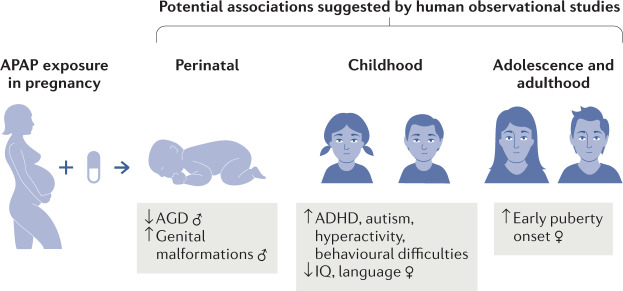
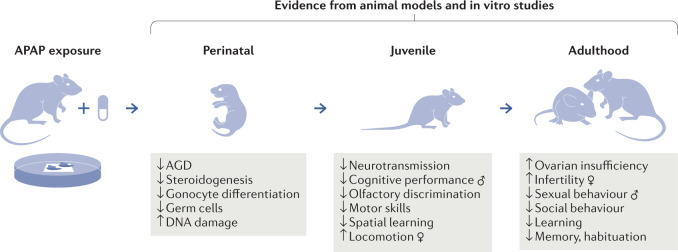
Paracetamol ( N -acetyl- p -aminophenol (APAP), otherwise known as acetaminophen) is the active ingredient in more than 600 medications used to relieve mild to moderate pain and reduce fever. APAP is widely used by pregnant women as governmental agencies, including the FDA and EMA, have long considered APAP appropriate for use during pregnancy when used as directed. However, increasing experimental and epidemiological research suggests that prenatal exposure to APAP might alter fetal development, which could increase the risks of some neurodevelopmental, reproductive and urogenital disorders. Here we summarize this evidence and call for precautionary action through a focused research effort and by increasing awareness among health professionals and pregnant women. APAP is an important medication and alternatives for treatment of high fever and severe pain are limited. We recommend that pregnant women should be cautioned at the beginning of pregnancy to: forego APAP unless its use is medically indicated; consult with a physician or pharmacist if they are uncertain whether use is indicated and before using on a long-term basis; and minimize exposure by using the lowest effective dose for the shortest possible time. We suggest specific actions to implement these recommendations. This Consensus Statement reflects our concerns and is currently supported by 91 scientists, clinicians and public health professionals from across the globe.
Overview
The claims and statistics of this paper haven’t been checked yet.
Free: it reads the open-access text and checks the first 5 claims that cite a source we can check. Create a free account to check every claim.
Integrity signals
Registry
Cites
Statistics
Figures
Verification
Claims the paper makes
The claims and statistics of this paper haven’t been checked yet.
Free: it reads the open-access text and checks the first 5 claims that cite a source we can check. Create a free account to check every claim.
Claims other papers make about this one
Each is checked against this paper’s own text: does it say what the citing paper says it does?
The cited source says what the claim attributes to it.
In the citing paper
“Early epidemiological associations and a widely publicized consensus statement urging precaution [ 16 , 62 ] were substantially attenuated toward the null when familial confounding was addressed through sibling-control analysis in a cohort of nearly 2.5 million children [ 22 ]”
From Paracetamol: A History of Assumptions, Errors, and Evidence Reversals in Pain Management (2026) · cites this paper as [62]
Self-check
Percentages, sums and reported differences re-computed from the paper’s own numbers.
The self-check needs the paper’s full text.
Citations
Cites
Dose translation from animal to human studies revisited.
Reagan‐Shaw, S., Nihal, M., & Ahmad, N. (2008) · The FASEB Journal · doi:10.1096/fj.07-9574lsf · Cited by 6,524
Rice, D., & Barone, S. (2000) · Environmental Health Perspectives · doi:10.1289/ehp.00108s3511 · Cited by 2,944
Larson, A. M., Polson, J., Fontana, R. J., Davern, T. J., Lalani, E., Hynan, L. S., Reisch, J. S., Schiødt, F. V., Ostapowicz, G., Shakil, A. O., et al. (2005) · Hepatology · doi:10.1002/hep.20948 · Cited by 1,926
Neurobehavioural effects of developmental toxicity
Grandjean, P., & Landrigan, P. J. (2014) · The Lancet Neurology · doi:10.1016/s1474-4422(13)70278-3 · Cited by 1,886
Multiple Female Reproductive Failures in Cyclooxygenase 2–Deficient Mice
Lim, H., Paria, B. C., Das, S. K., Dinchuk, J. E., Langenbach, R., Trzaskos, J. M., & Dey, S. K. (1997) · Cell · doi:10.1016/s0092-8674(00)80402-x · Cited by 1,430
Temporal trends in sperm count: a systematic review and meta-regression analysis
Levine, H., Jørgensen, N., Martino-Andrade, A., Mendiola, J., Weksler-Derri, D., Mindlis, I., Pinotti, R., & Swan, S. H. (2017) · Human Reproduction Update · doi:10.1093/humupd/dmx022 · Cited by 1,374
Self-citationPrevalence and Trends of Developmental Disabilities among Children in the United States: 2009–2017
Zablotsky, B., Black, L. I., Maenner, M. J., Schieve, L. A., Danielson, M. L., Bitsko, R. H., Blumberg, S. J., Kogan, M. D., & Boyle, C. A. (2019) · Pediatrics · doi:10.1542/peds.2019-0811 · Cited by 1,217
La Merrill, M. A., Vandenberg, L. N., Smith, M. T., Goodson, W., Browne, P., Patisaul, H. B., Guyton, K. Z., Kortenkamp, A., Cogliano, V. J., Woodruff, T. J., et al. (2020) · Nature Reviews Endocrinology · doi:10.1038/s41574-019-0273-8 · Cited by 1,005
Skakkebaek, N. E., Rajpert-De Meyts, E., Buck Louis, G. M., Toppari, J., Andersson, A.-M., Eisenberg, M. L., Jensen, T. K., Jørgensen, N., Swan, S. H., Sapra, K. J., et al. (2016) · Physiological Reviews · doi:10.1152/physrev.00017.2015 · Cited by 977
Self-citationWelsh, M., Saunders, P. T. K., Fisken, M., Scott, H. M., Hutchison, G. R., Smith, L. B., & Sharpe, R. M. (2008) · Journal of Clinical Investigation · doi:10.1172/jci34241 · Cited by 781
Research works printed but not linked: 1
- 149. Hay-Schmidt, A. et al. Prenatal exposure to paracetamol/acetaminophen and precursor aniline impairs masculinisation of male brain and behaviour. Reproduction 154, 145-152 (2017). · DOI
Cited by
Global patterns in testicular cancer incidence and mortality in 2020
Znaor, A., Skakkebæk, N. E., Meyts, E. R., Kuliš, T., Laversanne, M., Gurney, J., Sarfati, D., McGlynn, K. A., & Bray, F. (2022) · International Journal of Cancer · doi:10.1002/ijc.33999 · Cited by 170
“pharmaceuticals (over-the-counter analgesics), which can disrupt foetal testis development and have been associated with increased risk of cryptorchidism.(34,35) A protracted time window between the exposure undergone by the mother and diagnosis of the disease in the male descendant is an additional hurdle.”
BackgroundAcetaminophen Use During Pregnancy and Children’s Risk of Autism, ADHD, and Intellectual Disability
Ahlqvist, V. H., Sjöqvist, H., Dalman, C., Karlsson, H., Stephansson, O., Johansson, S., Magnusson, C., Gardner, R. M., & Lee, B. K. (2024) · JAMA · doi:10.1001/jama.2024.3172 · Cited by 147
Puledda, F., Sacco, S., Diener, H., Ashina, M., Al‐Khazali, H. M., Ashina, S., Burstein, R., Liebler, E. J., Cipriani, A., Chu, M. K., et al. (2024) · Cephalalgia · doi:10.1177/03331024241252666 · Cited by 188
“…evidence, however, suggests that paracetamol/ acetaminophen may be associated with urogenital/ reproductive disorders in the offspring, possibly due to the endocrine effect of the drug, which suggests avoiding uncontrolled use in pregnancy, until more reliable evidence is made available (185–187).”
The Main Changes in Pregnancy—Therapeutic Approach to Musculoskeletal Pain
Fiat, F., Merghes, P. E., Semenescu, A.-D., Guta, B. A., Dehelean, C. A., Varan, N., & Bernad, E. S. (2022) · Medicina · doi:10.3390/medicina58081115 · Cited by 115
Prada, D., Ritz, B. R., Bauer, A. Z., & Baccarelli, A. (2025) · Environmental Health · doi:10.1186/s12940-025-01208-0 · Cited by 88
“Although acetaminophen remains the preferred analgesic due to its relatively favorable safety profile compared to other medications, its use should be approached judiciously, particularly in light of potential implications for fetal development during perinatal period[54].”
InfluentialSelf-citationDraskau, M. K., & Svingen, T. (2022) · Frontiers in Toxicology · doi:10.3389/ftox.2022.883254 · Cited by 73
Evidence-based guidelines for the pharmacological treatment of migraine
Ornello, R., Caponnetto, V., Ahmed, F., Al‐Khazali, H. M., Ambrosini, A., Ashina, S., Baraldi, C., Bellotti, A., Brighina, F., Calabresi, P., et al. (2025) · Cephalalgia · doi:10.1177/03331024241305381 · Cited by 99
Kortenkamp, A., Scholze, M., Ermler, S., Priskorn, L., Jørgensen, N., Andersson, A., & Frederiksen, H. W. (2022) · Environment International · doi:10.1016/j.envint.2022.107322 · Cited by 60
Paracetamol (Acetaminophen) and the Developing Brain
Bührer, C., Endesfelder, S., Scheuer, T., & Schmitz, T. (2021) · International Journal of Molecular Sciences · doi:10.3390/ijms222011156 · Cited by 96
Zafeiri, A., Raja, E. A., Mitchell, R. T., Hay, D. C., Bhattacharya, S., & Fowler, P. (2022) · BMJ Open · doi:10.1136/bmjopen-2020-048092 · Cited by 50
Self-citationManaging idiopathic intracranial hypertension in pregnancy: practical advice
Thaller, M., Wakerley, B. R., Abbott, S., Tahrani, A. A., Mollan, S. P., & Sinclair, A. J. (2022) · Practical Neurology · doi:10.1136/practneurol-2021-003152 · Cited by 42
Hernandez, J. C., Sarafian, J. T., Lawton, V. G., Palkar, A., Anderson, L. G., Larivière, V., & Parker, W. (2022) · European Journal of Pediatrics · doi:10.1007/s00431-022-04407-w · Cited by 42
“The difficulty in moving forward into the clinical arena based on current scientific knowledge is perhaps reflected in the debate surrounding a recent consensus statement supported by almost 100 clinicians and scientists [37] urging caution with the use of paracetamol during pregnancy.”
BackgroundThunbo, M. Ø., Vendelbo, J. H., Witte, D. R., Larsen, A., & Pedersen, L. H. (2024) · Acta Obstetricia Et Gynecologica Scandinavica · doi:10.1111/aogs.14805 · Cited by 32
Kortenkamp, A., Martin, O., Ermler, S., Baig, A. H., & Scholze, M. (2022) · International Journal of Hygiene and Environmental Health · doi:10.1016/j.ijheh.2022.113942 · Cited by 32
Okubo, Y., Hayakawa, I., Sugitate, R., & Nariai, H. (2025) · Paediatric and Perinatal Epidemiology · doi:10.1111/ppe.70071 · Cited by 48
Damkier, P., Gram, E. A. B., Ceulemans, M., Panchaud, A., Cleary, B., Chambers, C., Weber‐Schoendorfer, C., Kennedy, D. S., Hodson, K. K., Grant, K. S., et al. (2024) · Obstetrics and Gynecology · doi:10.1097/aog.0000000000005802 · Cited by 39
Boizet‐Bonhoure, B., Déjardin, S., Rossitto, M., Poulat, F., & Philibert, P. (2022) · Frontiers in Toxicology · doi:10.3389/ftox.2022.835360 · Cited by 33
“Recently, it has been recommended to use APAP with caution during pregnancy on the basis of the many data on the adverse effects on neurological and reproductive health associated with the maternal and perinatal use of APAP (Bauer et al., 2021).”
BackgroundMethodChoi, E.-Y., Jeong, H. E., Noh, Y., Choi, A., Yon, D. K., Han, J. Y., Sung, J., Choe, S., & Shin, J. (2023) · PLoS Medicine · doi:10.1371/journal.pmed.1004183 · Cited by 27
Prenatal paracetamol exposure and child neurodevelopment: a systematic review and meta-analysis
D’Antonio, F., Flacco, M. E., Valle, L. D., Prasad, S., Manzoli, L., SAMARA, A. A., & Khalil, A. A. (2026) · The Lancet Obstetrics Gynaecology & Women s Health · doi:10.1016/s3050-5038(25)00211-0 · Cited by 34
Sznajder, K. K., Teti, D. M., & Kjerulff, K. H. (2022) · PLoS ONE · doi:10.1371/journal.pone.0272593 · Cited by 35
Handle with care — interpretation, synthesis and dissemination of data on paracetamol in pregnancy
Damkier, P., Cleary, B., Weber‐Schoendorfer, C., Shechtman, S., Cassina, M., Panchaud, A., & Diav-Cirtin, O. (2021) · Nature Reviews Endocrinology · doi:10.1038/s41574-021-00605-y · Cited by 26
Paracetamol use in pregnancy — caution over causal inference from available data
Alwan, S. S., Conover, E. A., Harris‐Sagaribay, L., Lamm, S. H., Lavigne, S. V., Lusskin, S. I., Običan, S. G., Romeo, A. N., Scialli, A. R., & Wisner, K. L. (2021) · Nature Reviews Endocrinology · doi:10.1038/s41574-021-00606-x · Cited by 26
Baker, B. H., Rafikian, E. E., Hamblin, P. B., Strait, M. D., Yang, M., & Pearson, B. L. (2022) · Neurobiology of Disease · doi:10.1016/j.nbd.2022.105970 · Cited by 32
“, 2016a), and a multitude of other behavioral and neurodevelopmental abnormalities (Bauer et al., 2021).”
BackgroundParacetamol use in pregnancy: Not as safe as we may think?
Nilsen, K., Staff, A. C., & Krogsrud, S. K. (2023) · Acta Obstetricia Et Gynecologica Scandinavica · doi:10.1111/aogs.14557 · Cited by 41
Yin, C.-F., Pan, P., Li, T., Song, X., Xu, Y., & Zhou, N. (2025) · Microbiome · doi:10.1186/s40168-025-02065-2 · Cited by 30
“Prenatal exposure to APAP has also been linked to adverse fetal development and increased risks of neurodevelopmental and genitourinary disorders [6].”
Lecante, L. L., Leverrier, S., Gicquel, T., Giton, F., Costet, N., Lethimonier, C., Lesné, L., Fromenty, B., Lavoué, V., Rolland, A. D., et al. (2022) · The Journal of Clinical Endocrinology & Metabolism · doi:10.1210/clinem/dgac080 · Cited by 22
Paracetamol (Acetaminophen) and its Effect on the Developing Mouse Brain
Philippot, G., Hosseini, K., Yakub, A., Mhajar, Y., Hamid, M., Buratovic, S., & Fredriksson, R. (2022) · Frontiers in Toxicology · doi:10.3389/ftox.2022.867748 · Cited by 31
“In a consensus statement from 2020, a group of researchers (consisting of clinicians, epidemiologists and scientists) state their concern about the recent findings regarding the developmental effects of AAP (Bauer et al., 2021).”
BackgroundMaternal Paracetamol Intake During Pregnancy—Impacts on Offspring Reproductive Development
Tadokoro‐Cuccaro, R., Fisher, B. G., Thankamony, A., Ong, K. K., & Hughes, I. A. (2022) · Frontiers in Toxicology · doi:10.3389/ftox.2022.884704 · Cited by 27
“As a result, an international group of scientists, clinicians and epidemiologists has recently published a consensus statement that, paracetamol should be used more cautiously during pregnancy (Bauer et al., 2021).”
BackgroundInfluentialErmler, S., & Kortenkamp, A. (2022) · Environmental Health · doi:10.1186/s12940-022-00904-5 · Cited by 28
Endocrine disruption and male reproductive disorders: unanswered questions
Sharpe, R. M. (2024) · Human Reproduction · doi:10.1093/humrep/deae143 · Cited by 27
“Up to 70% of women will take paracetamol during their pregnancy and, in the UK and elsewhere, it is recommended as safe for such use (Bauer et al. , 2021).”
BackgroundSharma, D., & Bhartiya, D. (2022) · Stem Cell Reviews and Reports · doi:10.1007/s12015-022-10414-z · Cited by 24
“Paracetamol exposure when PGCs are expanding in numbers results in reduced numbers of gonocytes and hence diminished ovarian reserve [19].”
BackgroundSolmaz, A., Sarı, Z. A., Karta, M., Turna, T., Yücel, A., & Depçi, T. (2023) · Water Air & Soil Pollution · doi:10.1007/s11270-023-06641-w · Cited by 27
“It was obtained from the local pharmacy in liquid form, dissolved in distilled water, and used as a stock solution (Bauer et al., 2021).”
MethodFein, K. C., Arral, M. L., Kim, J. S., Newby, A. N., & Whitehead, K. A. (2023) · Journal of Controlled Release · doi:10.1016/j.jconrel.2023.07.029 · Cited by 25
Analgesic drug use in pregnancy and neurodevelopment outcomes: an umbrella review
Kwok, J., Luedecke, E., Hall, H. A., Murray, A. L., & Auyeung, B. (2022) · Neuroscience & Biobehavioral Reviews · doi:10.1016/j.neubiorev.2022.104607 · Cited by 24
“In 16 out of 19 studies within the review, possible dose-response associations were found (Bauer et al., 2021).”
InfluentialIdiopathic intracranial hypertension and pregnancy: A comprehensive review of management
Scott, C., & Kaliaperumal, C. (2022) · Clinical Neurology and Neurosurgery · doi:10.1016/j.clineuro.2022.107240 · Cited by 17
Acetaminophen for the patent ductus arteriosus: has safety been adequately demonstrated?
Wright, C. J., McCulley, D. J., Mitra, S., & Jensen, E. A. (2023) · Journal of Perinatology · doi:10.1038/s41372-023-01697-2 · Cited by 19
“Owing to observations such as this as well as the potential links between acetaminophen and endocrinologic and neurologic morbidity in offspring, one expert panel recommended that women should be cautioned at the beginning of pregnancy to avoid acetaminophen unless it is “medically indicated” and that the lowest effec…”
BackgroundWoodbury, M., Cintora, P., Ng, S., Hadley, P. A., & Schantz, S. L. (2023) · Pediatric Research · doi:10.1038/s41390-023-02924-4 · Cited by 17
Roles of Epigenetics and Glial Cells in Drug-Induced Autism Spectrum Disorder
Csoka, A. B., Kouhen, N. E., Bennani, S., Getachew, B., Aschner, M., & Tizabi, Y. (2024) · Biomolecules · doi:10.3390/biom14040437 · Cited by 19
Paracetamol use in pregnancy — neglecting context promotes misinterpretation
O’Sullivan, J., Cairns, A., Plesca, E., Black, R., Frise, C., Vatish, M., & Cerdeira, A. S. (2022) · Nature Reviews Endocrinology · doi:10.1038/s41574-022-00656-9 · Cited by 17
Burch, R. C. (2024) · CONTINUUM Lifelong Learning in Neurology · doi:10.1212/con.0000000000001402 · Cited by 15
Ermler, S., & Kortenkamp, A. (2022) · International Journal of Hygiene and Environmental Health · doi:10.1016/j.ijheh.2022.113953 · Cited by 20
Spildrejorde, M., SAMARA, A. A., Sharma, A., Leithaug, M., Falck, M., Modafferi, S., Sundaram, A. Y. M., Acharya, G., Nordeng, H., Eskeland, R., et al. (2023) · iScience · doi:10.1016/j.isci.2023.107755 · Cited by 15
“16 Thisconclusionisstillhighlydebatedandcontested by others (ENTIS, 2021) 17–19 reflecting a need for further research.”
BackgroundBérard, A., Cottin, J., Leal, L. F., Picot, C., Pleau, J., Friedman, J. M., Damkier, P., Cucherat, M., Alwan, S. S., Jurek, L., et al. (2025) · Journal of the American Academy of Child & Adolescent Psychiatry · doi:10.1016/j.jaac.2025.09.031 · Cited by 25
Patel, E. M., Jones, J. P., Bono‐Lunn, D., Kuchibhatla, M. N., Palkar, A., Hernandez, J. C., Sarafian, J. T., Lawton, V. G., Anderson, L. G., Konsoula, Z., et al. (2022) · Minerva Pediatrics · doi:10.23736/s2724-5276.22.06932-4 · Cited by 22
Varrassi, G., Coluzzi, F., Fornasari, D., Fusco, F., Gianni, W., Guardamagna, V. A., Puntillo, F., & Sotgiu, G. (2022) · Journal of Clinical Medicine · doi:10.3390/jcm11247451 · Cited by 13
Barbanti, P., Allais, G., Cevoli, S., Guérzoni, S., Valeriani, M., & Vernieri, F. (2024) · Pain and Therapy · doi:10.1007/s40122-024-00581-x · Cited by 19
“A recently published consensus statement by Bauer et al. [43] warns about the use of paracetamol during pregnancy since human observational studies suggest that prenatal paracetamol exposure might be associated with both reproductive and neurobehavioral abnormalities in both sexes.”
BackgroundEslamimehr, S., Jones, A. D., Anthony, T. M., Arshad, S. H., Holloway, J. W., Ewart, S., Luo, R., Mukherjee, N., Rahimabad, P. K., Chen, S., et al. (2022) · Current Zoology · doi:10.1093/eep/dvac002 · Cited by 13
Pain medication use during pregnancy
Nunge, R. A., Kendle, A. M., & Alwan, S. S. (2025) · Seminars in Perinatology · doi:10.1016/j.semperi.2025.152074 · Cited by 19
Baker, B. H., Bammler, T. K., Barrett, E. S., Bush, N. R., Collett, B. R., Derefinko, K. J., Enquobahrie, D. A., Karr, C. J., LeWinn, K. Z., Liu, J., et al. (2025) · Nature Mental Health · doi:10.1038/s44220-025-00387-6 · Cited by 18
“12,13).”
InfluentialSelf-citationYao, Y.-X., Yao, C.-H., Zhang, C.-Y., Peng, X.-Z., Dai, S., Yu, Y.-J., Li, Y.-Z., Zhang, S.-L., & Li, Y. (2025) · The American Journal of Chinese Medicine · doi:10.1142/s0192415x2550020x · Cited by 14
Tran‐Guzman, A., & Culty, M. (2022) · Frontiers in Toxicology · doi:10.3389/ftox.2022.842565 · Cited by 15
Gorrochategui, E., Vée, M. L., Selmi, H., Gérard, A., Chaker, J., Krais, A. M., Lindh, C. H., Fardel, O., Chevrier, C., Cann, P. L., et al. (2023) · Environment International · doi:10.1016/j.envint.2023.108299 · Cited by 11
Self-citationAnand, N. S., Raghavan, R., Wang, G., Hong, X., Azuine, R. E., Pearson, C., ZUCKERMAN, B. S., Xie, H., & Wang, X. (2021) · Brain Sciences · doi:10.3390/brainsci11101302 · Cited by 13
Taagaard, M., Rode, L., de Wolff, M. G., Damm, P., Hagen, C. P., Fisher, M. B., Hegaard, H. K., & Rom, A. L. (2023) · British Journal of Clinical Pharmacology · doi:10.1111/bcp.15732 · Cited by 14
“The building evidence of these potentially detrimental effects is a cause for concern, and recently, several experts have called for precautionary action regarding the use of paracetamol during pregnancy.(17) As clinicians, we lack information on the magnitude of use, especially in early pregnancy, and knowledge on to…”
BackgroundBagheri, M., Shekaari, H., Mokhtarpour, M., Alavi, A., Dorosti, S., Sillanpää, M. E. T., & Nguyen, K. (2024) · Journal of Molecular Liquids · doi:10.1016/j.molliq.2024.124999 · Cited by 10
Nightingale, J., Trapp, S., Garduño-Jiménez, A.-L., & Carter, L. (2025) · Journal of Hazardous Materials · doi:10.1016/j.jhazmat.2025.138297 · Cited by 10
Baker, B. H., Burris, H. H., Bloomquist, T. R., Boivin, A., Gillet, V., Larouche, A., Bellenger, J., Pasquier, J., Baccarelli, A., & Takser, L. (2022) · Frontiers in Pediatrics · doi:10.3389/fped.2022.828089 · Cited by 12
“Indeed, a recent consensus statement supported by 91 scientists, clinicians and public health professionals from across the globe calls on health professionals to caution against the indiscriminate use of acetaminophen during pregnancy (14).”
BackgroundMa, Y., Taxvig, C., Rodríguez‐Carrillo, A., Mustieles, V., Reiber, L., Kiesow, A., Löbl, N. M., Fernández, M. F., Hansen, T. V. A., Valente, M. J., et al. (2023) · Environment International · doi:10.1016/j.envint.2023.107815 · Cited by 11
“We know that compounds with other known or unknown modes of action can also induce male reproductive health disorders ( e.g. , 2,3,7,8-TCDD (EFSA, 2018) and paracetamol (Bauer et al., 2021), and the exclusion of these may probably lead to an underestimation of risk.”
Barańska, A., Kanadys, W. M., Wdowiak, A., Malm, M., Błaszczuk, A., Religioni, U., Wdowiak-Filip, A., & Polz‐Dacewicz, M. (2023) · Journal of Clinical Medicine · doi:10.3390/jcm12051832 · Cited by 13
Ciochetti, N. P., de Oliveira, V. F., Junger-Santos, I., Bandeira, C. E., Tavares, M. E., Vitola, E. S., Rohde, L. A., de Andrade, G. M., da Silva, B. S., Grevet, E. H., et al. (2025) · Biological Psychiatry Global Open Science · doi:10.1016/j.bpsgos.2025.100517 · Cited by 14
“Caution is advised in a consensus statement regarding the use of paracetamol during pregnancy (68).”
Maternal Acetaminophen Use and Child Neurodevelopment
Lee, P., Chuang, Y.-H., Hu, Y., Lin, C.-N., Li, C.-Y., Chen, Y., Heck, J. E., Bellia, G., Zhuo, H., Arah, O. A., et al. (2026) · Archives of Pediatrics and Adolescent Medicine · doi:10.1001/jamapediatrics.2026.0071 · Cited by 14
Self-citationVerhaak, A. M. S., Bakaysa, S. L., Johnson, A. M., Veronesi, M., Williamson, A., & Grosberg, B. M. (2023) · Headache The Journal of Head and Face Pain · doi:10.1111/head.14436 · Cited by 11
Xu, M., Wang, R., Du, B., Zhang, Y., & Feng, X. (2024) · BMC Pregnancy and Childbirth · doi:10.1186/s12884-024-06480-5 · Cited by 9
“Acetaminophen could cross the placenta and blood–brain barrier, and its metabolism may be changed during pregnancy, which would make pregnant women and their fetuses more vulnerable to toxic effects [6].”
BackgroundHarshaw, C., & Warner, A. G. (2022) · Pharmacology Biochemistry and Behavior · doi:10.1016/j.pbb.2022.173463 · Cited by 13
Louwen, F., Deuster, E., McAuliffe, F. M., Jacobsson, B., Geary, M. P., Fleischman, S. J., & Kihara, A. (2025) · International Journal of Gynecology & Obstetrics · doi:10.1002/ijgo.70577 · Cited by 14
“15,32 As practitioners committed to evidence-based medicine, we must distinguish between correlation and causation.”
Beyond defence: Immune architects of ovarian health and disease
Bazzano, M. V., Köninger, A., & Solano, M. E. (2024) · Seminars in Immunopathology · doi:10.1007/s00281-024-01021-w · Cited by 10
Zebrafish embryos as a teratogenicity screening tool to reduce potential birth defects
Miao, Z., Yang, J., Cai, L., Huang, Z., Yan, E., Peng, J., Chen, X., & Cheng, J. (2025) · Reproductive Toxicology · doi:10.1016/j.reprotox.2025.108895 · Cited by 9
Potential adverse actions of prenatal exposure of acetaminophen to offspring
Wu, K., Lu, W., & Yan, X. (2023) · Frontiers in Pharmacology · doi:10.3389/fphar.2023.1094435 · Cited by 10
“APAP is commonly used as antipyretic and analgesic, including pregnant women (Bauer et al., 2021).”
BackgroundZhong, B., Tan, K., Razak, A., Sackett, V., Machipisa, C., Zhou, L., Samiee‐Zafarghandy, S., Sehgal, A., Hunt, R. W., Pharande, P., et al. (2023) · Pediatric Research · doi:10.1038/s41390-023-02649-4 · Cited by 8
“Although these studies are observational and retrospective, the use of paracetamol during pregnancy has been cautioned.(8) This raises the question of whether the concern regarding prenatal exposure can be extrapolated to early neonatal paracetamol use in preterm neonates, especially those born”
BackgroundPeng, L., Zhang, Q., Zhang, X. M., Jiang, Q., Li, X., & Jiang, M. (2026) · Carbohydrate Polymers · doi:10.1016/j.carbpol.2025.124881 · Cited by 9
Passoni, M. T., Ribeiro, D. C. K., de Almeida, S. C. F., da Costa, B. F., Grechi, N., Tolouei, S. E. L., Curi, T. Z., Cavallin, M. D., Romano, R. M., Romano, M. A., et al. (2022) · Toxicological Sciences · doi:10.1093/toxsci/kfac016 · Cited by 9
Huang, Y., Qiu, F., Dzięgielewska, K. M., Koehn, L. M., Habgood, M. D., & Saunders, N. R. (2023) · Experimental Physiology · doi:10.1113/ep091442 · Cited by 7
“Paracetamol use has also become a subject of more recent debates in media and medical circles about whether wide availability of this drug should be more regulated (Bauer et al., 2021).”
BackgroundKougias, D. G., Atillasoy, E. O., Southall, M. D., Scialli, A. R., Ejaz, S., Chu, C. S., Jeminiwa, B. O., Massarsky, A., Unice, K. M., Schaeffer, T. H., et al. (2025) · Critical Reviews in Toxicology · doi:10.1080/10408444.2024.2442344 · Cited by 8
Hammad, A. M., Shawaqfeh, B., Hikmat, S., Al‐Qirim, T. M., Hamadneh, L., Al-Kouz, S., Awad, M., & Hall, F. S. (2023) · Toxics · doi:10.3390/toxics11040368 · Cited by 8
“APAP directly alters hormone-dependent processes in vivo, in vitro, and ex vivo, thereby affecting neural and reproductive development in both sexes [10].”
BackgroundDai, Y., He, J., Chen, X., Geng, Y., Chen, Z., Liu, F., Li, F., Wang, Y., & Mu, X. (2024) · Reproductive Toxicology · doi:10.1016/j.reprotox.2024.108668 · Cited by 7
A Single Early-Life Acetaminophen Exposure Causes Persistent Abnormalities in the Murine Lung
Grayck, M. R., Smith, B. J., Sosa, A., Golden, E., McCarthy, W. C., Solar, M., Balasubramaniyan, N., Zheng, L., Dobrinskikh, E., Rincón, M., et al. (2025) · American Journal of Respiratory Cell and Molecular Biology · doi:10.1165/rcmb.2024-0452oc · Cited by 6
Acetaminophen’s Role in Autism and ADHD: A Mitochondrial Perspective
Chu, S., Woodfin, S., Bayliss, E., Smith, M., Fulp, A. B., Mirabelli, E., & Moore, W. (2025) · International Journal of Molecular Sciences · doi:10.3390/ijms26178585 · Cited by 10
Philibert, P., Déjardin, S., Girard, M., Durix, Q., Gonzalez, A., Mialhe, X., Tardat, M., Poulat, F., & Boizet‐Bonhoure, B. (2023) · International Journal of Molecular Sciences · doi:10.3390/ijms24065890 · Cited by 14
“Many epidemiological studies on in utero exposure to therapeutic doses of aspirin, IBU, or acetaminophen during the first months of gestation [3,29], and ex vivo/in vivo studies using rodent models [5], identified these molecules as EDCs.”
BackgroundOlstad, E. W., Nordeng, H., Lyle, R., & Gervin, K. (2023) · Frontiers in Genetics · doi:10.3389/fgene.2023.1204879 · Cited by 6
“Epidemiological studies have suggested adverse neurodevelopmental outcomes of long-term paracetamol use during pregnancy, including increased risks of attention-deficit/ hyperactivity disorder (ADHD) and autism spectrum disorder (ASD) (Bauer et al., 2021).”
BackgroundPhenylpropanoid-enriched broccoli seedling extract can reduce inflammatory markers and pain behavior
Gurgul, A. A., Najjar, Y., Chee, A., An, H. S., Che, C., Park, T. J., & Warpeha, K. M. (2023) · Journal of Translational Medicine · doi:10.1186/s12967-023-04777-1 · Cited by 7
“Certain groups are especially at risk, such as pregnant women and hypertensive patients, where there is an increased risk of developmental disorders [83], and cardiovascular disease [84], respectively.”
BackgroundDamkier, P., & Hodson, K. K. (2022) · Obstetric Medicine · doi:10.1177/1753495x221080883 · Cited by 7
“1–4 In a recently high-profiled “consensus statement” published in a high-impact journal, Nature Reviews Endocrinology, these insufficiently substantiated concerns are brought forward again.(5) Unsurprisingly, cautionary statements made in this paper have been widely shared by news stations, newspapers and through soc…”
BackgroundPrenatal Acetaminophen Exposure and its Associated Risk for Attention Deficit Hyperactivity Disorder
J. Spillers, N., C. Talbot, N., M. Luther, P., H. Ly, G., J. Roberts, C., Ahmadzadeh, S., Shekoohi, S., Viswanath, O., & D. Kaye, A. (2024) · Health Psychology Research · doi:10.52965/001c.125267 · Cited by 5
Paracetamol (N-acetyl-para-aminophenol) disrupts early embryogenesis by cell cycle inhibition
Nielsen, B. S., Petersen, M. R., Gonzalez, J. M., Holmberg, C., Mjoseng, H. K., Frederiksen, H. W., Rosenthal, C., Jørgensen, E., Serup, P., Christensen, S. L., et al. (2025) · Human Reproduction · doi:10.1093/humrep/deaf116 · Cited by 7
Self-citationSpecial Considerations in the Treatment of Idiopathic Intracranial Hypertension
Friedman, D. I. (2024) · Current Neurology and Neuroscience Reports · doi:10.1007/s11910-024-01398-z · Cited by 6
“The safety of acetaminophen (paracetamol), previously considered safe during pregnancy, has been called into question based on reports that exposure may alter fetal development, specifically causing language delays, autism and behavioral disorders [32, 33].”
Paracetamol preceding very preterm birth: Is it safe?
Laitala, A., Saarela, T., Vääräsmäki, M., Hallman, M., & Aikio, O. (2022) · Acta Obstetricia Et Gynecologica Scandinavica · doi:10.1111/aogs.14405 · Cited by 4
Zhao, L., Jones, J. P., Anderson, L. G., Konsoula, Z., Nevison, C. D., Reissner, K. J., & Parker, W. (2023) · Korean Journal of Pediatrics · doi:10.3345/cep.2022.01319 · Cited by 14
“A recent summary statement by Bauer and colleagues examined the potential role of acetaminophen exposure during pregnancy in the induction of neurodevelopmental problems (14).”
BackgroundXie, L., Qin, J., Wang, T., Zhang, S., Luo, M., Cheng, X., Cao, X., Wang, H., Yao, B., Xu, D., et al. (2023) · Molecular Neurobiology · doi:10.1007/s12035-023-03515-4 · Cited by 5
“…outcomes in the offspring [10, 11], including attention deficit hyperactivity disorder and related behavioral abnormalities, autism spectrum disorder, language delays, decreased IQ, cerebral palsy, oppositional–defiant disorder, decreased executive function, and conduct disorders [12].”
BackgroundRetractedAcetaminophen use during pregnancy: is there a problem?
Church, P., Werner, E. F., & Davis, J. M. (2024) · Pediatric Research · doi:10.1038/s41390-024-03050-5 · Cited by 5
Gorrochategui, E., Vée, M. L., Selmi, H., Gérard, A., Chaker, J., Krais, A. M., Lindh, C. H., Fardel, O., Chevrier, C., Cann, P. L., et al. (2023) · bioRxiv (Cold Spring Harbor Laboratory) · doi:10.1101/2023.04.28.538718 · Cited by 6
“Furthermore, APAP is the most commonly used pharmaceutical during pregnancy (worldwide, more than 50% of pregnant women are estimated to use APAP (16, 17)), and the main cause of drug”
BackgroundSelf-citationYuan, Z., Wang, X., Liu, Y., Zhou, P., Huang, R., Lv, J., Yang, Y., Ren, Y., Zhang, Z., & Liu, B. (2025) · Reaction Chemistry & Engineering · doi:10.1039/d5re00016e · Cited by 4
The Debate on Acetaminophen Use in Pregnancy and Neurodevelopmental Disorders: Facts or Fiction?
Pleau, J., Leal, L. F., Sheehy, O., & Bérard, A. (2025) · Journal of Obstetrics and Gynaecology Canada · doi:10.1016/j.jogc.2025.103176 · Cited by 5
Luo, S., Gong, Q., Ai, Y., Zhang, J., Chan, L., Wong, W. C. W., Ip, P. C. T., Chan, E. W., Tanuseputro, P., Wong, I. C. K., et al. (2026) · JAMA Internal Medicine · doi:10.1001/jamainternmed.2026.2215 · Cited by 11
Eiland, L. S., Harris, J. B., & Holmes, A. P. (2023) · Annals of Pharmacotherapy · doi:10.1177/10600280231167775 · Cited by 4
“16 Bauer and colleagues 16 discuss potential long-term effects of prenatal acetaminophen, including neurodevelopmental effects as well as potential urogenital, and reproductive effects.”
BackgroundLupattelli, A., Trinh, N. T., & Nordeng, H. (2023) · Frontiers in Pharmacology · doi:10.3389/fphar.2023.1160168 · Cited by 5
“Given the vivid research debate regarding the long-term safety of prolonged use of acetaminophen during pregnancy (Bauer et al., 2021; Alwan et al., 2022), it is of interest to evaluate the strength of association between this exposure and maternal personality traits.”
BackgroundLiu, F., He, J., Chen, X., Liu, R., Li, F., Geng, Y., Dai, Y., Zhang, Y., Wang, Y., & Mu, X. (2023) · Antioxidants and Redox Signaling · doi:10.1089/ars.2023.0270 · Cited by 4
“However, accumulating laboratory and epidemiological studies show that prenatal exposure to APAP may alter fetal development, increasing the risks of neurodevelopmental, reproductive, and urogenital disorders (Bauer et al., 2021).”
Wang, H., Kang, G., Ma, C., Lian, H., Zhao, K., Zhao, B., Feng, Y., & Dong, W. (2024) · Bulletin of Environmental Contamination and Toxicology · doi:10.1007/s00128-024-03867-0 · Cited by 4
“Thus, prenatal exposure to APAP may change fetal development and increase some risks, such as neurological, developmental, reproductive, and genitourinary disorders (Bauer et al. 2021; Lecante et al. 2022).”
Cohort profile: The Copenhagen Analgesic Study—The COPANA cohort
Fischer, M. B., Mola, G., Scheel, L., Wraae, K. B., Rom, A. L., Frederiksen, H. W., Johannsen, T. H., Almstrup, K., Sundberg, K., Hegaard, H. K., et al. (2024) · Paediatric and Perinatal Epidemiology · doi:10.1111/ppe.13058 · Cited by 5
Paracetamol Poisoning: Epidemiology, Diagnosis, Treatment (Status of the Issue)
Геннадьевич, С. В., Gusev, K. Y., Davydova, N. S., & Чекмарев, А. В. (2024) · Ural Medical Journal · doi:10.52420/umj.23.6.108 · Cited by 5
Cheng, S., McLaughlin, J. R., Brown, M. C., Al‐Sawaihey, H., Rutka, J. T., Bouffet, É., Hawkins, C. E., Cairney, A. E., Ranger, A. M., Fleming, A. J., et al. (2023) · British Journal of Cancer · doi:10.1038/s41416-023-02281-3 · Cited by 4
“Use of neuroactive drugs during pregnancy has been suggested to increase the risk of neuroblastoma among children and a recent Consensus Statement has called for precautionary action regarding paracetamol use during pregnancy as it has been linked to neurodevelopmental disorders, specifically attention deficit hyperac…”
BackgroundMaternal prenatal paracetamol ingestion and scholastic attainments of the offspring
Golding, J., Tunstall, H., Gregory, S., & lies-Gaven, Y. (2023) · Frontiers in Pharmacology · doi:10.3389/fphar.2023.1116683 · Cited by 4
“…studies have indicated that paracetamol intake in with hyperactivity, atopic and allergic disease, and disorders of sexual development such as early onset of puberty in humans (e.g., Bauer et al., 2021) and sexual behaviour in animal experiments (Holm et al., 2016; Kilcoyne and Mitchell, 2017).”
Metadata
- Authors
- Bauer, A. Z., Swan, S. H., Kriebel, D., Liew, Z., Taylor, H. S., Bornehag, C.-G., Andrade, A. M., Olsen, J., Jensen, R. H., Mitchell, R. T., Skakkebaek, N. E., Jégou, B., & Kristensen, D. M.
- Affiliations
- University of Massachusetts Lowell (US)
- Icahn School of Medicine at Mount Sinai (US)
- Yale University (US)
- Yale New Haven Hospital (US)
- Karlstad University (SE)
- Aarhus University (DK)
- University of Copenhagen (DK)
- MRC Centre for Reproductive Health (GB)
- Inserm (FR)
- Corresponding author
- Kristensen, David M.
- ORCID
- Venue
- Nature Reviews Endocrinology
- Published
- 2021-09-23
- Volume
- 17
- Issue
- 12
- Pages
- 757-766
- ISSN
- 1759-5029 (ISSN-L)
- 1759-5037
- PMC
- PMC8580820
- OpenAlex
- W3198986471
- Semantic Scholar
- 4ba0bc59b1ccd7a315dec367bfaaaf737e7f4582
- Cited by
- 228
- References
- 162
- Citations by year
- 2026: 47 · 2025: 53 · 2024: 38 · 2023: 43 · 2022: 39 · 2021: 8
- FWCI
- 5.70
- Type
- journal article
- Language
- en
- Open access
- hybrid
- doi.org
- Licence
- cc-by
- creativecommons.org/licenses/by/4.0 (tdm)
- creativecommons.org/licenses/by/4.0 (vor)
- Locations
- Nature Reviews Endocrinology (publishedVersion, cc-by)
- PubMed Central (publishedVersion, cc-by)
- PubMed (publishedVersion)
- Research at the University of Copenhagen (University of Copenhagen) (publishedVersion, cc-by)
- Digitala vetenskapliga arkivet (Diva) (Karlstad University) (submittedVersion, other-oa)
- Edinburgh Research Explorer (University of Edinburgh) (submittedVersion, cc-by)
- Funders
- UK Research and Innovation (MR/S017151/1)
- Lundbeckfonden (R324-2019-1881)
- National Institutes of Health (UL1TR001863)
- National Center for Advancing Translational Sciences
- Topics
- Health Sciences › Medicine › Public Health, Environmental and Occupational Health › Pregnancy and Medication Impact
- Health Sciences › Medicine › Pediatrics, Perinatology and Child Health › Pharmacological Effects and Toxicity Studies
- Health Sciences › Medicine › Pediatrics, Perinatology and Child Health › Prenatal Substance Exposure Effects
- Keywords
- paracetamol, pregnancy, prenatal drug exposure, fetal development, neurodevelopmental disorders, reproductive disorders, genitourinary diseases, precautionary action, drug use in pregnancy, dose minimization
- MeSH terms
- Acetaminophen, Female, Humans, Pregnancy, Fetal Development
About these checks
Registry, retraction, Cites and statistics results are computed, not judged, with one exception: a printed reference that no index lists is read once by a model before it counts as a citation error. Claims are extracted by a model and kept only when their quote appears verbatim in the text; each cited source is then checked, with a model’s help, for whether it says what the claim relies on. Those verdicts can be wrong — read the claim’s quote and the cited source before relying on one.
Statistics and arithmetic are recomputed, not judged.
Confidence bands are shown only for fields calibrated on our annotated test set. None is calibrated yet, so no band is shown.
What counts as a claim ›How we measure confidence ›How we check this ›
Are you an author, or do you see a problem with this page? Request a review
Data sources
Bibliographic data: Semantic Scholar, OpenAlex, Crossref.
Contains information from the Semantic Scholar Academic Graph Datasets, made available under the ODC Attribution License (ODC-BY 1.0).
Semantic Scholar’s data is described in: Kinney, R., et al. (2023). The Semantic Scholar Open Data Platform. arXiv:2301.10140.
