

Paracetamol use during pregnancy — a call for precautionary action
Open accessThe DOI matches its Crossref record; 162 of the 162 references it cites were found in a registry or an index.
Abstract
Paracetamol ( N -acetyl- p -aminophenol (APAP), otherwise known as acetaminophen) is the active ingredient in more than 600 medications used to relieve mild to moderate pain and reduce fever. APAP is widely used by pregnant women as governmental agencies, including the FDA and EMA, have long considered APAP appropriate for use during pregnancy when used as directed. However, increasing experimental and epidemiological research suggests that prenatal exposure to APAP might alter fetal development, which could increase the risks of some neurodevelopmental, reproductive and urogenital disorders. Here we summarize this evidence and call for precautionary action through a focused research effort and by increasing awareness among health professionals and pregnant women. APAP is an important medication and alternatives for treatment of high fever and severe pain are limited. We recommend that pregnant women should be cautioned at the beginning of pregnancy to: forego APAP unless its use is medically indicated; consult with a physician or pharmacist if they are uncertain whether use is indicated and before using on a long-term basis; and minimize exposure by using the lowest effective dose for the shortest possible time. We suggest specific actions to implement these recommendations. This Consensus Statement reflects our concerns and is currently supported by 91 scientists, clinicians and public health professionals from across the globe.
Overview
The claims and statistics of this paper haven’t been checked yet.
Free: it reads the open-access text and checks the first 5 claims that cite a source we can check. Create a free account to check every claim.
Integrity signals
Registry
Cites
Statistics
Figures
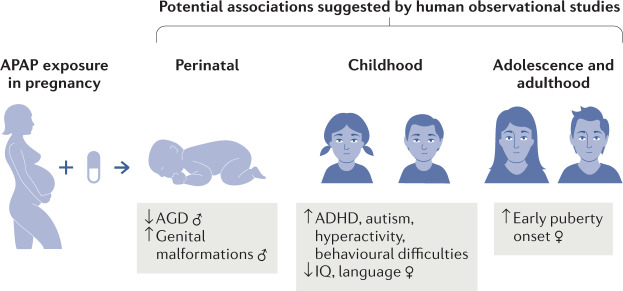
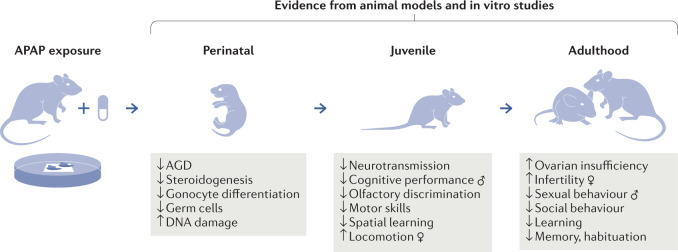
Verification
Claims the paper makes
The claims and statistics of this paper haven’t been checked yet.
Free: it reads the open-access text and checks the first 5 claims that cite a source we can check. Create a free account to check every claim.
Claims other papers make about this one
Each is checked against this paper’s own text: does it say what the citing paper says it does?
The cited source says what the claim attributes to it.
In the citing paper
“Early epidemiological associations and a widely publicized consensus statement urging precaution [ 16 , 62 ] were substantially attenuated toward the null when familial confounding was addressed through sibling-control analysis in a cohort of nearly 2.5 million children [ 22 ]”
From Paracetamol: A History of Assumptions, Errors, and Evidence Reversals in Pain Management (2026) · cites this paper as [62]
Self-check
Percentages, sums and reported differences re-computed from the paper’s own numbers.
The self-check needs the paper’s full text.
Citations
Cites
Dose translation from animal to human studies revisited.
Reagan‐Shaw, S., Nihal, M., & Ahmad, N. (2008) · The FASEB Journal · doi:10.1096/fj.07-9574lsf · Cited by 6,524
Rice, D., & Barone, S. (2000) · Environmental Health Perspectives · doi:10.1289/ehp.00108s3511 · Cited by 2,944
Larson, A. M., Polson, J., Fontana, R. J., Davern, T. J., Lalani, E., Hynan, L. S., Reisch, J. S., Schiødt, F. V., Ostapowicz, G., Shakil, A. O., et al. (2005) · Hepatology · doi:10.1002/hep.20948 · Cited by 1,926
Neurobehavioural effects of developmental toxicity
Grandjean, P., & Landrigan, P. J. (2014) · The Lancet Neurology · doi:10.1016/s1474-4422(13)70278-3 · Cited by 1,886
Multiple Female Reproductive Failures in Cyclooxygenase 2–Deficient Mice
Lim, H., Paria, B. C., Das, S. K., Dinchuk, J. E., Langenbach, R., Trzaskos, J. M., & Dey, S. K. (1997) · Cell · doi:10.1016/s0092-8674(00)80402-x · Cited by 1,430
Temporal trends in sperm count: a systematic review and meta-regression analysis
Levine, H., Jørgensen, N., Martino-Andrade, A., Mendiola, J., Weksler-Derri, D., Mindlis, I., Pinotti, R., & Swan, S. H. (2017) · Human Reproduction Update · doi:10.1093/humupd/dmx022 · Cited by 1,374
Self-citationPrevalence and Trends of Developmental Disabilities among Children in the United States: 2009–2017
Zablotsky, B., Black, L. I., Maenner, M. J., Schieve, L. A., Danielson, M. L., Bitsko, R. H., Blumberg, S. J., Kogan, M. D., & Boyle, C. A. (2019) · Pediatrics · doi:10.1542/peds.2019-0811 · Cited by 1,217
La Merrill, M. A., Vandenberg, L. N., Smith, M. T., Goodson, W., Browne, P., Patisaul, H. B., Guyton, K. Z., Kortenkamp, A., Cogliano, V. J., Woodruff, T. J., et al. (2020) · Nature Reviews Endocrinology · doi:10.1038/s41574-019-0273-8 · Cited by 1,005
Skakkebaek, N. E., Rajpert-De Meyts, E., Buck Louis, G. M., Toppari, J., Andersson, A.-M., Eisenberg, M. L., Jensen, T. K., Jørgensen, N., Swan, S. H., Sapra, K. J., et al. (2016) · Physiological Reviews · doi:10.1152/physrev.00017.2015 · Cited by 977
Self-citationWelsh, M., Saunders, P. T. K., Fisken, M., Scott, H. M., Hutchison, G. R., Smith, L. B., & Sharpe, R. M. (2008) · Journal of Clinical Investigation · doi:10.1172/jci34241 · Cited by 781
Research works printed but not linked: 1
- 149. Hay-Schmidt, A. et al. Prenatal exposure to paracetamol/acetaminophen and precursor aniline impairs masculinisation of male brain and behaviour. Reproduction 154, 145-152 (2017). · DOI
Cited by
Items 201–228 of 228
Prevalence and predictors of analgesic use during early pregnancy in a Brazilian population
Passoni, M. T., Rompkovski, M. R., Rios, V. A. S., Ribeiro, D. C. K., Maltoni, A. A., Basso, C. G., Tolouei, S. E. L., Franco, J. M., da Silva, B. M., Martino‐Andrade, A. J., et al. (2026) · Frontiers in Pharmacology · doi:10.3389/fphar.2026.1730483
“Recently, a group of scientists, clinicians, and health professionals published a Consensus Statement on paracetamol use during pregnancy (Bauer et al., 2021).”
Roca-Pogo, J. (2026) · Research Square · doi:10.21203/rs.3.rs-8971010/v1
Kaplan, Y. C., Yilmaz, I. C., Karadaş, B., Gungor, M., & Can, H. (2026) · Family practice and palliative care · doi:10.22391/fppc.1810279
Herrington, J. A., Mans, R. A., Harshaw, C., Richardson, J., Tran, J., Bender, J., & Ware, C. (2026) · Developmental Psychobiology · doi:10.1002/dev.70138
Alteration and targeting of microglia in congenital cytomegalovirus infection of the brain
Crespo-Quiles, C. (2022) · theses.fr (ABES) · doi:10.70675/29ec439fz69eez4682z94c4z4ed1778367f0
The Prenatal Dilemma: Fever vs Acetaminophen? Navigating a Difficult Choice
Darayesh, M., Entezar-Almahdi, E., Jahromi, M. A. M., Falahi, S., Kenarkoohi, A., & Abdoli, A. (2026) · ACS Pharmacology & Translational Science · doi:10.1021/acsptsci.5c00749
Schmerztherapie während der Schwangerschaft: Eine Gratwanderung zwischen Nutzen und Risiko
Paulus, W. E. (2026) · Der Schmerz · doi:10.1007/s00482-026-00943-8
Urologic Emergencies in Pregnant Women: Special Considerations
Aoun, R., Germanou, A., Pauphilet, V., & Hermieu, J. (2026) · Springer eBooks · doi:10.1007/978-3-031-52619-0_9
Dynamic changes in postpartum autonomic nervous system in normal mice: a pilot study
Shimizu, K., Arata, S., Kikusui, T., & Mogi, K. (2026) · PeerJ · doi:10.7717/peerj.21142
“In this protocol, no analgesics were administered because of their potential effects on fetuses and behavior ( Thiele et al., 2015 ; Dean et al., 2016 ; Bauer et al., 2021 ; Elam et al., 2022 ).”
Malyshkina, A., Solar, M., Balasubramaniyan, N., Zheng, L., McCulley, D. J., Morro, M., Seymour, C., Sajti, E., Orlicky, D. J., Sosa, A., et al. (2026) · American Journal of Physiology-Lung Cellular and Molecular Physiology · doi:10.1152/ajplung.00085.2026
Escudero, C. (2026) · The Journal of Physiology · doi:10.1113/jp291394
Ovsiowitz, R. S., & Convery, Q. W. (2026) · Physical Medicine and Rehabilitation Clinics of North America · doi:10.1016/j.pmr.2026.03.002
Acetaminophen exposure in an aging population and neurodegenerative outcomes
Kim, H. J., & Jeong, S. (2026) · European Journal of Clinical Pharmacology · doi:10.1007/s00228-026-04108-5
Maternal paracetamol use during pregnancy and child IQ at age 7: A prospective cohort study
Andreasen, S. M., Lund, L. C., Bilenberg, N., Frederiksen, H. W., Kristensen, D. M., Hagen, C. P., Juul, A., Beck, I. H., & Jensen, T. K. (2026) · Early Human Development · doi:10.1016/j.earlhumdev.2026.106611
Self-citationSafety and Effectiveness of Pain Medications for Migraine Management During Pregnancy and Lactation
Smirnoff, L., Mancera, N. G., Hyppolite, T., Lozano, D., & Cocores, A. N. (2026) · Pediatric Drugs · doi:10.1007/s40272-026-00760-7
“A 2021 summary of evidence and consensus statement and the 2020 Agency for Healthcare Research and Quality systematic review raised concerns about its use and called for precautionary action [18, 19].”
Spiller, C. M., Webster, A. B., Svingen, T., & Martino‐Andrade, A. J. (2026) · Frontiers in Toxicology · doi:10.3389/ftox.2026.1915721
Eschalier, A., & Mallet, C. (2025) · Dunod eBooks · doi:10.3917/dunod.poisb.2025.01.1285
Acetaminophen and pregnancy: common exposure, potential placental impact
Etuka, B.-S., Eason, C. R., Golden, E., Derderian, S. C., & Wright, C. J. (2026) · Journal of Animal Science · doi:10.1093/jas/skag209 · Cited by 1
“…of adverse outcomes in offspring, including neurodevelopmental disorders such as autism spectrum disorder (ASD) and attention-deficit/ hyperactivity disorder (ADHD), reproductive abnormalities, asthma, and lower intelligence quotient (IQ) scores (Toda 2017; Bauer et al. 2021; Buhrer et al. 2021).”
Szabó, J., Feješ, A., Bačiak, L., Fujeríková, G., Renczés, E., Gogola, D., Wadghiri, Y. Z., Ostatníková, D., & Celec, P. (2026) · Acta Neuropathologica Communications · doi:10.1186/s40478-026-02385-w
“Previously, some concerns have been raised about a possible link between maternal APAP use during pregnancy, often related to treating infection and fever [30–32], and elevated risk of ASD in children [33].”
Parvin, I., Abunimeh, H., Alshammari, H. A., Kurdi, A. B., Bennie, M., & Mueller, T. (2026) · Expert Review of Clinical Pharmacology · doi:10.1080/17512433.2026.2710151
“Codeine/paracetamol (N02AJ06) and hydrocodone with acetaminophen (N02AJ22) were also prevalent, suggesting their application for pain management and as antipyretics [115].”
Zhang, F., Li, Q., Sun, X., Guo, Y., Wang, H., & Chen, L. (2026) · Experimental & Molecular Medicine · doi:10.1038/s12276-026-01793-1
“Acetaminophen (paracetamol), the most commonly prescribed analgesic during pregnancy for fever and mild-to-moderate pain 15 , is considered the lowest risk and the highest bene fi t analgesic during gestation 16 .”
A pilot autism case-control study of pesticides and plasticizers in shed baby teeth
Heilbrun, L. P., Han, I., Rodriguez, A., Shay, L. A., & Gimeno, D. (2026) · Neurotoxicology and Teratology · doi:10.1016/j.ntt.2026.107710
The interaction between paracetamol and ethanol during the early development of zebrafish
Małkowska, A., Wieczorek, K., Pawlak, K., & Bonder, J. E. (2026) · Frontiers in Pharmacology · doi:10.3389/fphar.2026.1858736
Geyter, C. D. (2026) · Human Reproduction Open · doi:10.1093/hropen/hoag074
“Recommendations on the use of paracetamol during pregnancy must now be revised (Bauer et al. , 2021; Smith and Zipursky, 2026).”
Khassenbekova, Z., Kozhakhmetova, S., Tarzhanova, D., Zhantureyeva, A., Уызбаева, И. К., Shoman, A., Tultabayevа, T., Konysbayeva, D., Makangali, K., & Sagandyk, A. (2026) · Metabolites · doi:10.3390/metabo16100698
“Paracetamol (acetaminophen) is among the most widely used analgesic–antipyretic agents and a first-line over-the-counter option for pain and fever, including in pregnant women and infants, with more than 50% of pregnant women worldwide reporting its use during gestation [19,20].”
Jiang, Y., Wu, Q., Song, F., Nie, Z., Wang, C., Liu, J., Jiang, J., Qiu, J., & He, J. (2026) · Journal of Agricultural and Food Chemistry · doi:10.1021/acs.jafc.6c13164
Schmerztherapie während der Schwangerschaft: Eine Gratwanderung zwischen Nutzen und Risiko
Paulus, W. E. (2026) · Die Gynäkologie · doi:10.1007/s00129-026-05570-z
Martino‐Andrade, A. J., Kempinas, W. D. G., Levine, H., Toppari, J., Mendiola, J., Fenster, L., Windham, G., Neville, S., & Barrett, E. S. (2026) · Reproductive Toxicology · doi:10.1016/j.reprotox.2026.109396
Metadata
- Authors
- Bauer, A. Z., Swan, S. H., Kriebel, D., Liew, Z., Taylor, H. S., Bornehag, C.-G., Andrade, A. M., Olsen, J., Jensen, R. H., Mitchell, R. T., Skakkebaek, N. E., Jégou, B., & Kristensen, D. M.
- Affiliations
- University of Massachusetts Lowell (US)
- Icahn School of Medicine at Mount Sinai (US)
- Yale University (US)
- Yale New Haven Hospital (US)
- Karlstad University (SE)
- Aarhus University (DK)
- University of Copenhagen (DK)
- MRC Centre for Reproductive Health (GB)
- Inserm (FR)
- Corresponding author
- Kristensen, David M.
- ORCID
- Venue
- Nature Reviews Endocrinology
- Published
- 2021-09-23
- Volume
- 17
- Issue
- 12
- Pages
- 757-766
- ISSN
- 1759-5029 (ISSN-L)
- 1759-5037
- PMC
- PMC8580820
- OpenAlex
- W3198986471
- Semantic Scholar
- 4ba0bc59b1ccd7a315dec367bfaaaf737e7f4582
- Cited by
- 228
- References
- 162
- Citations by year
- 2026: 47 · 2025: 53 · 2024: 38 · 2023: 43 · 2022: 39 · 2021: 8
- FWCI
- 5.70
- Type
- journal article
- Language
- en
- Open access
- hybrid
- doi.org
- Licence
- cc-by
- creativecommons.org/licenses/by/4.0 (tdm)
- creativecommons.org/licenses/by/4.0 (vor)
- Locations
- Nature Reviews Endocrinology (publishedVersion, cc-by)
- PubMed Central (publishedVersion, cc-by)
- PubMed (publishedVersion)
- Research at the University of Copenhagen (University of Copenhagen) (publishedVersion, cc-by)
- Digitala vetenskapliga arkivet (Diva) (Karlstad University) (submittedVersion, other-oa)
- Edinburgh Research Explorer (University of Edinburgh) (submittedVersion, cc-by)
- Funders
- UK Research and Innovation (MR/S017151/1)
- Lundbeckfonden (R324-2019-1881)
- National Institutes of Health (UL1TR001863)
- National Center for Advancing Translational Sciences
- Topics
- Health Sciences › Medicine › Public Health, Environmental and Occupational Health › Pregnancy and Medication Impact
- Health Sciences › Medicine › Pediatrics, Perinatology and Child Health › Pharmacological Effects and Toxicity Studies
- Health Sciences › Medicine › Pediatrics, Perinatology and Child Health › Prenatal Substance Exposure Effects
- Keywords
- paracetamol, pregnancy, prenatal drug exposure, fetal development, neurodevelopmental disorders, reproductive disorders, genitourinary diseases, precautionary action, drug use in pregnancy, dose minimization
- MeSH terms
- Acetaminophen, Female, Humans, Pregnancy, Fetal Development
About these checks
Registry, retraction, Cites and statistics results are computed, not judged, with one exception: a printed reference that no index lists is read once by a model before it counts as a citation error. Claims are extracted by a model and kept only when their quote appears verbatim in the text; each cited source is then checked, with a model’s help, for whether it says what the claim relies on. Those verdicts can be wrong — read the claim’s quote and the cited source before relying on one.
Statistics and arithmetic are recomputed, not judged.
Confidence bands are shown only for fields calibrated on our annotated test set. None is calibrated yet, so no band is shown.
What counts as a claim ›How we measure confidence ›How we check this ›
Are you an author, or do you see a problem with this page? Request a review
Data sources
Bibliographic data: Semantic Scholar, OpenAlex, Crossref.
Contains information from the Semantic Scholar Academic Graph Datasets, made available under the ODC Attribution License (ODC-BY 1.0).
Semantic Scholar’s data is described in: Kinney, R., et al. (2023). The Semantic Scholar Open Data Platform. arXiv:2301.10140.
