

The DOI matches its Crossref record; 36 of the 36 references it cites were found in a registry or an index.
Factors associated with COVID-19-related death using OpenSAFELY
Open accessPublished version of a preprint
Abstract
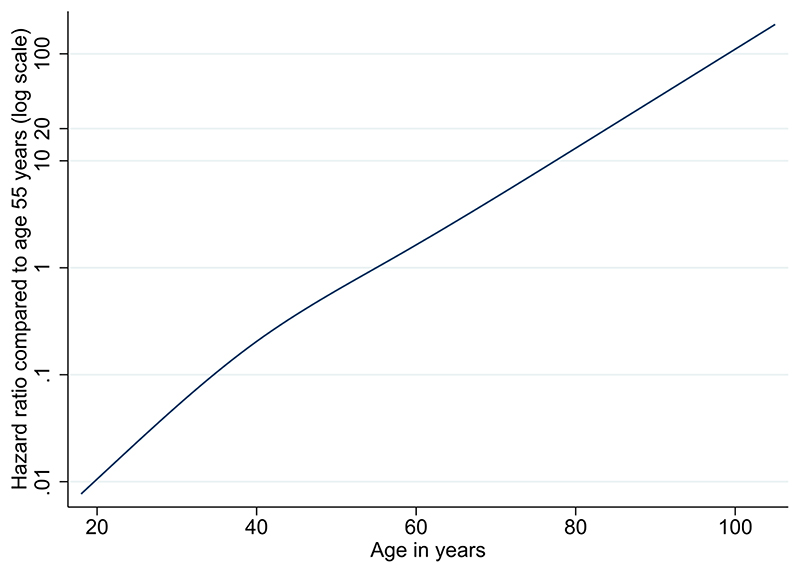
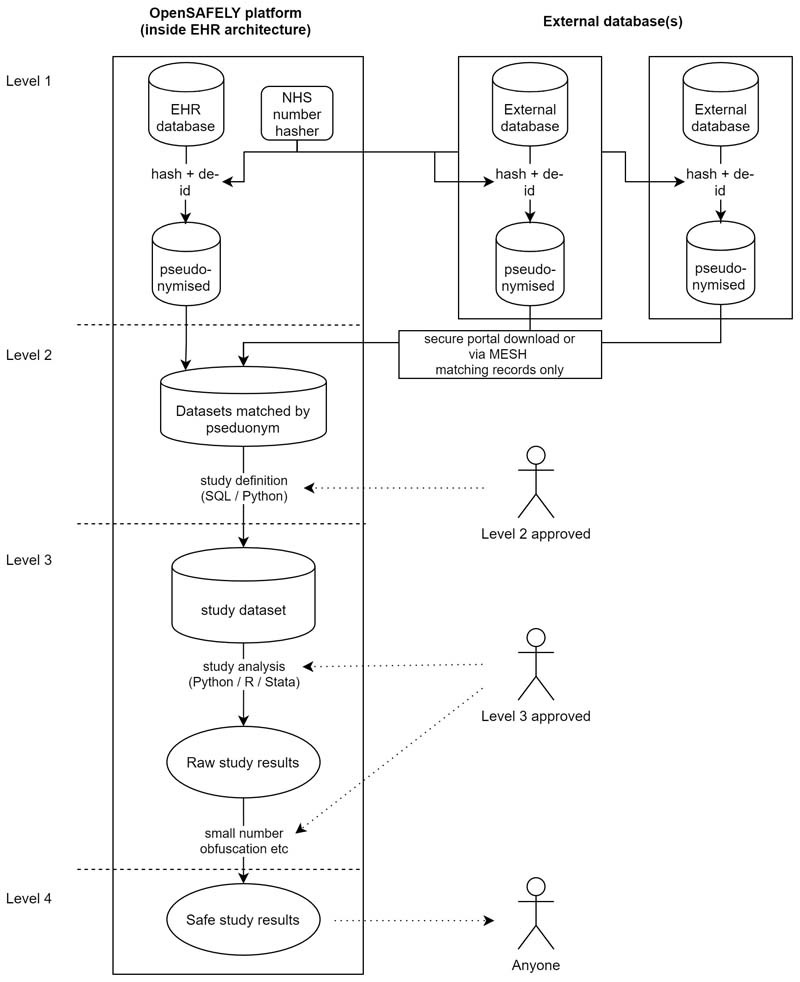
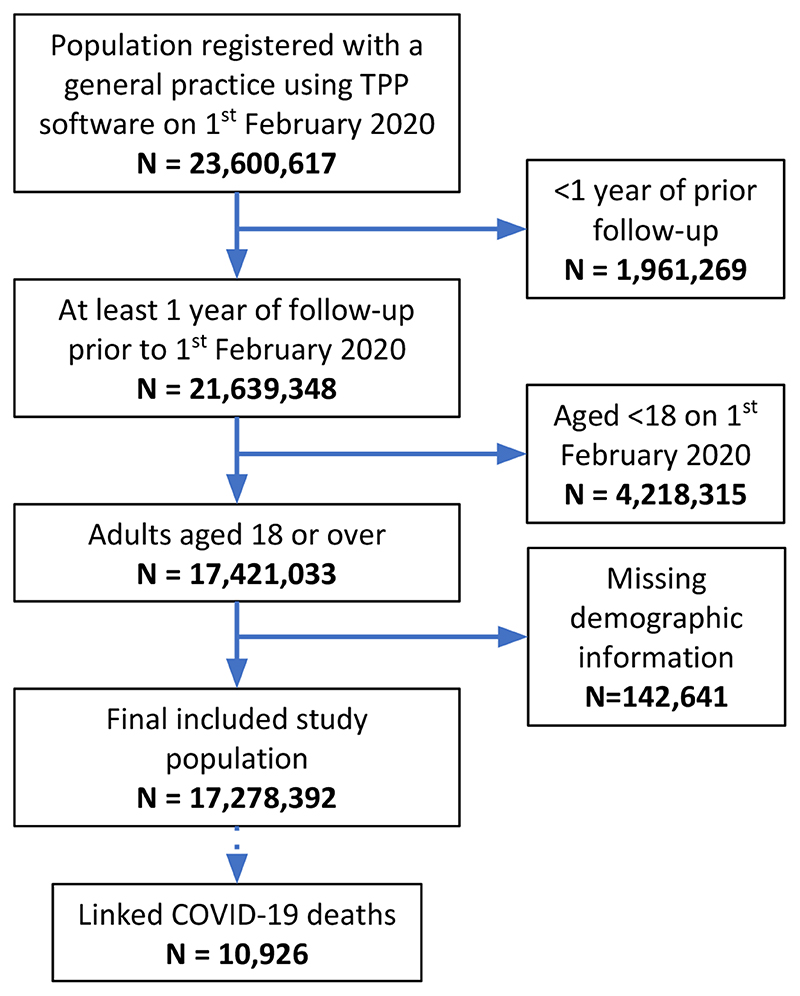
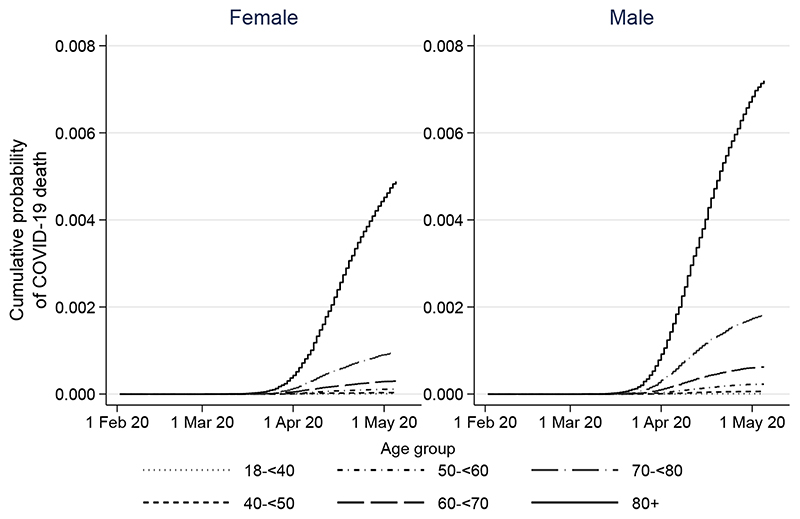
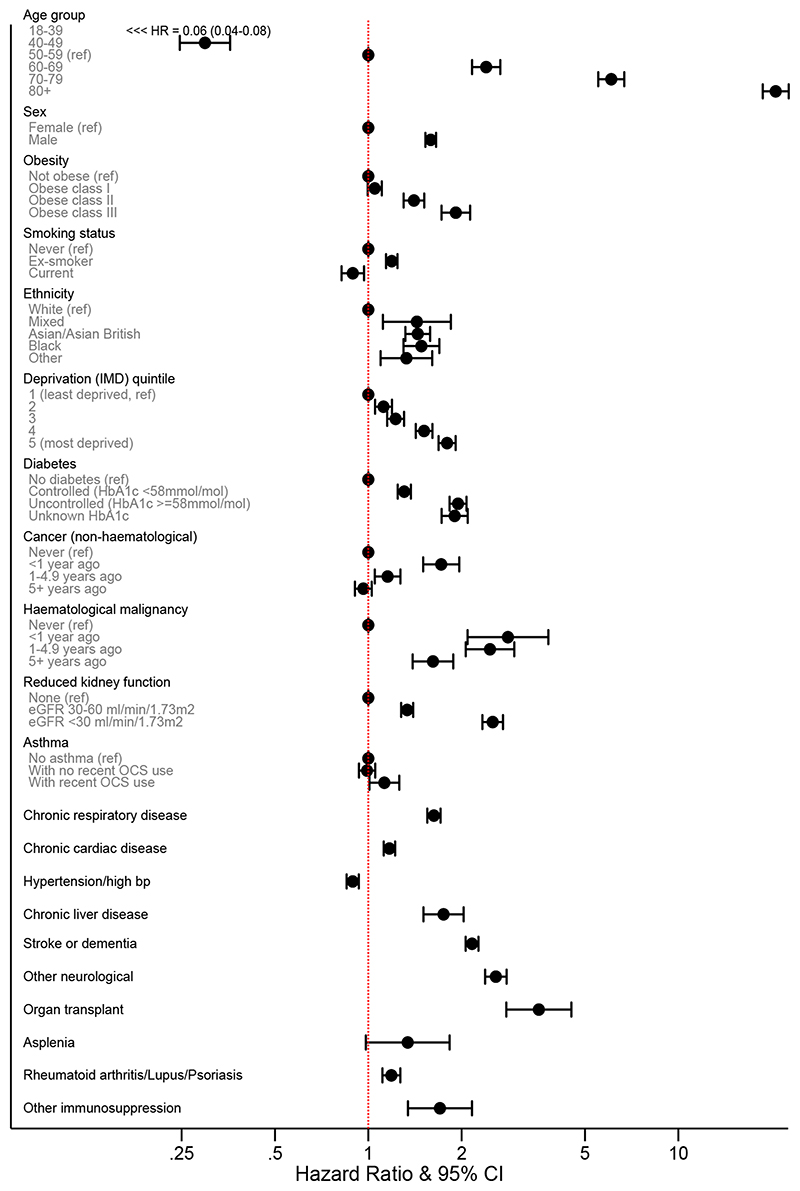
Coronavirus disease 2019 (COVID-19) has rapidly affected mortality worldwide 1. There is unprecedented urgency to understand who is most at risk of severe outcomes, and this requires new approaches for the timely analysis of large datasets. Working on behalf of NHS England, we created OpenSAFELY-a secure health analytics platform that covers 40% of all patients in England and holds patient data within the existing data centre of a major vendor of primary care electronic health records. Here we used OpenSAFELY to examine factors associated with COVID-19-related death. Primary care records of 17,278,392 adults were pseudonymously linked to 10,926 COVID-19-related deaths. COVID-19-related death was associated with: being male (hazard ratio (HR) 1.59 (95% confidence interval 1.53-1.65)); greater age and deprivation (both with a strong gradient); diabetes; severe asthma; and various other medical conditions. Compared with people of white ethnicity, Black and South Asian people were at higher risk, even after adjustment for other factors (HR 1.48 (1.29-1.69) and 1.45 (1.32-1.58), respectively). We have quantified a range of clinical factors associated with COVID-19-related death in one of the largest cohort studies on this topic so far. More patient records are rapidly being added to OpenSAFELY, we will update and extend our results regularly.
Overview
The claims and statistics of this paper haven’t been checked yet.
Run the check — free, no account needed. It reads the open-access text and checks the sources it cites.
Integrity signals
Registry
Cites
Statistics
Figures
Verification
Claims the paper makes
The claims and statistics of this paper haven’t been checked yet.
Run the check — free, no account needed. It reads the open-access text and checks the sources it cites.
Claims other papers make about this one
Each is checked against this paper’s own text: does it say what the citing paper says it does?
The source backs part of the claim, not all of it — or backs it for a different population, condition or comparison.
In the citing paper
“Age is the major clinical risk factor for severe, critical, and fatal COVID-19”
From COVID-19 and the human innate immune system (2021) · cites this paper as Williamson et al., 2020
Experimental — accuracy not yet measuredThe source backs part of the claim, not all of it — or backs it for a different population, condition or comparison.
In the citing paper
“There is now a preponderance of evidence demonstrating that the epidemic has disproportionately affected lower income sub-city units, and the Americas is no exception [17–22].”
From Social epidemiology of urban COVID-19 inequalities in Latin America and Canada (2024) · cites this paper as [22]
Experimental — accuracy not yet measuredThe source backs part of the claim, not all of it — or backs it for a different population, condition or comparison.
In the citing paper
“Social inequalities in COVID-19 deaths were evident during the early pandemic period across the world(2-8).”
From Social inequalities in COVID-19 death by area-level income in 11.2 million people in Ontario, Canada: patterns over time and the mediating role of vaccination. (2026) · cites this paper as [4]
Experimental — accuracy not yet measured
Self-check
Percentages, sums and reported differences re-computed from the paper’s own numbers.
The self-check needs the paper’s full text.
Citations
Cites
Clinical characteristics of coronavirus disease 2019 in China
Guan, W.-J., Ni, Z.-Y., Hu, Y., Liang, W.-H., Ou, C.-Q., He, J.-X., Liu, L., Shan, H., Lei, C.-L., Hui, D. S. C., et al. (2020) · New England Journal of Medicine · doi:10.1056/nejmoa2002032 · Cited by 30,246
Toprak, Ö., Kurt, H., Sarı, Y., Şarkış, C., Us, H., & Kırık, A. (2017) · Kidney & Blood Pressure Research · doi:10.1159/000468530 · Cited by 29,772
A New Equation to Estimate Glomerular Filtration Rate
Levey, A. S., Stevens, L. A., Schmid, C. H., Zhang, Y. (., Castro, A. F., Feldman, H. I., Kusek, J. W., Eggers, P., Van Lente, F., Greene, T., et al. (2009) · Annals of Internal Medicine · doi:10.7326/0003-4819-150-9-200905050-00006 · Cited by 25,603
Closing the gap in a generation: health equity through action on the social determinants of health
Marmot, M. G., Friel, S., Bell, R., Houweling, T. A. J., & Taylor, S. A. J. (2008) · The Lancet · doi:10.1016/s0140-6736(08)61690-6 · Cited by 8,473
Docherty, A. B., Harrison, E. M., Green, C. A., Hardwick, H. E., Pius, R., Norman, L., Holden, K. A., Read, J. M., Dondelinger, F., Carson, G., et al. (2020) · BMJ · doi:10.1136/bmj.m1985 · Cited by 3,481
Simonnet, A., Chetboun, M., Poissy, J., Raverdy, V., Noulette, J., Duhamel, A., Labreuche, J., Mathieu, D., Pattou, F. N., Jourdain, M., et al. (2020) · Obesity · doi:10.1002/oby.22831 · Cited by 2,150
Clegg, A. P., Bates, C. J., Young, J. B., Ryan, R. P., Nichols, L., Teale, E. A., Mohammed, M. A., Parry, J., & Marshall, T. P. (2016) · Age and Ageing · doi:10.1093/ageing/afw039 · Cited by 1,341
Self-citationObesity in Patients Younger Than 60 Years Is a Risk Factor for COVID-19 Hospital Admission
Lighter, J., Phillips, M., Hochman, S. E., Sterling, S., Johnson, D., François, F., & Stachel, A. G. (2020) · Clinical Infectious Diseases · doi:10.1093/cid/ciaa415 · Cited by 1,233
Multiple Imputation and its Application
Carpenter, J. R., & Kenward, M. G. (2013) · doi:10.1002/9781119942283 · Cited by 913 · cited 1×
“We conducted an additional sensitivity analysis using a population-calibrated imputation approach to handle missing ethnicity 49,50 , with marginal proportions of each ethnicity group within each of nine broad geographical regions of England (East, East Midlands, London, North East, North West,…”
MethodStrongman, H., Gadd, S. C., Matthews, A., Mansfield, K. E., Stanway, S. J., Lyon, A. R., dos‐Santos‐Silva, I., Smeeth, L. L., & Bhaskaran, K. (2019) · The Lancet · doi:10.1016/s0140-6736(19)31674-5 · Cited by 548
Self-citation
Research works printed but not linked: 1
- Institute for Fiscal Studies. Are some ethnic groups more vulnerable to COVID-19 than others? https://web.archive.org/web/20200502130148/https://www.ifs.org.uk/inequality/chapter/are-some-ethnic-groups-more-vulnerable-to-covid-19-than-others/ (2020).
Cited by
Sorted by citations
Items 601–700 of 1,015
Rydland, H. T., Friedman, J. R., Stringhini, S., Link, B. G., & Eikemo, T. A. (2022) · Humanities and Social Sciences Communications · doi:10.1057/s41599-022-01073-z · Cited by 76
Luo, S., Liang, Y., Wong, T. H. T., Schooling, C. M., & Yeung, S. L. A. (2022) · International Journal of Epidemiology · doi:10.1093/ije/dyac076 · Cited by 78
Impact of COVID-19 on people with asthma: a mixed methods analysis from a UK wide survey
Philip, K. E. J., Buttery, S. C., Williams, P. J., Vijayakumar, B., Tonkin, J., Cumella, A., Renwick, L., Ogden, L., Quint, J. K., Johnston, S. L., et al. (2022) · BMJ Open Respiratory Research · doi:10.1136/bmjresp-2021-001056 · Cited by 77
Wagner, C., Griesel, M., Mikołajewska, A., Metzendorf, M., Fischer, A.-L., Stegemann, M. S., Spagl, M., Nair, A. A., Daniel, J., Fichtner, F., et al. (2022) · Cochrane Database of Systematic Reviews · doi:10.1002/14651858.cd014963.pub2 · Cited by 79
Who should be prioritised for COVID-19 vaccination?
Russell, F. M., & Greenwood, B. (2021) · Human Vaccines & Immunotherapeutics · doi:10.1080/21645515.2020.1827882 · Cited by 75
ARIA‐EAACI statement on asthma and COVID‐19 (June 2, 2020)
Bousquet, J., Jutel, M., Akdiş, C. A., Klimek, L., Pfaar, O., Nadeau, K. C., Eiwegger, T., Bedbrook, A., Ansotegui, I. J., Antó, J. M., et al. (2020) · Allergy · doi:10.1111/all.14471 · Cited by 75
de Joode, K., Dumoulin, D. W., Tol, J., Westgeest, H. M., Beerepoot, L. V., van den Berkmortel, F. W. P. J., Mutsaers, P. G. N. J., van Diemen, N. G. J., Visser, O. J., Hoop, E. O., et al. (2020) · European Journal of Cancer · doi:10.1016/j.ejca.2020.09.027 · Cited by 75
Izzi‐Engbeaya, C. N., Distaso, W., Amin, A., Yang, W., Idowu, O., Kenkre, J. S., Shah, R. J., Woin, E., Shi, C., Alavi, N., et al. (2021) · BMJ Open Diabetes Research & Care · doi:10.1136/bmjdrc-2020-001858 · Cited by 78
Ethnic disparities in COVID-19 mortality in Mexico: A cross-sectional study based on national data
Ibarra-Nava, I., Flores-Rodriguez, K. G., Ruiz-Herrera, V., Ochoa-Bayona, H. C., Salinas‐Zertuche, A., Padilla‐Orozco, M., & Salazar-Montalvo, R. G. (2021) · PLoS ONE · doi:10.1371/journal.pone.0239168 · Cited by 75
Yuan, L.-Z., Zhu, H.-C., Zhou, M., Ma, J., Chen, R., Chen, Y., Chen, L., Wu, K., Cai, M., Hong, J., et al. (2021) · Signal Transduction and Targeted Therapy · doi:10.1038/s41392-021-00552-0 · Cited by 79
Memory is key in capturing COVID-19 epidemiological dynamics
Sofonea, M. T., Reyné, B., Elie, B., Djidjou‐Demasse, R., Selinger, C., Michalakis, Y., & Alizon, S. (2021) · Epidemics · doi:10.1016/j.epidem.2021.100459 · Cited by 83
COVID-19: Seroprevalence and Vaccine Responses in UK Dental Care Professionals
Shields, A. M., Faustini, S. E., Kristunas, C., Cook, A. M., Backhouse, C., Dunbar, L., Ebanks, D., Emmanuel, B., Crouch, E., Kröger, A., et al. (2021) · Journal of Dental Research · doi:10.1177/00220345211020270 · Cited by 80
A review of Covid-19 and acute kidney injury: from pathophysiology to clinical results
Pecly, I. M. D., Azevedo, R. B., Muxfeldt, E. S., Botelho, B. G., de Albuquerque, G. G., Diniz, P. H. P., Silva, R., & Rodrigues, C. I. S. (2021) · Brazilian Journal of Nephrology · doi:10.1590/2175-8239-jbn-2020-0204 · Cited by 80
Soziale Ungleichheit und COVID-19: Sozialepidemiologische Perspektiven auf die Pandemie
Wachtler, B., & Hoebel, J. (2020) · Das Gesundheitswesen · doi:10.1055/a-1226-6708 · Cited by 74
Strohbehn, G. W., Heiss, B. L., Rouhani, S. J., Trujillo, J., Yu, J., Kacew, A. J., Higgs, E. F., Bloodworth, J. C., Cabanov, A., Wright, R. C., et al. (2020) · Clinical Pharmacology & Therapeutics · doi:10.1002/cpt.2117 · Cited by 76
The swedish covid‐19 intensive care cohort: Risk factors of ICU admission and ICU mortality
Ahlström, B., Frithiof, R., Hultström, M., Larsson, I., Strandberg, G., & Lipcsey, M. (2021) · Acta Anaesthesiologica Scandinavica · doi:10.1111/aas.13781 · Cited by 74
Richter, A. G., Shields, A. M., Karim, A., Birch, D., Faustini, S. E., Steadman, L. G., Ward, K. E., Plant, T. D., Reynolds, G. M., Veenith, T., et al. (2021) · Clinical & Experimental Immunology · doi:10.1111/cei.13623 · Cited by 78
Iron metabolism in infections: Focus on COVID-19
Girelli, D., Marchi, G., Busti, F., & Vianello, A. (2021) · Seminars in Hematology · doi:10.1053/j.seminhematol.2021.07.001 · Cited by 75
Diabetes, Drug Treatment and Mortality in COVID-19: A Multinational Retrospective Cohort Study
Nyland, J. E., Raja-Khan, N. T., Bettermann, K., Haouzi, P. A., LESLIE, D. L., Kraschnewski, J. L., Parent, L. J., & Grigson, P. S. (2020) · Diabetes · doi:10.2337/db21-0385 · Cited by 74
A New Era of Pharmacovigilance: Future Challenges and Opportunities
Trifirò, G., & Crisafulli, S. (2022) · Frontiers in Drug Safety and Regulation · doi:10.3389/fdsfr.2022.866898 · Cited by 74
COVID-19 Severity in Multiple Sclerosis
Sormani, M. P., Schiavetti, I., Carmisciano, L., Cordioli, C., Filippi, M., Radaelli, M., Immovilli, P., Capobianco, M. A. N., Rossi, N. D., Brichetto, G., et al. (2021) · Neurology Neuroimmunology & Neuroinflammation · doi:10.1212/nxi.0000000000001105 · Cited by 75
O’Brien, K. K., Brown, D. A., McDuff, K., Clair‐Sullivan, N. S., Solomon, P. E., Carusone, S. C., McCorkell, L., Wei, H., Goulding, S., O’Hara, M. E., et al. (2023) · Archives of Physical Medicine and Rehabilitation · doi:10.1016/j.apmr.2022.12.054 · Cited by 74
Scully, E. P., Schumock, G., Fu, M., Massaccesi, G., Muschelli, J., Betz, J., Klein, E. Y., West, N. E., Robinson, M., Garibaldi, B. T., et al. (2021) · Open Forum Infectious Diseases · doi:10.1093/ofid/ofab448 · Cited by 73
The Laboratory Diagnosis of Coronavirus Disease 2019— Frequently Asked Questions
Fang, F. C., Naccache, S. N., & Greninger, A. L. (2020) · Clinical Infectious Diseases · doi:10.1093/cid/ciaa742 · Cited by 72
Outcomes from COVID-19 across the range of frailty: excess mortality in fitter older people
Miles, A., Webb, T. E., Mcloughlin, B. C., Mannan, I., Rather, A., Knopp, P., & Davis, D. H. J. (2020) · European Geriatric Medicine · doi:10.1007/s41999-020-00354-7 · Cited by 77
Catecholamine physiology and its implications in patients with COVID-19
Gubbi, S., Nazari, M. A., Taïeb, D., Kłubo-Gwieździńska, J., & Pacák, K. (2020) · The Lancet Diabetes & Endocrinology · doi:10.1016/s2213-8587(20)30342-9 · Cited by 73
Petermann-Rocha, F. E., Hanlon, P., Gray, S. R., Welsh, P. I., Gill, J. M. R., Foster, H. M. E., Katikireddi, S. V., Lyall, D. M., Mackay, D., O’Donnell, C. A., et al. (2020) · BMC Medicine · doi:10.1186/s12916-020-01822-4 · Cited by 73
Hidden morbidities: drop in cancer diagnoses during the COVID-19 pandemic in Denmark
Skovlund, C. W., Friis, S., Dehlendorff, C., Nilbert, M. C., & Mørch, L. S. (2020) · Acta Oncologica · doi:10.1080/0284186x.2020.1858235 · Cited by 75
Cook, T. M., & Roberts, J. V. (2021) · Anaesthesia · doi:10.1111/anae.15442 · Cited by 73
The intersection of COVID-19 and cancer: signaling pathways and treatment implications
Zong, Z., Wei, Y., Ren, J., Zhang, L., & Zhou, F. (2021) · Molecular Cancer · doi:10.1186/s12943-021-01363-1 · Cited by 74
COVID-19 incidence and mortality in non-dialysis chronic kidney disease patients
Gibertoni, D., Reno, C., Rucci, P., Fantini, M. P., Buscaroli, A., Mosconi, G., Rigotti, A., Giudicissi, A., Mambelli, E., Righini, M., et al. (2021) · PLoS ONE · doi:10.1371/journal.pone.0254525 · Cited by 73
Benowitz, N. L., Goniewicz, M. L., Halpern‐Felsher, B. L., Krishnan‐Sarin, S., Ling, P. M., O’Connor, R. J., Pentz, M. A., Robertson, R. M., & Bhatnagar, A. (2022) · The Lancet Respiratory Medicine · doi:10.1016/s2213-2600(22)00182-5 · Cited by 77
Ashish, A., Unsworth, A., Martindale, J. H., Sundar, R., Kavuri, K., Sedda, L., & Farrier, M. (2020) · BMJ Open Respiratory Research · doi:10.1136/bmjresp-2020-000692 · Cited by 72
Rentsch, C. T., DeVito, N., MacKenna, B., Morton, C. E., Bhaskaran, K., Brown, J. P., Schultze, A., Hulme, W. J., Croker, R., Walker, A. J., et al. (2020) · The Lancet Rheumatology · doi:10.1016/s2665-9913(20)30378-7 · Cited by 72
Self-citationPatrick, M. T., Zhang, H., Wasikowski, R., Prens, E. P., Weidinger, S., Gudjonsson, J. E., Elder, J. T., He, K., & Tsoi, L. C. (2021) · Journal of Allergy and Clinical Immunology · doi:10.1016/j.jaci.2021.01.006 · Cited by 72
Hilser, J. R., Han, Y. Y., Biswas, S., Gukasyan, J., Cai, Z., Zhu, R., Tang, W. H. W., Deb, A., Lusis, A. J., Hartiala, J., et al. (2021) · Journal of Lipid Research · doi:10.1016/j.jlr.2021.100061 · Cited by 75
Hoertel, N., Rico, M. S., Gulbins, E., Kornhuber, J., Carpinteiro, A., Lenze, E. J., Reiersen, A. M., Abellán, M., de la Muela, P., Vernet, R., et al. (2021) · Clinical Pharmacology & Therapeutics · doi:10.1002/cpt.2317 · Cited by 72
Lacy, M., Kung, T.-P. H., Owen, J. P., Yanagihara, R. T., Blazes, M. S., Pershing, S., Hyman, L., Gelder, R. N. V., Lee, A., Lee, C. S., et al. (2021) · Ophthalmology · doi:10.1016/j.ophtha.2021.07.008 · Cited by 72
Platelet activation in critically ill COVID-19 patients
Yatim, N., Boussier, J., Chocron, R., Hadjadj, J., Philippe, A., Gendron, N., Barnabei, L., Charbit, B., Szwebel, T., Carlier, N., et al. (2021) · Annals of Intensive Care · doi:10.1186/s13613-021-00899-1 · Cited by 73
COVID-19 vaccine hesitancy in the UK: a longitudinal household cross-sectional study
Chaudhuri, K., Chakrabarti, A., Chandan, J. S., & Bandyopadhyay, S. (2022) · BMC Public Health · doi:10.1186/s12889-021-12472-3 · Cited by 72
Sapey, E., Gallier, S., Mainey, C., Nightingale, P., McNulty, D., Crothers, H., Evison, F., Reeves, K., Pagano, D., Denniston, A. K., et al. (2020) · BMJ Open Respiratory Research · doi:10.1136/bmjresp-2020-000644 · Cited by 71
de Azambuja, E., Brandão, M., Wildiers, H. P. M. W., Laenen, A., Aspeslagh, S., Fontaine, C., Collignon, J., Lybaert, W., Verheezen, J., Rutten, A., et al. (2020) · ESMO Open · doi:10.1136/esmoopen-2020-000947 · Cited by 71
Gisby, J., Clarke, C., Medjeral‐Thomas, N., Malik, T. H., Papadaki, A., Mortimer, P. M., Buang, N. B., Lewis, S., Pereira, M., Toulza, F., et al. (2021) · eLife · doi:10.7554/elife.64827 · Cited by 71
Cabrera-García, D., Bekdash, R., Abbott, G. W., Yazawa, M., & Harrison, N. L. (2021) · The Journal of Physiology · doi:10.1113/jp281037 · Cited by 78
Drozd, M., Pujades‐Rodríguez, M., Lillie, P. J., Straw, S., Morgan, A. W., Kearney, M. T., Witte, K. K., & Cubbon, R. M. (2021) · The Lancet Infectious Diseases · doi:10.1016/s1473-3099(20)30978-6 · Cited by 71
COVID-19 and chronic kidney disease: a comprehensive review
Pecly, I. M. D., Azevedo, R. B., Muxfeldt, E. S., Botelho, B. G., de Albuquerque, G. G., Diniz, P. H. P., Silva, R., & Rodrigues, C. I. S. (2021) · Brazilian Journal of Nephrology · doi:10.1590/2175-8239-jbn-2020-0203 · Cited by 78
Diaz, A. D., Baweja, R., Bonatakis, J., & Baweja, R. K. (2021) · World Journal of Psychiatry · doi:10.5498/wjp.v11.i4.94 · Cited by 72
Karagiannidis, C., Straßmann, S. E., Merten, M. L., Bein, T., Windisch, W., Meybohm, P., & Weber‐Carstens, S. (2021) · American Journal of Respiratory and Critical Care Medicine · doi:10.1164/rccm.202105-1145le · Cited by 71
Espi, M., Charmetant, X., Barba, T., Koppe, L., Pelletier, C. C., Kalbacher, E., Chalençon, E., Mathias, V., Ovize, A., Cart-Tanneur, E., et al. (2021) · Kidney International · doi:10.1016/j.kint.2021.07.005 · Cited by 73
Youn, J. Y., Zhang, Y., Wu, Y., Cannesson, M. P., & Cai, H. “. (2021) · Redox Biology · doi:10.1016/j.redox.2021.102099 · Cited by 71
Epilepsy care during the COVID‐19 pandemic
Cross, J. H., Kwon, C., Asadi‐Pooya, A. A., Balagura, G., Gómez‐Iglesias, P., Guekht, A. B., Hall, J., Ikeda, A., Kishk, N. A., Murphy, P., et al. (2021) · Epilepsia · doi:10.1111/epi.17045 · Cited by 72
Maeda, K., Amano, M., Uemura, Y., Tsuchiya, K., Matsushima, T., Noda, K., Shimizu, Y., Fujiwara, A., Takamatsu, Y., Ichikawa, Y., et al. (2021) · Scientific Reports · doi:10.1038/s41598-021-01930-y · Cited by 72
Type I interferons and SARS-CoV-2: from cells to organisms
Bastard, P., Zhang, Q., Zhang, S., Jouanguy, E., & Casanova, J. (2022) · Current Opinion in Immunology · doi:10.1016/j.coi.2022.01.003 · Cited by 73
Shah, S. A., Brophy, S. T., Kennedy, J. I., Fisher, L., Walker, A. J., MacKenna, B., Curtis, H. J., Inglesby, P., Davy, S., Bacon, S., et al. (2022) · EClinicalMedicine · doi:10.1016/j.eclinm.2022.101462 · Cited by 71
Self-citationAlbrich, W. C., Ghosh, T. S., Ahearn-Ford, S., Mikaeloff, F., Lunjani, N., Forde, B. M., Suh, N., Kleger, G., Pietsch, U., Frischknecht, M., et al. (2022) · Gut Microbes · doi:10.1080/19490976.2022.2073131 · Cited by 72
Boroujeni, M. E., Sekrecka, A., Antonczyk, A., Hassani, S., Sekrecki, M., Nowicka, H., Łopacinska, N., Olya, A., Kluzek, K., Wesoły, J., et al. (2022) · Frontiers in Immunology · doi:10.3389/fimmu.2022.888897 · Cited by 74
McKeigue, P., Weir, A., Bishop, J., McGurnaghan, S. J., Kennedy, S., McAllister, D., Robertson, C., Wood, R., Lone, N., Murray, J., et al. (2020) · PLoS Medicine · doi:10.1371/journal.pmed.1003374 · Cited by 70
Who should be prioritized for COVID-19 vaccination in China? A descriptive study
Yang, J., Zheng, W., Shi, H., Yan, X., Dong, K., You, Q., Zhong, G., Gong, H., Chen, Z., Jit, M., et al. (2021) · BMC Medicine · doi:10.1186/s12916-021-01923-8 · Cited by 70
Furer, V., Rondaan, C., Agmon‐Levin, N., van Assen, S., Bijl, M., Kapetanovic, M. C., de Thurah, A. L., Müeller-Ladner, U., Paran, D., Schreiber, K. I., et al. (2021) · RMD Open · doi:10.1136/rmdopen-2021-001594 · Cited by 69
Hegyi, P. J., Váncsa, S., Ocskay, K., Dembrovszky, F., Kiss, S., Farkas, N., Erőss, B. M., Szakács, Z., Hegyi, P. J., & Pár, G. (2021) · Frontiers in Medicine · doi:10.3389/fmed.2021.626425 · Cited by 70
Brandily, P., Brébion, C., Briole, S., & Khoury, L. J. (2021) · European Economic Review · doi:10.1016/j.euroecorev.2021.103923 · Cited by 70
Current Trends on Surface Acoustic Wave Biosensors
Zida, S. I., Lin, Y., & Khung, Y. L. (2021) · Advanced Materials Technologies · doi:10.1002/admt.202001018 · Cited by 70
Vera-Zertuche, J. M., Mancilla-Galindo, J., Tlalpa-Prisco, M., Aguilar‐Alonso, P., Aguirre‐García, M. M., Segura-Badilla, O., Lazcano-Hernández, M., Rocha-González, H. I., Navarro-Cruz, A. R., Kammar‐García, A., et al. (2021) · Epidemiology and Infection · doi:10.1017/s0950268821001023 · Cited by 72
Relationship between blood type and outcomes following COVID-19 infection
Kim, Y., Latz, C. A., DeCarlo, C. S., Lee, S., Png, C. Y. M., Kibrik, P., Sung, E., Alabi, O., & Dua, A. (2021) · Seminars in Vascular Surgery · doi:10.1053/j.semvascsurg.2021.05.005 · Cited by 70
Self-protection as an adaptive female strategy
Benenson, J. F., Webb, C. E., & Wrangham, R. W. (2021) · Behavioral and Brain Sciences · doi:10.1017/s0140525x21002417 · Cited by 71
Risk factors for developing COVID-19: a population-based longitudinal study (COVIDENCE UK)
Holt, H., Talaei, M., Greenig, M., Zenner, D., Symons, J., Relton, C., Young, K. S., Davies, M. R., Thompson, K. N., Ashman, J., et al. (2021) · Thorax · doi:10.1136/thoraxjnl-2021-217487 · Cited by 71
Dewanjee, S., Kandimalla, R. J. L., Kalra, R. S., Valupadas, C., Vallamkondu, J., Kolli, V., Ray, S. D., Reddy, A. P., & Reddy, P. H. (2021) · Cells · doi:10.3390/cells10123291 · Cited by 70
Evidence-based medicine and COVID-19: what to believe and when to change
Carley, S. D., Horner, D. E., Body, R. M., & Mackway-Jones, K. C. (2020) · Emergency Medicine Journal · doi:10.1136/emermed-2020-210098 · Cited by 73
Goutte, S., Péran, T., & Porcher, T. (2020) · Research in International Business and Finance · doi:10.1016/j.ribaf.2020.101281 · Cited by 69
Lamure, S., Duléry, R., Blasi, R. D., Chauchet, A., Laureana, C., Deau, B., Drénou, B., Soussain, C., Rossi, C., Noël, N., et al. (2020) · EClinicalMedicine · doi:10.1016/j.eclinm.2020.100549 · Cited by 69
SARS-CoV-2 vaccines for cancer patients: a call to action
Corti, C., Crimini, E., Tarantino, P., Pravettoni, G., Eggermont, A. M. M., Delaloge, S., & Curigliano, G. (2021) · European Journal of Cancer · doi:10.1016/j.ejca.2021.01.046 · Cited by 68
The relationship between asthma, eosinophilia, and outcomes in coronavirus disease 2019 infection
Ho, K. S., Howell, D., Rogers, L. J., Narasimhan, B., Verma, H., & Steiger, D. J. (2021) · Annals of Allergy Asthma & Immunology · doi:10.1016/j.anai.2021.02.021 · Cited by 69
Is Ferroptosis a Key Component of the Process Leading to Multiorgan Damage in COVID-19?
Pasini, A. M. F., Stranieri, C., Girelli, D., Busti, F., & Cominacini, L. (2021) · Antioxidants · doi:10.3390/antiox10111677 · Cited by 72
Periodontitis and COVID-19: Biological Mechanisms and Meta-analyses of Epidemiological Evidence
Baima, G., Marruganti, C., Sanz, M., Aimetti, M., & Romandini, M. (2022) · Journal of Dental Research · doi:10.1177/00220345221104725 · Cited by 74
Long-term interplay between COVID-19 and chronic kidney disease
Schiffl, H., & Lang, S. M. (2023) · International Urology and Nephrology · doi:10.1007/s11255-023-03528-x · Cited by 69
Jiménez, E., Fontán‐Vela, M., Valencia, J. A. S., Jiménez, I. F., Álvaro-Alonso, E. A., Izquierdo-García, E., Cebas, A. L., Gallego, E., Troya, J., Tebar-Martínez, A. J., et al. (2020) · BMJ Open · doi:10.1136/bmjopen-2020-042398 · Cited by 68
Incidence, clinical features, and outcomes of COVID-19 in Canada: impact of sex and age
O’Brien, J. A., Du, K. Y., & Peng, C. (2020) · Journal of Ovarian Research · doi:10.1186/s13048-020-00734-4 · Cited by 68
Alzheimer’s and Parkinson’s Diseases Predict Different COVID-19 Outcomes: A UK Biobank Study
Yu, Y., Travaglio, M., Popovic, R., Leal, N. S., & Martins, L. M. (2021) · Geriatrics · doi:10.3390/geriatrics6010010 · Cited by 69
Preventing the digital scars of COVID-19
Marabelli, M., Vaast, E., & Li, J. L. (2021) · European Journal of Information Systems · doi:10.1080/0960085x.2020.1863752 · Cited by 68
Roberts, J., Pritchard, A. L., Treweeke, A. T., Rossi, A. G., Brace, N., Cahill, P. A., MacRury, S. M., Wei, J., & Megson, I. L. (2021) · Frontiers in Cardiovascular Medicine · doi:10.3389/fcvm.2020.629933 · Cited by 68
Obesity, walking pace and risk of severe COVID-19 and mortality: analysis of UK Biobank
Yates, T. E., Razieh, C., Zaccardi, F., Rowlands, A. V., Seidu, S., Davies, M. J., & Khunti, K. K. (2021) · International Journal of Obesity · doi:10.1038/s41366-021-00771-z · Cited by 68
Buttery, S. C., Zysman, M., Vikjord, S. A. A., Hopkinson, N. S., Jenkins, C. R., & Vanfleteren, L. E. G. W. (2021) · Respirology · doi:10.1111/resp.14032 · Cited by 71
COVID-19 in individuals with sickle cell disease/trait compared with other Black individuals
Singh, A., Brandow, A. M., & Panepinto, J. A. (2021) · Blood Advances · doi:10.1182/bloodadvances.2020003741 · Cited by 68
Sellegounder, D., Zafari, P., Rajabinejad, M., Taghadosi, M., & Kapahi, P. (2021) · International Immunopharmacology · doi:10.1016/j.intimp.2021.107806 · Cited by 70
Sattar, N. A., & Valabhji, J. (2021) · Current Obesity Reports · doi:10.1007/s13679-021-00448-8 · Cited by 68
Ponsford, M., Ward, T., Stoneham, S. M., Dallimore, C. M., Sham, D., Osman, K., Barry, S. M., Jolles, S. R. A., Humphreys, I. R., & Farewell, D. M. (2021) · Frontiers in Immunology · doi:10.3389/fimmu.2021.744696 · Cited by 68
Asthma Phenotypes and COVID-19 Risk: A Population-based Observational Study
Bloom, C. I., Cullinan, P., & Wedzicha, J. A. (2021) · American Journal of Respiratory and Critical Care Medicine · doi:10.1164/rccm.202107-1704oc · Cited by 68
Henkens, M. T. H. M., Raafs, A. G., Verdonschot, J. A. J., Linschoten, M., van Smeden, M., Wang, P., van der Hooft, B. H. M., Tieleman, R. G., Janssen, M. L. F., ter Bekke, R. M. A., et al. (2022) · BMC Geriatrics · doi:10.1186/s12877-021-02673-1 · Cited by 68
Curtis, J. R., Johnson, S. R., Anthony, D. D., Arasaratnam, R. J., Baden, L. R., Bass, A. R., Calabrese, C. M., Gravallese, E. M., Harpaz, R., Kroger, A. T., et al. (2022) · Arthritis & Rheumatology · doi:10.1002/art.42109 · Cited by 69
Exploring the impact of selection bias in observational studies of COVID-19: a simulation study
Millard, L. A. C., Fernández‐Sanlés, A., Carter, A. R., Hughes, R. A., Tilling, K. M., Morris, T. P., Major‐Smith, D., Griffith, G. J., Clayton, G., Kawabata, E., et al. (2022) · International Journal of Epidemiology · doi:10.1093/ije/dyac221 · Cited by 68
Palliative care for patients with severe covid-19
Ting, R., Edmonds, P. M., Higginson, I. J., & Sleeman, K. E. (2020) · BMJ · doi:10.1136/bmj.m2710 · Cited by 69
Aung, N., Khanji, M. Y., Munroe, P. B., & Petersen, S. E. (2020) · Frontiers in Genetics · doi:10.3389/fgene.2020.586308 · Cited by 69
A meta-analysis of the association between obesity and COVID-19
Yang, J., Ma, Z., & Lei, Y.-C. (2020) · Epidemiology and Infection · doi:10.1017/s0950268820003027 · Cited by 69
Effects of Environmental Factors on Severity and Mortality of COVID-19
Kifer, D., Bugada, D., Villar-García, J., Gudelj, I., Menni, C., Sudre, C. H., Vučković, F., Ugrina, I., Lorini, F. L., Posso, M., et al. (2021) · Frontiers in Medicine · doi:10.3389/fmed.2020.607786 · Cited by 68
Kone, A. P., Mondor, L., Maxwell, C. J., Kabir, U. S., Rosella, L. C., & Wodchis, W. P. (2021) · Canadian Journal of Public Health · doi:10.17269/s41997-021-00474-y · Cited by 73
Cellular and humoral immunogenicity of a SARS-CoV-2 mRNA vaccine in patients on haemodialysis
Strengert, M., Becker, M., Ramos, G. M., Dulovic, A., Gruber, J., Juengling, J., Lürken, K., Beigel, A., Wrenger, E., Lonnemann, G., et al. (2021) · EBioMedicine · doi:10.1016/j.ebiom.2021.103524 · Cited by 67
SARS-CoV-2-neutralising monoclonal antibodies for treatment of COVID-19
Kreuzberger, N., Hirsch, C., Chai, K. L., Piechotta, V., Valk, S. J., Estcourt, L. J., Salomon, S., Tomlinson, E., Monsef, I., Wood, E. M., et al. (2021) · Cochrane Database of Systematic Reviews · doi:10.1002/14651858.cd013825 · Cited by 68
Carrero, J., Fu, E., Vestergaard, S., Jensen, S. D., Gasparini, A., Mahalingasivam, V., Bell, S., Birn, H., Heide-Jørgensen, U., Clase, C., et al. (2022) · Kidney International · doi:10.1016/j.kint.2022.09.020 · Cited by 61
Radzikowska, U., Eljaszewicz, A., Tan, G., Stocker, N., Heider, A., Westermann, P., Steiner, S., Dreher, A., Wawrzyniak, P., Rückert, B., et al. (2023) · Nature Communications · doi:10.1038/s41467-023-37470-4 · Cited by 71
COVID-19 and heat waves: New challenges for healthcare systems
Böse‐O’Reilly, S., Daanen, H. A. M., Deering, K., Gerrett, N., Huynen, M. M. T. E., LEE, J. K. W., Karrasch, S., Matthies‐Wiesler, F., Mertes, H., Schoierer, J., et al. (2021) · Environmental Research · doi:10.1016/j.envres.2021.111153 · Cited by 67
Metadata
- Authors
- Williamson, E. J., Walker, A. J., Bhaskaran, K., Bacon, S., Bates, C., Morton, C. E., Curtis, H. J., Mehrkar, A., Evans, D., Inglesby, P., Cockburn, J., McDonald, H. I., MacKenna, B., Tomlinson, L., Douglas, I. J., Rentsch, C. T., Mathur, R., Wong, A. Y. S., Grieve, R., Harrison, D., Forbes, H., Schultze, A., Croker, R., Parry, J., Hester, F., Harper, S., Perera, R., Evans, S. J. W., Smeeth, L., & Goldacre, B.
- Affiliations
- University of Oxford (GB)
- London School of Hygiene & Tropical Medicine (GB)
- National Institute for Health and Care Research (GB)
- Corresponding author
- Goldacre, Ben
- ORCID
- Williamson, Elizabeth J.
- Walker, Alex J.
- Bhaskaran, Krishnan
- Bacon, Seb
- Bates, Chris
- Morton, Caroline E.
- Curtis, Helen J.
- Evans, David
- Inglesby, Peter
- Cockburn, Jonathan
- McDonald, Helen I.
- MacKenna, Brian
- Tomlinson, Laurie
- Douglas, Ian J.
- Rentsch, Christopher T.
- Mathur, Rohini
- Wong, Angel Y. S.
- Grieve, Richard
- Harrison, David
- Schultze, Anna
- Croker, Richard
- Hester, Frank
- Perera, Rafael
- Evans, Stephen J. W.
- Smeeth, Liam
- Goldacre, Ben
- Venue
- Nature
- Published
- 2020-07-08
- Volume
- 584
- Issue
- 7821
- Pages
- 430-436
- ISSN
- 0028-0836 (ISSN-L)
- 1476-4687
- PMC
- PMC7611074
- OpenAlex
- W3047144258
- Cited by
- 6,674
- References
- 33
- Citations by year
- 2026: 176 · 2025: 303 · 2024: 698 · 2023: 904 · 2022: 1505 · 2021: 2173 · 2020: 908
- FWCI
- 179.94
- Type
- journal article
- Language
- en
- Open access
- bronze
- doi.org
- Locations
- Nature (publishedVersion)
- medRxiv (acceptedVersion, cc-by)
- PubMed (publishedVersion)
- LSHTM Research Online (London School of Hygiene and Tropical Medicine) (acceptedVersion)
- PubMed Central (acceptedVersion, cc-by)
- RePEc: Research Papers in Economics (submittedVersion)
- Queen Mary Research Online (Queen Mary University of London) (submittedVersion)
- Funders
- London School of Hygiene and Tropical Medicine
- Wellcome Trust (107731/Z/15/Z, 201375/Z/16/Z, 201375, 107731)
- UK Research and Innovation
- National Institute for Health Research Health Protection Research Unit
- National Institute for Health and Care Research
- British Heart Foundation (FS/19/19/34175)
- Department of Health and Social Care
- Royal Society
- Diabetes UK
- Public Health England
- Medical Research Council (MR/S003940/1)
- NIHR Oxford Biomedical Research Centre
- National Institute for Health and Care Research Applied Research Collaboration Oxford and Thames Valley
- Topics
- Health Sciences › Medicine › Infectious Diseases › COVID-19 Clinical Research Studies
- Health Sciences › Medicine › Oncology › COVID-19 and healthcare impacts
- Physical Sciences › Mathematics › Modeling and Simulation › COVID-19 epidemiological studies
- Keywords
- COVID-19 pandemic, COVID-19 mortality, risk factors, OpenSAFELY, primary care electronic health records, sex differences, age, socioeconomic deprivation, diabetes mellitus, severe asthma, ethnicity, NHS England, cohort studies
- MeSH terms
- Betacoronavirus, COVID-19, SARS-CoV-2, Adolescent, Adult, Age Factors, Aged, Aged, 80 and over, Aging, Asthma, Diabetes Mellitus, Female, Humans, Hypertension, Male, Middle Aged, Pneumonia, Viral, Sex Characteristics, Smoking, State Medicine, Cohort Studies, Proportional Hazards Models, Age Distribution, Coronavirus Infections, Risk Assessment, Black People, Asian People, Young Adult, Pandemics
About these checks
Registry, retraction, Cites and statistics results are computed, not judged, with one exception: a printed reference that no index lists is read once by a model before it counts as a citation error. Claims are extracted by a model and kept only when their quote appears verbatim in the text; each cited source is then checked, with a model’s help, for whether it says what the claim relies on. Those verdicts can be wrong — read the claim’s quote and the cited source before relying on one.
Statistics and arithmetic are recomputed, not judged.
Confidence bands are shown only for fields calibrated on our annotated test set. None is calibrated yet, so no band is shown.
What counts as a claim ›How we measure confidence ›How we check this ›
Are you an author, or do you see a problem with this page? Request a review
