

The DOI matches its Crossref record; 67 of the 67 references it cites were found in a registry or an index.
Omicron escapes the majority of existing SARS-CoV-2 neutralizing antibodies
Open accessPublished version of a preprint
Abstract
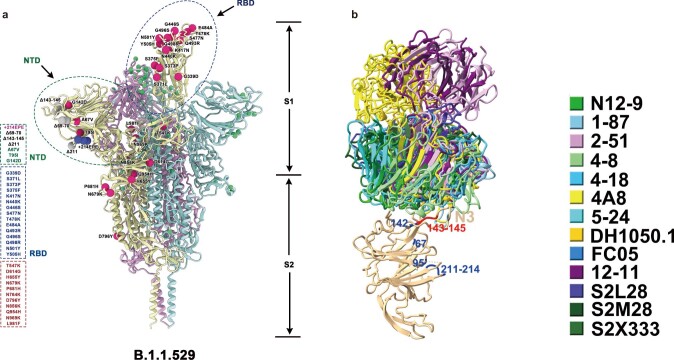
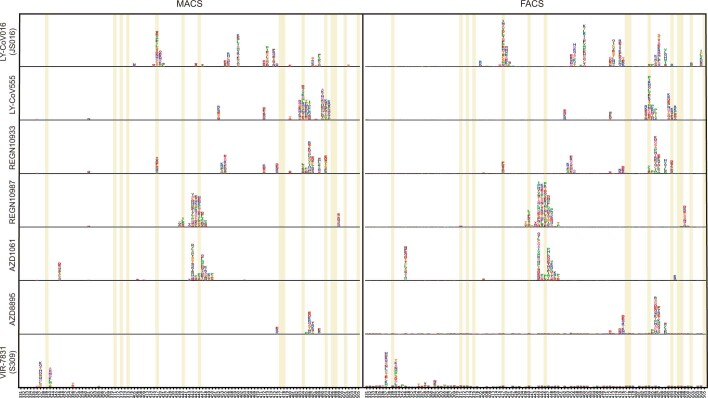
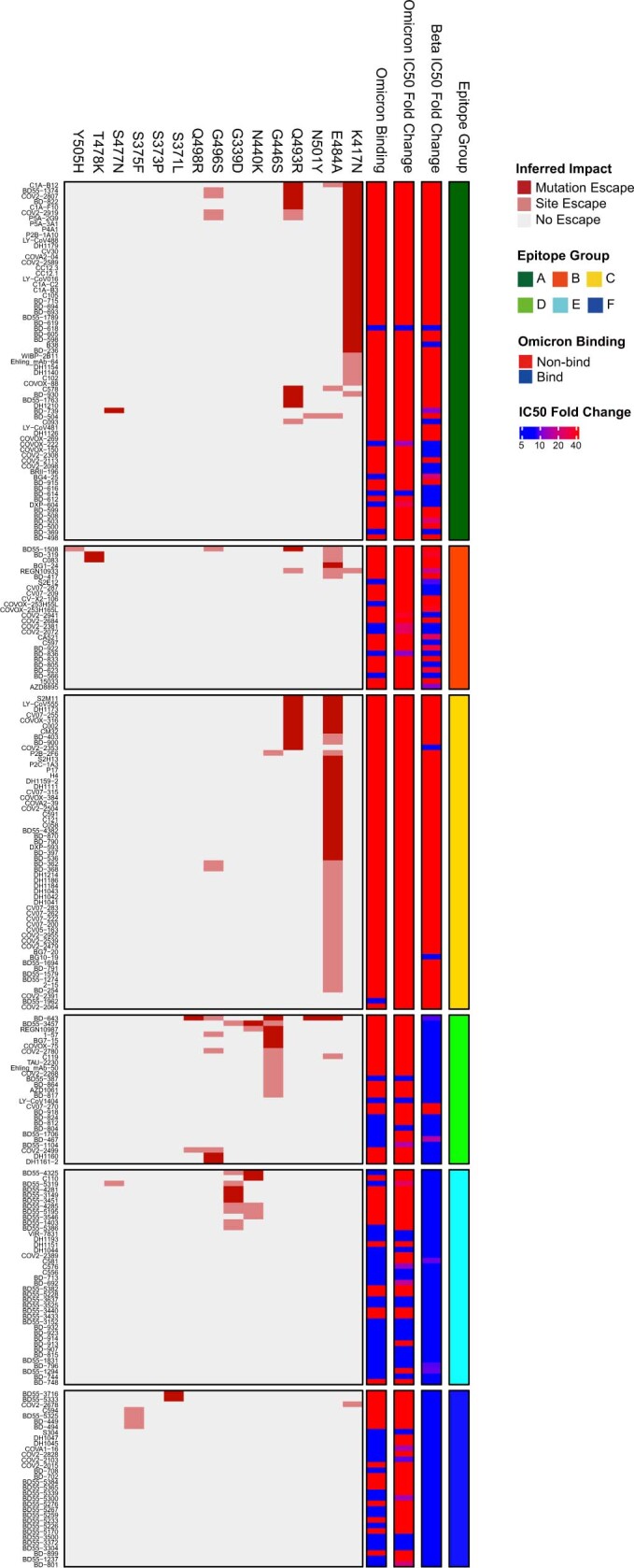
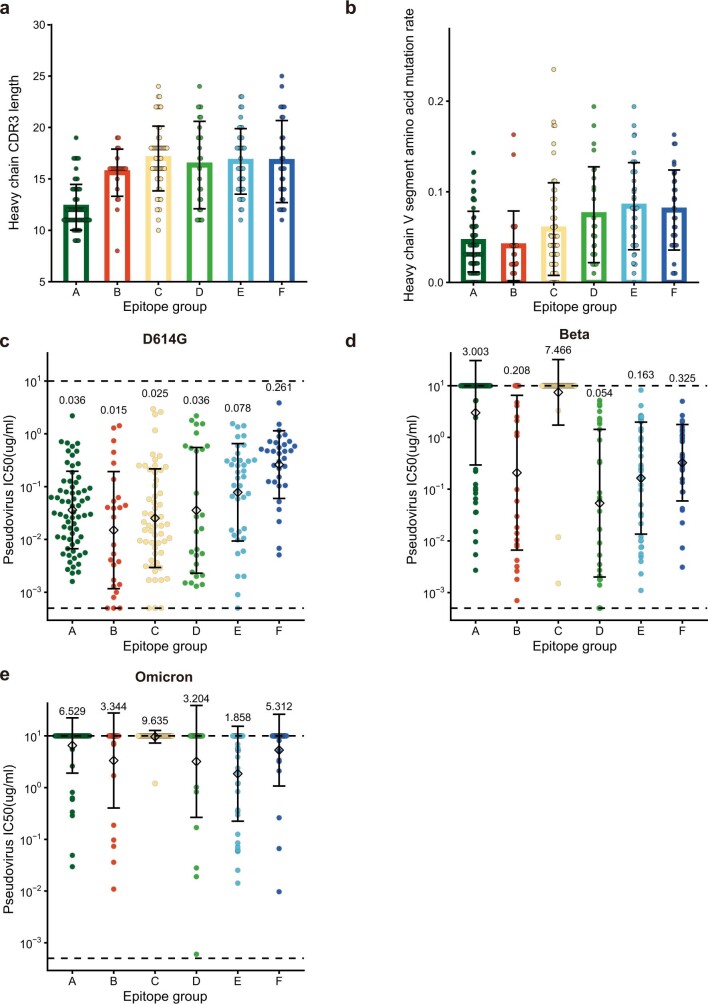
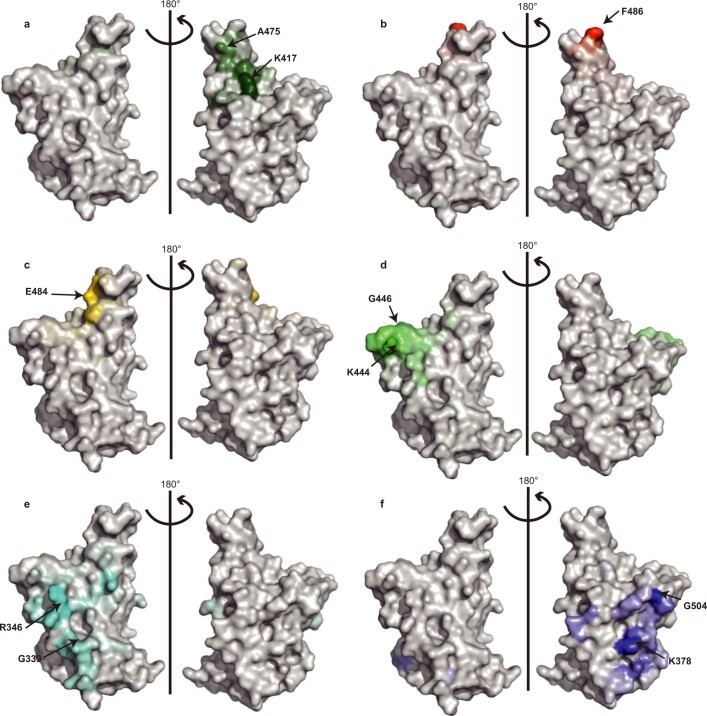
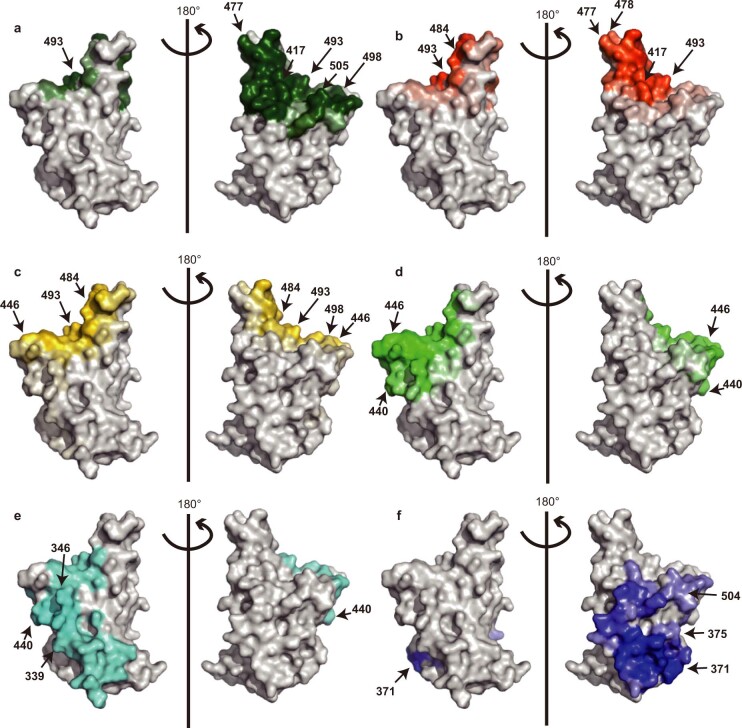
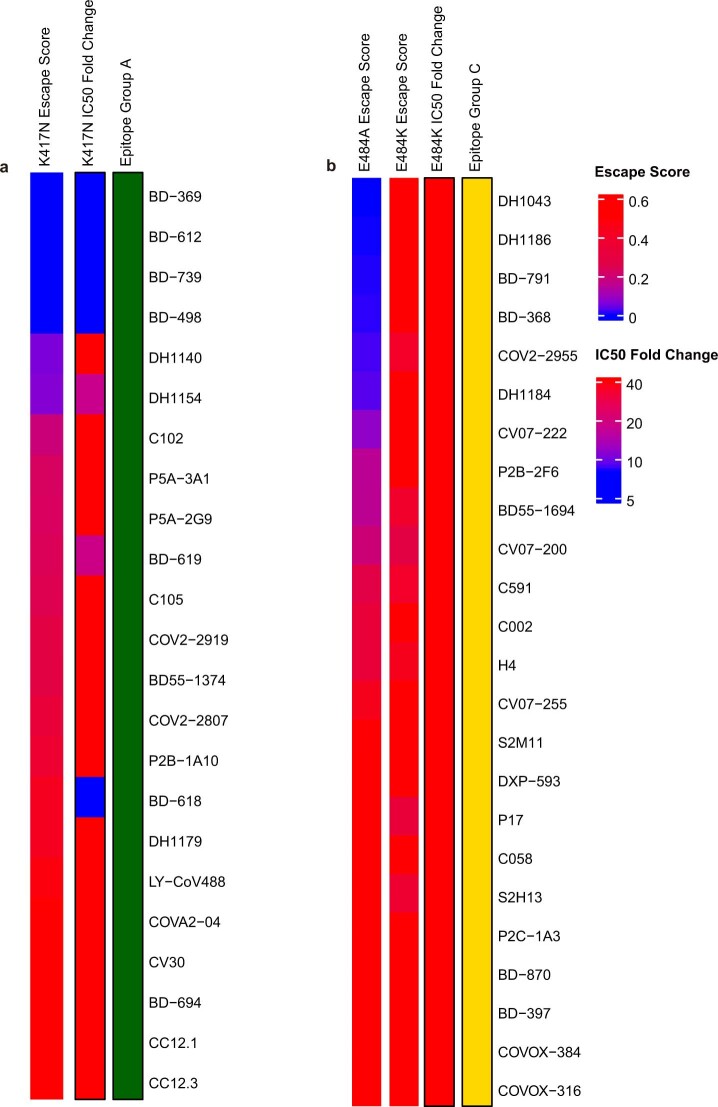
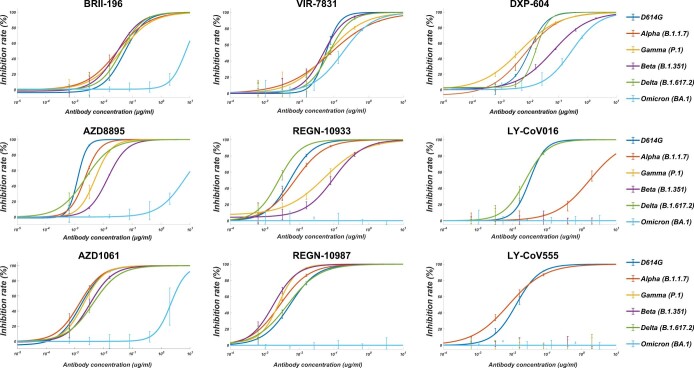
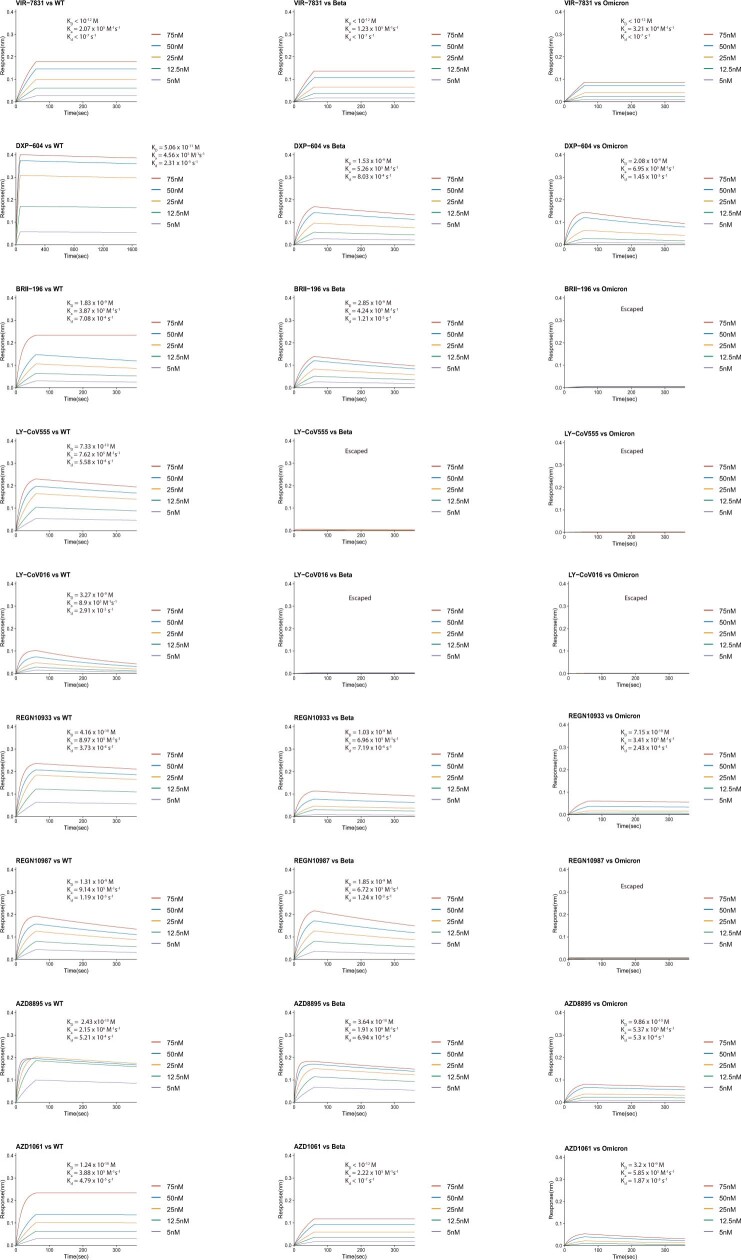
The SARS-CoV-2 B.1.1.529 (Omicron) variant contains 15 mutations of the receptor-binding domain (RBD). How Omicron evades RBD-targeted neutralizing antibodies requires immediate investigation. Here we use high-throughput yeast display screening 1,2 to determine the profiles of RBD escaping mutations for 247 human anti-RBD neutralizing antibodies and show that the neutralizing antibodies can be classified by unsupervised clustering into six epitope groups (A–F)—a grouping that is highly concordant with knowledge-based structural classifications 3–5 . Various single mutations of Omicron can impair neutralizing antibodies of different epitope groups. Specifically, neutralizing antibodies in groups A–D, the epitopes of which overlap with the ACE2-binding motif, are largely escaped by K417N, G446S, E484A and Q493R. Antibodies in group E (for example, S309) 6 and group F (for example, CR3022) 7 , which often exhibit broad sarbecovirus neutralizing activity, are less affected by Omicron, but a subset of neutralizing antibodies are still escaped by G339D, N440K and S371L. Furthermore, Omicron pseudovirus neutralization showed that neutralizing antibodies that sustained single mutations could also be escaped, owing to multiple synergetic mutations on their epitopes. In total, over 85% of the tested neutralizing antibodies were escaped by Omicron. With regard to neutralizing-antibody-based drugs, the neutralization potency of LY-CoV016, LY-CoV555, REGN10933, REGN10987, AZD1061, AZD8895 and BRII-196 was greatly undermined by Omicron, whereas VIR-7831 and DXP-604 still functioned at a reduced efficacy. Together, our data suggest that infection with Omicron would result in considerable humoral immune evasion, and that neutralizing antibodies targeting the sarbecovirus conserved region will remain most effective. Our results inform the development of antibody-based drugs and vaccines against Omicron and future variants.
Overview
The claims and statistics of this paper haven’t been checked yet.
Run the check — free, no account needed. It reads the open-access text and checks the sources it cites.
Integrity signals
Registry
Cites
Statistics
Figures
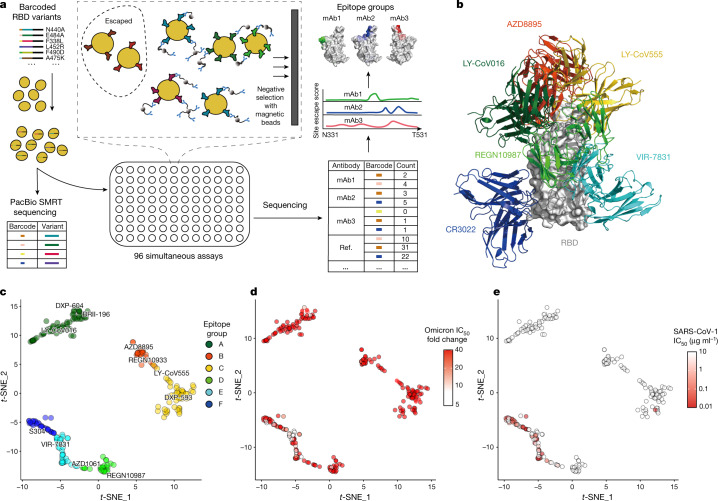
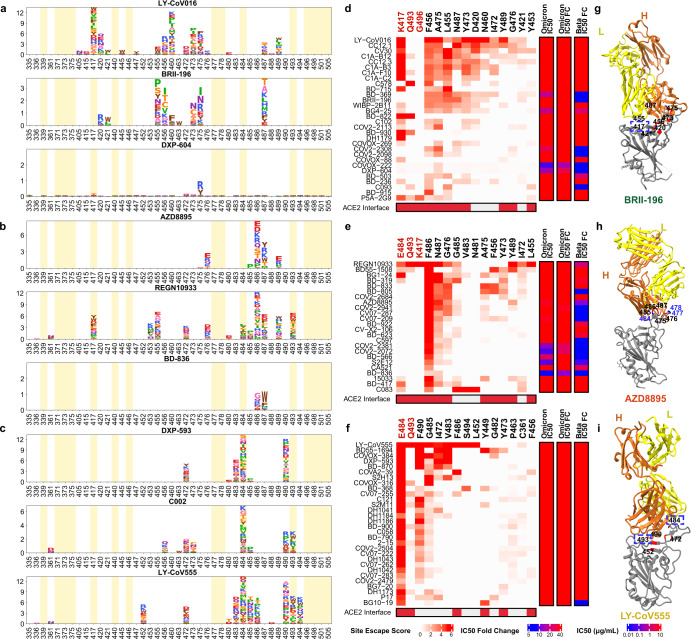
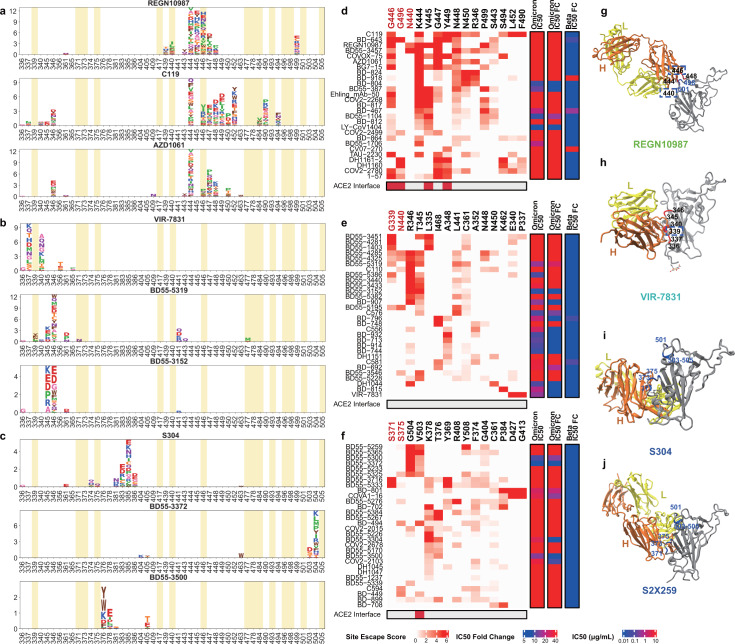
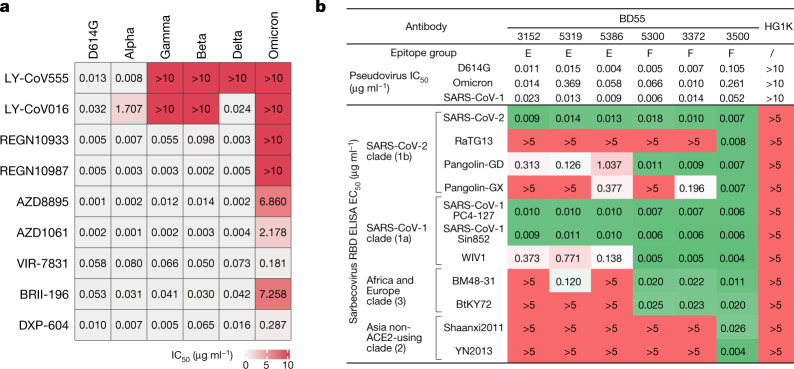
Verification
Claims the paper makes
The claims and statistics of this paper haven’t been checked yet.
Run the check — free, no account needed. It reads the open-access text and checks the sources it cites.
Claims other papers make about this one
Each is checked against this paper’s own text: does it say what the citing paper says it does?
In the citing paper
“Deep mutational scanning experiments of the SARS-CoV-2 receptor binding domain suggest that further mutations of Omicron BA.1/2 at sites 452 and 486 could lead to further immune evasion against antibodies isolated from individuals who had pre-Omicron and Omicron BA.1 breakthrough infections 21,28,29 .”
From Rapidly shifting immunologic landscape and severity of SARS-CoV-2 in the Omicron era in South Africa (2023) · cites this paper as [21]
In the citing paper
“Reinfections and vaccine breakthrough infections accounted for the majority of Omicron BA.1/2 infections, likely attributable to a minority of population remaining naïve prior to the Omicron BA.1/2 wave and to Omicron BA.1/2's immune-escape properties 16,21,22 .”
From Rapidly shifting immunologic landscape and severity of SARS-CoV-2 in the Omicron era in South Africa (2023) · cites this paper as [21]
In the citing paper
“Over reliance on immune memory may impact the breadth and strength of antibody and B-cell immunity as new antigenically drifted variants arise 15,21,32,33 .”
From Rapidly shifting immunologic landscape and severity of SARS-CoV-2 in the Omicron era in South Africa (2023) · cites this paper as [21]
Self-check
Percentages, sums and reported differences re-computed from the paper’s own numbers.
The self-check needs the paper’s full text.
Citations
Cites
SARS-CoV-2 variants, spike mutations and immune escape
Harvey, W. T., Carabelli, A. M., Jackson, B., Gupta, R. K., Thomson, E. C., Harrison, E. M., Ludden, C., Reeve, R., Rambaut, A., COVID-19 Genomics UK (COG-UK) Consortium, et al. (2021) · Nature Reviews Microbiology · doi:10.1038/s41579-021-00573-0 · Cited by 3,528
High-efficiency yeast transformation using the LiAc/SS carrier DNA/PEG method
Gietz, R. D., & Schiestl, R. H. (2007) · Nature Protocols · doi:10.1038/nprot.2007.13 · Cited by 2,785
Starr, T. N., Greaney, A. J., Hilton, S. K., Ellis, D., Crawford, K. H. D., Dingens, A. S., Navarro, M. J., Bowen, J. E., Tortorici, M. A., Walls, A. C., et al. (2020) · Cell · doi:10.1016/j.cell.2020.08.012 · Cited by 1,956
Cross-neutralization of SARS-CoV-2 by a human monoclonal SARS-CoV antibody
Pinto, D., Park, Y.-J., Beltramello, M., Walls, A. C., Tortorici, M. A., Bianchi, S., Jaconi, S., Culap, K., Zatta, F., De Marco, A., et al. (2020) · Nature · doi:10.1038/s41586-020-2349-y · Cited by 1,885
Convergent Antibody Responses to SARS-CoV-2 in Convalescent Individuals
Robbiani, D. F., Gaebler, C., Muecksch, F., Lorenzi, J. C. C., Wang, Z., Cho, A., Agudelo, M., Barnes, C. O., Gazumyan, A., Finkin, S., et al. (2020) · Nature · doi:10.1038/s41586-020-2456-9 · Cited by 1,853
Human neutralizing antibodies elicited by SARS-CoV-2 infection
Ju, B., Zhang, Q., Ge, J., Wang, R., Sun, J., Ge, X., Yu, J., Shan, S., Zhou, B., Song, S., et al. (2020) · Nature · doi:10.1038/s41586-020-2380-z · Cited by 1,667
Self-citationSARS-CoV-2 neutralizing antibody structures inform therapeutic strategies
Barnes, C. O., Jette, C. A., Abernathy, M. E., Dam, K.-M. A., Esswein, S. R., Gristick, H. B., Malyutin, A. G., Sharaf, N. G., Huey-Tubman, K. E., Lee, Y. E., et al. (2020) · Nature · doi:10.1038/s41586-020-2852-1 · Cited by 1,599
A highly conserved cryptic epitope in the receptor binding domains of SARS-CoV-2 and SARS-CoV
Yuan, M., Wu, N. C., Zhu, X., Lee, C.-C. D., So, R. T. Y., Lv, H., Mok, C. K. P., & Wilson, I. A. (2020) · Science · doi:10.1126/science.abb7269 · Cited by 1,429
Piccoli, L., Park, Y.-J., Tortorici, M. A., Czudnochowski, N., Walls, A. C., Beltramello, M., Silacci-Fregni, C., Pinto, D., Rosen, L. E., Bowen, J. E., et al. (2020) · Cell · doi:10.1016/j.cell.2020.09.037 · Cited by 1,395
Potent neutralizing antibodies against multiple epitopes on SARS-CoV-2 spike
Liu, L., Wang, P., Nair, M. S., Yu, J., Rapp, M., Wang, Q., Luo, Y., Chan, J. F.-W., Sahi, V., Figueroa, A., et al. (2020) · Nature · doi:10.1038/s41586-020-2571-7 · Cited by 1,349
Self-citation
Cited by
Sorted by citations
Rapid epidemic expansion of the SARS-CoV-2 Omicron variant in southern Africa
Viana, R. P. E. S., Moyo, S. M., Amoako, D. G., Tegally, H., Scheepers, C., Althaus, C. L., Anyaneji, U. J., Bester, P. A., Boni, M. F., Chand, M., et al. (2022) · Nature · doi:10.1038/s41586-022-04411-y · Cited by 1,678
Considerable escape of SARS-CoV-2 Omicron to antibody neutralization
Planas, D., Saunders, N., Maes, P., Guivel-Benhassine, F., Planchais, C., Buchrieser, J., Bolland, W.-H., Porrot, F., Staropoli, I., Lemoine, F., et al. (2022) · Nature · doi:10.1038/s41586-021-04389-z · Cited by 1,514
Cele, S., Jackson, L., Khoury, D. S., Khan, K., Moyo-Gwete, T., Tegally, H., San, J. E., Cromer, D., Scheepers, C., Amoako, D., et al. (2021) · doi:10.1101/2021.12.08.21267417 · Cited by 1,333
BA.2.12.1, BA.4 and BA.5 escape antibodies elicited by Omicron infection
Cao, Y., Yisimayi, A., Jian, F., Song, W., Xiao, T., Wang, L., Du, S., Wang, J., Li, Q., Chen, X., et al. (2022) · Nature · doi:10.1038/s41586-022-04980-y · Cited by 1,306
Self-citationSARS-CoV-2 variant biology: immune escape, transmission and fitness
Carabelli, A. M., Peacock, T. P., Thorne, L., Harvey, W. T., Hughes, J., de Silva, T. I., Peacock, S. J., Barclay, W., de Silva, T. I., Towers, G. J., et al. (2023) · Nature Reviews Microbiology · doi:10.1038/s41579-022-00841-7 · Cited by 1,386
Metadata
- Authors
- Cao, Y., Wang, J., Jian, F., Xiao, T., Song, W., Yisimayi, A., Huang, W., Li, Q., Wang, P., An, R., Wang, J., Wang, Y., Niu, X., Yang, S., Liang, H., Sun, H., Li, T., Yu, Y., Cui, Q., Liu, S., Yang, X., Du, S., Zhang, Z., Hao, X., Shao, F., Jin, R., Wang, X., Xiao, J., Wang, Y., & Xie, X. S.
- Affiliations
- Peking University (CN)
- National Institutes for Food and Drug Control (CN)
- Capital Medical University (CN)
- Chinese Academy of Sciences (CN)
- Corresponding author
- Cao, Yunlong
- Wang, Yao
- Wang, Xiangxi
- Xiao, Junyu
- Wang, Youchun
- Xie, Xiaoliang Sunney
- ORCID
- Venue
- Nature
- Published
- 2021-12-23
- Volume
- 602
- Issue
- 7898
- Pages
- 657-663
- ISSN
- 0028-0836 (ISSN-L)
- 1476-4687
- PMC
- PMC8866119
- OpenAlex
- W4220807057
- Cited by
- 2,006
- References
- 56
- Citations by year
- 2026: 143 · 2025: 242 · 2024: 329 · 2023: 525 · 2022: 735 · 2021: 20
- FWCI
- 127.72
- Type
- journal article
- Language
- en
- Open access
- hybrid
- doi.org
- Locations
- Nature (publishedVersion, cc-by)
- bioRxiv (Cold Spring Harbor Laboratory) (acceptedVersion)
- Research Square (acceptedVersion, cc-by)
- PubMed Central (publishedVersion, cc-by)
- PubMed (publishedVersion)
- Funders
- Peking University
- Topics
- Health Sciences › Medicine › Infectious Diseases › SARS-CoV-2 and COVID-19 Research
- Life Sciences › Biochemistry, Genetics and Molecular Biology › Molecular Biology › vaccines and immunoinformatics approaches
- Life Sciences › Immunology and Microbiology › Immunology › Monoclonal and Polyclonal Antibodies Research
- Keywords
- Omicron variant, SARS-CoV-2, receptor binding domain, neutralizing antibodies, antibody escape, K417N, vaccine design
- MeSH terms
- Angiotensin-Converting Enzyme 2, COVID-19, SARS-CoV-2, COVID-19 Vaccines, Antibodies, Monoclonal, Antibodies, Viral, Cells, Cultured, Convalescence, Humans, Immune Sera, Models, Molecular, Mutation, Neutralization Tests, Epitopes, B-Lymphocyte, Immune Evasion, Antibodies, Neutralizing, Spike Glycoprotein, Coronavirus
About these checks
Registry, retraction, Cites and statistics results are computed, not judged, with one exception: a printed reference that no index lists is read once by a model before it counts as a citation error. Claims are extracted by a model and kept only when their quote appears verbatim in the text; each cited source is then checked, with a model’s help, for whether it says what the claim relies on. Those verdicts can be wrong — read the claim’s quote and the cited source before relying on one.
Statistics and arithmetic are recomputed, not judged.
Confidence bands are shown only for fields calibrated on our annotated test set. None is calibrated yet, so no band is shown.
What counts as a claim ›How we measure confidence ›How we check this ›
Are you an author, or do you see a problem with this page? Request a review
