

The DOI matches its Crossref record; 121 of the 121 references it cites were found in a registry or an index.
The sequences of 150,119 genomes in the UK Biobank
Open accessPublished version of a preprint
Abstract
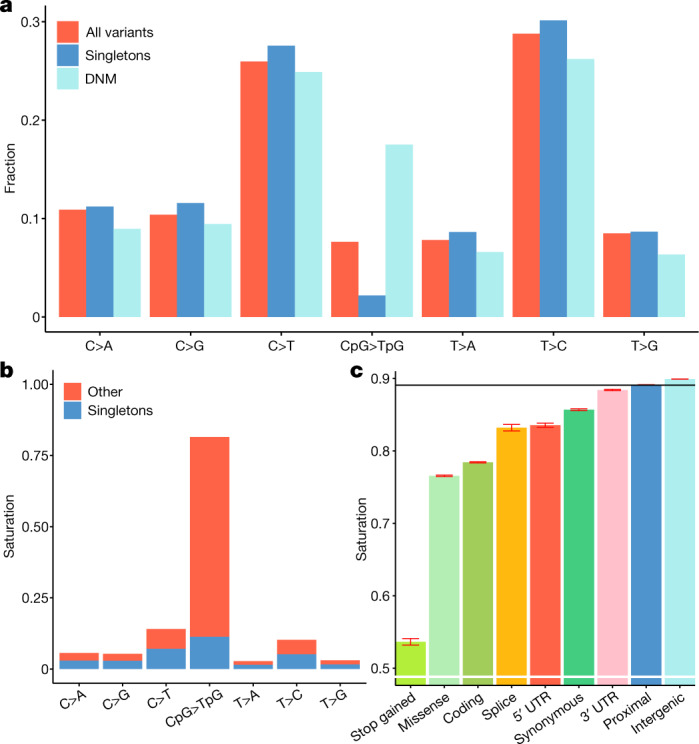
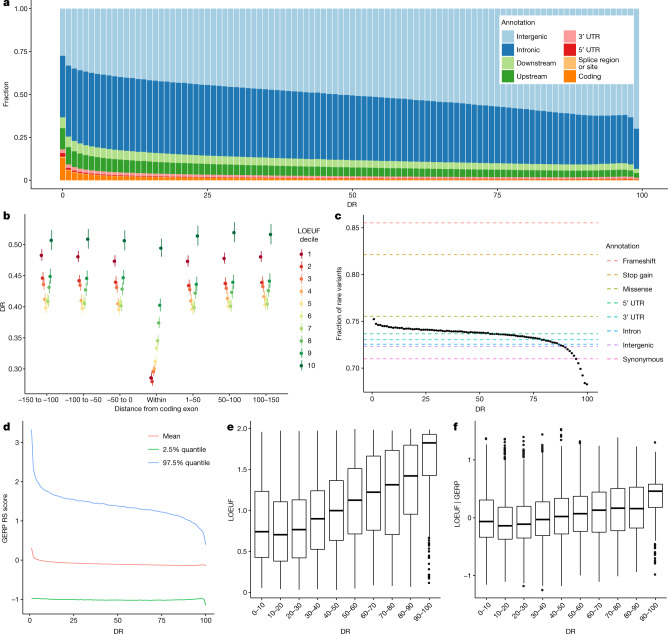
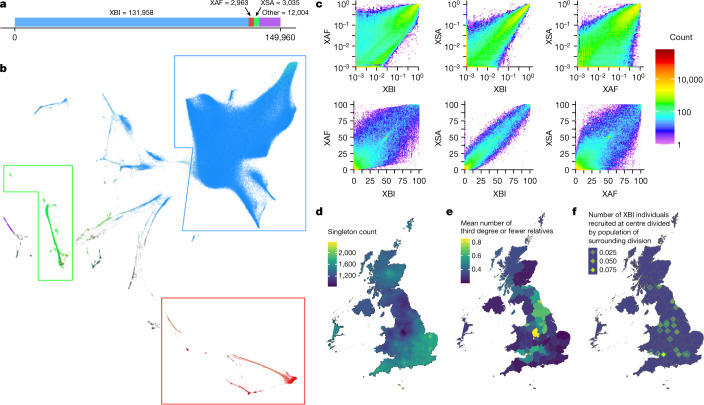
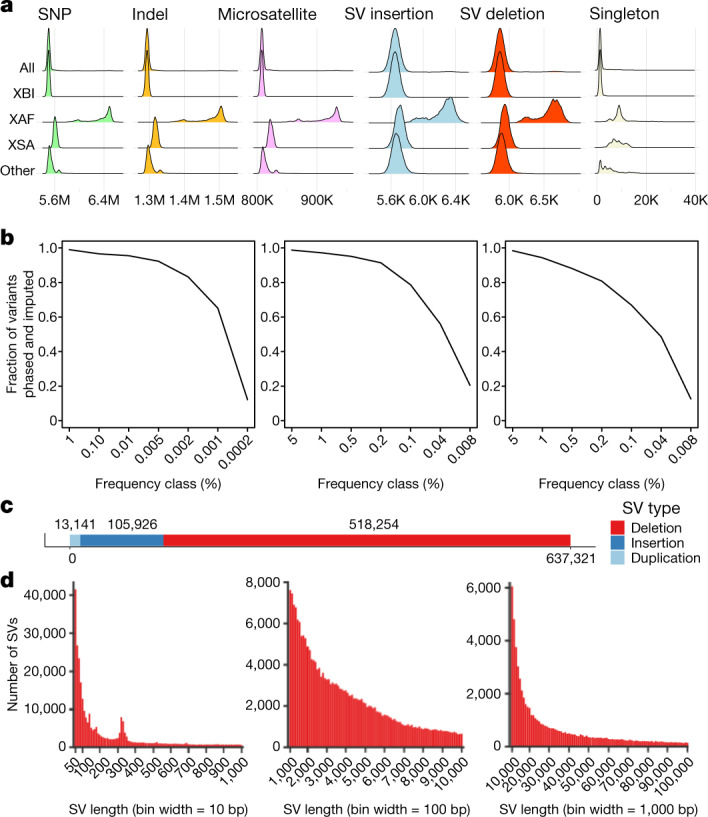
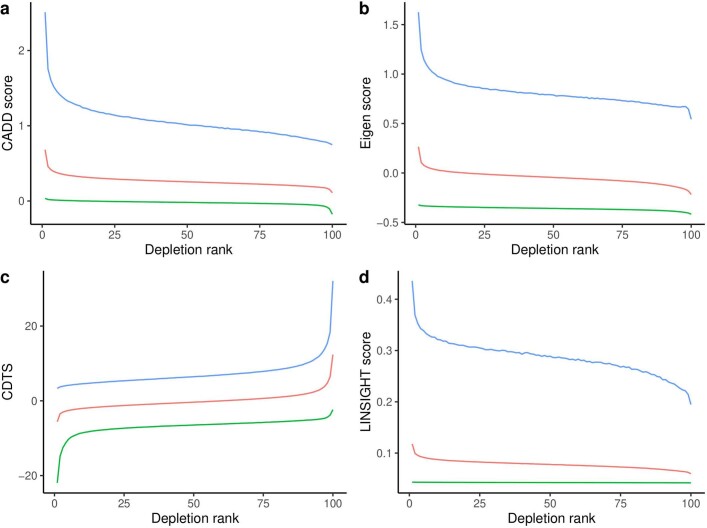
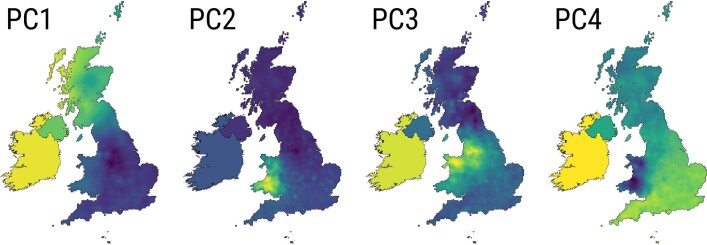
Detailed knowledge of how diversity in the sequence of the human genome affects phenotypic diversity depends on a comprehensive and reliable characterization of both sequences and phenotypic variation. Over the past decade, insights into this relationship have been obtained from whole-exome sequencing or whole-genome sequencing of large cohorts with rich phenotypic data 1,2 . Here we describe the analysis of whole-genome sequencing of 150,119 individuals from the UK Biobank 3 . This constitutes a set of high-quality variants, including 585,040,410 single-nucleotide polymorphisms, representing 7.0% of all possible human single-nucleotide polymorphisms, and 58,707,036 indels. This large set of variants allows us to characterize selection based on sequence variation within a population through a depletion rank score of windows along the genome. Depletion rank analysis shows that coding exons represent a small fraction of regions in the genome subject to strong sequence conservation. We define three cohorts within the UK Biobank: a large British Irish cohort, a smaller African cohort and a South Asian cohort. A haplotype reference panel is provided that allows reliable imputation of most variants carried by three or more sequenced individuals. We identified 895,055 structural variants and 2,536,688 microsatellites, groups of variants typically excluded from large-scale whole-genome sequencing studies. Using this formidable new resource, we provide several examples of trait associations for rare variants with large effects not found previously through studies based on whole-exome sequencing and/or imputation.
Overview
The claims and statistics of this paper haven’t been checked yet.
Run the check — free, no account needed. It reads the open-access text and checks the sources it cites.
Integrity signals
Registry
Cites
Statistics
Figures
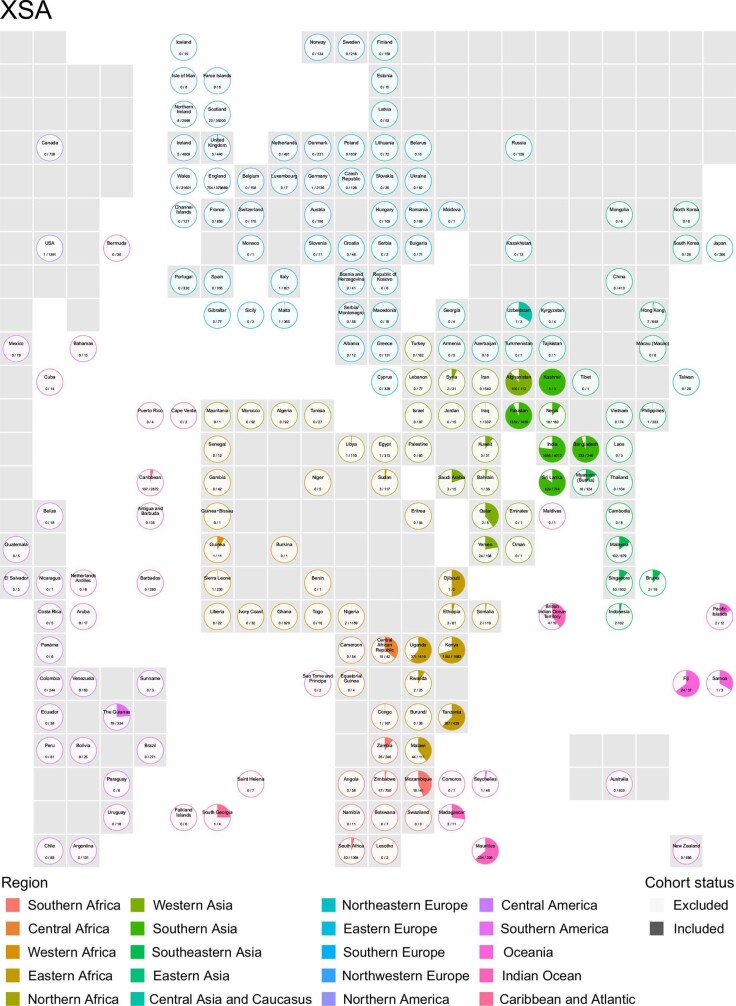
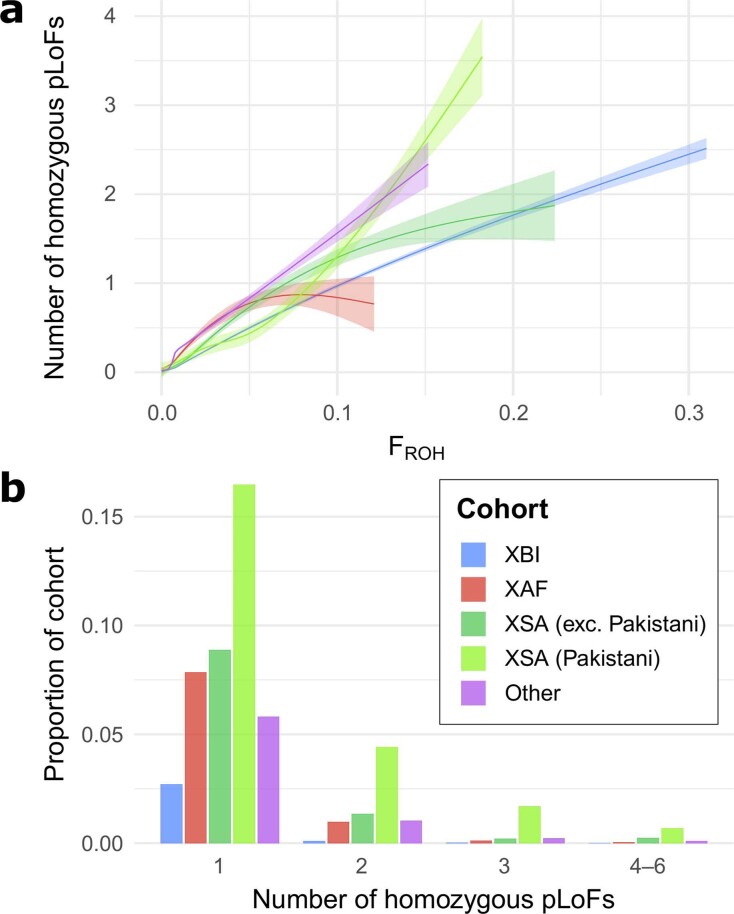
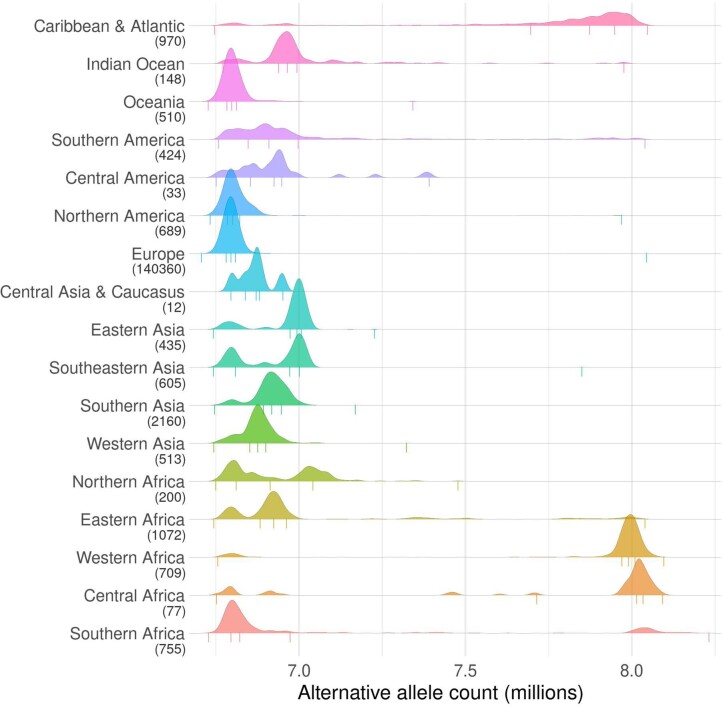
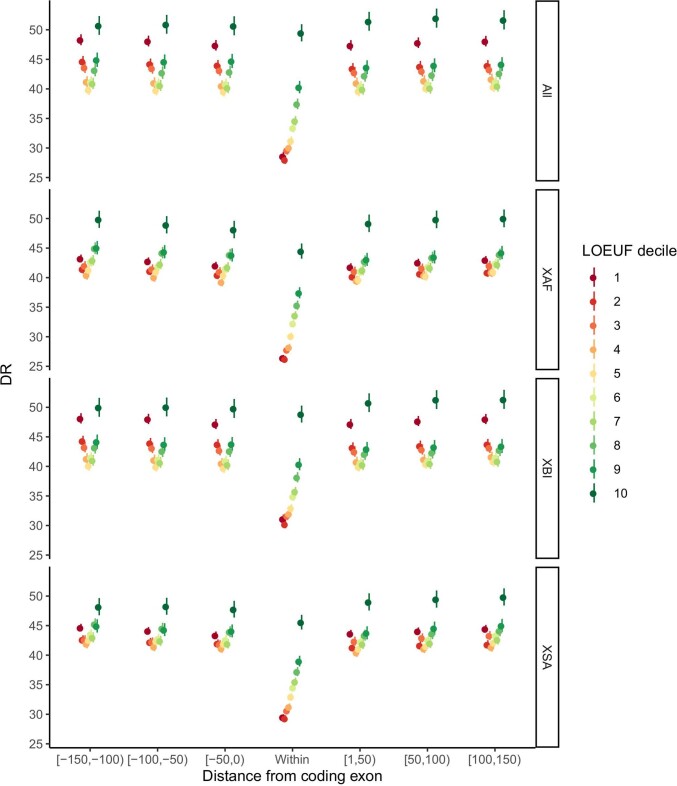
Verification
Claims the paper makes
The claims and statistics of this paper haven’t been checked yet.
Run the check — free, no account needed. It reads the open-access text and checks the sources it cites.
Claims other papers make about this one
Each is checked against this paper’s own text: does it say what the citing paper says it does?
The source backs part of the claim, not all of it — or backs it for a different population, condition or comparison.
In the citing paper
“Further, almost all participants underwent genome-wide array genotyping and, more recently, proteome, whole-exome sequencing 83 and WGS 84 .”
From Multimodal biomedical AI (2022) · cites this paper as [84]
Experimental — accuracy not yet measuredThe cited source says what the claim attributes to it.
In the citing paper
“Given that more than 98% of observed genetic variation in humans is non-coding7, global characterization of the complex effects of this vast majority of variants remains intractable without computational predictions.”
From Advancing regulatory variant effect prediction with AlphaGenome (2026) · cites this paper as [7]
Self-check
Percentages, sums and reported differences re-computed from the paper’s own numbers.
The self-check needs the paper’s full text.
Citations
Cites
The Sequence Alignment/Map format and SAMtools
Li, H., Handsaker, B., Wysoker, A., Fennell, T., Ruan, J., Homer, N., Marth, G., Abecasis, G., Durbin, R., & 1000 Genome Project Data Processing Subgroup (2009) · Bioinformatics · doi:10.1093/bioinformatics/btp352 · Cited by 62,041
Fast and accurate short read alignment with Burrows-Wheeler transform
Li, H., & Durbin, R. (2009) · Bioinformatics · doi:10.1093/bioinformatics/btp324 · Cited by 58,607
PLINK: a tool set for whole-genome association and population-based linkage analyses.
Purcell, S., Neale, B., Todd-Brown, K., Thomas, L., Ferreira, M. A. R., Bender, D., Maller, J., Sklar, P., de Bakker, P. I. W., Daly, M. J., et al. (2007) · The American Journal of Human Genetics · doi:10.1086/519795 · Cited by 34,089
The Genome Analysis Toolkit: A MapReduce framework for analyzing next-generation DNA sequencing data
McKenna, A., Hanna, M., Banks, E., Sivachenko, A., Cibulskis, K., Kernytsky, A., Garimella, K., Altshuler, D., Gabriel, S., Daly, M., et al. (2010) · Genome Research · doi:10.1101/gr.107524.110 · Cited by 27,895
A global reference for human genetic variation
The 1000 Genomes Project Consortium, authors, C., Auton, A., Abecasis, G. R., Steering committee, Altshuler, D. M., Durbin, R. M., Abecasis, G. R., Bentley, D. R., Chakravarti, A., et al. (2015) · Nature · doi:10.1038/nature15393 · Cited by 18,247
An integrated encyclopedia of DNA elements in the human genome
The ENCODE Project Consortium (2012) · Nature · doi:10.1038/nature11247 · Cited by 18,072
Sudlow, C., Gallacher, J., Allen, N., Beral, V., Burton, P., Danesh, J., Downey, P., Elliott, P., Green, J., Landray, M., et al. (2015) · PLOS Medicine · doi:10.1371/journal.pmed.1001779 · Cited by 12,728
Fast and accurate long-read alignment with Burrows-Wheeler transform.
Li, H., & Durbin, R. (2010) · Bioinformatics · doi:10.1093/bioinformatics/btp698 · Cited by 12,063
Fast model-based estimation of ancestry in unrelated individuals
Alexander, D. H., Novembre, J., & Lange, K. (2009) · Genome Research · doi:10.1101/gr.094052.109 · Cited by 9,898
The mutational constraint spectrum quantified from variation in 141,456 humans
Karczewski, K. J., Francioli, L. C., Tiao, G., Cummings, B. B., Alföldi, J., Wang, Q., Collins, R. L., Laricchia, K. M., Ganna, A., Birnbaum, D. P., et al. (2020) · Nature · doi:10.1038/s41586-020-2308-7 · Cited by 9,434
Cited by
Sorted by citations
A genomic mutational constraint map using variation in 76,156 human genomes
Chen, S., Francioli, L. C., Goodrich, J. K., Collins, R. L., Kanai, M., Wang, Q., Alföldi, J., Watts, N. A., Vittal, C., Gauthier, L. D., et al. (2024) · Nature · doi:10.1038/s41586-023-06045-0 · Cited by 1,727
Acosta, J. N., Falcone, G. J., Rajpurkar, P., & Topol, E. J. (2022) · Nature Medicine · doi:10.1038/s41591-022-01981-2 · Cited by 1,365
Byrska-Bishop, M., Evani, U. S., Zhao, X., Basile, A. O., Abel, H. J., Regier, A. A., Corvelo, A., Clarke, W. E., Musunuri, R., Nagulapalli, K., et al. (2022) · Cell · doi:10.1016/j.cell.2022.08.004 · Cited by 1,094
A saturated map of common genetic variants associated with human height
Yengo, L., Vedantam, S., Marouli, E., Sidorenko, J., Bartell, E., Sakaue, S., Graff, M., Eliasen, A. U., Jiang, Y., Raghavan, S., et al. (2022) · Nature · doi:10.1038/s41586-022-05275-y · Cited by 825
Self-citationGenomic data in the all of us research program
The All of Us Research Program Genomics Investigators, Manuscript Writing Group, Bick, A. G., Metcalf, G. A., Mayo, K. R., Lichtenstein, L., Rura, S., Carroll, R. J., Musick, A., Linder, J. E., et al. (2024) · Nature · doi:10.1038/s41586-023-06957-x · Cited by 829
Metadata
- Authors
- Halldorsson, B. V., Eggertsson, H. P., Moore, K. H. S., Hauswedell, H., Eiriksson, O., Ulfarsson, M. O., Palsson, G., Hardarson, M. T., Oddsson, A., Jensson, B. O., Kristmundsdottir, S., Sigurpalsdottir, B. D., Stefansson, O. A., Beyter, D., Holley, G., Tragante, V., Gylfason, A., Olason, P. I., Zink, F., Asgeirsdottir, M., Sverrisson, S. T., Sigurdsson, B., Gudjonsson, S. A., Sigurdsson, G. T., Halldorsson, G. H., Sveinbjornsson, G., Norland, K., Styrkarsdottir, U., Magnusdottir, D. N., Snorradottir, S., Kristinsson, K., Sobech, E., Jonsson, H., Geirsson, A. J., Olafsson, I., Jonsson, P., Pedersen, O. B., Erikstrup, C., Brunak, S., Ostrowski, S. R., DBDS Genetic Consortium, Andersen, S., Banasik, K., Burgdorf, K., Didriksen, M., Dinh, K. M., Erikstrup, C., Gudbjartsson, D., Hansen, T. F., Hjalgrim, H., Jemec, G., Jennum, P., Johansson, P. I., Larsen, M. A. H., Mikkelsen, S., Nielsen, K. R., Nyegaard, M., Ostrowski, S. R., Sækmose, S., Sørensen, E., Thorsteinsdottir, U., Brun, M. T., Ullum, H., Werge, T., Thorleifsson, G., Jonsson, F., Melsted, P., Jonsdottir, I., Rafnar, T., Holm, H., Stefansson, H., Saemundsdottir, J., Gudbjartsson, D. F., Magnusson, O. T., Masson, G., Thorsteinsdottir, U., Helgason, A., Jonsson, H., Sulem, P., & Stefansson, K.
- Affiliations
- deCODE Genetics (Iceland) (IS)
- Reykjavík University (IS)
- Zealand University Hospital Køge (DK)
- University of Copenhagen (DK)
- Copenhagen Business School (DK)
- Copenhagen University Hospital (DK)
- Aarhus University Hospital (DK)
- Statens Serum Institut (DK)
- Zealand University Hospital (DK)
- Aalborg University Hospital (DK)
- Aarhus University (DK)
- Odense University Hospital (DK)
- Sankt Hans Hospital (DK)
- ORCID
- Halldorsson, Bjarni V.
- Eggertsson, Hannes P.
- Moore, Kristjan H. S.
- Hauswedell, Hannes
- Eiriksson, Ogmundur
- Ulfarsson, Magnus O.
- Palsson, Gunnar
- Hardarson, Marteinn T.
- Oddsson, Asmundur
- Jensson, Brynjar O.
- Sigurpalsdottir, Brynja D.
- Stefansson, Olafur A.
- Beyter, Doruk
- Holley, Guillaume
- Tragante, Vinicius
- Gylfason, Arnaldur
- Olason, Pall I.
- Gudjonsson, Sigurjon A.
- Halldorsson, Gisli H.
- Styrkarsdottir, Unnur
- Pedersen, Ole Birger
- Brunak, Søren
- Banasik, Karina
- Burgdorf, Kristoffer
- Didriksen, Maria
- Dinh, Khoa Manh
- Hansen, Thomas Folkmann
- Hjalgrim, Henrik
- Jemec, Gregor
- Jennum, Poul
- Johansson, Pär Ingemar
- Mikkelsen, Susan
- Nielsen, Kasper Rene
- Nyegaard, Mette
- Sækmose, Susanne
- Sørensen, Erik
- Ullum, Henrik
- Werge, Thomas
- Jonsdottir, Ingileif
- Rafnar, Thorunn
- Holm, Hilma
- Gudbjartsson, Daniel F.
- Helgason, Agnar
- Jonsson, Hakon
- Sulem, Patrick
- Venue
- Nature
- Published
- 2022-07-20
- Volume
- 607
- Issue
- 7920
- Pages
- 732-740
- ISSN
- 0028-0836 (ISSN-L)
- 1476-4687
- PMC
- PMC9329122
- OpenAlex
- W4286005461
- Cited by
- 448
- References
- 113
- Citations by year
- 2026: 68 · 2025: 101 · 2024: 121 · 2023: 120 · 2022: 37
- FWCI
- 60.78
- Type
- journal article
- Language
- en
- Open access
- hybrid
- doi.org
- Locations
- Nature (publishedVersion, cc-by)
- bioRxiv (Cold Spring Harbor Laboratory) (acceptedVersion, cc-by-nd)
- PubMed Central (publishedVersion, cc-by)
- PubMed (publishedVersion)
- Research at the University of Copenhagen (University of Copenhagen) (publishedVersion, cc-by)
- VBN Forskningsportal (Aalborg Universitet) (acceptedVersion, other-oa)
- University of Southern Denmark Research Portal (University of Southern Denmark) (acceptedVersion, other-oa)
- Opin vísindi (Opin vísindi) (submittedVersion, cc-by-nc-sa)
- RePEc: Research Papers in Economics (submittedVersion)
- Opin vísindi (Opin vísindi) (submittedVersion, other-oa)
- CBS Research Portal (Copenhagen Business School) (submittedVersion, cc-by)
- Funders
- Amgen
- AstraZeneca
- GlaxoSmithKline
- Wellcome Trust
- Government of the United Kingdom
- UK Research and Innovation
- Medical Research Council (MC_PC_17228)
- Topics
- Life Sciences › Biochemistry, Genetics and Molecular Biology › Genetics › Genetic Associations and Epidemiology
- Life Sciences › Biochemistry, Genetics and Molecular Biology › Genetics › Genomics and Rare Diseases
- Life Sciences › Biochemistry, Genetics and Molecular Biology › Molecular Biology › Genomics and Phylogenetic Studies
- Keywords
- UK Biobank, whole genome sequencing, human genetic variation, single nucleotide polymorphisms, indels, structural variants, microsatellite markers, haplotype reference panel, genotype imputation, natural selection, sequence conservation, rare variants, trait association, phenotypic diversity
- MeSH terms
- Whole Genome Sequencing, Africa, Asia, Exons, United Kingdom, Haplotypes, Humans, Ireland, Genetic Variation, Cohort Studies, Genome, Human, Conserved Sequence, Biological Specimen Banks, Microsatellite Repeats, Polymorphism, Single Nucleotide, Genomics, Databases, Genetic, INDEL Mutation
About these checks
Registry, retraction, Cites and statistics results are computed, not judged, with one exception: a printed reference that no index lists is read once by a model before it counts as a citation error. Claims are extracted by a model and kept only when their quote appears verbatim in the text; each cited source is then checked, with a model’s help, for whether it says what the claim relies on. Those verdicts can be wrong — read the claim’s quote and the cited source before relying on one.
Statistics and arithmetic are recomputed, not judged.
Confidence bands are shown only for fields calibrated on our annotated test set. None is calibrated yet, so no band is shown.
What counts as a claim ›How we measure confidence ›How we check this ›
Are you an author, or do you see a problem with this page? Request a review
