

Synaptic gradients transform object location to action
Open accessThe DOI matches its Crossref record; 52 of the 52 references it cites were found in a registry or an index.
Abstract
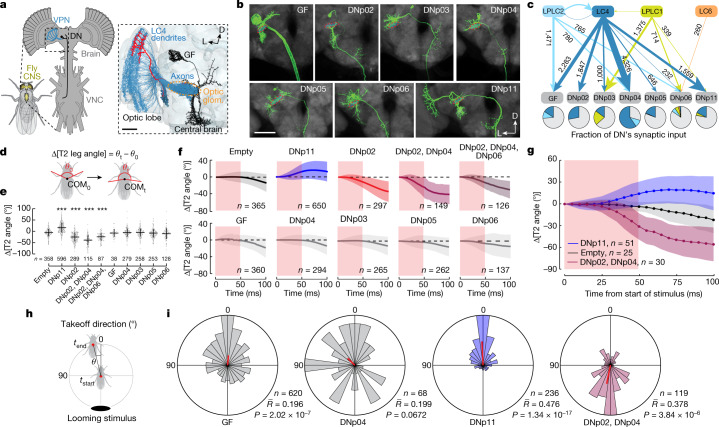
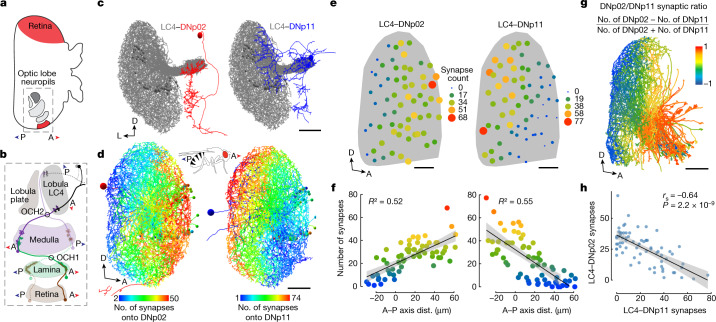
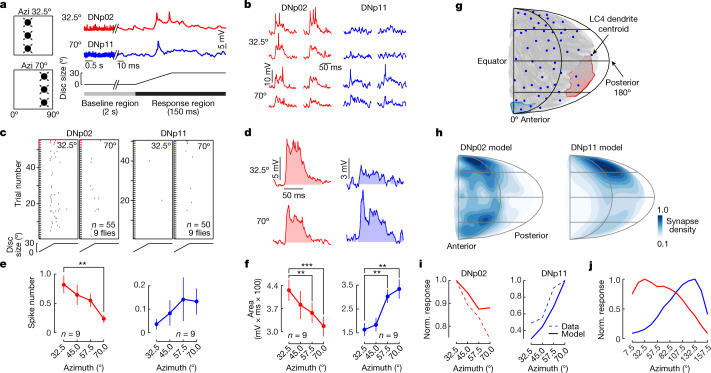
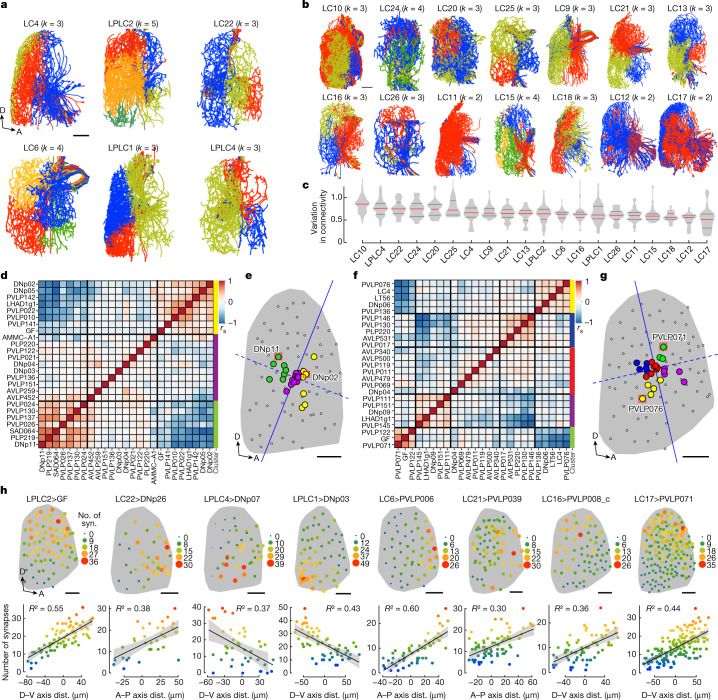
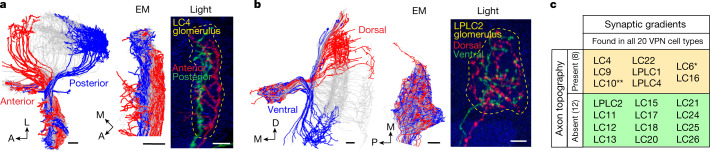
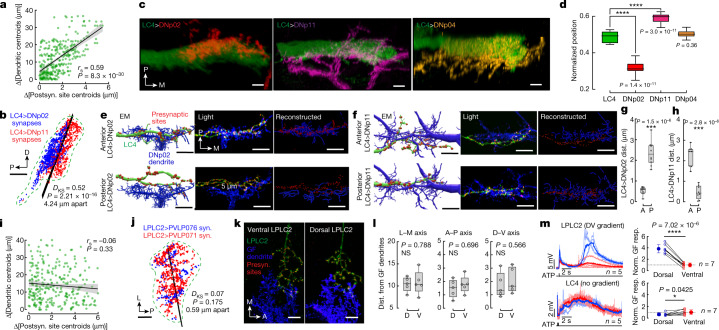
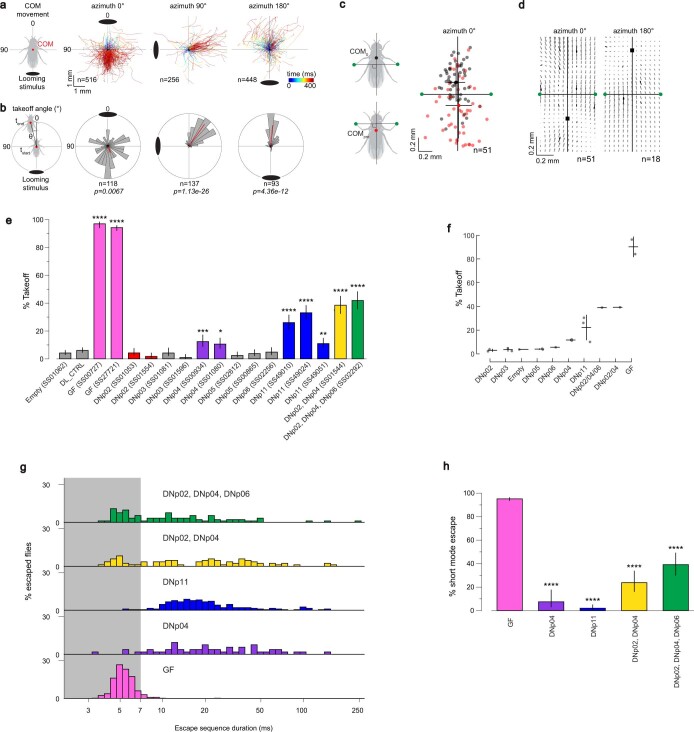
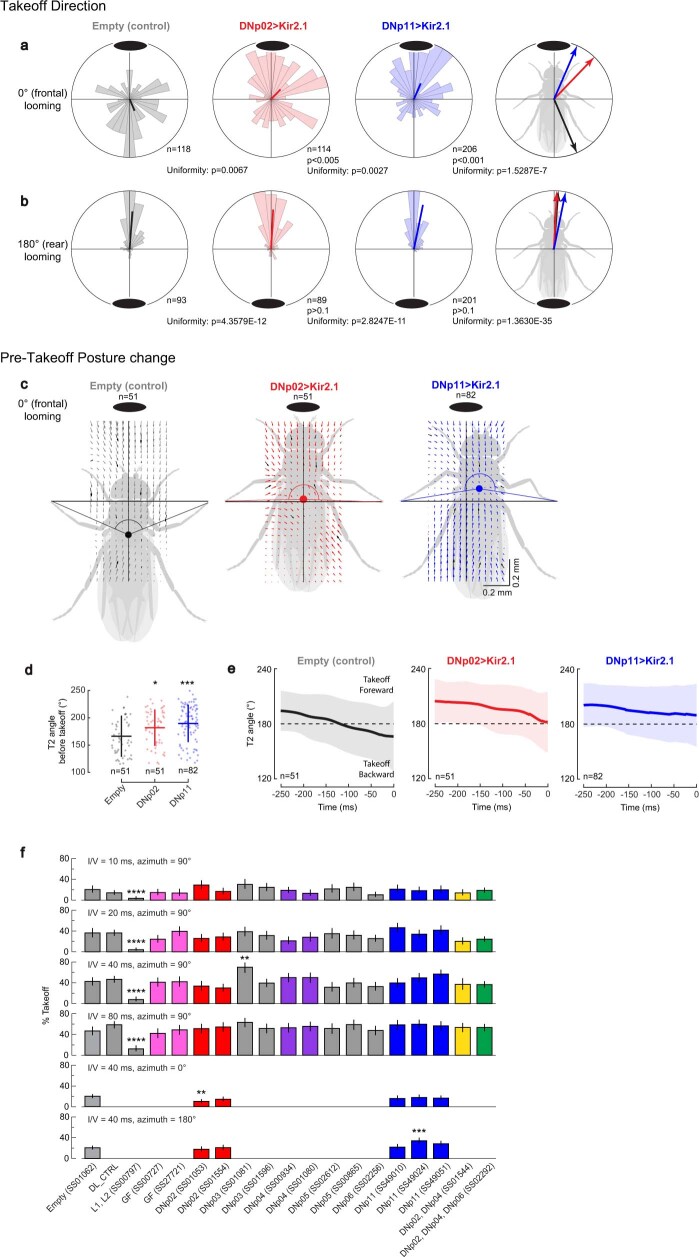
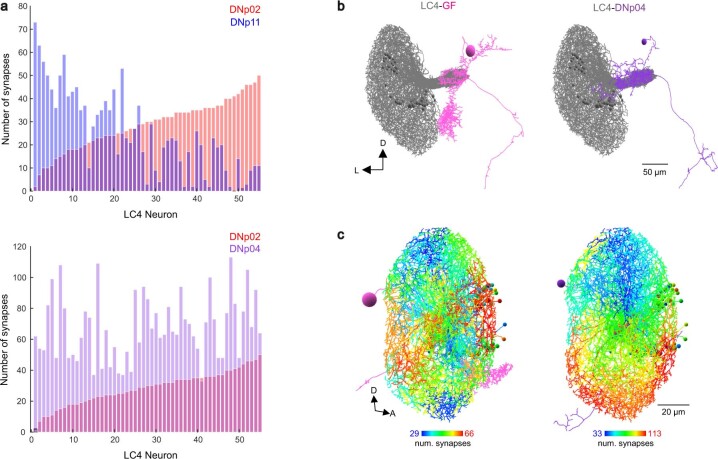
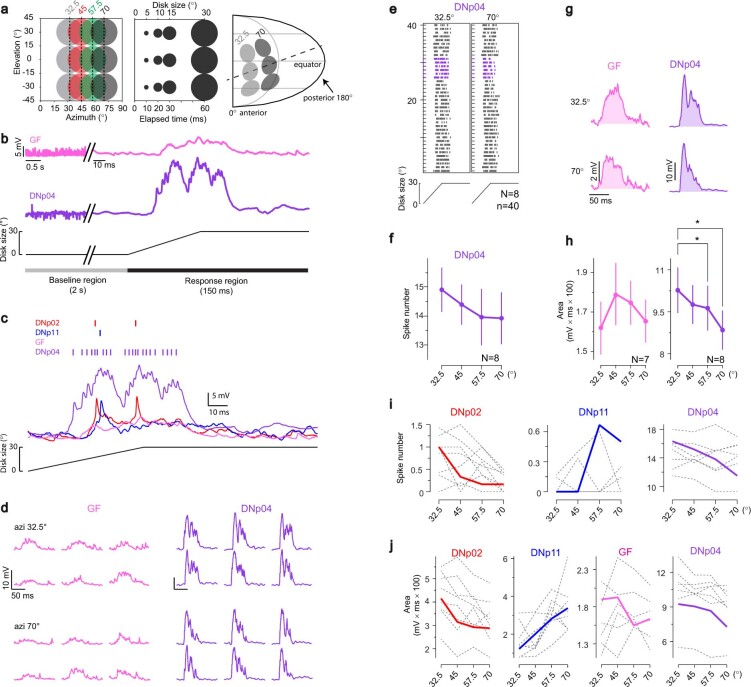
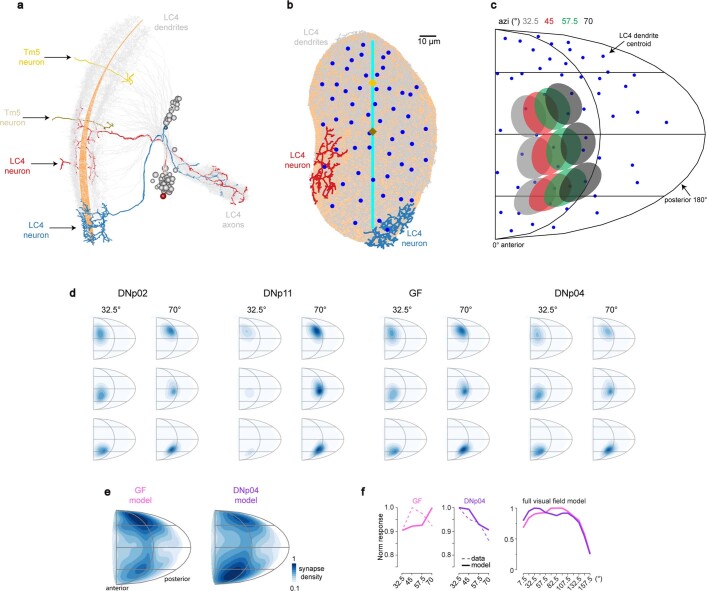
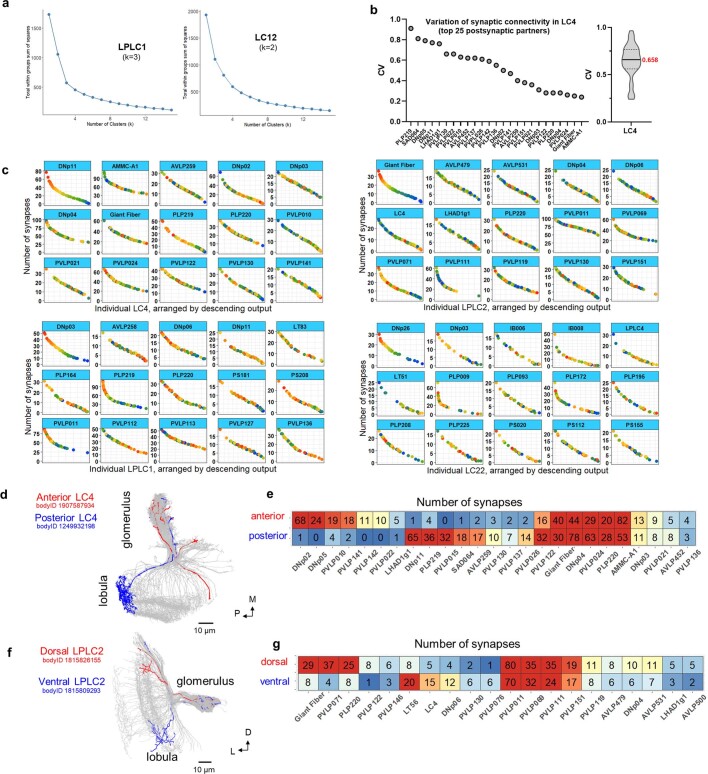
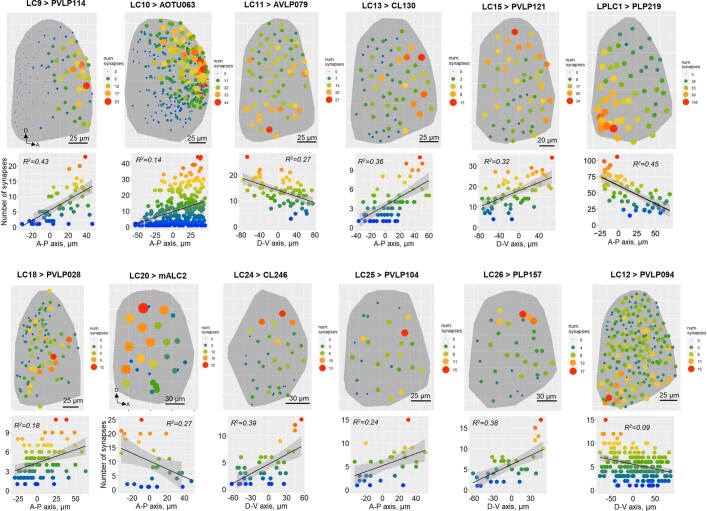
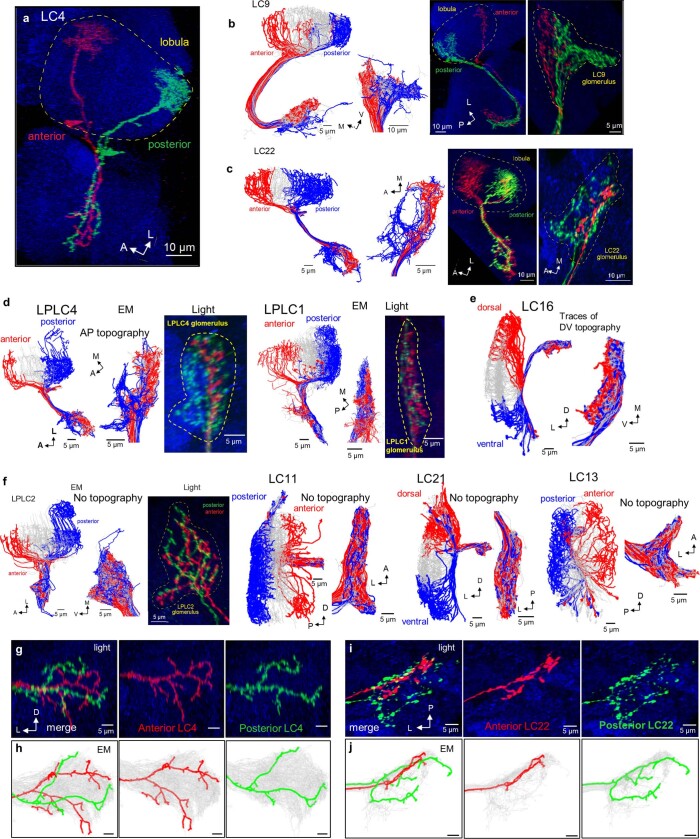
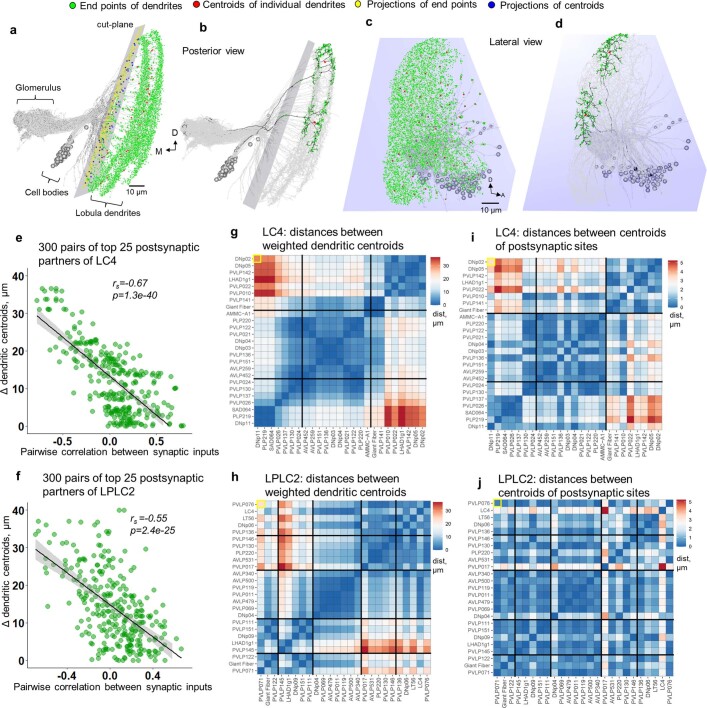
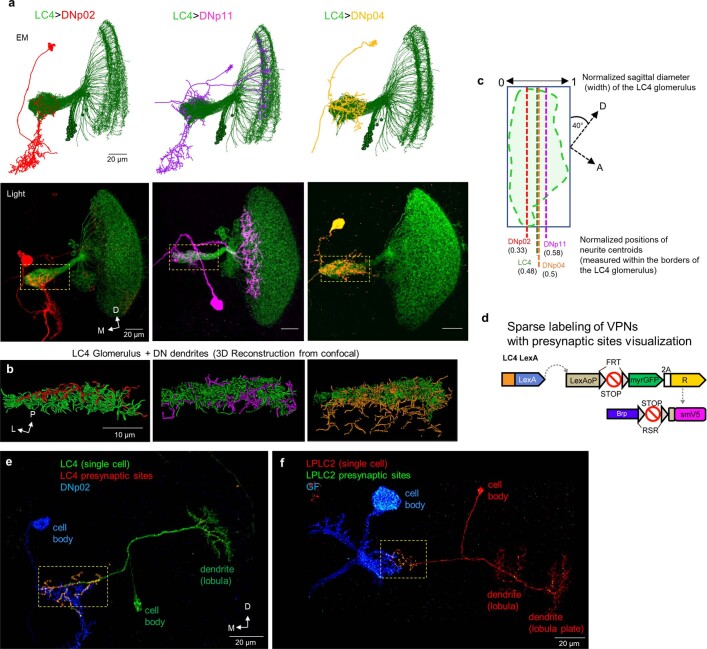
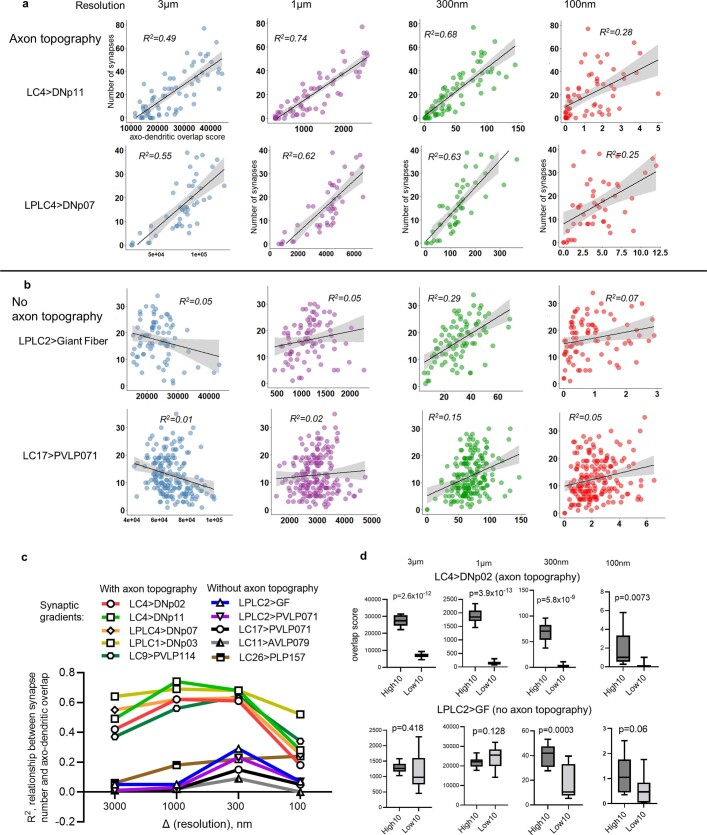
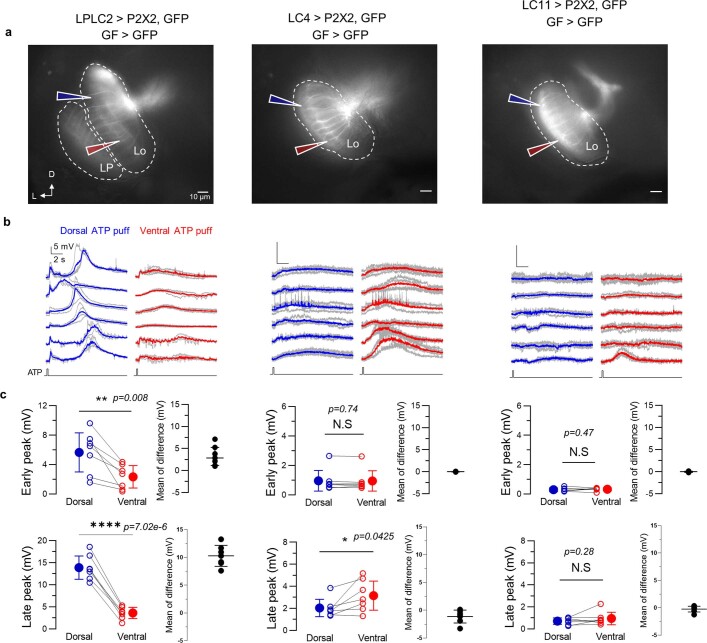
Abstract To survive, animals must convert sensory information into appropriate behaviours1,2. Vision is a common sense for locating ethologically relevant stimuli and guiding motor responses3–5. How circuitry converts object location in retinal coordinates to movement direction in body coordinates remains largely unknown. Here we show through behaviour, physiology, anatomy and connectomics in Drosophila that visuomotor transformation occurs by conversion of topographic maps formed by the dendrites of feature-detecting visual projection neurons (VPNs)6,7 into synaptic weight gradients of VPN outputs onto central brain neurons. We demonstrate how this gradient motif transforms the anteroposterior location of a visual looming stimulus into the fly’s directional escape. Specifically, we discover that two neurons postsynaptic to a looming-responsive VPN type promote opposite takeoff directions. Opposite synaptic weight gradients onto these neurons from looming VPNs in different visual field regions convert localized looming threats into correctly oriented escapes. For a second looming-responsive VPN type, we demonstrate graded responses along the dorsoventral axis. We show that this synaptic gradient motif generalizes across all 20 primary VPN cell types and most often arises without VPN axon topography. Synaptic gradients may thus be a general mechanism for conveying spatial features of sensory information into directed motor outputs.
Overview
The claims and statistics of this paper haven’t been checked yet.
Free: it reads the open-access text and checks the first 5 claims that cite a source we can check. Create a free account to check every claim.
Integrity signals
Registry
Cites
Statistics
Figures
Verification
Claims the paper makes
The claims and statistics of this paper haven’t been checked yet.
Free: it reads the open-access text and checks the first 5 claims that cite a source we can check. Create a free account to check every claim.
Claims other papers make about this one
Each is checked against this paper’s own text: does it say what the citing paper says it does?
The source backs part of the claim, not all of it — or backs it for a different population, condition or comparison.
In the citing paper
“flies that take off after optogenetic activation of these DNs perform full long-mode takeoff sequences (Dombrovski et al., 2023) rather than individual actions.”
From Organization of circuits linking descending input to motor output in the Drosophila Male Adult Nerve Cord connectome (2026) · cites this paper as Dombrovski et al., 2023
Experimental — accuracy not yet measuredThe cited source says what the claim attributes to it.
In the citing paper
“Some columnar cell types are known to exhibit spatial gradients in connectivity 116”
From Neuronal wiring diagram of an adult brain (2023) · cites this paper as [116]
The cited source says what the claim attributes to it.
In the citing paper
“DNp11 promotes a backwards shift of the T2 legs relative to the center of mass (increasing the likelihood of the forward takeoff)”
From Organization of circuits linking descending input to motor output in the Drosophila Male Adult Nerve Cord connectome (2026) · cites this paper as Dombrovski et al., 2023
In the citing paper
“DNp07 and DNp11 drive escape-related behaviors requiring simultaneous movement of both the wings and legs (Ache et al., 2019; Dombrovski et al., 2023).”
From Organization of circuits linking descending input to motor output in the Drosophila Male Adult Nerve Cord connectome (2026) · cites this paper as Dombrovski et al., 2023
In the citing paper
“We have previously identified a number of DNs which are likely to contribute to long-mode takeoffs based either on anatomical evidence that they are downstream of neurons important for looming detection or functional evidence that they initiate long-mode takeoffs when optogenetically stimulated (Dombrovski et al., 2023; Peek, 2018; Williamson et al., 2018).”
From Organization of circuits linking descending input to motor output in the Drosophila Male Adult Nerve Cord connectome (2026) · cites this paper as Dombrovski et al., 2023
5 more claims about this paper
Create a free account to see every claim other papers make about this one.
Self-check
Percentages, sums and reported differences re-computed from the paper’s own numbers.
The self-check needs the paper’s full text.
Citations
Cites
A connectome and analysis of the adult Drosophila central brain
Scheffer, L. K., Xu, C. S., Januszewski, M., Lu, Z., Takemura, S.-Y., Hayworth, K. J., Huang, G. B., Shinomiya, K., Maitlin-Shepard, J., Berg, S., et al. (2020) · eLife · doi:10.7554/elife.57443 · Cited by 1,128
Self-citationA Complete Electron Microscopy Volume of the Brain of Adult Drosophila melanogaster
Zheng, Z., Lauritzen, J. S., Perlman, E., Robinson, C. G., Nichols, M., Milkie, D., Torrens, O., Price, J., Fisher, C. B., Sharifi, N., et al. (2018) · Cell · doi:10.1016/j.cell.2018.06.019 · Cited by 1,050
Georgopoulos, A., Kettner, R., & Schwartz, A. (1988) · The Journal of Neuroscience · doi:10.1523/jneurosci.08-08-02928.1988 · Cited by 830
Direct visuomotor transformations for reaching
Buneo, C. A., Jarvis, M. R., Batista, A. P., & Andersen, R. A. (2002) · Nature · doi:10.1038/416632a · Cited by 656
Nern, A., Pfeiffer, B. D., & Rubin, G. M. (2015) · Proceedings of the National Academy of Sciences · doi:10.1073/pnas.1506763112 · Cited by 584
Wyman (1984) · doi:10.1007/978-1-4899-2286-1 · Cited by 413
The functional organization of descending sensory-motor pathways in Drosophila
Namiki, S., Dickinson, M. H., Wong, A. M., Korff, W., & Card, G. M. (2018) · eLife · doi:10.7554/elife.34272 · Cited by 337
Self-citationVisually mediated motor planning in the escape response of Drosophila
Card, G., & Dickinson, M. H. (2008) · Current Biology · doi:10.1016/j.cub.2008.07.094 · Cited by 309
Self-citationFlies Evade Looming Targets by Executing Rapid Visually Directed Banked Turns
Muijres, F. T., Elzinga, M. J., Melis, J. M., & Dickinson, M. H. (2014) · Science · doi:10.1126/science.1248955 · Cited by 304
Wu, M., Nern, A., Williamson, W. R., Morimoto, M. M., Reiser, M. B., Card, G. M., & Rubin, G. M. (2016) · eLife · doi:10.7554/elife.21022 · Cited by 304
Self-citation
Cited by
Neuronal wiring diagram of an adult brain
Dorkenwald, S., Matsliah, A., Sterling, A. R., Schlegel, P., Yu, S.-C., McKellar, C. E., Lin, A., Costa, M., Eichler, K., Yin, Y., et al. (2024) · Nature · doi:10.1038/s41586-024-07558-y · Cited by 570
Neuronal wiring diagram of an adult brain
Dorkenwald, S., Matsliah, A., Sterling, A. R., Schlegel, P., Yu, S.-C., McKellar, C. E., Lin, A., Costa, M., Eichler, K., Yin, Y., et al. (2023) · doi:10.1101/2023.06.27.546656 · Cited by 149
Distributed control circuits across a brain-and-cord connectome
Bates, A. S., Phelps, J. S., Kim, M., Yang, H. H., Matsliah, A., Ajabi, Z., Perlman, E., Delgado, K. M., Osman, M. A. M., Salmon, C. K., et al. (2026) · Nature · doi:10.1038/s41586-026-10735-w · Cited by 100
Motor control on the move: from insights in insects to general mechanisms
Büschges, A., & Ache, J. M. (2024) · Physiological Reviews · doi:10.1152/physrev.00009.2024 · Cited by 58
Mapping model units to visual neurons reveals population code for social behaviour
Cowley, B. R., Calhoun, A. J., Rangarajan, N., Ireland, E., Turner, M. H., Pillow, J. W., & Murthy, M. (2024) · Nature · doi:10.1038/s41586-024-07451-8 · Cited by 55
“More work is needed to understand how object position is encoded within a single optic glomerulus and how that information is read out 61 . b .”
BackgroundCheong, H. S., Eichler, K., Stürner, T., Asinof, S. K., Champion, A. S., Marin, E. C., Oram, T. B., Sumathipala, M., Venkatasubramanian, L., Namiki, S., et al. (2026) · eLife · doi:10.7554/elife.96084 · Cited by 54
Self-citationDescending networks transform command signals into population motor control
Braun, J., Hurtak, F., Wang-Chen, S., & Ramdya, P. (2024) · Nature · doi:10.1038/s41586-024-07523-9 · Cited by 51
“In addition, previously, we observed the co-activation of many DNs during walking 29 , and others have shown that a group of 15 DNs can modulate wing beat amplitude 30 and that the activation of individual DNs has a lower probability of eliciting take-off than the co-activation of multiple DNs 31 .”
Cheong, H. S., Eichler, K., Stürner, T., Asinof, S. K., Champion, A. S., Marin, E. C., Oram, T. B., Sumathipala, M., Venkatasubramanian, L., Namiki, S., et al. (2024) · doi:10.7554/elife.96084.1 · Cited by 51
Self-citationDescending control of motor sequences in Drosophila
Simpson, J. H. (2024) · Current Opinion in Neurobiology · doi:10.1016/j.conb.2023.102822 · Cited by 33
“The short-mode and long-mode escape takeoffs illustrate competing motor sequences initiated in response to similar visual stimuli [60,61] and triggered by parallel descending circuits with different activation thresholds [58].”
Goldschmidt, D., Tastekin, I., Münch, D., Park, J.-Y., Haberkern, H., Serra, L., Baltazar, C., Jayaraman, V., Rubin, G. M., & Ribeiro, C. (2023) · bioRxiv (Cold Spring Harbor Laboratory) · doi:10.1101/2023.07.19.549514 · Cited by 27
Self-citationInsect Flight: State of the Field and Future Directions
Treidel, L. A., Deem, K. D., Salcedo, M. K., Dickinson, M. H., Bruce, H. S., Darveau, C.-A., Dickerson, B. H., Ellers, O., Glass, J. R., Gordon, C. M., et al. (2024) · Integrative and Comparative Biology · doi:10.1093/icb/icae106 · Cited by 25
Molecular gradients shape synaptic specificity of a visuomotor transformation
Dombrovski, M., Zang, Y., Frighetto, G., Vaccari, A., Jang, H., Mirshahidi, P., Xie, F., Sanfilippo, P., Hina, B. W., Rehan, A., et al. (2025) · Nature · doi:10.1038/s41586-025-09037-4 · Cited by 24
Self-citationAzimuthal invariance to looming stimuli in the Drosophila giant fiber escape circuit
Jang, H., Goodman, D. P., Ausborn, J., & von Reyn, C. R. (2023) · Journal of Experimental Biology · doi:10.1242/jeb.244790 · Cited by 23
Infrequent strong connections constrain connectomic predictions of neuronal function
Currier, T. A., & Clandinin, T. R. (2025) · Cell · doi:10.1016/j.cell.2025.05.007 · Cited by 20
Threat gates visual aversion via theta activity in Tachykinergic neurons
Tsuji, M., Nishizuka, Y., & Emoto, K. (2023) · Nature Communications · doi:10.1038/s41467-023-39667-z · Cited by 13
Lehman, M., Barré, C., Hasan, M. A., Flament, B., Autran, S., Dhiman, N., Soba, P., Masson, J., & Jovanic, T. (2025) · Nature Communications · doi:10.1038/s41467-025-56185-2 · Cited by 12
Building egocentric models of local space from retinal input
Martins, D. M., Manda, J. M., Goard, M. J., & Parker, P. R. L. (2024) · Current Biology · doi:10.1016/j.cub.2024.10.057 · Cited by 11
Activity of a descending neuron associated with visually elicited flight saccades in Drosophila
Buchsbaum, E., & Schnell, B. (2025) · Current Biology · doi:10.1016/j.cub.2024.12.001 · Cited by 10
Boulanger-Weill, J., Kämpf, F., Schuhknecht, G. F. P., Schalek, R. L., Garza, R., Petkova, M. D., Vohra, S. K., Wu, Y., Savaliya, J. H., Tiller, R., et al. (2025) · bioRxiv (Cold Spring Harbor Laboratory) · doi:10.1101/2025.03.14.643363 · Cited by 11
Neural Control of Naturalistic Behavior Choices
Asinof, S. K., & Card, G. M. (2024) · Annual Review of Neuroscience · doi:10.1146/annurev-neuro-111020-094019 · Cited by 10
Self-citationCheong, H. S., Eichler, K., Stürner, T., Asinof, S. K., Champion, A. S., Marin, E. C., Oram, T. B., Sumathipala, M. G., Venkatasubramanian, L., Namiki, S., et al. (2025) · eLife · doi:10.7554/elife.96084.2 · Cited by 10
Self-citationRegulatory logic of neuronal differentiation in the Drosophila visual system
Treese, M., Chen, Y., Tyree, A., Coyne, R., Lake, C. M., Tabi, O. B., Rajesh, R., Chen, Y.-C. D., Hassan, H., Li, H., et al. (2026) · Proceedings of the National Academy of Sciences · doi:10.1073/pnas.2614314123 · Cited by 10
Neuromorphic Computing Using Synaptic Plasticity of Supercapacitors
Wang, L., Liu, X., Zhang, G., Qi, F., & Chen, X. (2025) · Advanced Science · doi:10.1002/advs.202500521 · Cited by 9
Oliva, D., Gültig, M., Cámera, A., & Tomsic, D. (2024) · Journal of Experimental Biology · doi:10.1242/jeb.248124 · Cited by 8
On analogies in vertebrate and insect visual systems
Tanaka, R., & Portugues, R. (2025) · Nature reviews. Neuroscience · doi:10.1038/s41583-025-00932-3 · Cited by 7
Specialized parallel pathways for adaptive control of visual object pursuit
Collie, M. F., Jin, C., Rockwell, V., Kellogg, E. J., Vanderbeck, Q. X., Hartman, A. K., Holtz, S. L., & Wilson, R. I. (2026) · Neuron · doi:10.1016/j.neuron.2026.01.001 · Cited by 7
Neurons with names: Descending control and sensorimotor processing in insect motor control
Büschges, A., & Gorostiza, E. A. (2023) · Current Opinion in Neurobiology · doi:10.1016/j.conb.2023.102766 · Cited by 6
Organization of descending neurons in the brain of the desert locust
Staudacher, E. M., Cigan, M., Wenz, F., Pollun, A., Beck, S., Beck, M., Reh, F., Haas, J., & Homberg, U. (2023) · The Journal of Comparative Neurology · doi:10.1002/cne.25513 · Cited by 6
The Connectome Interpreter ToolkitPreprint
Yin, Y., Hoeller, J., Mathiasen, A., Tsang, J., Charrier, M. E., & Cardona, A. (2025) · bioRxiv (Cold Spring Harbor Laboratory) · doi:10.1101/2025.09.29.679410 · Cited by 5
Graph embeddings for identifying symmetries in connectomesPreprint
Shan, H., & Litwin-Kumar, A. (2025) · bioRxiv (Cold Spring Harbor Laboratory) · doi:10.64898/2025.12.06.692615 · Cited by 5
McFarland, B. W., Jang, H., Smolin, N., Hina, B. W., Parisi, M. J., Davis, K. C., Mosca, T. J., Godenschwege, T. A., Nern, A., Kurmangaliyev, Y. Z., et al. (2022) · bioRxiv (Cold Spring Harbor Laboratory) · doi:10.1101/2022.08.20.504653 · Cited by 5
Self-citationMcFarland, B. W., Jang, H., Smolin, N., Hina, B. W., Parisi, M. J., Davis, K. C., Mosca, T. J., Godenschwege, T. A., Nern, A., Kurmangaliyev, Y. Z., et al. (2024) · eLife · doi:10.7554/elife.96223.1 · Cited by 5
Self-citationAn updated catalogue of split-GAL4 driver lines for descending neurons in Drosophila melanogaster
Zung, J. L., Namiki, S., Meissner, G. W., Cheong, H. S. J., Costa, M., Eichler, K., Stürner, T., Jefferis, G. S. X. E., Managan, C., FlyLight Project Team, et al. (2025) · doi:10.1101/2025.02.22.639679 · Cited by 4
“This covered roughly half of the ~700 total DNs we estimated at the time based on counting DN cell bodies using a pan-neuronally expressed photoactivatable GFP.”
Self-citationA connectome and transcriptome identity shift through a single transcription factor isoform
Smolin, N., Dombrovski, M., Hina, B. W., Moreno‐Sanchez, A., Gossart, R., Carmona, C. R., Rehan, A., Hussein, R. H., Mirshahidi, P., Ausborn, J., et al. (2026) · Current Biology · doi:10.1101/2024.06.14.598883 · Cited by 4
Self-citationThe organization of visual pathways in the Drosophila brain
Hoeller, J., Zhao, A., Nern, A., Rogers, E. M., Romani, S., & Reiser, M. B. (2026) · Cell · doi:10.1016/j.cell.2026.08.014 · Cited by 4
Self-citationMcFarland, B. W., Jang, H., Smolin, N., Hina, B. W., Parisi, M. J., Davis, K. C., Mosca, T. J., Godenschwege, T. A., Nern, A., Kurmangaliyev, Y. Z., et al. (2024) · eLife · doi:10.7554/elife.96223 · Cited by 4
Self-citationMoreno‐Sanchez, A., Vasserman, A. N., Jang, H., Hina, B. W., von Reyn, C. R., & Ausborn, J. (2024) · eLife · doi:10.7554/elife.99277.1 · Cited by 5
Bio-Inspired Strategies Are Adaptable to Sensors Manufactured on the Moon
Ellery, A. A. (2024) · Biomimetics · doi:10.3390/biomimetics9080496 · Cited by 4
Moreno‐Sanchez, A., Vasserman, A. N., Jang, H., Hina, B. W., von Reyn, C. R., & Ausborn, J. (2024) · bioRxiv (Cold Spring Harbor Laboratory) · doi:10.1101/2024.04.24.591016 · Cited by 3
Vaccari, A., & Dombrovski, M. (2023) · Asilomar Conference on Signals, Systems and Computers (ACSSC) · doi:10.1109/ieeeconf59524.2023.10476819 · Cited by 3
Self-citationMoreno‐Sanchez, A., Vasserman, A. N., Jang, H., Hina, B. W., von Reyn, C. R., & Ausborn, J. (2024) · eLife · doi:10.7554/elife.99277 · Cited by 3
Drosophila learn to prefer immobile spherical objects through repeated physical interaction
Iwasaki, K., Kawano, S., Cassod, A., Neuhauser, C., & Rayshubskiy, A. (2025) · Current Biology · doi:10.1016/j.cub.2025.09.073 · Cited by 3
Neural coordination of wing and leg movements during a terrestrial threat display
Cao, S., & Anderson, D. J. (2026) · Current Biology · doi:10.1016/j.cub.2026.09.056 · Cited by 3
Linking structure and function: biological insights from fly connectomes
Lin, A., & Murthy, M. (2025) · Nature Methods · doi:10.1038/s41592-025-02949-z · Cited by 2
Flexible circuits for visually guided flight control in Drosophila
Schnell, B. (2026) · Trends in Neurosciences · doi:10.1016/j.tins.2025.12.005 · Cited by 2
Connectome analysis reveals brain-wide visual processing in Drosophila
Kim, S. Y., & Kim, A. J. (2026) · iScience · doi:10.64898/2026.02.02.700492 · Cited by 2
Drosophila DNp03 descending neurons serve as a hub within a flight saccade network
Croke, H., Jang, H., Ludlow, B. K., Leung, A., Eichler, K., Stürner, T., Costa, M., Cohen, I., Ausborn, J., & von Reyn, C. R. (2025) · Current Biology · doi:10.1016/j.cub.2025.11.035 · Cited by 2
Electrical synapses mediate visual orientation behavior
Frighetto, G., Dombrovski, M., Castillo, L., Meera, P., Mirshahidi, P., Mirshahidi, P. S., Sanfilippo, P., Vaccari, A., Kandimalla, P., Hartenstein, V., et al. (2026) · Current Biology · doi:10.1016/j.cub.2026.09.060 · Cited by 2
Self-citationAn updated catalogue of split-GAL4 driver lines for descending neurons in Drosophila melanogasterPreprint
Zung, J. L., Namiki, S., Meissner, G. W., Cheong, H. S., Costa, M., Eichler, K., Stürner, T., Jefferis, G. S. X. E., Managan, C., FlyLight Project Team, et al. (2025) · eLife · doi:10.7554/elife.107450.1 · Cited by 2
Self-citationA neural strategy for directional behaviour
Tomsic, D., & Theobald, J. C. (2023) · Nature · doi:10.1038/d41586-022-04494-7 · Cited by 2
The Drosophila connectome reveals axo-axonic synapses on descending neurons
Ceballos, C. C., Lopez, J., Roachford, T., Sanchez, D., Jara, S. D., Robbins, K., Spencer, C., Murphey, R. K., & Pena, R. F. O. (2026) · iScience · doi:10.1016/j.isci.2026.115624 · Cited by 1
Lazar, A. A., Shukla, S., & Zhou, Y. (2026) · bioRxiv (Cold Spring Harbor Laboratory) · doi:10.64898/2026.08.22.746456 · Cited by 1
The Synaptic Complexity of a High‐Integration Lobula Giant Neuron in Crabs
Barnatan, Y., Rind, F. C., Scarano, F., & Sztarker, J. (2025) · The Journal of Comparative Neurology · doi:10.1002/cne.70026 · Cited by 1
Gaitanidis, A., Pampanin, V., Thiem, J., Kalaras, G., Huthmacher, L., Hürkey, S., Kadas, D., Dimitriadou, A., Ntogka, A., Sanyal, S., et al. (2025) · PLoS Biology · doi:10.1371/journal.pbio.3003553 · Cited by 1
An updated catalogue of split-GAL4 driver lines for descending neurons in Drosophila melanogasterPreprint
Zung, J. L., Namiki, S., Meissner, G. W., Cheong, H. S., Costa, M., Eichler, K., Stürner, T., Jefferis, G. S. X. E., Managan, C., FlyLight Project Team, et al. (2025) · eLife · doi:10.7554/elife.107450 · Cited by 1
Self-citationA fish that escapes towards looming-disk stimuli
Schulze, W., Machnik, P., & Schuster, S. (2025) · Journal of Experimental Biology · doi:10.1242/jeb.249772 · Cited by 1
Expansion-Assisted Hybridization Chain Reaction-smFISH and Immunohistochemistry in Drosophila Brain
Mirshahidi, P., Frighetto, G., Orth, J. D., Vaccari, A., & Dombrovski, M. (2026) · Journal of Visualized Experiments · doi:10.3791/71400 · Cited by 1
Self-citationUnique neural activity states predict action selection in response to visual threat
Zucker-Scharff, I., Brezovec, B. E., Hao, Y. A., Wang, Y., Choi, M., Su, S. J., & Clandinin, T. R. (2026) · Current Biology · doi:10.1016/j.cub.2026.07.077
Dynamic trajectory cues drive sequenced integration in approach detectorsPreprint
Vashistha, H., Matos, N. C., Wu, H., & Clark, D. A. (2026) · bioRxiv (Cold Spring Harbor Laboratory) · doi:10.64898/2026.06.05.730527
Neural circuit mechanisms of sensorimotor transformations
Lehman, M. (2023) · theses.fr (ABES) · doi:10.70675/0a5c6eddz67fcz4a44z9ef8z363479dea8d0
Brinkmanship and the sensory–motor limits of pursuit predationPreprint
Koopmans, L., Hein, A. M., & Martin, B. T. (2026) · bioRxiv (Cold Spring Harbor Laboratory) · doi:10.64898/2026.09.25.754358
McFarland, B. W., & von Reyn, C. R. (2022) · iDEA - Drexel University Institutional Repository · doi:10.17918/00001613
Chida, H., Shidara, H., & Ogawa, H. (2025) · Journal of Neurophysiology · doi:10.1152/jn.00254.2025
Critical Periods and Developmental NeurosimulationPreprint
Alicea, B. (2023) · PsyArXiv (OSF Preprints) · doi:10.31234/osf.io/jsqcy
Xie, J., Ren, R., Zhou, X., Zheng, A., Zhu, J., Jiang, W., & Zhao, Z. (2025) · arXiv (Cornell University) · doi:10.48550/arxiv.2512.06934
Gross anatomy of the visual processing centers of Hieroglyphus banian
Sivaraju, C., & Joseph, J. (2025) · Cell and Tissue Research · doi:10.1007/s00441-025-03956-4
Motor Control of Rapid Eye Movements in Larval Zebrafish
Dowell, C. K. (2023) · UCL Discovery (University College London)
Critical Periods and Developmental NeurosimulationPreprint
Alicea, B. (2025) · PsyArXiv (OSF Preprints) · doi:10.31234/osf.io/jsqcy_v2
Emergent release patterning in microenvironments via oil-infused mesoporous surface interaction
Scilletta, N. A., Pezzoni, M., Giménez, R. A., Catalano, P. N., & Bellino, M. G. (2026) · Colloids and Surfaces B Biointerfaces · doi:10.1016/j.colsurfb.2026.116145
Metadata
- Authors
- Dombrovski, M., Peek, M. Y., Park, J.-Y., Vaccari, A., Sumathipala, M., Morrow, C., Breads, P., Zhao, A., Kurmangaliyev, Y. Z., Sanfilippo, P., Rehan, A., Polsky, J., Alghailani, S., Tenshaw, E., Namiki, S., Zipursky, S. L., & Card, G. M.
- Affiliations
- Howard Hughes Medical Institute (US)
- Middlebury College (US)
- Corresponding author
- Zipursky, S. Lawrence
- Card, Gwyneth M.
- ORCID
- Venue
- Nature
- Published
- 2023-01-04
- Volume
- 613
- Issue
- 7944
- Pages
- 534-542
- ISSN
- 0028-0836 (ISSN-L)
- 1476-4687
- PMC
- PMC9849133
- OpenAlex
- W4313543884
- Cited by
- 67
- References
- 52
- Citations by year
- 2026: 15 · 2025: 22 · 2024: 16 · 2023: 12
- FWCI
- 7.86
- Type
- journal article
- Language
- en
- Update notices
- correction (2023-03-13)
- Open access
- hybrid
- doi.org
- Licence
- cc-by
- creativecommons.org/licenses/by/4.0 (tdm)
- creativecommons.org/licenses/by/4.0 (vor)
- Locations
- Nature (publishedVersion, cc-by)
- PubMed Central (publishedVersion, cc-by)
- PubMed (publishedVersion)
- RePEc: Research Papers in Economics (submittedVersion)
- eScholarship (California Digital Library) (submittedVersion, cc-by)
- Funders
- Howard Hughes Medical Institute
- Helen Hay Whitney Foundation
- Japan Society for the Promotion of Science (20K21414, 20H03293)
- Topics
- Life Sciences › Neuroscience › Cellular and Molecular Neuroscience › Neurobiology and Insect Physiology Research
- Life Sciences › Neuroscience › Cognitive Neuroscience › Visual perception and processing mechanisms
- Life Sciences › Neuroscience › Cellular and Molecular Neuroscience › Neuroscience and Neuropharmacology Research
- Keywords
- visuomotor transformation, Drosophila, topographic map, dorsal-ventral axis, anterior-posterior axis, connectomics, escape behavior
- MeSH terms
- Animals, Axons, Behavior, Animal, Brain, Dendrites, Drosophila, Escape Reaction, Neurons, Psychomotor Performance, Synapses, Visual Fields
About these checks
Registry, retraction, Cites and statistics results are computed, not judged, with one exception: a printed reference that no index lists is read once by a model before it counts as a citation error. Claims are extracted by a model and kept only when their quote appears verbatim in the text; each cited source is then checked, with a model’s help, for whether it says what the claim relies on. Those verdicts can be wrong — read the claim’s quote and the cited source before relying on one.
Statistics and arithmetic are recomputed, not judged.
Confidence bands are shown only for fields calibrated on our annotated test set. None is calibrated yet, so no band is shown.
What counts as a claim ›How we measure confidence ›How we check this ›
Are you an author, or do you see a problem with this page? Request a review
Data sources
Bibliographic data: Semantic Scholar, OpenAlex, Crossref.
Contains information from the Semantic Scholar Academic Graph Datasets, made available under the ODC Attribution License (ODC-BY 1.0).
Semantic Scholar’s data is described in: Kinney, R., et al. (2023). The Semantic Scholar Open Data Platform. arXiv:2301.10140.
