

Genomic data in the All of Us Research Program
Open accessThe DOI matches its Crossref record; 54 of the 54 references it cites were found in a registry or an index.
Abstract
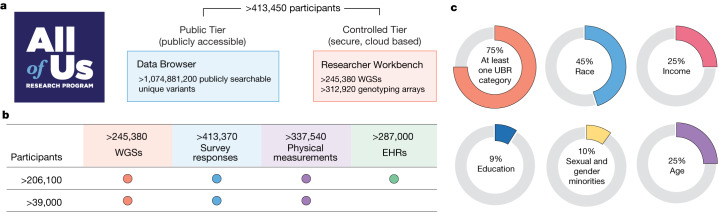
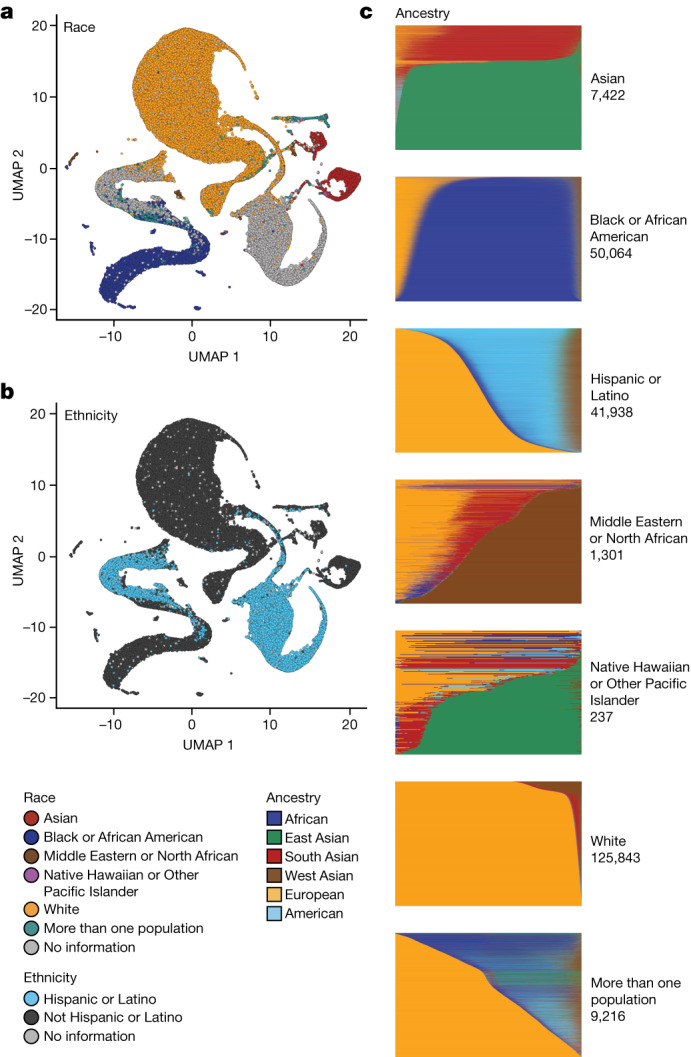
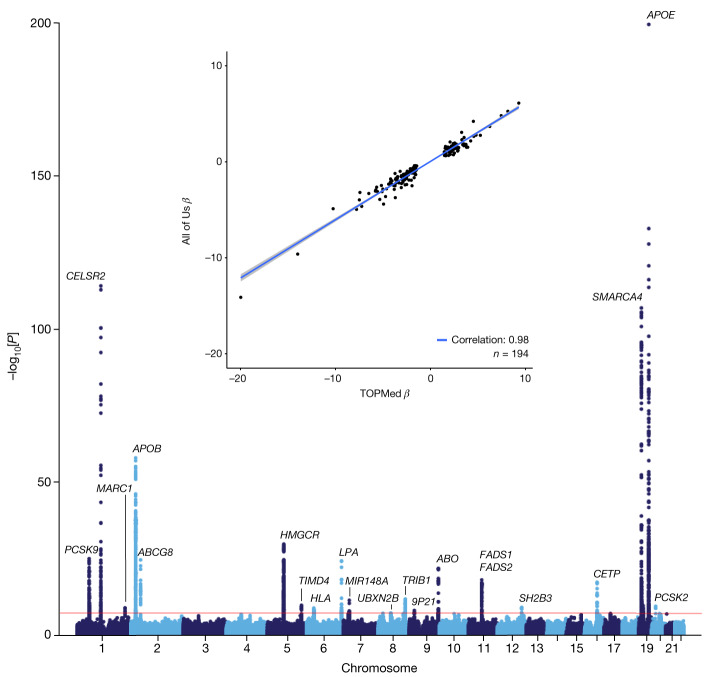
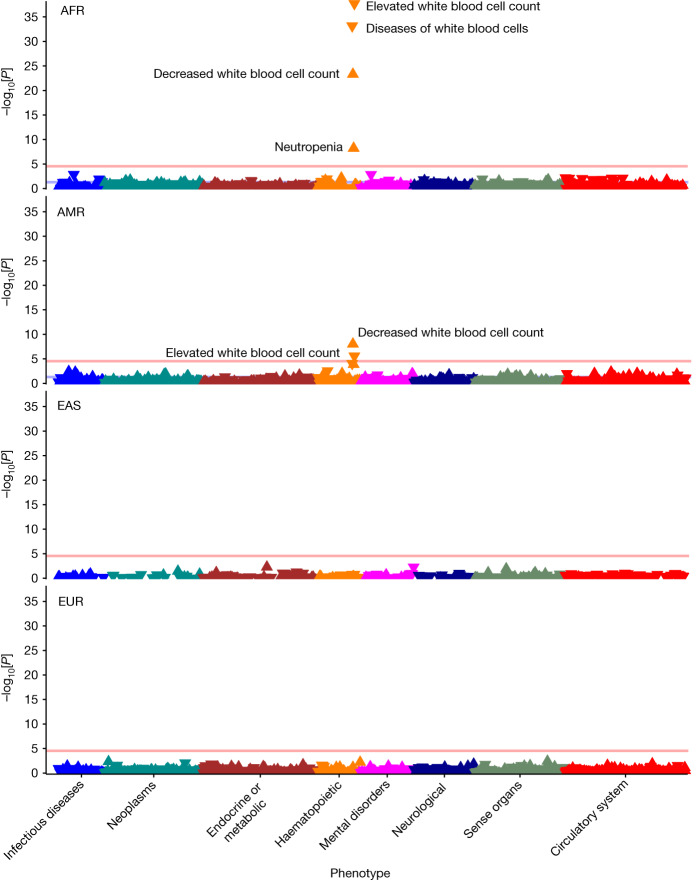
Comprehensively mapping the genetic basis of human disease across diverse individuals is a long-standing goal for the field of human genetics 1–4 . The All of Us Research Program is a longitudinal cohort study aiming to enrol a diverse group of at least one million individuals across the USA to accelerate biomedical research and improve human health 5,6 . Here we describe the programme’s genomics data release of 245,388 clinical-grade genome sequences. This resource is unique in its diversity as 77% of participants are from communities that are historically under-represented in biomedical research and 46% are individuals from under-represented racial and ethnic minorities. All of Us identified more than 1 billion genetic variants, including more than 275 million previously unreported genetic variants, more than 3.9 million of which had coding consequences. Leveraging linkage between genomic data and the longitudinal electronic health record, we evaluated 3,724 genetic variants associated with 117 diseases and found high replication rates across both participants of European ancestry and participants of African ancestry. Summary-level data are publicly available, and individual-level data can be accessed by researchers through the All of Us Researcher Workbench using a unique data passport model with a median time from initial researcher registration to data access of 29 hours. We anticipate that this diverse dataset will advance the promise of genomic medicine for all.
Overview
The claims and statistics of this paper haven’t been checked yet.
Free: it reads the open-access text and checks the first 5 claims that cite a source we can check. Create a free account to check every claim.
Integrity signals
Registry
Cites
Statistics
Figures
Verification
Claims the paper makes
The claims and statistics of this paper haven’t been checked yet.
Free: it reads the open-access text and checks the first 5 claims that cite a source we can check. Create a free account to check every claim.
Claims other papers make about this one
Each is checked against this paper’s own text: does it say what the citing paper says it does?
The source backs part of the claim, not all of it — or backs it for a different population, condition or comparison.
In the citing paper
“adjusting for age, sex, APOE-ε2 dosage, APOE-ε4 dosage and 16 genetic principal components precomputed by All of Us 11 .”
From Association of Rare APOE Missense Variants R189C and W276C With Risk of Alzheimer Disease (2026) · cites this paper as [11]
Experimental — accuracy not yet measured
Self-check
Percentages, sums and reported differences re-computed from the paper’s own numbers.
The self-check needs the paper’s full text.
Citations
Cites
Statistical Power Analysis for the Behavioral Sciences
Cohen, J. (2013) · doi:10.4324/9780203771587 · Cited by 25,373
A global reference for human genetic variation
The 1000 Genomes Project Consortium, authors, C., Auton, A., Abecasis, G. R., Steering committee, Altshuler, D. M., Durbin, R. M., Abecasis, G. R., Bentley, D. R., Chakravarti, A., et al. (2015) · Nature · doi:10.1038/nature15393 · Cited by 18,247
Self-citationAnalysis of protein-coding genetic variation in 60,706 humans
Exome Aggregation Consortium, Lek, M., Karczewski, K. J., Minikel, E. V., Samocha, K. E., Banks, E., Fennell, T., O’Donnell-Luria, A. H., Ware, J. S., Hill, A. J., et al. (2016) · Nature · doi:10.1038/nature19057 · Cited by 9,587 · cited 1×
“Furthermore, previous work has demonstrated the value of joint calling at scale 10,18 .”
BackgroundSelf-citationThe mutational constraint spectrum quantified from variation in 141,456 humans
Karczewski, K. J., Francioli, L. C., Tiao, G., Cummings, B. B., Alföldi, J., Wang, Q., Collins, R. L., Laricchia, K. M., Ganna, A., Birnbaum, D. P., et al. (2020) · Nature · doi:10.1038/s41586-020-2308-7 · Cited by 9,434 · cited 3×
“Furthermore, previous work has demonstrated the value of joint calling at scale 10,18 .”
BackgroundMethodSelf-citationThe UK Biobank resource with deep phenotyping and genomic data
Bycroft, C., Freeman, C., Petkova, D., Band, G., Elliott, L. T., Sharp, K., Motyer, A., Vukcevic, D., Delaneau, O., O’Connell, J., et al. (2018) · Nature · doi:10.1038/s41586-018-0579-z · Cited by 8,876 · cited 1×
“The All of Us cohort is significantly more diverse than those of other large contemporary research studies generating WGS data 32,33 .”
ResultdbSNP: the NCBI database of genetic variation
Sherry, S. T. (2001) · Nucleic Acids Research · doi:10.1093/nar/29.1.308 · Cited by 7,502
Buniello, A., MacArthur, J. A. L., Cerezo, M., Harris, L. W., Hayhurst, J., Malangone, C., McMahon, A., Morales, J., Mountjoy, E., Sollis, E., et al. (2019) · Nucleic Acids Research · doi:10.1093/nar/gky1120 · Cited by 4,000 · cited 1×
“The PGRM is an expansion of this work by Bastarache et al., based on associations in the GWAS catalogue 50 in June 2020 (ref.”
MethodThe “All of Us” Research Program
The All of Us Research Program Investigators (2019) · New England Journal of Medicine · doi:10.1056/nejmsr1809937 · Cited by 2,440 · cited 1×
“Unlike traditional data access models that require per-project approval, access in the Researcher Workbench is governed by a data passport model based on a researcher’s authenticated identity, institutional affiliation, and completion of self-service training and compliance attestation 28 .”
MethodSelf-citationVariant of transcription factor 7-like 2 (TCF7L2) gene confers risk of type 2 diabetes
Grant, S. F. A., Thorleifsson, G., Reynisdottir, I., Benediktsson, R., Manolescu, A., Sainz, J., Helgason, A., Stefansson, H., Emilsson, V., Helgadottir, A., et al. (2006) · Nature Genetics · doi:10.1038/ng1732 · Cited by 2,287 · cited 1×
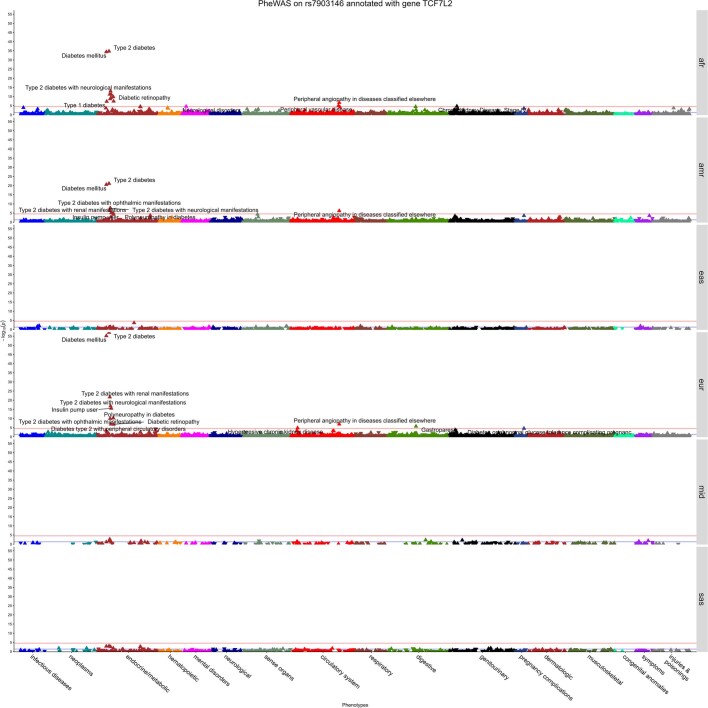
“Similarly, the TCF7L2 locus 27 strongly associates with increased risk of type 2 diabetes and associated”
BackgroundSequencing of 53,831 diverse genomes from the NHLBI TOPMed Program
Taliun, D., Harris, D. N., Kessler, M. D., Carlson, J., Szpiech, Z. A., Torres, R., Taliun, S. A. G., Corvelo, A., Gogarten, S. M., Kang, H. M., et al. (2021) · Nature · doi:10.1038/s41586-021-03205-y · Cited by 2,213
Self-citation
Research works printed but not linked: 1
- Ho, T. K. Random decision forests. In Proc. 3rd International Conference on Document Analysis and Recognition (IEEE Computer Society Press, 2002).
Cited by
Items 401–500 of 864
Carrier Frequencies of Medically Actionable Pathogenic Variants in the Russian Population
Suvorova, Y. M., Monakhova, A., Chekanov, N., Musharova, O., Moskovkina, E., Zaigrin, I. V., Antonov, I., Klimchuk, O., Pustoshilov, D., Zorina, D., et al. (2026) · International Journal of Molecular Sciences · doi:10.3390/ijms27125344 · Cited by 3
“Several large-scale national genomic projects, including, for example, the UK Biobank [1], AllOfUs [2], FinnGen [3], the Qatar Genome Project [4], and Korea4K [5], are being carried out throughout the world.”
Genome-wide analysis implicates inner ear development in Ménière disease
Shi, Z., Mandla, R., Li, J., Li, X., Zhang, Z., Chen, S., Lapinska, S., Flynn-Carroll, A. O., Paşaniuc, B., Epstein, D. J., et al. (2026) · The American Journal of Human Genetics · doi:10.1016/j.ajhg.2026.05.011 · Cited by 2
“24 We performed a GWAS of MD using Regenie, 31 including age, sex, age 2 , age 2 × sex, and the top 10 principal components (PCs) as covariates.”
Baya, N. A., Lassen, F. H., Hill, B., Venkatesh, S. S., Currant, H., Lindgren, C. M., & Palmer, D. S. (2026) · The American Journal of Human Genetics · doi:10.1016/j.ajhg.2026.05.013 · Cited by 4
Bujnis, M. N., Sterenborg, R. B. T. M., Li, Y., Åsvold, B. O., Brčić, L., Perica, V. B., Babbar, A., Denny, J. C., Fritsche, L. G., Kanai, M., et al. (2026) · Nature Genetics · doi:10.1038/s41588-026-02704-w · Cited by 2
Self-citationGenetically Mediated Differences in LDL Cholesterol and Risk of Venous Thromboembolism
Sui, Y., Kany, S., Khurshid, S. S., Supriami, K., Rämö, J. T., Jurgens, S. J., Enzan, N., Choi, S. H., Yu, Z., Li, L., et al. (2026) · Journal of the American College of Cardiology · doi:10.1016/j.jacc.2026.06.026 · Cited by 2
Self-citationLinkage between HLA-B8 and HLA-DQ2.5 contributes to ancestry-dependent risk for celiac disease
Long, X., Karnati, H., Ying, W., Touma, M., Smith, I. B., Lewis, S. K., Xing, C., Burstein, E., Green, P. H. R., Alkalay, M. J., et al. (2026) · Journal of Human Immunity · doi:10.70962/jhi.20260050 · Cited by 2
Gene Variant Frequencies of IDO1, IDO2, TDO, and KMO in Substance Use Disorder Cohorts
Contella, L., Farrell, C. L., Boccuto, L., Litwin, A. H., & Snyder, M. L. (2024) · Genes · doi:10.3390/genes15111388 · Cited by 3
Opportunities for promoting open data in the Caribbean through biobanks
Saluja, S., & Anderson, S. G. (2025) · Revista Panamericana de Salud Pública · doi:10.26633/rpsp.2025.11 · Cited by 2
Benchmark of computational methods to detect digenism in sequencing data
Ogloblinsky, M. C., Conrad, D. F., Baudot, A., Tournier‐Lasserve, E., Principal Investigators, Génin, E., Campion, D., Dartigues, J., Deleuze, J., Lambert, J., et al. (2025) · European Journal of Human Genetics · doi:10.1038/s41431-025-01834-9 · Cited by 3
Androgens mediate sexual dimorphism in Pilarowski-Bjornsson syndrome
Anderson, K. J., Thorolfsdottir, E. T., Nodelman, I. M., Halldorsdottir, S. T., Benónísdóttir, S., Alghamdi, M. A., Almontashiri, N. A. M., Barry, B. J., Begemann, M., Britton, J. F., et al. (2026) · The American Journal of Human Genetics · doi:10.1016/j.ajhg.2026.08.005 · Cited by 3
Self-citationBuilding a human genetic data lake to scale up insights for drug discovery
Chatelain, C., Lessard, S., Klinger, K., Shameer, K., & de Rinaldis, E. (2025) · Drug Discovery Today · doi:10.1016/j.drudis.2025.104385 · Cited by 2
From genomics to precision medicine in type 2 diabetes
Garcia‐Ortíz, H., Barajas-Olmos, F. M., Contreras-Cubas, C., Martínez-Hernández, A. G., & Orozco, L. (2025) · Gaceta Médica de México · doi:10.24875/gmm.m25000969 · Cited by 2
Improved breast cancer risk prediction using chromosomal-scale length variation
Fatapour, Y., & Brody, J. P. (2025) · Human Genomics · doi:10.1186/s40246-025-00776-z · Cited by 4
“Genetic data is being released in phases [29].”
Gao, B., Li, Z., & Zhou, X. (2025) · The American Journal of Human Genetics · doi:10.1016/j.ajhg.2025.10.001 · Cited by 2
Leveraging pleiotropy to improve genetic risk prediction across diseases
Hu, J., Zhou, G., Zhao, H., & DeWan, A. T. (2026) · Genetics in Medicine · doi:10.1016/j.gim.2026.102548 · Cited by 5
Self-citationStep, K., Hernández, C. F., Khani, M., Eltaraifee, E., Hernandez-Medrano, A. J., Kung, P., Ostrožovičová, M., Zirra, A., Pérez‐Palma, E., Mencacci, N. E., et al. (2026) · Movement Disorders · doi:10.1002/mds.70182 · Cited by 3
Admixture-informed polygenic risk reporting using the ePRS framework
Huang, Y., Kurniansyah, N., Goodman, M. O., Spitzer, B., Wang, J., Stilp, A. M., Laurie, C., de Vries, P. S., Chen, H., Min, Y.-I., et al. (2026) · Nature Communications · doi:10.1038/s41467-026-72457-x · Cited by 2
“AoU used a different method to compute genetic ancestry fractions, and the reference populations are a bit different as Admixed Latinos are included in one category with Native American individuals 54 .”
Self-citationNazeen, S., Wang, X., Morrow, A. R., Strom, R., Ethier, E., Ritter, D., Henderson, A. B. H., Afroz, J., Cassa, C. A., Stitziel, N. O., et al. (2026) · Cell Genomics · doi:10.1016/j.xgen.2026.101284 · Cited by 3
Self-citationAvery, J., Leak, T. S., & Francis, S. (2024) · Genes · doi:10.3390/genes15040512 · Cited by 2
“The All of Us (AoU) Research Program, funded by the National Institutes of Health (NIH), is a robust research tool that enables the assessment of biological, clinical, social, and environmental determinants of health and disease while simultaneously reflecting diversity in the United States [9].”
BackgroundMethodInfluentialPorter, B. (2024) · Journal of the American Medical Informatics Association · doi:10.1093/jamia/ocae153 · Cited by 2
Ambitious survey of human diversity yields millions of undiscovered genetic variants
Kozlov, M. (2024) · Nature · doi:10.1038/d41586-024-00502-0 · Cited by 2
Verma, S. S., Guare, L. A., Humphrey, L. A., Rush, M., Pollie, M., Jaworski, J., Akerele, A., Luo, Y., Weng, C., Wei, W., et al. (2024) · Research Square · doi:10.1101/2024.04.22.24306092 · Cited by 5
Self-citationGuare, L. A., Das, J., Caruth, L., & Verma, S. S. (2024) · medRxiv · doi:10.1101/2024.07.29.24311189 · Cited by 2
Long-Telomeropathy is Associated with Tumor Predisposition SyndromePreprint
Allaire, P., Mayer, J. G., Moat, L. F., Gabor, R., Shay, J. W., He, J., Zeng, C., Bastarache, L. A., & Hebbring, S. J. (2024) · SSRN Electronic Journal · doi:10.1101/2024.11.26.24318007 · Cited by 2
Big Data Analysis in Personalized Medicine
Banu, A., Balyan, P., Nisamudheen, N. A., Velayutham, D., Balyan, M. K., & Jithesh, P. V. (2024) · Elsevier eBooks · doi:10.1016/b978-0-323-95502-7.00279-7 · Cited by 2
Unsupervised Ensemble Learning for Efficient Integration of Pre-trained Polygenic Risk ScoresPreprint
Gao, C., Tubbs, J. D., Han, Y., Guo, M., Li, S., Ma, E., Luo, D., Smoller, J. W., Lee, P. H., & Duan, R. (2025) · medRxiv · doi:10.1101/2025.01.06.25320058 · Cited by 2
Zhang, X., Holm, P., Scally, A., Banasik, K., Mortensen, L. H., Fitzgerald, T. W., Westergaard, D., Chmura, P. J., Ostrowski, S. R., Sørensen, E., et al. (2025) · bioRxiv (Cold Spring Harbor Laboratory) · doi:10.1101/2025.03.19.643007 · Cited by 2
Lee, P. H., Jung, J.-Y., Sanzo, B. T., Duan, R., Ge, T., Waldman, I. D., Smoller, J. W., Schwaba, T., Tucker–Drob, E. M., & Grotzinger, A. D. (2025) · medRxiv · doi:10.1101/2025.03.26.25324720 · Cited by 4
Butts, J. C., Rong, S., Gosai, S. J., Castro, R. I., Noon, M., Adeniran, K., Ghosh, R., Sabeti, P. C., Tewhey, R., & Reilly, S. K. (2025) · bioRxiv (Cold Spring Harbor Laboratory) · doi:10.1101/2025.04.16.648420 · Cited by 6
Vargas, L. B., Meyer, M., Konigsberg, I. R., Kakar, A., Carry, P. M., Li, Y., Jones, A. C., Tiwari, H. K., Srinivasasainagendra, V., Armstrong, N. D., et al. (2025) · medRxiv · doi:10.1101/2025.06.18.25329573 · Cited by 3
Fominykh, V., Jaholkowski, P. P., Shadrin, A. A., Koch, E. M., Luitva, L. B., Mikkelsen, D. H., Lundberg, M., Pedersen, O. B., Ostrowski, S. R., Erikstrup, C., et al. (2025) · medRxiv · doi:10.1101/2025.07.16.25331639 · Cited by 3
Sardell, J., Das, S., Møller, G., Sanna, M., Chocian, K., Taylor, K., Malinowski, A., Stubberfield, C. R., Rochlin, A., & Gardner, S. (2025) · medRxiv · doi:10.1101/2025.08.13.25333595 · Cited by 2
Genetic variants in recurrent euploid pregnancy loss
Amin‐Beidokhti, M., Halstead, M. M., Rodríguez-Escribà, M., Tise, C. G., Bernstein, J. A., Çakmak, H., Pollard, E., Giudice, L. C., Merrion, K., Shaw, G. M., et al. (2026) · Genome Medicine · doi:10.1101/2025.10.01.25335660 · Cited by 2
Cordogan, S., Starr, D., Treff, N. R., Lanchbury, J. S. S., Goldstein, E., Sadeghi, K., Burmeister, M., Dayani, L., Macdonald, P., Keen-Kim, J. D., et al. (2025) · medRxiv · doi:10.1101/2025.10.24.25338613 · Cited by 3
Towards a universal foundation model for biobank-scale human genome variationPreprint
Xu, A. G., Xu, Y., Xing, Y., Luo, P., Yang, J., Bai, Y., & Tang, K. (2025) · Research Square · doi:10.21203/rs.3.rs-7855919/v1 · Cited by 2
Rivera, W. G. G., Liu, Y., Mirmira, T., Ma, N., Kim, J., Antonio, M. D., Dube, U., Frazer, K. A., & Gymrek, M. (2025) · medRxiv · doi:10.64898/2025.12.29.25343152 · Cited by 3
Pope, N. S., Tallman, S., Jeffery, B., Mbuli-Robertson, D., Wong, Y., Karthikeyan, S., Ralph, P. L., & Kelleher, J. (2026) · bioRxiv (Cold Spring Harbor Laboratory) · doi:10.64898/2026.01.07.698223 · Cited by 6
Genomic insights into substance use and disinhibitory disordersPreprint
Williams, C. M., Poore, H. E., Londoño-Correa, D., Ning, Y., Courchesne‐Krak, N. S., Choi, M., Tubbs, J. D., Rosenblatt, M., Tanksley, P. T., Alıev, F., et al. (2026) · medRxiv · doi:10.64898/2026.02.09.26344198 · Cited by 4
“…(COGA: β = 0.352, s.e. = 0.016, incremental R 2 = 11.9%; Add Health: β = 0.359, s.e. = 0.016, incremental R 2 = 12.6%; Supplementary Tables 29–30 ), an effect size comparable to many well-established environmental correlates, including socioeconomic status 46 , child maltreatment 47 , and…”
InfluentialGuen, Y. L., Peña‐Tauber, A., Pulgrossi, R. C., Park, J. Y., Orias, H., & Greicius, M. D. (2026) · medRxiv · doi:10.64898/2026.03.03.26347540 · Cited by 3
Wagenknecht, J. B., Haque, N., Gresser, J., Dong, X., & Zimmermann, M. T. (2026) · bioRxiv (Cold Spring Harbor Laboratory) · doi:10.64898/2026.06.19.733400 · Cited by 2
“…at the given dates: from ClinVar on 1/28/2026 36 , from LOVD’s ARID1B database (curated by Gijs Santen) on 1/6/2026 37 , from AllofUs on 2/26/2026 38 , from gnomAD v4 on 10/20/2025 22 , from COSMIC’s variants database on 4/1/2026 39 , and from CBioPortal’s curated set of non-redundant studies…”
Conlon, D., Kanakala, S., Cherlin, T., Ko, Y.-A., Vitali, C., Gurunathan, S., Venkatesh, R., Woerner, J., Guare, L. A., BioBank, P. M., et al. (2024) · Genes · doi:10.3390/genes15081098 · Cited by 2
Magee, D. A., Kicker, S., & Thomas, A. (2024) · Journal of the American Medical Informatics Association · doi:10.1093/jamia/ocae241 · Cited by 3
Contemporary uses of “lethal” or “life limiting” terminology in perinatal research
Gatta, L. A., McCarthy, A. M., & Osmundson, S. S. (2024) · Current Opinion in Obstetrics & Gynecology · doi:10.1097/gco.0000000000001010 · Cited by 1
“There are now as many as 275 million variants identified through WGS, waiting to be understood in the context of human disease, including those affecting fetuses, children, and adolescents [12].”
Garduno-Rapp, N.-E., Herzberg, S. D., Ong, H. H., Kao, C., Lehmann, C. U., Gangireddy, S., Jain, N. B., & Giri, A. (2025) · Applied Clinical Informatics · doi:10.1055/a-2524-5216 · Cited by 1
Kanga‐Parabia, A., Biggs, L. J., McClaren, B., Lewis, S., Pangli, K. K., & Archibald, A. D. (2025) · International Journal of Qualitative Methods · doi:10.1177/16094069251316998 · Cited by 1
“This issue is increasingly being recognised across the globe, and there is growing focus on improving representation within genomic databases (Bick et al., 2024; Lemke et al., 2022; National Academies of Sciences, Engineering, and Medicine et al., 2018).”
A Novel SLPI Splice Variant Confers Susceptibility to Otitis Media in Humans
Elling, C. L., Ryan, A. F., Yarza, T. K. L., Ghaffar, A., Llanes, E. G. D. V., Kofonow, J. M., Reyes‐Quintos, M. R. T., Riazuddin, S., Robertson, C. E., Tantoco, M. L. C., et al. (2025) · International Journal of Molecular Sciences · doi:10.3390/ijms26041411 · Cited by 1
Buzdin, A. A., Zolotovskaia, M., Roumiantsev, S. A., Emelyanova, A. G., Golounina, O. O., Pugacheva, P. A., Luppov, D. V., Kuzminyh, A. V., Alexeeva, A. O., Emelianova, A. A., et al. (2025) · Frontiers in Endocrinology · doi:10.3389/fendo.2025.1472754 · Cited by 1
Chen, J., Zhang, L., & Lu, J. J. (2025) · Scientia Sinica Vitae · doi:10.1360/ssv-2024-0311 · Cited by 1
Xu, T., Li, Y., Gao, X., Rzhetsky, A., & Jia, G. (2025) · Quantitative Biology · doi:10.1002/qub2.93 · Cited by 1
Kensler, K. H., Baichoo, S., Nuris-Souquet, M., Morley, F., Lee-Bravatti, M., Pradhan, P., Roscoe, C., Dickerman, B. A., Iyer, H. S., & Rebbeck, T. R. (2025) · Cancer Epidemiology Biomarkers & Prevention · doi:10.1158/1055-9965.epi-24-1710 · Cited by 1
Mayes, E. (2025) · Social Science & Medicine · doi:10.1016/j.socscimed.2025.118088 · Cited by 1
Mansel, C. O., Ghisays, V., Mahnken, J. D., Swerdlow, R. H., Reiman, E. M., Karnes, J. H., Denny, J. C., & Veatch, O. J. (2026) · BMC Medical Genomics · doi:10.1186/s12920-026-02362-1 · Cited by 1
Self-citationCudic, M., Tubbs, J. D., Ge, T., & Smoller, J. W. (2026) · The American Journal of Human Genetics · doi:10.1016/j.ajhg.2026.03.013 · Cited by 3
Breast cancer clustering integrating complete gene expression profiles and genetic ancestry
Stepanian, J., Mejía‐García, A., Orozco, C. A., & Duitama, J. (2026) · PLoS ONE · doi:10.1371/journal.pone.0352514 · Cited by 1
Pham, K., Jin, F., Lee, R., Rosa, I. D., Salowe, R., Ying, G., & O’Brien, J. M. (2025) · Ophthalmology · doi:10.1016/j.ophtha.2025.06.014 · Cited by 1
Xiang, K., & Bartel, D. P. (2025) · Nature Communications · doi:10.1038/s41467-025-62171-5 · Cited by 1
A multi-ancestry polygenic risk score for body mass index predicts longitudinal weight change
Lu, T., Stalter, L. N., Lauer, K. V., Hanlon, B. M., Zhang, W., & Funk, L. M. (2026) · Genome Medicine · doi:10.1186/s13073-026-01741-8 · Cited by 1
Stafie, S. T., Lindquist, M., Kusher-Lenhoff, S., Nakamichi, K., & Mustafi, D. (2025) · Ophthalmic Genetics · doi:10.1080/13816810.2025.2544639 · Cited by 1
Tang, J., & Zhu, H. (2025) · Advanced Genetics · doi:10.1002/ggn2.202500018 · Cited by 1
Wagner, J. T., Welle, J. T., Beckett, I. L., Emery, K. R., Cosgrove, B. A., Olszewski, K., Wagner, N., Bower, T. C., Yuan, L. C., Shull, E. M., et al. (2025) · Frontiers in Molecular Biosciences · doi:10.3389/fmolb.2025.1669085 · Cited by 1
Working with Biomedical Data: Basic Data Handling
Kazi, J. U. (2025) · Springer eBooks · doi:10.1007/978-3-031-85600-6_3 · Cited by 1
Nurse, J. H., Hennermann, J. B., Curiati, M. A., Vashakmadze, N. D., Lampe, C., Magalhães, M., Donoghue, S. E., Macário, C., Plăiaşu, V., Tunde, G., et al. (2025) · Genetics in Medicine Open · doi:10.1016/j.gimo.2025.103465 · Cited by 2
Xie, C. X., Franklin, P. D., Walunas, T. L., & Beidas, R. S. (2025) · Learning Health Systems · doi:10.1002/lrh2.70043 · Cited by 1
Koch, R. L., Fares, A. H., Cocanougher, B., Lim, J., Schreuder, A. B., Derks, T. G. J., Grünert, S. C., Sharma, R., Jones, K. A., & Kishnani, P. S. (2025) · npj Genomic Medicine · doi:10.1038/s41525-025-00527-y · Cited by 1
“The All of Us Research Program is an NIH-led precision medicine resource which contains genome sequencing data and paired comprehensive clinical data on a large, diverse cohort ( ≥ 18 years of age) from the United States which permitted the exploration of phenotypic and genomic data 51 .”
Empirical Drug Dosage Validates Pharmacogenomic Associations in All of Us
Matthias, J., Falaguera, M. J., & Altman, R. B. (2025) · Clinical and Translational Science · doi:10.1111/cts.70406 · Cited by 1
Public cohort analysis identifies thyroglobulin variants as hypothyroidism risk factors
Hermanson, J. N., Hudson, A. D., & Plate, L. (2026) · Journal of Biological Chemistry · doi:10.1016/j.jbc.2026.113344 · Cited by 1
Blair, D. R., & RISCH, N. J. (2025) · The American Journal of Human Genetics · doi:10.1016/j.ajhg.2025.11.002 · Cited by 4
질병관리청 감염병 빅데이터의 개방‧연계 활용 성과와 향후 발전 방향
장, 진., 주, 효., 송, 경., 김, 민., 황, 규., 박, 종., & 김, 성. (2025) · Public Health Weekly Report · doi:10.56786/phwr.2025.18.49.5 · Cited by 1
Health outcomes after national acute sleep deprivation events among the American public
Kelly, N. J., Chaudhary, R., Khoury, W. E., Kalepalli, N., Wang, J., Patel, P., Chan, I., Rahman, H., Saiyed, A., Shah, A., et al. (2025) · JCI Insight · doi:10.1172/jci.insight.195344 · Cited by 2
“%) were unmatched, with a final matched cohort size of n = 72,769 participants.”
Accurate and scalable genome-wide ancestry estimation using haplotype clusters
Meisner, J. (2026) · Human Genetics and Genomics Advances · doi:10.1016/j.xhgg.2026.100561 · Cited by 1
“As a recent example, the All of Us research program 5 employs a supervised classification model, trained on data from the Human Genome Diversity Project (HGDP) 6 and the 1000 Genomes Project (1KGP), 7 to infer categorical ancestry labels from projected principal-component scores.”
Identifying Causal Genotype–Phenotype Relationships for Population‐Sampled Parent–Child Trios
Tang, Y., Cabreros, I., & Storey, J. D. (2026) · Genetic Epidemiology · doi:10.1002/gepi.70027 · Cited by 1
Niarchou, M., Tsai, E., Jennings, M. V., Faucon, A. B., Lee, H., Singh, K., Tubbs, J. D., Roussos, P., Ge, T., Crist, R. C., et al. (2026) · Addiction Biology · doi:10.1111/adb.70094 · Cited by 1
Cheng, S., Suger, A. H., Goss, L. B., Zhang, J., Fuller, H., Guo, B., Lindström, S., & Darst, B. F. (2026) · The American Journal of Human Genetics · doi:10.1016/j.ajhg.2026.01.002 · Cited by 1
Self-citationData-driven computational methods in ophthalmology: A multimodal perspective
Li, J., Huang, J., Xu, S., & Zhang, S. (2026) · Eye Discovery · doi:10.1016/j.edisc.2026.100026 · Cited by 1
From genomes to precision medicine: 25 years of breakthroughs in genetics and genomics
Hailu, S. G. (2026) · The Nucleus · doi:10.1007/s13237-025-00632-4 · Cited by 1
Multi-trait polygenic scores for COPD and COPD exacerbations implicate druggable proteins
Zhang, C., Konigsberg, I. R., He, Y., Zhang, J., Chikowore, T., Feldman, W. B., Hu, X., Ding, Y., Paşaniuc, B., Chang, D., et al. (2026) · JCI Insight · doi:10.1172/jci.insight.199951 · Cited by 1
Self-citationAssociation of genetic risk and physical activity with incident type 2 diabetes
Zhou, X., Carrasquilla, G. D., Christiansen, M. R., Smit, R. A. J., Ängquist, L. H., Hansen, T., Loos, R. J. F., Grarup, N., Linneberg, A. R., Kilpeläinen, T. O., et al. (2026) · The Journal of Clinical Endocrinology & Metabolism · doi:10.1210/clinem/dgag083 · Cited by 1
Multi-ancestry genome-wide association study in all of Us for primary open-angle glaucoma
Tavakoli, K., Huang, B. B., Mirmira, T., Ma, N., Weinreb, R. N., & Baxter, S. L. (2026) · Scientific Reports · doi:10.1038/s41598-026-43993-9 · Cited by 2
Asmussen, J. K., Wilhelm, K. O., Lee, K. Y., Wang, C., Katsonis, P., Li, Y., Donehower, L. A., & Lichtarge, O. (2026) · The American Journal of Human Genetics · doi:10.1016/j.ajhg.2026.03.005 · Cited by 1
How Genomic and Structural Context Could Shape JAK-STAT Variant Pathogenicity
Hoffmann, M., & Lee, H. (2026) · Twin Research and Human Genetics · doi:10.1017/thg.2026.10054 · Cited by 1
Leveraging academic medical biobanks for recall-by-genotype deep phenotyping studies
Ko, Y.-A., Fisher, G., Scorletti, E., Naseer, N., Jones, S. C., Dever, J., Srivastava, N., Sirugo, G., Ritchie, M. D., & Rader, D. J. (2026) · Human Molecular Genetics · doi:10.1093/hmg/ddaf162 · Cited by 2
HADDAD, Y. L. (2026) · Biology & Philosophy · doi:10.1007/s10539-026-10017-9 · Cited by 1
“For example, in the All of Us Research Program, researchers justify the use of certain ancestry groups by confirming there is a concordance of 87% between self-reported ethnicity and ancestry predictions (Bick et al. 2024).”
Koch, R. L., Akman, H. O., Chown, E. E., Goldman, D. S., Levenson, J., Lu, Q. L., Gill, L. T. M., Morgan, M., Orthmann‐Murphy, J. L., Pires, N. T., et al. (2026) · JIMD Reports · doi:10.1002/jmd2.70080 · Cited by 1
Acharya, A., Järvelä, I. E., Hernandez, A., Rajendran, Y., Bharadwaj, T., Goodloe, D. H., Hiatt, S. M., Morrison, J., Wheeler, P. G., Hunter, J. M., et al. (2026) · Human Genetics and Genomics Advances · doi:10.1016/j.xhgg.2026.100613 · Cited by 1
Hendricks‐Sturrup, R., Christensen, K. D., & Lu, C. Y. (2026) · Frontiers in Pharmacology · doi:10.3389/fphar.2026.1760362 · Cited by 1
Schuch, V., Mukherjee, I., de Carvalho, A. R. N., Olanrewaju, R. A., Davis, J., Thomas, S., Chakraborty, R., & Johnson, E. L. (2026) · Frontiers in Reproductive Health · doi:10.3389/frph.2026.1783837 · Cited by 1
Wang, M., Feng, Y., Luo, L., Wang, Z., Chen, J., Sun, Q., Huang, Y., Tang, R., Liu, C., & He, G. (2026) · International Journal of Legal Medicine · doi:10.1007/s00414-026-03798-x · Cited by 1
Genetic Modulators of Disease Penetrance
Kang, Y., & Drivas, T. G. (2026) · Annual Review of Biomedical Data Science · doi:10.1146/annurev-biodatasci-103123-094547 · Cited by 1
Jin, Y., Topaloudi, A., Drineas, P., & Paschou, P. (2026) · Alzheimer s & Dementia · doi:10.1002/alz.71411 · Cited by 1
“32 Multivariable MR (MVMR) was used to assess independence and potential mediation effects (details in supporting information).”
Biobank-Scale Plasma Proteomics Identifies Novel Biomarkers in Hypertrophic Cardiomyopathy
Chan, J., Grace, C., Mazidi, M., Clarke, R., Ho, C. Y., Neubauer, S., Kramer, C. M., Watkins, H. C., Goel, A., Weintraub, W. S., et al. (2026) · Circulation Genomic and Precision Medicine · doi:10.1161/circgen.125.005325 · Cited by 1
Self-citationMagavern, E. F., Dan, G. A., Savarese, G., Borghi, C., Dobrev, D., Tamargo, J. L., Ferdinandy, P., McDermott, J. H., Newman, W. G., Pirmohamed, M., et al. (2026) · The Pharmacogenomics Journal · doi:10.1038/s41397-026-00412-6 · Cited by 1
“There has been discussion in the literature around clinicians being presented with PGx tests results that a patient has received from direct-to-consumer services, and increasingly research studies are returning PGx results directly to patients [13 – 15].”
Hindley, G., Koch, E. M., Parker, N., Shadrin, A. A., Smeland, O. B., Frei, O., O'Connell, K. S., & Andreassen, O. A. (2026) · Psychiatry and Clinical Neurosciences · doi:10.1111/pcn.70067 · Cited by 2
“…collaborations such as the Psychiatric Genomics Consortium (PGC) 71 and the Enhancing Neuro Imaging Genetics through Meta Analysis consortium (ENIGMA), 72 as well as population-based samples through ongoing biobank initiatives such as All of Us, 73 Our Future Health 74 and Biobank Japan.”
InfluentialJohnson, E. C., Luo, Z., Villela, P. N. R., Kadaba, S., Sarabudla, N., Balbona, J. V., Goodin, B. R., Haroutounian, S., Hatoum, A. S., & Agrawal, A. (2026) · EBioMedicine · doi:10.1016/j.ebiom.2026.106273 · Cited by 1
“28”
Monogenic ALB Variants as Determinants of Severe Hypercholesterolemia
Berry, A. S. F., Cawley, D., Hattenberger, A., Chang, A. R., Hegele, R. A., Gidding, S. S., & Oetjens, M. T. (2026) · Journal of the American College of Cardiology · doi:10.1016/j.jacc.2026.03.081 · Cited by 1
Asiimwe, E., Hu, D., Cheng, J., Wu, A. H. B., Kushi, L. H., Huang, F. W., Kachuri, L., Oni‐Orisan, A., & Ziv, E. (2026) · The Journal of Applied Laboratory Medicine · doi:10.1093/jalm/jfag056 · Cited by 1
Rødevand, L. N., Rahman, Z., Jahołkowski, P., Parker, N., Valdimarsdóttir, U. A., Smeland, O. B., Tesfaye, M., Parekh, P., Frei, O., Djurovic, S., et al. (2026) · EBioMedicine · doi:10.1016/j.ebiom.2026.106304 · Cited by 1
“59 The meta-analysis of All of Us and corresponding data of AccPhysAct and AccSed in UKB 39 (total N = 121,237) was performed using inverse-variance-weighted fixed effects models in METAL (Supplementary Methods).”
InfluentialBarr, P. B., Neale, Z. E., Bigdeli, T. B., Chatzinakos, C., Harvey, P. D., Peterson, R. E., & Meyers, J. L. (2026) · Psychological Medicine · doi:10.1017/s003329172610470x · Cited by 1
Challenging traditional classifications: Gene penetrance in genetically transitional disease
Gorevic, P. D., Niewold, T. B., Aksentijevich, I. A., Pfeffer, G., Guitart, J., Schulert, G. S., Hegde, M., Bowler, R. P., Gibson, G. C., & Yao, Q. (2026) · Genes & Diseases · doi:10.1016/j.gendis.2026.102334 · Cited by 1
Bridging ancestry gaps in genomic risk prediction with tabular foundation models
Das, A., & Cui, Y. (2026) · Bioinformatics · doi:10.1093/bioinformatics/btag217 · Cited by 2
“Using data from the AoU Research Program, we analyzed 11 triplets spanning multiple disease categories.”
InfluentialRLBWT-based LCP computation in compressed space for terabase-scale pangenome analysis
Sanaullah, A., Brown, N. K., Shakya, P., Deegutla, A., Naseri, A., Langmead, B., Zhi, D., & Zhang, S. (2026) · Bioinformatics · doi:10.1093/bioinformatics/btag268 · Cited by 4
“…such as the Human Pangenome Reference Consortium (Liao et al. 2023), the All of Us Research Program (The All of Us Research Program Genomics Investigators 2024), the UK Biobank (The UK Biobank Whole-Genome Sequencing Consortium 2025), the Darwin Tree of Life Project (The Darwin Tree of…”
Metadata
- Authors
- The All of Us Research Program Genomics Investigators, Manuscript Writing Group, Bick, A. G., Metcalf, G. A., Mayo, K. R., Lichtenstein, L., Rura, S., Carroll, R. J., Musick, A., Linder, J. E., Jordan, I. K., Nagar, S. D., Sharma, S., Meller, R., All of Us Research Program Genomics Principal Investigators, Basford, M., Boerwinkle, E., Cicek, M. S., Doheny, K. F., Eichler, E. E., Gabriel, S., Gibbs, R. A., Glazer, D., Harris, P. A., Jarvik, G. P., Philippakis, A., Rehm, H. L., Roden, D. M., Thibodeau, S. N., Topper, S., Biobank, M., Blegen, A. L., Wirkus, S. J., Wagner, V. A., Meyer, J. G., Cicek, M. S., Genome Center: Baylor-Hopkins Clinical Genome Center, Muzny, D. M., Venner, E., Mawhinney, M. Z., Griffith, S. M. L., Hsu, E., Ling, H., Adams, M. K., Walker, K., Hu, J., Doddapaneni, H., Kovar, C. L., Murugan, M., Dugan, S., Khan, Z., Boerwinkle, E., Genome Center: Broad, C., Lennon, N. J., Austin-Tse, C., Banks, E., Gatzen, M., Gupta, N., Henricks, E., Larsson, K., McDonough, S., Harrison, S. M., Kachulis, C., Lebo, M. S., Neben, C. L., Steeves, M., Zhou, A. Y., Genome Center: University of Washington, Smith, J. D., Frazar, C. D., Davis, C. P., Patterson, K. E., Wheeler, M. M., McGee, S., Lockwood, C. M., Shirts, B. H., Pritchard, C. C., Murray, M. L., Vasta, V., Leistritz, D., Richardson, M. A., Buchan, J. G., Radhakrishnan, A., Krumm, N., Ehmen, B. W., Data and Research Center, Schwartz, S., Aster, M. M. T., Cibulskis, K., Haessly, A., Asch, R., Cremer, A., Degatano, K., Shergill, A., Gauthier, L. D., Lee, S. K., Hatcher, A., Grant, G. B., Brandt, G. R., Covarrubias, M., Banks, E., Able, A., Green, A. E., Carroll, R. J., Zhang, J., Condon, H. R., Wang, Y., Dillon, M. K., Albach, C. H., Baalawi, W., All of Us Research Demonstration Project Teams, Choi, S. H., Wang, X., Rosenthal, E. A., Staff, N. A. O. U. R. P., Ramirez, A. H., Lim, S., Nambiar, S., Ozenberger, B., Wise, A. L., Lunt, C., Ginsburg, G. S., & Denny, J. C.
- Affiliations
- Vanderbilt University Medical Center (US)
- Baylor College of Medicine (US)
- Broad Institute (US)
- Vanderbilt University (US)
- National Institutes of Health (US)
- Georgia Institute of Technology (US)
- Johns Hopkins University (US)
- Verily Life Sciences LLC (United States) (US)
- University of Washington (US)
- Mayo Clinic (US)
- Color (United States) (US)
- Corresponding author
- Bick, Alexander G.
- ORCID
- Bick, Alexander G.
- Metcalf, Ginger A.
- Mayo, Kelsey R.
- Musick, Anjene
- Linder, Jodell E.
- Jordan, I. King
- Nagar, Shashwat Deepali
- Sharma, Shivam
- Meller, Robert
- Basford, Melissa
- Doheny, Kimberly F.
- Eichler, Evan E.
- Gabriel, Stacey
- Gibbs, Richard A.
- Glazer, David
- Harris, Paul A.
- Jarvik, Gail P.
- Philippakis, Anthony
- Rehm, Heidi L.
- Roden, Dan M.
- Thibodeau, Stephen N.
- Topper, Scott
- Wagner, Victoria A.
- Muzny, Donna M.
- Venner, Eric
- Walker, Kimberly
- Doddapaneni, Harsha
- Murugan, Mullai
- Dugan, Shannon
- Khan, Ziad
- Lennon, Niall J.
- Austin-Tse, Christina
- Gatzen, Michael
- Gupta, Namrata
- Henricks, Emma
- Harrison, Steven M.
- Kachulis, Christopher
- Lebo, Matthew S.
- Neben, Cynthia L.
- Zhou, Alicia Y.
- Smith, Joshua D.
- Frazar, Christian D.
- Patterson, Karynne E.
- Wheeler, Marsha M.
- McGee, Sean
- Lockwood, Christina M.
- Shirts, Brian H.
- Pritchard, Colin C.
- Murray, Mitzi L.
- Vasta, Valeria
- Richardson, Matthew A.
- Buchan, Jillian G.
- Radhakrishnan, Aparna
- Krumm, Niklas
- Schwartz, Sophie
- Aster, M. Morgan T.
- Cibulskis, Kristian
- Haessly, Andrea
- Degatano, Kylee
- Shergill, Akum
- Lee, Samuel K.
- Wang, Yuanyuan
- Baalawi, Wail
- Choi, Seung Hoan
- Wang, Xin
- Rosenthal, Elisabeth A.
- Ramirez, Andrea H.
- Nambiar, Siddhartha
- Ozenberger, Bradley
- Lunt, Chris
- Ginsburg, Geoffrey S.
- Denny, Joshua C.
- Venue
- Nature
- Published
- 2024-02-19
- Volume
- 627
- Issue
- 8003
- Pages
- 340-346
- ISSN
- 0028-0836 (ISSN-L)
- 1476-4687
- PMC
- PMC10937371
- OpenAlex
- W4391925485
- Semantic Scholar
- 00ab650461f0b7ecce0ecdb30f4261b60deac5d3
- Cited by
- 829
- References
- 51
- Citations by year
- 2026: 328 · 2025: 352 · 2024: 146
- FWCI
- 218.49
- Type
- journal article
- Language
- en
- Open access
- hybrid
- doi.org
- Licence
- cc-by
- creativecommons.org/licenses/by/4.0 (tdm)
- creativecommons.org/licenses/by/4.0 (vor)
- Locations
- Nature (publishedVersion, cc-by)
- PubMed Central (publishedVersion, cc-by)
- PubMed (publishedVersion)
- Digital Access to Scholarship at Harvard (DASH) (Harvard University) (submittedVersion, cc-by)
- Digital Commons-TMC (Texas Medical Center) (submittedVersion)
- Funders
- U.S. Department of Health and Human Services
- National Institutes of Health (OT2OD026557, OT2OD025277, 1ot2od038121-01, AOD 16037, HHSN263201600085U, OT2OD025315, OT2OD025337, OT2OD002748, U24OD023121, OT2OD023205, OT2OD026556, DP2OD002750, U24OD023176, OT2OD026549, OT2OD026553, OT2OD026555, U2COD023196, OT2OD026554, OT2OD026550, OT2OD002750, OT2OD026548, OT2OD026551, U24OD023163, 263201600085U, OT2OD002751, OT2OD026552, OT2OD023206, OT2OD025276)
- Eunice Kennedy Shriver National Institute of Child Health and Human Development (P50HD103538)
- Topics
- Life Sciences › Biochemistry, Genetics and Molecular Biology › Genetics › Genetic Associations and Epidemiology
- Life Sciences › Biochemistry, Genetics and Molecular Biology › Genetics › Genomics and Rare Diseases
- Social Sciences › Anthropology › Race, Genetics, and Society
- Keywords
- All of Us, genetic variants, underrepresented groups, racial and ethnic minorities, African ancestry, disease association, electronic health records, genomic medicine, data access model
- MeSH terms
- European People, Ethnicity, Genetics, Medical, Genetics, Population, Humans, Longitudinal Studies, Minority Groups, Research Personnel, Time Factors, Genetic Variation, Reproducibility of Results, Genome, Human, Genetic Predisposition to Disease, Access to Information, Genomics, Vulnerable Populations, Black People, Racial Groups, Electronic Health Records, Datasets as Topic
About these checks
Registry, retraction, Cites and statistics results are computed, not judged, with one exception: a printed reference that no index lists is read once by a model before it counts as a citation error. Claims are extracted by a model and kept only when their quote appears verbatim in the text; each cited source is then checked, with a model’s help, for whether it says what the claim relies on. Those verdicts can be wrong — read the claim’s quote and the cited source before relying on one.
Statistics and arithmetic are recomputed, not judged.
Confidence bands are shown only for fields calibrated on our annotated test set. None is calibrated yet, so no band is shown.
What counts as a claim ›How we measure confidence ›How we check this ›
Are you an author, or do you see a problem with this page? Request a review
Data sources
Bibliographic data: Semantic Scholar, OpenAlex, Crossref.
Contains information from the Semantic Scholar Academic Graph Datasets, made available under the ODC Attribution License (ODC-BY 1.0).
Semantic Scholar’s data is described in: Kinney, R., et al. (2023). The Semantic Scholar Open Data Platform. arXiv:2301.10140.
