

Genomic data in the All of Us Research Program
Open accessThe DOI matches its Crossref record; 54 of the 54 references it cites were found in a registry or an index.
Abstract
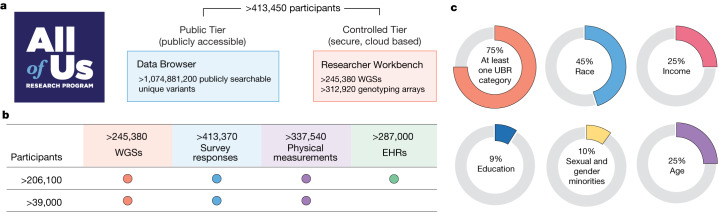
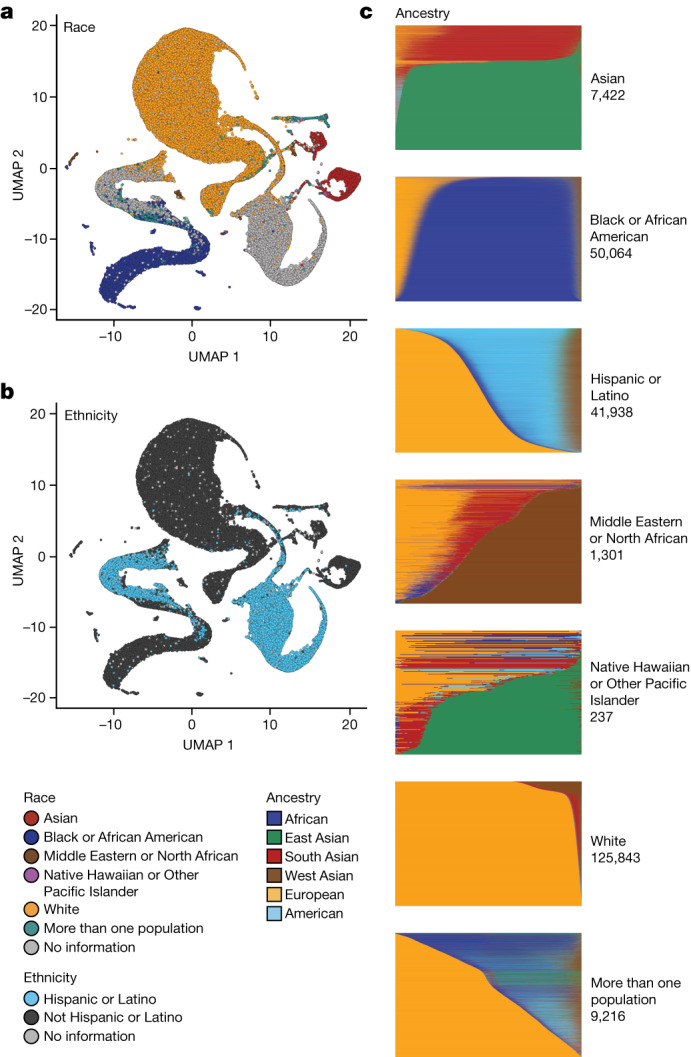
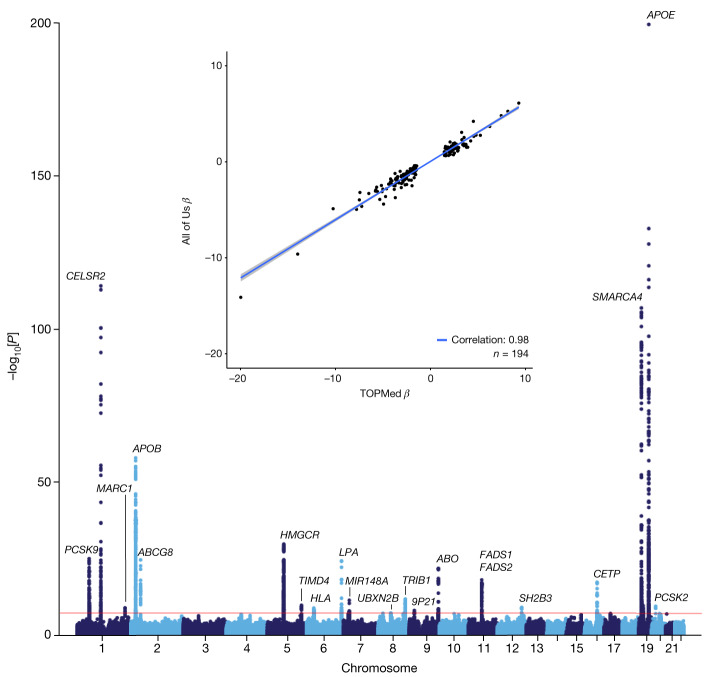
Comprehensively mapping the genetic basis of human disease across diverse individuals is a long-standing goal for the field of human genetics 1–4 . The All of Us Research Program is a longitudinal cohort study aiming to enrol a diverse group of at least one million individuals across the USA to accelerate biomedical research and improve human health 5,6 . Here we describe the programme’s genomics data release of 245,388 clinical-grade genome sequences. This resource is unique in its diversity as 77% of participants are from communities that are historically under-represented in biomedical research and 46% are individuals from under-represented racial and ethnic minorities. All of Us identified more than 1 billion genetic variants, including more than 275 million previously unreported genetic variants, more than 3.9 million of which had coding consequences. Leveraging linkage between genomic data and the longitudinal electronic health record, we evaluated 3,724 genetic variants associated with 117 diseases and found high replication rates across both participants of European ancestry and participants of African ancestry. Summary-level data are publicly available, and individual-level data can be accessed by researchers through the All of Us Researcher Workbench using a unique data passport model with a median time from initial researcher registration to data access of 29 hours. We anticipate that this diverse dataset will advance the promise of genomic medicine for all.
Overview
The claims and statistics of this paper haven’t been checked yet.
Free: it reads the open-access text and checks the first 5 claims that cite a source we can check. Create a free account to check every claim.
Integrity signals
Registry
Cites
Statistics
Figures
Verification
Claims the paper makes
The claims and statistics of this paper haven’t been checked yet.
Free: it reads the open-access text and checks the first 5 claims that cite a source we can check. Create a free account to check every claim.
Claims other papers make about this one
Each is checked against this paper’s own text: does it say what the citing paper says it does?
The source backs part of the claim, not all of it — or backs it for a different population, condition or comparison.
In the citing paper
“adjusting for age, sex, APOE-ε2 dosage, APOE-ε4 dosage and 16 genetic principal components precomputed by All of Us 11 .”
From Association of Rare APOE Missense Variants R189C and W276C With Risk of Alzheimer Disease (2026) · cites this paper as [11]
Experimental — accuracy not yet measured
Self-check
Percentages, sums and reported differences re-computed from the paper’s own numbers.
The self-check needs the paper’s full text.
Citations
Cites
Statistical Power Analysis for the Behavioral Sciences
Cohen, J. (2013) · doi:10.4324/9780203771587 · Cited by 25,373
A global reference for human genetic variation
The 1000 Genomes Project Consortium, authors, C., Auton, A., Abecasis, G. R., Steering committee, Altshuler, D. M., Durbin, R. M., Abecasis, G. R., Bentley, D. R., Chakravarti, A., et al. (2015) · Nature · doi:10.1038/nature15393 · Cited by 18,247
Self-citationAnalysis of protein-coding genetic variation in 60,706 humans
Exome Aggregation Consortium, Lek, M., Karczewski, K. J., Minikel, E. V., Samocha, K. E., Banks, E., Fennell, T., O’Donnell-Luria, A. H., Ware, J. S., Hill, A. J., et al. (2016) · Nature · doi:10.1038/nature19057 · Cited by 9,587 · cited 1×
“Furthermore, previous work has demonstrated the value of joint calling at scale 10,18 .”
BackgroundSelf-citationThe mutational constraint spectrum quantified from variation in 141,456 humans
Karczewski, K. J., Francioli, L. C., Tiao, G., Cummings, B. B., Alföldi, J., Wang, Q., Collins, R. L., Laricchia, K. M., Ganna, A., Birnbaum, D. P., et al. (2020) · Nature · doi:10.1038/s41586-020-2308-7 · Cited by 9,434 · cited 3×
“Furthermore, previous work has demonstrated the value of joint calling at scale 10,18 .”
BackgroundMethodSelf-citationThe UK Biobank resource with deep phenotyping and genomic data
Bycroft, C., Freeman, C., Petkova, D., Band, G., Elliott, L. T., Sharp, K., Motyer, A., Vukcevic, D., Delaneau, O., O’Connell, J., et al. (2018) · Nature · doi:10.1038/s41586-018-0579-z · Cited by 8,876 · cited 1×
“The All of Us cohort is significantly more diverse than those of other large contemporary research studies generating WGS data 32,33 .”
ResultdbSNP: the NCBI database of genetic variation
Sherry, S. T. (2001) · Nucleic Acids Research · doi:10.1093/nar/29.1.308 · Cited by 7,502
Buniello, A., MacArthur, J. A. L., Cerezo, M., Harris, L. W., Hayhurst, J., Malangone, C., McMahon, A., Morales, J., Mountjoy, E., Sollis, E., et al. (2019) · Nucleic Acids Research · doi:10.1093/nar/gky1120 · Cited by 4,000 · cited 1×
“The PGRM is an expansion of this work by Bastarache et al., based on associations in the GWAS catalogue 50 in June 2020 (ref.”
MethodThe “All of Us” Research Program
The All of Us Research Program Investigators (2019) · New England Journal of Medicine · doi:10.1056/nejmsr1809937 · Cited by 2,440 · cited 1×
“Unlike traditional data access models that require per-project approval, access in the Researcher Workbench is governed by a data passport model based on a researcher’s authenticated identity, institutional affiliation, and completion of self-service training and compliance attestation 28 .”
MethodSelf-citationVariant of transcription factor 7-like 2 (TCF7L2) gene confers risk of type 2 diabetes
Grant, S. F. A., Thorleifsson, G., Reynisdottir, I., Benediktsson, R., Manolescu, A., Sainz, J., Helgason, A., Stefansson, H., Emilsson, V., Helgadottir, A., et al. (2006) · Nature Genetics · doi:10.1038/ng1732 · Cited by 2,287 · cited 1×
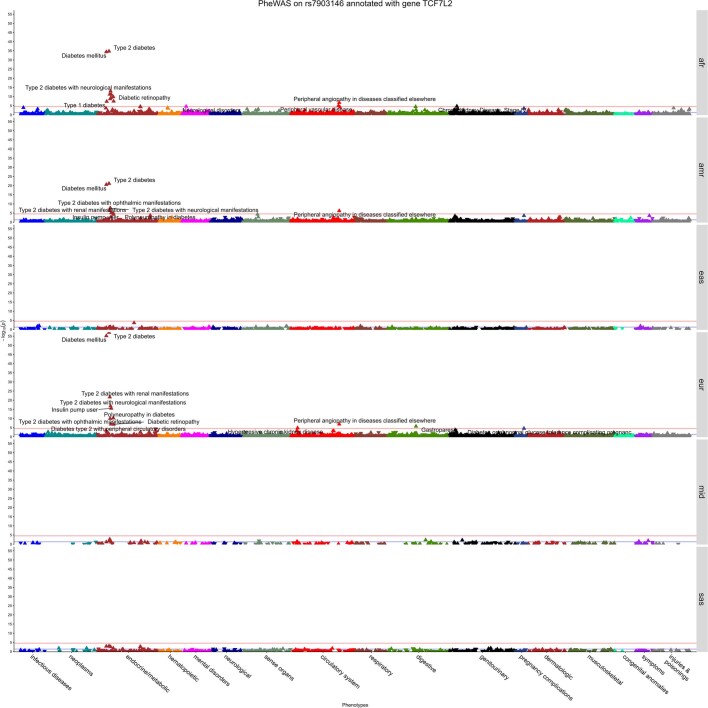
“Similarly, the TCF7L2 locus 27 strongly associates with increased risk of type 2 diabetes and associated”
BackgroundSequencing of 53,831 diverse genomes from the NHLBI TOPMed Program
Taliun, D., Harris, D. N., Kessler, M. D., Carlson, J., Szpiech, Z. A., Torres, R., Taliun, S. A. G., Corvelo, A., Gogarten, S. M., Kang, H. M., et al. (2021) · Nature · doi:10.1038/s41586-021-03205-y · Cited by 2,213
Self-citationA genomic mutational constraint map using variation in 76,156 human genomes
Chen, S., Francioli, L. C., Goodrich, J. K., Collins, R. L., Kanai, M., Wang, Q., Alföldi, J., Watts, N. A., Vittal, C., Gauthier, L. D., et al. (2024) · Nature · doi:10.1038/s41586-023-06045-0 · Cited by 1,727 · cited 1×
“Scaling conventional approaches to whole-genome joint calling beyond 50,000 individuals is a notable computational challenge 11,12 .”
BackgroundSelf-citationThe mutational constraint spectrum quantified from variation in 141,456 humans
Karczewski, K. J., Francioli, L. C., Tiao, G., Cummings, B. B., Alföldi, J., Wang, Q., Collins, R. L., Laricchia, K. M., Ganna, A., Birnbaum, D. P., et al. (2019) · doi:10.1101/531210 · Cited by 1,662
Self-citationComputationally efficient whole-genome regression for quantitative and binary traits
Mbatchou, J., Barnard, L., Backman, J., Marcketta, A., Kosmicki, J. A., Ziyatdinov, A., Benner, C., O’Dushlaine, C., Barber, M., Boutkov, B., et al. (2021) · Nature Genetics · doi:10.1038/s41588-021-00870-7 · Cited by 1,502 · cited 1×
“A linear regression was carried out with REGENIE 48 on variants with a minor allele frequency >5%, further adjusting for relatedness to the first five ancestry PCs.”
MethodGenetic analyses of diverse populations improves discovery for complex traits
Wojcik, G. L., Graff, M., Nishimura, K. K., Tao, R., Haessler, J., Gignoux, C. R., Highland, H. M., Patel, Y. M., Sorokin, E. P., Avery, C. L., et al. (2019) · Nature · doi:10.1038/s41586-019-1310-4 · Cited by 1,033
Self-citationDenny, J. C., Bastarache, L., Ritchie, M. D., Carroll, R. J., Zink, R., Mosley, J. D., Field, J. R., Pulley, J. M., Ramirez, A. H., Bowton, E., et al. (2013) · Nature Biotechnology · doi:10.1038/nbt.2749 · Cited by 1,013 · cited 1×
“This method is a conceptual extension of the original GWAS × phenome-wide association study, which replicated 66% of powered associations in a single EHR-linked biobank 49 .”
MethodSelf-citationAndrade, C. (2020) · The Journal of Clinical Psychiatry · doi:10.4088/jcp.20f13681 · Cited by 841
A brief history of human disease genetics
Claussnitzer, M., Cho, J. H., Collins, R., Cox, N. J., Dermitzakis, E. T., Hurles, M. E., Kathiresan, S., Kenny, E. E., Lindgren, C. M., MacArthur, D. G., et al. (2020) · Nature · doi:10.1038/s41586-019-1879-7 · Cited by 697
Self-citationChen, M.-H., Raffield, L. M., Mousas, A., Sakaue, S., Huffman, J. E., Moscati, A., Trivedi, B., Jiang, T., Akbari, P., Vuckovic, D., et al. (2020) · Cell · doi:10.1016/j.cell.2020.06.045 · Cited by 661
Validation of a common data model for active safety surveillance research
Overhage, J. M., Ryan, P. B., Reich, C. G., Hartzema, A. G., & Stang, P. E. (2012) · Journal of the American Medical Informatics Association · doi:10.1136/amiajnl-2011-000376 · Cited by 548
Jun, G., Flickinger, M., Hetrick, K. N., Romm, J. M., Doheny, K. F., Abecasis, G. R., Boehnke, M., & Kang, H. M. (2012) · The American Journal of Human Genetics · doi:10.1016/j.ajhg.2012.09.004 · Cited by 484 · cited 1×
“Contamination is also measured using BAFRegress 42 and reported out as metadata.”
MethodSelf-citationQuality control and quality assurance in genotypic data for genome‐wide association studies
Laurie, C. C., Doheny, K. F., Mirel, D. B., Pugh, E. W., Bierut, L. J., Bhangale, T., Boehm, F., Caporaso, N. E., Cornelis, M. C., Edenberg, H. J., et al. (2010) · Genetic Epidemiology · doi:10.1002/gepi.20516 · Cited by 480 · cited 2×
“We determined the maximal independent set 41 for related samples.”
BackgroundSelf-citationInterpreting type 1 diabetes risk with genetics and single-cell epigenomics
Chiou, J., Geusz, R. J., Okino, M.-L., Han, J. Y., Miller, M., Melton, R., Beebe, E., Benaglio, P., Huang, S., Korgaonkar, K., et al. (2021) · Nature · doi:10.1038/s41586-021-03552-w · Cited by 458 · cited 1×
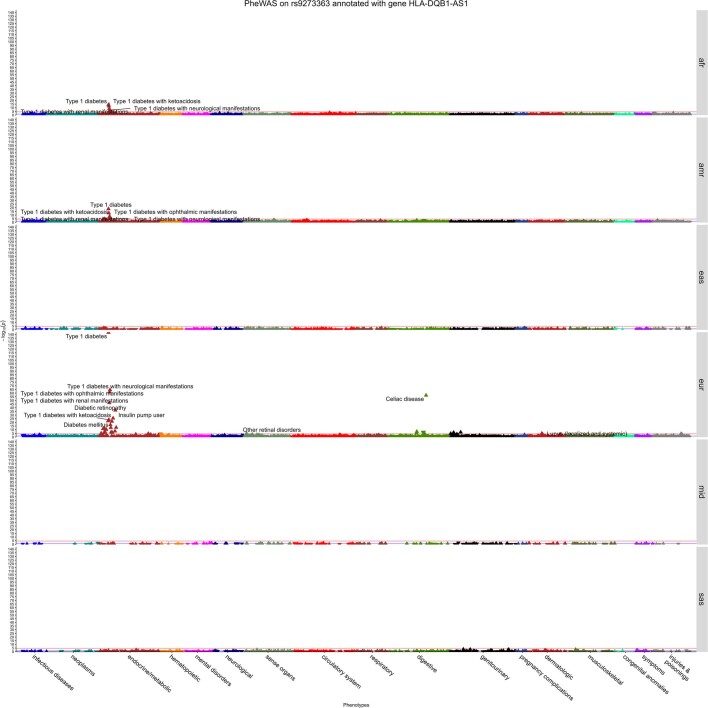
“Conversely, rs9273363 in the HLA-DQB1 locus is associated with increased risk of type 1 diabetes 25,26 and diabetic complications across ancestries, but only associates with increased risk of coeliac disease in individuals of EUR ancestry (Extended Data Fig.”
BackgroundThe sequences of 150,119 genomes in the UK Biobank
Halldorsson, B. V., Eggertsson, H. P., Moore, K. H. S., Hauswedell, H., Eiriksson, O., Ulfarsson, M. O., Palsson, G., Hardarson, M. T., Oddsson, A., Jensson, B. O., et al. (2022) · Nature · doi:10.1038/s41586-022-04965-x · Cited by 448 · cited 1×
“The All of Us cohort is significantly more diverse than those of other large contemporary research studies generating WGS data 32,33 .”
ResultBest practices for benchmarking germline small-variant calls in human genomes
the Global Alliance for Genomics and Health Benchmarking Team, Krusche, P., Trigg, L., Boutros, P. C., Mason, C. E., De La Vega, F. M., Moore, B. L., Gonzalez-Porta, M., Eberle, M. A., Tezak, Z., et al. (2019) · Nature Biotechnology · doi:10.1038/s41587-019-0054-x · Cited by 429 · cited 1×
“We used the corresponding published set of variant calls for each sample as the ground truth in our sensitivity and precision calculations 14 .”
MethodSequencing of 53,831 diverse genomes from the NHLBI TOPMed ProgramPreprint
Taliun, D., Harris, D., Kessler, M. D., et al. (2019) · bioRxiv (Cold Spring Harbor Laboratory) · doi:10.1101/563866 · Cited by 427
The Human Genome Diversity Project: past, present and future
Cavalli-Sforza, L. L. (2005) · Nature Reviews Genetics · doi:10.1038/nrg1596 · Cited by 406 · cited 5×
“HGDP and 1000 Genomes reference samples were used to define a set of six distinct and coherent ancestry groups—African, East Asian, European, Middle Eastern, Latino/admixed American and South Asian—corresponding to participant self-identified race and ethnicity groups.”
MethodInfluentialAn open resource for accurately benchmarking small variant and reference calls
Zook, J. M., McDaniel, J., Olson, N. D., Wagner, J., Parikh, H., Heaton, H., Irvine, S. A., Trigg, L., Truty, R., McLean, C. Y., et al. (2019) · Nature Biotechnology · doi:10.1038/s41587-019-0074-6 · Cited by 399 · cited 1×
“We sequenced the National Institute of Standards and Technology reference materials (DNA samples) from the Genome in a Bottle consortium 13 and carried out variant calling as described above.”
MethodPersonalized Medicine and the Power of Electronic Health Records
Abul-Husn, N. S., & Kenny, E. E. (2019) · Cell · doi:10.1016/j.cell.2019.02.039 · Cited by 355 · cited 1×
“First, the All of Us programme is making a notable contribution to improving the study of human biology through purposeful inclusion of under-represented individuals at scale 29,30 .”
BackgroundThe All of Us Research Program: Data quality, utility, and diversity
Ramirez, A. H., Sulieman, L., Schlueter, D. J., Halvorson, A., Qian, J., Ratsimbazafy, F., Loperena, R., Mayo, K., Basford, M., Deflaux, N., et al. (2022) · Patterns · doi:10.1016/j.patter.2022.100570 · Cited by 352
Self-citationDiversity and inclusion for the All of Us research program: A scoping review
Mapes, B. M., Foster, C. S., Kusnoor, S. V., Epelbaum, M. I., AuYoung, M., Jenkins, G., Lopez-Class, M., Richardson-Heron, D., Elmi, A., Surkan, K., et al. (2020) · PLOS ONE · doi:10.1371/journal.pone.0234962 · Cited by 273 · cited 1×
“First, the All of Us programme is making a notable contribution to improving the study of human biology through purposeful inclusion of under-represented individuals at scale 29,30 .”
BackgroundSelf-citationHu, X., Deutsch, A. J., Lenz, T. L., Onengut-Gumuscu, S., Han, B., Chen, W.-M., Howson, J. M. M., Todd, J. A., de Bakker, P. I. W., Rich, S. S., et al. (2015) · Nature Genetics · doi:10.1038/ng.3353 · Cited by 271 · cited 2×
“Conversely, rs9273363 in the HLA-DQB1 locus is associated with increased risk of type 1 diabetes 25,26 and diabetic complications across ancestries, but only associates with increased risk of coeliac disease in individuals of EUR ancestry (Extended Data Fig.”
BackgroundRegier, A. A., Farjoun, Y., Larson, D. E., Krasheninina, O., Kang, H. M., Howrigan, D. P., Chen, B.-J., Kher, M., Banks, E., Ames, D. C., et al. (2018) · Nature Communications · doi:10.1038/s41467-018-06159-4 · Cited by 238
Self-citationGetting genetic ancestry right for science and society
Lewis, A. C. F., Molina, S. J., Appelbaum, P. S., Dauda, B., Di Rienzo, A., Fuentes, A., Fullerton, S. M., Garrison, N. A., Ghosh, N., Hammonds, E. M., et al. (2022) · Science · doi:10.1126/science.abm7530 · Cited by 216
Self-citationLennon, N. J., Kottyan, L. C., Kachulis, C., Abul-Husn, N. S., Arias, J., Belbin, G., Below, J. E., Berndt, S. I., Chung, W. K., Cimino, J. J., et al. (2024) · Nature Medicine · doi:10.1038/s41591-024-02796-z · Cited by 210 · cited 1×
“This enables a more equitable future for precision medicine (for example, through constructing polygenic risk scores that are appropriately calibrated to diverse populations 34,35 as the eMERGE programme has done leveraging All of Us data 36,37 ).”
BackgroundSelf-citationThe Human Genome Diversity Project: past, present and future
Cavalli-Sforza, L. L. (2005) · Nature Reviews Genetics · doi:10.1038/nrg1579 · Cited by 209
Computationally efficient whole genome regression for quantitative and binary traitsPreprint
Mbatchou, J. S., Barnard, L., Backman, J., et al. (2020) · bioRxiv (Cold Spring Harbor Laboratory) · doi:10.1101/2020.06.19.162354 · Cited by 171
Returning integrated genomic risk and clinical recommendations: The eMERGE study
Linder, J. E., Allworth, A., Bland, H. T., Caraballo, P. J., Chisholm, R. L., Clayton, E. W., Crosslin, D. R., Dikilitas, O., DiVietro, A., Esplin, E. D., et al. (2023) · Genetics in Medicine · doi:10.1016/j.gim.2023.100006 · Cited by 140 · cited 2×
“This enables a more equitable future for precision medicine (for example, through constructing polygenic risk scores that are appropriately calibrated to diverse populations 34,35 as the eMERGE programme has done leveraging All of Us data 36,37 ).”
BackgroundMethodSelf-citationHou, K., Ding, Y., Xu, Z., Wu, Y., Bhattacharya, A., Mester, R., Belbin, G. M., Buyske, S. G., Conti, D. V., Darst, B. F., et al. (2023) · Nature Genetics · doi:10.1038/s41588-023-01338-6 · Cited by 138 · cited 1×
“This enables a more equitable future for precision medicine (for example, through constructing polygenic risk scores that are appropriately calibrated to diverse populations 34,35 as the eMERGE programme has done leveraging All of Us data 36,37 ).”
BackgroundThe All of Us Research Program is an opportunity to enhance the diversity of US biomedical research
Bianchi, D. W., Brennan, P. F., Chiang, M. F., Criswell, L. A., D’Souza, R. N., Gibbons, G. H., Gilman, J. K., Gordon, J. A., Green, E. D., Gregurick, S., et al. (2024) · Nature Medicine · doi:10.1038/s41591-023-02744-3 · Cited by 72 · cited 1×
“More broadly, the All of Us resource highlights the opportunities to identify genotype–phenotype associations that differ across diverse populations 22 .”
BackgroundSelf-citationThe frequency of pathogenic variation in the All of Us cohort reveals ancestry-driven disparities
Venner, E., Patterson, K., Kalra, D., Wheeler, M. M., Chen, Y., Kalla, S. E., Yuan, B., Karnes, J. H., Walker, K., Smith, J. D., et al. (2024) · Communications Biology · doi:10.1038/s42003-023-05708-y · Cited by 70 · cited 2×
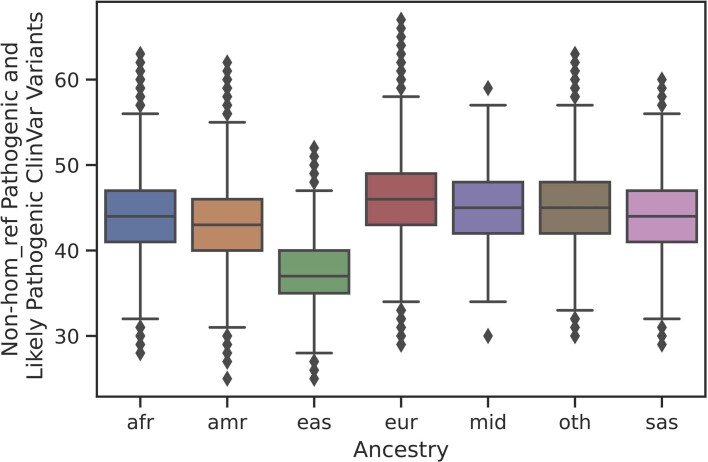
“In particular, we find that the European ancestry subset has the highest rate of pathogenic variation (2.1%), which was twice the rate of pathogenic variation in individuals of East Asian ancestry 17 .”
BackgroundInfluentialSelf-citationWhole genome sequence analysis of blood lipid levels in >66,000 individuals
Selvaraj, M. S., Li, X., Li, Z., Pampana, A., Zhang, D. Y., Park, J., Aslibekyan, S., Bis, J. C., Brody, J. A., Cade, B. E., et al. (2022) · Nature Communications · doi:10.1038/s41467-022-33510-7 · Cited by 69 · cited 2×
“The most recent measurements were selected as the phenotype and adjusted for statin use 19 , age and sex.”
MethodResultSelf-citationProgress With the All of Us Research Program
Ramirez, A. H., Gebo, K. A., & Harris, P. A. (2021) · JAMA · doi:10.1001/jama.2021.7702 · Cited by 65
Self-citationChen, M.-H., Raffield, L. M., Mousas, A., Sakaue, S., Huffman, J. E., Jiang, T., Akbari, P., Vuckovic, D., Bao, E. L., Moscati, A., et al. (2020) · bioRxiv (Cold Spring Harbor Laboratory) · doi:10.1101/2020.01.17.910497 · Cited by 59 · cited 1×
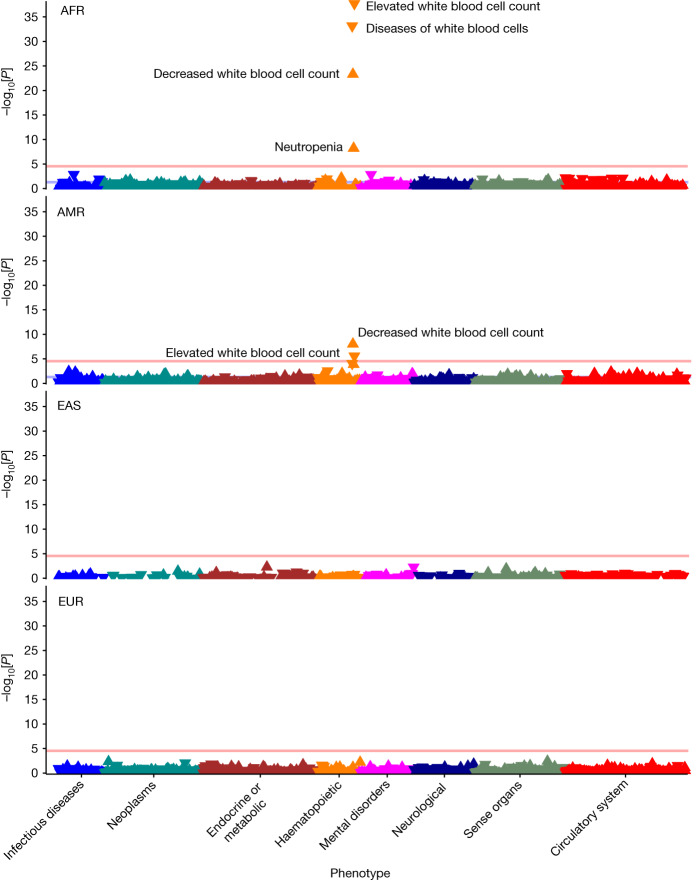
“…the well-established association of the Duffy blood group with lower white blood cell counts both in individuals of AFR and AMR ancestry 23,24 , it also revealed genetic-ancestry-specific phenotype patterns, with minimal phenotypic associations in individuals of EAS ancestry and…”
BackgroundVenner, E., Muzny, D. M., Smith, J. D., Walker, K., Neben, C. L., Lockwood, C. M., Empey, P. E., Metcalf, G., Kachulis, C., Mian, S., et al. (2022) · Genome Medicine · doi:10.1186/s13073-022-01031-z · Cited by 59 · cited 2×
“…extraction and sequencing, the All of Us Genome Centers and Biobank harmonized laboratory protocols, established standard QC methodologies and metrics, and conducted a series of validation experiments using previously characterized clinical samples and commercially available reference standards 9 .”
MethodSelf-citationBest Practices for Benchmarking Germline Small Variant Calls in Human GenomesPreprint
Krusche, P., Trigg, L., Boutros, P. C., et al. (2018) · bioRxiv (Cold Spring Harbor Laboratory) · doi:10.1101/270157 · Cited by 58
Evaluating the use of blood pressure polygenic risk scores across race/ethnic background groups
Kurniansyah, N., Goodman, M. O., Khan, A., Wang, J., Feofanova, E. V., Bis, J. C., Wiggins, K. L., Huffman, J. E., Kelly, T. N., Elfassy, T., et al. (2023) · Nature Communications · doi:10.1038/s41467-023-38990-9 · Cited by 50 · cited 1×
“This enables a more equitable future for precision medicine (for example, through constructing polygenic risk scores that are appropriately calibrated to diverse populations 34,35 as the eMERGE programme has done leveraging All of Us data 36,37 ).”
BackgroundSelf-citationDriest, S. L. V., Abul‐Husn, N. S., Glessner, J., Bastarache, L. A., Nirenberg, S., Schildcrout, J. S., Eswarappa, M. S., Belbin, G. M., Shaffer, C. M., Mentch, F. D., et al. (2021) · JAMA Internal Medicine · doi:10.1001/jamainternmed.2021.3108 · Cited by 40 · cited 1×
“…highlights the well-established association of the Duffy blood group with lower white blood cell counts both in individuals of AFR and AMR ancestry 23,24 , it also revealed genetic-ancestry-specific phenotype patterns, with minimal phenotypic associations in individuals of EAS ancestry and…”
BackgroundSelf-citationRye: genetic ancestry inference at biobank scale
Conley, A. B., Rishishwar, L., Ahmad, M., Sharma, S., Norris, E. T., Jordan, I. K., & Mariño‐Ramírez, L. (2023) · Nucleic Acids Research · doi:10.1093/nar/gkad149 · Cited by 34
Self-citationRegier, A., Farjoun, Y., Larson, D. E., et al. (2018) · bioRxiv (Cold Spring Harbor Laboratory) · doi:10.1101/269316 · Cited by 34
The phenotype-genotype reference map: Improving biobank data science through replication
Bastarache, L. A., Delozier, S., Pandit, A., He, J., Lewis, A. J., Annis, A. C., LeFaive, J., Denny, J. C., Carroll, R. J., Altman, R. B., et al. (2023) · The American Journal of Human Genetics · doi:10.1016/j.ajhg.2023.07.012 · Cited by 32 · cited 1×
“The PGRM contains published associations in the GWAS catalogue in these ancestry populations that map to International Classification of Diseases-based phenotype codes 21 .”
BackgroundSelf-citationStrömberg, M. P., Roy, R., Lajugie, J., Jiang, Y., Li, H., & Margulies, E. H. (2017) · ACM International Conference on Bioinformatics, Computational Biology, and Health Informatics (ACM-BCB) · doi:10.1145/3107411.3108204 · Cited by 26
Demonstrating paths for unlocking the value of cloud genomics through cross cohort analysis
Deflaux, N. A., Selvaraj, M. S., Condon, H. R., Mayo, K., Haidermota, S., Basford, M., Lunt, C., Philippakis, A., Roden, D. M., Denny, J. C., et al. (2023) · Nature Communications · doi:10.1038/s41467-023-41185-x · Cited by 21 · cited 1×
“Developing new tools and regulatory frameworks to enable analyses across multiple biobanks in the cloud to harness the unique strengths of each is an active area of investigation addressed in a companion paper to this work 38 .”
BackgroundSelf-citationWang, X., Ryu, J. H., Kim, J., Ramirez, A. H., Mayo, K., Condon, H. R., Vaitinadin, N. S., Ohno-Machado, L., Talavera, G. A., Ellinor, P. T., et al. (2023) · Journal of Human Genetics · doi:10.1038/s10038-023-01147-z · Cited by 16 · cited 1×
“…common and rare genetic associations for three diseases (atrial fibrillation, coronary artery disease and type 2 diabetes) and two quantitative traits (height and LDL-C) in the All of Us dataset and identified very high concordance with previous efforts across all of these diseases and traits 20 .”
ResultSelf-citationThe Phenotype-Genotype Reference Map: Improving biobank data science through replicationPreprint
Bastarache, L. A., Delozier, S., Pandit, A., et al. (2022) · bioRxiv (Cold Spring Harbor Laboratory) · doi:10.1101/2022.09.07.506932 · Cited by 3
Research works printed but not linked: 1
- Ho, T. K. Random decision forests. In Proc. 3rd International Conference on Document Analysis and Recognition (IEEE Computer Society Press, 2002).
Cited by
Karczewski, K. J., Gupta, R., Kanai, M., Lu, W., Tsuo, K., Wang, Y., Walters, R. K., Turley, P., Callier, S., Shah, N. N., et al. (2025) · Nature Genetics · doi:10.1038/s41588-025-02335-7 · Cited by 339
Self-citationThe evolution of dbSNP: 25 years of impact in genomic research
Phan, L., Zhang, H., Wang, Q., Villamarin, R., Hefferon, T., Ramanathan, A., & Kattman, B. (2025) · Nucleic Acids Research · doi:10.1093/nar/gkae977 · Cited by 160
Karczewski, K. J., Gupta, R., Kanai, M., Lu, W., Tsuo, K., Wang, Y., Walters, R. K., Turley, P., Callier, S., Shah, N. N., et al. (2024) · medRxiv · doi:10.1101/2024.03.13.24303864 · Cited by 165
Self-citationStructural variation in 1,019 diverse humans based on long-read sequencing
Schloissnig, S., Pani, S., Ebler, J., Hain, C., Tsapalou, V., Söylev, A., Hüther, P., Ashraf, H., Prodanov, T., Asparuhova, M., et al. (2025) · Nature · doi:10.1038/s41586-025-09290-7 · Cited by 177
Partners, C. M. A., Bào, Y., Zhang, Z., Zhao, W., Xiao, J., Song, S., He, S., Zhang, G., Li, Y., Zhao, G., et al. (2025) · Nucleic Acids Research · doi:10.1093/nar/gkaf1172 · Cited by 160
Self-citation
Metadata
- Authors
- The All of Us Research Program Genomics Investigators, Manuscript Writing Group, Bick, A. G., Metcalf, G. A., Mayo, K. R., Lichtenstein, L., Rura, S., Carroll, R. J., Musick, A., Linder, J. E., Jordan, I. K., Nagar, S. D., Sharma, S., Meller, R., All of Us Research Program Genomics Principal Investigators, Basford, M., Boerwinkle, E., Cicek, M. S., Doheny, K. F., Eichler, E. E., Gabriel, S., Gibbs, R. A., Glazer, D., Harris, P. A., Jarvik, G. P., Philippakis, A., Rehm, H. L., Roden, D. M., Thibodeau, S. N., Topper, S., Biobank, M., Blegen, A. L., Wirkus, S. J., Wagner, V. A., Meyer, J. G., Cicek, M. S., Genome Center: Baylor-Hopkins Clinical Genome Center, Muzny, D. M., Venner, E., Mawhinney, M. Z., Griffith, S. M. L., Hsu, E., Ling, H., Adams, M. K., Walker, K., Hu, J., Doddapaneni, H., Kovar, C. L., Murugan, M., Dugan, S., Khan, Z., Boerwinkle, E., Genome Center: Broad, C., Lennon, N. J., Austin-Tse, C., Banks, E., Gatzen, M., Gupta, N., Henricks, E., Larsson, K., McDonough, S., Harrison, S. M., Kachulis, C., Lebo, M. S., Neben, C. L., Steeves, M., Zhou, A. Y., Genome Center: University of Washington, Smith, J. D., Frazar, C. D., Davis, C. P., Patterson, K. E., Wheeler, M. M., McGee, S., Lockwood, C. M., Shirts, B. H., Pritchard, C. C., Murray, M. L., Vasta, V., Leistritz, D., Richardson, M. A., Buchan, J. G., Radhakrishnan, A., Krumm, N., Ehmen, B. W., Data and Research Center, Schwartz, S., Aster, M. M. T., Cibulskis, K., Haessly, A., Asch, R., Cremer, A., Degatano, K., Shergill, A., Gauthier, L. D., Lee, S. K., Hatcher, A., Grant, G. B., Brandt, G. R., Covarrubias, M., Banks, E., Able, A., Green, A. E., Carroll, R. J., Zhang, J., Condon, H. R., Wang, Y., Dillon, M. K., Albach, C. H., Baalawi, W., All of Us Research Demonstration Project Teams, Choi, S. H., Wang, X., Rosenthal, E. A., Staff, N. A. O. U. R. P., Ramirez, A. H., Lim, S., Nambiar, S., Ozenberger, B., Wise, A. L., Lunt, C., Ginsburg, G. S., & Denny, J. C.
- Affiliations
- Vanderbilt University Medical Center (US)
- Baylor College of Medicine (US)
- Broad Institute (US)
- Vanderbilt University (US)
- National Institutes of Health (US)
- Georgia Institute of Technology (US)
- Johns Hopkins University (US)
- Verily Life Sciences LLC (United States) (US)
- University of Washington (US)
- Mayo Clinic (US)
- Color (United States) (US)
- Corresponding author
- Bick, Alexander G.
- ORCID
- Bick, Alexander G.
- Metcalf, Ginger A.
- Mayo, Kelsey R.
- Musick, Anjene
- Linder, Jodell E.
- Jordan, I. King
- Nagar, Shashwat Deepali
- Sharma, Shivam
- Meller, Robert
- Basford, Melissa
- Doheny, Kimberly F.
- Eichler, Evan E.
- Gabriel, Stacey
- Gibbs, Richard A.
- Glazer, David
- Harris, Paul A.
- Jarvik, Gail P.
- Philippakis, Anthony
- Rehm, Heidi L.
- Roden, Dan M.
- Thibodeau, Stephen N.
- Topper, Scott
- Wagner, Victoria A.
- Muzny, Donna M.
- Venner, Eric
- Walker, Kimberly
- Doddapaneni, Harsha
- Murugan, Mullai
- Dugan, Shannon
- Khan, Ziad
- Lennon, Niall J.
- Austin-Tse, Christina
- Gatzen, Michael
- Gupta, Namrata
- Henricks, Emma
- Harrison, Steven M.
- Kachulis, Christopher
- Lebo, Matthew S.
- Neben, Cynthia L.
- Zhou, Alicia Y.
- Smith, Joshua D.
- Frazar, Christian D.
- Patterson, Karynne E.
- Wheeler, Marsha M.
- McGee, Sean
- Lockwood, Christina M.
- Shirts, Brian H.
- Pritchard, Colin C.
- Murray, Mitzi L.
- Vasta, Valeria
- Richardson, Matthew A.
- Buchan, Jillian G.
- Radhakrishnan, Aparna
- Krumm, Niklas
- Schwartz, Sophie
- Aster, M. Morgan T.
- Cibulskis, Kristian
- Haessly, Andrea
- Degatano, Kylee
- Shergill, Akum
- Lee, Samuel K.
- Wang, Yuanyuan
- Baalawi, Wail
- Choi, Seung Hoan
- Wang, Xin
- Rosenthal, Elisabeth A.
- Ramirez, Andrea H.
- Nambiar, Siddhartha
- Ozenberger, Bradley
- Lunt, Chris
- Ginsburg, Geoffrey S.
- Denny, Joshua C.
- Venue
- Nature
- Published
- 2024-02-19
- Volume
- 627
- Issue
- 8003
- Pages
- 340-346
- ISSN
- 0028-0836 (ISSN-L)
- 1476-4687
- PMC
- PMC10937371
- OpenAlex
- W4391925485
- Semantic Scholar
- 00ab650461f0b7ecce0ecdb30f4261b60deac5d3
- Cited by
- 829
- References
- 51
- Citations by year
- 2026: 328 · 2025: 352 · 2024: 146
- FWCI
- 218.49
- Type
- journal article
- Language
- en
- Open access
- hybrid
- doi.org
- Licence
- cc-by
- creativecommons.org/licenses/by/4.0 (tdm)
- creativecommons.org/licenses/by/4.0 (vor)
- Locations
- Nature (publishedVersion, cc-by)
- PubMed Central (publishedVersion, cc-by)
- PubMed (publishedVersion)
- Digital Access to Scholarship at Harvard (DASH) (Harvard University) (submittedVersion, cc-by)
- Digital Commons-TMC (Texas Medical Center) (submittedVersion)
- Funders
- U.S. Department of Health and Human Services
- National Institutes of Health (OT2OD026557, OT2OD025277, 1ot2od038121-01, AOD 16037, HHSN263201600085U, OT2OD025315, OT2OD025337, OT2OD002748, U24OD023121, OT2OD023205, OT2OD026556, DP2OD002750, U24OD023176, OT2OD026549, OT2OD026553, OT2OD026555, U2COD023196, OT2OD026554, OT2OD026550, OT2OD002750, OT2OD026548, OT2OD026551, U24OD023163, 263201600085U, OT2OD002751, OT2OD026552, OT2OD023206, OT2OD025276)
- Eunice Kennedy Shriver National Institute of Child Health and Human Development (P50HD103538)
- Topics
- Life Sciences › Biochemistry, Genetics and Molecular Biology › Genetics › Genetic Associations and Epidemiology
- Life Sciences › Biochemistry, Genetics and Molecular Biology › Genetics › Genomics and Rare Diseases
- Social Sciences › Anthropology › Race, Genetics, and Society
- Keywords
- All of Us, genetic variants, underrepresented groups, racial and ethnic minorities, African ancestry, disease association, electronic health records, genomic medicine, data access model
- MeSH terms
- European People, Ethnicity, Genetics, Medical, Genetics, Population, Humans, Longitudinal Studies, Minority Groups, Research Personnel, Time Factors, Genetic Variation, Reproducibility of Results, Genome, Human, Genetic Predisposition to Disease, Access to Information, Genomics, Vulnerable Populations, Black People, Racial Groups, Electronic Health Records, Datasets as Topic
About these checks
Registry, retraction, Cites and statistics results are computed, not judged, with one exception: a printed reference that no index lists is read once by a model before it counts as a citation error. Claims are extracted by a model and kept only when their quote appears verbatim in the text; each cited source is then checked, with a model’s help, for whether it says what the claim relies on. Those verdicts can be wrong — read the claim’s quote and the cited source before relying on one.
Statistics and arithmetic are recomputed, not judged.
Confidence bands are shown only for fields calibrated on our annotated test set. None is calibrated yet, so no band is shown.
What counts as a claim ›How we measure confidence ›How we check this ›
Are you an author, or do you see a problem with this page? Request a review
Data sources
Bibliographic data: Semantic Scholar, OpenAlex, Crossref.
Contains information from the Semantic Scholar Academic Graph Datasets, made available under the ODC Attribution License (ODC-BY 1.0).
Semantic Scholar’s data is described in: Kinney, R., et al. (2023). The Semantic Scholar Open Data Platform. arXiv:2301.10140.
