

Data-driven de novo design of super-adhesive hydrogels
Open accessPublished version of a preprint
The DOI matches its Crossref record; 49 of the 49 references it cites were found in a registry or an index; 18 of the 36 sources its claims cite were checked for support.
Abstract
Data-driven methodologies have transformed the discovery and prediction of hard materials with well-defined atomic structures by leveraging standardized datasets, enabling accurate property predictions and facilitating efficient exploration of design spaces1–3. However, their application to soft materials remains challenging because of complex, multiscale structure–property relationships4–6. Here we present a data-driven approach that integrates data mining, experimentation and machine learning to design high-performance adhesive hydrogels from scratch, tailored for demanding underwater environments. By leveraging protein databases, we developed a descriptor strategy to statistically replicate protein sequence patterns in polymer strands by ideal random copolymerization, enabling targeted hydrogel design and dataset construction. Using machine learning, we optimized hydrogel formulations from an initial dataset of 180 bioinspired hydrogels, achieving remarkable improvements in adhesive strength, with a maximum value exceeding 1 MPa. These super-adhesive hydrogels hold immense potential across diverse applications, from biomedical engineering to deep-sea exploration, marking a notable advancement in data-driven innovation for soft materials. A data-driven approach integrates data mining, experimentation and machine learning to design high-performance adhesive hydrogels from scratch, tailored for demanding underwater environments.
Overview
CoChat Summary
TL;DR
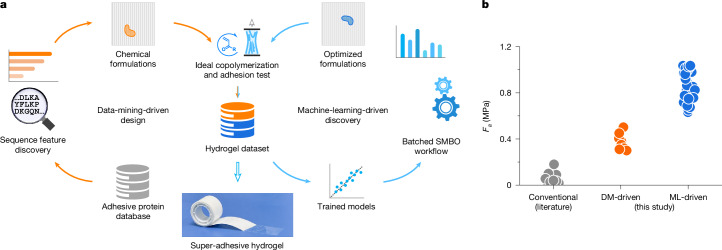
This paper integrates adhesive-protein data mining, hydrogel synthesis, and machine learning to design underwater adhesive hydrogels from scratch. Starting from 180 bioinspired formulations, ML optimization produced hydrogels with maximum underwater adhesive strength exceeding 1 MPa on glass in normal saline.
Key findings
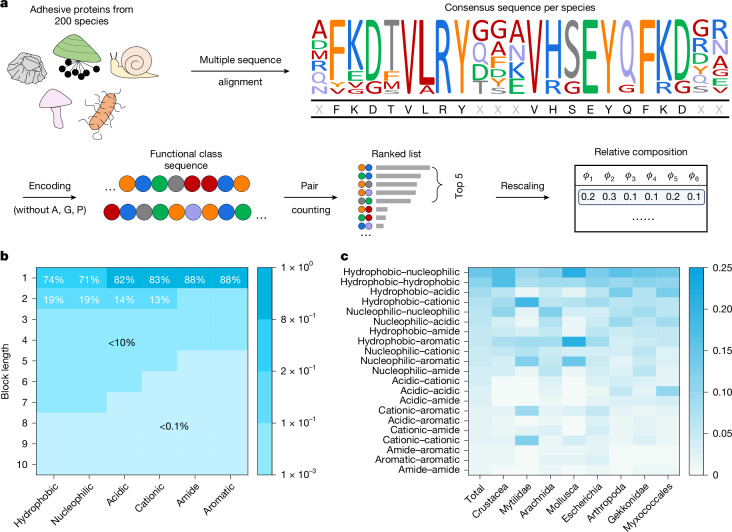
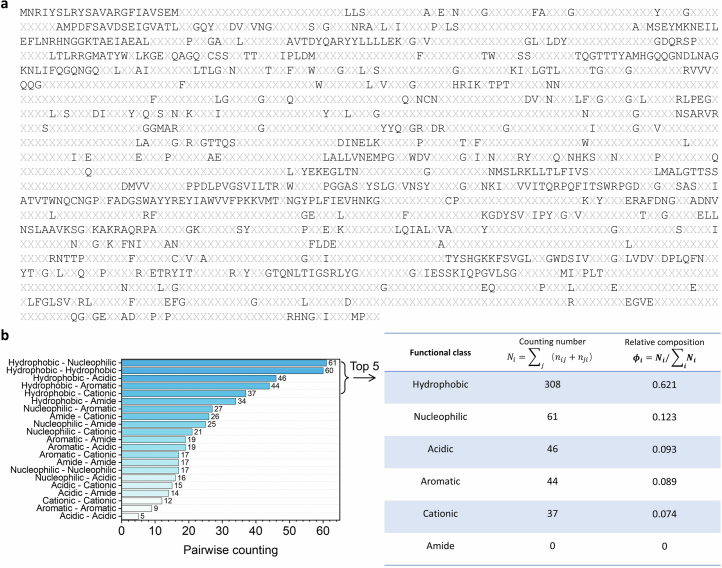
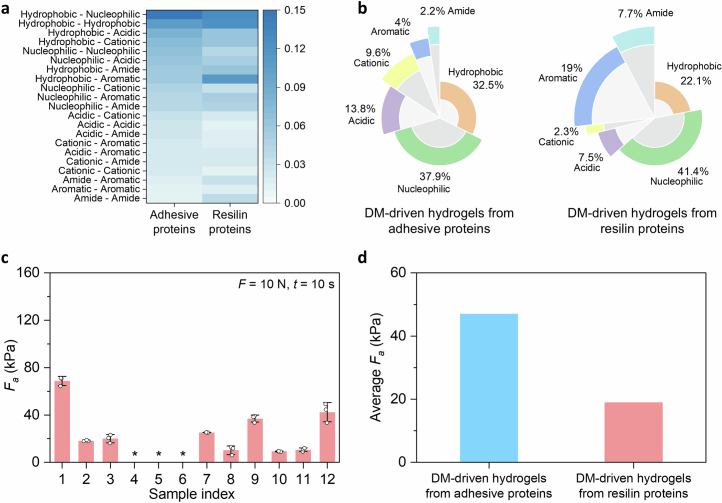
- Mining 24,707 adhesive proteins from 3,822 organisms and selecting the top 200 species yielded 180 unique monomer compositions after removing 20 duplicates; these were used to synthesize DM-driven hydrogels.
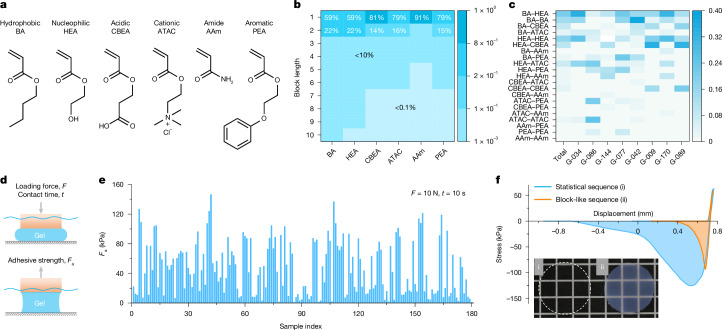
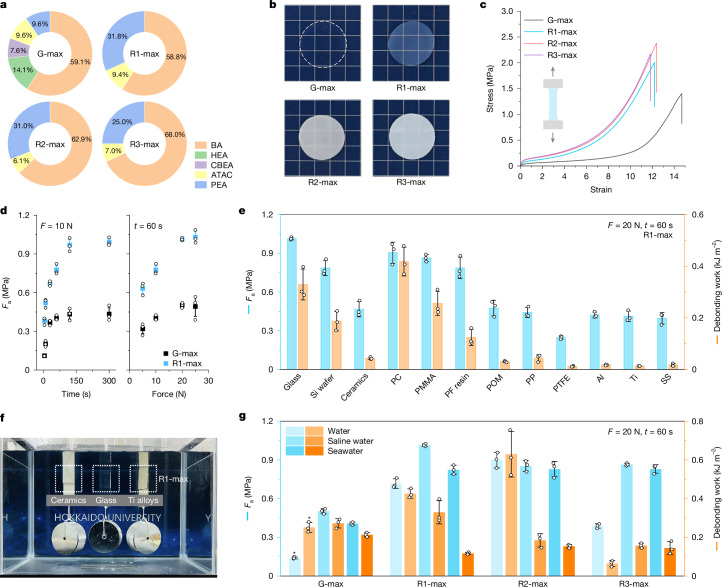
- Among the 180 DM-driven hydrogels, 16 showed adhesive strength \(F_a > 100\) kPa and 83 showed \(F_a > 46\) kPa; the best, G-042/G-max, reached 147 kPa.
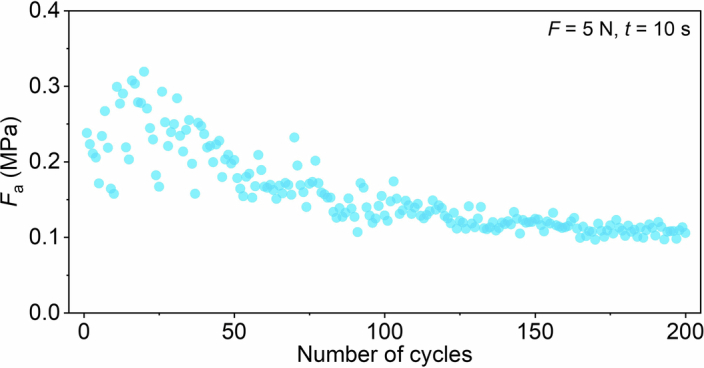
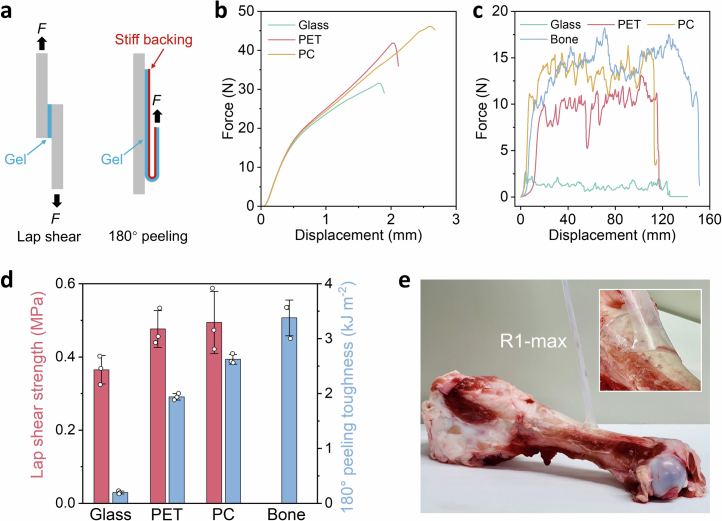
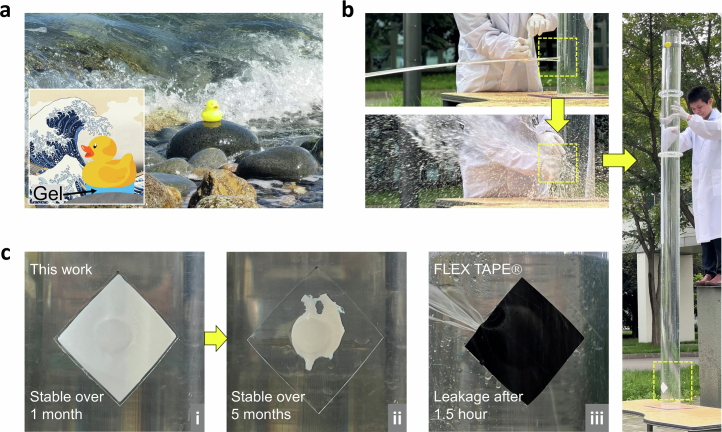
- ML optimization expanded the dataset to 341 hydrogels; R1-max achieved maximum \(F_a > 1\) MPa on glass in normal saline, maintained robust adhesion over 200 attachment–detachment cycles, and sustained a 1-kg shear load for over 1 year.
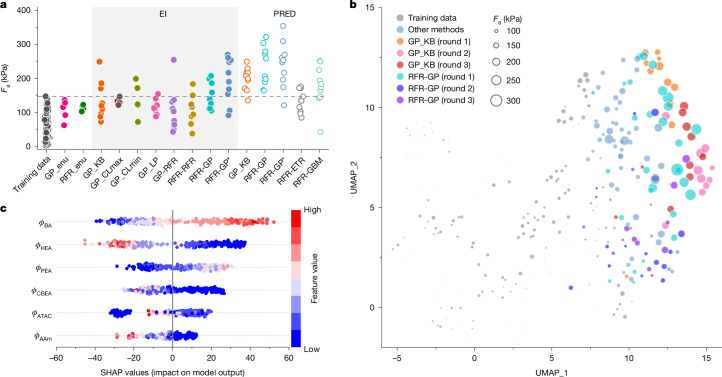
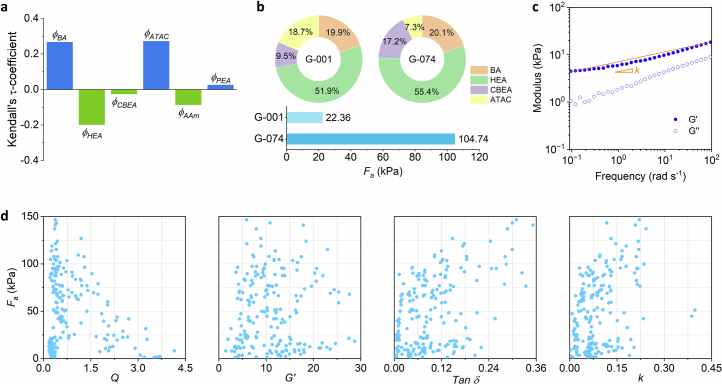
- SHAP analysis showed high \(\phi_{BA}\) and \(\phi_{PEA}\) enhance \(F_a\), high \(\phi_{HEA}\), \(\phi_{CBEA}\), and \(\phi_{AAm}\) reduce it, and \(\phi_{ATAC}\) has a dual effect; the top ML hydrogels were composed exclusively of BA, PEA, and ATAC.
Methods
- Adhesive protein data were compiled from NCBI using the keyword “adhesive protein”; consensus sequences for the top 200 species were generated with Clustal Omega, and the 20 canonical amino acids were grouped into six physicochemical classes. Relative compositions were derived from the top five functional-class pairs, accounting for approximately 50% of occurrences.
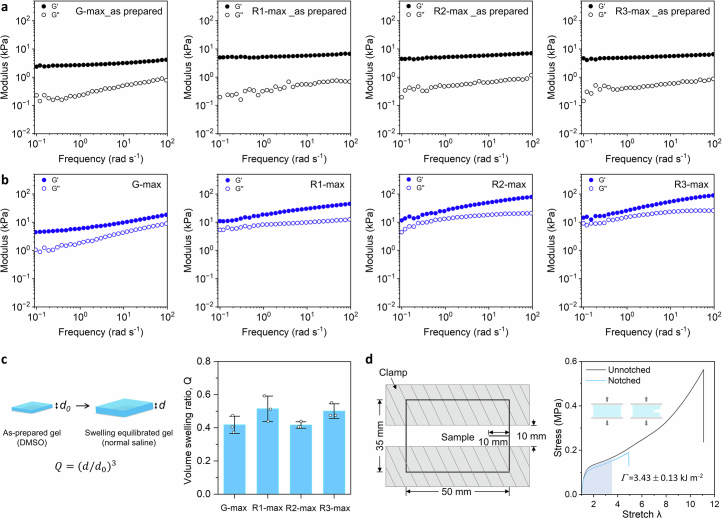
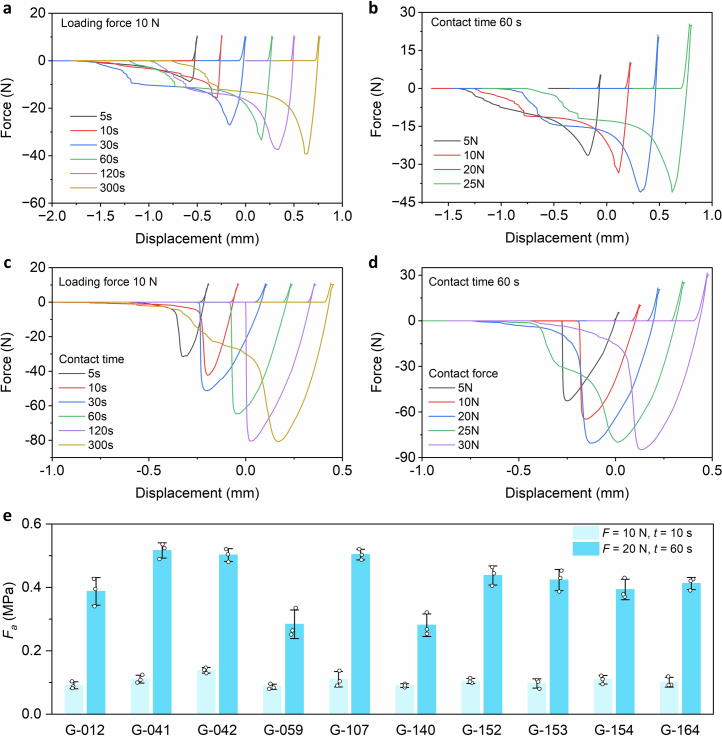
- Hydrogels were synthesized by one-pot free-radical copolymerization of six functional monomers in DMSO with 0.1 mol% crosslinker and 2.4 M total monomer, then solvent-exchanged to normal saline. Underwater adhesion was screened by tack tests on glass in normal saline using a 10-N loading force and 10-s contact time; lap shear and 180° peeling tests were also used.
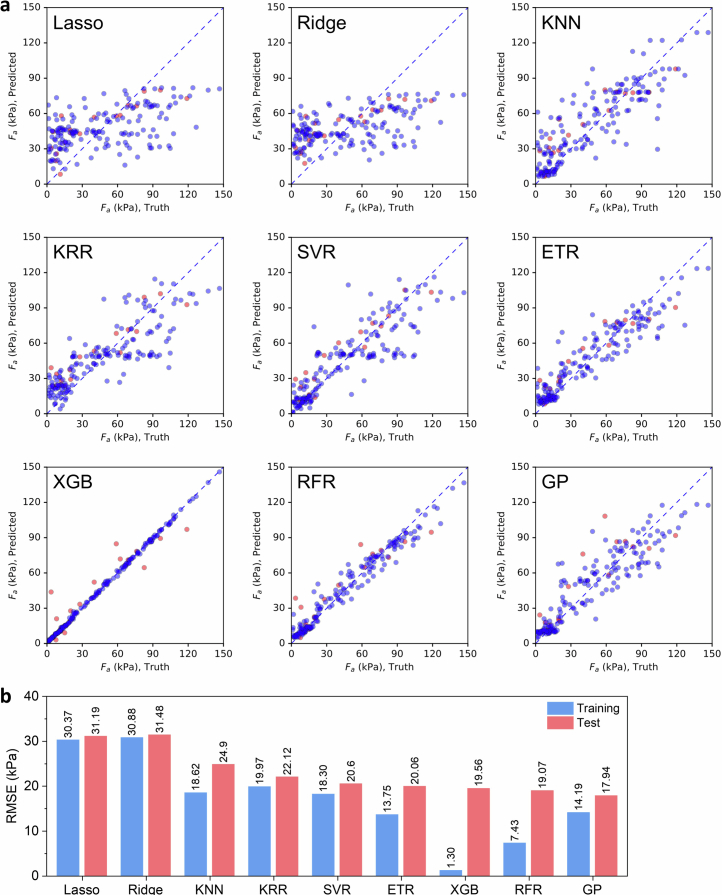
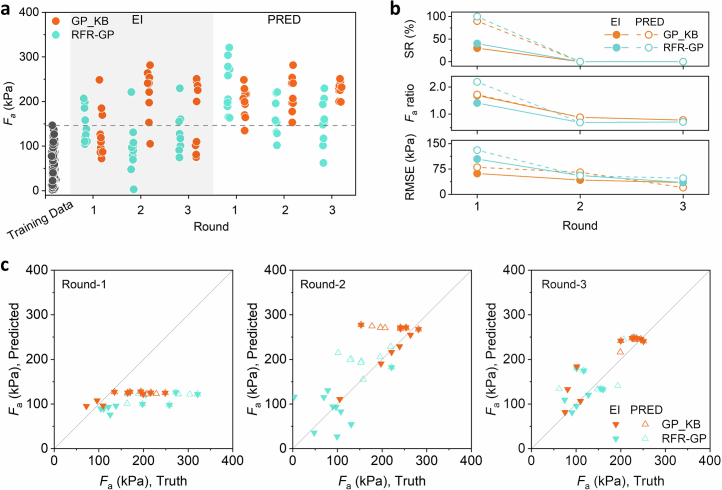
- ML used a six-dimensional monomer-proportion feature vector to predict \(F_a\). Nine models were benchmarked; Gaussian process and random forest regression were selected as base models, and batched sequential model-based optimization with expected improvement proposed new formulations. Validation rounds expanded the dataset from 180 to 341 hydrogels.
Limitations
- The paper states that challenges remain because of limitations in monomer diversity, polymer synthesis technologies for controlling monomer sequences at a scale suitable for materials development, and dataset scalability. It also states that the performance plateau after the first ML round was suspected to arise from the functionalities of the adopted monomer species, and that further optimization rounds were not pursued.
- The paper notes that hydrogel performance varies with environmental conditions, underscoring the importance of data consistency in ML optimization.
- Evident from the text: the initial dataset was small (180 hydrogels) and the final dataset remained limited (341 hydrogels); only six functional monomers were used, and the clearest design principle is for adhesion to glass surfaces using BA, PEA, and ATAC.
Model-written summary. Check it against the paper before relying on it.
Integrity signals
Registry
Cites
Statistics
Figures
Verification
Claims the paper makes
8 Valid · 2 Not valid · 9 Not checked · 81 Own results and interpretations
At least one cited source doesn’t support this claim or points to a different paper, and none confirmed it — see the verdicts below.
In the paper
“Despite their diversity, these proteins share common sequence patterns that offer valuable insights into designing underwater adhesives22.”
§ Data-driven de novo design of super-adhesive hydrogels > Main
What the sources say
- Disputedcites [22] Lee, B. P., Messersmith, P. B., Israelachvili, J. N. & Waite, J. H. Mussel-inspired adhesives and coatings. Annu. Rev. Mater. Res. 41, 99–132 (2011). 22058660 PMC3207216 sourceExperimental — accuracy not yet measured
Section 3.3.2 (page not specified) says the plaque proteins all contain Dopa and have high isoelectric points, but 'otherwise have widely different sequences'—contrary to the claim that they share common sequence patterns. Section 4.1 supports using these proteins to inspire wet-adhesive design, but not the asserted shared sequence patterns. (LLM, conf=0.88)
Checked by a reasoning model — may be wrong.
plainstates an association- Asserted: passes — The authors put it forward as true.
- Checkable: passes — It can be checked against evidence.
- Load-bearing: passes — The paper’s conclusions depend on it.
- Based: passes — The paper gives a reason why it holds.
- Rests on an assumption not shown here.
- Disputed
The cited sources support only part of this claim — read each source’s verdict below.
In the paper
“This finding underscores the important role of ideal random copolymerization of functional monomers (with near-unity reactivity ratios) in achieving the statistical sequence features essential for mimicking protein functions19,27.”
§ Data-driven de novo design of super-adhesive hydrogels > Synthesis of DM-driven hydrogels
What the sources say
- Partly supportedcites [19] Ruan, Z. et al. Population-based heteropolymer design to mimic protein mixtures. Nature 615, 251–258 (2023). 36890370 PMC10468399 sourceExperimental — accuracy not yet measured
The ‘Design and synthesis of RHP ensembles’ section describes statistically sequence-defined heteropolymers designed to match protein segmental features, and the concluding design discussion says segmental sequence information can guide statistical sequence control to replicate protein functions (page numbers unavailable). The paper uses experimentally determined monomer reactivity ratios to simulate sequences, but our copy does not say the ratios are near unity or that ideal random copolymerization is important to achieving those features. (LLM, conf=0.85)
- Partly supportedcites [27] Fan, H. L. et al. Adjacent cationic-aromatic sequences yield strong electrostatic adhesion of hydrogels in seawater. Nat. Commun. 10, 5127 (2019). 31719537 PMC6851134 sourceExperimental — accuracy not yet measured
The Introduction links adjacent cationic–aromatic sequences to a protein-inspired adhesion mechanism, and the Results report equal incorporation of certain monomer pairs. But the Results attribute that outcome to cation–π interactions and matched vinyl heads, not ideal random copolymerization or near-unity reactivity ratios; the paper does not establish that statistical sequences are essential for mimicking protein functions. Our copy provides section labels but no page numbers. (LLM, conf=0.82)
plainstates a cause- Asserted: passes — The authors put it forward as true.
- Checkable: passes — It can be checked against evidence.
- Load-bearing: passes — The paper’s conclusions depend on it.
- Based: passes — The paper gives a reason why it holds.
- Partly supported
The cited sources support only part of this claim — read each source’s verdict below.
In the paper
“However, their application to soft materials remains challenging because of complex, multiscale structure–property relationships4–6.”
§ Data-driven de novo design of super-adhesive hydrogels > Abstract
What the sources say
- Not checked — no full text of the sourcecites [4] Li, F. et al. Design of self-assembly dipeptide hydrogels and machine learning via their chemical features. Proc. Natl Acad. Sci. USA 116, 11259–11264 (2019). 31110004 PMC6561259 source
- Partly supportedcites [5] Xu, T. et al. Accelerating the prediction and discovery of peptide hydrogels with human-in-the-loop. Nat. Commun. 14, 3880 (2023). 37391398 PMC10313671 sourceExperimental — accuracy not yet measured
The Introduction (page unavailable) identifies hydrogels as soft materials and says predicting and designing peptide hydrogels remains challenging. It attributes the difficulty to inefficient design methods and the vast number of peptide sequences, not to complex, multiscale structure–property relationships. It also does not extend that explanation to soft materials generally. (LLM, conf=0.82)
- Partly supportedcites [6] Tamasi, M. J. et al. Machine learning on a robotic platform for the design of polymer-protein hybrids. Adv. Mater. 34, 2201809 (2022). PMC9339531 35593444 sourceExperimental — accuracy not yet measured
The Introduction (page not provided) says ML-guided copolymer design is limited, particularly by insufficient quality data and laborious synthesis and characterization. That supports the general point that applying data-driven methods to these materials is challenging, but it does not identify complex, multiscale structure–property relationships as the reason or establish the claim for soft materials generally. (LLM, conf=0.84)
plainstates a cause- Asserted: passes — The authors put it forward as true.
- Checkable: passes — It can be checked against evidence.
- Load-bearing: passes — The paper’s conclusions depend on it.
- Based: passes — The paper gives a reason why it holds.
A result the paper reports from its own data — it cites no other source for it, so there is none to check. The quote shows it is in the paper.
In the paper
“Their pairwise reactivity ratios, determined by 1H NMR analysis, were close to unity when copolymerized in the cosolvent dimethyl sulfoxide (DMSO) using free-radical polymerization (Supplementary Fig. 5 and Supplementary Table 3).”
§ Data-driven de novo design of super-adhesive hydrogels > Synthesis of DM-driven hydrogels
plain- Asserted: passes — The authors put it forward as true.
- Checkable: passes — It can be checked against evidence.
- Load-bearing: passes — The paper’s conclusions depend on it.
- Based: passes — The paper gives a reason why it holds.
A result the paper reports from its own data — it cites no other source for it, so there is none to check. The quote shows it is in the paper.
In the paper
“The resulting distributions of monomer block lengths and pairwise frequencies (Fig. 3b,c) closely matched those observed in adhesive proteins (Fig. 2b,c)”
§ Data-driven de novo design of super-adhesive hydrogels > Synthesis of DM-driven hydrogels
plainstates an association- Asserted: passes — The authors put it forward as true.
- Checkable: passes — It can be checked against evidence.
- Load-bearing: passes — The paper’s conclusions depend on it.
- Based: passes — The paper gives a reason why it holds.
61 more claims
Create a free account to see all 100 claims and to verify the 3 references still open.
- Probably not a substantial claim. 17
- It may state two separate claims as one. 23
Self-check
Percentages, sums and reported differences re-computed from the paper’s own numbers.
Each contradiction between two passages listed here was confirmed by an independent check.
Rated minor: it would not touch a result — a value no result rests on, a p-value that stays on the same side of the significance level, or a conflict that is clerical, resolved elsewhere in the paper, or outside its own findings.
In the paper
§ Data-driven de novo design of super-adhesive hydrogels > Methods > ML methods
“GP_KB, GP_CLmax and GP_CLmin simplified the joint q-EI probability calculation36 by using the GP prediction value as a hypothetical value for selecting the next data points with EI maximums.”
§ Data-driven de novo design of super-adhesive hydrogels > Methods > ML methods
“GP_CLmax: used the maximum Fa (y_max) from the training set as a hypothetical value for selecting the next data points with EI maximums.GP_CLmin: used the minimum Fa (y_min) for selecting the next data points with EI maximums.”
Citations
Cites
Greedy function approximation: A gradient boosting machine
Friedman, J. H. (2001) · The Annals of Statistics · doi:10.1214/aos/1013203451 · Cited by 30,731 · cited 5×
“• RFR-GBM: RFR as the hypothetical value provider and GBM as the EI maximizer.”
InfluentialUMAP: Uniform Manifold Approximation and Projection
McInnes, L., Healy, J., Saul, N., & Großberger, L. (2018) · Journal of Open Source Software · doi:10.21105/joss.00861 · Cited by 9,826 · cited 1×
“4b, using uniform manifold approximation and projection (UMAP) 38 for dimensional reduction (from six to two dimensions).”
Geurts, P., Ernst, D., & Wehenkel, L. (2006) · Machine Learning · doi:10.1007/s10994-006-6226-1 · Cited by 9,300 · cited 6×
“Non-linear models comprised k -nearest neighbours (KNN), kernel ridge regression (KRR), support vector regression (SVR), random forest regression (RFR), gradient boosting regression with XGBoost (XGB), extra trees regression (ETR) and Gaussian process (GP) with a Matérn kernel 32,34 .”
InfluentialLarian Studios Dev Team (2024) · doi:10.1145/3292500.3330701 · Cited by 8,618
Efficient Global Optimization of Expensive Black-Box Functions
Jones, D. R., Schonlau, M., & Welch, W. J. (1998) · Journal of Global Optimization · doi:10.1023/a:1008306431147 · Cited by 8,070 · cited 1×
“These non-linear models encompass non-parametric (KNN), kernel-based (KRR, SVR and GP) and tree-ensemble (RFR, XGB and ETR) approaches, enabling a comprehensive comparison 34,35,47 .”
Biopython: freely available python tools for computational molecular biology and bioinformatics
Cock, P. J. A., Antao, T., Chang, J. T., Chapman, B. A., Cox, C. J., Dalke, A., Friedberg, I., Hamelryck, T., Kauff, F., Wilczynski, B., et al. (2009) · Bioinformatics · doi:10.1093/bioinformatics/btp163 · Cited by 6,080 · cited 1×
“SeqIO interface in BioPython 46 .”
Machine learning for molecular and materials science
Butler, K. T., Davies, D. W., Cartwright, H., Isayev, O., & Walsh, A. (2018) · Nature · doi:10.1038/s41586-018-0337-2 · Cited by 4,968 · cited 1×
“To reduce experimental demands, data-driven strategies are becoming increasingly essential 8,9 .”
Algorithm 778: L-BFGS-B: Fortran subroutines for large-scale bound-constrained optimization
Zhu, C., Byrd, R. H., Lu, P., & Nocedal, J. (1997) · ACM Transactions on Mathematical Software · doi:10.1145/279232.279236 · Cited by 3,462
Sequential Model-Based Optimization for General Algorithm Configuration
Hutter, F., Hoos, H. H., & Leyton-Brown, K. (2011) · Lecture Notes in Computer Science · doi:10.1007/978-3-642-25566-3_40 · Cited by 2,469 · cited 3×
“Among nine ML models benchmarked (Supplementary Tables 5 and 6), Gaussian process (GP) 32 and random forest regression (RFR) 33 emerged as the most effective base models for predicting F a from ϕ i , achieving low test error while minimizing overfitting (Extended Data Fig.”
Clustal Omega for making accurate alignments of many protein sequences
Sievers, F., & Higgins, D. G. (2018) · Protein Science · doi:10.1002/pro.3290 · Cited by 2,137 · cited 3×
“Clustal Omega was executed with the command: .”
Influential
Research works printed but not linked: 2
- Myers, R. H., Montgomery, D. C. & Anderson-Cook, C. M. Response Surface Methodology: Process and Product Optimization Using Designed Experiments (Wiley, 2016).
- González, J., Dai, Z., Hennig, P. & Lawrence, N. Batch Bayesian optimization via local penalization. In Proc. Artificial Intelligence and Statistics 648–657 (PMLR, 2016).
Cited by
Ionic Hydrogel Sensors toward Next‐Gen Personalized Healthcare
Sun, Y., Tian, G., Deng, W., & Yang, W. (2025) · Advanced Materials · doi:10.1002/adma.202509122 · Cited by 85
Malashin, I. P., Martysyuk, D., Тынченко, В. С., Gantimurov, A., Nelyub, V., & Бородулин, А. С. (2025) · Polymers · doi:10.3390/polym17182557 · Cited by 40
Xiang, G., Yin, B., Heidari, B. S., Youssef, G., Gosecka, M., Gosecki, M., Torres, F. G., Wong, S. H. D., & Dodda, J. M. (2025) · Advanced Science · doi:10.1002/advs.202512037 · Cited by 46
Artificial intelligence-enabled hydrogels: innovations and applications
Zhang, S., Wang, H., Liu, F., Su, Y., Han, K., Liu, Y., Guan, F., Liu, H., & Ma, S. (2025) · Journal of Materials Chemistry B · doi:10.1039/d5tb01944c · Cited by 40
Artificial Intelligence Informed Hydrogel Biomaterials in Additive Manufacturing
Zhang, Z., Tao, Z. Z., Du, R., Huo, R., & Zheng, X. (2025) · Gels · doi:10.3390/gels11120981 · Cited by 39
Rapid photocontrollable dopamine polymerization for instant adaptive wet adhesion
Lu, Z., Bai, S., Lü, H., Zhu, Z., Yu, J., Wang, Q., Zhang, P., Qian, L., Zheng, Z., & Yu, Y. (2026) · Nature Communications · doi:10.1038/s41467-025-66530-0 · Cited by 43
“Adhesion, the interaction between two surfaces, is a fundamental behavior observed acrossnature and daily life 1 – 4 .”
Moon, Y. E., Jeong, J.-O., & Choi, H. (2025) · Gels · doi:10.3390/gels11090691 · Cited by 31
“…a model was trained on a dataset of 180 bioinspired hydrogel formulations, incorporating composition, crosslinking chemistry, and adhesive performance, and was able to identify new compositions with adhesive strengths exceeding 1 MPa, which were subsequently validated experimentally [188].”
Dynamic Hydrogels: Adaptive Biomaterials for Engineering Tumor Microenvironment and Cancer Treatment
Wu, Y., Xiao, Y., Yin, B., & Wong, S. H. D. (2025) · International Journal of Molecular Sciences · doi:10.3390/ijms26199502 · Cited by 24
“…adhesives, or load-bearing implantable hydrogels, predictions of mechanical properties, such as adhesive strength and tensile strength, must have errors within ± 10% to ± 15% to provide sufficient mechanical support in vivo and prevent postoperative complications, such as tissue dehiscence [133].”
InfluentialComputational design of superstable proteins through maximized hydrogen bonding
Zheng, B., Lu, Z., Wang, S., Liu, L., Ao, M., Zhou, Y., Tang, G., Wang, R., Liu, Y., Zhang, H., et al. (2025) · Nature Chemistry · doi:10.1038/s41557-025-01998-3 · Cited by 35
Yan, Y., Chen, Y. E., Huang, L., Cai, M., Xia, Y. Y., Zhu, Y. Z., & Ye, L. (2025) · Journal of Functional Biomaterials · doi:10.3390/jfb16100381 · Cited by 27
“…by analyzing initial datasets of 180 bioinspired hydrogels through protein sequence pattern recognition, optimizing copolymer chain designs to achieve adhesive strengths exceeding 1 MPa, a performance leap that traditional methods could not match without exhaustive empirical testing [142].”
Zhang, J., Xu, Z., Zhong, C. Y., Liu, H., Zhu, Q., Sun, Z., Guo, Q. M., & Cui, S. W. (2025) · Comprehensive Reviews in Food Science and Food Safety · doi:10.1111/1541-4337.70379 · Cited by 18
Artificial Intelligence Empowered New Materials: Discovery, Synthesis, Prediction to Validation
Cao, Y., Hong, F., Lü, J., Chen, Y., Jing, T., Fan, X., & Xu, B. (2026) · Nano-Micro Letters · doi:10.1007/s40820-025-01945-4 · Cited by 27
3D biofabricated in vitro models as new approach methodologies for animal alternatives
Hua, W., & Gaharwar, A. K. (2026) · npj Biomedical Innovations. · doi:10.1038/s44385-026-00073-x · Cited by 20
Zhou, Z., You, J., Huang, J., & Liu, Z. (2026) · International Journal of Applied Mechanics · doi:10.1142/s1758825125300044 · Cited by 17
Gupta, K., Singh, R. S., Singh, A. K., et al. (2025) · Synthetic Metals · doi:10.1016/j.synthmet.2025.118067 · Cited by 10
Self‐Switching Dynamic Infrared Radiative Cooler Enabling Triple‐Mode Temperature Regulation
Liu, J., Yan, X., Wu, W., Ji, B., Zhong, Y. P., Zhang, L., Wang, B., Feng, X., Xu, H. Y., & Mao, Z. (2025) · Advanced Materials · doi:10.1002/adma.202511445 · Cited by 19
Advances in porous icephobic surfaces: Toward next-generation aircraft ice protection strategy
Ma, K., Ma, X., Wang, X., Bu, X., Lin, G., Ou, J., Wen, D., de Rosso, N., & Zhang, Z. (2025) · Advances in Colloid and Interface Science · doi:10.1016/j.cis.2025.103758 · Cited by 16
Engineered living glues secrete therapeutic proteins for treatment of inflammatory bowel disease
Ge, C., Jiang, S., Dong, X., Jiang, X., Zhi, W., Yang, C., Xiang, Y., Chu, C., Yang, P., Zhang, Q., et al. (2026) · Nature Biotechnology · doi:10.1038/s41587-025-02970-9 · Cited by 28
Wu, G., Jin, T., Zhou, H., Coley, C. W., Alexander‐Katz, A., & Lu, H. (2025) · ACS Central Science · doi:10.1021/acscentsci.5c01382 · Cited by 10
Zhang, Z., He, Y., Wang, T., Wang, X., Liao, H., Sawada, M., Li, X., Fan, H., & Gong, J. P. (2025) · Macromolecules · doi:10.1021/acs.macromol.5c02575 · Cited by 10
Self-citationXu, J., Cui, Y., Sun, X., et al. (2026) · Biomedical Technology · doi:10.1016/j.bmt.2026.100134 · Cited by 8
Wang, M., Jiang, G., Zhou, J., Wang, Q., Zhang, C., & Zhao, D. (2025) · Macromolecular Rapid Communications · doi:10.1002/marc.202500695 · Cited by 7
Chen, Y., Li, W., Pu, R., et al. (2025) · Chemical Engineering Journal · doi:10.1016/j.cej.2025.171257 · Cited by 7
Self-citationEngineering coordination bonds for bioinspired responsive polymers
Si, M., Feng, W., Chen, T., & Lü, W. (2026) · Chemical Society Reviews · doi:10.1039/d5cs01074h · Cited by 10
Applications of Stimuli‐Responsive Hydrogels in Renewable Energy: A Review
Song, X., Dong, X., Liu, H., Wang, Z., & Cao, Q. (2026) · ChemSusChem · doi:10.1002/cssc.202501440 · Cited by 10
Artificial intelligence in biomaterials for oral oncology
Miao, X.-Y., Chen, L., Zhang, S., Li, J., Feng, Y., Li, X., Wei, J., Xue, Y., Bai, S.-Z., Tay, F. R., et al. (2026) · Biomaterials · doi:10.1016/j.biomaterials.2026.124067 · Cited by 6
High-performance lignin-based hydrogel strain sensors for human motion monitoring
Li, Y., Wang, Y., Qiao, Y., Liu, X., Wang, H., Zhang, S., Yin, X., Wang, X., Han, P., & Gu, Z. (2026) · Journal of Colloid and Interface Science · doi:10.1016/j.jcis.2026.140487 · Cited by 10
Research progress on modified chitosan hydrogels for tissue repair and regeneration
Hao, C. H. E. N., Hu, M., Liu, N., & Li, Y. (2026) · Carbohydrate Polymers · doi:10.1016/j.carbpol.2026.125347 · Cited by 9
Artificial Intelligence for Materials Science: Transforming Research Paradigms
Li, Y., Wang, S., Wang, J., Liu, Q., & Zhang, J. (2026) · Chemical Reviews · doi:10.1021/acs.chemrev.6c00012 · Cited by 14
Cao, Z., Ji, J., Wang, Z., Xia, X., Zhao, Y., Zhou, K., Zhai, W., Zheng, G., Dai, K., Liu, C., et al. (2026) · Journal of Colloid and Interface Science · doi:10.1016/j.jcis.2026.139914 · Cited by 6
Smart responsive hydrogels combined with AI design for tumor therapy
Wang, Q., Li, J., Feng, N., & Zhang, Y. (2026) · Acta Pharmaceutica Sinica B · doi:10.1016/j.apsb.2026.02.019 · Cited by 10
“11) 377,378 .”
Revolutionizing Bioadhesives With Intelligent Technologies: Toward Precision and Smart Control
Hou, C., Yi, B., & Yao, X. (2026) · Advanced Functional Materials · doi:10.1002/adfm.202532185 · Cited by 10
“For example, a data-driven methodology using protein databases for de novo design of super-adhesive hydrogels was recently reported [90].”
The rise of hydrogel transistors
Huang, H., Chen, X., Bai, J., Liu, D., Lüssem, B., Malliaras, G. G., & Zhang, S. (2025) · Nature Reviews Electrical Engineering · doi:10.1038/s44287-025-00231-0 · Cited by 8
AI for bioactive materials: From material design to biological applications
Shi, J., Liang, T., Heljak, M. K., Qiu, Z., Chen, S., Li, J., Kazakidi, A., Święszkowski, W., Li, B., & Shu, W. (2026) · Bioactive Materials · doi:10.1016/j.bioactmat.2026.04.028 · Cited by 12
“A) A conceptual scheme of the method combining data mining, experiments and ML to design underwater super-adhesive hydrogels [258].”
Xuan, C., Jia, Y., Chai, M., Wang, H., Zhao, X., Yang, W., Liu, X., Cao, C., Wu, W., Jiang, Y., et al. (2026) · Nature Biomedical Engineering · doi:10.1038/s41551-026-01705-8 · Cited by 5
Zhao, Y., Sun, R., Wang, Z., Ma, S., Wang, R., Li, F., & Geng, H. (2025) · ACS Applied Bio Materials · doi:10.1021/acsabm.5c01269 · Cited by 4
Xu, M., Li, R., Wang, W., et al. (2025) · Applied Catalysis B: Environmental · doi:10.1016/j.apcatb.2025.126185 · Cited by 3
Ganji, F., Mirzagoli, M., & Tayebi, L. (2026) · ADMET & DMPK · doi:10.5599/admet.3037 · Cited by 4
“Given the growing availability of materials databases and computational tools, AI-assisted hydrogel engineering represents a transformative step toward the rational design of next-generation biomaterials for bone tissue regeneration [142-144].”
Mechanoresponsive Biomaterials: Principles, Mechanisms, and Applications
Rajeev, A., Patil, J., Yadav, A. K., Modi, U., Solanki, R., & Bhatia, D. D. (2026) · ACS Biomaterials Science & Engineering · doi:10.1021/acsbiomaterials.5c01784 · Cited by 6
Wang, G., Fan, X., & Zhao, C. (2026) · Macromolecular Rapid Communications · doi:10.1002/marc.70277 · Cited by 3
Machine-Learning-Enabled Hydrogel Biosensors for Wearable Health Monitoring
Zhang, Z. (2026) · Gels · doi:10.3390/gels12050449 · Cited by 8
“Bioinspired adhesive hydrogels were selected because protein-derived compositional descriptors guided strong underwater adhesion, which was useful for stable wet interfaces and bioadhesive wearable systems [40].”
InfluentialBinder molecular engineering regulates the interface of solid electrolytes
Wang, F., Zhao, D., Xiang, J., et al. (2026) · Coordination Chemistry Reviews · doi:10.1016/j.ccr.2025.217564 · Cited by 2
Farooq, A., Li, Q., Luo, T., Lu, S., Farooq, T. H., Aslam, M. U., Huang, W., Xiao, H., Liu, K., Huang, L., et al. (2026) · Journal of Energy Storage · doi:10.1016/j.est.2025.120318 · Cited by 6
Direct fabrication of high-strength epoxy adhesive from black liquor via amide-ester H-bond network
Wang, Z., Liu, Z., Tang, Y., et al. (2026) · Chemical Engineering Journal · doi:10.1016/j.cej.2026.173752 · Cited by 2
Yang, T., Zhu, Y., Jiao, J., Zhai, J., & Lin, Q. (2026) · Science China Materials · doi:10.1007/s40843-025-3908-1 · Cited by 4
“Artificial intelligence (AI) and machine learning algorithms can utilize big data to predict and optimize the biological effects of smart hydrogels, thereby accelerating the intelligent and personalized design of these materials [207,208].”
Dynamic hydrogen bond evolution in thermosensitive hydrogels for self-adaptive passive cooling
Ge, S., Yang, N., Zhu, X., Min, X., Kong, Y., Xu, C., Yang, H., & Wang, J. (2026) · Journal of Materials Chemistry A · doi:10.1039/d5ta10414a · Cited by 2
Self-citationZhang, K., Xiao, C., Wang, Y., Zhao, C., Dong, Z., Li, Z., Song, X., He, C., & Li, Y. (2026) · Regenerative Biomaterials · doi:10.1093/rb/rbag056 · Cited by 4
“Artificial intelligence is accelerating materials discovery by predicting structure–property relationships from compositional inputs while enabling patient stratification through predictive modeling of radiation dermatitis risk [141].”
Nano-enabled living materials and living electronics: a roadmap for innovation and impact
Tian, B., Sha, B., Jiang, Y., Nandakumar, A., Ezerins, A., Kim, S. S., Cohen‐Karni, T., Jiao, Y., Zhang, A., Wang, Y., et al. (2026) · Nano Futures · doi:10.1088/2399-1984/ae58dc · Cited by 2
Liu, J., Chu, Q., Li, R., Zhang, Y., Xie, R., Chu, D., Chen, J., Gong, B., Cheng, Y., & Chen, X. (2026) · Journal of the American Chemical Society · doi:10.1021/jacs.6c04947 · Cited by 3
An ultra-stretchable, tough yet resilient hydrogel with high fatigue fracture threshold
Wang, C., Ding, H., Deng, Y., Zhang, L., Zhai, R., Li, H., & Zheng, S. Y. (2026) · Chemical Engineering Journal · doi:10.1016/j.cej.2026.176944 · Cited by 3
Bernal-Ballén, A., Dejneka, A., & Lunov, O. (2026) · Aggregate · doi:10.1002/agt2.70370 · Cited by 3
Hydrogels as interfacial materials for the water-energy nexus
Guan, W., Lei, C., Vu, A. H., et al. (2026) · Joule · doi:10.1016/j.joule.2026.102499 · Cited by 3
Sun, T., Liu, S., Qian, K., & Li, S. (2026) · Journal of Materials Chemistry B · doi:10.1039/d6tb00696e · Cited by 4
Hydrogel diodes towards future iontronics devices
Wang, X., Zhao, N., Guo, Y., et al. (2026) · Iontronics · doi:10.20517/iontronics.2026.010 · Cited by 2
Cairang, Z., Shi, C., Ou, H., Wu, Y., Fang, D., & Li, W. (2026) · International Journal of Biological Macromolecules · doi:10.1016/j.ijbiomac.2026.153254 · Cited by 4
Self-citationAI for science: Progress, challenges, and perspectives
Xu, Y., Shao, Z., Liu, X., Li, Y., An, Z., Fu, C., Huang, C., Zhang, L., Gao, F., Li, J., et al. (2026) · The Innovation · doi:10.1016/j.xinn.2026.101530 · Cited by 15
Zhu, D., Yu, B., Li, J., Shen, Y., Fu, X., & Huang, S. (2026) · Cell Biomaterials · doi:10.1016/j.celbio.2026.100546 · Cited by 2
Yi, Z., Zhang, X., & Zha, Z. (2025) · Advanced Functional Materials · doi:10.1002/adfm.202525065 · Cited by 1
From protein sequences to super-adhesion: A data-driven pipeline for hydrogel design
Zou, S., Xiao, L., & Sun, R. (2025) · Matter · doi:10.1016/j.matt.2025.102484 · Cited by 1
AI-guided engineering of super-adhesive hydrogels for wet environments
Wu, M., & Wang, C. (2025) · 中国科学通报:英文版 · doi:10.1016/j.scib.2025.12.015 · Cited by 1
Bridging the Hydration Barrier: Hydrogel Adhesives for Oral Hard–Soft Tissue Integration
Yang, T., Wei, C., Zhang, M., Li, H., Zhu, T., Zhai, J., & Wang, Z. (2026) · Biomacromolecules · doi:10.1021/acs.biomac.5c02308 · Cited by 2
Gao, M., Li, J., Hua, Y., Zhao, S., & Li, G. (2026) · Chemical Engineering Journal · doi:10.1016/j.cej.2026.174756 · Cited by 1
Intercalation-mediated bionic nano-hydrogel adhesives for robust omni-domain adhesion
Sun, J., Mu, Z., Yang, T., Yu, H., Song, W., Zhang, Z., Zhang, J., Niu, S., Han, Z., & Ren, L. (2026) · Chemical Engineering Journal · doi:10.1016/j.cej.2026.175807 · Cited by 3
Sun, M., Zhang, Y., & Zhou, M. (2026) · International Journal of Biological Macromolecules · doi:10.1016/j.ijbiomac.2026.151938 · Cited by 3
Zhang, C., Lan, W., Ding, S., Li, J., Wei, J., Chen, W. Y., & Huang, D. (2026) · Polymer · doi:10.1016/j.polymer.2026.130084 · Cited by 2
Artificial intelligence-assisted design of Chinese herbal medicine based hydrogels
林升圭, He, Z., Xia, X., Li, W., Mao, Y., & Shi, H. S. (2026) · Colloids and Surfaces B Biointerfaces · doi:10.1016/j.colsurfb.2026.115745 · Cited by 1
Self-citationA bioinspired hydrogel with balanced adhesion and compliance for reversible underwater adhesion
Zhang, Y., Feng, S., Zhu, S., Yang, X., Hu, Y., Kang, B., Guo, S., Zheng, Q., Fan, H., & Ye, Y. N. (2026) · Materials Chemistry Frontiers · doi:10.1039/d6qm00279j · Cited by 3
Self-citationMachine learning–enabled intelligent hydrogels: applications and future perspectives
Zhang, N., Meng, Q., Xiao, M., Zhou, L., Leng, H., Bao, C., Feng, X., & Wang, Y. (2026) · Materials & Design · doi:10.1016/j.matdes.2026.116088 · Cited by 6
Sun, H., Xu, L., Xiang, N., Song, Y., Wang, Y. Q., Gao, C., Wang, C., & Zhang, X. (2026) · Chemical Engineering Journal · doi:10.1016/j.cej.2026.177040 · Cited by 1
Adhesive-Electrocoupling Hydrogels for Tissue Regeneration: Design, Mechanisms, and Perspectives
Zhao, J., Chen, Y. L., Zuo, M., Lu, X., & Xie, C. (2026) · Research · doi:10.34133/research.1296 · Cited by 3
“Furthermore, the integration of cutting-edge technologies, particularly artificial intelligence (AI), represents a major frontier in the development of adhesive-electrocoupling hydrogels [ 197 ].”
Sun, P., Wu, J., Lin, X., Tian, Y., & Sun, J. (2026) · Science China Materials · doi:10.1007/s40843-025-3996-x · Cited by 1
“A critical yet often overlooked failure mechanism in current hydrogel adhesives is excessive volumetric swelling [23].”
Data-driven concavity engineering for magnetic activation in rigid microspheres
Zhang, C., Rao, L., Wu, L., Zhang, R., Qin, J., Wen, M., Pei, K., Cheng, H., Liang, C., You, W., et al. (2026) · Nature Communications · doi:10.1038/s41467-026-74017-9 · Cited by 2
Zhang, Z., Yang, D., Liu, J., Yu, F., Jiang, M., Liang, X., Dai, Z., Xia, Y., Bao, Y., He, Z., et al. (2026) · Chemical Engineering Journal · doi:10.1016/j.cej.2026.178706 · Cited by 1
Artificial intelligence empowering polysaccharide research in drug development
Yu, J., Ningyun, L., Xu, H., & Luo, C. (2026) · Targetome · doi:10.48130/targetome-0026-0026 · Cited by 3
Xu, S., Lee, E., Shen, Y., Wang, Y., & Zhang, X. (2026) · Materials Today Bio · doi:10.1016/j.mtbio.2026.103448 · Cited by 1
“An integrated design strategy is developed for hydrogels to combine data mining, experimental synthesis, and machine learning from an initial dataset of 180 biomimetic hydrogels by machine learning, thus achieving adhesion strengths exceeding 1 MPa [198].”
Intelligent Hydrocolloid-Based Delivery Systems: Innovations in Pharmacy and Cosmetics
Khachatryan, K., Michalski, O., & Michalska, K. (2026) · Molecules · doi:10.3390/molecules31142468 · Cited by 4
“Another important direction is the development of hydrogel platforms for skin therapeutics and person-alised regenerative medicine, particularly systems that combine hydrocolloid matrices with LCST-or pH-responsive behaviour to better match local physiological conditions [200,207].”
Gong, J., Huang, Y., Zhu, M., Guo, Z., Wang, S., & Mao, J. (2026) · Polymer · doi:10.1016/j.polymer.2026.130507 · Cited by 2
Self-citationVyas, J., Raytthatha, N., Vyas, P., Shah, N. V., & Modi, D. (2026) · Frontiers in Biomaterials Science · doi:10.3389/fbiom.2026.1861958 · Cited by 2
Yan, H., Sun, J. C., Lv, K.-H., et al. (2026) · Petroleum Science · doi:10.1016/j.petsci.2026.07.040 · Cited by 1
Xiao, J., Wang, H., Ho, H., Duan, H., Xie, W., Zhong, X., Bai, Y., & Wang, H. (2026) · Chemical Engineering Journal · doi:10.1016/j.cej.2026.180494 · Cited by 1
Functional hydrogel bioelectronic interfaces
Jiang, X., Chen, G., Wu, D., Li, C., Fang, J. Y., & Niu, S. (2026) · Current Opinion in Solid State and Materials Science · doi:10.1016/j.cossms.2026.101287 · Cited by 1
Recent Advances in Biomimetic Hydrogels for Bioelectronics and Human–Machine Interactions
Hong, T., Han, Z., Zheng, B., Lu, S., Tan, Y., Chen, B., & Mao, Y. (2026) · Gels · doi:10.3390/gels12090772 · Cited by 6
Zou, X., Gou, M., Zhang, X., et al. (2026) · European Polymer Journal · doi:10.1016/j.eurpolymj.2026.115099 · Cited by 1
Self-citationAI learns from nature to design super-adhesive gels that work underwater
Russo, L. (2025) · Nature · doi:10.1038/d41586-025-02252-z
Yu, V., Corley, A., Lau, H., Thompson, P., Wan, Z., Wong, J. C. Y., Wong, Z. K. T., Li, L. W. H., McIlroy, S. E., & Baker, D. M. (2025) · Journal of Marine Science and Engineering · doi:10.3390/jmse13091605 · Cited by 6
Design of underwater adhesive hydrogels: from biomimetic experience to data-driven approaches
Fan, H., & Hu, Y. (2025) · Chinese Science Bulletin (Chinese Version) · doi:10.1360/csb-2025-5454
Self-citationRedefining hydrogel mechanics through reversible supramolecular chains
Song, B., Zhang, J., Hao, S., et al. (2025) · The Innovation Materials · doi:10.59717/j.xinn-mater.2025.100177
Zhang, Q., Wang, X. B., Pan, Y., Ma, T., Zhang, F., Wei, C., Li, Z., & Wang, Z. (2025) · ACS Materials Letters · doi:10.1021/acsmaterialslett.5c01392 · Cited by 2
AI-driven soft materials design for superadhesives
Song, B., Zhang, J., Hao, S., et al. (2025) · The Innovation · doi:10.1016/j.xinn.2025.101225
Mo, M., Yu, H., Zhou, X., Yang, W., Leng, C., Zhou, W., Huang, W., Wu, C., & Liu, J. (2026) · Advanced Functional Materials · doi:10.1002/adfm.202529571 · Cited by 1
“The ability to control and strengthen interfacial interactions underpins technologies spanning heterogeneous catalysis [1–5], polymer composites [6–10], energetic materials and adhesives [11–14].”
Intercalation-mediated bionic nano-hydrogel adhesives for robust omni-domain adhesionPreprint
Sun, J., Mu, Z., Yang, T., et al. (2026) · SSRN Electronic Journal · doi:10.2139/ssrn.6135698
Can AI transform biofabrication for clinical translation?
Fang, Y., & Yang, H. (2026) · Bio-Design and Manufacturing · doi:10.1631/bdm.2610000
Self-citationWen, L., Zhang, J., Xie, Y., et al. (2025) · International Conference on Big Data and Internet of Things (BDIOT) · doi:10.1145/3779153.3779173
“…capabilities (A 21 ) have propelled material creation from an “Empirical trial-and-error” paradigm to a new “Data-driven intelligent closed-loop” paradigm, the related findings were published in Nature [21], fully demonstrating the role of multimodal data in driving scientific paradigm innovation.”
High-Performance Lignin-Based Hydrogel Strain Sensors for Human Motion MonitoringPreprint
Li, Y., Wang, Y., Qiao, Y., et al. (2026) · SSRN Electronic Journal · doi:10.2139/ssrn.6168527
Liu, J., Qiao, C., & Zeng, H. (2026) · Matter · doi:10.1016/j.matt.2025.102613
Data-Driven Prediction and Inverse Design of Fluoride Glasses via Explainable GA-BP Neural NetworksPreprint
Zhou, R., Yuan, X., Zhang, C., et al. (2026) · SSRN Electronic Journal · doi:10.2139/ssrn.6220123
Obille, A., Hasan, R., Rees, D. J., Ng, J., Wang, Z. Y., Bagchi, R., Lian, K. K., Carneiro, K. M. M., & Sone, E. D. (2026) · Proceedings of the National Academy of Sciences · doi:10.1073/pnas.2537453123
Computational design of functional random heteropolymers through atomistic simulations
Jin, T., Lung, C. S., Xu, T., Coley, C. W., & Alexander‐Katz, A. (2026) · PLoS ONE · doi:10.1371/journal.pone.0343799 · Cited by 2
“Coupled with autonomous laboratory [28,36,37], advanced experimental and computational techniques will support the rational design and engineering of RHPs with protein-like functions, ultimately unlocking their full potential for diverse applications [19].”
The quaternary structure origin of the fibrillation of sickle hemoglobin: a molecular dynamics study
Jiang, M., & Zhao Qin, A. (2026) · npj Soft Matter · doi:10.1038/s44431-026-00019-8
Liu, X., Lei, L., Xie, Y., et al. (2026) · Chemical Engineering Journal · doi:10.1016/j.cej.2026.175901
Metadata
- Authors
- Liao, H., Hu, S., Yang, H., Wang, L., Tanaka, S., Takigawa, I., Li, W., Fan, H., & Gong, J. P.
- Affiliations
- Hokkaido University (JP)
- Shenzhen University (CN)
- Corresponding author
- Takigawa, Ichigaku
- Li, Wei
- Fan, Hailong
- Gong, Jian Ping
- ORCID
- Venue
- Nature
- Published
- 2025-08-06
- Volume
- 644
- Issue
- 8075
- Pages
- 89-95
- ISSN
- 0028-0836 (ISSN-L)
- 1476-4687
- PMC
- PMC12328221
- OpenAlex
- W4413020503
- Semantic Scholar
- 83748147a6ed0eb041876b65a0aaf87ab3310470
- Cited by
- 169
- References
- 49
- Citations by year
- 2026: 138 · 2025: 31
- FWCI
- 35.49
- Type
- journal article
- Language
- en
- Open access
- hybrid
- doi.org
- Licence
- cc-by-nc-nd
- creativecommons.org/licenses/by-nc-nd/4.0 (tdm)
- creativecommons.org/licenses/by-nc-nd/4.0 (vor)
- Locations
- Nature (publishedVersion, cc-by-nc-nd)
- Research Square (acceptedVersion, cc-by)
- PubMed Central (publishedVersion, cc-by-nc-nd)
- PubMed (publishedVersion)
- Institutional Repositories DataBase (IRDB) (submittedVersion)
- Kyoto University Research Information Repository (Kyoto University) (submittedVersion, cc-by-nc-nd)
- Topics
- Physical Sciences › Materials Science › Materials Chemistry › Machine Learning in Materials Science
- Physical Sciences › Materials Science › Biomaterials › Hydrogels: synthesis, properties, applications
- Physical Sciences › Materials Science › Surfaces, Coatings and Films › Polymer Surface Interaction Studies
- Keywords
- bioinspired polymers, protein sequence descriptors, random copolymerization, structure-property relationships, adhesion strength, wet adhesion
- MeSH terms
- Machine Learning, Adhesiveness, Adhesives, Proteins, Hydrogels, Databases, Protein, Data Mining, Polymerization
About these checks
Registry, retraction, Cites and statistics results are computed, not judged, with one exception: a printed reference that no index lists is read once by a model before it counts as a citation error. Claims are extracted by a model and kept only when their quote appears verbatim in the text; each cited source is then checked, with a model’s help, for whether it says what the claim relies on. Those verdicts can be wrong — read the claim’s quote and the cited source before relying on one.
The claim verdicts this report counts are experimental: their accuracy is not yet measured.
A language model drew the claims from the paper on 2026-10-10, under version 3 of the claim definition (model deepseek-v4.1-flash, prompt extract-v3).
A second model labelled each claim on 2026-10-10 (model jev-1.13-20260917, definition revision gold-guideline-v0.2).
Cited sources are checked with a language model’s help (gpt-6-sol).
Statistics and arithmetic are recomputed, not judged.
Confidence bands are shown only for fields calibrated on our annotated test set. None is calibrated yet, so no band is shown.
What counts as a claim ›How we measure confidence ›How we check this ›
Are you an author, or do you see a problem with this page? Request a review
Data sources
Bibliographic data: Semantic Scholar, OpenAlex, Crossref.
Contains information from the Semantic Scholar Academic Graph Datasets, made available under the ODC Attribution License (ODC-BY 1.0).
Semantic Scholar’s data is described in: Kinney, R., et al. (2023). The Semantic Scholar Open Data Platform. arXiv:2301.10140.
