

The DOI matches its Crossref record; 1 of the 1 references it cites were found in a registry or an index.
Long-term safety and efficacy of lentiviral hematopoietic stem/progenitor cell gene therapy for Wiskott-Aldrich syndrome
Abstract
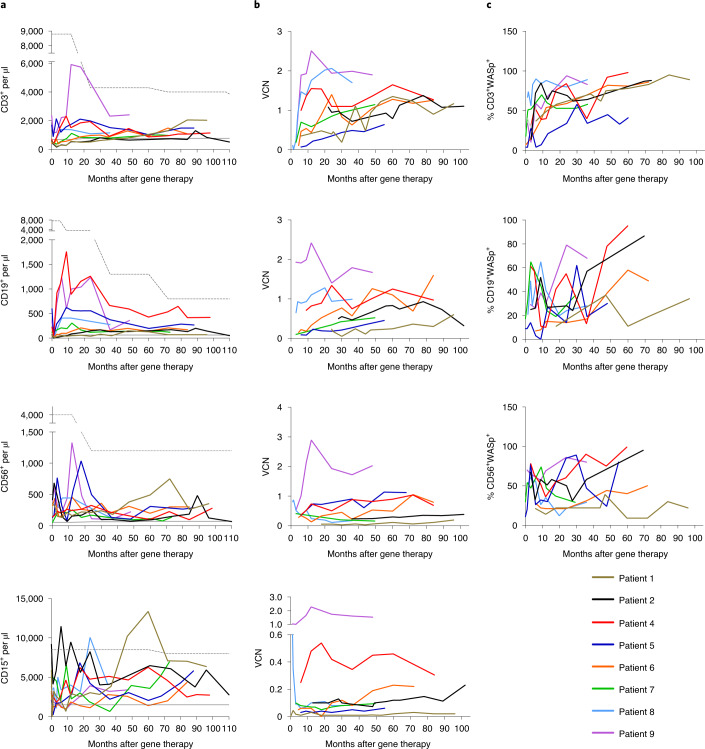
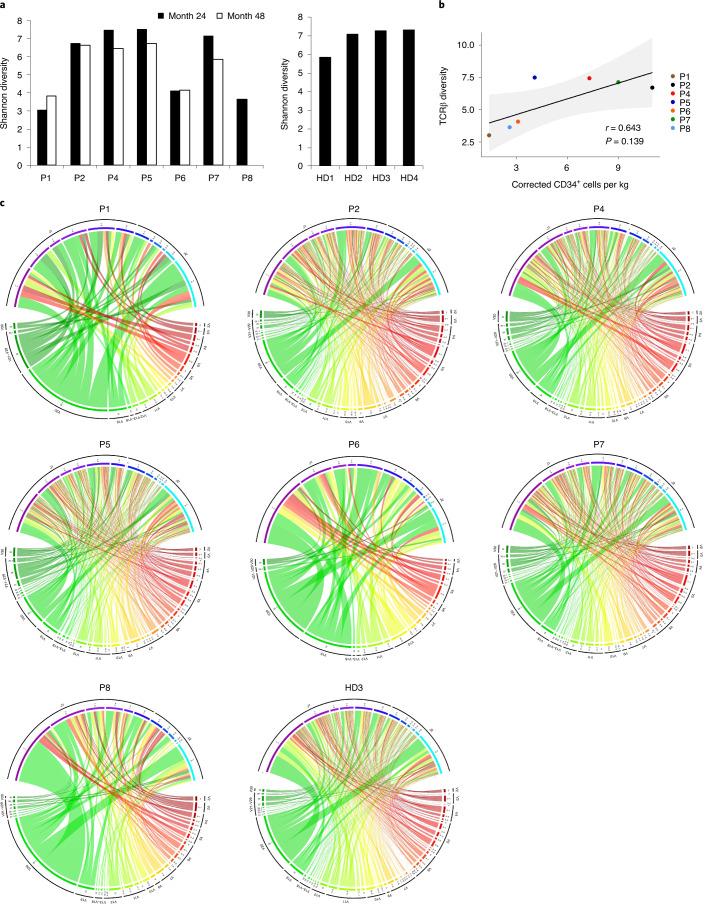
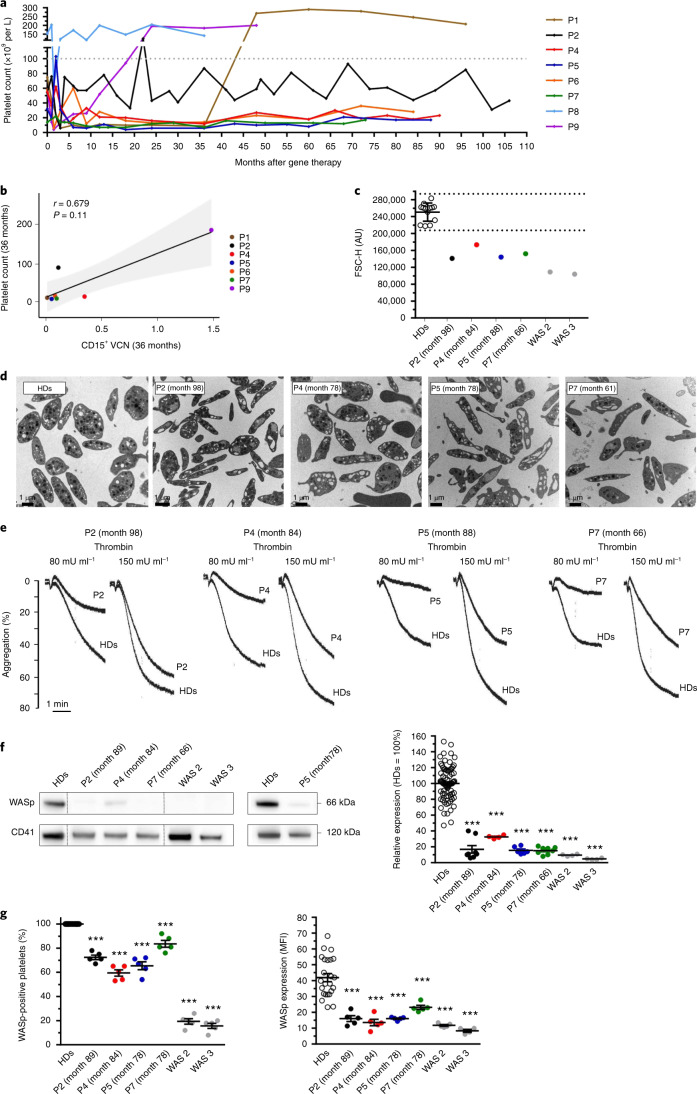
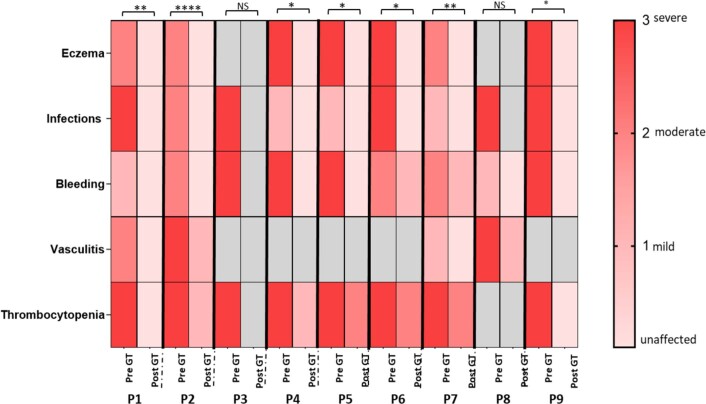
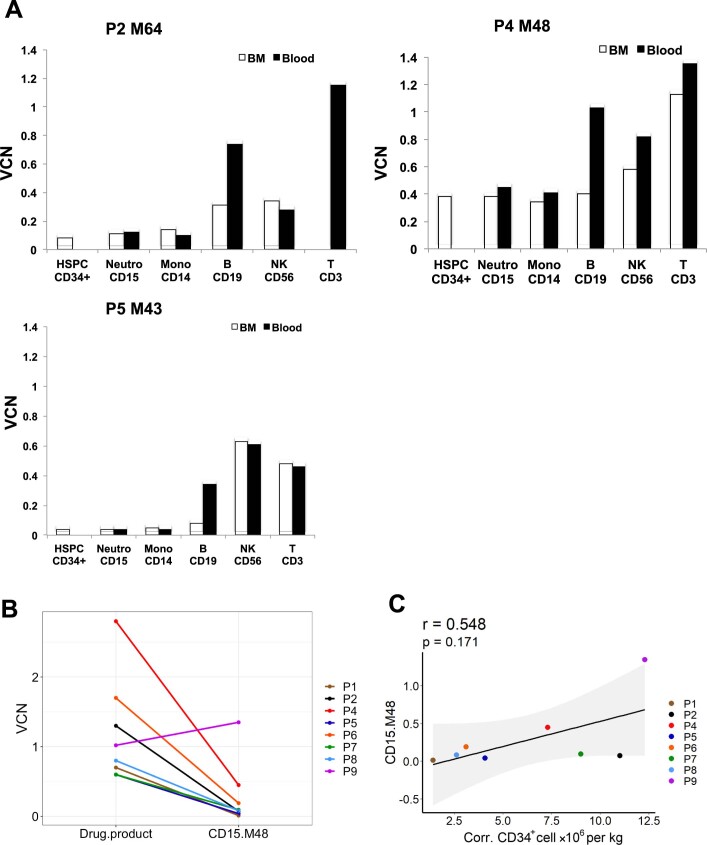
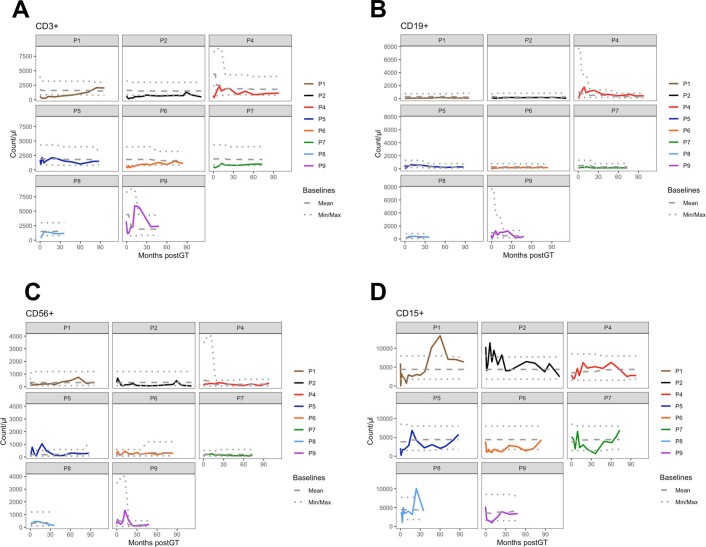
Patients with Wiskott–Aldrich syndrome (WAS) lacking a human leukocyte antigen-matched donor may benefit from gene therapy through the provision of gene-corrected, autologous hematopoietic stem/progenitor cells. Here, we present comprehensive, long-term follow-up results (median follow-up, 7.6 years) (phase I/II trial no. NCT02333760 ) for eight patients with WAS having undergone phase I/II lentiviral vector-based gene therapy trials (nos. NCT01347346 and NCT01347242 ), with a focus on thrombocytopenia and autoimmunity. Primary outcomes of the long-term study were to establish clinical and biological safety, efficacy and tolerability by evaluating the incidence and type of serious adverse events and clinical status and biological parameters including lentiviral genomic integration sites in different cell subpopulations from 3 years to 15 years after gene therapy. Secondary outcomes included monitoring the need for additional treatment and T cell repertoire diversity. An interim analysis shows that the study meets the primary outcome criteria tested given that the gene-corrected cells engrafted stably, and no serious treatment-associated adverse events occurred. Overall, severe infections and eczema resolved. Autoimmune disorders and bleeding episodes were significantly less frequent, despite only partial correction of the platelet compartment. The results suggest that lentiviral gene therapy provides sustained clinical benefits for patients with WAS.
Overview
The claims and statistics of this paper haven’t been checked yet.
Run the check — free, no account needed. It reads the open-access text and checks the sources it cites.
Integrity signals
Registry
Cites
Statistics
Figures
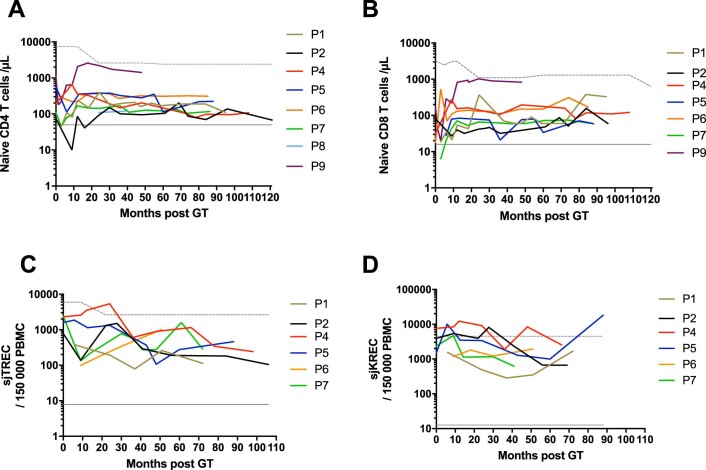
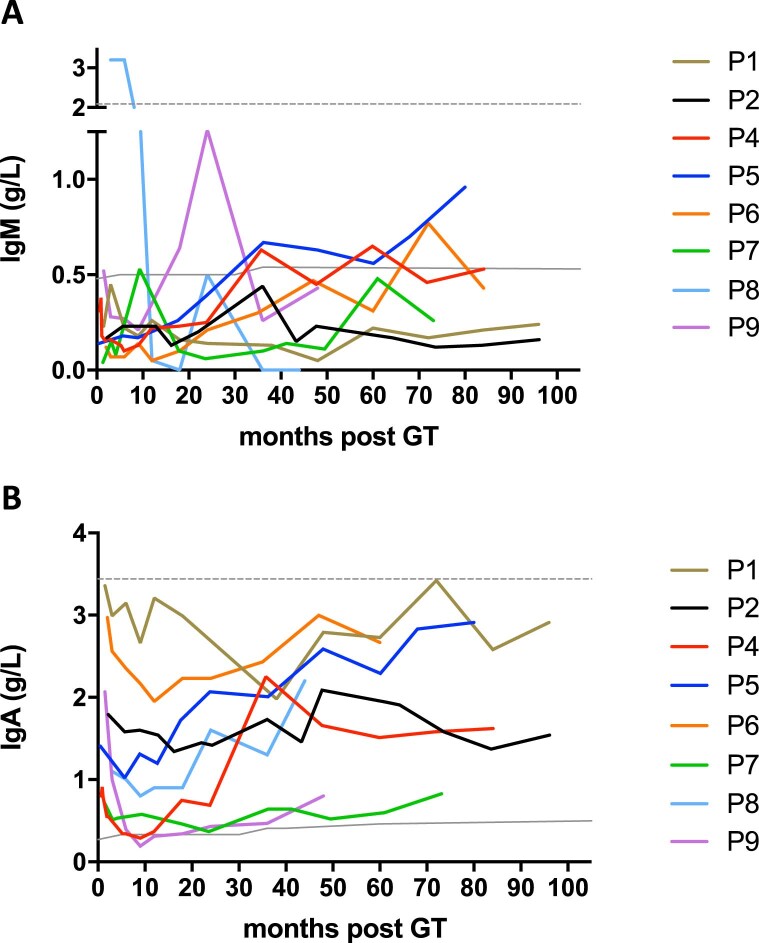
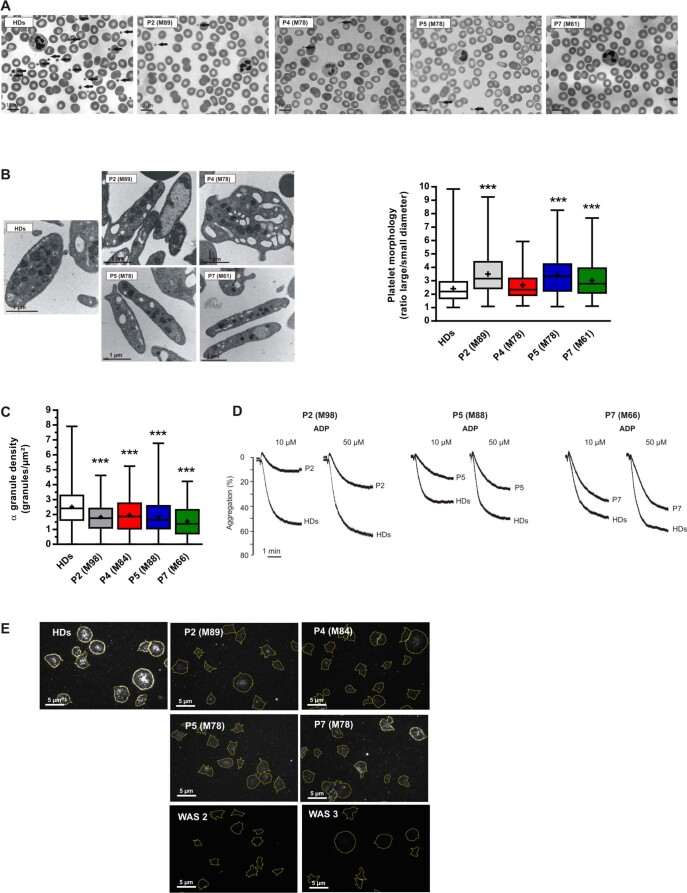
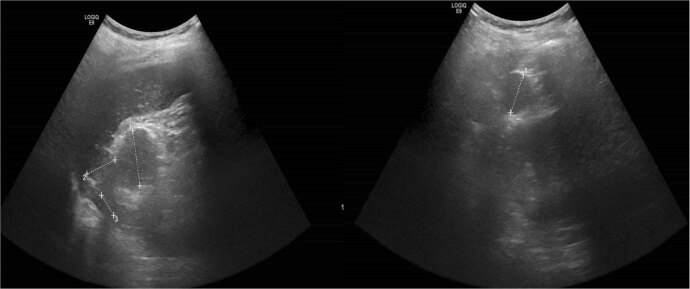
Verification
Claims the paper makes
The claims and statistics of this paper haven’t been checked yet.
Run the check — free, no account needed. It reads the open-access text and checks the sources it cites.
Claims other papers make about this one
Each is checked against this paper’s own text: does it say what the citing paper says it does?
In the citing paper
“A variety of gene-editing methods are being applied in pre-clinical studies for multiple IEI, where more precise regulation of the corrective gene is needed than is typically obtained with LVVs.”
From Ex vivo modification of hematopoietic stem and progenitor cells for gene therapy (2025) · cites this paper as [47]
Self-check
Percentages, sums and reported differences re-computed from the paper’s own numbers.
The self-check needs the paper’s full text.
Citations
Cites
Gene therapy for Wiskott-Aldrich syndrome–long-term efficacy and genotoxicity
Braun, C. J., Boztug, K., Paruzynski, A., Witzel, M., Schwarzer, A., Rothe, M., Modlich, U., Beier, R., Göhring, G., Steinemann, D., et al. (2014) · Science Translational Medicine · doi:10.1126/scitranslmed.3007280 · Cited by 562
Research works printed but not linked: 51
- Thrasher, A. J. & Burns, S. O. WASP: a key immunological multitasker. Nat. Rev. Immunol. 10, 182–192 (2010). · DOI
- Candotti, F. Clinical manifestations and pathophysiological mechanisms of the Wiskott-Aldrich syndrome. J. Clin. Immunol. 38, 13–27 (2018). · DOI
- Albert, M. H., Notarangelo, L. D. & Ochs, H. D. Clinical spectrum, pathophysiology and treatment of the Wiskott-Aldrich syndrome. Curr. Opin. Hematol. 18, 42–48 (2011). · DOI
- Zhu, Q. et al. The Wiskott-Aldrich syndrome and X-linked congenital thrombocytopenia are caused by mutations of the same gene. Blood 86, 3797–3804 (1995). · DOI
- Imai, K. et al. Clinical course of patients with WASP gene mutations. Blood 103, 456–464 (2004). · DOI
- Mahlaoui, N. et al. Characteristics and outcome of early-onset, severe forms of Wiskott-Aldrich syndrome. Blood 121, 1510–1516 (2013). · DOI
- Dupuis-Girod, S. et al. Autoimmunity in Wiskott-Aldrich syndrome: risk factors, clinical features, and outcome in a single-center cohort of 55 patients. Pediatrics 111, 622–627 (2003). · DOI
- Ozsahin, H. et al. Long-term outcome following hematopoietic stem-cell transplantation in Wiskott-Aldrich syndrome: collaborative study of the European Society for Immunodeficiencies and European Group for Blood and Marrow Transplantation. Blood 111, 439–445 (2008). · DOI
- Moratto, D. et al. Long-term outcome and lineage-specific chimerism in 194 patients with Wiskott-Aldrich syndrome treated by hematopoietic cell transplantation in the period 1980-2009: an international collaborative study. Blood 118, 1675–1684 (2011). · DOI
- Shin, C. R. et al. Outcomes following hematopoietic cell transplantation for Wiskott-Aldrich syndrome. Bone Marrow Transplant. 47, 1428–1435 (2012). · DOI
- Elfeky, R. A. et al. One hundred percent survival after transplantation of 34 patients with Wiskott-Aldrich syndrome over 20 years. J. Allergy Clin. Immunol. 142, 1654–1656 (2018). · DOI
- Burroughs, L. M. et al. Excellent outcomes following hematopoietic cell transplantation for Wiskott-Aldrich syndrome: a PIDTC report. Blood 135, 2094–2105 (2020). · DOI
- Balashov, D. et al. A conditioning regimen with plerixafor is safe and improves the outcome of TCRαβ+ and CD19+ cell-depleted stem cell transplantation in patients with Wiskott-Aldrich syndrome. Biol. Blood Marrow Transplant. 24, 1432–1440 (2018). · DOI
- Wada, T. et al. Second-site mutation in the Wiskott-Aldrich syndrome (WAS) protein gene causes somatic mosaicism in two WAS siblings. J. Clin. Invest. 111, 1389–1397 (2003). · DOI
- Davis, B. R. et al. Somatic mosaicism in the Wiskott-Aldrich syndrome: molecular and functional characterization of genotypic revertants. Clin. Immunol. 135, 72–83 (2010). · DOI
- Trifari, S. et al. Revertant T lymphocytes in a patient with Wiskott-Aldrich syndrome: analysis of function and distribution in lymphoid organs. J. Allergy Clin. Immunol. 125, 439–448 (2010). · DOI
- Cavazzana, M., Bushman, F. D., Miccio, A., André-Schmutz, I. & Six, E. Gene therapy targeting haematopoietic stem cells for inherited diseases: progress and challenges. Nat. Rev. Drug Discov. 18, 447–462 (2019). · DOI
- Aiuti, A. et al. Lentiviral hematopoietic stem cell gene therapy in patients with Wiskott-Aldrich syndrome. Science 341, 1233151 (2013). · DOI · Paper page
- Hacein-Bey Abina, S. et al. Outcomes following gene therapy in patients with severe Wiskott-Aldrich syndrome. JAMA 313, 1550–1563 (2015). · DOI · Paper page
- Ferrua, F. et al. Lentiviral haemopoietic stem/progenitor cell gene therapy for treatment of Wiskott-Aldrich syndrome: interim results of a non-randomised, open-label, phase 1/2 clinical study. Lancet Haematol. 6, 239–253 (2019). · DOI
- Morris, E. C. et al. Gene therapy for Wiskott-Aldrich syndrome in a severely affected adult. Blood 130, 1327–1335 (2017). · DOI
- Dupré, L. et al. Lentiviral vector-mediated gene transfer in T cells from Wiskott-Aldrich syndrome patients leads to functional correction. Mol. Ther. 10, 903–915 (2004). · DOI
- Stalder, J. F. et al. Severity scoring of atopic dermatitis: the SCORAD index. Consensus report of the European Task Force on Atopic Dermatitis. Dermatology 186, 23–31 (1993).
- Pielou, E. C. The measurement of diversity in different types of biological collections. J. Theor. Biol. 13, 131–144 (1966). · DOI
- Ramezani, H. A note on the normalized definition of Shannon’s diversity index in landscape pattern analysis. Environ. Nat. Resources Res. 2, 54–60 (2012).
- Rivers, E., Worth, A., Thrasher, A. J. & Burns, S. O. Bleeding and splenectomy in Wiskott-Aldrich syndrome: a single-centre experience. J. Allergy Clin. Immunol. Pract. 7, 1042–1044 (2019). · DOI
- Pala, F. et al. Lentiviral-mediated gene therapy restores B cell tolerance in Wiskott-Aldrich syndrome patients. J. Clin. Invest. 125, 3941–3951 (2015). · DOI
- Castiello, M. C. et al. B-cell reconstitution after lentiviral vector-mediated gene therapy in patients with Wiskott-Aldrich syndrome. J. Allergy Clin. Immunol. 136, 692–702 (2015). · DOI
- Rengan, R. et al. Actin cytoskeletal function is spared, but apoptosis is increased, in WAS patient hematopoietic cells. Blood 95, 1283–1292 (2000). · DOI
- Westerberg, L. S. et al. WASP confers selective advantage for specific hematopoietic cell populations and serves a unique role in marginal zone B-cell homeostasis and function. Blood 112, 4139–4147 (2008). · DOI
- Sabri, S. et al. Deficiency in the Wiskott-Aldrich protein induces premature proplatelet formation and platelet production in the bone marrow compartment. Blood 108, 134–140 (2006). · DOI
- Sereni, L. et al. Autonomous role of Wiskott-Aldrich syndrome platelet deficiency in inducing autoimmunity and inflammation. J. Allergy Clin. Immunol. 142, 1272–1284 (2018). · DOI
- Sereni, L. et al. Lentiviral gene therapy corrects platelet phenotype and function in patients with Wiskott-Aldrich syndrome. J. Allergy Clin. Immunol. 144, 825–838 (2019). · DOI
- Charrier, S. et al. Wiskott-Aldrich syndrome protein-deficient hematopoietic cells can be efficiently mobilized by granulocyte colony-stimulating factor. Haematologica 98, 1300–1308 (2013). · DOI
- Muñoz, P. et al. WAS promoter-driven lentiviral vectors mimic closely the lopsided WASP expression during megakaryocytic differentiation. Mol. Ther. Methods Clin. Dev. 19, 220–235 (2020). · DOI
- Astrakhan, A. et al. Ubiquitous high-level gene expression in hematopoietic lineages provides effective lentiviral gene therapy of murine Wiskott-Aldrich syndrome. Blood 119, 4395–4407 (2012). · DOI
- Singh, S. et al. Safe and effective gene therapy for murine Wiskott-Aldrich syndrome using an insulated lentiviral vector. Mol. Ther. Methods Clin. Dev. 4, 1–16 (2016). · DOI · Paper page
- Dupré, L. et al. Wiskott-Aldrich syndrome protein regulates lipid raft dynamics during immunological synapse formation. Immunity 17, 157–166 (2002). · DOI
- Schatorjé, E. J. H. et al. Paediatric reference values for the peripheral T cell compartment. Scand. J. Immunol. 75, 436–444 (2012). · DOI
- Segel, G. & Halterman, J. Neutropenia in pediatric practice. Pediatr. Rev. 29, 12–23 (2008). · DOI
- Picard, C. Comment explorer un déficit immunitaire héréditaire? Rev. Prat. 57, 1671–1676 (2007).
- Arruda, L. C. M. et al. Immune rebound associates with a favorable clinical response to autologous HSCT in systemic sclerosis patients. Blood Adv. 2, 126–141 (2018). · DOI
- Brüggemann, M. et al. Standardized next-generation sequencing of immunoglobulin and T-cell receptor gene recombinations for MRD marker identification in acute lymphoblastic leukaemia; a EuroClonality-NGS validation study. Leukemia 33, 2241–2253 (2019). · DOI
- Houmadi, R. et al. The Wiskott-Aldrich syndrome protein contributes to the assembly of the LFA-1 nanocluster belt at the lytic synapse. Cell Rep. 22, 979–991 (2018). · DOI
- Adam, F., Verbeuren, T. J., Fauchère, J. L., Guillin, M. C. & Jandrot-Perrus, M. Thrombin-induced platelet PAR4 activation: role of glycoprotein ibandadp. J. Thromb. Haemost. 1, 798–804 (2003). · DOI
- Adam, F. et al. Platelet JNK1 is involved in secretion and thrombus formation. Blood 115, 4083–4092 (2010). · DOI
- Berrou, E. et al. A mutation of the human EPHB2 gene leads to a major platelet functional defect. Blood 132, 2067–2077 (2018). · DOI
- Kiefel, V., Santoso, S., Weisheit, M. & Mueller-Eckhardt, C. Monoclonal antibody-specific immobilization of platelet antigens (MAIPA): a new tool for the identification of platelet-reactive antibodies. Blood 70, 1722–1726 (1987). · DOI
- Sherman, E. et al. INSPIIRED: a pipeline for quantitative analysis of sites of new DNA integration in cellular genomes. Mol. Ther. Methods Clin. Dev. 4, 39–49 (2017). · DOI
- Berry, C. C. et al. INSPIIRED: quantification and visualization tools for analyzing integration site distributions. Mol. Ther. Methods Clin. Dev. 4, 17–26 (2017). · DOI
- Six, E. et al. Clonal tracking in gene therapy patients reveals a diversity of human hematopoietic differentiation programs. Blood 135, 1219–1231 (2020). · DOI
Cited by
Engineered stem cells by emerging biomedical stratagems
Wang, J., Zhang, X., Chen, H., Ren, H., Zhou, M., & Zhao, Y. (2024) · Science Bulletin · doi:10.1016/j.scib.2023.12.006 · Cited by 37
Ex vivo modification of hematopoietic stem and progenitor cells for gene therapy
Williams, D. A., Kohn, D. B., & Thrasher, A. J. (2025) · Molecular Therapy · doi:10.1016/j.ymthe.2025.03.058 · Cited by 11
Self-citation
Metadata
- Authors
- Magnani, A., Semeraro, M., Adam, F., Booth, C., Dupré, L., Morris, E. C., Gabrion, A., Roudaut, C., Borgel, D., Toubert, A., Clave, E., Abdo, C., Gorochov, G., Petermann, R., Guiot, M., Miyara, M., Moshous, D., Magrin, E., Denis, A., Suarez, F., Lagresle, C., Roche, A. M., Everett, J., Trinquand, A., Guisset, M., Bayford, J. X., Hacein-Bey-Abina, S., Kauskot, A., Elfeky, R., Rivat, C., Abbas, S., Gaspar, H. B., Macintyre, E., Picard, C., Bushman, F. D., Galy, A., Fischer, A., Six, E., Thrasher, A. J., & Cavazzana, M.
- ORCID
- Venue
- Nature Medicine
- Published
- 2022-01
- Volume
- 28
- Issue
- 1
- Pages
- 71-80
- ISSN
- 1078-8956
- 1546-170X
- PMC
- PMC8799465
- Cited by
- 128
- References
- 1
- Language
- en
- Update notices
- correction (2022-08-09)
- Funders
- Agence Nationale de la Recherche (ANR-10-IAHU-01)
About these checks
Registry, retraction, Cites and statistics results are computed, not judged, with one exception: a printed reference that no index lists is read once by a model before it counts as a citation error. Claims are extracted by a model and kept only when their quote appears verbatim in the text; each cited source is then checked, with a model’s help, for whether it says what the claim relies on. Those verdicts can be wrong — read the claim’s quote and the cited source before relying on one.
Statistics and arithmetic are recomputed, not judged.
Confidence bands are shown only for fields calibrated on our annotated test set. None is calibrated yet, so no band is shown.
What counts as a claim ›How we measure confidence ›How we check this ›
Are you an author, or do you see a problem with this page? Request a review
