

Cumulative burden of psychiatric disorders and self-harm across 26 adult cancers
Open accessPublished version of a preprint
The DOI matches its Crossref record; 59 of the 63 references it cites were found in a registry or an index.
Abstract
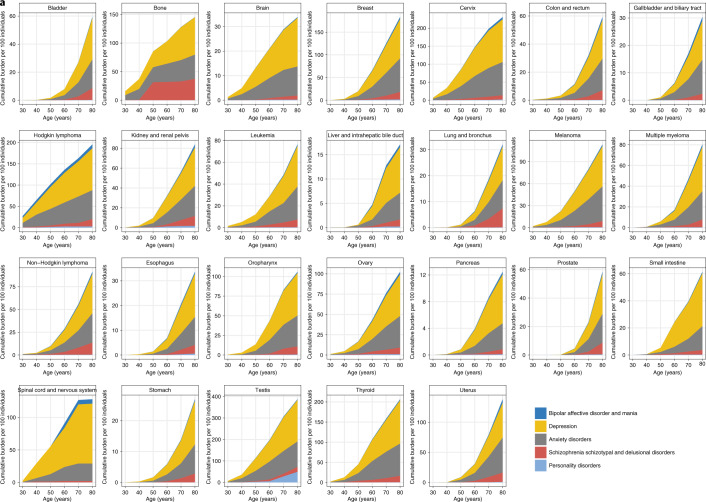
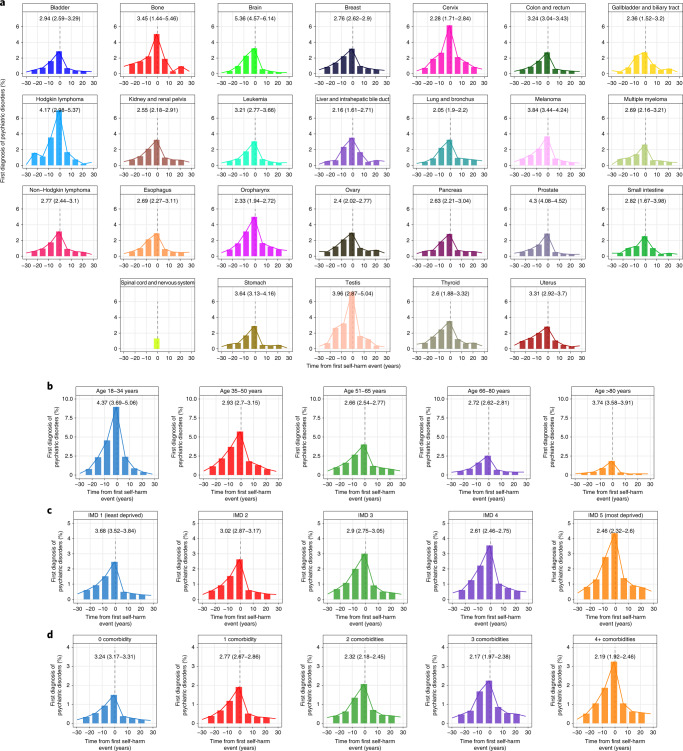
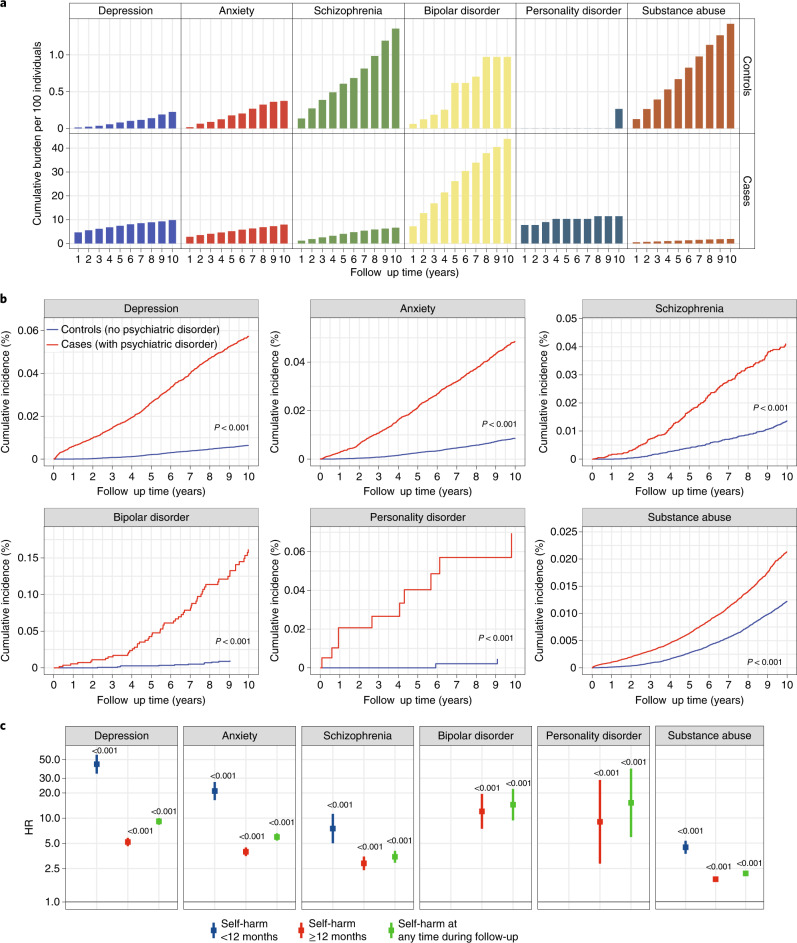
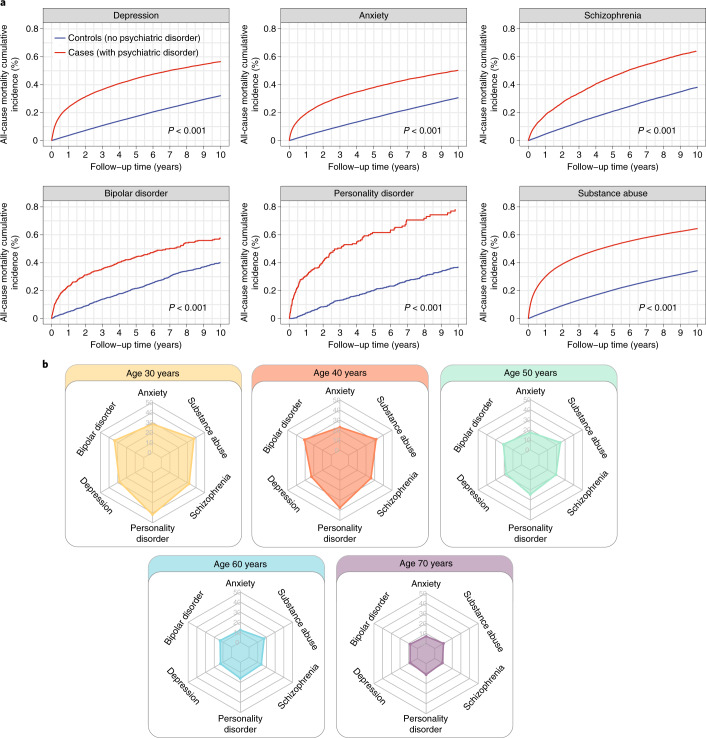
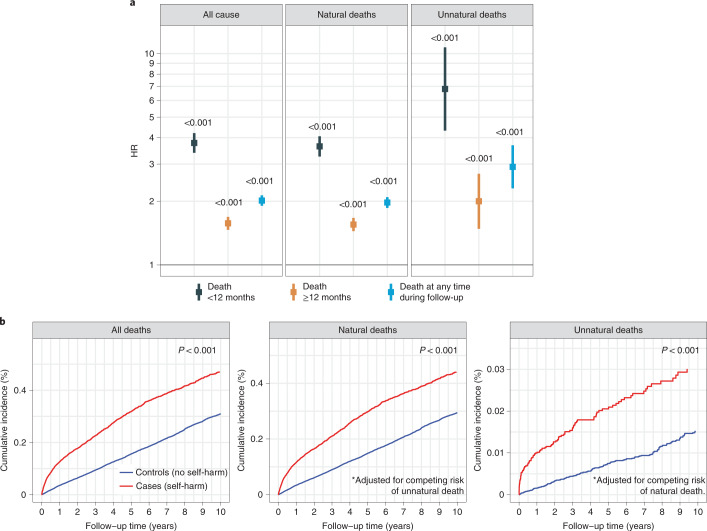
Cancer is a life-altering event causing considerable psychological distress. However, information on the total burden of psychiatric disorders across all common adult cancers and therapy exposures has remained scarce. Here, we estimated the risk of self-harm after incident psychiatric disorder diagnosis in patients with cancer and the risk of unnatural deaths after self-harm in 459,542 individuals. Depression was the most common psychiatric disorder in patients with cancer. Patients who received chemotherapy, radiotherapy and surgery had the highest cumulative burden of psychiatric disorders. Patients treated with alkylating agent chemotherapeutics had the highest burden of psychiatric disorders, whereas those treated with kinase inhibitors had the lowest burden. All mental illnesses were associated with an increased risk of subsequent self-harm, where the highest risk was observed within 12 months of the mental illness diagnosis. Patients who harmed themselves were 6.8 times more likely to die of unnatural causes of death compared with controls within 12 months of self-harm (hazard ratio (HR), 6.8; 95% confidence interval (CI), 4.3–10.7). The risk of unnatural death after 12 months was markedly lower (HR, 2.0; 95% CI, 1.5–2.7). We provide an extensive knowledge base to help inform collaborative cancer-psychiatric care initiatives by prioritizing patients who are most at risk.
Overview
The claims and statistics of this paper haven’t been checked yet.
Free: it reads the open-access text and checks the first 5 claims that cite a source we can check. Create a free account to check every claim.
Integrity signals
Registry
Cites
Statistics
Figures
Verification
Claims the paper makes
The claims and statistics of this paper haven’t been checked yet.
Free: it reads the open-access text and checks the first 5 claims that cite a source we can check. Create a free account to check every claim.
Claims other papers make about this one
Each is checked against this paper’s own text: does it say what the citing paper says it does?
The source backs part of the claim, not all of it — or backs it for a different population, condition or comparison.
In the citing paper
“The risk for self-harm and/or suicide has been reported to be 85% higher (standardized mortality ratio, 1.85; 95% CI, 1.55 to 2.20) than for the general population, 39 with the greatest risk during the first 12 months after cancer diagnosis, 40,41 underscoring the importance of screening for the newly diagnosed.42,43”
From Management of Anxiety and Depression in Adult Survivors of Cancer: ASCO Guideline Update (2023) · cites this paper as [40]
Experimental — accuracy not yet measuredThe cited source says what the claim attributes to it.
In the citing paper
“Across 26 cancers in a sample of over 459,000 people, TC demonstrated the highest cumulative burden at age 60 across all psychiatric disorders.4”
From Malignancy, masculinities, and psychological distress: Comparisons made between men with testicular cancer and healthy controls (2024) · cites this paper as [4]
Self-check
Percentages, sums and reported differences re-computed from the paper’s own numbers.
The self-check needs the paper’s full text.
Citations
Cites
Double-slit photoelectron interference in strong-field ionization of the neon dimer
Kunitski, M., Eicke, N., Huber, P., Köhler, J., Zeller, S., Voigtsberger, J., Schlott, N., Henrichs, K., Sann, H., Trinter, F., et al. (2019) · Nature Communications · doi:10.1038/s41467-018-07882-8 · Cited by 8,162
Double-slit photoelectron interference in strong-field ionization of the neon dimer
Kunitski, M., Eicke, N., Huber, P., Köhler, J., Zeller, S., Voigtsberger, J., Schlott, N., Henrichs, K., Sann, H., Trinter, F., et al. (2019) · Institutional Repository of Leibniz Universität Hannover (Leibniz Universität Hannover) · doi:10.15488/5174 · Cited by 8,161
Data Resource Profile: Clinical Practice Research Datalink (CPRD)
Herrett, E., Gallagher, A. M., Bhaskaran, K., Forbes, H., Mathur, R., van Staa, T., & Smeeth, L. (2015) · International Journal of Epidemiology · doi:10.1093/ije/dyv098 · Cited by 2,667
Phillips, M. R., Zhang, J., Shi, Q., Song, Z., Ding, Z., Pang, S., Li, X., Zhang, Y., & Wang, Z. (2009) · The Lancet · doi:10.1016/s0140-6736(09)60660-7 · Cited by 1,063
The Lifetime Risk of Suicide in Schizophrenia: A Reexamination
Palmer, B. A., Pankratz, V. S., & Bostwick, J. M. (2005) · Archives of General Psychiatry · doi:10.1001/archpsyc.62.3.247 · Cited by 1,026
Krebber, A. M. H., Buffart, L. M., Kleijn, G., Riepma, I. C., de Bree, R., Leemans, C. R., Becker, A., Brug, J., van Straten, A., Cuijpers, P., et al. (2014) · Psycho-Oncology · doi:10.1002/pon.3409 · Cited by 908
Paraneoplastic syndromes of the CNS
Dalmau, J., & Rosenfeld, M. R. (2008) · The Lancet Neurology · doi:10.1016/s1474-4422(08)70060-7 · Cited by 873
Depression and anxiety in patients with cancer
Pitman, A., Suleman, S., Hyde, N., & Hodgkiss, A. (2018) · BMJ · doi:10.1136/bmj.k1415 · Cited by 871
Bhakta, N., Liu, Q., Ness, K. K., Baassiri, M., Eissa, H., Yeo, F., Chemaitilly, W., Ehrhardt, M. J., Bass, J., Bishop, M. W., et al. (2017) · The Lancet · doi:10.1016/s0140-6736(17)31610-0 · Cited by 862
Plana-Ripoll, O., Pedersen, C. B., Agerbo, E., Holtz, Y., Erlangsen, A., Canudas-Romo, V., Andersen, P. K., Charlson, F. J., Christensen, M. K., Erskine, H. E., et al. (2019) · The Lancet · doi:10.1016/s0140-6736(19)32316-5 · Cited by 595
Cited by
Lustberg, M. B., Kuderer, N. M., Desai, A., Bergerot, C., & Lyman, G. H. (2023) · Nature Reviews Clinical Oncology · doi:10.1038/s41571-023-00776-9 · Cited by 306
Management of Anxiety and Depression in Adult Survivors of Cancer: ASCO Guideline Update
Andersen, B. L., Lacchetti, C., Ashing, K., Berek, J. S., Berman, B. S., Bolte, S., Dizon, D. S., Given, B., Nekhlyudov, L., Pirl, W., et al. (2023) · Journal of Clinical Oncology · doi:10.1200/jco.23.00293 · Cited by 318
“57 The Data Supplement outlines two studies 89,108 reporting positive effects at day 3, a fi nding of unknown consequence, with other studies having sample sizes just within the cutoff for systematic review inclusion (N 5 40).”
InfluentialGlobal unmet psychosocial needs in cancer care: health policy
Bergerot, C., Jacobsen, P. B., Rosa, W. E., Lam, W. W. T., Dunn, J., Fernández-González, L., Mehnert-Theuerkauf, A., Veeraiah, S., & Li, M. (2024) · eClinicalMedicine · doi:10.1016/j.eclinm.2024.102942 · Cited by 95
The human crisis in cancer: a Lancet Oncology Commission
Rodin, G., Feldman, A., Trapani, D., Skelton, M., Unger‐Saldaña, K., Essue, B. M., Pihlak, R., Walshe, C., Rosa, W. E., Banegas, M. P., et al. (2025) · The Lancet Oncology · doi:10.1016/s1470-2045(25)00530-3 · Cited by 81
Access to and affordability of CAR T-cell therapy in multiple myeloma: an EBMT position paper
Gagelmann, N., Sureda, A. M., Montoto, S., Murray, J., Bolaños, N., Kenyon, M., Beksaç, M., Schönland, S. O., Hayden, P. J., Scheurer, H., et al. (2022) · The Lancet Haematology · doi:10.1016/s2352-3026(22)00226-5 · Cited by 58
Mental health needs in cancer – a call for change
Fernando, A., Tokell, M., Ishak, Y., Love, J., Klammer, M., & Koh, M. (2023) · Future Healthcare Journal · doi:10.7861/fhj.2023-0059 · Cited by 65
Forbes, H. J., Carreira, H., Funston, G., Andresen, K., Bhatia, U., Strongman, H., Abrol, E., Bowen, L., Giles, C., & Bhaskaran, K. (2024) · EClinicalMedicine · doi:10.1016/j.eclinm.2024.102826 · Cited by 53
“38 Our study clearly demonstrated the risk of NFSH is higher in many cancer-types, compared to cancer-free individuals.”
ResultPsychological Challenges in Cancer Patients and the Impact of Cognitive Behavioral Therapy
Çınaroğlu, M., Ahlatcıoğlu, E. N., Prins, J. B., & Nan, M. (2023) · International Journal of Social and Psychological Aspects of Healthcare · doi:10.51847/zdldztussw · Cited by 35
Gao, L., Cao, Y., Cao, X., Shi, X., Lei, M., Su, X., & Liu, Y. (2023) · The Spine Journal · doi:10.1016/j.spinee.2023.05.009 · Cited by 38
The impact of testicular cancer and its treatment on masculinity: A systematic review
Dax, V., Ftanou, M., Tran, B., Lewin, J. H., Wallace, R., Seidler, Z. E., & Wiley, J. F. (2022) · Psycho-Oncology · doi:10.1002/pon.5994 · Cited by 31
“This year, TC was shown to have the highest cumulative burden for depression and the highest psychiatric disorder burden overall compared to 25 other cancers.(15) In a recent review, the role of cancer‐related masculine threat (i.”
BackgroundHaywood, D., Henry, M., Dauer, E., Lederman, O., Farley, M. J., Henneghan, A. M., O’Connor, M., Jefford, M., Rossell, S. L., & Hart, N. H. (2024) · Supportive Care in Cancer · doi:10.1007/s00520-024-08696-9 · Cited by 30
Socioeconomic Burden of Psychiatric Cancer Patients: A Narrative Review
Więckiewicz, G., Weber, S., Florczyk, I., & Gorczyca, P. W. (2024) · Cancers · doi:10.3390/cancers16061108 · Cited by 37
“The impact of psychiatric disorders on cancer treatment is reflected in the lower likelihood of oral cancer patients with mental illness undergoing surgery and adjuvant therapy [8].”
BackgroundReconceptualizing mental health in cancer survivorship
Haywood, D., Kotov, R., Krueger, R. F., Wright, A. G. C., Forbes, M. K., Dauer, E., Baughman, F. D., Rossell, S. L., & Hart, N. H. (2024) · Trends in cancer · doi:10.1016/j.trecan.2024.05.008 · Cited by 23
Kang, J., Lee, H., Park, J., Kim, H. J., Kwon, R., Kim, S., Fond, G. B., Boyer, L., Rahmati, M., Smith, L., et al. (2024) · Asian Journal of Psychiatry · doi:10.1016/j.ajp.2024.104138 · Cited by 31
Effectiveness of workplace cancer screening interventions: a systematic review
Mon, H. M., Robb, K. A., & Demou, E. (2024) · BMC Cancer · doi:10.1186/s12885-024-12649-0 · Cited by 37
Haywood, D., Kotov, R., Krueger, R. F., Wright, A. G. C., Forbes, M. K., Dauer, E., Baughman, F. D., Rossell, S. L., & Hart, N. H. (2024) · Cancer Letters · doi:10.1016/j.canlet.2024.216818 · Cited by 21
Ernst, M., Schwinn, T., Hirschmiller, J., Cleare, S., Robb, K. A., Brähler, E., Zwerenz, R., Wiltink, J., O’Connor, R. C., & Beutel, M. E. (2024) · Clinical Psychology Review · doi:10.1016/j.cpr.2024.102413 · Cited by 17
“The occurrence of STBs was also related to diagnoses of specific mental disorders/history of these disorders (e.g., Chang & Lai, 2022; Fang et al., 2012; Mohammadi et al., 2014), including drug and alcohol use disorders (e.g., Sun et al., 2020), especially in the context of registry-based studies…”
Akechi, T., Furukawa, T. A., Noma, H., Iwata, H., Toyama, T., Higaki, K., Matsuoka, H., Zenda, S., Iwatani, T., Akahane, K., et al. (2024) · Psychiatry and Clinical Neurosciences · doi:10.1111/pcn.13657 · Cited by 16
Li, X., Chen, L., & Liu, D.-M. (2023) · European Journal of Oncology Nursing · doi:10.1016/j.ejon.2023.102433 · Cited by 14
Abdalla, T., Preen, D. B., Pole, J. D., Walwyn, T. S., Bulsara, M. K., Ives, A. D., Choong, C. S., & Ohan, J. L. (2024) · Australian & New Zealand Journal of Psychiatry · doi:10.1177/00048674241233871 · Cited by 14
“The cancer diagnosis and its treatments can exacerbate existing psychological issues (Chang and Lai, 2022).”
BackgroundShining a light on the psychological burden of cancer
Bergerot, C. D., & Pal, S. K. (2022) · Nature Medicine · doi:10.1038/s41591-022-01763-w · Cited by 10
Li, C., Zhang, J., Pan, P., Zhang, J., Hou, X., Wang, Y., Chen, G., Muhammad, P., Reis, R. L., Ding, L., et al. (2024) · Advanced Science · doi:10.1002/advs.202400665 · Cited by 12
There is no health without mental health: Challenges ignored and lessons learned
Lai, A. G., & Chang, W. H. (2022) · Clinical and Translational Medicine · doi:10.1002/ctm2.897 · Cited by 8
“(2) beliefs and knowledge, (3) brain and body functions, (4) cognitive and attentional skills, (5) human connections, and (6) socioeconomic factors.”
BackgroundSelf-citationJansson, A. K., Söderling, J. K., Reutfors, J., Thor, A., Sköld, C., Cohn-Cedermark, G. E., Ståhl, O., Smedby, K. E. E., Pettersson, A., & Glimelius, I. C. (2023) · British Journal of Cancer · doi:10.1038/s41416-023-02260-8 · Cited by 21
“[47], testicular cancer patients had the highest cumulative burden of psychiatric disorders across all 26 researched adult cancers.”
BackgroundA Positive Distress Screen…Now What? An Updated Call for Integrated Psychosocial Care
Tsao, P. A., Fann, J. R., Nevedal, A., Bloor, L. E., Krein, S. L., & Caram, M. E. V. (2023) · Journal of Clinical Oncology · doi:10.1200/jco.22.02719 · Cited by 9
Rahnea-Niță, R.-A., Rebegea, L. F., Dumitru, M. E., Mitrica, R. I., Nechifor, A., Firescu, D., Maier, A.-C., Constantin, G. B., Grigorean, V. T., & Rahnea-Nita, G. (2024) · Medicina · doi:10.3390/medicina60091472 · Cited by 8
“Gniewko Wi˛eckiewicz et al., in a narrative review published in 2024, highlights the fact that the psychiatric conditions of cancer patients contribute to a significant socioeconomic burden for both the patients and those who care for them [12–14].”
BackgroundThe Future of Oncology in Psychiatric Medications
Waszkiewicz, N. (2025) · Journal of Clinical Medicine · doi:10.3390/jcm14176003 · Cited by 8
Suicide prevention in cancer: earlier is better
Li, M., & Rodin, G. (2022) · Trends in Molecular Medicine · doi:10.1016/j.molmed.2022.04.009 · Cited by 6
Suicide after colorectal cancer—a national population‐based study
Larsson, C., de la Croix, H., Grönkvist, R., Park, J., Rosenberg, J., Tasselius, V., Angenete, E., & Haglind, E. (2024) · Colorectal Disease · doi:10.1111/codi.17047 · Cited by 6
“There is evidence that both the risk for mental illness and suicide is higher for patients with cancer with poor outcome and more advanced disease stage [ 4, 5, 7–9 ], as well as cancer types with more demanding and aggressive treatments [1].”
Sayer, M., Agrawal, P., Ng, D. Q., Kagramanov, D., Trudeau, J., Othy, S., Acharya, M. M., & Chan, A. (2025) · Supportive Care in Cancer · doi:10.1007/s00520-025-09560-0 · Cited by 5
A national estimate of mental disorders and mortality outcomes in cancer survivors
Trần, T. X. M., Chung, M. S., Cha, C., & Park, B. (2025) · Cancer · doi:10.1002/cncr.35711 · Cited by 6
“In line with previous studies, 6–11 our findings indicate that patients who have cancer with mental disorders experience poorer survival outcomes than those without such conditions, which is marked by an increase in both all ‐ cause and cancer ‐ specific deaths.”
Ng, H. S., Woodman, R. J., & Koczwara, B. (2023) · Cancer Medicine · doi:10.1002/cam4.6291 · Cited by 4
Chronic stress in cancer development and progression
Niu, X., Wu, T. H., Zeng, L., Wang, F., Lv, W., Zhang, L., & Zhou, F. (2025) · Science Bulletin · doi:10.1016/j.scib.2025.09.034 · Cited by 12
Psychopathology in Cancer Patients and the Role of Cognitive Behavioral Therapy
Çınaroğlu, M., Ahlatcıoğlu, E. N., Prins, J. B., & Nan, M. (2023) · Clinical Cancer Investigation Journal · doi:10.51847/itcyotbqlp · Cited by 4
Tomy, M., Alexander, W., Gupta, S., Schaefer, D., & Case, A. A. (2024) · Journal of Palliative Medicine · doi:10.1089/jpm.2024.0040 · Cited by 9
Dax, V., Ftanou, M., Tran, B., Lewin, J., & Wiley, J. F. (2024) · Psycho-Oncology · doi:10.1002/pon.6262 · Cited by 3
Hou, X., Zhu, X., Feng, Y., Shao, S., Qian, H., He, J., Liu, X., Jiang, H., Guan, Y., Li, M., et al. (2026) · Phytomedicine · doi:10.1016/j.phymed.2026.157820 · Cited by 5
Trakoolngamden, B., Monkong, S., Chaiviboontham, S., Satitvipawee, P., & Runglodvatana, Y. (2025) · Journal of Hospice and Palliative Nursing · doi:10.1097/njh.0000000000001100 · Cited by 8
Depression and Inflammation Predict Depression Trajectory of Non–Small Cell Lung Cancer Patients
Park, K. R., Shields, P. G., Myers, J., Reisinger, S. A., & Andersen, B. L. (2025) · Psychosomatic Medicine · doi:10.1097/psy.0000000000001379 · Cited by 4
Patients with cancer have a higher suicide risk
O’Rourke, K. (2022) · Cancer · doi:10.1002/cncr.34430 · Cited by 3
Wen, F., Hsieh, C., Chou, W., Chen, J., Chang, W.-C., & Tang, S. T. (2025) · SSM - Mental Health · doi:10.1016/j.ssmmh.2025.100553 · Cited by 3
Self-citationZhao, Y., Li, D., Zhang, M., Yan, W., Shen, H., Xu, M., & Liu, Y. (2025) · Asia-Pacific Journal of Oncology Nursing · doi:10.1016/j.apjon.2025.100825 · Cited by 2
Mental Health Burden of a Testicular Cancer Diagnosis: Insights From a Large Claims Database
Wang, J., Castillo, J.-K., Buell, M. I., Shin, J., Douglawi, A., Hofmann, M., Hu, B. R., Ruckle, H. C., & Alsyouf, M. M. (2026) · Urology · doi:10.1016/j.urology.2026.02.027 · Cited by 4
Wang, Y., Zhang, J., Chen, L., Yao, Y., Qin, G., & Wu, J. (2023) · Frontiers in Oncology · doi:10.3389/fonc.2023.1153455 · Cited by 3
“The suicide incidence among cancer patients is 20% higher than that among the general population; therefore, the early period after disease diagnosis is a critical intervention phase for mental health issues (15).”
BackgroundMalki, H. E., El‐Ammari, A., Moutawakkil, S. G., Gnaoui, S. E., Houari, F. E., Rhazi, K. E., & Zarrouq, B. (2025) · Addiction Science & Clinical Practice · doi:10.1186/s13722-025-00557-y · Cited by 2
“Prolonged use of these sub-stances is connected to serious health issues, including cancer, cardiovascular and liver diseases [16], and neurological disorders, as well as psychological conditions such as antisocial personality disorder, depression, and anxiety [17–20].”
Who, what, where, when, and how: IPOS legacy and future directions
Goldzweig, G., & Andersen, B. L. (2024) · Journal of Psychosocial Oncology Research and Practice · doi:10.1097/or9.0000000000000151 · Cited by 1
Eskander, A. E., Sutradhar, R., Isenberg‐Grzeda, E., Fu, R., Mahar, A. L., Vigod, S. N., Bolton, J. M., Deleemans, J. M., Chan, W. C., Coburn, N. G., et al. (2025) · Journal of the National Comprehensive Cancer Network · doi:10.6004/jnccn.2024.7083 · Cited by 1
Bridging the mental health gap in oncology: A pharmacist-led stepped care model for China
Fan, D., Liu, P., Liu, H., Chen, L., Cheng, F., & Shen, Z. (2025) · Asian Journal of Psychiatry · doi:10.1016/j.ajp.2025.104648 · Cited by 1
Dong, J., He, Y., & Tang, L. (2025) · Journal of Medical Internet Research · doi:10.2196/73093 · Cited by 2
“Additionally, the toxic side effects of anticancer drugs, such as pain, fatigue, and nausea, frequently lead to profound psychological, social, and spiritual distress [3, 4].”
Rural–urban disparity in anxiety and depression among cancer patients in Bangladesh
Chakma, S. K., Ahedulla, M., Saha, S., Shakil, S. A., Shormi, A., Biswas, T., Bokshi, S. K., Sohag, S. H., & Hossain, A. (2025) · Discover Public Health · doi:10.1186/s12982-025-01119-y · Cited by 3
“Psychological illnesses such as depression, anxiety are well-recognised comorbidities for cancer patients that can happen at diagnosis, during treat-ment, or afterward [4, 5].”
Shin, D., Ham, B., & Kim, K.-H. (2026) · Journal of Affective Disorders · doi:10.1016/j.jad.2026.121307 · Cited by 1
Quality of life assessment in testicular non-seminomatous germ cell tumour survivors
Pathak, N., Raj, A., Santhosh, A. P., Kumar, S., Haresh, K. P., Singh, P., Nayak, B., Shamim, S. A., Seth, A., Ray, M. D., et al. (2023) · Journal of Cancer Survivorship · doi:10.1007/s11764-023-01416-y · Cited by 1
“[2] Furthermore, all three treatment modalities and the disease process related to testicular dysgenesis syndrome can negatively affect fertility [24, 38].”
Self‐perceptions of masculinities and testicular cancer: Qualitative explorations
Dax, V., Ftanou, M., Tran, B., Lewin, J. H., Ayton, D., Seidler, Z. E., Wallace, T., & Wiley, J. F. (2024) · Psycho-Oncology · doi:10.1002/pon.6333 · Cited by 1
“6,7 Therefore, research has begun to investigate correlates of distress including the gender socialisation process for men with TC and how masculinities interact with their experience.”
BackgroundKapfhammer, H. (2023) · Springer eBooks · doi:10.1007/978-3-662-68309-5_5 · Cited by 1
APTIDÃO FÍSICA, SAÚDE MENTAL E NUTRIÇÃO NO ADOLESCENTE
da Silva, L. P., Lima, G. D. S. O., Noleto, D. C. D. S., & do Nascimento, M. A. (2023) · doi:10.22533/at.ed.3512328097
EXERCÍCIO FÍSICO E ANSIEDADE NO ADOLESCENTE
Rabelo, A. S., de Oliveira, K. H. D. S., Abreu, L. M. S., Correia, M. B., & RIBEIRO, F. B. (2023) · doi:10.22533/at.ed.3512328092
Exercício físico e saúde do adolescente
Dias, C. J. M., Filho, C. A. A. D., Mostarda, C. T., & Costa, H. A. (2023) · doi:10.22533/at.ed.351232809
DEFINIÇÕES E CLASSIFICAÇÃO DA ADOLESCÊNCIA
Pereira, M. E. V., Oliveira, N. G., Ribeiro, P. R. F., da Silva, T. M. C., & Dias, C. J. M. (2023) · doi:10.22533/at.ed.3512328091 · Cited by 1
ASPECTOS ETIOPATOGÊNICOS DO CÂNCER DE TESTÍCULO EM ADOLESCENTES E SEU IMPACTO NA SAÚDE MENTAL
Filho, C. A. A. D., Ferreira, F. D., Ferreira, F. R. D., Carneiro, J. G. P., Neto, J. C. G. P., & Cardoso, M. E. S. (2023) · doi:10.22533/at.ed.3512328096
EXERCÍCIO FÍSICO E ADOLESCÊNCIA
Soares, N. D. J. S., Pires, F. D. O., & Cavalcante, L. F. P. (2023) · doi:10.22533/at.ed.3512328093
COMPORTAMENTO PARENTAL ASSOCIADO A FATORES DE RISCO CARDIOVASCULAR EM ADOLESCENTES
Costa, H. A., Rabelo, A. S., Costa, V. D. A. M., da Silva, F. E. L., & Pinto, B. F. P. (2023) · doi:10.22533/at.ed.3512328098
ASPECTOS E FATORES ASSOCIADOS À OBESIDADE NA ADOLESCÊNCIA
Durans, L. H. F., Miranda, T. D. C., Silva, H. N. D. S. E., Santos, E. R. V., Leitão, S., & Mostarda, C. T. (2023) · doi:10.22533/at.ed.3512328099 · Cited by 1
DIABETES MELLITUS TIPO 2 EM ADOLESCENTES E OS RISCOS DO DESENVOLVIMENTO DE INSUFICIÊNCIA CARDÍACA
Filho, C. A. A. D., de Carvalho, R. G. V., Carneiro, J. G. P., Neto, J. C. G. P., Rocha, L. T. S., & Rodrigues, P. A. V. (2023) · doi:10.22533/at.ed.3512328095
HIPERTENSÃO ARTERIAL NO ADOLESCENTE
Soares, N. D. J. S., Pires, F. D. O., & Cavalcante, L. F. P. (2023) · doi:10.22533/at.ed.3512328094
TREINAMENTO DE FORÇA, CRESCIMENTO E DESENVOLVIMENTO EM CRIANÇAS E ADOLESCENTES
Marques, R. F., & Ribeiro, R. M. (2023) · doi:10.22533/at.ed.35123280910
Suizidalität in der Onkologie: Ärztliches Gesprächsangebot ermöglicht Distanzierung
Dinkel, A. (2024) · Deutsches Ärzteblatt · doi:10.3238/personko.2024.02.09.02
Brandon, R., & Zhang, A. (2024) · Interdisciplinary cancer research · doi:10.1007/16833_2024_303
Schlatter, M. C. (2024) · Springer eBooks · doi:10.1007/978-981-99-6794-0_17
Psychiatric disorders in adolescent and young adult cancer survivors in Korea
Jeong, S., Kang, D., Kim, H., Jeon, K. H., Choi, H., Park, H. Y., Kim, S., Cho, J. Y., & Shin, D. W. (2025) · ESMO Open · doi:10.1016/j.esmoop.2024.104101 · Cited by 1
Siston, A. K., Jacobson, K. C., & Tobin, M. (2025) · Journal of Psychosocial Oncology · doi:10.1080/07347332.2025.2458693
Freyer, G., Rigault, C., Guéroult-Accolas, L., Barea, A., Radu, N., Ouamer, A., & Saghatchian, M. (2025) · Cancers · doi:10.3390/cancers17081349
“Breast cancer ranked seventh for the cumulative burden of five psychiatric disorders (depression, anxiety, schizophrenia, bipolar disorders, and personality disorders), demonstrating the impact of breast cancer, in particular, on psychological well-being [29].”
Effects of physical exercise on the mental well-being of people with cancer: a systematic review
Jacklin, M. (2025) · Cancer Nursing Practice · doi:10.7748/cnp.2025.e1897
Winter, J., Gasslander, N., Rane, G., Sundström, F., Björkhem‐Bergman, L., Hedman, C., & Axelsson, E. (2025) · Journal of Cancer Survivorship · doi:10.1007/s11764-025-01905-2
“Long-term psychiatric symptoms are also common in patients with cancers typically considered favorable, such as breast, thyroid, and testicular cancer [11].”
Additional file 1 of Effectiveness of workplace cancer screening interventions: a systematic review
Mon, H. M., Robb, K. A., & Demou, E. (2024) · Figshare · doi:10.6084/m9.figshare.26549313
Song, X., Wang, R. L., Shen, C., Sun, X., Lu, L., & Shen, Q. (2026) · Journal of Affective Disorders · doi:10.1016/j.jad.2026.121963
Jang, J. Y., Jeong, D., Koh, H. K., Bang, K., Kim, G., & Hong, S. (2026) · Supportive Care in Cancer · doi:10.1007/s00520-026-10816-6
“More than half of survivors experience fatigue, cognitive impairment, insomnia, and emotional distress, which are closely associated with impaired quality of life [6].”
Longitudinal Risk for Suicidal Self-Directed Violence Among Veterans With Cancer
Sullivan, D. R., Disher, N. G., Rosa, W. E., Vlajic, S. A., Handley, R., Scott, J., Denneson, L. M., Niederhausen, M., Lyons, P. G., Vranas, K. C., et al. (2026) · JAMA Oncology · doi:10.1001/jamaoncol.2026.1459 · Cited by 1
Chen, J. F., Hsu, C., Fang, Y.-Y., Tseng, P., Yu-Chen, K., Hsu, T.-W., & Liang, C.-S. (2026) · Progress in Neuro-Psychopharmacology and Biological Psychiatry · doi:10.1016/j.pnpbp.2026.111764
Chiang, Y., Yi, C.-H., Yin, C.-H., Couper, J., Chang, C., Pan, C., & Chen, J.-S. (2026) · Supportive Care in Cancer · doi:10.1007/s00520-026-10868-8
Navigating Psychosocial Challenges During Cancer Hospitalization: A Qualitative Study
Gašpert, T., Štiglic, G., & Vrbnjak, D. (2026) · Seminars in Oncology Nursing · doi:10.1016/j.soncn.2026.152300
Bipolar disorder in oncology: Considerations for the psychiatrist
Smith, A. C., Karki, S., Naiken, S., Conroy, S. K., & Strakowski, S. M. (2026) · Journal of Mood and Anxiety Disorders · doi:10.1016/j.xjmad.2026.100195
“In a population-based cohort of 459,542 individuals with cancer, the cumulative burden of five major psychiatric disorders, including bipolar disorder, was associated with a markedly increased risk of self-harm and years of life lost compared with cancer patients without such diagnoses [5].”
Metadata
- Authors
- Chang, W. H., & Lai, A. G.
- Affiliations
- University College London (GB)
- Corresponding author
- Lai, Alvina G.
- Venue
- Nature Medicine
- Published
- 2022-03-28
- Volume
- 28
- Issue
- 4
- Pages
- 860-870
- ISSN
- 1078-8956 (ISSN-L)
- 1546-170X
- PMC
- PMC9018408
- OpenAlex
- W4221093065
- Cited by
- 81
- References
- 61
- Citations by year
- 2026: 10 · 2025: 19 · 2024: 21 · 2023: 25 · 2022: 6
- FWCI
- 7.43
- Type
- journal article
- Language
- en
- Open access
- hybrid
- doi.org
- Licence
- cc-by
- creativecommons.org/licenses/by/4.0 (tdm)
- creativecommons.org/licenses/by/4.0 (vor)
- Locations
- Nature Medicine (publishedVersion, cc-by)
- medRxiv (acceptedVersion, cc-by-nc-nd)
- PubMed Central (publishedVersion, cc-by)
- PubMed (publishedVersion)
- UCL Discovery (University College London) (submittedVersion)
- Funders
- Wellcome Trust (204841/Z/16/Z)
- Topics
- Health Sciences › Medicine › Oncology › Cancer survivorship and care
- Social Sciences › Psychology › Clinical Psychology › Suicide and Self-Harm Studies
- Health Sciences › Medicine › Psychiatry and Mental health › Mental Health Treatment and Access
- Keywords
- mental illness, self-harm, cancer, depression, cumulative burden, unnatural death, chemotherapy, alkylating agents, kinase inhibitors, radiotherapy, cancer surgery
- MeSH terms
- Adult, Mental Disorders, Humans, Neoplasms, Risk Factors, Suicide, Proportional Hazards Models, Self-Injurious Behavior
About these checks
Registry, retraction, Cites and statistics results are computed, not judged, with one exception: a printed reference that no index lists is read once by a model before it counts as a citation error. Claims are extracted by a model and kept only when their quote appears verbatim in the text; each cited source is then checked, with a model’s help, for whether it says what the claim relies on. Those verdicts can be wrong — read the claim’s quote and the cited source before relying on one.
Statistics and arithmetic are recomputed, not judged.
Confidence bands are shown only for fields calibrated on our annotated test set. None is calibrated yet, so no band is shown.
What counts as a claim ›How we measure confidence ›How we check this ›
Are you an author, or do you see a problem with this page? Request a review
Data sources
Bibliographic data: Semantic Scholar, OpenAlex, Crossref.
Contains information from the Semantic Scholar Academic Graph Datasets, made available under the ODC Attribution License (ODC-BY 1.0).
Semantic Scholar’s data is described in: Kinney, R., et al. (2023). The Semantic Scholar Open Data Platform. arXiv:2301.10140.
