

Metabolomic profiles predict individual multidisease outcomes
Open accessThe DOI matches its Crossref record; 79 of the 79 references it cites were found in a registry or an index.
Abstract
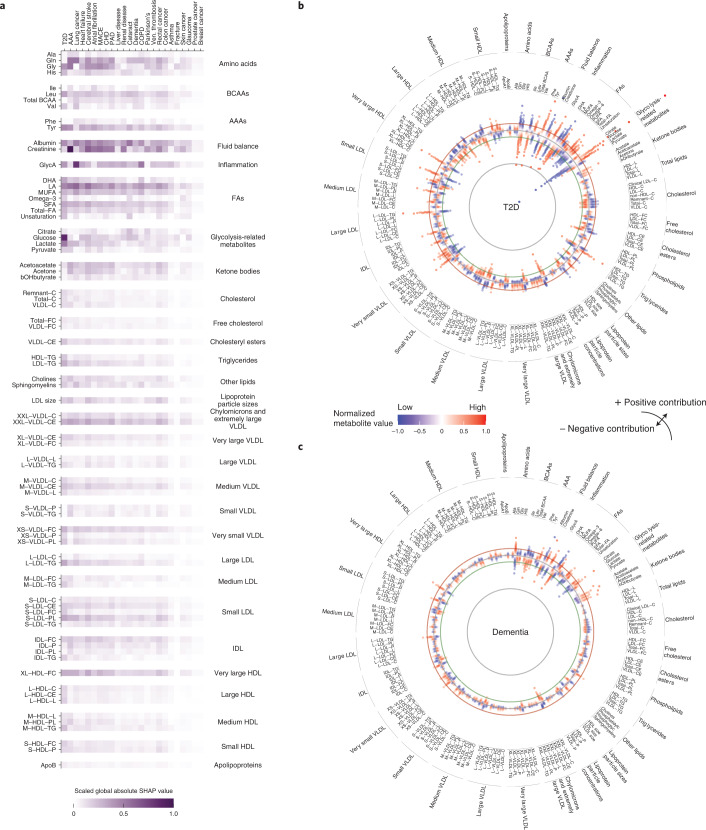
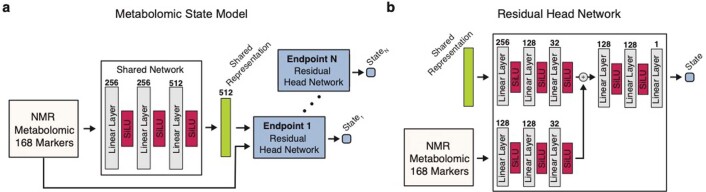
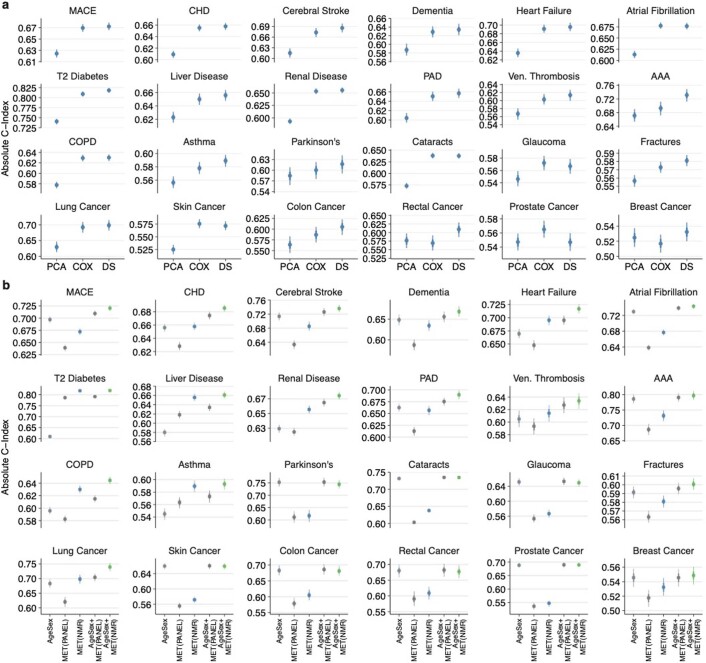
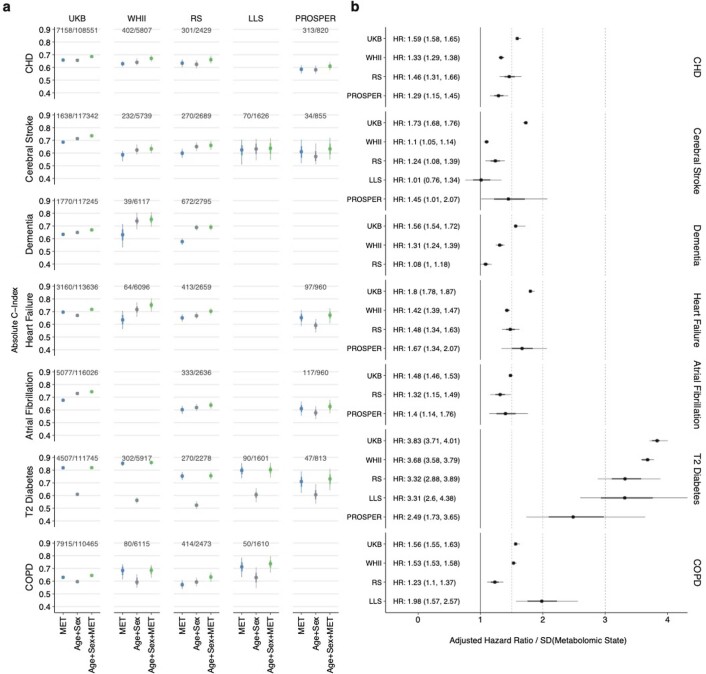
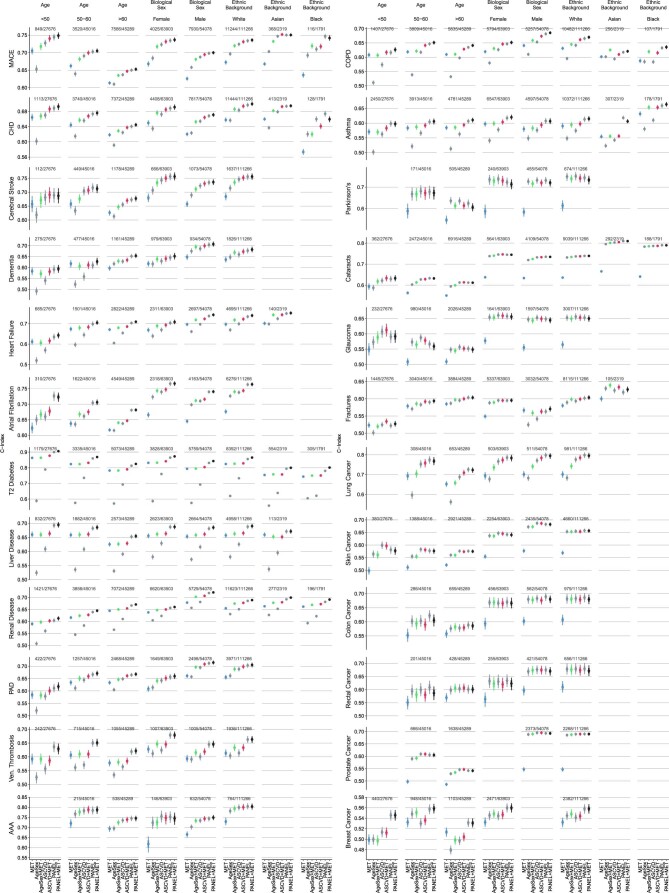
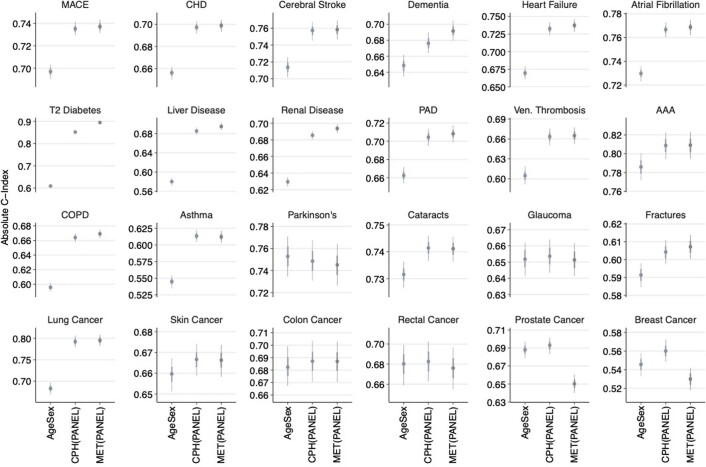
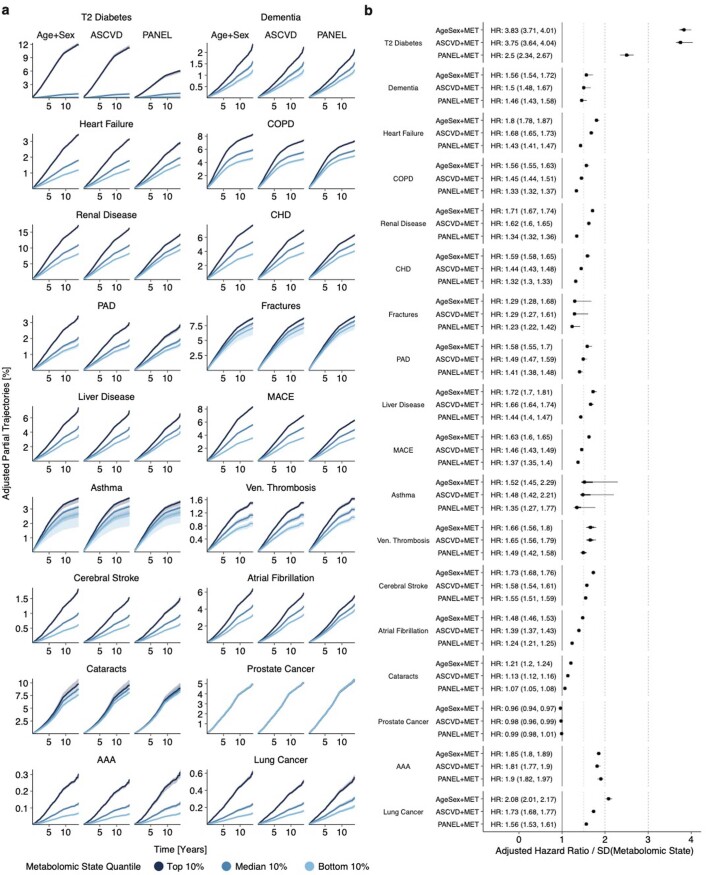
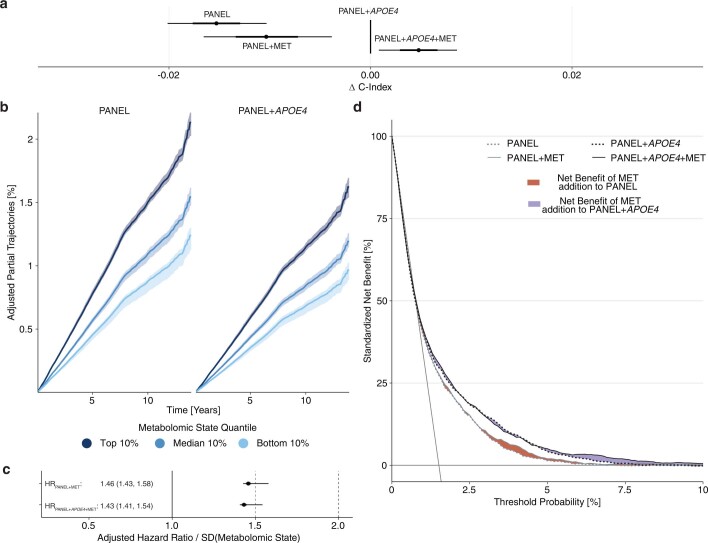
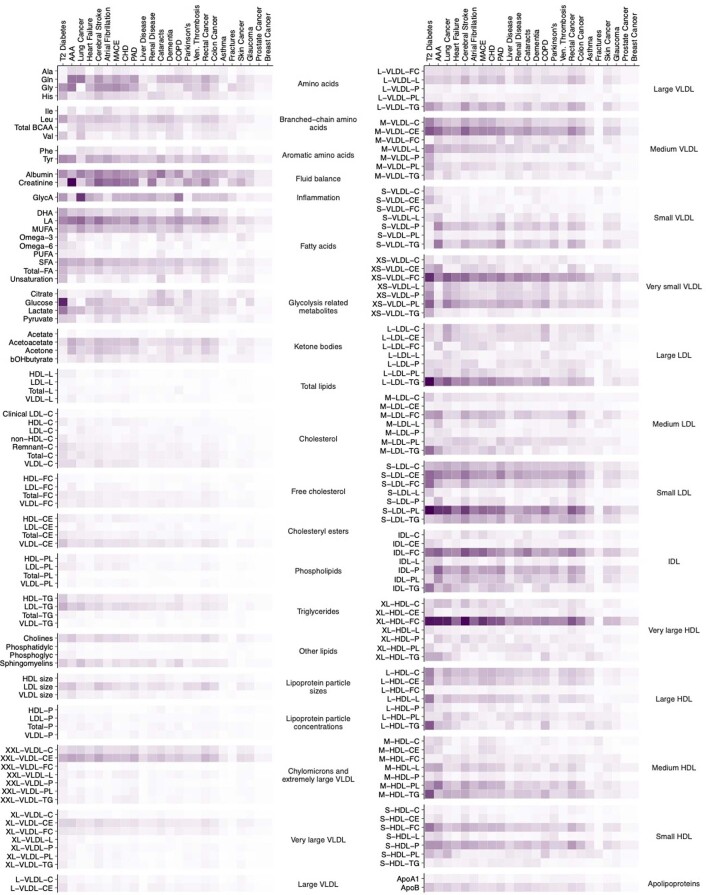
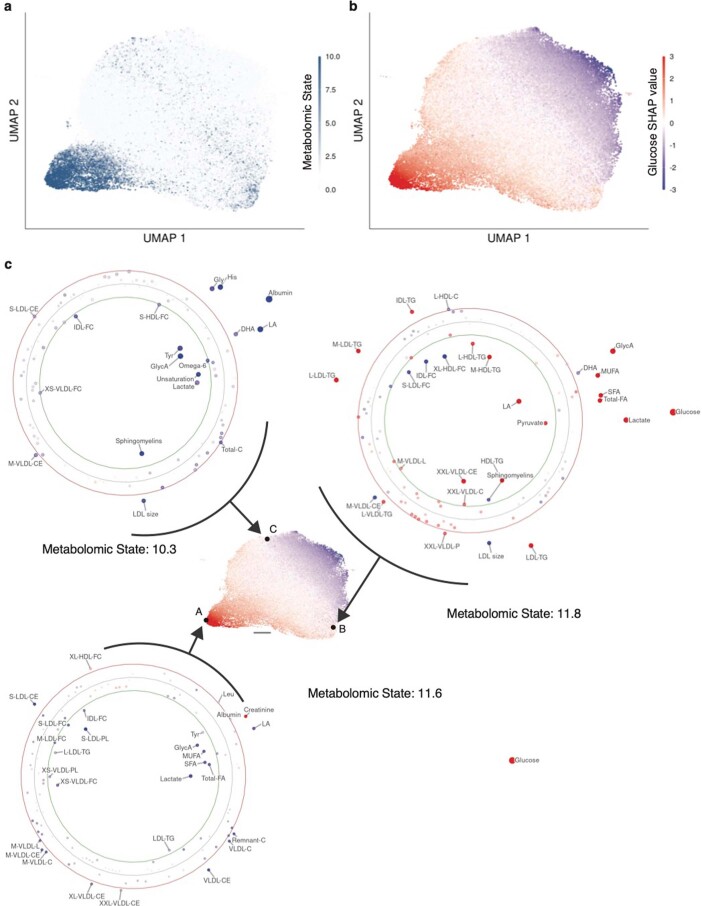
Risk stratification is critical for the early identification of high-risk individuals and disease prevention. Here we explored the potential of nuclear magnetic resonance (NMR) spectroscopy-derived metabolomic profiles to inform on multidisease risk beyond conventional clinical predictors for the onset of 24 common conditions, including metabolic, vascular, respiratory, musculoskeletal and neurological diseases and cancers. Specifically, we trained a neural network to learn disease-specific metabolomic states from 168 circulating metabolic markers measured in 117,981 participants with ~1.4 million person-years of follow-up from the UK Biobank and validated the model in four independent cohorts. We found metabolomic states to be associated with incident event rates in all the investigated conditions, except breast cancer. For 10-year outcome prediction for 15 endpoints, with and without established metabolic contribution, a combination of age and sex and the metabolomic state equaled or outperformed established predictors. Moreover, metabolomic state added predictive information over comprehensive clinical variables for eight common diseases, including type 2 diabetes, dementia and heart failure. Decision curve analyses showed that predictive improvements translated into clinical utility for a wide range of potential decision thresholds. Taken together, our study demonstrates both the potential and limitations of NMR-derived metabolomic profiles as a multidisease assay to inform on the risk of many common diseases simultaneously.
Overview
The claims and statistics of this paper haven’t been checked yet.
Free: it reads the open-access text and checks the first 5 claims that cite a source we can check. Create a free account to check every claim.
Integrity signals
Registry
Cites
Statistics
Figures
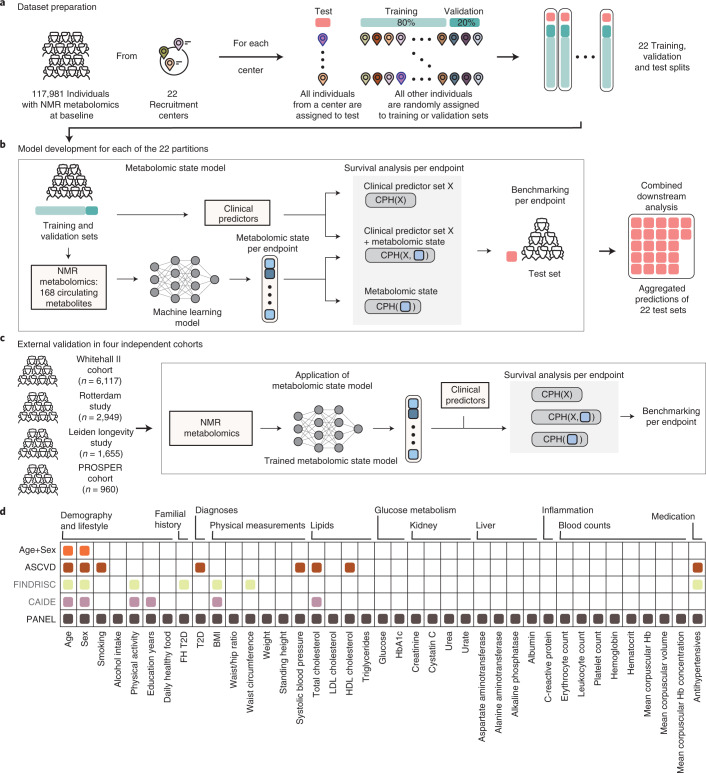
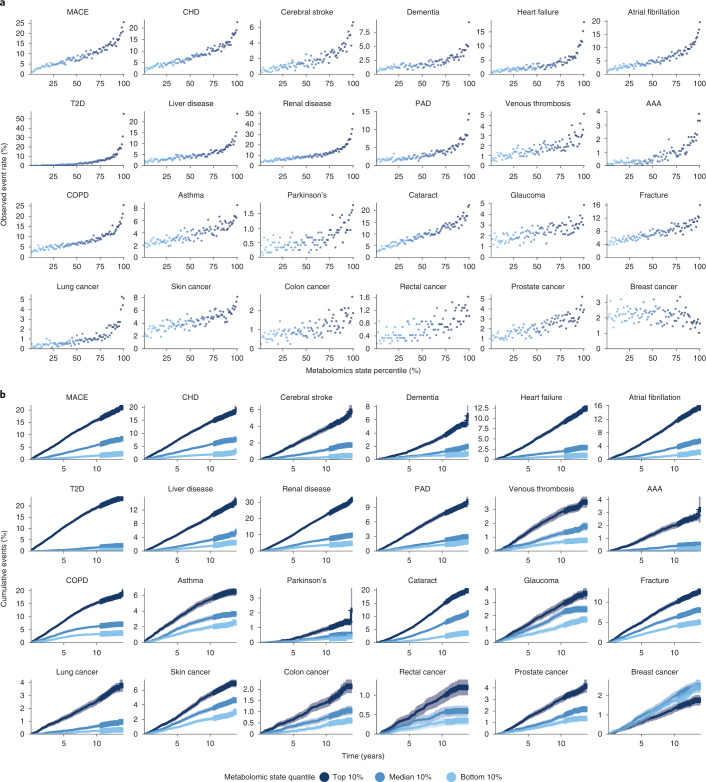
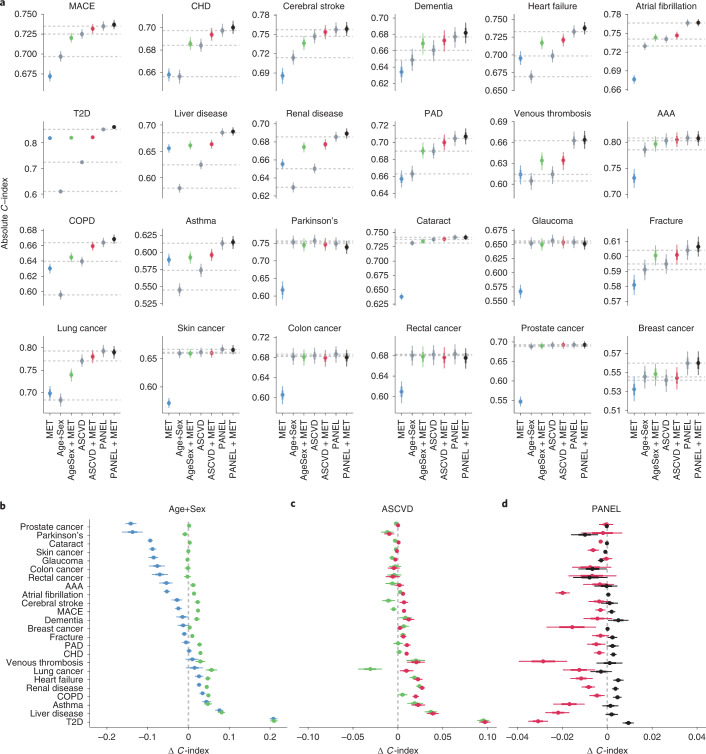
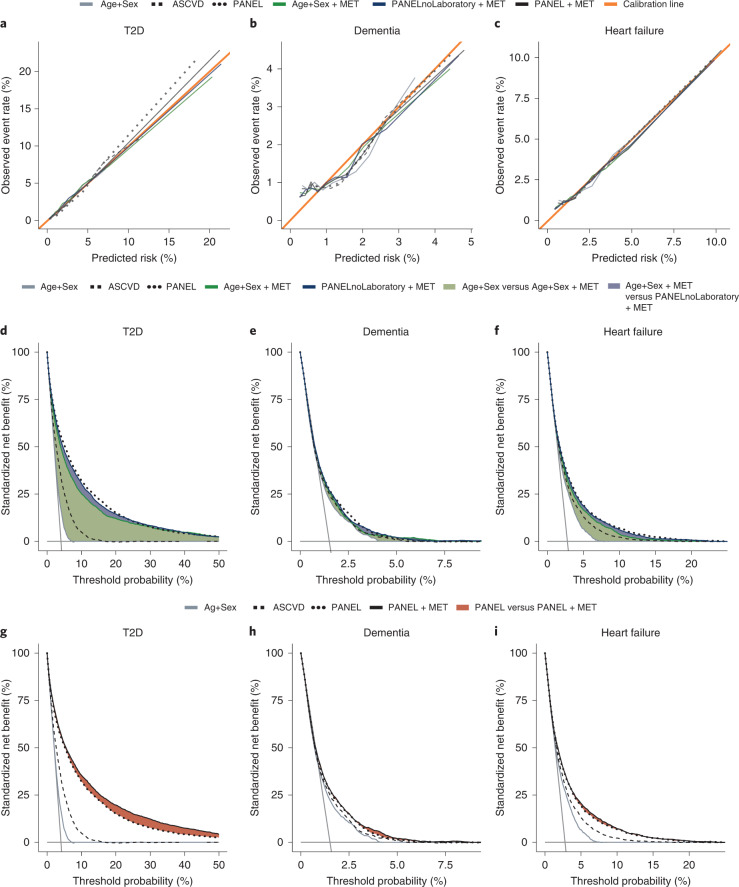
Verification
Claims the paper makes
The claims and statistics of this paper haven’t been checked yet.
Free: it reads the open-access text and checks the first 5 claims that cite a source we can check. Create a free account to check every claim.
Self-check
Percentages, sums and reported differences re-computed from the paper’s own numbers.
The self-check needs the paper’s full text.
Citations
Cites
1 retracted
Dementia prevention, intervention, and care: 2020 report of the Lancet Commission
Livingston, G., Huntley, J., Sommerlad, A., Ames, D., Ballard, C., Banerjee, S., Brayne, C., Burns, A., Cohen-Mansfield, J., Cooper, C., et al. (2020) · The Lancet · doi:10.1016/s0140-6736(20)30367-6 · Cited by 10,430
RetractedDeep Residual Learning for Image Recognition
He, K., Zhang, X., Ren, S., & Sun, J. (2016) · 2016 IEEE Conference on Computer Vision and Pattern Recognition (CVPR) · doi:10.1109/cvpr.2016.90 · Cited by 235,474
Adam: A Method for Stochastic Optimization
Kingma, D. P., & Ba, J. (2014) · arXiv · doi:10.48550/arxiv.1412.6980 · Cited by 98,946
Regression Models and Life-Tables
Cox, D. R. (1972) · Journal of the Royal Statistical Society Series B: Statistical Methodology · doi:10.1111/j.2517-6161.1972.tb00899.x · Cited by 39,793
A Unified Approach to Interpreting Model Predictions
Lundberg, S., & Lee, S.-I. (2017) · arXiv · doi:10.48550/arxiv.1705.07874 · Cited by 23,707
Sudlow, C., Gallacher, J., Allen, N., Beral, V., Burton, P., Danesh, J., Downey, P., Elliott, P., Green, J., Landray, M., et al. (2015) · PLOS Medicine · doi:10.1371/journal.pmed.1001779 · Cited by 12,728
Yusuf, S., Hawken, S., Ôunpuu, S., Dans, T., Avezum, A., Lanas, F., McQueen, M., Budaj, A., Pais, P., Varigos, J., et al. (2004) · The Lancet · doi:10.1016/s0140-6736(04)17018-9 · Cited by 12,026
(2017) · Cited by 11,625
UMAP: Uniform Manifold Approximation and Projection
McInnes, L., Healy, J., Saul, N., & Großberger, L. (2018) · Journal of Open Source Software · doi:10.21105/joss.00861 · Cited by 9,826
The UK Biobank resource with deep phenotyping and genomic data
Bycroft, C., Freeman, C., Petkova, D., Band, G., Elliott, L. T., Sharp, K., Motyer, A., Vukcevic, D., Delaneau, O., O’Connell, J., et al. (2018) · Nature · doi:10.1038/s41586-018-0579-z · Cited by 8,876
Research works printed but not linked: 1
- Srivastava N Hinton G Krizhevsky A Sutskever I Salakhutdinov R Dropout: a simple way to prevent neural networks from overfitting J. Mach. Learn. Res. 2014 15 1929 1958
Cited by
Items 201–300 of 441
Ke, J., Zhang, Y., Shao, X., Tan, Z., Bai, G., Ju, J., Chen, H., Wang, Z., & Zhang, J. (2026) · Diabetes Obesity and Metabolism · doi:10.1111/dom.71112 · Cited by 5
Wang, Y., Li, X., Qi, M., Li, X., Zhang, F., Wang, Y., Wu, J., Shu, L., Fan, S., Li, Y., et al. (2023) · Frontiers in Molecular Biosciences · doi:10.3389/fmolb.2023.1203208 · Cited by 5
“…can be identified, and the metabolic pathways can be elucidated in combination with bioinformatics analysis, and then the biological metabolic mechanism can be analyzed (Li et al., 2020; Cui et al., 2021; Nicholson, 2021; Sun C. et al., 2021; Buergel et al., 2022; Santos-Gallego et al., 2022).”
BackgroundMethodSteinfeldt, J., Wild, B., Buergel, T., Pietzner, M., zu Belzen, J. U., Vauvelle, A., Hegselmann, S., Denaxas, S., Hemingway, H., Langenberg, C., et al. (2024) · Nature Communications · doi:10.1038/s41467-024-48568-8 · Cited by 5
Self-citationRetractedUrbanisation-associated shifts in the avian metabolome within the annual cycle
Watson, H., Nilsson, J., Smith, E., Ottosson, F. A., Melander, O., Hegemann, A., Urhan, U., & Isaksson, C. (2024) · The Science of The Total Environment · doi:10.1016/j.scitotenv.2024.173624 · Cited by 6
Position Paper: Unlocking the Potential of AI Researchers in Scientific Discovery—What Is Missing?
Yu, H., Liu, S., Yang, H., Yan, Y., Qu, M., & Jin, Y. (2026) · International Joint Conference on Neural Networks (IJCNN) · doi:10.1109/ijcnn69854.2026.11729527 · Cited by 5
“For instance, SHAP has been used to quantify the contributions of individual metabolites to disease risk, identifying key metabolites influencing the risk of 24 investigated diseases [28].”
Kolb, L. N., Othman, A., Rohrer, L., Krützfeldt, J., & von Eckardstein, A. (2023) · Biomolecules · doi:10.3390/biom13030497 · Cited by 5
“Free cholesterol of small HDL was previously found to be associated with incident diabetes [15].”
BackgroundMetabolomic signature of retinal ageing, polygenetic susceptibility, and major health outcomes
Liu, R., Yang, S., Zhong, X., Zhu, Z., Huang, W., & Wang, W. (2024) · British Journal of Ophthalmology · doi:10.1136/bjo-2024-325846 · Cited by 5
“20 25 Characterised by its evident micro-circulation and substantial oxygen requirement, the retina is vital for disease detection, diagnostic methods and prognostic evaluations.”
Editorial: Advancements of deep learning in medical imaging for neurodegenerative diseases
Gaur, L., Siarry, P., Abraham, A., & Castillo, O. (2024) · Frontiers in Neuroscience · doi:10.3389/fnins.2024.1361055 · Cited by 5
Antikainen, A. A., Mutter, S., Harjutsalo, V., Thorn, L. M., Groop, P., Sandholm, N., & the FinnDiane Study Group (2024) · Cardiovascular Diabetology · doi:10.1186/s12933-024-02512-8 · Cited by 4
Ruutu, K., Wasenius, N., Narasimhan, K., Mikkola, T. M., Laine, M. K., & Eriksson, J. G. (2025) · Aging Cell · doi:10.1111/acel.70033 · Cited by 4
Zhang, Y., Du, X., Cai, S., Cao, Y., Zhao, D., Xu, W., Liao, T., Qu, N., Shi, R., Ji, Q., et al. (2025) · npj Digital Medicine · doi:10.1038/s41746-025-01927-1 · Cited by 4
Empowering scientific discovery with explainable small domain-specific and large language models
Yu, H., Wang, Y., Cheng, T., Yan, Y., Dawson, K. A., Li, S. F. Y., Zheng, Y., & Jin, Y. (2025) · Artificial Intelligence Review · doi:10.1007/s10462-025-11365-w · Cited by 5
“…have been used in various scientific research fields with different data types and tasks such as identifying disease-specific metabolite profiles (Buergel et al. 2022 ), screening risk biomarkers for subgroups of osteoarthritis (Nielsen et al. 2024 ), investigating single-cell gene regulatory…”
Osei, J., Tiwari, P., Liu, C., Almuwaqqat, Z., Quyyumi, A. A., Wilson, P. W. F., & Sun, Y. V. (2025) · Journal of the American Heart Association · doi:10.1161/jaha.125.043087 · Cited by 4
“33 However, the few studies conducted in individuals with existing CVD were limited by small sample sizes, shorter follow-up periods, 15 or fewer metabolomic biomarkers.”
Ma, J., Liu, R., Feng, X., Li, X., Huang, J., Zhang, L., Gao, J., Hu, G., & Zhang, X. (2026) · BMC Nephrology · doi:10.1186/s12882-026-04781-9 · Cited by 4
“These biomarkers covered inflammatory, metabolic, lipid, and lipoprotein pathways [15, 16].”
InfluentialFang, L., Kim, I. S., Martin, B. R., Sherlock, L., Min, S., Kim, Y. K., & Mok, K. H. (2026) · Biomolecules · doi:10.3390/biom16050683 · Cited by 5
“…et al. employed the Nightingale platform to reveal reproducible associations between metabolic signatures and diseases including cardiovascular disorders, neurological conditions (such as dementia), and chronic metabolic diseases (such as T2DM) across diverse European population cohorts [176].”
Application of Benchtop NMR for Metabolomics Study Using Feces of Mice with DSS-Induced Colitis
Song, Z., Ohnishi, Y., Osada, S., Gan, L., Jiang, J., Hu, Z., Kumeta, H., Kumaki, Y., Yokoi, Y., Nakamura, K., et al. (2023) · Metabolites · doi:10.3390/metabo13050611 · Cited by 5
Gente, K., Feißt, M., Marx, D., Klika, K. D., Christopoulos, P., Graf, J., Will, J., Luft, T., Hassel, J. C., Müller‐Tidow, C., et al. (2024) · Annals of the Rheumatic Diseases · doi:10.1136/ard-2023-224839 · Cited by 4
“Even in the high-risk population studied by Buergel et al , 16 the metabolomic state did not provide predictive information for the six cancer types analysed.”
InfluentialWorkshop report - interdisciplinary metabolomic epidemiology: the pathway to clinical translation
Zanetti, K. A., Guo, L., Husain, D., Kelly, R. S., Lasky-Su, J. A., Broadhurst, D., & Wheelock, C. E. (2024) · Metabolomics · doi:10.1007/s11306-024-02111-4 · Cited by 4
Mazibuko, J., Elebo, N., Williams, A. A., Omoshoro–Jones, J., Devar, J. W., Smith, M., Cacciatore, S., & Fru, P. N. (2024) · Biomedicines · doi:10.3390/biomedicines12112431 · Cited by 6
“Another advantage of NMR spectroscopy over other techniques, such as mass spectrometry, is its high reproducibility, which makes NMR spectroscopy suitable for epidemiologic study [30].”
Chen, L.-J., Herder, C., Xie, R., Brenner, H., & Schöttker, B. (2025) · Diabetes Research and Clinical Practice · doi:10.1016/j.diabres.2025.112108 · Cited by 4
KODAMA exploratory analysis in metabolic phenotyping
Zinga, M. M., Abdel-Shafy, E. A., Melak, T., Vignoli, A., Piazza, S., Zerbini, L. F., Tenori, L., & Cacciatore, S. (2023) · Frontiers in Molecular Biosciences · doi:10.3389/fmolb.2022.1070394 · Cited by 4
“, 2018), which have seen their popularity grow in the analysis of a large dataset through single-cell RNA sequencing, have been recently applied to the analysis of a large metabolomic dataset (Buergel et al., 2022).”
Hernández-Baixauli, J., Chomiciute, G., Alcaide‐Hidalgo, J. M., Crescenti, A., Baselga‐Escudero, L., Palacios-Jordan, H., Foguet‐Romero, E., Pedret, A., Valls, R. M., Solà, R., et al. (2023) · Scientific Reports · doi:10.1038/s41598-023-49277-w · Cited by 4
“In the present work, we hypothesised that early, even mild, alterations of LPL activity might result in an identifiable metabolic signature that can be captured using a combination of metabolomics and machine learning 33–35 .”
BackgroundWoerner, J., Sriram, V., Nam, Y., Verma, A., & Kim, D. (2024) · Bioinformatics · doi:10.1093/bioinformatics/btae126 · Cited by 5
“Several individual laboratory measurements have been shown to be clinical predictors of cardiovascular disease, and evidence is accumulating for quantitative biomarker links with many other types of common diseases (Buergel et al. 2022).”
BackgroundWang, X., Shang, D., Chen, J., Cheng, S., Chen, D., Zhang, Z., Liu, C., Yu, J., Cao, H., Li, L., et al. (2024) · Talanta · doi:10.1016/j.talanta.2024.126442 · Cited by 4
Tan, B., Cheng, Y., Li, J., Zheng, Y., Xiao, C., Guo, H., Wang, B., Ouyang, J., Wang, W., & Wang, J. (2025) · Aging Clinical and Experimental Research · doi:10.1007/s40520-024-02923-3 · Cited by 4
“This network effectively discerns the metabolomic profiles of 24 common diseases [14].”
Jin, D., Trichia, E., Islam, N., Lewington, S., & Lacey, B. (2023) · Journal of Epidemiology & Community Health · doi:10.1136/jech-2023-220801 · Cited by 4
“26 However, the basic model of this study still lacked detailed information on several major risk factors, such as family history of heart disease.”
BackgroundXiong, W., Anthony, D. C., Anthony, S., Ho, T. B. T., Louis, E. J., Satsangi, J., & Radford‐Smith, D. E. (2024) · The Analyst · doi:10.1039/d3an01359f · Cited by 4
Boetto, C., Frouin, A., Henches, L., Auvergne, A., Suzuki, Y., Patin, É., Bredon, M., Chiu, A. M., Sankararaman, S., Zaitlen, N., et al. (2024) · Briefings in Bioinformatics · doi:10.1093/bib/bbae272 · Cited by 4
Aguilar, O., Chang, C., Bismuth, E., & Rivas, M. A. (2024) · bioRxiv (Cold Spring Harbor Laboratory) · doi:10.1101/2024.04.16.589819 · Cited by 4
“Additionally, metabolomic data, the large-scale study of metabolites in the human body, may offer additive values of clinical and demographic predictors, enhancing the predictive power across multiple diseases [3].”
BackgroundWatrous, J. D., Tiwari, S., Long, T., Large, A., Lagerborg, K. A., Gallagher, K., Dao, K., Park, S., Aguirre, D., Lamoureux, C. R., et al. (2025) · bioRxiv (Cold Spring Harbor Laboratory) · doi:10.1101/2025.08.10.669154 · Cited by 4
“…to providing mechanistic insight into human biology, small molecule metabolites may also serve as powerful diagnostic and prognostic predictors of human disease, owing in part to their diverse exogenous and cellular origins, rapid translocation into central circulation, and dynamic nature 5,6 .”
Multiomics approaches in human diseases
Dar, M. A., & Wojda, U. (2024) · Elsevier eBooks · doi:10.1016/b978-0-443-23971-7.00001-8 · Cited by 5
Sources of variation in the serum metabolome of female participants of the HUNT2 study
Debik, J., Mrowiec, K., Kurczyk, A., Widłak, P., Jelonek, K., Bathen, T. F., & Giskeødegård, G. F. (2024) · Communications Biology · doi:10.1038/s42003-024-07137-x · Cited by 3
Zhang, R., Luo, J., Wang, T., Wang, W., Sun, J., & Zhang, D. (2025) · Journal of Affective Disorders · doi:10.1016/j.jad.2025.119784 · Cited by 3
Bizzarri, D., van den Akker, E. B., Reinders, M. J. T., Pool, R., Beekman, M., Lakenberg, N., Drouin, N., Stecker, K. E., Heck, A. J. R., Knol, E. F., et al. (2025) · Immunity & Ageing · doi:10.1186/s12979-025-00527-7 · Cited by 3
“Non-specific (heterophillic) antibodies, which may interfere with the assay, were blocked using Heteroblock (Omega Biologi-cals, Bozeman, MT, USA) as previously described [10, 11].”
Self-citationJaramillo-Ospina, A. M., Elgbeili, G., Patel, S. H., Pokhvisneva, I., & Silveira, P. P. (2025) · Communications Biology · doi:10.1038/s42003-025-08750-0 · Cited by 3
Li, X., MeiHan, C., & Dan, H. (2025) · BMC Women s Health · doi:10.1186/s12905-025-03957-z · Cited by 4
“Thore Buer-gel’s metabolomic study ( N = 120,000) further corrobo-rates NNET’s utility in predicting 24 diseases, including diabetes and cardiovascular disorders [23].”
Zhang, H., Zhang, J., Yan, M., Liu, X., Yang, S., Wu, J., Huang, S., Guo, X., Zhu, W., Wang, J., et al. (2025) · Materials Today Bio · doi:10.1016/j.mtbio.2025.102712 · Cited by 4
“In parallel, small-molecule metabolites (molecular weight 1000 Da) as downstream molecular markers directly reveal the phenotype of cancer through label-free detection methods [16], offering significant promise as auxiliary tools in CRC LNM detection [17,18].”
Jankelow, A., Godneva, A., Rein, M., Samocha‐Bonet, D., Weissglas‐Volkov, D., Zohar, S., Shor, T., & Segal, E. (2026) · npj Digital Public Health · doi:10.1038/s44482-025-00001-7 · Cited by 3
“We also analyzed the correlation between Nightingale blood biomarkers and relative nutrient consumption 30 .”
Li, Y., Cai, X.-F., Jiang, T., Tang, J., Chen, Y., & Sun, Y. (2026) · Journal of Ovarian Research · doi:10.1186/s13048-026-01973-7 · Cited by 3
“These abnormal metabolic characteristics may contribute to adverse reproductive outcomes. transcriptomic and proteomic analyses, metabolomics provides more proximal functional readouts of phenotypic alterations by capturing dynamic biochemical end-point products [11, 12].”
The emerging role of high-throughput proteomics in advancing precision medicine
You, J., Deng, Y., Chen, L., Wang, L., Guo, Y., Li, Z.-Y., Feng, J., Yu, Y., & Cheng, W. (2026) · Science Bulletin · doi:10.1016/j.scib.2026.02.054 · Cited by 4
Luo, Y., Mou, Y., Li, Z., Liao, B. Z. J., & Wan, J. (2026) · Frontiers in Pharmacology · doi:10.3389/fphar.2026.1793532 · Cited by 4
“…metabolomic and lipidomic studies have identified circulating metabolites and lipid species associated with cardiovascular risk and plaque instability, providing a rich source of candidate biomarkers with potential therapeutic relevance (Buergel et al., 2022; Gong et al., 2025; Harm et al., 2023).”
Buergel, T., Loock, L., Steinfeldt, J., Kronenberg, N., Hoffmann, L., Künzel, S. E., zu Belzen, J. U., Arnoldt, L., Khawaja, A. P., Luben, R., et al. (2026) · The Lancet Digital Health · doi:10.1016/j.landig.2025.100962 · Cited by 5
Self-citationPolygenic risk scores for glaucoma: Impact on diagnosis and disease course
Kolovos, A., Aung, T., Khawaja, A. P., Wiggs, J. L., & Craig, J. E. (2026) · Progress in Retinal and Eye Research · doi:10.1016/j.preteyeres.2026.101469 · Cited by 3
Mutz, J., Gilchrist, L., Pain, O., Proitsi, P., & Lewis, C. M. (2026) · Alzheimer s & Dementia · doi:10.1002/alz.71280 · Cited by 4
Ardıç, N., & Dinç, R. (2026) · International Journal of Molecular Sciences · doi:10.3390/ijms27135984 · Cited by 3
“In the context of multi-omics integration, metabolomic data acts as a convergence layer where upstream genetic and transcriptional disruptions emerge as coherent biochemical patterns, strengthening the underlying mechanistic inference of candidate biomarkers [7,39].”
Li, B., Su, J., Lin, R., Yau, S., & Yao, Z. (2025) · Proceedings of the National Academy of Sciences · doi:10.1073/pnas.2500001122 · Cited by 3
Deng, K., Hughes, D. A., de Mutsert, R., Vlieg, A. V. H., le Cessie, S., Rosendaal, F. R., Mook-Kanamori, D. O., van Dijk, K. W., Timpson, N. J., & Li‐Gao, R. (2025) · Cardiovascular Diabetology · doi:10.1186/s12933-025-02821-6 · Cited by 3
“Circulating metabolite levels reflect the combined influence of genetics, environment and modifiable risk factors, emerging as a promising method to improve the risk stratification for metabolism-related diseases [6, 12, 13].”
Toki, R., Fushiki, S., Kojima, S., Sutoh, Y., Otsuka‐Yamasaki, Y., Harada, S., Iida, M., Hirata, A., Miyagawa, N., Matsumoto, M., et al. (2025) · Scientific Reports · doi:10.1038/s41598-025-98992-z · Cited by 3
Xu, X., Li, J., Fu, Y., Li, J., Shen, W., Tan, X. W., Wang, N., Wang, B., & Lu, Y. (2025) · Diabetes Obesity and Metabolism · doi:10.1111/dom.16533 · Cited by 3
“9,10 Evidence suggests that the progression of NAFLD involves metabolic alterations, and systemic information from blood metabolomics could be useful in predicting long-term outcomes.”
Isotope tracing-based metabolite identification for mass spectrometry metabolomicsPreprint
Seçilmiş, D., Begzati, A., Grankvist, N., Roçi, I., Watrous, J. D., Majithia, A. R., Smith, G. I., Klein, S., Jain, M., & Nilsson, R. (2025) · bioRxiv (Cold Spring Harbor Laboratory) · doi:10.1101/2025.04.07.647691 · Cited by 4
“Large-scale studies of metabolites in human populations have identified drug targets and uncovered biomarkers of disease pathogenesis and drug response 1–3 .”
A seven-year longitudinal study of the Alzheimer’s disease blood metabolomePreprint
Marella, B., Weinisch, P., Bless, J. J., Risacher, S. L., Blach, C., Karu, N., Kalecký, K., Wang, T., Huynh, K., Kueider‐Paisley, A., et al. (2025) · medRxiv · doi:10.64898/2025.12.05.25341709 · Cited by 4
Summa, S. D., Palma, G. D., Ghini, V., Apollonio, B., Risi, I. D., Tufaro, A., Strippoli, S., Luchinat, C., Tenori, L., & Guida, M. (2025) · Frontiers in Immunology · doi:10.3389/fimmu.2025.1536710 · Cited by 3
Yang, N., Zheng, X., Ji, X., Yao, H., Xu, K., Zhang, T., Lu, J., Zhu, H., & Wang, M. (2025) · Drug Design Development and Therapy · doi:10.2147/dddt.s539874 · Cited by 2
“19–21 Therefore, the pretreatment plasma metabolome has the potential to reveal TIC risk.”
Lai, J., Yang, B., Ju, P.-J., Sun, Y., Sun, X.-J., Cheng, W., & Chen, J. (2025) · World Journal of Pediatrics · doi:10.1007/s12519-025-00984-6 · Cited by 3
Koistinen, V., Manninen, S. M., Tuomainen, M. H., Aittola, K., Järvelä‐Reijonen, E., Tilles‐Tirkkonen, T., Männikkö, R., Lintu, N., Karhunen, L. J., Kolehmainen, M., et al. (2025) · Scientific Reports · doi:10.1038/s41598-025-25749-z · Cited by 2
Retinomics: a window to multidisease prediction using retinal biomarkers from routine eye imaging
Yusufu, M., Burton, M. J., Jin, S., Shang, X., Zhang, L., Shi, D., & He, M. (2025) · BMC Medicine · doi:10.1186/s12916-025-04450-y · Cited by 2
“The emergence of omics technologies—high-throughput molecular profiling—has enabled comprehensive analyses of disease pathways [2, 3] with metabolomics and proteomics demonstrating potential for multi-disease risk prediction [4, 5].”
Liang, Z., Jin, H., Gao, W., Zhang, H., Hu, X., Li, R., Li, X., Cheng, Y., Guo, L., & Liu, Y. (2025) · Journal of Proteome Research · doi:10.1021/acs.jproteome.5c00677 · Cited by 2
Purkayastha, S., Park, J., Beyer, S. E., Chandra, A., Markowitz, S. M., Lerman, B. B., Elemento, O., Krumsiek, J., Lo, J. C., & Cheung, J. W. (2026) · Circulation Arrhythmia and Electrophysiology · doi:10.1161/circep.125.013858 · Cited by 3
Predicting Stereotactic Body Radiation Therapy Response Using an AI-Based Tumor Vessel Biomarker
Park, J. H., Lim, J. H., KIM, S., Kim, C.-H., You, S., Choi, J.-S., Chang, J. W., Park, D. H.-B., Lee, M.-W., Kim, S., et al. (2026) · Technology in Cancer Research & Treatment · doi:10.1177/15330338261428377 · Cited by 2
Ensemble learning on serum metabolic fingerprints for early detection of lung adenocarcinoma
Cai, C., Xu, W., Yang, S., Yu, J., Wang, L., & Ren, S. (2026) · npj Precision Oncology · doi:10.1038/s41698-026-01342-z · Cited by 2
Radford‐Smith, D. E., & Anthony, D. C. (2026) · BMJ Public Health · doi:10.1136/bmjph-2025-003752 · Cited by 2
“If used responsibly, however, biomarkers can offer individuals a sense of agency by enabling them to understand and track their own health trajectories, 77 and to validate the personal impact of lifestyle and social interventions.”
García-Gavilán, J. F., Paz‐Graniel, I., Pérez-Acosta, J. A., Ruiz‐Canela, M., Li, J., Clish, C. B., Razquín, C., Yun, H., Corella, D., Estruch, R., et al. (2026) · Metabolism · doi:10.1016/j.metabol.2026.156599 · Cited by 2
Qiu, J., Zheng, H., Gu, J., Wu, L., Gong, Z., Ling, Y., Ran, J., He, M., & Sun, H. (2026) · Ecotoxicology and Environmental Safety · doi:10.1016/j.ecoenv.2026.120062 · Cited by 2
Tan, H., Xu, Y., Liu, W., Wen, Y., Zhang, C., Wang, C., Chi, L., Liao, H., Fu, S., Cai, L., et al. (2026) · Journal of Hepatocellular Carcinoma · doi:10.2147/jhc.s589098 · Cited by 2
“5,6 Previous studies have demonstrated metabolomic differences between patients with HCC and those with cirrhosis or unaffected individuals, with specific metabolites emerging as independent prognostic markers.”
Metabolomic analysis for diagnosis of oral squamous cell carcinoma using machine learning
Yuan, W., Rao, J., Han, S., Li, S. L., Meng, X., Qin, L., & Huang, X. (2026) · Discover Oncology · doi:10.1007/s12672-026-04988-0 · Cited by 3
“Buergel et al. utilized NMR spectroscopy-derived metabolomic profiles from 117,981 participants to train a neural network predicting the risk of 24 common conditions, indicating significant associations and predictive value over clinical variables for eight common diseases [26].”
Jiang, R., Rosenblatt, M., Qi, S., Calhoun, V. D., Wang, Q., Wang, P., Wu, J. I. A. H. U. I., Scheinost, D., & Sui, J. (2026) · Science Advances · doi:10.1126/sciadv.aeg4939 · Cited by 2
“The plasma metabolome carries dynamic biological signals reflecting homeostatic processes and health status ( 17 ), thereby providing an important perspective to assess the molecular mechanisms underlying MASLD.”
Eysha, M., Fouani, M., Munir, M., Black, M., Long, A., Elchouemi, M., Singh, S., & Abid, M. B. (2026) · Frontiers in Cellular and Infection Microbiology · doi:10.3389/fcimb.2026.1787954 · Cited by 2
Surface-Enhanced Raman Spectroscopy: A Game Changer for Metabolomics Research
Bi, X., Ling, X. Y., & Ye, J. P. (2026) · Nano Letters · doi:10.1021/acs.nanolett.6c02066 · Cited by 2
Genomic Medicine Sweden: Advancing precision medicine at the national level
Edsjö, A., Lindstrand, A., Baliakas, P., Gisselsson, D., Mölling, P., Wadelius, M., Johansson, Å., Olauson, H., Ehrencrona, H., Lovmar, L., et al. (2026) · Journal of Internal Medicine · doi:10.1111/joim.70129 · Cited by 4
“Recent studies have demonstrated the potential of circulating protein signatures [85, 86] and metabolomic profiles [87, 88] for early disease detection across multiple conditions.”
Unfried, M., Cazenave‐Gassiot, A., Bischof, E. Y., Holčapek, M., Scheibye‐Knudsen, M., Wenk, M. R., Gruber, J., & Kennedy, B. K. (2026) · Aging and Disease · doi:10.14336/ad.2026.0300 · Cited by 2
Ren, J., Lin, Z., & Pan, W. (2023) · Human Molecular Genetics · doi:10.1093/hmg/ddad097 · Cited by 2
Circulating Metabolites and Cardiovascular Disease in Asians with Chronic Kidney Disease
Cai, J., Chong, C. C. Y., Cheng, C., Lim, C. C., & Sabanayagam, C. (2023) · Cardiorenal Medicine · doi:10.1159/000533741 · Cited by 2
“Metabolic pro fi les have been shown to provide added predictive value over clinical risk factors/variables in common diseases including cardiovascular disease, kidney disease, diabetes, and dementia [39].”
BackgroundArtificial-intelligence-reinforced multimodal electronic skin for psychological stress assessment
Li, Q., Zou, K., & Zhang, Y. (2024) · 中国科学通报:英文版 · doi:10.1016/j.scib.2024.03.037 · Cited by 2
Ren, Y., Chen, B., Zhang, H., & Xu, S. (2025) · GeroScience · doi:10.1007/s11357-025-01544-6 · Cited by 4
“Metabolomics is commonly utilized as a tool for biomarker discovery to identify potential metabolites linked to a range of diseases including endocrine, cardiovascular, respiratory, musculoskeletal, and neurological, as well as environmental exposures [7, 8].”
Niu, Z., Mao, L., Liu, H., Niu, J., Zhang, X., & Wei, G. (2025) · Archives of Dermatological Research · doi:10.1007/s00403-025-03942-4 · Cited by 2
“Metabolites are essential for early prevention of diseases [ 38].”
Huang, H. (2025) · Medicine · doi:10.1097/md.0000000000041348 · Cited by 2
“[51] Plasma metabolite levels can provide clinical validity in the prediction of disease, [52] which is an inspiration to explore new biomarkers.”
Sun, T., Chen, S., Liu, Z., Hu, Y., Sun, Y., & Wang, L. (2025) · Medicine · doi:10.1097/md.0000000000042053 · Cited by 2
“[5] Blood metabolites are also closely related to the construction of the tumor microenvironment, cancer cell proliferation, and signal transduction.”
Karvelsson, S. T., Besnier, E., Vilhjálmsson, A. I., Molkhou, C., Jóhannsson, F., Leprêtre, P., Poisson, É. L., Tamion, F., Bellien, J., Rolfsson, Ó., et al. (2025) · Scientific Reports · doi:10.1038/s41598-025-00373-z · Cited by 2
Zhu, D., Wang, M., Zhang, Z., Liu, M., Liu, Y., Wu, W., Lu, D., Wu, X., Wu, W., & Wang, X. (2022) · Translational Pediatrics · doi:10.21037/tp-22-637 · Cited by 2
“It has been used in the prediction of most diseases and is superior to conventional clinical predictors (38).”
Future for cardiogenic shock research
Møller, J. E., Thiele, H., & Hassager, C. (2024) · Current Opinion in Critical Care · doi:10.1097/mcc.0000000000001169 · Cited by 2
Lipoprotein profile and metabolic fine-mapping of genetic lipid risk lociPreprint
Suhre, K., AL-Ishaq, R. K., Belkadi, A., Habib, T., Halama, A., Stephan, N., Thareja, G., Zaghlool, S. B., Fauman, E. B., & Najafi-Shoushtari, S. H. (2022) · medRxiv · doi:10.1101/2022.06.12.22276286 · Cited by 3
Genetic Architecture of Circulating Metabolic Biomarkers Across Ancestral PopulationsPreprint
Takeuchi, Y., Koido, M., He, Y., Nakamura, S., Liu, X., Itokawa, N., Tsuru, H., Sagiya, Y., Nagai, A., Morisaki, T., et al. (2025) · medRxiv · doi:10.64898/2025.12.03.25341540 · Cited by 2
Machine learning based metabolomic and genetic profiles for predicting multiple brain phenotypes
Zhang, X., Huang, Y., Liu, S., Ma, S., Li, M., Zhu, Z., Wang, W., Zhang, X., Liu, J., Tang, S., et al. (2024) · Journal of Translational Medicine · doi:10.1186/s12967-024-05868-3 · Cited by 1
“Buergel et al. applied machine learning to generate metabolomic state by involving 168 metabolomic profiles, which was strongly predictive of multiple common diseases [13].”
Prior-guided longitudinal metabolomic analysis
Sarker, K., Zhu, R., Holscher, H. D., & Zhai, C. (2024) · IEEE International Conference on Bioinformatics and Biomedicine (BIBM) · doi:10.1109/bibm62325.2024.10821745 · Cited by 1
Plasma Metabolites Link Non‐Communicable Diseases to Increased White Matter Hyperintensities
Wang, N., Qiu, B., Chen, W., Pan, Y., & Wang, Y. (2025) · CNS Neuroscience & Therapeutics · doi:10.1111/cns.70507 · Cited by 1
“For example, amino acids, creatinine, and albumin are common predictors for both diabetes and all-cause dementia [31].”
Exploring nuclear magnetic resonance spectroscopy for the analysis of dried blood spots
Alexandrescu, C., Guttorm, S. J. T., Elgstøen, K. B. P., Rise, F., & Wilson, S. R. (2025) · Talanta · doi:10.1016/j.talanta.2025.128809 · Cited by 1
Prediction of Episodic Memory With Multiomics Scores
Malmberg, A., Pirinen, M., Kettunen, J., Räikkönen, K., Eriksson, J. G., & Lahti, J. M. T. (2025) · Biological Psychiatry Global Open Science · doi:10.1016/j.bpsgos.2025.100607 · Cited by 1
“For example, in recent years, metab-olomics has been used in the prediction of decline in cognitive performance [e.g., in verbal EM (28)] (28,29), as well as of cognitive impairment (30,31), AD (28), and other dementias (32,33).”
Metabolites mediate the effects of healthy lifestyles on the risks of common age-related diseases
Li, Y., Li, H., Chen, X., & Liang, X. (2025) · Frontiers in Endocrinology · doi:10.3389/fendo.2025.1654172 · Cited by 1
Metabolomic and immunophenotypic signatures in cerebral amyloid angiopathy: a pilot study
Tsaktanis, T., Gessner, A., Pfeuffer, S., Farrenkopf, D., Naumann, U. J., Fröhlich, K., Sembill, J. A., Fromm, M. F., Schwab, S., Rothhammer, V., et al. (2025) · Scientific Reports · doi:10.1038/s41598-025-31107-w · Cited by 1
lian, F., Gu, J., Huan, J., Liu, Y., Lin, W., Lai, X., Zheng, X., Li, L., Li, W., Hou, X., et al. (2025) · BMC Endocrine Disorders · doi:10.1186/s12902-025-02097-7 · Cited by 1
“Metabolomics, the large-scale study of small molecules, has become an indispensable approach for deciphering metabolic alterations in biological systems and offers unique insights into health, disease [5], and therapeutic interventions [6].”
Cui, X.-H., Yu, L., Yang, M., Liu, W., Huang, Y., Zhao, J., Fang, Z.-M., Wang, X., Jiang, D.-S., & Yi, X. (2026) · Respiratory Research · doi:10.1186/s12931-026-03499-4 · Cited by 1
Dan, L., Shi, H., Cao, L., Li, X., Kong, L., You, X., Liu, W., Hao, Y., Wang, D., HongFei, S. O. N. G., et al. (2026) · Frontiers in Molecular Biosciences · doi:10.3389/fmolb.2026.1730023 · Cited by 1
An allostatic load domain‐specific metabolic profile in young adults: The African‐PREDICT study
Joubert, N., Mels, C. M. C., Louw, R., Chung, S. T., & Wentzel, A. (2026) · The Journal of Physiology · doi:10.1113/jp289807 · Cited by 1
“Urinary metabolomics is a robust tool for identifying and assessing early disease development (Alonso et al., 2016; Buergel et al., 2022).”
Microbiome–Metabolome Crosstalk as a Driver of COVID-19 Severity
Diez‐Echave, P., Rodríguez‐Sojo, M. J., Martín-Castaño, B., Hidalgo‐Garcia, L., Ruiz‐Malagón, A. J., Molina‐Tijeras, J. A., Redruello-Romero, A., Martínez-Zaldívar, M., Mota, E., Cobo, F., et al. (2026) · Medical Sciences · doi:10.3390/medsci14010097 · Cited by 1
“Among these, host metabolomic alterations and gut microbiota composition have emerged as key modulators of immune function and systemic inflammation in COVID-19 [8,9].”
Endogenous Metabolic Incorporation of Inhaled Soot Particles Revealed by Bottom-up 13 C Labeling
Zhang, W., Su, Z., Yan, S., Zhang, P., Lin, Y., He, H., Liu, Q. S., & Jiang, G. (2026) · Environmental Science & Technology · doi:10.1021/acs.est.5c13137 · Cited by 1
Wang, Y., Qi, Z., Zhao, Y., Li, R., Xu, H., Huang, W., Li, G., Luo, Z., Chen, X., Zhou, Y., et al. (2026) · Angewandte Chemie International Edition · doi:10.1002/anie.202522705 · Cited by 1
A gait foundation model for prediction of multisystem health phenotypes from 3D skeletal motion
Gabet, A., Kohn, S., Lutsker, G., Gelman, S., Godneva, A., Sasson, G., Zulti, A., Krongauz, D. L., Shaulitch, R., Rotem, A., et al. (2026) · Nature Medicine · doi:10.1038/s41591-026-04724-9 · Cited by 1
LI, S., Hamaya, R., Farukhi, Z. M., Li, J., Rist, P. M., Manson, J. E., & Sesso, H. D. (2026) · GeroScience · doi:10.1007/s11357-026-02197-9 · Cited by 1
“These metab-olomics-based predictors could not only provide insights into quantifying the biological aging process but also possibly serve as useful tools to capture the metabolic state in response to geroprotective interventions [3, 4].”
Hauguel, P., Anctil, N., & Noël, L.-P. (2026) · Digital Twin · doi:10.1080/27525783.2026.2706347 · Cited by 1
Recent Trends in Metabolomics by NMR Spectroscopy
Paco, G. D., Meoni, G., Ghini, V., Vignoli, A., Tenori, L., Turano, P., & Luchinat, C. (2026) · Angewandte Chemie · doi:10.1002/ange.202525689 · Cited by 1
Metadata
- Authors
- Buergel, T., Steinfeldt, J., Ruyoga, G., Pietzner, M., Bizzarri, D., Vojinovic, D., Upmeier zu Belzen, J., Loock, L., Kittner, P., Christmann, L., Hollmann, N., Strangalies, H., Braunger, J. M., Wild, B., Chiesa, S. T., Spranger, J., Klostermann, F., van den Akker, E. B., Trompet, S., Mooijaart, S. P., Sattar, N., Jukema, J. W., Lavrijssen, B., Kavousi, M., Ghanbari, M., Ikram, M. A., Slagboom, E., Kivimaki, M., Langenberg, C., Deanfield, J., Eils, R., & Landmesser, U.
- Affiliations
- Berlin Institute of Health at Charité - Universitätsmedizin Berlin (DE)
- University of Cambridge (GB)
- Leiden University Medical Center (NL)
- University College London (GB)
- Humboldt-Universität zu Berlin (DE)
- University of Glasgow (GB)
- Erasmus MC (NL)
- University Hospital Heidelberg (DE)
- Corresponding author
- Eils, Roland
- ORCID
- Buergel, Thore
- Steinfeldt, Jakob
- Pietzner, Maik
- Bizzarri, Daniele
- Upmeier zu Belzen, Julius
- Loock, Lukas
- Hollmann, Noah
- Braunger, Jana M.
- Wild, Benjamin
- Chiesa, Scott T.
- Spranger, Joachim
- Klostermann, Fabian
- van den Akker, Erik B.
- Trompet, Stella
- Mooijaart, Simon P.
- Sattar, Naveed
- Jukema, J. Wouter
- Kavousi, Maryam
- Ghanbari, Mohsen
- Ikram, Mohammad A.
- Kivimaki, Mika
- Langenberg, Claudia
- Deanfield, John
- Eils, Roland
- Landmesser, Ulf
- Venue
- Nature Medicine
- Published
- 2022-09-22
- Volume
- 28
- Issue
- 11
- Pages
- 2309-2320
- ISSN
- 1078-8956 (ISSN-L)
- 1546-170X
- PMC
- PMC9671812
- OpenAlex
- W4296691261
- Cited by
- 406
- References
- 78
- Citations by year
- 2026: 96 · 2025: 113 · 2024: 124 · 2023: 67 · 2022: 6
- FWCI
- 26.04
- Type
- journal article
- Language
- en
- Open access
- hybrid
- doi.org
- Licence
- cc-by
- creativecommons.org/licenses/by/4.0 (tdm)
- creativecommons.org/licenses/by/4.0 (vor)
- Locations
- Nature Medicine (publishedVersion, cc-by)
- PubMed Central (publishedVersion, cc-by)
- PubMed (publishedVersion)
- EUR Research Repository (Erasmus University Rotterdam) (publishedVersion, cc-by)
- Leiden Repository (Leiden University) (submittedVersion, cc-by)
- EUR Research Repository (Erasmus University Rotterdam) (submittedVersion, cc-by)
- Data Archiving and Networked Services (DANS) (submittedVersion, cc-by)
- UCL Discovery (University College London) (submittedVersion)
- Työväentutkimus Vuosikirja (submittedVersion)
- Queen Mary Research Online (Queen Mary University of London) (submittedVersion, cc-by)
- Research Repository (Delft University of Technology) (submittedVersion, cc-by)
- Apollo (University of Cambridge) (submittedVersion, cc-by)
- Data Archiving and Networked Services (DANS) (submittedVersion, other-oa)
- Apollo (cc-by)
- Apollo
- Funders
- Bundesministerium für Bildung und Forschung (01ZZ1802A - 01ZZ1802Z)
- Wellcome Trust (221854/Z/20/Z)
- RCUK | Medical Research Council (MR/R024227/1)
- Topics
- Life Sciences › Biochemistry, Genetics and Molecular Biology › Molecular Biology › Metabolomics and Mass Spectrometry Studies
- Physical Sciences › Environmental Science › Health, Toxicology and Mutagenesis › Health, Environment, Cognitive Aging
- Life Sciences › Biochemistry, Genetics and Molecular Biology › Clinical Biochemistry › Metabolism and Genetic Disorders
- Keywords
- metabolite profiles, NMR spectroscopy, circulating metabolites, risk stratification, artificial neural networks, type 2 diabetes, dementia, heart failure, cancer risk, metabolic disorders, vascular disease, UK Biobank
- MeSH terms
- Breast Neoplasms, Diabetes Mellitus, Type 2, Female, Heart Failure, Humans, Magnetic Resonance Spectroscopy, Metabolomics
About these checks
Registry, retraction, Cites and statistics results are computed, not judged, with one exception: a printed reference that no index lists is read once by a model before it counts as a citation error. Claims are extracted by a model and kept only when their quote appears verbatim in the text; each cited source is then checked, with a model’s help, for whether it says what the claim relies on. Those verdicts can be wrong — read the claim’s quote and the cited source before relying on one.
Statistics and arithmetic are recomputed, not judged.
Confidence bands are shown only for fields calibrated on our annotated test set. None is calibrated yet, so no band is shown.
What counts as a claim ›How we measure confidence ›How we check this ›
Are you an author, or do you see a problem with this page? Request a review
Data sources
Bibliographic data: Semantic Scholar, OpenAlex, Crossref.
Contains information from the Semantic Scholar Academic Graph Datasets, made available under the ODC Attribution License (ODC-BY 1.0).
Semantic Scholar’s data is described in: Kinney, R., et al. (2023). The Semantic Scholar Open Data Platform. arXiv:2301.10140.
