

CSF MTBR-tau243 is a specific biomarker of tau tangle pathology in Alzheimer’s disease
Open accessThe DOI matches its Crossref record; 68 of the 68 references it cites were found in a registry or an index.
Abstract
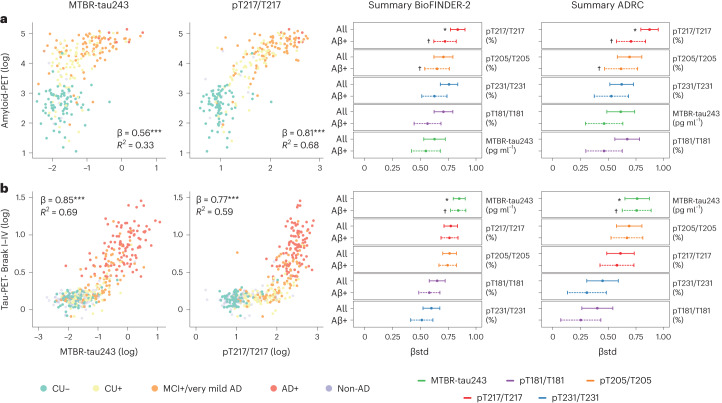
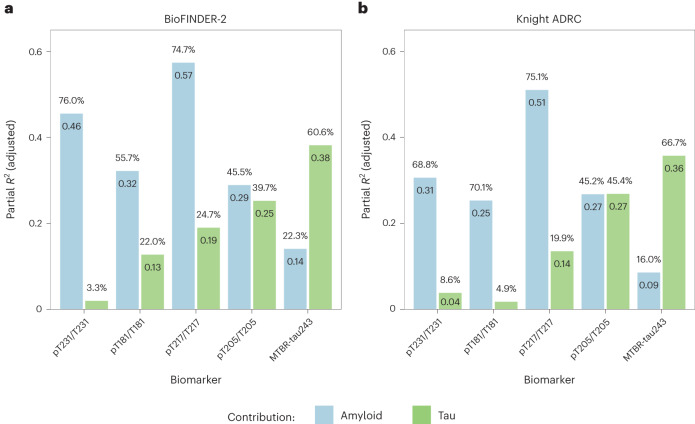
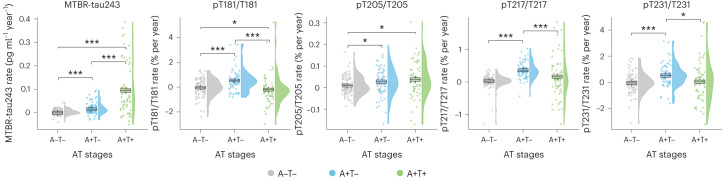
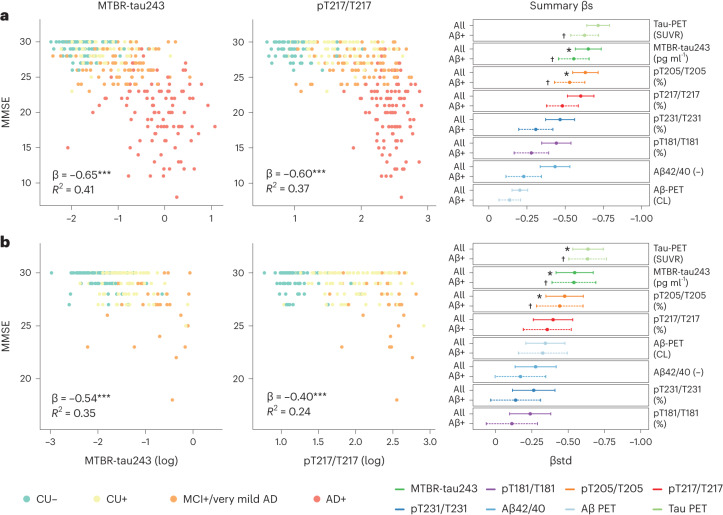
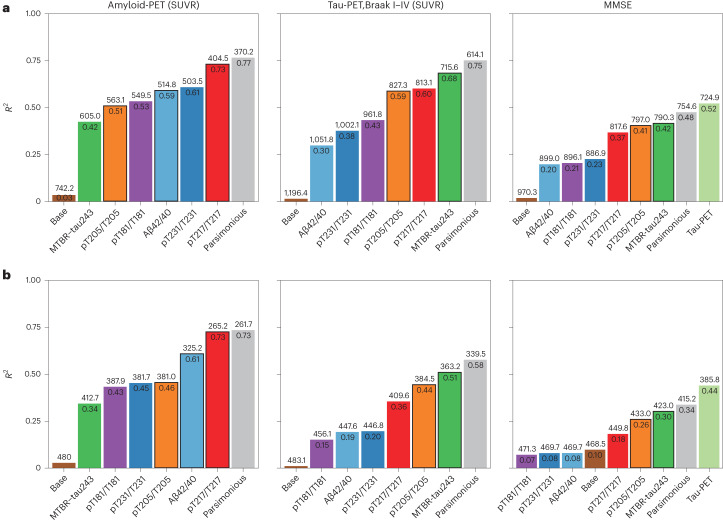
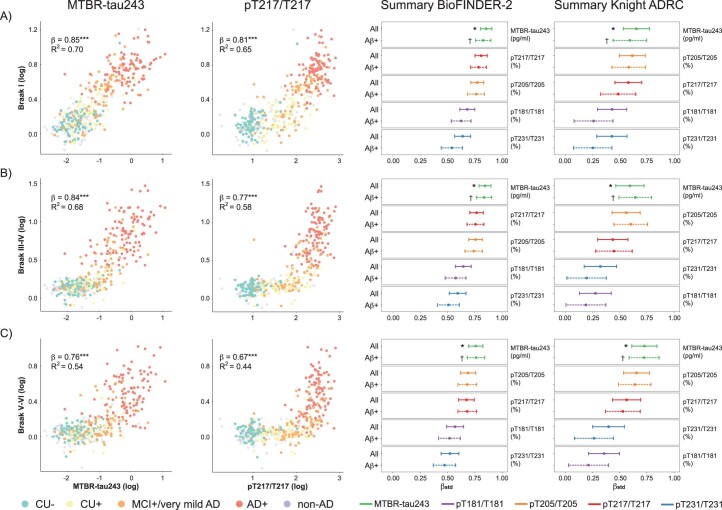
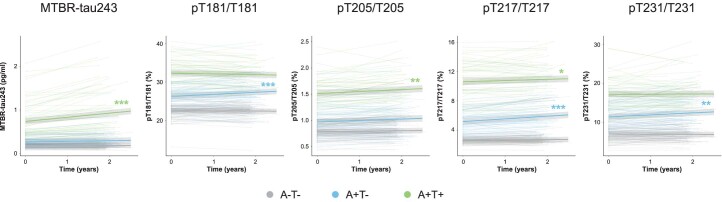
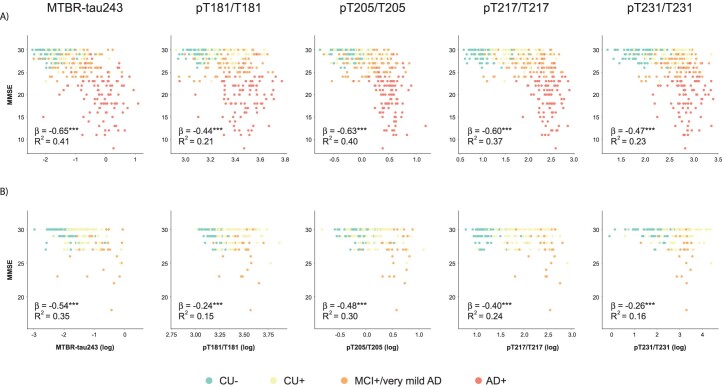
Aggregated insoluble tau is one of two defining features of Alzheimer’s disease. Because clinical symptoms are strongly correlated with tau aggregates, drug development and clinical diagnosis need cost-effective and accessible specific fluid biomarkers of tau aggregates; however, recent studies suggest that the fluid biomarkers currently available cannot specifically track tau aggregates. We show that the microtubule-binding region (MTBR) of tau containing the residue 243 (MTBR-tau243) is a new cerebrospinal fluid (CSF) biomarker specific for insoluble tau aggregates and compared it to multiple other phosphorylated tau measures (p-tau181, p-tau205, p-tau217 and p-tau231) in two independent cohorts (BioFINDER-2, n = 448; and Knight Alzheimer Disease Research Center, n = 219). MTBR-tau243 was most strongly associated with tau-positron emission tomography (PET) and cognition, whereas showing the lowest association with amyloid-PET. In combination with p-tau205, MTBR-tau243 explained most of the total variance in tau-PET burden (0.58 ≤ R 2 ≤ 0.75) and the performance in predicting cognitive measures (0.34 ≤ R 2 ≤ 0.48) approached that of tau-PET (0.44 ≤ R 2 ≤ 0.52). MTBR-tau243 levels longitudinally increased with insoluble tau aggregates, unlike CSF p-tau species. CSF MTBR-tau243 is a specific biomarker of tau aggregate pathology, which may be utilized in interventional trials and in the diagnosis of patients. Based on these findings, we propose to revise the A/T/(N) criteria to include MTBR-tau243 as representing insoluble tau aggregates (‘T’).
Overview
The claims and statistics of this paper haven’t been checked yet.
Free: it reads the open-access text and checks the first 5 claims that cite a source we can check. Create a free account to check every claim.
Integrity signals
Registry
Cites
Statistics
Figures
Verification
Claims the paper makes
The claims and statistics of this paper haven’t been checked yet.
Free: it reads the open-access text and checks the first 5 claims that cite a source we can check. Create a free account to check every claim.
Self-check
Percentages, sums and reported differences re-computed from the paper’s own numbers.
The self-check needs the paper’s full text.
Citations
Cites
Folstein, M. F., Folstein, S. E., & McHugh, P. R. (1975) · Journal of Psychiatric Research · doi:10.1016/0022-3956(75)90026-6 · Cited by 88,282
Kok, J. S., Berg, I. J., & Scherder, E. J. A. (2013) · Dementia and Geriatric Cognitive Disorders Extra · doi:10.1159/000353441 · Cited by 20,589
Older Adults' Reasons for Using Technology while Aging in Place
Peek, S. T. M., Luijkx, K. G., Rijnaard, M. D., Nieboer, M. E., van der Voort, C. S., Aarts, S., van Hoof, J., Vrijhoef, H. J. M., & Wouters, E. J. M. (2016) · Gerontology · doi:10.1159/000430949 · Cited by 19,690
Sensitivity and False Alarm Rate of a Fall Sensor in Long-Term Fall Detection in the Elderly
Kangas, M., Korpelainen, R., Vikman, I., Nyberg, L., & Jämsä, T. (2015) · Gerontology · doi:10.1159/000362720 · Cited by 18,909
The Clinical Dementia Rating (CDR): Current version and scoring rules
Morris, J. C. (1993) · Neurology · doi:10.1212/wnl.43.11.2412-a · Cited by 9,882
Self-citationLecanemab in early Alzheimer's disease
van Dyck, C. H., Swanson, C. J., Aisen, P., Bateman, R. J., Chen, C., Gee, M., Kanekiyo, M., Li, D., Reyderman, L., Cohen, S., et al. (2023) · New England Journal of Medicine · doi:10.1056/nejmoa2212948 · Cited by 5,678
Self-citationCryo-EM structures of tau filaments from Alzheimer’s disease
Fitzpatrick, A. W. P., Falcon, B., He, S., Murzin, A. G., Murshudov, G., Garringer, H. J., Crowther, R. A., Ghetti, B., Goedert, M., & Scheres, S. H. W. (2017) · Nature · doi:10.1038/nature23002 · Cited by 2,061
A/T/N: An unbiased descriptive classification scheme for Alzheimer disease biomarkers
Jack, C. R., Bennett, D. A., Blennow, K., Carrillo, M. C., Feldman, H. H., Frisoni, G. B., Hampel, H., Jagust, W. J., Johnson, K. A., Knopman, D. S., et al. (2016) · Neurology · doi:10.1212/wnl.0000000000002923 · Cited by 1,864
Palmqvist, S., Janelidze, S., Quiroz, Y. T., Zetterberg, H., Lopera, F., Stomrud, E., Su, Y., Chen, Y., Serrano, G. E., Leuzy, A., et al. (2020) · JAMA · doi:10.1001/jama.2020.12134 · Cited by 1,603
Self-citationTwo Randomized Phase 3 Studies of Aducanumab in Early Alzheimer's Disease
Budd Haeberlein, S., Aisen, P. S., Barkhof, F., Chalkias, S., Chen, T., Cohen, S., Dent, G., Hansson, O., Harrison, K., von Hehn, C., et al. (2022) · The Journal of Prevention of Alzheimer's Disease · doi:10.14283/jpad.2022.30 · Cited by 1,367
Self-citation
Research works printed but not linked: 2
- Ashton NJ Differential roles of Aβ42/40, p-tau231 and p-tau217 for Alzheimer’s trial selection and disease monitoring Nat. Med. 2022 28 2555 2562 36456833 PMC9800279 · DOI · Paper page
- Therriault J Association of phosphorylated tau biomarkers with amyloid positron emission tomography vs tau positron emission tomography JAMA Neurol. 2023 80 188 199 36508198 PMC9856704 · DOI · Paper page
Cited by
Items 101–200 of 283
Coulton, J. B., He, Y., Barthélemy, N. R., Jiang, H., Holtzman, D. M., & Bateman, R. J. (2024) · Brain Communications · doi:10.1093/braincomms/fcae247 · Cited by 15
“22-27 Here, we present a novel method for IP and quantitation of NfL in blood by MS.”
MethodSelf-citationStudart‐Neto, A., Barbosa, B. J. A. P., Coutinho, A. M., de Souza, L. C., Schilling, L. P., da Silva, M. N. M., Castilhos, R. M., Bertolucci, P. H. F., Borelli, W. V., Gomes, H. R., et al. (2024) · Dementia & Neuropsychologia · doi:10.1590/1980-5764-dn-2024-c001 · Cited by 18
Longitudinal tau aggregation, atrophy, and cognitive decline in Alzheimer's disease
Singleton, E. H., Mattsson, N., Binette, A. P., Stomrud, E., Strandberg, O. T., Palmqvist, S., Ossenkoppele, R., & Hansson, O. (2025) · Alzheimer s & Dementia · doi:10.1002/alz.70435 · Cited by 15
Self-citationCirculating Biomarkers for the Early Diagnosis of Alzheimer’s Disease
Nunkoo, V. S., Jurcău, A., Les, M., Cristian, A., Militaru, M., Marge, C., Iovanovici, D. C., & Jurcău, M. C. (2025) · International Journal of Molecular Sciences · doi:10.3390/ijms26157268 · Cited by 15
“CSF MTBR-tau243 had the strongest correlation with tau-PET imaging [70], as was more recently proven for plasma MBTR-tau243 too [71].”
ApoE-calypse tau: ApoE–tau synergy in Alzheimer’s disease
Lennol, M. P., Bordier, C., Kamelher, L., Ulrich, J. D., Holtzman, D. M., & Gratuze, M. (2025) · The Journal of Experimental Medicine · doi:10.1084/jem.20250965 · Cited by 15
Self-citationNovel CSF tau biomarkers can be used for disease staging of sporadic Alzheimer’s
Salvadó, G., Horie, K., Barthélemy, N. R., Vogel, J. W., Binette, A. P., Chen, C. D., Aschenbrenner, A. J., Gordon, B. A., Benzinger, T. L. S., Holtzman, D. M., et al. (2023) · Alzheimer s & Dementia · doi:10.1002/alz.075367 · Cited by 14
Self-citationMcArthur, N., Kang, B., Moctezuma, F. G. R., Shaikh, A. T., Loeffler, K., Bhatt, N. N., Kidd, M., Zupancic, J. M., Desai, A. A., Djeddar, N., et al. (2024) · Biotechnology Progress · doi:10.1002/btpr.3463 · Cited by 13
“With the recent development and FDA approval of therapeutics to treat Alzheimer's disease (AD), 1,2 discovery of new AD diagnostic biomarkers, 3,4 and creation of amyloid-β - and tau-directed antibodies, progress has been made to treat, diagnose, and study AD and other neurodegenerative diseases.”
Devanarayan, V., Donohue, M., Sperling, R. A., Johnson, K. A., Ye, Y., Charil, A., Doherty, T., Tian, L., Raman, R., Aisen, P. S. S., et al. (2025) · Alzheimer s & Dementia · doi:10.1002/alz.70702 · Cited by 13
Collij, L. E., Salvadó, G., Horie, K., Barthélemy, N. R., Betthauser, T. J., Strandberg, O. T., Smith, R. A., Palmqvist, S., Schindler, S. E., Ossenkoppele, R., et al. (2026) · Nature Communications · doi:10.1038/s41467-026-71732-1 · Cited by 13
“MTBR-tau243 has previously been shown to correlate strongly with tau-PET burden and cognitive measurements 10,20,26 .”
InfluentialSelf-citationA novel plasma p-tau181 assay as a specific biomarker of tau pathology in Alzheimer's disease
Tagai, K., Tatebe, H., Matsuura, S., Zhang, H., Kokubo, N., Matsuoka, K., Endo, H., Oyama, A., Hirata, K., Shinotoh, H., et al. (2024) · Translational Neurodegeneration · doi:10.1186/s40035-024-00439-4 · Cited by 12
Plasma N‐terminal tau fragment is an amyloid‐dependent biomarker in Alzheimer's disease
Lan, G., Zhang, L., Li, A., Ran, W., Lv, J., González‐Ortiz, F., Cai, Y. Q., Sun, P., Liu, L., Yang, J., et al. (2025) · Alzheimer s & Dementia · doi:10.1002/alz.14550 · Cited by 12
Frost, B. E., Rowe, J. B., Akinyemi, R., Abisambra, J. F., Ashton, N. J., Brendel, M., Buée, L., Butler, D., Carrillo, M. C., Chung, P. S., et al. (2025) · Alzheimer s & Dementia · doi:10.1002/alz.70078 · Cited by 12
Self-citationBraudeau, J., Souchet, B., & Streel, E. (2025) · NeuroMarkers. · doi:10.1016/j.neumar.2025.100107 · Cited by 11
Friends and Foes in Alzheimer’s Disease
Pauwels, E. K. J., & Boer, G. J. (2023) · Medical Principles and Practice · doi:10.1159/000534400 · Cited by 12
“Against this background, recent developments have been reported by Mattsson-Carlsson et al. [88] and Horie et al. [89, 90].”
MethodDementia research in 2023: the year of anti-amyloid immunotherapy
Delrieu, J., Andrieu, S., & Vellas, B. J. (2023) · The Lancet Neurology · doi:10.1016/s1474-4422(23)00449-0 · Cited by 12
Kodali, M. C., Antone, J., Alsop, E. B., Jayakumar, R., Parikh, K., Chiot, A., Sanchez-Molina, P., Ajami, B., Arnold, S. E., Jensen, K., et al. (2024) · Journal of Neuroinflammation · doi:10.1186/s12974-024-03047-1 · Cited by 12
“…detectability have increased the utility and promise of CSF for aiding in the diagnosis of neuropsychiatric disorders [4], and for neurodegenerative diseases like Alzheimer’s disease (Aβ42, t-Tau, and p-Tau181, p-Tau217, MTBR-tau243) [5, 6], motor neuron disorders [7], and prion disease [8].”
BackgroundBlood-based biomarkers of Alzheimer’s disease—A guideline for clinical use
Shi, J., Ou, Q., & Chen, X. (2024) · Medicine Plus · doi:10.1016/j.medp.2024.100057 · Cited by 11
The Common Alzheimer's Disease Research Ontology (CADRO) for biomarker categorization
Osse, A. M. L., Kinney, J. W., & Cummings, J. L. (2025) · Alzheimer s & Dementia Translational Research & Clinical Interventions · doi:10.1002/trc2.70050 · Cited by 11
Reversible tau hyperphosphorylation in hibernation: a blood biomarker and brain tissue study
Brum, W. S., Montoliu‐Gaya, L., Brinkmalm, G., Piotrowska, D., Camporesi, E., Jäger, C., Isaksson, H. S., Martin, S., Kindberg, J., Lantero‐Rodriguez, J., et al. (2025) · Acta Neuropathologica · doi:10.1007/s00401-025-02930-2 · Cited by 11
Self-citationSekiya, M., Sakakibara, Y., Hirota, Y., Ito, N., Chikamatsu, S., Takei, K., Nishijima, R., & Iijima, K. (2024) · Neurobiology of Disease · doi:10.1016/j.nbd.2024.106694 · Cited by 10
Ruling in, ruling out: the clinical utility of plasma biomarkers in diagnosis of Alzheimer’s disease
Wisch, J. K., & Ances, B. M. (2025) · Journal of Clinical Investigation · doi:10.1172/jci198725 · Cited by 10
“Rather, it rises in response to amyloid plaque formation and appears to be more responsive to the presence of amyloid plaques than neurofibrillary tangles, making it a reliable marker of amy-loid-related disease activity (13, 14).”
Tau biology, biomarkers, and therapeutics
Frost, B. E., Kolb, H. C., Algeciras‐Schimnich, A., Betthauser, T. J., DeVos, S. L., Edelmayer, R. M., Elwood, F., Fleisher, A., Henley, D. B., Horie, K., et al. (2025) · Alzheimer s & Dementia Translational Research & Clinical Interventions · doi:10.1002/trc2.70165 · Cited by 10
“61,65 Theserelationshipsareatleast inpartdriven bythe time atwhichthese biomarkersbecome abnormal in the disease continuum.”
Self-citationDevanarayan, V., Horie, K., Wildsmith, K. R., Doherty, T., Andreozzi, E. M., Charil, A., Sachdev, P., Kramer, L. D., Dhadda, S., & Irizarry, M. C. (2025) · Alzheimer s & Dementia · doi:10.1002/alz.70881 · Cited by 10
Self-citationTang, F., Wei, J., Wong, M.-L., & Lei, P. (2025) · Genomic psychiatry : · doi:10.61373/gp025i.0122 · Cited by 11
Roh, H. W., Chang, Y. Y., Kim, K. Y., Jeon, S. Y., Wang, S., Kim, E., Bae, J. N., & Ryu, S. (2026) · Psychiatry Investigation · doi:10.30773/pi.2025.0400 · Cited by 12
“54 CSF np-tau, different from t-tau that includes both np-tau and p-tau, serves as a biomarker that represents tau tangle formation and neurodegeneration in a later stage of AD.”
Targeting tau in Alzheimer’s Disease: rationale, approach and challenges
Aslanyan, A., Foiani, M. S., Giovannucci, T. A., McDade, E., Duff, K., Mummery, C. J., Schöll, M., Wildsmith, K. R., & Paterson, R. W. (2026) · Molecular Neurodegeneration · doi:10.1186/s13024-026-00925-5 · Cited by 11
“In immunotherapy it is important to develop target engagement tests and IP-MS are especially helpful by offering more specific ways to detect specific peptide profiles targeted by the drug [57].”
Plasma eMTBR-tau243 and %p-tau217 for Biological Staging of Alzheimer Disease
Salvadó, G., Horie, K., Barthélemy, N. R., Schindler, S. E., Janelidze, S., Dolado, A. O., Bali, D., Perrin, R. J., Morris, J. C., Benzinger, T. L. S., et al. (2026) · JAMA Neurology · doi:10.1001/jamaneurol.2026.1405 · Cited by 12
Self-citationMacedo, A. C., Trudel, L., Therriault, J., Rahmouni, N., Aumont, É., Bezgin, G., Hosseini, S. A., Tissot, C., Chan, T., Servaes, S., et al. (2026) · Nature Aging · doi:10.1038/s43587-026-01143-w · Cited by 10
Predicting continuous amyloid PET values with CSF tau phosphorylation occupancies
Wisch, J. K., Gordon, B. A., Barthélemy, N. R., Horie, K., Henson, R. L., He, Y., Flores, S. E., Benzinger, T. L. S., Morris, J. C., Bateman, R. J., et al. (2024) · Alzheimer s & Dementia · doi:10.1002/alz.14132 · Cited by 11
Self-citationChiral Plasmonic Structures: From Intrinsically Optical Properties to Nanophotonic Applications
Wu, T. S., Luo, Z., Wang, H., Zhang, Z., Wang, G., & Bai, F. (2025) · ACS Materials Letters · doi:10.1021/acsmaterialslett.5c00465 · Cited by 9
Distribution of Big Tau Isoforms in the Human Central and Peripheral Nervous System
Koppisetti, R. K., Barthélemy, N. R., Horie, K., Ly, C. V., Roberts, K. F., Koutarapu, S., Perrin, R. J., Franklin, E. E., Pedicone, C., Orrick, J., et al. (2026) · Annals of Neurology · doi:10.1002/ana.78300 · Cited by 11
“15 Likewise, N-terminal tau (represented by a peptide spanning residues 06 – 23), small tau (0 N isoform), and total-tau (represented by a peptide spanning residues 181 – 190) demonstrated signi fi cant negative associations with poorer cognitive outcomes (see Supplementary Fig 11B –”
Self-citationDiagnostic and therapeutic targeting of pathological tau proteins in neurodegenerative disorders
Sahara, N., & Higuchi, M. (2023) · FEBS Open Bio · doi:10.1002/2211-5463.13711 · Cited by 8
Biomarkers in Alzheimer’s disease: Emerging trends and clinical implications
Lian, P., Guo, Y., & Yu, J. (2025) · Chinese Medical Journal · doi:10.1097/cm9.0000000000003579 · Cited by 9
“[10] Combined assessment of these CSF biomarkers can be expected to further aid in differential diagnosis.”
Orr, M. E., Garbarino, V. R., Palavicini, J., Melendez, J., Barthélemy, N. R., He, Y., Kautz, T. F., Lopez‐Cruzan, M., Mathews, J. J., Xu, P., et al. (2024) · Research Square · doi:10.21203/rs.3.rs-3994894/v1 · Cited by 10
Self-citationSex Differences in Biofluid Biomarkers for Alzheimer’s Disease
Aksnes, M. (2025) · Neurodegenerative Diseases · doi:10.1159/000545717 · Cited by 8
“…been proli fi c for the AD biomarker fi eld: novel and highly accurate blood-based biomarkers for amyloid and tau pathology have been developed and are already tested in primary care settings [11], and new assays speci fi c to neuro fi brillary tangles are emerging in both CSF and plasma [12 – 14].”
McDade, E., Barthélemy, N. R., Wang, G., Li, Y., Cao, Y., Gordon, B. A., Benzinger, T. L. S., Clifford, D. B., Goate, A., Renton, A. E., et al. (2025) · Alzheimer s & Dementia · doi:10.1002/alz.70689 · Cited by 8
“6,8,17,18 Comparedtomostphospho-tau species, p-tau205, t-tau, and MTBR-tau243 appear to have stronger correlationswithclinicalsymptoms,cerebralatrophy,andtau-PETand, thus, may serve as a surrogate measure of clinical symptomatology.”
InfluentialSelf-citationCollij, L. E., Mattsson, N., Janelidze, S., Ossenkoppele, R., & Hansson, O. (2025) · Alzheimer s & Dementia · doi:10.1002/alz.70763 · Cited by 10
Self-citationAdvances in the drug treatment of Alzheimer’s disease: pathophysiology and mechanisms of action
Nowell, J., Crook, H., de Leon, M. J., & Edison, P. (2026) · BMJ · doi:10.1136/bmj-2023-078881 · Cited by 8
The Current Role of Tau PET Imaging in Neurodegeneration
Vanderlinden, G., Vandenberghe, R. R., Vandenbulcke, M., & Laere, K. V. (2025) · Seminars in Nuclear Medicine · doi:10.1053/j.semnuclmed.2025.03.002 · Cited by 8
Reference proteins to improve Core 1 and Core 2 Alzheimer’s disease CSF and plasma biomarkers
Karlsson, L., Janelidze, S., Barthélemy, N. R., Horie, K., Therriault, J., Gaetani, L., Bellomo, G., Schindler, S. E., Vogel, J. W., Arvidsson, I., et al. (2025) · Brain · doi:10.1093/brain/awaf375 · Cited by 7
Self-citationThe challenging concept of preclinical Alzheimer's disease
Wallon, D., & Garnier‐Crussard, A. (2025) · Revue Neurologique · doi:10.1016/j.neurol.2025.07.016 · Cited by 7
Falgàs, N., Maure‐Blesa, L., Ances, B. M., Aguilar, L. F., Hartley, S. L., Hassenstab, J. J., Iulita, M. F., Janicki, M. P., Koenig, K. A., Lao, P. J., et al. (2025) · Alzheimer s & Dementia · doi:10.1002/alz.70309 · Cited by 7
Self-citationAndreozzi, E. M., Yagi, T., Wildsmith, K. R., Rawal, S., Horie, K., Boyd, P., Takahashi, E., Barthélemy, N. R., Aluri, J., Charil, A., et al. (2026) · Alzheimer s Research & Therapy · doi:10.1186/s13195-026-02047-y · Cited by 7
“Measurement of CSF MTBR-tau243, phosphorylated tau (ptau) and nonphosphorylated tau (nptau) species were performed at Washington University using the previously reported methods with IP–MS [21, 30, 31].”
Self-citationHassouneh, A., Bazuin, B. J., Danna‐dos‐Santos, A., Acar, I., Abdel-Qader, I. M., & Initiative, T. A. D. N. (2024) · Digital Biomarkers · doi:10.1159/000538486 · Cited by 7
“Additionally, since the buildup of A β and Tau can serve as a biomarker for the early diagnosis of AD [18, 29], the accumulation of proteins A β and Tau abnormalities was measured using the SUVR from the extracted hippocampus and entorhinal cortex.”
MethodChen, Y., Wang, Z., Liu, X., Mao, Z., & Initiative, A. D. N. (2025) · Molecular Neurobiology · doi:10.1007/s12035-025-05007-z · Cited by 6
Deek, R. A., Balogun, W. G., Zeng, X., Triana‐Baltzer, G., Pascoal, T. A., Kolb, H. C., Snitz, B. E., Cohen, A. D., & Karikari, T. K. (2026) · Alzheimer s Research & Therapy · doi:10.1186/s13195-026-01969-x · Cited by 6
“Other biomarkers that seem to be more aligned with tau aggregate pathology – including p-tau262 and p-tau356 for soluble tau assemblies [42] and MTBR tau for fibrils and tangles [43, 44] should be investigated in future studies.”
Integration over reduction: multimodal PET and fluid biomarkers in Alzheimer's disease and beyond
Blūma, M., Chiotis, K., & Nordberg, A. K. (2026) · Current Opinion in Neurology · doi:10.1097/wco.0000000000001462 · Cited by 6
Biomarkers in CNS Drug Discovery, Drug Development, and Clinical Implementation
Caro, V. D., Williams, C., North, H. A., & Hamby, M. E. (2025) · Wiley eBooks · doi:10.1002/9783527844678.ch7 · Cited by 5
Moderating effects of plasma glial fibrillary acidic protein along the Alzheimer's disease continuum
Lee, S. Y., Diaz, V. E., Emanuel, O. M., Matusz, E. F., Webb, J. D., Chan, B., Lago, A. L., Wang, W., DeSimone, J. C., Rojas, J. C., et al. (2025) · Alzheimer s & Dementia · doi:10.1002/alz.70626 · Cited by 5
Potential diagnostic markers in Alzheimer's disease: current perspectives and future directions
Zheng, M., Wang, S., & Jia, J. (2025) · Neurodegenerative Disease Management · doi:10.1080/17582024.2025.2554515 · Cited by 5
Predictive Value of Plasma Biomarkers in Tau‐ PET Transitions
Graff‐Radford, J., Syrjanen, J. A., Vemuri, P., Lowe, V. J., Schwarz, C. G., Wiste, H. J., Kremers, W. K., Algeciras‐Schimnich, A., Binette, A. P., Smith, R. A., et al. (2025) · Annals of Neurology · doi:10.1002/ana.78003 · Cited by 5
Self-citationTsurumi, A., Cahill, C. M., Liu, A., Chatterjee, P., Das, S., & Kobayashi, A. (2025) · International Journal of Molecular Sciences · doi:10.3390/ijms262311673 · Cited by 5
“…containing the residue 243 (MTBR-tau243) can better detect insoluble Tau aggregates compared to common p-Tau measures later in more advanced stages of AD [22], suggesting that additional studies to determine which specific A β and Tau peptides can best detect AD pathology may also be beneficial.”
Advances in ultrasensitive detection technologies for blood-based biomarkers of Alzheimer's disease
Mou, Y., Sun, C., Deng, K., Lin, F., Yang, Z., Wang, Y., Deng, X., Yang, F., Hu, X., & Jiang, Q. (2026) · Journal of Materials Chemistry B · doi:10.1039/d5tb02633d · Cited by 5
Bathla, S., Datta, D., Bolat, D., Woo, E., Duque, A., Arellano, J. I., Arnsten, A. F. T., & Nairn, A. C. (2025) · Frontiers in Aging Neuroscience · doi:10.3389/fnagi.2025.1549770 · Cited by 5
Mapping the human brain proteome: opportunities, challenges, and clinical potential
Cartas‐Cejudo, P., Cortés, A., Lachén‐Montes, M., Anaya‐Cubero, E., Peral, E., Ausín, K., Díaz, R., Fernández‐Irigoyen, J., & Santamaría, E. (2024) · Expert Review of Proteomics · doi:10.1080/14789450.2024.2313073 · Cited by 5
“Novel CSF biomarkers, such as MTBR-tau243, specific for insoluble Tau aggregates, reflects changes in aggregate tau pathology appearing at advanced stages of AD progression and presents a strongly association with tau-PET and cognition [66].”
van Dyck, C. H., Kahl, A., Abelian, G., Donovan, M., Ahuja, M., Watson, D., Ossenkoppele, R., Iwatsubo, T., & Hansson, O. (2024) · Alzheimer s & Dementia · doi:10.1002/alz.094677 · Cited by 5
Self-citationAthanasaki, A., Tsantzali, I., Theodorou, A., Michalopoulou, A., Constantinides, V. C., Boufidou, F., Tzartos, J. S., Tsalouchidou, P., Zompola, C., Paraskevas, S. G., et al. (2025) · International Journal of Molecular Sciences · doi:10.3390/ijms26199531 · Cited by 4
“At this time, other tau forms increase in the CSF, including the tau microtubule-binding region containing residue 243 (MDBR243) [56] and τ P-205 [57], which enables AD staging [58].”
Pieperhoff, L., Lorenzini, L., Mastenbroek, S. E., Tranfa, M., Shekari, M., Wink, A. M., Wolz, R., Grootoonk, S., Ritchie, C. W., Boada, M., et al. (2025) · NeuroImage Clinical · doi:10.1016/j.nicl.2025.103912 · Cited by 5
Plasma biomarkers in neuropsychiatric syndromes: A narrative review
Ismail, Z., Guan, D. X., Babulal, G. M., Bateman, J. R., Cantillon, M., Creese, B., D’Antonio, F., Fischer, C. E., Gatchel, J. R., Ghahremani, M., et al. (2025) · Journal of Alzheimer s Disease · doi:10.1177/13872877251392185 · Cited by 4
“– 114 While evidence has strongly linked MBI to elevated dementia risk, 99 , 11, 21,”
Self-citationMattsson, N., Karlsson, L., Tang, W., Blennow, K., Zetterberg, H., Bateman, R. J., Schindler, S. E., Barthélemy, N. R., Palmqvist, S., Stomrud, E., et al. (2025) · EMBO Molecular Medicine · doi:10.1038/s44321-025-00348-7 · Cited by 4
“…of aggregated tau pathology) induces changes in the metabolism of phosphorylated tau, leading to increased levels of P-tau217 in a manner proportional to the degree of A β pathology (while other tau-related fl uid biomarkers are more closely linked to the aggregated tau burden (Horie et al, 2023)).”
Self-citationYu, H., Zhang, X., Liu, Z., & Zhang, L. (2025) · Journal of Medicinal Chemistry · doi:10.1021/acs.jmedchem.5c01488 · Cited by 4
APOE ɛ4 carriership determines a faster plasma p‐tau217 progression in Aβ‐positive individuals
Woo, M. S., Macedo, A. C., Hosseini, S. A., Therriault, J., Wang, Y., Rahmouni, N., Aumont, É., Servaes, S., Tissot, C., Arias, J. F., et al. (2025) · Alzheimer s & Dementia · doi:10.1002/alz.71048 · Cited by 5
Cánovas, R., Fowler, C. J., Feizpour, A., Doré, V., Bourgeat, P., Saad, Z. S., Triana‐Baltzer, G., Kolb, H. C., Vandijck, M. L. J., Kollmorgen, G., et al. (2026) · Alzheimer s & Dementia · doi:10.1002/alz.71145 · Cited by 4
Alzheimer's disease Stage 1 and 2: Biology, diagnostics, and treatment
Schindler, S. E., Hansson, O., Algeciras‐Schimnich, A., Arias, J. J., Beasley, B. W., Farrar, G., Fowler, N. R., Hartz, S. M., Jack, C. R., Jönsson, L., et al. (2026) · Alzheimer s & Dementia Translational Research & Clinical Interventions · doi:10.1002/trc2.70216 · Cited by 4
Self-citationBastgen, T., Evers, J., Oedekoven, C., Weide, C., Herzog, L., Ashton, N. J., Zetterberg, H., Blennow, K., Albus, A., Vidovic, N., et al. (2024) · Neurological Research and Practice · doi:10.1186/s42466-024-00307-6 · Cited by 4
“…to the length of the AF career when dividing the career length into 5 seasons or less and 6 seasons or more, indicating a long-term increase of tTau, which still has been undetectable in comparison to CGs. Recently, MTBR-tau has been described as a specific biomarker for tau tangle pathology [22].”
BackgroundLiu, N., Deng, Q., Peng, Z., Mao, D., Huang, Y., Meng, F., Zhang, X., Shen, J., Li, Z., Yan, W., et al. (2025) · PLoS ONE · doi:10.1371/journal.pone.0316708 · Cited by 4
Continuum of Core 1 biomarkers in preclinical Alzheimer’s disease
Digma, L. A., Young, C. B., Winer, J. R., Cody, K. A., Younes, K., Sheng, J., Insel, P. S., Rissman, R. A., Sperling, R. A., & Mormino, E. C. (2026) · Alzheimer s Research & Therapy · doi:10.1186/s13195-026-02044-1 · Cited by 4
“Newer T 2 biomarkers, such as MTBR-tau243 [3], are noted for their initial promise but warrant further validation.”
Dilcher, R., Malpas, C. B., O’Brien, W. T., McDonald, S. J., Despott, C., Bertram, K., Pase, M. P., Law, M., O'Brien, T. J., & Vivash, L. E. (2024) · medRxiv · doi:10.1101/2024.10.14.24315486 · Cited by 4
The Alzheimer disease continuum : findings from monogenic Alzheimer disease
Johansson, C. (2025) · doi:10.69622/28639856 · Cited by 4
Chen, Y., Wang, Z., Chen, H., Xu, J., Li, H., Li, S., Initiative, A. D. N., Sung, Y. J., Cruchaga, C., & Morris, J. C. (2025) · Molecular Neurobiology · doi:10.1007/s12035-025-05341-2 · Cited by 3
Self-citationCai, J., Zhang, Q., Li, J., Yang, C., Li, Y., Yao, H., & Meng, L. (2026) · Bioelectrochemistry · doi:10.1016/j.bioelechem.2026.109249 · Cited by 3
Self-citationAdvances and emerging challenges in detecting Tau proteoforms for Alzheimer's disease diagnosis
Cai, Q., Miao, M., & Li, Z. (2026) · TrAC Trends in Analytical Chemistry · doi:10.1016/j.trac.2026.118897 · Cited by 3
Tau-PET and CSF MTBR-tau243 comparisons validate increased tau aggregation in females
Robinson, C. G., Binette, A., Horie, K., Sato, C., Schindler, S., Bateman, R., Benzinger, T., Janelidze, S., Singleton, E., Stomrud, E., et al. (2026) · European Journal of Nuclear Medicine and Molecular Imaging · doi:10.1007/s00259-026-07934-y · Cited by 2
“Measurement of CSF tau species MTBR-tau243 was performed at WashU in both cohorts using immunoprecipitation/mass spectrometry as previously described [34 , 45 ].”
InfluentialSelf-citationEmerging directions in tauopathy research
Buée, L., Wildsmith, K. R., Alladi, S., Bertucci, T. B., Boche, D., Bowles, K. R., Boxer, A. L., Brummet, J., DeVos, S. L., Diaz, K., et al. (2026) · Alzheimer s & Dementia · doi:10.1002/alz.71431 · Cited by 3
Self-citationLee, J., Olafson, E., Toth, B., Casavant, E., Schauer, S. P., Bittner, T., Meyer, M. R., Verghese, P. B., Venkatesh, V., West, T., et al. (2026) · Alzheimer s & Dementia · doi:10.1002/alz.71604 · Cited by 3
Plasma Biomarkers for Neocortical Tau Burden
Molfetta, G. D., Brum, W. S., Pola, I., Tan, K., Benedet, A. L., Sauer, M., Montoliu‐Gaya, L., Janelidze, S., Mattsson, N., Rahmouni, N., et al. (2026) · JAMA Neurology · doi:10.1001/jamaneurol.2026.2650 · Cited by 3
Self-citationFluid biomarkers in the evolving care landscape of Alzheimer's disease and related disorders
Teunissen, C. E., Vermunt, L., Barthélemy, N. R., Benzinger, T. L. S., Graff‐Radford, J., Verberk, I. M. W., Zetterberg, H., Schindler, S. E., & Jack, C. R. (2026) · The Lancet Neurology · doi:10.1016/s1474-4422(26)00246-2 · Cited by 3
Self-citationChen, Y.-H., Wang, Z., Liu, X.-P., Mao, Z., & Initiative, A. D. N. (2025) · Journal of Alzheimer s Disease · doi:10.1177/13872877251326286 · Cited by 3
“We acknowledge that other phosphorylated tau isoforms, such as Ptau217, 33 – 35 Ptau213, 36 and MTBR-tau243, 37,38 may perform better in predicting tau pathology accumulation, but relevant data are lacking in he current study.”
Are we close to using Alzheimer blood biomarkers in clinical practice?
Imbimbo, B. P., Lista, S., Imbimbo, C., & Nisticò, R. (2024) · Neural Regeneration Research · doi:10.4103/nrr.nrr-d-23-01945 · Cited by 3
Pa, C., Shen, S., Dai, Y. L., & Wu, M. (2025) · Frontiers in Human Neuroscience · doi:10.3389/fnhum.2025.1614132 · Cited by 2
Jeong, Y. J., Lee, H.-J., Kim, J., Kim, S., Jo, U., Park, J.-Y., Jun, S. J., Lee, W. S., Song, M., Kim, D., et al. (2025) · Medicinal Research Reviews · doi:10.1002/med.70005 · Cited by 2
Tranfa, M., Pieperhoff, L., Pontillo, G., Luckett, E. S., Collij, L. E., Oliveira, T. G., Tesi, N., Vilor-Tejedor, N., Altmann, A., Roccatagliata, L., et al. (2025) · Alzheimer's Research & Therapy · doi:10.1186/s13195-025-01888-3 · Cited by 2
Self-citationNeuropathology and Biomarker Correlates of Late Onset Alzheimer’s Disease in Aged Old World Monkeys
Zeiss, C. J., Duque, A., & Huttner, A. J. (2025) · Toxicologic Pathology · doi:10.1177/01926233251388069 · Cited by 3
“…2A; TREM2, Triggering receptor expressed on myeloid cells 2; WMH, white matter hyperintensity. the AD framework, 71 increasing plasma pT217 levels 36 inform on Core 1 biomarker events rather than Core 2 pathology (characterized by positive medial temporal Tau-PET 96 and additional tau species 59 ).”
Angues, R. V., Okot, C., Zientek, K. D., Wilmarth, P. A., Reddy, A. P., Odong, A. L. B., Palmer, V. S., Abwola, L. K., Ogal, E., Okello, G., et al. (2026) · Frontiers in Molecular Neuroscience · doi:10.3389/fnmol.2026.1717920 · Cited by 2
Yan, C., Liu, J., Lv, S., Duan, C., Wu, Q., Chen, Y., Kong, X., & Huang, L. (2026) · Chemical Engineering Journal · doi:10.1016/j.cej.2026.173635 · Cited by 2
An RNA biomarker panel for the diagnosis of Alzheimer’s disease from whole blood
Paz, S., Robishaw, J. D., & Caputi, M. (2026) · Alzheimer s Research & Therapy · doi:10.1186/s13195-026-01977-x · Cited by 2
Höglinger, G. U., Vandenberghe, W., Woitalla, D., Corvol, J., Tricht, H. L. G. V., Ewen, C., Steen, B. V. D., Mesa, I. R., Germani, M., Garric, E., et al. (2026) · BMJ Neurology Open · doi:10.1136/bmjno-2025-001396 · Cited by 2
“…analyses of tau fragments in human cerebrospinal fluid (CSF) from people with Alzheimer’s found that mid-region tau fragments represented the most abundant fragments in CSF. 18 19 20–22 These data provide evidence that therapies targeting this region of tau warrant further investigation.”
A plasma protein signature for cerebral amyloid angiopathy
Singh, A., Denkinger, M. N., Leuzy, A., Dieckhoff, K., Liu, J., Marques, T. M., Monuki, E. S., Stark, C., Grill, J. D., Hom, C. L., et al. (2026) · Acta Neuropathologica · doi:10.1007/s00401-026-03030-5 · Cited by 2
Wang, X., Tong, J., Wang, M., Du, B., Wang, H., Liu, H., Yang, X., Mu, R., Wang, K., Liu, X., et al. (2026) · Biosensors and Bioelectronics · doi:10.1016/j.bios.2026.119030 · Cited by 3
CSF proteomics and machine learning reveal distinct stages across the Alzheimer’s disease continuum
Rathore, S., Dammer, E. B., Shantaraman, A., Wu, F., Duong, D. M., Fox, E. J., Johnson, E. C. B., Lah, J. J., Initiative, A. D. N., Levey, A. I., et al. (2026) · Molecular Neurodegeneration · doi:10.1186/s13024-026-00983-9 · Cited by 3
Self-citationAn emerging spectrum of therapeutic targets for Alzheimer's disease
Goetzl, E. J. (2023) · The FASEB Journal · doi:10.1096/fj.202301461r · Cited by 2
“13 In further support of the complex roles of P-tau in the pathogenesis of AD, deletion or inhibition of p38 γ site-specific phosphorylation of tau in A β - forming transgenic mouse models of AD exacerbated abnormalities of neuronal circuits, cognition and lifespan, whereas increasing p38 γ…”
BackgroundTherapie – Quo vadis Neurodegeneration?
Vöglein, J., Levin, J., & Höglinger, G. U. (2023) · Der Nervenarzt · doi:10.1007/s00115-023-01544-x · Cited by 2
“Kürzlich wurde gezeigt, dass der Liquor-Tau-Parameter MTBR-tau243 spezifisch Alzheimer-Tau-Ablagerungen anzeigt [16] und MTBR-tau275 und 282 im Liquor für die Diagnose von Nicht-Alzheimer-Tauopathienhilfreich sein könnten [17].”
BackgroundAlzheimer's disease—Biomarkers, clinical evaluation or both?
Simrén, J., Ashton, N. J., Suárez‐Calvet, M., & Zetterberg, H. (2024) · Journal of Neuropsychology · doi:10.1111/jnp.12401 · Cited by 2
“…a biological staging scheme, suggesting that tau PET (‘Core 2 biomarker’; including promising albeit explorative fluid biomarkers of tau aggregates; Horie et al., 2023) is used in conjunction with Aβ PET to biologically stage the disease, due to the closer relationship of tau aggre - gates with…”
Liu, Y., Liu, X., Che, P., Wang, Y., Piao, Z., Wang, Y., Cai, L., Xing, M., Xu, Y., Sun, W., et al. (2025) · Scientific Reports · doi:10.1038/s41598-024-83919-x · Cited by 2
“In addition, increased levels of other pathologic tau species, such as P-tau-T205 38 and microtubule-binding region (MTBR)-tau243 39 , are detected in CSF and plasma at a later time and might suggest advanced stages of AD.”
Tangles, not TANGO: targeting tau aggregates
Stern, A. M., & Sperling, R. A. (2023) · Nature Aging · doi:10.1038/s43587-023-00526-7 · Cited by 2
Cerebrospinal fluid proteomics for predictive assessment of Alzheimer’s Disease riskPreprint
Rathore, S., Dammer, E. B., Shantaraman, A., Wu, F., Duong, D. M., Fox, E. J., Johnson, E. C. B., Lah, J. J., Initiative, A. D. N., Seyfried, N. T., et al. (2025) · medRxiv · doi:10.1101/2025.10.24.25337921 · Cited by 2
Tau pathological binding activity in plasma before the onset of symptomatic Alzheimer’s diseasePreprint
Hanseeuw, B. J., Quenon, L., Bayart, J., Boyer, E., Colmant, L., Salman, Y., Gérard, T., Huyghe, L., Malotaux, V., Kienlen‐Campard, P., et al. (2026) · medRxiv · doi:10.64898/2026.04.03.26350110 · Cited by 2
“Both these fluid biomarkers have demonstrated high accuracy to predict tau-PET results when measured in the cerebrospinal fluid 58–60 .”
Karlsson, L., Strandberg, O. T., Smith, R. A., Tang, W., Arvidsson, I., Åström, K. J., Hauer, K. O., Janelidze, S., Stomrud, E., Palmqvist, S., et al. (2026) · medRxiv · doi:10.64898/2026.05.06.26352540 · Cited by 2
“In this study, using a fluid biomarker highly predictive of tau pathology like plasma p-tau217 29,37–39 refined the amplitude of the tau-PET signal inferred via structural MRI.”
Self-citationA specific biomarker for insoluble tau
Crunkhorn, S. (2023) · Nature Reviews Drug Discovery · doi:10.1038/d41573-023-00126-5 · Cited by 1
Zhen, W., Wang, Y., Zhen, H., Zhang, W., Shao, W., Sun, Y., Qiao, Y., Jia, S., Zhou, Z., Wang, Y., et al. (2024) · Frontiers in Aging Neuroscience · doi:10.3389/fnagi.2024.1513930 · Cited by 1
Metadata
- Authors
- Horie, K., Salvadó, G., Barthélemy, N. R., Janelidze, S., Li, Y., He, Y., Saef, B., Chen, C. D., Jiang, H., Strandberg, O., Pichet Binette, A., Palmqvist, S., Sato, C., Sachdev, P., Koyama, A., Gordon, B. A., Benzinger, T. L. S., Holtzman, D. M., Morris, J. C., Mattsson-Carlgren, N., Stomrud, E., Ossenkoppele, R., Schindler, S. E., Hansson, O., & Bateman, R. J.
- Affiliations
- Washington University in St. Louis (US)
- Lund University (SE)
- Eisai (United States) (US)
- Corresponding author
- Hansson, Oskar
- Bateman, Randall J.
- ORCID
- Horie, Kanta
- Salvadó, Gemma
- Barthélemy, Nicolas R.
- Janelidze, Shorena
- Li, Yan
- He, Yingxin
- Chen, Charles D.
- Jiang, Hong
- Pichet Binette, Alexa
- Palmqvist, Sebastian
- Sato, Chihiro
- Koyama, Akihiko
- Gordon, Brian A.
- Benzinger, Tammie L. S.
- Holtzman, David M.
- Morris, John C.
- Stomrud, Erik
- Ossenkoppele, Rik
- Schindler, Suzanne E.
- Hansson, Oskar
- Bateman, Randall J.
- Venue
- Nature Medicine
- Published
- 2023-07-13
- Volume
- 29
- Issue
- 8
- Pages
- 1954-1963
- ISSN
- 1078-8956 (ISSN-L)
- 1546-170X
- PMC
- PMC10427417
- OpenAlex
- W4384206832
- Semantic Scholar
- 9a636b2917483183073ecf33c1988b172e2444cb
- Cited by
- 249
- References
- 68
- Citations by year
- 2026: 53 · 2025: 99 · 2024: 80 · 2023: 17
- FWCI
- 44.40
- Type
- journal article
- Language
- en
- Open access
- hybrid
- doi.org
- Licence
- cc-by
- creativecommons.org/licenses/by/4.0 (tdm)
- creativecommons.org/licenses/by/4.0 (vor)
- Locations
- Nature Medicine (publishedVersion, cc-by)
- PubMed Central (publishedVersion, cc-by)
- PubMed (publishedVersion)
- Digital Commons@Becker (Washington University School of Medicine) (submittedVersion, cc-by)
- Lund University Publications (Lund University) (submittedVersion)
- Pure Amsterdam UMC (submittedVersion, cc-by)
- Amsterdam UMC (VU Amsterdam) - Institutional Repository (submittedVersion, other-oa)
- Funders
- Eli Lilly and Company
- Foundation for Barnes-Jewish Hospital (P30 AG066444)
- Cure Alzheimer's Fund
- Hope Center for Neurological Disorders
- Australian Government
- GHR Foundation
- European Commission (HORIZON2020)
- Lunds Universitet
- Eisai
- Knut och Alice Wallenbergs Stiftelse (2017‐0383)
- Vetenskapsrådet (2016-00906, FO2021-0293, 2018-, 2017-00383)
- Konung Gustaf V:s och Drottning Victorias Frimurarestiftelse (2020-O000028, 2020-0314)
- Skånes universitetssjukhus (2020-O000028)
- Marcus och Amalia Wallenbergs minnesfond (2015.0125)
- Parkinsonfonden (1280/20)
- Avid Radiopharmaceuticals
- Charles F. and Joanne Knight Alzheimer Disease Research Center, Washington University in St. Louis (P30 AG066444)
- National Institute on Aging (P01AG003991, P30AG066444, R01AG070941, P01AG026276)
- National Institute of Neurological Disorders and Stroke (P30NS048056)
- HORIZON EUROPE Marie Sklodowska-Curie Actions (101061836)
- Topics
- Life Sciences › Neuroscience › Cellular and Molecular Neuroscience › Alzheimer's disease research and treatments
- Health Sciences › Medicine › Psychiatry and Mental health › Dementia and Cognitive Impairment Research
- Health Sciences › Medicine › Clinical Neurology › Cerebrospinal fluid and hydrocephalus
- Keywords
- tau aggregates, tau tangles, Alzheimer's disease, cerebrospinal fluid biomarkers, phosphorylated tau, tau PET, amyloid PET, cognitive impairment
- MeSH terms
- Alzheimer Disease, Humans, Biomarkers, Amyloid beta-Peptides, tau Proteins, Positron-Emission Tomography, Cognitive Dysfunction
About these checks
Registry, retraction, Cites and statistics results are computed, not judged, with one exception: a printed reference that no index lists is read once by a model before it counts as a citation error. Claims are extracted by a model and kept only when their quote appears verbatim in the text; each cited source is then checked, with a model’s help, for whether it says what the claim relies on. Those verdicts can be wrong — read the claim’s quote and the cited source before relying on one.
Statistics and arithmetic are recomputed, not judged.
Confidence bands are shown only for fields calibrated on our annotated test set. None is calibrated yet, so no band is shown.
What counts as a claim ›How we measure confidence ›How we check this ›
Are you an author, or do you see a problem with this page? Request a review
Data sources
Bibliographic data: Semantic Scholar, OpenAlex, Crossref.
Contains information from the Semantic Scholar Academic Graph Datasets, made available under the ODC Attribution License (ODC-BY 1.0).
Semantic Scholar’s data is described in: Kinney, R., et al. (2023). The Semantic Scholar Open Data Platform. arXiv:2301.10140.
