

CSF MTBR-tau243 is a specific biomarker of tau tangle pathology in Alzheimer’s disease
Open accessThe DOI matches its Crossref record; 68 of the 68 references it cites were found in a registry or an index.
Abstract
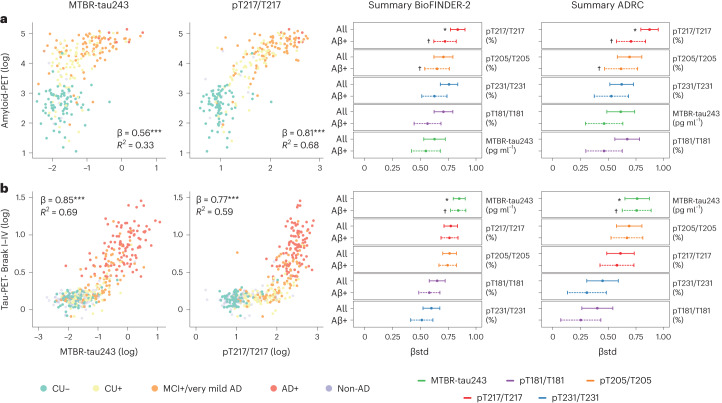
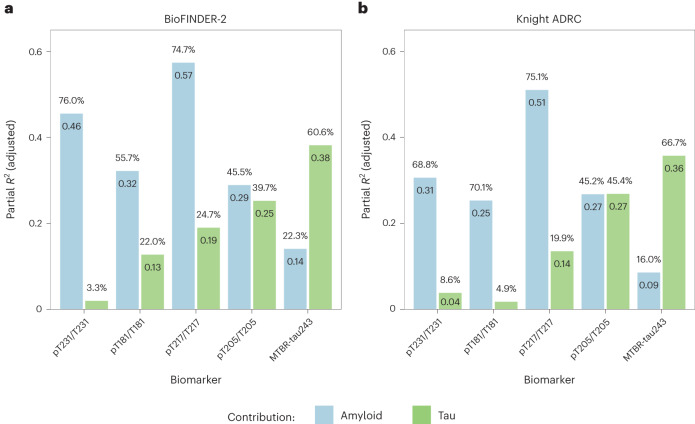
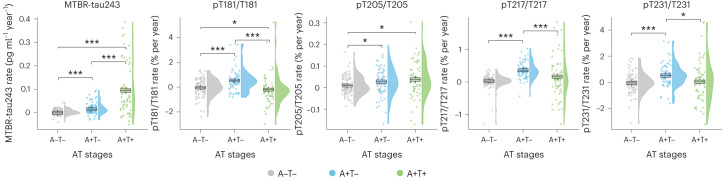
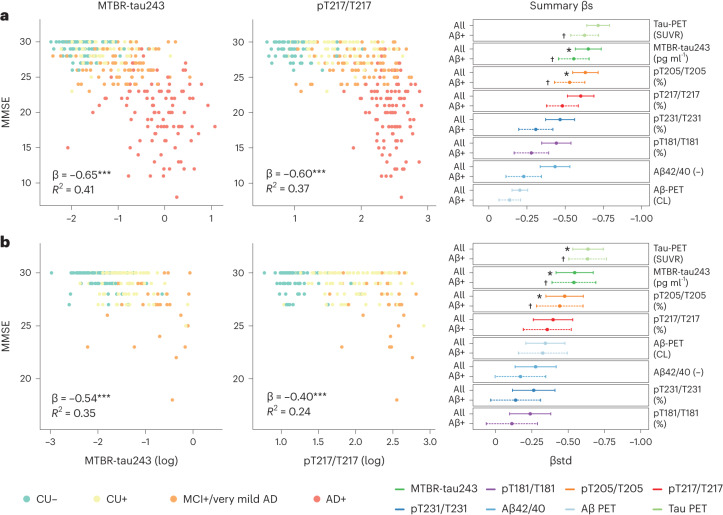
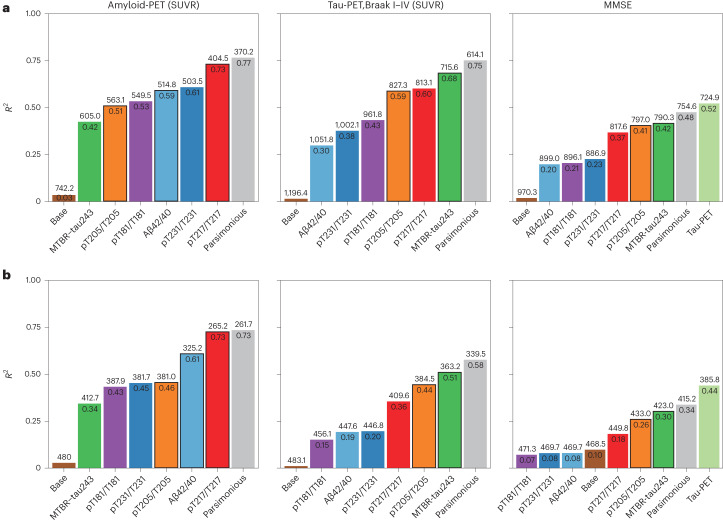
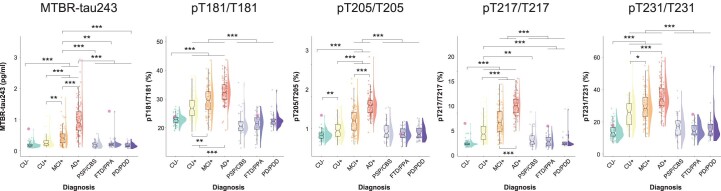
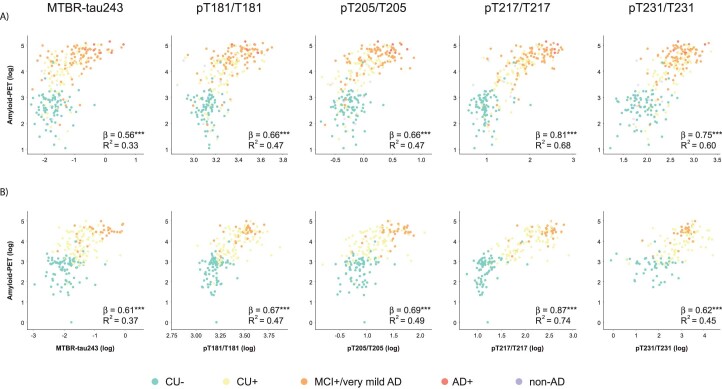
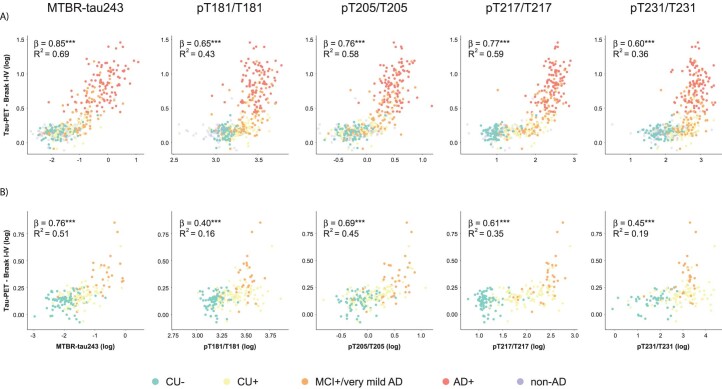
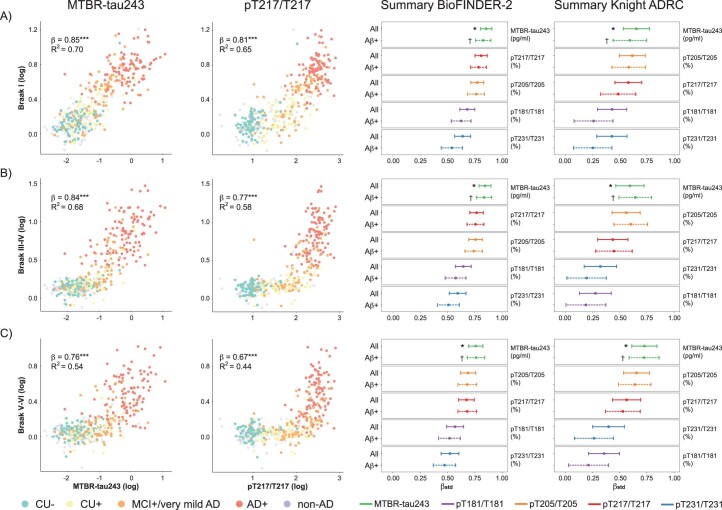
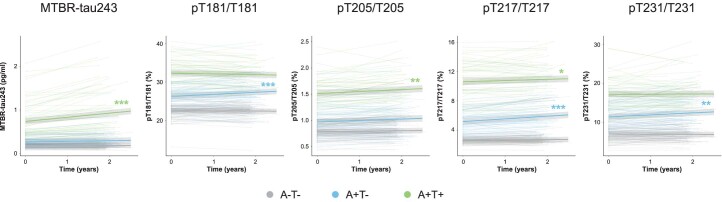
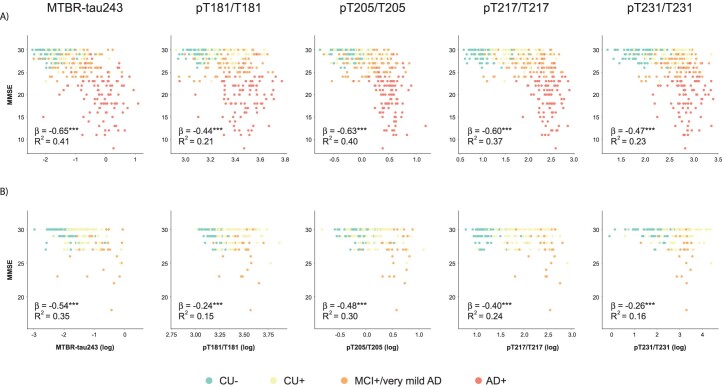
Aggregated insoluble tau is one of two defining features of Alzheimer’s disease. Because clinical symptoms are strongly correlated with tau aggregates, drug development and clinical diagnosis need cost-effective and accessible specific fluid biomarkers of tau aggregates; however, recent studies suggest that the fluid biomarkers currently available cannot specifically track tau aggregates. We show that the microtubule-binding region (MTBR) of tau containing the residue 243 (MTBR-tau243) is a new cerebrospinal fluid (CSF) biomarker specific for insoluble tau aggregates and compared it to multiple other phosphorylated tau measures (p-tau181, p-tau205, p-tau217 and p-tau231) in two independent cohorts (BioFINDER-2, n = 448; and Knight Alzheimer Disease Research Center, n = 219). MTBR-tau243 was most strongly associated with tau-positron emission tomography (PET) and cognition, whereas showing the lowest association with amyloid-PET. In combination with p-tau205, MTBR-tau243 explained most of the total variance in tau-PET burden (0.58 ≤ R 2 ≤ 0.75) and the performance in predicting cognitive measures (0.34 ≤ R 2 ≤ 0.48) approached that of tau-PET (0.44 ≤ R 2 ≤ 0.52). MTBR-tau243 levels longitudinally increased with insoluble tau aggregates, unlike CSF p-tau species. CSF MTBR-tau243 is a specific biomarker of tau aggregate pathology, which may be utilized in interventional trials and in the diagnosis of patients. Based on these findings, we propose to revise the A/T/(N) criteria to include MTBR-tau243 as representing insoluble tau aggregates (‘T’).
Overview
The claims and statistics of this paper haven’t been checked yet.
Free: it reads the open-access text and checks the first 5 claims that cite a source we can check. Create a free account to check every claim.
Integrity signals
Registry
Cites
Statistics
Figures
Verification
Claims the paper makes
The claims and statistics of this paper haven’t been checked yet.
Free: it reads the open-access text and checks the first 5 claims that cite a source we can check. Create a free account to check every claim.
Self-check
Percentages, sums and reported differences re-computed from the paper’s own numbers.
The self-check needs the paper’s full text.
Citations
Cites
Folstein, M. F., Folstein, S. E., & McHugh, P. R. (1975) · Journal of Psychiatric Research · doi:10.1016/0022-3956(75)90026-6 · Cited by 88,282
Kok, J. S., Berg, I. J., & Scherder, E. J. A. (2013) · Dementia and Geriatric Cognitive Disorders Extra · doi:10.1159/000353441 · Cited by 20,589
Older Adults' Reasons for Using Technology while Aging in Place
Peek, S. T. M., Luijkx, K. G., Rijnaard, M. D., Nieboer, M. E., van der Voort, C. S., Aarts, S., van Hoof, J., Vrijhoef, H. J. M., & Wouters, E. J. M. (2016) · Gerontology · doi:10.1159/000430949 · Cited by 19,690
Sensitivity and False Alarm Rate of a Fall Sensor in Long-Term Fall Detection in the Elderly
Kangas, M., Korpelainen, R., Vikman, I., Nyberg, L., & Jämsä, T. (2015) · Gerontology · doi:10.1159/000362720 · Cited by 18,909
The Clinical Dementia Rating (CDR): Current version and scoring rules
Morris, J. C. (1993) · Neurology · doi:10.1212/wnl.43.11.2412-a · Cited by 9,882
Self-citationLecanemab in early Alzheimer's disease
van Dyck, C. H., Swanson, C. J., Aisen, P., Bateman, R. J., Chen, C., Gee, M., Kanekiyo, M., Li, D., Reyderman, L., Cohen, S., et al. (2023) · New England Journal of Medicine · doi:10.1056/nejmoa2212948 · Cited by 5,678
Self-citationCryo-EM structures of tau filaments from Alzheimer’s disease
Fitzpatrick, A. W. P., Falcon, B., He, S., Murzin, A. G., Murshudov, G., Garringer, H. J., Crowther, R. A., Ghetti, B., Goedert, M., & Scheres, S. H. W. (2017) · Nature · doi:10.1038/nature23002 · Cited by 2,061
A/T/N: An unbiased descriptive classification scheme for Alzheimer disease biomarkers
Jack, C. R., Bennett, D. A., Blennow, K., Carrillo, M. C., Feldman, H. H., Frisoni, G. B., Hampel, H., Jagust, W. J., Johnson, K. A., Knopman, D. S., et al. (2016) · Neurology · doi:10.1212/wnl.0000000000002923 · Cited by 1,864
Palmqvist, S., Janelidze, S., Quiroz, Y. T., Zetterberg, H., Lopera, F., Stomrud, E., Su, Y., Chen, Y., Serrano, G. E., Leuzy, A., et al. (2020) · JAMA · doi:10.1001/jama.2020.12134 · Cited by 1,603
Self-citationTwo Randomized Phase 3 Studies of Aducanumab in Early Alzheimer's Disease
Budd Haeberlein, S., Aisen, P. S., Barkhof, F., Chalkias, S., Chen, T., Cohen, S., Dent, G., Hansson, O., Harrison, K., von Hehn, C., et al. (2022) · The Journal of Prevention of Alzheimer's Disease · doi:10.14283/jpad.2022.30 · Cited by 1,367
Self-citation
Research works printed but not linked: 2
- Ashton NJ Differential roles of Aβ42/40, p-tau231 and p-tau217 for Alzheimer’s trial selection and disease monitoring Nat. Med. 2022 28 2555 2562 36456833 PMC9800279 · DOI · Paper page
- Therriault J Association of phosphorylated tau biomarkers with amyloid positron emission tomography vs tau positron emission tomography JAMA Neurol. 2023 80 188 199 36508198 PMC9856704 · DOI · Paper page
Cited by
Revised criteria for diagnosis and staging of Alzheimer's disease: Alzheimer's Association Workgroup
Jack, C. R., Andrews, J. S., Beach, T. G., Buracchio, T., Dunn, B., Graf, A., Hansson, O., Ho, C., Jagust, W., McDade, E., et al. (2024) · Alzheimer's & Dementia · doi:10.1002/alz.13859 · Cited by 2,803
Self-citationTau-targeting therapies for Alzheimer disease: Current status and future directions
Congdon, E. E., Ji, C., Tetlow, A. M., Jiang, Y., & Sigurdsson, E. M. (2023) · Nature Reviews Neurology · doi:10.1038/s41582-023-00883-2 · Cited by 371
“After 3 months, the treated individuals showed a significant decrease in CSF tau 243–254, a tau fragment that strongly correlates with tau PET scan data 283,285 .”
BackgroundSchindler, S. E., Galasko, D., Pereira, A. C., Rabinovici, G. D., Salloway, S., Suárez-Calvet, M., Khachaturian, A. S., Mielke, M. M., Udeh-Momoh, C., Weiss, J., et al. (2024) · Nature Reviews Neurology · doi:10.1038/s41582-024-00977-5 · Cited by 290
“The ATN framework is now being updated, and novel fluid biomarkers that more specifically reflect tau pathology are being studied 35 .”
Self-citationRabinovici, G. D., Knopman, D. S., Arbizu, J., Benzinger, T. L. S., Donohoe, K. J., Hansson, O., Herscovitch, P., Kuo, P. H., Lingler, J. H., Minoshima, S., et al. (2025) · Alzheimer s & Dementia · doi:10.1002/alz.14338 · Cited by 206
Self-citationHead‐to‐head comparison of leading blood tests for Alzheimer's disease pathology
(2024) · doi:10.1002/alz.14315 · Cited by 199
Self-citationAccelerating Alzheimer’s therapeutic development: The past and future of clinical trials
Boxer, A. L., & Sperling, R. (2023) · Cell · doi:10.1016/j.cell.2023.09.023 · Cited by 197
“After the ca-tau-strophe, concentrations of CSF microtubule binding region (MTBR) tau fragments are strongly correlated with tau PET uptake and clinical status.(57) The relative ease of addition of plasma biomarkers to AD therapeutic trials hasalso revealedpotentialmechanistic insights into the link between amyloid an…”
Biomarker-based staging of Alzheimer disease: rationale and clinical applications
Therriault, J., Schindler, S. E., Salvadó, G., Pascoal, T. A., Benedet, A. L., Ashton, N. J., Karikari, T. K., Apostolova, L., Murray, M. E., Verberk, I., et al. (2024) · Nature Reviews Neurology · doi:10.1038/s41582-024-00942-2 · Cited by 197
Self-citationAlzheimer's disease drug development pipeline: 2025
Cummings, J. L., Zhou, Y., Lee, G., Zhong, K., Fonseca, J., Leisgang‐Osse, A. M., & Cheng, F. (2025) · Alzheimer's & Dementia: Translational Research & Clinical Interventions · doi:10.1002/trc2.70098 · Cited by 190
Kim, B., Kim, S., Nam, Y., Park, Y., Shin, S. M., & Moon, M. (2025) · Translational Neurodegeneration · doi:10.1186/s40035-025-00465-w · Cited by 188
Plasma MTBR-tau243 biomarker identifies tau tangle pathology in Alzheimer’s disease
Horie, K., Salvadó, G., Koppisetti, R. K., Janelidze, S., Barthélemy, N. R., He, Y., Sato, C., Gordon, B. A., Jiang, H., Benzinger, T. L. S., et al. (2025) · Nature Medicine · doi:10.1038/s41591-025-03617-7 · Cited by 182
“Therefore, we recently developed mass spectrometry (MS)-based assays that quantify the levels of p-tau205 and the tau microtubule-binding region containing residue 243 (MTBR-tau243) in CSF 19,20 .”
InfluentialSelf-citationEuropean intersocietal recommendations for the biomarker-based diagnosis of neurocognitive disorders
Frisoni, G. B., Festari, C., Massa, F., Cotta Ramusino, M., Orini, S., Aarsland, D., Agosta, F., Babiloni, C., Borroni, B., Cappa, S. F., et al. (2024) · The Lancet Neurology · doi:10.1016/s1474-4422(23)00447-7 · Cited by 161
“65 CSF and plasma progranulin, a prognostic and predictive marker in oncology, might be used to screen patients with possible familial frontotemporal lobar degeneration.”
Self-citationChallenges in the practical implementation of blood biomarkers for Alzheimer’s disease
Schöll, M., Verberk, I. M. W., del Campo, M., Delaby, C., Therriault, J., Chong, J. R., Palmqvist, S., & Alcolea, D. A. (2024) · The Lancet Healthy Longevity · doi:10.1016/j.lanhl.2024.07.013 · Cited by 164
“128 In clinical trials, patients receiving anti-amyloid β treatment are followed up using amyloid β PET (to evaluate the clearance of amyloid β ) and MRI (for safety reasons, speci fi cally with respect to the development of amyloid β -related imaging abnormalities).”
Self-citationOh, H. S.-H., Urey, D. Y., Karlsson, L., Zhu, Z., Shen, Y., Farinas, A., Timsina, J., Duggan, M. R., Chen, J., Guldner, I. H., et al. (2025) · Nature Medicine · doi:10.1038/s41591-025-03565-2 · Cited by 121
Self-citationMattsson-Carlgren, N., Collij, L. E., Stomrud, E., Pichet Binette, A., Ossenkoppele, R., Smith, R., Karlsson, L., Lantero-Rodriguez, J., Snellman, A., Strandberg, O., et al. (2024) · JAMA Neurology · doi:10.1001/jamaneurol.2023.4596 · Cited by 148
Self-citationJanelidze, S., Barthélemy, N. R., Salvadó, G., Schindler, S. E., Palmqvist, S., Mattsson, N., Braunstein, J. B., Ovod, V., Bollinger, J. G., He, Y., et al. (2024) · JAMA Neurology · doi:10.1001/jamaneurol.2024.2619 · Cited by 146
Self-citationNew landscape of the diagnosis of Alzheimer’s disease
Frisoni, G. B., Hansson, O., Nichols, E., Garibotto, V., Schindler, S. E., van der Flier, W. M., Jessen, F., Villain, N., Arenaza-Urquijo, E. M., Crivelli, L., et al. (2025) · The Lancet · doi:10.1016/s0140-6736(25)01294-2 · Cited by 143
Self-citationDisease staging of Alzheimer’s disease using a CSF-based biomarker model
Salvadó, G., Horie, K., Barthélemy, N. R., Vogel, J. W., Pichet Binette, A., Chen, C. D., Aschenbrenner, A. J., Gordon, B. A., Benzinger, T. L. S., Holtzman, D. M., et al. (2024) · Nature Aging · doi:10.1038/s43587-024-00599-y · Cited by 113
“28,29,32), early cognitive impairment (CSF stage 4: MTBR-tau243) (ref.”
BackgroundMethodInfluentialSelf-citationDiagnosis of Alzheimer's disease using plasma biomarkers adjusted to clinical probability
Therriault, J., Janelidze, S., Benedet, A. L., Ashton, N. J., Arranz Martínez, J., Gonzalez-Escalante, A., Bellaver, B., Alcolea, D., Vrillon, A., Karim, H., et al. (2024) · Nature Aging · doi:10.1038/s43587-024-00731-y · Cited by 131
Self-citationTau in neurodegenerative diseases: molecular mechanisms, biomarkers, and therapeutic strategies
Zhang, X., Wang, J., Zhang, Z., & Ye, K. (2024) · Translational Neurodegeneration · doi:10.1186/s40035-024-00429-6 · Cited by 126
“Another study revealed that MTBR-tau243 is particularly specific to tau aggregates and is strongly associated with tau PET [181].”
BackgroundConsiderations in the clinical use of amyloid PET and CSF biomarkers for Alzheimer's disease
Leuzy, A., Bollack, A., Pellegrino, D., Teunissen, C. E., Joie, R. L., Rabinovici, G. D., Franzmeier, N., Johnson, K. A., Barkhof, F., Shaw, L. M. J., et al. (2025) · Alzheimer s & Dementia · doi:10.1002/alz.14528 · Cited by 127
Self-citationAPOE3ch alters microglial response and suppresses Aβ-induced tau seeding and spread
Chen, Y., Song, S., Parhizkar, S., Lord, J., Zhu, Y., Strickland, M. R., Wang, C., Park, J., Tabor, G. T., Jiang, H., et al. (2024) · Cell · doi:10.1016/j.cell.2023.11.029 · Cited by 120
Self-citationMendes, A. J., Ribaldi, F., Lathuiliere, A., Ashton, N. J., Janelidze, S., Zetterberg, H., Scheffler, M., Assal, F., Garibotto, V., Blennow, K., et al. (2024) · Journal of Neurology · doi:10.1007/s00415-023-12148-5 · Cited by 106
Self-citationAshton, N. J., Keshavan, A., Brum, W. S., Andréasson, U., Arslan, B., Droescher, M., Barghorn, S., Vanbrabant, J., Lambrechts, C., Loo, M. V., et al. (2025) · Alzheimer s & Dementia · doi:10.1002/alz.14508 · Cited by 109
Self-citationShun, H., Zhang, L., Su, Y., Liang, X., Yang, J., Luo, Q., & Luo, H. (2024) · Science Advances · doi:10.1126/sciadv.abm3088 · Cited by 103
“Plasma A β 1–42 ( 12 ), p-tau 231 ( 13 ), p-tau 181 ( 14 ), and p-tau 217 ( 15 ) have been reported to be positively correlated with CSF counterparts and notably altered in preclinical AD ( 16 – 19 ).”
BackgroundPlasma p‐tau immunoassays in clinical research for Alzheimer's disease
Teunissen, C. E., Kolster, R., Triana‐Baltzer, G., Janelidze, S., Zetterberg, H., & Kolb, H. C. (2024) · Alzheimer s & Dementia · doi:10.1002/alz.14397 · Cited by 103
Self-citationTiming of Biomarker Changes in Sporadic Alzheimer's Disease in Estimated Years from Symptom Onset
Li, Y., Yen, D., Hendrix, R. D., Gordon, B. A., Dlamini, S., Barthélemy, N. R., Aschenbrenner, A. J., Henson, R. L., Herries, E. M., Volluz, K., et al. (2024) · Annals of Neurology · doi:10.1002/ana.26891 · Cited by 87
“12,14 In contrast, CSF pT205/T205 is well correlated with tau PET but relatively poorly correlated with amyloid PET, 12,15 making it a more speci fi c bio-marker of tau pathology.”
BackgroundSelf-citationBlood-based biomarkers in Alzheimer’s disease – moving towards a new era of diagnostics
Arslan, B., Zetterberg, H., & Ashton, N. J. (2024) · Clinical Chemistry and Laboratory Medicine (CCLM) · doi:10.1515/cclm-2023-1434 · Cited by 99
Noh, M., Kwon, H. S., Kwon, M., Nahm, M., Jin, H. K., Bae, J., & Kim, S. H. (2025) · Molecular Neurodegeneration · doi:10.1186/s13024-025-00867-4 · Cited by 97
“In contrast, CSF p-tau205 and MTBR-tau243 show better correlation with tau PET than amyloid PET imaging [212, 297].”
Rabinovici, G. D., Knopman, D. S., Arbizu, J., Benzinger, T. L. S., Donohoe, K. J., Hansson, O., Herscovitch, P., Kuo, P. H., Lingler, J. H., Minoshima, S., et al. (2025) · Journal of Nuclear Medicine · doi:10.2967/jnumed.124.268756 · Cited by 93
Self-citationAlzheimer’s disease biomarkers and their current use in clinical research and practice
Hunter, T., Santos, L. E., Tovar-Moll, F. F., & Felice, F. G. D. (2024) · Molecular Psychiatry · doi:10.1038/s41380-024-02709-z · Cited by 90
“CSF MTBR containing the residue 243 (MTBR-243), identi fi ed by IP-MS, strongly correlates with tau PET and longitudinal increases in insoluble tau [72].”
Biomarker-guided decision making in clinical drug development for neurodegenerative disorders
Cummings, J. L., Teunissen, C. E., Fiske, B. K., Ber, I. L., Wildsmith, K. R., Schöll, M., Dunn, B., & Scheltens, P. (2025) · Nature Reviews Drug Discovery · doi:10.1038/s41573-025-01165-w · Cited by 91
Ossenkoppele, R., Coomans, E. M., Apostolova, L. G., Baker, S. L., Barthel, H., Beach, T. G., Benzinger, T. L. S., Betthauser, T. J., Bischof, G. N., Bottlaender, M., et al. (2025) · Nature Neuroscience · doi:10.1038/s41593-025-02000-6 · Cited by 71
“57,58), (2) conduct a similar study with adjusted ROIs in other populations such as primary tauopathies (for example, globus pallidus in PSP 55 ) or atypical variants of AD (for example, occipital cortex in posterior cortical atrophy 41 ), (3) assess genetic effects beyond APOE genotype on tau PET…”
Self-citationHeo, G., Xu, Y., Wang, E., Ali, M., Oh, H. S., Losada, P. M., Anastasi, F., Escalante, A. G., Puerta, R., Song, S., et al. (2025) · Nature Aging · doi:10.1038/s43587-025-00872-8 · Cited by 69
Self-citationRapamycin treatment for Alzheimer’s disease and related dementias: a pilot phase 1 clinical trial
Gonzales, M. M., Garbarino, V. R., Kautz, T. F., Song, X., Lopez‐Cruzan, M., Linehan, L. A., Skike, C. E. V., de Erausquin, G. A., Galván, V., Orr, M. E., et al. (2025) · Communications Medicine · doi:10.1038/s43856-025-00904-9 · Cited by 66
Self-citationThe evolving landscape of Alzheimer’s disease therapy: From Aβ to tau
Courade, J., Zetterberg, H., Höglinger, G. U., & Dewachter, I. (2025) · Cell · doi:10.1016/j.cell.2025.11.033 · Cited by 69
Biofluid biomarkers in Alzheimer’s disease and other neurodegenerative dementias
Zetterberg, H., & Bendlin, B. B. (2026) · Nature · doi:10.1038/s41586-025-10018-w · Cited by 59
Plasma tau biomarkers for biological staging of Alzheimer’s disease
Montoliu‐Gaya, L., Salvadó, G., Therriault, J., Nilsson, J., Janelidze, S., Weiner, S., Ashton, N. J., Benedet, A. L., Rahmouni, N., Lantero‐Rodriguez, J., et al. (2025) · Nature Aging · doi:10.1038/s43587-025-00951-w · Cited by 58
“19,20) or nonphosphorylated tau peptides 11,21 , have been shown to increase in CSF at later stages, with even stronger associations with tau-PET and cognition.”
Self-citationAlzheimer's disease neuropathology and its estimation with fluid and imaging biomarkers
Thal, D. R., Poesen, K., Vandenberghe, R. R., & Meyer, S. D. (2025) · Molecular Neurodegeneration · doi:10.1186/s13024-025-00819-y · Cited by 58
“Alternatively, the phosphorylated τ biomarker p-τ 205 in CSF is also associated with τ PET in amyloid-positive individuals and increases earlier than MTBR-τ 243 , but later than the diagnostic p-τ 181 and p-τ 217 biomarkers and might thus also provide prognostic and staging information [290, 292].”
The night’s watch: Exploring how sleep protects against neurodegeneration
Parhizkar, S., & Holtzman, D. M. (2025) · Neuron · doi:10.1016/j.neuron.2025.02.004 · Cited by 58
Self-citationSharma, M., Pal, P., & Gupta, S. K. (2024) · Neurochemistry International · doi:10.1016/j.neuint.2024.105761 · Cited by 54
Microglia and gut microbiota: A double-edged sword in Alzheimer's disease
Bano, N., Khan, S., Ahamad, S., Kanshana, J. S., Dar, N. J., Khan, S. J., Nazir, A., & Bhat, S. A. (2024) · Ageing Research Reviews · doi:10.1016/j.arr.2024.102515 · Cited by 53
Schöll, M., Vrillon, A., Ikeuchi, T., Quevenco, F. C., Iaccarino, L., Vasileva-Metodiev, S. Z., Burnham, S. C., Hendrix, J. A., Epelbaum, S., Zetterberg, H., et al. (2025) · The Journal of Prevention of Alzheimer s Disease · doi:10.1016/j.tjpad.2024.100056 · Cited by 54
Self-citationDisentangling tau: One protein, many therapeutic approaches
Lane‐Donovan, C., & Boxer, A. L. (2024) · Neurotherapeutics · doi:10.1016/j.neurot.2024.e00321 · Cited by 50
Xiao, Z., Wu, W., Ma, X., Wu, J., Liang, X., Zhou, X., Cao, Y., Zhao, Q., & Ding, D. (2023) · Alzheimer s & Dementia Diagnosis Assessment & Disease Monitoring · doi:10.1002/dad2.12514 · Cited by 48
Ibáñez, L., Liu, M., Beric, A., Timsina, J., Kohlfeld, P., Bergmann, K., Lowery, J., Sykora, N., Montejo, B. S., Brock, W., et al. (2024) · Alzheimer s & Dementia · doi:10.1002/alz.14413 · Cited by 47
Self-citationYoon, J. H., Lee, H., Kwon, D., Lee, D., Lee, S., Cho, E., Kim, J., & Kim, D. (2024) · Brain Communications · doi:10.1093/braincomms/fcae265 · Cited by 47
“36,37 To develop more effective strategies for the diagnosis and treatment of brain diseases, highly reliable biomarkers are needed.”
BackgroundCecchetti, G., Agosta, F., Rugarli, G., Spinelli, E. G., Ghirelli, A., Zavarella, M., Bottale, I., Orlandi, F., Santangelo, R., Caso, F., et al. (2024) · Journal of Neurology · doi:10.1007/s00415-024-12631-7 · Cited by 45
Clinical use of biomarkers in the era of Alzheimer's disease treatments
VandeVrede, L. A., & Schindler, S. E. (2024) · Alzheimer s & Dementia · doi:10.1002/alz.14201 · Cited by 44
Self-citationMachine learning prediction of tau‐PET in Alzheimer's disease using plasma, MRI, and clinical data
Karlsson, L., Vogel, J., Arvidsson, I., Åström, K., Strandberg, O., Seidlitz, J., Bethlehem, R. A. I., Stomrud, E., Ossenkoppele, R., Ashton, N. J., et al. (2025) · Alzheimer's & Dementia · doi:10.1002/alz.14600 · Cited by 43
Self-citationJarek, D. J., Mizerka, H., Nuszkiewicz, J., & Szewczyk‐Golec, K. (2024) · Biomedicines · doi:10.3390/biomedicines12040786 · Cited by 44
“Accordingly, a study by Horie et al. [109] states that CSF p-tau217/tau217 ratio had the strongest correlation with A β PET.”
ResultHu, Y., Cho, M., Sachdev, P., Dage, J., Hendrix, S., Hansson, O., Bateman, R. J., & Hampel, H. (2024) · Med · doi:10.1016/j.medj.2024.08.004 · Cited by 42
Self-citationTau filaments with the Alzheimer fold in human MAPT mutants V337M and R406W
Qi, C., Lövestam, S., Murzin, A. G., Peak‐Chew, S., Franco, C., Bogdani, M., Latimer, C. S., Murrell, J. R., Cullinane, P. W., Jaunmuktane, Z., et al. (2025) · Nature Structural & Molecular Biology · doi:10.1038/s41594-025-01498-5 · Cited by 43
(2024) · doi:10.1101/2024.05.31.24308264 · Cited by 41
Arnsten, A. F. T., Del Tredici, K., Barthélemy, N. R., Gabitto, M., van Dyck, C. H., Lein, E., Braak, H., & Datta, D. (2025) · Alzheimer's & Dementia · doi:10.1002/alz.70404 · Cited by 38
Self-citationRecent advances in neuroimaging of Alzheimer's disease and related dementias
Ottoy, J., Owsicki, N., Bilgel, M., Binette, A. P., Salvadó, G., Kang, M. S., Cash, D. M., Ewers, M., Joie, R. L., Wisse, L. E. M., et al. (2025) · Alzheimer s & Dementia · doi:10.1002/alz.70648 · Cited by 40
Self-citationLan, G., Wang, M., González‐Ortiz, F., Zhang, L., Li, A., Li, B., Jiang, M., Yang, J., Chen, X., Shi, D., et al. (2025) · Nature Aging · doi:10.1038/s43587-025-00904-3 · Cited by 38
“MTBR-tau and other nonphosphorylated tau fragments may indicate the late changes in tau-PET and neurodegeneration secondary to Aβ pathology 22,25,38 .”
Shen, X., Li, H., Zhang, B., Li, Y., & Zhu, Z. (2025) · Cells · doi:10.3390/cells14191506 · Cited by 36
“More recently, the MT-binding region fragment MTBR-tau243 has emerged as a highly specific marker of neurofibrillary tangle pathology, closely correlating with tau-PET signals and disease severity [95].”
Self-citationHowe, M. D., Britton, K. J., Joyce, H. E., Menard, W. E., Emrani, S., Kunicki, Z. J., Faust, M. A., Dawson, B. C., Riddle, M. C., Huey, E. D., et al. (2024) · Alzheimer s Research & Therapy · doi:10.1186/s13195-024-01521-9 · Cited by 34
“…region of tau containing the residue 243 (MTBR-tau43) as a novel fluid biomarker of tau tangle pathology, holding potential alongside P-tau217 and other biomarkers for detailed molecular staging of AD, although more work is needed to examine its performance as a more accessible blood test [29].”
BackgroundSelf-citationA critical appraisal of blood-based biomarkers for Alzheimer’s disease
Lista, S., Mapstone, M. E., Caraci, F., Emanuele, E., López‐Ortiz, S., Martín-Hernández, J., Triaca, V., Imbimbo, C., Gabelle, A., Mielke, M. M., et al. (2024) · Ageing Research Reviews · doi:10.1016/j.arr.2024.102290 · Cited by 33
Cerebrospinal fluid proteomics identification of biomarkers for amyloid and tau PET stages
Wang, Z., Chen, Y., Gong, K., Zhao, B., Ning, Y., Chen, M., Li, Y., Ali, M., Timsina, J., Liu, M., et al. (2025) · Cell Reports Medicine · doi:10.1016/j.xcrm.2025.102031 · Cited by 31
Self-citationA manifesto for Alzheimer’s disease drug discovery in the era of disease-modifying therapies
Hering, H., Bussière, T., Liu, C., Glajch, K. E., Weihofen, A., Grogan, J. L., & Walsh, D. M. (2025) · Molecular Neurodegeneration · doi:10.1186/s13024-025-00872-7 · Cited by 32
“However, certain fragments of tau which contain all or part of the MTBR have been identified in human fluids and brain tissue [99, 100].”
Kováčech, B., Cullen, N. C., Novák, P., Hanes, J., Kontseková, E., Katina, S., Parrák, V., Fresser, M., Vanbrabant, J., Feldman, H., et al. (2024) · Alzheimer s Research & Therapy · doi:10.1186/s13195-024-01620-7 · Cited by 31
Alzheimer's Disease Diagnosis in the Preclinical Stage: Normal Aging or Dementia
Marvi, F., Chen, Y.-H., & Sawan, M. (2024) · IEEE Reviews in Biomedical Engineering · doi:10.1109/rbme.2024.3376835 · Cited by 30
Differential roles of Alzheimer's disease plasma biomarkers in stepwise biomarker‐guided diagnostics
Jang, H., Shin, D., Yoo, H., Zetterberg, H., Blennow, K., González‐Ortiz, F., Ashton, N. J., Day, T. A., Lee, E. H., Yun, J., et al. (2025) · Alzheimer s & Dementia · doi:10.1002/alz.14526 · Cited by 29
Angioni, D., Middleton, L. T., Bateman, R. J., Aisen, P. S. S., Boxer, A. L., Sha, S. J., Zhou, J., Gerlach, I., Raman, R., Fillit, H. M., et al. (2025) · The Journal of Prevention of Alzheimer s Disease · doi:10.1016/j.tjpad.2025.100163 · Cited by 30
“The primary outcome measure is CSF MTBR-tau243 [ 17 ].”
Self-citationMattsson, N., Palmqvist, S., Horie, K., Barthélemy, N. R., Salvadó, G., Binette, A. P., Tideman, P., Morris, J. C., Benzinger, T. L. S., Perrin, R. J., et al. (2026) · The Lancet Neurology · doi:10.1016/s1474-4422(26)00029-3 · Cited by 30
Self-citationBaiardi, S., Hansson, O., Levin, J., & Parchi, P. (2024) · Alzheimer s & Dementia · doi:10.1002/alz.14039 · Cited by 30
Self-citationA framework for translating tauopathy therapeutics: Drug discovery to clinical trials
Feldman, H., Cummings, J. L., Boxer, A. L., Staffaroni, A. M., Knopman, D. S., Rizzo, S. J. S., Territo, P. R., Arnold, S. E., Ballard, C. G., Beher, D., et al. (2024) · Alzheimer s & Dementia · doi:10.1002/alz.14250 · Cited by 28
Altered T-cell reactivity in the early stages of Alzheimer's disease
Rickenbach, C., Mallone, A., Häusle, L., Frei, L., Seiter, S., Sparano, C., Kirabali, T., Blennow, K., Zetterberg, H., Ferretti, M. T., et al. (2025) · Brain · doi:10.1093/brain/awaf167 · Cited by 27
“52 In future studies, we will design peptide pools deriving from the major components of AD pathology, A β and tau, and other sources that are preferentially presented to CD8 + T cells.”
Garbarino, V. R., Palavicini, J. P., Melendez, J., Barthelemy, N. R., He, Y., Kautz, T. F., Lopez-Cruzan, M., Mathews, J. J., Xu, P., Zhang, B., et al. (2025) · Neurotherapeutics · doi:10.1016/j.neurot.2025.e00591 · Cited by 26
“CSF levels of speci fi c A β and tau protein species track with AD severity and disease progression [23 – 25 , 36 – 41 ].”
Self-citationRawal, S., Wildsmith, K. R., Aluri, J., Yagi, T., Chang, M., Niu, H., Zhou, J., Horie, K., Takahashi, E., Boyd, P., et al. (2025) · Alzheimer Disease & Associated Disorders · doi:10.1097/wad.0000000000000680 · Cited by 26
Self-citationFluid biomarkers for neurodegenerative diseases: a comprehensive update
Valletta, M., Briel, N., Yuksekel, I., Barboure, M. C., Coward, A. R., Houwer, J. F. H. D., Fawad, A., González-Mayoral, A., Iaccarino, G., Martínez‐Dubarbie, F., et al. (2025) · Alzheimer s Research & Therapy · doi:10.1186/s13195-025-01919-z · Cited by 26
“CSF and plasma MTBR-tau243 have demonstrated potential value in identifying tau aggregation in AD [55, 56].”
A clinical perspective on the revised criteria for diagnosis and staging of Alzheimer’s disease
Hansson, O., & Jack, C. R. (2024) · Nature Aging · doi:10.1038/s43587-024-00675-3 · Cited by 26
Self-citationGrill, J. D., Tam, S. P., Thai, G. T., Vides, B., Pierce, A. L., Green, K. N., Gillen, D. L., Teng, E., Kremen, S. A., Beigi, M., et al. (2024) · Neurology · doi:10.1212/wnl.0000000000210152 · Cited by 27
The Role of Amyloid- and Tau PET in the New Era of Alzheimer Disease Therapies
Chiotis, K., Wang, Y., Joie, R. L., & Rabinovici, G. D. (2025) · Journal of Nuclear Medicine · doi:10.2967/jnumed.124.268339 · Cited by 26
“Investigational biomarkers targeting other tau epitopes, such as MTBR-tau243, show stronger correlation with global tau PET signal ( 139 ) but are primarily validated in CSF and in limited cohorts ( 140 ).”
Himmerich, H., Keeler, J. L., King, J. A., Ehrlich, S., Kaufmann, L., Bulik, C. M., Cohen‐Woods, S., Wade, T. D., Steiger, H., Booij, L., et al. (2026) · The World Journal of Biological Psychiatry · doi:10.1080/15622975.2026.2626934 · Cited by 26
Dilcher, R., Wall, S., Groß, M., Katzdobler, S., Wagemann, O., Palleis, C., Weidinger, E., Fietzek, U. M., Bernhardt, A., Kurz, C., et al. (2024) · Alzheimer s & Dementia · doi:10.1002/alz.14185 · Cited by 25
“26,28,29 Recent trials demonstrated a robust association between CSF MTBR-tau243 and tau-PET, 30 underscoring the promising potential of MTBR-tau243 to detect insoluble tau aggregates and to represent an alternative tau biomarker.”
BackgroundCurrent status of amyloid-targeting immunotherapies for Alzheimer’s disease
Tabor, G. T., & Holtzman, D. M. (2023) · Science Translational Medicine · doi:10.1126/scitranslmed.adk9993 · Cited by 23
Self-citationKiran, N. S., Vaishnavi, G., Singh, S. K., Yashaswini, C., Parihar, A., Pal, S., Kaur, J., Prajapati, B. G., Mohite, P. B., & Puri, A. V. (2024) · Regenerative Engineering and Translational Medicine · doi:10.1007/s40883-024-00340-6 · Cited by 24
“Two main types of protein deposits are commonly found: beta-amyloid plaques and neurofibrillary tangles [13].”
CSF total tau as a proxy of synaptic degeneration
Soares, C., Bellaver, B., Ferreira, P. C. L., Povala, G., Aguzzoli, C. S., Ferrari‐Souza, J. P., Zalzale, H., Lussier, F. Z., Rohden, F., Abbas, S., et al. (2025) · Nature Communications · doi:10.1038/s41467-025-63545-5 · Cited by 23
Qi, W., Zhu, X., He, D., Wang, B., Cao, S., Dong, C., Li, Y., Chen, Y., Wang, B., Shi, Y., et al. (2024) · Journal of Medical Internet Research · doi:10.2196/57830 · Cited by 22
“Moreover, they seem to have a broader interest in emerging biomarkers such as imaging-based brain age difference [123], digital biomarkers based on driving behavior [124], gut microbiota [125], and MTBR-tau243 in CSF [126].”
Self-citationHu, Q., Zhou, X., Xiao, Z., Zhao, Q., Ding, D., & Zhang, J. (2025) · Alzheimer s & Dementia · doi:10.1002/alz.14594 · Cited by 23
Yang, H. Y., Anzai, J. A. U., Yau, W. W., Healy, B. C., Viera, A. M. R., Maa, C., Kirn, D. R., Properzi, M. J., Bellier, J., Schultz, A. P., et al. (2026) · Nature Communications · doi:10.1038/s41467-026-71269-3 · Cited by 21
Serrano‐Pozo, A., Escott‐Price, V., Grinberg, L. T., Pascoal, T. A., Suárez‐Calvet, M., Dubois, B., & Sperling, R. A. (2026) · The Lancet · doi:10.1016/s0140-6736(26)00198-4 · Cited by 23
Penny, L. K., Lofthouse, R. A., Arastoo, M., Porter, A., Palliyil, S., Harrington, C. R., & Wischik, C. M. (2024) · Translational Neurodegeneration · doi:10.1186/s40035-024-00417-w · Cited by 21
“…such in the context of certain immunotherapies; the epitope of bepranemab (235–255 AA) [93] is within MTBR-tau243 (measures 243–254 AA fragment [85, 86],) and will likely no longer be exclusively representative of tangles but may suggest pharmacodynamic removal of MTBR-tau fragments and target…”
BackgroundBiomarker evidence of neurodegeneration in mid-life former rugby players
Graham, N., Zimmerman, K. A., Hain, J., Rooney, E. J., Lee, Y., Giovane, M. D., Parker, T. D., Wilson, M. G., Malhotra, P., David, M., et al. (2025) · Brain · doi:10.1093/brain/awaf152 · Cited by 20
“Extending the study in future by including new biomarkers, such as brain-derived tau (BD-tau) 66 and microtubule-binding region tau (MTBR-tau 243 ), 67 may better clarify the presence of neuronal/glial tau aggregates specifically, contextualizing our findings.”
Feng, Y., & Hao, F. (2024) · Trends in Food Science & Technology · doi:10.1016/j.tifs.2024.104678 · Cited by 20
Schauer, S. P., Tóth, B. I., Lee, J., Honigberg, L. A., Ramakrishnan, V., Jiang, J. Z., Kollmorgen, G., Bayfield, A., Wild, N., Hoffman, J., et al. (2024) · Alzheimer s & Dementia · doi:10.1002/alz.14346 · Cited by 20
Devanarayan, V., Charil, A., Horie, K., Doherty, T., Llano, D. A., Andreozzi, E., Sachdev, P., Ye, Y., Murali, L. K., Zhou, J., et al. (2025) · Alzheimer's & Dementia · doi:10.1002/alz.14411 · Cited by 19
Self-citationFertan, E., Hung, C., Danial, J. S. H., Lam, J. Y. L., Preman, P., Albertini, G., English, E. A., Böken, D., Livesey, F. J., Strooper, B. D., et al. (2024) · Brain Communications · doi:10.1093/braincomms/fcae454 · Cited by 20
“74 By using aggregate-specific methods and the AT8 antibody, we specifically studied these small amounts of aggregated pTau species in the media, which are formed in the neurons, and compared them to the intracellular aggregates, which we found to have a significantly larger size distribution.”
Potential utility of plasma pTau217 for assessing amyloid and tau biomarker profiles
Shin, D., Jang, H., Yoo, H., Kim, K., Zetterberg, H., Blennow, K., González‐Ortiz, F., Ashton, N. J., Lee, E. H., Yun, J., et al. (2025) · European Journal of Nuclear Medicine and Molecular Imaging · doi:10.1007/s00259-025-07457-y · Cited by 18
“Biomarkers like CSF MTBR-tau243 [60 ] and MTBR-tau368 [61], associated with advanced neurofibril - lary tangle pathology, might complement pTau217 by better reflecting regional tau deposition.”
Tau in Alzheimer's disease: Shaping the future patient journey
Mummery, C. J., Li-Hsian, C. C., Lasagna‐Reeves, C. A., Ossenkoppele, R., Rowe, C. C., Scharre, D. W., Wang, H., Kyaga, S., & Cummings, J. L. (2026) · The Journal of Prevention of Alzheimer s Disease · doi:10.1016/j.tjpad.2025.100447 · Cited by 19
“MTBR-tau243 becomes abnormal later in the disease continuum and shows a strong correlation with tau PET and disease progression [98]; the ability of CSF MTBR-tau243 to predict tau-PET positivity (based on [18F]flortaucipir SUVr quantification) and clinical outcomes is further improved when combined…”
Self-citationNoguchi‐Shinohara, M., Shuta, K., Murakami, H., Mori, Y., Komatsu, J., Kobayashi, C., Hersch, S. M., Horie, K., & Ono, K. (2025) · Annals of Neurology · doi:10.1002/ana.27175 · Cited by 18
Self-citationImpact of amyloid and tau positivity on longitudinal brain atrophy in cognitively normal individuals
Fujishima, M., Kawasaki, Y., Mitsuhashi, T., Matsuda, H., & Initiative, A. D. N. (2024) · Alzheimer s Research & Therapy · doi:10.1186/s13195-024-01450-7 · Cited by 17
“…potential of CSF p-tau205 and CSF microtubule-binding region (MTBR) of tau containing the residue 243 (MTBR-tau243) as indicators of tau tangles [62], employing T defined by Tau-PET, CSF p-tau205, or CSF MTBR-tau243 would allow for a longitudinal study of cognitively healthy individuals in a…”
MethodQiu, S., Guo, S., Wang, Z., Cai, Y., Xie, D., Sun, W., & Zhang, A. (2024) · Journal of Functional Foods · doi:10.1016/j.jff.2024.106654 · Cited by 17
Plasma Phosphorylated Tau 217 as a Discriminative Biomarker for Cerebral Amyloid Angiopathy
Hsieh, P.-F., Tsai, H.-H. C., Liu, C., Lee, B., Tsai, Y.-C., Yen, R., Jeng, J., & Tsai, L. (2025) · European Journal of Neurology · doi:10.1111/ene.70066 · Cited by 17
Biofluid-based staging of Alzheimer’s disease
Lantero‐Rodriguez, J., Montoliu‐Gaya, L., Ashton, N. J., Pola, I., Therriault, J., Rahmouni, N., Brum, W. S., Servaes, S., Stevenson, J., Molfetta, G. D., et al. (2025) · Acta Neuropathologica · doi:10.1007/s00401-025-02863-w · Cited by 17
Recent advances in Alzheimer’s disease: From molecular mechanisms to therapeutic strategies
Rudman, M. D., Ulrich, J. D., & Holtzman, D. M. (2026) · Cell · doi:10.1016/j.cell.2026.06.006 · Cited by 21
Self-citationKammula, S. V., Tripathi, S., Wang, N., Dawson, V. L., Dawson, T. M., & Mao, X. (2023) · Ageing and Neurodegenerative Diseases · doi:10.20517/and.2023.20 · Cited by 16
Blood tests could soon predict your risk of Alzheimer’s
Abbott, A. (2024) · Nature · doi:10.1038/d41586-024-02535-x · Cited by 16
Metadata
- Authors
- Horie, K., Salvadó, G., Barthélemy, N. R., Janelidze, S., Li, Y., He, Y., Saef, B., Chen, C. D., Jiang, H., Strandberg, O., Pichet Binette, A., Palmqvist, S., Sato, C., Sachdev, P., Koyama, A., Gordon, B. A., Benzinger, T. L. S., Holtzman, D. M., Morris, J. C., Mattsson-Carlgren, N., Stomrud, E., Ossenkoppele, R., Schindler, S. E., Hansson, O., & Bateman, R. J.
- Affiliations
- Washington University in St. Louis (US)
- Lund University (SE)
- Eisai (United States) (US)
- Corresponding author
- Hansson, Oskar
- Bateman, Randall J.
- ORCID
- Horie, Kanta
- Salvadó, Gemma
- Barthélemy, Nicolas R.
- Janelidze, Shorena
- Li, Yan
- He, Yingxin
- Chen, Charles D.
- Jiang, Hong
- Pichet Binette, Alexa
- Palmqvist, Sebastian
- Sato, Chihiro
- Koyama, Akihiko
- Gordon, Brian A.
- Benzinger, Tammie L. S.
- Holtzman, David M.
- Morris, John C.
- Stomrud, Erik
- Ossenkoppele, Rik
- Schindler, Suzanne E.
- Hansson, Oskar
- Bateman, Randall J.
- Venue
- Nature Medicine
- Published
- 2023-07-13
- Volume
- 29
- Issue
- 8
- Pages
- 1954-1963
- ISSN
- 1078-8956 (ISSN-L)
- 1546-170X
- PMC
- PMC10427417
- OpenAlex
- W4384206832
- Semantic Scholar
- 9a636b2917483183073ecf33c1988b172e2444cb
- Cited by
- 249
- References
- 68
- Citations by year
- 2026: 53 · 2025: 99 · 2024: 80 · 2023: 17
- FWCI
- 44.40
- Type
- journal article
- Language
- en
- Open access
- hybrid
- doi.org
- Licence
- cc-by
- creativecommons.org/licenses/by/4.0 (tdm)
- creativecommons.org/licenses/by/4.0 (vor)
- Locations
- Nature Medicine (publishedVersion, cc-by)
- PubMed Central (publishedVersion, cc-by)
- PubMed (publishedVersion)
- Digital Commons@Becker (Washington University School of Medicine) (submittedVersion, cc-by)
- Lund University Publications (Lund University) (submittedVersion)
- Pure Amsterdam UMC (submittedVersion, cc-by)
- Amsterdam UMC (VU Amsterdam) - Institutional Repository (submittedVersion, other-oa)
- Funders
- Eli Lilly and Company
- Foundation for Barnes-Jewish Hospital (P30 AG066444)
- Cure Alzheimer's Fund
- Hope Center for Neurological Disorders
- Australian Government
- GHR Foundation
- European Commission (HORIZON2020)
- Lunds Universitet
- Eisai
- Knut och Alice Wallenbergs Stiftelse (2017‐0383)
- Vetenskapsrådet (2016-00906, FO2021-0293, 2018-, 2017-00383)
- Konung Gustaf V:s och Drottning Victorias Frimurarestiftelse (2020-O000028, 2020-0314)
- Skånes universitetssjukhus (2020-O000028)
- Marcus och Amalia Wallenbergs minnesfond (2015.0125)
- Parkinsonfonden (1280/20)
- Avid Radiopharmaceuticals
- Charles F. and Joanne Knight Alzheimer Disease Research Center, Washington University in St. Louis (P30 AG066444)
- National Institute on Aging (P01AG003991, P30AG066444, R01AG070941, P01AG026276)
- National Institute of Neurological Disorders and Stroke (P30NS048056)
- HORIZON EUROPE Marie Sklodowska-Curie Actions (101061836)
- Topics
- Life Sciences › Neuroscience › Cellular and Molecular Neuroscience › Alzheimer's disease research and treatments
- Health Sciences › Medicine › Psychiatry and Mental health › Dementia and Cognitive Impairment Research
- Health Sciences › Medicine › Clinical Neurology › Cerebrospinal fluid and hydrocephalus
- Keywords
- tau aggregates, tau tangles, Alzheimer's disease, cerebrospinal fluid biomarkers, phosphorylated tau, tau PET, amyloid PET, cognitive impairment
- MeSH terms
- Alzheimer Disease, Humans, Biomarkers, Amyloid beta-Peptides, tau Proteins, Positron-Emission Tomography, Cognitive Dysfunction
About these checks
Registry, retraction, Cites and statistics results are computed, not judged, with one exception: a printed reference that no index lists is read once by a model before it counts as a citation error. Claims are extracted by a model and kept only when their quote appears verbatim in the text; each cited source is then checked, with a model’s help, for whether it says what the claim relies on. Those verdicts can be wrong — read the claim’s quote and the cited source before relying on one.
Statistics and arithmetic are recomputed, not judged.
Confidence bands are shown only for fields calibrated on our annotated test set. None is calibrated yet, so no band is shown.
What counts as a claim ›How we measure confidence ›How we check this ›
Are you an author, or do you see a problem with this page? Request a review
Data sources
Bibliographic data: Semantic Scholar, OpenAlex, Crossref.
Contains information from the Semantic Scholar Academic Graph Datasets, made available under the ODC Attribution License (ODC-BY 1.0).
Semantic Scholar’s data is described in: Kinney, R., et al. (2023). The Semantic Scholar Open Data Platform. arXiv:2301.10140.
