

Tirzepatide after intensive lifestyle intervention in adults with overweight or obesity: the SURMOUNT-3 phase 3 trial
Open accessThe DOI matches its Crossref record; 44 of the 44 references it cites were found in a registry or an index.
Abstract
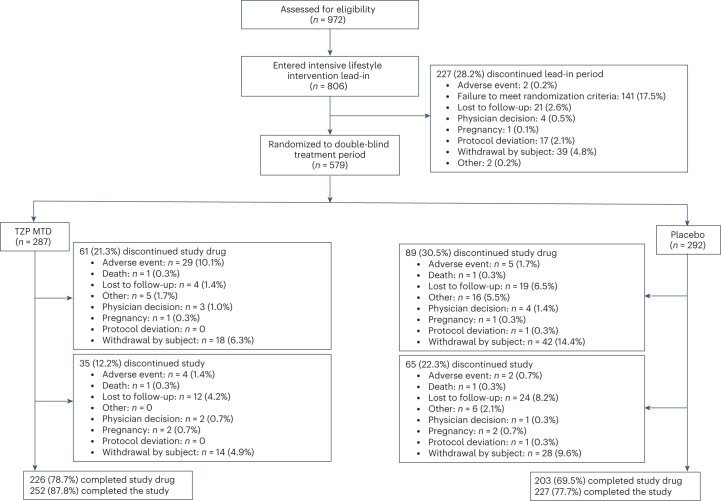
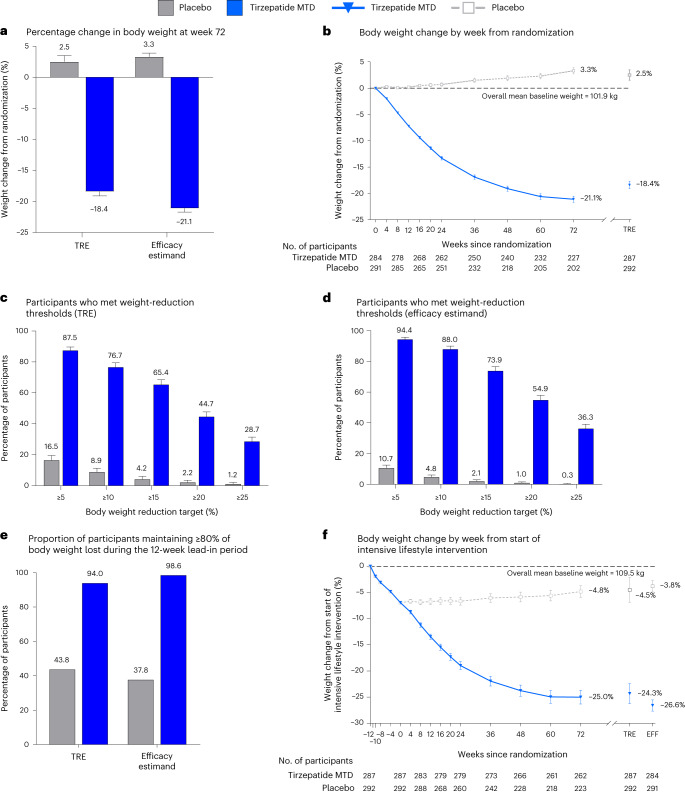
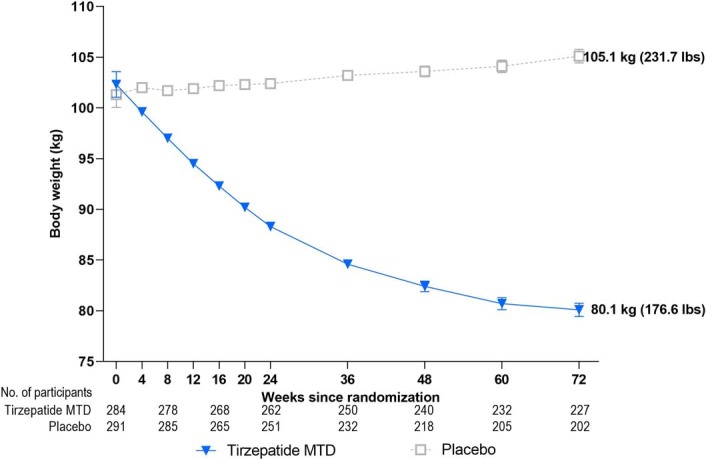
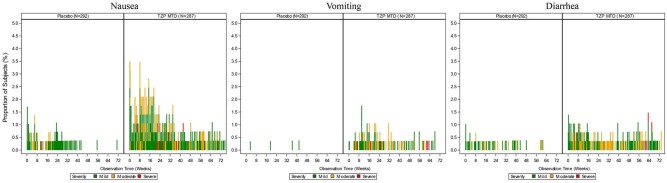
The effects of tirzepatide, a glucose-dependent insulinotropic polypeptide and glucagon-like peptide-1 receptor agonist, on weight reduction after successful intensive lifestyle intervention are unknown. This double-blind, placebo-controlled trial randomized (1:1) adults with body mass index ≥30 or ≥27 kg/m 2 and at least one obesity-related complication (excluding diabetes), who achieved ≥5.0% weight reduction after a 12-week intensive lifestyle intervention, to tirzepatide maximum tolerated dose (10 or 15 mg) or placebo once weekly for 72 weeks ( n = 579). The treatment regimen estimand assessed effects regardless of treatment adherence in the intention-to-treat population. The coprimary endpoint of additional mean per cent weight change from randomization to week 72 was met with changes of −18.4% (standard error (s.e.) 0.7) with tirzepatide and 2.5% (s.e. 1.0) with placebo (estimated treatment difference −20.8 percentage points (95% confidence interval (CI) −23.2%, −18.5%; P < 0.001). The coprimary endpoint of the percentage of participants achieving additional weight reduction ≥5% was met with 87.5% (s.e. 2.2) with tirzepatide and 16.5% (s.e. 3.0) with placebo achieving this threshold (odds ratio 34.6%; 95% CI 19.2%, 62.6%; P < 0.001). The most common adverse events with tirzepatide were gastrointestinal, with most being mild to moderate in severity. Tirzepatide provided substantial additional reduction in body weight in participants who had achieved ≥5.0% weight reduction with intensive lifestyle intervention. ClinicalTrials.gov registration: NCT04657016 .
Overview
The claims and statistics of this paper haven’t been checked yet.
Free: it reads the open-access text and checks the first 5 claims that cite a source we can check. Create a free account to check every claim.
Integrity signals
Registry
Cites
Statistics
Figures
Verification
Claims the paper makes
The claims and statistics of this paper haven’t been checked yet.
Free: it reads the open-access text and checks the first 5 claims that cite a source we can check. Create a free account to check every claim.
Claims other papers make about this one
Each is checked against this paper’s own text: does it say what the citing paper says it does?
The source backs part of the claim, not all of it — or backs it for a different population, condition or comparison.
In the citing paper
“They are the most efficacious AOMs currently available (Figure 1).[61][62][63][64]”
From Approach to Obesity Treatment in Primary Care: A Review (2024) · cites this paper as [64]
Experimental — accuracy not yet measuredThe source backs part of the claim, not all of it — or backs it for a different population, condition or comparison.
In the citing paper
“whereas in the SURMOUNT 3 trial, tirzepatide 10 or 15 mg/wk started after 12 weeks of intensive lifestyle intervention produced a 25 % reduction from baseline (versus 4.8 % with intensive lifestyle intervention alone) [170].”
From Nutritional priorities to support GLP-1 therapy for obesity: A joint advisory from the American College of Lifestyle Medicine, the American Society for Nutrition, the Obesity Medicine Association, and the Obesity Society (2025) · cites this paper as [170]
Experimental — accuracy not yet measuredThe source backs part of the claim, not all of it — or backs it for a different population, condition or comparison.
In the citing paper
“In the SURMOUNT-3 trial, individuals who received tirzepatide after a comprehensive 12-week lifestyle intervention achieved a mean 25 % weight reduction, compared to 4.8 % in the placebo group [170]”
From Nutritional priorities to support GLP-1 therapy for obesity: A joint advisory from the American College of Lifestyle Medicine, the American Society for Nutrition, the Obesity Medicine Association, and the Obesity Society (2025) · cites this paper as [170]
Experimental — accuracy not yet measuredThe source backs part of the claim, not all of it — or backs it for a different population, condition or comparison.
In the citing paper
“Gastrointestinal serious AEs (SAEs) were reported in nine publications [12,36,52,81,85,89,94,98,103] including the SCALE (liraglutide), STEP (semaglutide), and SURMOUNT (tirzepatide) clinical studies.”
From Symptomatic Adverse Events and Quality of Life Related to Incretin-Based Medicines for Obesity: A Systematic Review Involving >400,000 Subjects (2025) · cites this paper as [94]
Experimental — accuracy not yet measuredThe source backs part of the claim, not all of it — or backs it for a different population, condition or comparison.
In the citing paper
“In patients given the highest tolerable dose (10 or 15 mg), the placebo-adjusted incidence of fatigue was 6.4% and 3.9% [70,94].”
From Symptomatic Adverse Events and Quality of Life Related to Incretin-Based Medicines for Obesity: A Systematic Review Involving >400,000 Subjects (2025) · cites this paper as [94]
Experimental — accuracy not yet measured
32 more claims about this paper
Create a free account to see every claim other papers make about this one.
Self-check
Percentages, sums and reported differences re-computed from the paper’s own numbers.
The self-check needs the paper’s full text.
Citations
Cites
Multiple Imputation for Nonresponse in Surveys
Rubin, D. B. (1987) · Wiley Series in Probability and Statistics · doi:10.1002/9780470316696 · Cited by 20,701
Reduction in the incidence of type 2 diabetes with lifestyle intervention or metformin
(2002) · New England Journal of Medicine · doi:10.1056/nejmoa012512 · Cited by 19,011
Once-Weekly Semaglutide in Adults with Overweight or Obesity
Wilding, J. P. H., Batterham, R. L., Calanna, S., Davies, M., Van Gaal, L. F., Lingvay, I., McGowan, B. M., Rosenstock, J., Tran, M. T. D., Wadden, T. A., et al. (2021) · New England Journal of Medicine · doi:10.1056/nejmoa2032183 · Cited by 5,205
Self-citationEffects of Bariatric Surgery on Mortality in Swedish Obese Subjects
Sjöström, L., Narbro, K., Sjöström, C. D., Karason, K., Larsson, B., Wedel, H., Lystig, T., Sullivan, M., Bouchard, C., Carlsson, B., et al. (2007) · New England Journal of Medicine · doi:10.1056/nejmoa066254 · Cited by 4,668
Tirzepatide Once Weekly for the Treatment of Obesity
Jastreboff, A. M., Aronne, L. J., Ahmad, N. N., Wharton, S., Connery, L., Alves, B., Kiyosue, A., Zhang, S., Liu, B., Bunck, M. C., et al. (2022) · New England Journal of Medicine · doi:10.1056/nejmoa2206038 · Cited by 3,838
Self-citationCardiovascular effects of intensive lifestyle intervention in type 2 diabetes
The Look AHEAD Research Group (2013) · New England Journal of Medicine · doi:10.1056/nejmoa1212914 · Cited by 2,908
Di Angelantonio, E., Bhupathiraju, S. N., Wormser, D., Gao, P., Kaptoge, S., de Gonzalez, A. B., Cairns, B. J., Huxley, R., Jackson, C. L., Joshy, G., et al. (2016) · The Lancet · doi:10.1016/s0140-6736(16)30175-1 · Cited by 2,821
A Randomized, Controlled Trial of 3.0 mg of Liraglutide in Weight Management
Pi-Sunyer, X., Astrup, A., Fujioka, K., Greenway, F., Halpern, A., Krempf, M., Lau, D. C. W., le Roux, C. W., Violante Ortiz, R., Jensen, C. B., et al. (2015) · New England Journal of Medicine · doi:10.1056/nejmoa1411892 · Cited by 2,724
Garvey, W. T., Mechanick, J. I., Brett, E. M., Garber, A. J., Hurley, D. L., Jastreboff, A. M., Nadolsky, K., Pessah-Pollack, R., & Plodkowski, R. (2016) · Endocrine Practice · doi:10.4158/ep161365.gl · Cited by 1,914
Mechanisms, Pathophysiology, and Management of Obesity
Heymsfield, S. B., & Wadden, T. A. (2017) · New England Journal of Medicine · doi:10.1056/nejmra1514009 · Cited by 1,867
Self-citation
Cited by
Items 201–300 of 527
Šantić, R., Martinovic, L., Pavlović, N., Rušić, D., Kumrić, M., Martinović, D., Kurir, T. T., & Božić, J. (2026) · Metabolites · doi:10.3390/metabo16060364 · Cited by 11
“Strong efficacy was also reproduced in SURMOUNT-2 among participants with type 2 diabetes and in later maintenance-style studies [4,5,49].”
Gaffey, R. H., Takyi, A. K., & Shukla, A. P. (2024) · Expert Opinion on Investigational Drugs · doi:10.1080/13543784.2024.2377319 · Cited by 8
“A subsequent study, SURMOUNT-3 showed additional weight loss on tirzepatide, maximum tolerated dose (10 mg or 15 mg), versus placebo, after a lead-in period of 12 weeks of intensive lifestyle intervention, 18.4% versus 2.5% [111].”
InfluentialTratamiento farmacológico de la obesidad. Situación actual y nuevos tratamientos
Pérez, J. S., & Miguel, G. A. (2024) · Atención Primaria · doi:10.1016/j.aprim.2024.103074 · Cited by 9
A perspective on intermittent fasting and cardiovascular risk in the era of obesity pharmacotherapy
Eliopoulos, A. G., Gkouskou, K. K., Tsioufis, K. P., & Sanoudou, D. (2025) · Frontiers in Nutrition · doi:10.3389/fnut.2025.1524125 · Cited by 8
Baya, N. A., Sur‐Erdem, İ., Venkatesh, S. S., Reibe, S., Charles, P. D., Navarro‐Guerrero, E., Hill, B., Lassen, F. H., Claussnitzer, M., Palmer, D. S., et al. (2025) · The American Journal of Human Genetics · doi:10.1016/j.ajhg.2025.08.013 · Cited by 9
Tirzepatide: unveiling a new dawn in dual-targeted diabetes and obesity management
Rabbani, S. A., El‐Tanani, M., Matalka, I. I., Rangraze, I. R., Aljabali, A. A. A., Khan, M. A., & Tambuwala, M. M. (2024) · Expert Review of Endocrinology & Metabolism · doi:10.1080/17446651.2024.2395540 · Cited by 9
“Predominantly, mild-to-moderate GI-related events were the most common treatment-emergent side effects reported upon dose escalation [110].”
Gastrointestinal Symptoms in Obesity Therapy: Mechanisms, Epidemiology, and Management Strategies
Witaszek, T., Biesiada, A. M., Iskra-Trifunović, J., Babicki, M., Mastalerz–Migas, A., & Kłoda, K. (2025) · Biomedicines · doi:10.3390/biomedicines13102362 · Cited by 8
Argobi, Y., Jadaan, N. S., Alshalhoob, H. B., Alyousef, M. S., Alotaibi, G. M., Alwesaibie, H. S., & Alshehri, I. (2026) · Journal of Cosmetic Dermatology · doi:10.1111/jocd.70835 · Cited by 7
“This aligns with pharmacovigilance reports, which suggest that it may be due to its more significant weight-reducing effects [10, 11].”
Zambrano-Villacres, R., Campuzano-Donoso, M., Reytor-González, C., Rossetti, G., Cobellis, L., Cobellis, F., Pilone, V., Simancas‐Racines, D., & Schiavo, L. (2026) · Nutrients · doi:10.3390/nu18111751 · Cited by 9
Ilie, I. R. P., Ghibu, S., Butucă, A., Dobrea, C. M., Frum, A., Homorodean, C., Chiş, A. A., & Morgovan, C. (2026) · Pharmaceuticals · doi:10.3390/ph19060876 · Cited by 7
Cross, L. V. (2024) · American Journal of Health-System Pharmacy · doi:10.1093/ajhp/zxae273 · Cited by 8
Innovative Glucagon-based Therapies for Obesity
Belay, K. E., Jemal, R. H., & Tuyizere, A. (2024) · Journal of the Endocrine Society · doi:10.1210/jendso/bvae197 · Cited by 8
Health and Well-Being Coaching Adjuvant to GLP-1 Induced Weight Loss
Sforzo, G. A., Gordon, N. F., Peeke, P. M., & Moore, M. A. (2024) · American Journal of Lifestyle Medicine · doi:10.1177/15598276241302273 · Cited by 8
“41 In the landmark tirzepatide (Mounjuro and Zepbound) study, there was only a 3% loss of body weight for the placebo/lifestyle counseling group while the GLP-1 groups experienced 15% – 20% loss over the same 72-week treatment period.”
Elangovan, H., Gunton, J. E., Zheng, M., Fan, J.-G., Goh, G. B., Grønbæk, H., & George, J. (2025) · Hepatology International · doi:10.1007/s12072-025-10795-6 · Cited by 7
Evolution of multidisciplinary obesity treatments: past, present, and future role of nutrition
Heymsfield, S. B., Atherton, P. J., Christensen, S. M., Tewksbury, C. M., Velazquez, A., Walter, J., & Blaak, E. E. (2025) · Obesity · doi:10.1002/oby.24340 · Cited by 7
“…or obesity and at least one obesity-related complication (excluding diabetes) who had initially achieved a ≥ 5.0% weight reduction with an intensive lifestyle intervention, tirzepatide resulted in an additional 18.4% weight reduction versus 2.5% weight gain with placebo ( p 0.001) [31].”
InfluentialDemidova, T. Y., & Izmaylova, M. Y. (2025) · FOCUS Endocrinology · doi:10.62751/2713-0177-2025-6-3-03 · Cited by 8
Yokote, K., Fukushima, Y., Shingaki, T., Oura, T., & Ogawa, W. (2025) · Diabetes Obesity and Metabolism · doi:10.1111/dom.70315 · Cited by 6
“12,14,15 As the body weight reductions in the subgroups exceed Japanese guideline-recommended targets of at least 3% for obesity disease and 5% to 10% for high-degree obesity disease, 2 the current data support the use of tirzepatide 10 and 15 mg as therapeutic doses to treat obesity disease in…”
Chen, J.-J., Hsu, C., Hung, C., Suen, M.-W., Wang, H.-Y., Yang, W.-C., Stubbs, B., Chen, Y., Chen, T., Lei, W., et al. (2026) · International Journal of Molecular Sciences · doi:10.3390/ijms27020608 · Cited by 7
Self-citationPolu, P. R. (2026) · Obesity Medicine · doi:10.1016/j.obmed.2026.100686 · Cited by 7
Genetic architecture of obesity and advances in precision pharmacotherapy: a comprehensive review
Kavaja, F., Liehr, T., & Temaj, G. (2026) · Acta Biochimica Polonica · doi:10.3389/abp.2026.15484 · Cited by 6
Glucagon-like peptide-1 receptor agonists and hair loss: A systematic review and meta-analysis
Cheng, P.-L., & Chang, H. (2026) · Diabetes Research and Clinical Practice · doi:10.1016/j.diabres.2026.113333 · Cited by 8
Lim, S. K., Lee, S., & Eckel, R. H. (2026) · Diabetes & Metabolism Journal · doi:10.4093/dmj.2026.0492 · Cited by 8
Guo, X., Zhang, J., Li, Q., Ye, Z., & Yuan, S. (2026) · Diabetes Obesity and Metabolism · doi:10.1111/dom.71025 · Cited by 8
“Tirzepatide is the first- in-class dual agonist of glucose-dependent insulinotropic polypeptide (GIP) and glucagon-like peptide-1 (GLP-1) receptors [2, 3].”
Efficacy of antiobesity medications among breast cancer survivors taking aromatase inhibitors
Fansa, S., Ghusn, W., Tama, E., Nicolalde, B., Añazco, D., Andre, S. D. ’., Faubion, S. S., SHUFELT, C. L., Acosta, A., & Andrade, M. D. H. (2024) · Breast Cancer Research and Treatment · doi:10.1007/s10549-024-07450-3 · Cited by 6
Paradigm shift in obesity treatment: an extensive review of current pipeline agents
Çetin, E., Pedersen, B., & Burak, M. F. (2025) · TURKISH JOURNAL OF MEDICAL SCIENCES · doi:10.55730/1300-0144.5938 · Cited by 6
“For example, tirzepatide, in combination with lifestyle interventions, results in 26.6% weight loss at week 72 [3].”
InfluentialA geriatrician's approach to managing the complex older adult with obesity
Dewar, S. (2025) · Obesity · doi:10.1002/oby.24267 · Cited by 7
“…older adults, as the resistance exercise and adherence to a protein-enriched diet help to prevent the anticipated muscle loss associated with AOMs [ 85] A segment of the older adult population with increased chronic disease burden, adverse quality of life, cognitive dysfunction and depression,…”
The Latest Trends in the Management of Type 1 and Type 2 Diabetes Mellitus
DeClue, C. E., Gonzalez, M., Bradley, A. B., Leon, B. G. C., & Srivastava, G. (2024) · Endocrines · doi:10.3390/endocrines5040041 · Cited by 6
Self-citationAMPK-Mediated Multi-Organ Protective Effects of GLP-1 Receptor Agonists
Wang, X., & Wang, L. (2025) · Health and Metabolism · doi:10.53941/hm.2025.100004 · Cited by 8
Avgerinos, I., Kakotrichi, P., Karagiannis, T., Bekiari, E., & Τσάπας, Α. (2024) · Expert Opinion on Drug Discovery · doi:10.1080/17460441.2024.2324918 · Cited by 7
“Mild-to-moderate gastrointestinal adverse events were more frequent with tirzepa-tide [57].”
BackgroundKushner, R. F., Johansen, O. E., Araujo Torres, K., Phan, T.-M., & Marczewska, A. (2025) · Obesities · doi:10.3390/obesities5020029 · Cited by 5
“Reported constipation discontinuation rates were 0.7% (placebo-adjusted) and 0.5% (no placebo data) in clinical studies (both evaluating tirzepatide) [36,94].”
InfluentialSelf-citationLifestyle Modification for Obesity Management—A Cornerstone and Not a Roadblock
Richman, I., & Rittenberg, E. (2025) · JAMA Internal Medicine · doi:10.1001/jamainternmed.2024.6453 · Cited by 5
Who Wins the Battle Against Obesity? A Network Meta-Analysis Comparing Tirzepatide and Semaglutide
Bernardi, J. C., Cavalcante, D. V. S., Huntermann, R., Molinari, M. E., Zanon, L. Z., Khater, J., Gomez, V. A., & Fischer‐Bacca, C. O. (2026) · Journal of Diabetes · doi:10.1111/1753-0407.70192 · Cited by 5
Talay, L., Vickers, M., & Wu, S. (2024) · Telemedicine Reports · doi:10.1089/tmr.2024.0023 · Cited by 5
Obesidad y riesgo cardiovascular: una revisión para el clínico
Garaygordobil, D. A., Villarejo, M. G., & González-Arias, M. (2025) · Archivos de cardiología de México · doi:10.24875/acm.24000123 · Cited by 5
Napoli, M. D., Rouhi, A. D., Dumon, K. R., Castle, R., Williams, N. N., Baimas‐George, M. R., Kennealey, P. T., Nydam, T. L., & Choudhury, R. A. (2025) · Surgery for Obesity and Related Diseases · doi:10.1016/j.soard.2025.04.001 · Cited by 6
Kasperová, B. J., Cinkajzlová, A., Horváth, L., Svoboda, P., Haluzík, M., & Hubáčková, S. (2025) · Frontiers in Cell and Developmental Biology · doi:10.3389/fcell.2025.1622107 · Cited by 5
Wang, J., Kang, J., Peng, T., Chen, H., Chen, S., & Lee, M. (2025) · Clinical Obesity · doi:10.1111/cob.70036 · Cited by 5
“Of these studies, 6 focused on patients with T2D [10, 19–23], and 4 involved non-diabetic individuals with obesity or overweight [9, 24, 26, 27].”
Ellberg, C. C., Schwartz, H. R., Witt, A., McCowen, K. C., Fuentes, A. L., & Malhotra, A. (2025) · Current Pulmonology Reports · doi:10.1007/s13665-025-00384-1 · Cited by 6
Weight management treatment in obesity
Rubio, M. Á., & Carreiro, S. M. (2025) · Medicina Clínica (English Edition) · doi:10.1016/j.medcli.2025.107152 · Cited by 7
Lingow, S. E., Carris, N. W., Clements, J. N., Courtney, L. A., Lennon, A., Sherrill, C. H., & Dril, E. V. (2025) · JACCP JOURNAL OF THE AMERICAN COLLEGE OF CLINICAL PHARMACY · doi:10.1002/jac5.70111 · Cited by 5
“It is important to note that all studies focusing on weight loss efficacy included some measure of lifestyle interventions [77, 78].”
Ashlaw, E. F., Elfers, C., Chichura, K. S., Miranda, I. C., McGivney, A., Chepurny, O. G., Holz, G. G., Mullins, G., den Hartigh, L. J., Liu, Y., et al. (2025) · Metabolism · doi:10.1016/j.metabol.2025.156414 · Cited by 5
A narrative review on tirzepatide’s therapeutic potential in glycemic control and cardioprotection
Thiriveedi, M., Domingo, F. S., Yates, H., Baddam, S., Beblawy, R. E., Nimmana, B., & Patel, S. (2025) · Annals of Medicine and Surgery · doi:10.1097/ms9.0000000000004055 · Cited by 8
“…−23.6 kg Placebo: −2.4 kg HbA1c ↓ N/A N/A N/A SURMOUNT-2 [ 17 ] Weight ↓ N/A −13.5 kg −15.6 kg Placebo: −3.2 kg HbA1c ↓ N/A ~1.9% 2.1% SURMOUNT-3 [ 18 ] Weight ↓ N/A N/A −22.8 kg a Placebo: −3.5 kg HbA1c ↓ N/A N/A N/A SURMOUNT-4 [ 19 ] Weight Adults with T2DM SURPASS 1-5 [ 12–16 ] Fasting plasma…”
InfluentialKamrul-Hasan, A. B. M., Chatterjee, S., Ashraf, H., Nagendra, L., Dutta, D., & Pappachan, J. M. (2025) · Endocrine Practice · doi:10.1016/j.eprac.2025.11.010 · Cited by 5
Tirzepatide-Induced Liver Injury: A Rare Complication
Spaeth, L. D., Jordan, K. M., Barlow, M., & Cottrell, D. A. (2025) · AACE Endocrinology and Diabetes · doi:10.1016/j.aed.2025.11.009 · Cited by 5
Guo, L., Ding, S., Wang, W., Zhang, H., Dai, S., Li, C., Yuan, Y., Stefański, A., Jouravskaya, I., & FORRESTER, T. D. (2025) · EClinicalMedicine · doi:10.1016/j.eclinm.2025.103722 · Cited by 5
“19 The EAS for each trial was derived from the respective modified intent-to-treat (mITT) population, defined as all randomized participants receiving ≥ 1 dose of study medication, and included data captured during treatment period (up to last dose date + 7 days).”
Self-citationSchmidt, P. H. S., de Souza, V. S. N., Machado, L. G., Rodrigues, J. V. A., da Cruz, J. V. R., de Souza, L. S. N., dos Santos, B. E., Hohl, A., Ronsoni, M. F., & van de Sande‐Lee, S. (2026) · Diabetes Obesity and Metabolism · doi:10.1111/dom.70529 · Cited by 8
“The risk of bias across the included RCTs was evaluated using the Cochrane Risk of Bias 2 (RoB 2) tool (Figure 4).”
InfluentialHindi, A. M. K., Mekkawy, M. A., & Shokr, H. (2026) · Pharmaceuticals · doi:10.3390/ph19030365 · Cited by 6
“The efficacy of these medications in achieving clinically significant weight loss has been demonstrated across several large randomized controlled trials, such as the STEP [5], SCALE [6], and SURMOUNT [7].”
Aronne, L. J., Horn, D. B., Kokkinos, A. D., Falcón, B. L., Wang, H., Hoffmann, H. T., Lee, C. J., & Dunn, J. P. (2026) · The American Journal of Medicine · doi:10.1016/j.amjmed.2026.03.010 · Cited by 6
Weight Loss With GLP ‐1 Agonists in Nondiabetic Adults: Systematic Review and Network Meta‐Analysis
Lim, M. W., Gokhale, P., Akosah, A. A., & Zapata, L. V. (2026) · Obesity · doi:10.1002/oby.70169 · Cited by 6
“Ten studies were conducted across multiple countries [22–31], while five studies were conducted in a single country.”
GLP-1 medications for weight-loss: a triumph of marketing over patient care
Chastain, R., Meadows, A., & Adams, L. (2026) · Fat Studies · doi:10.1080/21604851.2026.2646492 · Cited by 6
“…et al. 2024; Davies et al. 2021; Garvey et al. 2023; Jastreboff et al. 2022; Kadowaki et al. 2022, 2025; Kosiborod et al. 2023; McGowan et al. 2024; Mu et al. 2024; Packer et al. 2025; Rubino et al. 2021, 2022; Ryan et al. 2024; Wadden et al. 2021, 2023; Wilding et al. 2021; Zhao et al. 2024).”
Incretin-Based Anti-obesity Medications in Polycystic Ovary Syndrome: The Evidence Map
Jensterle, M., & Janež, A. (2026) · Drugs · doi:10.1007/s40265-026-02325-x · Cited by 6
GIP in Cardiovascular and Kidney Disease: From Physiology to Pharmacology
Fano, M. D., Haurum, L. L., Andreasen, C. R., Porcellati, F., & Andersen, A. (2026) · Diabetes Obesity and Metabolism · doi:10.1111/dom.70888 · Cited by 5
“SURMOUNT-2 showed substantial, though attenuated, weight loss in obesity and T2D [93], while SURMOUNT-3 and SURMOUNT-4 demonstrated that tirzepatide augments lifestyle-induced weight loss and that continued treatment is necessary to prevent weight regain [94, 95].”
Effect of tirzepatide on blood pressure levels in overweight/obese individuals without diabetes
Patoulias, D., Popovic, D. S., Koufakis, T., Stavropoulos, K., & Doumas, M. N. (2023) · European Journal of Internal Medicine · doi:10.1016/j.ejim.2023.12.022 · Cited by 5
A New Drug for Obesity: Tirzepatide
Sidhu, J. K., & Singh, S. (2024) · Endocrine Metabolic & Immune Disorders - Drug Targets · doi:10.2174/0118715303319530240703111013 · Cited by 6
A Saudi Heart Association Position Statement on Obesity and Cardiovascular Disease
AlHabeeb, W., Kinsara, A. J., Bakhsh, A., Tash, A. A., Alshammary, A., Almasood, A. S., Alghalayini, K. W., Arafah, M., Hamdy, O., Alsifri, S. N., et al. (2024) · Journal of the Saudi Heart Association · doi:10.37616/2212-5043.1391 · Cited by 6
“Results from the SURMOUNT-3 [315] and SURMOUNT-4 trials [316] investigated the maximum tolerated dose of tirzepatide (10 or 15 mg) were also positive; 21.1% mean bodyweight loss was achieved by week 72 in the SURMOUNT 3 trial [315].”
MethodInfluentialWang, S., Schwartz, P. F., & Mancuso, J. P. (2025) · BMC Medical Research Methodology · doi:10.1186/s12874-025-02494-5 · Cited by 5
Li, X., Cao, D., Sapin, H., Wang, F., Hunter, T. M., RAIBULET, N. K., Denning, M., & Kaplan, L. M. (2025) · Obesity · doi:10.1002/oby.70067 · Cited by 4
Exploring Adults’ Experiences with Tirzepatide for Weight Loss: A Mixed-Methods Study
Adam, S., Ibrahim, F. M., Dabou, E. A. R., Pitre, S., Aiman, R., & AbdelSamad, S. (2025) · Healthcare · doi:10.3390/healthcare13233102 · Cited by 4
“Incretin-based pharmacotherapy has expanded treatment options, particularly glucagon-like peptide 1 (GLP 1) receptor agonists that enhance satiety, modulate glycaemia, and support weight reduction [2,3].”
Feetham, C. H., Groom, S., John, L. M., Christoffersen, B. Ø., Collabolletta, V., Lyons, D., Adamson, A. D., Lundh, S. H., Gerstenberg, M. K., Tang‐Christensen, M., et al. (2025) · Cell Metabolism · doi:10.1016/j.cmet.2025.10.021 · Cited by 4
Banji, D., Alshahrani, S., Alfarhan, M., & Banji, O. J. F. (2025) · Saudi Pharmaceutical Journal · doi:10.1007/s44446-025-00050-2 · Cited by 4
Current clinical application of incretin therapy for obesity management
Skinner, K., & Clements, J. N. (2025) · Canadian Journal of Physiology and Pharmacology · doi:10.1139/cjpp-2025-0152 · Cited by 5
iCARDIO Alliance Global Implementation Guidelines for the Management of Obesity 2025
Anker, S. D., Ji, L., Kindel, T. L., Coats, A. J. S., Ojji, D. B., Puente-Barragán, A., Rossing, P. R., Zieroth, S. R., Ahmad, S., Usman, S., et al. (2026) · Journal of Cachexia Sarcopenia and Muscle · doi:10.1002/jcsm.70167 · Cited by 5
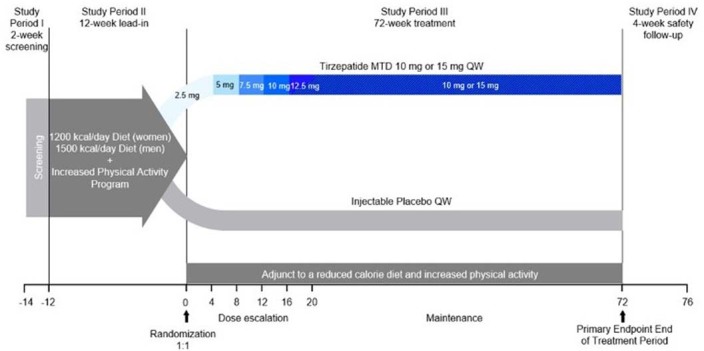
“SURMOUNT 3 [101] patients were subjected to an intensive lifestyle intervention, and only those who lost ≥ 5% weight on it were randomised to either tirzepatide (10 or 15 mg) or placebo.”
Zheng, Z., Pettus, J., Warner, A., Jones, B., Pugsley, M., Stege, J. T., Hirakawa, B. P., Jaiman, M., Tolentino, J. C., Lee, T., et al. (2026) · Molecular Metabolism · doi:10.1016/j.molmet.2026.102340 · Cited by 4
“…trial, discontinuation reached approximately 30% overall in the semaglutide group, including 16.6% specifically due to adverse events [45] and in the SURMOUNT-3 phase 3 trial of tirzepatide, discontinuation due to adverse events was reported in 10.5% of participants vs. 2.1% with placebo [46].”
InfluentialPardali, E. C., Gkouskou, K. K., Cholevas, C., Poulimeneas, D., Tsiroukidou, K., Goulis, D. G., & Grammatikopoulou, M. G. (2026) · Nutrients · doi:10.3390/nu18060962 · Cited by 6
“In the SURMOUNT-3 and 4 trials [46,53], GI symptoms were managed through dietary counseling (not-other-defined), symptomatic medications, according to each investigator’s discretion, or by skipping a single treatment dose, as described in the protocol.”
InfluentialGalindo, R. J., Gudzune, K. A., Look, M., Lee, C. J., Benabbad, I., Cao, D., Meng, Q., & Mojdami, D. (2026) · JAMA Network Open · doi:10.1001/jamanetworkopen.2026.3274 · Cited by 4
Understanding the interplay between chronic lymphocytic leukemia and type 2 diabetes
Vainer, N., Curovic, V. R., Niemann, C. U., Slager, S. L., & Rotbain, E. C. (2024) · Expert Review of Hematology · doi:10.1080/17474086.2024.2383417 · Cited by 4
Talay, L., Vickers, M., & Alvi, O. (2024) · Diabetes Obesity and Metabolism · doi:10.1111/dom.15903 · Cited by 4
“17,18 Results from these RCT series also indicate that tirzepatide's safety profile may be slightly better than that of semaglutide.”
Takyi, A. K., Gaffey, R. H., & Shukla, A. P. (2025) · Current Treatment Options in Gastroenterology · doi:10.1007/s11938-024-00465-1 · Cited by 4
“SURMOUNT-3, which evaluated tirzepatide as an adjunct to intensive lifestyle intervention, will be discussed in a subsequent section [29].”
InfluentialLearning from the roundtable on obesity solutions experiences: A 10-year anniversary point of view
Pronk, N. P., Dietz, W. H., Economos, C. D., Eneli, I., & Arena, R. A. (2025) · Progress in Cardiovascular Diseases · doi:10.1016/j.pcad.2025.01.003 · Cited by 4
Hassan, M. G., Hassan, D., & Hassan, G. A. (2025) · The Journal of the American Dental Association · doi:10.1016/j.adaj.2025.05.007 · Cited by 6
Glucagon-like peptide 1 receptor agonists in obesity treatment - a literature review
Jentkiewicz, A., Obeid, E. H., Ulrych, J., Krupa, J., Malinowski, M., Krasowski, M., Kalinowska, A., Pietras, W., Kozieł, A., & Kurek, Z. (2025) · Journal of Education Health and Sport · doi:10.12775/jehs.2025.78.57712 · Cited by 4
Zhao, L., Tao, F., Cheng, Z., Lu, Y., Liu, M. R., Chen, H., Zhang, M., Yang, Y., Song, X. H., Sun, Y., et al. (2025) · Diabetes Obesity and Metabolism · doi:10.1111/dom.16439 · Cited by 3
Zhao, L., Chen, H., Cheng, Z., Jiang, H., Lu, Y., Xiao, J., Xiao, X., Li, Y., Yuan, Y., & Li, X. (2025) · Obesity · doi:10.1002/oby.24306 · Cited by 3
Hunter, T. M., Hankosky, E. R., Meeks, A., Liao, B., Ward, J., Huang, A., & Chinthammit, C. (2025) · Clinical Therapeutics · doi:10.1016/j.clinthera.2025.05.003 · Cited by 3
Variations in weight loss and glycemic outcomes after sleeve gastrectomy by race and ethnicity
Vanegas, S. M., Curado, S., Zhou, B., Illenberger, N., Merriwether, E. N., Armijos, E., Schmidt, A. M., Ren‐Fielding, C. J., Parikh, M., Elbel, B. D., et al. (2025) · Obesity · doi:10.1002/oby.24320 · Cited by 3
“Baseline BMI differed significantly, with NHB participants having the highest BMI (mean [SD], 48.8 [7] kg/m 2 ) compared with H (42.9 [6] kg/m 2 ) and NHW participants (45.4 [7] kg/m 2 ; p < 0.0001).”
InfluentialLarsen, A. T., Melander, S. A., Mohamed, K. E., Petersen, E. A., Benmarce, M., Karsdal, M. A., & Henriksen, K. (2025) · Biomedicine & Pharmacotherapy · doi:10.1016/j.biopha.2025.118388 · Cited by 3
Horn, D. B., Aronne, L. J., Wharton, S., Bays, H. E., Valderas, E. G., Arad, A. D., Sharma, P., Dunn, J. P., Şenyücel, Ç., & Lee, C. J. (2025) · Obesity · doi:10.1002/oby.70014 · Cited by 3
Hussain, M., & Miras, A. D. (2025) · Die Chirurgie · doi:10.1007/s00104-025-02402-z · Cited by 3
The Obesity Drug Revolution: New Frontiers in Pharmacotherapy
Manoria, P. C. (2025) · Cureus · doi:10.7759/cureus.96713 · Cited by 9
“While 10.5% of participants discontinued tirzepatide due to adverse effects [54].”
InfluentialZheng, Y., Guo, Z., Jeong, E., Xu, S., Samuels, J. M., Dawwas, G. K., Tao, R., Srivastava, G., Chen, Y., & Yu, D. (2025) · Diabetes Research and Clinical Practice · doi:10.1016/j.diabres.2025.113041 · Cited by 3
Self-citationThe Impact of GLP-1 Receptor Agonists on Hair: Beneficial Effects or Adverse Outcomes?
Jafari, S. M. S., Caro, G., Lipner, S. R., & Iorizzo, M. (2026) · American Journal of Clinical Dermatology · doi:10.1007/s40257-026-01021-6 · Cited by 6
“There was Hair loss [20, 22, 25, 41, 31, 42] Hair regrowth [15, 17] no statistically significant association with tirzepatide or liraglutide.”
Olsen, M. B., GRIFFIN, J., Hövelmann, U., Macura, S., Hagen, B. F., Hesse, D., & Heise, T. (2026) · Diabetes Obesity and Metabolism · doi:10.1111/dom.70753 · Cited by 4
“Although semaglutide and tirze-patide provide clinically relevant and sustained weight loss up to 15% or more [1–5], they are associated with gastrointestinal (GI) adverse events (AEs) that can limit adherence and patient satisfaction [6].”
Tirzepatide and the Cardiovascular Continuum: Metabolic, Cardiorenal and Heart Failure Evidence
Parlati, A. L. M., Martini, L., Nardi, E., Carluccio, R., Parlati, L. E., Madaudo, C., & Filardi, P. P. (2026) · Clinical Medicine Insights Cardiology · doi:10.1177/11795468261460202 · Cited by 3
Alfaris, N., Kushner, R. F., Li, J., Chen, K. L., Fenimore, M., Calderón, B., & Stefański, A. (2026) · Diabetes Obesity and Metabolism · doi:10.1111/dom.70991 · Cited by 5
Self-citationSimancas‐Racines, D., Campuzano-Donoso, M., Rossetti, G., Cobellis, L., Pilone, V., Fascì-Spurio, F., Gavilanes, D. J., Soria, C., Reytor-González, C., & Schiavo, L. (2026) · Obesity Pillars · doi:10.1016/j.obpill.2026.100290 · Cited by 3
“…markedly reduced intake, rapid weight loss Pharmacovigilance signal and case reports of Wernicke encephalopathy during GLP-1RA therapy [20,21] Wernicke encephalopathy, neurological dysfunction [20 – 24] Folate Diet-quality dependent [25 – 27] ↓ vegetables, ↓ intake with caloric…”
Wharton, S., Stefański, A., Chen, J., Rao, G. S., Twum, E. A., & Denning, M. (2026) · Diabetes Obesity and Metabolism · doi:10.1111/dom.71032 · Cited by 3
Self-citationSpiazzi, B. F., Zingano, C. P., Colpani, V., & Gerchman, F. (2026) · Diabetes Research and Clinical Practice · doi:10.1016/j.diabres.2026.113431 · Cited by 3
Elbatreek, M. H., Li, Z., Yu, X., Gehred, N., Gromova, T., Chen, J., Huerta, M., Muraoka, N., Jensen, M. B., Kartha, V. K., et al. (2026) · European Heart Journal · doi:10.1093/eurheartj/ehag732 · Cited by 4
Self-citationDsouza, P. D., Chitralu, S. P. P., Khan, R., & Nyamagoud, S. B. (2025) · MGM Journal of Medical Sciences · doi:10.4103/mgmj.mgmj_386_24 · Cited by 3
Ray, S., Kapoor, N., Deshpande, N., Chatterjee, S., Kumar, J. S., Tantia, O., Goyal, G., Mukherjee, J. J., & Singh, A. K. (2024) · Expert Review of Clinical Pharmacology · doi:10.1080/17512433.2024.2330468 · Cited by 3
“Initially, the drug was tested for the management of T2DM in a series of clinical trials called the SURPASS trials [81], but more recently, three specific anti-obesity phase III trials have been published, which are named SURMOUNT 1, SURMOUNT 2, and SURMOUNT 3 [82–84].”
MethodAre the lipid-lowering effects of incretin-based therapies relevant for cardiovascular benefit?
Alnima, T., Smits, M. M., & Hanssen, N. M. J. (2024) · Current Opinion in Lipidology · doi:10.1097/mol.0000000000000949 · Cited by 3
Tirzepatide in Treating Metabolic Disorders
Wei, S., & Xu, S. (2024) · International Journal of Drug Discovery and Pharmacology · doi:10.53941/ijddp.2024.100023 · Cited by 4
Tirzepatide—New Evidence for the Treatment of Obesity From China
Jia, W., Xiao, J., & Chan, J. C. N. (2024) · JAMA · doi:10.1001/jama.2024.9104 · Cited by 3
Ganti, A., Tucker, S., Takyi, A. K., Nahid, M., Bickhart, A., Katz‐Feigenbaum, D., & Phillips, E. (2025) · Obesity Science & Practice · doi:10.1002/osp4.70045 · Cited by 2
“…our analysis did not control for the presence of being on a GLP‐1 for the primary treatment of type 2 diabetes and only covers the period from 2012 to 2020 before the release of newer effective incretin‐based therapies, such as Semaglutide and Tirzepatide for the indication of weight loss [33, 37].”
Elbashir, R. M. A., Elbashir, A., Basake, R. U., Mohieldin, A. Z. A., Elhaj, N. A. E., Ebrahim, F. E. M., Ahmed, W. G., & Mahgoub, O. A. M. (2025) · Cureus · doi:10.7759/cureus.95938 · Cited by 3
Besci, Ö., Güler, M. Ç., Foss‐Freitas, M. C., & Oral, E. A. (2025) · Expert Review of Endocrinology & Metabolism · doi:10.1080/17446651.2025.2574318 · Cited by 3
“As a combined GLP-1 and glucose-dependent insulinotropic polypeptide (GIP) receptor agonist, tirzepatide has emerged as an effective therapeutic agent for enhancing metabolic control and inducing weight reduction in diabetes [123,124].”
Cardiovascular Therapeutics at the Crossroads: Pharmacological, Genetic, and Digital Frontiers
Vetrano, E., Caturano, A., Nilo, D., Lorenzo, G. D., Tagliaferri, G., Piacevole, A., Donnarumma, M., Iadicicco, I., Picco, S., Moretto, S. M., et al. (2025) · Pharmaceuticals · doi:10.3390/ph18111703 · Cited by 3
Effects of incretin drugs on glycemic control and body weight
Levitskaya, A. N., Demidova, T. Y., & Геннадьевна, Л. К. (2025) · FOCUS Endocrinology · doi:10.62751/2713-0177-2025-6-3-07 · Cited by 2
Duncan, J., Stevens, P. L., Bigby, E., Floyd, C., Malina, J., Nickens, J., Lambert, A., & Kantor, T. (2025) · Obesity Pillars · doi:10.1016/j.obpill.2025.100236 · Cited by 3
Peptide drugs for obesity and type 2 diabetes mellitus: an overview of clinical trials
Barzgar, H., Darmadi, D., Nafisa, J., Narkulov, S., & Sviridova, M. B. (2025) · Clinica Chimica Acta · doi:10.1016/j.cca.2025.120772 · Cited by 2
Metadata
- Authors
- Wadden, T. A., Chao, A. M., Machineni, S., Kushner, R., Ard, J., Srivastava, G., Halpern, B., Zhang, S., Chen, J., Bunck, M. C., Ahmad, N. N., & Forrester, T.
- Affiliations
- University of Pennsylvania (US)
- Johns Hopkins University (US)
- Albert Einstein College of Medicine (US)
- Northwestern University (US)
- Wake Forest University Health Sciences (US)
- Vanderbilt University (US)
- Universidade de São Paulo (BR)
- Eli Lilly (United States) (US)
- Corresponding author
- Wadden, Thomas A.
- ORCID
- Venue
- Nature Medicine
- Published
- 2023-10-15
- Volume
- 29
- Issue
- 11
- Pages
- 2909-2918
- ISSN
- 1078-8956 (ISSN-L)
- 1546-170X
- PMC
- PMC10667099
- OpenAlex
- W4387653463
- Semantic Scholar
- 57e0717f0c115bd80831b24121cfc0cdb6307dce
- Cited by
- 442
- References
- 42
- Citations by year
- 2026: 141 · 2025: 182 · 2024: 112 · 2023: 7
- FWCI
- 68.85
- Type
- journal article
- Language
- en
- Update notices
- correction (2024-02-27)
- Open access
- hybrid
- doi.org
- Licence
- cc-by
- creativecommons.org/licenses/by/4.0 (tdm)
- creativecommons.org/licenses/by/4.0 (vor)
- Locations
- Nature Medicine (publishedVersion, cc-by)
- PubMed Central (publishedVersion, cc-by)
- PubMed (publishedVersion)
- Funders
- Eli Lilly and Company
- Topics
- Health Sciences › Medicine › Pharmacology (medical) › Pharmacology and Obesity Treatment
- Health Sciences › Medicine › Endocrinology, Diabetes and Metabolism › Diabetes Treatment and Management
- Health Sciences › Medicine › Surgery › Bariatric Surgery and Outcomes
- Keywords
- tirzepatide, obesity, overweight, intensive lifestyle intervention, weight loss, GIP/GLP-1 receptor agonist, obesity-related comorbidities, gastrointestinal adverse effects
- MeSH terms
- Glucagon-Like Peptide-1 Receptor, Glucagon-Like Peptide-1 Receptor Agonists, Tirzepatide, Adult, Diabetes Mellitus, Type 2, Double-Blind Method, Humans, Hypoglycemic Agents, Life Style, Obesity, Weight Loss, Overweight
About these checks
Registry, retraction, Cites and statistics results are computed, not judged, with one exception: a printed reference that no index lists is read once by a model before it counts as a citation error. Claims are extracted by a model and kept only when their quote appears verbatim in the text; each cited source is then checked, with a model’s help, for whether it says what the claim relies on. Those verdicts can be wrong — read the claim’s quote and the cited source before relying on one.
Statistics and arithmetic are recomputed, not judged.
Confidence bands are shown only for fields calibrated on our annotated test set. None is calibrated yet, so no band is shown.
What counts as a claim ›How we measure confidence ›How we check this ›
Are you an author, or do you see a problem with this page? Request a review
Data sources
Bibliographic data: Semantic Scholar, OpenAlex, Crossref.
Contains information from the Semantic Scholar Academic Graph Datasets, made available under the ODC Attribution License (ODC-BY 1.0).
Semantic Scholar’s data is described in: Kinney, R., et al. (2023). The Semantic Scholar Open Data Platform. arXiv:2301.10140.
