

Association between pathologic response and survival after neoadjuvant therapy in lung cancer
Open accessThe DOI matches its Crossref record; 40 of the 41 references it cites were found in a registry or an index.
Abstract
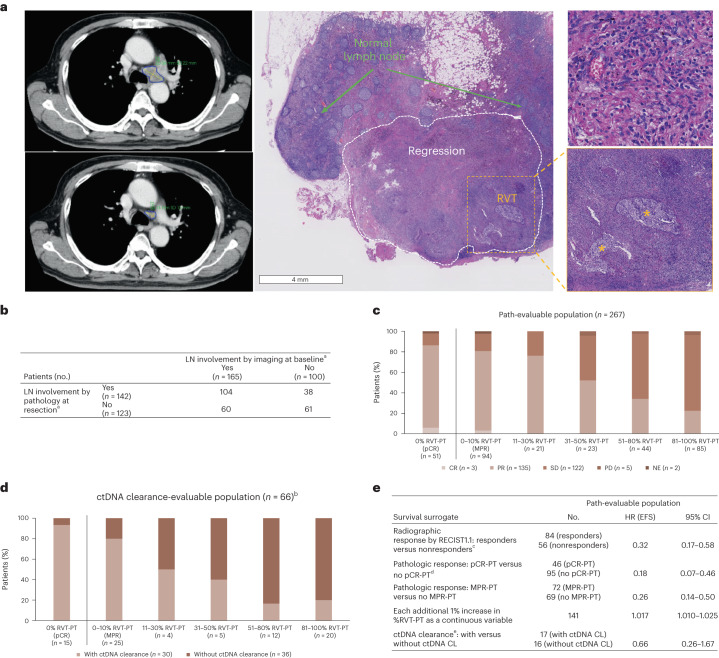
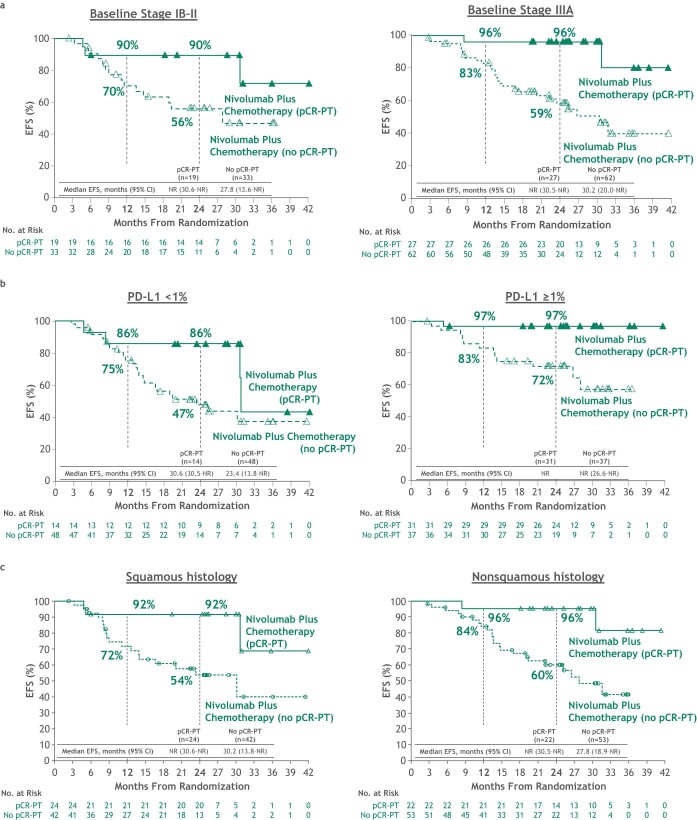
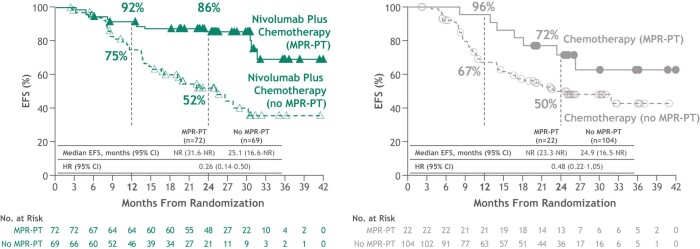
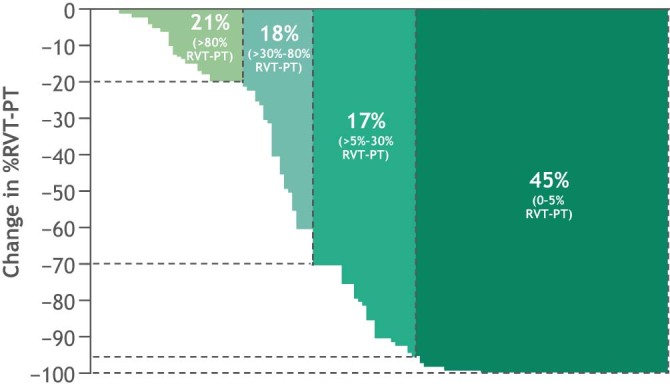
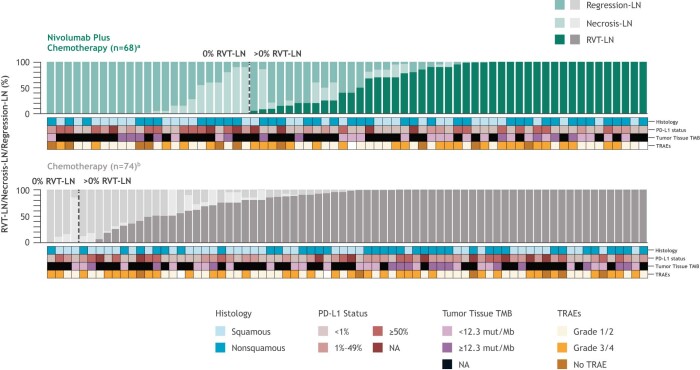
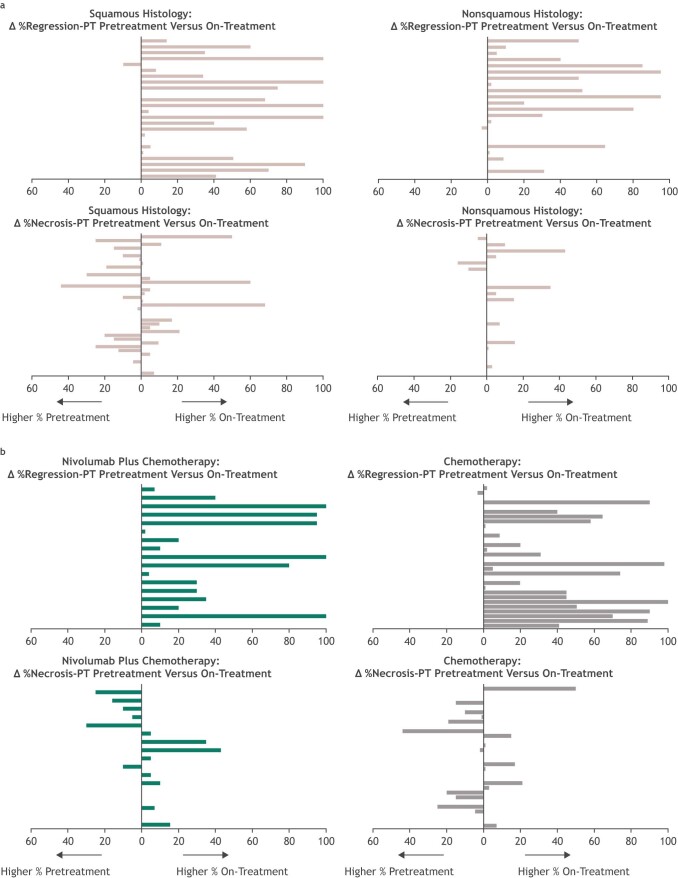
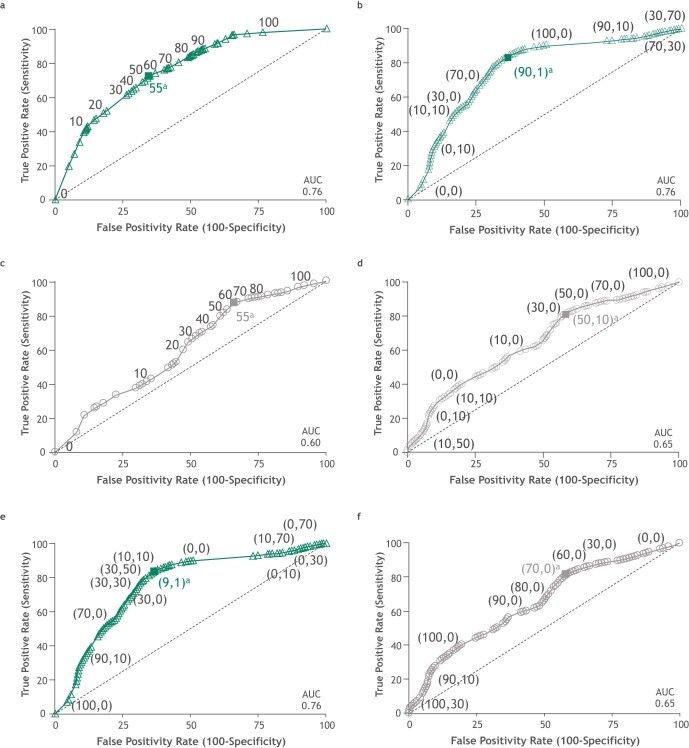
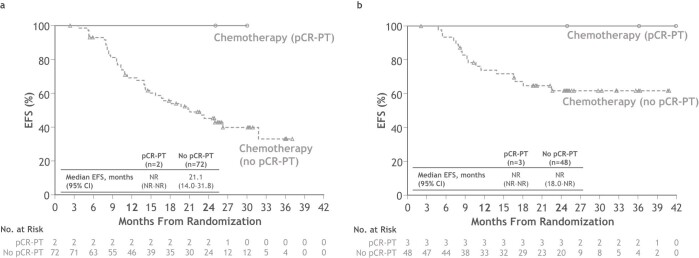
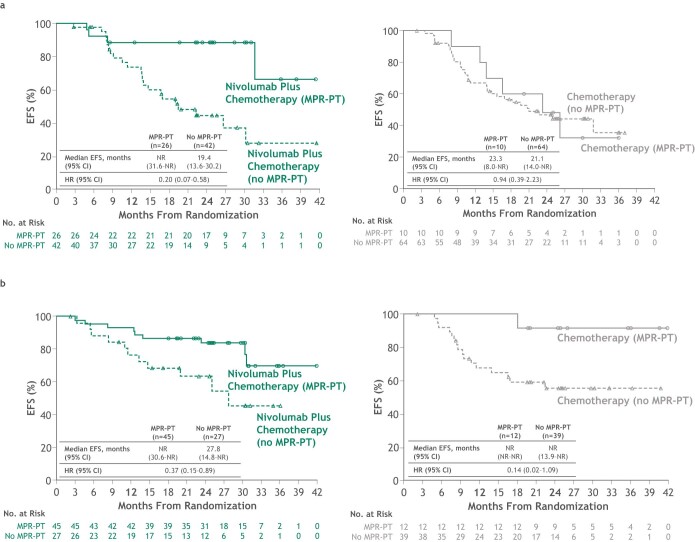
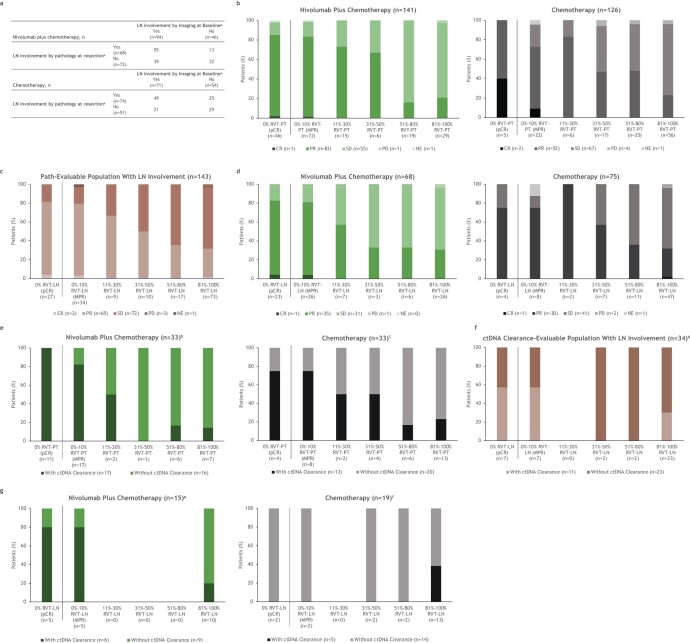
Neoadjuvant immunotherapy plus chemotherapy improves event-free survival (EFS) and pathologic complete response (0% residual viable tumor (RVT) in primary tumor (PT) and lymph nodes (LNs)), and is approved for treatment of resectable lung cancer. Pathologic response assessment after neoadjuvant therapy is the potential analog to radiographic response for advanced disease. However, %RVT thresholds beyond pathologic complete response and major pathologic response (≤10% RVT) have not been explored. Pathologic response was prospectively assessed in the randomized, phase 3 CheckMate 816 trial (NCT02998528), which evaluated neoadjuvant nivolumab (anti-programmed death protein 1) plus chemotherapy in patients with resectable lung cancer. RVT, regression and necrosis were quantified (0–100%) in PT and LNs using a pan-tumor scoring system and tested for association with EFS in a prespecified exploratory analysis. Regardless of LN involvement, EFS improved with 0% versus >0% RVT-PT (hazard ratio = 0.18). RVT-PT predicted EFS for nivolumab plus chemotherapy (area under the curve = 0.74); 2-year EFS rates were 90%, 60%, 57% and 39% for patients with 0–5%, >5–30%, >30–80% and >80% RVT, respectively. Each 1% RVT associated with a 0.017 hazard ratio increase for EFS. Combining pathologic response from PT and LNs helped differentiate outcomes. When compared with radiographic response and circulating tumor DNA clearance, %RVT best approximated EFS. These findings support pathologic response as an emerging survival surrogate. Further assessment of the full spectrum of %RVT in lung cancer and other tumor types is warranted. ClinicalTrials.gov registration: NCT02998528 .
Overview
The claims and statistics of this paper haven’t been checked yet.
Free: it reads the open-access text and checks the first 5 claims that cite a source we can check. Create a free account to check every claim.
Integrity signals
Registry
Cites
Statistics
Figures
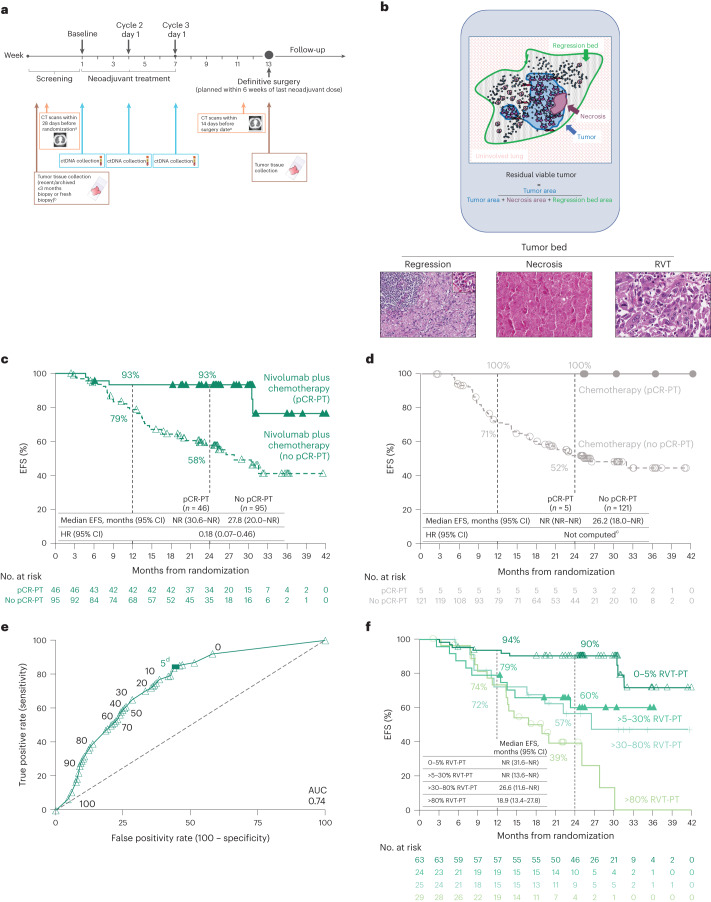
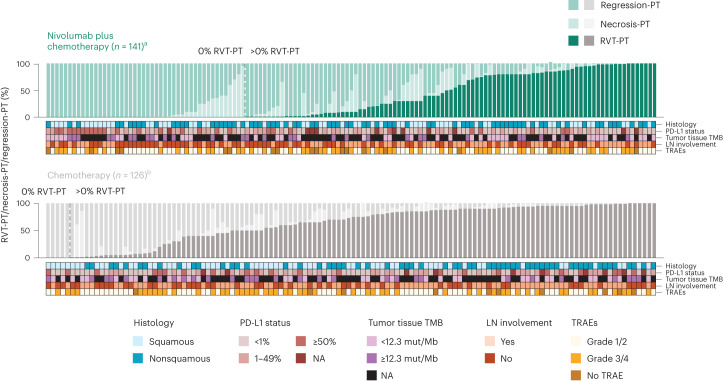
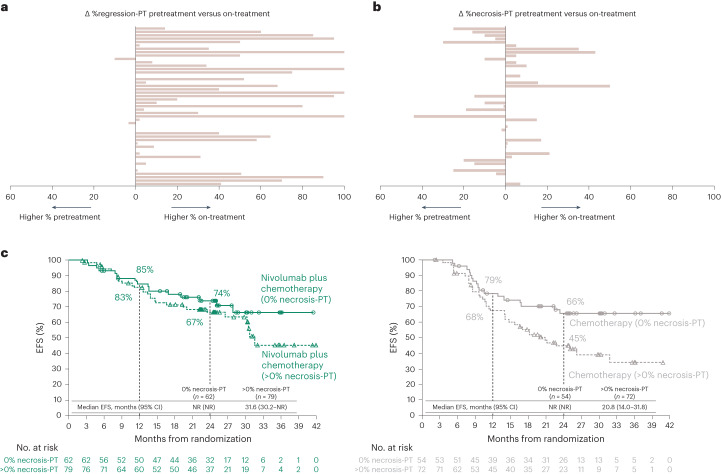
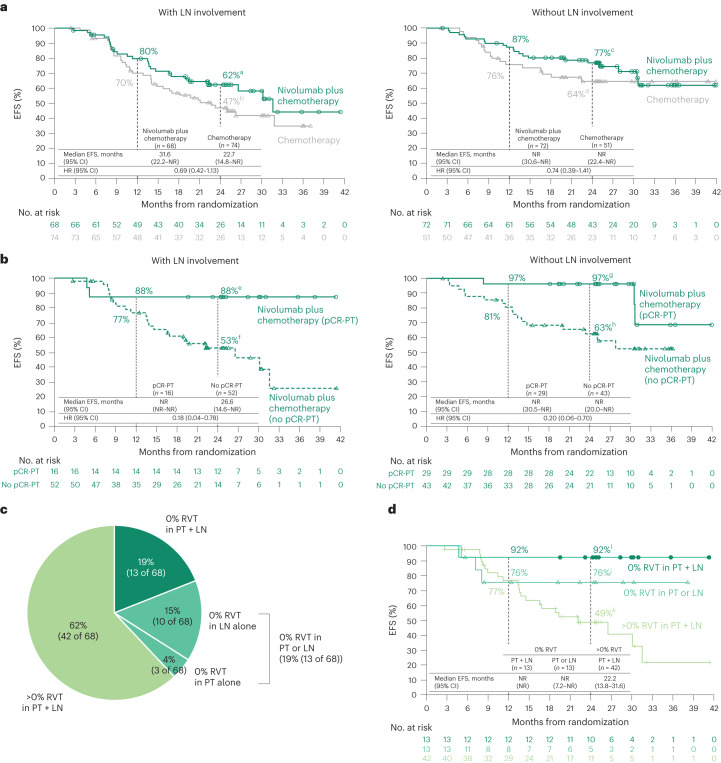
Verification
Claims the paper makes
The claims and statistics of this paper haven’t been checked yet.
Free: it reads the open-access text and checks the first 5 claims that cite a source we can check. Create a free account to check every claim.
Claims other papers make about this one
Each is checked against this paper’s own text: does it say what the citing paper says it does?
The source backs part of the claim, not all of it — or backs it for a different population, condition or comparison.
In the citing paper
“Evolving experience from the use of systemic anticancer therapy in solid tumours suggests that a pathologically demonstrated response in resected specimens predicts improved chances of complete remission in patients with various oncological diagnoses, including breast cancer, non-small-cell lung cancer, and bladder cancer.15–17”
From Pathological response following neoadjuvant immune checkpoint inhibitors in patients with hepatocellular carcinoma: a cross-trial, patient-level analysis (2024) · cites this paper as [16]
Experimental — accuracy not yet measuredThe source backs part of the claim, not all of it — or backs it for a different population, condition or comparison.
In the citing paper
“These findings are in line with what has been previously shown in patients with non-small-cell lung cancer, whereby a population of patients with early-stage disease undergoing neoadjuvant chemotherapy combined with ICI showed a similar polarisation of pathological responses.16”
From Pathological response following neoadjuvant immune checkpoint inhibitors in patients with hepatocellular carcinoma: a cross-trial, patient-level analysis (2024) · cites this paper as [16]
Experimental — accuracy not yet measured
Self-check
Percentages, sums and reported differences re-computed from the paper’s own numbers.
The self-check needs the paper’s full text.
Citations
Cites
New response evaluation criteria in solid tumours: revised RECIST guideline (version 1.1)
Eisenhauer, E. A., Therasse, P., Bogaerts, J., Schwartz, L. H., Sargent, D., Ford, R., Dancey, J., Arbuck, S., Gwyther, S., Mooney, M., et al. (2009) · European Journal of Cancer · doi:10.1016/j.ejca.2008.10.026 · Cited by 29,534 · cited 1×
“It also serves as a guide for the treating oncologist 27 .”
BackgroundGoldstraw, P., Chansky, K., Crowley, J., Rami-Porta, R., Asamura, H., Eberhardt, W. E. E., Nicholson, A. G., Groome, P., Mitchell, A., Bolejack, V., et al. (2016) · Journal of Thoracic Oncology · doi:10.1016/j.jtho.2015.09.009 · Cited by 4,607 · cited 1×
“Previous scoring systems for pathologic response to chemotherapy as well as American Joint Committee on Cancer pathologic downstaging require pathologic confirmation of pretreatment nodal disease 36 , which is subject to sampling error.”
MethodTime‐Dependent ROC Curves for Censored Survival Data and a Diagnostic Marker
Heagerty, P. J., Lumley, T., & Pepe, M. S. (2000) · Biometrics · doi:10.1111/j.0006-341x.2000.00337.x · Cited by 2,854
Neoadjuvant Nivolumab plus Chemotherapy in Resectable Lung Cancer
Forde, P. M., Spicer, J., Lu, S., Provencio, M., Mitsudomi, T., Awad, M. M., Felip, E., Broderick, S. R., Brahmer, J. R., Swanson, S. J., et al. (2022) · New England Journal of Medicine · doi:10.1056/nejmoa2202170 · Cited by 2,825 · cited 6×
“A list of investigators and study sites was previously published 19 .”
BackgroundMethodResultInfluentialSelf-citationNeoadjuvant PD-1 Blockade in Resectable Lung Cancer
Forde, P. M., Chaft, J. E., Smith, K. N., Anagnostou, V., Cottrell, T. R., Hellmann, M. D., Zahurak, M., Yang, S. C., Jones, D. R., Broderick, S., et al. (2018) · New England Journal of Medicine · doi:10.1056/nejmoa1716078 · Cited by 2,099
Self-citationSurrogate End Points in Clinical Trials: Are We Being Misled?
Fleming, T. R., & DeMets, D. L. (1996) · Annals of Internal Medicine · doi:10.7326/0003-4819-125-7-199610010-00011 · Cited by 1,651 · cited 1×
“In contrast to correlates, surrogates not only associate with outcome, but also manifest overall treatment effect on the clinical outcome 24,25 .”
BackgroundChalabi, M., Fanchi, L. F., Dijkstra, K. K., Van den Berg, J. G., Aalbers, A. G., Sikorska, K., Lopez-Yurda, M., Grootscholten, C., Beets, G. L., Snaebjornsson, P., et al. (2020) · Nature Medicine · doi:10.1038/s41591-020-0805-8 · Cited by 1,417 · cited 1×
“…is independent of disease location, for example, primary tumor (PT), lymph node (LN) or distant metastasis 7,8 , and scores RVT from 0 to 100%. irPRC for the assessment of %RVT has been used in multiple phase 1 and 2 trials evaluating neoadjuvant immunotherapy across diverse tumor types 9–18 .”
MethodPerioperative Pembrolizumab for Early-Stage Non–Small-Cell Lung Cancer
Wakelee, H., Liberman, M., Kato, T., Tsuboi, M., Lee, S.-H., Gao, S., Chen, K.-N., Dooms, C., Majem, M., Eigendorff, E., et al. (2023) · New England Journal of Medicine · doi:10.1056/nejmoa2302983 · Cited by 1,180 · cited 1×
“Since the first report, periadjuvant chemotherapy plus immunotherapy regimens have shown efficacy in this patient population 20,21 .”
BackgroundSelf-citationNeoadjuvant checkpoint blockade for cancer immunotherapy
Topalian, S. L., Taube, J. M., & Pardoll, D. M. (2020) · Science · doi:10.1126/science.aax0182 · Cited by 1,001 · cited 1×
“Neoadjuvant systemic immunotherapy offers the advantage of enhanced priming of the immune system while higher levels of tumor antigens are present, leading to improved immune surveillance of micrometastatic disease 4 .”
BackgroundSelf-citationIonic immune suppression within the tumour microenvironment limits T cell effector function
Eil, R., Vodnala, S. K., Clever, D., Klebanoff, C. A., Sukumar, M., Pan, J. H., Palmer, D. C., Gros, A., Yamamoto, T. N., Patel, S. J., et al. (2016) · Nature · doi:10.1038/nature19364 · Cited by 678 · cited 1×
“Preclinical studies have reported the adverse effect of necrosis on T cell effector function 34 , and a recent study in renal cell carcinoma showed that necrosis attenuated the survival benefit of TILs in patients receiving anti-PD-1 (ref.”
Background
Cited by
Overall Survival with Neoadjuvant Nivolumab plus Chemotherapy in Lung Cancer
Forde, P. M., Spicer, J. D., Provencio, M., Mitsudomi, T., Awad, M. M., Wang, C., Lu, S., Felip, E., Swanson, S. J., Brahmer, J. R., et al. (2025) · New England Journal of Medicine · doi:10.1056/nejmoa2502931 · Cited by 247
Self-citationSpicer, J. D., Cascone, T., Wynes, M. W., Ahn, M.-J., Dacic, S., Felip, E., Forde, P. M., Higgins, K. A., Kris, M. G., Mitsudomi, T., et al. (2024) · Journal of Thoracic Oncology · doi:10.1016/j.jtho.2024.06.010 · Cited by 161
Self-citationA single-cell atlas reveals immune heterogeneity in anti-PD-1-treated non-small cell lung cancer
Liu, Z., Yang, Z., Wu, J., Zhang, W., Sun, Y., Zhang, C., Bai, G., Li, Y., Fan, H., Chen, Y., et al. (2025) · Cell · doi:10.1016/j.cell.2025.03.018 · Cited by 204
Neoadjuvant nivolumab and relatlimab in locally advanced MMR-deficient colon cancer: a phase 2 trial
de Gooyer, P., Verschoor, Y. L., van den Dungen, L. D. W., Balduzzi, S., Marsman, H. A., Foppen, M. H. G., Grootscholten, C., Dokter, S., den Hartog, A. G., Verbeek, W. H. M., et al. (2024) · Nature Medicine · doi:10.1038/s41591-024-03250-w · Cited by 151
Current trends in sensitizing immune checkpoint inhibitors for cancer treatment
Wei, J., Li, W., Zhang, P., Guo, F., & Liu, M. (2024) · Molecular Cancer · doi:10.1186/s12943-024-02179-5 · Cited by 160
Provencio, M., Nadal, E., Insa, A., Campelo, R. G., Casal, J., Dómine, M., Massutí, B., Majem, M., Rodríguez‐Abreu, D., Martínez‐Martí, A., et al. (2024) · The Lancet Oncology · doi:10.1016/s1470-2045(24)00498-4 · Cited by 99
Self-citationWilliams, C. J. M., Peddle, A. M., Kasi, P. M., Seligmann, J. F., Roxburgh, C. S. D., Middleton, G., & Tejpar, S. (2024) · Nature Reviews Clinical Oncology · doi:10.1038/s41571-024-00943-6 · Cited by 110
“Similar associations have also been demonstrated in neo-adjuvant trials in melanoma 80 , non-small-cell lung cancer (NSCLC) 81,82 , and triple-negative and HER2-positive breast cancers 83 , leading to pathological response being considered a reliable surrogate end point in these settings.”
InfluentialHines, J. B., Cameron, R. B., Esposito, A., Kim, L., Porcu, L., Nuccio, A., Viscardi, G., Ferrara, R., Veronesi, G., Forde, P. M., et al. (2024) · Journal of Thoracic Oncology · doi:10.1016/j.jtho.2024.03.010 · Cited by 111
Self-citationSchüler, M., Cuppens, K., Plönes, T., Wiesweg, M., Pont, B. D., Hegedűs, B., Köster, J., Mairinger, F. D., Darwiche, K., Paschen, A., et al. (2024) · Nature Medicine · doi:10.1038/s41591-024-02965-0 · Cited by 100
“Short-course treatment with antibodies blocking PD-1 or PD-L1 alone or combined with platinum-based chemotherapy may induce deep pathological responses, which are associated with favorable survival outcomes 36,37 .”
D'Alessio, A., Stefanini, B., Blanter, J., Adegbite, B., Crowley, F., Yip, V., Slater, S., Fulgenzi, C. A. M., Celsa, C., Manfredi, G. F., et al. (2024) · The Lancet Oncology · doi:10.1016/s1470-2045(24)00457-1 · Cited by 90
“…shown to be an independent predictor of relapse-free survival, alongside other baseline factors including sex, cause, performance status, BCLC stage, fibrosis, portal vein thrombosis, tumour diameter, and treatment modality, with the only exception being previous local therapy (appendix pp 10, 16).”
Self-citationWang, Z., Fan, J., Zhou, S., Sun, Y., Liang, F., Ji, Y., Gu, F., Li, T., Peng, L., Peng, T., et al. (2025) · The Lancet · doi:10.1016/s0140-6736(25)01720-9 · Cited by 89
Abbosh, C., Hodgson, D., Doherty, G. J., Gale, D. G., Black, J. R., Horn, L., Reis-Filho, J. S., & Swanton, C. (2024) · Trends in cancer · doi:10.1016/j.trecan.2024.04.004 · Cited by 78
Cottrell, T. R., Lotze, M. T., Ali, A., Bifulco, C. B., Capitini, C. M., Chow, L. Q. M., Cillo, A. R., Collyar, D. E., Cope, L., Deutsch, J. S., et al. (2025) · Journal for ImmunoTherapy of Cancer · doi:10.1136/jitc-2024-010928 · Cited by 69
“234 However, assessment of the full spectrum of %RVT beyond categories such as pCR, MPR, and pPR, associates with EFS, 228 suggesting that there may be more nuanced thresholds of %RVT that are clinically meaningful.”
InfluentialSelf-citationYe, G., Wu, G., Yu, Q., Li, K., Wang, M., Zhang, C., Li, F., Wee, L., Dekker, A. L. A. J., Han, C., et al. (2024) · Journal for ImmunoTherapy of Cancer · doi:10.1136/jitc-2024-009348 · Cited by 75
“Notably, there has been no prior research exploring the use of non-contrast enhanced and contrast enhanced CT images to extract deep learning features and build prediction models for neoadjuvant immunochemotherapy response in NSCLC.”
BackgroundInfluentialCirculating tumour DNA in early stage and locally advanced NSCLC: ready for clinical implementation?
Normanno, N., Morabito, A., Rachiglio, A. M., Sforza, V., Landi, L. M., Bria, E., Delmonte, A., Cappuzzo, F., & Luca, A. D. (2025) · Nature Reviews Clinical Oncology · doi:10.1038/s41571-024-00985-w · Cited by 78
“Similarly, the percentage of patients with a pCR was greater among those with ctDNA clearance relative to those without (Table 2), regardless of the type of neoadjuvant treatment 67 , although pCR showed a better correlation with EFS than with ctDNA clearance 68 .”
Dummer, R., Robert, C., Scolyer, R. A., Taube, J. M., Tetzlaff, M. T., Menzies, A. M., Hill, A., Grob, J., Portnoy, D. C., Lebbé, C., et al. (2025) · Nature Medicine · doi:10.1038/s41591-024-03411-x · Cited by 55
“Data from clinical trials have shown that histopathologic response is a strong surrogate for outcome with neoadjuvant therapy 5,6 .”
Self-citationMarinelli, D., Nuccio, A., Federico, A. D., Ambrosi, F., Bertoglio, P., Faccioli, E., Ferrara, R., Ferro, A., Giusti, R., Guerrera, F., et al. (2024) · Journal of Thoracic Oncology · doi:10.1016/j.jtho.2024.09.1443 · Cited by 63
T cell dynamics with neoadjuvant immunotherapy in head and neck cancer
Zhao, M., Schoenfeld, J. D., Egloff, A. M., Hanna, G. J., Haddad, R. I., Adkins, D. R., & Uppaluri, R. (2024) · Nature Reviews Clinical Oncology · doi:10.1038/s41571-024-00969-w · Cited by 59
“For each 1% increased residual viable tumour, there was an HR increase of 0.017 in EFS 39 .”
InfluentialBoukouris, A. E., Michaelidou, K., Joosse, S. A., Charpidou, A. G., Mavroudis, D., Syrigos, K. N., & Agelaki, S. (2025) · npj Precision Oncology · doi:10.1038/s41698-025-00984-9 · Cited by 59
“Intriguingly, additional sets of data from the same studyimpliedforthe fi rsttimethatctDNAclearancemayholdthepotential forprognosticatingsurvivalregardlessofpathologicresponse,awell-known potentialearlypredictorofsurvivalinNSCLC 56 .”
Zhao, Z.-R., Liu, S., Zhou, T., Chen, G., Long, H., Su, X., Zhang, X., Fu, J., Lin, P., Zhang, L., et al. (2024) · The Lancet Respiratory Medicine · doi:10.1016/s2213-2600(24)00215-7 · Cited by 47
Xiang, Z., Wei, X., Zhang, Z., Tang, Y., Chen, L., Tan, C.-F., Zeng, Y., Wang, J., Zhao, G., Dai, Z., et al. (2025) · Nature Communications · doi:10.1038/s41467-025-59004-w · Cited by 50
Marandino, L., Campi, R., Amparore, D., Tippu, Z., Albiges, L. K., Capitanio, U., Giles, R. H., Gillessen, S., Kutikov, A., Larkin, J., et al. (2024) · European Urology Oncology · doi:10.1016/j.euo.2024.09.002 · Cited by 41
Mitsudomi, T., Heymach, J. V., Reck, M., Taube, J. M., Gao, S., Horio, Y., You, J., Li, G., Luong, D. V., Saeteng, S., et al. (2025) · Journal of Thoracic Oncology · doi:10.1016/j.jtho.2025.06.015 · Cited by 32
Self-citationLung cancer recurrence after neoadjuvant immunotherapy
Li, H., Pezeshkian, F., Xie, Y., Mazzola, E., Barcelos, R. R., Hooshmand, F., Han, T., Laaksonen, S., Sholl, L. M., Vega, C., et al. (2025) · Journal of Thoracic and Cardiovascular Surgery · doi:10.1016/j.jtcvs.2025.04.028 · Cited by 23
Liu, Y., Xiong, L., Chen, Y., Cai, R., Xu, X., Wang, T., Guo, Y., Ruan, L., Fang, Y., Zhang, Q., et al. (2023) · Human Vaccines & Immunotherapeutics · doi:10.1080/21645515.2023.2285902 · Cited by 26
“Several studies found that stage, nodal status or tumor size appeared as significant contributors for DFS. 7,33,34 However, we did not draw similar conclusions, which could be due to the small sample size.”
ResultSugiyama, K., Gordon, A., Popat, S., Okines, A. F. C., Larkin, J., & Chau, I. (2025) · ESMO Open · doi:10.1016/j.esmoop.2024.104122 · Cited by 30
Innovative, early-phase clinical trials of drug–radiotherapy combinations
Lévy, A., Massard, C., Michiels, S., & Deutsch, É. (2025) · The Lancet Oncology · doi:10.1016/s1470-2045(24)00664-8 · Cited by 28
Deutsch, J. S., Scolyer, R. A., Burton, E. M., BUSAM, K. J., Chen, K. Y., Cimino‐Mathews, A., Cottrell, T. R., de Andrea, C. E., Fiset, P., Long, G. V., et al. (2025) · Annals of Oncology · doi:10.1016/j.annonc.2025.10.018 · Cited by 33
Self-citationSchuurbiers, M. M. F., Smith, C. G., Hartemink, K. J., Rintoul, R. C., Gale, D. G., Monkhorst, K., Mandos, B. L. R., Paterson, A., van den Broek, D. A., Rosenfeld, N., et al. (2025) · PLoS Medicine · doi:10.1371/journal.pmed.1004574 · Cited by 26
Phillips, W. J., Camidge, D. R., & Wheatley‐Price, P. (2025) · Journal of Thoracic Oncology · doi:10.1016/j.jtho.2024.10.010 · Cited by 22
Jiao, H., Lin, S., Gu, J., Jiang, D., Cui, P., Huang, Z., Fang, Y., Wang, H., Miao, L., Tang, H., et al. (2025) · Molecular Cancer · doi:10.1186/s12943-025-02332-8 · Cited by 29
Zhao, Z.-R., Yan, W., Yu, X., Zhang, J., Fang, Y., Ma, K., Luo, Q., Long, H., Chen, K., & Jiang, L. (2024) · Journal of Thoracic and Cardiovascular Surgery · doi:10.1016/j.jtcvs.2024.11.028 · Cited by 20
Verma, S., Breadner, D. A., Mittal, A., Palma, D. A., Nayak, R., Raphael, J., & Vincent, M. D. (2024) · Cancers · doi:10.3390/cancers16071302 · Cited by 19
“Also, the percentage of residual viable tumor (RVT) predicted the EFS for nivolumab plus chemotherapy in the CheckMate 816 trial (area under the curve, 0.74) with the 2-year EFS rates being 90%, 60%, 57%, and 39% for patients with 0–5%, >5–30%, >30–80%, and >80% RVT, respectively [56].”
BackgroundInfluentialMoving Immunotherapy Into the Treatment of Resectable Non–Small Cell Lung Cancer
Chaft, J. E., Dziadziuszko, R., & Goulart, B. H. L. (2024) · American Society of Clinical Oncology Educational Book · doi:10.1200/edbk_432500 · Cited by 20
Liu, X., Ji, Z., Zhang, L., Li, L., Xu, W., & Su, Q. (2025) · BMC Cancer · doi:10.1186/s12885-025-13905-7 · Cited by 20
“The CheckMate-816 trial posited that the pathological response of LNs offers supplementary prognostic information beyond that provided by the primary tumour alone [45].”
Rosner, S., Connor, S. C., Sanber, K. S., ZAHURAK, M. L., Zhang, T., Gurumurthy, I., Zeng, Z., Presson, B., Singh, D., Rayes, R. F., et al. (2024) · Clinical Cancer Research · doi:10.1158/1078-0432.ccr-24-2983 · Cited by 21
Self-citationGeng, Z., Li, K., Mei, P., Gong, Z., Yan, R., Huang, Y., Zhang, C., Zhao, B., Lu, M., Yang, R., et al. (2025) · International Journal of Surgery · doi:10.1097/js9.0000000000002821 · Cited by 21
“The of MPR prediction lies in its strong correlation with improved survival outcomes and its role as a surrogate endpoint for evaluating therapeutic efficacy in thoracic oncology [ 38 ] .”
Provencio, M., Awad, M. M., Spicer, J. D., Janssens, A., Moiseyenko, F. V., Gao, Y., Watanabe, Y., Alexandru, A., Guisier, F., Frost, N., et al. (2026) · Nature Cancer · doi:10.1038/s43018-025-01104-z · Cited by 30
“First, pathological response rates, particularly pCR rates, represent one of the clearest prognostic elements; recurrence rates in patients with pCR after neoadjuvant nivolumab plus chemotherapy are low 2,23,24 .”
InfluentialSelf-citationImmunotherapy in resectable NSCLC: Answering the question or questioning the answer?
Liu, S., Feng, W., & Wu, Y.-L. L. C. (2024) · Cancer Cell · doi:10.1016/j.ccell.2024.04.005 · Cited by 16
Neoadjuvant anti-PD-1-based immunotherapy: evolving a new standard of care
Topalian, S. L., & Pardoll, D. M. (2025) · Journal for ImmunoTherapy of Cancer · doi:10.1136/jitc-2024-010833 · Cited by 19
“Whether the level of pathologic response (complete pathologic response, or various degrees of incomplete response 7 ) can be used reliably to guide postsurgical treatment decisions is a very important open question.”
Zhang, W., Li, J., Liu, H.-M., Wang, K.-M., Xiao, B.-L., Wang, Y.-M., Liang, J.-J., Zeng, J., Zhang, L., Feng, Y.-Y.-F., et al. (2025) · Clinical Cancer Research · doi:10.1158/1078-0432.ccr-24-3135 · Cited by 22
Nuccio, A., Salomone, F., Servetto, A., Ricciuti, B., Marinelli, D., Bulotta, A., Veronesi, G., Garassino, M. C., Torri, V., Besse, B., et al. (2025) · JNCI Journal of the National Cancer Institute · doi:10.1093/jnci/djaf090 · Cited by 19
A lung CT vision foundation model facilitating disease diagnosis and medical imaging
Gao, Z., Zhang, G.-X., Liang, H.-R., Liu, J.-X., Ma, L.-D., Wang, T.-Y., Guo, Y.-C., Chen, Y.-J., Yan, Z., Chen, X., et al. (2025) · Nature Communications · doi:10.1038/s41467-025-66620-z · Cited by 28
Mastrolonardo, E. V., Ravin, E. D., Kaki, P. C., Estephan, L. E., Nunes, K. L., Kenny, H. L., Bridgham, K., Tasoulas, J., Koeneman, S., Goldman, R. A., et al. (2025) · JAMA Otolaryngology–Head & Neck Surgery · doi:10.1001/jamaoto.2025.4573 · Cited by 15
Electrodynamic therapy: Novel nanodynamic strategy for anticancer and anti-infection therapy
Liu, W., Wu, N., Song, J., Xie, L., Zhang, J., Liu, J., & Dong, A. (2024) · Chemical Engineering Journal · doi:10.1016/j.cej.2024.152882 · Cited by 18
Immune checkpoint inhibition in early-stage non-small cell lung cancer
Cuppens, K., Pont, B. D., Knegjens, J., Maes, B., & Baas, P. (2024) · Lung Cancer · doi:10.1016/j.lungcan.2024.107855 · Cited by 18
Provencio, M., Campos, B., Guirado, M., Vilà, L., Campelo, R. G., Dorta, M., Estévez, S. V., Arias, A. F., Sala, M. Á., Ortega, A. L., et al. (2025) · Nature Communications · doi:10.1038/s41467-025-66097-w · Cited by 15
Self-citationShaikh, F. Y., Lee, S., White, J. R., Zhao, Y., Ferri, J. T., Pereira, G., Landon, B. V., Ke, S., Hu, C., Feliciano, J. L., et al. (2024) · Cancers · doi:10.3390/cancers16213644 · Cited by 17
“Neoadjuvant ICIs have shifted the treatment paradigm in lung and breast cancer, as well as melanoma and Merkel-cell carcinoma, and pathological response is emerging as a surrogate marker for overall survival [5].”
BackgroundSelf-citationWu, G., Chen, X., Luo, R., Koh, Y. X., Lim, T. K. H., Chew, V., Zhou, J., Fan, J., Gao, Q., Zhu, K., et al. (2025) · The American Journal of Surgical Pathology · doi:10.1097/pas.0000000000002359 · Cited by 14
Provencio, M., Serna-Blasco, R., Nadal, E., González-Larriba, J. L., Martínez‐Martí, A., Bernabé, R., Bosch‐Barrera, J., Calvo, V., Molla, A. I., Reguart, N., et al. (2026) · Clinical Cancer Research · doi:10.1158/1078-0432.ccr-25-2958 · Cited by 20
“Among non-pCR patients, MRD measured after surgery or during adjuvant therapy remained a significant prognostic marker (HR: 6.2; 95% CI, 2.2–17.1 and HR: 6.5; 95% CI, 1.3–32.5, for EFS and OS respectively; Supplementary Fig.”
InfluentialSelf-citationMa, K. L., Mitchell, T. C., Dougher, M. C., Sharon, C. E., Tortorello, G. N., Elder, D. E., Morgan, E. E., Gimotty, P. A., Huang, A. C. C., Amaravadi, R. K., et al. (2024) · Clinical Cancer Research · doi:10.1158/1078-0432.ccr-23-3775 · Cited by 11
Henick, B. S., Koch, P. D., Gainor, J. F., Awad, M. M., Chiuzan, C. C., Izard, S. M., Georgis, Y., Mallick, S., Garofano, R. F., Wong, C. V., et al. (2024) · Journal for ImmunoTherapy of Cancer · doi:10.1136/jitc-2024-009301 · Cited by 12
Saw, S. P. L., Zhong, W., Fu, R., Li, M. S. C., Goto, Y., Fox, S. B., Yatabe, Y., Ong, B., Ng, C. S. H., Lee, D., et al. (2025) · Lung Cancer · doi:10.1016/j.lungcan.2024.108076 · Cited by 14
A SITC vision: adapting clinical trials to accelerate drug development in cancer immunotherapy
Marron, T. U., Luke, J. J., Hoffner, B., Perlmutter, J., Szczepanek, C. M., Anagnostou, V., Silk, A. W., Romero, P. J., Garrett-Mayer, E. S., & Emens, L. A. (2025) · Journal for ImmunoTherapy of Cancer · doi:10.1136/jitc-2024-010760 · Cited by 13
“25 The regulatory landscape surrounding the use of pathologic response as a trial endpoint for regulatory approval remains uncertain, as its surrogacy with longer OS has not yet been demonstrated at the trial level.”
Pathology of Surgically Resected Lung Cancers Following Neoadjuvant Therapy
Berezowska, S., Keyter, M., Bouchaab, H., & Weissferdt, A. (2024) · Advances in Anatomic Pathology · doi:10.1097/pap.0000000000000441 · Cited by 12
“Initial reports support these thresholds also for tumor evaluation after neoadjuvant (chemo-)immunotherapy 6,11,24,25 This IASLC approach was recently tested in an international concordance study, including 11 expert thoracic pathologists from 4 continents.”
Ohara, S., Suda, K., & Tsutani, Y. (2025) · Cells · doi:10.3390/cells14171312 · Cited by 15
“Other groups also reported the correlation between ctDNA clearance and pCR [31] or MPR [35,37,39]. ctDNA negativity after neoadjuvant chemo-immunotherapy was also shown to be a biomarker to predict pathological response [38].”
Lin, H., Han, Y., Guo, L., Liu, C., Li, H., Li, J., Wang, C., Zhou, L., Zhang, X., Sun, L., et al. (2025) · Signal Transduction and Targeted Therapy · doi:10.1038/s41392-025-02435-0 · Cited by 11
“By evaluating the effects of CD8 + nTILs, CD3 + nTILs, pathological response, and radiological response on survival via a univariate model in the path-evaluable cohort 13 , found that CD8 + nTIL density was the only factor signi fi cantly associated with outcomes in patients with necrosis (Table 2).”
InfluentialSun, W., Qu, L., Wu, J., Liu, X., Wang, C., Jiang, Y., Liu, Y., Chen, M., Wang, X., & Lin, D. (2024) · Human Pathology · doi:10.1016/j.humpath.2024.05.009 · Cited by 9
Deutsch, J. S., Wang, D., Chen, K. Y., Cimino‐Mathews, A., Thompson, E. D., Jedrych, J. J., Anders, R. A., Gabrielson, E., Illei, P. B., Uttam, S., et al. (2024) · Laboratory Investigation · doi:10.1016/j.labinv.2024.102166 · Cited by 9
Self-citationFacts and Hopes in Neoadjuvant Immunotherapy Combinations in Resectable Non–Small Cell Lung Cancer
Schüler, M. (2025) · Clinical Cancer Research · doi:10.1158/1078-0432.ccr-24-1441 · Cited by 15
de Marinis, F., Ardizzoni, A., Attili, I., Bonanno, L., Bria, E., Cortinovis, D. L., Margaritora, S., Mazzoni, F., Mercadante, E., Morabito, A., et al. (2025) · Current Oncology · doi:10.3390/curroncol32020110 · Cited by 9
“…pCR refers to the absence of residual viable cancer cells in the primary tumor and sampled lymph nodes following neoadjuvant treatments, as determined by histopathological examination after surgical resection [28]. ctDNA refers to fragments of DNA that are shed into the bloodstream by tumor cells.”
Fan, S., Xie, J., Zheng, S., Wang, J., Zhang, B., Zhang, Z., Wang, S., Cui, Y., Liu, J., Zheng, X., et al. (2025) · European Journal of Radiology · doi:10.1016/j.ejrad.2025.112171 · Cited by 13
Pathologic Treatment Effect and Survival in HPV-Negative HNSCC Following Neoadjuvant Nivolumab
Moroco, A. E., Nunes, K. L., Alnemri, A. E., Bridgham, K., Llerena, P., Tuluc, M., Gargano, S., Zhan, T., Thal, A. G., Cognetti, D. M., et al. (2025) · JAMA Otolaryngology–Head & Neck Surgery · doi:10.1001/jamaoto.2025.1707 · Cited by 8
Ahmed, H. M., Al-Hussainy, A. F., Mustafa, W. W., Jyothi, S. R., Nayak, P. P., Janney, J. B., Singh, G., Sinha, A., Sameer, H. N., Salih, R. M., et al. (2026) · Discover Oncology · doi:10.1007/s12672-026-04495-2 · Cited by 10
“An ideal biomarker would provide a paradigm shift towards a response-adapted strategy, enabling doctors to personalize treatment early in its course [22].”
Neoadjuvant chemoimmunotherapy confers survival advantage for patients undergoing sleeve lobectomy
Chen, T., Wen, J., He, Y., Zhong, Y., Deng, J., Chen, Q., She, Y., Jiang, L., Xie, D., Zhao, D., et al. (2024) · European Journal of Cardio-Thoracic Surgery · doi:10.1093/ejcts/ezae125 · Cited by 10
Agostinetto, E., Buisseret, L., Salgado, R., Kok, M., & Ignatiadis, M. (2024) · Annals of Oncology · doi:10.1016/j.annonc.2024.03.003 · Cited by 8
Alsulami, A. A. (2024) · Engineering Technology & Applied Science Research · doi:10.48084/etasr.9188 · Cited by 8
Porciello, N., Gallina, F. T., Frisullo, G., Fusco, F., D’Ambrosio, L., Balzano, V., Nicola, F. D., Visca, P., Landi, L. M., Cappuzzo, F., et al. (2025) · Journal for ImmunoTherapy of Cancer · doi:10.1136/jitc-2025-011563 · Cited by 7
Elsner, F., Kümpers, C., Ott, G., Döring, J., Schildknecht, K., Fisseler‐Eckhoff, A., von Laffert, M., Baier, L., Giulini, L., Kraus, D., et al. (2025) · Histopathology · doi:10.1111/his.15550 · Cited by 9
“18,19 This is based on the fact that targeted therapies are available for these patients (although not in the neoadjuvant setting [14 – 16]), and that ALK -/ EGFR -altered tumours have been shown to have a poor response to IO therapy, leading to their exclusion from the CheckMate 816 trial [5, 17].”
Wu, L. M., Yang, L., Sun, J., Zhao, M., Geng, J., Cao, F., Chen, Q., Yan, Y., Yang, H., Sun, X., et al. (2025) · Pathology & Oncology Research · doi:10.3389/pore.2025.1612229 · Cited by 10
Patel, A. J., Wakeam, E., Josephides, E., Lampridis, S., Karapanagiotou, E. M., Middleton, G., Naidu, B. V., de Perrot, M. E., & Billè, A. (2026) · Journal for ImmunoTherapy of Cancer · doi:10.1136/jitc-2025-014098 · Cited by 8
Zhou, S., Shen, C., Wang, Y., Zhao, Z., & Che, G. (2024) · Journal of Thoracic Disease · doi:10.21037/jtd-24-265 · Cited by 7
“Pathologic response may serve as a survival surrogate, simplifying the process of evaluating NAT in NSCLC. Additionally, ctDNA has shown positively, as its clearance is associated with better pathologic response (89).”
Hu, C., Liu, H., Hong, B., Wang, L., Wu, Z., Xie, W., Luo, B., Cao, D., Zhong, Y., Liu, Y., et al. (2025) · BMC Medicine · doi:10.1186/s12916-025-04047-5 · Cited by 6
Zhang, Y., Wang, S., Liu, X., Qu, Y., Yang, Z., Yang, S., Hu, B., Mao, Y., Lin, D., Yang, L., et al. (2025) · npj Precision Oncology · doi:10.1038/s41698-025-00927-4 · Cited by 8
Multimodality curative-intent treatment in NSCLC: an unprecedented era of change 2017–2025
Evison, M., Ahmed, T., Chitnis, M. M., Ward, R., Netto, D., Cove-Smith, L., Shah, R. N. H., Steele, N. L., Walls, G., West, D., et al. (2025) · Thorax · doi:10.1136/thorax-2025-223096 · Cited by 16
Li, Y., Hong, Y., Tan, Q., Xu, Y., Zhou, J., Yang, B., Xiao, G., Huang, X., Gu, L., Jiang, M., et al. (2025) · Journal of Translational Medicine · doi:10.1186/s12967-025-07158-y · Cited by 5
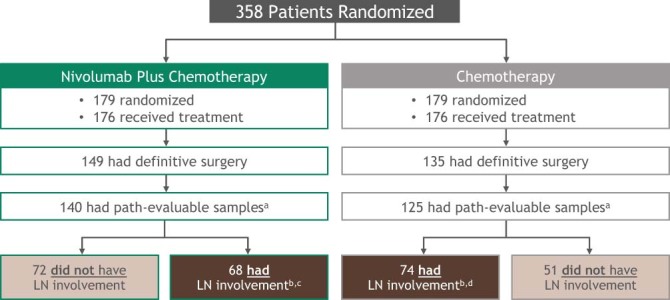
“This aligns with the CHECKMATE 816 trial, which demonstrated that in NSCLC patients receiving neoadjuvant nivolumab plus chemotherapy, achieving PT-pCR served as a robust predictor for event-free survival (EFS), whereas lymph node involvement status exhibited relatively limited impact on EFS [53].”
Pasquali, S., Collini, P., Romagosa, C., Coindre, J., Pizzamiglio, S., Verderio, P., Duroni, V., Barisella, M., Palmerini, E., Quagliuolo, V., et al. (2025) · JAMA Network Open · doi:10.1001/jamanetworkopen.2025.40177 · Cited by 6
Deutsch, J. S., Cottrell, T. R., Chen, K. Y., de Andrea, C., Baraban, E. G., Fiset, P.-O., Jedrych, J. J., Orr, C. E., Real, F. X., Salgado, R., et al. (2026) · Annals of Oncology · doi:10.1016/j.annonc.2026.01.011 · Cited by 10
Self-citationLiu, X., Ma, B., & Zhao, L. (2024) · Frontiers in Oncology · doi:10.3389/fonc.2024.1342162 · Cited by 8
A narrative review on perioperative systemic therapy in non-small cell lung cancer
Hsu, R. C., Arter, Z., Poei, D., & Benjamin, D. J. (2024) · Exploration of Targeted Anti-tumor Therapy · doi:10.37349/etat.2024.00256 · Cited by 6
Huang, X., Arjsri, P., Srisawad, K., Umsumarng, S., Yodkeeree, S., & Dejkriengkraikul, P. (2025) · Life · doi:10.3390/life15030396 · Cited by 4
Sun, W., Liu, X., Wang, C., Jiang, Y., & Lin, D. (2024) · Annals of Diagnostic Pathology · doi:10.1016/j.anndiagpath.2024.152268 · Cited by 7
Valsecchi, C., Franza, A., Bogani, G., Rolli, L., Ferrari, M., Leuzzi, G., Stanzi, A., Sabia, F., Pastorino, U., & Prelaj, A. (2024) · Journal of Thoracic Disease · doi:10.21037/jtd-24-508 · Cited by 7
“…seen between the two cohorts, would possibly broaden in the next future, following results of ongoing and just published clinical trials (13-17 Of note, we have to remark the consistent reduction of pneumonectomy rate during the years observed in our sample, resulting in an improvement…”
Liu, J., Ren, Q., Cai, Y., Chen, D., Wu, X., & Xu, W. (2025) · Frontiers in Immunology · doi:10.3389/fimmu.2025.1704226 · Cited by 4
Sierra‐Rodero, B., Gil-González, Á., Molina-Alejandre, M., Nadal, E., Calvo, V., Lázaro, M., Insa, A., Massutí, B., Martínez‐Martí, A., de Castro, J., et al. (2026) · Clinical Cancer Research · doi:10.1158/1078-0432.ccr-25-3315 · Cited by 8
“In this context, achieving a complete pathologic response (CPR; defined as 0% viable tumor cells) is associated with long-term survival and may identify patients who are potentially cured (4, 8).”
Self-citationImproving neoadjuvant and perioperative therapy in non-small-cell lung cancer
Garitaonaindía, Y., Wakelee, H. A., Reck, M., Forde, P. M., Cascone, T., Spicer, J. D., & Provencio, M. (2026) · Nature Reviews Clinical Oncology · doi:10.1038/s41571-026-01174-7 · Cited by 8
“…this biological interdependence between pathological response and sustained immune control was quantitatively demonstrated in the Check-Mate 816 trial, which revealed a robust, graded correlation between pathological response and EFS: the greater the RVT, the higher the risk of recurrence 35 .”
Self-citationDai, C., Yang, X., Yang, D., An, Z., Xie, H., Zhao, S., Wu, C., Zhao, D., & Chen, C. (2025) · European Journal of Cardio-Thoracic Surgery · doi:10.1093/ejcts/ezaf269 · Cited by 3
Circulating Tumor DNA as a Prognostic and Predictive Biomarker in Lung Cancer
Dhillon, P., Du, S., & Cheng, H. (2025) · Cancers · doi:10.3390/cancers17203327 · Cited by 5
“Patients with no detectable ctDNA before surgery had better survival outcomes even in the absence of pathologic complete response [48,49].”
Cuppens, K., Wiesweg, M., Baas, P., Maes, B., Pont, B. D., Ploenes, T., Theegarten, D., Vanbockrijck, M., Aigner, C., Hartemink, K., et al. (2025) · European Journal of Cancer · doi:10.1016/j.ejca.2025.116165 · Cited by 3
Guo, W. J., Zhao, L., Chen, X., Wang, S., Tao, X., Li, L., Sun, Q., Gao, Y. S., Mao, Y., Shao, K., et al. (2025) · European Journal of Cancer · doi:10.1016/j.ejca.2025.116198 · Cited by 3
Self-citationHuang, Y., Wei, Z., Ye, G., Cui, Y., Li, C., Wu, G., Yang, W., Zhang, B., Zhang, Z., Jiang, Y., et al. (2026) · Cancer Letters · doi:10.1016/j.canlet.2025.218229 · Cited by 4
Chen, H., Fan, B., Yuan, M., Wang, D., Qiao, C., Qiu, N., Quan, X., & Hou, W. (2026) · Frontiers in Immunology · doi:10.3389/fimmu.2026.1753166 · Cited by 5
“The clinical signi fi cance of MPR prediction lies in its strong association with survival bene fi t and its utility as a surrogate endpoint for assessing treatment ef fi cacy in thoracic oncology (52).”
Self-citationLi, H., Liu, Q., Li, B., Chen, Y., Lin, J., Meng, Y., Feng, H., Zheng, Z., & Hui, Y. (2024) · PubMed Central · doi:10.3779/j.issn.1009-3419.2024.102.26 · Cited by 3
“…等是外科医生面对的问题 [17] ,而直接手术后肿瘤的复发转 34.38% ,总病理缓解率达 81.25% 。相比于 III 期 CheckMate 816 研究 [5] 及 KEYNOTE-671 研究 [18] ,本研究取得了较高的 影像学及病理学缓解率。有研究 [19] 表明,病理缓解与生存 存在一定的关系,病理残余存活肿瘤越低,患者无事件生 存期( event-free survivl, EFS )发生率越低且生存期越长。 愈率和生存率 [20] ,然而,在某些情况下,即使新辅助化疗 降低了肿瘤分期,手术的复杂性也可能增加 [21] 。 nICT 组选…”
InfluentialImmunotherapy With Curative Intent Radiotherapy for Patients With Cancers of the Head and Neck
Hill, J., & Schoenfeld, J. D. (2025) · Seminars in Radiation Oncology · doi:10.1016/j.semradonc.2025.02.005 · Cited by 3
Wan, L., Tian, F., Wang, L., Hou, Y., Liu, W., Liu, Q., Chen, D., Li, X., Xiang, J., Qin, Z., et al. (2024) · Cellular Oncology · doi:10.1007/s13402-024-01021-w · Cited by 3
Jones, D., Nasar, A., Villena‐Vargas, J., Harrison, S. W., Chow, O. S., Ali, M. A., Shostak, E., Saxena, A., Garcia, C. A., Giaccone, G., et al. (2025) · Journal of Thoracic and Cardiovascular Surgery · doi:10.1016/j.jtcvs.2025.07.014 · Cited by 5
Leng, J., Liu, M., Wang, Q., Jiang, H., & Jin, C. (2025) · Frontiers in Medicine · doi:10.3389/fmed.2025.1625259 · Cited by 3
A Lung CT Foundation Model Facilitating Disease Diagnosis and Medical ImagingPreprint
Gao, Z., Zhang, G., Liang, H., Liu, J., Ma, L., Wang, T., Guo, Y., Chen, Y., Yan, Z., Chen, X., et al. (2025) · medRxiv · doi:10.1101/2025.01.13.25320295 · Cited by 3
Huang, Y., Xie, J., Wang, J., Lin, J., Chen, M., Zhao, B., & Huang, Z. (2025) · Frontiers in Immunology · doi:10.3389/fimmu.2025.1617905 · Cited by 2
Lee, K., Shin, H., Ohn, J., Park, J. H., Park, S., Park, I. K., Kang, C. H., Kim, Y. T., Choi, H., Koh, J., et al. (2026) · BMC Cancer · doi:10.1186/s12885-026-15885-8 · Cited by 2
“This evaluation is a well-established predictor of long-term outcomes, particularly in lung cancer [5, 6].”
Metadata
- Authors
- Deutsch, J. S., Cimino-Mathews, A., Thompson, E., Provencio, M., Forde, P. M., Spicer, J., Girard, N., Wang, D., Anders, R. A., Gabrielson, E., Illei, P., Jedrych, J., Danilova, L., Sunshine, J., Kerr, K. M., Tran, M., Bushong, J., Cai, J., Devas, V., Neely, J., Balli, D., Cottrell, T. R., Baras, A. S., & Taube, J. M.
- Affiliations
- Johns Hopkins University (US)
- Hospital Universitario Puerta de Hierro Majadahonda (ES)
- McGill University Health Centre (CA)
- Institut Curie (FR)
- Aberdeen Royal Infirmary (GB)
- Bristol-Myers Squibb (United States) (US)
- Queen's University (CA)
- Corresponding author
- Taube, Janis M.
- ORCID
- Deutsch, Julie Stein
- Thompson, Elizabeth
- Provencio, Mariano
- Forde, Patrick M.
- Spicer, Jonathan
- Girard, Nicolas
- Wang, Daphne
- Anders, Robert A.
- Gabrielson, Edward
- Illei, Peter
- Jedrych, Jaroslaw
- Danilova, Ludmila
- Sunshine, Joel
- Bushong, Judith
- Neely, Jaclyn
- Balli, David
- Cottrell, Tricia R.
- Baras, Alex S.
- Taube, Janis M.
- Venue
- Nature Medicine
- Published
- 2023-10-30
- Volume
- 30
- Issue
- 1
- Pages
- 218-228
- ISSN
- 1078-8956 (ISSN-L)
- 1546-170X
- PMC
- PMC10803255
- OpenAlex
- W4388033556
- Semantic Scholar
- 182c659710b9cefadbc3b5d26bd3b319b9bae21c
- Cited by
- 198
- References
- 41
- Citations by year
- 2026: 63 · 2025: 80 · 2024: 54 · 2023: 1
- FWCI
- 36.48
- Type
- journal article
- Language
- en
- Open access
- hybrid
- doi.org
- Licence
- cc-by
- creativecommons.org/licenses/by/4.0 (tdm)
- creativecommons.org/licenses/by/4.0 (vor)
- Locations
- Nature Medicine (publishedVersion, cc-by)
- PubMed Central (publishedVersion, cc-by)
- PubMed (publishedVersion)
- Funders
- U.S. Department of Defense
- Mesothelioma Applied Research Foundation
- LUNGevity Foundation
- Amgen
- Bristol-Myers Squibb
- Eli Lilly and Company
- Pfizer
- AstraZeneca
- Sanofi
- Regeneron Pharmaceuticals
- Society for Immunotherapy of Cancer
- Mark Foundation For Cancer Research
- F-star Therapeutics
- G1 Therapeutics
- Canadian Association of Thoracic Surgeons
- Ono Pharmaceutical
- National Institutes of Health
- Genentech
- National Cancer Institute (R01CA142779)
- Congressionally Directed Medical Research Programs
- Topics
- Health Sciences › Medicine › Pulmonary and Respiratory Medicine › Lung Cancer Diagnosis and Treatment
- Health Sciences › Medicine › Oncology › Cancer Immunotherapy and Biomarkers
- Health Sciences › Medicine › Oncology › Lung Cancer Research Studies
- Keywords
- lung cancer, neoadjuvant therapy, pathological response, residual viable tumor, event-free survival, nivolumab, immune checkpoint inhibitors, chemotherapy, resectable lung cancer, lymph node involvement, circulating tumor DNA, surrogate endpoints, CheckMate 816
- MeSH terms
- Nivolumab, Progression-Free Survival, Pathologic Complete Response, Antineoplastic Combined Chemotherapy Protocols, Humans, Lung Neoplasms, Randomized Controlled Trials as Topic, Treatment Outcome, Clinical Trials, Phase III as Topic, Neoadjuvant Therapy
About these checks
Registry, retraction, Cites and statistics results are computed, not judged, with one exception: a printed reference that no index lists is read once by a model before it counts as a citation error. Claims are extracted by a model and kept only when their quote appears verbatim in the text; each cited source is then checked, with a model’s help, for whether it says what the claim relies on. Those verdicts can be wrong — read the claim’s quote and the cited source before relying on one.
Statistics and arithmetic are recomputed, not judged.
Confidence bands are shown only for fields calibrated on our annotated test set. None is calibrated yet, so no band is shown.
What counts as a claim ›How we measure confidence ›How we check this ›
Are you an author, or do you see a problem with this page? Request a review
Data sources
Bibliographic data: Semantic Scholar, OpenAlex, Crossref.
Contains information from the Semantic Scholar Academic Graph Datasets, made available under the ODC Attribution License (ODC-BY 1.0).
Semantic Scholar’s data is described in: Kinney, R., et al. (2023). The Semantic Scholar Open Data Platform. arXiv:2301.10140.
