

Generative models improve fairness of medical classifiers under distribution shifts
Open accessPublished version of a preprint
The DOI matches its Crossref record; 86 of the 86 references it cites were found in a registry or an index.
Abstract
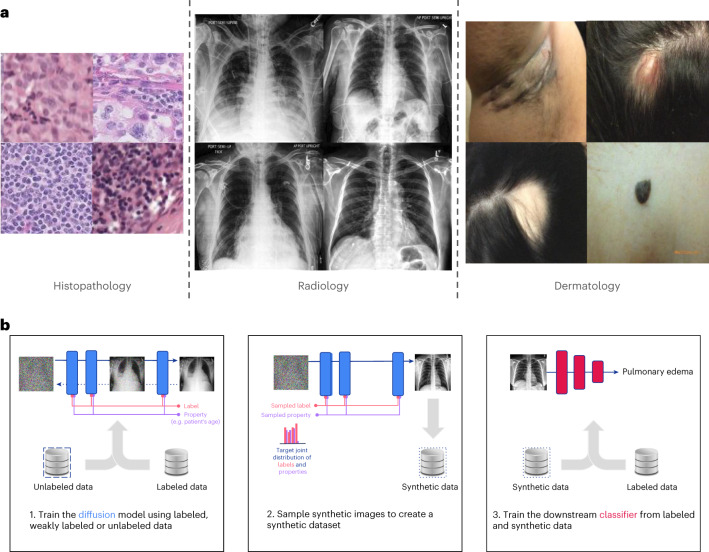
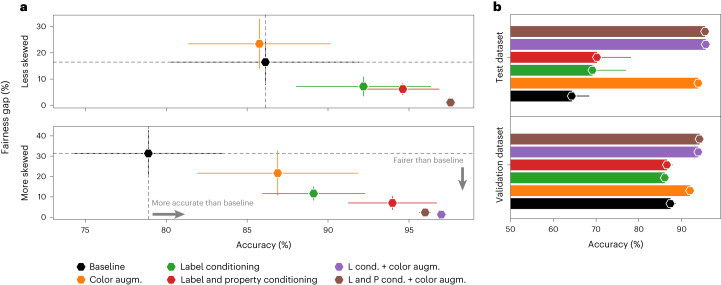
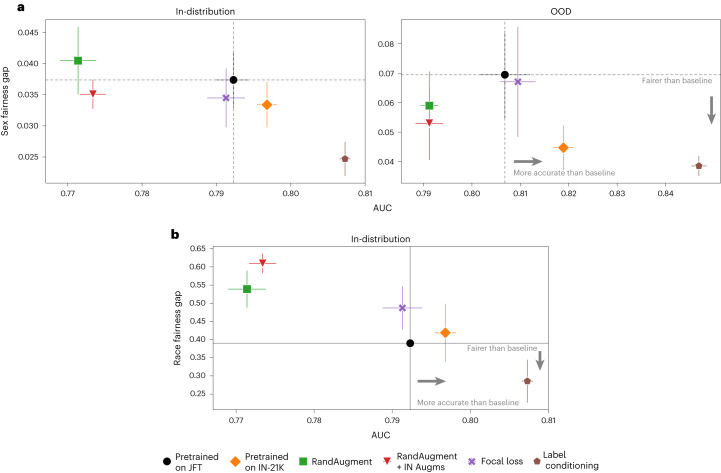
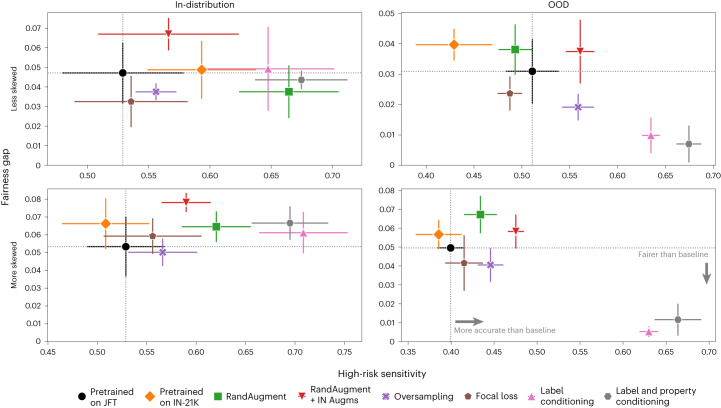
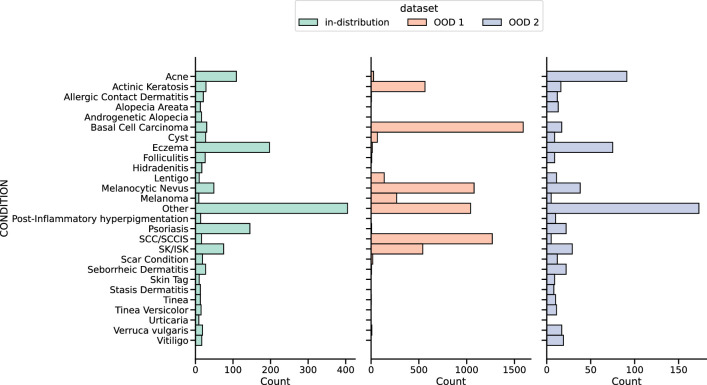
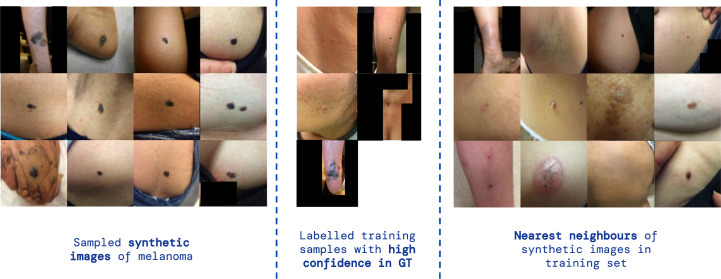
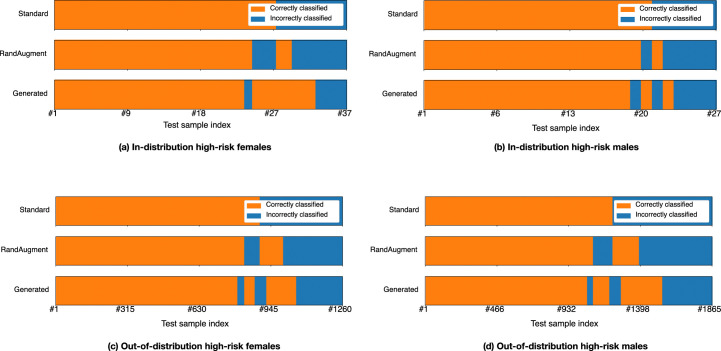
Domain generalization is a ubiquitous challenge for machine learning in healthcare. Model performance in real-world conditions might be lower than expected because of discrepancies between the data encountered during deployment and development. Underrepresentation of some groups or conditions during model development is a common cause of this phenomenon. This challenge is often not readily addressed by targeted data acquisition and ‘labeling’ by expert clinicians, which can be prohibitively expensive or practically impossible because of the rarity of conditions or the available clinical expertise. We hypothesize that advances in generative artificial intelligence can help mitigate this unmet need in a steerable fashion, enriching our training dataset with synthetic examples that address shortfalls of underrepresented conditions or subgroups. We show that diffusion models can automatically learn realistic augmentations from data in a label-efficient manner. We demonstrate that learned augmentations make models more robust and statistically fair in-distribution and out of distribution. To evaluate the generality of our approach, we studied three distinct medical imaging contexts of varying difficulty: (1) histopathology, (2) chest X-ray and (3) dermatology images. Complementing real samples with synthetic ones improved the robustness of models in all three medical tasks and increased fairness by improving the accuracy of clinical diagnosis within underrepresented groups, especially out of distribution.
Overview
The claims and statistics of this paper haven’t been checked yet.
Free: it reads the open-access text and checks the first 5 claims that cite a source we can check. Create a free account to check every claim.
Integrity signals
Registry
Cites
Statistics
Figures
Verification
Claims the paper makes
The claims and statistics of this paper haven’t been checked yet.
Free: it reads the open-access text and checks the first 5 claims that cite a source we can check. Create a free account to check every claim.
Claims other papers make about this one
Each is checked against this paper’s own text: does it say what the citing paper says it does?
The source backs part of the claim, not all of it — or backs it for a different population, condition or comparison.
In the citing paper
“LLM-based oncological tools exhibit racial and gender biases that could widen, rather than narrow, existing cancer care disparities”
From A generative AI multi-agent framework with integrated XAI governance for cancer diagnostics: from multi-omics interpretation to lifestyle risk stratification (2026) · cites this paper as Ktena et al., 2024
Experimental — accuracy not yet measuredThe cited source says what the claim attributes to it.
In the citing paper
“Generative models have shown promise in partially mitigating these disparities by generating synthetic data for underrepresented subgroups, improving classifier fairness under distribution shift”
From A generative AI multi-agent framework with integrated XAI governance for cancer diagnostics: from multi-omics interpretation to lifestyle risk stratification (2026) · cites this paper as Ktena et al., 2024
The check wasn’t confident either way, so it gives no verdict — never disputed.
In the citing paper
“lifestyle data from epidemiological studies systematically overrepresents high-income Western populations (Ktena et al., 2024; Marchesi et al., 2025).”
From A generative AI multi-agent framework with integrated XAI governance for cancer diagnostics: from multi-omics interpretation to lifestyle risk stratification (2026) · cites this paper as Ktena et al., 2024
Experimental — accuracy not yet measuredIn the citing paper
“Generative AI models, such as large language models or vision-language models capable of synthesizing images, additionally allow for tailored data augmentation by creating new examples that meet a set of targeted criteria.71, 72, 73”
From Bias in artificial intelligence for medical imaging: fundamentals, detection, avoidance, mitigation, challenges, ethics, and prospects (2024) · cites this paper as [73]
Self-check
Percentages, sums and reported differences re-computed from the paper’s own numbers.
The self-check needs the paper’s full text.
Citations
Cites
ImageNet: A large-scale hierarchical image database
Deng, J., Dong, W., Socher, R., Li, L.-J., Li, K., & Fei-Fei, L. (2009) · 2009 IEEE Conference on Computer Vision and Pattern Recognition · doi:10.1109/cvpr.2009.5206848 · Cited by 65,333 · cited 2×
“, 2017) and ImageNet21K (Deng et al., 2009) for pretraining to explore how much different pretraining datasets impact final results.”
ImageNet Large Scale Visual Recognition Challenge
Russakovsky, O., Deng, J., Su, H., Krause, J., Satheesh, S., Ma, S., Huang, Z., Karpathy, A., Khosla, A., Bernstein, M., et al. (2015) · International Journal of Computer Vision · doi:10.1007/s11263-015-0816-y · Cited by 39,380
Learning Transferable Visual Models From Natural Language Supervision
Radford, A., Kim, J. W., Hallacy, C., Ramesh, A., Goh, G., Agarwal, S., Sastry, G., Askell, A., Mishkin, P., Clark, J., et al. (2021) · arXiv · doi:10.48550/arxiv.2103.00020 · Cited by 15,293
Dermatologist-level classification of skin cancer with deep neural networks
Esteva, A., Kuprel, B., Novoa, R. A., Ko, J., Swetter, S. M., Blau, H. M., & Thrun, S. (2017) · Nature · doi:10.1038/nature21056 · Cited by 14,362
Abdi, H., & Williams, L. J. (2010) · WIREs Computational Statistics · doi:10.1002/wics.101 · Cited by 11,104
Focal Loss for Dense Object Detection
Lin, T.-Y., Goyal, P., Girshick, R., He, K., & Dollar, P. (2020) · IEEE Transactions on Pattern Analysis and Machine Intelligence · doi:10.1109/tpami.2018.2858826 · Cited by 9,556
Denoising Diffusion Probabilistic Models
Ho, J., Jain, A., & Abbeel, P. (2020) · arXiv · doi:10.48550/arxiv.2006.11239 · Cited by 8,712 · cited 5×
“19,20,43 for the generation and the upsampler (only the radiology and dermatology datasets required higher-resolution images).”
InfluentialWang, X., Peng, Y., Lu, L., Lu, Z., Bagheri, M., & Summers, R. M. (2017) · 2017 IEEE Conference on Computer Vision and Pattern Recognition (CVPR) · doi:10.1109/cvpr.2017.369 · Cited by 4,616
A generalization of sampling without replacement from a finite universe
Horvitz, D. G., & Thompson, D. J. (1952) · Journal of the American Statistical Association · doi:10.1080/01621459.1952.10483446 · Cited by 4,293 · cited 1×
“…examples of chest X-rays from the CheXpert dataset, we evaluated on a held-out CheXpert test set (containing 13,332 images), which we considered in-distribution, and the test set of ChestX-ray14 (containing 17,723 images), which we considered OOD because of demographic and acquisition shifts.”
(2012) · MPG.PuRe (Max Planck Society) · doi:10.5555/2188385.2188410 · Cited by 3,603
Research works printed but not linked: 11
- Irvin, J. et al. Proc. AAAI Conference on Artificial Intelligence (AAAI, 2019).
- Tomasev, N., McKee, K. R., Kay, J. & Mohamed, S. Proc. 2021 AAAI/ACM Conference on AI, Ethics, and Society (Association for Computing Machinery, 2021).
- Goodfellow, I. et al. Generative adversarial nets. In Advances in Neural Information Processing Systems (eds. Ghahramani, Z. et al.) 2672–2680 (2014).
- Rashid, H., Tanveer, M. A. & Khan, H. A. Proc. 2019 41st Annual International Conference of the IEEE Engineering in Medicine and Biology Society (EMBC) (IEEE, 2019).
- Gowal, S. et al. Proc. IEEE/CVF Conference on Computer Vision and Pattern Recognition (IEEE, 2020).
- Bissoto, A., Valle, E. & Avila, S. Proc. 2021 IEEE/CVF Conference on Computer Vision and Pattern Recognition Workshops (CVPRW) (IEEE, 2021).
- Somepalli, G., Singla, V., Goldblum, M., Geiping, J., & Goldstein, T. Proc. 2023 IEEE/CVF Conference on Computer Vision and Pattern Recognition (CVPR) (IEEE, 2023).
- Sun, C., Shrivastava, A., Singh, S. & Gupta, A. Proc. 2017 IEEE International Conference on Computer Vision (ICCV) (IEEE, 2017).
- Deng, J. et al. Proc. 2009 IEEE Conference on Computer Vision and Pattern Recognition (IEEE, 2009).
- Cubuk, E. D., Zoph, B., Shlens, J. & Le, Q. V. Proc. IEEE/CVF Conference on Computer Vision and Pattern Recognition (CVPR) Workshops (CVPRW) (IEEE, 2020).
- Lin, T.-Y., Goyal, P., Girshick, R., He, K. & Dollár, P. Proc. IEEE International Conference on Computer Vision (ICCV) (IEEE, 2017).
Cited by
Items 101–200 of 209
Öztürk, H., Afonja, T., Jälkö, J., Binkytė, R., Rodríguez-Mier, P., Lobentanzer, S., Wicks, A. B., Kreuer, J., Ouaari, S., Pfeifer, N., et al. (2026) · Genome biology · doi:10.64898/2026.03.02.707794 · Cited by 4
“This not only enables safer data sharing but also provides an opportunity in data augmentation and building fair models 9–11 .”
Fu, X., Li, X., Delamare, E. L., Dunn, A. G., Bi, L., & Kim, J. (2026) · Computer Methods and Programs in Biomedicine · doi:10.1016/j.cmpb.2026.109331 · Cited by 4
Farahani, S., Ieva, A. D., Coiera, E. W., & Liu, S. (2026) · European Journal of Radiology Artificial Intelligence · doi:10.1016/j.ejrai.2026.100092 · Cited by 4
Zhao, Q., Jiang, W., Zhang, C., Ouyang, M., Wu, N., & Guo, Y. (2026) · Frontiers in Public Health · doi:10.3389/fpubh.2026.1863050 · Cited by 3
“Active learning can identify subgroups with high predictive uncertainty, and synthetic data augmentation strengthens the model’s ability to characterize diverse populations by incorporating rare clinical patterns (85, 86).”
Zhang, X., Wang, T., Yan, C., Najdawi, F., Zhou, K., Ma, Y., Cheung, Y.-M., Yeung, M. C. F., & Malin, B. (2026) · Nature Biomedical Engineering · doi:10.1038/s41551-026-01694-8 · Cited by 5
A roadmap for medical large language models: a review of foundations, applications, and challenges
Sha, Y.-Y., Yu, L., Lin, Z.-H., Kaur, A., Lou, Y., Gornale, S. S., Zhang, T., Wong, L. S., Wang, Z., Yan, Y., et al. (2026) · Military Medical Research · doi:10.1016/j.mmr.2026.100050 · Cited by 4
“In multimodal tasks, robustness may weaken with changes in image quality, acquisition settings, or accompanying documentation, even if benchmark performance appears strong [303,304].”
3D Shape-to-Image Brownian Bridge Diffusion for Brain MRI Synthesis from Cortical Surfaces
Bongratz, F., Li, Y., Elbaroudy, S., & Wachinger, C. (2025) · Lecture notes in computer science · doi:10.1007/978-3-031-96628-6_13 · Cited by 5
Aydin, O. U., Koch, A., Hilbert, A., Rieger, J., Lohrke, F., Ishida, F., Tanioka, S., & Frey, D. (2025) · Neuroinformatics · doi:10.1007/s12021-025-09745-2 · Cited by 3
Deceptive Diffusion: Generating Synthetic Adversarial Examples
Beerens, L., Higham, C. F., & Higham, D. J. (2025) · Lecture notes in computer science · doi:10.1007/978-3-031-92366-1_25 · Cited by 5
Zhang, X., Wang, T., Yan, C., Najdawi, F., Zhou, K., Ma, Y., Cheung, Y., & Malin, B. (2024) · medRxiv · doi:10.1101/2024.12.27.24319715 · Cited by 3
Chernysheva, A. Y., Gundler, C., Wiederhold, A. J., Well, E. J.-V., Heinemann, A., & Ondruschka, B. (2025) · Rechtsmedizin · doi:10.1007/s00194-025-00745-9 · Cited by 2
Shen, J., Huang, R., Min, D., Che, H., Li, B., Liu, L., Zhang, Z., Cheng, J., & Wang, S. (2025) · Chinese Science Bulletin (Chinese Version) · doi:10.1360/tb-2025-0185 · Cited by 2
Progressive Disease Image Generation with Ordinal-Aware Diffusion Models
Kurt, M. M., Çağlar, Ü. M., & Temizel, A. (2025) · Diagnostics · doi:10.3390/diagnostics15202558 · Cited by 3
“On the other hand, since only discrete MES data are available, current generative models can only synthesize discrete UC classes, leaving a significant gap in data generation.”
Torres, A. D. P. N., Mogollón-Benavides, A. L., Mojica, M. D. N., Rúa, S., Villa, D. S., & Tejada, J. C. (2025) · Sci · doi:10.3390/sci7040148 · Cited by 2
A Generative Foundation Model for Scalable Cytology Image Synthesis in AI-Powered Diagnostics
Zheng, K., Zheng, X., Wang, J., Zhang, X., Chen, S., Chen, Q., Fu, S., Xie, D., Wang, R., Lai, J., et al. (2025) · Clinical Cancer Research · doi:10.1158/1078-0432.ccr-25-2445 · Cited by 2
“In pathology, recent efforts have employed generative approaches to produce synthetic hematoxylin and eosin–stained images from textual prompts or RNA sequencing data (21, 22).”
A reinforcement learning approach to synthetic data generation
Dice, N. E., Jackson, N. J., Yan, C., Lee, A., & Malin, B. (2026) · Journal of Biomedical Informatics · doi:10.1016/j.jbi.2026.105096 · Cited by 3
He, A., Wang, Q., Zhao, G., Fan, Y., Yu, K., Ren, Z., Yang, B., & Luo, S. (2026) · Journal of Hazardous Materials · doi:10.1016/j.jhazmat.2026.141655 · Cited by 2
AI ‐Based Methods in Neuropathology for Diagnosis and Treatment of Brain Tumors
Roetzer-Pejrimovsky, T., Amberg, N., Widhalm, G., & Höftberger, R. (2026) · European Journal of Neurology · doi:10.1111/ene.70577 · Cited by 2
“In addition to curating more diverse datasets, methodological approaches can be employed to mitigate data imbalances, including reweighting/resampling techniques [46] or the generation of synthetic data [47].”
Agentic AI in global health equity for high altitude populations
Shi, P., Ren, T., Xie, Y., Gichoya, J. W., Wong, T. Y., Ji, X., Wang, N., & Yuan, W. (2026) · npj Digital Medicine · doi:10.1038/s41746-026-02701-7 · Cited by 2
Photoacoustic device fingerprints induce bias in deep learning models
Bender, C. J., Knopp, M., Holzwarth, N., Rix, T., Nölke, J.-H., Dreher, K. K., Li, Y., Kempf, J., Caranovic, M., Schneider, F., et al. (2026) · Scientific Reports · doi:10.1038/s41598-026-53468-6 · Cited by 2
Computer vision programs in medicine: dataset development, classification, and clinical use
Иванович, К. Д., & Lamotkin, A. I. (2026) · FARMAKOEKONOMIKA Modern Pharmacoeconomics and Pharmacoepidemiology · doi:10.17749/2070-4909/farmakoekonomika.2026.374 · Cited by 2
Qu, C., Luna, A. J., Li, T. Z., Zhu, J., Guo, J., Xiong, J., Sandler, K. L., Landman, B. A., & Huo, Y. (2026) · SPIE Medical Imaging: Computer-Aided Diagnosis · doi:10.1117/12.3087567 · Cited by 3
Nguyen, T., Panwar, V., Jarmale, V. N., Perny, A., Dusek, C., Cai, Q., Kapur, P., Danuser, G. M., & Rajaram, S. (2025) · bioRxiv (Cold Spring Harbor Laboratory) · doi:10.1101/2025.03.18.643999 · Cited by 2
Barki, C., Chouchen, M., Sediri, A., Ceylan, H. İ., Rahmouni, H. B., Muntean, R. I., El-Seedi, H. R., Bragazzi, N. L., & Dergaa, I. (2026) · Frontiers in Systems Biology · doi:10.3389/fsysb.2026.1892418 · Cited by 1
“LLM-based oncological tools exhibit racial and gender biases documented in the literature (Agrawal, 2024), and lifestyle data from epidemiological studies systematically overrepresents high-income Western populations (Ktena et al., 2024; Marchesi et al., 2025).”
Bayesian Inference General Procedures for A Single-subject Test study
Li, J., Green, G. G. R., Carr, S. J. A., Liu, P., & Zhang, J. A. (2025) · Neuroscience Informatics · doi:10.1016/j.neuri.2025.100195 · Cited by 4
“It is also the case that the high skewness not only appears in a MEG dataset but also in other fields, such as Cybersecurity (Kim and Song, 2023), Medicine (Ktena et al., 2024), Econometric (Higbee and McDonald, 2024), Neuroscience (Zim-mermann et al., 2024), Telehealthcare (Das et al., 2023) and Internet of Thing (Io…”
InfluentialFairXbar: Improving the Fairness of Deep Neural Networks with Non-Ideal in-Memory Computing Hardware
Mugdho, S. S., Guo, Y., Rogers, E. G., Zhao, W., Shi, Y., & Wang, C. (2025) · Design, Automation, and Test in Europe · doi:10.23919/date64628.2025.10993038 · Cited by 2
Boosting Generalizable Fairness With Mahalanobis Distances Guided Boltzmann Exploratory Testing
Dong, K., Wu, P., & Chen, Y. (2025) · IEEE Transactions on Software Engineering · doi:10.1109/tse.2025.3581402 · Cited by 1
“Various studies [71], [72], [73], [74], [75] have discussed OOD fairness, mainly focusing on covariate shifts, where OOD samples do not introduce additional classes.”
Embedding-Based Federated Data Sharing via Differentially Private Conditional VAEs
Salvo, F. D., Nguyen, H. H. M., & Ledig, C. (2025) · Lecture notes in computer science · doi:10.1007/978-3-032-05185-1_14 · Cited by 4
Khanal, P., & Khanal, A. (2025) · Crimson Journal of Science and Technology · doi:10.3126/cjost.v1i1.88577 · Cited by 1
Are Medical Image Generative Models Biologically Trustworthy?
Ahn, S., Park, W., & Park, J. (2025) · IEEE International Conference on Computer Vision Workshops · doi:10.1109/iccvw69036.2025.00072 · Cited by 3
“Recent advancements in computer vision have spurred significant progress in generative modeling, with increasing adoptions in the medical image domain [9, 13, 24, 26, 42, 49].”
Generative Artificial Intelligence to Tackle Visual Data Accessibility Challenges
Goetschalckx, L., Wang, K., Willems, S., & Schepper, T. D. (2026) · Springer eBooks · doi:10.1007/978-3-032-10561-5_6 · Cited by 1
Generative modeling of complex-valued brain MRI data
Schlimbach, M., Rempe, M., Mnischek, J., Rotkopf, L. T., Weingarten, J., Kleesiek, J., & Kroeninger, K. A. (2026) · Physics in Medicine and Biology · doi:10.1088/1361-6560/aeb088 · Cited by 1
“This interpretation is consistent with related work, where classifiers trained on synthetic medical images matched or exceeded the performance of those trained exclusively on real data [26, 27].”
Fairness at Risk: Where Bias Emerges in Machine Learning
Albuquerque, O. D. P., Fantinato, M., & Peres, S. M. (2026) · Expert Systems · doi:10.1111/exsy.70265 · Cited by 1
Artificial intelligence-empowered multi-scale data integration for precision exercise biomedicine
Li, J., Song, H., Ge, Z., & Luo, S. (2026) · Translational Exercise Biomedicine · doi:10.1515/teb-2026-0009 · Cited by 1
“Technical approaches to fairness under distribution shift, including generative strategies for bias mitigation, illustrate potential tools but require careful auditing in exercise contexts [91].”
García-Hidalgo, C., Hernández, J. A. C., Espí, J. V. C., Vicente, G. P., Ponce, J. F. M., & Olmos, A. V. (2026) · European Radiology · doi:10.1007/s00330-026-12703-4 · Cited by 1
Nagi, A. T., Bellatreccia, C., Borghesi, A., Dondi, A., Pierantoni, L., Zama, D., Neri, I., Lanari, M., & Calegari, R. (2026) · Information · doi:10.3390/info17080749 · Cited by 1
“The downstream classification results are also consistent with recent studies reporting that synthetic data can improve predictive performance and subgroup fairness [20,21].”
Chi, H., Liu, X., Yan, Y., Wang, L., Luo, P., Su, L., Jiang, L., Zhou, X., Huang, G., Jiang, Y., et al. (2026) · Genes & Diseases · doi:10.1016/j.gendis.2026.102480 · Cited by 1
Brain Causality Modeling Using Structure-Guided Spatiotemporal Diffusion Model for MCI Analysis
Zhu, Y., Wang, J., Cheng, X., Chen, J., Wei, H., Lu, L., Yang, Z., & Zuo, Q. (2025) · Lecture notes in computer science · doi:10.1007/978-981-96-3297-8_1 · Cited by 1
Gulamali, F. F., Sawant, A. S., Liharska, L. E., Horowitz, C. R., Chan, L., Kovatch, P., Hofer, I. S., Singh, K., Richardson, L. D., Mensah, E., et al. (2023) · medRxiv · doi:10.1101/2023.11.06.23298164 · Cited by 1
Cross-Lingual Factual Accuracy and Ideological Divergence in Large Language ModelsPreprint
Tsai, C.-E., & Huang, M.-C. (2024) · OSF Preprints (OSF Preprints) · doi:10.31219/osf.io/9vdz6 · Cited by 1
Denoising diffusion model for increased performance of detecting structural heart diseasePreprint
Streiffer, C., Levin, M. G., Witschey, W. R. T., & Anyanwu, E. C. (2024) · medRxiv · doi:10.1101/2024.11.21.24317662 · Cited by 3
Toward fair AI-driven medical text generation
Zhang, Y., & Song, J. (2025) · Nature Computational Science · doi:10.1038/s43588-025-00807-8 · Cited by 2
Lin, D. Y., Ji, Y., McArt, J. A. A., & Li, J. (2025) · bioRxiv (Cold Spring Harbor Laboratory) · doi:10.1101/2025.05.11.653212 · Cited by 2
Image-Conditioned Diffusion for Privacy-Preserving Synthetic Medical ImagesPreprint
Stupp, D., Lutsker, G., Spiegel-Yerushalmi, O., & Segal, E. (2026) · bioRxiv (Cold Spring Harbor Laboratory) · doi:10.64898/2026.05.04.722524 · Cited by 1
“These generative models and the predictive models trained using generated synthetic data have shown promise in recent years for chest X-ray (CXR) 2,3 , retina fundus images 4 , and other imaging modalities 5–8 .”
Modeling and simulation of noise vectors for improving diversity and quality of a generative AI
Suthaharan, S. (2024) · SPIE Applications of Machine Learning · doi:10.1117/12.3027552
“Geometric 8.”
BiasMitigateGan: SYNTHESIZING FAIR TRAINING DATA FOR DERMATOLOGY AI USING DIFFUSION MODELS
Mohammed, A. (2025) · International Journal of Computer Vision · doi:10.34218/ijcv_02_01_001
Alabed, A. T. H., Rasheed, J., Yeşiltepe, M., Alsubai, S., & Aşuroğlu, T. (2025) · SN Computer Science · doi:10.1007/s42979-025-04181-0
Improved Federated Learning with Differential Privacy for YOLO Detector on Phase Images
Chen, Q., Delikoyun, K., Hayden, O., & Diepold, K. J. (2025) · Proceedings of the International Conference of Control, Dynamic systems, and Robotics · doi:10.11159/cdsr25.129
Cakir, E. (2025) · Computer Science · doi:10.7494/csci.2025.26.si.7067
Domain-adaptive high-dimensional variable selection via transfer learning and stability fusion
Wang, Y. (2025) · Neural Computing and Applications · doi:10.1007/s00521-025-11555-1
FQCDM: Feature quantization-based cardiac image diffusion synthesis model
Shi, J., Chen, B., Liu, J., Lu, W., Zhang, S., Ma, W., Yang, F., & Li, D. (2025) · Biomedical Signal Processing and Control · doi:10.1016/j.bspc.2025.109205
Ballyk, B. D., Gupta, A., Konda, S., Subramanian, K., Landon, C., Naseer, A. A., Maierhofer, G., Swaminathan, S., & Venkateshwaran, V. (2025) · arXiv (Cornell University) · doi:10.48550/arxiv.2512.00434
“Over the past decade, advances in deep generative models and the widespread adoption of electronic health records (EHRs) have revitalized the practice of synthetic data generation (Chen et al., 2021; van Breugel et al., 2024; Ktena et al., 2024).”
Class-N-Diff: Classification-Induced Diffusion Model Can Make Fair Skin Cancer Diagnosis
Munia, N., & Imran, A.-A.-Z. (2025) · Annual International Conference of the IEEE Engineering in Medicine and Biology Society (EMBC) · doi:10.1109/embc58623.2025.11252934 · Cited by 1
“Recent advancements in generative AI, particularly conditional diffusion models, have demonstrated promising results in medical image synthesis and analysis [17], [18], [19], [ 20].”
Kiani, P., Alirezaie, J., & Khan, N. (2025) · Annual International Conference of the IEEE Engineering in Medicine and Biology Society (EMBC) · doi:10.1109/embc58623.2025.11252877
“This undermines not only the accuracy of diagnoses but also the equitable treatment of all patients [3].”
Advancing Multimodal Medical Image Generation: A Self‐Improving Generative Foundation Model
Chen, Y., & Ng, L. (2025) · MedComm · doi:10.1002/mco2.70490 · Cited by 1
“This scarcity is especially pronounced for rare diseases, emerging imaging technologies, and underrepresented patient populations, where data collection is limited by small sample sizes, privacy concerns, and legal restrictions on data sharing [2].”
Understanding the Social and Technical Challenges of Fairness in Digital Health
Ryan, S. (2024) · Trinity's Access to Research Output (TARA) (Trinity College Dublin)
Xie, H. (., Namvar, M., Akhlaghpour, S., & Staib, A. N. (2025) · Journal of the Association for Information Systems
Causally Guided Gaussian Perturbations for Out-of-Distribution Generalization in Medical Imaging
Pei, H., Yang, Y., Liu, K., & Zhang, B. (2025) · International Conference on Digital Image Computing: Techniques and Applications (DICTA) · doi:10.1109/dicta68720.2025.11302435
“In contrast to previous methods that rely on generative models [18] or adversarial attacks [19] for data augmentation, our approach is directly grounded in causal learning princi-ples—modifying causal regions to reveal invariant predictive mechanisms.”
Neural Network Approximation Aided Kinetic Parameter Inference of Compartment Models in Dynamic PET
Shao, W., Chen, Y., Fu, O., Li, T., Yang, Z., Li, N., Han, H., Meng, X., & Xie, Z. (2026) · IEEE Transactions on Radiation and Plasma Medical Sciences · doi:10.1109/trpms.2026.3660465
Hybrid InceptionV3-LSTM for Asthma Detection on Chest X-Rays
Ghuse, N. D., Jain, R., & Monga, S. (2026) · Journal of Innovative Image Processing · doi:10.36548/jiip.2026.1.017
Image Generative AI Approaches for Differential Mobility Spectrometry Data Analysis
Ahola, R. (2024) · Tampere University Institutional Repository (Tampere University) · Cited by 1
From Image Synthesis to Digital Twins: A Paradigm Shift in AI-Driven Medical Image Computing
Chen, X., Jing, C., Li, Z., Shen, Y., Huang, G., Liu, Y., Lei, B., Pun, C., & Wang, S. (2026) · IEEE Transactions on Consumer Electronics · doi:10.1109/tce.2026.3677813 · Cited by 3
“Methodologies for understanding how and where bias is encoded are crucial [137], and leveraging generative models to mitigate these distribution shifts represents a promising, albeit complex, avenue of research [138], [139].”
Han, S., Zhang, S., Wang, Y., Zhou, C., Yang, F., & Liu, B. (2026) · Information Fusion · doi:10.1016/j.inffus.2026.104355 · Cited by 1
Xie, P., Liu, X., Guan, J., Zhao, Z., Wu, J., Lee, T.-Y., Wang, J., Yao, L., Cui, B., & Chiang, Y. (2026) · Nucleic Acids Research · doi:10.1093/nar/gkag822
“In this setting, fairness is naturally interpreted as task-level performance equity across the benchmark, rather than as an auxiliary or external objective [ 25 ].”
Lu, H., & Xu, J. (2026) · Scientific Reports · doi:10.1038/s41598-026-50146-5
“Moreover, Ktena et al 14 . recently demonstrated that generative modeling can improve fairness under medical distribution shifts, which provides additional support for the motivation of introducing a diffusion-based fairness enhancement module in the present study.”
Generative Models in Medical Imaging for Cognitive Disease Detection
Jothe, J. S., Naitam, M. G., Ponmariappan, S., & Pandey, A. C. (2026) · Cognitive systems monographs · doi:10.1007/978-3-032-18782-6_3
Interpretable multitask model for clinical pathology image prediction and interpretation
Chen, Q., Wang, Z., Lin, X., Shi, Y., Xu, B., Chai, J., Zhang, T., & Wang, C. (2026) · npj Systems Biology and Applications · doi:10.1038/s41540-026-00744-w · Cited by 1
Bargagna, F., Bosco, M., Giorgetti, A., Genovesi, D., Positano, V., & Santarelli, M. F. (2026) · Research Square · doi:10.21203/rs.3.rs-9652023/v1
Fu, X., Bao, J., Qiao, X., Shen, J., Zhang, Y., Jin, P., Ji, Y., Zhang, J., Su, Y., Ji, L., et al. (2026) · Journal of Magnetic Resonance Imaging · doi:10.1002/jmri.70393
MaRS: Robust Out-of-Distribution Detection via Mahalanobis Residual Scoring
Salvo, F. D., Doerrich, S., & Ledig, C. (2026) · Lecture notes in computer science · doi:10.1007/978-3-032-38079-1_36
TEMPO-Diffusion: Temporally Exposed Malicious Poisoning of Diffusion ModelsPreprint
Aiken, W., Branco, P., Jourdan, G.-V., & Onut, I.-V. (2026) · arXiv (Cornell University) · doi:10.48550/arxiv.2606.26285
Machine Learning for Robotics: Algorithms, Applications, and Emerging Trends
Ebada, A. I., Abu-Seif, Y., Pardeshi, H. K., & El‐Sayed, N. (2026) · Computers, materials & continua/Computers, materials & continua (Print) · doi:10.32604/cmc.2026.081804 · Cited by 1
CIPHER: Causal Intervention Pathways for Healthcare Equity and Robustness
Jia, X., Guo, W., Zhao, W., Guo, Y., Li, Z., & Wang, Y. (2026) · Lecture notes in computer science · doi:10.1007/978-3-032-38079-1_8
And Artificial Intelligence Created the Polyps…
Rizkala, T., Stefano, L. D., & Hassan, C. (2026) · Endoscopy International Open · doi:10.1055/a-2904-9251
“9 Reproducing that promise in endoscopy — with a single diffusion model rather than the patchwork of methods and resolutions used in earlier polyp-generation work — is a genuine methodological advance.”
Generative AI in Neuroimaging: Advancing Brain MRI Analysis and Interpretation
Kammoun, A., & Akhloufi, M. A. (2026) · Information · doi:10.3390/info17070668
A guide to laser microdissection‐based proteomics
Shen, C., Schoffer, K., Williams, C., & Tanzer, M. C. (2026) · FEBS Journal · doi:10.1111/febs.70653
Carrión, H., & Norouzi, N. (2026) · Lecture notes in computer science · doi:10.1007/978-3-032-38079-1_12
QoQ-Med3: a multimodal reasoning foundation model for clinical analysis
Dai, D., She, J., Cheong, J., Han, X., Harris, C., Wei, H., Vahedifard, F., Saria, S., Stevens, R., & Liang, P. P. (2026) · npj Digital Medicine · doi:10.1038/s41746-026-02945-3
“…models often fail silently in the face of heterogeneous temporality 28,29 , long context windows 30 , and cross-site heterogeneity in clinical work fl ows and coding practices 31 within non-stationary healthcare environments that change data distributions both across time and population 32,33 .”
Federated Synthetic Data Generation for Hepatology Research: A UNOS based Evaluation
Pentyala, S., Babu, A. B., Ahn, J. C., & Cock, M. D. (2026) · ACM International Conference on Bioinformatics, Computational Biology, and Health Informatics (ACM-BCB) · doi:10.1145/3807503.3819472
“These constraints disproportionately affect research on rare liver diseases, underrepresented populations, and single-center cohorts, and represent a persistent barrier to robust modeling and external validation [24, 27].”
MedDreamBooth: Structure-Guided Chest X-Ray Generation with Fine-Tuned Stable Diffusion
Likitha, P., Setty, S. A., Lolitha, Y., Gaonkar, M. C., Dangi, A., Honnavalli, P. B., & Balasubramanyam, A. (2026) · ACM International Conference on Bioinformatics, Computational Biology, and Health Informatics (ACM-BCB) · doi:10.1145/3807503.3819380
“Medical personalisation works apply LoRA for histopathology [39] or adapter-based tuning for brain MRI [21]; neither introduces domain-matched losses into the fine-tuning objective.”
Perspectives of Healthcare Professionals on Using AI and Algorithmic Bias
Xu, J., & Babaian, T. (2026) · Communications in computer and information science · doi:10.1007/978-3-032-34459-5_1
da Silva, R., & Eicher, J. (2026) · arXiv (Cornell University) · doi:10.48550/arxiv.2608.06506
Label Distribution Learning via Collaborative Multi-Scale Individual and Global Label Perspectives
Yin, T., Chen, H., Zhang, P., Yuan, Z., Sang, B., Horng, S., Li, T., & Li, Z. (2026) · IEEE Transactions on Multimedia · doi:10.1109/tmm.2026.3724733 · Cited by 1
Global RETFound: A Protocol for the World’s First Global Medical Foundation Model
Nderitu, P., Zhou, Y., Ran, A. R., Goh, J. H. L., Jiang, H., Srinivasan, S., Kitema, G. F., Rawlinson, P., Arnold, L. V. R., Yuen, K. W., et al. (2026) · Ophthalmology Science · doi:10.1016/j.xops.2026.101384
VFR-Audit: Verdict-Level Reliability for Fairness Audits in Hospital Length-of-Stay Prediction
Joy, M. J. R., Vo, V., & Chua, C. (2026) · ACM International Conference on Information and Knowledge Management (CIKM) · doi:10.1145/3799682.3840827
Zhang, Z., Wang, Y., Zhang, L., Chen, D., Zhang, W., Li, F., & Zhou, J. (2026) · Med Research · doi:10.1002/mdr2.70088
CaseWeaver: A Multi-Agent Framework for Multimodal Virtual Clinical Case GenerationPreprint
Qu, J., Peng, J., Li, L., Lam, K., & Qiu, J. (2026) · arXiv (Cornell University) · doi:10.48550/arxiv.2609.05480
“However, such methods remain constrained by the disease, anatomical, modality, and acquisition distributions of their source datasets, limiting their coverage of diverse patient contexts [4, 8].”
Synthetic Echocardiograms from Diffusion Models in Rare Cardiovascular DiseasePreprint
Lyu, P., Henao, R., Kwee, L. C., Peng, F. Z., Hurdle, M., Vemulapalli, S., Henao, R., Khouri, M. G., & Zhang, A. R. (2026) · medRxiv · doi:10.64898/2026.09.14.26363024
“Related diffusion-based work in medical imaging and synthetic electronic health records provides a founda-54 tion for evaluating both synthetic-image fidelity and downstream task performance [17, 18, 26].”
From Pixels to Volumes: Generative AI in 3D Medical Imaging
Kumar, C. K., Kumar, M. K., Gurrala, V., Grandhi, A., Chikkala, R. B., & Praveen, S. P. (2026) · Mathematical and Computational Applications · doi:10.3390/mca31050196
MedXEdit-GRPO: Reasoning-Aware Online RL for Counterfactual Medical Image Generation
Pan, Y., Xiao, R., Li, Q., Li, X., Li, X., Feng, R., & Zhang, X. (2026) · Lecture notes in computer science · doi:10.1007/978-3-032-38059-3_37 · Cited by 1
GapDream: Active Synthetic Evidence Acquisition for Long-Tailed Medical ImagingPreprint
Chen, J., & Chen, W. (2026) · bioRxiv (Cold Spring Harbor Laboratory) · doi:10.64898/2026.09.21.753385
“Synthetic data have already been used to improve robustness, fairness, low-data segmentation, and downstream clinical tasks (Chen et al., 2021; Ktena et al., 2024; Wang et al., 2025; Zhang et al., 2025).”
Spatiotemporal Modeling of Tumor Dynamics via Optimal Transport for Enhanced Longitudinal Analysis
Yang, J., Jiang, J., Ma, T., & Harini, V. (2026) · Lecture notes in computer science · doi:10.1007/978-3-032-38172-9_53
CTTok: Voxel-Abulary for Autoregressive 3D CT Volume Generation with Large Language Models
Wang, J., Reynaud, H., Dombrowski, M., Wang, X., Hamamcı, İ. E., Shit, S., Er, S., Menze, B. H., & Kainz, B. (2026) · Lecture notes in computer science · doi:10.1007/978-3-032-38189-7_12
AMFG: Anatomy-Grounded Multi-finding Guidance for Training-Free Chest X-Ray Generation
Han, Y. G., Jung, J., Park, C. M., & Lee, D. (2026) · Lecture notes in computer science · doi:10.1007/978-3-032-38189-7_1
Zhi, L., Zhang, Y., Zhang, S., Yu, C., & Zhou, T. (2026) · Biomedical Signal Processing and Control · doi:10.1016/j.bspc.2026.111540
Shaban‐Nejad, A., Michalowski, M., & Bianco, S. (2026) · Studies in computational intelligence · doi:10.1007/978-3-032-11999-5_1
Reproducibility vs. Representativeness: The Trade-Off in MRI AI Algorithm Development
Martínez-Licona, F. M. (2026) · World Congress on Medical Physics and Biomedical Engineering, September 7 - 12, 2009, Munich, Germany · doi:10.1007/978-3-032-39674-7_45
Park, S. (2026) · Journal of the Korean Society of Radiology · doi:10.3348/jksr.2026.0084 · Cited by 1
Uçan, M., Kaya, B., & Kaya, M. (2026) · Journal of Imaging Informatics in Medicine · doi:10.1007/s10278-026-02376-2
When Does Data Augmentation Help with Few Chest-Radiograph Training Patients?
Sariyar, M. (2026) · Mathematics · doi:10.3390/math14203732
Metadata
- Authors
- Ktena, I., Wiles, O., Albuquerque, I., Rebuffi, S.-A., Tanno, R., Roy, A. G., Azizi, S., Belgrave, D., Kohli, P., Cemgil, T., Karthikesalingam, A., & Gowal, S.
- Affiliations
- Google DeepMind (United Kingdom) (GB)
- Google (United Kingdom) (GB)
- GlaxoSmithKline (United Kingdom) (GB)
- Corresponding author
- Wiles, Olivia
- ORCID
- Venue
- Nature Medicine
- Published
- 2024-04
- Volume
- 30
- Issue
- 4
- Pages
- 1166-1173
- ISSN
- 1078-8956 (ISSN-L)
- 1546-170X
- PMC
- PMC11031395
- OpenAlex
- W4394683903
- Cited by
- 165
- References
- 73
- Citations by year
- 2026: 58 · 2025: 78 · 2024: 28
- FWCI
- 15.36
- Type
- journal article
- Language
- en
- Open access
- hybrid
- doi.org
- Licence
- cc-by
- creativecommons.org/licenses/by/4.0 (tdm)
- creativecommons.org/licenses/by/4.0 (vor, 9 d)
- Locations
- Nature Medicine (publishedVersion, cc-by)
- Research Square (acceptedVersion, cc-by)
- PubMed Central (publishedVersion, cc-by)
- PubMed (publishedVersion)
- arXiv (Cornell University) (submittedVersion, cc-by)
- arXiv (Cornell University) (cc-by)
- Topics
- Health Sciences › Medicine › Health Informatics › Artificial Intelligence in Healthcare and Education
- Physical Sciences › Computer Science › Artificial Intelligence › Domain Adaptation and Few-Shot Learning
- Health Sciences › Medicine › Radiology, Nuclear Medicine and Imaging › COVID-19 diagnosis using AI
- Keywords
- generative models, diffusion models, domain generalization, distribution shift, algorithmic fairness, synthetic data augmentation, underrepresented groups, medical image classification, histopathology, chest radiography, dermatological images, model robustness, label efficiency
- MeSH terms
- Machine Learning, Artificial Intelligence
About these checks
Registry, retraction, Cites and statistics results are computed, not judged, with one exception: a printed reference that no index lists is read once by a model before it counts as a citation error. Claims are extracted by a model and kept only when their quote appears verbatim in the text; each cited source is then checked, with a model’s help, for whether it says what the claim relies on. Those verdicts can be wrong — read the claim’s quote and the cited source before relying on one.
Statistics and arithmetic are recomputed, not judged.
Confidence bands are shown only for fields calibrated on our annotated test set. None is calibrated yet, so no band is shown.
What counts as a claim ›How we measure confidence ›How we check this ›
Are you an author, or do you see a problem with this page? Request a review
Data sources
Bibliographic data: Semantic Scholar, OpenAlex, Crossref.
Contains information from the Semantic Scholar Academic Graph Datasets, made available under the ODC Attribution License (ODC-BY 1.0).
Semantic Scholar’s data is described in: Kinney, R., et al. (2023). The Semantic Scholar Open Data Platform. arXiv:2301.10140.
