

Long-term kidney outcomes of semaglutide in obesity and cardiovascular disease in the SELECT trial
Open accessThe DOI matches its Crossref record; 62 of the 62 references it cites were found in a registry or an index.
Abstract
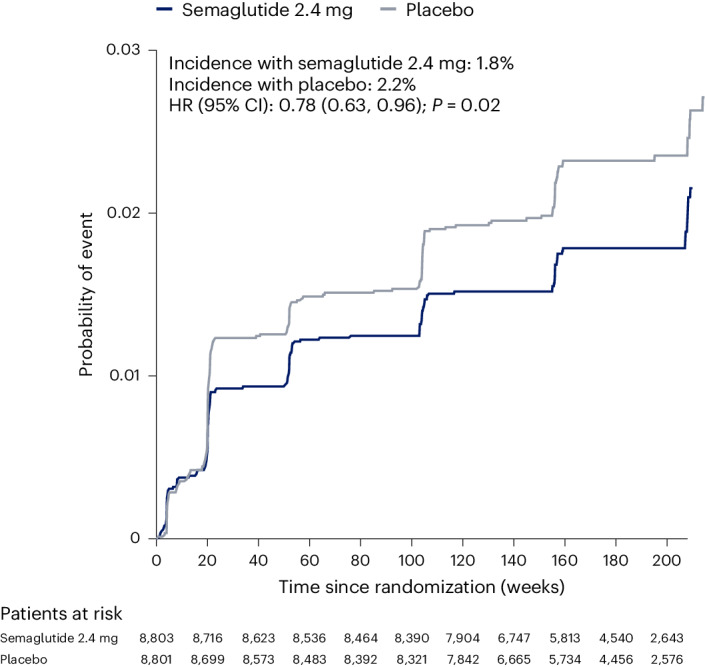
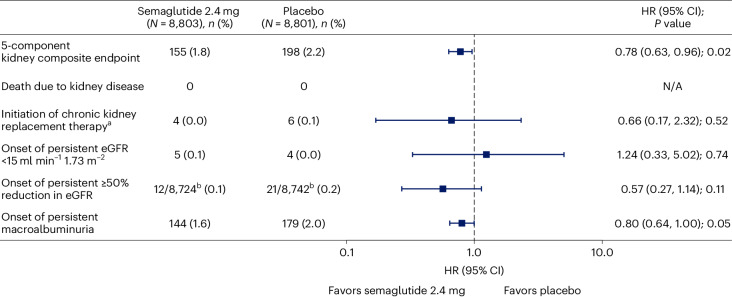
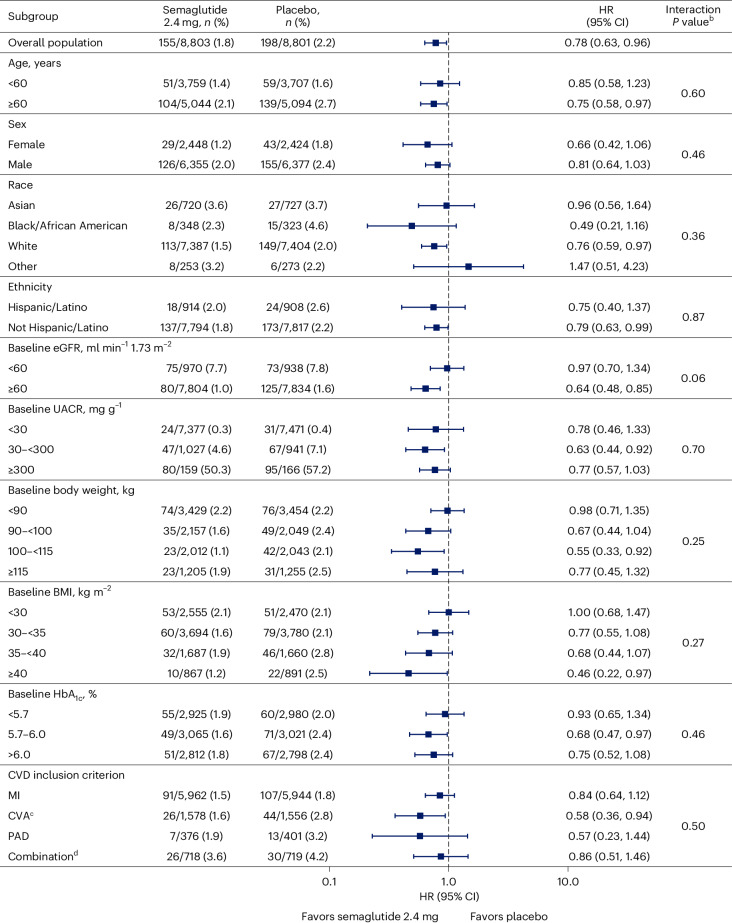
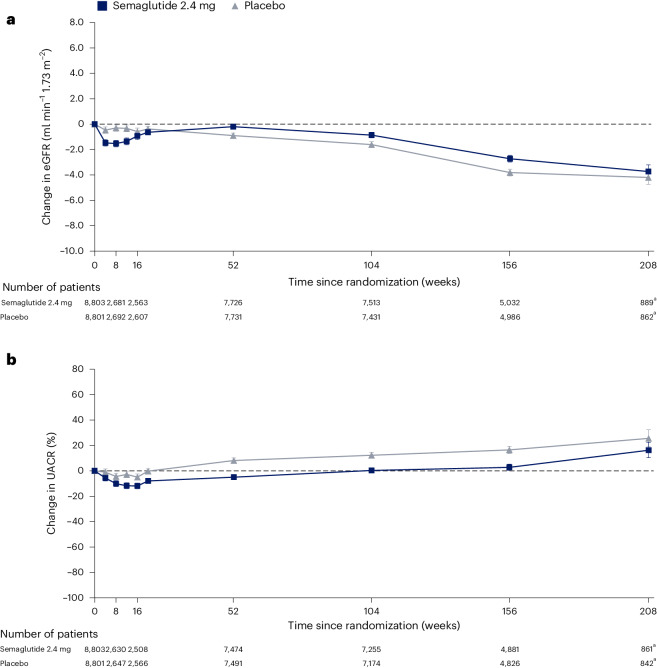
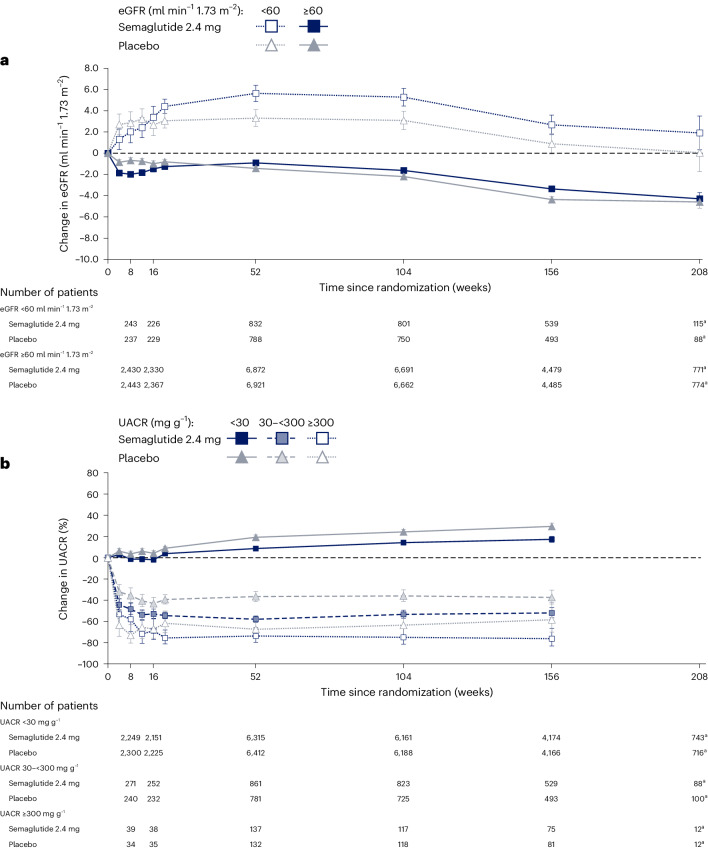
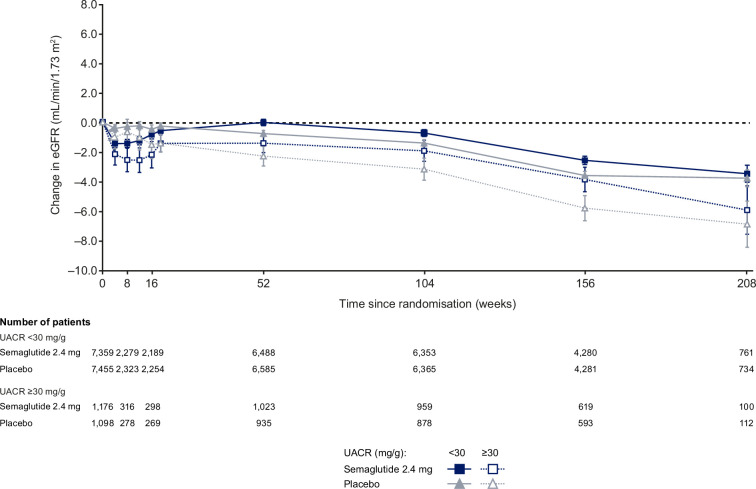
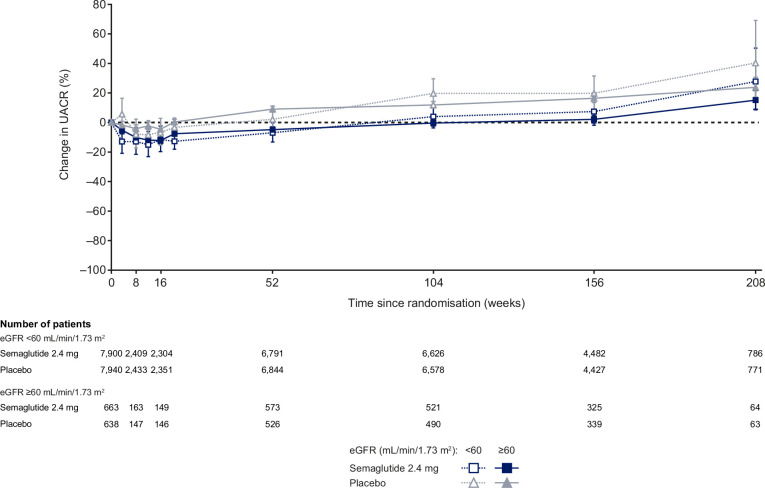
The SELECT trial previously reported a 20% reduction in major adverse cardiovascular events with semaglutide ( n = 8,803) versus placebo ( n = 8,801) in patients with overweight/obesity and established cardiovascular disease, without diabetes. In the present study, we examined the effect of once-weekly semaglutide 2.4 mg on kidney outcomes in the SELECT trial. The incidence of the pre-specified main composite kidney endpoint (death from kidney disease, initiation of chronic kidney replacement therapy, onset of persistent estimated glomerular filtration rate (eGFR) < 15 ml min −1 1.73 m − 2 , persistent ≥50% reduction in eGFR or onset of persistent macroalbuminuria) was lower with semaglutide (1.8%) versus placebo (2.2%): hazard ratio (HR) = 0.78; 95% confidence interval (CI) 0.63, 0.96; P = 0.02. The treatment benefit at 104 weeks for eGFR was 0.75 ml min −1 1.73 m − 2 (95% CI 0.43, 1.06; P < 0.001) overall and 2.19 ml min −1 1.73 m − 2 (95% CI 1.00, 3.38; P < 0.001) in patients with baseline eGFR <60 ml min −1 1.73 m − 2 . These results suggest a benefit of semaglutide on kidney outcomes in individuals with overweight/obesity, without diabetes. ClinicalTrials.gov identifier: NCT03574597 .
Overview
The claims and statistics of this paper haven’t been checked yet.
Free: it reads the open-access text and checks the first 5 claims that cite a source we can check. Create a free account to check every claim.
Integrity signals
Registry
Cites
Statistics
Figures
Verification
Claims the paper makes
The claims and statistics of this paper haven’t been checked yet.
Free: it reads the open-access text and checks the first 5 claims that cite a source we can check. Create a free account to check every claim.
Claims other papers make about this one
Each is checked against this paper’s own text: does it say what the citing paper says it does?
The source backs part of the claim, not all of it — or backs it for a different population, condition or comparison.
In the citing paper
“semaglutide can reduce the progression of chronic kidney disease in patients with and without diabetes and even in those taking SGLT2 inhibitors [12–14].”
From New drugs for the treatment of obesity: do we need approaches to preserve muscle mass? (2025) · cites this paper as [12]
Experimental — accuracy not yet measuredThe source backs part of the claim, not all of it — or backs it for a different population, condition or comparison.
In the citing paper
“Subgroup analyses from various cardiovascular outcomes trials have also shown that GLP-1 RAs may benefit kidney-related outcomes, including reductions in albuminuria, slower declines in estimated glomerular filtration rate, and a decreased risk of end-stage kidney disease in patients with and without diabetes.30,31”
From The expanding role of GLP-1 receptor agonists: a narrative review of current evidence and future directions (2025) · cites this paper as [30]
Experimental — accuracy not yet measuredThe source backs part of the claim, not all of it — or backs it for a different population, condition or comparison.
In the citing paper
“In the SELECT trial, semaglutide 2.4 mg reduced a composite renal endpoint (≥ 50% eGFR decline, macroalbuminuria onset, or need for renal replacement therapy) by 22% vs. placebo [17].”
From Precision obesity medicine: A phenotype-guided framework for pharmacologic therapy across the lifespan (2025) · cites this paper as [17]
Experimental — accuracy not yet measuredThe cited source says what the claim attributes to it.
In the citing paper
“The SELECT trial, a CVOT of subcutaneous semaglutide (2•4 mg once weekly) versus placebo in people with overweight or obesity with an established diagnosis of ASCVD, found a 22% lower relative risk (HR 0•78, 95% CI 0•63-0•96) for a composite kidney outcome”
From GLP-1 receptor agonists and next-generation incretin-based medications: metabolic, cardiovascular, and renal benefits (2026) · cites this paper as [50]
The cited source says what the claim attributes to it.
In the citing paper
“At 104 weeks of treatment, eGFR had declined less in the semaglutide arm (–0.86 mL/min/1.73 m2) versus the placebo arm (–1.61 mL/min/1.73 m2).”
From GLP-1 agonists in the treatment of chronic kidney disease in type 2 diabetes and obesity (2025) · cites this paper as [86]
1 more claim about this paper
Create a free account to see every claim other papers make about this one.
Self-check
Percentages, sums and reported differences re-computed from the paper’s own numbers.
The self-check needs the paper’s full text.
Citations
Cites
Toprak, O., Kurt, H., Sarı, Y., Şarkış, C., Us, H., & Kırık, A. (2017) · Kidney and Blood Pressure Research · doi:10.1159/000468530 · Cited by 29,627
A New Equation to Estimate Glomerular Filtration Rate
Levey, A. S., Stevens, L. A., Schmid, C. H., Zhang, Y. (., Castro, A. F., Feldman, H. I., Kusek, J. W., Eggers, P., Van Lente, F., Greene, T., et al. (2009) · Annals of Internal Medicine · doi:10.7326/0003-4819-150-9-200905050-00006 · Cited by 25,603
KDIGO 2024 clinical practice guideline for the evaluation and management of chronic kidney disease
Stevens, P. E., Ahmed, S. B., Carrero, J. J., Foster, B., Francis, A., Hall, R. K., Herrington, W. G., Hill, G., Inker, L. A., Kazancıoğlu, R., et al. (2024) · Kidney International · doi:10.1016/j.kint.2023.10.018 · Cited by 8,530
Liraglutide and Cardiovascular Outcomes in Type 2 Diabetes
Marso, S. P., Daniels, G. H., Brown-Frandsen, K., Kristensen, P., Mann, J. F. E., Nauck, M. A., Nissen, S. E., Pocock, S., Poulter, N. R., Ravn, L. S., et al. (2016) · New England Journal of Medicine · doi:10.1056/nejmoa1603827 · Cited by 7,629 · cited 3×
“12,18,19,21–27).”
BackgroundResultSelf-citationSemaglutide and Cardiovascular Outcomes in Patients with Type 2 Diabetes
Marso, S. P., Bain, S. C., Consoli, A., Eliaschewitz, F. G., Jódar, E., Leiter, L. A., Lingvay, I., Rosenstock, J., Seufert, J., Warren, M. L., et al. (2016) · New England Journal of Medicine · doi:10.1056/nejmoa1607141 · Cited by 6,900
Self-citationEstimating glomerular filtration rate from serum creatinine and cystatin C
Inker, L. A., Schmid, C. H., Tighiouart, H., Eckfeldt, J. H., Feldman, H. I., Greene, T., Kusek, J. W., Manzi, J., Van Lente, F., Zhang, Y. L., et al. (2012) · New England Journal of Medicine · doi:10.1056/nejmoa1114248 · Cited by 4,102 · cited 1×
“However, its use is now advocated, as this has been shown to improve the predictive performance of eGFR for measured GFR 42 in the general population and in the context of weight loss 43 .”
Semaglutide and Cardiovascular Outcomes in Obesity without Diabetes
Lincoff, A. M., Brown-Frandsen, K., Colhoun, H. M., Deanfield, J., Emerson, S. S., Esbjerg, S., Hardt-Lindberg, S., Hovingh, G. K., Kahn, S. E., Kushner, R. F., et al. (2023) · New England Journal of Medicine · doi:10.1056/nejmoa2307563 · Cited by 3,236 · cited 2×
“As reported previously 13 , permanent premature discontinuation occurred in 2,351 patients (26.7”
BackgroundInfluentialSelf-citationGerstein, H. C., Colhoun, H. M., Dagenais, G. R., Diaz, R., Lakshmanan, M., Pais, P., Probstfield, J., Riesmeyer, J. S., Riddle, M. C., Rydén, L., et al. (2019) · The Lancet · doi:10.1016/s0140-6736(19)31149-3 · Cited by 3,163 · cited 2×
“12,18,19,21–27).”
BackgroundSelf-citationLixisenatide in Patients with Type 2 Diabetes and Acute Coronary Syndrome
Pfeffer, M. A., Claggett, B., Diaz, R., Dickstein, K., Gerstein, H. C., Køber, L. V., Lawson, F. C., Ping, L., Wei, X., Lewis, E. F., et al. (2015) · New England Journal of Medicine · doi:10.1056/nejmoa1509225 · Cited by 2,409
Effects of once-weekly exenatide on cardiovascular outcomes in type 2 diabetes
Holman, R. R., Bethel, M. A., Mentz, R. J., Thompson, V. P., Lokhnygina, Y., Buse, J. B., Chan, J. C., Choi, J., Gustavson, S. M., Iqbal, N., et al. (2017) · New England Journal of Medicine · doi:10.1056/nejmoa1612917 · Cited by 2,162
Cited by
Items 201–237 of 237
The effect of GLP-1RAs and co-agonists on body composition across obesity and type 2 diabetes
Sun, L. L., Liu, H. F., Zhang, X., Zuo, F., Kong, Y., Feng, J., & Nian, X. (2026) · European journal of medical research · doi:10.1186/s40001-026-04534-2
“…overweight/obese adults without diabetes, once-weekly 2.4 mg semaglutide significantly reduced the urinary albumin-to-creatinine ratio (UACR), irrespective of baseline macroalbuminuria or cardiovascular disease, with no significant impact on estimated glomerular filtration rate (eGFR) [88, 89].”
InfluentialGLP-1 and Nutrient Stimulated Hormone Targets: Beyond Weight Loss
Ryan, D. H. (2026) · Dermatologic Surgery · doi:10.1097/dss.0000000000005113
Smolderen, K. G. E., Mena‐Hurtado, C., Divino, V. M., Zhao, Z., CHEN, Y., Boland, J., Song, J., Iyer, P., Knop, F. K., Nanna, M. G., et al. (2026) · Journal of Cardiac Failure - Intersections · doi:10.1016/j.yjcafi.2026.05.004
Saito, C., Mase, K., Ishibashi, S., Harada, T., Tsunoda, R., Usui, T., Simizu, T., Nagai, K., Ohkubo, R., Morito, N., et al. (2026) · Clinical and Experimental Nephrology · doi:10.1007/s10157-026-02897-8
“…among the four drug classes recently expected to improve CKD prognosis—RAS inhibitors, SGLT2 inhibitors, aldosterone antagonists, and GLP-1 ago - nists—an initial dip in GFR has been reported with all of these agents, including GLP-1 receptor agonists as demon - strated in the SELECT trial [24].”
Zarei, M., & Hajiani, Y. (2026) · Diabetology & Metabolic Syndrome · doi:10.1186/s13098-026-02196-y
“In the SELECT trial, semaglutide reduced persistent eGFR decline among adults with overweight or obesity and established CVD but without diabetes [114].”
Badgandi, M., Srinath, A., Mandora, V., Kandar, D. K., Shukla, P., PUNATAR, D. H., Jain, V., Kumar, S., Girish, P., Budhwar, A., et al. (2026) · International Journal of Diabetes and Technology · doi:10.4103/ijdt.ijdt_20_26
Chen, J., Liu, K.-W., Huang, Y., Meyerowitz‐Katz, G., Tsai, T., & Su, P. (2026) · Therapeutic Advances in Endocrinology and Metabolism · doi:10.1177/20420188261460592 · Cited by 1
Huang, R., & Wang, B. (2026) · Journal of International Medical Research · doi:10.1177/03000605261458641
Renal Impairment Does Not Affect Pharmacokinetics, Safety or Tolerability of Zenagamtide
Oldenburg, L. I. K., Haugaard, S. P., Karlsson, T., Kegel, V., Parwez, M., Wiingaard, C., & Flint, A. (2026) · Diabetes Obesity and Metabolism · doi:10.1111/dom.71096
Risk factor obesity: treatment standard
Mashayekhi, M., Qing, J., Heidari‐Bateni, G., Mathew, R. O., Liew, A., Kronbichler, A., Lerma, E. V., Abdipour, A., Codorniz, K., Wu, J., et al. (2026) · Nephrology Dialysis Transplantation · doi:10.1093/ndt/gfag164
“Moreover, semaglutide significantly decreased albuminuria, with a net 10.7% reduction in UACR at 104 weeks, and greater reductions in those with baseline albuminuria [ 19 ].”
InfluentialRabbani, S. A., Alkoud, H. A., El‐Tanani, M., Mahmoud, E. A. O., Mohamed, E. E. H. A., Zabadi, G. K., Muzaffar, H., & Qasem, A. A. (2026) · Journal of Clinical Medicine · doi:10.3390/jcm15145577
“Subsequent analyses from the STEP programme and the SELECT cardiovascular outcomes trial showed that these kidney effects extend to populations with obesity irrespective of diabetes status [17,18].”
InfluentialPagel, P. S., Hang, D., Freed, J. K., & Crystal, G. J. (2026) · Journal of Cardiothoracic and Vascular Anesthesia · doi:10.1053/j.jvca.2026.07.032
Potential nephroprotective mechanisms of orforglipron, an oral non-peptide GLP-1 receptor agonist
Ramadurgum, P., Shah, J., Shah, E., & PALMER, B. F. (2026) · Frontiers in Pharmacology · doi:10.3389/fphar.2026.1917800
Primary Prevention of CKD for Heart and Kidney Health: Ready for Primetime?
Dorjee, T., Hawkins, N. M., Moghaddam, N., Elliott, M. D., & Levin, A. (2026) · Clinical Journal of the American Society of Nephrology · doi:10.2215/cjn.0000001170
Hsu, H.-C., Shih, L., Hou, Y., & Lu, K. (2026) · Biomolecules · doi:10.3390/biom16081155
“FLOW demonstrated that semaglutide reduced a composite kidney and cardiovascular death endpoint in type 2 diabetes with CKD, while obesity trials support clinically meaningful weight loss [25,155].”
Prediabetes Progression in Young Adults: A Pooling Project
Rooney, M. R., He, J. H., Wang, D., Echouffo-Tcheugui, J. B., Fang, M., & Selvin, E. (2026) · Diabetes Care · doi:10.2337/dc26-0972
Immunosenescence in Cardiovascular-Kidney-Metabolic Syndrome: A Unifying Mechanistic Framework
Sano, M. (2026) · International Journal of Heart Failure · doi:10.36628/ijhf.2026.0060
Balbotkina, E. V., Goncharov, M. A., Belyakov, G. V., Шкода, А. О., & Кутина, А. В. (2026) · Journal of Evolutionary Biochemistry and Physiology · doi:10.1134/s002209302604006x
“Large random(cid:2) ized clinical trials (SUSTAIN [33], STEP [34], SELECT [35]) have shown that semaglutide reduces systolic blood pressure by 3–6 mmHg [33], decreases albuminuria [35], and reduces the risk of cardiovascular events and hospitalizations for heart failure [17, 18, 36].”
Organ crosstalk in kidney diseases: Insights from metabolic, hormonal and nervous regulation
Lin, S., Zhu, S., & Fu, Y. (2026) · Life Sciences · doi:10.1016/j.lfs.2026.124637
Beyond One-Size-Fits-All: Individually Tailored Dietary Interventions in Modern Obesity Care
Cozma-Petruț, A. P., Gherghel, M., Banc, R., Tișa, I. B., Stanciu, O., Coldea, T. E., Mudura, E., Miere, D., & Filip, L. A. (2026) · Nutrients · doi:10.3390/nu18162691 · Cited by 1
Emerging therapies for diabetic kidney disease: beyond SGLT2 inhibitors
Ni, H., Piggott, S., Festa, M. C., Faruque, L. I., & Cherney, D. Z. I. (2026) · Expert Opinion on Pharmacotherapy · doi:10.1080/14656566.2026.2723583
“…such as TREASURE CKD have included patients without T2D to better understand if kidney protective effects with GLP1RA based therapies may extend to patients with non-diabetic CKD, as suggested by UACR lowering effects in smaller mechanistic trials and in secondary analyses of CVOTs [111–113].”
Jastreboff, A. M., Ard, J. D., Hall, K. D., Kaplan, L. M., Krumholz, H. M., Name, M. A. V., Ryan, D. H., & Drucker, D. J. (2026) · Endocrine Reviews · doi:10.1210/endrev/bnag025 · Cited by 1
“…effects together with direct effects of GLP-1 RA based medicines on the kidney contribute to conferring renoprotection in patients with obesity without diabetes, as revealed by a reduction of renal outcomes in people with overweight or obesity treated with semaglutide in the SELECT trial (206).”
Sriperumbuduri, S., Khan, R. W., Aftab, S., Hiremath, S. S., Dixon, D. L., & Gupta, G. (2026) · American Journal of Hypertension · doi:10.1093/ajh/hpag111
Gifford, R. M. (2026) · European Journal of Cardiovascular Nursing · doi:10.1093/eurjcn/zvag198
Klotz, T. (2026) · Zentralblatt für Chirurgie - Zeitschrift für Allgemeine Viszeral- Thorax- und Gefäßchirurgie · doi:10.1055/a-2943-1080
Yue, H., Wang, Y., Guo, X., Sun, Y., Cheng, Y., Yan, P., Tan, Z., Han, C., & Wang, B. (2026) · Biochemical Pharmacology · doi:10.1016/j.bcp.2026.118495
Mayne, K. J., Lee, M. M. Y., Sattar, N. A., & Herrington, W. G. (2026) · European Journal of Internal Medicine · doi:10.1016/j.ejim.2026.107193
Beyond efficacy: the treatment lifecycle of incretin and multi-receptor agonists
Rabbani, S. A., El-Tanani, M., Matalka, I. I., & Rizzo, M. (2026) · Frontiers in Endocrinology · doi:10.3389/fendo.2026.1902185
Pedagogos, E., Chen, R., Nelson, A. J., Badve, S. V., Rasalam, R. R., & MacIsaac, R. J. (2026) · Internal Medicine Journal · doi:10.1111/imj.70647
Effects of semaglutide on kidney disease in type 2 diabetes: a randomized placebo-controlled trial
Tuttle, K. R., Bjornstad, P., Smith, C., Pruijm, M. T., McCown, P. J., Hodgin, J. B., Cherney, D. Z. I., Belmar, N., Chacko, M. M., Das, V., et al. (2026) · Nature Medicine · doi:10.1038/s41591-026-04674-2 · Cited by 2
Self-citationGLP-1 receptor agonists—a potential therapy for chronic kidney disease?
Boeckhaus, J., Sayer, J. A., & Mabillard, H. R. (2026) · Clinical Science · doi:10.1042/cs20261312
Taigade, S., Parab, S. B., & Doshi, G. (2026) · Ageing Research Reviews · doi:10.1016/j.arr.2026.103390
Antonini, L. M. (2026) · Revista de Geopolítica · doi:10.56238/revgeov17n7-187
Kierzkowski, F., Skrzypek, W., Bryl, W., Paczkowska, A., & Hoffmann, K. (2026) · Frontiers in Endocrinology · doi:10.3389/fendo.2026.1977433
“SELECT demonstrated CV bene fi t in individuals with overweight or obesity and established CVD but without T2D, supporting effects beyond glycemic control (14, 15).”
InfluentialThe development of obesity pharmacotherapy: from early challenges and setbacks to recognition by WHO
Halpern, B., Baur, L. A., Blüher, M., Jackson-Morris, A. M., Ralston, J., & Ryan, D. (2026) · The Lancet Diabetes & Endocrinology · doi:10.1016/s2213-8587(26)00234-2 · Cited by 1
Liu, F., Xu, Z., Wang, W., Gao, J., Changgeng, F. U., & Liu, P. (2026) · Frontiers in Cell and Developmental Biology · doi:10.3389/fcell.2026.1996288
“The results showed that semaglutide educed the incidence of the composite kidney endpoint from 2.2% to 1.8%; after 104 weeks of treatment, the between-group difference in change in eGFR was 0.75 mL/min/1.73 m 2 (Colhoun et al., 2024).”
InfluentialSemaglutide and cardio-renal protection: Mechanistic insights from FLOW, SELECT and the NHE3 paradox
Kabir, A., Mouree, T. Z., Das, M., & Joy, F.-U.-H. (2026) · Therapeutic Advances in Endocrinology and Metabolism · doi:10.1177/20420188261503097
Metadata
- Authors
- Colhoun, H. M., Lingvay, I., Brown, P. M., Deanfield, J., Brown-Frandsen, K., Kahn, S. E., Plutzky, J., Node, K., Parkhomenko, A., Rydén, L., Wilding, J. P. H., Mann, J. F. E., Tuttle, K. R., Idorn, T., Rathor, N., & Lincoff, A. M.
- Affiliations
- Institute of Genetics and Cancer (GB)
- The University of Texas Southwestern Medical Center (US)
- Novo Nordisk (Denmark) (DK)
- University College London (GB)
- University of Washington (US)
- Brigham and Women's Hospital (US)
- Saga University (JP)
- National Scientific Center "M.D. Strazhesko Institute of Cardiology" (UA)
- Karolinska Institutet (SE)
- University of Liverpool (GB)
- Friedrich-Alexander-Universität Erlangen-Nürnberg (DE)
- Cleveland Clinic Lerner College of Medicine (US)
- Corresponding author
- Colhoun, Helen M.
- ORCID
- Venue
- Nature Medicine
- Published
- 2024-05-25
- Volume
- 30
- Issue
- 7
- Pages
- 2058-2066
- ISSN
- 1078-8956 (ISSN-L)
- 1546-170X
- PMC
- PMC11271413
- OpenAlex
- W4399012115
- Cited by
- 238
- References
- 62
- Citations by year
- 2026: 83 · 2025: 109 · 2024: 46
- FWCI
- 67.86
- Type
- journal article
- Language
- en
- Open access
- hybrid
- doi.org
- Licence
- cc-by
- creativecommons.org/licenses/by/4.0 (tdm)
- creativecommons.org/licenses/by/4.0 (vor)
- Locations
- Nature Medicine (publishedVersion, cc-by)
- PubMed Central (publishedVersion, cc-by)
- PubMed (publishedVersion)
- Edinburgh Research Explorer (University of Edinburgh) (submittedVersion, cc-by)
- Funders
- Novo Nordisk A/S
- Topics
- Health Sciences › Medicine › Nephrology › Chronic Kidney Disease and Diabetes
- Health Sciences › Medicine › Endocrinology, Diabetes and Metabolism › Diabetes Treatment and Management
- Health Sciences › Medicine › Pharmacology (medical) › Pharmacology and Obesity Treatment
- Keywords
- semaglutide, renal outcomes, obesity, cardiovascular disease, estimated glomerular filtration rate decline, chronic kidney disease, macroalbuminuria, renal replacement therapy, GLP-1 receptor agonists, SELECT trial, non-diabetic patients
- MeSH terms
- Semaglutide, Aged, Cardiovascular Diseases, Glucagon-Like Peptides, Female, Glomerular Filtration Rate, Humans, Kidney, Kidney Diseases, Male, Middle Aged, Obesity, Treatment Outcome
About these checks
Registry, retraction, Cites and statistics results are computed, not judged, with one exception: a printed reference that no index lists is read once by a model before it counts as a citation error. Claims are extracted by a model and kept only when their quote appears verbatim in the text; each cited source is then checked, with a model’s help, for whether it says what the claim relies on. Those verdicts can be wrong — read the claim’s quote and the cited source before relying on one.
Statistics and arithmetic are recomputed, not judged.
Confidence bands are shown only for fields calibrated on our annotated test set. None is calibrated yet, so no band is shown.
What counts as a claim ›How we measure confidence ›How we check this ›
Are you an author, or do you see a problem with this page? Request a review
Data sources
Bibliographic data: Semantic Scholar, OpenAlex, Crossref.
Contains information from the Semantic Scholar Academic Graph Datasets, made available under the ODC Attribution License (ODC-BY 1.0).
Semantic Scholar’s data is described in: Kinney, R., et al. (2023). The Semantic Scholar Open Data Platform. arXiv:2301.10140.
