

A B7H3-targeting antibody–drug conjugate in advanced solid tumors: a phase 1/1b trial
Open accessThe DOI matches its Crossref record; 34 of the 34 references it cites were found in a registry or an index.
Abstract
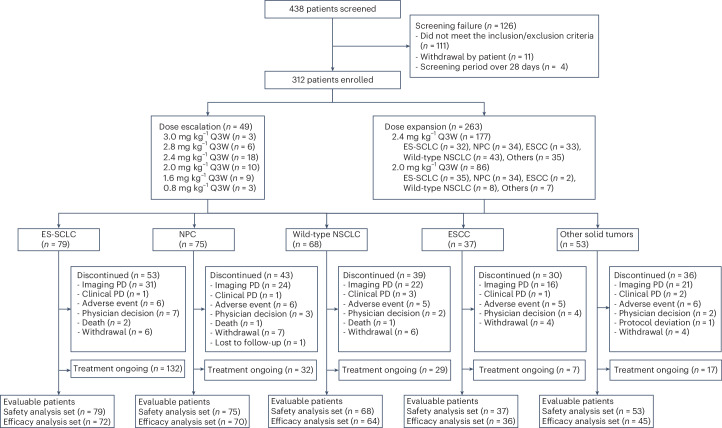
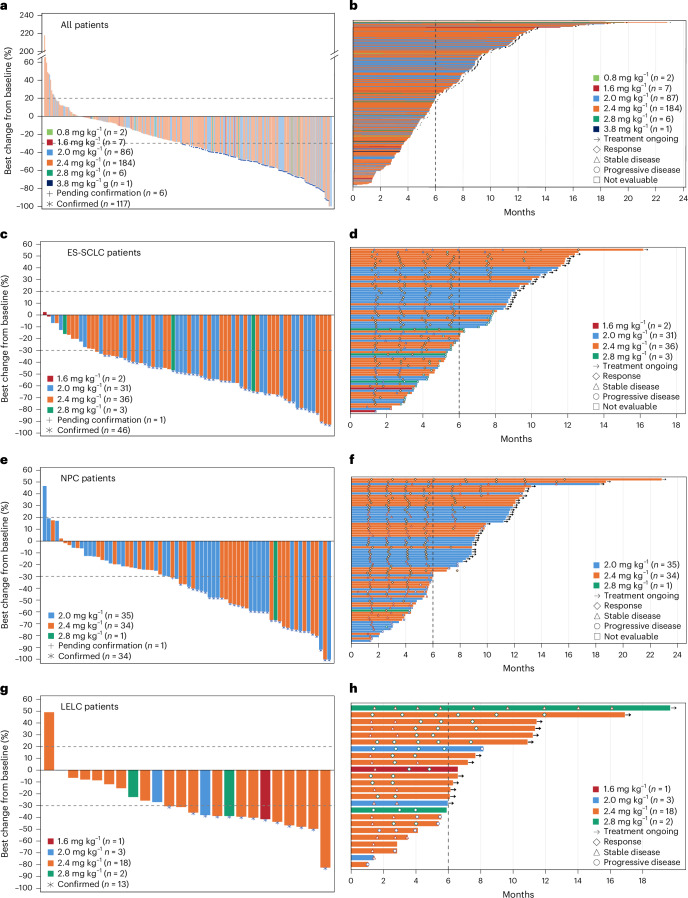
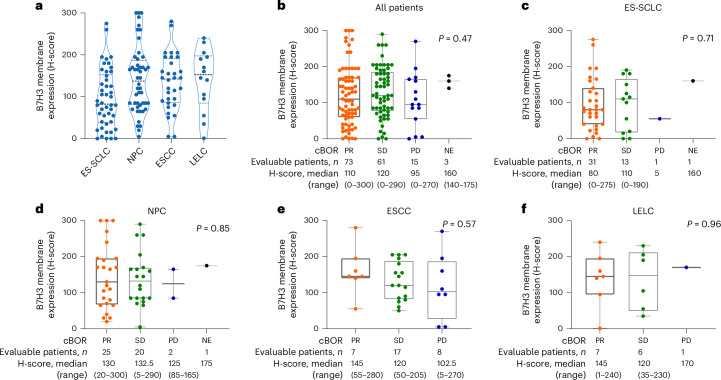
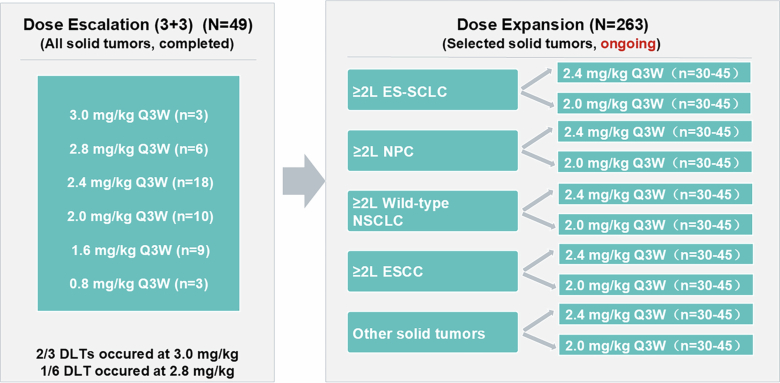
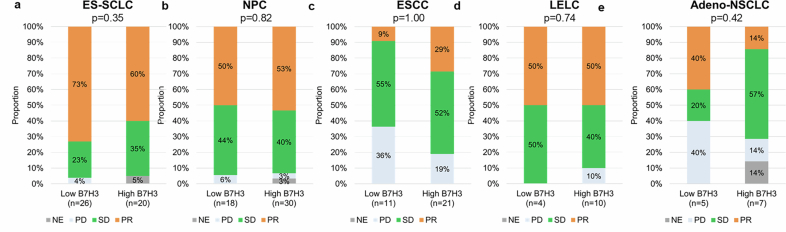
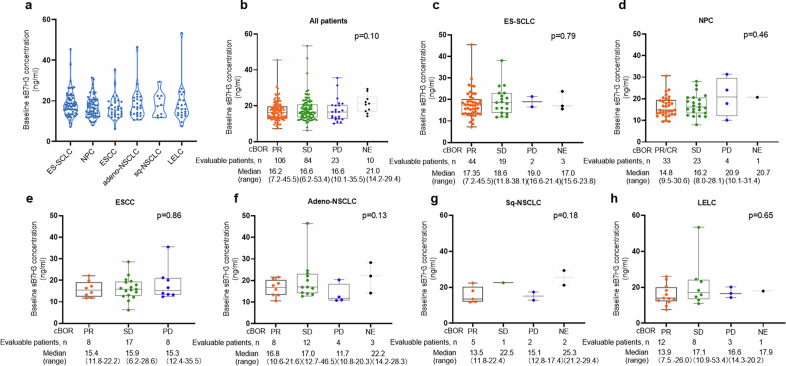
Antibody–drug conjugates (ADCs) have emerged as a transformative modality in the treatment of solid tumors. YL201, a novel B7H3-targeting ADC, leverages a tumor microenvironment activable linker-payload platform, coupled with a novel topoisomerase 1 inhibitor via a protease-cleavable linker. Here we report the findings from a large-scale, global, multicenter, phase 1 trial evaluating the safety, pharmacokinetics and preliminary efficacy of YL201 in patients with advanced solid tumors refractory to standard therapies. The trial included a dose-escalation part (phase 1) and a dose-expansion part (phase 1b). A total of 312 patients were enrolled across multiple tumor types, including extensive-stage small cell lung cancer (ES-SCLC), nasopharyngeal carcinoma (NPC), non-small cell lung cancer, esophageal squamous cell carcinoma and other solid tumors. The maximum tolerated dose was determined to be 2.8 mg kg−1, and the recommended expansion dose was selected as 2.0 mg kg−1 and 2.4 mg kg−1 every 3 weeks. The most common grade 3 or higher treatment-related adverse events included neutropenia (31.7%), leukopenia (29.5%) and anemia (25.0%). Only 4 cases of interstitial lung disease (1.3%) and 1 case of infusion reactions (0.3%) were observed. Encouraging anti-tumor activity was observed, particularly in patients with ES-SCLC (objective response rate (ORR), 63.9%), NPC (ORR, 48.6%), lung adenocarcinoma (ORR, 28.6%) and lymphoepithelioma-like carcinoma (ORR, 54.2%). No significant correlation between B7H3 membrane expression and the ORR was found. YL201 demonstrated an acceptable safety profile and a promising efficacy in heavily pretreated patients with advanced solid tumors, particularly in those with ES-SCLC, NPC or lymphoepithelioma-like carcinoma. Phase 3 clinical trials for patients with SCLC and NPC have already been initiated. ClinicalTrials.gov identifiers: NCT05434234 and NCT06057922 . In a large-scale, international, multicenter, phase 1/1b trial, treatment of patients with advanced solid tumors with the B7H3-targeting antibody–drug conjugate YL201 was safe and showed preliminary clinical efficacy.
Overview
The claims and statistics of this paper haven’t been checked yet.
Free: it reads the open-access text and checks the first 5 claims that cite a source we can check. Create a free account to check every claim.
Integrity signals
Registry
Cites
Statistics
Figures
Verification
Claims the paper makes
The claims and statistics of this paper haven’t been checked yet.
Free: it reads the open-access text and checks the first 5 claims that cite a source we can check. Create a free account to check every claim.
Claims other papers make about this one
Each is checked against this paper’s own text: does it say what the citing paper says it does?
The source backs part of the claim, not all of it — or backs it for a different population, condition or comparison.
In the citing paper
“Preliminary data from a phase I trial evaluating YL201 in 312 patients with advanced solid tumors, including 2 with prostate cancer, demonstrated overall promising antitumor activity: across all the tumor types, YL201 had a 40.8% objective response rate and 83.6% disease control rate100.”
From The evolving landscape of antibody-drug conjugates (ADCs) for treatment of prostate cancer (2025) · cites this paper as [100]
Experimental — accuracy not yet measuredThe source backs part of the claim, not all of it — or backs it for a different population, condition or comparison.
In the citing paper
“Despite the frequency, TRAEs for YL201 were similar to those of other B7H3 ADCs, and YL201 had a manageable safety profile95,100,101.”
From The evolving landscape of antibody-drug conjugates (ADCs) for treatment of prostate cancer (2025) · cites this paper as [100]
Experimental — accuracy not yet measuredThe cited source says what the claim attributes to it.
In the citing paper
“YL201 contains a highly hydrophilic protease-cleavable linker-TOPI inhibitor payload (TMALIN®) with increased stability in the circulation and payload release in both the extracellular tumor environment and intracellular lysosomal compartment100.”
From The evolving landscape of antibody-drug conjugates (ADCs) for treatment of prostate cancer (2025) · cites this paper as [100]
The cited source says what the claim attributes to it.
In the citing paper
“However, 97.1% of patients experienced TRAEs, most commonly hematological toxicities such as leukopenia (66.3%), anemia (64.7%), and neutropenia (61.5%); 36.2% of patients also experienced treatment interruptions while 5.4% discontinued treatment due to TRAEs (NCT05434234)100.”
From The evolving landscape of antibody-drug conjugates (ADCs) for treatment of prostate cancer (2025) · cites this paper as [100]
Self-check
Percentages, sums and reported differences re-computed from the paper’s own numbers.
The self-check needs the paper’s full text.
Citations
Cites
Trastuzumab deruxtecan in previously treated HER2-positive breast cancer
Modi, S., Saura, C., Yamashita, T., Park, Y. H., Kim, S.-B., Tamura, K., Andre, F., Iwata, H., Ito, Y., Tsurutani, J., et al. (2020) · New England Journal of Medicine · doi:10.1056/nejmoa1914510 · Cited by 2,006 · cited 3×
“For example, trastuzumab deruxtecan has been approved for breast cancer, stomach cancer and lung cancer, but the approved doses are different 31–33 .”
Self-citationTarlatamab for Patients with Previously Treated Small-Cell Lung Cancer
Ahn, M.-J., Cho, B. C., Felip, E., Korantzis, I., Ohashi, K., Majem, M., Juan-Vidal, O., Handzhiev, S., Izumi, H., Lee, J.-S., et al. (2023) · New England Journal of Medicine · doi:10.1056/nejmoa2307980 · Cited by 584 · cited 1×
“The observed efficacy of YL201 in patients with ES-SCLC is particularly noteworthy, with an ORR of 63.9%, which is superior to the response rates reported for standard second-line treatments such as lurbinectedin, tarlatamab and topotecan, where the ORRs typically range from 21.9% to 40% 24–26 .”
InfluentialTrigo, J., Subbiah, V., Besse, B., Moreno, V., López, R., Sala, M. A., Peters, S., Ponce, S., Fernández, C., Alfaro, V., et al. (2020) · The Lancet Oncology · doi:10.1016/s1470-2045(20)30068-1 · Cited by 486
Hsu, C., Lee, S.-H., Ejadi, S., Even, C., Cohen, R. B., Le Tourneau, C., Mehnert, J. M., Algazi, A., van Brummelen, E. M. J., Saraf, S., et al. (2017) · Journal of Clinical Oncology · doi:10.1200/jco.2017.73.3675 · Cited by 464 · cited 1×
“The established standard treatments, including docetaxel or PD-1 inhibitors for immune checkpoint inhibitor (ICI)-naive/treated recurrent or metastatic NPC, exhibit ORRs ranging from 23.5% to 36.7% 27,28 .”
InfluentialEckardt, J. R., von Pawel, J., Pujol, J.-L., Papai, Z., Quoix, E., Ardizzoni, A., Poulin, R., Preston, A. J., Dane, G., & Ross, G. (2007) · Journal of Clinical Oncology · doi:10.1200/jco.2006.08.3998 · Cited by 393 · cited 1×
“The observed efficacy of YL201 in patients with ES-SCLC is particularly noteworthy, with an ORR of 63.9%, which is superior to the response rates reported for standard second-line treatments such as lurbinectedin, tarlatamab and topotecan, where the ORRs typically range from 21.9% to 40% 24–26 .”
InfluentialGoto, K., Goto, Y., Kubo, T., Ninomiya, K., Kim, S.-W., Planchard, D., Ahn, M.-J., Smit, E. F., de Langen, A. J., Pérol, M., et al. (2023) · Journal of Clinical Oncology · doi:10.1200/jco.23.01361 · Cited by 328 · cited 3×
“For example, trastuzumab deruxtecan has been approved for breast cancer, stomach cancer and lung cancer, but the approved doses are different 31–33 .”
Van Cutsem, E., di Bartolomeo, M., Smyth, E., Chau, I., Park, H., Siena, S., Lonardi, S., Wainberg, Z. A., Ajani, J., Chao, J., et al. (2023) · The Lancet Oncology · doi:10.1016/s1470-2045(23)00215-2 · Cited by 265 · cited 1×
“In gastric cancer, the approved dose is 6.4 mg kg −1 due to the controllable adverse events 32 .”
InfluentialNew frontiers in immune checkpoint B7-H3 (CD276) research and drug development
Getu, A. A., Tigabu, A., Zhou, M., Lu, J., Fodstad, Ø., & Tan, M. (2023) · Molecular Cancer · doi:10.1186/s12943-023-01751-9 · Cited by 243
Carvajal-Hausdorf, D., Altan, M., Velcheti, V., Gettinger, S. N., Herbst, R. S., Rimm, D. L., & Schalper, K. A. (2019) · Journal for ImmunoTherapy of Cancer · doi:10.1186/s40425-019-0540-1 · Cited by 209
Immune checkpoint of B7-H3 in cancer: from immunology to clinical immunotherapy
Zhao, B., Li, H., Xia, Y., Wang, Y., Wang, Y., Shi, Y., Xing, H., Qu, T., Wang, Y., & Ma, W. (2022) · Journal of Hematology & Oncology · doi:10.1186/s13045-022-01364-7 · Cited by 205
Cited by
Wang, Y., Lu, K., Yang, X., Xu, S., Chu, H., & Fang, X. (2025) · Frontiers in Immunology · doi:10.3389/fimmu.2025.1678907 · Cited by 69
Recent Advances in Peptide Linkers for Antibody-Drug Conjugates
Li, S., Guo, Y., Che, J., Dai, H., & Dong, X. (2025) · Journal of Medicinal Chemistry · doi:10.1021/acs.jmedchem.5c01982 · Cited by 42
Duan, J., Sun, Y., Wang, Q., Xing, L., Wu, L., Han, L., Chen, J., Liu, B., Lu, P., Shi, H., et al. (2026) · Cancer Cell · doi:10.1016/j.ccell.2026.02.006 · Cited by 25
Self-citationThe evolving landscape of antibody-drug conjugates (ADCs) for treatment of prostate cancer
Lin, C., Hadfield, M. J., Santopietro, A., Lagos, G., Cheng, L., El-Deiry, W. S., Aggarwal, R., Mega, A., Hyams, E., & Carneiro, B. A. (2025) · npj Precision Oncology · doi:10.1038/s41698-025-01131-0 · Cited by 20
The B7-H3 (CD276) pathway: emerging biology and clinical therapeutics
Corrigan, D. T., Tanwar, A., Du, M., Martin, A. M., & Zang, X. (2025) · Trends in Pharmacological Sciences · doi:10.1016/j.tips.2025.08.008 · Cited by 25
The role of hydrophilic linkers in next-generation antibody-drug conjugates
Fu, Q., Kong, X., Liu, Y., Liu, M., Huang, K., Wang, P. G., & Wu, K. (2026) · Journal of Controlled Release · doi:10.1016/j.jconrel.2026.114612 · Cited by 22
Huang, Y., Sun, D., Zhou, H., Zhou, T., Qu, S., Li, J., Hu, C., Xu, M., Li, W., Shen, L., et al. (2026) · JAMA Oncology · doi:10.1001/jamaoncol.2025.6245 · Cited by 17
Self-citationJohnson, M. L., Patel, M. R., Falchook, G. S., Koyama, T., Gutierrez, M., Awad, M. M., Piha-Paul, S. A., Friedman, C. F., Satoh, T., Okamoto, N., et al. (2026) · The Lancet Oncology · doi:10.1016/s1470-2045(25)00733-8 · Cited by 19
Antibody-drug conjugates in precision oncology
Pistilli, B., Colombo, R., Mosele, M. F., & Chandarlapaty, S. (2026) · Cancer Cell · doi:10.1016/j.ccell.2026.05.004 · Cited by 15
Beyond the Guided Missile Paradigm: Embracing the Complexity of Antibody-Drug Conjugates
Vogel, M., Colombo, R., & Tarantino, P. (2025) · Journal of Clinical Oncology · doi:10.1200/jco-25-01235 · Cited by 14
Gezelius, E., Rekhtman, N., Baine, M. K., Rudin, C. M., Drilon, A. E. D. C., & Cooper, A. J. (2025) · Clinical Cancer Research · doi:10.1158/1078-0432.ccr-25-2090 · Cited by 14
B7-H3/CD276: Novel Immune Checkpoint and Jack of All Trades
Larkin, B., Nishizaki, D., Miyashita, H., Lee, S., Nikanjam, M., Eskander, R. N., Jensen, T. J., Pabla, S., Conroy, J. M., DePietro, P., et al. (2025) · ImmunoTargets and Therapy · doi:10.2147/itt.s534666 · Cited by 11
“31,32 CAR-T CAR-T therapy has historically been limited in solid malignancies due to the dearth of surface targets that are truly tumor specific.”
Emerging options and future strategies in immunotherapy for advanced lung squamous-cell carcinoma
Wang, Y., Rosell, R., Hirsch, F. R., Lu, S., Govindan, R., Park, K., Peters, S., & Zhang, J. J. (2025) · Annals of Oncology · doi:10.1016/j.annonc.2025.11.008 · Cited by 15
Cheung, A., Liu, Y., Chenoweth, A. M., Montaseri, H., Esapa, B., Chudasama, V., Baker, J. R., Thurston, D. E., & Karagiannis, S. N. (2026) · Physiological Reviews · doi:10.1152/physrev.00039.2025 · Cited by 16
Marchesi, S., Marinello, A., Ambrosini, P., Cavalli, C., Russo, G. L., & Occhipinti, M. A. (2025) · npj Precision Oncology · doi:10.1038/s41698-025-01011-7 · Cited by 13
“20 .”
Global advances and future directions in lung cancer care: expert consensus and strategic priorities
Meyer, M.-L., Peters, S., Janne, P. A., Mok, T. S., Bunn, P. A., Karim, N. A., Altorki, N. K., Arrieta, O., Bar, J., Cappuzzo, F., et al. (2026) · ESMO Open · doi:10.1016/j.esmoop.2025.106034 · Cited by 13
Antibody–Drug Conjugates in SCLC: DLL3, B7-H3, TROP2, and Beyond
Monaca, F., Gomez-Randulfe, I., Torres-Jiménez, J., Agarwal, M., Liu, S. V., Paz-Ares, L. G., & Califano, R. (2026) · Journal of Thoracic Oncology · doi:10.1016/j.jtho.2026.103726 · Cited by 12
Li, Y., Li, J., Mo, W., & Xu, X. (2025) · Oncology Reports · doi:10.3892/or.2025.8953 · Cited by 12
“Several other B7H3 ADCs, such as HS‑20093 and YL201, have shown promising early‑phase results and are undergoing phase III trials (44).”
Self-citationPhase 2 Study of Zilovertamab Vedotin in Participants with Metastatic Solid Tumors
Meric‐Bernstam, F., Gutierrez, M. E., Sanz‐García, E., Villa, D. R., Zhang, J., Friedmann, J. E., Yan, F., Socinski, M. A., Sarantopoulos, J., Raez, L. E., et al. (2025) · Cancer Research Communications · doi:10.1158/2767-9764.crc-25-0019 · Cited by 8
Novel Therapeutic Development for Nasopharyngeal Carcinoma
Kim, J., Lee, Y., Kim, S., & Park, J. C. (2025) · Current Oncology · doi:10.3390/curroncol32090479 · Cited by 11
“YL201 has demonstrated promising efficacy in multiple solid tumor types, including NPC, with an ORR of 48.6% (NPC cohort n = 70) [87].”
InfluentialByers, L. A., Cho, B. C., Cooper, A. J., Chiang, A. C., Han, J., Furqan, M., Dowlati, A., Morgensztern, D., Papadopoulos, K. P., Choudhury, N. J., et al. (2026) · Nature Medicine · doi:10.1038/s41591-026-04452-0 · Cited by 12
“B7-H3-targeted ADCs have also emerged as another promising target in SCLC, with several agents currently in development 17,18 .”
Anti-apoptotic BCL-2 family proteins: from regulatory networks to therapeutic targeting
Wang, Z., Tang, M., & Konopleva, M. (2026) · Oncogenesis · doi:10.1038/s41389-026-00632-2 · Cited by 12
“In a Phase I non-small cell lung cancer (NSCLC) trial, ABBV-155 yielded a 36% partial response rate without dose-limiting thrombocytopenia [102].”
Clinical applications of antibody-drug conjugates in advanced non-small cell lung cancer
Guo, H., Xu, Z., Li, K., Guo, C., Lin, F., Pu, Q., & Wang, G. (2026) · Frontiers in Immunology · doi:10.3389/fimmu.2026.1787148 · Cited by 8
“Notably, substantial intracranial activity was observed, with a central nervous system – con fi rmed response rate of 37.8% (154, 155).”
InfluentialAllogeneic B7-H3–Targeted CAR Vδ1T-cell Therapy in Advanced Solid Tumors: A Phase I Study
Liu, C., Li, J., Liu, D., Zhang, P., Zhang, M., Xue, R., Gong, J., Liu, L., Tao, M., Cheng, S., et al. (2026) · Clinical Cancer Research · doi:10.1158/1078-0432.ccr-25-4600 · Cited by 6
Self-citationAntibody-drug conjugates in breast cancer: Progress and future directions
Newman, A. B., Damodaran, S., & Meric‐Bernstam, F. (2026) · Cell Reports Medicine · doi:10.1016/j.xcrm.2026.102742 · Cited by 10
Fatahichegeni, M., Ansarian, M. A., Xiao, M., Gao, W., & Shi, R. (2026) · Cancer Immunology Immunotherapy · doi:10.1007/s00262-026-04384-1 · Cited by 6
“Multiple B7-H3-directed ADCs have now entered clinical evaluation, with YL201 demonstrating encouraging safety profiles and preliminary clinical efficacy in a large-scale phase 1/1b international trial for advanced solid tumors [57].”
Hagelstein, I., Mattern, S., Wang, K., Haueisen, Y. E., Greiner, S. M., Englisch, A., Staebler, A., Singer, S., & Lutz, M. S. (2025) · ImmunoTargets and Therapy · doi:10.2147/itt.s521008 · Cited by 5
“77,78 Early clinical signals have also led to FDA Breakthrough Therapy Designation for agents such as GSK5764227.”
Antibody–drug conjugates in combination therapy: defining the next chapter
Siu, L. L., & Powles, T. B. (2025) · Annals of Oncology · doi:10.1016/j.annonc.2025.10.013 · Cited by 7
Updates on Antibody Drug Conjugates and Bispecific T-Cell Engagers in SCLC
Wang, K., Taing, K., & Hsu, R. C. (2026) · Antibodies · doi:10.3390/antib15010004 · Cited by 4
“The observed efficacy of YL201 in this ES-SCLC subgroup was particularly remarkable, with an ORR reported at 63.9%, which is notably superior compared to those of standard second-line SCLC therapies [65].”
InfluentialObstacles and improvement strategies for CAR-T cell therapy in solid tumors
Luo, Z., Hu, Q., Ren, M., Wang, L., Zou, Q., Wen, X., Chen, S., Liu, Q., Luo, D., & Guo, Z. (2026) · Discover Oncology · doi:10.1007/s12672-026-04473-8 · Cited by 7
Yan, J., Wang, Y.-Z., Zhao, S.-Y., Na, F., Cui, Z.-X., Cai, L.-T., Li, H.-M., & Zhao, M. (2026) · Cancer Letters · doi:10.1016/j.canlet.2026.218382 · Cited by 4
Self-citationAntibody–Drug Conjugates in Non-small Cell Lung Cancer
Zullo, L., Bortolot, M., Ogliari, F. R., Saw, S. P. L., van Geel, R. M. J. M., ter Heine, R., Sadowska, A., Remón, J., & Hendriks, L. E. L. (2026) · Drugs · doi:10.1007/s40265-026-02331-z · Cited by 7
“YL201 is another anti-B7-H3 ADC bearing a topoisomerase 1 inhibitor via a protease-cleavable linker [126].”
InfluentialLu, F., Bai, X., Lv, Z., & Zhang, W. (2025) · Biochimica et Biophysica Acta (BBA) - Reviews on Cancer · doi:10.1016/j.bbcan.2025.189487 · Cited by 4
Feng, H., Liang, S., Wang, D., Xu, S., & Qin, G. (2025) · Clinical and Experimental Medicine · doi:10.1007/s10238-025-01920-8 · Cited by 4
“Ma et al. further confirmed through clinical experiments that the antibody–drug conjugate YL201 targeting B7H3 can improve the clinical efficacy of patients with recurrent and metastatic NPC [41].”
Antibody-drug conjugates in oncology: A spotlight on overcoming resistance
Xu, X., Yu, T., & Wang, Z. (2025) · Critical Reviews in Oncology/Hematology · doi:10.1016/j.critrevonc.2025.105015 · Cited by 7
Exploiting B7-H3: Molecular Insights and Immunotherapeutic Strategies for Osteosarcoma
Xie, Y., Wang, H., Zeng, F., Zhang, Y., Huang, J., Chen, C., & Wang, S. (2025) · Bioengineering · doi:10.3390/bioengineering12121344 · Cited by 5
Self-citationB7-H3 as a Universal Target for Solid Tumor Therapy: Clinical Promise and Biological Complexity
Huang, B., & Chen, L. (2025) · Journal of Clinical Oncology · doi:10.1200/jco-25-02487 · Cited by 3
Zhang, Y. N., Wang, W. N., Liu, G. Q., Wang, L. N., Zhang, X., Mei, J., & Yang, K. N. (2025) · Frontiers in Bioscience-Landmark · doi:10.31083/fbl45052 · Cited by 4
Self-citationTargeting Esophageal Cancer: Promising Drugs for the Clinical Landscape and Key Knowledge Gaps
Akumaga, T., Park, H., Lockhart, A. C., & Jin, R. U. (2026) · Drug Design Development and Therapy · doi:10.2147/dddt.s543686 · Cited by 4
Li, Y., Chen, K., Li, H., & Fan, Y. (2026) · Cancer Treatment Reviews · doi:10.1016/j.ctrv.2026.103091 · Cited by 4
Self-citationLi, H., Li, Y., Hu, Y., Yao, Y., He, Y., Li, J., Tang, J., Zhao, Z., Wang, Y., He, Y., et al. (2026) · Advanced Science · doi:10.1002/advs.202515431 · Cited by 6
“Meanwhile, the phase I/II trial of YL201, a B7-H3-targeting ADC, has demonstrated promising efficacy in advanced solid tumors and a manageable safety profile, validating B7-H3 as a viable therapeutic target [ 13 ].”
Self-citationEmerging therapies and translational advances in small cell lung cancer: Overcoming resistance
Nishii, Y., Yamaguchi, Y., & Yoshida, T. (2026) · Respiratory Investigation · doi:10.1016/j.resinv.2026.101434 · Cited by 3
Lee, Y. J., Park, J., Kim, Y., Kim, S., Jang, M., Kim, S., Kim, E. K., & Lee, J.-Y. (2026) · Gynecologic Oncology · doi:10.1016/j.ygyno.2026.05.028 · Cited by 4
Wang, H., Zhang, C., & Wang, H. (2025) · Biochimica et Biophysica Acta (BBA) - Reviews on Cancer · doi:10.1016/j.bbcan.2025.189445 · Cited by 3
Agostini, M., Traldi, P., & Hamdan, M. (2025) · Journal of Personalized Medicine · doi:10.3390/jpm15120596 · Cited by 2
“More information on these efforts can be found in recent publications [87–92].”
Zhang, Q., Chiang, Z.-C., Weng, H., Chen, X., Zhao, N., Yan, C., Xiao, Y., Lin, J., & Xu, Y. (2026) · Biochemical Pharmacology · doi:10.1016/j.bcp.2026.117673 · Cited by 3
ADC Target Profiling in NSCLC: Generalizable AI Separates TROP-2 and cMET Phenotypes
Anders, P., Sextro, M., Lingelbach, K., Standvoss, K., Pandhe, S., Ghosh, S., Böhm, C., Tietz, S., Krupar, R., Tharun, L., et al. (2026) · Clinical Cancer Research · doi:10.1158/1078-0432.ccr-25-4513 · Cited by 5
Ardeshir‐Larijani, F., Ashrafian, L., Chiappetta, M., Mansilla, D., Mariani, A. W., Menis, J., Rimner, A., Sharma, A., Szołkowska, M., Upadhya, S., et al. (2026) · Journal of Thoracic Oncology · doi:10.1016/j.jtho.2026.103611 · Cited by 2
The application and challenges of immune checkpoint inhibitors in lung cancer therapy
Li, B., Ren, Y., & Zhang, X. (2026) · Frontiers in Immunology · doi:10.3389/fimmu.2026.1811169 · Cited by 3
Self-citationZhao, H., Zhang, S., Wang, F., Yu, P., Li, J., Jia, L., He, P., Liu, R., Zhang, J., Wang, K., et al. (2026) · Frontiers in Immunology · doi:10.3389/fimmu.2026.1828131 · Cited by 3
“These fi ndings support the continued clinical development of YL201 (Table 1) (99), pending validation in larger randomized trials to formally establish its ef fi cacy against the standard of care.”
Self-citationArya, Y., Dyer, P., Hegi‐Johnson, F., Reguart, N., & Manochakian, R. (2026) · American Society of Clinical Oncology Educational Book · doi:10.1200/edbk-26-524964 · Cited by 2
Antibody–drug conjugates in non-small cell lung cancer: current landscape and future directions
Chen, X., Wu, S., Li, F., Yao, C., Liu, Y., & Zhou, G. (2026) · Holistic Integrative Oncology · doi:10.1007/s44178-026-00276-7 · Cited by 2
“…to aggressive disease states or resistance biology: B7-H3, for instance, is associated with immune evasion, tumor progression, and poor prognosis [92]; upregulation of PTK7 has been linked to aggressive tumor behavior [93]; and AXL is closely related to resistance to targeted therapy and immune…”
ZHAO, Y., Zhao, H., Wang, Q., Yang, K., Li, Y., Fu, Z., Yang, W., He, Z., Wang, Y., Ma, Y., et al. (2026) · Journal of Clinical Oncology · doi:10.1200/jco-26-00243 · Cited by 2
Self-citationTambotatug Pelitecan in Small-Cell Lung Cancer after Platinum-Based Therapy
Zhao, Y., Liu, H., Meng, X., Liu, Z., Yu, Y., Zheng, Y., Sun, L., Yang, R., Liu, J., Zhao, Y., et al. (2026) · New England Journal of Medicine · doi:10.1056/nejmoa2610229 · Cited by 3
Self-citationWang, H., Zhao, Y., Chen, X. '., Yang, L., Li, S., & Guan, X. (2025) · International Journal of Biological Macromolecules · doi:10.1016/j.ijbiomac.2025.147025 · Cited by 1
Self-citationB7-H3 in Colorectal Adenocarcinoma: Are We Focusing on the Right Target?
Parente, P., Ciardiello, D., Angerilli, V., Gasparello, J., & Fassan, M. (2025) · Clinical Colorectal Cancer · doi:10.1016/j.clcc.2025.09.005 · Cited by 1
Development of a bispecific antibody that inhibits EGFR and B7H3 in NSCLC
Zhi, X., Wang, J., Guo, J., Luo, L., Sun, H., Li, L., Zhao, Z., Wang, C., Zhu, L., Li, X., et al. (2025) · Biomarker Research · doi:10.1186/s40364-025-00872-1 · Cited by 2
“B7H3 was highly expressed in small cell lung cancer [40], and ADC based on B7H3 had shown significant efficacy [41, 42].”
Antibody–Drug Conjugates: The Past, Present and Future
Phillips, G. D. L. (2025) · Annual Review of Cancer Biology · doi:10.1146/annurev-cancerbio-070524-032954 · Cited by 2
The role of antibody-drug conjugates in the treatment of lung cancer
Zlatanova, T., Changalova, A., & Janžič, U. (2026) · Frontiers in Oncology · doi:10.3389/fonc.2026.1757564 · Cited by 1
Overcoming Immunotherapy Resistance in Small-Cell Lung Cancer
Canale, M., Suzzi, F., Verlicchi, A., Citarella, F., Delmonte, A., & Ulivi, P. (2026) · Biology · doi:10.3390/biology15040356 · Cited by 2
“No correlation was observed between B7H3 expression and clinical response, suggesting that B7H3 expression could not be considered as a predictive biomarker [87].”
Nones, K., Lakis, V., Dalley, A. J., Ryan, K., Chittoory, H., Ferguson, K., Fitzgerald, K., Newell, F., Koufariotis, L. T., Bashirzadeh, F., et al. (2026) · Genome Medicine · doi:10.1186/s13073-026-01624-y · Cited by 1
Nath, T. D., Mukherjee, A., Chauhan, S. C., & Bandyopadhyay, D. (2026) · International Journal of Molecular Sciences · doi:10.3390/ijms27062707 · Cited by 1
Liu, Y., Yu, X., Zhang, X., Zhang, K., Li, M., Jia, S., Fu, Y., Guo, Y., Li, X. W., & Jiang, W. B. (2026) · Free Radical Biology and Medicine · doi:10.1016/j.freeradbiomed.2026.04.016 · Cited by 2
Self-citationZhang, X., Shahryari, J., Kingsley, L. G., McCluggage, W. G., & Howitt, B. E. (2026) · Gynecologic Oncology · doi:10.1016/j.ygyno.2026.04.020 · Cited by 1
Self-citationWelch, R. L., Moziak, K., Zang, X., & Martin, A. L. (2026) · Frontiers in Oncology · doi:10.3389/fonc.2026.1725230 · Cited by 1
“Lastly, antibody drug conjugates (ADCs) have been developed to exploit the speci fi city of antibody-bound B7-H3 to deliver topoisomerase inhibitors to solid tumors (91) or to deliver radiation therapy to MB cells (NCT04167618, NCT04743661, NCT05064306) (92, 93).”
Guan, R., Zhang, C., Zhang, J., Du, S., Wang, H., Zhang, Y., Abdi, A. A. M., & Wang, H. (2026) · Critical Reviews in Oncology/Hematology · doi:10.1016/j.critrevonc.2026.105411 · Cited by 1
Self-citationPan, J., Yuan, X., Yu, H., LIU, Z., Chen, S., Zhu, F., Shang, Y., Hong, S., Han, X., Zhu, Z., et al. (2026) · Journal for ImmunoTherapy of Cancer · doi:10.1136/jitc-2025-014392 · Cited by 2
Self-citationZhang, F., Li, J., Wang, D., Liu, X., Pan, X., He, S., Zhang, J., Shen, H., & Song, S. (2026) · Journal of Medicinal Chemistry · doi:10.1021/acs.jmedchem.6c00961 · Cited by 1
Self-citationB7-H3 (CD276): an actionable therapeutic target and prognostic biomarker across human malignancies
Smith, D., Tyagi, A., & Battula, V. L. (2026) · Frontiers in Immunology · doi:10.3389/fimmu.2026.1857767 · Cited by 2
“Similarly, HS-20093 and YL201 both conjugated to topoisomerase inhibitor payloads, have demonstrated encouraging response rates and disease control in early-phase clinical trials across a range of malignancies, including small cell lung cancer and nasopharyngeal carcinoma (75, 103).”
Emerging antibody-drug conjugates in metastatic castration-resistant prostate cancer
Nguyen, C. B., & Reichert, Z. R. (2026) · Urologic Oncology Seminars and Original Investigations · doi:10.1016/j.urolonc.2026.06.022 · Cited by 2
Zhong, R., Hong, H., Yan, M., Wang, Q., Zhang, Y., Lan, Q., Luo, Y., Zhang, L., Xu, H., Guo, S., et al. (2026) · The Lancet Oncology · doi:10.1016/s1470-2045(26)00238-x · Cited by 3
Self-citationHuang, Y. (2025) · Dinkum Journal of Medical Innovations · doi:10.71017/djmi.4.6.d-0434 · Cited by 1
Self-citationEvolving landscape of nasopharyngeal carcinoma therapy
Chin, K. W., Chong, W.-Q., Goh, B. C., & Ma, B. B. Y. (2025) · Nature Cancer · doi:10.1038/s43018-025-01045-7 · Cited by 1
Anticorps conjugués dans le cancer broncho-pulmonaire non à petites cellules : où en sommes-nous ?
Bruyat, D., & Tomasini, P. (2025) · Revue des Maladies Respiratoires Actualités · doi:10.1016/s1877-1203(25)00074-6
Alwisi, N., Hamid, M., Ghith, D., Alshare, S., Adham, L., Sami, S., Babu, G. R., & Vranić, S. (2026) · Cancer Treatment and Research Communications · doi:10.1016/j.ctarc.2026.101364 · Cited by 1
Does the B7-H3 Immune Checkpoint Have High Potential as a Therapeutic Target?
Agostini, M., Traldi, P., & Hamdan, M. (2026) · Cells · doi:10.3390/cells15030239
“Theprimaryobjectiveofthisstudyistoassesswhether treatmentwithYL201prolongsoverallsurvival(OS)compared (SCLC) [68] APhaseIIIstudyofYL201inrelapsedsmall-celllungcancer.”
Liu, Q., Dai, W., Yik, M. S.-C., Cheung, K., & Lee, A. W. M. (2026) · Academia oncology. · doi:10.20935/acadonco8183
Engineering T cell therapies for lung cancer
Balke‐Want, H., Keerthi, V., & Feldman, S. A. (2026) · Molecular Therapy Oncology · doi:10.1016/j.omton.2026.201172
Clinical application and optimization strategies for antibody–drug conjugates in solid tumors
Qu, J., Zhao, X., Zhang, L., Cai, W., -, S. M., Liu, X., Wei, X., & Fei, F. (2026) · Journal of International Medical Research · doi:10.1177/03000605261434386
Self-citationB7-H3 antibody–drug conjugate turning immune evasion into vulnerability
Mosele, M. F., & Michot, J. (2026) · The Lancet Oncology · doi:10.1016/s1470-2045(26)00005-7
Hou, A. Y., Elantably, D., Manochakian, R., Velcheti, V., Li, S., Zhao, Y., & Lou, Y. (2026) · Cancers · doi:10.3390/cancers18081291 · Cited by 1
“It was studied in a global, multicenter phase I/Ib trial (NCT05434234 and NCT06057922) enrolling 312 heavily pretreated patients over multiple tumor types, of https://doi.org/10.3390/cancers18081291 which 68 were patients with NSCLC without actionable genomic alterations [47].”
InfluentialSelf-citationB7-H3 (CD276) as Target for T Cell-Based Bispecific Antibody Therapy of Penile Cancer
Kiełbik, A., Bahlinger, V., Schürch, C. M., Barcena, M. L., Vakhrusheva, O., Thomas, A., Tsaur, I., Heitmann, J. S., Salih, H., & Hagelstein, I. (2026) · ImmunoTargets and Therapy · doi:10.2147/itt.s577364
“53 Notably, agents like GSK5764227 have received FDA Breakthrough Therapy Designation, further supporting B7-H3’s clinical relevance.”
Antibody-Drug Conjugates in Oncology: Mechanisms, Clinical Progress, and Future Directions
Zhu, Z., Wang, S., Hong, W., Zhong, Q., Wang, W., Wang, N., Bai, M., & Ji, Z. (2026) · Cancer Biome and Targeted Therapy · doi:10.66505/cbtt.v1i2.32
CD40 Agonism in Pancreatic Ductal Adenocarcinoma: Expression, Biology, and Therapeutic Targeting
Kucukcelebi, S., van Diepen, A. E., de Vos‐Geelen, J., van Eijck, C. H. J., van Montfoort, N., & van Eijck, C. W. F. (2026) · Cancers · doi:10.3390/cancers18111743
“Early-phase B7-H3 antibody–drug conjugates such as YL201 and HS-20093 (GSK5764227) are therefore relevant to this axis [68,69].”
The future promise of antibody–drug conjugates in extensive‐stage small cell lung cancer
Sethakorn, N., & Chiang, A. C. (2026) · Cancer · doi:10.1002/cncr.70418
Lee, M., & Lovly, C. M. (2026) · Frontiers in Oncology · doi:10.3389/fonc.2026.1814095 · Cited by 1
Slovin, S. F. (2026) · Expert Opinion on Biological Therapy · doi:10.1080/14712598.2026.2701337
Epstein–Barr virus (EBV)–associated lung carcinoma
Chen, H., Wang, X., Bai, L., Huang, X., Deng, X., Zhang, J., & Zhou, C. (2026) · Journal of the National Cancer Center · doi:10.1016/j.jncc.2026.07.001
Advancing antibody drug conjugates in gastrointestinal cancers
Cassier, P. A., Izarn, F., Dumontet, C., & Coutzac, C. (2026) · British Journal of Cancer · doi:10.1038/s41416-026-03510-1 · Cited by 1
“For example, activity was seen in oesophageal squamous cell carcinoma (ESCC) with Nectin-4-directed ADCs (enfortumab vedotin and 9MW2821), tisotumab vedotin (ADC targeting tissue factor) as well as with B7-H3 ADCs (i fi natamab deruxtecan and YL201) [56 – 60].”
Wang, H., Wen, R., Yang, Z., & Yang, L. (2026) · Biochemical Pharmacology · doi:10.1016/j.bcp.2026.118289
Precision Oncology in Thymic Epithelial Tumors: Therapeutic Horizons and Implementation Barriers
Canaslan, K., Yetginoglu, O., Tsutani, Y., Sharma, A. V., Mansilla, D., Emami, A., Abolhassani, H., & Ardeshir‐Larijani, F. (2026) · International Journal of Molecular Sciences · doi:10.3390/ijms27156613
“Another novel ADC targeting the B7-H3 surface antigen is also currently being investigated in early-phase clinical trials that include TC patients [72].”
Kemper, M., Reitnauer, L. E., Leonetti, A., Garitaonaindía, Y., Janning, M., Aldea, M. D., Pircher, A., Bleckmann, A., & Hendriks, L. E. L. (2026) · Cancer Biome and Targeted Therapy · doi:10.66505/cbtt.v1i3.52
Wang, J., Jiang, H., Niu, J., Liu, L., Wu, Y., Shi, J., Liu, L., Yin, S., Feng, C., Zhang, L., et al. (2026) · Frontiers in Immunology · doi:10.3389/fimmu.2026.1907324
Self-citationYu, M., Liu, Y., Wang, X., Cui, W., Sun, F., Li, Y., Zhao, K., Zhao, H., & Meng, X. (2026) · Therapeutic Advances in Medical Oncology · doi:10.1177/17588359261477563
“29 Second, novel agents including tarlatamab 30,31 and B7H3 antibody-drug conjugates (e.g., YL201, HS-20,093, and I-DXd) 32–35 were not included in this study.”
Self-citationAdvances in the Research of Nasopharyngeal Carcinoma: A Perspective
Liang, Z., Zeng, X.-Y., Lv, J.-W., Zhou, G., Sun, Y., & Lin, L. (2026) · Cancer Innovation · doi:10.1002/cai2.70074
“Notably, this study found no significant correlation between the efficacy and B7‐H3 expression levels, suggesting the potentially broad applicability of this agent [13].”
Update 2026: Management of Small Cell Lung Cancer
Lalla, M., Dhillon, P., Polat, B. E., & Cheng, H. (2026) · Lung · doi:10.1007/s00408-026-00927-6 · Cited by 1
Ma, Y., Wang, D., Sun, S., Hao, Y., Yang, H., Li, X., Geng, W., Wang, Q., 佟玉静, Fang, J., et al. (2026) · Chemical Engineering Journal · doi:10.1016/j.cej.2026.181184
Self-citationHe, S., Bei, W.-X., Lu, N., Zhao, Z.-Y., Ye, Y., Chen, C., Tang, L., Liu, L., Lv, S., Xiang, Y., et al. (2026) · EClinicalMedicine · doi:10.1016/j.eclinm.2026.104170
“27,28 Liposomal irinotecan was developed to improve the pharmacokinetic properties of conventional irinotecan and to enhance intratumoral”
Conditionally active antibody‒drug conjugates
Guo, C., He, Y., Lu, Y., Dun, Q., Yang, J., & Wang, Y. (2026) · Acta Pharmaceutica Sinica B · doi:10.1016/j.apsb.2026.08.023
Zhang, Q., Qin, Z., & Guo, C. (2026) · MedComm – Oncology · doi:10.1002/mog2.70097
Metadata
- Authors
- Ma, Y., Yang, Y., Huang, Y., Fang, W., Xue, J., Meng, X., Fan, Y., Fu, S., Wu, L., Zheng, Y., Liu, J., Liu, Z., Zhuang, W., Rosen, S., Qu, S., Li, B., Li, M., Zhao, Y., Yang, S., Ji, Y., Sommerhalder, D., Luo, S., Yang, K., Li, J., Lv, D., Zhang, P., Zhao, Y., Hong, S., Zhang, Y., Zhao, S., Chin, S., Zhang, X., Lian, W., Cai, J., Xue, T., Zhang, L., & Zhao, H.
- Affiliations
- Sun Yat-sen University Cancer Center (CN)
- Shandong Tumor Hospital (CN)
- Zhejiang Cancer Hospital (CN)
- The University of Texas MD Anderson Cancer Center (US)
- Hunan Cancer Hospital (CN)
- First Affiliated Hospital Zhejiang University (CN)
- Fujian Provincial Cancer Hospital (CN)
- Hematology Oncology Associates (US)
- Guangxi Medical University (CN)
- Guilin Medical University (CN)
- First Affiliated Hospital of Zhengzhou University (CN)
- Henan Cancer Hospital (CN)
- First Affiliated Hospital of Xinxiang Medical University (CN)
- Wuhan Union Hospital (CN)
- Jiangxi Provincial Cancer Hospital (CN)
- Sichuan Cancer Hospital (CN)
- MediLink Therapeutics (Suzhou) Co., Ltd. (China) (CN)
- Corresponding author
- Xue, Tongtong
- Zhang, Li
- Zhao, Hongyun
- ORCID
- Ma, Yuxiang
- Yang, Yunpeng
- Huang, Yan
- Meng, Xiangjiao
- Fan, Yun
- Fu, Siqing
- Wu, Lin
- Zheng, Yulong
- Liu, Zhihua
- Li, Bihui
- Li, Mingjun
- Zhao, Yanqiu
- Ji, Yinghua
- Sommerhalder, David
- Luo, Suxia
- Yang, Kunyu
- Li, Jingao
- Lv, Dongqing
- Zhang, Peng
- Zhao, Yuanyuan
- Hong, Shaodong
- Zhang, Yang
- Zhao, Shen
- Lian, Wei
- Xue, Tongtong
- Zhang, Li
- Zhao, Hongyun
- Venue
- Nature Medicine
- Published
- 2025-03-13
- Volume
- 31
- Issue
- 6
- Pages
- 1949-1957
- ISSN
- 1078-8956 (ISSN-L)
- 1546-170X
- PMC
- PMC12176648
- OpenAlex
- W4408413512
- Cited by
- 122
- References
- 34
- Citations by year
- 2026: 92 · 2025: 30
- FWCI
- 70.29
- Type
- journal article
- Language
- en
- Open access
- hybrid
- doi.org
- Licence
- cc-by-nc-nd
- creativecommons.org/licenses/by-nc-nd/4.0 (tdm)
- creativecommons.org/licenses/by-nc-nd/4.0 (vor)
- Locations
- Nature Medicine (publishedVersion, cc-by-nc-nd)
- PubMed Central (publishedVersion, cc-by-nc-nd)
- PubMed (publishedVersion)
- Funders
- National Natural Science Foundation of China (82473346, 82272789)
- Guangzhou Science &Technology Project
- Topics
- Life Sciences › Immunology and Microbiology › Immunology › Monoclonal and Polyclonal Antibodies Research
- Health Sciences › Medicine › Oncology › Cancer Immunotherapy and Biomarkers
- Health Sciences › Medicine › Pulmonary and Respiratory Medicine › Lung Cancer Treatments and Mutations
- Keywords
- antibody-drug conjugates, B7-H3, topoisomerase I inhibitor, protease-cleavable linker, extensive-stage small cell lung cancer, nasopharyngeal carcinoma, lymphoepithelioma-like carcinoma, non-small cell lung cancer, esophageal squamous cell carcinoma, maximum tolerated dose, objective response rate, refractory solid tumors
- MeSH terms
- Nasopharyngeal Carcinoma, Adult, Aged, Aged, 80 and over, Carcinoma, Non-Small-Cell Lung, Female, Humans, Lung Neoplasms, Male, Middle Aged, Neoplasms, Immunoconjugates, Maximum Tolerated Dose, B7 Antigens
About these checks
Registry, retraction, Cites and statistics results are computed, not judged, with one exception: a printed reference that no index lists is read once by a model before it counts as a citation error. Claims are extracted by a model and kept only when their quote appears verbatim in the text; each cited source is then checked, with a model’s help, for whether it says what the claim relies on. Those verdicts can be wrong — read the claim’s quote and the cited source before relying on one.
Statistics and arithmetic are recomputed, not judged.
Confidence bands are shown only for fields calibrated on our annotated test set. None is calibrated yet, so no band is shown.
What counts as a claim ›How we measure confidence ›How we check this ›
Are you an author, or do you see a problem with this page? Request a review
Data sources
Bibliographic data: Semantic Scholar, OpenAlex, Crossref.
Contains information from the Semantic Scholar Academic Graph Datasets, made available under the ODC Attribution License (ODC-BY 1.0).
Semantic Scholar’s data is described in: Kinney, R., et al. (2023). The Semantic Scholar Open Data Platform. arXiv:2301.10140.
